
【古殿唱片音樂故事】巨匠與天才之間,坐著一位老師——威廉·福特萬格勒(Wilhelm Furtwängler,1886-1954)與蕾菲布的莫札特第20號鋼琴協奏曲世界首次商業發行盤
古殿殿主
一張「毫無脈絡」的唱片
側標上寫著:「巨匠と天才の未発売名演集ついに登場!!」(巨匠與天才的未發表名演集,終於登場!!)巨匠是指揮家威廉·福特萬格勒(Wilhelm Furtwängler,1886-1954),天才是羅馬尼亞鋼琴家迪努·李帕第(Dinu Lipatti,1917-1950)。
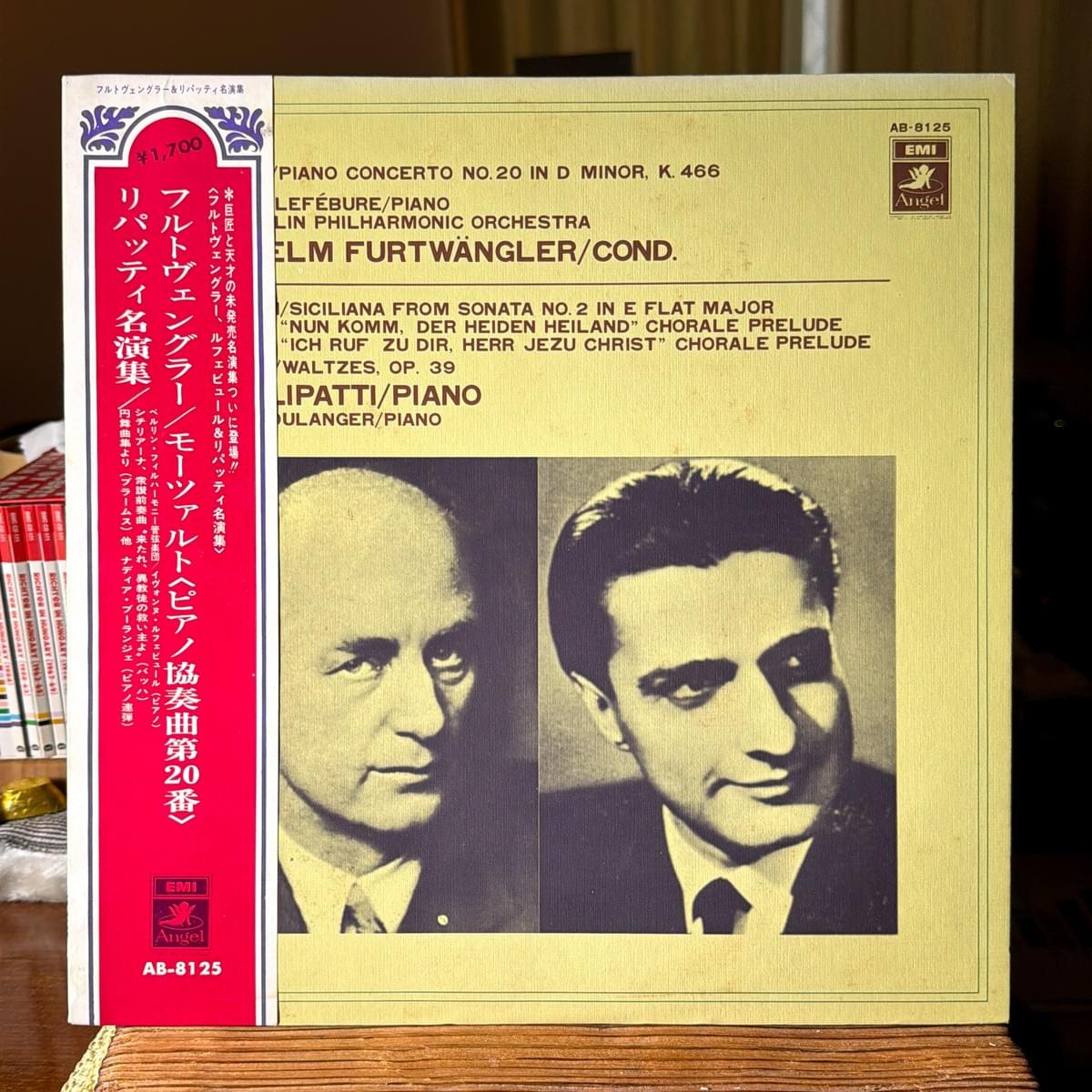
1970 年寫封底解說的日本樂評家出谷啓(Kei Detani),開頭就說:這是一個「毫無脈絡的組合」。
但他沒注意到,在巨匠與天才之間,還坐著第三個人。她在 A 面,卻是 B 面那位天才的老師。
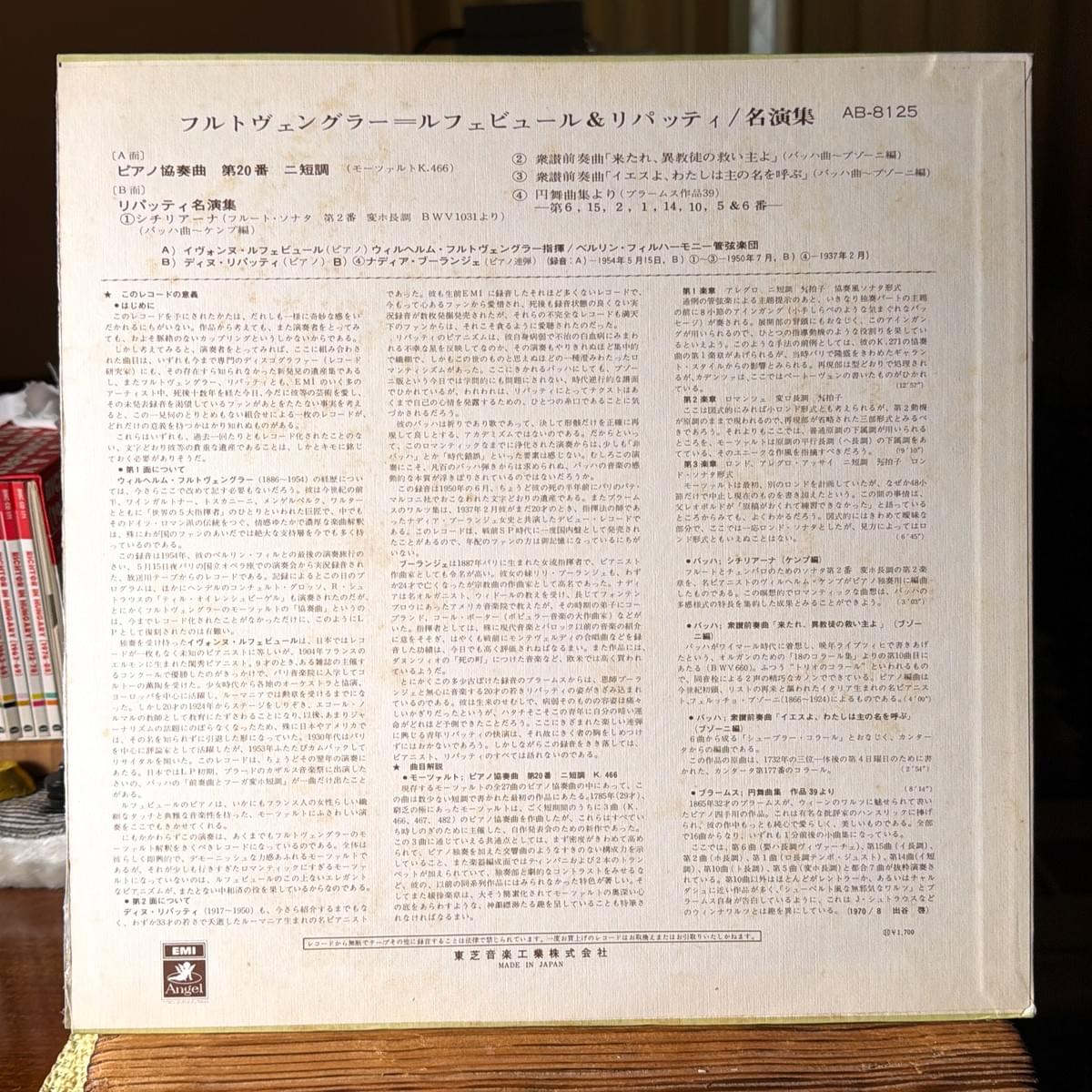
這張唱片:東芝 AB-8125
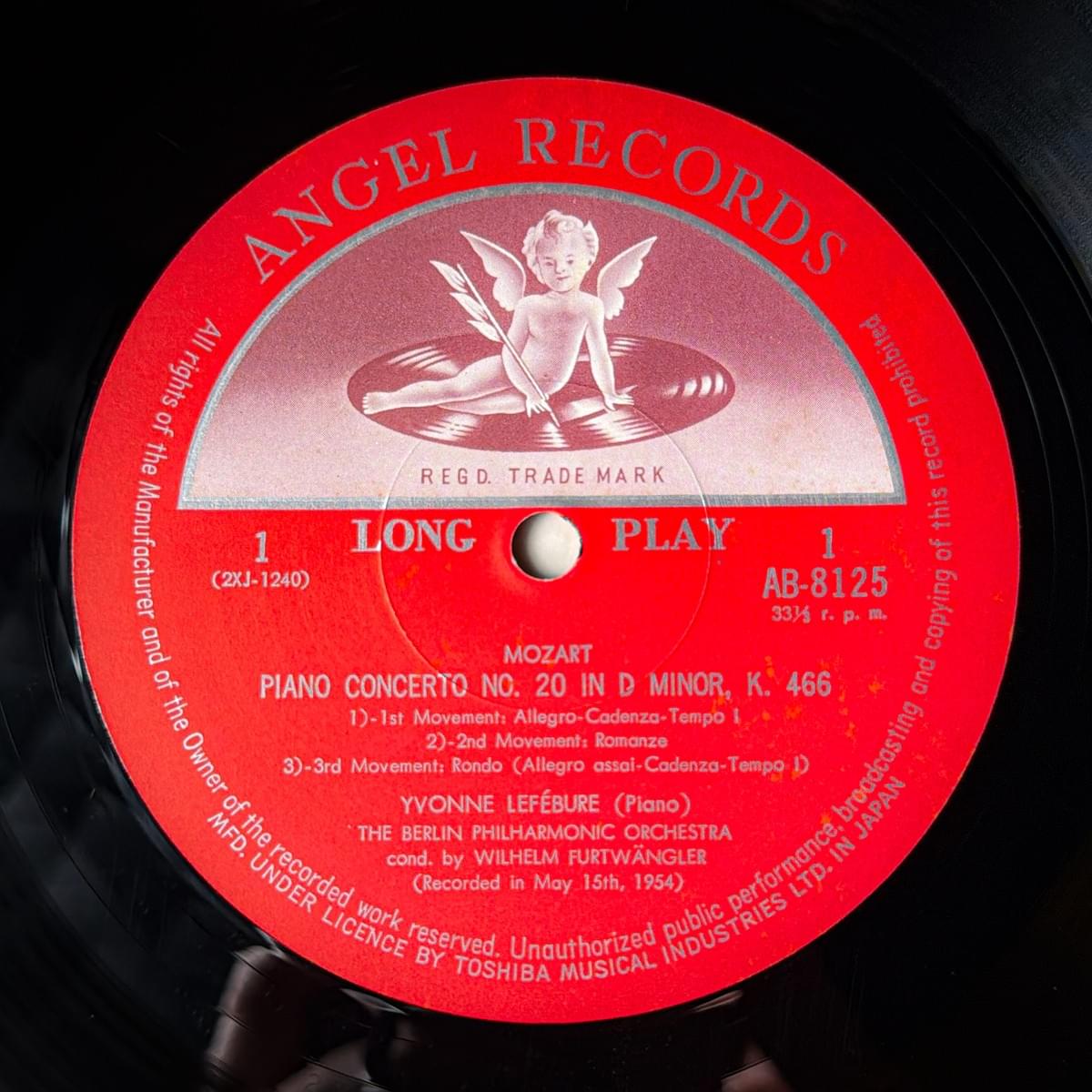
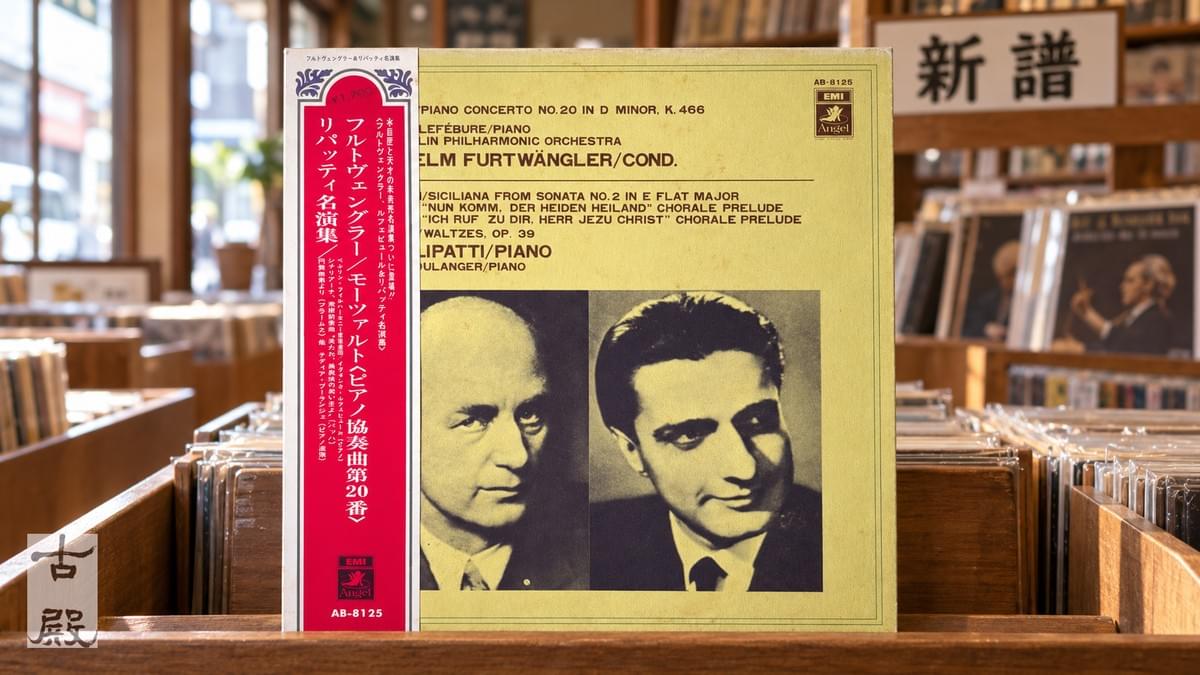
1970 年 9 月,日本東芝音樂工業發行。黃綠色布紋封套上並排兩張黑白肖像;紅底銀字的天使標籤,中央印著「LONG PLAY」。
- A 面:莫札特《第二十號鋼琴協奏曲》K.466,1954 年 5 月 15 日瑞士盧加諾現場。福特萬格勒指揮柏林愛樂,獨奏是法國鋼琴家伊馮娜·蕾菲布(Yvonne Lefébure,1898-1986)。
- B 面:李帕第 1950 年的巴赫三曲,以及 1937 年他與娜迪亞·布蘭潔(Nadia Boulanger,1887-1979)四手聯彈的布拉姆斯圓舞曲。
關於這份:莫札特《第二十號鋼琴協奏曲》錄音,它的身分,寫在別人的唱片上。1973 年英國 Unicorn 發行同一份 K.466(WFS-11),封底註明:首次正式授權商業發行,是 1970 年 9 月的東芝 AB-8125。在此之前,它只是法國福特萬格勒協會的會員非賣品。
秘密一:師生同在一張唱片上
1933 年維也納鋼琴大賽,李帕第只得第二名,評審阿弗列德·柯爾托(Alfred Cortot,1877-1962)憤而辭職抗議,並邀他到巴黎。隔年,李帕第進入巴黎師範音樂院,老師之一,正是柯爾托的傳人蕾菲布。
柯爾托傳給蕾菲布,蕾菲布傳給李帕第。這張唱片的兩面,是一條師承線的兩端。
1970 年的企劃者大概不知道這層關係,只是把兩份未發行的珍貴錄音放在一起。看似隨意的拼湊,卻讓本就相連的人重新相遇。
秘密二:三個時代的錄音技術
- 1937 年 2 月 25 日|布拉姆斯圓舞曲:巴黎錄音室,直接刻入一張 12 吋 78 轉蟲膠唱片的兩面。
- 1950 年 7 月|巴赫三曲:日內瓦 EMI 錄音場次,LP 時代初期的錄音室錄音。
- 1954 年 5 月 15 日|莫札特 K.466:盧加諾劇院現場,瑞士廣播電台實況轉播錄音。
1937 年,一面只能錄四分多鐘,十九歲的李帕第必須一口氣彈完,沒有剪接。1950 年,他已重病,靠藥物撐著錄音。1954 年,則是一晚的現場,只有電台的麥克風。
三種聲音質地,同在一張黑膠上。
秘密三:兩個最後的冬天
李帕第,1950 年 12 月 2 日病逝;福特萬格勒,1954 年 11 月 30 日辭世。忌日在日曆上只差兩天。
兩人在這張唱片上的錄音,都落在生命的最後一年。李帕第錄完巴赫兩個月後,在貝桑松開了最後一場獨奏會,無力彈完蕭邦,便以一首巴赫聖詠告別。B 面那首〈我呼喚你,主耶穌基督〉,聽來就是他的禱告。
而 A 面的蕾菲布,比她的學生多活了三十六年。老師送走了學生,也送走了那個時代。
秘密四:封底上的 1970 年
出谷啓的解說有幾處與今天的考證不同:把盧加諾寫成巴黎、把佛瑞德·戈德貝克(Fred Goldbeck,1902-1981)的裝飾奏寫成貝多芬的、把蕾菲布的生年寫晚了六年。
這不是他的錯。1970 年資料匱乏,他對演奏的判斷卻依然精準:福特萬格勒帶著惡魔般力量的莫札特,被蕾菲布法式的優雅中和了。
首版保存的,不只是 1954 年的聲音,也是 1970 年的人第一次聽見它時的樣子。
******
殿主曾寫過一篇:〈一場被封印的「災難」現場,為何成為傳奇?——聽見福特萬格勒最後的「不完美」莫札特〉,可以另外找出來閱讀:
*****
【Gudian Music Stories】Between Maestro and Genius Sits a Mentor: Wilhelm Furtwängler (1886–1954) and Yvonne Lefébure’s Mozart Piano Concerto No. 20, The World’s First Commercial Release
An Album Devoid of Context
Across the obi strip runs a bold Japanese promotional catchphrase: "Unreleased Masterpieces by Maestro and Genius Finally Arrive!!" The maestro was conductor Wilhelm Furtwängler (1886–1954); the genius was Romanian pianist Dinu Lipatti (1917–1950).
Writing the rear sleeve notes in 1970, Japanese music critic Kei Detani opened with a candid confession: this was a pairing entirely devoid of logical context.
What escaped his notice, however, was a third presence seated between the maestro and the genius. She occupies Side A, yet she was the teacher of the prodigy on Side B.
The Artifact: Toshiba AB-8125
Released in September 1970 by Toshiba Musical Industries in Japan, the album features dual black-and-white portraits set against a textured, yellow-green cloth-patterned jacket. Spinning the disc reveals the red-and-silver Angel label with "LONG PLAY" printed across the center.
- Side A: Mozart’s Piano Concerto No. 20 in D minor, K. 466, recorded live on May 15, 1954, in Lugano, Switzerland. Wilhelm Furtwängler leads the Berlin Philharmonic, with French pianist Yvonne Lefébure (1898–1986) as soloist.
- Side B: Lipatti’s 1950 solo Bach recordings, paired with his 1937 four-hand Brahms waltzes performed alongside Nadia Boulanger (1887–1979).
The historic identity of this disc was documented on another label. When the British historical imprint Unicorn released the same K. 466 performance in 1973 (catalog number WFS-11), the rear sleeve credited its provenance: First commercial release: Toshiba AB-8125, September 1970. Prior to this Japanese pressing, the recording existed solely as a private, not-for-sale issue distributed to members of the French Wilhelm Furtwängler Society.
Secret One: Mentor and Disciple Shared on a Single Disc
At the 1933 Vienna International Piano Competition, the jury awarded Lipatti second prize. In protest, juror Alfred Cortot (1877–1962) resigned from the panel and invited the young Romanian to Paris. The following year, Lipatti entered the École Normale de Musique de Paris. Among his instructors was Cortot’s foremost disciple: Yvonne Lefébure.
Cortot passed the flame to Lefébure; Lefébure passed it to Lipatti. The two sides of this LP form the outer poles of a single pedagogical lineage.
The reissue producer in 1970 was almost certainly unaware of this connection, aiming only to assemble two unreleased historical documents on one disc. What appeared to be a casual compilation was, in truth, an organic reunion.
Secret Two: Three Eras of Recording Technology
- February 25, 1937 | Brahms Waltzes: Studio session in Paris, cut directly onto both sides of a single 12-inch, 78 RPM shellac disc.
- July 1950 | Three Bach Chorales: Abbey Road/Geneva sessions for EMI, captured on magnetic tape at the dawn of the commercial LP era.
- May 15, 1954 | Mozart K. 466: Live at the Teatro Kursaal in Lugano, captured off-air via Swiss Radio broadcast microphones.
In 1937, a single disc face accommodated barely four minutes; the nineteen-year-old Lipatti had to complete each take in a single breath, without splices. In 1950, already gravely ill, he relied on medical injections to summon the physical strength to record. In 1954, an entire evening unfolded on a live stage, captured through radio broadcast lines.
Three distinct analog textures pressed into a single vinyl microgroove. An engineering convergence of this nature rarely happens today.
Secret Three: Two Final Winters
Dinu Lipatti passed away on December 2, 1950; Wilhelm Furtwängler died on November 30, 1954. Their death anniversaries sit just two days apart on the calendar.
Both performances preserved on this disc were captured in the final year of each artist's life. Two months after cutting these Bach tracks, Lipatti mounted the stage in Besançon for his farewell recital; unable to finish the Chopin waltzes, he closed with a Bach chorale. The rendition of Ich ruf zu dir, Herr Jesu Christ on Side B sounds like his own departing prayer.
Lefébure on Side A outlived her student by thirty-six years. The mentor survived the disciple, and outlived the era that shaped them.
Secret Four: 1970 on the Back Cover
Kei Detani’s liner notes contain minor factual errors when measured against modern scholarship: the recording location of K. 466 was misidentified as Paris instead of Lugano; the first-movement cadenza by Fred Goldbeck (1902–1981) was attributed to Beethoven; and Lefébure’s birth year was pushed back by six years.
This was no fault of his own. In 1970, primary documentation was scarce. Yet his musical intuition was exact: he observed that Furtwängler’s demonic, tragic conception of Mozart was tempered and balanced by the Gallic clarity and poise of Lefébure.
This first edition preserves not only the sound of 1954, but also the living portrait of how listeners in 1970 encountered it for the very first time.