
【古殿唱片音樂故事】一場被封印的「災難」現場,為何成為傳奇?——聽見福特萬格勒最後的「不完美」莫札特
古殿殿主
這個故事的主角,是 20 世紀指揮傳奇威廉·福特萬格勒(Wilhelm Furtwängler,1886-1954)。 這不是關於他如何輝煌的故事,而是關於他在生命的最後一年,如何拖著衰敗的身體,在混亂與爭議中,留下一份讓人心痛的「天鵝之歌」。
一、 1954年:最後的花朵,對世界的訣別
把時光倒轉回 1954年。這是大師生命的終點站(他在同年11月30日辭世)。
如果您熟悉福特萬格勒,可能會懷念他 1940 年代那种驚人甚至帶點瘋狂的生命能量。但到了 1954 年,一切都變了。 他在 1952 年大病一場,臥床數月,體力斷崖式衰退。更殘忍的是,身為音樂家,他晚年深受**重聽(耳疾)**之苦,甚至一度傳出他有輕生的念頭。
68 歲,對指揮家來說其實不算太老,但對當時的福特萬格勒來說,每一場演出,都是在寫遺書。 他肉體的力量衰退了,霸氣消失了,取而代之的,是一種令人揪心的**「孤獨感」**。
正如日本樂評家宇野功芳所說:「這一部部作品,無疑都是他對這個世界的訣別之詞。」
二、 「清澈而蒼勁」:肉體衰退後的靈魂昇華
既然體力不再,那音樂還剩下什麼? 福特萬格勒在那個時期,對他的紅粉知己卡拉·海克(Karla Höcker)說過一段極為重要的話,這也是理解他晚年音樂的關鍵鑰匙:
「形式必須明確。要清澈而蒼勁,絕不能有多餘的東西。然而其中必須有火焰的核心,將這個形式徹頭徹尾地照亮。」
請細細品味**「蒼勁」這兩個字。 這代表一種去除雜質、老練而精純的境界。 年輕時的他,或許不適合這個詞。但在 1954 年,當他不再有多餘力氣去揮灑時,他強迫自己把音樂變得「透明」,但在那透明的虛弱外表下,卻藏著一團「火焰的核心」**。
這就是我們今天要聽的——1954年5月15日,莫札特第20號鋼琴協奏曲。
三、 盧加諾的密集行程與災難
這場演出發生在瑞士盧加諾(Lugano)的阿波羅劇院,是柏林愛樂巡迴的最後一站。 看看這個密集的行程表:
- 5月4日:在巴黎歌劇院(指揮貝多芬第五號)。
- 5月14日:在義大利杜林(Turin)。
- 5月15日:移動到瑞士盧加諾。
這是一趟疲憊不堪的旅程。更慘的是,5月15日當天,因為火車嚴重誤點,樂團直到下午才抵達盧加諾。 福特萬格勒拖著病體,與當晚的鋼琴獨奏家蕾菲布(Yvonne Lefébure,1898-1986),只有短短一個小時的排練時間。
這是兩人的「初次見面」。 一個是受耳疾所苦、追求「蒼勁」與「悲劇性」的德國老人; 一個是觸鍵晶瑩剔透、法式學派出身的鋼琴鐵娘子。
在幾乎零默契、零準備、體力透支的情況下,他們走上了舞台。這場演出,註定是一場**「災難」,或者,或是一場進入一種**「不可測度性(incommensurable)」的狀態的「奇蹟」。
對於一首結構複雜的莫札特第20號鋼琴協奏曲來說,這是一場**「零默契」的危險賭局**。 這是福特萬格勒與蕾菲布的「初次見面」。
站在指揮台上的,是崇尚德奧深沉哲思、習慣像釀酒一樣慢慢發酵音樂的福特萬格勒;而坐在鋼琴前的,是法國大師柯爾托(Alfred Cortot,1877-1962)的得意門生與助手蕾菲布——她的風格是典型的法式學派:觸鍵晶瑩剔透、節奏果斷、線條銳利得像一把手術刀。
一個是厚重的烏雲,一個是銳利的閃電。這兩個人在幾乎沒有排練的情況下被推上舞台,究竟會發生什麼事?
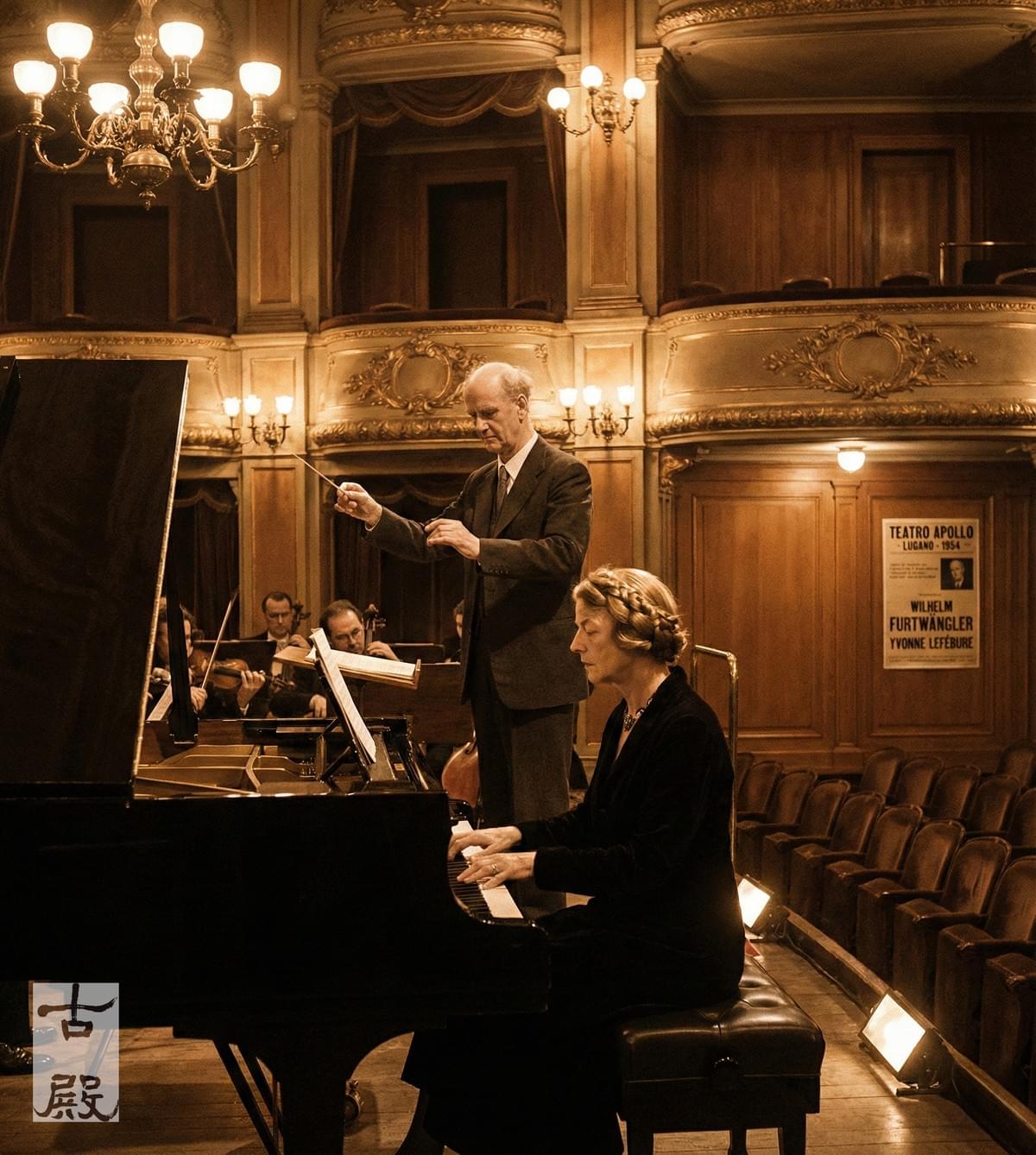
四、 最精彩的「對抗」:當烏雲遇見閃電
結果,發生了精彩的一次「對抗」。
據說演完之後,福特萬格勒本人對這次合作並不滿意。
為什麼?
福特萬格勒在他晚年,對於莫札特有著非常獨特的見解。他在《福特萬格勒談音樂》這本書裡曾說過一句名言:
「莫札特的音樂並不僅僅是形式的遊戲,它是來自生命深處的惡魔性力量。」
他反對把莫札特當成「永遠微笑的天使」或是宮廷裡的「洛可可裝飾品」。對他來說,這首D小調協奏曲(K.466)是莫札特最接近貝多芬、最具悲劇英雄色彩的作品。所以,他的速度慢到了極致,他代表莫札特音樂中挖掘音樂裡那些陰暗、痛苦的邪惡力量。
但在錄音的第一樂章中,你可以清楚聽見——蕾菲布拒絕被這股沈重的力量吞噬,她要力戰到底。
這就是傳說中**「速度與呼吸的拉扯」。 當樂團鋪天蓋地壓下來時,蕾菲布的鋼琴進入了。她雖然配合了整體的沈鬱氣氛,但她的彈性速度(Rubato)**非常強勢,甚至帶有一種「攻擊性」。她用那種法式的清透觸鍵,像閃電一樣切開了福特萬格勒德式的厚重音牆。
她沒有示弱,她像是一個在風暴中搏鬥的戰士。 這種「誰也不讓誰」的張力,雖然破壞了傳統音樂美學講究的「協調」,不過卻意外製造出了莫札特音樂中原本就有的**「狂飆運動(Sturm und Drang)」**精神。
這是一場活生生的爭辯。
五、 被封印的真實:完美的對立面
對於晚年追求音樂「有機統一」的福特萬格勒來說,像蕾菲布這樣一位無法完全掌控、甚至充滿稜角的獨奏家,在當下或許被他視為一種干擾,破壞了他心中那種蒼勁的圓滿。
事實上,1954年的這場現場音樂會,EMI 唱片公司確實派出了錄音團隊進行收錄。但在演出結束後,或許是因為現場的混亂,又或許是因為傳聞中「大師的不滿意」,這份母帶被當時的 EMI 判定為**「不予發行(Unpublished)」**,直接冰封雪藏。
在那個講究權威與完美的年代,這份錄音被視為「失敗品」。後來,這份音源的母帶拷貝,輾轉流落到了法國福特萬格勒協會手中,曾經被非正式地製作成「非賣品」形式的會員限定盤,僅在極少數死忠樂迷間流傳。
直到將近 20 年後的 1970 年 9 月,這份沈睡已久的錄音才由獨具慧眼的日本東芝 EMI(Toshiba EMI)讓它重見天日,首次進行商業發行(編號 AB-8125)。世界才終於驚覺,我們差點錯過了什麼。
1973英國UNICORN RECORDS在其發行的編號WFS-11也收入了這份錄音,他們是跟英國福特萬格勒協會合作出版的,英國協會主席保羅·J·敏欽(PAUL J MINCHIN)還特別寫了一篇專文介紹。
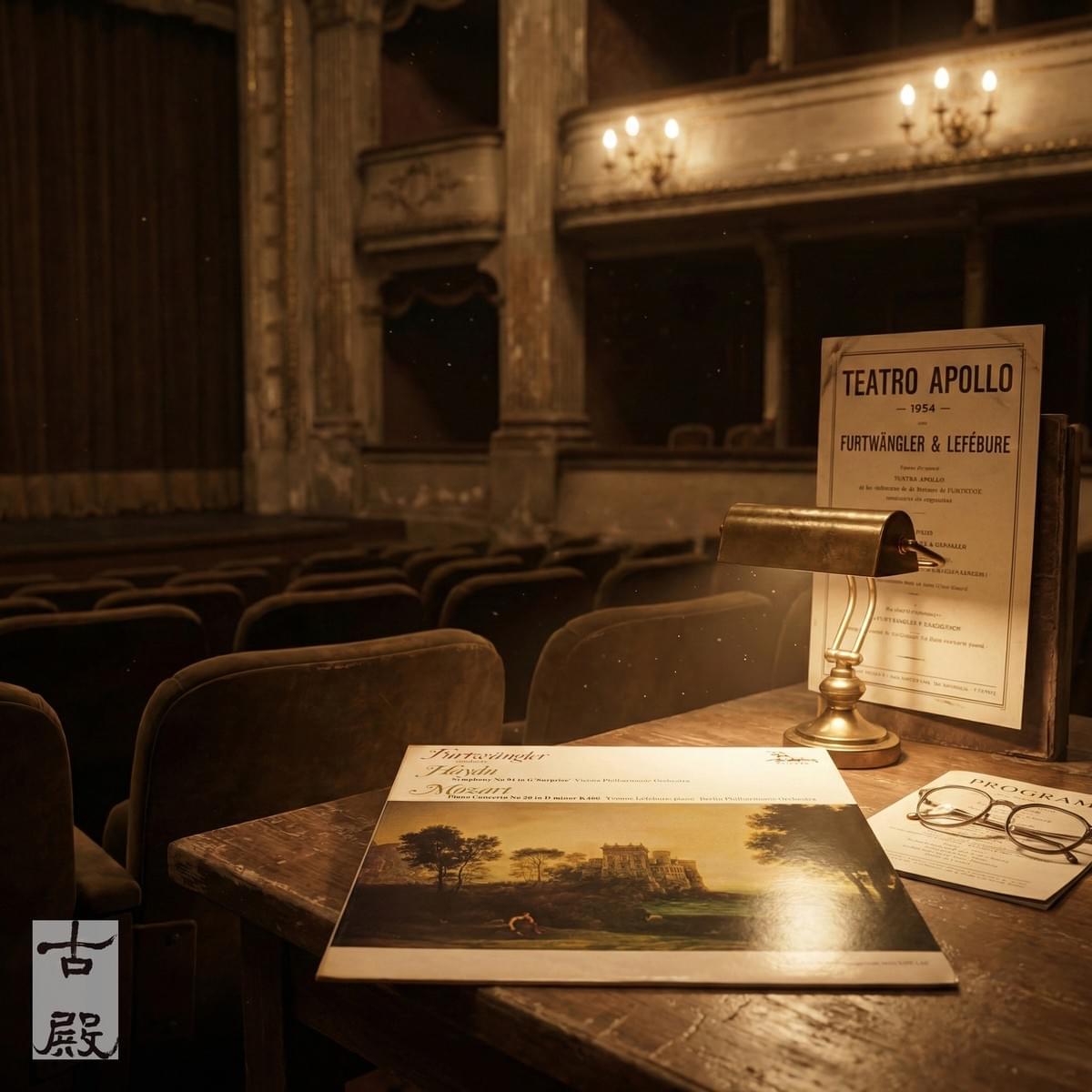
【記憶的悖論:為什麼「痛苦」比「舒適」更美?】
這裡有一個非常耐人尋味的細節,值得我們停下來思考三分鐘。
其實,蕾菲布一生中並不是只有這一次演奏莫札特 K.466 的機會。 早在 1951 年,她就與「大提琴之神」卡薩爾斯(Pablo Casals,1876-1973)在他的音樂節裡合作過這首曲子,那是一個溫暖、充滿人性光輝、像老友喝茶般的版本。 後來在 1958 年,她又與法國指揮家德沃(Pierre Dervaux,1917-1992)留下了一個錄音,那是一個精準、優雅、如教科書般完美的「法式版本」。
這兩個版本,論默契、論完整度、論舒適感,絕對都勝過 1954 年那晚的「災難現場」。 照理說,回憶應該是甜美的比較迷人,對吧?
但令人震驚的是,蕾菲布在晚年的回憶中,卻對 1954 年那場充滿衝突、混亂、甚至被認為「大師不滿意」的演出,寫下了這樣的評價:
「這無疑是我與管弦樂團伴奏最美好的一次經驗,由我永遠視為當代最偉大指揮家所奇蹟般地引領。」
這句話完全打破了我們對「美好」的定義。
為什麼她會把一場「戰鬥」視為最美好的經驗? 因為卡薩爾斯給了她「溫暖」,德沃給了她「空間」,但只有福特萬格勒,給了她**「極限」**。
在那晚的盧加諾,福特萬格勒那種瀕臨死亡的沈重感,像一座大山一樣壓下來。蕾菲布沒辦法像平常那樣優雅地彈琴,她被迫必須調動生命中所有的能量,才能在那片烏雲中殺出一條血路。
舒適圈裡沒有奇蹟,極限狀態下才有。 她所謂的「奇蹟般的引領」,指的並不是福特萬格勒像個紳士一樣扶著她走,而是他像個巨人一樣,逼迫她跳出了「鋼琴家」的框框,跟著他一起進入了莫札特靈魂中那個最瘋狂、最深淵的領域。
這告訴我們什麼? 真正的「活著」,有時候不是歲月靜好。 那些讓你刻骨銘心、在生命中留下印記的時刻,往往是那些你曾經拼了命去抵抗、去掙扎、最後在混亂中看見光芒的瞬間。
蕾菲布選擇了 1954 年,因為在那一刻,她不只是在彈琴,她是在「燃燒生命」。
這證明了一件事:即便當下是衝突的、是混亂的,但在兩位藝術家的靈魂深處,那種**「極限狀態下的燃燒」才是最珍貴的。這正是藝術中那種「不可測度(incommensurable)」的奇蹟狀態**。
正是這份奇蹟,使得這份福特萬格勒一生中唯一留下的莫札特第 20 號鋼琴協奏曲錄音,超越了完美的定義,成為同曲目中無可取代的世紀經典。
# 在廢墟中聆聽永恆:為什麼我們需要這本遲到 78 年的書?
如果你在聆聽這場 1954 年的莫札特20號鋼琴奏曲,曾被那種「對抗與極限」所震懾,那麼你一定會問:究竟是什麼樣的精神結構,能支撐一個人在老年時呈現這樣的音樂?
要聽懂福特萬格勒留給世界的聲音,我們必須了解他內心的所思所想。
這正是為什麼「古殿樂藏」決定承擔起這場文化使命,編譯這本遲到了 78 年的經典——《福特萬格勒談音樂》(Gespräche über Musik),1948。大師在筆下談論聽眾如何成為共同體,談論藝術如何對抗機械化的技術崇拜。
78 年來,這本書在德語、英語世界被奉為圭臬,日文版也早在1953年就問世,雖然中文領域的福特萬格勒的音樂愛好者不少,但此書卻始終缺席於華語讀者的視野。或許是因為它太過厚重——不是頁數的厚重,而是思想的密度;又或許是因為它太難歸類——它名為「談音樂」,實則是談論生命、哲學、命運與神性。
無論如何,如果您熱愛古典音樂,熱愛歷史與文化,熱愛福特萬格勒的指揮棒下的音樂,這本書絕對是務必要讀的一本經典;如果您想穿透時空的迷霧,不只是「聽見」他的指揮棒,而是「走進」那位在廢墟中守護靈魂的巨人內心,這本書將是唯一的鑰匙。讓我們跟隨大師的思辨,在技術狂奔的時代,找回那穿越時空、永恆不滅的人性之聲。
2026年「古殿樂藏」—— 敬請期待。
實體音樂連結:
*******
Why a "Disaster" Became a Legend: Hearing the Heartbreak in Furtwängler’s Last "Imperfect" Mozart
The protagonist of today's story is the 20th-century conducting legend, Wilhelm Furtwängler (1886-1954). But this isn't a story about his glory days. It’s a story about the final year of his life—how he dragged a failing body through chaos and controversy to leave us a "Swan Song" that truly breaks your heart.
1. 1954: The Final Bloom and a Farewell to the World
Let's turn the clock back to 1954. This was the end of the line for the maestro (he passed away on November 30th of that same year).
If you are familiar with Furtwängler, you might miss that explosive, almost crazy energy he had in the 1940s. But by 1954, everything had changed. He had suffered a major illness in 1952 that left him bedridden for months, causing his physical strength to fall off a cliff. Even cruelest of all, as a musician, he was suffering deeply from hearing loss. There were even rumors that he contemplated ending his own life.
He was 68. For a conductor, that’s not actually that old. But for Furtwängler at that moment, every performance was like writing a will. The physical power was gone, the dominance had faded, and in its place was a heart-wrenching sense of "loneliness."
As the Japanese music critic Uno Kōhō said: "These works are, without a doubt, his words of farewell to this world."
2. "Clear yet Withered": The Soul Rising as the Body Fades
If the physical strength is gone, what is left in the music?
During this time, Furtwängler said something incredibly important to his close friend, Karla Höcker. This is the key to unlocking his late-style music:
"The form must be clear. It must be clear and 'cangjing' (withered yet vigorous), with absolutely nothing superfluous. Yet, inside, there must be a core of fire that illuminates this form through and through."
I want you to really taste that word "Withered" (or Cangjing). It represents a state where all impurities are stripped away—a kind of seasoned, pure exhaustion. The younger Furtwängler might not have suited this word. But in 1954, when he no longer had the energy to show off, he forced himself to make the music "transparent." Yet, under that fragile, transparent surface, a "core of fire" still burned.
This is exactly what we are listening to today—May 15, 1954: Mozart’s Piano Concerto No. 20.
3. The Lugano Nightmare: A Recipe for Disaster
This performance took place at the Apollo Theatre in Lugano, Switzerland. It was the final stop on the Berlin Philharmonic's tour. Just look at this brutal schedule:
- May 4: Paris Opera (Conducting Beethoven’s 5th).
- May 14: Turin, Italy.
- May 15: Rush to Lugano, Switzerland.
It was an exhausting journey. To make matters worse, on May 15th, the train was severely delayed. The orchestra didn't even arrive in Lugano until the afternoon. Furtwängler, dragging his sick body, had only one hour to rehearse with the evening’s piano soloist, Yvonne Lefébure (1898-1986).
This was their "first meeting." On one side: An old German man suffering from deafness, chasing a "tragic" and "withered" sound. On the other: A "Iron Lady" of the piano from the French school, with a touch as crystal clear as glass.
With almost zero chemistry, zero preparation, and physically drained, they walked onto the stage. This performance was destined to be a "disaster"—or perhaps, a "miracle" that entered a state of "incommensurability" (something beyond measure).
For a piece as structurally complex as Mozart’s Piano Concerto No. 20, this was a dangerous gamble of "zero chemistry."
Standing on the podium was Furtwängler, who loved deep German philosophy and let music ferment slowly like wine. Sitting at the piano was Lefébure, the star student of the French master Alfred Cortot. Her style was typical French: crystal-clear touch, decisive rhythm, and lines as sharp as a scalpel.
One was a heavy dark cloud; the other was a sharp bolt of lightning. What happens when you push these two onto a stage with almost no rehearsal?
4. The Most Thrilling "Confrontation": When Dark Clouds Meet Lightning
The result was a spectacular "confrontation." Rumor has it that after the concert, Furtwängler himself was not satisfied with the collaboration.
Why?
In his later years, Furtwängler had a very unique view of Mozart. He once said: "Mozart’s music is not just a play of forms; it is a demonic force from the depths of life."
He refused to treat Mozart as an "eternally smiling angel" or a pretty decoration. To him, this D Minor Concerto (K.466) was Mozart at his most tragic—closest to Beethoven. So, he slowed the tempo down to the extreme, trying to dig out the dark, painful, even "evil" forces in the music.
But in the recording of the first movement, you can clearly hear it—Lefébure refused to be swallowed by this heavy darkness. She fought back.
This is the legendary "tug-of-war between speed and breath." When the orchestra crashed down like a landslide, Lefébure’s piano entered. While she matched the gloomy atmosphere, her Rubato (elastic speed) was incredibly aggressive. She used that clear, French touch to slice through Furtwängler’s heavy German wall of sound like lightning.
She showed no weakness. She played like a warrior wrestling in a storm. This tension of "no one giving an inch" destroyed the traditional aesthetic of "harmony," but it accidentally recreated the true spirit of "Sturm und Drang" (Storm and Stress) that exists within Mozart’s music.
It was a living, breathing argument.
5. The Sealed Truth: The Opposite of Perfection
For Furtwängler, who sought "organic unity" in his final years, a soloist like Lefébure—who was uncontrollable and full of sharp edges—might have felt like a disturbance, destroying the "withered roundness" he envisioned.
In fact, EMI Records was there to record this 1954 concert. But after it ended, perhaps due to the chaos or the rumors of the "Maestro's dissatisfaction," EMI marked the master tape as "Unpublished" and put it on ice.
In an era that valued authority and perfection, this recording was seen as a "failure." Later, a copy of the tape ended up with the French Furtwängler Society and circulated only among die-hard fans.
It wasn't until nearly 20 years later, in September 1970, that the Japanese label Toshiba EMI finally let it see the light of day. The world finally realized what we had almost missed.
[The Paradox of Memory: Why is "Pain" More Beautiful than "Comfort"?]
There is a very intriguing detail here that is worth pausing to think about for three minutes.
Lefébure played this Mozart concerto many times in her life. In 1951, she played it with the "God of Cello" Pablo Casals—a warm, human version, like tea with an old friend. In 1958, she recorded it with French conductor Pierre Dervaux—a precise, elegant, textbook-perfect "French version."
These two versions were definitely more "coordinated," "complete," and "comfortable" than that disaster night in 1954. Logically, the sweet memories should be the best ones, right?
But shockingly, in her later years, when looking back at that chaotic, conflicted 1954 performance, Lefébure wrote this:
"This was undoubtedly my most beautiful experience with an orchestra, miraculously led by the man I will forever regard as the greatest conductor of our time."
This sentence completely shatters our definition of "beauty."
Why would she consider a "battle" her most beautiful experience? Because Casals gave her "warmth," and Dervaux gave her "space," but only Furtwängler gave her "limits."
That night in Lugano, the heaviness of Furtwängler’s impending death pressed down like a mountain. Lefébure couldn't play with her usual elegance; she was forced to summon every ounce of energy in her life just to carve a path through that dark cloud.
There are no miracles in the comfort zone; they only happen at the limit. When she spoke of "miraculous leading," she didn't mean he guided her like a gentleman. She meant he was like a giant who forced her out of the "pianist" box and dragged her into the most insane, abyssal depths of Mozart’s soul.
What does this tell us? True "living" isn't always about peace and quiet. The moments that carve themselves into your soul are often the ones where you fought with everything you had, where you struggled, and finally saw the light amidst the chaos.
Lefébure chose 1954 because, in that moment, she wasn't just playing the piano. She was "burning her life."
This proves one thing: Even if the moment is conflicted and chaotic, that "burning at the limit" deep within the soul is the most precious thing of all. That is the miracle of art.
And it is this miracle that makes Furtwängler’s only surviving recording of Mozart's 20th Concerto transcend the definition of perfection, becoming an irreplaceable classic for the ages.