
【古殿唱片音樂故事】1952年柯爾托晚年在東京:一位「錯音/之神」的最後救贖
古殿殿主
如果我現在放一張唱片給你聽,然後告訴你:「這位鋼琴家錯音很多,手指也不太聽使喚,節奏有時候還會亂跑。」你大概會皺著眉頭問我:「殿主,那你為什麼要我聽這個?我們不是應該聽最完美的演奏嗎?」
但在 1952 年的東京,有一位 75 歲的老人,用他顫抖的手指,給了當時的日本人,一堂最震撼的「錯音/之神」課。
為什麼「錯音」最多的鋼琴家,反而被稱為「神」?
其實在當年,這件事是有爭議的。1952 年,日本樂壇正受到戰後「新客觀主義」的影響,許多年輕的新銳樂評家拿著顯微鏡,對柯爾托的錯音大加撻伐,認為「這種殘破的技術根本不該上台」。
但當時日本最權威的古典音樂樂評家**野村光一(Koichi Nomura,1895-1988)**站了出來。他在報紙上寫下了著名的反擊:
「你們這些人,只聽得見手指的失誤,卻聽不見生命的靈魂。如果只為了聽準確的音符,去聽打字機好了。」
這場筆戰,形成了柯爾托在日本極端兩極化的評價:有人聽見了「錯音」,有人卻遇見了「神」。
事隔多年後,一位日本資深樂迷在部落格寫下的文字,讓我深受感動。這不是樂評人的官方文章,而是一個**「重度古典音樂發燒友」的私密日記**。他也承認1952年的柯爾托在歷史上「毀譽參半」,但他寫道:
就像前陣子霍洛維茲(Horowitz)晚年訪日時引起的風波不相上下,聽說柯爾托當年的日本公演,也是**『毀譽參半』(毀誉褒貶)得非常厲害。**
實際聽了這張唱片(LS-2029),演奏樣式確實跟 1920 年代的科爾托完全不同。雖然錄音非常的『Dead』(無添加人工殘響),但那觸鍵確實是科爾托獨有的東西。
對於像我這樣已經將他『神格化』的人來說(他身體的衰弱與疲憊,對我而言絕非笑話),光是能觸碰到他的那份藝術,就已經感到幸福了。
這位即便手指衰弱,卻仍被視為「神」的老人,就是阿爾弗雷德·柯爾托(Alfred Cortot, 1877-1962)。
一、 孤島上的靈魂
1952 年,對於柯爾托來說,是一個殘酷的年份。在歐洲,他因為二戰期間曾擔任維希政權(親納粹)的藝術官員,聲名狼藉。他被禁止演出,被視為「戰犯」,昔日的榮耀變成了羞辱。
但在地球另一端的日本,情況卻完全相反。日本人把他當作「神」一樣地接納。這場原本預定 25 場的巡演,因為太過轟動,最後追加到了 32 場。
在這趟旅途中,發生了一個讓我每次講都會起雞皮疙瘩的故事。
當火車經過長崎縣的川棚(Kawatana)時,柯爾托望著窗外,看到海面上浮著一座孤零零的小島。那種極致的孤獨感,瞬間擊中了這位老人的心。他轉頭對身邊的人說:「我想買下那個島,死後就葬在那裡。」
日本人聽懂了他的孤獨。雖然島不能賣,但當地人給那座島取了一個別名——「孤留島」(Ko-Ru-To-Shima)。取其日文諧音,意為「孤獨地留下來」。
後來,柯爾托甚至刻了一枚印章,就刻著「孤留島」三個字,隨身攜帶。
請大家記住這個畫面:一個被歐洲放逐的老人,在異國的海邊找到了靈魂的歸屬。帶著這份心情,我們再去聽他的音樂,你聽到的就不再是鋼琴聲,而是一個人在對大海說話。
談這段故事,主要是要你們感受1952年柯爾托當時的內心世界。
二、 顧爾達的窺視:「錯音」背後的真相
現在,我們來聊聊時常伴隨著柯爾托的——「錯音」。
柯爾托晚年的技巧衰退是事實。當時日本評論界分裂成兩派:一派年輕樂評人拿著顯微鏡數他的錯音,大罵「這種技術不該上台」;另一派像權威樂評家野村光一,則反擊道:「你們只聽得見手指的失誤,卻聽不見音樂的靈魂。」
但是為什麼這麼多「錯音」,柯爾托卻還是「一反常理」地讓許多鋼琴頂尖大師們頂禮膜拜?
這裡有個關於維也納鋼琴怪傑顧爾達(Friedrich Gulda,1930-2000)的趣事。當年 16 歲的顧爾達剛拿日內瓦大賽金牌,技巧無敵,但他卻把柯爾托指下琴音奉為神明。他很好奇:「這老頭到底有什麼魔法?上台前都在練什麼祕技?」
有一天,顧爾達偷偷潛入音樂廳後台,貼在琴房門口偷聽「奧秘」。他以為會聽到什麼深奧的樂段,結果,他愣住了。
門裡傳來的,是單調、枯燥、緩慢的——音階。
Do Re Mi Fa Sol La Si Do... 一遍又一遍。
那一刻,顧爾達懂了。原來大師在台上那種如煙霧般迷離、如詩般自由的演奏,並不是「隨便彈彈」。為了在台上能像鳥一樣飛翔,他在台下必須先把翅膀洗得比誰都乾淨。
這給了我們什麼啟示?我們聽到的那些「錯音」,不是因為他懶,也不是因為他練得少。而是因為他為了追求一種極致的音色、一種危險的詩意,他選擇了在場上「冒險」。
現代鋼琴家為了安全,走在平地上;柯爾托為了看風景,選擇走鋼索。走鋼索偶爾會晃動(錯音),但那種驚心動魄的美,是平地永遠看不到的。
三、 1/5秒的殘影:攝影師眼中的「氣息」
除了耳朵,我們還能用眼睛來「聽」柯爾托。
日本著名的肖象攝影大師大竹省二(Shoji Otake,1920-2015),當年留下了非常珍貴的拍攝筆記。這份資料,簡直就是柯爾托晚年狀態的「氣息」紀錄。
(大竹省二的攝影集《世界の音楽家》(World Musicians)出版於1955年。他從1951年開始為朝日新聞社拍攝訪日世界第一流音樂家直到1955年。1950年代訪日的音樂家留下的攝影影像主要都是他的手筆,他後來也成為日本最重要的肖象攝影(Portrait Photography)大師)
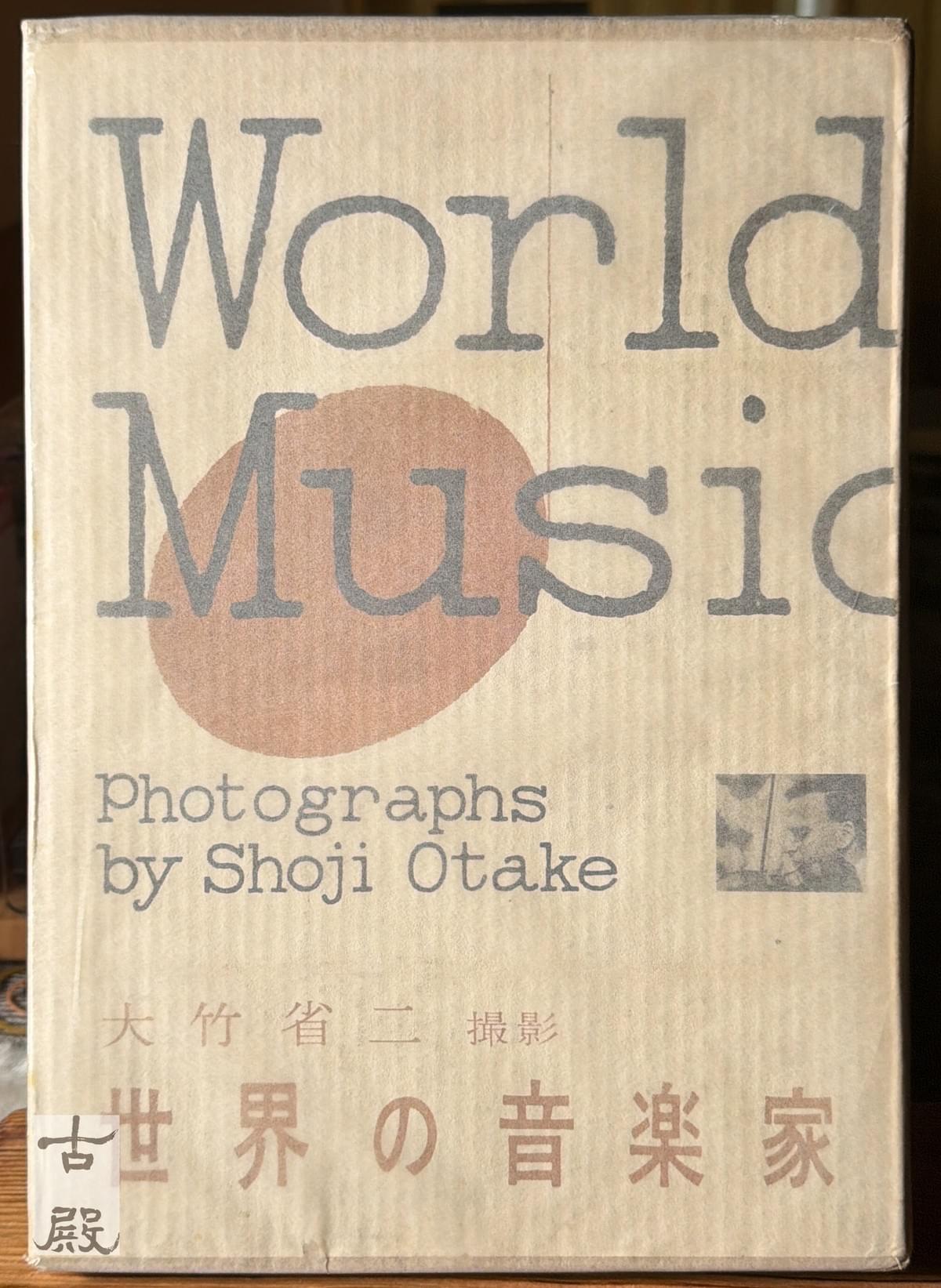
大竹省二回憶紀錄中說,柯爾托非常討厭拍照。剛舉起相機,他就縮回去,像個彆扭的小孩。他的兒子還在旁邊護駕:「別太折騰我家老頭子!」
但在那短短的幾分鐘裡,大竹省二發現了一件驚人的事:「柯爾托的視力似乎不太好,耳朵也聽不太清楚了。但他一坐到鋼琴前,整個人就像換了一個人,充滿了生氣。」
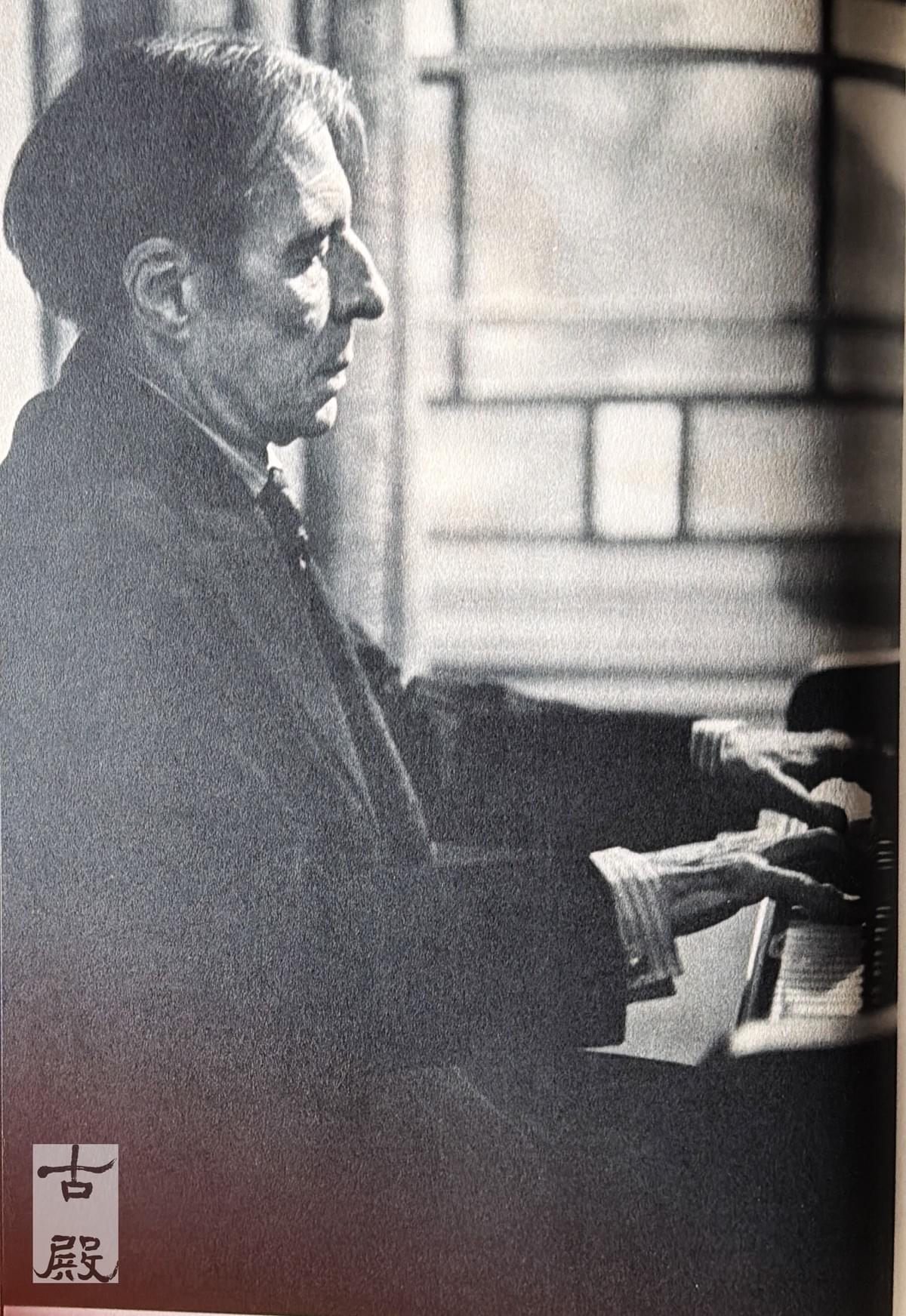
大竹省二拍下了一張著名的照片,他在筆記裡寫下了技術參數:「快門 1/5 秒」。
懂攝影的朋友都知道,1/5 秒是一個極慢的速度,手一抖畫面就會糊掉。但這正是大竹省二要的。他不要拍一張銳利的「標本」,他要拍那個「活著的氣息」。
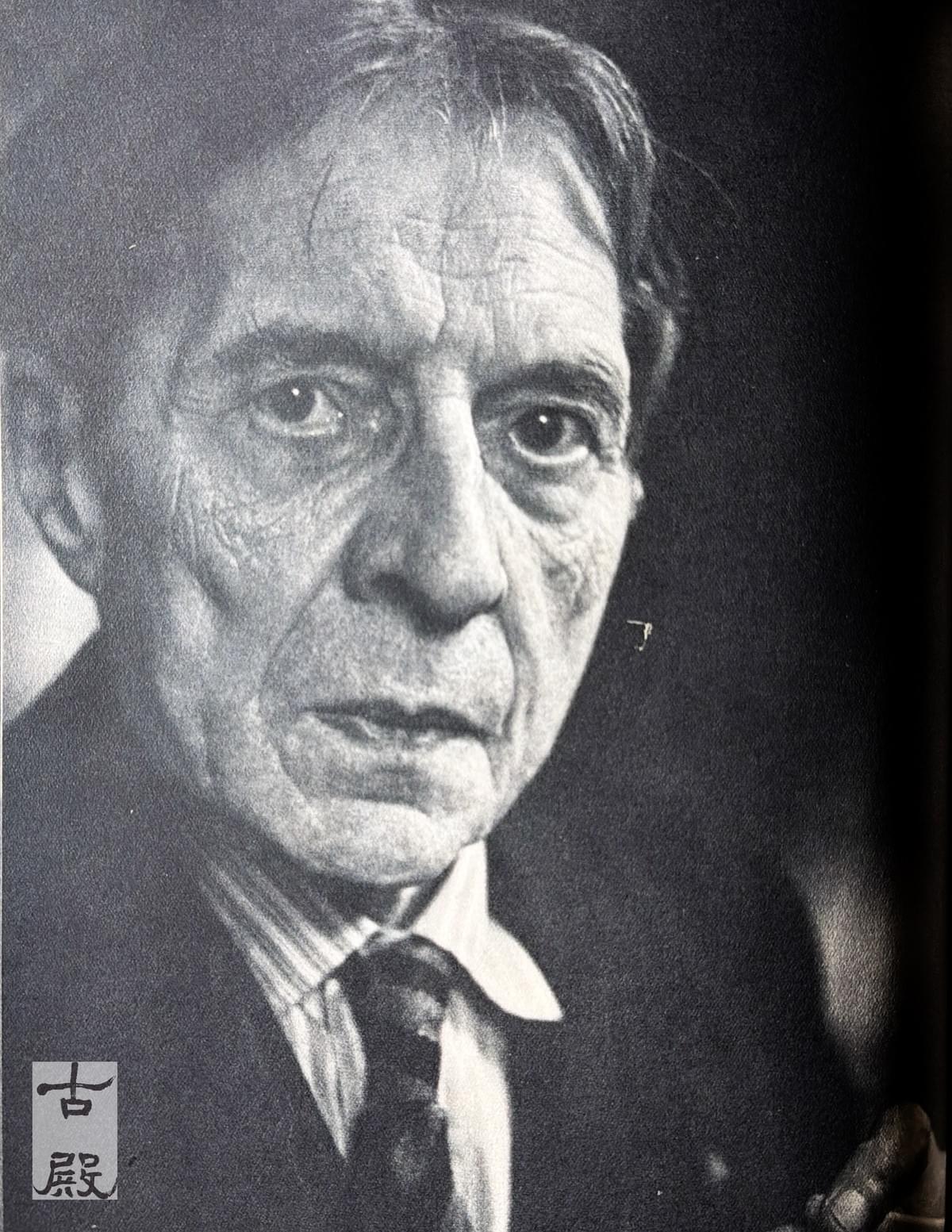
照片裡的柯爾托是模糊的,帶著殘影的。這不就跟他的錄音一模一樣嗎?
四、 日本戰後唱片史的第一張黑膠:Victor 大師日本錄音
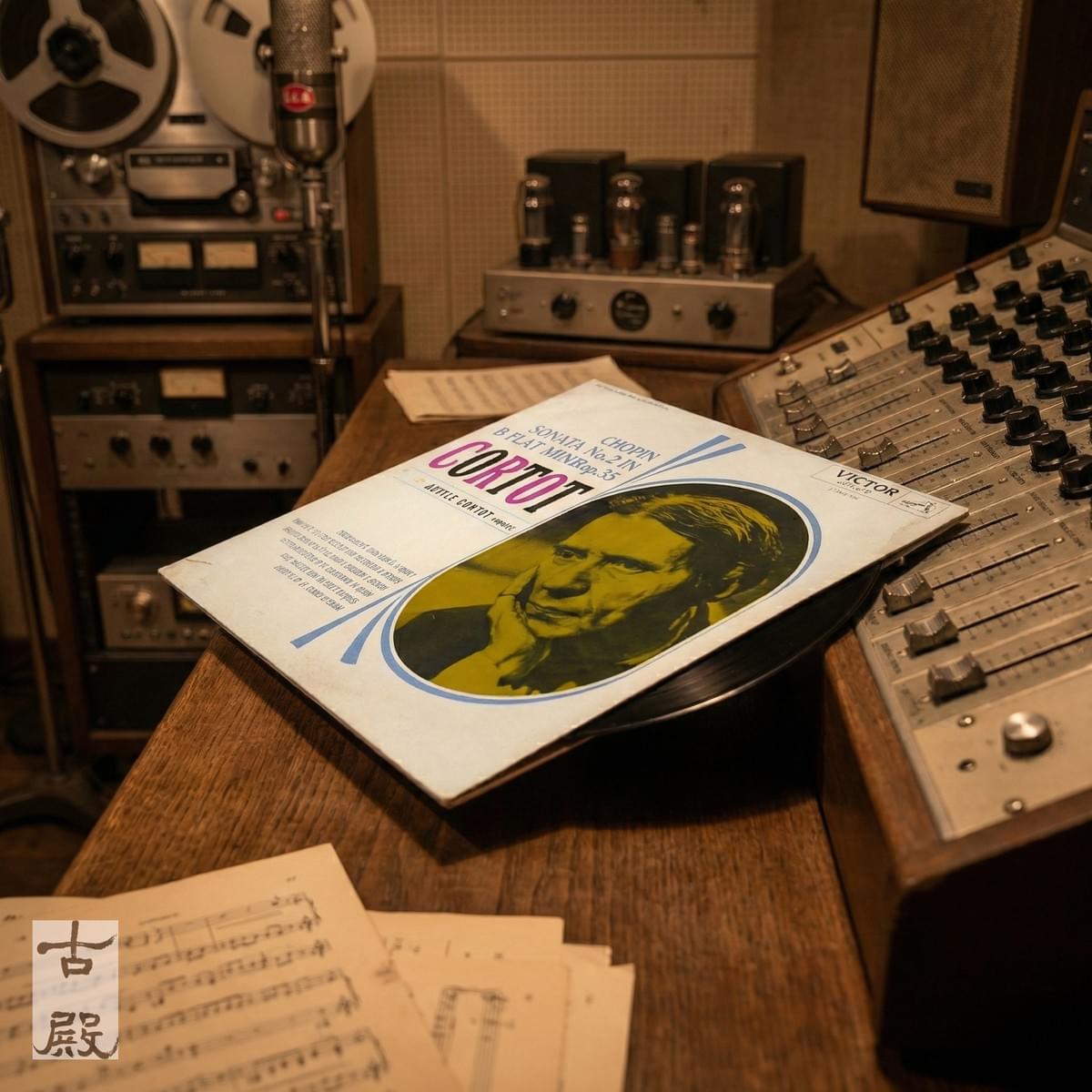
接下來就要提到那次的傳奇錄音故事了。趁著這次巡演,日本 Victor 公司(JVC)在東京築地錄音室,為柯爾托留下了極為珍貴的紀錄。
這份錄音的地位之所以崇高,不單是因為稀有,更因為它被譽為是:
柯爾托一生從留聲機(78轉)時代跨越到黑膠時代的漫長生涯中,錄音技術最成熟、音質最完美的成果。
相比於他壯年時期那些雖然演繹完美、但底噪吵雜的蟲膠唱片,1952 年的這份錄音,是我們唯一能用現代的高傳真(High Fidelity)耳朵,去聽清楚他每一個呼吸與觸鍵的機會。
同時,它在日本唱片工業史上具有「聖杯」級的地位——它是日本第一張國產 LP(Long Playing)黑膠唱片(編號 LS-2001)。
這不僅僅是一個編號,它代表了當時日本唱片工業的最高宣示:這是一張不再依賴歐美母帶,而是從錄音、製作、刻版,一直到壓片與出版,徹底實現「一條龍」全部日本製(Made in Japan)的唱片。
戰後的日本職人,用盡了當時國內最頂尖的技術,只為了把這位老人留下來。這是何等的禮遇與重量。
當時錄下了兩張重要的黑膠:LS-2001 與 LS-2029。這兩張唱片,剛好紀錄了柯爾托的「兩張臉」。
1. 編號 LS-2001:死亡與慰藉(首版非 RIAA 曲線)
這張日本第一號 LP,A 面收錄了沉重的蕭邦《降B小調第二號鋼琴奏鳴曲》(送葬),定調了戰後日本的悲情與嚴肅;B 面則全是柯爾托最膾炙人口的「安可曲」:如《雨滴》、《小狗圓舞曲》、《離別曲》。
這張唱片還有一個技術上的秘密:它發行於 1952 年,當時的世界標準等化曲線(RIAA)尚未統一。所以如果你拿現代的標準去播這張初版,聲音可能會怪怪的。
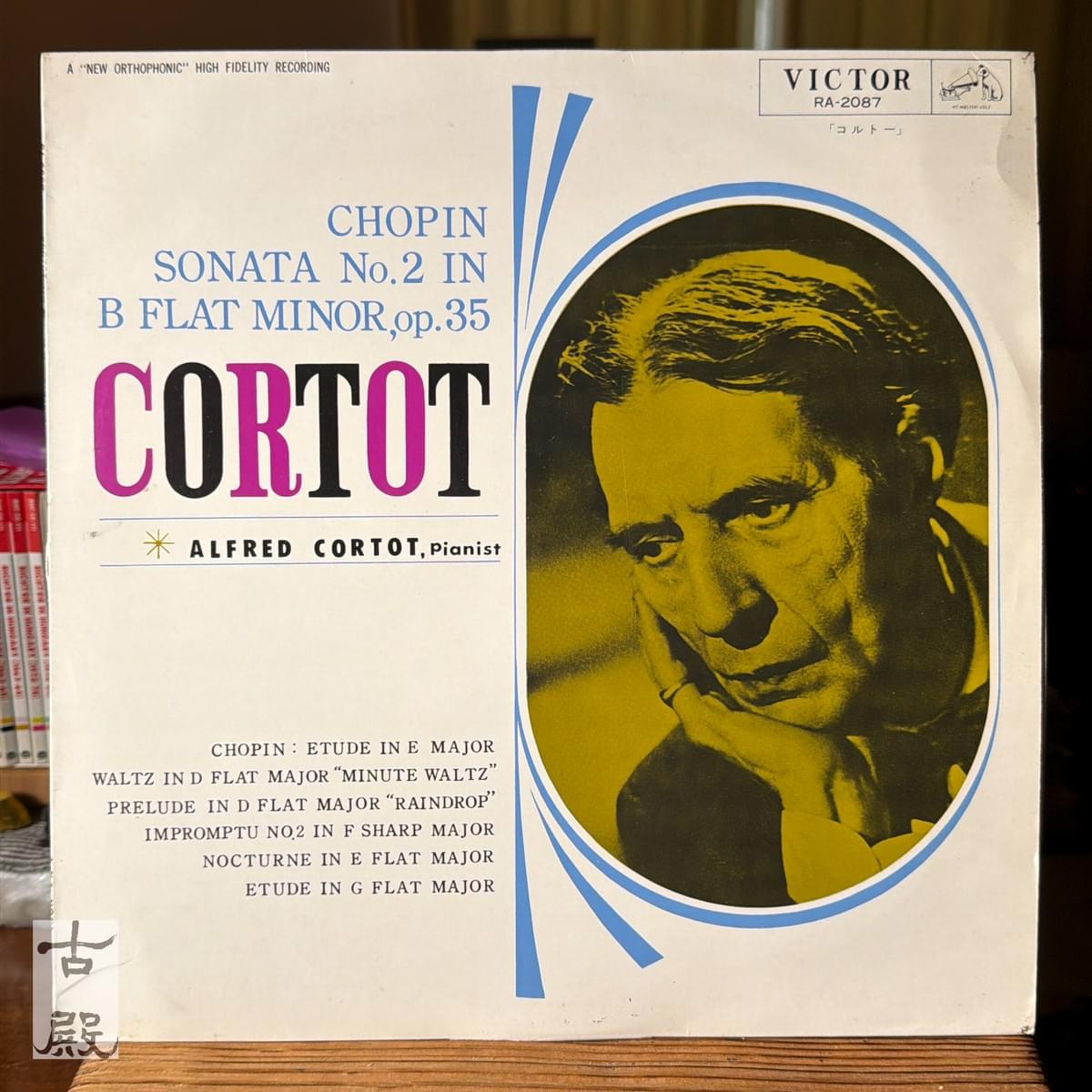
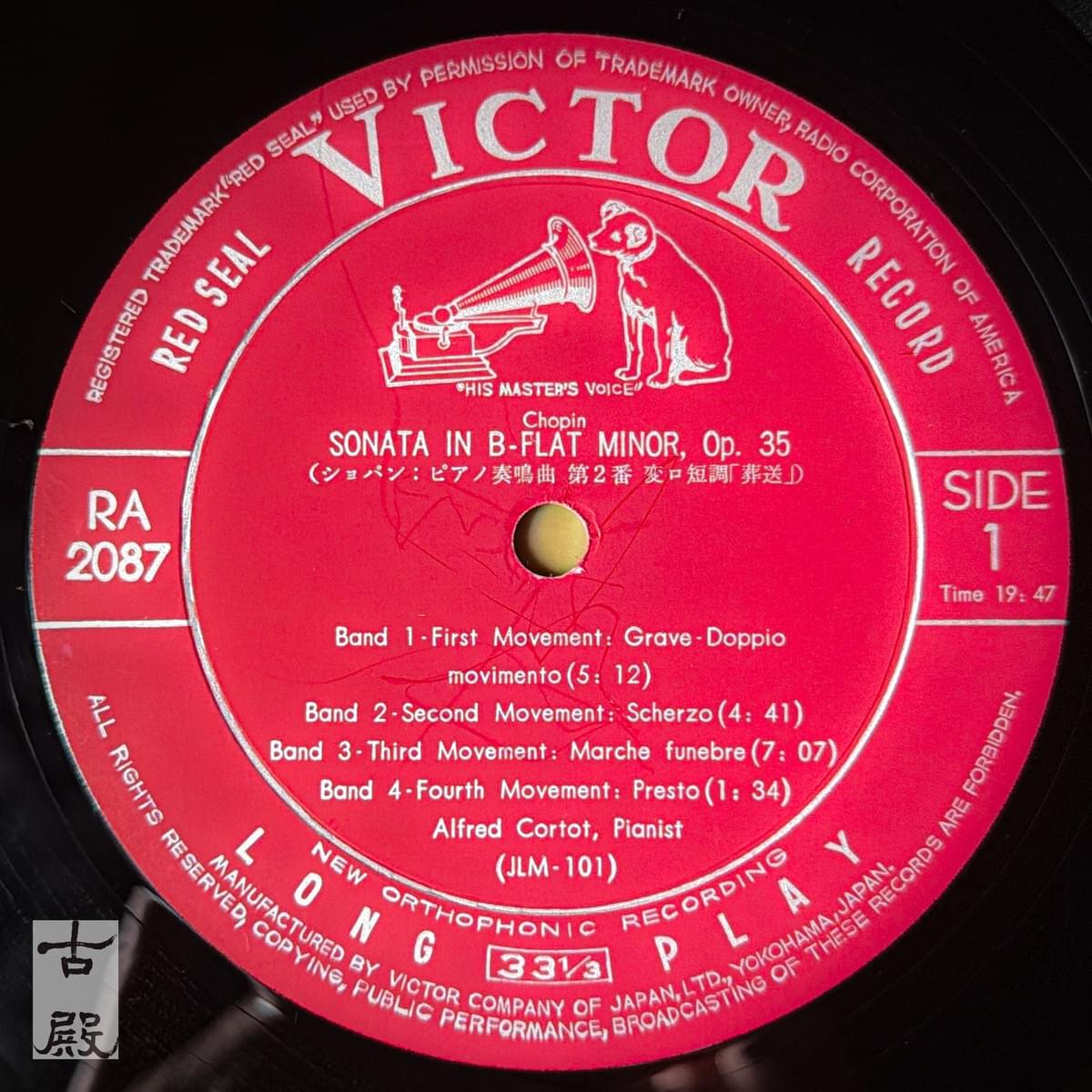
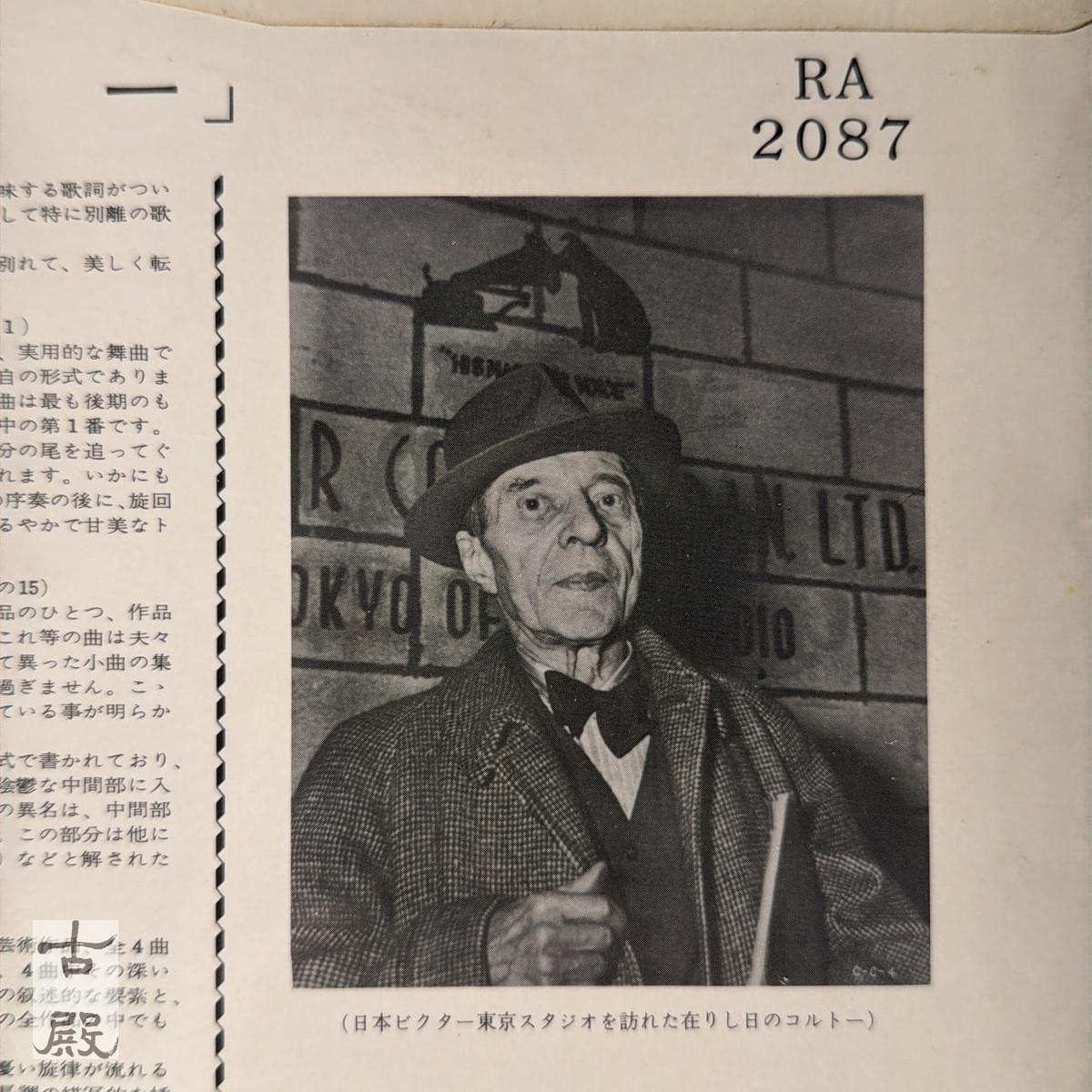
直到 1962 年柯爾托過世,日本再次發行了一張**「追悼盤」(編號 RA-2087)**,才將聲音調整為現代標準的 RIAA 曲線。這兩張唱片,一張是「原始的等化」,一張是「標準RIAA的緬懷」。
2. 編號 LS-2029:搏命的英雄(極稀有盤)
如果說第一張是給大眾聽的,那這張編號 LS-2029 就是給「信徒」聽的。這裡面收錄的曲目,對一位 75 歲的老人來說簡直是**「不可能的任務」**:蕭邦的《英雄波蘭舞曲》、《第二號詼諧曲》、《第三號詼諧曲》。
這裡藏著一個讓所有收藏家心跳漏一拍的事實:蕭邦《第二號詼諧曲》與《第三號詼諧曲》,是科爾托一生中「唯一」的錄音版本。
除此之外,他在全盛時期從未錄製過這兩首曲子,世上也再無其他版本。他在手指最靈活的時候錯過了它們,卻在生命的最後,用顫抖的手指把它們留給了日本。
這張唱片只有原始首版,沒有再版,是真正的夢幻逸品。
3. 紀錄科爾托晚年藝術的誠實美學
當時的日本VICTOR錄音師採取了一種「極度誠實」的收音美學,完全沒有添加人工殘響(Reverb)。我們聽到的,不是經過現代科技「加料」修飾後的美聲,而是像是你就坐在鋼琴旁邊一公尺,看著他彈奏。
在這次的錄音裡,你可以聽見手指觸鍵時那種真實的「肉感」,聽見老邁身體在樂句轉換時的沉重呼吸聲,甚至是他在椅子上調整重心時發出的嘎吱雜音。
之前提到的攝影師大竹省二拍下的 1/5 秒模糊照片,和這份真實錄音,都在告訴我們同一件事:真實,往往是粗糙的。 正因為沒有了更多殘響補充的「化妝品」,我們才得以直接觸碰到那份赤裸裸、毫無保留的人性。
(註:如果你找不到昂貴的黑膠,2005年日本 BMG 曾發行過一套編號 BVCC-37439/40 的雙 CD「Cortot in Japan 1952」,完整收錄了上述所有曲目,包含那首讓人熱淚盈眶的《英雄波蘭舞曲》,將 1952 年那個冬天的科爾托完整召喚回來。但這套 CD 目前也已絕版,成為難尋的數位逸品。)
結語:「錯音/之神」的最後救贖
寫到這裡,我想回答一開始的問題:為什麼我們要聽 1952 年這位手指僵硬、錯音連連的老人的錄音?
鋼琴大師普萊雅(Murray Perahia,1947-)曾為柯爾托辯護:
「如果聽眾因為幾個瑕疵而分心,那將是一件憾事。因為他的演奏就像一股湍急的水流,那是與自然搏鬥的痕跡。」
剛開始,你可能會被單聲道的雜訊干擾,可能會被「錯音」嚇一跳。但請你給自己三分鐘,試著穿過那些表面的瑕疵。
你會看見那個穿著大衣站在飯店走廊盡頭的老人;你會看見那座孤獨的「孤留島」;你會聽見一種只有在生命盡頭才能領悟的、溫暖而寬恕的聲音。
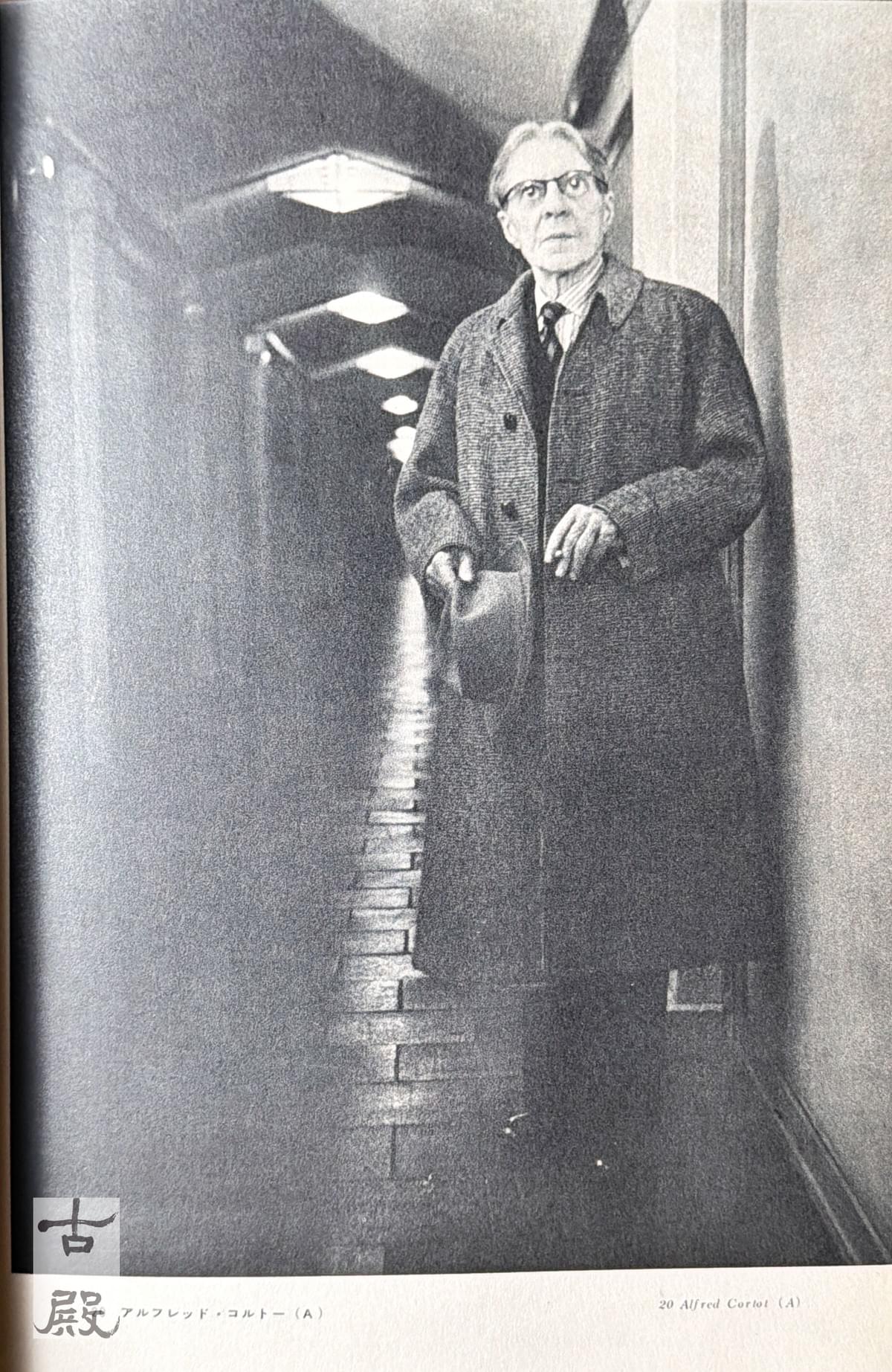
你會聽到,一位一坐到鋼琴前,整個人就像換了一個人,頓時就充滿了生氣的柯爾托,這時刻他身上彷彿罩著光芒。
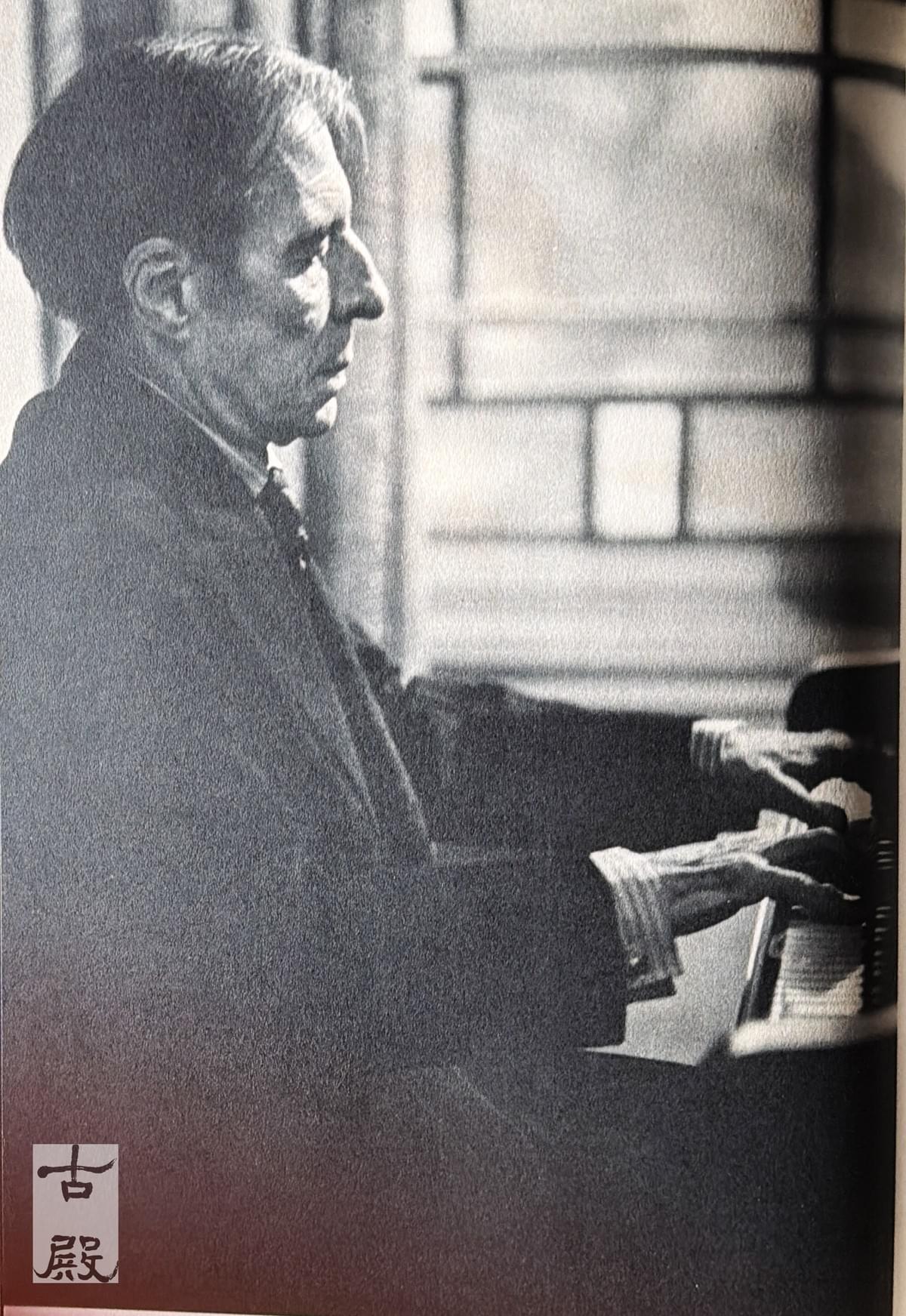
你會發現,原來**「有瑕疵的真實」,比「完美的虛假」,還要美上一萬倍。**
這就是古殿想帶給你的——不是聽音樂,而是找回那個原本就有溫度的自己。
實體音樂:
*******
【The Gudian Music Story】Cortot in Tokyo, 1952: The Last Redemption of the "God of Wrong Notes"
If I played a record for you right now and said, "This pianist makes a lot of mistakes, his fingers don't quite obey him, and his rhythm occasionally wanders off," you would probably frown and ask, "Master, why are you making me listen to this? Aren't we supposed to listen to the most perfect performances?"
But in Tokyo in 1952, a 75-year-old man, using his trembling fingers, gave the Japanese people of that era the most shocking lesson from the "God of Wrong Notes."
Why was the pianist with the most "wrong notes" hailed as a "God"?
At the time, this was actually quite controversial. In 1952, the Japanese music scene was under the influence of post-war "New Objectivity." Many young, rising critics held magnifying glasses to Cortot’s performance, scathingly claiming that "this broken technique has no business being on stage."
However, Koichi Nomura (1895–1988), the most authoritative music critic in Japan at the time, stood up. He wrote a famous rebuttal in the newspaper:
"You people can only hear the mistakes of the fingers, but you cannot hear the soul of life. If you only want to hear accurate notes, go listen to a typewriter."
This battle of words created two extreme poles of evaluation for Cortot in Japan: some heard "wrong notes," while others encountered "God."
Years later, I was deeply moved by the words of a veteran Japanese music lover on his blog. It wasn't an official review, but the private diary of a "hardcore audiophile." He admitted that Cortot's 1952 performance was historically "controversial," yet he wrote:
"Much like the stir caused by Horowitz’s late-career visit to Japan, I heard that Cortot’s tour back then was also intensely 'mixed with praise and blame.' Actually listening to this record (LS-2029), the performance style is indeed completely different from the Cortot of the 1920s. Though the recording is very 'dead' (no artificial reverb), that touch is unmistakably Cortot. For someone like me who has already 'deified' him—his physical frailty and exhaustion are no joke to me—simply being able to touch his art makes me feel blessed."
This old man, whose fingers were failing yet was still seen as a "God," was Alfred Cortot (1877–1962).
I. A Soul on a Deserted Island
The year 1952 was a cruel one for Cortot. In Europe, his reputation was in tatters because he had served as an arts official under the Vichy regime (pro-Nazi) during WWII. He was banned from performing and viewed as a "war criminal"; his former glory had turned to shame.
But on the other side of the globe, in Japan, the situation was the exact opposite. The Japanese welcomed him like a deity. The tour was originally scheduled for 25 concerts, but it was so sensational that they eventually added seven more, totaling 32 performances.
During this journey, a story took place that gives me goosebumps every time I tell it.
As the train passed through Kawatana in Nagasaki Prefecture, Cortot looked out the window and saw a tiny, solitary island floating on the sea. That sense of ultimate loneliness instantly struck the old man's heart. He turned to those around him and said, "I want to buy that island and be buried there after I die."
The Japanese understood his loneliness. Although the island could not be sold, the locals gave it a nickname—"Ko-Ru-To-Shima" (Cortot Island). In Japanese, this is a pun that sounds like "The island where one stays alone."
Later, Cortot even had a seal carved with the characters for "Ko-Ru-To-Shima," which he carried with him everywhere.
Please remember this image: an old man exiled from Europe finding a spiritual home by the sea of a foreign land. If you listen to his music with this sentiment, you are no longer just hearing a piano; you are hearing a man talking to the ocean.
II. Gulda’s Peek: The Truth Behind the Wrong Notes
Now, let's talk about the thing that often accompanied Cortot—the "wrong notes."
It is a fact that Cortot’s technique declined in his later years. But why, despite so many mistakes, did Cortot "defy logic" and remain an object of worship for many of the world's top piano masters?
There is an anecdote about the eccentric Viennese pianist Friedrich Gulda (1930–2000). At 16, Gulda had just won the Geneva International Music Competition with invincible technique, yet he revered the sound under Cortot's fingers as divine. He was curious: "What magic does this old man have? What secret techniques does he practice before going on stage?"
One day, Gulda secretly sneaked backstage and pressed his ear to the practice room door to overhear the "mystery." He expected to hear some profound, complex passage. Instead, he was stunned.
Coming from behind the door was a monotonous, dry, and slow sound—scales.
Do, Re, Mi, Fa, Sol, La, Si, Do... over and over again.
In that moment, Gulda understood. The master's performance on stage—misty, ethereal, and poetically free—was not "random playing." To be able to fly like a bird on stage, he had to wash his wings cleaner than anyone else offstage.
What does this teach us? The "wrong notes" we hear weren't because he was lazy or hadn't practiced enough. It was because, in pursuit of an ultimate tone and a dangerous poeticism, he chose to "take risks" on stage.
Modern pianists walk on flat ground for safety; Cortot chose to walk a tightrope to see the view. The tightrope walker may wobble occasionally (the wrong notes), but that breathtaking beauty is something you will never see from the ground.
III. The 1/5 Second Afterimage: "Breath" Through a Photographer's Lens
Beyond our ears, we can also "hear" Cortot with our eyes.
The famous Japanese portrait photographer Shoji Otake (1920–2015) left behind precious shooting notes from that time. These records are essentially a documentation of the "breath" of Cortot’s late-career state.
Otake recalled that Cortot hated having his picture taken. As soon as the camera was raised, he would recoil like a temperamental child. His son even stood guard nearby, saying, "Don't bother the old man too much!"
But in those few minutes, Otake discovered something startling: "Cortot's eyesight seemed poor, and his hearing was failing. But the moment he sat at the piano, he became a completely different person, full of vitality."
Otake took a famous photograph and noted the technical parameters: "Shutter speed 1/5 second."
Any photography enthusiast knows that 1/5 of a second is extremely slow; the slightest hand tremor will blur the image. But that is exactly what Otake wanted. He didn't want to capture a sharp "specimen"; he wanted to capture the "living breath."
In the photo, Cortot is blurred, appearing with an afterimage. Isn't this exactly like his recordings?
IV. The Holy Grail of Post-War Japanese Records: The Victor Recordings
During that tour, the Japan Victor Company (JVC) captured a precious record of Cortot at the Tsukiji studio in Tokyo.
This recording is revered not just for its rarity, but because it is considered the pinnacle of sound quality in Cortot's long career—the moment his recording history transitioned from the 78-rpm era to the LP era with the most mature technology.
Compared to the shellac records of his prime—which, though perfectly performed, were marred by noisy surface hiss—this 1952 recording is our only chance to use modern High Fidelity ears to clearly hear his every breath and touch.
Furthermore, it holds "Holy Grail" status in the history of the Japanese record industry: it was Japan's first domestically produced LP (catalog number LS-2001). This wasn't just a number; it was a declaration of independence for the Japanese industry—recorded, mastered, and pressed entirely in Japan.
1. LS-2001: Death and Consolation
Side A features Chopin's heavy Piano Sonata No. 2 (Funeral March), setting a tone for the solemnity of post-war Japan. Side B consists of Cortot’s most beloved encores, such as Raindrop and Tristesse.
2. LS-2029: The Heroic Struggle (Extremely Rare)
If the first record was for the public, LS-2
029 was for the "believers." It contains repertoire that was an "impossible mission" for a 75-year-old: Chopin’s Polonaise Heroïque and Scherzos No. 2 and 3. Notably, these are the onlyrecordings of these two Scherzos Cortot ever made in his life. He missed them in his prime, only to leave them to Japan with trembling fingers at the end of his life.
3. The Honest Aesthetics of Late Cortot
The JVC engineers adopted an "ext
remely honest" approach, adding zero artificial reverb. What we hear isn't a "beautified" sound enhanced by technology; it’s as if you are sitting one meter away from the piano. You can hear the "fleshiness" of his fingers hitting the keys, the heavy breathing of an aging body, and even the creak of the chair as he shifts his weight.
Conclusion: The Last Redemption
Why do we listen to the recordings of this old man with stiff fingers and constant mistakes?
The great pianist Murray Perahia once defended Cortot:
"It is a pity if a listener is distracted by a few flaws. His playing is like a rushing torrent; it is the mark of a struggle with nature."
At first, you might be distracted by the mono noise or startled by a "wrong note." But please, give yourself three minutes. Try to look past the surface flaws.
You will see an old man in an overcoat standing at the end of a hotel corridor; you will see that lonely "Cortot Island"; you will hear a voice of warmth and forgiveness that can only be understood at the end of a long life.
You will discover that "flawed reality" is ten thousand times more beautiful than "perfect falsehood."
This is what Gudian wants to bring to you—not just listening to music, but finding back the warmth of your own true self.