
【古殿唱片音樂故事】他說自己什麼都沒加進去——卻成了最貼近史克里亞賓本人的鋼琴傳人:薩姆伊爾·費因伯格(Samuel Feinberg,1890-1962)的人生故事
古殿殿主
一個年輕人,和一位作曲家本人
1911年前後,莫斯科音樂學院裡有一個二十出頭的學生,他在史克里亞賓(Alexander Scriabin,1872-1915)本人的面前,彈了他的第四號鋼琴奏鳴曲。
史克里亞賓聽完,說了一句話:「從未聽過如此有說服力的詮釋。」
這句話,讓這個年輕人此後一生都被稱為「史克里亞賓的傳人」。他叫薩姆伊爾·費因伯格(Samuel Feinberg,1890-1962)。這聽起來像是無數古典音樂軼事裡,又一個「某某為大師演奏、獲得讚賞」的老套開場。但真正有意思的部分,還沒開始——包括三十六年後,他重新坐回鋼琴前錄下這首曲子。
被稱為「傳人」的人,卻說自己什麼都沒加進去
聽費因伯格彈巴赫或史克里亞賓,會遇到一個問題:你要怎麼形容一個既理性又感性、而且理性與感性之間連結地毫無縫隙的演奏?
多數鋼琴家彈巴赫,走兩條路裡的一條——把巴赫浪漫化,讓對位線條唱出歌謠般的呼吸,聽起來動人,卻常常犧牲結構的清晰;或者把巴赫當數學處理成聲音物理學,聲部乾淨、邏輯精確,卻往往少了溫度。
費因伯格不在這條光譜上。聽他演奏,理性與感性同時存在,甚至在同一句樂句裡不斷切換。極具有說服力,但你很自然會以為,這是他把自己的內在世界疊加在樂譜之上。
但把樂譜攤開,逐句對照他的演奏,真正的震撼才開始!!!
他幾乎沒有加進任何屬於他自己的東西。速度的每一次伸縮、力度的每一次強弱,全部清楚寫在樂譜上。他所做的,只是把樂譜上原本就存在的一切,更完整地演奏出來。
大多數鋼琴家面對同一份樂譜,要嘛遺漏細節、要嘛用直覺填補留白、要嘛用個人風格覆蓋原本的指示——這些長期被稱為「詮釋」。費因伯格讓人看到另一種可能:真正稀有的,從來不是「加入自己」,而是有能力把樂譜完整、毫無折損地呈現出來。光光這點已經是十足神奇!
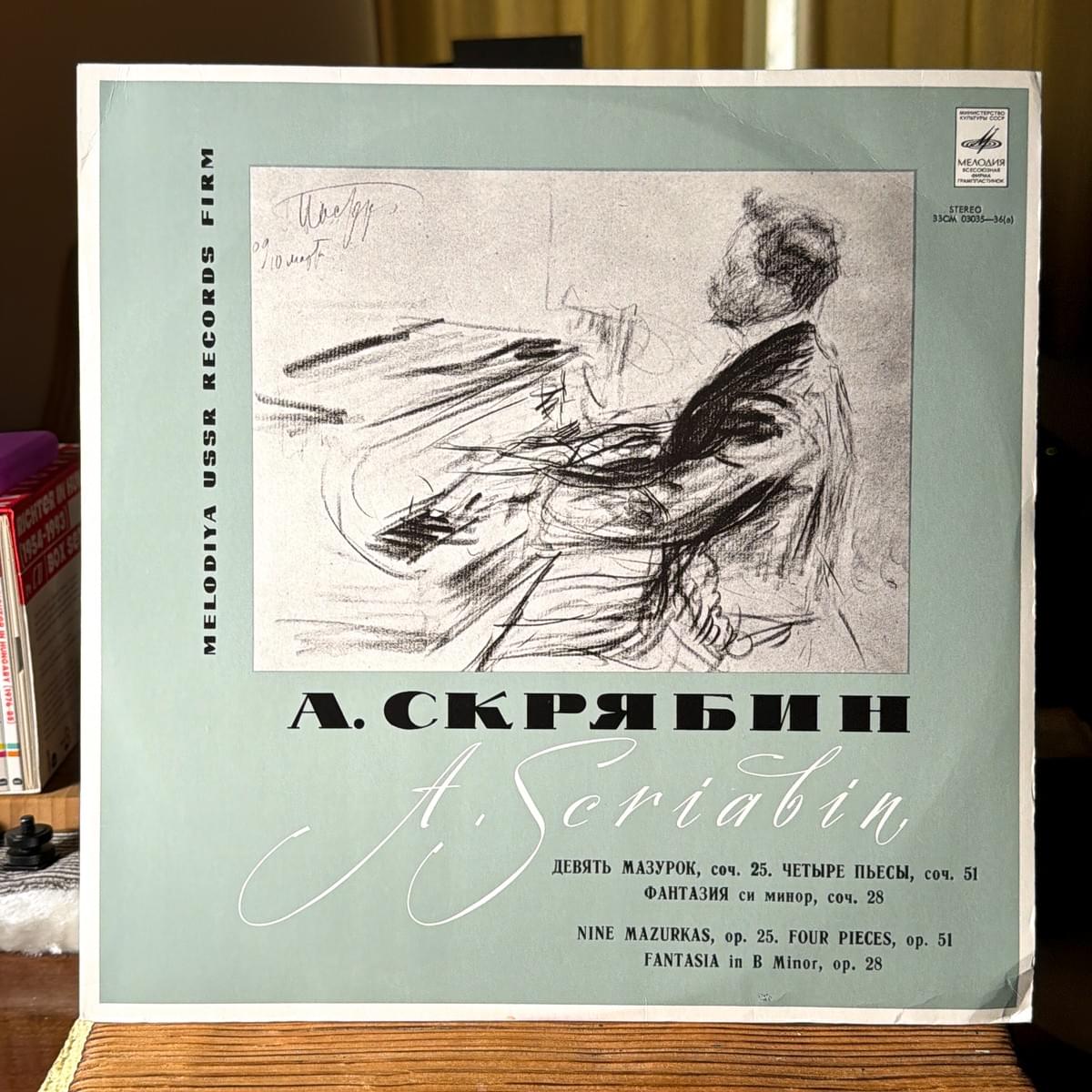
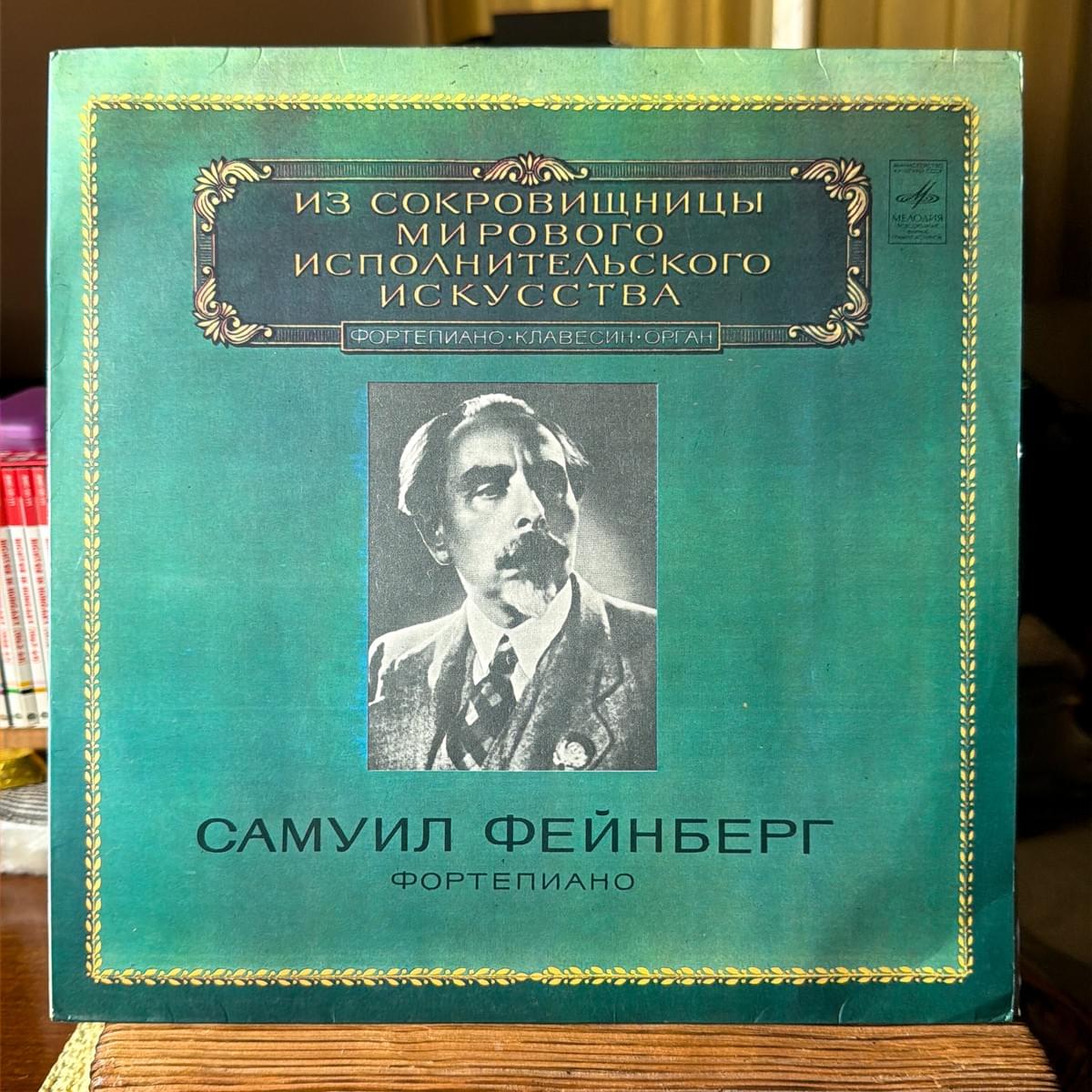
蘇聯「Melodiya(旋律)」國營唱片公司」為費因伯格出版的紀念唱片上,留著兩段值得並置的評語——都出自真正認識他的人,而不是隔著唱片對他評頭論足的樂評人。
第一段,來自他的老師戈登懷瑟本人。這位老師的評語出奇地坦率:他直言費因伯格的詮釋「未必每一處都能讓人完全認同」,那種偏好極快速度、獨特斷句的處理方式「時常引發討論」;但話鋒隨即一轉——正是這位鋼琴家出眾的技藝與鮮明的個人意志,他讓演奏「具有說服力,甚至不自覺地征服了持不同意見的聽眾」。這是一位老師對學生最誠實、也最有份量的肯定:不是無條件的讚美,而是「即使我未必同意,我依然被說服」。
第二段,來自他的學生弗拉基米爾·納坦松(Vladimir Natanson,1909–1993)。這段評語不是隨口一提——1965年費因伯格著作《鋼琴演奏藝術》出版時,收錄了納坦松執筆、深入介紹老師生平藝術的專文,「直覺與智性完全融合為一」這句話,正出自這篇近乎蓋棺論定的紀念文字。納坦松形容自己的老師是「一位直覺型的藝術家」,「排斥一切刻意的『導演式』處理與矯揉造作」。他自己也曾說,跟費因伯格學琴的五年,「是一種藝術大學式的教育」。
一位老師,一位學生,相隔著費因伯格漫長的教學生涯,各自用自己的語言,說出幾乎同一件事:這個人身上,理性與感性之間沒有縫隙。而費因伯格自己也留下過對這種美學的定義,這句話在兩張不同年代發行的唱片解說裡都出現過一致的說法:理想的音樂邏輯,不是征服聽者,而是像言語一樣,贏得聽者的理解與共鳴。
貝多芬傳到他手上,經過了四個人
費因伯格1890年生於帝俄時代的烏克蘭敖德薩,後來在莫斯科音樂學院師從戈登懷瑟。這條師承線往上追溯相:戈登懷瑟師承帕布斯特(Paul Pabst,1854–1897),帕布斯特師承安東·多爾(Anton Door,1833–1919),多爾的老師是卡爾·徹爾尼(Carl Czerny,1791–1857)——徹爾尼,是貝多芬(Ludwig van Beethoven,1770–1827)本人的學生。費因伯格與貝多芬之間,只隔了四個人。
1911年莫斯科音樂學院畢業考,他以巴赫《平均律》全四十八首前奏曲與賦格、史克里亞賓第四號奏鳴曲等曲目震驚考試委員會——他後來是蘇聯最早完整演奏這套巴赫《平均律》全四十八首的鋼琴家(也是第一個在蘇聯時期灌錄全本的鋼琴家)。畢業後他隨即帶著涵蓋史克里亞賓奏鳴曲、梅特納、普羅高飛夫夫等人的曲目成功巡演德國與義大利。一次大戰爆發後他被徵召上波蘭前線,染上斑疹傷寒才得以退役。1922年他回到莫斯科音樂學院任教,音樂會活動在1920至1940年代之間最為密集。
身為作曲家——不可忽視的另一重身分
他也「是眾多鋼琴作品的作者」,但這句話其實遠遠不足以概括他的創作規模。費因伯格終其一生創作了十二首鋼琴奏鳴曲(Op. 1至晚期作品)、三部鋼琴協奏曲、兩首幻想曲、多套組曲與前奏曲集,以及小提琴奏鳴曲等室內樂作品——這是一個真正意義上高產且風格自成一家的作曲家產量,而非鋼琴家的業餘副業。他早期的第六、第七號奏鳴曲(1923、1924—25年作)帶有強烈的實驗性與前衛色彩,屬於蘇聯革命後前衛音樂浪潮的一部分;但1930年代史達林高壓時期,他的作曲教師齊利亞耶夫(Nikolai Zhilyayev,1881-1938)在大整肅中被捕,這道政治陰影迫使費因伯格收斂了自己的前衛語彙,1936年後的創作轉向較為保守、卻仍保有精緻對位技巧與民歌元素的風格——他甚至認為第七號奏鳴曲不宜在當時發表,該曲直到1970年代才問世。
這重身分之所以不能被忽略,是因為它直接反過來塑造了他的演奏美學:費因伯格詮釋史克里亞賓、巴赫時展現出的那種「不循常規、依循自身內在邏輯」的處理方式,並非單純的個人化詮釋選擇,而是一位長年浸淫於作曲思維、習慣從音樂內部結構出發思考的音樂家,把「作曲家的耳朵」帶進了演奏這件事本身。同時代晚輩鋼琴家尼可拉耶娃(Tatiana Nikolayeva,1924-1993)便曾形容:他的每一首奏鳴曲都是一首「生命之詩」——這句評語同樣適用於理解他為何能把史克里亞賓、巴赫彈得如此與眾不同:他自己就是一個持續在寫作音樂語言的人,讓他有辦法更完整地知道樂譜到底是在寫什麼?
真正決定他後半生走向的,是1930年代的政治整肅。他的作曲老師齊利亞耶夫在大整肅中被捕,這讓費因伯格被迫把精力更多投注在錄音室裡的工作。他在演奏上仍獲得蘇聯體制內最高的榮譽:1946年史達林獎、列寧勳章、俄羅斯蘇維埃聯邦社會主義共和國功勳藝術家稱號——但終其一生,只有1936年維也納、1938年比利時布魯塞爾兩次出國演出紀錄。
1947年,史達林獎剛頒給他的隔年,他回頭彈起那首曲子
蘇聯「Melodiya(旋律)」國營唱片公司」為費因伯格出版的紀念唱片上,收入了:史克里亞賓第四號奏鳴曲的錄音室錄音,完成於1947年。
那一年,費因伯格五十七歲,距離他二十出頭時當面彈給史克里亞賓聽、換來作曲家讚嘆的那個下午,已經過了三十六年;距離他獲頒史達林獎,只過了一年。
同一份錄音檔案還顯示,史克里亞賓另外幾首瑪祖卡(Op. 25的第2、8、9首)錄於1951年,而第3首瑪祖卡與《四首小品》Op. 51全曲則同樣錄於1947年——換句話說,這批被反覆稱為「1950年代錄音」的史克里亞賓遺產,實際上橫跨了戰後最初的六年,不是單一時刻的產物,而是他晚期反覆回訪同一批作品的過程。
1961年,生命最後一年的巴赫
費因伯格1911年首演巴赫《平均律》全集,但真正的錄音室全集錄製工程,是在1958年到1961年間才完成的——他人生最後階段,幾乎是用盡最後氣力完成的告別之作。那張1980年出版的紀念唱片上,標籤清楚寫著:A面的巴赫前奏曲與賦格、觸技曲,全部錄於1961年。
距離他1962年10月在莫斯科辭世,不到一年。
一位六十一歲、心臟疾病已持續惡化超過十年的鋼琴家,在生命的最後階段,坐在鋼琴前完成他畢生對巴赫最重要的承諾。
一位二十歲的鋼琴天才青年,也許能把巴赫彈得又快又準。但唯有像費因伯格這樣,帶著整整一生的重量、且曾經真實站在史克里亞賓面前彈過琴的人,才能讓那種「彷彿撫摸琴鍵」的觸感,同時傳遞出技巧與生命體驗的雙重積累——這正是史克里亞賓早年帶著青春感傷的瑪祖卡、以及巴赫理性至極的對位結構,都能被同一雙手、在人生的不同階段,重新賦予深度的原因。
他被正式請進大師殿堂
1980年那張檔案修復盤,還藏著一個更大的脈絡。它不是孤立的一張唱片,而是隸屬於「MELODIYA」規模龐大的歷史修復系列——這套系列同時收錄戈登懷瑟(費因伯格自己的老師)、格倫·顧爾德(Glenn Gould, 1932–1982)、瓦爾特·季雪金(Walter Gieseking, 1895–1956)、費魯喬·布索尼(Ferruccio Busoni, 1866–1924)(收錄他1915年的錄音)、威廉·巴克豪斯(Wilhelm Backhaus, 1884–1969)、埃米爾·馮·索爾(Emil von Sauer, 1862–1942)、弗拉基米爾·索夫羅尼茨基(Vladimir Sofronitsky, 1901–1961)、瑪麗亞·尤蒂娜(Maria Yudina, 1899–1970)——二十世紀鋼琴史上一整批重量級人物。
距離費因伯格辭世已過十八年,蘇聯國營唱片公司把他的錄音室遺產,正式編入這套向歷史致敬的「大師殿堂」系列,與自己的老師並列在同一套叢書裡。這不是一次商業性的再版,而是一個國家的官方唱片機構,對「誰才值得被後世記住」所做出的正式表態。
結語
費因伯格用一生證明了一件事:真正的個人風格,未必來自「加進更多自己的東西」,而可能來自有能力把一件事完整地、毫無折損地做到底。而他生命裡最動人的部分,或許不是任何單一年份的演奏,而是1947年、1951年、1961年——三個相隔十幾年的時間切片,被同一個人、用同一種信念,一次次重新交付給錄音室。
在一個人人被鼓勵「展現自我」的時代,值得想一想:你所欣賞的那些「很有自己風格」的人,他們的風格,究竟是加出來的,還是他們比別人更完整地做到了某件事,經過時間反覆驗證後的結果?
******
【Gudian Music Stories】He Claimed He Added Nothing—Yet Became Scriabin’s Most Faithful Piano Successor: The Life of Samuel Feinberg (1890–1962)
A Young Man and the Composer Himself
Around 1911, a student in his early twenties at the Moscow Conservatory sat before Alexander Scriabin (1872–1915) himself and played Scriabin’s Piano Sonata No. 4.
After listening, Scriabin uttered a single sentence: “I have never heard a performance so convincing.”
That sentence bound the young man to the title of “Scriabin’s successor” for the rest of his life. His name was Samuel Feinberg (1890–1962). It sounds like just another cliché classical music anecdote—the familiar story of “so-and-so plays for the master and wins praise.” But the truly captivating part of his story hadn’t even begun—including what happened thirty-six years later, when he sat back down at the piano to record that very same piece.
Called a “Successor,” Yet He Claimed He Added Nothing
When listening to Feinberg play Bach or Scriabin, a particular question arises: How do you describe a performance that is simultaneously intellect-driven and deeply emotional, where the line between logic and feeling is completely seamless?
Most pianists approach Bach in one of two ways: they either romanticize him, turning counterpoint into song-like phrasing that sounds moving but often sacrifices structural clarity; or they treat Bach like mathematics—sound physics where every voice is squeaky clean and logically precise, but often completely devoid of warmth.
Feinberg does not belong on this spectrum.
Listening to him, intellect and emotion coexist—sometimes shifting back and forth within the exact same phrase. His playing is extraordinarily persuasive, making it natural to assume he is overlaying his own inner world onto the score.
Yet, when you lay out the score and compare it line by line with his playing, the true shock begins.
He added almost nothing of his own. Every stretch of tempo, every fluctuation in dynamics—it is all written right there on the page. All he did was bring out everything that was already present in the score with unmatched completeness.
When faced with the same score, most pianists miss details, use intuition to fill in blanks, or cover original instructions with their own personal flair—habits long labeled as "interpretation." Feinberg reveals a different possibility: true rarity has never been about "adding oneself," but about having the capacity to render the score fully, without any compromise or loss. That accomplishment alone is nothing short of magical.
Two Voices from Those Who Truly Knew Him
On the commemorative record released by the Soviet state label Melodiya, two commentary excerpts were placed side-by-side. Both came from people who actually knew Feinberg, not from critics assessing him through a speaker.
1. Alexander Goldenweiser (His Teacher) His teacher’s appraisal was surprisingly candid. Goldenweiser stated outright that Feinberg’s interpretations were "not always universally agreed upon," noting that his preference for extreme tempos and unique phrasing "frequently sparked debate." Yet he quickly pivoted—it was precisely this pianist’s astonishing skill and fierce personal conviction that made his performances "so convincing, quietly winning over even those who initially disagreed." This is the most honest and weighty validation a teacher could offer a student: not unconditional praise, but "even if I do not entirely agree, I am still persuaded."
2. Vladimir Natanson (His Student, 1909–1993) This comment was no casual remark. When Feinberg’s book The Art of Piano Playing was published in 1965, it included an in-depth essay by Natanson evaluating his master’s artistic life. The phrase "intuition and intellect completely merged into one" comes directly from this definitive memorial text. Natanson described his teacher as "an intuitive artist" who "rejected all calculated, 'director-style' processing and affectation." Feinberg himself once remarked that his five years studying with Goldenweiser were "an education on par with an entire artistic university."
A teacher and a student, separated by Feinberg’s long teaching career, used their own language to express the exact same truth: in this man, there was no seam between logic and emotion.
Feinberg himself left behind his own definition of this aesthetic—a phrasing that appeared consistently in liner notes across two different eras: Ideal musical logic does not conquer the listener; like human speech, it wins the listener’s understanding and resonance.
Beethoven Reached Him Through Just Four Hands
Feinberg was born in 1890 in Odessa, then part of the Russian Empire, and later studied under Alexander Goldenweiser at the Moscow Conservatory. Tracing this lineage upward reveals a remarkable chain:
- Goldenweiser studied under Paul Pabst (1854–1897)
- Pabst studied under Anton Door (1833–1919)
- Door was a student of Carl Czerny (1791–1857)
- Czerny was a direct pupil of Ludwig van Beethoven (1770–1827)
Only four people stood between Feinberg and Beethoven.
During his graduation exam at the Moscow Conservatory in 1911, he stunned the jury by performing all 48 Preludes and Fugues from Bach’s The Well-Tempered Clavier, alongside Scriabin’s Sonata No. 4. He later became the first pianist in the Soviet Union to perform the complete 48 Preludes and Fugues live, as well as the first to record the complete set during the Soviet era.
Upon graduation, he embarked on successful tours through Germany and Italy with a repertoire spanning Scriabin, Medtner, and Prokofiev. When World War I broke out, he was conscripted to the Polish front line, only retiring after contracting typhus. By 1922, he returned to teach at the Moscow Conservatory, with his concert career reaching its peak intensity between the 1920s and 1940s.
As a Composer: An Indispensable Identity
He was also "the composer of numerous piano works," though that description hardly does justice to the scale of his output.
Throughout his life, Feinberg composed twelve piano sonatas (spanning Op. 1 to his late period), three piano concertos, two fantasias, multiple suites and sets of preludes, as well as chamber music such as violin sonatas. This was the prolific, distinct output of a true composer—not merely a pianist’s casual hobby.
His early Sixth and Seventh Sonatas (written in 1923 and 1924–25) carried a intensely experimental, avant-garde tone, forming part of the post-revolutionary Soviet music wave. However, during the height of Stalin’s political purges in the 1930s, his composition teacher Nikolai Zhilyayev (1881–1938) was arrested.
This political shadow forced Feinberg to pull back his avant-garde language. His post-1936 compositions shifted toward a more conservative style that nevertheless retained intricate contrapuntal technique and folk elements—he even deemed his Seventh Sonata unfit for public performance at the time, and it remained unreleased until the 1970s.
This composer identity cannot be overlooked because it directly shaped his performance aesthetic. The unconventional, internally logical way Feinberg interpreted Scriabin and Bach was not merely a personal stylistic choice. It was the result of a musician steeped in composition, accustomed to thinking from within the music’s architecture—bringing a "composer's ear" to the act of performance itself.
As the younger contemporary pianist Tatiana Nikolayeva (1924–1993) once remarked: Every one of his sonatas is a "poem of life."
This observation helps us understand why he could play Scriabin and Bach so uniquely: He was someone who continuously wrote musical language himself, giving him the ability to understand far more completely what the score was actually expressing.
What truly reshaped the second half of his life was the political purges of the 1930s. The arrest of his composition teacher, Zhilyayev, forced Feinberg to focus more of his energy inside the recording studio.
He still received the highest honors within the Soviet system for his playing—winning the Stalin Prize in 1946, the Order of Lenin, and the title of Honored Artist of the RSFSR—yet throughout his entire life, he was only permitted to perform abroad twice: in Vienna in 1936 and Brussels in 1938.
1947: Returning to the Same Piece After the Stalin Prize
On the memorial record published by the Soviet state label Melodiya, there is a studio recording of Scriabin’s Piano Sonata No. 4, completed in 1947.
Feinberg was fifty-seven years old that year. Thirty-six years had passed since that afternoon in his early twenties when he played for Scriabin and earned the composer's awe. Just one year had passed since he received the Stalin Prize.
Recording archives show that several of Scriabin’s Mazurkas (Op. 25, Nos. 2, 8, and 9) were recorded in 1951, while the Mazurka No. 3 and the complete Four Pieces Op. 51 were recorded in 1947. In other words, this body of Scriabin legacy—often collectively referred to as "the 1950s recordings"—actually spanned the first six years of the post-war era. It was not a product of a single moment, but a process of repeatedly revisiting the exact same works late in his life.
1961: Bach in the Final Year of His Life
Feinberg premiered Bach’s complete Well-Tempered Clavier in 1911, but his studio recording of the complete cycle was only realized between 1958 and 1961—a farewell work completed in the final stage of his life with the last of his strength.
On that memorial record released in 1980, the label clearly indicates: The Bach Preludes, Fugues, and Toccata on Side A were all recorded in 1961.
That was less than a year before he passed away in Moscow in October 1962.
A sixty-one-year-old pianist whose heart condition had progressively worsened for over a decade sat before the piano at the end of his life to fulfill his ultimate lifelong promise to Bach.
A brilliant twenty-year-old piano prodigy might play Bach fast and precise. But only someone like Feinberg—carrying the weight of a full lifetime and having once stood before Scriabin himself—could translate that touch, "as if gently caressing the keys," into a rich blend of technical mastery and lived experience.
That is why both Scriabin’s youthful, melancholic Mazurkas and Bach’s fiercely rational contrapuntal structures could be given fresh depth by the same pair of hands across different chapters of his life.
Officially Welcomed Into the Pantheon of Masters
The 1980 archival restoration record holds an even broader context. It was not an isolated release, but part of Melodiya’s massive historical restoration series.
This series included titan figures in 20th-century piano history:
- Alexander Goldenweiser (Feinberg’s own teacher)
- Glenn Gould (1932–1982)
- Walter Gieseking (1895–1956)
- Ferruccio Busoni (1866–1924, featuring recordings from 1915)
- Wilhelm Backhaus (1884–1969)
- Emil von Sauer (1862–1942)
- Vladimir Sofronitsky (1901–1961)
- Maria Yudina (1899–1970)
Eighteen years after Feinberg’s passing, the Soviet state record company officially integrated his studio legacy into this "Pantheon of Masters" series honoring history, placing him alongside his own teacher. This was not a commercial reissue; it was an official declaration by a state label on who truly deserved to be remembered by posterity.
Conclusion
Feinberg spent his life proving one thing: True personal style does not necessarily come from "adding more of yourself," but from the ability to execute something completely and flawlessly to the very end.
Perhaps the most moving part of his life was not any single year’s performance, but those three snapshots in time—1947, 1951, and 1961—spaced more than a decade apart, repeatedly entrusted to the recording studio by the same man driven by the exact same conviction.
In an era where everyone is urged to "express themselves," it is worth asking:
The people you admire for having "such a strong personal style"—is their style something they added on, or is it the result of doing something more completely than anyone else, tested and proven over time?