
【古殿唱片音樂故事】如果他活得更久:被遺忘的那個「本該超越柯岡和奧依斯特拉夫」的人~~尤利安·西特科韋茨基(Julian Sitkovetsky,1925-1958)的故事
古殿殿主
大衛·奧依斯特拉赫(David Oistrakh,1908-1974)留下過一句話,聽起來像是誇張的悼詞,但說這句話的人,是二十世紀最偉大的小提琴家之一,而他說的不是關於自己:「若他能活得更久,他不會有任何對手。」他甚至更進一步——如果那個人活下來,將會超越奧依斯特拉赫自己,也超越柯岡(Leonid Kogan,1924–1982)。(出處是美國樂評人約瑟夫·馬吉爾(Joseph Magil)在《American Record Guide》雜誌上發表的文章)
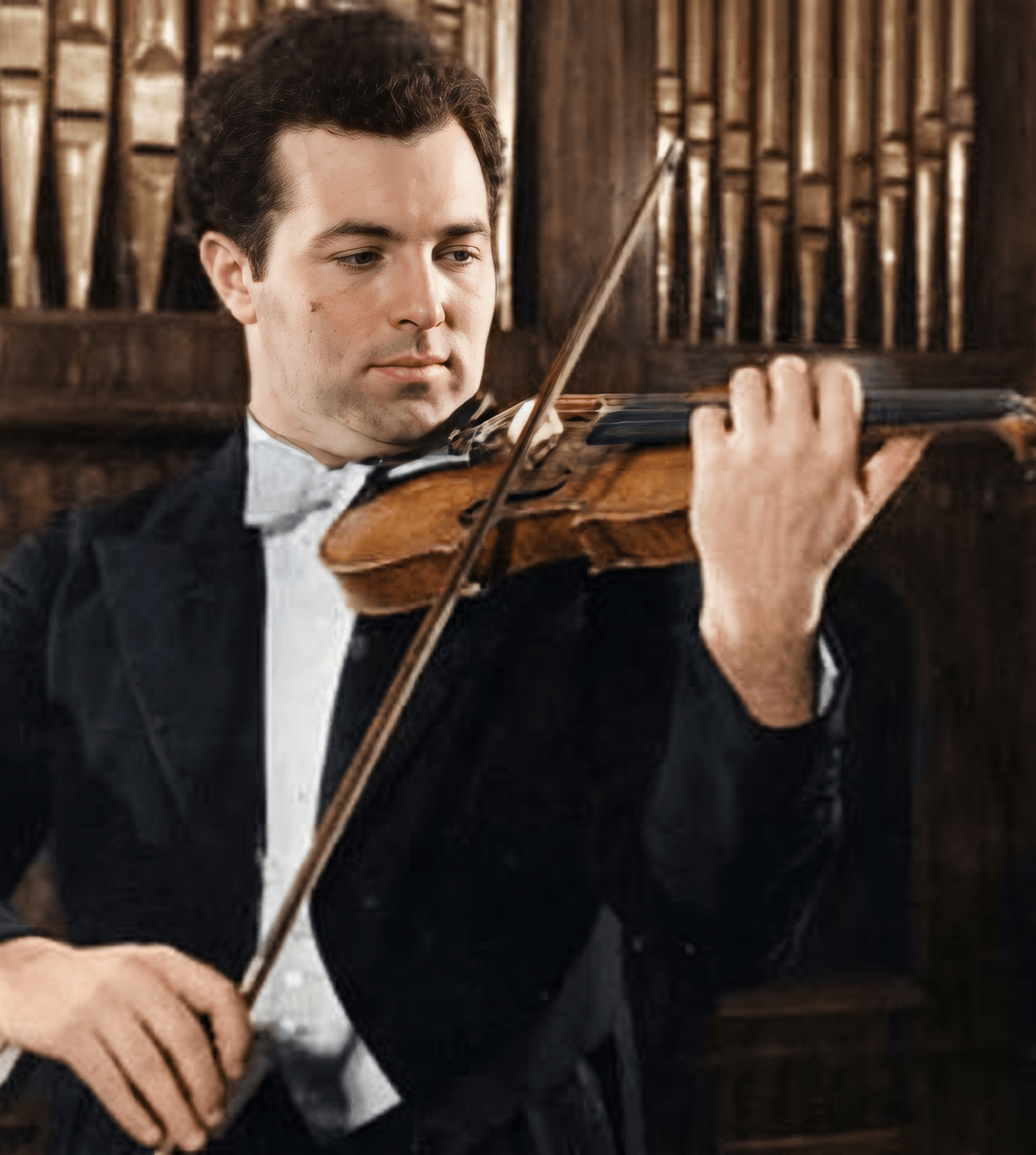
大歐說的「他」叫尤利安·西特科韋茨基(Julian Sitkovetsky,1925-1958)。1925年生於烏克蘭的基輔,1958年死於肺癌,得年32歲。他和柯岡是同一位老師的學生,在同一間教室裡長大、競爭,他們又一個共同偉大老師——亞伯拉罕·亞姆波爾斯基(Abram Yampolsky,1890-1956)。列奧尼德·柯岡——成為了整個冷戰時代蘇聯派往世界的文化武器,他的名字至今出現在唱片行的分類架上。西特科韋茨基呢?他留下的,只有幾張錄音室裡的廣播錄音,被壓成黑膠,散落在世界各地的收藏架上,大多數人可能都沒聽過他的名字。
亞姆波爾斯基門下:天才的擁擠教室
西特科韋茨基四歲跟父親學琴,後來進基輔中央音樂學校師從大衛·貝爾蒂(David Bertie)。1939年,14歲的他進入莫斯科中央音樂學校,拜入亞伯拉罕·亞姆波爾斯基門下。這位老師的教室裡,還坐著另外兩個名字——列奧尼德·柯岡(Leonid Kogan,1924–1982),和伊戈爾·別茲羅德尼(Igor Bezrodny,1930–1997)。
這意味著,在1930年代末到1940年代的莫斯科,有一整個世代最頂尖的小提琴天才,是在同一個教室裡彼此聽著對方拉琴長大的。1945年全蘇聯音樂大賽,西特科韋茨基獲得小提琴首獎那一屆,鋼琴組的冠軍是李希特(Sviatoslav Richter,1915-1997),大提琴組是羅斯托波維契(Mstislav Rostropovich,1927-2007)。1947年,他和柯崗、別茲羅德尼一起拿下布拉格音樂節一等獎。
永遠的第二名——而且永遠不是因為技術
1950至1955年間,西特科韋茨基的演出足跡遍及柏林(東德)、華沙(波蘭)、布達佩斯(匈牙利)、布拉格(捷克)、布加勒斯特(羅馬尼亞)、索非亞(保加利亞),以及蘇聯全境十六個加盟共和國。他還創立了柴可夫斯基弦樂四重奏(Tchaikovsky Quartet),擔任第一小提琴,其他成員包括安東·夏羅耶夫(Anton Sharoev,1929–2021,第二小提琴)、魯道夫·巴爾夏(Rudolf Barshai,1924–2010,中提琴)、雅科夫·斯洛博德金(Yakov Slobodkin,1920–2009,大提琴)——魯道夫·巴爾夏後來成為享譽國際的指揮家。
1952年,第二屆維尼奧夫斯基小提琴大賽International Henryk Wieniawski Violin Competition),西特科韋茨基獲得第二名。真正的關鍵一役是1955年的伊麗莎白女王大賽(Queen Elisabeth Competition)。
第三屆伊麗莎白大賽(1955年)小提琴組。決賽於5月26至27日在布魯塞爾美術宮 Salle Henry Le Boeuf 舉行,西特科韋茨基在5月27日演出柴可夫斯基D大調協奏曲(Op.35)全曲,由比利時國家管弦樂團伴奏,指揮 Franz André。這場現場錄音留存至今,是他1948至1956年間為數不多完整保存下來的重要錄音之一。
最終結果:第一名由美國選手伯爾·瑟諾夫斯基(Berl Senofsky,1926-2002)奪得,西特科韋茨基屈居第二。這個結果打斷了一個連續紀錄——1937年奧依斯特拉赫、1951年柯崗都曾在這項賽事拿下小提琴組首獎,蘇聯學派原本被期待延續榮耀,但1955年,瑟諾夫斯基成為至今唯一一位拿下該賽事小提琴組冠軍的美國人。評審席上的曼紐因(Yehudi Menuhin,1916-1999)認為西特科韋茨基本應拿到一等獎。
兩次頂級國際比賽(1952年維尼奧夫斯基,1955年伊麗莎白女王),始終差最後一步。西特科韋茨基的天賦沒有問題——問題出在他無法控制的變數上:機運。
比賽之後,西特科韋茨基受邀首次在西歐登台:在阿姆斯特丹音樂大會堂,由音樂大會堂管弦藝術總監貝努姆(Eduard van Beinum,1900-1959)親自指揮,演出柴可夫斯基協奏曲。
音樂評論家約瑟夫·馬吉爾這樣形容他的演奏:
「各音域都有寬廣穩固的音色,音準無可挑剔,顫音迅速均勻,跳弓完美控制,自然泛音強大而純淨。」
這不是一個「還不錯」的演奏家的評語,這是頂尖大師的規格。
1952年,27歲——這張唱片凝固的那個瞬間
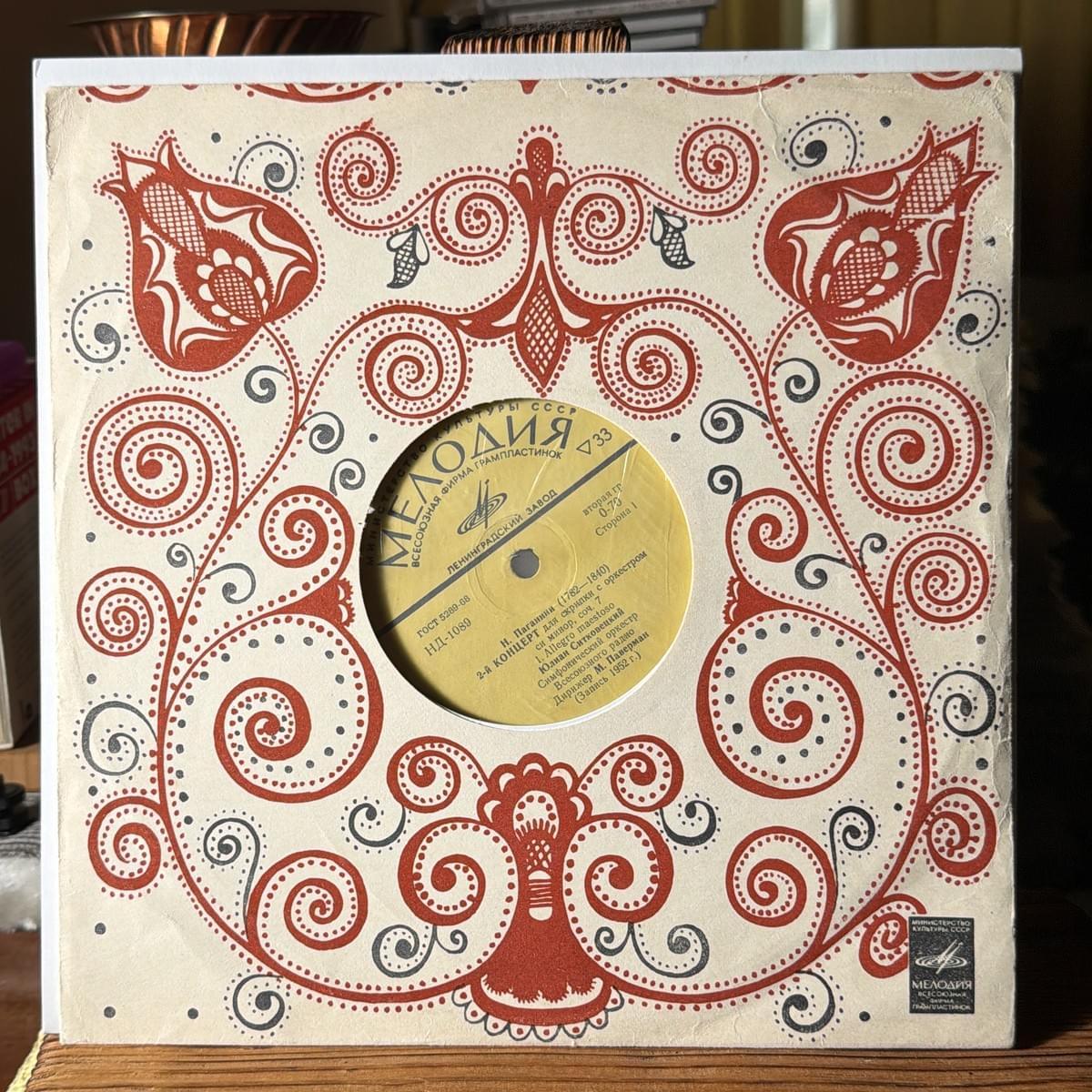
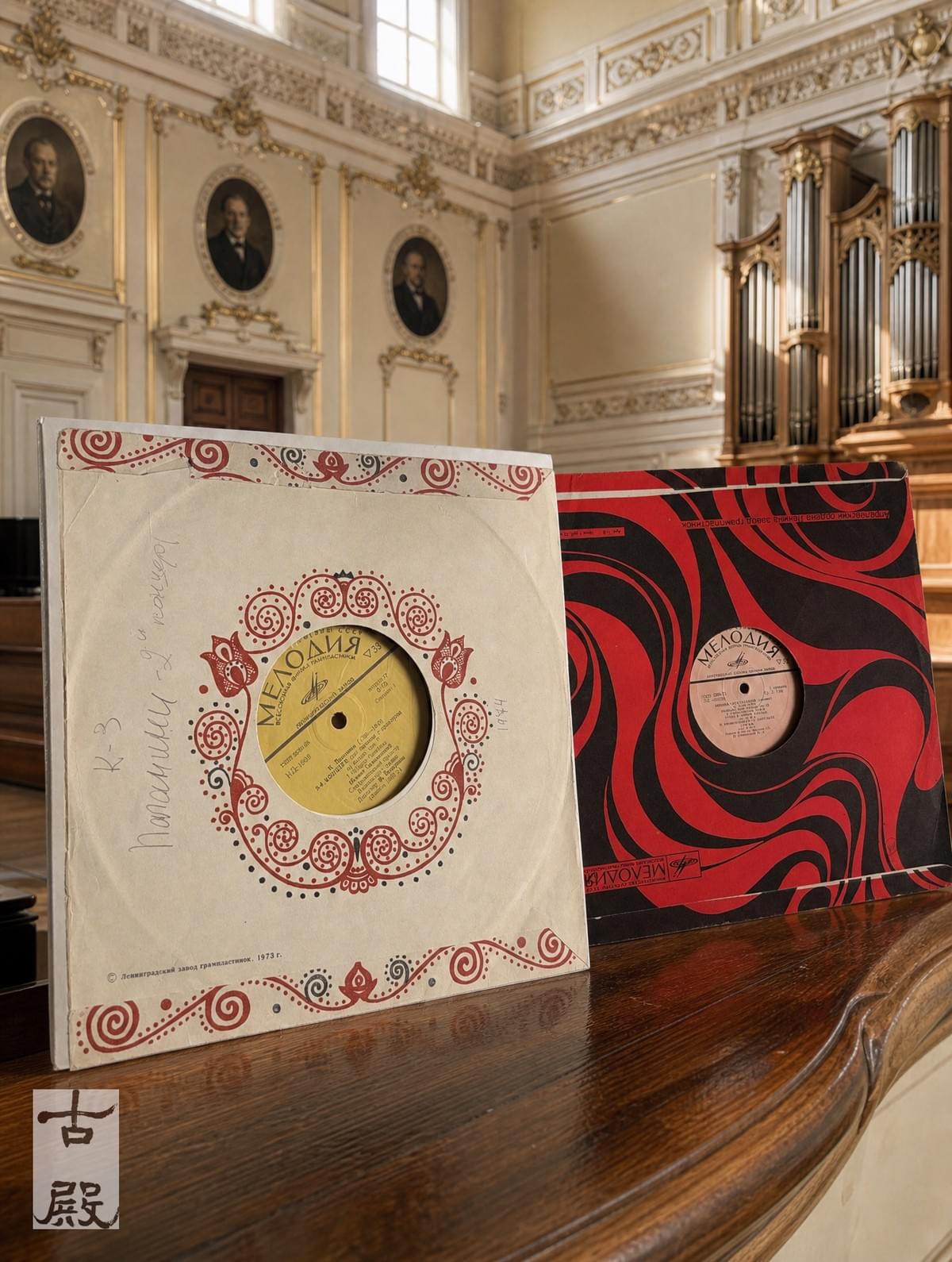
這張蘇聯發行的НД-1089/1090,錄製於1952年,正是西特科韋茨基獲得維尼奧夫斯基大賽第二名的那一年。帕格尼尼第二號協奏曲,終樂章正是舉世聞名的《鐘》(La Campanella)——後來被李斯特改編成鋼琴曲,幾乎每個學琴的孩子都彈過那個旋律,原曲是小提琴協奏曲的終章。
那一年,他27歲,技術與藝術正處於雙重成熟的巔峰,當時還沒有人預料到,四年後他會被確診肺癌。指揮是馬克·帕維爾曼,樂團是全蘇聯廣播交響樂團——這份廣播錄音在當時並沒有發行計劃,直到西特科韋茨基已經去世超過十年。蘇聯列寧格勒的黑膠工廠在1969至1974年間,才挖掘出來出版紀念他。
有樂評形容這個帕格尼尼錄音:技術傑出、氣勢磅礴,在絕對精準的掌握中透出真正的魔鬼氣息,尤其終曲《鐘》令人屏息。
粉紅標籤背面的秘密——一對夫妻,和一位意外現身的名字
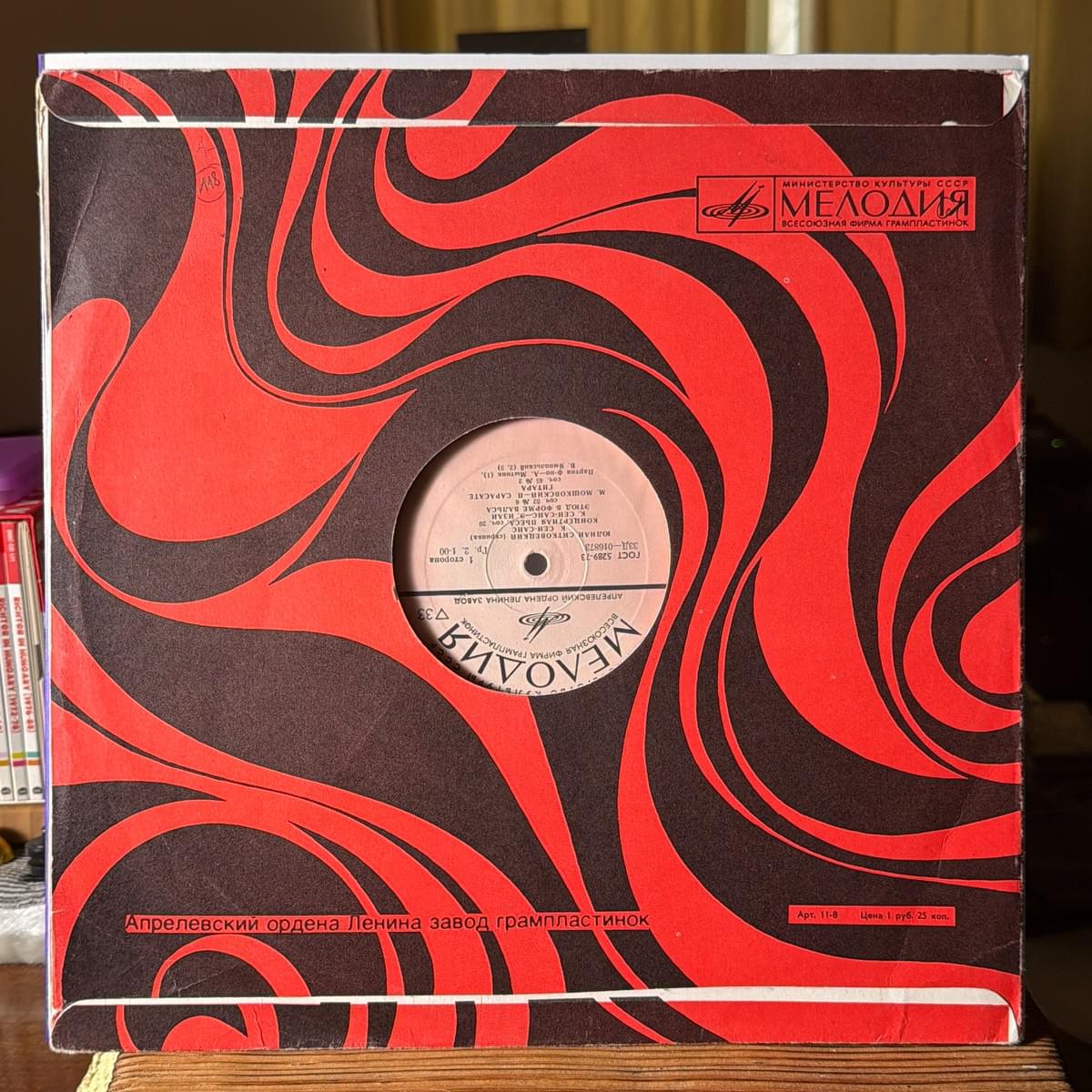
如果說НД-1089/1090這張黑膠保存的是西特科韋茨基作為獨奏家的巔峰,那麼另一張ЗЗД–016873/016874,保存的是一段更早更私人的紀錄。
這張粉紅標籤的蘇聯唱片,收錄聖桑、伊薩伊、莫什科夫斯基、魏歐當、薩拉沙泰的安可小品集。A面的鋼琴是米特尼克(A. Mytnik)與弗拉基米爾·亞姆波爾斯基(Vladimir Yampolsky,1905–1965)。後者與西特科韋茨基的小提琴老師亞伯拉罕·亞姆波爾斯基同姓,但並非同一人,也非親屬關係——他是大衛·奧依斯特拉赫多年的專屬鋼琴伴奏,兩人合作錄製了塔替尼、莫札特、法朗克等大量曲目,1957年更一同隨奧依斯特拉赫赴北京、上海、天津巡演。
而B面,標籤上印著另一個簡短的名字:Bella Davidovich。貝拉·達維多維奇。1928年生,1949年蕭邦國際鋼琴大賽首次女性金牌得主,後來成為蘇聯最傑出的女鋼琴家之一。她是西特科韋茨基的妻子,兩人在1950年結婚。
B面那組薩拉沙泰《西班牙舞曲》——馬拉格尼亞、哈巴涅拉——是這對年輕夫妻在錄音室裡共同創造的聲音。他們的兒子德米特里·西特科韋茨基(Dmitry Sitkovetsky),1954年出生,後來成為今天樂壇熟知的小提琴家兼指揮,近年更曾受邀擔任伊麗莎白大賽評審。
1958年,西特科韋茨基因病去世。貝拉獨自帶著4歲的兒子,繼續她的演奏生涯。1978年,她離開蘇聯,前往茱莉亞音樂學院任教——那一年,距離丈夫去世,已經整整二十年。
鐵幕沒能攔下的一次搶救
1
956年,西特科韋茨基演出了剛剛完成的蕭士塔高維契第一號小提琴協奏曲——這場音樂會,成了他在莫斯科的最後一場演出。同一年,他被確診肺癌。
伊麗莎白大賽官方檔案明確記載:當西特科韋茨基罹癌的消息傳開後,一群橫跨東西方兩個陣營的音樂家,不約而同地展開了協助——曼紐因、艾薩克·史坦(Isaac Stern,1920-2001)、大衛·奧依斯特拉赫、羅斯托波維契、指揮根納季·羅傑斯特汶斯基(Gennady Rozhdestvensky,1931-2018),連比利時的伊麗莎白皇后本人,都盡力奔走,試圖為他尋求醫療援助。
1955年,西特科韋茨基站在伊麗莎白大賽的舞台上,只差一步就能拿下首獎。三年後,那項賽事所紀念、所守護的音樂精神,以一種誰都沒有預料到的方式回到了他身上——不是獎項,而是一群跨越冷戰對峙的音樂家與一位歐洲君主,聯手極力想留住他的生命。
這在1950年代末的政治氣氛裡極為罕見。彼時東西方之間幾乎沒有私人層面的直接往來,藝術家的每一次跨境接觸都在體制的監視之下。而癌症面前,曼紐因與史坦——西方陣營最頂尖的小提琴家——竟然願意跨過那道無形的界線,和奧依斯特拉赫、羅斯托波維契這些蘇聯同行站在同一邊,只為了救一個人。
可惜,終究回天乏術。1958年2月,西特科韋茨基在莫斯科去世。
生命史需要被記錄
在西方古典音樂的敘事裡,一位英年早逝的天才通常會被神話化——夭折本身變成傳奇的素材,唱片公司會不斷重新發行、重新包裝。但西特科韋茨基所處的,是另一套邏輯:蘇聯體制決定誰被允許站上國際舞台的最高位置,而不完全取決於才華本身;他留下的錄音,多數是廣播錄音室的產物;確診之後,蘇聯當局因為他的病情,把他有限的演出大多限制在東歐集團內部,西方觀眾終究沒能大量聽到他的現場演奏。
換句話說,今天要重新認識西特科韋茨基,你幾乎只能靠一件事:實體唱片本身有沒有被保存下來、有沒有被壓製、有沒有活到半世紀後。沒有這些唱片紀錄,這個「本該超越柯岡和奧依斯特拉赫的人」,大概只會是維基百科上一行帶著問號的文字——連那場跨越鐵幕的搶救行動,都不會有人記得。
******
【Gudian Music Stories】 If He Had Lived Longer: The Forgotten Violinist Who "Should Have Surpassed Kogan and Oistrakh" — The Story of Julian Sitkovetsky (1925–1958)
David Oistrakh (1908–1974) once left behind a quote that sounds almost like hyperbole in an obituary. Yet the man who spoke these words was one of the greatest violinists of the 20th century, and he was not speaking about himself: "If he had lived longer, he would have had no rivals." He even went a step further—claiming that had this man survived, he would have surpassed Oistrakh himself, as well as Leonid Kogan (1924–1982). (Source: An article by American music critic Joseph Magil in American Record Guide).
The "he" Oistrakh referred to was Julian Sitkovetsky (1925–1958). Born in Kyiv, Ukraine in 1925, he passed away from lung cancer in 1958 at just 32 years old. He and Kogan studied under the same teacher, growing up and competing in the very same classroom under another legendary mentor—Abram Yampolsky (1890–1956). Leonid Kogan became a cultural weapon sent out into the world by the Soviet Union throughout the Cold War; his name remains on vinyl record dividers to this day. And Sitkovetsky? All he left behind were a few radio studio recordings pressed onto vinyl, scattered across collectors' shelves around the world. Most people today have likely never even heard his name.
Under Yampolsky’s Tutelage: A Crowded Classroom of Geniuses
Sitkovetsky began studying the violin with his father at age four, later attending the Kyiv Central Music School to study under David Bertie. In 1939, at age 14, he entered the Moscow Central Music School, joining the studio of Abram Yampolsky. Sitting in that same studio were two other iconic names—Leonid Kogan (1924–1982) and Igor Bezrodny (1930–1997).
This meant that in Moscow during the late 1930s and 1940s, an entire generation of top violin geniuses grew up listening to one another play in the exact same room. At the All-Union Music Competition in 1945, where Sitkovetsky won First Prize in Violin, First Prize in Piano went to Sviatoslav Richter (1915–1997), and Cello went to Mstislav Rostropovich (1927–2007). In 1947, alongside Kogan and Bezrodny, he shared First Prize at the Prague International Youth Festival.
Always Second Place—and Never Because of Technique
Between 1950 and 1955, Sitkovetsky toured extensively across Berlin (East Germany), Warsaw (Poland), Budapest (Hungary), Prague (Czechoslovakia), Bucharest (Romania), Sofia (Bulgaria), and all sixteen Soviet Republics. He also founded the Tchaikovsky String Quartet, serving as first violinist alongside Anton Sharoev (1929–2021, second violin), Rudolf Barshai (1924–2010, viola), and Yakov Slobodkin (1920–2009, cello)—with Rudolf Barshai later becoming an internationally renowned conductor.
In 1952, at the 2nd International Henryk Wieniawski Violin Competition, Sitkovetsky earned second place. But the truly decisive battle came in 1955 at the Queen Elisabeth Competition.
It was the third violin edition of the Queen Elisabeth Competition (1955). The finals took place on May 26–27 at the Palais des Beaux-Arts (Salle Henry Le Bœuf) in Brussels. On May 27, Sitkovetsky performed the complete Tchaikovsky Violin Concerto in D major (Op. 35), accompanied by the Belgian National Orchestra under conductor Franz André. This live recording survives to this day, standing as one of the few fully preserved major recordings from his peak period between 1948 and 1956.
The ultimate outcome: First prize went to American violinist Berl Senofsky (1926–2002), leaving Sitkovetsky in second place once again. This result broke an unbroken Soviet streak—David Oistrakh in 1937 and Leonid Kogan in 1951 had both claimed top honors at this competition. The Soviet school had been expected to continue its reign, but in 1955, Senofsky became—and remains to this day—the only American ever to win the violin competition at the Queen Elisabeth. On the jury, Yehudi Menuhin (1916–1999) maintained that Sitkovetsky should have received first prize.
Twice at top-tier international competitions (Wieniawski in 1952, Queen Elisabeth in 1955), he fell just one step short. There was nothing wrong with Sitkovetsky’s talent—the issue lay in a variable beyond his control: fate and circumstance.
Following the competition, Sitkovetsky was invited to make his debut in Western Europe at the Concertgebouw in Amsterdam, performing the Tchaikovsky Concerto conducted by Eduard van Beinum (1900–1959), Artistic Director of the Concertgebouw Orchestra.
Music critic Joseph Magil described his playing like this:
"A broad, solid tone across all registers, impeccable intonation, a rapid and even vibrato, perfectly controlled spiccato, and natural harmonics that were powerful and pure."
These were not the words reserved for a "fairly good" performer—this was the hallmark of a supreme master.
1952, Age 27—The Moment Frozen in This Record
The Soviet release НД-1089/1090 was recorded in 1952, the exact year Sitkovetsky took second place at the Wieniawski Competition. Featuring Paganini’s Violin Concerto No. 2, its final movement is the world-famous La Campanella—later adapted by Liszt into a piano piece that almost every music student has played, though its original form is the finale of a violin concerto.
He was 27 that year, standing at the dual peak of technical mastery and artistic maturity. No one could have predicted that just four years later, he would be diagnosed with lung cancer. Conducted by Mark Paverman with the All-Union Radio Symphony Orchestra, this radio recording was never originally intended for commercial release. It wasn't until more than ten years after Sitkovetsky's death that the Soviet Leningrad Vinyl Factory unearthed and published it between 1969 and 1974 as a memorial edition.
Critics have described this Paganini recording as technically brilliant, majestic, and brimming with a truly demonic aura controlled with absolute precision—with the La Campanella finale leaving listeners breathless.
Secrets Behind the Pink Label—A Couple, and an Unexpected Name
If НД-1089/1090 captures Sitkovetsky at his peak as a soloist, another LP, ЗЗД–016873/016874, preserves an earlier and far more intimate record.
This pink-labeled Soviet record features an encore collection of pieces by Saint-Saëns, Ysaÿe, Moszkowski, Vieuxtemps, and Sarasate. On Side A, the piano accompanists are A. Mytnik and Vladimir Yampolsky (1905–1965). The latter shared a surname with Sitkovetsky’s violin teacher Abram Yampolsky, but they were unrelated. Vladimir was David Oistrakh’s longtime designated accompanist, recording extensive repertoire together including Tartini, Mozart, and Franck, and touring Beijing, Shanghai, and Tianjin alongside Oistrakh in 1957.
And on Side B, a brief name is printed on the label: Bella Davidovich. Born in 1928, she was the first female Gold Medalist at the Chopin International Piano Competition in 1949 and went on to become one of the Soviet Union's most distinguished pianists. She was Sitkovetsky's wife; the two married in 1950.
The set of Sarasate’s Spanish Dances on Side B—Malagueña and Habanera—is the sound created together in the studio by this young couple. Their son, Dmitry Sitkovetsky, born in 1954, went on to become the renowned violinist and conductor known to the music world today, recently serving as a juror for the Queen Elisabeth Competition.
In 1958, Julian Sitkovetsky passed away due to illness. Bella carried on her performing career while raising their four-year-old son alone. In 1978, she left the Soviet Union to teach at the Juilliard School—twenty years to the day after her husband's passing.
A Rescue Effort That Even the Iron Curtain Couldn't Stop
In 1956, Sitkovetsky performed the newly completed Shostakovich Violin Concerto No. 1—a concert that turned out to be his final performance in Moscow. That same year, he was diagnosed with lung cancer.
Official archives of the Queen Elisabeth Competition explicitly document that when news of Sitkovetsky’s illness broke, a group of musicians spanning both sides of the Cold War divide rallied together to help. Yehudi Menuhin, Isaac Stern (1920–2001), David Oistrakh, Mstislav Rostropovich, conductor Gennady Rozhdestvensky (1931–2018), and even Queen Elisabeth of Belgium herself did everything in their power to seek medical assistance for him.
In 1955, Sitkovetsky stood on the stage of the Queen Elisabeth Competition, falling just short of first prize. Three years later, the musical spirit commemorated and guarded by that very competition returned to him in a way no one could have anticipated—not as an award, but as a group of musicians crossing the Cold War divide, joined by a European monarch, doing everything possible to save his life.
This was extraordinarily rare in the political climate of the late 1950s. At that time, direct personal contacts between East and West were virtually non-existent, with every cross-border encounter under strict state surveillance. Yet in the face of cancer, Menuhin and Stern—the top violinists of the Western bloc—were willing to step across that invisible line to stand side-by-side with Soviet colleagues like Oistrakh and Rostropovich, all to save one man.
Tragically, it was not enough. In February 1958, Sitkovetsky passed away in Moscow.
Lives in History Deserve to Be Recorded
In the narrative of Western classical music, a genius who dies young is often mythologized—the tragic short life itself becomes fodder for legend, with record labels endlessly reissuing and repackaging their work. But Sitkovetsky existed under a different system: the Soviet state dictated who was permitted to stand on the world’s highest stages, independent of sheer talent alone. Most of his surviving recordings were products of radio broadcast studios. After his diagnosis, Soviet authorities restricted most of his limited remaining performances to the Eastern Bloc, denying Western audiences the chance to experience his live playing in quantity.
In other words, to rediscover Julian Sitkovetsky today, you are left with almost only one thing: whether physical records were preserved, pressed, and survived half a century later. Without these physical vinyl records, this man who "should have surpassed Kogan and Oistrakh" would be little more than a single line with a question mark on Wikipedia—and even that heroic rescue effort across the Iron Curtain would have faded into forgotten history.