
【古殿唱片音樂故事】西貝流士聽完廣播實況後,親筆寫信給她——伊達·韓黛爾(Ida Haendel,1928-2020)用一輩子拉的那首小提琴協奏曲
古殿殿主
封底上的一個數字
把這張唱片翻到背面。在志鳥榮八郎(Shitori Eihachirō,1926-2001)寫的日文解說第一段,有一個數字。
「伊達·韓黛爾,今年(1976年)滿53歲。」
左邊的側標說得更直接:1923年生於波蘭。
問題是,伊達·韓黛爾(Ida Haendel,1928-2020)本人一輩子都說:不對,我是1928年生的。她的官方資料、多數訃聞,以及2020年7月她在邁阿密辭世時的報導,寫的都是1928年12月15日。
同一個人,差了五歲。誰在說謊?
大多數人聽到「女演奏家的年齡有兩種說法」,第一個念頭是:她把自己報小了。但為她 Decca 錄音全集撰寫的傳記資料,講的是一個方向完全相反的故事——1930年代父親帶她到倫敦發展時,為了應付英國對兒童登台的年齡限制,出示了一份讓她「突然老了幾歲」的出生證明。之後的半世紀,1923年這個數字留在各種參考書裡,而她說出真實年份時,反倒被懷疑是在減齡。
另一方則有她姊姊的說法,以及部分英國訃聞,堅持1923年才是真的。這場爭論,到她過世都沒有定論。
這張唱片無法裁決誰對。但它是一個證人:它證明在1976年的日本,整個唱片業都以為她比她自己說的老五歲。
而這五年,決定了另一件事有多驚人。
1935年3月,第一屆維尼奧夫斯基(Henryk Wieniawski,1835-1880)國際小提琴大賽在華沙舉行。冠軍是還是少女的吉奈特·努娃(Ginette Neveu,1919-1949),亞軍是二十六歲的大衛·歐伊斯特拉夫(David Oistrakh,1908-1974)。第七名外加一座波蘭獎,頒給了一個小女孩。
如果她生於1923年,那年她十二歲。如果是1928年——她七歲。
一個七歲的孩子,和歐伊斯特拉夫站在同一個舞台上比賽。這就是這張唱片的主角。
從海烏姆到赫爾辛基:一封作曲家的親筆信
她本名 Ida Hendel,生在波蘭東部小城海烏姆(Chełm)的猶太家庭。三歲時拿起姊姊的小提琴,就拉出了母親哼的旋律。不久進了華沙音樂院,拿下金牌,又贏得以布羅尼斯拉夫·胡伯曼(Bronisław Huberman,1882-1947)為名的獎項。姓氏裡多出來的那個「a」,是後來為了國際舞台加上的。
她拜入兩位二十世紀最重要的提琴教師門下:在倫敦跟隨匈牙利教育家佛萊什(Carl Flesch,1873-1944),在巴黎受教於羅馬尼亞作曲家兼提琴家喬治・安奈斯可(George Enescu,1881-1955)。在佛萊什的大師班上,她與那位在華沙擊敗她的努娃、以及伊夫・吉特里斯(Ivry Gitlis,1922-2020)同堂學習。努娃後來成了她的朋友與引路人。
1937年,她在亨利·伍德(Henry Wood,1869-1944)指揮下,於倫敦逍遙音樂節演奏布拉姆斯協奏曲,一戰成名。這是她與逍遙音樂節長達一生的緣分起點——她後來在這個舞台上登場了68次。
戰爭來了。她們一家在納粹鐵蹄踏進波蘭之前已移居英國;她出生的海烏姆,猶太社群在戰爭中幾乎被抹去。
這時她做了一件很少神童會做的事:她不只在音樂廳拉琴,還走進工廠,為工人演奏,為英國與美國的士兵演奏。一個本該在琴房裡磨技巧的少女,把琴帶到了最不像音樂廳的地方。
1949年,她在芬蘭首都赫爾辛基演出西貝流士協奏曲,經電台實況轉播。八十三歲的西貝流士(Jean Sibelius,1865-1957)在家裡聽了廣播,親筆寫信給她。這張唱片的封底,完整譯出了那封信:
「您無比卓越地演奏了我的小提琴協奏曲,請務必接受我發自內心深處的感謝。您在每一個層面都表現得極為出色。……但更甚於此的是,我的小提琴協奏曲能夠找到像您這樣一位傑出的演繹者,我感到無上的欣慰。」
同一年十月,努娃——也以一張1945年西貝流士錄音留名——在飛往美國途中墜機身亡。
1949年,西貝流士失去了一位偉大的詮釋者,也找到了一位。1982年,西貝流士協會頒給韓黛爾西貝流士獎章。這首協奏曲,她拉了一輩子。
1975年夏天,南安普敦的兩天
二十六年後,她終於在錄音室裡,和一位真正的西貝流士專家錄下這首曲子。
1975年7月7日與8日,英格蘭南安普敦市政廳。製作人大衛·莫特利(David Mottley),平衡工程師內維爾·博伊林(Neville Boyling)。指揮台上是芬蘭人帕佛·貝爾格倫德(Paavo Berglund,1929-2012),樂團是他擔任首席指揮的伯恩茅斯交響樂團。
貝爾格倫德是提琴手出身。1949到1958年,他坐在芬蘭廣播交響樂團的第一小提琴聲部——而且是用左手拉弓。他和伯恩茅斯在1970年替 EMI 錄下西貝流士《庫勒沃》(Kullervo)的第一個錄音室版本,隨後把西貝流士的交響作品全數錄完。一個用身體懂得提琴的指揮,配上一個被作曲家親自認證的獨奏者。
然後是這個錄音最特別的地方:它很慢。
封底標示的時間是第一樂章16分28秒、第二樂章9分39秒、第三樂章8分34秒,全曲將近三十五分鐘。海飛茲(Jascha Heifetz,1901-1987)1959年那個以速度與冷冽聞名的版本,不到半小時就結束了。
但「慢」不是拖。她曾說這首曲子沒有任何地方可以躲,每一個音都很珍貴。於是她把每個音都當作結構的一部分,寧可慢,也要把和聲的走向拉完整。英國《留聲機》雜誌的版本評比說,她半個世紀都堅持這樣拉這首曲子。
志鳥榮八郎在解說裡形容她的琴音「線條極粗」,直探樂曲核心,剛毅而熾熱。第一樂章開頭,加了弱音器的弦樂像薄霧一樣鋪開,她的第一個音從霧裡站出來——不是飄出來,是站出來。
這張唱片的B面還有三首常被忽略的曲子:兩首作品69的《小夜曲》與《幽默曲》第5號。志鳥說這兩首小夜曲足以與貝多芬的兩首《浪漫曲》比肩,卻長年被協奏曲的盛名遮住。在這兩首曲子的市售錄音裡,這個1975年的版本是目前所知最早的一批。
評論也不是一面倒。幾乎所有樂評都肯定韓黛爾,爭議落在伯恩茅斯:有人讚賞它幽暗有光澤的伴奏,也有人認為它不像一流樂團。這個分歧,正好是聽者可以自己用耳朵去判斷的地方。
「不像女人拉的」——1976年的最高讚美
志鳥榮八郎在解說裡寫下一句話:這樣的演奏,如果不公開演奏者的名字,任誰都很難相信出自女性之手。
在1976年,這是一句真心的讚美。今天讀來,卻像一面鏡子,照出那個時代對「女性小提琴家」的預設:女人的琴音應該是纖細的、優雅的;拉得剛毅熾熱,就「不像女人」。
側標的文案也是同一種語言。大字寫著「幻の名女流、イダ・ヘンデルは健在だった(傳說中的名女流,原來依然健在)」。小傳的最後一句說,有些樂迷還記得她在傑利畢達克(Sergiu Celibidache,1912-1996)指揮下拉的布拉姆斯協奏曲。換句話說,1970年代的日本樂迷對她的印象,停在二十多年前。這張唱片,是她在日本市場的重新登場。
而她自己早就回答過這個問題。1970年,她出版自傳,書名叫《Woman with Violin》——帶著小提琴的女人。不是「女小提琴家」,是一個女人,和她的琴。
手上的這張唱片
封面是芬蘭湖區的落日空拍,橘紅的天空壓在無數島嶼上,沒有演奏者的照片——日本人選擇讓西貝流士的土地先說話。
翻到背面,左下角一張黑白合照:她穿著碎花長洋裝站在石階上,一手拎著琴,低頭大笑;貝爾格倫德坐在下一階,手托著下巴,望向遠方。這是我看過她最放鬆的一張照片。
抽出唱片,是東芝EMI紅色 Angel 標,是日本首次發行版,封套上另印一個圓形的「SX-74 PTS マークIII」標誌——SX-74 指的是當時日本唱片常標榜的當時世界上最好的的鈕曼(Neumann) SX-74 刻片頭。
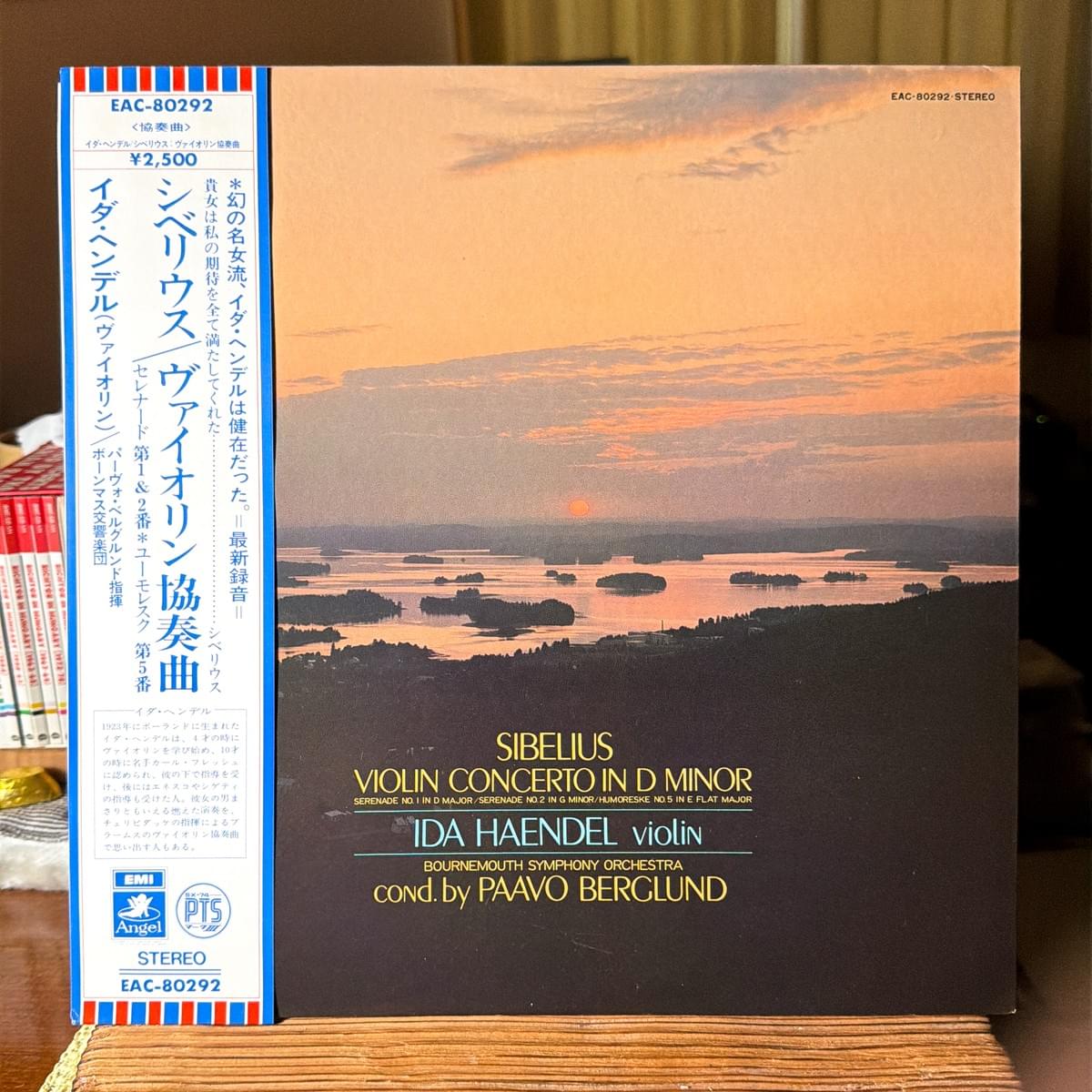
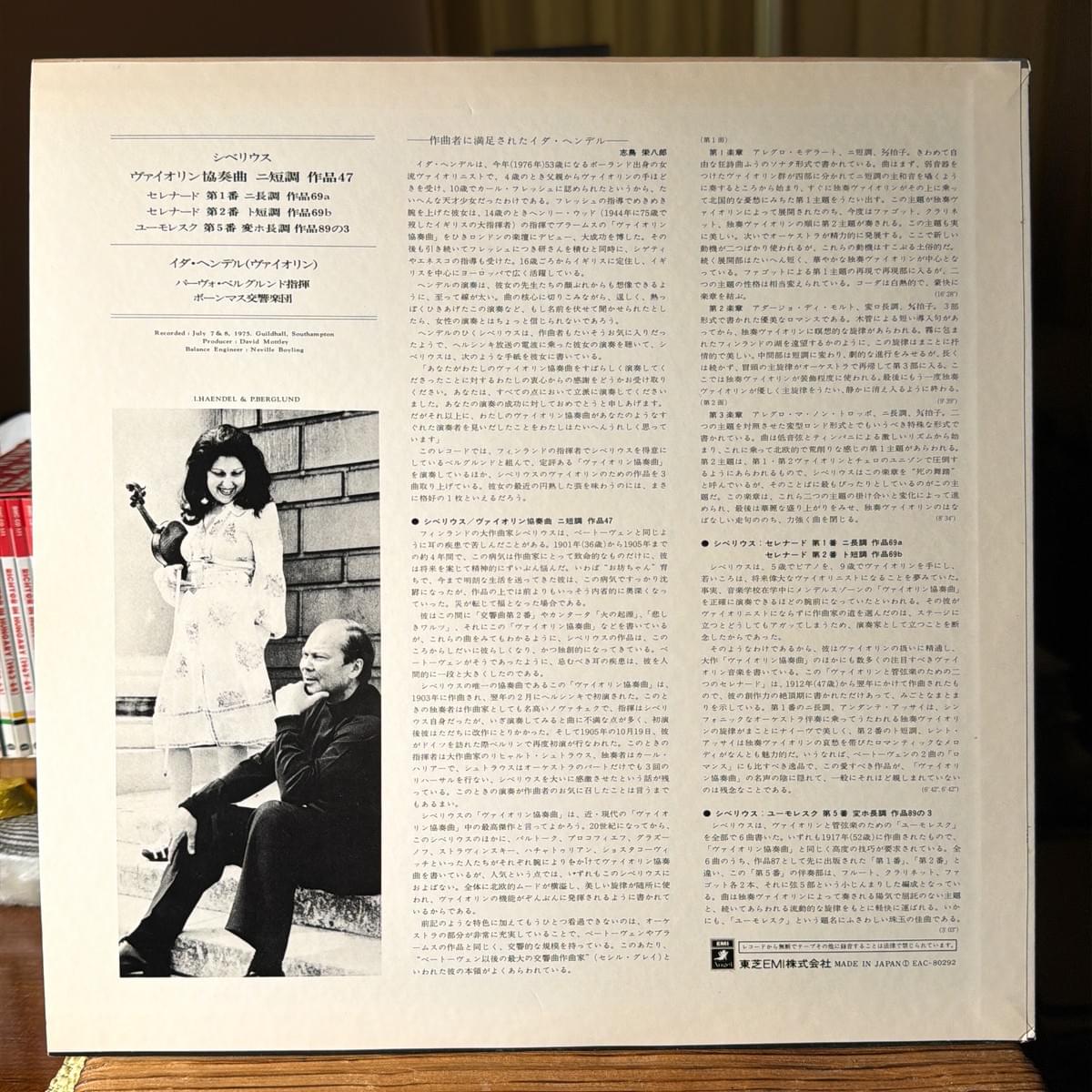
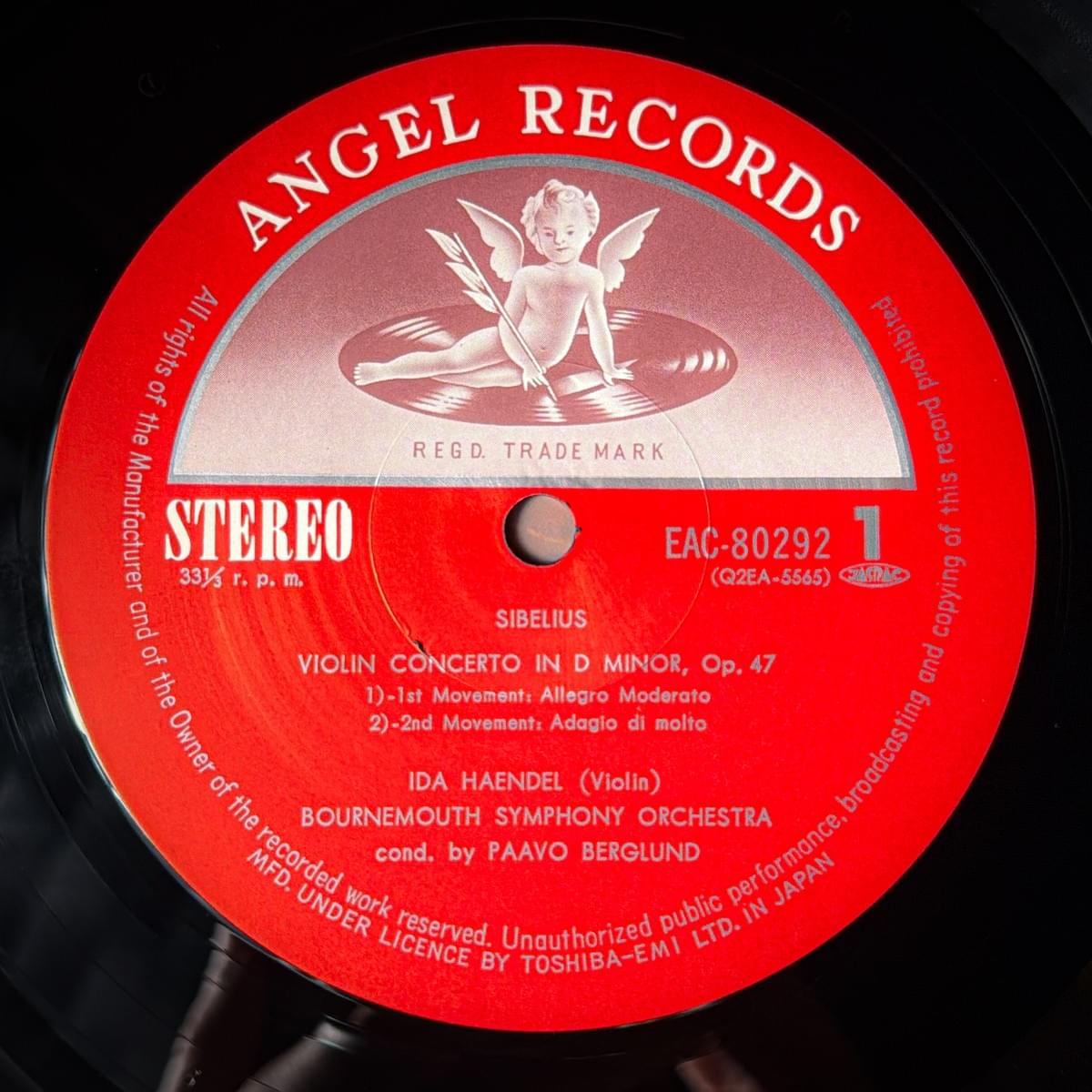
除了演奏與傳承下一代
她後來移居加拿大蒙特婁,晚年定美國居邁阿密,教過、也啟發了安-蘇菲·慕特(Anne-Sophie Mutter,1963-)、馬克西姆·凡格洛夫(Maxim Vengerov,1974-)這一代的小提琴家。2006年,她在奧斯威辛—比克瑙集中營舊址,為教宗本篤十六世演奏。那個從海烏姆逃出來的猶太女孩,在將近七十年後,帶著她的琴回到了那片土地。
2020年7月1日,她在邁阿密辭世。同一年,「古殿」曾寫過的另一位西貝流士詮釋者、同樣登記生於1928年的卡蜜拉·維克斯(Camilla Wicks,1928-2020)也離開了。兩位女性,被同一首協奏曲綁了一生。
最後:一個人的年紀
回到封底那個數字。53歲,還是48歲?
我後來覺得,這張真正的年紀,不在出生證明上。1975年夏天站在南安普敦的韓黛爾,已經拉這首協奏曲二十多年,帶著作曲家的那封信也已經二十六年。那種每個音都不肯草率的慢,不是技術選擇,是一個人把一首曲子帶在身上幾十年之後的樣子。
如果有人要你用一個數字來定義自己,你會選出生證明上的那個,還是你把某件事堅持做了多少年的那個?
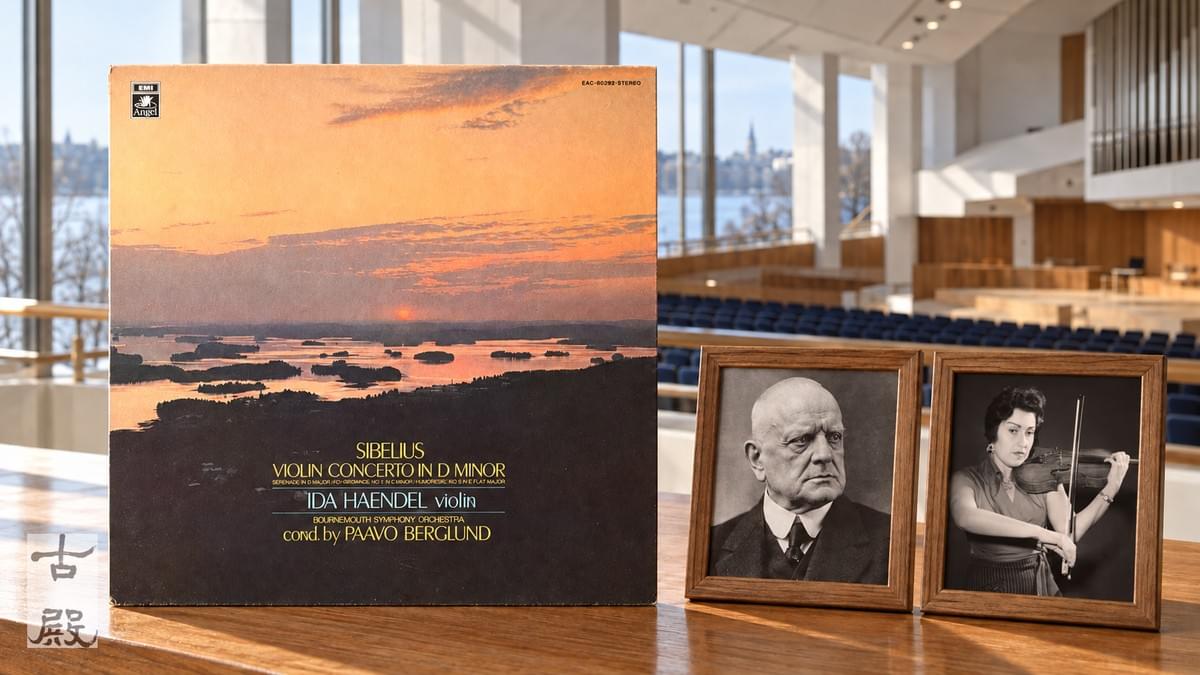
******
【Gudian Music Stories】Sibelius Listened to the Live Broadcast and Penned Her a Personal Letter: Ida Haendel (1928–2020) and the Violin Concerto She Carried for a Lifetime
A Number on the Back Cover
Turn this record over to the back. In the very first paragraph of the Japanese liner notes written by Eihachirō Shitori (1926–2001), there is a number.
"Ida Haendel turns 53 this year (1976)."
The obi strip on the left states it even more bluntly: Born in Poland, 1923.
The trouble is, Ida Haendel (1928–2020) insisted her entire life: No, I was born in 1928. Her official biographies, most obituaries, and the news reports when she passed away in Miami in July 2020 all record December 15, 1928.
The same person, five years apart. Who was telling the truth?
When most people hear that "a female virtuoso's age has two conflicting accounts," their immediate assumption is that she trimmed a few years off. Yet the biographical notes compiled for her complete Decca recordings tell the exact opposite story: in the 1930s, when her father brought her to London to launch her career, he produced a birth certificate that suddenly made her several years older in order to circumvent British child labor laws regulating stage appearances by minors. For the next half-century, the year 1923 lingered across standard reference books. Whenever she stated her true birth year, she was ironically suspected of vanity.
On the other side of the ledger stood her sister’s testimony and several British obituaries, insisting that 1923 was the genuine date. This debate was never definitively settled, even at her death.
This vinyl record cannot settle the dispute. But it stands as an authentic witness: proving that in 1976 Japan, the entire record industry believed she was five years older than she claimed.
And those five years determine just how astonishing another milestone truly was.
In March 1935, the inaugural International Henryk Wieniawski Violin Competition took place in Warsaw. First prize was claimed by the young French prodigy Ginette Neveu (1919–1949); second prize went to twenty-six-year-old David Oistrakh (1908–1974). Seventh prize, along with an honorary Polish prize, was awarded to a young girl.
If she was born in 1923, she was twelve years old. If she was born in 1928—she was seven.
A seven-year-old child, standing on the same competitive stage as David Oistrakh. That is the protagonist of this recording.
From Chełm to Helsinki: A Composer’s Handwritten Letter
She was born Ida Hendel into a Jewish family in the small eastern Polish city of Chełm. At age three, picking up her older sister’s violin, she immediately picked out a melody her mother had been humming. Before long, she enrolled at the Warsaw Conservatory, taking home the Gold Medal and winning a prize bearing the name of Bronisław Huberman (1882–1947). The extra letter "a" inserted into her surname was added later to project an international presence.
Following the Wieniawski Competition, she placed herself under the tutelage of two of the twentieth century’s most revered violin pedagogues: Carl Flesch (1873–1944) in London, and Romanian composer-violinist George Enescu (1881–1955) in Paris. In Flesch’s masterclasses, she studied alongside Ivry Gitlis (1922–2020) and Neveu—the very girl who had triumphed over her in Warsaw. Neveu subsequently became her close friend and guiding light.
In 1937, she gave a breakout performance of the Brahms Violin Concerto under Sir Henry Wood (1869–1944) at the London Proms. That launched a lifelong connection with the Proms, where she would return to perform sixty-eight times over her career.
Then came the war. Her family emigrated to the United Kingdom before Nazi tanks rolled into Poland; back in her native Chełm, the Jewish community was almost entirely annihilated.
During those years, she made a choice few prodigies would contemplate: she did not confine herself to recital halls. She walked into industrial munitions factories to play for factory workers, and performed for British and American troops. A young girl who should have been cloistered in a practice studio polishing technique carried her violin into places that looked least like concert auditoriums.
In 1949, she performed the Sibelius Violin Concerto in Helsinki, broadcast live over Finnish radio. In his villa at Ainola, the eighty-three-year-old Jean Sibelius (1865–1957) listened to the broadcast and took up his pen to write her a letter. The rear sleeve of this LP translates that letter in full:
"Please accept my heartfelt thanks for your extraordinarily magnificent performance of my Violin Concerto. You played it masterfully in every respect. ... But above all, I am deeply gratified that my concerto has found so preeminent an interpreter in you."
In October of that same year, Ginette Neveu—who had similarly immortalized the concerto with her benchmark 1945 recording—perished in an airplane crash en route to the United States.
In 1949, Sibelius lost one monumental interpreter, and found another. In 1982, the Sibelius Society awarded Haendel the Sibelius Medal. This concerto was a piece she played for her entire life.
Summer 1975: Two Days in Southampton
Twenty-six years later, she finally entered a commercial recording studio alongside a true Sibelius specialist to lay this concerto down on tape.
July 7 and 8, 1975. Southampton Guildhall, England. Produced by David Mottley and balanced by engineer Neville Boyling. On the podium was Finnish conductor Paavo Berglund (1929–2012), directing the Bournemouth Symphony Orchestra, where he served as principal conductor.
Berglund was a violinist by training. From 1949 to 1958, he had sat in the first violin section of the Finnish Radio Symphony Orchestra—bowing with his left hand. In 1970, he and the Bournemouth ensemble recorded the premiere studio account of Sibelius’s Kullervo for EMI, going on to record the complete symphonic canon. A conductor who understood the physical mechanics of the violin inside out, paired with a soloist validated by the composer himself.
Then comes the most striking hallmark of this recording: its deliberate, unhurried pacing.
The sleeve timings note 16 minutes and 28 seconds for the first movement, 9 minutes and 39 seconds for the second, and 8 minutes and 34 seconds for the finale—stretching the complete work to nearly thirty-five minutes. By comparison, Jascha Heifetz’s (1901–1987) legendary 1959 recording, celebrated for its searing speed and icy bite, finishes in under half an hour.
Yet "slow" here is not sluggish. She once noted that this concerto leaves nowhere to hide, that every note carries immense weight. She treats each note as an architectural pillar, choosing deliberation to trace the full harmonic arch. Gramophone’s comparative surveys observed that she remained faithful to this expansive architecture across half a century.
Eihachirō Shitori described her tone in the liner notes as possessing "broad, muscular strokes," piercing to the core of the music with resolute heat. In the opening measures of the first movement, where muted orchestral strings spread out like morning fog over water, her entry emerges from the mist—not floating out, but stepping forward with physical presence.
Side B features three frequently overlooked miniatures: the two Serenades, Op. 69, and the Humoresque No. 5. Shitori argued that these two Serenades easily stand alongside Beethoven’s two Romances, despite living in the shadow of the concerto. Among commercial recordings of these pieces, this 1975 account remains one of the earliest committed to vinyl.
Critical reception was not entirely uniform. While Haendel’s solo contribution was universally praised, debate centered on the Bournemouth Symphony: some admired its dark, brooding warmth, while others felt the ensemble lacked the polish of a top-tier international orchestra. That tension leaves room for listeners to decide with their own ears.
"Doesn't Sound Like a Woman's Playing": The Highest Praise of 1976
In his liner notes, Shitori wrote a revealing sentence: Unless the performer's name were openly disclosed, anyone hearing this playing would find it hard to believe it came from the hands of a woman.
In 1976, this was intended as sincere praise. Read today, it reflects the gendered assumptions of that era: that a female violinist’s tone ought to be delicate and decorative, and that playing with muscular grit was considered "unwomanly."
The copy on the obi strip speaks the same language. The bold headline proclaims: "The Legendary Virtuosa, Ida Haendel, Is Alive and Well!" The final line of the biographical sketch mentions that veteran listeners might still recall her performance of the Brahms Concerto under Sergiu Celibidache (1912–1996). In other words, to Japanese listeners in the 1970s, their memory of her had frozen two decades earlier. This release served as her formal reintroduction to the Japanese market.
She had answered this question on her own terms years before. In 1970, she published her autobiography, titling it Woman with Violin. Not "Female Violinist"—simply a woman, and her instrument.
The Artifact in Hand
The jacket features an aerial photograph of sunset across the Finnish lake district, with orange-red skies hanging over countless wooded islands. There is no portrait of the soloist—the Japanese release chose to let the landscape of Sibelius speak first.
Turning to the rear sleeve, a black-and-white photograph sits in the lower-left corner: Haendel in a floral print maxi dress on stone steps, holding her violin in one hand, looking down in laughter; Berglund rests on the step below, chin in hand, gazing into the distance. It is one of the most relaxed photographs of her in existence.
Withdrawing the disc reveals the red Toshiba-EMI Angel label—the Japanese first pressing. The jacket bears a circular "SX-74 PTS Mark III" emblem, denoting the Neumann SX-74 cutterhead celebrated in Japanese audiophile circles as the finest disc-cutting transducer of its day.
Beyond Performance: Passing the Flame
She later relocated to Montreal, Canada, before settling in Miami in her later years, mentoring and inspiring a subsequent generation of violinists including Anne-Sophie Mutter (b. 1963) and Maxim Vengerov (b. 1974). In 2006, on the grounds of the former Auschwitz-Birkenau concentration camp, she performed for Pope Benedict XVI. The Jewish girl who had escaped from Chełm returned to that soil nearly seventy years later, carrying her violin.
On July 1, 2020, she passed away in Miami. In that same year, another Sibelius interpreter chronicled by the Ancient Palace—Camilla Wicks (1928–2020), also recorded as being born in 1928—passed away as well. Two women, their artistic lives bound to the same concerto.
A Person's True Age
Let us return to that number on the rear sleeve: 53, or 48?
Her real age on this recording is not found on a birth certificate. Standing in Southampton Guildhall in the summer of 1975, Haendel had lived with this concerto for over two decades, carrying the composer's handwritten letter for twenty-six years. That deliberate pace, where no single note is rushed, was not a technical calculation; it was the voice of an artist who had carried a score inside her for half a lifetime.
If someone asked you to define yourself by a single number, would you choose the date stamped on your birth certificate, or the number of years you spent holding onto the work you love?