
【古殿唱片音樂故事】她讓李斯特說了實話,卻沒有人記得她的名字:法娜蒂(Edith Farnadi,1911–1973)的故事
古殿殿主
一個讓人困惑的現象
1945年12月5日,維也納某個音樂廳。二戰的廢墟還在,奧地利剛剛脫離納粹統治還不到八個月,整座城市的空氣裡混著瓦礫灰塵和某種不確定的重建氣息。
那一夜,一個從匈牙利逃出來的女鋼琴家,在維也納舉行了她的第一場音樂會。
隔天,維也納報紙《世界新聞》的評論這樣寫道:
「她是奧地利重建以來最強大的鋼琴力量。她在鋼琴前,化身為一座火山。」
這個女人叫做法娜蒂(Edith Farnadi)。
現在,你可以去問任何一個台灣的古典音樂樂迷,有多少人認識她的名字?
應該非常少,大部分都不知道她是誰?
一個在1945年的廢墟中,讓維也納媒體用「一座火山」來形容的鋼琴家,今天在中文世界幾乎完全沒有任何介紹文章。
這個空白,困擾了我很久。直到我一張一張翻遍她留下的那批Westminster紅標唱片之後,才開始真正明白,我們失去了什麼。
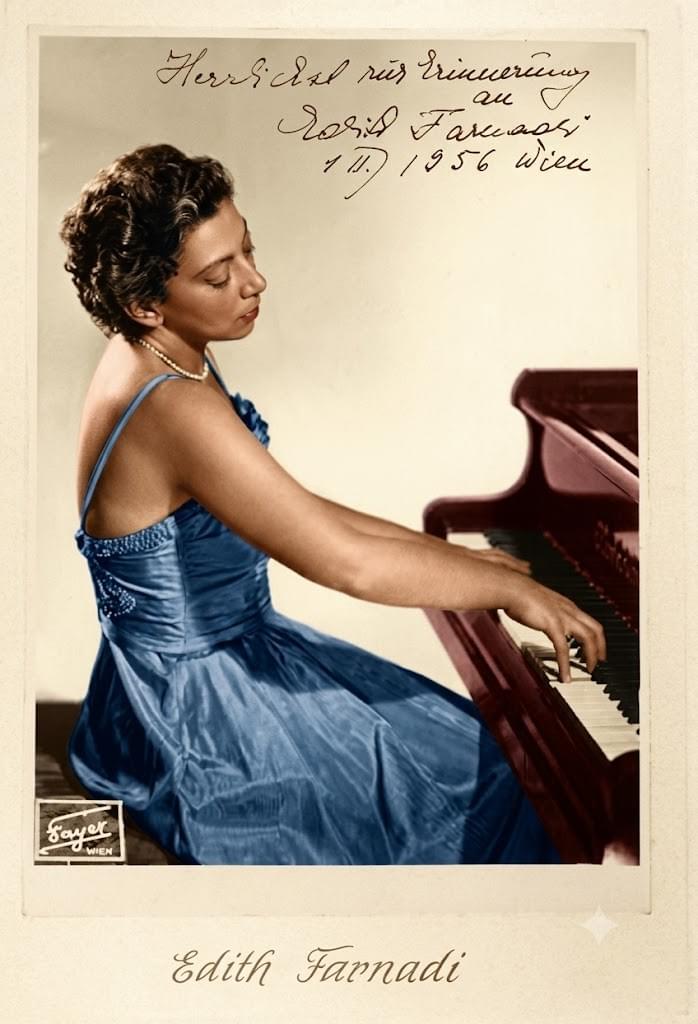
她有一個讓所有人意外的出身
法娜蒂1911年9月25日生於布達佩斯——許多資料將她的出生年誤記為1921年,《Gramophone》雜誌的法娜蒂專文已明確考證:正確年份是1911年,不是1921年。這個差距不是小事:1911年出生的她,7歲進入音樂院是1918年,17歲獲得文憑是1928年,成為巴托克助教是在1920至30年代——如果用1921年計算,這些時間線全部對不上。7歲進入布達佩斯音樂學院,9歲以神童之姿公開演出,12歲指揮樂團同時演奏貝多芬第一號鋼琴協奏曲——注意,是「指揮樂團+自己彈鋼琴」,同時進行,12歲。17歲獲得文憑,在學期間兩度獲得李斯特獎。
這些都很厲害。但真正關鍵的不是這些。
先說一件很多人不知道的事:她在學期間,成為了院長胡拜(Jenő Hubay,1858-1937)大師班的固定合作鋼琴家。
胡拜是誰?他是整個匈牙利小提琴傳統最核心的那個人。師承柏林的約阿希姆(Joseph Joachim,1831-1907)和布魯塞爾的維厄當(Henri Vieuxtemps,1820-1881)——後者去世前指名由胡拜接任布魯塞爾音樂院的教席——他在1886年回到布達佩斯,在李斯特音樂院執教了整整五十年,擔任院長長達十五年。他培養出的學生,幾乎就是二十世紀匈牙利小提琴傳統的全部支柱:西格蒂(Joseph Szigeti)、維希伊(Ferenc Vecsey)、席凱依(Zoltán Székely)、維爾嘉(Tibor Varga)、維格(Sándor Végh)、葛特勒(André Gertler)、奧曼第(Eugene Ormandy,後來成為費城管弦樂團的傳奇指揮)……以及他最後收下的一個學生——馬爾姬(Johanna Martzy)。胡拜聽完七歲的馬爾姬拉琴之後,預言她將成為這門樂器最高層次的大師,然後把她收進了班上。馬爾姬後來的確做到了——她是公認的匈牙利小提琴學派最後一代宗師,她的黑膠唱片今天在發燒友市場的價格,足以讓任何人瞠目。
這個名單,就是二十世紀上半葉的小提琴宇宙。
而法娜蒂,是為這些人伴奏的那個鋼琴家。
在一所音樂學院裡,大師班的伴奏不是任何人都能擔任的職位。這個位子要求你能在最短的時間內讀懂一個演奏家的音樂語言、在任何曲目上無縫配合、同時在音響上不搶主角的鋒頭——但你的存在又必須讓整個音樂更完整。能長期擔任胡拜大師班固定伴奏的鋼琴家,必定是當時學院裡最被信賴的那一個人。
這說明了什麼?法娜蒂在布達佩斯音樂學院的地位,從她十幾歲的時候就已經超越了她的年紀。
除了胡拜的大師班,她同時期也在布達佩斯宮殿的「國際音樂午後」活動中,與波蘭傳奇小提琴家胡伯曼(Bronisław Huberman)同台演出。
然後,關鍵在於這一行:她後來成為了巴爾托克(Béla Bartók,1881-1945)的助教。
巴爾托克是誰?他是二十世紀最重要的作曲家之一,也是窮其一生在匈牙利、羅馬尼亞、保加利亞農村採集民間音樂、用田野錄音機保存那些即將消失的旋律的研究者。他比任何人都更深刻地理解,李斯特那些「匈牙利狂想曲」裡面的音樂素材,究竟來自哪裡,那些吉普賽音階和民謠腔調在音樂學上的根源是什麼。
她逃出去了,但她沒有忘記從哪裡來
1942年,法娜蒂辭去了布達佩斯李斯特音樂學院的教職。
三年後,二戰結束,匈牙利成為蘇聯紅色鐵幕國家。她知道如果留下來,接下來的路會是什麼模樣。於是她離開了布達佩斯,搬到維也納。
維也納的那一夜,「一座火山」降臨了。
在接下來的幾年裡,她接到了一個來自大西洋彼岸的邀請,對象是Westminster唱片公司。
要理解Westminster,需要先說一個二戰結束後才發生的故事。
納粹德國在戰爭期間研發了磁帶錄音技術,並將其用於廣播。戰後,這項技術被公開,進入商業市場。磁帶錄音的出現改變了整個唱片工業的生態——在此之前,錄音必須仰賴巨大的資本和設備,只有大公司玩得起;磁帶技術讓成本大幅下降,讓有品味、有判斷力的小團隊也有了入場的空間。
Westminster就是在這個縫隙裡誕生的。1949年,一群品味極高的創辦人在紐約成立了這家小廠牌,他們很快看見了一個機會:戰後的歐洲,尤其是維也納,正處於重建階段——物價低廉,演奏家的出場費遠比美國便宜,但那裡有的,是世界上最好的古典音樂人才。
於是Westminster把錄音移到了維也納。在維也納音樂廳(Konzerthaus)用磁帶錄音,把母帶送回紐約壓片出版。他們的錄音哲學只有一句話:「自然平衡」——誠實還原現場聲場,不過度美化,不過度後製。
他們駐地維也納錄音期間,遇到了剛剛移居此地的法娜蒂。
這是一個難得的歷史偶然。一個從匈牙利流亡出來的女鋼琴家,遇上一群從紐約帶著磁帶機飛來的美國人——共同的目標,是把李斯特的音樂用最誠實的方式留下來。法娜蒂在1950年代留下的錄音,幾乎全部出自Westminster。
法娜蒂,就是他們選擇的那個李斯特。
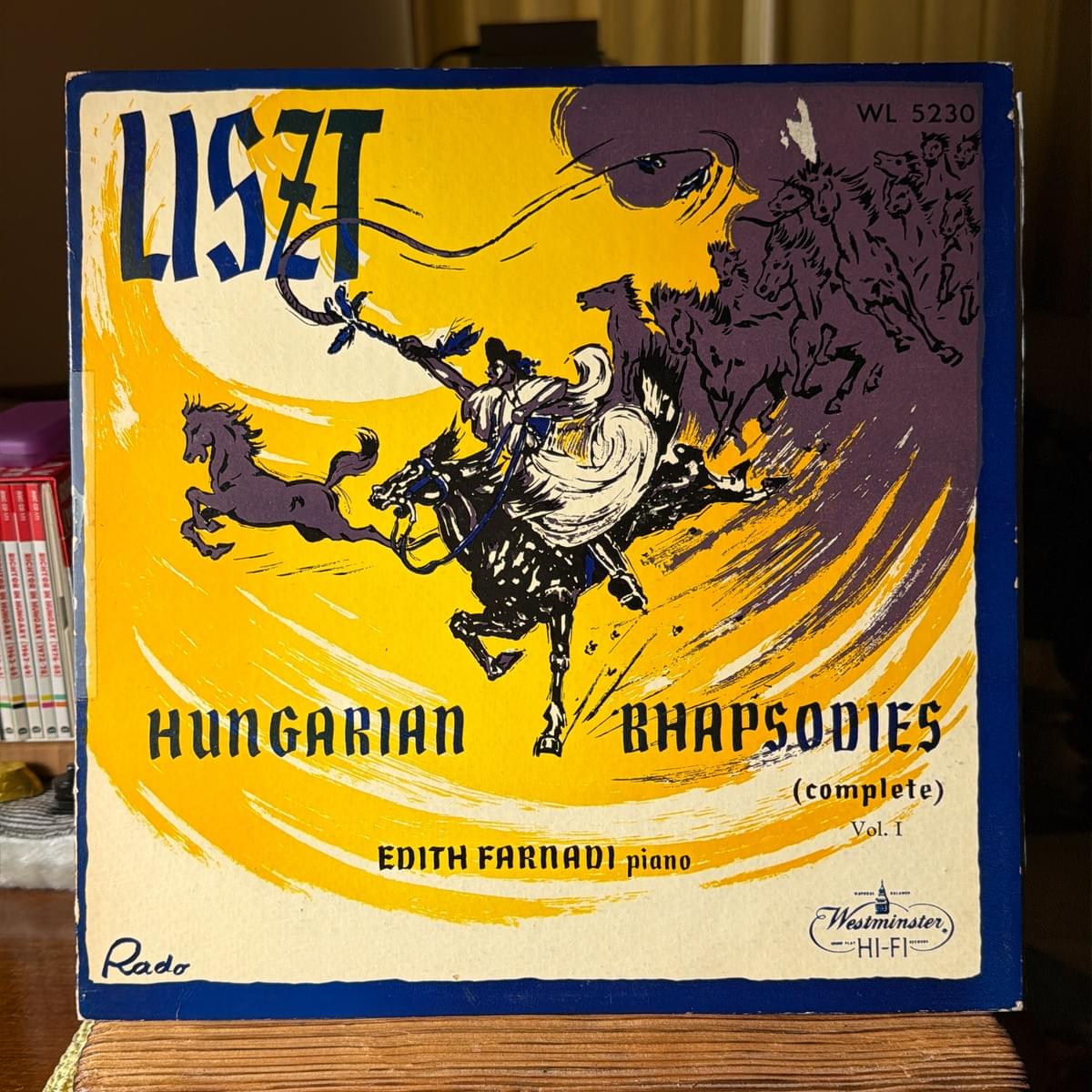
她花了三年,把李斯特的整個鋼琴世界說了一遍
195
1年到1954年,三年間,法娜蒂在維也納音樂廳完成了一套完整的李斯特鋼琴錄音計劃:
兩首鋼琴協奏曲(1951年)——與最激進的指揮赫曼·薛爾辛(Hermann Scherchen,1891-1966)合作,維也納國立歌劇院管弦樂團。謝爾欽是荀白克《月光小丑》1912年世界首演的指揮——他來指揮李斯特協奏曲,代表的是:他把李斯特看成跟荀白克一樣激進的革命者,而不是浪漫派的炫技鋼琴家。
十九首匈牙利狂想曲(1953年)——完整版,不是「選輯」。整套19首,分成三張LP全部錄完。這是當時極少數敢完整錄製的版本之一。
B小調奏鳴曲、梅菲斯托圓舞曲(1954年)——李斯特最偉大的單一鋼琴作品,30分鐘不中斷。
愛之夢、敘事曲、傳奇曲(完整版)(1954年)——李斯特最私密、最靈性的小品全集。
李斯特是誰的李斯特?
要理解法
娜蒂演奏這些音樂的獨特性,先要正視一個長期被迴避的問題:李斯特的「匈牙利狂想曲」,究竟有多「匈牙利」?
這個問題,Westminster唱片的封底解說就直接點出了:李斯特把《匈牙利狂想曲》視為一種集體民族史詩,但在他凱旋回歸布達佩斯之前的幾十年裡,他一直是一個徹頭徹尾的世界主義者——說法語比說匈牙利語流利,漫遊歐洲各地,與公主、皇室、哲學家為伍。他的洗禮名不是 Ferencz(匈牙利語),而是 Franz(德語)。更麻煩的是,音樂學家也指出,那些聽起來「明顯匈牙利」的音樂特徵,其實並非馬扎爾(Magyar)民族的本土音樂,而是吉普賽流浪音樂的元素——而連巴爾托克自己也承認,匈牙利吉普賽人幾乎從未創造過屬於自己的原創旋律。
換句話說,李斯特寫的「匈牙利」音樂,是一個世界主義者對一個他並不完全屬於的民族的浪漫想像。
這個矛盾在今天讀來格外有意思。我們這個時代剛剛走完了一段「全球化」的歷程——1990年代蘇聯解體之後,美國資本主義席捲世界,「走出去、商業化、打入全球市場」曾經是唯一正確的方向。但那個浪潮如今已退,世界各地的人們重新發現:被全球化輾平的,往往正是那些最珍貴的在地性。新的共識逐漸浮現——「越在地,才是真正的世界化」。一個根扎得深的聲音,反而比什麼都更能穿越語言和文化的邊界,被遠方的人聽見。
回到法娜蒂。
她的獨特性,正好處在這個張力的中心。她是匈牙利人,她在布達佩斯長大,她曾在巴爾托克身邊工作——她對那些吉普賽旋律、那些民謠腔調在身體裡的感受,是世界主義者的李斯特一生都在模仿、卻永遠無法真正擁有的東西。但同時,她又在維也納接受了最嚴格的歐洲古典訓練,她與Westminster合作,她為西方音樂世界留下這些錄音——她完全能夠承載李斯特那個作為世界主義者的視野與雄心。
兩者兼備:在地的土味,與世界主義的胸襟。
這正是為什麼法娜蒂演奏的李斯特,有一種其他人無法複製的真實性。她不只是在「詮釋」李斯特——她是在替李斯特完成一件他自己做不到的事:讓那些音符回到它們真正的根源。
她是怎麼演奏李斯特的?
這裡,我要
引用一句話。
「我敢說,你聽到B小調奏鳴曲開頭的那幾個音符,就會找不到意志在結束前停下來。那個戲劇性、抒情性、節奏的把握,還有她的音色——好到了那個程度。」
這句話說了,但還不夠精確。讓我說得更具體一些。
二十世紀的李斯特詮釋,有一個橫跨幾十年的巨大問題:太多鋼琴家把它演奏成「炫技的表演」。那種表演方式有一個特徵:鋼琴家站在音樂的前面,把李斯特那些宏大的手勢放大再放大,讓你不得不注意他,而不是讓你進入音樂裡面。這種方式,帕德雷夫斯基這樣做,霍洛維茨有時候也這樣做,今天某些人還在這樣做。
法娜蒂不是這樣的。
《Gramophone》雜誌後來在回顧她的錄音時說:「她對李斯特的詮釋,以謹慎、克制的智識性著稱,刻意迴避與他的音樂長期相關的那種爆炸性浪漫主義修辭。」
另一個評論者說得更直白:「你絕對聽不到那種從帕德雷夫斯基到卡通兔巴哥再到郎朗都在用的近乎滑稽的把戲。她以嚴肅的態度對待這部音樂,效果卓著。」
克制、嚴肅,這些聽起來好像是讚美,但我想換個方式說:她讓李斯特說了實話。
不是法娜蒂想要說什麼,而是她讓李斯特自己說話。
這對一個鋼琴家來說,是一種需要極大自信才能做到的謙遜。
一個值得深思的矛盾
1954年的
《Billboard》雜誌說她的匈牙利狂想曲全集是「必須擁有的里程碑式集成」。
同一年,《Gramophone》讚揚她的B小調奏鳴曲是「那個時代最重要的李斯特錄音之一」。
然後,她慢慢被遺忘了。
不是突然消失,是慢慢地、靜靜地沉入了時間的沉默裡。她沒有齊弗拉(György Cziffra)的奇幻人生故事(齊弗拉是匈牙利的另一個李斯特大師,他的故事包括流亡、監獄和逃亡,戲劇性十足),沒有霍洛維茨的傳奇性格,沒有布倫德爾的哲學聲望。
她只是一個匈牙利女鋼琴家,在二戰後的維也納,用最嚴肅的方式,把李斯特說了一遍,然後繼續演奏,繼續教書,1973年安靜地離開這個世界。
這個沉默,讓我想到一件事。
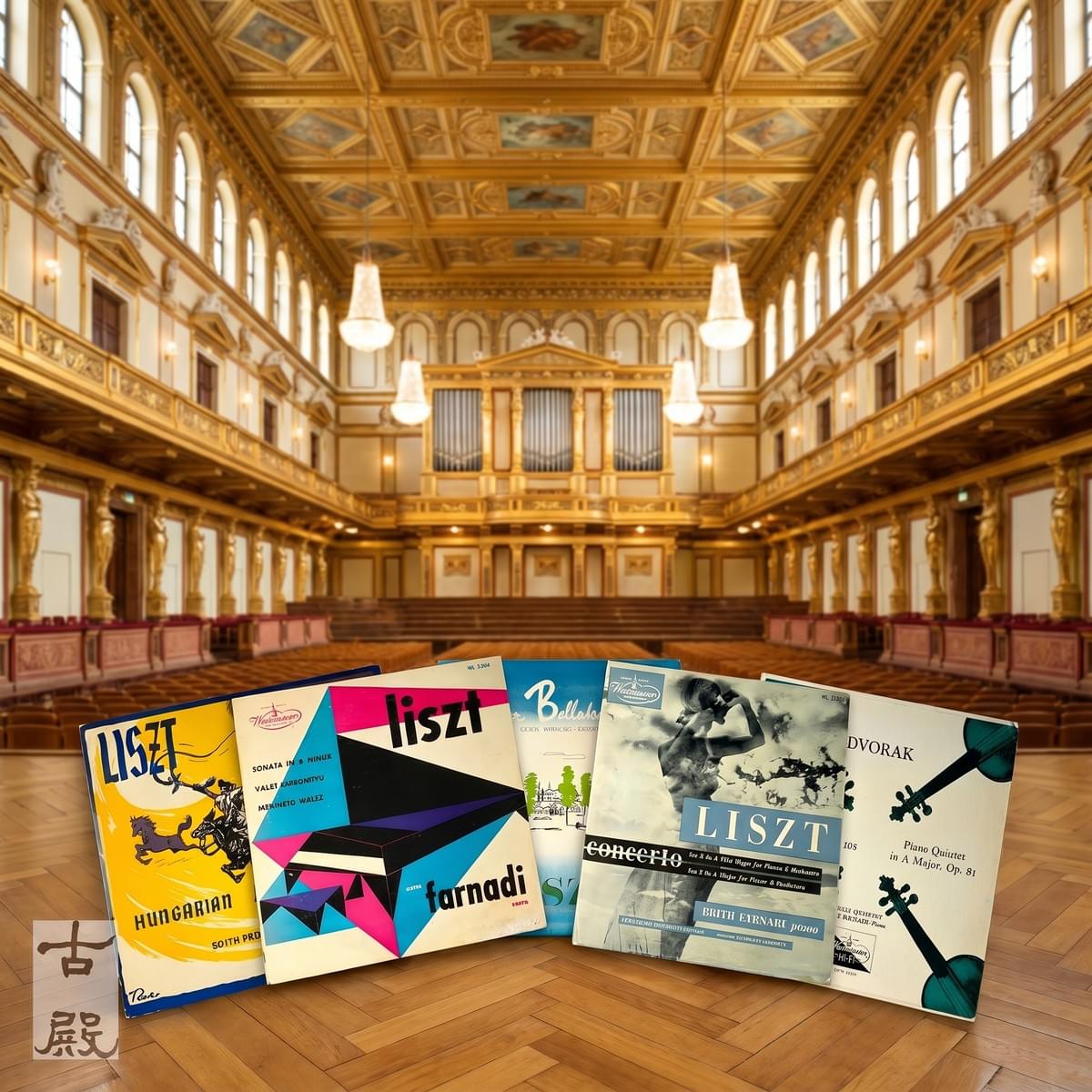
她留下的那些Westminster唱片,從來沒有消失。它們安靜地存在著。
******
[The Gudian Record Stories] She Made Liszt Tell the Truth, Yet No One Remembers Her Name: The Story of Edith Farnadi (1911–1973)
A Puzzling Phenomenon
Decemb
er 5, 1945, a concert hall in Vienna. The ruins of World War II were still visible. Austria had been liberated from Nazi rule for less than eight months, and the city's air was a mix of rubble dust and an uncertain atmosphere of reconstruction.
That night, a female pianist who had fled Hungary held her first concert in Vienna.
The next day, a review in the Viennese newspaper Weltpresse wrote:
"She is the most powerful piano force in Austria since the reconstruction. At the piano, she transforms into a volcano."
This woman was Edith Farnadi.
Now, if you ask any classical music lover in Taiwan how many of them recognize her name, the answer would likely be very few. Most have no idea who she is.
How could a pianist, described by the Viennese media in the ruins of 1945 as "a volcano," have almost no introductory articles about her in the Chinese-speaking world today?
This blank space bothered me for a long time. It wasn't until I dug through her legacy—crate by crate, listening to those Westminster red-label vinyl records she left behind—that I truly began to understand what we have lost.
An Unexpected Origin
Farnad
i was born in Budapest on September 25, 1911. Many sources mistakenly record her birth year as 1921, but a featured article in Gramophone magazine has clearly verified the correct year is 1911.
This ten-year difference is no small matter:
Born in 1911, she entered the conservatory at age 7 in 1918.
- She received her diploma at age 17 in 1928.
- She became Béla Bartók’s assistant during the 1920s and 1930s.
- If you calculate using 1921, none of these timelines make sense.
She entered the Budapest Academy of Music at age 7, performed publicly as a child prodigy at age 9, and at age 12, conducted an orchestra while performing Beethoven’s Piano Concerto No. 1. Mind you, that is conducting the orchestra and playing the piano at the same time—at 12 years old. By 17, she received her diploma, having won the Liszt Prize twice during her studies.
These achievements are incredible, but they aren't the real key.
Let me share something many people don’t know: during her studies, she became the permanent collaborative pianist for the masterclasses of the Academy's director, Jenő Hubay (1858–1937).
Who was Hubay? He was the absolute core of the entire Hungarian violin tradition. Having studied under Joseph Joachim in Berlin and Henri Vieuxtemps in Brussels (the latter specifically named Hubay to succeed his teaching chair in Brussels before passing away), Hubay returned to Budapest in 1886. He taught at the Liszt Academy for a full fifty years and served as its director for fifteen.
The students he produced formed virtually the entire backbone of the 20th-century Hungarian violin tradition: Joseph Szigeti, Ferenc Vecsey, Zoltán Székely, Tibor Varga, Sándor Végh, André Gertler, Eugene Ormandy (who later became the legendary conductor of the Philadelphia Orchestra)... and his final pupil, Johanna Martzy. After hearing the seven-year-old Martzy play, Hubay predicted she would become a master of the highest order on the instrument and took her into his class. Martzy did exactly that—she is widely recognized as the last grandmaster of the Hungarian violin school, and the prices of her vinyl records on today’s audiophile market are enough to make anyone gasp.
This list represents the violin universe of the first half of the 20th century. And Farnadi was the pianist who accompanied them.
In a music academy, the collaborative pianist for a masterclass is not a position just anyone can hold. It demands that you read and understand a performer's musical language in the shortest time possible, blend seamlessly across any repertoire, and never steal the spotlight acoustically—yet your presence must make the entire performance complete. A pianist who could serve as Hubay’s permanent masterclass accompanist for the long term was undoubtedly the most trusted person in the academy.
What does this tell us? Farnadi’s status at the Budapest Academy of Music had already transcended her age when she was just a teenager.
Beyond Hubay’s masterclasses, she performed during the same period alongside the legendary Polish violinist Bronisław Huberman at the "International Musical Afternoons" held at the Budapest Palace.
Then comes the crucial line: she later became the assistant to Béla Bartók (1881–1945).
Who was Bartók? He was one of the most important composers of the 20th century, a researcher who spent his life in the villages of Hungary, Romania, and Bulgaria, using field recorders to preserve melodies that were on the verge of disappearing. He understood, more deeply than anyone else, exactly where the musical material in Liszt’s Hungarian Rhapsodies came from, and what the musicological roots of those Gypsy scales and folk inflections truly were.
She Escaped, But She Never Forgot Where She Came From
In 194
2, Farnadi resigned from her teaching position at the Franz Liszt Academy of Music in Budapest.
Three years later, WWII ended, and Hungary fell behind the Soviet Union's Iron Curtain. She knew what lay ahead if she stayed. So, she left Budapest and moved to Vienna.
That night in Vienna, "a volcano" descended.
Over the next few years, she received an invitation from across the Atlantic. It came from the Westminster record label.
To understand Westminster, one must first look at a story that unfolded right after WWII.
During the war, Nazi Germany developed magnetic tape recording technology for broadcasting. Post-war, this technology was made public and entered the commercial market. The advent of tape recording reshaped the entire recording industry ecosystem. Prior to this, recording relied heavily on massive capital and equipment—a game only major corporations could play. Tape technology drastically lowered costs, opening the door for small teams with exceptional taste and judgment.
Westminster was born into this very gap. Founded in New York in 1949 by a group of founders with impeccable taste, they quickly spotted an opportunity: post-war Europe, particularly Vienna, was in a phase of reconstruction. Prices were low, and performers' fees were far cheaper than in the United States, yet the city possessed the finest classical music talent in the world.
Thus, Westminster moved its recording operations to Vienna. They recorded on tape at the Vienna Concert Hall (Konzerthaus) and sent the master tapes back to New York for pressing and distribution. Their recording philosophy was summarized in two words: "Natural Balance"—honestly reproducing the live soundstage without over-beautifying or over-processing.
During their residency in Vienna, they crossed paths with Farnadi, who had just relocated there.
It was a rare historical serendipity. A exiled female pianist from Hungary meeting a group of Americans who had flown in from New York with tape recorders—their shared goal was to preserve Liszt's music in the most honest way possible. The recordings Farnadi left behind in the 1950s came almost entirely from Westminster.
Farnadi was the Liszt they chose.
Three Years to Tell the Whole Story of Liszt's Piano World
From 1
951 to 1954, over a span of three years, Farnadi completed a comprehensive Liszt piano recording project at the Vienna Konzerthaus:
The Two Piano Concertos (1951): Collaborating with the radical conductor Hermann Scherchen (1891–1966) and the Vienna State Opera Orchestra. Scherchen was the conductor for the 1912 world premiere of Schoenberg’s Pierrot Lunaire. For him to conduct Liszt's concertos meant he viewed Liszt as a radical revolutionary akin to Schoenberg, rather than a mere Romantic virtuoso.
Nineteen Hungarian Rhapsodies (1953): The complete version, not a "selection." The full set of 19 was recorded across three LPs. This was one of the very few complete recorded versions anyone dared to attempt at the time.
Sonata in B minor & Mephisto Waltz (1954): Liszt’s greatest single work for piano, a 30-minute uninterrupted journey.
Liebesträume, Ballades, and Légendes (Complete) (1954): A collection of Liszt’s most intimate and spiritual short pieces.
Whose Liszt is It?
To und
erstand the uniqueness of Farnadi’s interpretation of this music, we must first confront a question that has long been sidestepped: Just how "Hungarian" are Liszt's Hungarian Rhapsodies?
The liner notes on the back of the Westminster jackets pointed this out directly: Liszt viewed the Hungarian Rhapsodiesas a form of collective national epic. Yet, for decades before his triumphant return to Budapest, he was thoroughly a cosmopolitan—more fluent in French than Hungarian, wandering across Europe, keeping company with princesses, royalty, and philosophers. His baptismal name was not Ferencz (Hungarian), but Franz (German).
To make matters more complicated, musicologists have noted that the musical characteristics sounding "distinctly Hungarian" were not native to the Magyar people, but were elements of Gypsy nomadic music. Even Bartók himself admitted that the Hungarian Gypsies rarely created original melodies of their own.
In other words, the "Hungarian" music Liszt wrote was a cosmopolitan's romantic imagination of a nation to which he did not entirely belong.
Reading this contradiction today is particularly fascinating. Our era has just lived through a wave of "globalization." Following the collapse of the Soviet Union in the 1990s, American capitalism swept the globe; "going global, commercializing, and breaking into the international market" seemed to be the only correct path. But that tide has turned. People everywhere are rediscovering that what gets flattened by globalization is often the most precious local identity. A new consensus is emerging—"the more local, the more truly universal." A deeply rooted voice can cross borders of language and culture better than anything else, reaching people far away.
Back to Farnadi.
Her uniqueness sits precisely at the center of this tension. She was Hungarian, raised in Budapest, and had worked closely with Bartók. Her physical, internalized feeling for those Gypsy melodies and folk inflections was something that Liszt, the cosmopolitan, spent his life imitating but could never truly possess. Yet, at the same time, she received the most rigorous European classical training in Vienna. She collaborated with Westminster and left these recordings for the Western musical world—she was fully capable of carrying the vision and ambition of Liszt the cosmopolitan.
She possessed both: the earthy flavor of the local soil, and the breadth of a global mind.
This is exactly why Edith Farnadi's Liszt possesses an authenticity that others cannot replicate. She wasn't just "interpreting" Liszt—she was fulfilling something for Liszt that he couldn't quite achieve himself: letting those notes return to their true roots.
How Did She Play Liszt?
Here,
I want to share a quote:
"I dare say, from the moment you hear the first few notes of the B minor Sonata, you will find no willpower to stop before the end. The drama, the lyricism, the rhythmic grasp, and her tone—it is just that good."
While true, this description isn't precise enough. Let me put it more concretely.
The interpretation of Liszt in the 20th century suffered from a massive, decades-long problem: too many pianists turned it into a "showcase of virtuosity." That style of performance shares a common trait: the pianist stands in front of the music, magnifying Liszt's grand gestures over and over, forcing you to look at them rather than letting you step into the music. Ignacy Jan Paderewski did this, Vladimir Horowitz did it at times, and certain pianists still do it today.
Farnadi was different.
When Gramophone magazine later reviewed her recordings, they noted:
"Her interpretation of Liszt is noted for its careful, restrained intellectuality, deliberately avoiding the explosive romantic rhetoric long associated with his music."
Another critic put it even more bluntly:
"You will never hear the near-farcical tricks used by everyone from Paderewski to Bugs Bunny to Lang Lang. She treats this music with a seriousness that yields magnificent results."
Restraint, seriousness—these sound like compliments, but I want to phrase it differently: She made Liszt tell the truth.
It wasn’t about what Farnadi wanted to say; she simply let Liszt speak for himself.
For a pianist, that requires a level of humility born only from immense self-confidence.
A Contradiction Worth Pondering
In 195
4, Billboard magazine called her complete set of Hungarian Rhapsodies a "must-own, milestone collection."
That same year, Gramophone praised her B minor Sonata as "one of the most important Liszt recordings of the era."
And then, she was slowly forgotten.
It wasn't a sudden disappearance; she simply drifted, quietly and slowly, into the silence of time. She didn't have the fantastical life story of György Cziffra (another Hungarian Liszt master whose dramatic tale included exile, imprisonment, and escape). She lacked the legendary eccentricity of Horowitz and the philosophical prestige of Alfred Brendel.
She was just a Hungarian woman pianist who, in post-war Vienna, spoke Liszt’s language in the most serious manner possible, then kept performing, kept teaching, and quietly left this world in 1973.
This silence brings something to my mind.
The Westminster records she left behind have never actually vanished. They exist in quiet stillness—crate after crate of red-label vinyl—waiting for someone to place them on a platter, waiting for a stylus, waiting to be awakened once more.