
【古殿唱片音樂故事】在「天鵝絨」消失的那一年~~
海飛茲最美的聲音,在他仍是世界之王的時候的巔峰。半個世紀後,一本英國弦樂雜誌和一位香港樂評人,用各自的方式,留住了那個聲音最後的歷史見證
古殿殿主
大約在1940年到1942年之間,發生了一件沒有人宣布、沒有人注意到的事。
雅沙·海飛茲(Jascha Heifetz,1901-1987)的聲音,開始改變。
不是技巧退步了。他的技巧從來沒有退步過,那雙手幾乎不屬於會衰老的肉體。不是音樂理解變淺了。他對樂曲的掌控,在往後的三十年裡依然無人可以匹敵。改變的是某種更難描述、更難留住的東西——那種光滑、柔和如天鵝絨的音色質地,那種讓人覺得聲音不是從樂器裡出來、而是從空氣本身之間生長出來的特質,悄悄地、不可逆轉地,消失了。
在當時,沒有人說出這件事。海飛茲依然是海飛茲,依然是樂壇上的唯我獨尊,依然是同時代每一位小提琴家在心裡默默比較的那個名字。「天鵝絨消失了」這個判斷,要等幾十年後,才由一個在香港的小提琴老人緩緩說出來。
而他能說出這句話,是因為有一批錄音,把那個歷史聲音保存了下來。
· · ·
鄭延益先生,1923年生於浙江慈溪,六歲開始拉琴。他的一生,是二十世紀中國音樂史的一個縮影:少年時在新加坡習琴,抗戰爆發後輾轉香港、上海、重慶。在上海,他進入國立音專,跟隨工部局管弦樂團首席費迪南德·阿德勒學琴——那是一位旅居上海的奧地利猶太音樂家,他把歐洲黃金時代的演奏傳統帶到了遠東,再把它傳進了鄭先生的耳朵與手指。
1954年,三十歲出頭的鄭先生應上海音樂學院之邀回到中國任教,在那裡度過了漫長的歲月,將中提琴專業從無到有地建立起來,培育了一代又一代的弦樂人才。文革後期,他離開上海,移居香港。此後的年月,他轉而提筆寫作,成為香港最具份量的古典音樂評論人之一。他的文集《春風風人》,在二手書市場上的售價曾被標到千元以上一冊,因為再版後依然很快售罄。
然而就是這樣一個耳朵從小被歐洲傳統訓練的人,在香港執筆多年,卻長期面對一個困境:他知道有什麼東西消失了,但他找不到工具說服讀者。
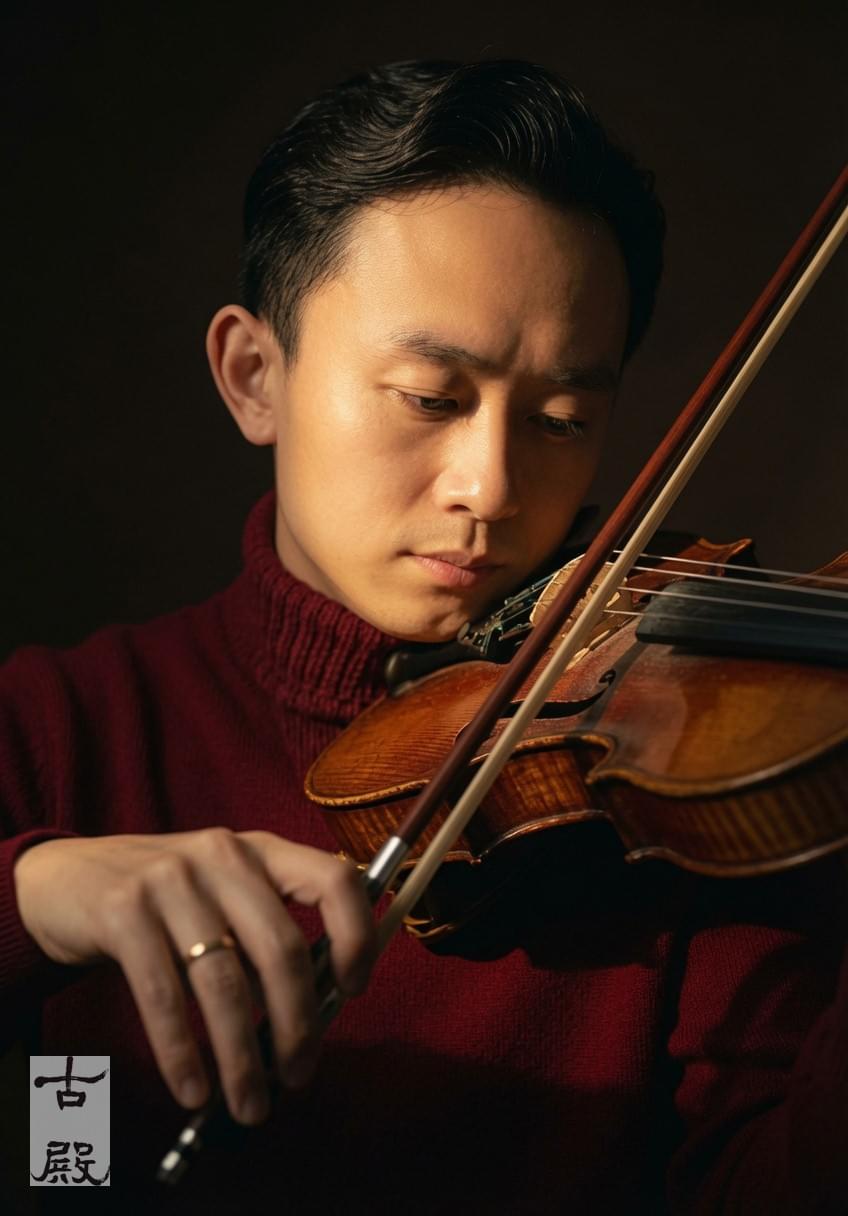
鄭先生年輕時代拉琴的照片
· · ·
那個「消失的東西」,是一整個時代對聲音的理解方式。
鄭先生觀察到,從1980年代起,小提琴的錄音審美整體轉向「亮」——但那是一種硬的亮,一種被錄音技術與播放系統調整出來的人工光澤。他給了這個現象一個讓人難以忘記的名字:「鍍鉻」的琴聲。
「鍍鉻」,是工業時代的詞彙。它把東西弄得光亮、耐磨、整齊——但那層光澤是外加的,有種刻意加工的意味,不是本身的。鄭先生說,後來許多人聽慣了這種聲音,不但忘記了真正的小提琴聲音是什麼,甚至開始相信「鍍鉻」的聲音就是正確的聲音。更危險的是,這個審美偏差已經滲入製琴師的手:有人開始把歷史名琴「調整」成音量大、音色亮而帶硬的狀態。他認為,這是在摧毀無可取代的原始物件。
他想讓讀者聽見差異。但差異存在於聲音本身,不存在於文字裡。他的困境是每一個試圖描述真實聲音的人都會遭遇的困境:語言到了聲音面前,永遠差一步。直到一件事情的出現,改變了這一個困境,帶來了一個機會。
· · ·
1988年,歷史悠久的百年弦樂專業《The Strad》雜誌做了一個決定。
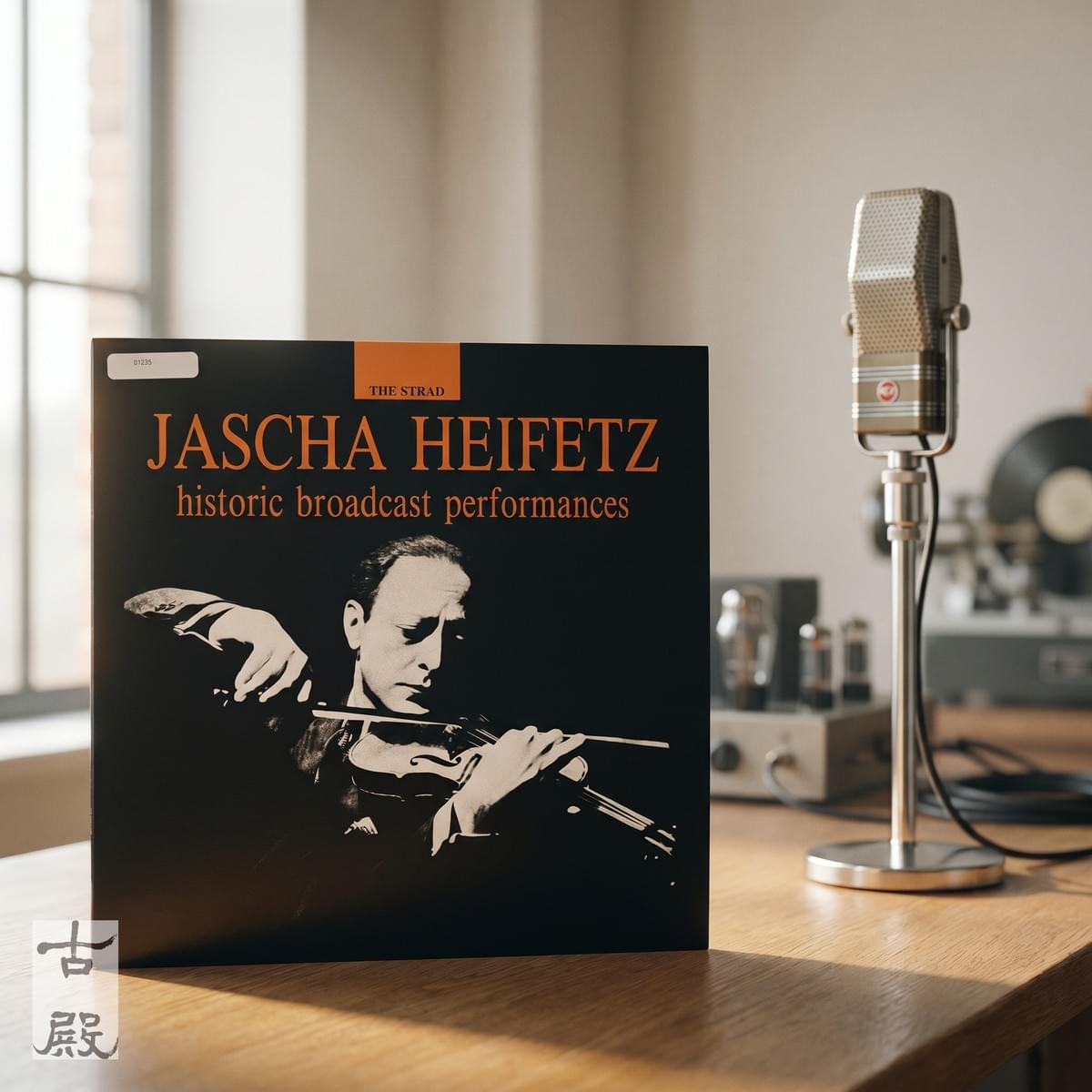
《The Strad》是英國一本創刊於1890年的弦樂專業雜誌,近百年來,它記錄了幾乎所有值得被記錄的小提琴家與製琴師。1988年,為了配合「海飛茲紀念特刊」(海飛茲於1987年去世,1988年為了紀念規劃特刊),雜誌社將幾批珍稀的歷史錄音特別製成黑膠唱片——不是拿去販售,而是作為非賣品,隨另一套克萊斯勒LP套裝主動寄贈給訂購者。
這套兩張LP(STRAD 003 / 004),收錄了三個不同時代的錄音:
- 第一批 · 1911年 · 聖彼得堡**俄羅斯錄音——德沃夏克《幽默曲》、舒伯特《蜜蜂》**海飛茲年僅10歲,在聖彼得堡留下的最早有聲印跡。長期以來學界以為他首批錄音是1917年抵美之後才製作的,這批材料的重現,將那個起點整整往前推了六年。
- 第二批 · 1932年 · 霍博肯貝爾實驗室實驗錄音——孟德爾頌《歌之翼》(4個take)及其他在紐澤西州霍博肯市的Lyric Theatre,科學家為研究早期立體聲技術而進行的實驗錄音,從未商業發行。錄音目的不是藝術,是科學。正因如此,它從未被任何市場邏輯篩選或修整過——它只是忠實地記錄下了那個下午,海飛茲的弓與弦之間真實發生的事。
- 第三批 · 1935年 · 卡內基音樂廳廣播現場——布拉姆斯小提琴協奏曲,與托斯卡尼尼海飛茲與托斯卡尼尼一生的合作中,商業錄音只留下一張(1940年貝多芬協奏曲)。這個1935年的廣播現場,幾乎是兩人音樂關係中唯一留存的另一個入口。
其中最關鍵的,是1932年的貝爾實驗室錄音。那個下午,恰好在天鵝絨消失之前。
「這是我聽過最美的小提琴琴音。」— 香港樂評人高考亮,聆聽孟德爾頌《歌之翼》(貝爾實驗室,1932年)後
· · ·
鄭先生拿到這套唱片的那天,他說:「大喜過望。」
他把香港的兩位音樂評論朋友——高考亮先生與黃牧先生——請到家中,一起聆聽那幾個孟德爾頌的take。高先生說出那句話之後,房間裡大約是沉默的。
那個沉默,是一種難以言說的確認:我們失去了某種東西,而現在我們第一次真正聽見了,我們失去了什麼。
鄭先生終於有了他需要的工具。不是更好的文字,不是更精確的樂理術語,而是聲音本身。一個用機械方式非常純粹地刻進溝槽的物理事件,忠實地保存了那個下午的空氣振動,等待五十六年之後,在香港鄭先生的房間裡,重新流進三個老人的耳朵。
· · ·
這整個歷史鏈條,有任何一個環節斷裂,都不會有那個下午。
如果貝爾實驗室的工程師沒有在1932年選擇海飛茲作為實驗對象——那個聲音就不存在。如果《The Strad》在1988年沒有決定把這批音源壓進黑膠、以非賣品的方式流傳出去——那個聲音就繼續沉睡在某個檔案室裡。如果鄭先生沒有把他的聆聽體驗寫進文字——我們今天甚至不知道有人曾經在那個下午,聽見了什麼。
保存,不是懷舊。保存是讓感知成為可能的行動——讓鄭先生能說出「天鵝絨」,讓高考亮先生能說出「這是我聽過最美的」,讓我們今天能知道那個標準是什麼,而不是在黑暗中憑空摸索。
知道過去,並非朝向過去。知道過去,是因為我們需要一把尺。有了那把尺,我們才能看清楚現在站在哪裡;看清楚現在,才能有方向地朝向未來。
鄭先生的文章告訴我們:1932年的那個聲音,才是尺。今天那些光亮、清晰、「鍍鉻」的琴聲,不是終點,只是一個需要被重新校準的現在。
這讓我想到一個不只關於音樂的問題——
我們這個時代,有多少類似的「尺」正在被遺忘、被覆蓋、被更光亮的東西取代?而我們有沒有人,正在某個地方,默默把那個真實的聲音壓進某個溝槽裡,等待下一個鄭先生?
*******
[Tales from the Antique Palace Record Archive] The Year the Velvet Vanished
Heifetz’s most beautiful tone was captured at his absolute peak, back when he reigned as the unrivaled king of the violin. Half a century later, a British string magazine and a Hong Kong music critic each found their own way to preserve the final historical testimony of that voice.
Somewhere between 1940 and 1942, something happened. No one announced it, and almost no one noticed.
Jascha Heifetz’s (1901–1987) sound began to change.
It wasn't that his technique was slipping. His technique never slipped; those hands seemed to belong to a body immune to aging. Nor had his musical depth faded. His mastery over the repertoire remained unmatched for the next thirty years. What altered was something far more elusive, something incredibly difficult to capture or describe—that smooth, soft, velvet-like texture of his tone. That magical quality that made the music feel as though it wasn’t coming from an instrument at all, but rather breathing directly out of the air itself, had quietly and irreversibly vanished.
At the time, no one spoke of it openly. Heifetz was still Heifetz, the absolute monarch of the musical world, the benchmark against whom every contemporary violinist secretly measured themselves. It would take decades before an elderly violinist in Hong Kong would slowly voice the realization: "The velvet was gone."
The only reason he could say those words was because a specific set of recordings had captured and preserved that historical voice.
Mr. Cheng Yen-et was born in Cixi, Zhejiang, in 1923, and picked up the violin at the age of six. His life was a microcosm of 20th-century Chinese musical history. As a youth, he studied in Singapore, then moved between Hong Kong, Shanghai, and Chongqing as the War of Resistance broke out. In Shanghai, he entered the National Conservatory of Music and studied under Ferdinand Adler, the concertmaster of the Shanghai Municipal Orchestra. Adler was an Austrian-Jewish musician living in Shanghai who brought the golden-era performance traditions of Europe to the Far East, passing them directly into Mr. Cheng’s ears and fingertips.
In 1954, in his early thirties, Mr. Cheng was invited back by the Shanghai Conservatory of Music to teach. He spent many long years there, building China's viola program from the ground up and nurturing generations of string players. In the later years of the Cultural Revolution, he left Shanghai and relocated to Hong Kong. From then on, he turned his talents to writing, becoming one of Hong Kong's most influential classical music critics. His collected essays, The Spring Breeze Inspires, once commanded prices of over a thousand yuan per volume on the secondhand book market because copies sold out instantly even after being reprinted.
Yet, despite having ears trained from childhood in the European tradition, Mr. Cheng faced a long-standing dilemma during his years writing in Hong Kong: he knew exactly what had been lost, but he lacked the tools to make his readers understand.
That "lost element" was an entire era's way of perceiving sound.
Mr. Cheng observed that starting in the 1980s, the aesthetic of violin recording shifted entirely toward "brightness"—but it was a brittle, hard brightness, an artificial sheen manufactured by recording techniques and playback systems. He gave this phenomenon an unforgettable name: the "chrome-plated" violin tone.
"Chrome-plating" is a word from the industrial age. It makes things shiny, durable, and uniform—but that gloss is an external coat, a deliberate process rather than an inherent quality. Mr. Cheng noted that over time, as people grew accustomed to this sound, they not only forgot what a real violin sounded like, but they even came to believe that this "chrome-plated" sound was the correct one. Even more dangerously, this warped aesthetic began to affect luthiers. Some began "adjusting" priceless historical violins to make them louder, brighter, and harder. To him, this was the destruction of irreplaceable, living artifacts.
He wanted his readers to hear the difference. But the difference existed only within the sound itself, not in written words. His struggle was the same one faced by anyone who tries to describe the truth of a sound: language always stops one step short.
Until an unexpected event changed everything, opening a new window of opportunity.
In 1988, the venerable, century-old string publication The Strad made a momentous decision.
Founded in Britain in 1890, The Strad has spent over a century documenting nearly every violinist and luthier worth remembering. In 1988, to accompany their "Heifetz Memorial Issue" (following Heifetz's passing in 1987), the magazine pressed a selection of rare, historical recordings onto vinyl. These weren't made for commercial sale; instead, they were sent as exclusive complimentary gifts to subscribers who ordered a Fritz Kreisler LP box set.
This two-LP set (STRAD 003 / 004) contained recordings from three distinct eras:
- The First Group · 1911 · St. Petersburg Russian Recordings
Dvořák’s Humoresque, Schubert’s The Bee
The earliest audio footprints left by Heifetz at just ten years old in St. Petersburg. For a long time, scholars believed his first recordings were made only after he arrived in America in 1917. The rediscovery of these tracks pushed that starting point back by six full years.
- The Second Group · 1932 · Hoboken Bell Laboratories Experimental Recordings
Mendelssohn’s On Wings of Song (4 takes) and others
Recorded at the Lyric Theatre in Hoboken, New Jersey, where scientists were conducting experiments on early stereophonic technology. These were never commercially released. The goal wasn't art; it was science. Because of this, the recordings were never filtered or altered by commercial logic—they simply and faithfully captured exactly what happened between Heifetz’s bow and strings on that particular afternoon.
- The Third Group · 1935 · Carnegie Hall Live Broadcast
Brahms Violin Concerto, with Arturo Toscanini
Though Heifetz and Toscanini collaborated throughout their lives, they left behind only one commercial studio recording (the 1940 Beethoven Concerto). This 1935 radio broadcast serves as almost the only other surviving gateway into their musical relationship.
The absolute jewel of this set was the 1932 Bell Labs recording. That afternoon happened to be caught just moments before the velvet vanished.
"This is the most beautiful violin tone I have ever heard."
— Hong Kong music critic Ko Hau-leung, after listening to Mendelssohn’s On Wings of Song (Bell Labs, 1932)
The day Mr. Cheng received these records, he described himself as being "overjoyed."
He invited two of his music-critic friends in Hong Kong—Mr. Ko Hau-leung and Mr. Wong Muk—to his home to listen to those Mendelssohn takes together. After Mr. Ko uttered those words, a deep silence likely settled over the room.
That silence was a quiet, indescribable realization: We have lost something precious, and now, for the first time, we truly hear exactly what it is we lost.
Mr. Cheng finally had the tool he needed. It wasn't better vocabulary or more precise music theory jargon; it was the sound itself. A physical event purely carved into the grooves of a record, faithfully preserving the vibrations of the air from that afternoon, waiting fifty-six years to flow back into the ears of three elderly men in a Hong Kong living room.
If any single link in this historical chain had broken, that afternoon would never have happened.
If the engineers at Bell Labs hadn’t chosen Heifetz as their subject in 1932, that sound wouldn't exist. If The Strad hadn't decided to press these archival sources onto vinyl as a gift in 1988, those sounds would still be sleeping in a dark vault somewhere. And if Mr. Cheng hadn't written down his listening experience, we wouldn't even know today what those men heard on that afternoon.
Preservation is not about nostalgia. Preservation is an active rescue mission that makes true perception possible. It allowed Mr. Cheng to find the word "velvet," it allowed Mr. Ko to say "this is the most beautiful tone," and it allows us today to know what the standard of beauty looks like, rather than groping blindly in the dark.
Knowing the past isn't about being stuck in the past. We look back because we need a measuring tape. Only with that tape can we see clearly where we stand today; and only by seeing the present clearly can we find a meaningful direction toward the future.
Mr. Cheng's essays remind us that the sound from 1932 is our yardstick. Today’s bright, hyper-clear, "chrome-plated" violin tones are not the pinnacle; they are merely a reflection of a present day that urgently needs to be recalibrated.
This leaves me with a question that goes far beyond music:
In our modern age, how many similar "yardsticks" are being forgotten, painted over, and replaced by shinier, louder things? And is there someone out there, in some quiet corner, silently pressing that true, authentic human voice into a groove, waiting for the next Mr. Cheng to come along and listen?