
【古殿唱片音樂故事】一個偶然的夜晚,兩個波蘭人在墨西哥相遇,改變了音樂史~~那晚聽他拉琴的,是魯賓斯坦
古殿殿主
一個歐洲人,在墨西哥教了十年書。
不是因為他不夠好。事實上,他是那個年代訓練最完整的小提琴家之一——師承路線從俄羅斯學派的奧爾(Leopold Auer,1845-1930),到德國柏林的佛萊什(Carl Flesch,1873-1944),再到法國巴黎的提博(Jacques Thibaud,1880-1953),橫跨兩大小提琴傳統,1937 年以最高榮譽 Premier Prix 從巴黎音樂院畢業,那一年他才十九歲。
他的名字叫亨利克 謝霖(Henryk Szeryng,1918-1988)
但在1950年代初,如果去問任何一個歐洲的古典音樂圈內人,「謝霖是誰?」——他們很可能搖搖頭,似乎沒有什麼人知道!
因為這個名字,從樂壇消失了。
戰爭吞噬了他
消失,不是謝霖的選擇。是歷史的命運之輪替他做的選擇。
1939 年,德國入侵波蘭。謝霖當時在法國。他沒有逃,也沒有躲——他投入了流亡波蘭政府與軍隊,擔任翻譯,並為盟軍部隊辦了超過三百場勞軍音樂會,足跡遍及歐、亞、非、南北美洲。後來,他跟隨流亡政府的任務抵達墨西哥,協助數百名波蘭難民在那裡安家落戶。
墨西哥留住了他。
1943 年,墨西哥大學邀他主持弦樂系。他接受了。1946 年,他取得墨西哥公民身份。此後十年,他在墨西哥教琴、偶爾在拉丁美洲巡演,日子安靜得幾乎沒有聲音。
在歐洲,沒有演出,沒有商業唱片錄音出版,他的名字漸漸從人們的記憶裡褪去。
墨西哥,一場沒有預告的偶遇
這個故事的轉折,發生在一個沒有人計畫的夜晚。
偉大的蕭邦鋼琴家亞瑟魯賓斯坦(Arthur Rubinstein,1887-1982)來到墨西哥城演出。魯賓斯坦是波蘭人,謝霖也是波蘭人。兩個同鄉,在異鄉相遇了。
魯賓斯坦之前從來沒有聽過謝霖演奏。
但兩個音樂人在異鄉相遇,免不了要用琴對話與交流——那個年代的音樂人就是這樣,見面比的不是名片,是聲音。謝霖拉了琴,魯賓斯坦聽了。
他立刻打電話去找自己的經紀人索爾休洛克(Sol Hurok,1888-1974),說:
「有一個人,你必須幫他安排音樂會。」
休洛克是當時美國最有名的藝術音樂經紀人,是一位20世紀傳奇的經紀人。
於是不久後,1956 年謝霖就在美國展開了盛大的二十城巡迴音樂會。那是他重返國際舞台的第一步,而且一步就踏遍了整個美國。對那個年代的年輕聽眾來說,這場巡迴是一個震驚——一個名不見經傳的「新人」,用完全成熟的技藝出現在台上,好像憑空誕生的。沒有人知道,他只是從墨西哥回來了。
兩張黑膠:一個前輩親自下海背書的實體憑證
魯賓斯坦為謝霖做的,不只是那一通電話。
他用自己的名字、自己的鋼琴、自己在 RCA 的地位,親身坐在謝霖旁邊,把那個聲音錄進黑膠唱片裡。一個已經是世界頂尖鋼琴家的前輩老鄉,選擇用這種方式說:這個人,值得被聽見。
魯賓斯坦比謝霖大二十九歲。他大可以只是寫一封推薦信,打幾個電話,讓經紀人去處理,但他選擇親自下海來錄音。
1958 年 12 月 30 日、31 日,紐約,美國藝術與文學學院。兩天。謝霖四十歲。他們錄下了貝多芬「春」(第五號)與「克羅采」(第九號)。美國RCA原版目錄號 LSC-2377,1960 年發行,旋即獲得 1961 年法國學術院的 Grand Prix du Disque——法語世界最重要的唱片大獎。古殿手邊這張,是同一份錄音的法國版:RCA Victor 640.544,由 AREA 工廠從 RCA 原版母帶在法國壓製,封面頂部印著那枚金獎標示。
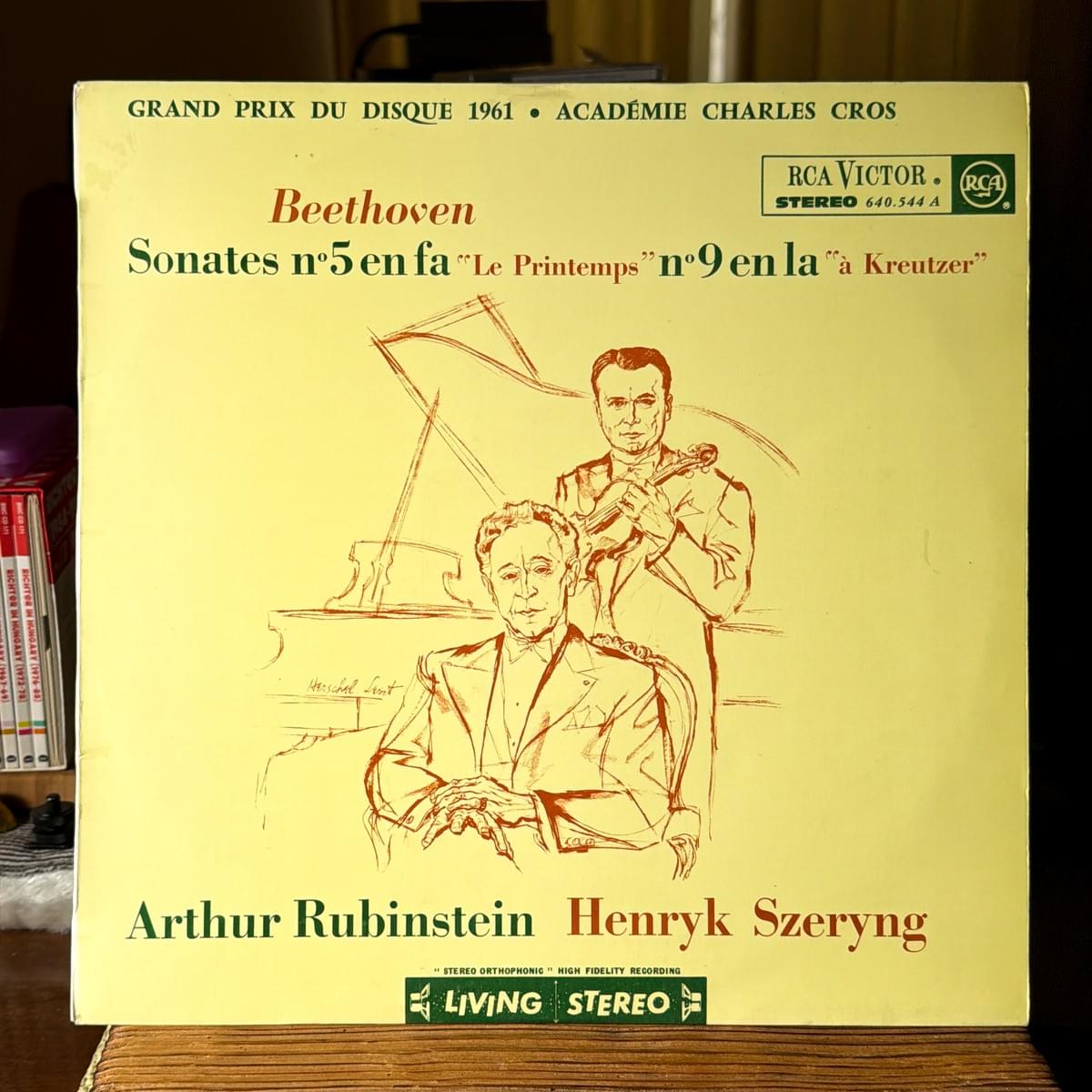
三年後1961 年,兩人又回到錄音室,錄下貝多芬第八號與布拉姆斯第一號小提琴奏鳴曲。1962 年在美國RCA以編號:LSC-2620 發行。
四首作品。三年時間。兩個波蘭人,魯賓斯坦用親自下海來協助,重新把謝霖的名字寫進了世界樂壇的第一線。
這兩張黑膠,不只是音樂。它們是一個前輩對後輩說「我為你作保」的實體憑證——而且這個擔保,用聲音留了下來,六十年後我們還能見證。
消失的十年,其實他沒有停
這裡有一個問題值得停下來想:在那十年,謝霖做了什麼?
在世界舞臺上他沒有音樂巡演,沒有唱片公司想跟他簽約,歐洲不知道他在哪裡?但他仍繼續拉著琴,繼續努力教學,繼續對真心拉著他那把 1742 年瓜奈里名琴。
沒有觀眾,也沒關係,音樂早已融入他的生命與生活之中。
這就是為什麼,當魯賓斯坦在那個偶然的夜晚聽見他演奏,立刻知道這個人的分量——因為那把琴的聲音,不是「準備表演」的聲音,而是「每天都在說話」的聲音。一個十年沒有停止練習、沒有停止思考的人,而早已跟音樂合而為一的人,跟一位只是為了舞台才拿起琴的人,音色是不同的。
那個差異,魯賓斯坦一秒就聽出來了。
第二張唱片:他終於知道自己要說什麼!
1965年,距離謝霖重返國際舞台已整整十年。他不再需要向任何人證明自己。他告訴 Philips:我想錄巴哈。我想和溫特圖爾樂團(COLLEGIUM MUSICUM WINTERTHUR)合作。我要自己指揮。
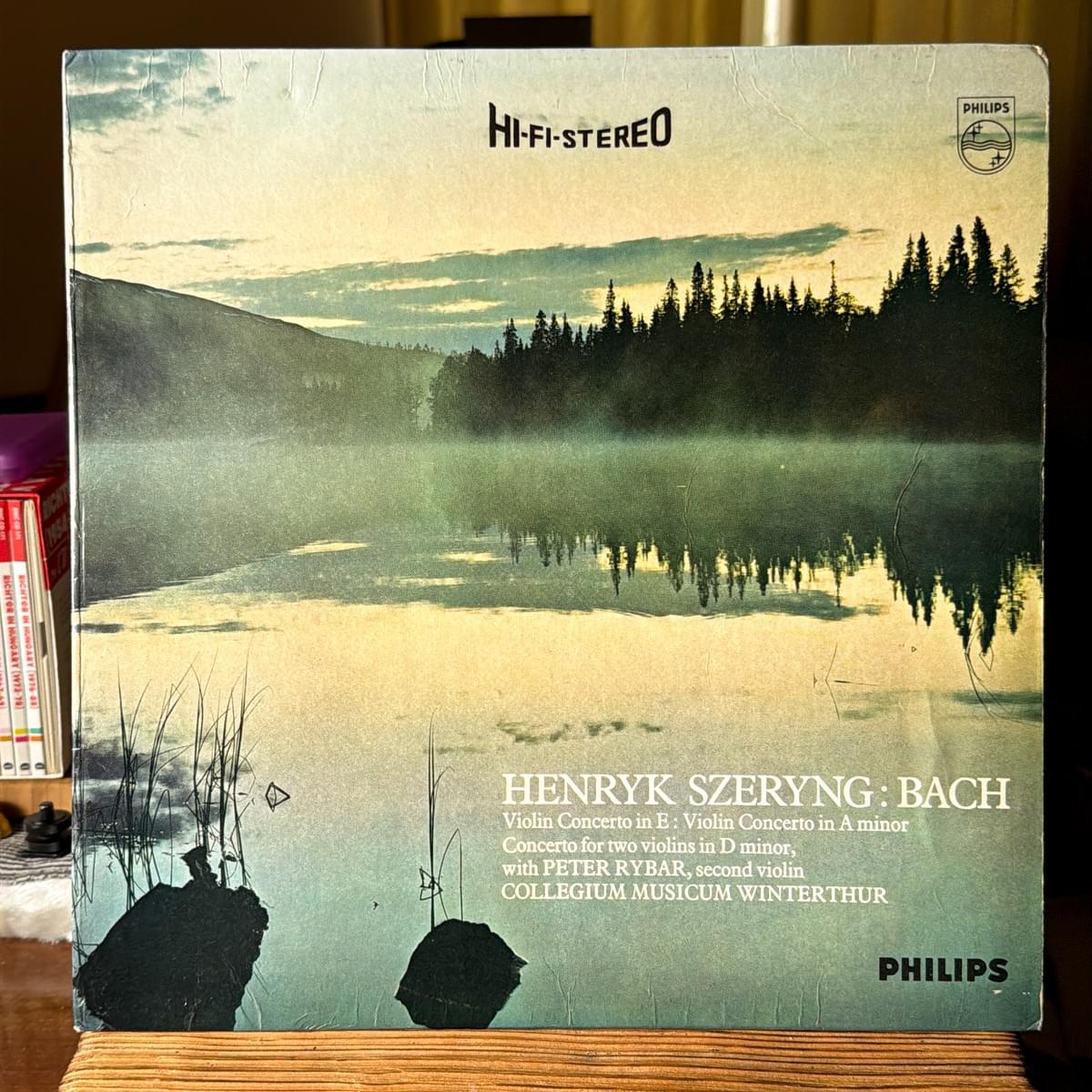
那就是古殿另一張封面畫著晨霧湖面的黑膠——Philips SAL 3540,英國版,1965 年紅銀標。巴哈三首小提琴協奏曲:A 小調 BWV 1041、E 大調 BWV 1042,以及雙小提琴協奏曲 BWV 1043,這首的合作第二小提琴,是彼德賴巴爾(Peter Rybar,1913-2002)——在溫特圖爾樂團擔任了將近三十年的首席,同樣師承佛萊什,是師兄。
評論家說,謝霖的巴哈:「不追求任何本真演奏實踐,而是試圖用現代演奏手段解鎖作曲家的本質」。這句話說得太學術了。
我的理解更簡單:
他終於知道自己要做什麼?要說什麼了?
1958 年的 RCA,是「我還在」的宣言,重新復出
1965 年的 Philips,是「我有話要說」的成熟。
兩張唱片,是一條完整的生命弧線——從魯賓斯坦親自為他背書,到他自己站穩腳步,清楚地走進屬於自己的音樂世界。
*******
[The Palais de l'Ancien Disque Music Stories] One Chance Encounter in Mexico That Changed Music History—The Man Listening to Him That Night Was Rubinstein
Imagi
ne a European classical musician teaching in Mexico for ten long years.
It wasn’t because he wasn’t good enough. In fact, he was one of the most thoroughly trained violinists of his generation. His lineage spanned the greatest violin traditions in history: from Leopold Auer (1845–1930) of the Russian school, to Carl Flesch (1873–1944) in Berlin, and then to Jacques Thibaud (1880–1953) in Paris. In 1937, at the tender age of nineteen, he graduated from the Paris Conservatoire with the highest honor, the Premier Prix.
His name was Henryk Szeryng (1918–1988).
Yet, if you had asked any classical music insider in Europe in the early 1950s, "Who is Szeryng?" they would have likely shaken their heads. No one really knew.
His name had completely vanished from the music world.
Swallowed by War
Vanishing wasn't Szeryng’s choice. It was the wheel of history making the choice for him.
In 1939, when Germany invaded Poland, Szeryng was in France. He didn't run, and he didn't hide. Instead, he joined the Polish government-in-exile and the armed forces, serving as a translator and performing over 300 concerts for Allied troops across Europe, Asia, Africa, and the Americas. Later, his duties led him to Mexico, where he helped settle hundreds of displaced Polish refugees.
And Mexico held onto him.
In 1943, the National Autonomous University of Mexico invited him to head their string department. He accepted. By 1946, he became a Mexican citizen. For the next ten years, he quietly taught his students and occasionally toured Latin America. His life became so quiet it was almost silent to the rest of the world.
With no European performances and no commercial recordings being published, his name slowly faded from public memory.
A Serendipitous Encounter in Mexico City
The turning point of this story happened on a night that no one planned.
The legendary Chopin interpreter, pianist Arthur Rubinstein (1887–1982), arrived in Mexico City for a performance. Rubinstein was Polish; Szeryng was Polish. Two compatriots, meeting in a faraway land.
Before that night, Rubinstein had never heard Szeryng play.
But when two true musicians meet in a foreign country, they don't exchange business cards—they speak through their instruments. That's just how musicians of that era were. Szeryng picked up his violin and played, and Rubinstein listened.
Right then and there, Rubinstein immediately called his legendary impresario, Sol Hurok (1888–1974)—the most powerful and iconic classical music manager in 20th-century America—and said:
"There is a man here. You must arrange concerts for him."
Shortly after, in 1956, Szeryng embarked on a massive 20-city concert tour across the United States. It was his grand re-entry onto the international stage, taking the entire country by storm in a single step. To the young audiences of that era, this tour was a total shock. A completely unknown "newcomer" had appeared on stage with absolutely mature, flawless artistry, as if he had materialized out of thin air.
Nobody knew that he had simply come back from Mexico.
Two Vinyl Records: A Master's Personal, Physical Endorsement
What Rubinstein did for Szeryng went far beyond that single phone call.
He put his own name, his own piano, and his monumental status at RCA on the line. He sat right next to Szeryng and etched that sound into vinyl. For an elder compatriot who was already a top pianist in the world, choosing this path was his way of saying: This man deserves to be heard.
Rubinstein was 29 years older than Szeryng. He could have easily just written a letter of recommendation, made a few phone calls, and let the managers handle it. Instead, he chose to step into the studio himself.
On December 30 and 31, 1958, at the American Academy of Arts and Letters in New York—just two short days—a 40-year-old Szeryng and Rubinstein recorded Beethoven’s "Spring" (No. 5) and "Kreutzer" (No. 9) Sonatas. Released in 1960 under the original US RCA catalog number LSC-2377, it instantly won the 1961 Grand Prix du Disque from the Académie Charles Cros—the most prestigious record award in the French-speaking world. The copy we hold here at the Palais is the French pressing: RCA Victor 640.544, pressed in France by the AREA factory from the original US master tapes, with that gold award emblem proudly printed at the top of the cover.
Three years later, in 1961, the duo returned to the studio to record Beethoven’s Violin Sonata No. 8 and Brahms’ Violin Sonata No. 1, released in 1962 as RCA LSC-2620.
Four masterpieces. Three years. Two Poles. By personally playing alongside him, Rubinstein firmly rewrote Szeryng’s name back into the front ranks of the global music scene.
These two vinyl records are more than just music. They are physical evidence of a master telling a younger peer, "I vouch for you." And that guarantee was preserved in sound, allowing us to witness it firsthand sixty years later.
The Missing Decade: He Never Actually Stopped
There is a question worth pausing to ponder here: What exactly was Szeryng doing during those ten silent years in Mexico?
He had no global tours, no record labels wanting to sign him, and Europe had entirely forgotten where he was. Yet, he kept playing. He kept pouring his heart into teaching. He kept pouring his soul into his 1742 Guarneri del Gesù violin.
It didn't matter that there was no audience. Music had already woven itself into the very fabric of his daily life and existence.
That is why, when Rubinstein heard him play on that fateful night, he instantly recognized the sheer weight of the man before him. The sound coming out of that violin wasn't the sound of someone "preparing for a performance." It was the sound of someone whose instrument was "talking every single day." The tone of a person who has never stopped practicing, never stopped reflecting, and has long become one with music for ten straight years is completely different from someone who only picks up the instrument for the stage.
Rubinstein heard that difference in a single second.
The Second Record: Finally Knowing Exactly What He Wanted to Say
By 1965, it had been exactly ten years since Szeryng returned to the international stage. He no longer needed to prove himself to anyone. He went to Philips and said: I want to record Bach. I want to collaborate with the Collegium Musicum Winterthur. And I want to conduct it myself.
That brings us to the other vinyl record we have here at the Palais—the one with the morning mist rising over a serene lake on the cover. It’s a British pressing, Philips SAL 3540, with the 1965 red-and-silver label. It features Bach’s three violin concertos: the A minor (BWV 1041), the E major (BWV 1042), and the Double Violin Concerto (BWV 1043). For the double concerto, the second violin was played by Peter Rybar (1913–2002), who served as the concertmaster of the Winterthur orchestra for nearly thirty years. Rybar also studied under Carl Flesch—he was Szeryng’s senior school brother.
Critics noted that Szeryng's Bach "does not seek any historically informed performance practice, but rather attempts to unlock the composer's essence through modern performance means." To me, that sounds a bit too academic. My understanding is much simpler:
He finally knew exactly what he wanted to do, and what he wanted to say.
The 1958 RCA recordings were a declaration of "I am still here"—a grand return.
The 1965 Philips recording was the maturity of "I have something to say."
These two records form a beautiful, complete arc of a human life—from the moment a great master stepped up to vouch for him, to the moment he stood firmly on his own feet, clearly stepping into a musical universe that belonged entirely to him.