
【古殿唱片音樂故事】他把聽過未正式出版的曲子,直接拉給作曲者本人聽——奧斯卡·許姆斯基(Oscar Shumsky,1917-2000),一個被大師們認證、卻選擇讓自己「消失」的小提琴家
古殿殿主
在1920年代的紐約,有一個男孩被帶進了一間公寓的客廳。
他八歲,他的引薦人是美國鋼琴家兼指揮家歐內斯特 謝林(Ernest Schelling,1876-1939)——一個暱稱「歐內斯特叔叔」、以「兒童音樂會之父」聞名的人。客廳裡坐著的,是那個時代最偉大的小提琴家:弗里茨·克萊斯勒(Fritz Kreisler,1875-1962)。
男孩拉了幾首曲子。然後,謝林說了一句話,帶著那種喜歡捉弄人的語氣:「等等,弗里茨!我想讓我們的小琴童為你演奏一首「**未正式發行」**的作品,希望你能認得出來。」
於是男孩開始拉。
那是克萊斯勒為貝多芬小提琴協奏曲第一樂章所寫的裝飾奏(Cadenza)——克萊斯勒自己的、當時根本還沒有正式出版的版本。男孩曾在費城管弦樂團的音樂廳裡,連續兩場音樂會聽克萊斯勒親自演奏這首協奏曲,然後,他把那個裝飾奏(Cadenza),一個音符一個音符地,從記憶裡重建出來。
克萊斯勒聽完,確認說:除了幾處和弦的修改之外,「幾乎與原曲一字不差」。
這個男孩,叫:奧斯卡·許姆斯基。
「最令人嘆為觀止的天才」
奧
斯卡·許姆斯基,1917年生於費城,俄羅斯猶太裔移民之家。他三歲開始拉琴,七歲在費城管弦樂團首次登台——指揮史托科夫斯基(Leopold Stokowski,1882-1977)聽完之後說出了後來被反覆引用的那句話:「我所聽過最令人嘆為觀止的天才。」
這不是修辭,是一個見多識廣的人說的陳述句。史托科夫斯基那個年代,他聽過的神童包括曼紐因(Yehudi Menuhin,1916-1999)、黎奇(Ruggiero Ricci,1918-2012)——整個美國最驚人的那批孩子,他都親眼見過。但他單獨把這句話,給了許姆斯基。
接下來的人生軌跡,幾乎是那個時代頂尖小提琴家的最高設定:八歲進入柯蒂斯音樂學院(Curtis Institute),師從奧爾(Leopold Auer,1845-1930)——那個親手培育海費茲(Heifetz)、米爾斯坦(Milstein)、埃爾曼(Elman)的俄羅斯傳奇教授。奧爾去世後,他繼師奧爾的傑出弟子津巴利斯特(Efrem Zimbalist,1889-1985)。
再接下來:1939年,他被托斯卡尼尼(Toscanini)親自邀請網羅,加入新成立的 NBC 交響樂團;同年,他在傳奇中提琴家普里姆羅斯(William Primrose,1904-1982)的四重奏擔任第一小提琴,同伴是金格(Josef Gingold)和夏皮羅(Harvey Shapiro)。
到這裡,任何一個有眼力的人都會說:這個人將是下一個海飛茲。
但接下來發生的事,讓所有人都沒有預料到。
他選擇了「消失」——但這根本不是消失
19
42年,二戰爆發,許姆斯基入伍,在美國海軍服役。
戰後復員,他回到舞台,以獨奏家身份持續演出了幾年,也持續在美國最重要的廣播網絡擔任獨奏小提琴手——那是美國廣播的黃金時代,他每週在電台節目中獨奏,伴奏的鋼琴家是偉大的懷爾德(Earl Wild)。他在 RCA Victor 和 Columbia 的管弦樂錄音中領奏,需要他的地方非常多。
然後,在1950年代初,他做了一個讓所有人困惑的決定:他幾乎全面退出了獨奏舞台,轉而投入教學。
1942年,他開始在約翰霍普金斯大學皮博迪(Peabody)音樂學院教書。1953年,他加入茱利亞(Juilliard)音樂學院的師資。他後來也在柯蒂斯(Curtis)和耶魯執教。這幾十年,他把自己最好的時間,給了他的學生。
但說「消失」,其實並不準確。
因為在那段被公眾認為「沉寂」的年代裡,許姆斯幾其實從未停止演奏——他只是把舞台換了一個形式。
1959年到1967年,他擔任加拿大史特拉福藝術節(Stratford Festival)的音樂總監,最初與格倫·顧爾德(Glenn Gould)和大提琴家羅斯(Leonard Rose)並列為三位共同藝術總監,顧爾德和許姆斯基經常演奏二重奏,也與羅斯合奏三重奏。
顧爾德那時剛以《郭德堡變奏曲》在國際樂壇一鳴驚人,他對史特拉福節的熱情與日俱增,正是因為那裡提供了他在正規音樂會體制之外渴望的創作空間。
許姆斯基和顧爾德——這兩個對「明星體制」都有著深刻懷疑的人——在那個小小的加拿大節慶裡,試驗、研究、演出,完全不理會外面的商業音樂世界在怎麼運轉。
這不是退隱,這是一個音樂家在回答一個自己內心的問題:在你沒有在「被看見」的時候,你還能繼續做音樂嗎?
他的答案是:可以,而且可能更好。
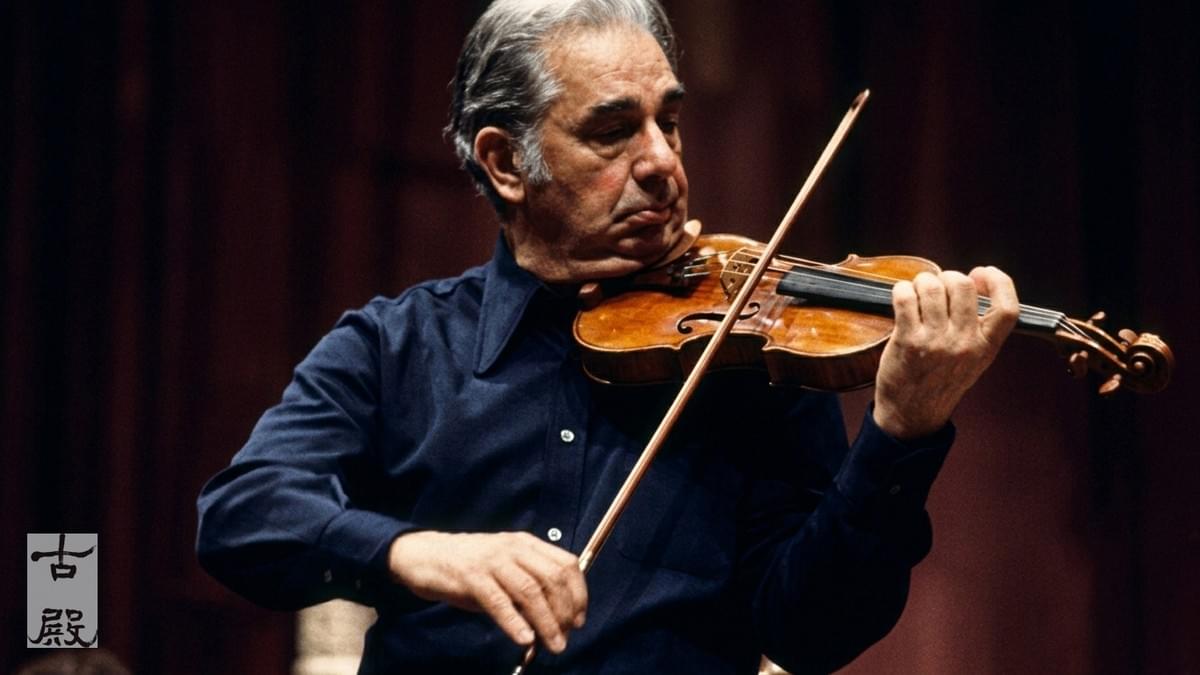
那幾十年,他在積累什麼?
這個問題,值得認真回答。
許姆斯基在那段歲月裡,做了幾件在商業舞台上幾乎不可能同時做到的事:
第一,他教書。 他把自己從奧爾傳統吸收的一切——那個從19世紀俄羅斯一路傳遞下來的演奏身體記憶——系統性地傳遞給下一代。許姆斯基以對高度藝術標準和技術掌握的堅持而著稱,同時強調音樂本能與直覺,而非過度理智化的方法。他的學生 Ida Kavafian、Eugene Drucker、Philip Setzer,後來成為美國室內樂界最重要的幾個人。
第二,他指揮。 他在史特拉福節首次登台指揮,後來執棒過多個樂團。指揮讓他從另一個維度理解音樂——不只是一個聲部,而是整個結構。他的錄音製作人溫艾瑞克(Eric Wen)後來回憶,許姆斯基能在小提琴上完整無誤地拉出管弦樂總譜的任何一個聲部,包括大提琴聲部,同時還能和你繼續說話。
第三,他繼續深入研究曲目。 在那些沒有巡演壓力的年月裡,他做了一件如果終年在舞台上奔波就根本不可能做到的事:他把自己感興趣的音樂,從頭到尾、從裡到外,真正地研究透。後來他花了大量時間整理克萊斯勒的完整錄音目錄,驚訝地發現「他的創作總量高達130多部作品,演奏時間長達8個半小時」——這不是一個只想趕快出唱片的人會做的事,是一個真正在研究的人才會做的事。
這件事的代價,是名氣。
那個年代沒有社群媒體,沒有 YouTube,名氣是靠持續的公眾露出維持的。你消失了,你就消失了。許姆斯基知道這一點,他選擇接受。
1981年,他做了另一個決定
1981年,他放棄了教職,決定把全部精力重新放回演奏上。
他當時已六十四歲。
對一個提琴手來說,這個年紀重返舞台,在當時幾乎聞所未聞,這反而正值許多人考慮退休的時刻。因為身體的各種問題——關節、肌肉、耐力——在這個年紀對演奏家的挑戰是真實的。更難的是心理層面:你消失了將近三十年,你怎麼知道世界還有人在等你?
他不知道,但他仍是去做了。
他在英國和歐洲大陸的巡演,獲得了壓倒性的好評,引發了一場對他演奏藝術的重新再發現。那個反應的規模,連許姆斯基自己都沒有預料到。樂評們說的,不是「他還不壞」,而是:這個人,好像從來沒有離開過。
隨之而來的,是那批讓他永遠留名的錄音:Chandos 的葛拉祖諾夫、貝多芬,ASV 的莫札特、克萊斯勒全集,以及巴赫無伴奏全集。
那幾十年給了他什麼?
現在可以回答這個問題了。
那幾十年,沒有巡演的壓力,沒有「我必須讓這場音樂會成功」的焦慮,沒有「下一張唱片合約」的考量——他只是在教,在演奏,在研究,在繼續做一個音樂家。
當他七十歲站在格拉斯哥的錄音室拉葛拉祖諾夫,他的弓弦裡不只有技術。有他整個生命的重量。有那幾十年在課室裡無數次把一個樂句拆開再重組的理解。有那幾十年在室內樂的對話中磨練出的聆聽能力。有那幾十年不需要讓任何人滿意、只需要讓自己滿意的演奏。
這就是顧爾德當年選擇放棄巡演、躲進錄音室的那個邏輯的另一種形式——只是顧爾德選擇了完全退出,許姆斯基選擇的是「換一個舞台繼續做」,然後在六十四歲帶著那一切,重新回來。
有一類藝術家,越老越值得聽。 不是因為他們的技術越來越好——事實上有些指標一定是在下降的。而是因為他們演奏裡面的那個「人」,越來越完整,越來越難以迴避。年輕時的技術是表演給你看的,老年時的音樂是從他生命裡長出來的。
許姆斯基在七十歲錄製葛拉祖諾夫那年,他在音樂裡放進去的東西,是一個二十歲的天才,無論多有才華都放不進去的東西——因為那些東西,需要時間來醞釀。
關於克萊斯勒,他說了什麼?
在 ASV 廠牌出版的克萊斯勒系列黑膠封底,許姆斯基親筆寫了一篇文章。這是一份罕見的一手史料——一個音樂家,用自己的話,告訴你他的藝術信念是什麼?
他說,那些古老的 Victor「紅標」78轉老蟲膠唱片,是他家中的最愛:「我帶著極大的渴望聆聽,而且經常在還沒拿到樂譜之前,就已經憑耳朵把唱片裡的曲子背了下來。」
他說克萊斯勒給他留下的那個印記,是「心靈之耳」的印記——一個進了身體就再也沒有離去的聲音。
然後,他說了這句話,值得一字不漏地引用:
「在這個錄音計畫的過程中,除了偶爾核對一下速度或記譜的變化之外,我完全沒有渴望去聽他自己的唱片。」
一個奉克萊斯勒為畢生偶像的人,在錄製克萊斯勒全集的時候,選擇不去聽克萊斯勒的唱片。
為什麼?
因為他不需要了。克萊斯勒早就在他的身體裡了。從那個八歲的下午起,從那些無數張紅標78轉唱片起,從那個在奧托·卡恩的金碧輝煌音樂廳裡和克萊斯勒一起即興演奏的奇妙下午起——那個聲音,已經成為他的一部分,而不是他要去「參考」的外部對象。
這不是傲慢。這是傳承與模仿之間,最根本的分野。
模仿與傳承,只差一個問題
1958年,另一位偉大的小提琴家法蘭西斯卡第(Zino Francescatti1902–1991)也錄製了一張向克萊斯勒致敬的專輯。
那個年代,幾乎每一個成名的小提琴家都會錄這樣一張唱片——演奏克萊斯勒的小品,向大師致敬,這幾乎是一種必要的成年禮。但大多數人的目標,是「再現」克萊斯勒那個無可複製的「金鐘之聲」,用自己的手藝把那個音色重建出來。
法蘭西斯卡第不是。他選擇以自己的方式演奏。那十一首曲子,每一首都帶著 法蘭西斯卡第自己的風格與理解,而不是克萊斯勒的影子。他崇拜克萊斯勒,但他不模仿克萊斯勒。
後來有記者訪問晚年的克萊斯勒,問他對當代小提琴家的看法。克萊斯勒說話一如他的弓法:單純、直接、不廢話。他說,現在這個時代,大家買的是「各種的宣傳、廣告」。然後他舉起大拇指說:「法蘭西斯卡第!並不是任何宣傳的產物!他是一位絕妙的藝術家!最頂尖的藝術家!」
頂尖在哪裡?頂尖在:任何一個真正的名家,對任何曲子都有自己獨立的見解,絕不會死板地模仿別的名家。
許姆斯基也是這種人。他和法蘭西斯卡第,面對同一個偶像,做出了同樣的選擇:不模仿。這不是拒絕,恰恰相反,這是對克萊斯勒最深的理解——因為克萊斯勒本人,從來就不是靠模仿任何人成為克萊斯勒的。
「小提琴家中的小提琴家」
樂評界有一個詞,是留給少數幾個人的:「violinist's violinist」——小提琴家中的小提琴家。
這個詞的意思是:他的偉大,首先被同行看見。
大衛·奧伊斯特拉夫(David Oistrakh,1908-2974)稱許姆斯基為「世界上最偉大的小提琴家之一」;《新葛羅夫音樂辭典》記錄他「演奏技巧爐火純青、風格純粹、品味精鍊;然而從不追求作為獨奏明星的認可,寧可專注於教學、室內樂演奏與指揮」。
他用一把1715年的史特拉底瓦里名琴「ex-Pierre Rode」演奏。這把琴有一段特別的歷史:它曾屬於法國小提琴家 Pierre Rode,後來又輾轉到了奧爾手中——正是那位親手培育了海飛茲、也培育了許姆斯基的老師。許姆斯基後來買下了這把琴。一個學生,拿著他老師曾經用過的那把琴,繼續拉下去。也許這不只是一個巧合。
他在教學上同樣留下了深遠的印記。他的學生,今天站在美國最重要的室內樂舞台上,繼續傳遞他傳遞給他們的東西——那個從克萊斯勒到許姆斯基的身體記憶,正在以另一種形式繼續流動。
消失不是消失,復出不是復出
有一件事,是這篇文章最想說的事。
我們習慣用「消失」和「復出」來描述許姆斯基的人生——因為這是最方便的敘事框架:一個神童,然後沉寂,然後回來,然後驚豔所有人。
但這個框架,是旁觀者的框架,不是他自己的框架。
對許姆斯基而言,他從來沒有「消失」過。他知道自己在做什麼。1950年代,他選擇去教書,因為他覺得那是他當時最應該做的事。1959年,他和顧爾德一起在加拿大史特拉福節做音樂,因為那裡讓他能以他想要的方式做音樂。1981年,他放棄教職重返演奏,因為他覺得他已經準備好了,而且只剩下這件事想做。
每一個當下,他都知道自己在做什麼,要積累什麼,要呈現什麼。
然後他就把它做好。
這聽起來很簡單,但這幾乎是世界上最難的事。因為做到這件事,前提是你對自己的藝術與生命有真正的觀點——不是別人告訴你應該有的觀點,不是市場告訴你應該走的路,而是你自己,在安靜的時候問自己:我現在最應該做的事是什麼?
外部的評價體系會告訴你:你應該趁年輕的時候盡快建立名氣,因為機會窗口很短。演奏市場的邏輯會告訴你:你消失了就沒有人記得你,你不在舞台上就等於不存在。
許姆斯基對這些聲音,好像完全沒有聽到過。
或者更準確地說:他聽到了,然後決定不理。
因為他有自己的時間軸。他的時間軸不是音樂會的場次,不是唱片合約的數量,不是樂評的評分,而是:我這個人,作為一個音樂家,在這個當下,是不是正在做我最應該做的事?
這個問題問清楚了,其他的事都是細節。
他不擔心被遺忘。他不擔心別人怎麼評價他的選擇。他不需要用持續的曝光來證明自己還存在。他只是繼續做他認為應該做的事,認真地、安靜地、一天一天地做。
然後有一天,他六十四歲,他覺得準備好了,他就回來了。
那個「回來」,驚豔了整個歐洲樂壇——但那個驚豔,不是因為他突然變得偉大,而是因為他一直都在,只是世界終於又再次看見了他。他帶回來的東西——那幾十年教學積累的對音樂結構的理解,那幾十年室內樂磨練出的聆聽能力,那幾十年只對自己負責的演奏所形成的內在自由——都是在那段「消失」的年月裡,一點一點長出來的。
所以消失不是消失,復出也不是復出。那只是一個對自己的藝術與生命有真正觀點的人,在不同的階段,做著他認為最應該做的事。
這件事,對今天的樂迷、音樂家,與每一個正在摸索自己道路的年輕音樂學子來說,或許比任何一個精彩的演奏技術都更值得思考:
你現在正在做的事,是別人的時間軸,還是你自己的?
你知道你在積累什麼嗎?
你知道你最終想呈現的是什麼嗎?
如果這三個問題你都有自己的答案,那你就不需要害怕任何形式的「消失」——因為那根本不是消失,那只是你在用你自己的方式,把事情做好。
許姆斯基用他七十歲的葛拉祖諾夫,告訴了我們這件事。
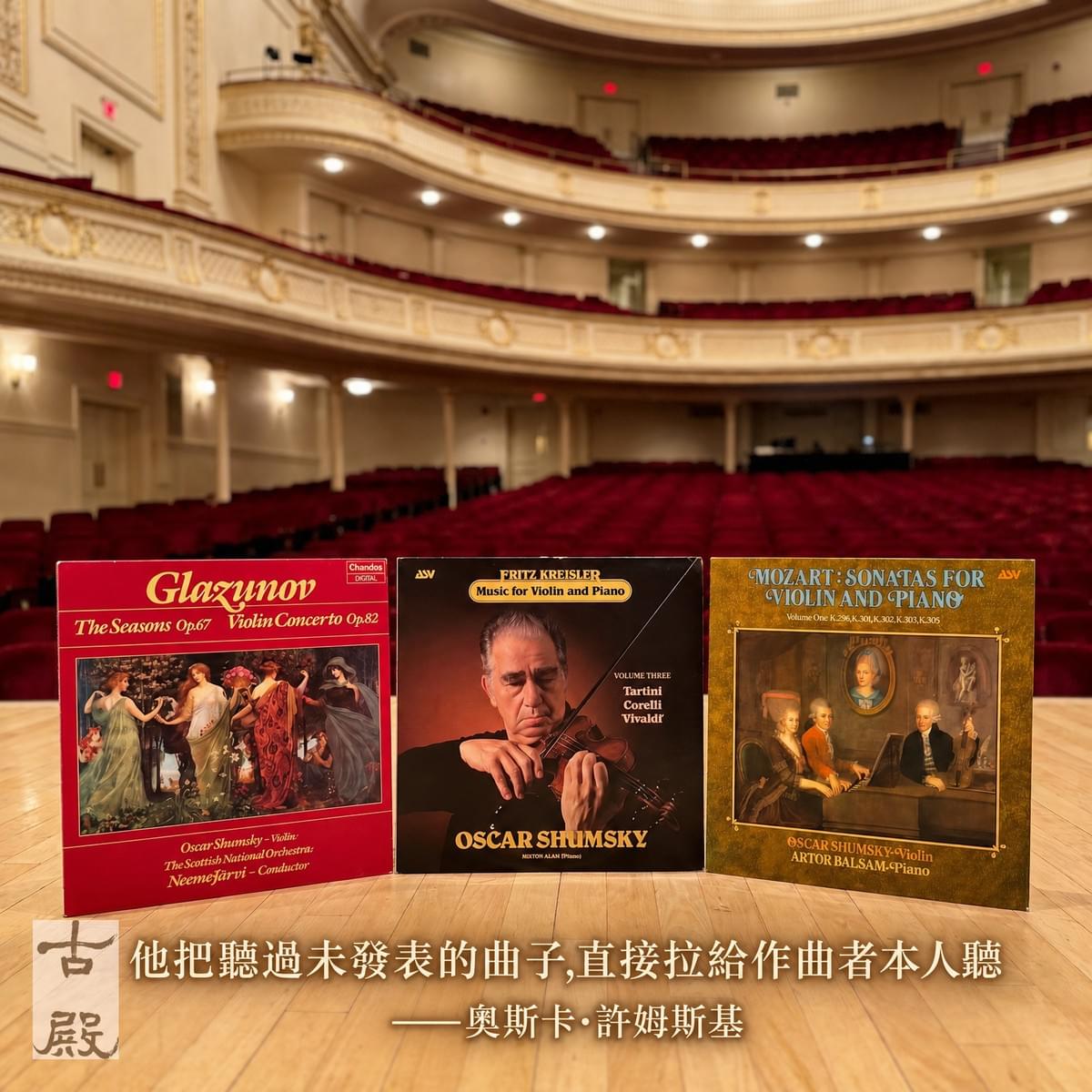
[The Guden Records Music Story] He Played an Unpublished Piece Right Back to the Composer Himself— Oscar Shumsky (1917-2000): The Violinist Certified by Masters, Who Chose to "Disappear"
In 192
0s New York, a young boy was brought into an apartment living room.
He was only eight years old. He had been brought there by Ernest Schelling (1876-1939), an American pianist and conductor affectionately known as "Uncle Ernest," famous as the "Father of Children's Concerts." Sitting in that living room was the greatest violinist of that era: Fritz Kreisler (1875-1962).
The boy played a few pieces. Then, Schelling spoke up with a mischievous glint in his eye: "Wait, Fritz! I want our little violinist to play an unreleased piece for you. Let's see if you recognize it."
So, the boy began to play.
It was the cadenza Kreisler had written for the first movement of Beethoven’s Violin Concerto—Kreisler’s very own version, which at that time had not even been officially published. The boy had attended two consecutive concerts by the Philadelphia Orchestra just to hear Kreisler perform this concerto. Then, note by note, he rebuilt that entire cadenza purely from memory.
After listening, Kreisler confirmed that, aside from a few harmonic modifications, it was "practically word-for-word identical to the original."
That boy’s name was Oscar Shumsky.
"The Most Astounding Talent"
Born i
n Philadelphia in 1917 to a family of Russian-Jewish immigrants, Oscar Shumsky started playing the violin at age three. By seven, he made his debut with the Philadelphia Orchestra. After hearing him, the legendary conductor Leopold Stokowski (1882-1977) uttered a line that would be quoted for decades:
"He is the most astounding talent I have ever heard."
This wasn’t mere flattery; it was a statement of fact from a man who had seen it all. In Stokowski’s era, the prodigies he encountered included Yehudi Menuhin (1916-1999) and Ruggiero Ricci (1918-2012)—he had personally witnessed the most mind-blowing children in America. Yet, he reserved that singular praise for Shumsky.
`[ The Masterclass Lineage ]
Leopold Auer
(The Legendary Professor)
│
┌──────────────────┴──────────────────┐
▼ ▼
Jascha Heifetz Oscar Shumsky (The Global Star) (The Musician's Musician)`
The trajectory of his early life followed the ultimate blueprint for a top-tier violinist of that era:
Age 8: Entered the Curtis Institute of Music to study under Leopold Auer (1845-1930)—the legendary Russian professor who personally shaped Heifetz, Milstein, and Elman. After Auer passed away, Shumsky continued his studies with Auer’s brilliant pupil, Efrem Zimbalist.
1939: Personally invited by Arturo Toscanini to join the newly formed NBC Symphony Orchestra.
Same Year: Selected as the first violinist for the Primrose Quartet, playing alongside legendary violist William Primrose, Josef Gingold, and Harvey Shapiro.
At this point, anyone with an eye for music would have said: This man is destined to be the next Heifetz.
But what happened next caught everyone completely off guard.
He Chose to "Disappear"—But Was It Really Disappearing?
In 194
2, World War II broke out, and Shumsky enlisted in the US Navy.
When the war ended, he returned to the stage, touring as a soloist for a few years and serving as a resident solo violinist for major American radio networks. It was the Golden Age of radio; he performed weekly broadcasts accompanied by the great pianist Earl Wild. He led orchestral recordings for RCA Victor and Columbia. He was in incredibly high demand.
Then, in the early 1950s, he made a decision that baffled the entire music world: he walked away from the international concert spotlight and poured himself into teaching.
He joined the faculty of the Peabody Conservatory in 1942, Juilliard in 1953, and later taught at Curtis and Yale. For decades, he gave his finest years to his students.
Yet, to say he "disappeared" isn't entirely accurate. During those years when the public thought he had gone silent, Shumsky never actually stopped making music—he just changed the nature of his stage.
`[ The Core Pillars of His "Silent" Decades ]
┌───────────────────────────┼───────────────────────────┐
▼ ▼ ▼
Teaching Conducting Deep Research Preserving the Russian Understanding music from Cataloging Kreisler's physical memory of Auer. the whole structure. entire body of work.`
From 1959 to 1967, he served as Music Director of the Stratford Festival in Canada, initially sharing artistic leadership with cellist Leonard Rose and Glenn Gould. Gould and Shumsky frequently played duos and formed a trio with Rose.
Gould, who had just skyrocketed to international fame with his Goldberg Variations, loved the Stratford Festival because it offered a creative sanctuary outside the rigid, commercial concert system.
Shumsky and Gould—two men who shared a profound skepticism of the "star system"—experimented, researched, and performed in that little Canadian festival, completely ignoring how the commercial music industry operated.
This wasn't retirement. This was a musician answering a deeply personal question: Can you keep making music when no one is watching?
His answer was: Yes, and perhaps, even better.
What Was He Cultivating All Those Decades?
This q
uestion deserves a real answer. During those quiet years, Shumsky accomplished several things that would have been virtually impossible to do simultaneously on the commercial stage:
First, he taught. He systematically passed down everything he absorbed from the Auer tradition—that physical playing memory handed down from 19th-century Russia. Shumsky was famous for demanding the highest artistic standards and technical mastery, yet he always emphasized musical instinct and intuition over hyper-intellectualized methods. His students—like Ida Kavafian, Eugene Drucker, and Philip Setzer—became the backbone of American chamber music.
Second, he conducted. He made his conducting debut at the Stratford Festival and later led various orchestras. Conducting allowed him to understand music from a different dimension—not just as a single violin line, but as a complete architecture. His recording producer, Eric Wen, later recalled that Shumsky could play any orchestral part flawlessly on his violin, including the cello parts, all while carrying on a casual conversation with you.
Third, he went deeper into the repertoire. Without the pressure of constant touring, he did something an active touring virtuoso could never afford to do: he thoroughly researched the music that fascinated him. Later, he spent a massive amount of time organizing Kreisler's complete discography, amazed to find that “his total output spanned over 130 works, totaling eight and a half hours of music.” This isn't the behavior of someone chasing a quick album release; it’s the devotion of a true scholar.
The price of this choice, of course, was fame. In an era without social media or YouTube, fame required constant public visibility. If you left the scene, you vanished. Shumsky knew this, and he accepted it.
In 1981, He Made Another Move
In 198
1, he stepped down from teaching and decided to put all his energy back into performing.
He was 64 years old.
For a string player, returning to the stage at that age was practically unheard of; it’s the age when most musicians are planning their retirement. The physical toll—joints, muscles, endurance—is a very real challenge. But the psychological barrier is even tougher: You’ve been gone for nearly thirty years. How do you know the world is still waiting for you?
He didn’t know. But he went anyway.
His tours through the UK and mainland Europe received overwhelming acclaim, sparking a massive rediscovery of his artistry. The scale of the response shocked even Shumsky himself. Critics weren’t saying "he’s not bad for his age"; they were saying: It feels like this man never left.
What followed was a flood of recordings that immortalized his name: Glazunov and Beethoven for Chandos, Mozart and the complete Kreisler works for ASV, and the definitive Bach Sonatas and Partitas for Solo Violin.
What Did Those Quiet Decades Give Him?
Now we
can answer that question.
Those decades free from touring pressures, free from the anxiety of "making the next concert a hit," and free from calculating the next record contract allowed him to simply teach, play, research, and exist fully as a musician.
When he stood in a Glasgow recording studio at age seventy to record the Glazunov Violin Concerto, his bow held much more than just technique. It carried the weight of his entire life. It held the understanding of a musical phrase broken down and reconstructed thousands of times in classrooms. It held the deep listening skills forged in chamber music dialogues. It held the freedom of decades spent playing to satisfy no one but himself.
Young Musicians ──► Perform outward to show off technique. Mature Masters ──► Produce music grown naturally out of their life story.
This is the exact same logic that led Glenn Gould to abandon the stage for the recording studio—except while Gould chose to withdraw completely, Shumsky chose to change his stage, cultivate his art, and bring it all back to the world at sixty-four.
There is a certain class of artist who becomes infinitely more rewarding to listen to as they age. It’s not because their technique improves—in fact, certain physical metrics inevitably decline. It’s because the "human being" inside the performance becomes completely whole, authentic, and impossible to ignore.
The things Shumsky poured into his music at seventy are things a twenty-year-old genius, no matter how gifted, simply cannot produce. Because those things require time to ferment.
What He Said About Kreisler
On the
back jacket of the Kreisler vinyl series released by ASV, Shumsky personally wrote an essay. It’s a rare, precious primary source—a musician explaining his artistic conviction in his own words.
He shared how those ancient Victor "Red Seal" 78-rpm shellac records were the prized possessions in his childhood home: "I listened with intense longing, and frequently memorized the pieces from the records by ear long before I ever saw the sheet music." He noted that the mark Kreisler left on him was an impression on his "mind's ear"—a sound that entered his body and never left.
Then, he wrote a sentence that deserves to be quoted word-for-word:
"In the course of this recording project, except for an occasional check on a tempo or notation variant, I felt absolutely no desire to listen to his own recordings."
A man who considered Kreisler his lifelong idol chose not to listen to Kreisler's records while recording his complete works.
Why? Because he didn’t need to. Kreisler was already inside him. Ever since that afternoon when he was eight years old, through countless Red Seal 78s, that sound had become a part of his own DNA, not an external reference to copy.
This wasn’t arrogance. This is the ultimate boundary between imitation and lineage.
Imitation vs. Lineage: The Single Question That Separates Them
In 195
8, another great violinist, Zino Francescatti (1902–1991), also recorded a tribute album to Kreisler.
In those days, almost every established violinist recorded a similar album—playing Kreisler’s short pieces to pay homage to the master was practically a rite of passage. But most aimed to "replicate" Kreisler’s inimitable, golden tone, trying to reconstruct that specific timbre with their own hands.
Francescatti didn't do that. He chose to play entirely in his own voice. Every single one of those eleven pieces carried Francescatti's own style and interpretation, completely free of Kreisler's shadow. He adored Kreisler, but he refused to copy him.
Later, a journalist interviewed an elderly Kreisler and asked his opinion on contemporary violinists. Kreisler spoke just like his bowing style: simple, direct, and completely without fluff. He remarked that in the modern era, people mostly buy "publicity and advertising." Then, he raised his thumb and said:
"Francescatti! He is not the product of any publicity! He is a wonderful artist! A top-rate artist!"
What makes an artist top-rate? A true master possesses an independent vision for every piece of music and will never rigidly copy another master.
Shumsky belonged to this exact same breed. Facing the very same idol, he and Francescatti made the identical choice: do not imitate. This wasn't a rejection; quite the opposite, it was the deepest understanding of Kreisler—because Kreisler himself never became Kreisler by copying anyone else.
"The Violinist's Violinist"
There
is a phrase in music criticism reserved for only a select few: "a violinist's violinist." It means that your greatness is recognized by your peers first.
David Oistrakh (1908-1974) called Shumsky "one of the world's greatest violinists." The New Grove Dictionary of Music and Musicians records his "virtuoso technique, pure style, and refined taste; yet he never courted recognition as a solo star, preferring to focus on teaching, chamber music, and conducting."
`[ The Journey of the 1715 Stradivarius ]
Owned by Pierre Rode
│
▼
Passed to Leopold Auer
│
▼
Purchased by Oscar Shumsky
(Continuing the physical memory of the master)`
He performed on a magnificent 1715 Stradivarius known as the "ex-Pierre Rode." The instrument carried a profound history: it once belonged to the French violinist Pierre Rode, and later found its way into the hands of Leopold Auer—the very teacher who trained both Heifetz and Shumsky. Shumsky eventually bought this violin. A student, playing the very instrument his teacher once held, continuing the lineage. Perhaps it was far more than just a coincidence.
Disappearance Is Not Disappearance; A Return Is Not A Return
If the
re is one core truth this article wants to share, it is this:
We love to use terms like "disappearance" and "comeback" to describe Shumsky’s life because it fits a comfortable narrative framework: a child prodigy goes quiet, returns decades later, and leaves everyone awestruck.
But that framework belongs to the spectators, not to the man himself.
To Shumsky, he never disappeared. He always knew exactly what he was doing. In the 1950s, he chose to teach because he felt it was what he needed to do at that moment. In 1959, he made music with Glenn Gould at the Stratford Festival because it allowed him to create music on his own terms. In 1981, he left teaching to perform again because he felt he was ready, and it was the only thing left he wanted to do.
In every single moment, he knew what he was building, what he was cultivating, and what he wanted to express. And he simply did it beautifully.
It sounds simple, but it is perhaps the hardest thing in the world. Because to achieve this, you must have a genuine perspective on your own art and life—not a perspective handed to you by others, not a path dictated by the market, but your own voice asking yourself in the quiet moments: What is the most important thing for me to do right now?
The commercial world will tell you: You must build your fame as fast as possible while you are young because the window of opportunity is short. The music market logic tells you: If you disappear, you are forgotten; if you aren't on stage, you don't exist.
Shumsky seemed completely deaf to those voices. Or more accurately: he heard them, and chose to ignore them.
Because he operated on his own timeline. His timeline wasn't measured by the number of concerts, the quantity of record deals, or the ratings of music critics. It was measured by a single question: Am I, as a musician and a human being, doing exactly what I should be doing at this very moment?
Once you answer that question clearly, everything else is just detail.
He didn't worry about being forgotten. He didn't care how others judged his choices. He didn't need constant exposure to prove his existence. He just kept doing what he believed in, earnestly, quietly, day after day.
And then one day, at sixty-four, he felt ready. So he came back.
That "return" stunned the entire European music world—but that brilliance didn't happen because he suddenly became great. It happened because he had been there all along, and the world had finally caught up to see him again. The gifts he brought back—the deep structural understanding of music grown from decades of teaching, the acute listening skills honed in chamber music, the inner freedom of playing only to satisfy himself—were all things that grew, drop by drop, during those years of "disappearance."
Therefore, disappearance is not disappearance, and a return is not a return. It is simply a human being with a true vision for his art and life, doing exactly what he ought to do at every stage of his journey.
For modern music lovers, musicians, and every young student navigating their own path today, this truth is perhaps worth pondering far more than any brilliant physical technique:
Is the path you are walking right now running on someone else's timeline, or your own? Do you know what you are cultivating? Do you know what you ultimately want to express?
If you have your own answers to these three questions, you never have to fear any form of "disappearance"—because it isn't a disappearance at all. It is simply you, doing things beautifully, in your own way.
Shumsky told us all of this, through the voice of his seventy-year-old Glazunov.