
【古殿唱片音樂故事】二十世紀最偉大的大提琴家之一,為什麼等到三十多歲才敢碰這首曲子?羅斯托波維契&布列頓:舒伯特《阿貝鳩奈奏鳴曲》
古殿殿主
一個說不通的空白
有一首曲子,幾乎是每一位大提琴家職業生涯裡繞不過去的一站——舒伯特(Franz Schubert,1797–1828)的《阿貝鳩奈奏鳴曲》,D.821。它旋律優美,篇幅完整,是浪漫主義大提琴曲目裡少數雅俗共賞的傑作,深受演奏家與聽眾喜愛。
如果要選一位二十世紀最偉大的大提琴家,多數人會投給羅斯托波維奇(Mstislav Rostropovich,1927–2007)。他技巧全面,曲目量驚人,一生有超過一百七十部作品是作曲家專為他量身寫成的——這個數字,在整個大提琴演奏史上恐怕無人能及。
但這樣一位大提琴家,直到1960年代之後——也就是他三十多歲、藝術生涯早已如日中天——才第一次正式練習舒伯特這首幾乎大提琴家必拉的曲子。
更耐人尋味的是,比他大四歲、同樣蜚聲蘇聯樂壇的大提琴家夏弗蘭(Daniil Shafran,1923–1997),早在蘇聯時期就已經常演奏這首曲子,而且這首曲子也成為他的招牌曲。兩人在音樂生涯初期曾多次正面交鋒——1949年布達佩斯青年節比賽、1950年布拉格漢努斯·維漢國際大提琴比賽,兩人皆並列第一名——師承相近的傳統,一個彈了半輩子、還把它彈成了代表作,一個卻刻意迴避——這說不通。
到底發生了什麼事,讓羅斯托波維奇迴避了這首曲子那麼多年?又是誰,終於讓他開了口?
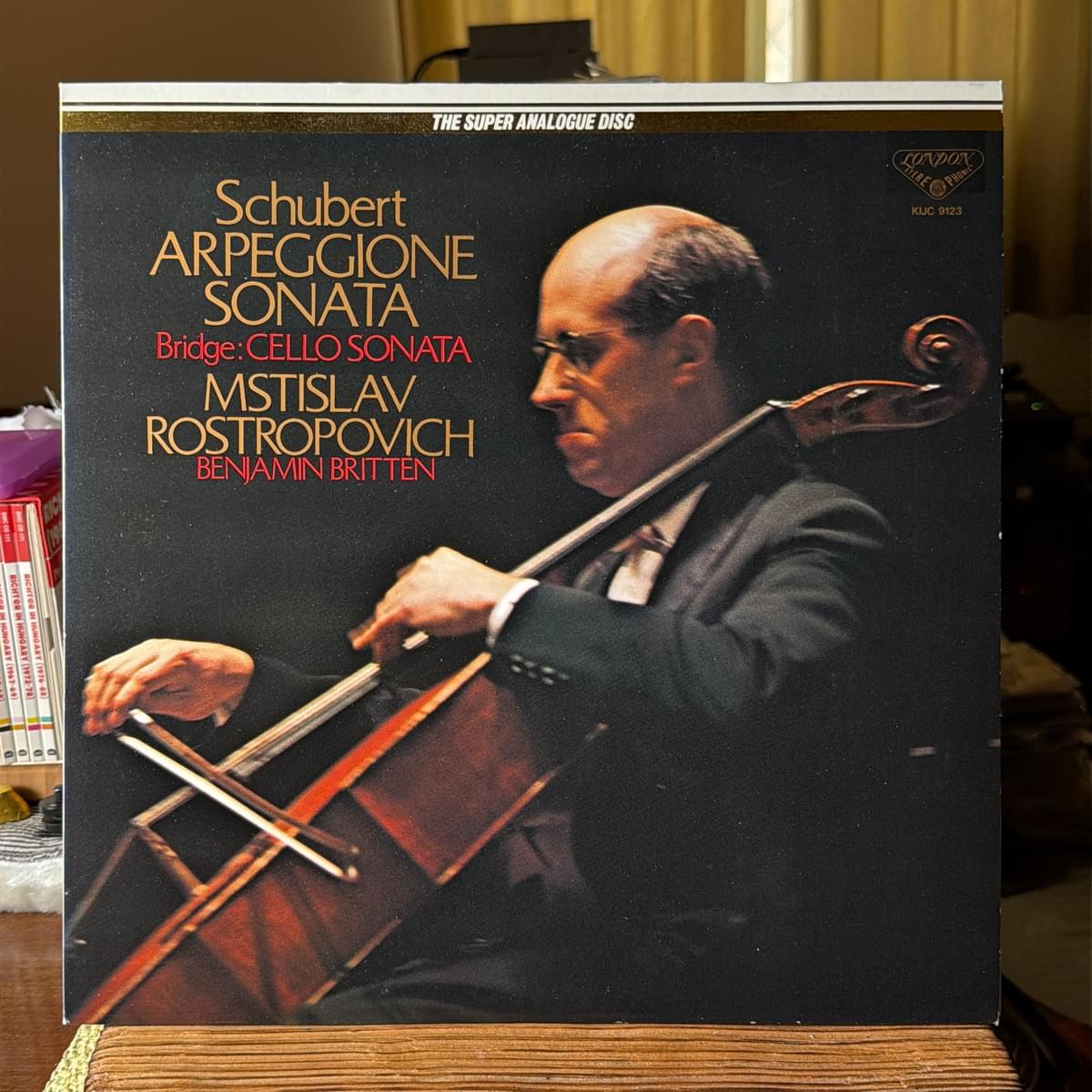
答案,牽出了一整段跨越師徒、跨越國界、也跨越半個世紀唱片工業興衰的故事——而故事的終點,正是我手上這張唱片。
答案是一個人:布瑞頓
1960年,羅斯托波維奇在倫敦的一場音樂會後,經蕭士塔高維契(Dmitri Shostakovich,1906–1975)引薦,第一次見到了英國作曲家布瑞頓(Benjamin Britten,1913–1976)。兩人語言不通,卻一見如故。布瑞頓當場承諾要為他寫一首新作,也就是後來提獻給他的《C大調大提琴奏鳴曲》Op.65,並在1961年由布瑞頓親自彈鋼琴,於他自己創辦的奧德堡音樂節首演。
正是這位新結識的英國摯友,堅持要羅斯托波維奇學習舒伯特《阿貝鳩奈奏鳴曲》——而羅斯托波維奇也是在這之後,才第一次真正開始練習這首曲子。
換句話說,這位被認為「什麼曲子都拉過」的世紀大提琴家,是被一位剛認識不久的外國朋友,硬是「逼」著去補一堂舒伯特的課。
至於他之前為什麼一直迴避這首曲子?沒有人能給出確切答案。有一種說法是:舒伯特這首曲子底層那股揮之不去的陰鬱感,或許與羅斯托波維奇本人性格中陽光、開朗、樂觀的一面,存在某種微妙的扞格——技巧上他從來不缺,缺的可能是某種心境上的契合,直到布瑞頓出現,才把他推了進去。
而他自己的說法更誠實。他坦承排練初期並不順利,遠不如他與李希特(Sviatoslav Richter,1915–1997)合作貝多芬時的得心應手:
「當我在排練時演奏得總是不盡完美,而布列頓就會在此時告訴我該注意的細節。他完美的鋼琴帶領著大提琴,讓我在無後顧之憂下演奏出舒伯特的每個指示。」
這句話值得多停留幾秒。大多數聽眾聆聽這份錄音時,注意力幾乎全部放在主角羅斯托波維奇的大提琴上——但照他自己的說法,真正在背後引領整首奏鳴曲音樂邏輯的,其實是布瑞頓的鋼琴。說羅斯托波維奇這份演奏,詮釋上是由布瑞頓在背後引領,一點也不為過;他才是這整首演奏真正的靈魂人物,儘管大多數人聽這首曲子時,注意力都在羅斯托波維奇的大提琴上。
下次重聽這份錄音時,不妨把耳朵稍微移開大提琴,特別留意布瑞頓的鋼琴引奏——那裡藏著更多屬於他的藝術思維。你會漸漸聽出,主導、引導著整首曲子往前走的,其實是那雙彈鋼琴的手。
這段友誼,其實是兩層師承疊在一起
要理解布瑞頓為什麼堅持要羅斯托波維奇學這首曲子,還得往前推一層——推到唱片B面曲目的作曲家,法蘭克·布里奇(Frank Bridge,1879–1941)身上。
布里奇是布瑞頓少年時期的啟蒙恩師。布瑞頓12歲那年,被布里奇發掘出音樂天賦,這位英國作曲家主動提出免費教他作曲。此後每週,布瑞頓都搭火車從薩福克郡到倫敦上課,一路學到16歲以布里奇母校皇家音樂院的獎學金入學為止。師徒之情後來昇華為終生摯友,直到布里奇1941年辭世。
布里奇晚年因音樂風格偏向現代主義,一度被保守的英國樂壇冷落。布瑞頓終其一生,都在做一件事:把恩師被埋沒的作品重新推回聽眾眼前。1937年,他寫了《法蘭克·布瑞基主題變奏曲》Op.10獻給恩師;後來,他又把布里奇這首寫於1913至1917年間、幾乎沒有人演奏的《大提琴奏鳴曲》,介紹給了羅斯托波維奇。
於是,這張唱片A、B兩面的選曲,其實是布瑞頓一次雙重的致意:一面是他引導羅斯托波維奇補上的舒伯特名作,另一面是他親手交付出去、屬於自己老師的作品。布里奇教會了布瑞頓,布瑞頓再把老師的音樂,託付給了二十世紀最偉大的大提琴家之一。
師承的臍帶,就這樣一路傳了下去——而它最終被留在了1968年7月的一次錄音裡。
封套上錯了二十五年的兩個名字
這張唱片的封套背面,印著一段看似再普通不過的錄音資訊:「Recorded July, 1968 at the Kingsway Hall, London. Producer: James Mallinson.」
這段文字,被King Record原樣翻印進了1993年的這份日本發行限定版封套裡,一字未改。
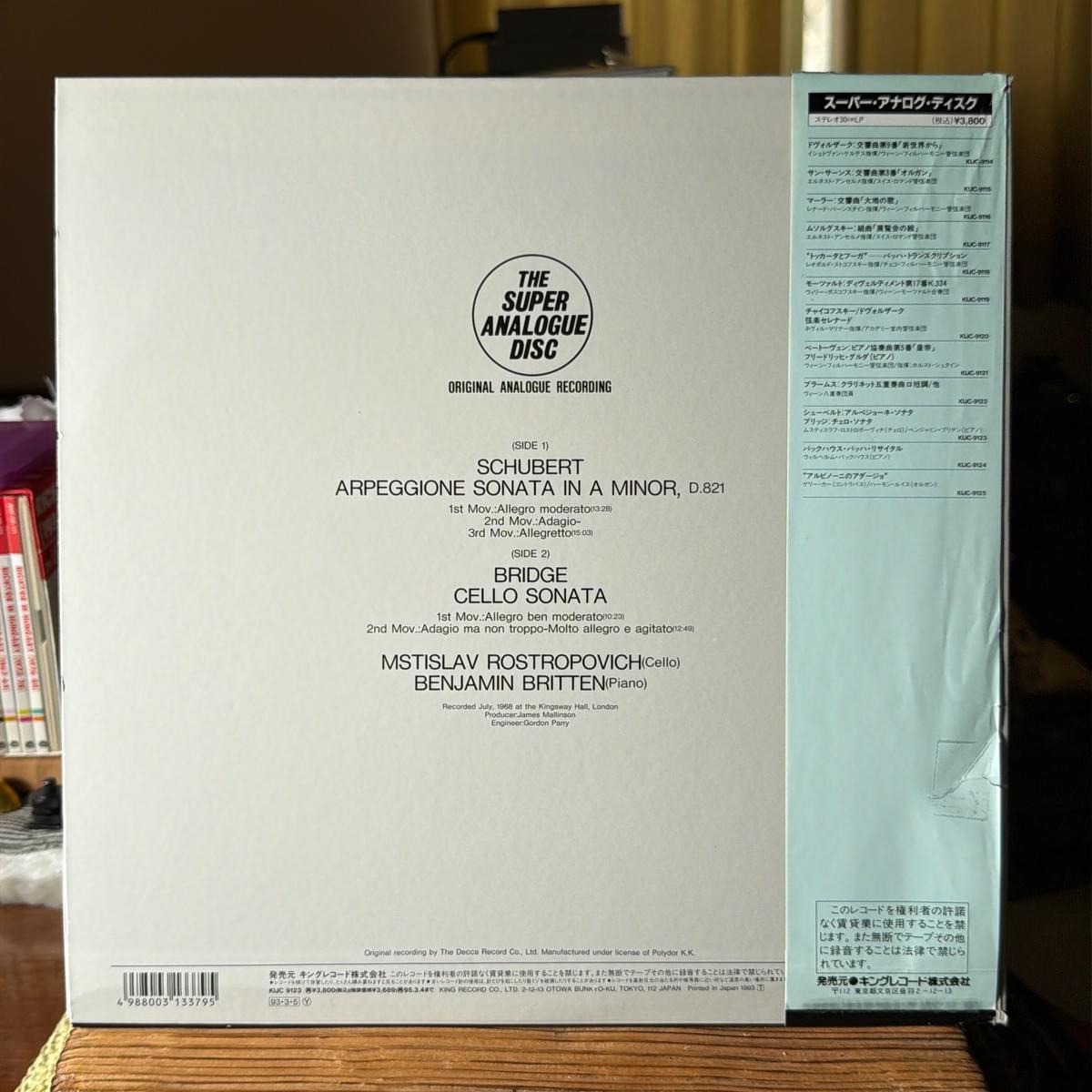
經資料查證:
第一,錄音地點並不是倫敦市區的Kingsway Hall,而是布瑞頓自己創辦、位於薩福克郡東岸Snape小鎮的The Maltings穀倉音樂廳——錄音日期是1968年7月22日至27日。
第二,封套標示的製作人「James Mallinson」(1943–2018)也是誤植。Mallinson是1970年代才在Decca崛起、後來以蕭提(Georg Solti,1912–1997)、杜拉第(Antal Doráti,1906–1988)等錄音贏得16座葛萊美獎的傳奇製作人——1968年時他根本還沒加入Decca。真正的製作人,是「John Mordler」,他是布列頓的御用製作人,這一點在多方史料裡都能得到印證。
這兩個錯誤,就這樣被原封不動地印在唱片封套上,跟著這張唱片流通了超過二十五年。這也提醒著每一個唱片收藏者:封套上印的文字,從來不是天然可信的史料——它也只是一份文件,跟其他任何史料一樣,需要被交叉比對。
1993年,一場「逆襲」的高端製作
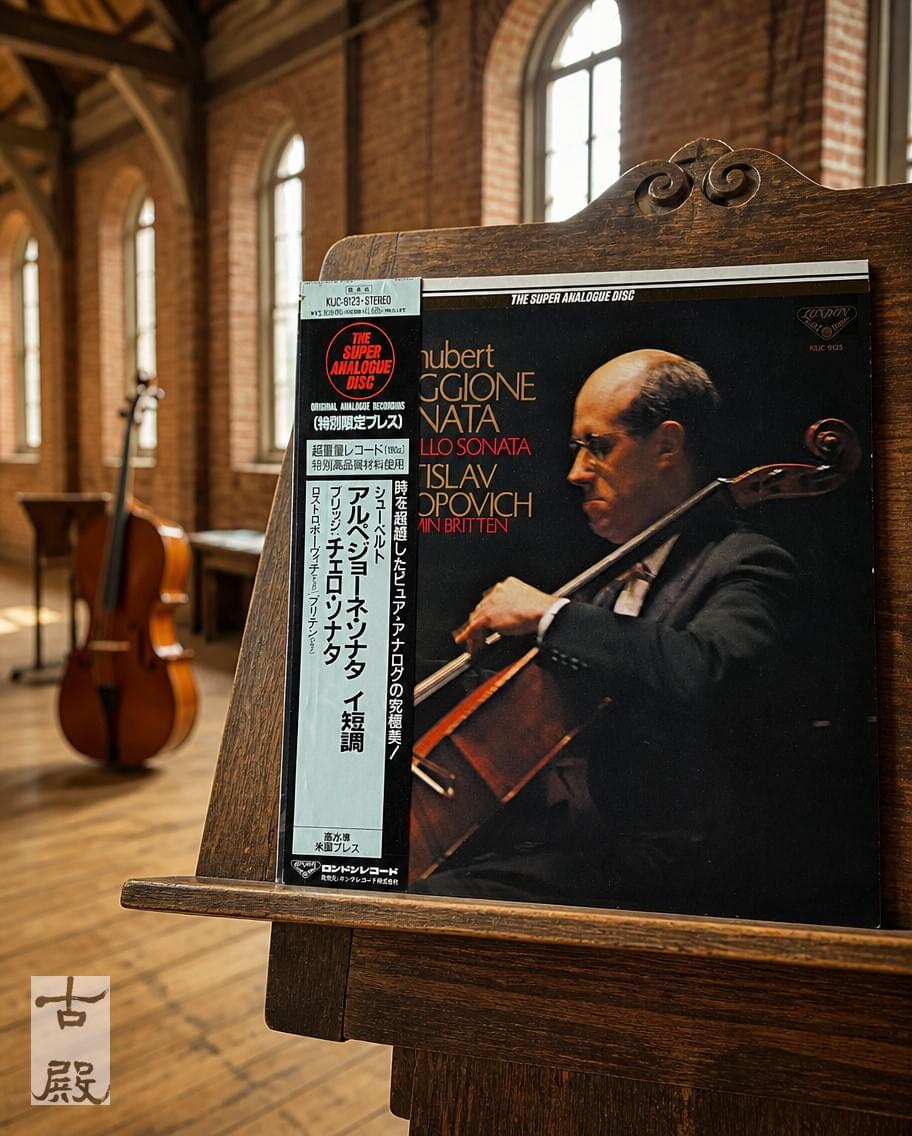
手上這張唱片,編號KIJC-9123,是King Record在1993年3月發行的「THE SUPER ANALOGUE DISC」系列歷史名盤復刻——它的存在,本身就是一段黑膠工業史上的逆勢而行。
1982年CD問世後,黑膠市場開始逐漸崩解,到1993年前後,市場幾乎已經消失,只剩下極小一塊願意堅持類比聲音的利基市場。「Super Analogue Disc」正是廠商在這個近乎無利可圖的時間點上,決定不計成本、逆襲開拓這塊小市場的超高端專業製作。
它用了幾項在正常商業考量下絕不會出現的工序:把母帶播放與刻片速度都降為原速的一半,緩速精密切割,讓音溝寬度最深達280微米(一般唱片通常只有80微米);壓製成約180公克的重量盤,比一般唱片重六成;刻片與磁頭放大器全數採用自家技術團隊特製的真空管線路;訊號從磁頭放大器直接連到刻片功率擴大機,中途完全「略過」等化器、濾波器、限幅器等所有中介處理電路,直接刻片。最後發行採限定數量,約略是1000套左右。
這與今天黑膠復興浪潮下、大量看準商機快速搶市的重刻片,是完全相反的邏輯——多半是低成本的商業產物,而這張1993年的唱片,誕生在黑膠產業最谷底、幾乎沒有商業誘因的年代,卻選擇用最貴、最慢的方式,去挑戰黑膠物理極限所能達到的最高音質。
當然,這張唱片終究只是一份高音質的授權復刻盤,並非稀有初版。真正的珍稀版本,仍是英國Decca SXL 6426首版——市場上一張首版工廠試壓片,成交價可以來到3,649英鎊;即使是普通的首版深溝大DECCA標,近年成交價也在1,695英鎊上下。相較之下,King這張日本授權版,2013年成交紀錄僅約190美元,但2026年的現在,可能會有200-300美金之間的價值。
臨終前的一滴眼淚
羅斯托波維奇晚年臨終前,家人曾播放他與布瑞頓合作的這份舒伯特錄音給他聽,作為慰藉。據說每當提及布瑞頓,他總會露出笑容說「啊,Benjik!」——即使當時他已陷入昏迷,女兒奧爾嘉(Olga Rostropovich)仍看見一滴眼淚滑落他的臉頰。
從1960年倫敦初識,到1968年在The Maltings錄下這張唱片,中間累積的是八年語言不通、卻透過音樂完全理解彼此的友誼深度。這份深度沒辦法被壓縮進任何取樣率或母帶規格裡——它只能透過時間,一年一年地,在兩個人的生命裡真實發生。King Record在1993年,願意花上正常商業製程數倍的時間與成本,用半速刻紋、重量盤、真空管放大器,把這段1968年的聲音重新「手工」壓製一次,某種意義上,也是在用一種笨拙但誠實的方式,試著把這份實體積累盡量完整地傳遞下去。
這正是這類唱片值得被收藏的理由:它不是一段可以被串流輕易取代的音訊檔案,而是一個連結著兩位音樂家、兩代師承、一次錄音現場、一次工業逆襲的實體節點——每多查一層,故事就再往下多長出一層,沒有盡頭。
******
【Gudian Music Stories】Why Did One of the 20th Century's Greatest Cellists Wait Until His Thirties to Touch This Piece? Rostropovich & Britten: Schubert’s Arpeggione Sonata
An Inexplicable Void
There is one piece of music that almost every cellist must cross paths with during their career—Franz Schubert’s (1797–1828) Arpeggione Sonata, D. 821. With its lyrical melodies and elegant architectural form, it is one of those rare Romantic masterworks that enchants both connoisseurs and casual listeners alike.
If pressed to name the single greatest cellist of the 20th century, most votes would naturally go to Mstislav Rostropovich (1927–2007). Blessed with consummate technique and an astonishingly vast repertoire, he inspired more than 170 works composed specifically for him throughout his lifetime—a figure unmatched in the entire history of cello playing.
Yet this titan of the instrument waited until after 1960—well into his thirties, with his international artistic stature already blazing at its zenith—to finally sit down and formally study this staple of the cello repertoire.
What makes this even more intriguing is that his compatriot Daniil Shafran (1923–1997), just four years his senior and equally revered across the Soviet Union, had championed the piece early on, turning it into his quintessential signature work. The two had crossed bows directly during the dawn of their careers—sharing joint first prizes at the 1949 Budapest World Festival and the 1950 Hanuš Wihan International Cello Competition in Prague. Coming from virtually the same pedagogical lineage, one played it for half a lifetime until it became his artistic hallmark, while the other deliberately sidestepped it. It simply made no sense.
What kept Rostropovich away from this piece for so many years? And who finally persuaded him to break his silence?
The answer unveils a story that bridges mentorship, national borders, and half a century of shifting fortunes in the recording industry—and the destination of this journey is the very record sitting in my hands right now.
The Answer Was a Single Person: Benjamin Britten
In 1960, following a concert in London, Dmitri Shostakovich (1906–1975) introduced Rostropovich to the English composer Benjamin Britten (1913–1976). Though neither spoke the other's language, they bonded instantly like kindred spirits. On the spot, Britten promised to write a piece for him—a pledge that materialized as the Cello Sonata in C major, Op. 65, premiered in 1961 at Britten’s own Aldeburgh Festival with the composer at the piano.
It was this newfound British soulmate who persistently urged Rostropovich to take up Schubert’s Arpeggione Sonata. Only then did Rostropovich truly begin to practice the score.
In other words, the cellist who was thought to have played everything was gently “forced” by a newly minted foreign friend into an overdue lesson with Schubert.
As for why he had avoided it for so long, no definitive answer exists. One compelling theory suggests that the melancholic undercurrent lurking beneath Schubert’s lines clashed subtly with Rostropovich’s fundamentally sunny, ebullient, and optimistic disposition. He was never short on technique; what he lacked was perhaps an elusive emotional kinship with the piece—until Britten arrived to gently push him across the threshold.
Rostropovich’s own account is even more candid. He admitted that their early rehearsals were far from effortless, lacking the immediate, instinctive ease he enjoyed when playing Beethoven with Sviatoslav Richter (1915–1997):
“Whenever my playing faltered during rehearsals, Britten was right there to point out the subtleties I needed to hear. His impeccable piano guided my cello, freeing me from anxiety so I could deliver every nuance Schubert wrote.”
These words deserve a quiet moment of reflection. Most listeners naturally focus their attention squarely on Rostropovich’s cello. Yet by his own admission, the driving architectural logic behind the entire performance came from Britten’s piano. It is no exaggeration to say that this interpretation was quietly shepherded by Britten from behind the keys; he is the true guiding spirit here, even if popular praise invariably falls upon the soaring cello.
The next time you play this record, try tilting your ear slightly away from the cello and pay close attention to Britten’s phrasing and entries. That is where his artistic mind reveals itself—you will gradually realize it is those hands on the keyboard that quietly guide the entire piece forward.
A Friendship Built on Two Layers of Mentorship
To understand why Britten was so relentless about having Rostropovich learn this piece, we must trace back one step further—to the composer featured on Side B: Frank Bridge (1879–1941).
Bridge was the foundational mentor of Britten’s youth. When Britten was just twelve, Bridge recognized his extraordinary gifts and offered to teach him composition free of charge. Week after week, the young Britten took the train from Suffolk to London for lessons, continuing until he entered Bridge’s alma mater, the Royal College of Music, on scholarship at sixteen. Over time, the bond between master and disciple blossomed into a lifelong friendship that lasted until Bridge’s death in 1941.
In his later years, Bridge's increasingly modernist idiom fell out of favor with Britain’s conservative musical establishment. For the rest of his life, Britten made it his personal mission to bring his teacher's neglected catalog back into the light. In 1937, he composed the Variations on a Theme of Frank Bridge, Op. 10, as a heartfelt tribute; later, he handed Bridge’s Cello Sonata (written between 1913 and 1917)—a piece almost entirely absent from the concert stage—directly to Rostropovich.
Thus, the coupling of Side A and Side B on this album represents Britten’s double salute: on one side, the canonical Schubert he coaxed his friend to master; on the other, an overlooked masterpiece by his own mentor, placed lovingly into the hands of one of the greatest cellists who ever lived. Bridge nourished Britten, and Britten passed that torch to Rostropovich.
That unbroken umbilical cord of musical inheritance was captured forever during a recording session in July 1968.
Two Erroneous Names on the Jacket for Twenty-Five Years
The back cover of this LP bears what looks like standard recording data: “Recorded July, 1968 at the Kingsway Hall, London. Producer: James Mallinson.”
When King Record produced this Japanese limited reissue in 1993, this text was reproduced verbatim, without a single correction.
Historical records, however, reveal two distinct blunders:
First, the recording did not take place at Kingsway Hall in central London, but at The Maltings in Snape—the concert hall founded by Britten on the Suffolk coast—between July 22 and 27, 1968.
Second, the credited producer, James Mallinson (1943–2018), is a clear misattribution. Mallinson rose through Decca’s ranks during the 1970s, later claiming 16 Grammy Awards producing monumental recordings with Sir Georg Solti (1912–1997) and Antal Doráti (1906–1988). In 1968, Mallinson had not even joined Decca. The real producer was John Mordler, Britten’s trusted and regular collaborator—a fact corroborated across multiple primary sources.
These two historical errors remained printed on the back sleeve, circulating unquestioned for more than twenty-five years. It serves as a gentle reminder to every collector: text printed on an album jacket is not inherently infallible historical truth—it is merely a document, subject to the same rigorous cross-examination as any other piece of history.
1993: An Uncompromising, High-End Analog Defiance
The copy in my hands (catalog number KIJC-9123) belongs to King Record’s legendary “THE SUPER ANALOGUE DISC” reissue series released in March 1993. Its very existence is an act of defiance against the industrial tide of its era.
Following the birth of the compact disc in 1982, the global vinyl market steadily evaporated. By 1993, mainstream vinyl manufacturing had practically vanished, leaving behind only a minuscule niche of listeners stubbornly devoted to analog sound. The "Super Analogue Disc" series was an ultra-high-end audiophile endeavor born out of this commercial desert—a project undertaken with no concern for profit margins.
It employed manufacturing techniques that no commercial enterprise would rationally justify:
Half-speed master playback and lathe cutting, creating deeper, pristine groove modulations reaching depths of up to 280 microns (standard pressings rarely exceed 80 microns).
180-gram heavy virgin vinyl, roughly 60% heavier than ordinary commercial pressings.
Custom all-tube circuitry developed in-house for both cutting lathes and tape head preamps.
Direct unadulterated signal paths: the tape head amplifier fed straight into the cutting power amplifier, completely bypassing equalizers, filters, limiters, and intermediate processing circuits.
Strictly limited editions, typically capped at around 1,000 sets.
This philosophy runs completely counter to the modern vinyl resurgence, where mass reissues often capitalize on fast-turnaround, budget-conscious commercial nostalgia. This 1993 release was born at the absolute nadir of the record industry, yet it chose the slowest, most expensive path imaginable to test the physical boundaries of analog reproduction.
To be sure, this release is an audiophile-licensed reissue rather than a vintage first pressing. The crown jewel remains the original British Decca SXL 6426. In today’s market, an original factory test pressing can fetch up to £3,649, while even a standard original wide-band, deep-groove Decca copy commands around £1,695. By contrast, King Record’s 1993 Japanese licensed edition traded around $190 back in 2013; today, in 2026, it generally commands between $200 and $300.
A Single Tear at the Edge of Life
In Rostropovich’s final days, his family played this very recording of the Schubert sonata to bring him peace. It is said that whenever Britten’s name was mentioned in his twilight years, his face would light up with a tender smile as he murmured, "Ah, Benjik!" Even as he drifted into a deep coma, his daughter Olga observed a single tear slip quietly down his cheek.
From their first meeting in London in 1960 to the sessions at The Maltings in 1968, eight years of unspoken, barrier-free communication through music had accumulated between them. That depth cannot be compressed into digital sample rates or technical specs—it is something that can only unfold in real time, year after year, through two living human beings.
When King Record invested vastly disproportionate time and resources in 1993 to handcraft and cut this 1968 performance using half-speed lathes and vacuum tubes, they were, in their own stubborn and honest way, striving to preserve the full weight of that physical legacy.
That is why a physical record like this remains worth treasuring. It is not an ephemeral digital audio file meant to be consumed and forgotten. It is a tangible nexus connecting two great musicians, two generations of musical lineage, a historic recording venue, and an audacious stand against the decline of analog craft.
With every layer of history you peel back, the story runs deeper—with no end in sight.