
【古殿唱片音樂故事】當全世界都在害怕變老,他卻在80歲拉出最純淨的聲音~~米爾斯坦的藝術奇蹟
古殿殿主
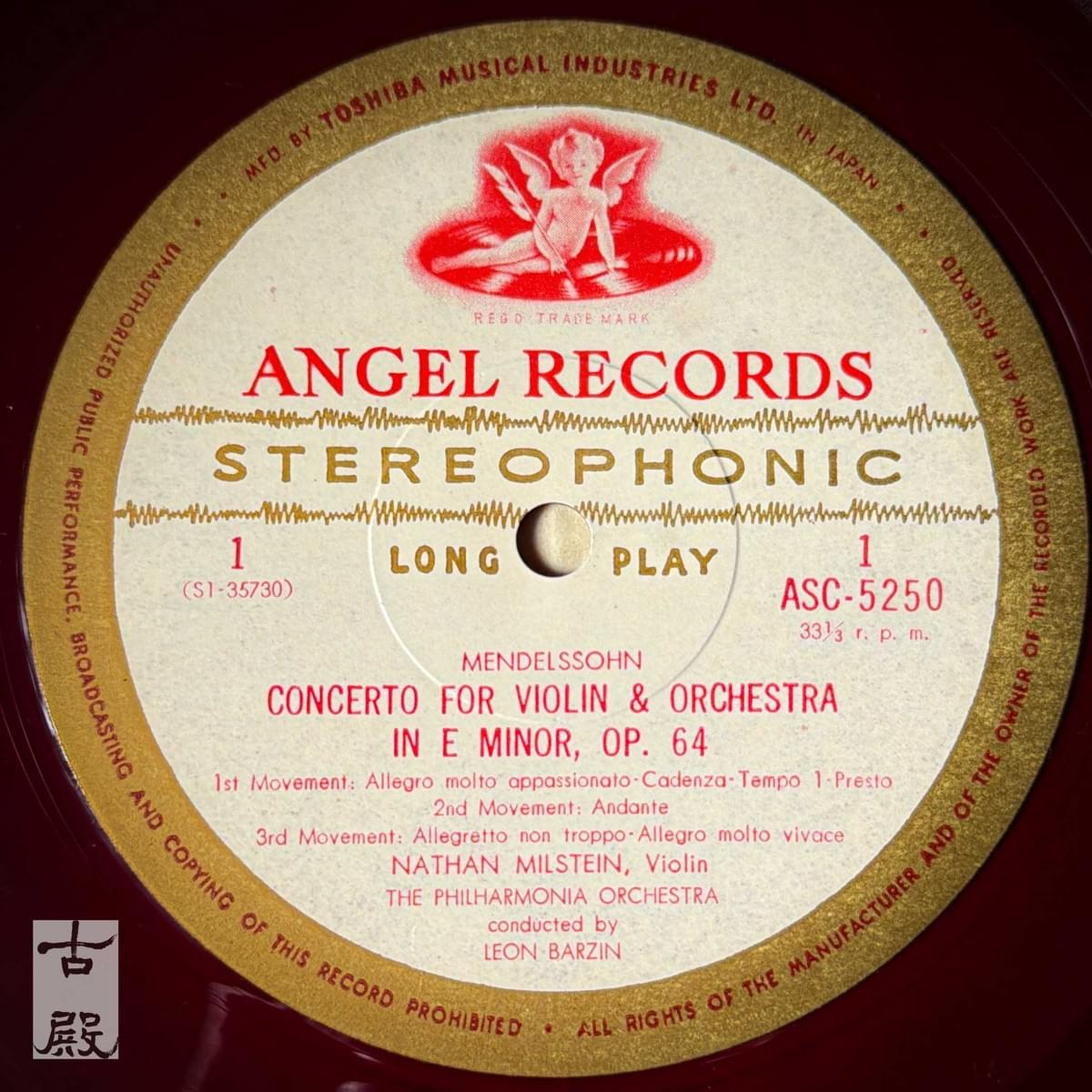
拿到第一張唱片,你不會先去看封面上的名字,而是會先被那一圈深酒紅色的膠片攫住目光。
這是1960年代初日本東芝音樂工業壓製的限定版紅膠,俗稱「赤盤」。東芝獨家研發了這種酒紅色配方,加入特殊材質防止靜電積塵,代表當時日本音響工業的最高製造水準。今天,赤盤早已是全球黑膠收藏界的聖物,存世數量稀少,每一張都是那個黃金年代留下的實物見證。被外國資深黑膠打人視為「最接近當年母帶」的製作。
封面那位凝神演奏的男子,是米爾斯坦(Nathan Milstein,1904–1992)。
一個不可思議的人
如果你問愛樂者:「二十世紀最偉大的小提琴家是誰?」幾乎每一個人都一定會提到兩個名字:海飛茲,還有米爾斯坦。
但這兩個人代表了截然不同的奇蹟。
海飛茲是那種讓人屏息的天才,40歲前後是他的巔峰,此後技術雖在,聲音的純粹性已悄悄開始褪色。米爾斯坦卻反其道而行——他是越老越好。聲音越來越純淨,音樂越來越深邃,80多歲仍能站上舞台演奏高難度的獨奏音樂會,直到因跌倒摔斷左手才被迫謝幕。這樣的事情,在整個小提琴演奏史上幾乎找不到第二個例子。帕爾曼、祖克曼這些後輩大師,都毫不掩飾地表達過對他的景仰。
米爾斯坦1904年生於黑海之濱的古城敖德薩,一個盛產音樂神童的地方。7歲開始學琴,11歲便被送往聖彼得堡,進入傳奇教授奧爾(Leopold Auer,1845-1930)的門下。奧爾是整個近代俄羅斯小提琴學派的精神源頭,海飛茲也是他的學生——米爾斯坦就這樣與海飛茲成了同門師兄弟。值得一提的是,米爾斯坦7歲的啟蒙老師史托里亞斯基,正是敖德薩著名的「神童培育師」,大歐伊斯特拉赫(David Oistrakh,1908-1974)也出自他的門下。
俄國革命打亂了一切。米爾斯坦與摯友、鋼琴家霍洛維茲結伴出走,一路流亡到巴黎,再渡海到美國,途中結識了拉赫曼尼諾夫,從此成為一輩子的朋友。在美國,他與費城管弦樂團的首演一鳴驚人,從此確立了世界級獨奏家的地位。
55歲,他在最好的狀態
日本東芝「赤盤」 Angel ASC-5250 收錄了兩首最受大眾喜愛的小提琴協奏曲:孟德爾頌的《e小調小提琴協奏曲》,以及柴可夫斯基的《D大調小提琴協奏曲》。
孟德爾頌部分錄製於1959年10月,與愛樂管弦樂團合作,指揮是萊昂·巴爾津(Léon Barzin,1900–1999);柴可夫斯基部分錄製於同年4月,與匹茲堡交響樂團合作,指揮是威廉·史坦伯格(William Steinberg,1899–1978)。唱片由美國 Capitol Records 於1961年正式出版。
此時的米爾斯坦年屆55歲,正值藝術成熟的全盛時期。他使用的是一把1716年製的史特拉底瓦里,以女兒 Maria 和妻子 Therese 的名字命名為「Maria Teresa」,1945年買入後終身相伴。1959年這組錄音,既是他首次以立體聲技術完整記錄這兩部作品,也是這把名琴在藝術成熟期最具代表性的聲音留存。
指揮巴爾津雖不如史坦伯格知名,卻是當時頂尖獨奏家最受歡迎的合作夥伴,大提琴家費爾曼(Emanuel Feuermann,1902-1942)曾認為他是二十世紀最出色的指揮家之一。史坦伯格則是米爾斯坦最長期的錄音夥伴,兩人在 Capitol 旗下留下了多部協奏曲的精彩錄音。這兩位指揮背景迥異,卻都與米爾斯坦有著深厚的藝術默契。

一把劍,一塊絲絨
聽過海飛茲再聽米爾斯坦,你會立刻明白兩人的差異。
有人形容:海飛茲的琴聲像一把出鞘的劍,鋒芒畢露,令人窒息;米爾斯坦的琴聲則像觸摸一塊感性的絲絨,圓滑、豐富、有重量,卻同樣能穿透整個管弦樂團,抵達你心裡最深的地方。
在孟德爾頌協奏曲上,米爾斯坦的版本至今仍被許多評論家視為最難超越的詮釋之一。他的開場短句有一種只屬於他的懇切,慢板樂章簡單卻深邃,終樂章輝煌卻不失清雅。柴可夫斯基協奏曲則是另一種俄國氛圍的展示——激情之中有節制,華麗之中有貴族的自持,那是只有真正的大師才拿捏得住的分寸。
兩位1904年出生的人
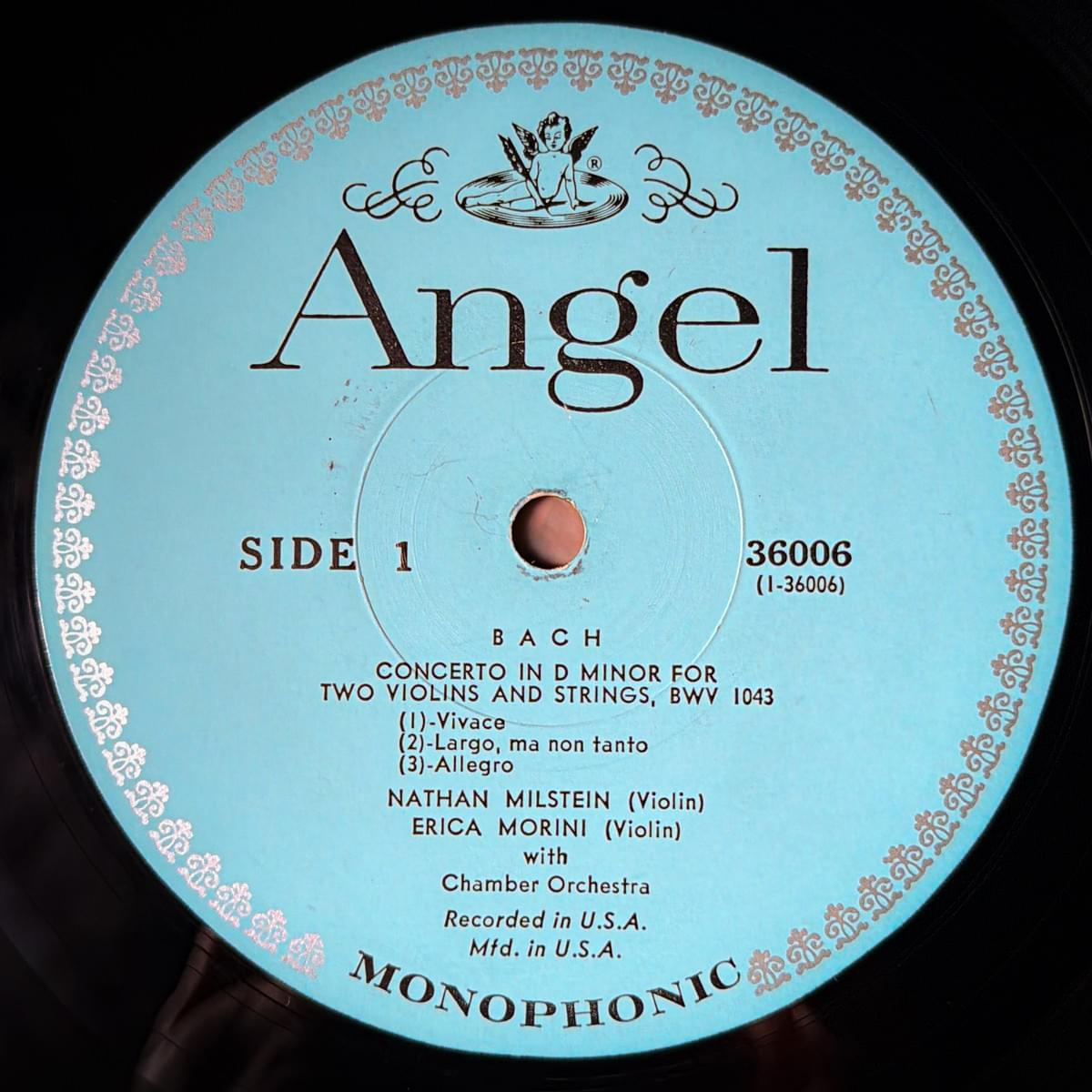
如果說 ASC-5250 展示的是米爾斯坦在浪漫派曲目上的光芒,那麼另一張美國 Angel 單聲道版 360
06,則讓我們看見了他完全不同的另一面。
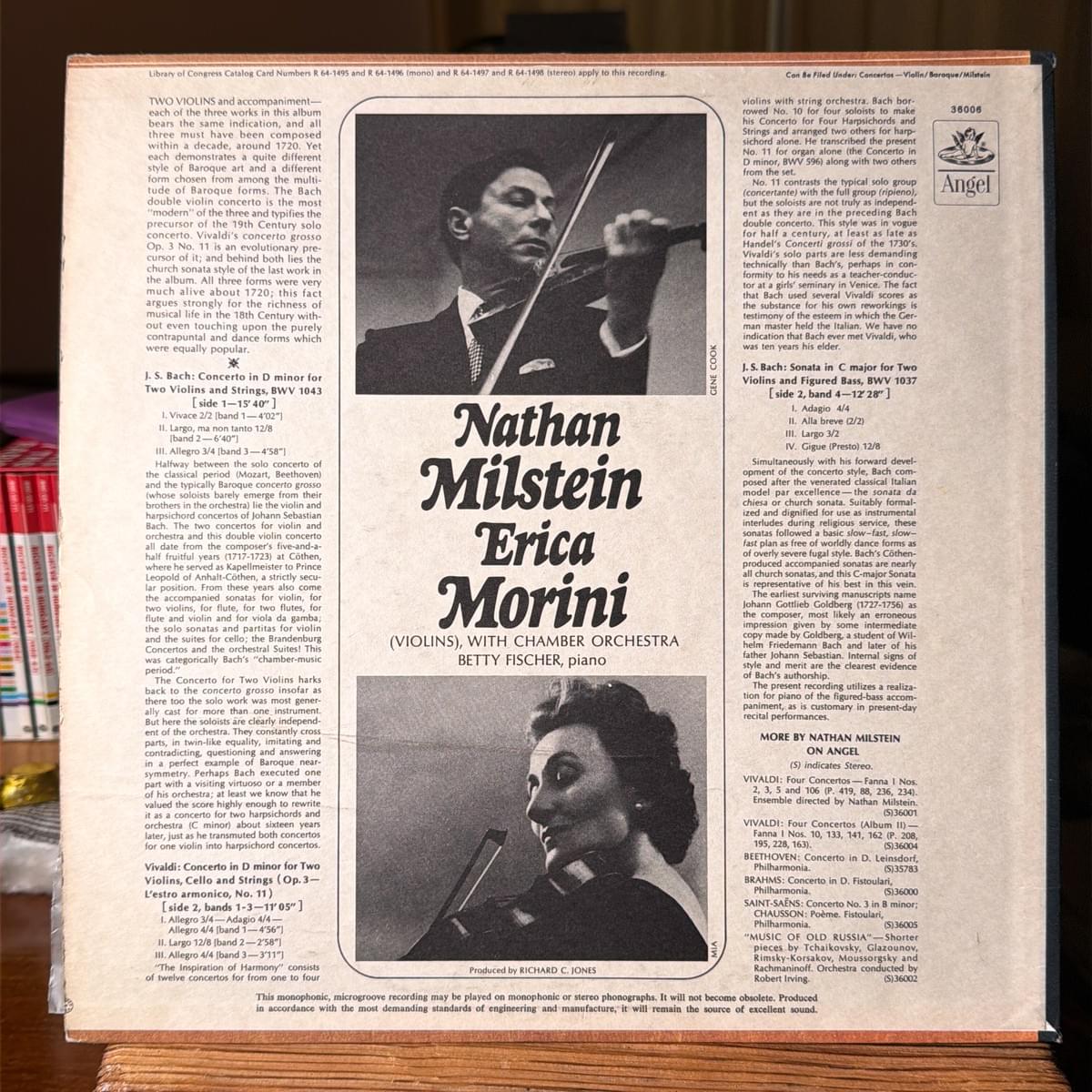
這張唱片錄製於1964年紐約,收錄了巴哈《d小調雙小提琴協奏曲》、巴哈《C大調雙小提琴奏鳴曲》,以及韋瓦第《d小調雙小提琴、大提琴與弦樂協奏曲》。米爾斯坦的搭檔,是同樣出生於1904年的女性小提琴大師艾利卡·莫妮妮(Erica Morini,1904–1995)。
這是兩位20世紀最頂尖小提琴家唯一一次正式合作錄音,也因此成為唱片史上的珍稀文獻。
莫妮妮生於維也納,是真正的天才少女:5歲便為奧匈帝國皇帝法蘭茲·約瑟夫表演,12歲首次與樂團合演,隨後在福特萬格勒、尼基什等大指揮棒下登台。1921年在紐約的美國首演,是當年樂壇一大轟動。她的整個演奏生涯,都依靠一把1727年製的「大衛朵夫」史特拉底瓦里,那是她的父親1924年在巴黎以一萬美元為她購入的摯愛樂器。令人扼腕的是,在她去世前不久,這把琴連同珍貴的信件與親筆樂譜,一同從紐約公寓被盜,案件至今未破。
米爾斯坦與莫妮妮,一位承繼敖德薩與聖彼得堡的俄羅斯傳統,一位代表維也納的中歐血脈。兩條截然不同的演奏美學,在巴哈的音樂裡相遇,成就了一次難以複製的歷史交匯。

巴哈,是他的另一個故鄉
米爾斯坦在浪漫派協奏曲上的成就固然耀眼,但認識他的人都知道,巴哈才是他真正的精神核心。
他視「建築結構」為演奏的一切根本,在巴哈作品中更是如此——每一個聲部都有方向,每一條線條都有重量,絕不沉溺於表面的情感渲染。這種古典主義的立場,讓他與同時代致力於「歷史演奏實踐」的風潮保持著距離,卻也讓他的詮釋在數十年後依然散發著不褪色的光澤。1975年,他以巴哈《無伴奏小提琴奏鳴曲與組曲》的錄音獲得葛萊美獎最佳古典器樂獨奏獎,那已是他70歲之後的事了。
這張1964年的雙小提琴錄音,正是這種美學最具體的呈現。米爾斯坦光澤溫暖的俄羅斯音線,與莫妮妮絲滑優雅的維也納嗓音,在巴哈的對位裡彼此呼應、相互傾聽。評論界的描述是:「兩把小提琴在管弦樂與彼此之間交織縈繞,成就完美的合奏默契。」這張唱片的英國首版,收藏價格曾高達數4300英鎊(約台幣18萬),足見其歷史地位。
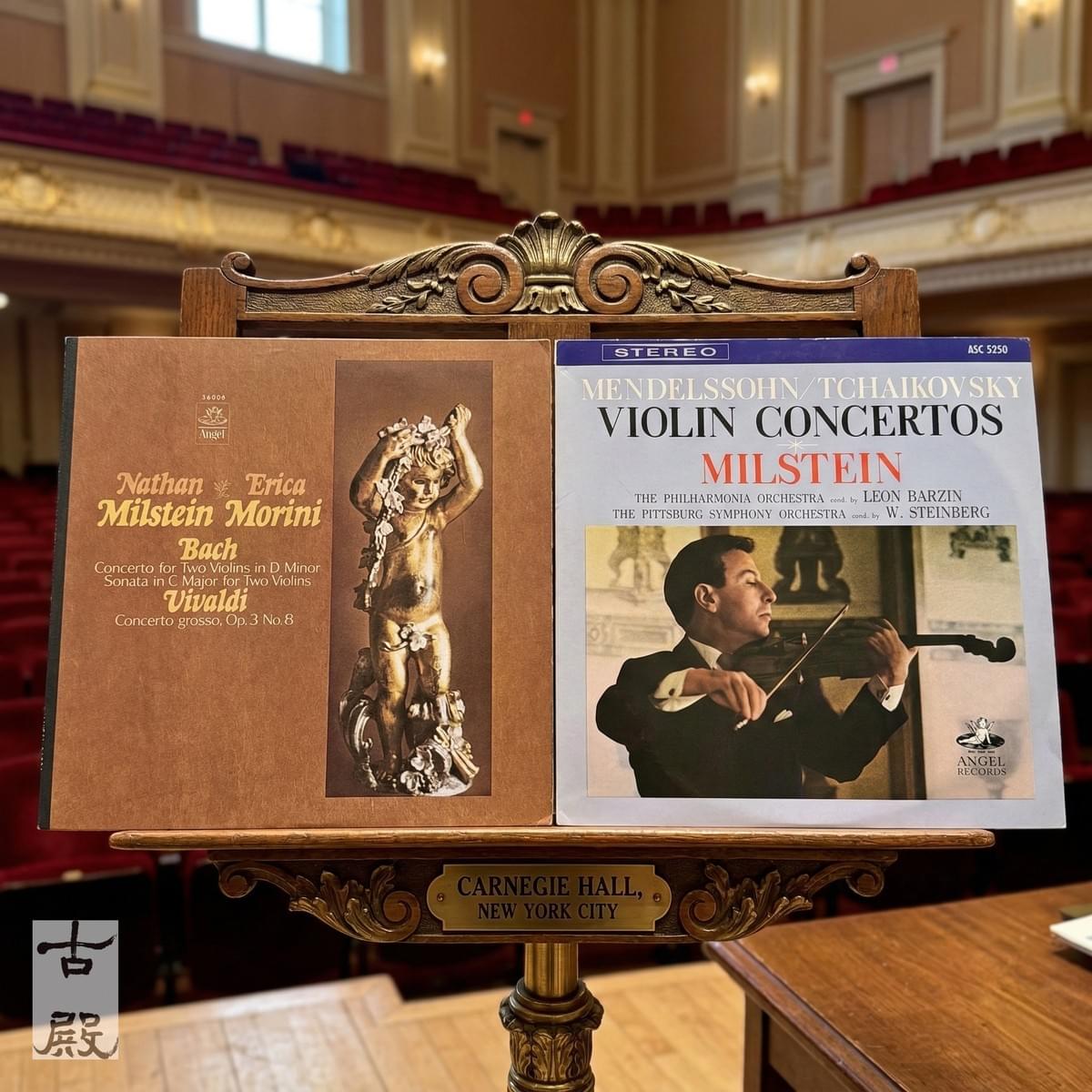
兩張唱片,兩個面向,一個人。
一個生於帝俄時代的猶太少年,從敖德薩出發,走過革命、流亡、巴黎、紐約,最後在倫敦告別世界。他用那把「Maria Teresa」史特拉底瓦里,在20世紀留下了最優雅的聲音之一。
那個聲音,在這兩圈黑膠裡靜靜等著你。
******
[Gudian Music Stories] While the World Fears Aging, He Found Purity at 80: The Artistic Miracle of Nathan Milstein
When you pick up this record, your eyes don't go to the name on the cover first. Instead, you are immediately captured by that deep, wine-red glow of the vinyl itself.
This is a limited edition "Red Wax" pressing (commonly known as Akaban) made by Japan’s Toshiba Musical Industries in the early 1960s. Toshiba developed this unique wine-red formula with special anti-static materials, representing the pinnacle of Japanese audio engineering at the time. Today, these red discs are holy relics in the world of vinyl collecting. They are rare survivors of a golden age, regarded by seasoned collectors as the closest thing to hearing the "original master tapes."
The man on the cover, lost in his performance, is Nathan Milstein (1904–1992).
An Impossible Human Being
If you ask any music lover, "Who was the greatest violinist of the 20th century?" two names inevitably surface: Heifetz and Milstein.
But these two men represent entirely different kinds of miracles.
Heifetz was the kind of genius who took your breath away; his peak was around age 40, after which his technique remained, but that absolute purity of tone began to subtly fade. Milstein did the opposite—**he got better as he got older.**His sound became purer, his music deeper. Even in his 80s, he was still standing on stage performing grueling solo recitals, only stepping away after a fall broke his left hand. In the history of the violin, there is almost no other example of such longevity. Modern masters like Perlman and Zukerman have never hidden their absolute reverence for him.
Milstein was born in 1904 in the ancient Black Sea port of Odessa—a "prodigy factory." He started at age seven and by eleven was sent to St. Petersburg to study under the legendary Leopold Auer, the spiritual source of the Russian violin school. Heifetz was his classmate. Interestingly, Milstein’s first teacher, Stolyarsky, also taught the great David Oistrakh.
Then, the Russian Revolution turned the world upside down. Milstein fled with his close friend, the pianist Vladimir Horowitz. They lived as exiles in Paris before crossing the ocean to America. Along the way, they met Rachmaninoff and became lifelong friends. In America, Milstein’s debut with the Philadelphia Orchestra was a sensation, instantly establishing him as a world-class soloist.
Age 55: The Golden State
This Japanese Toshiba "Red Wax" (Angel ASC-5250) features the two most beloved violin concertos: Mendelssohn’s E minor and Tchaikovsky’s D major.
The Mendelssohn was recorded in October 1959 with the Philharmonia Orchestra, while the Tchaikovsky was captured in April of the same year with the Pittsburgh Symphony. At 55, Milstein was in the absolute prime of his artistic maturity. He was playing a 1716 Stradivarius he named "Maria Teresa," after his daughter and wife. He bought it in 1945 and it stayed with him for the rest of his life. This 1959 recording is not just his first stereo account of these works; it is the definitive capture of that legendary violin’s voice.
A Sword vs. A Piece of Velvet
If you listen to Heifetz and then listen to Milstein, you’ll immediately feel the difference.
It has been said that Heifetz’s sound is like a sword drawn from its sheath—sharp, brilliant, and breathtaking. Milstein’s sound, however, is like touching a piece of sensual velvet. It is smooth, rich, and weighted, yet it possesses a power that can pierce through a full orchestra to reach the deepest part of your heart.
In the Mendelssohn concerto, Milstein’s version is still considered by many critics as the "insurmountable" interpretation. His opening lines have a sincerity that belongs only to him. The slow movement is simple yet profound, and the finale is brilliant without ever losing its effortless grace. The Tchaikovsky is a display of his Russian roots—passion held in check by noble restraint. It is a balance only a true master can strike.
Two People Born in 1904
While the first record shows Milstein’s brilliance in Romantic showpieces, another record—the American Angel mono 36006—reveals a completely different side of him.
Recorded in New York in 1964, it features Bach’s Double Violin Concerto and works by Vivaldi. Milstein’s partner here is the great female violinist Erica Morini (1904–1995), who was also born in that same year.
This was the only time these two titans officially recorded together, making it a rare document in recording history. Morini was a true prodigy from Vienna, performing for Emperor Franz Joseph at age five. Sadly, shortly before her death, her beloved 1727 "Davidoff" Stradivarius was stolen from her New York apartment along with precious letters and scores. The case remains unsolved to this day.
In this recording, we hear two different worlds meeting: Milstein, carrying the Russian tradition of Odessa and St. Petersburg, and Morini, representing the soulful elegance of the Viennese bloodline.
Bach: His Spiritual Home
Milstein’s success in Romantic concertos was dazzling, but for those who knew him, Bach was his true spiritual core.
He viewed "architectural structure" as the foundation of everything. In Bach, every voice has a direction, and every line has weight. He never indulged in superficial sentimentality. This "classical" stance kept him at a distance from the "historically informed performance" trends of his time, but it also meant his interpretations never went out of style. In 1975, he won a Grammy for his recording of Bach’s Sonatas and Partitas—he was already over 70 years old.
In the 1964 duo recording, you can hear this aesthetic perfectly. Milstein’s warm, glowing Russian tone calls out to Morini’s silky Viennese phrasing. They listen to each other. As critics described it: "The two violins weave around each other and the orchestra in perfect, intuitive harmony."
Two records, two sides, one man.
A Jewish boy born in the era of Imperial Russia, who traveled from Odessa through revolution and exile to Paris, New York, and finally London. He used his "Maria Teresa" Stradivarius to leave behind one of the most elegant voices of the 20th century.
That voice is waiting for you, silently held within these two circles of black—and red—vinyl.