
【古殿唱片音樂故事】聽見那條懸在空中的銀線 :從謝霖的四次貝多芬錄音,看見一個生命如何從「傳承見證」走向「精神合一」
古殿殿主
歡迎來到「古殿」。
今天我們來談談「生命狀態」這個主題,聚焦在亨利克・謝霖(Henryk Szeryng, 1918-1988)這位小提琴家身上。
我們剛出生的時候,生命是純粹的,「身、口、意」是合一的。但隨著長大,為了面對世界、為了生存,我們學會了偽裝。心裡焦慮,臉上卻掛著微笑。這就是現代人的常態——「身口意分離」,所以我們的聲音聽起來總是很「躁」。
但今天,我想請你聽一段聲音。這段聲音讓我們看見,人是有可能在歷經滄桑後,重新回到純粹的。
這是亨利克・謝霖在1974年錄下的貝多芬小提琴協奏曲。但在講這張唱片之前,我們得先講講他這條漫長的生命修煉之路。
1. 最後一位歐洲人文主義者:謝霖是誰?
在二十世紀那個小提琴大師輩出的年代,海飛茲像超人,技巧完美到讓人害怕;歐伊斯特拉赫像王者,溫暖厚重。但在這個座標系中,謝霖的位置很特別——他是「貴族」。
這裡說的「貴族」,不是階級,而是一種「文化精神高度」。
在音樂上,他是一個完美的混血兒。起初他在同鄉的前輩世界級大師胡伯曼(Bronislaw Hubermann, 1882-1947)的推薦下,得以進入卡爾・佛萊什(Carl Flesch, 1873-1944)在柏林的小提琴科學「實驗室」,接受到當時世界最先進的科學與嚴謹的小提琴訓練。
1933 年因為納粹上台,大舉排猶,他被迫移居到法國巴黎。在巴黎的年代中,他又吸收了提博(Jacques Thibaud, 1880-1953)與安奈斯可(George Enescu, 1881-1955)那種法比學派的人文光澤。最終他可說是集結了卡爾・佛萊什的科學技術,與安奈斯可、提博的人文風格的 20 世紀小提琴巨匠。
除了音樂,他更是一位真正的博學之士。他精通七種語言,二戰期間曾擔任波蘭流亡政府的外交官,看過最殘酷的人性。這讓他拉琴時,有一種別人模仿不來的「文化重量」。他繼承了德國學派的嚴謹,也吸收了法比學派的光澤。他拉琴不是為了炫技,而是為了傳承文明的秩序。
他從不以「炫技」聞名(雖然他的技巧無懈可擊),他像是一位博學的學者,拉琴不是為了秀自己,而是為了傳承歐洲千年的文化底蘊。這讓他成為了戰後古典主義演奏的「文化貴族」。
2. 貝多芬小提琴協奏曲:最簡單,卻也最難的一首
為什麼我們談論貝多芬小提琴協奏曲?
在四大小提琴協奏曲中,貝多芬這首在譜面上看起來最「簡單」。沒有柴可夫斯基的驚濤駭浪,也沒有帕格尼尼的魔鬼特技,很多時候就像在拉音階而已。
但所有小提琴家都會告訴你:它最難。
在現今的世界各大小提琴大賽中,決賽的協奏曲,很少有人敢選貝多芬上台的。因為這首曲子就像畫一個正圓,因為太簡單,所以沒有任何地方可以躲藏。你心裡有一點點雜念、一點點虛榮,或者生命厚度不夠,在那單純的長音裡都會被聽得一清二楚。
它考的不是手指的機能,它考的是你這個人的「誠實度」。
3. 四個錄音,從「傳承見證」到「合一」的旅程
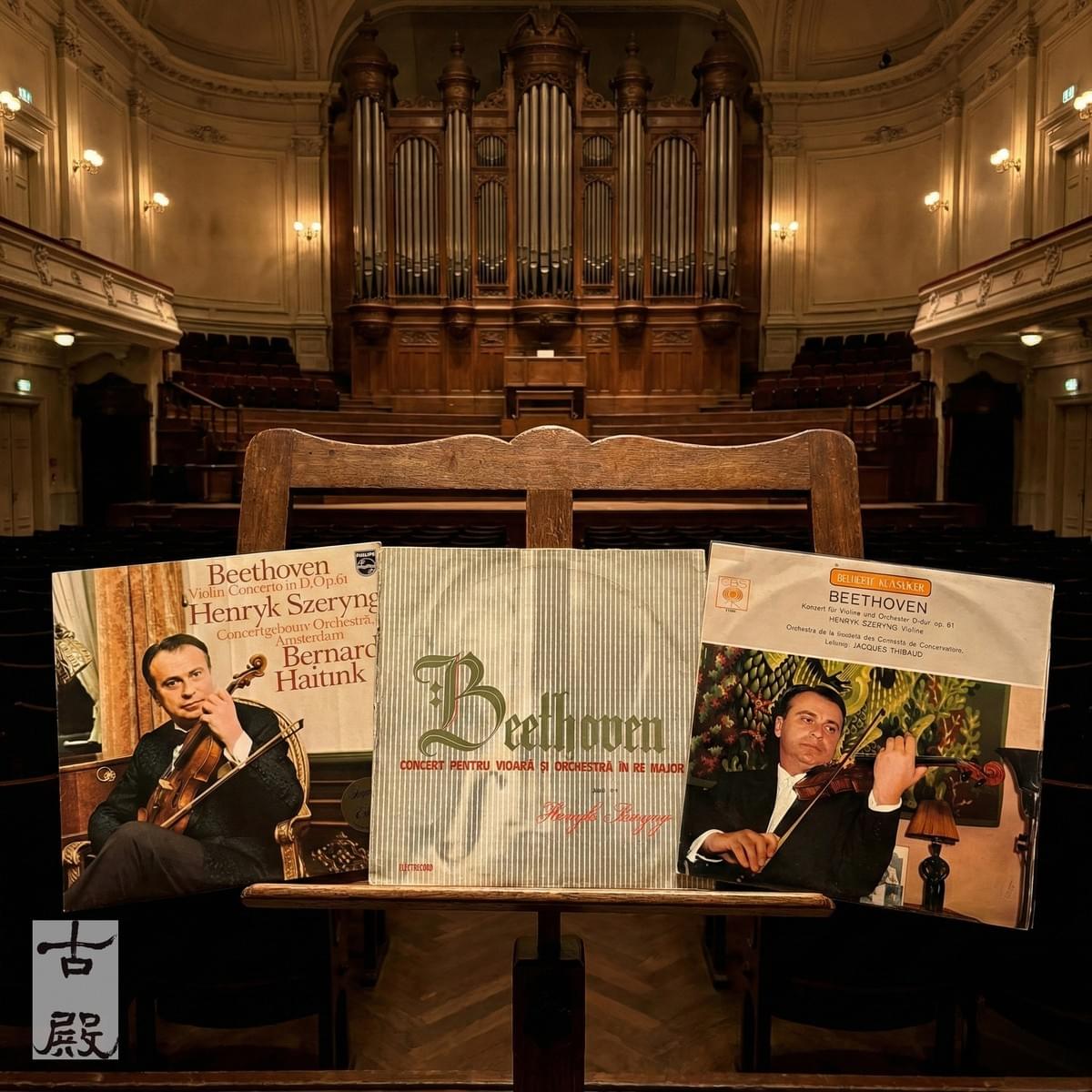
謝霖一生留下了多達 6~7 種貝多芬小提琴協奏曲的錄音(包含實況),不過其中這四次是最關鍵的。在古殿,我們收藏了這四份錄音,剛好見證了一個男人如何將生命越陳越香:
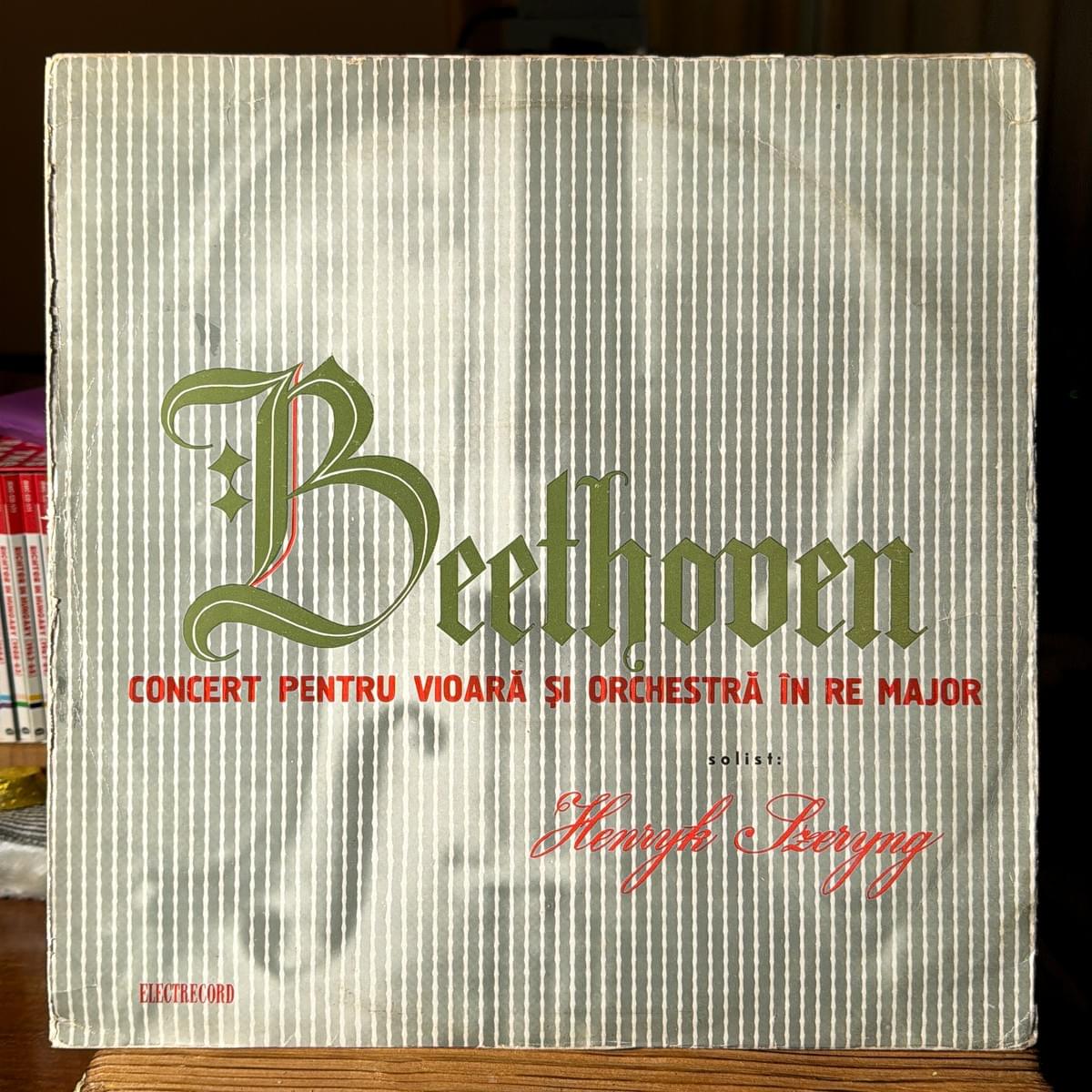
第一份:傳承的重量(1953年,恩師提博指揮): 這張唱片非常珍貴。指揮不是別人,正是謝霖的恩師、法比學派的宗師——提博。而在錄完這張唱片後不久,提博就因空難離世。在這裡,你聽到的不只是年輕謝霖的銳氣,更有一種**「我知道我背負著什麼」的使命感**。那是老師親手把火炬交給學生的時刻。古殿為了考究這個聲音,甚至收藏了這份錄音的三種不同黑膠版本,只為了聽清楚那份傳承的起點。
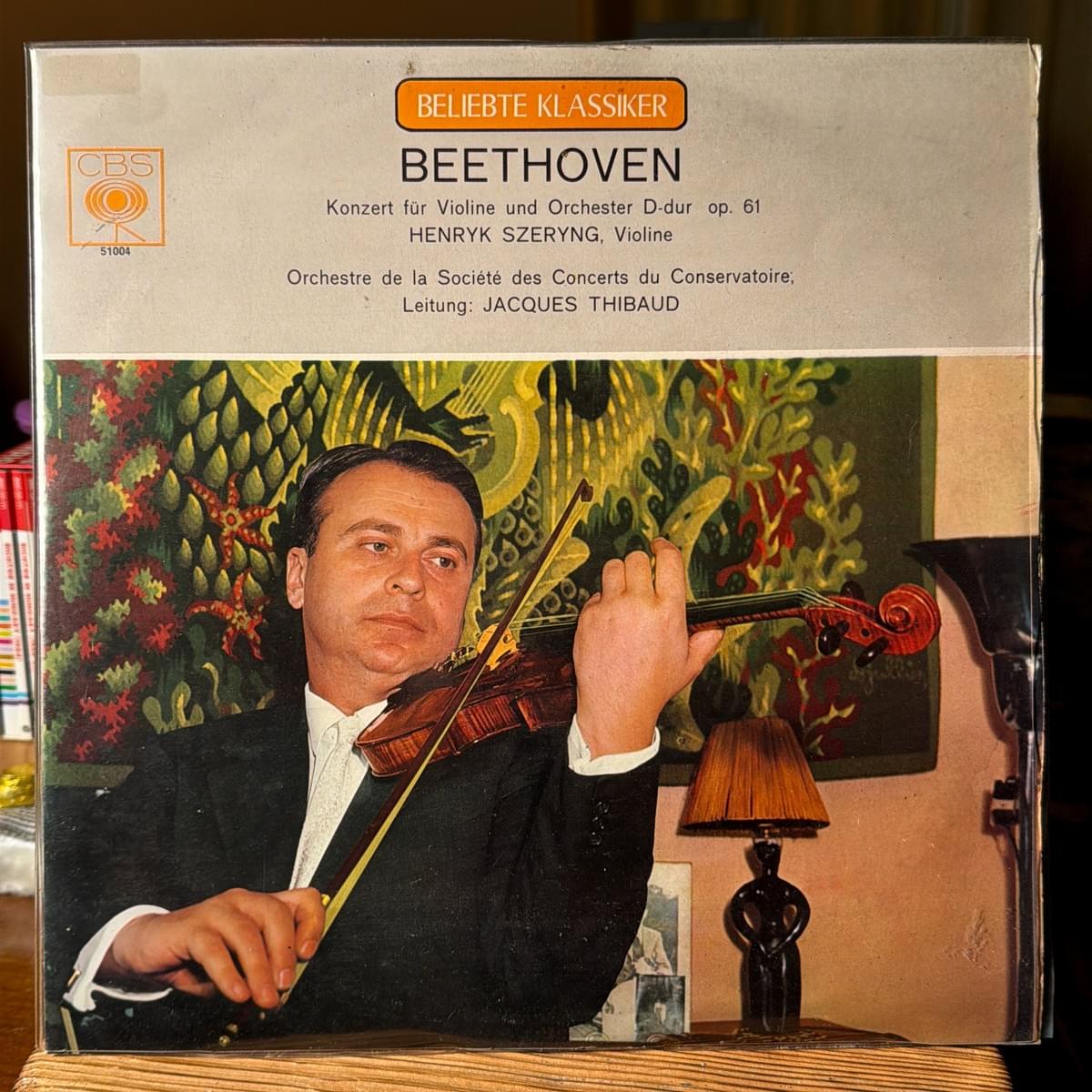
第二份:燃燒的真實(1961年,羅馬尼亞現場): 這是一份隱藏版名演,單聲道錄音。這裡記錄了最真實、最像奮力感謝老師培養的謝霖。沒有錄音室的修飾,你彷彿能看到他在舞台上揮汗如雨。那是卸下紳士外衣後,最直率的生命力。 但這份燃燒是有原因的。謝霖非常重視人與人的文化傳承,因此他回到恩師的故鄉,參加以老師為名的「安奈斯可音樂節」。他站在那裡,用最炙熱的琴音演奏在他身上所傳承的:貝多芬與巴哈的文化精神。這不是一場表演,這是一場對恩師安奈斯可的致敬與證明。這份錄音長期被遺忘,沒有出版為CD版本,直到大約七、八年前才有第一次的CD版本問世。
第三份:黃金的標準(1965年,與伊瑟斯泰特): 這是公認的教科書版本。結構嚴謹,端正宏大。這時的謝霖正值壯年巔峰,每一個音符都精準地落在它該在的地方。這是「古典主義」的極致。
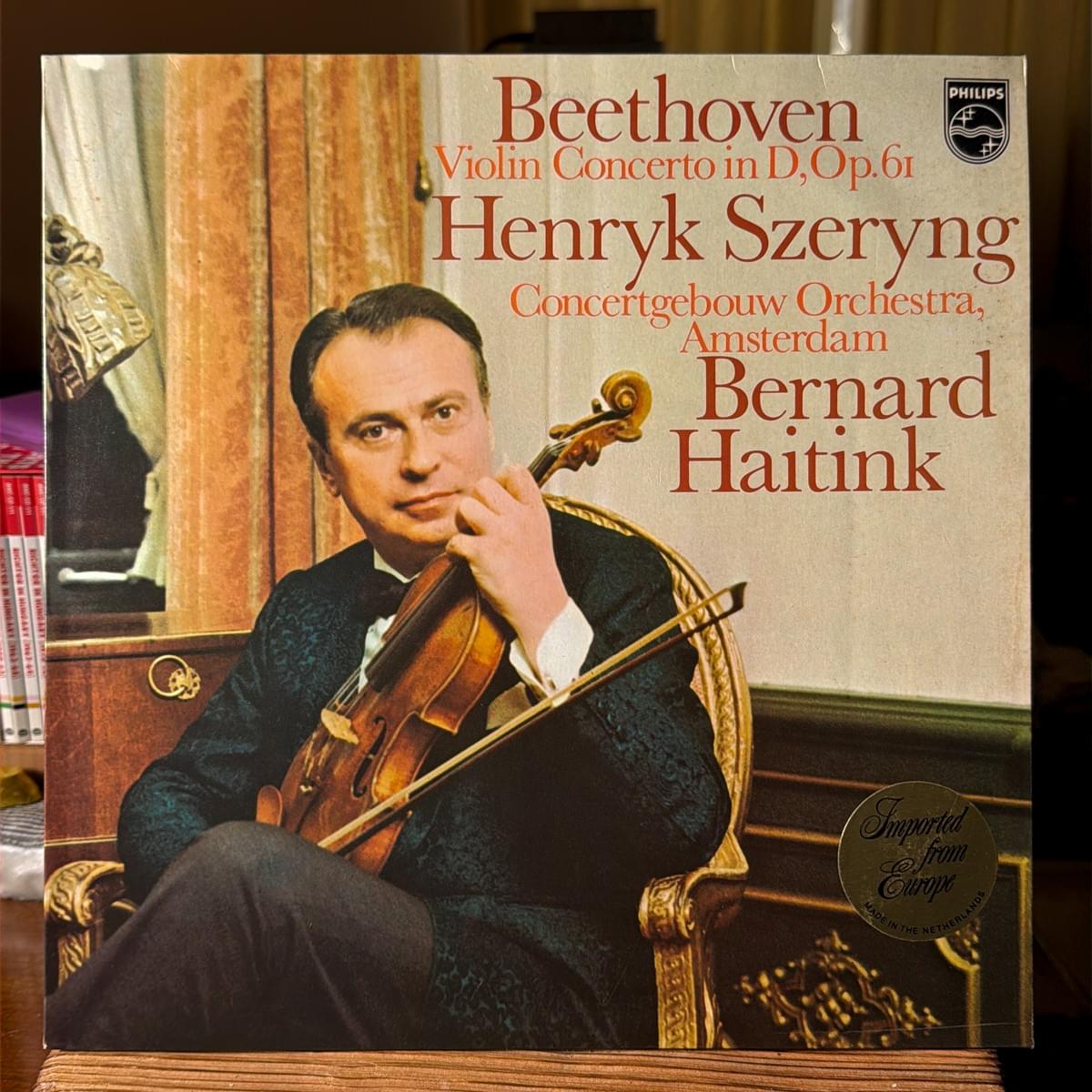
第四份:精神的合一 (1974年,與海汀克): 這就帶到了我想特別為你介紹的最後一張,也是謝霖晚年的錄音。當你按下播放鍵,你會嚇一跳——這是我聽過最「沒有雜念」的聲音。 很多演奏家在拉這首曲子時,琴聲裡會有「慾望」——想表現哀傷、想表現輝煌。但謝霖在這裡,乾淨到不可思議。他不濫情,也不煽情,那種音準聽起來有一種**「精神上的正直」。特別是在高音弱奏時,那聲音像一條「懸在空中的銀線」,凝練、光滑,沒有一點點毛邊。 這時候的他,已經超越了第一版的使命、第二版的燃燒、第三版的完美。他的身體(技巧)、他的嘴巴(音樂表達)、他的心(意念),重新回到了嬰兒般的「身口意合一」**狀態。心裡想著純粹,手就拉出純粹。海汀克指揮的樂團也不搶戲,而是像建築師一樣,穩穩地建構出垂直的空間,成全了這位大師最後的獨白。
4. 從現實的生命苦難「分離」回到「合一」的生命旅程
聽謝霖這四次錄音的變化,其實就是看見一個生命如何「回歸」的過程。
我們剛出生的時候,生命是純粹的,「身、口、意」是合一的。心裡想什麼,身體就做什麼。但隨著長大,為了面對殘酷的世界、為了生存競爭,我們被迫學會偽裝。我們開始「身口意分離」——心裡焦慮,臉上卻要裝沒事;想表達溫柔,拉出來的聲音卻帶著攻擊性。這就是為什麼現代人的聲音常充滿「雜訊」與「慾望」。
謝霖也經歷過這一切。他看過戰爭、做過外交官、面對過最現實的國際局勢。但在這漫長的人生中,他透過音樂不斷地修煉、過濾。
到了晚年,你可以感覺到他慢慢把那些為了生存而武裝的盔甲一件件脫掉了。他重新找回了那個「身口意合一」的狀態:身體(技巧)與嘴巴(音樂表達)完全忠實於他純粹的內心。
【古殿結語】
在這張唱片裡,謝霖不再需要證明什麼。他已經從「面對世界」的紛擾,回到了「面對自己」的純粹。
聽這張唱片,是一場對心靈的洗禮。它提醒我們,在這個混亂的世界裡,真正的強大不是大聲喧嘩,而是能像謝霖一樣,修煉出一顆沒有雜念的心,拉出一條正直的銀線。
當你的心靜下來了,世界就跟著安靜了。
1953年實體音樂:
1961實體音樂:
1974年實體音樂:
******
[Gu Dian Music Stories] Hearing the Silver Thread Suspended in Mid-Air: Witnessing a Life Journey from "Legacy" to "Spiritual Oneness" through Szeryng’s Four Beethoven Recordings
Welcome to "Gu Dian" (The Ancient Hall).
Today, let us discuss the theme of "Life State," focusing on the violinist Henryk Szeryng (1918-1988).
When we are first born, life is pure; our "Body, Speech, and Mind" are in oneness. But as we grow up, to face the world and to survive, we learn to disguise ourselves. Our hearts are anxious, yet our faces wear smiles. This is the norm for modern people—a "separation of Body, Speech, and Mind"—which is why our voices often sound so "restless."
But today, I want you to listen to a sound. A sound that shows us it is possible for a person, after weathering the vicissitudes of life, to return to purity.
This is the Beethoven Violin Concerto recorded by Henryk Szeryng in 1974. However, before we speak of this record, we must first speak of his long road of life cultivation.
1. The Last European Humanist: Who was Szeryng?
In the 20th century, an era teeming with violin masters, Heifetz was like a Superman, his technique so perfect it was terrifying; Oistrakh was like a King, warm and heavy. But within this coordinate system, Szeryng’s position was unique—he was the "Aristocrat."
The "Aristocrat" mentioned here refers not to social class, but to a "height of cultural spirit."
Musically, he was a perfect hybrid. Initially, under the recommendation of his fellow countryman and world-class master Bronislaw Hubermann (1882-1947), he entered the violin science "laboratory" of Carl Flesch (1873-1944) in Berlin, receiving the world’s most advanced scientific and rigorous violin training.
In 1933, due to the rise of the Nazis and the massive persecution of Jews, he was forced to move to Paris, France. During his years in Paris, he absorbed the humanist luster of the Franco-Belgian school from Jacques Thibaud (1880-1953) and George Enescu (1881-1955). Ultimately, he became a 20th-century violin giant who combined Carl Flesch's scientific technique with the humanist style of Enescu and Thibaud.
Beyond music, he was a true polymath. He was fluent in seven languages and served as a diplomat for the Polish government-in-exile during World War II, witnessing humanity at its cruelest. This gave his playing a "cultural weight" that others could not imitate. He inherited the rigor of the German school and absorbed the luster of the Franco-Belgian school. He played not to show off technique, but to transmit the order of civilization.
He was never known for "virtuosity" (though his technique was impeccable); he was like a learned scholar. He played not to display himself, but to pass on thousands of years of European cultural depth. This made him the "Cultural Aristocrat" of post-war classical performance.
2. Beethoven Violin Concerto: The Simplest, Yet the Hardest
Why do we discuss the Beethoven Violin Concerto?
Among the four great violin concertos, Beethoven’s looks the "simplest" on the score. There are no Tchaikovsky-like turbulent waves, nor Paganini-like devilish tricks; often, it looks just like playing scales.
But every violinist will tell you: It is the hardest.
In major violin competitions around the world today, very few dare to choose Beethoven for the finals. Because this piece is like drawing a perfect circle; because it is so simple, there is nowhere to hide. If there is a shred of distraction, a bit of vanity in your heart, or if your life lacks depth, it will all be heard clearly in those simple long notes.
It tests not the function of your fingers, but the "Honesty" of you as a person.
3. Four Recordings: A Journey from "Legacy Witness" to "Oneness"
Szeryng left behind as many as 6 or 7 recordings of the Beethoven Violin Concerto (including live performances) throughout his life, but these four are the most critical. At Gu Dian, we collect these four recordings as they perfectly witness how a man’s life ages like fine wine:
- The First: The Weight of Legacy (1953, conducted by his mentor Thibaud): This record is incredibly precious. The conductor is none other than Szeryng's mentor, the grandmaster of the Franco-Belgian school—Thibaud. Shortly after recording this, Thibaud died in a plane crash. Here, you hear not only the sharpness of the young Szeryng but also a sense of mission—"I know what I am carrying." It was the moment the teacher handed the torch to the student with his own hands. To study this sound, Gu Dian has even collected three different vinyl versions of this recording, just to hear the starting point of that legacy clearly.
- The Second: The Burning Reality (1961, Romania Live): This is a hidden gem, a mono recording. It records the most real Szeryng, the one most like a warrior striving to thank his teacher for his cultivation. Without studio polish, you can almost see him sweating profusely on stage. That is the most straightforward vitality after taking off the gentleman's coat. But this burning has a reason. Szeryng valued human cultural heritage immensely, so he returned to his mentor's hometown to participate in the "Enescu Festival" named after his teacher. He stood there, playing with the most fervent tone to demonstrate the cultural spirit of Beethoven and Bach passed down to him. This was not a performance; it was a tribute and proof to his mentor, Enescu.
- The Third: The Gold Standard (1965, with Schmidt-Isserstedt): This is the acknowledged textbook version. Rigorous in structure, dignified, and grand. Szeryng was at the peak of his manhood here, every note landing precisely where it should. This is the ultimate "Classicism."
- The Fourth: Spiritual Oneness (1974, with Haitink): This brings us to the final record I specifically want to introduce to you, a recording from Szeryng's later years. When you press play, you will be startled—this is the sound with the "least distraction" I have ever heard. Many performers, when playing this piece, have "desires" in their sound—wanting to express sadness, wanting to express glory. But Szeryng here is incredibly clean. He is neither sentimental nor sensational; that intonation sounds like a kind of "spiritual integrity." Especially during the high-register pianissimo (soft playing), the sound is like a "silver thread suspended in mid-air," condensed, smooth, without a single fray. At this moment, he has transcended the mission of the first version, the burning of the second, and the perfection of the third. His body (technique), his mouth (musical expression), and his mind (intention) have returned to an infant-like state of "Body-Speech-Mind Oneness." The mind thinks of purity, and the hand plays purity. The orchestra conducted by Haitink does not steal the show but acts like an architect, steadily constructing a vertical space, fulfilling this master's final monologue.
4. A Life Journey from "Separation" back to "Oneness" through Reality's Suffering
Listening to the changes in Szeryng's four recordings is actually seeing the process of a life "returning."
When we are first born, life is pure, and "Body, Speech, and Mind" are one. We think it, and our body does it. But as we grow, to face the cruel world and survive competition, we are forced to learn disguise. We begin the "separation of Body, Speech, and Mind"—anxious inside, but pretending to be fine on the outside; wanting to express tenderness, but the voice comes out with aggression. This is why the modern voice is often full of "noise" and "desire."
Szeryng experienced all of this too. He saw war, worked as a diplomat, and faced the most realistic international situations. But throughout this long life, he constantly cultivated and filtered himself through music.
By his later years, you can feel that he slowly shed the armor he had armed himself with for survival, piece by piece. He rediscovered that state of "Body-Speech-Mind Oneness": his body (technique) and mouth (musical expression) became completely faithful to his pure inner heart.
[Gu Dian Conclusion]
In this record, Szeryng no longer needs to prove anything. He has returned from the disturbances of "facing the world" to the purity of "facing himself."
Listening to this record is a baptism for the soul. It reminds us that in this chaotic world, true strength is not loud clamor, but the ability, like Szeryng, to cultivate a mind without distractions and draw a straight, upright silver thread.
When your heart quiets down, the world quiets down with it.