
【古殿唱片音樂故事】人類歷史上第一套立體聲貝多芬交響曲全集:華爾特與哥倫比亞交響樂團1958-1959
古殿殿主
「每當我指揮貝多芬,我感覺自己是在為整個人類說話。」 ——布魯諾·華爾特
一張唱片,一個時代的「終結」與「開始」
1958年1月6日,美國加州好萊塢,一棟叫做「美國退伍軍人大廳(American Legion Hall, Hollywood)」的寬闊建築裡,一位82歲的老人緩緩舉起指揮棒。
管弦樂團的弦樂群輕輕拉出第一個音符,那是貝多芬《第一號交響曲》第一樂章的開頭:一條悠長、溫柔、如同河水般流動的旋律線。錄音師在控制室裡仔細監聽耳機,確認三條磁帶同步滾動,確認立體聲的左右聲道清晰分離,確認這個時刻正在被現代技術以前所未有的方式完整捕捉。
這一天,人類史上第一套完整的立體聲(Stereo)貝多芬交響曲全集錄音計畫,正式「開始」。
那位老人,就是布魯諾·華爾特(Bruno Walter,1876-1962)他將邁入人生的最後幾年,他身上也代表著十九世紀精神傳承的「終結」。
一位走過兩個世紀的人
要真正理解這套錄音的意義,必須先理解布魯諾·華爾特是誰?
雖然最近殿主介紹了很多次華爾特的生平,但在此文章中,仍必須再說一下!
華爾特出生於1876年,柏林的一個猶太家庭。那一年,貝多芬已去世49年,布拉姆斯44歲,馬勒16歲,理查·史特勞斯12歲。那個年代的歐洲音樂世界,與我們今天熟悉的完全不同——沒有廣播、沒有錄音、沒有唱片,音樂的傳遞完全依靠人與人之間的親身接觸。
8歲,他開始學琴;9歲,他立志成為演奏家。然而命運為他安排了一條更宏大的道路。
1894年,18歲的華爾特在漢堡歌劇院謀得一個助理指揮的職位。他的上司,是當時正值壯年、橫掃歐洲的指揮界彗星——古斯塔夫·馬勒(Gustav Mahler,1860-1911)。
這段師徒相遇,改變了華爾特的一生,也改變了整個20世紀古典音樂的詮釋傳統。
馬勒不只教導華爾特如何揮棒,更將他整套的音樂哲學——那種將音樂視為精神呼喚、視為靈魂掙扎、視為宇宙對話的深邃世界觀——傾注於這個年輕弟子身上。華爾特追隨馬勒輾轉各地,親眼目睹馬勒如何在排練中一次又一次要求樂手找到音符背後的「意義」,而非只是演奏正確的音高與節奏。
1911年,馬勒去世。他留下兩部未曾親自首演的遺作:《大地之歌》與《第九號交響曲》。負責完成馬勒遺願、將這兩部傑作帶給世界的人,正是華爾特。那場首演,不只是一次音樂會——那是一個師傅托付給弟子最後的信任。
此後數十年,華爾特成為歐洲最炙手可熱的指揮家之一。他掌管過巴伐利亞國立歌劇院、柏林市立歌劇院、萊比錫布商大廈管弦樂團、維也納國家歌劇院;他是薩爾茲堡音樂節的共同創辦人之一;他是維也納愛樂最受敬重的合作夥伴。他是那個時代的巨人。
然後,歷史打斷了一切。
1933年,納粹上台。作為猶太人,華爾特敏感地感受到了即將到來的危險,離開德國,遷居維也納。1938年,納粹吞併奧地利。他再次逃亡,這次是法國。1940年,納粹佔領法國。他最終抵達美國,在那裡定居,再也沒有回到歐洲長住。
一個人,一生兩度流亡,在音樂中尋找自己的祖國。
心臟病之後:生命最後的禮物
1956年,華爾特迎來了80歲生日。
他的指揮生涯在這一年達到了某種自然的終點——他的演出逐漸減少,體力的限制越來越明顯。然後,1957年,他遭受了一次嚴重的心臟病發作,從鬼門關被搶救回來。醫生告訴他:不能再長途旅行,不能再過度勞累。
對於一個指揮家來說,這幾乎等於宣告退休。
但正是在這個時候,哥倫比亞唱片公司的製作人約翰·麥克盧爾(John McClure,1929-2014)來到了洛杉磯。
麥克盧爾當時不過28歲,是個聰明而富有音樂直覺的年輕工程師,剛剛從錄音室助理晉升為製作人。他找到了華爾特,提出了一個大膽的計畫:
「我們把音樂家帶到您的身邊來。您不必去任何地方——我們就在洛杉磯,在距離您家最近的地方錄音。」
這個計畫的背後,有著複雜的現實考量。洛杉磯愛樂已簽約EMI,哥倫比亞無法使用。解決方案是組建一個全新的臨時樂團,從洛杉磯愛樂的頂尖樂手(以個人身份兼職)加上好萊塢電影工業中最優秀的錄音室樂手中精心挑選,組成一個完全為這批錄音量身打造的演奏陣容——「哥倫比亞交響樂團(Columbia Symphony Orchestra)」。
1958年,也是立體聲LP唱片正式商業化的第一年。哥倫比亞唱片公司已悄悄進行了兩年的立體聲錄音研發(最早可追溯至1956年,使用Ampex 300-3型半英寸磁帶機),此時終於準備好向市場正式推出這個革命性的技術。
在這個歷史的交叉點上,一位82歲的老指揮家、一個全新的錄音技術、一批洛杉磯最優秀的樂手,以及一個充滿熱情的年輕製作人——共同創造了一段傳奇。
華爾特答應了,於是錄音開始了。
那些錄音的日子
好萊塢的「美國退伍軍人大廳(American Legion Hall, Hollywood)」,是一棟典型的美式公共建築,外觀樸素,但內部空間寬闊,天花板高挑,自然混響時間長而均勻——恰好是錄製大型交響樂最理想的條件。
每天的錄音工作在上午開始,下午結束。麥克盧爾在採訪中特別強調了這一點:「我們從來不貪多,通常一天只錄一個樂章,或者兩個較短的樂章。」這種有節制的工作節奏,一方面照顧了華爾特的體力,另一方面也讓每一個樂章的錄製都保持在最佳的精神狀態下進行。
技術上,這批錄音採用了當時最先進的「三軌(3-Track)類比磁帶」技術,帶速15 IPS(英寸/秒)。三個獨立的收音聲道——左聲道、右聲道、中央聲道——分別錄製,後期再由工程師依據音樂內容調整三軌之間的比例,混音成最終的立體聲成品。這個三軌架構,在幾十年後成為歷次重新數位化發行時的珍貴母帶資本,讓工程師得以針對不同的重製目標,重新調整每個聲部的音量平衡。
麥克盧爾也記錄了這批錄音在剪輯上的驚人「乾淨」程度:「很多樂章只用了一次(One Take)就完成了,有些只做了一兩個剪接點。即使是比較困難的音樂,一個樂章也頂多只有四五個剪接點,比現在的錄音少得多。」這個數字令人嘆為觀止。
那麼,這又是為什麼?
一方面,是因為華爾特本人事前排練準備極為充分,對每個音符的意圖都已在心中演練無數次。另一方面,是因為這位年邁的大師帶給樂手一種特殊的感染力——不是托斯卡尼尼式的高壓威權,也不是卡拉揚式的技術精準要求,而是一種從內心自然湧現的音樂說服力。麥克盧爾描述當時的錄音氣氛:「總是一種合作的方式,他會提出建議……」那是一種讓每一位樂手都自願奉獻出最美好演奏的環境。
按照交響曲編號的大致順序,錄音工作從1958年1月展開:
第六號《田園》、第一號、第八號在1月上旬完成。第三號《英雄》在1月下旬錄製。第五號在1月底至2月初完成。第四號、第七號在2月間收錄。第二號直到1959年1月才錄製。而最複雜的第九號《合唱》,因為需要合唱團配合,選擇在紐約的Hotel St. George錄製,由西敏寺合唱團(Westminster Choir)擔任合唱部分,是整套錄音中唯一在洛杉磯以外完成的曲目。
整個工程從1958年1月一直延續到1959年4月,歷時一年多,才完整完成了貝多芬的全部九首交響曲。
華爾特的貝多芬:十九世紀精神傳承
在理解這套錄音的藝術成就之前,有必要先認識一件事:華爾特的貝多芬詮釋,不只是一個指揮家的個人詮釋,而是一條可以追溯至貝多芬本人時代的精神傳承鏈條的最後一環。
這條傳承鏈條的關鍵節點是馬勒。馬勒是他那個時代對貝多芬詮釋最深刻的思考者之一,他的指揮理念繼承自德語世界的偉大傳統,再經過他自身天才性的發展,形成了一套獨特的音樂觀。而這整套音樂觀,就這樣從馬勒傳遞給了華爾特。
因此,當你聽這套1958年的貝多芬錄音時,你其實在聆聽一條活的歷史脈絡。
什麼使華爾特的貝多芬如此獨特?
首先,是「旋律的歌唱性」。華爾特極度重視每一條旋律線條的呼吸感,弦樂的運弓、木管的換氣、銅管的句法——一切都服從於旋律的歌唱。音樂在他手下從不「演奏」,而是「歌唱」。這與他長期執掌歌劇院的經歷密不可分。
其次,是「人道主義的溫暖」。華爾特的貝多芬不像托斯卡尼尼那樣鋒芒畢露、犀利逼人;也不像福特萬格勒那樣帶有一種神秘的宇宙性張力。他的貝多芬是溫暖的、寬厚的、充滿對人類的深情——就像一個歷盡滄桑、依然相信人性之善的老人,對你娓娓道來他一生的所見所感。
第三,是「晚年的澄明」。這套錄音是華爾特在人生最後階段的作品,他82歲開始錄製,完成時已84歲。許多評論家用「告別之作」或「晚年秋光」來描述這批錄音。這批錄音中有一種特殊的光澤——不是青壯年時代那種旺盛的征服欲,而是歷盡千帆之後的澄澈與寧靜。有人批評這是老年的「衰退」,但更多的聽者認為,這是一種只有偉大的藝術家才能在生命終點到達的境界。
各交響曲詮釋要點:
六首偶數號交響曲(第二、四、六、八號)在華爾特的詮釋下陽光燦爛,充滿了一種放鬆的愉悅感。第六號《田園》是其中被談論最多的一首——那種透明清澈、自然流動的質感,讓許多聽者真的感受到了陽光穿透樹葉的溫度、溪流淙淙的聲音。時至今日,它仍然是許多樂迷「心中最美麗的田園」。
奇數號交響曲(第一、三、五、七、九號)則展現了更強烈的戲劇張力,但從未失去那份人道主義的溫暖底色。第五號的「命運」主題在華爾特手下不是恐懼,而是掙扎與昇華;第九號的終樂章是光明與喜悅,而非末日審判。
1958年:立體聲技術改變世界的那一年
華爾特開始這套錄音的1958年,在技術史上是一個關鍵的轉折點。
立體聲的概念其實早在1930年代就已被提出——英國工程師艾倫·布魯姆林(Alan Blumlein)甚至在1934年就做了立體聲的試驗性錄音。但這項技術被擱置了整整二十多年,直到1950年代末才在商業唱片市場上成熟。
1957年,Westrex立體聲刻片系統在美國音頻工程師學會年會上公開展示。1958年3月,美國唱片工業協會(RIAA)正式採用這套系統作為行業標準,規範了立體聲溝槽的切割方式——以45/45雙軌方式,在唱溝的內壁與外壁分別刻入左右聲道的信號。
就在同一年,哥倫比亞唱片推出了他們的第一批商業立體聲LP。華爾特的這套貝多芬錄音,正是這個技術革命浪潮最重要的受益者之一,也是最重要的示範作之一。
從聽覺上來說,立體聲給這套錄音帶來了什麼?
想像你坐在音樂廳中,大型管弦樂團在台上展開。弦樂群從你的左方延伸到右方,低音提琴在最右側,第一小提琴在最左側。銅管組在中後方,廣闊而有深度。鼓聲在最遠處,像是從舞台深處傳來的雷聲。這種空間感,在過去的單聲道錄音中是完全無法再現的——所有聲音都被壓縮進同一個聲道,變成一個沒有左右、沒有深度的「聲音平面」。
立體聲改變了這一切。當你在兩個音箱之間端坐聆聽,你第一次感受到管弦樂團編制在你面前「展開」的立體空間。這對於1958年的聽眾來說,是一種幾乎令人震驚的全新體驗。
而這套貝多芬錄音,成為了那個時代立體聲技術最美麗的示範。
日本首版:一套特殊的版本
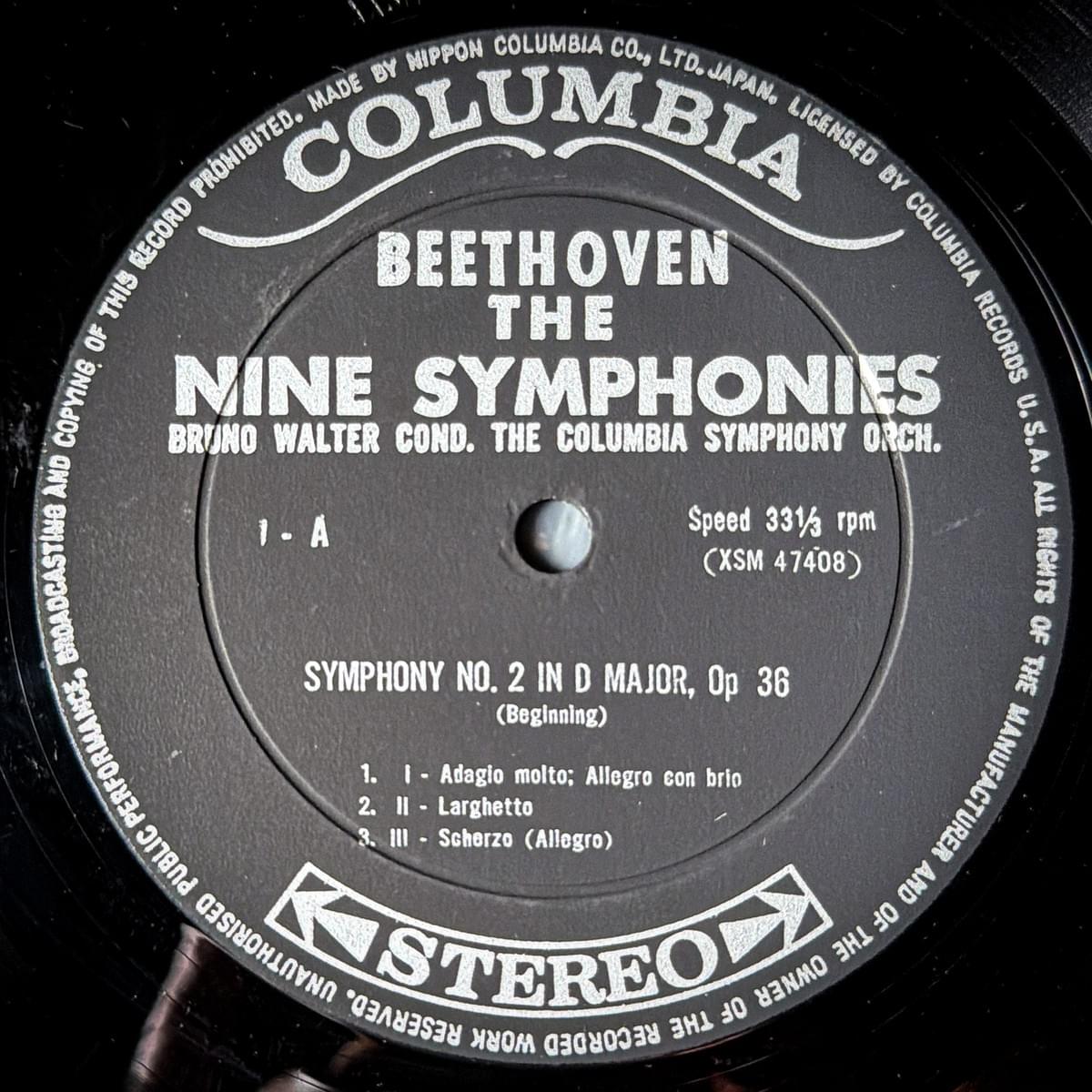
這套日本歷史首版,是這套歷史性錄音最特殊的版本之一。
1960年,日本哥倫比亞(Nippon Columbia)取得授權,在日本發行了這套錄音的完整套裝。這個日本首版有幾個特殊之處,使它在全球收藏市場上享有極高的地位:
美國原廠金屬母盤:日本首版直接使用了從美國CBS送來的原廠金屬母盤(Original Metal Masters)進行壓製,而非重新刻製的二代母盤。這意味著日本版的聲音信息與美國首版完全相同,加上日本壓片工藝一向以精良著稱,許多發燒友認為日本首版的音質甚至優於後期的美國再版。
深溝標:日本首版使用的是俗稱「深溝標」的早期標籤,這是日本哥倫比亞初期壓製的特徵,唱片溝槽深而清晰,是收藏市場上識別首版的重要依據。
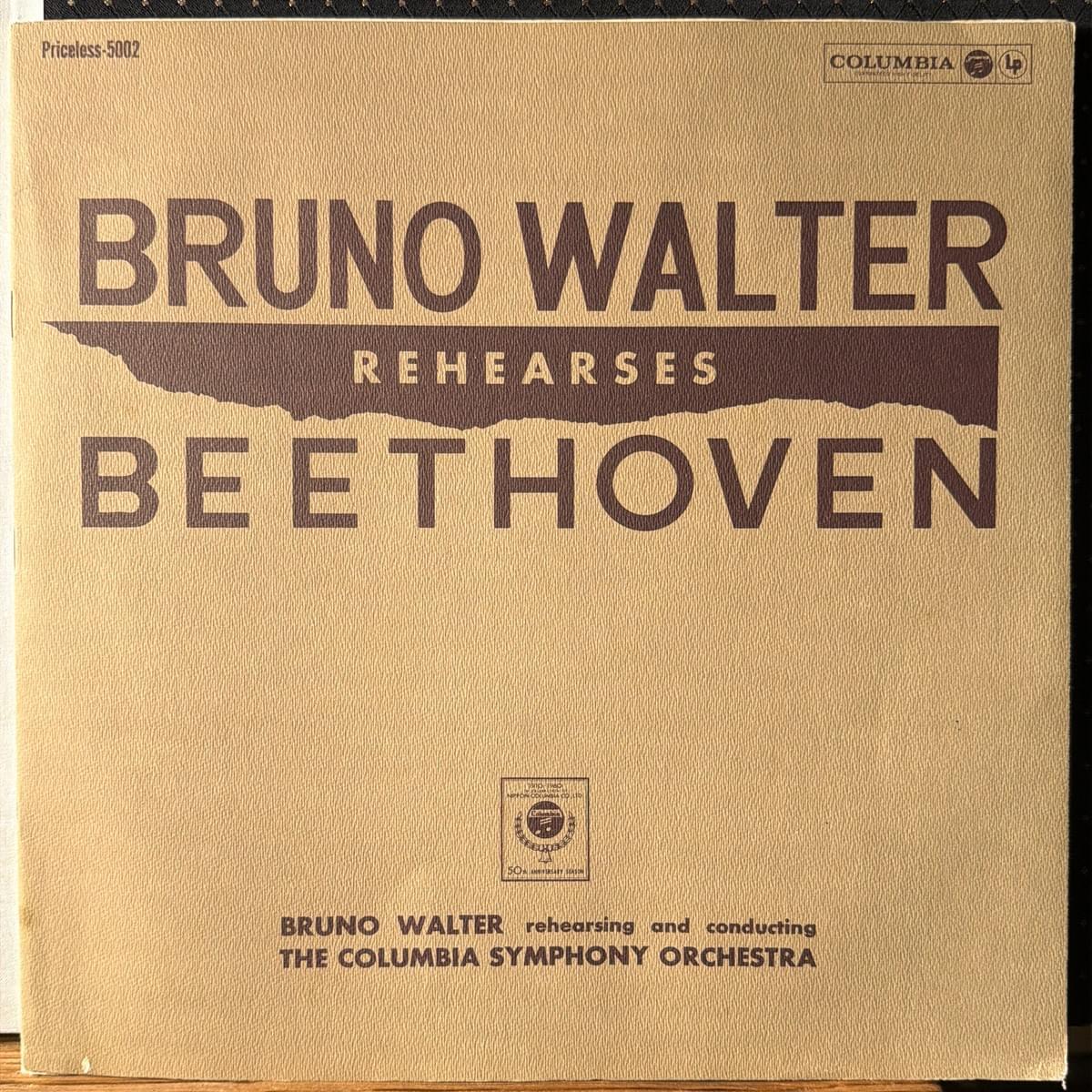
獨家贈品排練LP:這是日本版最令人心動的特點。美國首版沒有的一張「排練實況錄音LP」,以「非賣品」贈品形式隨套裝附贈。這張唱片記錄了華爾特與哥倫比亞交響樂團在正式錄音前的排練過程,包含指揮與樂手之間的對話、反覆磨合的片段,是了解這套錄音「幕後」的第一手文獻。因為是非賣品,流通量極少,目前在市場上極為罕見。
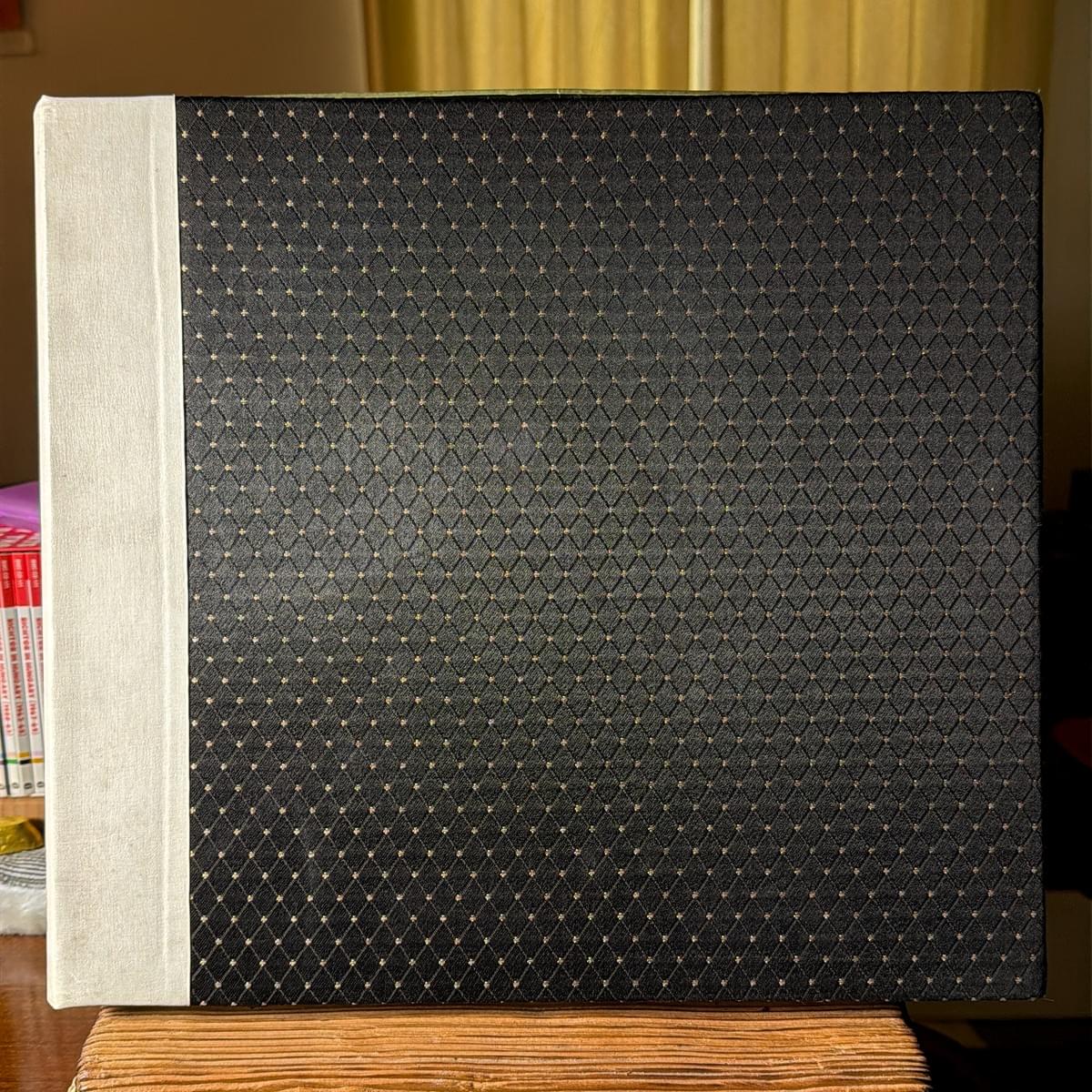
豪華絨布精裝書盒:整套8張黑膠(7張正式錄音+1張排練LP)裝在一個製作精良的絨布外盒中,並附有一本厚重的解說書。這本解說書以精緻的排版和翔實的內容記錄了這套錄音的各種背景資料,本身就是一份珍貴的歷史文獻。
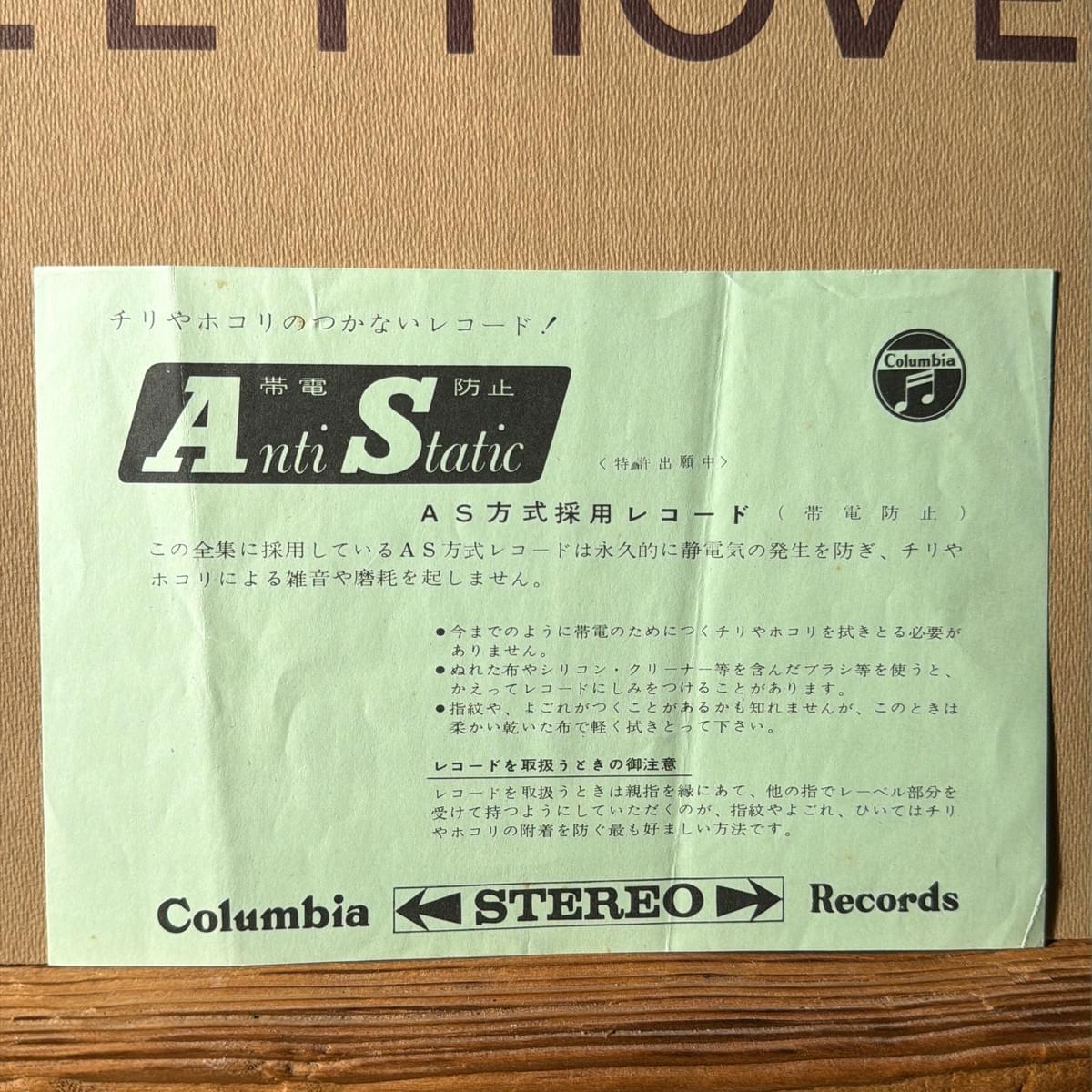
防靜電特殊黑膠材質(AS方式):套裝內附有一張日本哥倫比亞的技術說明小卡,標題醒目印著「帯電防止 Anti Static」,並註明「特許出願中」(專利申請中)。這說明這套日本首版採用了當時尚在專利申請階段的AS方式防靜電特殊黑膠材料,官方宣稱能「永久防止靜電產生,不因灰塵造成雜音或磨耗」。靜電是黑膠唱片最大的天敵——靜電會吸附空氣中的微塵,讓唱針在播放時產生劈啪雜音,長期下來更會加速唱針與溝槽的磨耗。日本哥倫比亞選擇在這套五十週年旗艦套裝中採用當時最前衛的防靜電材質,充分說明他們對這套產品品質規格的極度重視。時至今日,這張附贈的技術說明小卡本身也成為收藏完整性的重要指標之一。
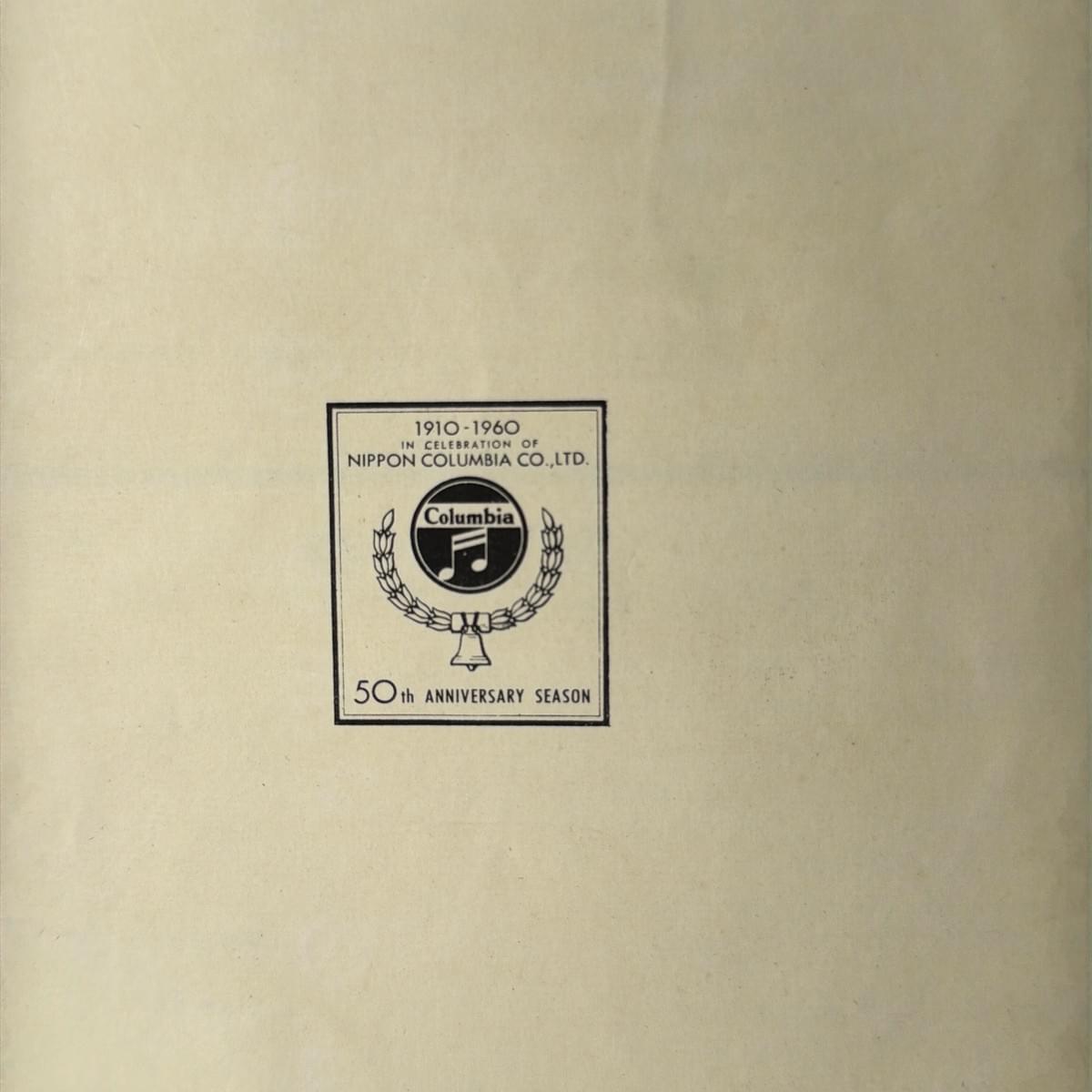
五十週年紀念出版品:解說書內頁印有一枚特別的紀念標誌,文字寫道:「1910 - 1960 / IN CELEBRATION OF / NIPPON COLUMBIA CO., LTD. / 50th ANNIVERSARY SEASON」。這揭示了一個令人動容的歷史巧合——1960年這套唱片發行之時,正值日本哥倫比亞唱片公司創立整整五十週年。日本哥倫比亞選擇以這套人類史上第一套立體聲貝多芬交響曲全集,作為他們半百週年的旗艦紀念出版品,並以最豪華的裝幀形式呈獻給日本樂迷,這絕非偶然——這是一家唱片公司對自身五十年歷史的最高規格致敬,也是對未來的鄭重宣示。
這套日本首版完整套裝,在全球黑膠收藏市場上屬於極稀有品。相較之下,美國六眼立體聲首版的完整套裝在品項良好的情況下市場價格長期在1500-2,000美元之間,而日本深溝標首版的完整套裝(尤其是含排練LP)流通數量也不多,能見度低,往往只有在最資深的收藏家圈子裡才偶爾現身。
後世:一套從未離開市場的錄音
衡量一套錄音的長遠價值,有一個簡單而直接的指標:它有沒有持續地被出版、被重製、被新的世代重新發現?
以這套標準來看,華爾特這套貝多芬全本的成績無懈可擊——它幾乎從未在市場上消失過。
在LP時代,它以美國哥倫比亞六眼版、英國Philips版、日本首版等不同形式持續發行。進入CD時代,它是哥倫比亞(後來的CBS/Sony)最早數位化的古典錄音之一,製作人麥克盧爾本人親自參與監製了最初幾批CD版本的重製工作。1990年代,Sony Classical以新的工程技術重新從原始三軌模擬母帶進行混音,推出了音質更為精進的重製版。2000年代,日本Sony發行了SACD版本,以DSD數位取樣技術將原始母帶的音質還原到前所未有的高度。2019年,Sony Classical又在77CD的《Bruno Walter: The Complete Columbia Album Collection》大型套裝中重新收錄了整套錄音,配合學者Erik Ryding的詳盡考證文章,以最完整的形式呈現了這位大師的錄音遺產。
時至今日,這套錄音也以高解析數位下載的形式,在DSD256、24bit/192kHz等多種格式下持續流通,供世界各地的發燒友在家中以最現代的設備重新體驗這份1958年的聲音。
這套錄音的影響力,甚至超越了音樂本身的範疇。第六號《田園》長期高居各大音響雜誌「測試立體聲音響系統的參考唱片」排行榜前列——它成為了一個技術標準,一個讓工程師和發燒友用來校準音響設備的基準。那些弦樂的質感、那個田野的空間感、那些木管吹出的鳥鳴,成為了六十幾年來無數人用來測試音響是否「真實」的黃金標準。
一個時代的見證者
在所有關於這套錄音的故事中,有一件事情最讓我感到動容:時間的長度。
華爾特出生在1876年,那個年代,音樂廳的燈光還是煤氣燈,唱片還沒有發明,電話剛剛問世。他在那個時代學習音樂,被那個時代最偉大的馬勒親自點撥,吸收了那個時代的精神與智慧。
然後他跨越了整整八十多年的歲月——穿越兩次世界大戰、穿越納粹的恐怖、穿越流亡的漂泊、穿越技術革命的浪潮——最終在1958年,在人類第一次可以用立體聲方式保存音樂的那一年,將他從那個遙遠年代攜帶而來的一切,完整地留在了這些磁帶上。
這不只是一套貝多芬交響曲錄音。這是一條活的歷史脈絡的最後留聲:從19世紀末的柏林,到20世紀中葉的好萊塢,一位見證了音樂史上最動盪歲月的人,用他最後的力氣,告訴我們貝多芬的音樂應該是什麼樣子。
福特萬格勒(1886年生)比華爾特年輕整整十歲,卻在1954年就去世了,沒能活到立體聲的商業化年代。托斯卡尼尼(1867年生)同樣沒能完成立體聲時代的大型錄音計畫。只有華爾特,這位年紀最大的20世紀指揮巨人,活得足夠長,最終得以用最現代的技術為後人留下這份珍貴的遺產。
歷史有時候就是如此充滿戲劇性。
尾聲:第一次放下唱針的那一刻
如果你手上有一套這樣的黑膠唱片,或者有機會在高品質的音響設備上聆聽這套錄音,我想邀請你做一件事。
從第六號《田園》的第一樂章開始聽。
閉上眼睛,讓弦樂的旋律帶著你進入貝多芬所描繪的那個田野。那是1958年1月某天清晨,好萊塢的一棟大廳裡,一位82歲的老人舉起了他的指揮棒。他的手有點顫抖,但他的心是安靜的——那種看透了一切之後才可能有的安靜。
四十多支弦樂器同時奏響,那個音符在空中浮起,向左、向右漫開,形成一個寬闊的音場——那是人類第一次用立體聲聽見貝多芬的《田園》。
那一刻,一個時代結束了,另一個時代開始了。
而從那個時刻至今2026年已過了68年,當我們重新聆聽這個「田園」錄音,一切卻彷彿仍是新的!
******
[Classical Palace Music Stories] Mankind's First Stereo Complete Beethoven Symphonies: Bruno Walter & The Columbia Symphony Orchestra 1958-1959
"Whenever I conduct Beethoven, I feel I am speaking for all mankind." — Bruno Walter
A Record, The "End" and "Beginning" of an Era
Picture this: It’s January 6, 1958, in a spacious building known as the American Legion Hall in Hollywood, California. An 82-year-old man slowly raises his baton.
The string section gently draws out the very first note—the opening of the first movement of Beethoven's Symphony No. 1. It's a long, tender, flowing melodic line, moving just like a river. In the control room, the recording engineer listens intently through his headphones, ensuring that three reels of tape are rolling in perfect sync. He checks that the left and right channels of this new "stereo" sound are clearly separated, making sure this exact moment is being completely captured by modern technology in a way no one has ever heard before.
On this day, the very first plan in human history to record a complete set of Beethoven's symphonies in stereo officially "began."
That old man was Bruno Walter (1876-1962). He was stepping into the twilight years of his life, and his presence represented the "end" of the great spiritual legacy passed down from the 19th century.
A Man Who Walked Through Two Centuries
To truly feel the weight of this recording, we have to understand who Bruno Walter was. Even though I’ve shared his life story with you quite a few times recently, I just have to bring it up again!
Walter was born in 1876 into a Jewish family in Berlin. Think about that year for a second: Beethoven had only been dead for 49 years, Brahms was 44, Mahler was 16, and Richard Strauss was just 12. The European musical world back then was totally different from what we know today. There was no radio, no recordings, no vinyl records. Music was passed down entirely through face-to-face, human-to-human contact.
At age 8, he started learning the piano; by 9, he was determined to be a performer. But destiny had a much grander path laid out for him.
In 1894, an 18-year-old Walter got a job as an assistant conductor at the Hamburg State Opera. His boss? Gustav Mahler (1860-1911), who was in his prime and sweeping across the European conducting world like a comet.
This meeting between master and apprentice changed Walter’s life, and it changed the entire interpretation tradition of 20th-century classical music.
Mahler didn't just teach Walter how to wave a baton. He poured his whole musical philosophy into this young disciple—a profound worldview that saw music as a spiritual calling, a struggle of the soul, and a conversation with the universe. Walter followed Mahler everywhere, watching with his own eyes as Mahler demanded his musicians find the "meaning" behind the notes during rehearsals, rather than just playing the right pitch and rhythm.
Mahler passed away in 1911. He left behind two masterpieces he never got to premiere himself: The Song of the Earthand the Ninth Symphony. The man trusted to fulfill Mahler’s dying wish and bring these works to the world was none other than Walter. That premiere wasn't just a concert—it was the ultimate trust handed down from a master to his student.
For decades after, Walter became one of the most sought-after conductors in Europe. He led the Bavarian State Opera, the Berlin Municipal Opera, the Leipzig Gewandhaus Orchestra, and the Vienna State Opera. He was a co-founder of the Salzburg Festival and the most respected partner of the Vienna Philharmonic. He was a true giant of his time.
And then, history tore everything apart.
In 1933, the Nazis came to power. As a Jewish man, Walter sensed the approaching danger, fled Germany, and moved to Vienna. In 1938, the Nazis annexed Austria. He fled again, this time to France. When France fell in 1940, he finally made his way to the United States, settled there, and never lived in Europe again.
One man, exiled twice in his lifetime, searching for his homeland inside the music itself.
After the Heart Attack: A Final Gift of Life
In 1956, Walter celebrated his 80th birthday.
It seemed like his conducting career had reached a natural resting point. His performances became fewer, and his physical limits were becoming obvious. Then, in 1957, he suffered a massive heart attack and was pulled right back from death's door. His doctors gave him a strict order: no more long-distance travel, no more overworking.
For a conductor, that is basically an announcement of retirement.
But exactly at this moment, John McClure (1929-2014), a producer for Columbia Records, showed up in Los Angeles. McClure was only 28, a brilliant young engineer with great musical intuition who had just been promoted. He found Walter and pitched a bold idea:
"We will bring the musicians to you. You don't have to go anywhere—we'll record right here in Los Angeles, as close to your home as possible."
Behind this plan were some complicated realities. The Los Angeles Philharmonic was already signed to EMI, so Columbia couldn't use them. The solution? Build a brand new, temporary orchestra from scratch. They handpicked top musicians from the LA Phil (working part-time as individuals) and combined them with the absolute best studio musicians from the Hollywood film industry. They created an ensemble tailor-made entirely for these recording sessions—the "Columbia Symphony Orchestra."
1958 also happened to be the first year that stereo LP records were officially commercialized. Columbia had been quietly developing stereo recording tech for two years (tracing back to 1956 with the Ampex 300-3 half-inch tape machine), and they were finally ready to introduce this revolutionary technology to the market.
At this incredible crossroads of history, an 82-year-old conductor, brand-new recording technology, the finest musicians in Los Angeles, and a passionate young producer all came together to create a legend.
Walter said yes. And so, the recordings began.
Those Recording Days
Hollywood's American Legion Hall was a classic American public building. It looked plain on the outside, but inside, the space was wide, the ceilings were high, and the natural reverberation was long and even—the absolute perfect conditions for recording a large symphony.
Work started in the morning and wrapped up by the afternoon. McClure made a point to highlight this: "We never got greedy. We usually only recorded one movement a day, or maybe two shorter ones." This steady, restrained pace protected Walter's health, while also ensuring every single movement was recorded when everyone was in their best state of mind.
Technologically, they used the cutting-edge 3-Track analog tape running at 15 IPS (inches per second). Three separate microphones—left, right, and center—recorded independently. Later, engineers would adjust the balance of these three tracks based on the music, mixing them down into the final stereo sound. Decades later, this 3-track setup became a priceless asset for digital remasters, allowing engineers to rebalance the volume of every single instrument section.
McClure also noted how unbelievably "clean" these recordings were to edit: "Many movements were done in a single take, with maybe one or two splice points. Even the tough pieces only had four or five splices per movement—way less than what we see today." That is a staggering achievement.
Why was it so smooth?
Partly because Walter prepared obsessively beforehand; he had rehearsed the intention of every single note in his head countless times. But more importantly, the elderly master had this unique, infectious aura. It wasn't the high-pressure authoritarianism of Toscanini, nor the demand for mechanical precision like Karajan. It was a natural, musical persuasiveness flowing straight from his heart. McClure described the vibe: "It was always a collaborative approach, he would make suggestions..." He created an environment where every musician wanted to pour their heart out for him.
They started in January 1958. Symphonies No. 6 "Pastoral," No. 1, and No. 8 were done by early January. The "Eroica" (No. 3) followed in late January. No. 5 bridged January and February. Nos. 4 and 7 were captured in February. Symphony No. 2 had to wait until January 1959. Finally, the massive Symphony No. 9 "Choral," which required a choir, was recorded at the Hotel St. George in New York with the Westminster Choir—the only piece recorded outside of LA.
The entire project spanned from January 1958 to April 1959. It took over a year to beautifully complete all nine of Beethoven's symphonies.
Walter's Beethoven: The Legacy of the 19th Century
Before we talk about how good these records sound, we need to understand one thing: Walter's Beethoven isn't just his personal take. It is the very last link in a spiritual chain that stretches all the way back to Beethoven's own era.
The crucial knot in that chain is Mahler. Mahler was one of the deepest thinkers about Beethoven in his time. He inherited the great traditions of the German-speaking world, evolved them through his own genius, and formed a unique musical philosophy. And that entire philosophy was handed directly to Walter.
So, when you listen to these 1958 recordings, you aren't just hearing music. You are listening to a living, breathing historical pulse.
What makes Walter's Beethoven so special?
- The "Singing" Melody: Walter cared deeply about the breathing of every melodic line. The bowing of the strings, the breath of the woodwinds, the phrasing of the brass—everything served the purpose of making the melody sing. Under his baton, music is never just "played." This is deeply tied to his years running opera houses.
- Humanitarian Warmth: Walter's Beethoven isn't sharp and aggressive like Toscanini's, nor does it have the mysterious, cosmic tension of Furtwängler's. His Beethoven is warm, generous, and full of deep affection for humanity. It sounds like an old man who has weathered all of life’s storms but still believes in the goodness of people, sitting down to gently tell you everything he has seen and felt.
- The Clarity of Old Age: He started this project at 82 and finished at 84. Critics often call these recordings his "Valedictory" or "Indian Summer." There is a special glow here. It’s not the aggressive desire to conquer that you hear in younger conductors; it’s the clear, peaceful stillness of a ship returning to harbor after a long voyage. Some people call this the "decline" of old age, but most listeners know the truth: this is a realm of beauty that a great artist can only reach at the very end of their life.
The even-numbered symphonies (Nos. 2, 4, 6, 8) are bathed in sunlight, full of a relaxed joy. The Symphony No. 6 "Pastoral" is the most talked about of the bunch. The texture is so transparent and naturally flowing that listeners can genuinely feel the warmth of the sun coming through the leaves and hear the babbling of the stream. Even today, it remains the "most beautiful Pastoral" in the hearts of countless music lovers.
The odd-numbered symphonies (Nos. 1, 3, 5, 7, 9) show stronger dramatic tension, yet they never lose that underlying warmth. Under Walter's hands, the "fate" motif of the Fifth isn't about terror; it’s about struggle and elevation. The final movement of the Ninth is pure light and joy, not a doomsday judgment.
1958: The Year Stereo Changed the World
The year Walter began recording, 1958, was a massive turning point in human tech history.
The idea of stereo had actually been around since the 1930s (British engineer Alan Blumlein even made test recordings in 1934). But the tech sat on the shelf for two decades until the late 1950s.
In 1957, the Westrex stereo cutting system was unveiled in the US. By March 1958, the Recording Industry Association of America (RIAA) made it the industry standard, utilizing a 45/45 degree cut to put left and right signals onto the inner and outer walls of the record groove.
That same year, Columbia dropped their first commercial stereo LPs. Walter's Beethoven set was one of the greatest beneficiaries—and the most important demonstrations—of this revolution.
What did stereo actually do for our ears?
Imagine sitting in a concert hall with a massive orchestra spread out in front of you. The strings stretch from left to right. The double basses are on the far right, the first violins on the far left. The brass is sitting deep in the back, wide and deep. The drums roll in from the distance like thunder from the back of the stage. In the old mono recordings, this spatial magic was completely lost—everything was squished into one channel, creating a flat wall of sound with no depth and no sides.
Stereo changed everything. When you sit between two speakers, for the first time, you can perceive the orchestra opening up in 3D space. For a listener in 1958, this was a jaw-dropping, mind-blowing experience. It restored our ability to "see" the music with our ears.
The Japanese First Pressing: A Special Edition
Now, let's talk about the Japanese historical first pressing, which is one of the most incredible versions of this release in existence.
In 1960, Nippon Columbia acquired the rights and released the complete box set in Japan. This pressing has a few magical qualities that make it a holy grail for collectors worldwide:
- Original US Metal Masters: Instead of using second-generation copies, the Japanese first press used the original metal masters shipped straight from CBS in America. Combine that identical sound data with Japan's notoriously meticulous vinyl pressing quality, and many audiophiles argue this version actually sounds better than later US reissues.
- Deep Groove Labels: This set features the early "Deep Groove" labels, a hallmark of early Nippon Columbia pressings. The deep, distinct groove on the label is a key identifier for serious collectors hunting for true first editions.
- Exclusive Rehearsal LP: This is the part that makes your heart skip a beat. The Japanese set included an exclusive "Not For Sale" bonus LP that the American version didn't have. It’s a live recording of Walter rehearsing with the orchestra. You hear the back-and-forth dialogue, the tweaking, the grinding—it's pure, firsthand historical documentation of what happened behind the scenes. Because it was a promotional item, it is incredibly rare today.
- Luxury Velvet Box Set: All 8 LPs (7 albums + 1 rehearsal LP) are housed in a gorgeous velvet-lined box, complete with a thick, beautifully typeset booklet packed with historical context. The book itself is a piece of history.
- Anti-Static (AS) Vinyl: Inside the box, there’s a little technical card proudly stamped with "Anti-Static (Patent Pending)." This Japanese first pressing used a cutting-edge vinyl formula designed to permanently prevent static electricity—the arch-nemesis of vinyl that attracts dust and causes those annoying crackles. The fact that Nippon Columbia used this experimental tech for their flagship release shows how deeply they cared about this project. Today, just having that little technical card is a huge deal for collectors!
- 50th Anniversary Edition: Inside the booklet, there’s a special stamp: "1910 - 1960 / IN CELEBRATION OF / NIPPON COLUMBIA CO., LTD. / 50th ANNIVERSARY SEASON." It’s a touching historical coincidence. When this box dropped in 1960, Nippon Columbia was celebrating its 50th birthday. Choosing the world's first stereo Beethoven complete symphonies as their golden anniversary flagship product wasn't an accident. It was a tribute to their own history and a bold statement for the future.
Finding a complete, mint condition Japanese first press box set on the global market is exceedingly rare. While a pristine US "Six Eye" first press box usually hovers around $1,500 to $2,000, the Japanese Deep Groove version (especially with that rehearsal LP) is a ghost. It usually only surfaces in the most elite collector circles.
The Legacy: A Recording That Never Left the Market
There is one very simple way to judge the true value of a recording: Does it continuously get reissued, remastered, and rediscovered by new generations?
By that standard, Walter's Beethoven is flawless. It has practically never gone out of print.
From the LP era's US Six Eye, UK Philips, and Japanese first presses, straight into the CD era (where producer John McClure himself oversaw the earliest digital transfers). In the 90s, Sony Classical remixed it from the original 3-track tapes. In the 2000s, Japan Sony released SACD versions. And in 2019, it was immortalized again in the massive 77-CD Bruno Walter: The Complete Columbia Album Collection.
Even today, you can download these tracks in ultra-high-res digital formats like DSD256, allowing audiophiles all over the world to experience this 1958 sound in their living rooms using modern gear.
The impact of this album goes way beyond the music. His Pastoral Symphony has sat at the top of audio magazines' "Reference Records for Testing Stereo Systems" for decades. Those string textures, the spatial depth of the field, the birdsong from the woodwinds—they've become the gold standard people use to figure out if their stereo system sounds "real."
Witness to an Era
Out of all the stories surrounding this album, there is one thing that moves me the most: the sheer span of time.
Walter was born in 1876. Back then, concert halls were lit by gas lamps. Records hadn't been invented. The telephone was a brand-new toy. He learned music in that era. He absorbed the spirit and wisdom of that time directly from Mahler.
Then, he survived for over 80 years. He lived through two World Wars, the horror of the Nazis, the drift of exile, and the explosion of the technological revolution. Finally, in 1958, the very first year humanity could preserve music in stereo, he poured everything he carried from that distant, ancient era onto these magnetic tapes.
This isn't just a set of Beethoven symphonies. It is the final voice of a living historical lineage. From late 19th-century Berlin to mid-20th-century Hollywood, a man who witnessed the most turbulent years in music history used the last of his strength to show us exactly what Beethoven’s music is supposed to sound like.
Furtwängler (born 1886) was ten years younger than Walter, but passed away in 1954, missing the commercial stereo era. Toscanini (born 1867) never got to complete a massive stereo project either. Only Walter, the eldest of the 20th-century conducting giants, lived long enough to use the most modern tech of the time to leave us this priceless gift.
History can be incredibly dramatic sometimes.
Epilogue: The Moment the Needle Drops for the First Time
If you ever find yourself with this vinyl set in your hands, or if you just have the chance to listen to this recording on a good system to unwind after a long day of work, I want to invite you to do something.
Start with the first movement of the Sixth Symphony, the Pastoral.
Close your eyes. Shut off the busy calculations in your brain, let your shoulders drop, and let the strings carry you into the fields Beethoven painted.
Imagine it: an early morning in January 1958, inside a hall in Hollywood. An 82-year-old man raises his baton. His hands might be shaking a little, but his heart is perfectly still—the kind of profound stillness you only get when you’ve seen everything life has to offer.
Over forty string instruments play at once. The note floats into the air, spreading left and right, carving out a wide, deep space. It’s the very first time humanity heard Beethoven’s Pastoral in stereo.
In that exact second, one era ended, and another began.
And even now, 68 years later in 2026, when we open our ears and listen to this Pastoral again, it still feels—and sounds—like it was born just yesterday.