
【古殿唱片音樂故事】蘇聯時代俄國文化「精神貴族」,上帝的樂手穆拉汶斯基
~~從「黑五類」到無可取代的上帝樂手:這不是奇蹟,這是對自己徹底誠實的結果
古殿殿主
一、破題:看清自己唯一能做的事
昨天那篇「歷史上最好的管弦樂團是哪一個?——因為「排練」得太完美,居然取消「正式演出」!」沒有想到會得到許多樂友的讚許,紛紛轉發。
其實昨天那篇文章,完全也是一個意外,我原本完全沒有想到怎麼可能會有這種情況:「因為彩排太完美,居然取消正式演出!」,我是在看完這部穆拉汶斯基的紀錄片後,才知道這居然是真的,整個又再顛覆了一次對穆拉汶斯基的認識。
今天這篇才是我原先想要寫的一篇介紹穆拉汶斯基的文章:
讓我們先問一個問題。 一位沙俄貴族後代,出身「黑五類」,終身不入黨,公開承認信仰上帝,在無神論立國的共產極權蘇聯,卻能掌管國家最重要的文化機構之一整整五十年,直至生命的最後一刻——這怎麼可能?
但在回答這個問題之前,我們必須先拆解一個認識上的陷阱。 「歷史」常常是由後往前看的。當我們事後回顧穆拉汶斯基的一生,所有的事情都彷彿被一隻看不見的手安排好了,一環扣著一環,從貴族少年到蘇聯傳奇,每一步都像是命定的。
但這是一種錯覺!因為在每一個當下,穆拉汶斯基根本不知道後來會怎樣。沒有人告訴他結果,沒有任何保證,什麼都有可能出錯,什麼都有可能讓他消失。 所以他的一生並不是一個「奇蹟」的故事——至少不是那種從天而降、等待被接受的奇蹟。 真正值得追問的問題是:在完全不知道結果的當下,這個人是如何面對自己的?
答案是:他看清楚了一件事。 他的處境對他不利的地方,他無法改變——貴族出身無法改變,不願入黨是他的選擇,信仰上帝是他的靈魂。但他同樣清楚地看見:在這一切之中,他唯一能做、也唯一值得做的事,就是把音樂做到極致。
當他真的把這件事做到極致,就產生了「超越」。超越了出身,超越了黨籍,超越了那個體制用來衡量人的所有邏輯。
因為他所創造的價值,已經大到讓那些原本對他不利的條件,變得無關緊要。 這不是策略,不是計算,更不是幸運。這是一個人在最艱難的處境下,對自己徹底誠實之後,做出的唯一選擇——然後用一生去兌現它。
穆拉汶斯基對我們最有價值的地方,不是他的奇蹟,不是他的成就,不是他的偉大與不可超越。而是這一點:
他透徹地看清並掌握了自己的命運。 而這件事,每一個人都可以學。
二、出身之罪:從舊俄貴族到蘇聯體制的局外人
葉夫根尼·亞歷山大·穆拉汶斯基(Yevgeny Aleksandrovich Mravinsky,1903-1988),人稱「精神貴族」。他出生於1903年6月4日的聖彼得堡,家族有著顯赫的貴族淵源:祖父曾在沙皇宮廷任職,姑姑是深受柴可夫斯基賞識的女高音葉夫根尼婭·拉維娜(Yevgeniya Mravina),據說柴可夫斯基更親自指定她為歌劇《尤金·奧涅金》中塔狄安娜一角的首選歌手。家中掛滿音樂家肖像,母親精通鋼琴且天生絕對音感——音樂從孩提時代便已流淌於血脈之間。
然而,1917年的革命猶如一場地震。對穆拉汶斯基而言,這場革命不是「解放」,而是對個人世界的野蠻「入侵」。家產充公,貴族生活頃刻灰飛煙滅。1918年,父親在無法適應急遽轉變的生活後鬱鬱而終,彼時穆拉汶斯基僅十五歲。
失去父親之後,他被迫輟學謀生,先在馬林斯基劇院從事後台雜務,後在列寧格勒芭蕾學校擔任鋼琴伴奏兼排練指導,一做就是八年(1923-1931)。他在音樂的邊緣地帶默默打磨,心中那把朝向指揮台的火焰,卻從未熄滅。
然而通往音樂學院的正門對他緊緊關閉。他第一次報考落榜,理由不是才華不足,而是「貴族出身背景」。工農兵子弟才是進入音樂學院的「正確成份」,他是「黑五類」。考試委員中甚至有人笑他是笨蛋,直接把它給刷掉。 幸而,家族中有一位身在革命政府的親戚,私下向院長葛拉祖諾夫(Alexander Glazunov,1865-1936)引薦了穆拉汶斯基。葛拉祖諾夫見到他的才華之後,用他身為院長的權力,以「免費生」身份將他入學,此舉改變了穆拉汶斯基一生的命運。
這段「出身之罪」的少年經歷,在他靈魂深處刻下了難以磨滅的痕跡。他深知自己在這個體制中永遠是一個局外人。但正是這份清醒,讓他比任何人都更早看見那個唯一的出路:不是去改變自己的出身,不是去討好那個體制,而是在他唯一能掌控的事情上,做到無可撼動。
三、賭命的機緣:蕭士塔高維契第五號交響曲首演
1931年,穆拉汶斯基首次與列寧格勒愛樂合作登台。整個1930年代,他在基洛夫芭蕾舞團與莫斯科大劇院持續積累指揮經驗。這些磨礪賦予了他對音樂節拍與戲劇張力的精準掌控,而這種精準感,日後成為他指揮風格中最令人心驚的核心。 然而,真正的命運轉捩點,是一場幾乎讓人掉腦袋的首演任務。
1936年,蕭士塔高維契的歌劇《麥克白夫人》遭史達林點名批判,官方媒體斥之為「一堆噪音」。在那個時代,「官方批判」與「人間蒸發」之間的距離,往往只有一夜。
1937年,蕭士塔高維契寫出《第五號交響曲》,官方說法是「一個蘇聯藝術家對於公正批評的建設性回應」——白話翻譯就是:拜託別殺我。
但誰敢指揮這首曲子?萬一首演失敗,萬一官方態度翻臉,指揮就是第一個被牽連的人。時任列寧格勒愛樂總監弗里茲·施第德里(Fritz Stiedry)嚇破了膽,直接辭職逃往美國,把這個燙手山芋留在原地。
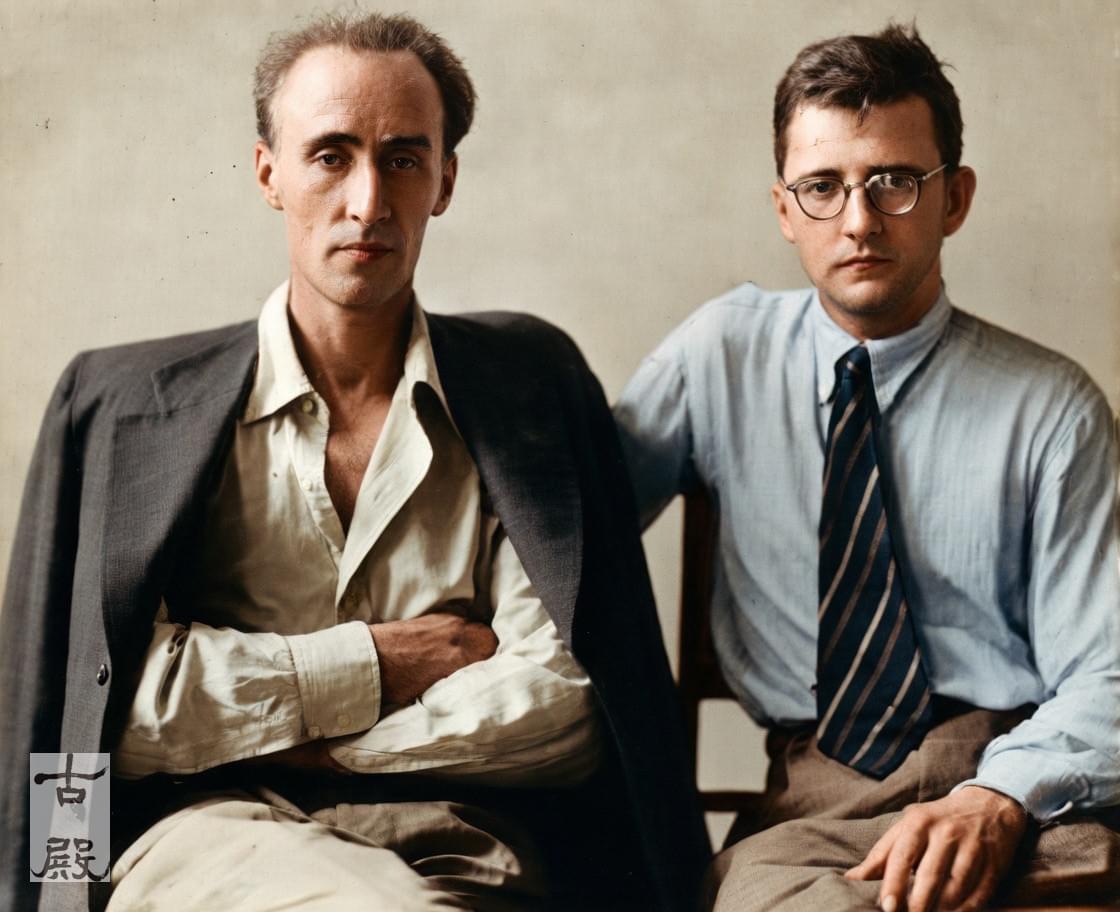
這時,穆拉汶斯基登場了。 他是蕭士塔高維契在列寧格勒音樂學院的同學,當時還沒什麼名氣。他接下這個任務的那一刻,沒有任何人能告訴他結果會如何。萬一失敗,他可能從此消失。他不知道,沒有人知道。 但他知道一件事:這首曲子需要被演出。他了解蕭士塔高維契,他感知到那些音符背後的重量。對他而言,這不是一道政治算術題,而是一個無法迴避的音樂責任。他唯一能做的,就是把這場演出做到最好。
1937年11月21日,首演當晚,整個音樂廳的空氣緊繃到幾乎凝固。當最後一個音符落下,現場觀眾起立鼓掌長達半小時。 事後來看,這一晚是他命運的轉捩點。但在那個當下,那只是一個人,在什麼都不確定的狀況下,選擇了做他唯一能做的事,並且做到了極致。
隔年1938年,他參加全蘇聯指揮大賽,奪得首獎;同年10月,被任命為列寧格勒愛樂首席指揮。他用一場賭命的首演,換來了日後五十年的舞台。
那場共同冒險所建立的情誼,其後延伸為超過二十年的藝術合作。穆拉汶斯基相繼主導了蕭士塔高維契第六、第八、第九、第十、第十二號交響曲的世界首演,其中第八號更由作曲家親筆題獻給他。穆拉汶斯基能感知到蕭士塔高維契音符背後那種災難的氣息與隱藏的絕望,並將它精準轉化為音響,讓聽眾在不知不覺間感受到那個時代最深層的恐懼與哀慟。
四、列寧格勒愛樂:一支在蘇聯土壤上開出的奇花
1938年三十五歲的穆拉汶斯基正式揹起帶領列寧格勒愛樂的「十字架」。彼時這個樂團的狀況糟透了——許多團員不是因為音樂才華進來的,而是以工會幹部、政治積極份子的身份被硬塞進來的。 他如何將這個爛攤子打造成世界第一?
在蘇聯體制下,樂手是「國家文化工作者」,薪資與基本保障由國家提供,不受票房壓力與商業贊助支配。這個體制在政治上壓抑了個人自由,卻也在客觀上創造了一個西方職業樂團幾乎無法實現的環境:無限的排練時間,不妥協的藝術標準。穆拉汶斯基對這個條件的使用,達到了令人瞠目的極致。
他的每份樂譜都密密麻麻地貼滿了標籤,對每一個聲部、每一個個別演奏員,都有具體到毫末的要求。他能同時看見、聽見舞台上的每一個人——即使是坐在第六排的樂手,指法若有絲毫偏差,也絕逃不過他的眼睛。有次排練舒伯特《未完成交響曲》,他突然走到第六個譜架,對一位團員說:「妳指法錯了,而且很不專心。」在那麼遠的距離,他竟能看見一個微小的指法錯誤。 他表達不滿的方式也極有層次:輕微不滿,他會淡淡地說「第一單簧管……」,全團背脊立刻挺直;若他真的氣炸了,他會直接喊出對方的全名加父名——那大家就知道完蛋了。
有人問樂團音樂家:「在穆拉汶斯基手下演奏是什麼感覺?」答案像個謎:「不能太快,也不能太慢;不能太大聲,也不能太小聲;不能突顯自己有多好,當然也不能糟。就是要完全融入,恰如其分。」 有位跟著他多年的樂團成員這樣說:「穆拉汶斯基改變了我的一生。剛進樂團時,我只是個小提琴拉得還不錯的人;是跟著他度過的那些年,才讓我真正『進化』成一個音樂家。」他做音樂從不是為了展現自我,而是進入了一種超脫個人的極高境界——而這種境界,會感染身邊所有人。
五、不入黨、信上帝:孤高的精神抵抗
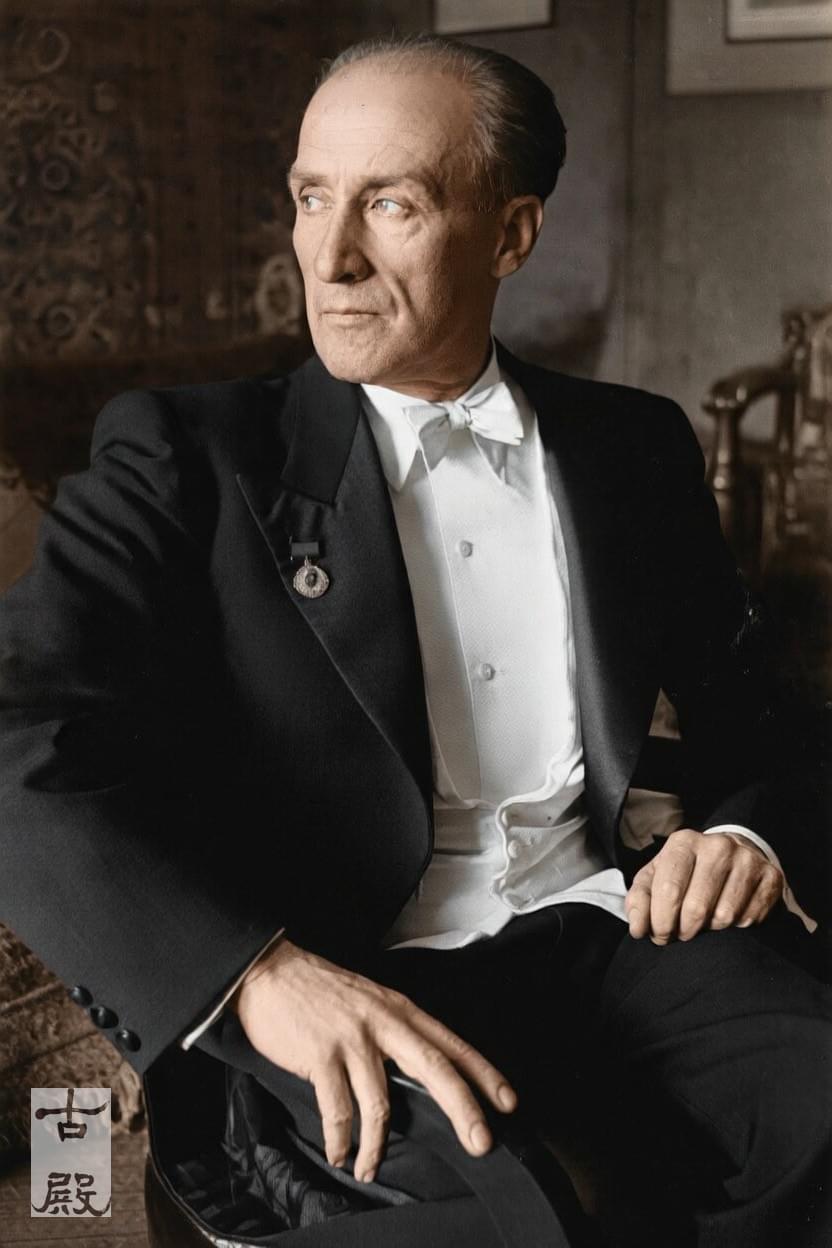
在蘇聯體制下,幾乎所有具有重要公職身份、掌管國家級文化機構的人,都必須是共產黨員。這不是選擇,而是生存的前提。 穆拉汶斯基是極其罕見的例外。他終身拒絕入黨,在頂尖的公眾地位上始終保持黨外身份,這在當時幾乎是獨一無二的奇觀。 黨組織不是沒有找過他。每次被問及信仰與政治立場,他都以一種冷靜而不失威嚴的方式回應:「每個人都服務於自己的良知,我不煽動任何人,但我信奉上帝。」在無神論為國家意識形態的蘇聯,這句話本身就是一種沉默的宣戰。 他的家中掛滿了東正教的聖像,他的宗教信仰並非私下的秘密,而是一種公開的生命態度。他對政治的疏離,從未是聲嘶力竭的對抗,而是一種冷峻的、貴族式的輕蔑——彷彿那些把持政治權力的人,根本不值得他花費力氣去正視。
然而他並未選擇逃亡,也未選擇公開對抗。他選擇了對他而言最真實的方式:在他能控制的那個小宇宙——指揮台與排練廳——之內,做到不可指摘的完美。 這正是他那個「唯一能做的事」的另一面:他不去碰他改變不了的,他把全部的力氣,用在他能掌握的地方。而當他的藝術成就高到國家與政治無法忽視,那些對他不利的條件,便一一失去了它們原本的殺傷力,甚至變成他的防火牆。
六、為神演奏:藝術哲學的最高境界
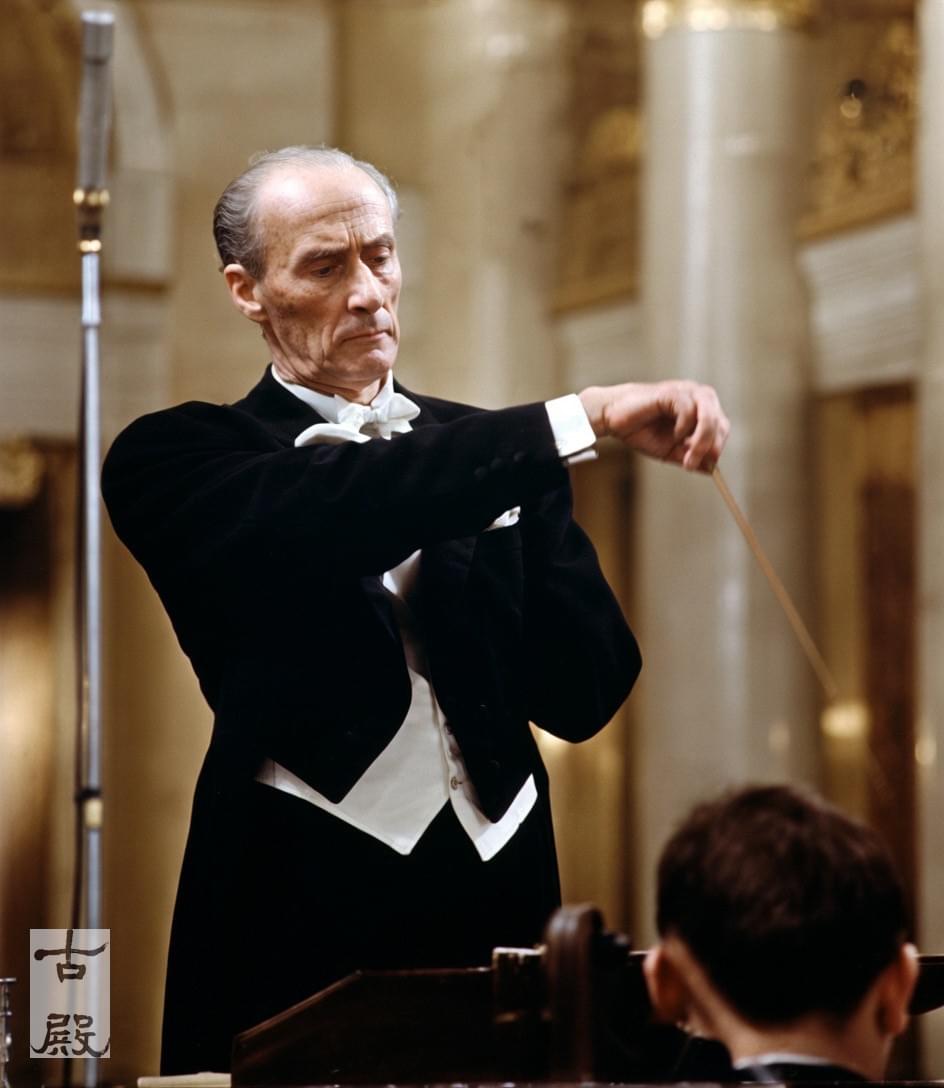
對穆拉汶斯基而言,指揮台是一座祭壇,而非舞台。觀眾的存在,不過是一種「傳統的慣例」,一種「虛擬的形式」。真正的音樂真理不在於台下掌聲的多寡,而在於靈魂是否直接對準了更高的神聖存在。 這種哲學,留下了一個西方樂壇幾乎無法想像的真實事件。 在一次布魯克納《第七號交響曲》的總彩排中,樂團與他共同達到了一個不可思議的巔峰狀態——靈魂與音樂完美融合,一場無法言說的奇蹟。然而,隨後穆拉汶斯基毅然取消了正式演出。 他向妻子坦言,那樣的奇蹟是無法複製的,他不信任「瞬間」可以被隨意召喚。作為一名凡人,他無法保證正式演出時能再次觸及那個神聖的高度——既然高峰已過,任何重複都將是對音樂的褻瀆。 這個決定,說明了一件事:他的標準從來不是為台下的人訂定的。他所追求的那個「極致」,是一個朝向更高存在的方向,而不是朝向掌聲。正因為如此,他才能夠做到別人做不到的事——因為他的動力,從一開始就不來自於外部的認可。
七、五十年的守望:一人一團一時代
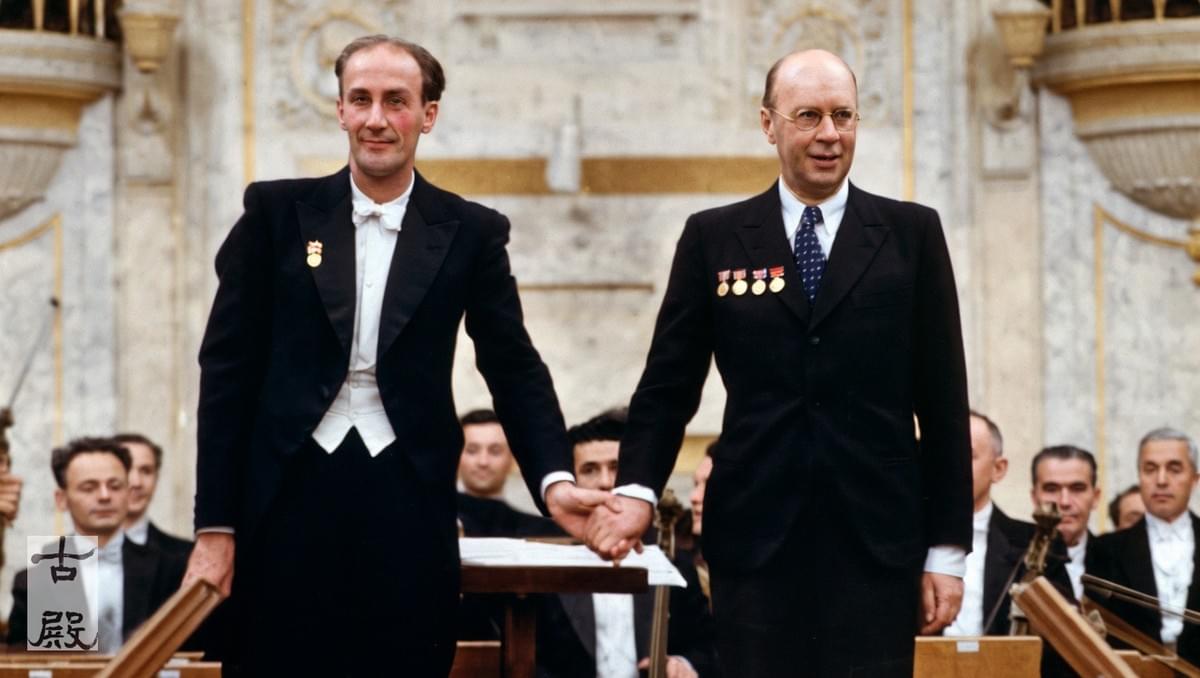
1938年至1988年,整整五十年,穆拉汶斯基從未離開列寧格勒愛樂的指揮台。這在世界音樂史上是罕見的紀錄,而這五十年並非惰性的守舊,而是持續不斷的雕琢與精進。 他幾乎只指揮列寧格勒愛樂,唯一例外是曾指揮過捷克愛樂。他從未接受任何西方樂團的指揮邀請,儘管邀約從未斷絕。他不需要。他擁有了他認為世界上最好的樂團,而他用一生的時間將它打磨成那個樣子。 關於他們共同累積的曲目,除了柴可夫斯基後三首交響曲之外,他留下了蕭士塔高維契第五、六、七、八、十、十一、十二及十五號交響曲的錄音;他也指揮了普羅科菲耶夫《第六號交響曲》的世界首演;他的布拉姆斯、舒伯特、莫扎特,都以一種獨特的俄羅斯骨氣,深刻而不浮誇。 他的最後一場音樂會,在1987年3月6日,以舒伯特《第八號交響曲》與布拉姆斯《第四號交響曲》作結。彼時他已重病纏身,但仍站上了那個他一生所屬的位置。1988年1月19日,穆拉汶斯基在列寧格勒辭世,享年八十四歲。
九、尾聲:他留下給我們的,不是他的偉大
1988年,穆拉汶斯基離開了這個世界。隨他而去的,不只是一位指揮家,更是整整一個音樂美學的宇宙。
然而,若我們把穆拉汶斯基的一生僅僅理解為一個「不可超越的傳奇」,那就是辜負了他。 回到最初那個問題:一位沙俄貴族後代、黑五類、終身不入黨、公開信奉上帝的人,如何在蘇聯存活了整整五十年? 從後往前看,答案好像顯而易見。但若是置身在他的每一個當下——十五歲失去父親、被音樂學院以出身拒於門外、接下一個可能讓人掉腦袋的首演——在那些時刻,沒有任何人告訴他後來會怎樣,沒有劇本,沒有保證。 他做的,只是在每一個當下,看清楚自己唯一能做的事,然後徹底去做。 他清楚知道自己改變不了什麼——出身、體制、時代。他也清楚知道自己能掌握什麼——指揮台上的每一個音符,排練廳裡的每一次打磨,靈魂朝向的每一個方向。他把全部的生命,投進那個他唯一能掌握的地方,然後做到了任何政治力量都無法假裝不存在的高度。
這不是奇蹟,這是一個人對自己徹底誠實之後,所能抵達的地方。 穆拉汶斯基對我們最有價值的地方,不是他的成就,不是他的偉大,不是那個我們永遠無法重現的列寧格勒愛樂。而是這一點:他透徹地看清並掌握了自己的命運。在最黑暗、最不確定的處境下,他知道自己是誰,知道自己唯一能做的是什麼,然後用一生去兌現它。 這件事,每一個人都可以學。
******
【Ancient Hall Music Stories】
The "Spiritual Aristocrat" of the Soviet Era: Mravinsky, God’s Musician
From "Class Enemy" to Irreplaceable Maestro: This wasn't a miracle; it was the result of being utterly honest with oneself.
1. The Hook: Seeing the One Thing You Can Truly Do
I didn't expect yesterday’s post—"Which was the best orchestra in history? The one that canceled a performance because the rehearsal was too perfect!"—to resonate with so many of you. Thank you for all the shares and kind words.
To be honest, that article was a bit of an accident. I never imagined such a thing was possible until I watched a documentary on Yevgeny Mravinsky. It completely upended my understanding of the man once again.
Today, I want to share the story I originally intended to write:
Let’s start with a question. How could a descendant of Tsarist nobility, labeled a "class enemy," who never joined the Party and openly admitted his faith in God, manage to lead the most important cultural institution in the militantly atheistic Soviet Union for fifty years? How did he stay there until his very last breath?
Before we answer that, we have to dismantle a mental trap. We usually look at history "backwards." Looking back at Mravinsky’s life, it feels like an invisible hand arranged every step—from the noble boy to the Soviet legend.
But that is an illusion. In every single moment, Mravinsky had no idea how things would turn out. There were no guarantees. Anything could have gone wrong; anything could have made him "disappear."
His life isn't a story of a "miracle" dropped from the sky. The real question we should ask is: In those moments of total uncertainty, how did this man face himself?
The answer: He saw one thing clearly. He couldn't change his circumstances—his noble birth was a fact, his refusal to join the Party was his choice, and his faith was his soul. But he realized that amidst all this, the only thing he could do, and the only thing worth doing, was to push music to its absolute limit.
When he achieved that extreme excellence, he "transcended." He transcended his birth, his political status, and the very logic the regime used to measure a human being. He created a value so immense that his "disadvantages" became irrelevant.
This wasn't a strategy or luck. It was the only choice left for a man who was thoroughly honest with himself in the toughest of times—and he spent his whole life honoring that choice.
The most valuable thing Mravinsky leaves us isn't his achievements or his "greatness." It is this: He saw through his destiny and took command of it. And that is something every one of us can learn.
2. The "Sin" of Birth: An Outsider in the Soviet Machine
Yevgeny Alexandrovich Mravinsky (1903–1988) was often called a "Spiritual Aristocrat." Born in St. Petersburg, his lineage was distinguished: his grandfather served the Tsar, and his aunt was a soprano cherished by Tchaikovsky. Music was in his blood.
Then came the 1917 Revolution. To Mravinsky, this wasn't "liberation"; it was a brutal invasion of his world. His family property was confiscated. In 1918, unable to adapt to the sudden collapse of his world, his father passed away. Mravinsky was only fifteen.
He was forced to drop out of school to survive, working as a stagehand and later as a rehearsal pianist for eight years. He polished his craft on the margins of the music world, but the fire for the conductor’s podium never went out.
Yet, the doors of the Conservatory were slammed shut. He failed his first entrance exam—not for lack of talent, but because of his "noble background." He was a "class enemy." Some examiners even mocked him as a fool before tossing his application.
Fortunately, a relative in the revolutionary government privately introduced him to the director, Alexander Glazunov. Seeing the boy’s genius, Glazunov used his authority to admit him as a "free student." That moment changed Mravinsky’s life forever.
This early "sin of birth" left an indelible mark on his soul. He knew he would always be an outsider in this system. But that clarity allowed him to see the only way out: Don't try to change your birth, and don't try to please the system. Instead, become untouchable in the one thing you can control.
3. A Life-or-Death Opportunity: Shostakovich’s Fifth
In 1937, the composer Shostakovich was in mortal danger. His opera had been denounced by Stalin as "muddle instead of music." In that era, the distance between "official criticism" and "vanishing forever" was usually just one night.
Shostakovich wrote his Fifth Symphony as a "creative response to just criticism"—essentially, a plea for his life.
But who would dare conduct it? If the premiere failed, or if the officials changed their minds, the conductor would be the first to be dragged down. The then-director of the Leningrad Philharmonic, Fritz Stiedry, was terrified. He resigned and fled to America, leaving a "hot potato" behind.
Enter Mravinsky. He was Shostakovich’s classmate, relatively unknown at the time. When he took the job, no one could tell him if he’d survive the night. But he knew the music needed to be heard. He felt the weight behind those notes. It wasn't a political calculation; it was a musical responsibility.
On November 21, 1937, the air in the concert hall was so tense it felt frozen. When the last note faded, the audience stood and cheered for half an hour.
Looking back, it was the turning point of his life. But in that moment, it was just a man choosing to do the only thing he could do, and doing it to the absolute limit.
4. The Leningrad Philharmonic: A Rare Flower in Soviet Soil
In 1938, a 35-year-old Mravinsky took up the "cross" of leading the Leningrad Philharmonic. At the time, the orchestra was a mess—many players were political appointees rather than musical talents.
How did he turn this into the best orchestra in the world?
Under the Soviet system, musicians were state workers. While this suppressed personal freedom, it created a condition Western orchestras could only dream of: infinite rehearsal time.
Mravinsky’s scores were covered in tiny notes. He had specific requirements for every single player. He could see and hear everyone on stage—even a player in the sixth row couldn't hide a wrong fingering from him. Once, during a rehearsal of Schubert’s Unfinished Symphony, he walked to the sixth music stand and told a musician, "Your fingering is wrong, and you are unfocused."
As one long-time member said: "Mravinsky changed my life. I joined as someone who played the violin well; through him, I 'evolved' into a musician." He didn't make music to show off; he entered a state beyond the self that infected everyone around him.
5. No Party, Only God: A Silent Resistance
In the USSR, holding a top cultural position almost always required being a Party member. It wasn't a choice; it was a survival prerequisite.
Mravinsky was the rare exception. He never joined the Party. Whenever asked about his faith, he replied with a cold dignity: "Everyone serves their own conscience. I do not incite anyone, but I believe in God."
In an atheist state, this was a silent declaration of war. His home was filled with Orthodox icons. His religious life wasn't a secret; it was his stance. His distance from politics wasn't a loud protest, but a quiet, aristocratic disdain.
He didn't flee, and he didn't fight in the streets. He chose the most authentic path: inside the small universe he couldcontrol—the podium and the rehearsal hall—he was perfect and irreproachable. When your art reaches a height that the State cannot ignore, your "disadvantages" lose their sting. They even become your shield.
6. Playing for God: The Altar of Art
To Mravinsky, the podium was an altar, not a stage. The audience was just a "tradition" or a "virtual form." Truth wasn't found in applause, but in whether the soul was aligned with something higher.
This philosophy led to an event unimaginable in the West. During a dress rehearsal of Bruckner’s Seventh, the orchestra reached an unbelievable peak—a moment where the soul and music became one. Afterward, Mravinsky canceled the actual concert.
He told his wife that such a miracle could not be summoned twice. As a mere mortal, he couldn't guarantee reaching that divine height again for the "official" show. To repeat it would be a sacrilege.
His standards were never set by the people in the seats. He was looking toward the Divine, not toward the applause.
7. Fifty Years of Watching: One Man, One Orchestra, One Era
From 1938 to 1988—fifty years—Mravinsky never left the Leningrad Philharmonic. He rarely conducted other orchestras, with the Czech Philharmonic being the only real exception. He didn't need the West. He had what he believed was the best orchestra in the world, and he spent a lifetime polishing it.
His final concert was on March 6, 1987. Though gravely ill, he stood in the place where he belonged. He passed away in 1988 at the age of 84.
9. Epilogue: What He Left Us
When Mravinsky left this world, he took an entire universe of musical aesthetics with him.
But if we only see him as an "unreachable legend," we miss the point. How did he survive fifty years as a "class enemy" believer in the USSR?
Looking back, the answer seems obvious. But if you put yourself in his shoes at fifteen, losing his father—or at thirty-four, taking a risk that could cost his head—there was no script.
All he did was look at each moment and see the one thing he could do, and then do it completely. He knew what he couldn't change (the regime, the era). He focused all his life force on what he could master (every note, every rehearsal).
This wasn't a miracle. This is where a human being can arrive after being totally honest with themselves.
Mravinsky’s greatest value to us isn't his fame. It’s that in the darkest, most uncertain times, he knew who he was and what his "one thing" was.
And that is a lesson every one of us can learn.