
【古殿唱片音樂故事】歷史上最好的管弦樂團是哪一個?——因為「排練」得太完美,居然取消「正式演出」!
古殿殿主
在「古殿」這裡,經常有朋友走進來,看著滿牆的歷史黑膠唱片,忍不住問我一個問題:「殿主,你聽過這麼多錄音,如果你只能選一個,你覺得歷史上最好的管弦樂團是哪一個?」
這是一個極度危險、足以引起古典樂迷大亂鬥的問題。通常,大家腦海中浮現的第一個答案,不是擁有黃金般溫暖音色的維也納愛樂,就是精準而氣勢磅礴的柏林愛樂。或是近年聲勢大起的荷蘭阿姆斯特丹音樂大會堂管弦樂團。
但我通常會笑笑地搖搖頭。我會從櫃子深處,抽出一張封面有些泛黃、甚至帶著一點蘇聯冷戰時期特有粗糙感的唱片,而且這些唱片還有著一股特別的歷史味道,然後告訴他們:
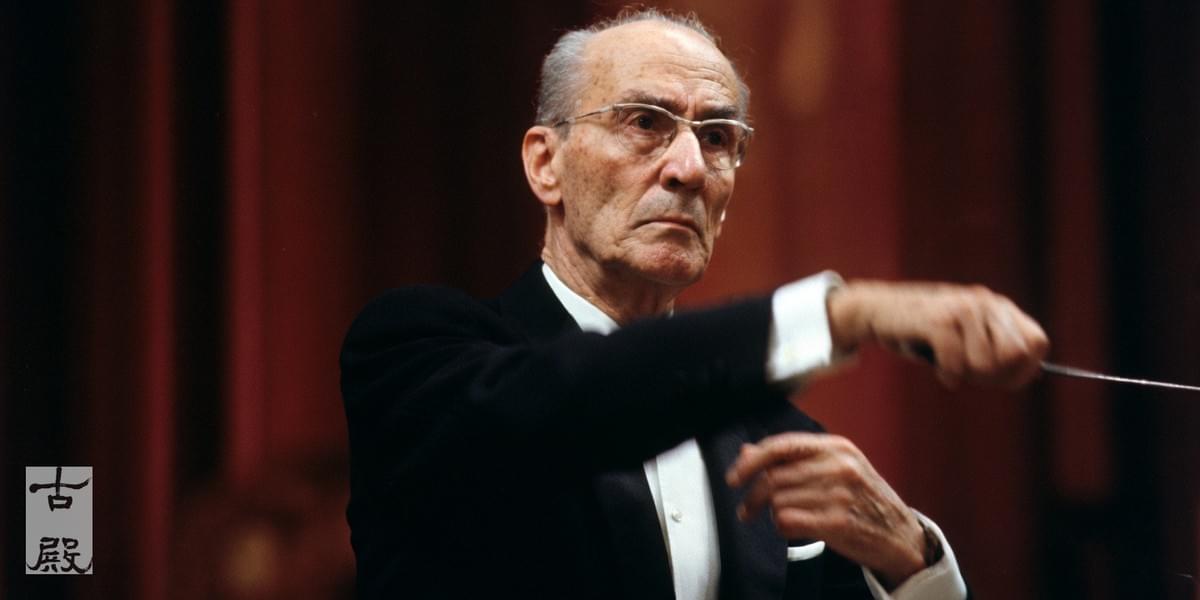
「在我心裡,二十世紀、乃至於整個人類歷史上水準最高的交響樂團,是一個已經消失在歷史洪流中的名字——列寧格勒愛樂(Leningrad Philharmonic Orchestra),以及那個與它靈魂綁定整整五十年的男人:葉夫根尼.穆拉汶斯基(Yevgeny Mravinsky,1903-1988)。」
顛覆直覺:當「完美」成為一種恐懼
我們先從一個顛覆常理的真實軼事說起。
在我們現在的工作職場裡,如果一個專案在彩排或試運行時表現得完美無缺,大家一定會開香檳慶祝,然後迫不及待地想要在正式發表會上大展身手,對吧?因為這意味著接下來的成功。
但關於穆拉汶斯基對藝術誠實的偏執,最著名的莫過於他排練布魯克納《第七號交響曲》的那段軼事。
那是一次總彩排。當時,樂團與他共同達到了一個不可思議的巔峰狀態。據當時在場的人回憶,那已經不是在演奏音符了,那是靈魂與音樂完美的融合,是一場無法言說的奇蹟。每一個聲部、每一次呼吸、每一個休止符的停頓,都準確地擊中了宇宙間某種神秘的頻率。
然而,彩排結束後,穆拉汶斯基居然做了一個讓所有人跌破眼鏡的決定——他毅然決然地取消了晚上的正式演出。
為什麼?因為太完美了。
這絕對不是單純的藝術家脾氣或任性,而是源於他對藝術深層的敬畏與謙卑。他私下向妻子坦言,那樣的奇蹟是無法被複製的,他並不信任這種神聖的「瞬間」可以被人類隨意召喚。作為一名凡人,他無法保證在幾個小時後的正式演出時,還能再次觸及那個神聖的高度。
因為:「奇蹟不可能發生兩次。」
這種決策在現代,簡直是驚世駭俗。但這精確地反映了他的藝術尊嚴:既然高峰已過,任何刻意的重複、任何略低於剛才那個境界的演出,對他而言,都將是對音樂的褻瀆。
對於不理解這位指揮家到底在想什麼的人,一定會認爲他應該是瘋了!
連「神」都承受不住的結界:連李希特都承受不了退卻
穆拉汶斯基對音樂標準的苛求,達到了什麼樣的程度?我們可以從另一位大師的反應中看出來。
蘇聯偉大的鋼琴家李希特(Sviatoslav Richter,1915-1997)本人也是一位對音樂極度嚴格、幾近偏執的藝術家,他對自己與合作者的要求之高,在整個樂壇都是出了名的。他曾經因為對自己的表現不滿意,而在音樂會中途直接離場。
然而,即便是一身傲骨的李希特,後來在自述與筆記中卻坦承:他實在受不了穆拉汶斯基那種層次的音樂苛求,久而久之,他便漸漸迴避了與這位指揮大師的合作。
這個細節非常震撼我。它說明的,不只是穆拉汶斯基的嚴格程度,更揭示了他對音樂要求的本質——那早就不是所謂「職業性」的高標準了,那是一種近乎「宗教式」的絕對。
他的每份樂譜上,都密密麻麻地貼滿了標籤與標記,對每一個聲部、每一個小組,乃至每一個個別的演奏員,都有具體到毫末的要求。站在指揮台上,他彷彿擁有千眼千手。他能夠同時看見、聽見舞台上的每一個人。哪怕是坐在第六排角落的樂手,指法若有絲毫的偏差,也絕逃不過他如鷹般銳利的眼睛。
有趣的是,如果你看過穆拉汶斯基的現場錄影,你會發現他的指揮動作極其節制。對台下的觀眾而言,幾乎只看得到他冷峻、挺拔的背影,沒有誇張的揮舞,沒有作秀般的跳躍。但對台上的樂手而言,那是一個極度高壓且充滿訊號的結界。他的眼神、眉毛的微動、一個指尖的顫動,都包含著豐富而精確的資訊。
連李希特這樣見過大風大浪的「神人」都退卻了,我們才能真正想像,那些每天與穆拉汶斯基朝夕相處的列寧格勒愛樂樂手,究竟是在怎樣一種恐怖的精神強度下工作的。
悖論的藝術溫床:無法想像的蘇聯體制
這時你可能會問:在現代社會,如果老闆這樣搞,員工早就向勞工局申訴,或者集體離職了吧?
沒錯。這就帶出了這個奇蹟背後,一個西方人難以想像,甚至充滿諷刺意味的體制背景:蘇聯的國家體制。
要理解穆拉汶斯基與列寧格勒愛樂所達到的那種高度,必須先理解冷戰時期的蘇聯體制。在那裡,交響樂團並非私人企業,也不是市場機制下的藝術組織,而是國家體制的一部分。樂手們的身份是「國家文化藝術工作者」,他們的薪資、住所、生活基本保障均由國家統一提供。
這意味著什麼?意味著他們完全無需仰賴票房壓力,也不需要去討好商業贊助商。
這種體制,固然在政治上極度壓抑了個人的自由,卻也在客觀的物理條件上,創造了一個西方職業樂團幾乎無法實現的藝術溫床:無限的排練時間,無需妥協的藝術標準,以及樂手對藝術本身近乎全身心的投入。
在西方自由世界,樂團受強大的工會規則約束。排練時間有嚴格的限制,哪怕這首曲子還差一點點就能達到完美,時間一到,樂手就是放下樂器走人。指揮若想無止盡地鑽研某個段落,往往會遭到樂手工會的強烈抵制。
但在蘇聯的列寧格勒愛樂,這種阻力幾乎不存在。穆拉汶斯基要求排練進行到他認為達到標準為止,樂手沒有任何理由拒絕。因為他們的工作就是音樂,此外無需擔憂下一頓飯在哪裡。
更關鍵的是,穆拉汶斯基對這個「無限排練」條件的使用,達到了令人瞠目的極致程度。在那個封閉的鐵幕裡,他們是用人類的肉身與意志,一次又一次地打磨,直到把一首曲子磨進了靈魂的骨髓裡。
在1960年代至1980年代之間,列寧格勒愛樂毫無疑問是世界上水準最高的交響樂團。這一評價不僅存在於蘇聯為了大內宣的自我認知,更是當時西方樂評界普遍承認的事實。在冷戰最緊張、核武危機一觸即發的年代,這個共識橫跨了「自由世界」與「共產世界」之間的意識形態鴻溝,成為極少數能讓兩個敵對陣營都心服口服的藝術標準。
有一位曾親赴列寧格勒現場聆聽的西方評論家,在震撼之餘寫下了這樣的見證:
「那支弦樂組是我所聽過最美的,甚至在我看來,超越了維也納愛樂與柏林愛樂。」
這種評價若出自一個帶著嚴格比較基準、甚至帶著西方優越感的現場聽眾,那便是一種最客觀的見證。在那個特定的時代,列寧格勒愛樂做到了其他樂團不曾做到的事。
精神貴族的沉默抵抗:「不入黨」的指揮
然而,二十世紀的人類文明,是在意識形態的烈焰中燃燒的。
在鐵幕的東方,蘇聯以唯物主義建立起整套國家體制,試圖將個人的精神生活壓縮至最小的縫隙。一切都要為黨服務,一切都要符合國家的主旋律。
葉夫根尼.穆拉汶斯基,這位被譽為二十世紀俄系指揮第一人、人稱「精神貴族」的男人,從1938年10月被任命為列寧格勒愛樂首席指揮開始,此後整整五十年,他與這個樂團榮辱與共,直至生命最後一刻。
他是蘇聯時代最具代表性的指揮,卻也是那個時代最「不屬於」蘇聯的人。
為什麼?因為他拒絕入黨。
在蘇聯體制下,幾乎所有具有重要公職身份、掌管國家級文化機構的人,都必須是共產黨員。這不是一種選擇,而是生存與晉升的前提。然而,穆拉汶斯基是一個極其罕見的例外。他終身拒絕入黨,在如此頂尖的公眾地位上,始終保持著黨外身份,這在當時幾乎是獨一無二的奇觀。但他為何又能持續在這樣的狀態下生存?主要還是他在藝術上的成就高到國家與政治無法忽視他。
另外黨組織難道沒有找過他麻煩嗎?當然有。每次被問及信仰與政治立場,他都以一種冷靜而不失威嚴的方式回應:
「每個人都服務於自己的良知,我不煽動任何人,但我信奉上帝。」
在以無神論為國家絕對意識形態的蘇聯,這句話本身,就是一種最震耳欲聾的沉默宣戰。
他是一位深信上帝的基督徒,他的家中掛滿了東正教的聖像。他的宗教信仰並不是躲在衣櫥裡的私下秘密,而是一種公開的生命態度。儘管他從不主動宣教,只是安靜而堅定地實踐。
他對政治的疏離,從未表現為聲嘶力竭的街頭對抗,而是一種冷峻的、貴族式的輕蔑——彷彿那些把持著政治權力、算計著利益的人,根本不值得他花費力氣去正視。他是俄國貴族的後代,他的血液裡流淌著一種不向庸俗低頭的骨氣。
早在1943年,二戰正酣時,穆拉汶斯基就在私人筆記中寫下了他對那個時代的深刻洞察:「敵人早已邁著整齊的步伐,來到了我們的土地上。」這裡的「敵人」,指的並不只是納粹德國,更是暗指那些在國家內部摧毀精神自由的政治力量。
到了晚年,他對俄羅斯的命運充滿了悲觀,甚至留下了這樣令人心碎的預言:「俄羅斯註定要承受永恆的痛苦,它將越來越難以抵抗那一場傾瀉而下的邪惡雪崩。」
然而,面對這場邪惡的雪崩,他並未選擇逃亡西方(儘管他有大把的機會),也未選擇公開的以卵擊石。他選擇了一種對他而言最真實的抵抗方式:在他能控制的那個小宇宙——指揮台與排練廳——之內,做到不可指摘的完美。
政治可以規定他在蘇聯的土地上生活,可以限制他的出國次數,但政治永遠無法規定他的靈魂要對準什麼方向。
指揮台即祭壇:為神演奏的藝術哲學
這就來到了穆拉汶斯基藝術哲學的最高境界:找回音樂最原始的生命力量。
他曾說過:「沒有了音樂,人還有辦法生存嗎?它雖然不是人的基本需求之一,但捨棄音樂等同於放棄了幸福。我堅信於音樂超凡的力量。某天,當我置身於音樂之中,它就像是一道閃電或是響雷般的震撼著我。藝術若非如此影響人們,它就不是真的藝術。」
但比這段話更能代表他核心思想的,是他另一個驚世駭俗的主張:
音樂應該是為上帝演奏的,而不是為人演奏的。
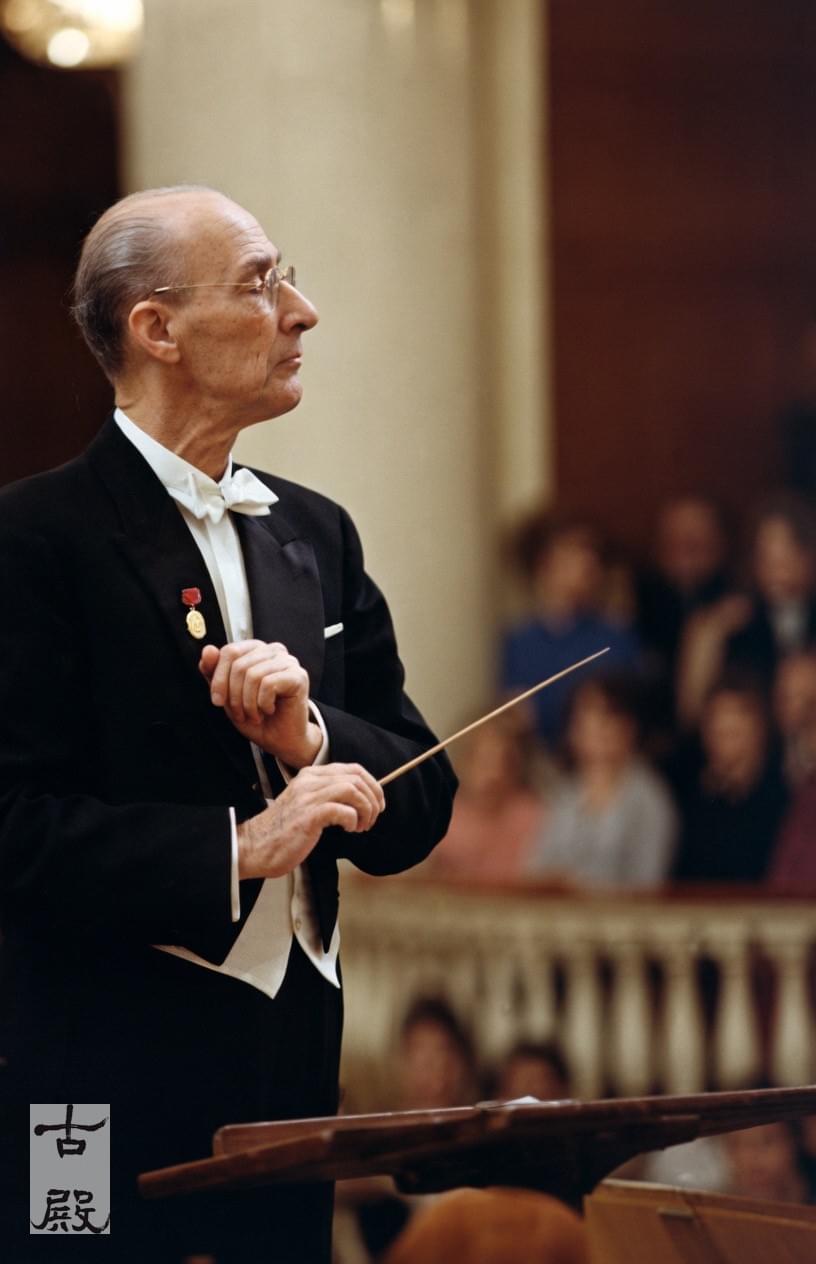
對穆拉汶斯基而言,指揮台是一座神聖的祭壇,而非娛樂大眾的舞台。觀眾的存在,對他來說不過是一種「傳統的慣例」,一種「虛擬的形式」。真正的音樂真理,不在於台下掌聲的多寡、不在於報紙的樂評寫了什麼,而在於靈魂是否直接對準了更高的神聖存在。
在1970年代列寧格勒電視台的一次採訪中,當被問及如何選擇對所演奏音樂的詮釋時,他沒有搬出一套複雜的樂理,而是平靜地解釋說,他嘗試通過將自己完全沉浸在音樂的「氛圍」中,來理解作曲家最深層的意圖。
當你發現指揮不是在討好你,而是在向神祈禱時,你聽到的音樂將不再只是娛樂,而是一場洗滌心靈的儀式。
不可複製的奇蹟:我們為何需要歷史錄音?
有一個殘酷的真相,是所有熱愛列寧格勒愛樂的人最終必須接受的:當穆拉汶斯基在1988年離開人世時,那個偉大的列寧格勒愛樂也隨之熄滅了。
這是一個與指揮家共同呼吸、共同生滅的樂團。它的偉大,從來不只屬於那個扭曲的體制,更屬於一個不屈的靈魂。那個時代的列寧格勒愛樂,是一個在特定歷史條件下才能誕生的奇蹟,而這些條件的任何一項,在今天都已不復存在。
首先,現代社會已經沒有那種不受商業壓力支配的環境了。今天最頂尖的西方樂團,也必須在工會規定的排練時數、昂貴的場地費、贊助商的期待與票房的壓力之間掙扎求存。那種「排練到完美為止」的邏輯,在現代只是奢侈的幻想。我們活在一個凡事講求速成的「速食時代」,沒有人願意為了一個音符耗費幾十個小時。
其次,現在的音樂圈充滿了「明星指揮」。他們像跨國企業的CEO一樣,穿梭於全球各大樂團之間,這裡客席幾場、那裡撈個總監。
而穆拉汶斯基,則是日復一日、年復一年,整整五十年,與同樣的一群人,站在同一個冷冽的空間裡,磨礪那個共同的聲音。音樂是一種累積的藝術,那種心靈感應,是需要將生命綁在一起才能煉成的。
最後,也是最根本的:這一切需要穆拉汶斯基這個人。他不是在經營一個藝術品牌,不是在管理一個機構,他是在以自己的靈魂,一點一點地雕鑿那個聲音。這樣的人,是一個時代奇蹟,而那個時代已經過去了。
在一個越來越以大眾娛樂為中心、越來越注重表演「感官刺激」的時代,穆拉汶斯基留給我們的,是一個反向的追問:如果音樂真的只是為了取悅觀眾,那它還剩下什麼?如果指揮台是一座祭壇,而不只是一個舞台,那我們作為聽眾,又帶著什麼樣的態走進音樂廳?
********
[Classical Palace Music Stories]
The Greatest Orchestra in History? The One That Canceled a Show Because the Rehearsal Was Too Perfect!
Picture this: you've just finished a long, exhausting day, you walk into my shop here at Classical Palace, grab a seat, and look at the walls packed with historical vinyl records. Often, a friend will turn to me and ask a burning question: "Hey, you've listened to so many recordings. If you could only pick one, which orchestra do you think is the absolute best in history?"
It’s a dangerous question! It’s the kind of debate that could start a friendly war among classical music fans. Usually, the first names that pop into people’s heads are the Vienna Philharmonic, with its warm, golden tone, or the Berlin Philharmonic, known for its breathtaking precision and power. Or maybe the Royal Concertgebouw Orchestra from the Netherlands, which has been incredibly popular lately.
But I usually just smile and shake my head.
Instead, I’ll reach deep into my cabinet and pull out a record. The cover might be a bit yellowed, carrying that slightly rough texture unique to the Soviet Union during the Cold War. It even smells like history. I’ll hand it to them and say:
"To me, the absolute highest level of symphonic music in the 20th century—maybe even in all of human history—belongs to a name that has vanished into the river of time: The Leningrad Philharmonic Orchestra, and the man whose soul was tied to it for fifty solid years, Yevgeny Mravinsky."
Flipping Intuition: When "Perfection" Becomes Terrifying
L
et’s start with a true story that completely flips our common sense upside down.
Imagine you’re at work, and you do a practice run for a massive project presentation. It goes flawlessly. Not a single mistake. What do you do? You probably pop some champagne, high-five your team, and can't wait to show it off at the real meeting, right? Because a perfect practice means a guaranteed success.
But Mravinsky had an almost stubborn dedication to artistic honesty. The most famous story about him involves a rehearsal for Anton Bruckner’s Symphony No. 7.
It was the final dress rehearsal. The orchestra and Mravinsky hit an unbelievable peak. People who were there said they weren't just playing notes anymore; it was a perfect fusion of soul and sound, a literal miracle. Every breath, every pause, every single instrument hit some mysterious, perfect frequency in the universe.
And then? After the rehearsal, Mravinsky made a decision that shocked everyone: he canceled the actual evening performance.
Why? Because it was too perfect.
This wasn't him throwing an artist's tantrum. It came from his deep awe and humility toward art. He told his wife privately that a miracle like that couldn't be copied. He didn't believe humans could just magically summon that kind of sacred moment whenever they wanted. He was just a mortal man, and he couldn't guarantee they would reach that sacred height again just a few hours later.
As he put it: "Miracles don't happen twice."
In today's fast-paced world, a decision like that sounds crazy. But it perfectly shows his dignity. The peak had been reached; any attempt to fake it, or perform even slightly worse, would be an absolute insult to the music. To people who didn't understand him, he must have seemed entirely out of his mind!
A Standard So High, Even "Gods" Ran Away
Ju
st how strict was Mravinsky? We can look at how another master reacted to him.
Sviatoslav Richter was a legendary Soviet pianist, famously strict and almost obsessive about his own music. He was known for having incredibly high standards for himself and anyone he played with—he once even walked off stage mid-concert because he wasn't happy with how he was playing!
Yet, even the proud and mighty Richter admitted in his diaries that he simply couldn't handle Mravinsky’s terrifying level of perfectionism. Over time, Richter actually started avoiding working with him.
This detail always blows my mind. It tells us that Mravinsky’s standards weren't just "professional"—they were almost like a religion.
If you looked at Mravinsky's sheet music, it was covered in tiny notes and sticky labels. He had microscopic rules for every single musician. Standing on the podium, it was like he had a thousand eyes. Even if a violinist sitting way in the back corner moved a finger slightly wrong, Mravinsky’s eagle eyes would catch it.
The funny thing is, if you watch videos of him conducting, he barely moves. From the audience's view, he looks cold and completely still—no wild jumping, no showmanship. But for the musicians on stage, his presence was an intense, high-pressure force field. A tiny twitch of his eyebrow or a look in his eye sent massive amounts of information.
If a musical "god" like Richter got scared away, try to imagine the mental toughness those Leningrad musicians needed to work with Mravinsky every single day!
The Unimaginable Cradle of Art
You
might be wondering: "If a boss acted like that today, wouldn't everyone just quit or report him to the labor board?"
Exactly. And that brings us to the ironic secret behind this musical miracle: the system of the Soviet Union.
To understand how they got so good, you have to understand that during the Cold War, this orchestra wasn't a private business. The musicians were completely supported by the government as "national cultural workers." The state gave them their salaries, their homes, and their food.
What does that mean? It means they didn't have to worry about selling tickets or pleasing rich sponsors.
Now, that system took away a lot of personal freedom. But magically, it gave them something Western orchestras could only dream of: unlimited time to practice, with absolutely zero need to compromise their art.
In the West, musicians have strict union rules. Rehearsal times are timed to the minute. Even if a song is just one stepaway from sounding perfect, when the clock strikes, the musicians pack up their instruments and go home. If a conductor tries to keep them longer, there will be a massive fight.
But in Soviet Russia, that pushback didn't exist. If Mravinsky said, "We keep practicing until it's perfect," they kept practicing. They didn't have to worry about where their next meal was coming from. They literally hammered these songs into their bones through endless repetition.
In the 1960s and 80s, even Western critics—people living on the other side of the Cold War—agreed that the Leningrad Philharmonic was the best in the world. One Western critic heard them live and, completely stunned, wrote: "That string section is the most beautiful I have ever heard, even surpassing Vienna and Berlin."
A Quiet Rebel: The Conductor Who Refused to Join the Party
But
Mravinsky wasn't just a strict boss. He was a man of incredible spirit, a true "spiritual aristocrat."
In the Soviet Union, if you wanted a top job in culture or government, you had to join the Communist Party. It wasn't a choice; it was how you survived. But for his entire 50-year career leading the orchestra, Mravinsky refused to join.
He was the most famous conductor in the country, yet he completely stood apart from the system. How did he survive? His art was simply too phenomenal for the government to ignore.
Did the politicians give him a hard time? Of course. But whenever they pressured him about his beliefs, he would calmly say: "Everyone serves their own conscience. I don't agitate anyone, but I believe in God."
In a country that banned religion, saying that out loud was like setting off a silent bomb. He was a devout Christian, and his home was filled with religious icons. He didn't preach, but he lived his truth quietly and firmly.
He saw the political darkness around him. He knew the system was crushing human freedom. But he didn't flee to the West, even though he had the chance. Instead, he created his own free universe on the conductor's podium. The government could tell him where to live, but they could never dictate the direction of his soul.
The Podium is an Altar: Finding Your True Self
This
leads to Mravinsky’s ultimate philosophy, and it's something that resonates deeply with what we do here at Classical Palace.
He once said that music isn't just a basic need, but giving it up is like giving up happiness. He believed that if art doesn't strike you like a bolt of lightning, it isn't real art. But his most powerful belief was this: Music should be played for God, not just to entertain people.
To him, the conductor's podium wasn't a stage to show off; it was a sacred altar. He didn't care about the applause or the reviews in the newspaper. He only cared if the music was touching a higher truth.
When you realize the musicians aren't just trying to put on a fun show, but are pouring their absolute naked souls into the sound as a form of prayer, listening becomes a totally different experience. It stops being entertainment and becomes a way to clean your own spirit.
An Unreplicable Miracle: Why Do We Need Historical Recordings?
There
is a hard truth we have to accept: when Mravinsky passed away in 1988, the magic of the Leningrad Philharmonic faded with him.
That era is gone. Today, we live in a world driven by commercial pressure, fast-paced living, and "star conductors" who bounce from city to city like corporate CEOs. No one has the time or the patience to spend fifty years with the same group of people, in the same freezing room, slowly carving out a perfect sound with their very souls.
And this is exactly why preserving these historical sounds is my life’s work. In our modern world, we are constantly glued to screens, stressed out, and bombarded by AI. We've almost forgotten how to just feel and be human.
When you sit down after a long, exhausting day, I don't want you to listen to the "audio specs" or how crisp the digital remastering is. I want you to put on one of these records, close your eyes, take a deep breath, and let your shoulders drop.
When you listen to Mravinsky, you are hearing real, passionate human beings who gave their entire lives to capture a moment of pure magic. You are experiencing true "sensory rehabilitation." Through their music, you can quiet the noise of the modern world, turn off the constant calculating in your brain, and find a quiet, honest space to finally reconnect with yourself.
So, the next time you put on a piece of music, ask yourself: Are you just distracting your brain, or are you ready to feel alive again?