
【古殿唱片音樂故事】她拒絕成為明星,卻讓日本人自掏腰包冒著虧損替她辦音樂會
幻之女性小提琴大師的純粹之聲——羅拉·波貝絲可與她的莫札特
古殿殿主
一個讓人困惑的問題
1980年代,日本古典音樂圈流傳著一個奇怪的現象。
有一位小提琴家,她的進口唱片在日本的銷量,長年排名第一。但如果你走進當時任何一家唱片行,問店員:「羅拉·波貝絲可是誰?」——對方幾乎一定給你一個茫然的眼神。
知名度接近零。唱片銷量卻第一。
這個矛盾是怎麼發生的?
答案藏在一群人身上——那些不靠唱片公司、不靠媒體推薦,純粹靠自己的耳朵,在一張又一張的歐洲進口黑膠裡,安靜地愛上這個聲音的日本樂迷。
1980年1月,這群人決定做一件瘋狂的事:自掏腰包,冒著嚴重虧損的風險,在東京、大阪、仙台三城,為波貝絲可舉辦巡迴音樂會。
結果,場場座無虛席。
這個故事發生的四十多年後,今天你仍然可以在日本的唱片市場買到她的黑膠——不只是當年的版本,還有持續整理再版的新發行。而她,已在2003年離開這個世界。
一個演奏家,死後仍在生長的傳奇。她憑什麼?
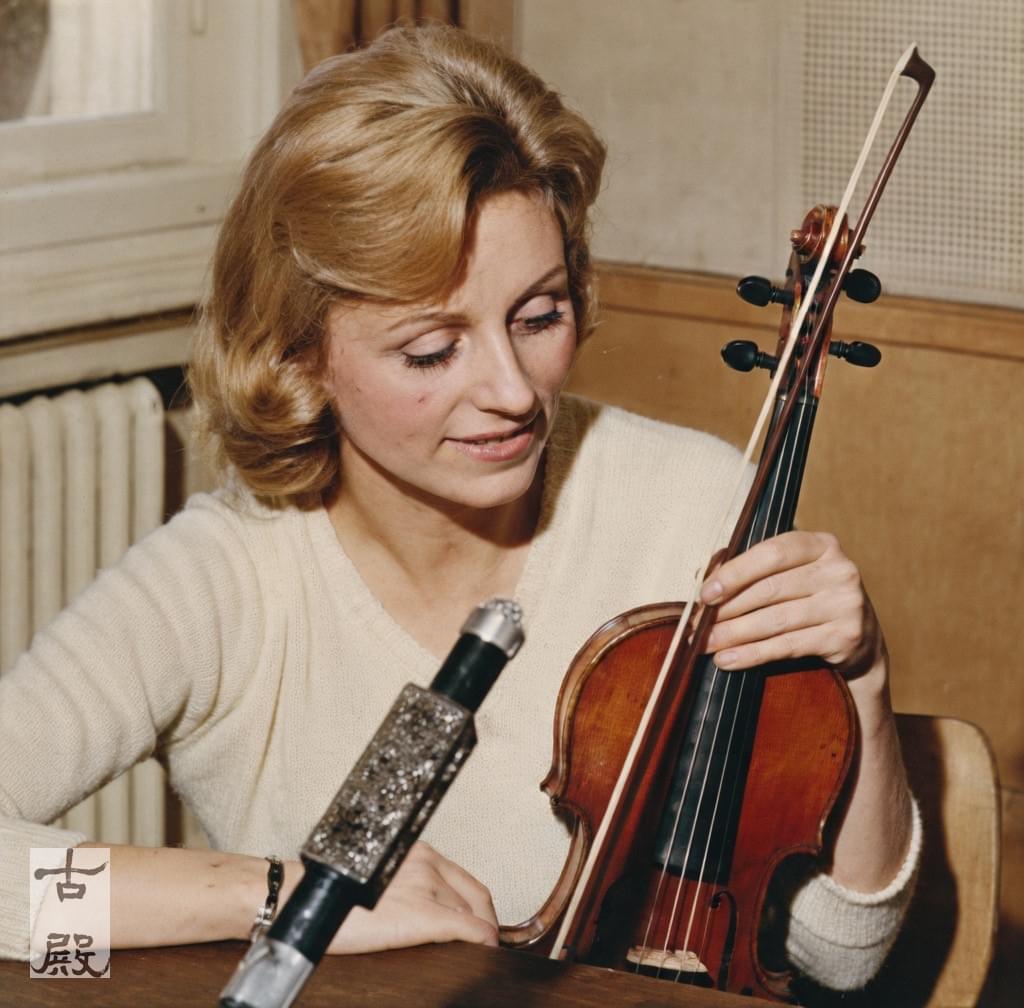
她有一個讓所有人意外的選擇
在解釋日本熱潮之前,先說說她這個人。
羅拉·波貝絲可(Lola Bobesco,1912-2003),1921年生於羅馬尼亞。七歲去巴黎,在法國最頂尖的音樂院受教育,私下向兩位二十世紀最偉大的音樂家請益——傳奇小提琴家雅克·提博(Jacques Thibaud,1880-1953),以及她的同鄉前輩喬治·安奈斯可(George Enescu,1881-1955)。
師承如此,起點如此,按照一般邏輯,她的人生應該走向一個清晰的方向:成為享譽國際的演奏巨星,在世界頂級音樂廳巡演,被大唱片公司搶著簽約,讓名字印在雜誌封面。
她沒有選擇這條路。
她定居比利時,成立室內樂團,在音樂院教書,把大部分的精力放在她真正在乎的事情上——不是巡演行程,不是媒體曝光,而是音樂本身。她的唱片錄音數量,與她的藝術成就相比,少得驚人。她在商業市場上幾乎刻意保持低調。
但凡是真正聽過她演奏的人,幾乎沒有一個能夠忘記。
大歐(David Oistrakh,1908-1974)是誰?他是二十世紀小提琴演奏史上公認的頂峰之一,蘇聯學派的絕對代表。1937年,十六歲的波貝絲可參加了在布魯塞爾舉辦的意沙易小提琴國際大賽——也就是後來「伊莉莎白女王大賽」的前身。那一屆的冠軍,正是大歐。
多年後,這位擊敗所有人的冠軍,在公開場合盛讚波貝絲可的演奏。他特別稱讚她那種「朗誦式的唱腔」,說這是她老師安奈斯可最強的武器,而她完整繼承了下來。
蘇聯學派的頂尖大師,去讚揚一個來自完全不同傳統的女性演奏家。這件事說明了什麼?說明她的藝術境界,已經不是任何「學派」可以框住的了。
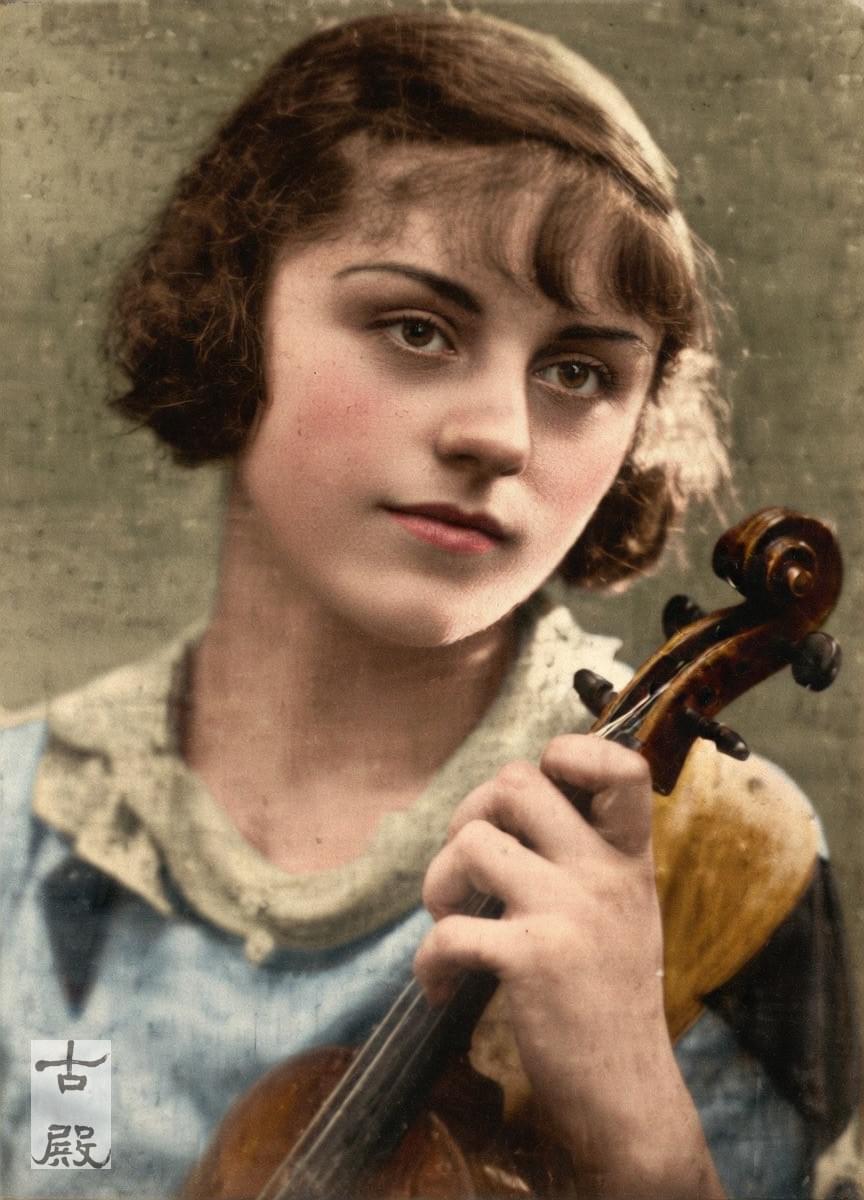
消失中的傳統
要真正理解波貝絲可,你需要知道一件事:她所繼承的那種演奏美學,在二十世紀後半葉幾乎已經滅絕了。
想像一下,你在聽兩種說話方式。
一種人說話聲音洪亮、氣場十足,每個字都充滿力量,讓你無法不注意他。另一種人說話聲音不大,但語調裡有一種說不清楚的韻味——輕的地方極輕,停頓的位置讓你心頭一緊,然後句子起來的時候你忽然覺得胸口一暖。
前者,是二十世紀後半葉統治全球音樂廳的主流——美國、蘇聯、以色列三大學派,以磅礡的音量、驚人的技術速度與強烈的個人風格席捲了整個市場。後者,是一條更古老、更細緻、更難在大型音樂廳裡「賣座」的傳統——法比小提琴學派。
這個傳統的核心,不在炫技,在歌唱。它讓小提琴像人聲一樣呼吸、低語、傾訴,極度重視右手持弓的細微控制——弓速、力道、換弓的銜接——這些決定了聲音的溫度,決定了音樂能不能真正說話。
波貝絲可是這個傳統在二十世紀最後的純粹守護者之一。
她選擇了繼承這個傳統,而不是去適應時代的口味。這個選擇,讓她在主流市場幾乎隱形——卻讓那些真正懂得聆聽的人,一旦聽到,便終身難忘。
日本樂評人中村稔在1981年為本文這張唱片寫的解說中,說了一句話,精確指出了她在那個時代的特殊性:
「她的演奏中完全沒有當今美國、蘇聯或以色列學派常見的那種機械式技巧壓迫感。取而代之的,是一種深沉、親暱,且帶著節制的溫柔對話感。」
「機械式技巧壓迫感」——他點名了三個當時統治世界舞台的學派。這句話,在1981年是很大膽的立場。而那種「對話感」,正是讓日本地下樂迷圈悄悄傳遞她的唱片、最終自掏腰包替她辦音樂會的根本原因。
她與讓蒂:一段超越婚姻的音樂情誼
波貝絲可的故事裡,有一個人始終無法缺席:鋼琴家雅克·讓蒂(Jacques Genty,1912-2014)。
他們在二次大戰最黑暗的歲月裡相遇。法國淪陷,納粹佔領,兩人不只是台上的音樂搭檔,也並肩參與了法國的抵抗運動。這段在壓迫下共同對抗的歷史,在他們之間留下了某種一般音樂合作關係無法形成的深厚連結。
1944年,他們結婚。1956年,婚姻結束了。
但音樂的合作沒有結束。
離婚後的幾十年間,波貝絲可與讓蒂依然持續共同演出,持續在廣播錄音中合作,直至二十世紀末。把個人情感的終點與藝術夥伴關係分得這麼清楚——這需要某種極度的成熟,也需要對音樂本身有極深的信仰,才能做到。
這張唱片,就是他們晚年合作的產物之一。1981年1月,他們在比利時錄下了這套莫札特小提琴奏鳴曲集。讓蒂當時已年屆七旬,波貝絲庫六十歲。幾十年的默契,沉澱在這張黑膠的每一道溝槽裡。
為什麼選這幾首莫札特?
這張唱片的選曲,本身就是一個宣言。
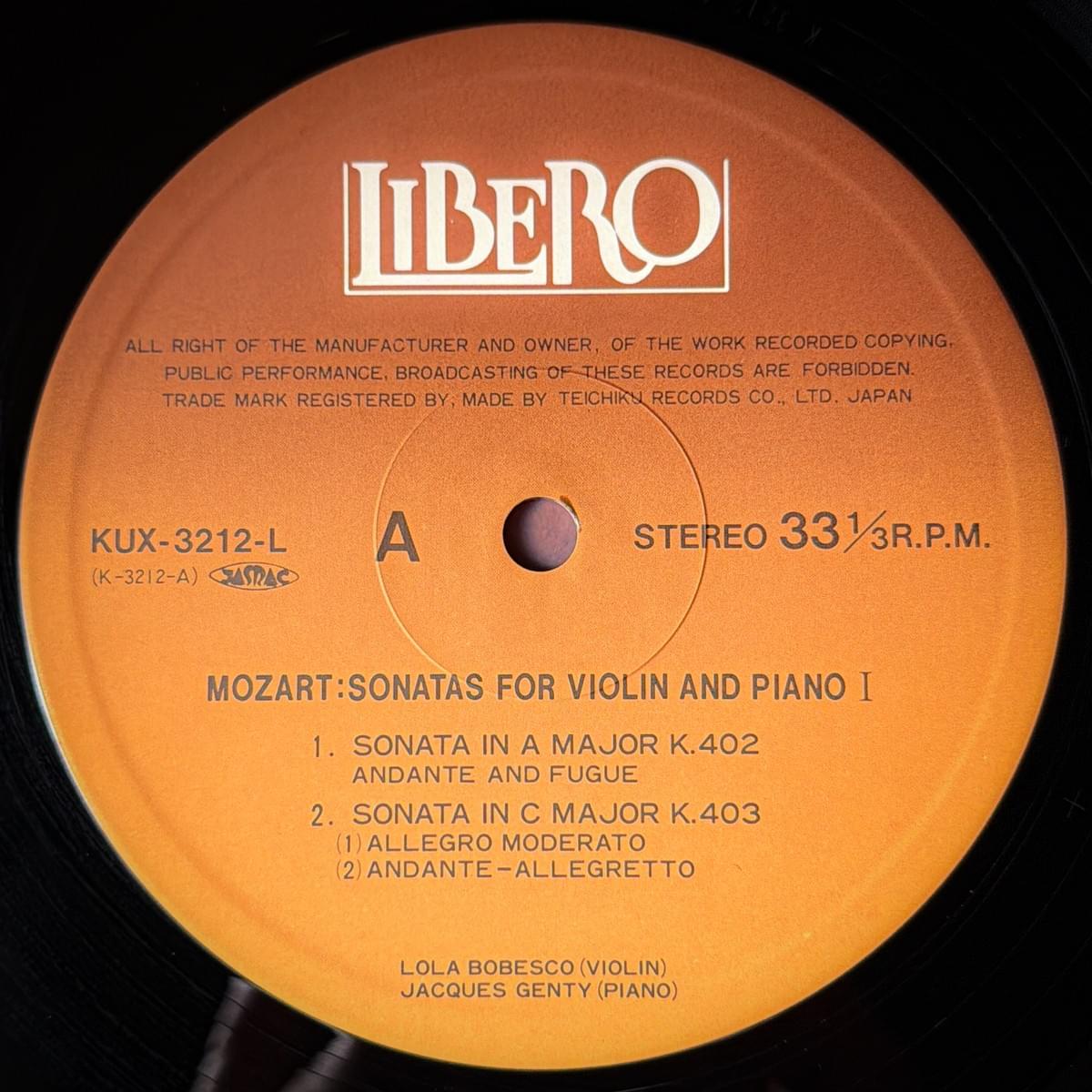
A面錄的是兩首幾乎沒有人演奏的莫札特奏鳴曲:K.402 與 K.403。這兩首曲子背後有一段溫馨的私密故事——1782年,莫札特愛上了康斯坦茲,婚後想為兩人在家中一起演奏而寫的小品。不為賺錢,不為獻給貴族,只是兩個相愛的人在家中共享音樂的樂趣。莫札特後來察覺妻子對音樂只是三分鐘熱度,把這些曲子擱置了,從未完成。
這是莫札特最不「正式」的音樂,也是他最私密的音樂。
波貝絲庫偏偏選擇以這兩首開場,而不是從大家熟悉的名曲入手。這個選擇透露了她對音樂的態度:她不在乎「名氣」,她在乎的是那種真實的、非表演性的生命氣息。
中村稔說,這是才氣的展現。他說,波貝絲可一向如此——她的眼光從不跟著主流走,她總是在冷僻的角落裡找到別人看不見的珍珠。
這種選曲的哲學,其實也解釋了日本那群「地下樂迷」為什麼愛上她:懂得在冷僻處找珍珠的人,才能真正欣賞另一個也在做同樣事情的演奏家。
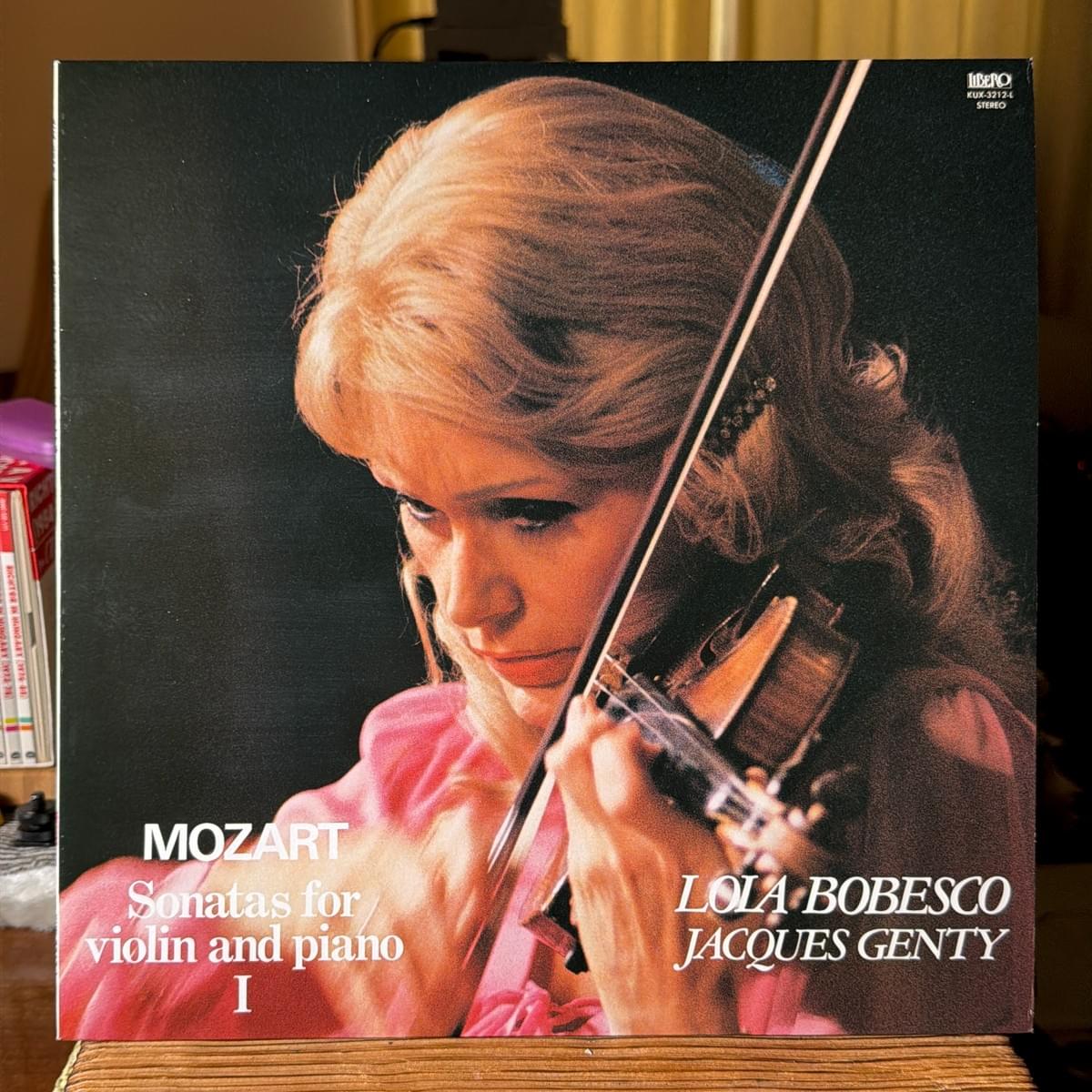
這張黑膠是怎麼來到你手上的
眼前這張橘色標籤的黑膠,唱片編號 KUX-3212-L,有一段有趣的身世。
它是由比利時廠牌 LIBERO RECORD 製作——這個廠牌的創立,本身就是一個針對日本市場的特殊企劃。由比利時製作人 Ronald J. Dorn 持有版權,委託日本的帝國蓄音機株式會社(Teichiku Records)在日本負責壓製。比利時的音樂美學,加上日本對唱片壓製品質的嚴格要求,是這個合作組合存在的邏輯。
標籤上清楚印著「MADE BY TEICHIKU RECORDS CO., LTD. JAPAN」。這不只是一行小字,而是一種保證——1980年代初期,Teichiku 的 LP 壓製技術,在日本發燒友市場享有相當的聲譽。
這張唱片,錄製於1981年1月,是1980年那場震驚日本音樂界的音樂會之後,直接催生的錄音計劃——可以視為波貝絲可為那群自掏腰包支持她的日本樂迷,獻上的一份正式回禮。
這種事今天不可能再發生了
2003年9月4日,波貝絲庫在比利時安靜辭世。享年82歲。
在歐洲,她的離去幾乎沒有引起太多波瀾。沒有大型悼念音樂會,沒有主流媒體的重大報導。這位法比傳統的守護者,在她一生主要活動的歐洲,以她選擇生活的方式安靜地走了。
但在日本,她去世後的事情,讓人深深感動。
日本唱片公司不但沒有讓她的音樂沉入遺忘,反而開始更有系統地整理她留下的一切。她1983年在東京的現場錄音,被反覆以 LP、CD、SACD 再版。她在祖國羅馬尼亞的全部錄音,靠著日本業者取得授權,才得以數位化重新問世。甚至連1980年那場傳說性的大阪演出,一位在場的聽眾憑著私人磁帶錄音保存了下來——包括所有安可曲與雷鳴般的掌聲,一秒不剪——後來正式出版為CD。
一份聽眾私錄,被正式商品化出版。這件事說明了什麼?說明那個夜晚的重量,重到讓人覺得它值得永遠被保存。
你想想,1981年日本 Philips 為她邀請了美國 Telarc 的頂尖錄音師,以當時最先進的數位技術在埼玉縣為她錄音,留下五張 LP 份量的音樂。這種規格的投入,在全球唱片市場,只有日本願意為她做。
這種事今天不可能再發生了。不是因為沒有好的演奏家,而是因為那個時代的聽眾文化——那種靠自己的耳朵在進口黑膠裡安靜尋找,然後願意冒著虧損風險去支持一個「幻之大師」的聽眾——那個文化,已經消失了。
我手上的這張,和你的耳朵
這張橘色標籤的黑膠,今天仍可以在二手市場找到。價格不低,但值得。
放上去的時候,先別急著分析。先讓 K.402 的行板慢慢展開——那兩個相愛的人在維也納的公寓裡,一個拉琴一個彈琴,沒有觀眾,沒有表演壓力,只有音樂本身在空氣中流動的那種感覺。
波貝絲可帶你進去的,就是那個房間。
不是音樂廳,不是舞台,而是那個私密的、低聲細語的空間。
這是法比傳統最難複製的東西。也是她在日本留下那麼深印記的真正原因。不是因為她的技術最強,不是因為她的名氣最大——而是因為在一個充斥著技術競爭的時代,她始終在問一個不同的問題:
音樂,到底是為誰演奏的?
******
[Ancient Palace Music Stories]
She Refused Stardom, Yet Fans Risked Bankruptcy Just to Hear Her Play
The Pure Voice of a "Phantom" Violinist — Lola Bobesco and Her Mozart
A Puzzling Paradox
In the 1980s, a strange phenomenon took hold of the Japanese classical music scene.
There was a certain violinist whose imported records consistently ranked number one in sales. But if you walked into any record store at the time and asked, "Who is Lola Bobesco?" the clerk would almost certainly give you a blank stare.
Near-zero name recognition. Number one in sales.
How does such a contradiction happen? The answer lies in a specific group of people—listeners who didn't rely on big labels or media hype. They relied purely on their own ears. Leafing through stack after stack of European vinyl, they quietly fell in love with a voice they found in the grooves.
In January 1980, this group decided to do something "mad": they put up their own money, risking massive financial loss, to organize a three-city tour for Bobesco in Tokyo, Osaka, and Sendai.
The result? Every single show was a sell-out.
Today, forty years later, you can still find her vinyl in Japan—not just vintage copies, but a constant stream of high-quality reissues. Even though she passed away in 2003, her legend continues to grow.
What gave her such staying power?
The Choice That Surprised Everyone
B
efore we talk about the Japanese "Bobesco fever," let’s talk about the woman herself.
Lola Bobesco (1912–2003) was born in Romania. By age seven, she was in Paris, studying at the world’s top conservatory and learning privately from two of the 20th century’s greatest musicians: the legendary Jacques Thibaud and her compatriot, George Enescu.
With a pedigree like that, the "logical" path was clear: become an international superstar, tour the world’s greatest halls, sign with a major label, and put her face on every magazine cover.
She chose a different path.
She settled in Belgium, founded a chamber orchestra, and taught at the conservatory. She poured her energy into what she truly cared about—not the tour schedule or the media exposure, but the music itself. Her discography is strikingly small compared to her artistic stature. In the commercial market, she was almost intentionally invisible.
But for those who actually heard her play, she was impossible to forget.
Even David Oistrakh—the titan of the Soviet school and one of history's greatest violinists—was a fan. In 1937, a sixteen-year-old Bobesco competed in the Ysaÿe Competition (the predecessor to the Queen Elisabeth Competition). Oistrakh took the top prize, but years later, he publicly praised Bobesco’s "parlando" (speaking) style, noting that she had perfectly inherited the "singing" weapon of her mentor, Enescu.
When a master of the Soviet school bows to a woman of a completely different tradition, you know you’re dealing with an artist who transcends "schools" entirely.
A Vanishing Tradition
To
truly understand Bobesco, you have to realize that the aesthetic she protected almost went extinct in the late 20th century.
Imagine two ways of speaking.
One person speaks loudly, with an aura of power. Every word is a command; you have to pay attention. Another person speaks softly, but there is an indefinable rhythm in their tone—the quiet parts are heart-wrenchingly delicate, the pauses make your chest tighten, and when the melody rises, you feel a sudden warmth.
The former represents the "Big Three" schools (American, Soviet, Israeli) that dominated the world’s concert halls with massive volume and jaw-dropping technical speed. The latter is a much older, more nuanced tradition that is harder to "sell" in giant halls: The Franco-Belgian School.
The core of this tradition isn't virtuosity; it’s singing. It makes the violin breathe, whisper, and confide like a human voice. It places extreme importance on the "right hand"—the subtle control of the bow, the speed, the pressure, the seamless transitions. These are what determine the "temperature" of the sound. These are what allow the music to truly speak.
Bobesco was one of the last pure guardians of this flame. She chose to honor this tradition rather than adapt to the tastes of the era. This choice made her invisible to the mainstream—but for those who knew how to listen, she was life-changing.
Japanese critic Minoru Nakamura captured this perfectly in 1981:
"In her playing, there is none of that mechanical technical pressure so common in the American, Soviet, or Israeli schools of today. In its place is a deep, intimate, and restrained sense of gentle conversation."
Bobesco and Genty: A Bond Beyond Marriage
In
Bobesco’s story, one name is always present: pianist Jacques Genty (1912–2014).
They met during the darkest days of WWII. Amidst the Nazi occupation of France, they weren't just musical partners; they were comrades in the French Resistance. That history of shared resistance under oppression forged a bond deeper than any typical collaboration.
They married in 1944. In 1956, the marriage ended.
But the music didn’t.
For decades after their divorce, Bobesco and Genty continued to perform and record together until the end of the century. To separate the end of a personal romance from an artistic partnership requires an incredible level of maturity—and a profound faith in music itself.
The record I’m holding is a product of their later years. In January 1981, they recorded a set of Mozart Violin Sonatas in Belgium. Genty was nearly seventy; Bobesco was sixty. Decades of unspoken understanding are pressed into every groove of this vinyl.
Why These Mozarts?
The
selection on this record is a statement in itself.
Side A features two sonatas that almost no one plays: K.402 and K.403. These pieces have a touching, private history. In 1782, Mozart fell in love with Constanze. After they married, he wrote these little pieces so they could play together at home. Not for money, not for a Duke, but for the simple joy of two people sharing music in a living room.
This is Mozart at his most "informal"—his most intimate.
Bobesco chose to open with these rather than the famous hits. It reveals her attitude: she didn't care about "fame"; she cared about the authentic, non-performative breath of life.
As Nakamura noted, Bobesco always looked where others didn't. She found pearls in the lonely corners. And that is exactly why those "underground" Japanese fans loved her: it takes someone who looks for pearls in lonely places to recognize an artist doing the same.
This Record in Your Hands
This
specific orange-label vinyl (KUX-3212-L) has a fascinating pedigree.
It was produced by the Belgian label LIBERO RECORD, a label essentially created as a special project for the Japanese market. The rights belonged to Belgian producer Ronald J. Dorn, but the records were pressed in Japan by Teichiku Records.
The label proudly says "MADE BY TEICHIKU RECORDS CO., LTD. JAPAN." In the early 80s, Teichiku’s pressing technology was legendary among audiophiles. This 1981 recording was a direct result of the shocking success of her 1980 tour—you could call it Bobesco’s "thank you" gift to the fans who risked everything for her.
The End of an Era
On Se
ptember 4, 2003, Lola Bobesco passed away quietly in Belgium at the age of 82.
In Europe, her passing caused barely a ripple. There were no massive tribute concerts, no major headlines. The guardian of the Franco-Belgian tradition left the world just as she had lived in it—quietly.
But in Japan, the response was deeply moving.
Instead of letting her music fade, Japanese labels began systematically archiving everything she left behind. Her 1983 Tokyo live recordings were reissued repeatedly on LP, CD, and SACD. Her Romanian recordings were digitized and saved only because Japanese companies sought the licenses. Even a private audience tape of her legendary 1980 Osaka performance—complete with every encore and thunderous applause—was eventually polished and released as a professional CD.
This wouldn't happen today. Not because there are no great players, but because that specific culture of listening is gone. That culture where people used their own ears to find a "Phantom Master" in the import bins and then risked their own pockets to bring her to the stage—that is a vanished world.
A Room for Two
You ca
n still find this orange-label vinyl in second-hand shops. It’s not cheap, but it’s worth it.
When you put it on, don’t try to analyze it. Just let the Andante of K.402 unfold. Imagine those two lovers in a Vienna apartment—one playing the violin, one the piano. No audience, no pressure to perform, just music flowing through the air.
That is the room Bobesco invites you into.
It’s not a concert hall; it’s a private, whispering space. That is the hardest thing to replicate in the Franco-Belgian tradition, and it’s why she left such a deep mark on those who truly heard her.
In an era obsessed with technical competition, she was always asking a different question:
"Who, exactly, are we playing this music for?"