
【古殿唱片音樂故事】他還沒彈完巴哈,飛機就墜毀在舊金山的濃霧裡:威廉・卡培爾(William Kapell,1922–1953)永遠留名
古殿殿主
一張「不完整」的唱片
如果你手上有一張唱片,封套背面清清楚楚寫著:這張唱片收錄的巴哈組曲,「少了最後一個樂章」。不是刻意的選曲安排,不是版權問題,也不是壓片瑕疵——而是因為,演奏這首曲子的鋼琴家,在錄完前五個樂章之後,就意外去世了。
沒有人事後補錄。沒有人找別的鋼琴家把它補完。RCA Victor 就這樣,把這個「缺口」原封不動地壓進了黑膠溝槽裡,於1954年發行,用這個活生生的「缺口」,作為紀念他的最後錄音。
這張唱片的主角,是美國鋼琴家威廉・卡培爾(William Kapell,1922–1953)。這首曲子,是巴哈(Johann Sebastian Bach,1685–1750)《D大調第四號組曲》。缺席的,是終樂章〈吉格舞曲〉(Gigue)。
一張唱片,用沉默取代了一個樂章。這是什麼樣的故事?
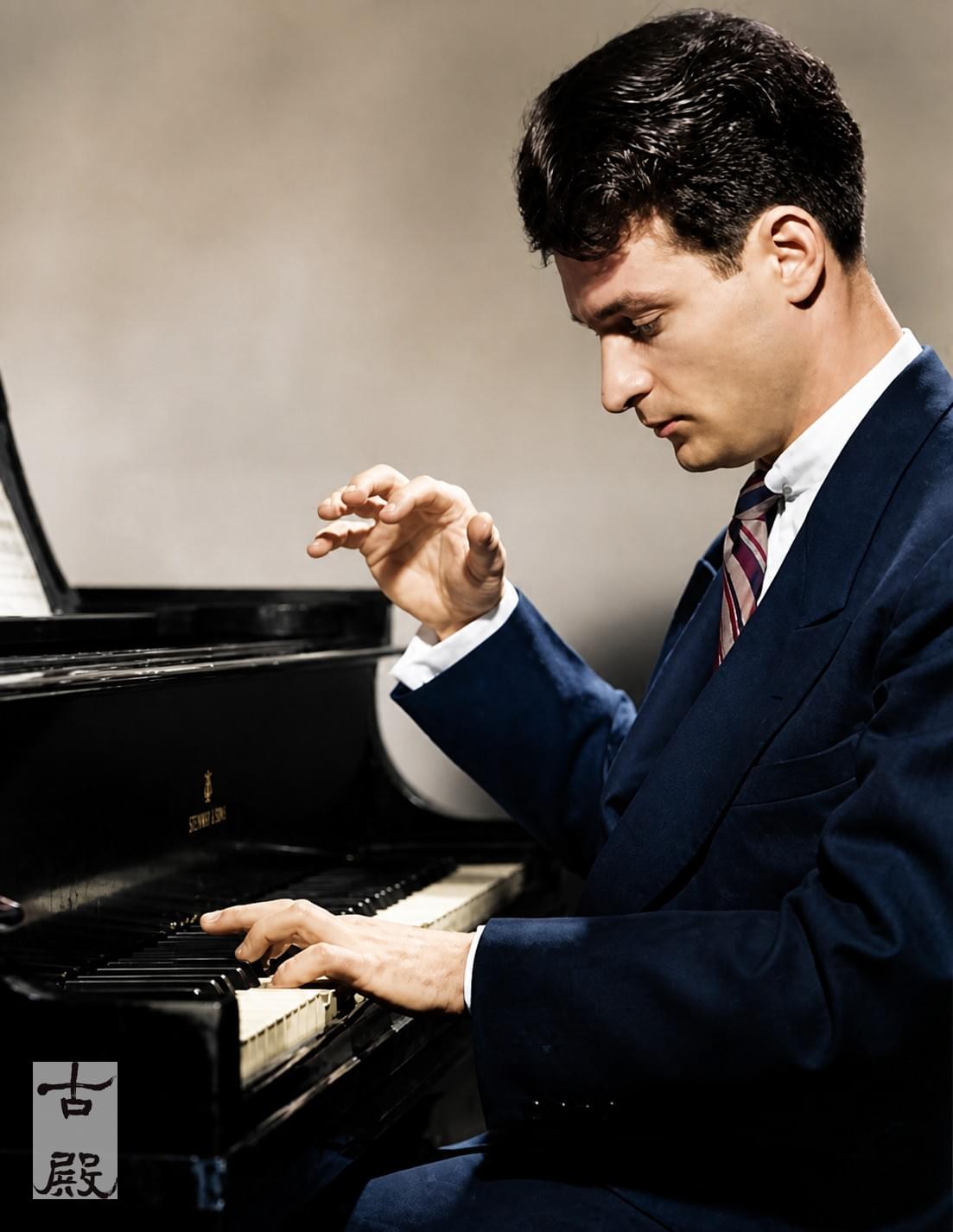
雪梨的最後一句話
1953年,卡培爾正在澳洲進行一趟長達三個月、多達三十七場音樂會的巡演。這趟巡演並不愉快——他對當地部分樂評相當不滿,過程中屢有摩擦。
臨行返美前,他在雪梨對記者留下一句近乎不祥預言的告別語。
10月29日,他搭乘的英聯邦太平洋航空(BCPA)304號班機,一架名為「Resolution」的道格拉斯 DC-6,在濃霧中準備降落舊金山國際機場前三分鐘,一頭撞進了金斯山(Kings Mountain)。機上19人全數罹難。卡培爾,是機上唯一的美國籍乘客。得年31歲。
那趟巡演出發前,他手上正錄著一套巴哈《第四號組曲》。回國以後,他打算把最後的〈吉格舞曲〉補完。
他沒有機會了。
生於紐約,長於茱莉亞——一條連回俄羅斯與法國的血脈
在往下講那份「未完成」的曲目之前,該先退回起點,講講這個人是怎麼長成的。
威廉・卡培爾,1922年9月20日生於紐約市。他最初的琴藝啟蒙,來自桃樂西亞・安德森・拉弗萊特(Dorothea Anderson LaFollette)——她本身是傳奇鋼琴家約瑟夫・列文(Josef Lhévinne,1874–1944)的學生。1938年,卡培爾進入茱莉亞學院,拜入奧爾嘉・薩瑪洛芙(Olga Samaroff,1880–1948)門下。這個名字,現在的樂迷不一定認得,但在當時,她是美國最具份量的鋼琴教育家之一——本名 Lucy Hickenlooper,曾是指揮家李奧波德・史托科夫斯基(Leopold Stokowski,1882–1977)的妻子。
再往上追,薩瑪洛芙的師承,可以一路連回柏林時期的俄裔鋼琴家恩斯特・耶德利奇卡(Ernst Jedliczka,1855–1904)——柴可夫斯基(Pyotr Ilyich Tchaikovsky,1840–1893)在莫斯科音樂院的學生,以及阿爾坎(Alkan,1813–1888)之子、鋼琴家艾里-米利安・德拉博德(Élie-Miriam Delaborde,1839–1913)。也就是說,卡培爾這條技藝血脈,間接同時連結著十九世紀俄羅斯與法國兩條鋼琴學派的源頭。薩瑪洛芙門下同期,還培養出尤金・列斯特(Eugene List,1918–1985)、蘿莎琳・杜蕾克(Rosalyn Tureck,1913–2003)這些後來同樣在鋼琴史上留下名字的學生。
這條師承給了卡培爾什麼?不是某種可以指認的「風格標籤」,而是一種罕見的綜合體質。後來的樂評與同行,總是很難用單一學派去歸類他——有人說他融合了霍洛維茲(Vladimir Horowitz,1903–1989)的高張力與魯賓斯坦(Arthur Rubinstein,1887–1982)的雄渾音色,又帶著許納貝爾(Artur Schnabel,1882–1951)式的深刻;鋼琴家里昂・弗萊舍(Leon Fleisher,1928–2020)更直接稱他是「美國有史以來最偉大的鋼琴天賦」。
一個把俄羅斯的火焰與法國的細膩同時長在身上的美國鋼琴家——這是他出發時的起點。而他接下來要做的事,是證明自己配得上這個起點。
一位剛剛「打贏戰爭」的鋼琴家
要理解這個「缺口」為什麼刺痛人心,得先理解卡培爾這個人。
十九歲,他已經頻頻贏得大獎;二十歲,展開巡迴獨奏與協奏曲生涯,是各大樂團爭相邀約的紅人。但接下來整整十年,他的曲目被牢牢釘在拉赫曼尼諾夫(Sergei Rachmaninoff,1873–1943)、柴可夫斯基、哈察都量(Aram Khachaturian,1903–1978)這些「討好觀眾」的作品上——這些曲子好聽、好賣票,卻不是鋼琴文獻裡真正的重量級核心。
卡培爾不甘心當一個只會討好觀眾的琴匠。
他花了將近十年時間,和經紀公司、和樂評輿論正面對抗,只為了爭取一件事:演奏莫札特(Wolfgang Amadeus Mozart,1756–1791)、貝多芬(Ludwig van Beethoven,1770–1827)、布拉姆斯(Johannes Brahms,1833–1897)、蕭邦(Frédéric Chopin,1810–1849)的協奏曲,演奏巴哈與德布西(Claude Debussy,1862–1918)的組曲。這不是換個曲目這麼簡單——這是要重新說服整個音樂產業,相信他不只是一個炫技的天才少年,而是一位夠格駕馭最高深經典的成熟藝術家。
紐約前鋒論壇報樂評主筆維吉爾・湯姆森(Virgil Thomson,1896–1989)後來在這張唱片的封底文案裡寫下:卡培爾「不只獨自奮戰,也向深諳這些曲目的音樂前輩虛心求教」,直到「他終於贏得了通往巴哈組曲與德布西的入場券」。
也就是說——就在他剛剛打贏這場長達十年的戰爭,證明自己配得上巴哈的那一刻,生命戛然而止。
這張唱片裡那首「未完成」的巴哈組曲,錄的不是他生涯的隨手一筆,而是他窮盡半生氣力,才剛剛拿到入場券的那個房間。他甚至還沒來得及,把整場演出走完。
一個容不下虛偽的人
芝加哥論壇報音樂編輯克勞蒂亞・卡西迪(Claudia Cassidy,1899–1996)為這張唱片寫的悼文,提供了一個更私密的角度。她回憶,卡培爾常常在苦練一整天之後,深夜跑到她家,放幾張唱片來聽——卡魯索(Enrico Caruso,1873–1921)、他崇拜得五體投地的許納貝爾、拉赫曼尼諾夫本人、霍洛維茲、塞爾金(Rudolf Serkin,1903–1991)、魯賓斯坦。
卡西迪節錄了卡培爾寫給她的最後幾封信之一,裡面有一句話,幾乎可以當成他一生的自白:
「音樂本身還不夠……世上必須有人像愛生命一樣愛音樂。」
這句話背後,是一個評論界公認「誠實」的演奏語言——不是技巧問題,是他不允許自己用虛張聲勢去掩蓋任何一絲不確定。這種誠實,也讓他在私生活裡是個不好惹的人:他個性剛烈,對樂評與同儕要求極高,曾傳出幾乎與樂評人動手的軼事。但同一個人,對他真心欣賞的年輕才華卻極其慷慨——紐西蘭鋼琴家 Richard Farrell(1926–1958)得以獲得他的恩師薩瑪洛芙的獎學金,正是卡培爾親自出面爭取來的。
一個對自己與音樂毫不妥協、卻願意把資源讓給後輩的人。這是他性格裡最耐人尋味的矛盾。
一份「訃聞式」的唱片文案
現在回到手上這張唱片本身。
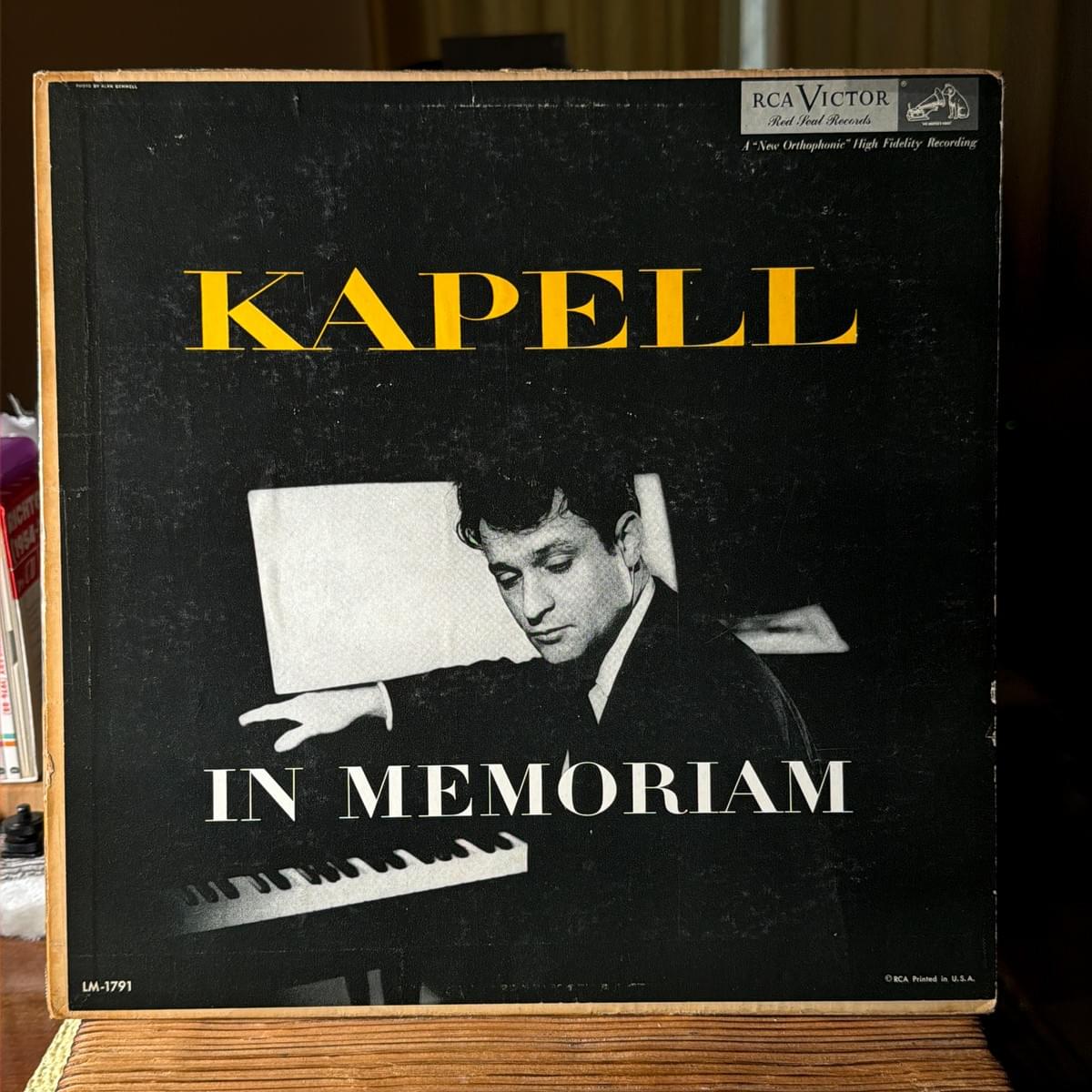
眼前這張美國 RCA Victor Red Seal 廠牌的單聲道 33⅓轉 LP,編號 LM-1791,1954年美國原版首發,紅底銀字深溝重量盤。封套正面,是卡培爾低頭伏案彈琴的側影,標題直接印著「IN MEMORIAM」——紀念。
翻到封底,你不會看到一般唱片常見的曲目解說或演奏家介紹,而是整整一大版報紙式的訃聞文章,由湯姆森與卡西迪兩位重量級樂評人執筆,分別經紐約前鋒論壇報與芝加哥論壇報授權轉載。
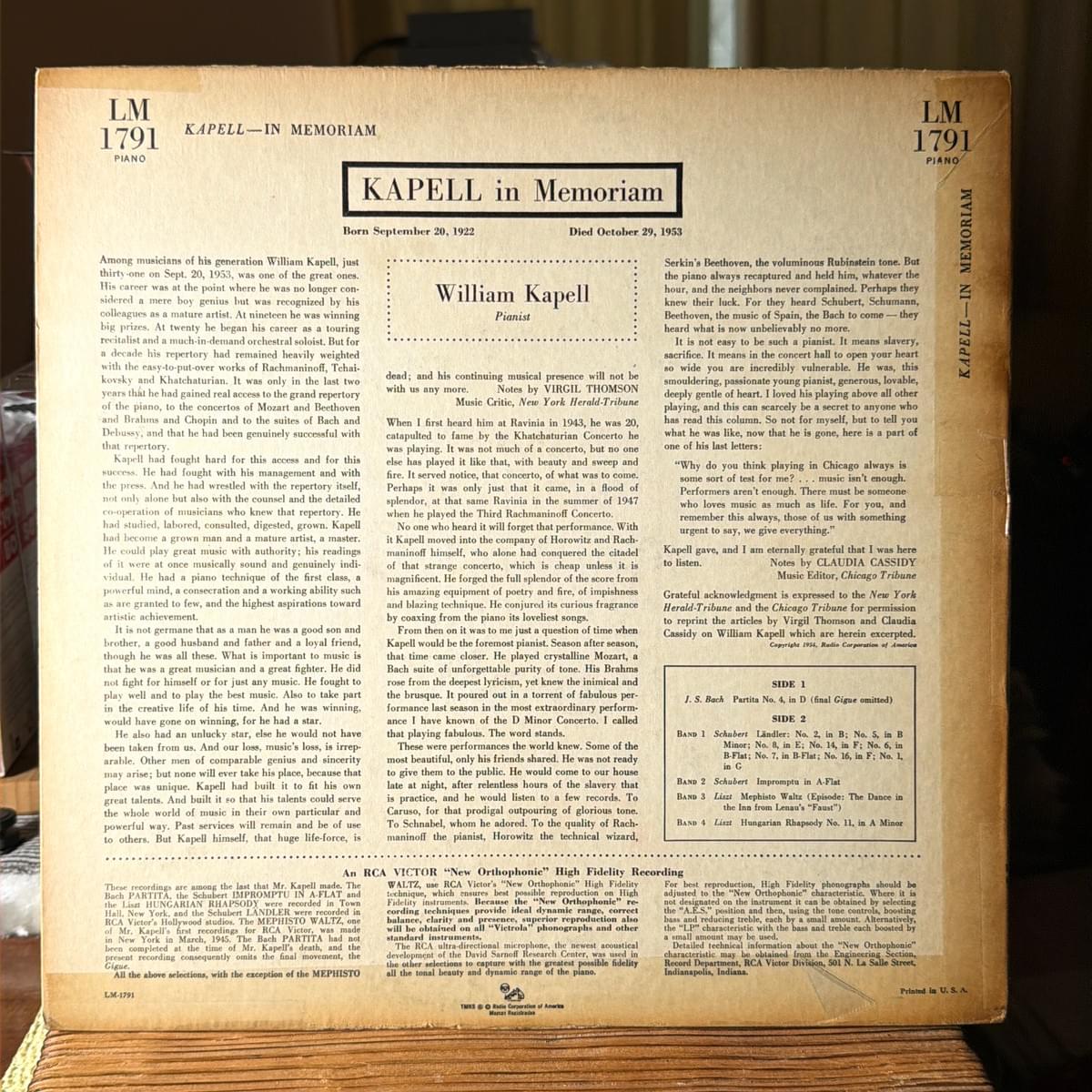
一家大廠牌,面對一位簽約鋼琴家的意外身故,沒有選擇延後發行、也沒有找人補完錄音、更沒有用制式文案帶過——而是直接把兩篇報紙樂評人連夜寫下的悼文,原封不動地印在封底,連同那個「未完成的終樂章」一起,誠實地留在唱片裡。
今天的唱片公司,面對這種情況,更可能的做法是找人補錄、後製剪接、把「缺口」做得看不出來——用一個「完整」的商品版本,取代那個真實卻不完美的最後紀錄。1954年的 RCA,選擇了相反的路:讓「缺口」留在溝槽裡,紀念他永遠活在世人的心中。
兩枝筆,兩個卡培爾
把封底這兩篇
文章並排放在一起讀,才會發現這份文案有多特別。
先說湯姆森。他不只是紐約前鋒論壇報的樂評主筆,他自己就是二十世紀美國重要的作曲家——換句話說,這篇悼文,是一位作曲家在評斷另一位音樂家。他的視角,是從觀眾席、從一整個職業生涯的縱深去寫的:1943年,他在拉維尼亞音樂節第一次聽見二十歲的卡培爾彈哈察都量協奏曲,說那曲子「算不上多麼偉大」,但「沒有人能像他那樣演奏」;四年後,同一個地方,卡培爾拿出拉赫曼尼諾夫《第三號協奏曲》,湯姆森說,從那一刻起,卡培爾正式與霍洛維茲、拉赫曼尼諾夫本人並列。接下來幾個樂季,他記錄的是卡培爾一步步攻下莫札特的水晶般透明、巴哈組曲的純淨音色、布拉姆斯的深邃與剛勁,最後停在貝多芬《D小調第一號協奏曲》那場他稱為「絕妙神技」的演出。這是一份專業的、公開的成長軌跡紀錄。
卡西迪的角度完全不同。她不是遠遠地坐在觀眾席裡評論,她是卡培爾的朋友——那種會在深夜開門讓他進來的朋友。她的悼文裡,職業生涯的裡程碑只是背景,真正的重量放在琴房與音樂廳以外的時間:那些沒有人錄下來的深夜,卡培爾練了一整天琴之後跑到她家,放唱片給彼此聽。她把這些私人時刻,和卡培爾寫給她的最後一封信並列在一起,信裡那句「我們這些懷抱著迫切意念的人,傾注了自身的一切」,是這張唱片裡,唯一一段直接出自卡培爾本人之口的文字。
一份公開的專業評價,一份私密的朋友證詞——這兩篇文章合在一起,才拼出一個完整的卡培爾:舞台上的他,和琴房外的他。這在唱片工業裡極為罕見。
紐約市政廳,一個首尾呼應的地方
還有一個細節,
值得專門提出來。
卡培爾十九歲時,正是在紐約 Town Hall(市政廳音樂廳)的一場獨奏會贏得「Town Hall Award」,正式踏上職業生涯的起點。而這張唱片裡,他生前最後留下的錄音——巴哈《第四號組曲》、舒伯特《降A大調即興曲》、李斯特(Franz Liszt,1811–1886)《匈牙利狂想曲》——同樣是在這個廳裡完成的。
一個鋼琴家的職業生涯,從這裡開始,也在這裡畫下了句點。這張唱片收錄的另一首曲子,李斯特《梅菲斯特圓舞曲》,則是他 1945年3月為 RCA Victor 錄下的最早期錄音之一。從技巧外顯的李斯特出發,走到內省深邃的巴哈,這張唱片幾乎是卡培爾整段藝術生命的濃縮切片——只是切在了它還沒抵達終點的那一刻。
有人一直想讓你知道這個名字
卡培爾之死,在當
時的美國音樂界,是真正的集體創傷。《華盛頓郵報》稱他是美國第一位真正稱得上偉大的鋼琴家,《紐約時報》則形容他是上個世紀鍵盤上最後幾位真正的天才之一。他的死,讓同代與後輩的鋼琴家——尤金・伊斯托敏(Eugene Istomin,1925–2003)、加里・格拉夫曼(Gary Graffman,1928–2025)、里昂・弗萊舍(Leon Fleisher,1928-2020)、范・克萊本(Van Cliburn,1934–2013)——都公開承認,自己曾受他影響。而更難得的是,七十多年來,始終有人接力,不讓這個名字被時間收走。
最早行動的,是小提琴家艾薩克・史坦(Isaac Stern,1920–2001)。他在卡培爾去世後,設立了「威廉・卡培爾紀念基金」(William Kapell Memorial Fund),資助有潛力的年輕音樂家赴美深造。一位受人敬重的小提琴家,用自己的聲望,替一位驟逝的鋼琴家同行,換來後面幾代年輕音樂家的機會——這是同代人最直接的一份心意。
四十多年後,又有一群人接了下去。1998年,BMG Classics/RCA Red Seal 發行了一套九張一組的《The William Kapell Edition》,把他所有授權過的錄音、幾段從未發表過的現場演出,連同一段訪談,全數收錄整理。這不是唱片公司例行的重新發行,而是有人花了心力,把散落各處的卡培爾,重新拼回一整個人。2008年,又一批塵封超過半世紀的錄音重見天日——1953年那趟命運多舛的澳洲巡演,一位業餘錄音愛好者 Roy Preston 用醋酸盤私下保存下來的廣播現場,以《Kapell ReDiscovered: The Australian Broadcasts》正式出版。一個素人,獨自守著這些錄音超過五十年,只為了不讓它們消失。
也有人選擇用一個名字,去激勵下一代——1971年,馬里蘭大學創辦了一個國際鋼琴大賽,1986年,主辦單位決定把這個賽事,正式冠上「威廉・卡培爾」之名,讓每一屆的年輕參賽者,都在爭奪這個名字所代表的標準。這個比賽後來成為業界極具份量的四年一屆賽事,一路辦到2012年——那一屆的冠軍,是南韓鋼琴家孫延權(Yekwon Sunwoo)。這個賽事後來雖然畫下句點,但前任賽事協調人隨即聯合鋼琴製造商 Knabe,籌設「威廉・克納貝鋼琴學院暨大賽」,接著把這份心意傳下去。
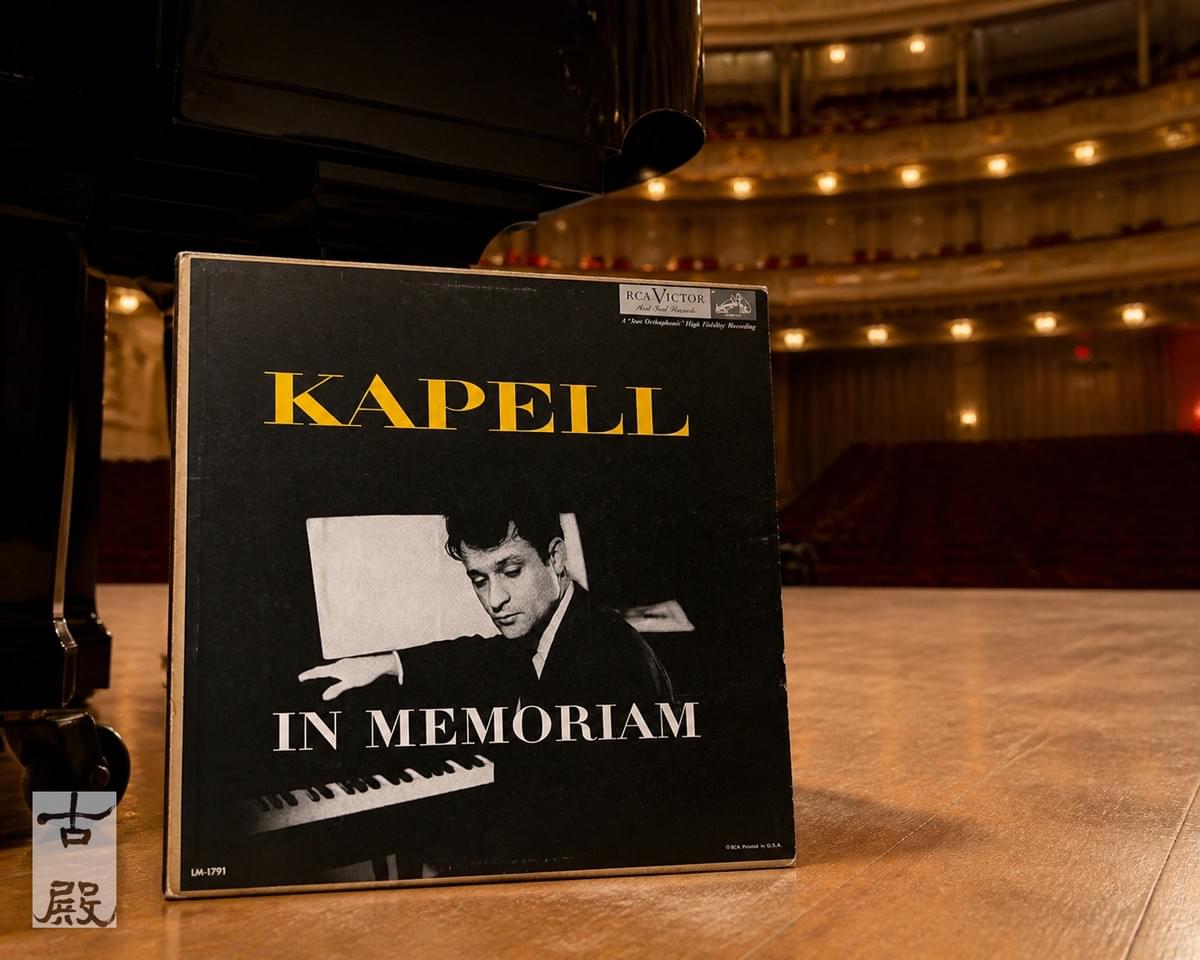
一位小提琴家的基金、一套唱片公司的全集、一位素人收藏家的醋酸盤、一整個大學延續超過四十年的比賽——這些人彼此並不認識,做的事情也完全不同,卻共同做著同一件事:讓「威廉・卡培爾」這個名字,持續有人聽見。眼前這張1954年的紀念黑膠,是這條接力線上最早的一棒。
******
【Gudian Music Stories】He Hadn’t Finished Bach When the Plane Vanished into San Francisco’s Fog: William Kapell (1922–1953) Lives Forever
An "Incomplete" Record
Imagine holding an LP in your hands, and on the back of the sleeve, it plainly reads: the Bach Partita recorded here "is missing its final movement." Not as an intentional programming choice, not due to copyright issues, nor a manufacturing flaw—but because the pianist who recorded the first five movements died in a tragic crash shortly after leaving the studio.
No one went in later to patch it up. No one hired another pianist to finish the suite. RCA Victor pressed that silence, untouched, directly into the vinyl grooves. Released in 1954, this record used an open wound as his memorial album.
The pianist was American virtuoso William Kapell (1922–1953). The piece was Johann Sebastian Bach’s (1685–1750) Partita No. 4 in D major. The missing piece was the concluding Gigue.
A record that replaced a final movement with pure silence. What kind of story lies behind it?
The Last Words in Sydney
In 1953, Kapell embarked on an exhaustive, three-month, 37-concert tour across Australia. It was not a pleasant trip—he clashed openly with local critics whose narrow views frustrated him deeply.
Before boarding his return flight, he left reporters in Sydney with a parting remark that felt like an ominous premonition.
On October 29, his flight—BCPA Flight 304, a Douglas DC-6 named Resolution—crashed into Kings Mountain in dense fog, just three minutes before its scheduled landing at San Francisco International Airport. All 19 passengers and crew on board were killed. Kapell was the sole American passenger on that flight. He was just 31 years old.
Before leaving for that fateful tour, he had laid down tracks for Bach's Fourth Partita. He fully intended to complete the Gigue upon his return.
He never got the chance.
Born in New York, Shaped at Juilliard: A Lineage Rooted in Russia and France
Before delving deeper into this "unfinished" recording, we need to trace where this man came from.
William Kapell was born in New York City on September 20, 1922. His earliest piano training came under Dorothea Anderson LaFollette—herself a student of legendary virtuoso Josef Lhévinne (1874–1944). In 1938, Kapell entered the Juilliard School to study under Olga Samaroff (1880–1948). Her name might not ring a bell for every music lover today, but back then she was among the most formidable piano pedagogues in the United States—born Lucy Hickenlooper, and once married to conductor Leopold Stokowski (1882–1977).
Tracing further back, Samaroff’s own lineage led to Ernst Jedliczka (1855–1904) in Berlin—a student of Pyotr Ilyich Tchaikovsky (1840–1893) at the Moscow Conservatory—and Élie-Miriam Delaborde (1839–1913), the son of Charles-Valentin Alkan (1813–1888). Through this lineage, Kapell indirectly inherited two towering 19th-century traditions: Russian romantic fire and French clarity. Samaroff’s studio also produced peers like Eugene List (1918–1985) and Rosalyn Tureck (1913–2003), both destined to leave indelible marks on pianistic history.
What did this lineage give Kapell? Not a rigid stylistic label, but a rare, integrated artistic temperament. Later critics and colleagues always struggled to pigeonhole him—some heard the electrifying tension of Vladimir Horowitz (1903–1989) merged with the broad, golden tone of Arthur Rubinstein (1887–1982), underpinned by an Artur Schnabel-like (1882–1951) intellectual depth. Pianist Leon Fleisher (1928–2020) put it bluntly, calling Kapell "the greatest pianistic talent America ever produced."
An American pianist carrying both Russian volcanic intensity and French transparency—that was his starting line. What came next was his relentless fight to prove he was worthy of it.
A Pianist Who Had Just Won His War
To understand why that missing movement stings so deeply, you have to understand who Kapell was as an artist.
By nineteen, he was sweeping prestigious awards; by twenty, he was touring recitals and concertos nationwide, an in-demand soloist with every major orchestra. Yet for the decade that followed, the music industry chained him to crowd-pleasers: Rachmaninoff (1873–1943), Tchaikovsky, and Khachaturian (1903–1978). These showstoppers sold tickets, but they were not the monumental core of the keyboard literature.
Kapell refused to remain a brilliant circus act for the masses.
He spent nearly a decade fighting managers, promoters, and critical dogma for one single right: to play the concertos of Mozart (1756–1791), Beethoven (1770–1827), Brahms (1833–1897), and Chopin (1810–1849), and to perform the suites of Bach and Debussy (1862–1918). This was not merely changing repertoire; it was forcing an entire industry to accept that he was not just a teenage technician, but a mature artist capable of plumbing the deepest human expressions.
Virgil Thomson (1896–1989), chief music critic for the New York Herald Tribune, later noted in this album's liner notes that Kapell "not only worked alone, but sought guidance humbly from seasoned masters steeped in these works," until he finally "earned his passport to the suites of Bach and the world of Debussy."
Just as he finally triumphed in this decade-long battle and proved he belonged in Bach’s realm, his life was cut short.
The "unfinished" Bach suite on this album was no casual studio take. It represented the threshold of a sanctuary he had spent half a lifetime earning entrance to. He was stripped away before he could even finish walking through it.
A Soul That Brooked No Compromise
A memorial tribute written for this album by Claudia Cassidy (1899–1996), music editor of the Chicago Tribune, offers a glimpse into his inner world. She recalled how, after exhausting days of practice, Kapell would drop by her home late at night to listen to records—Enrico Caruso (1873–1921), Artur Schnabel (whom he revered above all), Rachmaninoff himself, Horowitz, Rudolf Serkin (1903–1991), and Rubinstein.
Cassidy quoted from one of the final letters Kapell sent her—words that stand as his artistic creed:
"Music is not enough... There must be people who love music as they love life."
Behind those words was a musician renowned for brutal honesty. Technique was never an issue; he simply refused to hide behind flash or feign confidence where doubt remained. That absolute integrity made him a demanding figure in life: fierce, relentless with peers and critics, once even coming near blows with a reviewer. Yet this exact same man was endlessly generous toward young artists he genuinely believed in—it was Kapell who personally campaigned to secure a Juilliard scholarship under Olga Samaroff for the young New Zealand pianist Richard Farrell (1926–1958).
Uncompromising toward himself, yet selflessly lifting up the next generation: this was the profound paradox of his character.
An Obituary Pressed on Vinyl
Now let us return to the record itself.
Before us is an original 1954 US first pressing on the RCA Victor Red Seal label—mono 33⅓ RPM, catalog number LM-1791, a heavyweight disc with deep groove indentation and red-and-silver labels. On the jacket cover, a quiet photograph shows Kapell in profile, bowed intently over the keyboard, beneath a stark title: "IN MEMORIAM."
Flip to the back cover, and you won’t find standard analytical notes or generic promotional fluff. Instead, the entire sleeve is laid out like a broadsheet newspaper obituary, featuring tributes penned by Virgil Thomson and Claudia Cassidy, reprinted with permission from the New York Herald Tribune and the Chicago Tribune.
Faced with the sudden death of their marquee pianist, a corporate giant did not delay the release. They did not patch in another musician. They did not resort to corporate PR platitudes. Instead, they took the heartfelt words written overnight by two leading critics and printed them raw onto the sleeve, leaving the missing final movement untouched in the vinyl grooves.
Today, a record label facing this would likely bring in studio ringers, use digital edits, and smooth over the absence to deliver a clean, "complete" commercial product. In 1954, RCA chose truth: they preserved the void, letting the silence honor his presence forever in the hearts of listeners.
Two Pens, Two Sides of Kapell
Reading these two back-cover texts side by side reveals the unique depth of this document.
Thomson was not merely an influential critic; he was a major 20th-century American composer. This tribute was one creator assessing another. Thomson viewed Kapell from the concert hall seats, taking the long view of a career. He recalled hearing the 20-year-old Kapell play the Khachaturian concerto at the 1943 Ravinia Festival, remarking that while the piece itself "was not great music," "no one could play it like him." Four years later, in the same venue, Kapell performed Rachmaninoff’s Third Concerto, prompting Thomson to write that Kapell had officially joined the ranks of Horowitz and Rachmaninoff himself. Over the following seasons, Thomson chronicled Kapell conquering the crystalline clarity of Mozart, the austere purity of Bach, the muscular gravity of Brahms, and ultimately a performance of Beethoven’s Concerto No. 1 in C major that he hailed as "sheer mastery." It is a rigorous, public testament to an artist’s hard-won growth.
Cassidy approached him from the opposite direction. She was not reviewing from a distance; she was Kapell’s trusted confidante—the friend who opened her door to him past midnight. In her tribute, professional milestones fade into the background. What matters are the hours outside the concert hall: those unrecorded late nights where Kapell, drained from practicing, came over just to share music. She placed those quiet hours alongside his final letter to her, quoting his line: "Those of us who feel the urgency pour everything we have into it." These are the only words on the entire record spoken directly by Kapell himself.
A public appraisal of artistic mastery balanced by the intimate testimony of a dear friend—together, they assemble a complete portrait of Kapell: the lion on stage, and the searching soul behind closed doors. You rarely find this anywhere else in the history of recorded sound.
New York Town Hall: The Circle Closes
One final historical resonance demands mention.
At age nineteen, Kapell won the prestigious Town Hall Award following his New York recital debut, officially launching his career. And the final studio recordings he ever made—the Bach Fourth Partita, Schubert’s Impromptu in A-flat major, and Liszt’s (1811–1886) Hungarian Rhapsody—were recorded within the very same hall.
His artistic path began in Town Hall, and there it reached its conclusion. Another work included on this memorial disc, Liszt’s Mephisto Waltz, comes from March 1945—one of his earliest sessions for RCA Victor. Journeying from the exterior brilliance of early Liszt to the interior sanctuary of late Bach, this single record captures a cross-section of his entire artistic journey—frozen right before he reached the final bar.
Those Who Refused to Let His Name Fade
Kapell’s sudden death dealt a profound collective trauma to American musical life. The Washington Post mourned him as the country’s first truly great homegrown pianist; The New York Times hailed him as one of the keyboard’s last authentic geniuses of the past century. His loss reverberated through his contemporaries and successors—Eugene Istomin (1925–2003), Gary Graffman (1928–2025), Leon Fleisher (1928–2020), and Van Cliburn (1934–2013)—who all openly acknowledged his formative impact on their playing. Even more remarkable is how, across more than seven decades, people have carried the torch to ensure his legacy never dissolved into dust.
Violinist Isaac Stern (1920–2001) was the first to act. In the wake of the tragedy, Stern founded the William Kapell Memorial Fund to finance advanced study in America for gifted young artists. A legendary violinist using his own stature to open doors for younger musicians in honor of a fallen colleague—that was love and camaraderie in its purest form.
Four decades later, others took up the mantle. In 1998, BMG Classics/RCA Red Seal issued a definitive 9-CD boxed set, The William Kapell Edition, gathering all his authorized recordings, unreleased live tapings, and an interview. This was no routine re-release; it was a labor of love to reconstruct Kapell’s scattered artistry into a unified whole. In 2008, another historic cache surfaced: the ill-fated 1953 Australian tour, captured live from radio broadcasts onto lacquer discs by an amateur recording enthusiast named Roy Preston, was commercially restored and released as Kapell ReDiscovered: The Australian Broadcasts. An ordinary music lover had quietly safeguarded those discs for over fifty years simply because he refused to let the sound perish.
Others chose to inspire the next generation through his name. In 1971, the University of Maryland established an international piano competition; by 1986, it was officially christened the William Kapell International Piano Competition, challenging young competitors to meet the standard his name stood for. It grew into a quadrennial event of international stature, culminating in 2012 when South Korean pianist Yekwon Sunwoo took gold. While that competition eventually concluded, its former coordinator partnered with historic piano maker Wm. Knabe & Co. to create the Knabe Young Artist Piano Competition, keeping the artistic spirit alive.
A violinist’s memorial fund; an exhaustive boxed set; an amateur collector’s lacquer discs; a university competition spanning four decades—these people did not know one another, and their paths were completely different. Yet they all pulled in the same direction: ensuring that the voice of William Kapell would always find ears to listen. This 1954 memorial vinyl disc was simply the very first baton handed down in that eternal relay.