
【古殿唱片音樂故事】他們用聲音,「偷渡」回了自己回不去的家鄉:《神鷹飛翔(The Flight of the Condor)》英國BBC自然紀錄片的原聲帶
古殿殿主
一個看起來理所當然、其實完全錯誤的假設
想像你正在看一部1982年BBC的自然紀錄片。
鏡頭跟著一隻兀鷲,翅膀紋風不動地滑過安地斯山脈的稜線,底下是終年不化的冰河與火山。背景音樂適時響起——排笛(Sikus)交錯吹出的音階,帶著一種蒼涼又神聖的呼吸感,彷彿風本身就會唱歌。
看到這裡,任何人都會很自然地做出一個假設:這些音樂家,就在那片山裡,跟著攝影隊一起翻山越嶺,把當地最真實的聲音錄了下來。
這個假設,完全錯誤。
那段音樂,是在義大利羅馬一間錄音室裡錄的。演奏的那群音樂家,被自己的祖國禁止入境——而且一禁,就是十五年。
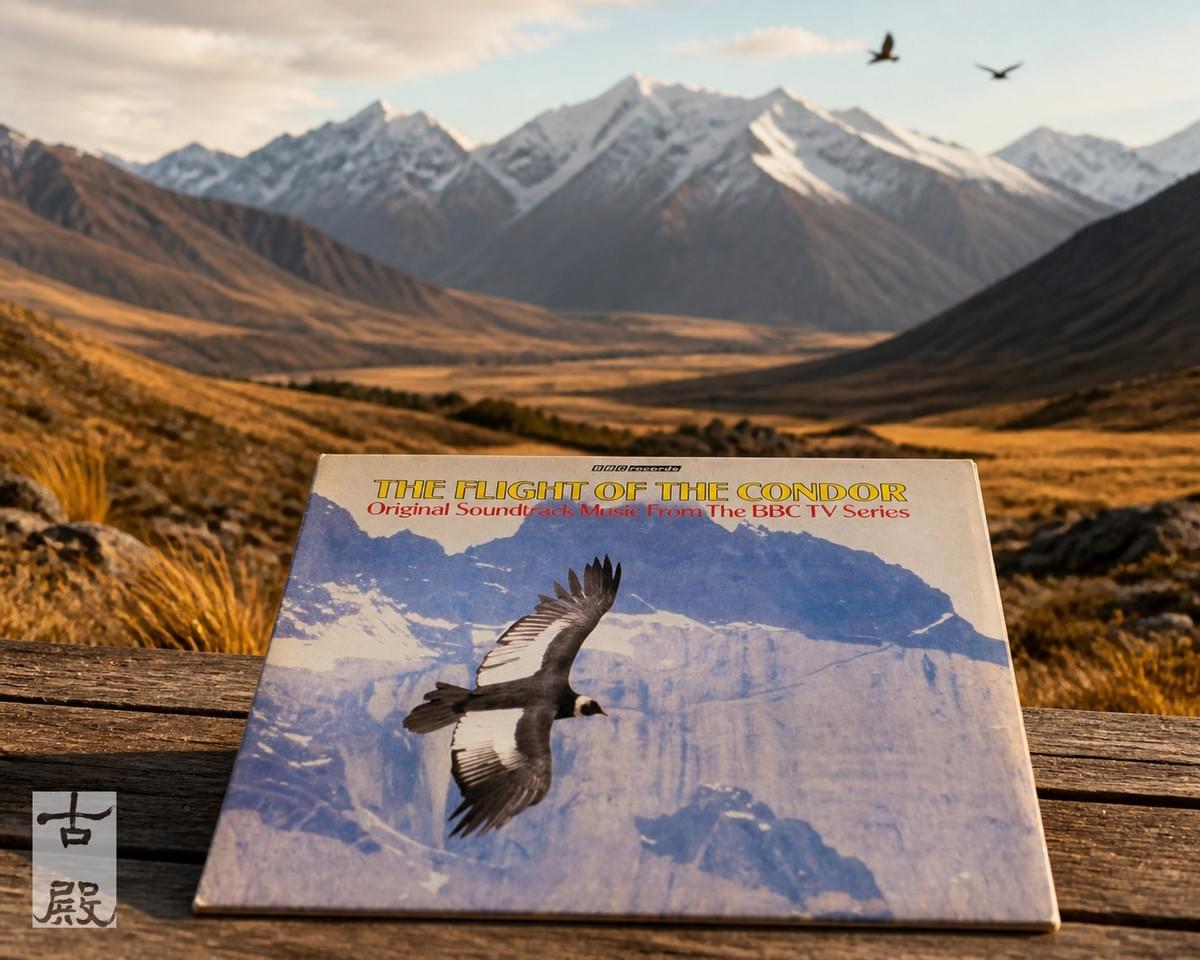
這張唱片,叫《The Flight of the Condor》(中文可譯作《神鷹飛翔》,BBC Records, REB 440,1982年英國初版)。它表面上只是一部自然紀錄片的原聲帶,背地裡,卻藏著一整段拉丁美洲黑暗的政治史。
他們原本只是要出門巡演三個月
故
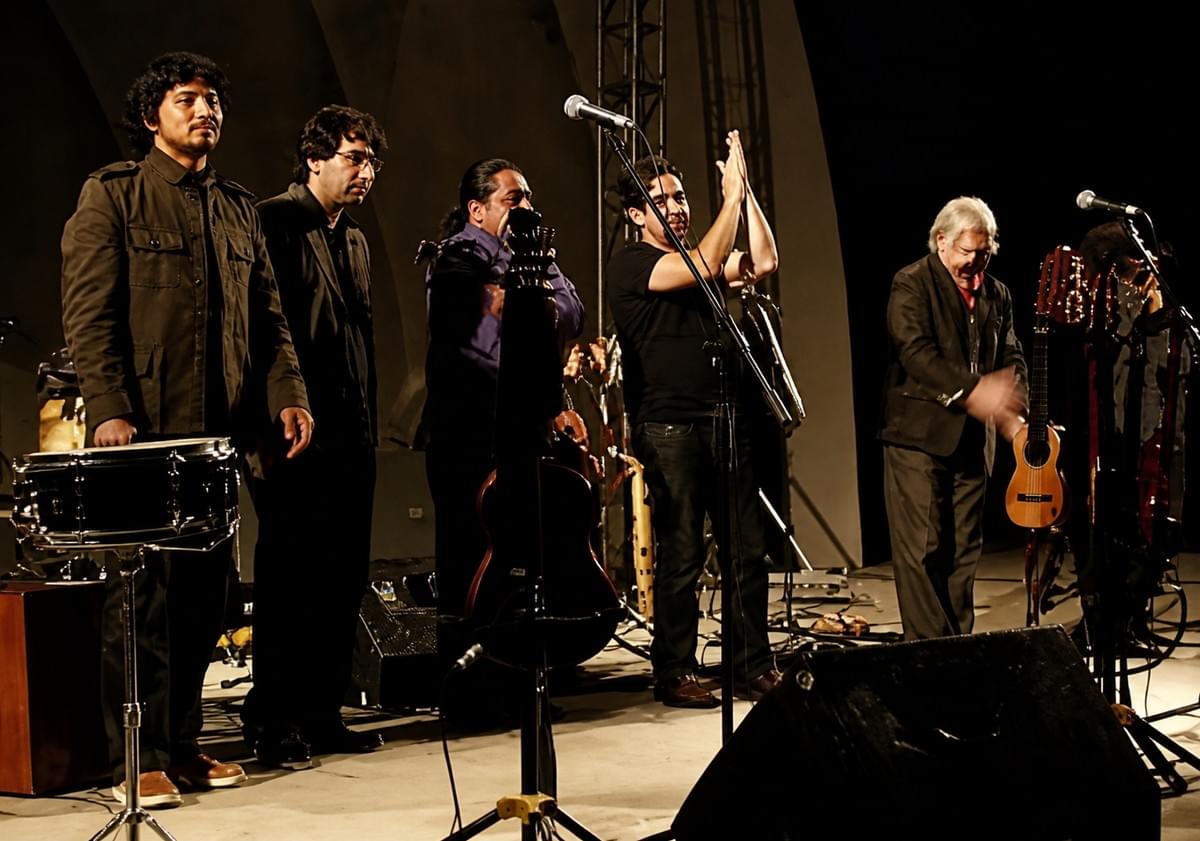
事的主角,是智利樂團:太陽・山端(Inti-Illimani)——團名源自蓋丘亞語「Inti」(太陽)與艾馬拉語「Illimani」(安地斯山脈裡一座聖山之名),直譯即「伊利馬尼山的太陽」。
1967年,一群聖地牙哥國立技術大學的學生組成了這支樂團,團名取自艾馬拉語,意思是「太陽」與安地斯山脈中一座聖山的名字。他們很快憑一首〈Venceremos〉(我們終將勝利)走紅——這首歌後來成為薩爾瓦多・阿葉德(Salvador Allende)「人民團結」政府最具代表性的文化符號之一。
1973年9月11日,一切都變了。
皮諾契將軍發動軍事政變,推翻阿葉德,開始長達十七年的獨裁統治。政變當天,太陽・山端正在歐洲巡演,行程原訂三個月。政變後,與阿葉德政府有關聯的「新歌謠」(Nueva Canción)音樂運動遭到全面查禁——唱片被銷毀,樂器被沒收,音樂人或被囚禁、或被殺害。同一運動裡的另一位歌手維克多・哈拉(Víctor Jara,1932-1973),就在政變後不久遇害。
太陽・山端的樂手們,就這樣被永久拒絕入境。
原訂三個月的巡演,變成了他們自己都苦笑稱為「史上最長一次巡演」的十五年流亡。他們落腳義大利羅馬,靠著持續創作與巡演六十多個國家維生,直到1988年智利邊境重新開放,才終於在同年9月18日踏上歸途——回國後,他們立刻投入公投運動,協助動員反對皮諾契續任。
而這張BBC唱片的錄音時間,正落在他們流亡羅馬的第九、第十年。
他們用僅存的樂器,在異鄉「重建」了故鄉的聲音
這正是這張唱片最讓人無法忽視的地方——它的封底,用一行看似平淡的英文製作注記,寫下了這整段歷史的重量:
除少數幾首外,其餘所有曲目,都是太陽・山端特別為BBC在羅馬錄製的。
換句話說:畫面裡壯闊的安地斯山脈,是BBC自然史部門的五位攝影師,跟著製作人麥可・安德魯斯(Michael Andrews)(他對安地斯山已有二十年的熟悉),花了整整十八個月實地拍攝出來的。而音樂裡那片同樣壯闊的安地斯山脈,卻是一群連腳都無法踏上那片土地的人,僅憑記憶與樂器技藝,在千里之外的錄音室裡「想像」出來的。
一部紀錄片,用了兩種完全不同性質的「真實」——一種是攝影機物理抵達的真實,一種是流亡者用身體記憶召喚出來的真實。
他們用來召喚故鄉的工具,是一整套南美傳統樂器:用蘆葦削成、由兩人交替吹奏才能湊出完整音階的排笛(Sikus);用犰狳殼作共鳴箱、聲音介於曼陀林與魯特琴之間的查朗戈琴(Charango);用整段中空樹幹挖鑿而成的低音鼓(Bombo)。每一件樂器的物理構造,本身就是安地斯高原生態環境的直接產物——犰狳、樹幹、蘆葦,全都是那片土地上長出來、活過來的東西。
即使人被政治放逐,這些樂器仍然是安地斯山脈唯一能夠親自「出席」的見證者。
一份逐格對應的聲音地圖
唱片封底附了一份極為詳盡的逐曲說明,把每一首樂曲精確對應到紀錄片裡的哪個畫面——哪段旋律配的是垂死小駱馬的畫面,哪段節奏是給玻利維亞嘉年華式的毛毛蟲場景,哪段編曲用來襯托智利聖拉斐爾冰川崩解的鏡頭。
這種近乎逐格對照的做工,說明這絕非「隨便找幾首現成的民謠拼湊」,而是製作人與樂團之間反覆核對畫面、逐段量身打造的正式配樂工程——即使雙方一個在安地斯山現場,一個在羅馬錄音室,這場跨越大陸的合作依然做到了電影配樂等級的精準。
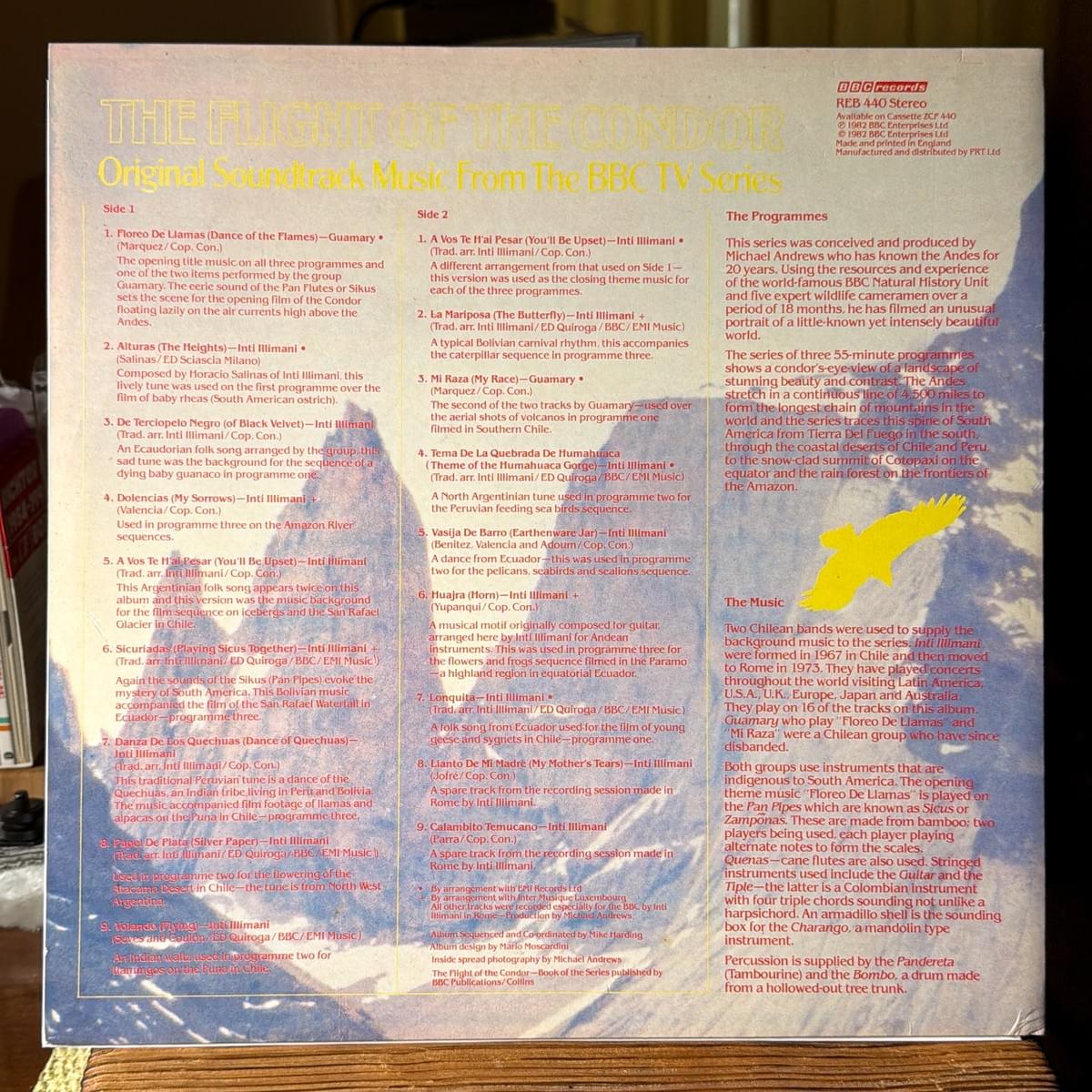
順帶一提,專輯裡由太陽・山端音樂總監薩利納斯(Horacio Salinas)創作的〈Alturas〉,其實並非為這部紀錄片新寫的曲子——早在1973年,也就是政變發生、他們剛開始流亡的那一年,這首曲子就已經收錄在他們的專輯《Viva Chile!》裡。這意味著,這張看似輕巧的自然紀錄片原聲帶,某種程度上也悄悄延續了他們整整十年流亡歲月裡的創作軌跡。

流亡背後的巧妙「偷渡」,反常地成為TAS發燒錄音
把時間拉回到今天:如果BBC現在要做一部關於安地斯山脈的自然紀錄片,配樂多半會交給一位電影配樂作曲家,用電腦音樂庫或現場錄製的環境音效,甚至直接派錄音師到當地收音。
1982年那個特殊的年代組合——一個正處於冷戰陰影下的南美洲獨裁政權、一群被迫流亡歐洲的「新歌謠」音樂家、以及英國國家廣播公司自然史部門一份格外有人文溫度的配樂邀約——這三者疊加在一起的機緣,幾乎不可能在今天被複製。
也正因為如此,這張黑膠格外值得被好好保存。它記錄下的,不只是一部自然紀錄片的配樂,更是一群被迫與家鄉實體斷裂的音樂家,在異鄉憑藉記憶與技藝,完成的一次無法親臨現場的「聲音返鄉」。有意思的是,這張唱片後來也因為錄音品質優異,被美國《The Absolute Sound》雜誌列入發燒天碟推薦名單——一張承載著流亡血淚的唱片,同時也是黑膠迷公認「好聽到值得拿來試機」的名盤。技術上的完美與情感上的重量,就這樣並存在同一張唱片裡。
家,是一個地方,還是一種聲音?
放上這張唱片時,不妨想一下這個問題:
當排笛的聲音響起,你聽到的,到底是安地斯山脈本身,還是一群思念安地斯山脈的人,用手邊僅存的樂器與記憶,所能做出的最接近的複製品?
對「太陽・山端」的樂手們來說,答案或許沒有那麼重要——因為在那十五年裡,能夠透過演奏讓自己的耳朵、雙手與呼吸,重新「回到」那片再也無法踏足的土地,本身可能就已經是一種偷渡:護照上蓋不了章,邊境守衛擋不住,卻能靠著一把排笛、一支蘆管,把自己「走私」回故鄉的空氣裡,哪怕只有錄音室裡短短幾分鐘。
而對隔著四十多年、隔著整片太平洋,此刻拿著這張黑膠的我們來說,或許可以換一個角度想:一段聲音之所以動人,從來不只是因為它「錄得有多逼真」,而是因為它背後,有一整個活生生的人,用盡全部生命的積累,去換來那短短幾分鐘的音樂。這是任何串流平台上一鍵播放的「安地斯山脈背景音樂」歌單,永遠無法給你的東西。
家,究竟是一個座標,還是一種只有身體才記得住的聲音?這張唱片沒有給答案,它只是把問題,四十多年,原封不動地留在了唱片裡,直到有人願意把持續聽下去。
******
【Gudian Music Stories】Smuggling Themselves Home Through Sound: The Story Behind the BBC Soundtrack The Flight of the Condor
A Natural, Yet Completely Mistaken Assumption
Imagine watching a 1982 BBC natural history documentary.
The camera follows an Andean condor gliding effortlessly along the ridges of the Andes, soaring over timeless glaciers and volcanic peaks. The score swells right on cue: interlocking Panpipes (Sikus) weave a melody filled with a desolate, sacred breath, as if the mountain wind itself were singing.
Naturally, anyone watching would assume that the musicians were right there with the camera crew—trekking across the highlands to capture the authentic, raw sounds of the land.
That assumption is completely wrong.
The music was recorded inside a studio in Rome, Italy. And the musicians performing it had been banned from their own homeland—an exile that lasted fifteen years.
The album is titled The Flight of the Condor (BBC Records, REB 440, first UK pressing, 1982). On the surface, it appears to be nothing more than a soundtrack to a nature documentary. Beneath the surface, however, lies an entire chapter of Latin America’s dark political history.
A Three-Month Tour Turned into a Fifteen-Year Exile
The protagonists of this story are the Chilean ensemble Inti-Illimani—a name combining Quechua (Inti, meaning "Sun") and Aymara (Illimani, a sacred mountain in the Andes), translating literally to "Sun of the Illimani Mountain."
Formed in 1967 by students at the Universidad Técnica del Estado in Santiago, the group quickly rose to prominence with songs like "Venceremos" ("We Shall Overcome"), which became one of the defining anthems of Salvador Allende’s Unidad Popular government.
On September 11, 1973, everything changed.
General Augusto Pinochet launched a military coup, overthrowing Allende and inaugurating seventeen years of brutal dictatorship. When the coup struck, Inti-Illimani was on a European tour originally scheduled for just three months. In the aftermath, the Nueva Canción (New Song) movement tied to the democratic government was brutally suppressed: records were destroyed, instruments confiscated, and musicians imprisoned or executed. Víctor Jara (1932–1973), a cornerstone figure of the same movement, was murdered shortly after the coup.
Inti-Illimani was barred from returning home indefinitely.
What began as a three-month tour became what the musicians wryly called "the longest tour in history"—fifteen years of exile. Settling in Rome, they sustained themselves by composing and touring across more than sixty countries. It was not until September 18, 1988, when Chile's borders were finally reopened, that they set foot on their native soil once again, immediately joining the campaign against Pinochet’s continued rule.
The BBC recording sessions took place during the ninth and tenth years of their exile in Rome.
Rebuilding the Sound of Home from Afar
This historical context gives the album its undeniable emotional weight. On the back cover, a modest production note reveals the truth:
Except for a few tracks, all selections were specially recorded for the BBC in Rome by Inti-Illimani.
The breathtaking Andean landscapes on screen were filmed on location over eighteen months by five BBC Natural History Unit cameramen under series producer Michael Andrews (who had known the Andes for two decades). Yet the equally vast Andean soundscape was conjured thousands of miles away in an Italian studio—built entirely from memory and musicianship by people who could not touch that ground with their own feet.
The documentary brought together two entirely different forms of "truth": the physical presence of the camera lens, and the bodily memory invoked by exiled artists.
Their tools of invocation were traditional South American instruments:
Sikus (Panpipes): Made of cut cane and played by two musicians in alternating dialogue to construct complete scales.
Charango: A small stringed instrument whose soundboard was traditionally crafted from an armadillo shell, producing a voice between a mandolin and a lute.
Bombo: A deep-toned bass drum carved from a single hollowed tree trunk.
The physical construction of each instrument is a direct extension of the Andean ecosystem—armadillos, hollowed wood, river cane. Even when human beings were politically banished, these instruments stood as physical witnesses from the Andean earth.
A Frame-by-Frame Sonic Map
The back of the jacket includes an exhaustive track-by-track guide linking each piece of music to specific scenes in the series: the melancholy melody accompanying a dying vicuña, the festive rhythm set against caterpillars in a Bolivian carnival-like dance, and the arrangement framing the calving of Chile’s San Rafael Glacier.
This frame-by-frame precision demonstrates that the album was far from a casual compilation of stock folk tunes. It was a meticulously crafted score shaped by close collaboration between the producer and the band across continents.
Notably, "Alturas," composed by Inti-Illimani’s musical director Horacio Salinas, was not written specifically for the documentary. It had already appeared on their 1973 album Viva Chile!, recorded at the very beginning of their exile. Its inclusion quietly traces a decade-long arc of displacement and creative endurance.
An Audiophile Classic Born from Political Exile
If the BBC were to produce a documentary on the Andes today, the soundtrack would likely be commissioned from a film composer using sample libraries, synthesized atmospheric layers, or field recordists sent on location.
The rare alignment of 1982—a South American dictatorship cast in Cold War shadows, an exiled collective of Nueva Canción musicians in Europe, and an unusually empathetic commission from the BBC Natural History Unit—is a convergence that would be nearly impossible to replicate today.
This is precisely what makes the vinyl record worth preserving. It is more than a natural history soundtrack; it is a sonic homecoming achieved through sheer memory and craftsmanship. Later, the album's exceptional acoustic fidelity earned it a place on The Absolute Sound (TAS) Super LP list. Technical excellence and historical weight exist side by side on the very same groove.
Is Home a Place, or a Sound?
When you lower the needle onto this record, consider this question:
When the panpipes breathe, are you hearing the Andes themselves, or the closest possible echo of home that longing souls could summon with wood, cane, and memory?
For the members of Inti-Illimani, the answer perhaps mattered very little. During those fifteen years, allowing their hands, ears, and breath to dwell in that landscape was an act of smuggling: denied entry by passport officers and border checkpoints, they slipped back into the Andean air through the reeds of a panpipe, if only for a few minutes inside a Roman studio.
For those of us holding this record decades later across the Pacific, the truth becomes clear: sound moves us not merely because it is cleanly recorded, but because an entire human life and its lived weight are condensed into those few minutes of music. That is something no generic streaming playlist of "Andean Ambient Sounds" can ever provide.
Is home a set of geographical coordinates, or a sound held in the body? This record does not answer the question; it preserves it intact, waiting for anyone willing to listen.