
【古殿唱片音樂故事】真正的原版,卻是大家最容易忽略的那一張:阿根達(Ataúlfo Argenta,1913–1958)的一張西班牙錄音
古殿殿主
一個被「品牌」決定的答案
如果你今天要買《阿蘭輝茲吉他協奏曲》這份1957年的傳奇錄音,行家多半會告訴你:要買,就買英國版,Decca SXL 2091,黑底銀字的「wide band groove」標籤。歐美發燒圈長年追捧這塊招牌,價格也跟著這套自成一體的品牌意識水漲船高。
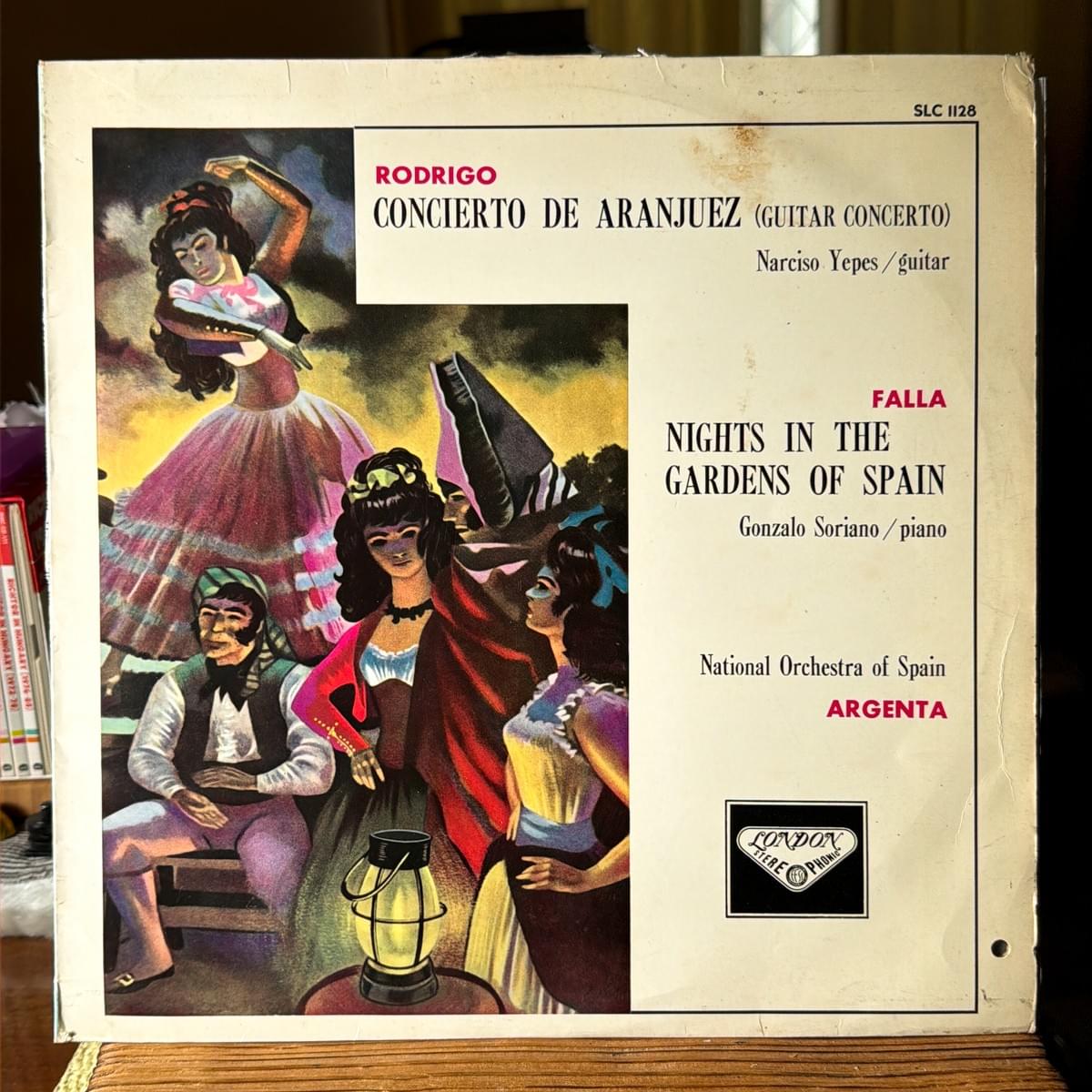
(這張是日本「大LONDON」歷史首版,封面跟DECCA首版是一樣的封面)
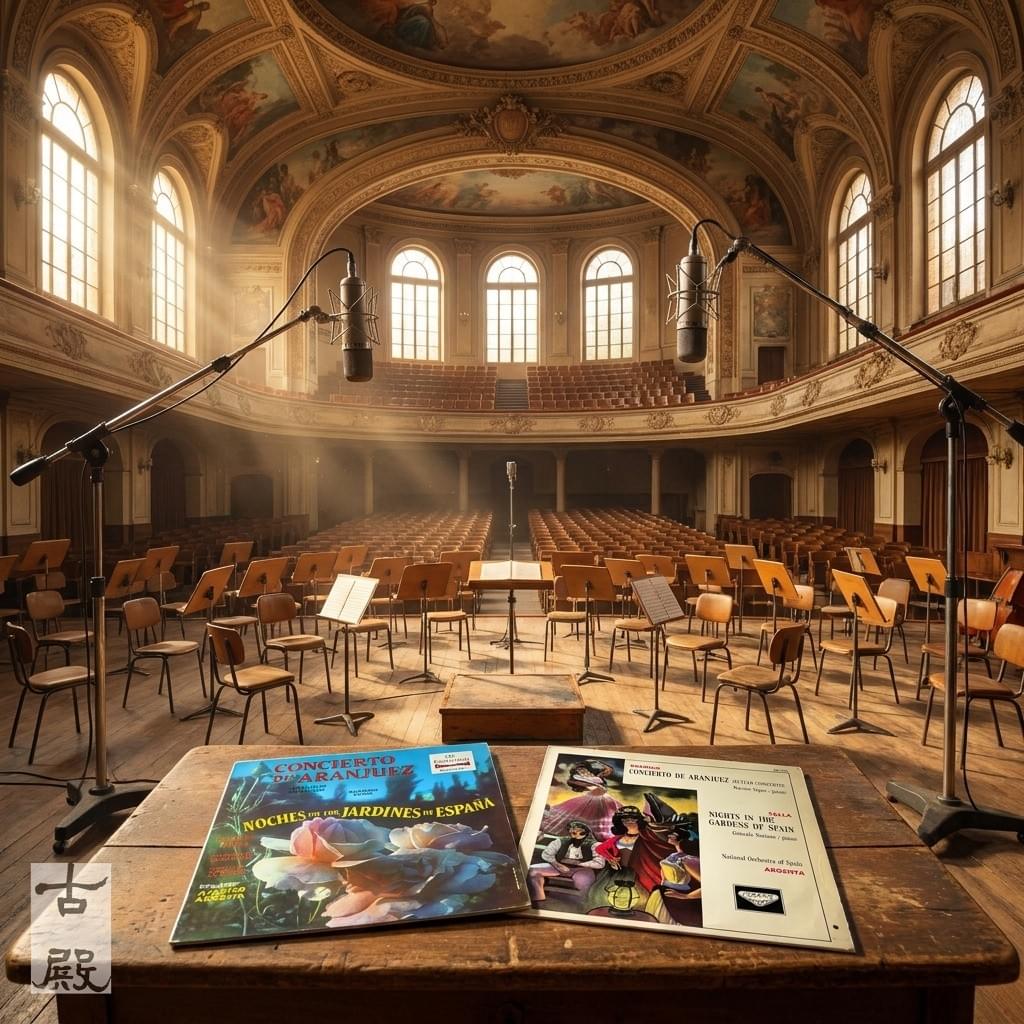
而同一份錄音的西班牙原版——封面印著玫瑰花園、唱片編號 SCLL 14000——在多數西方發燒友眼裡,卻只是個「地方發行的小眾版本」,沒有被放進同一個等級來看待。
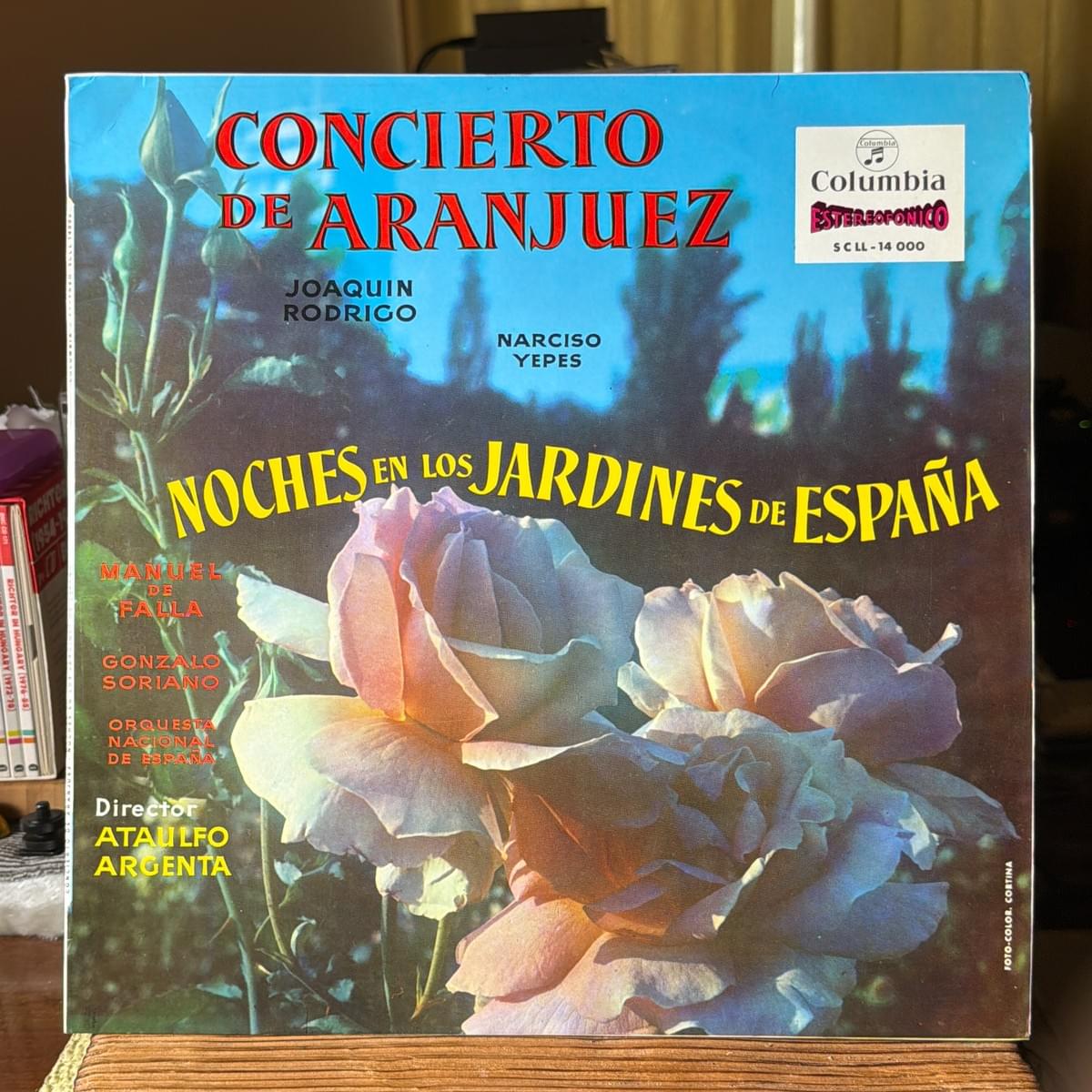
但在日本,情況完全不同。那邊資深黑膠藏家夠多、版本考證的功力也夠深,這張西班牙 Columbia 首版,實際上能賣到數萬日幣的行情——遠高於一般西方發燒圈給它的認知價位。
同一張唱片,兩種截然不同的市場待遇。差別不在錄音本身變了,而在「懂不懂它真正的身世」。
而它真正的身世,其實比「哪個版本更原始」這種版本學問題,還要單純、也還要動人:作曲家是西班牙人,指揮是西班牙人,樂團是西班牙人,獨奏家是西班牙人,出版它的唱片公司是西班牙的Columbia,連錄音本身,都是在西班牙本土的馬德里完成的。從創作到演出、從錄音到出版,這張唱片沒有一個環節離開過西班牙。
答案其實很清楚。真正的原版,是那張大家直覺會忽略的西班牙唱片。 英國那張被捧得老高的Decca版,其實是後來才取得授權、拿別人的錄音貼上自己商標的「翻版」。
這張古殿收藏的黑膠——《Concierto de Aranjuez》與《Noches en los Jardines de España》,指揮阿陶爾福・阿根達(Ataúlfo Argenta,1913–1958),吉他納西索・耶佩斯(Narciso Yepes,1927–1997),鋼琴貢薩洛・索里亞諾(Gonzalo Soriano,1913–1972)——它的故事,比市場上流傳的認知,要曲折得多。
借了技術,卻沒借走版權
1957年5月23日,馬德里紀念電影院。一群音樂家把這座平常放電影的空間,臨時改造成錄音現場,用完整編制的西班牙國家管弦樂團,錄下了這份錄音。
出資的、擁有版權的,是西班牙 Columbia 唱片公司。這一點,Discogs上專門考證版本的藏家甚至特地在唱片說明裡加了一句話:這張後來被冠上Decca編號的唱片,「並非由Decca製作」——而唱片本身,完全沒有告訴你這件事。
但這不代表Decca毫無關係。指揮阿根達本人與Decca長年合作,彼此有深厚的默契;而Decca當時的立體聲錄音技術FFSS(Full Frequency Stereophonic Sound),在業界獨步一時。這場錄音,很可能就是借助了Decca的工程團隊與技術支援才得以完成的。
技術支援是一回事,版權歸屬是另一回事。這份母帶,從頭到尾都屬於西班牙 Columbia。Decca是在錄音完成之後,才另外取得海外授權,把同一份母帶掛上自己的商標,賣到英國、美國、法國——這些國際版,本質上都是「拿授權來的」,不是「自己製作的」。有趣的是,就連在西班牙本地,這同一次錄音也曾以「Alhambra」這個姊妹廠牌的名義另外發行過一版——封套、曲目、演出者完全相同,只換了商標。一份母帶,一次出資,卻能在不同市場貼上好幾種招牌流通,這正是那個年代唱片工業運作的常態。
而市場的追捧,追的正是DECCA/LONDON品牌本身,不是錄音的真實身世。多數花高價買下英國版的收藏者,可能根本不知道自己買的,其實是一份輾轉的授權品。
十年前,一位指揮家在小鎮聽了一個男孩彈琴
要真正理解這份錄音的份量,得把時間倒回十年前。
1947年,穆爾西亞省洛爾卡小鎮,一個十來歲的男孩為當地的樂團指揮試奏。這個男孩叫納西索・耶佩斯,那個指揮,就是阿根達。
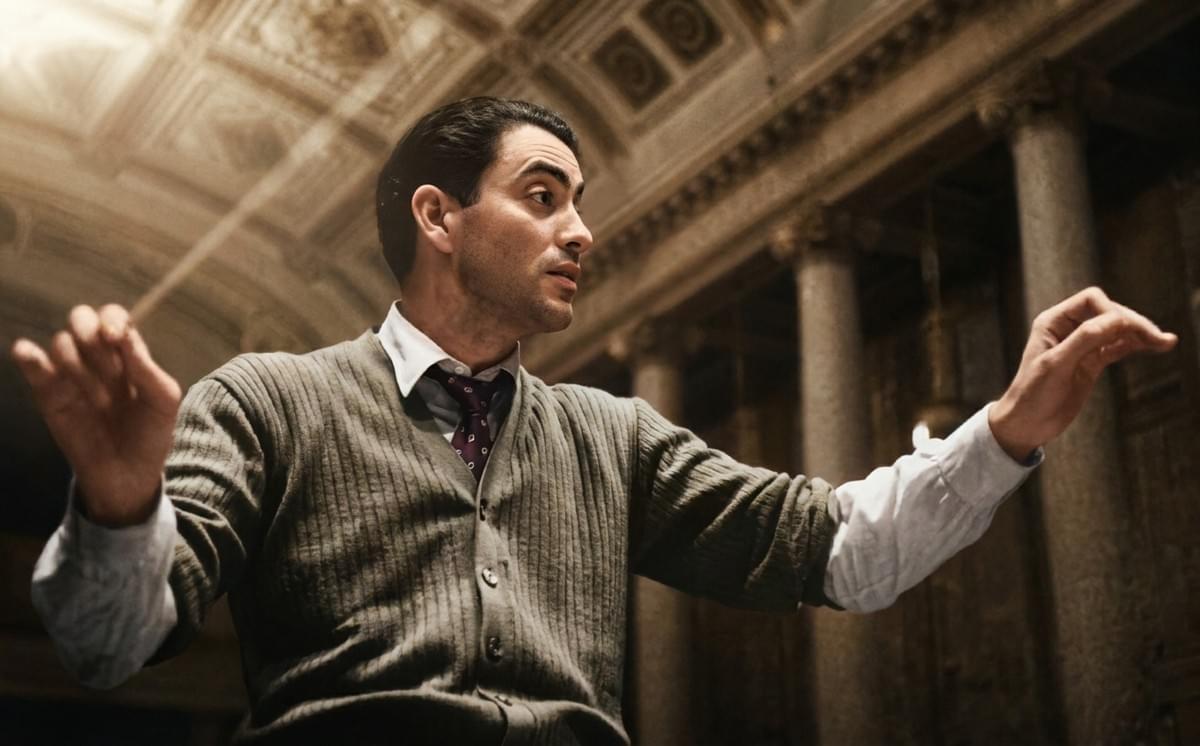
阿根達對這個孩子的才華印象深刻,親自說服他到馬德里發展。同年12月16日,耶佩斯在馬德里的正式首演,演奏的正是《阿蘭輝茲吉他協奏曲》,指揮就是阿根達本人——據義大利吉他學者吉拉迪諾(Angelo Gilardino,1941–2022)的記載,阿根達甚至親自逐句指導這個少年,該怎麼處理獨奏部分的每一個樂句。
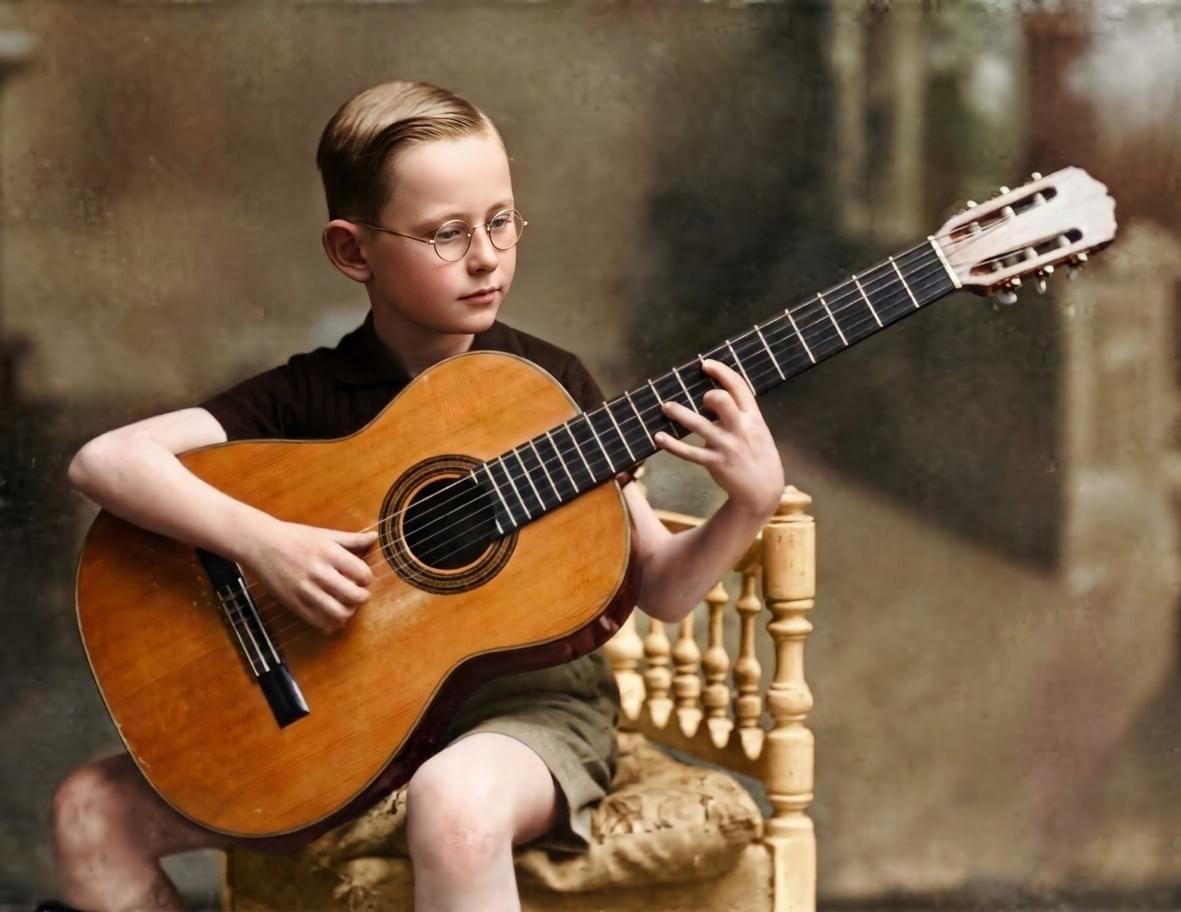
十年後,1957年那個5月的下午,兩人再度合作,把當年那份信任,錄成了唱片史上最具代表性的版本之一。這不是兩位陌生專業音樂家的一次商業合作,而是一段十年前就已寫好的伏筆。
B面的鋼琴家索里亞諾,也有類似的淵源——他年輕時是作曲家法雅(Manuel de Falla,1876–1946)本人親自提攜的弟子,兩人私交甚篤,法雅在世時,索里亞諾便經常演奏他的作品。後世樂評人給了索里亞諾一個溫柔的暱稱:「西班牙的園丁」,恰好呼應這張唱片B面的曲名《西班牙花園之夜》。換句話說,演奏這首曲子的鋼琴家,本人就是曲子作曲家的入室弟子——這不是一般意義上的「詮釋」,而更接近一場親身傳承的示範演出。
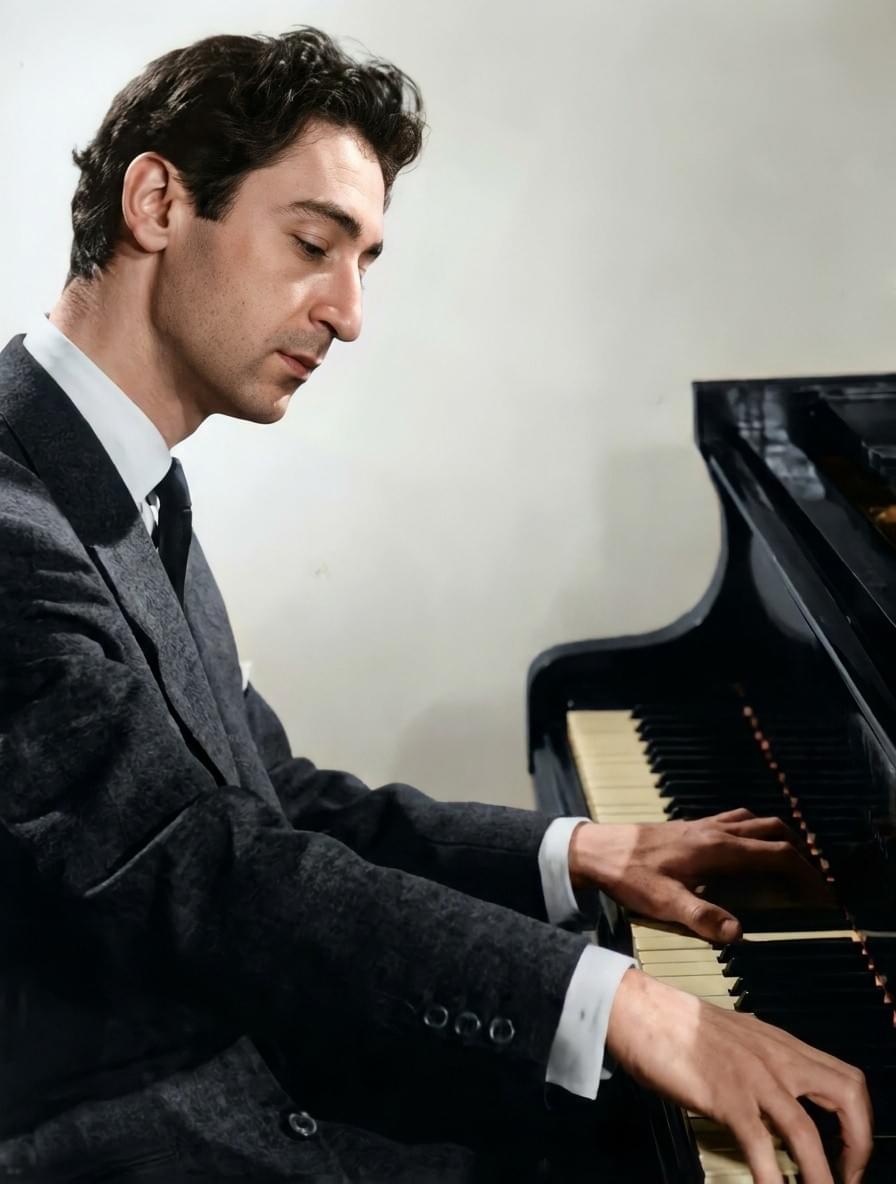
錄完八個月後,他在自家車庫裡過世
這份錄音裡,藏著整個故事最沉重的一筆。
1958年1月21日,也就是這場錄音之後不到八個月,阿根達在馬德里近郊自宅意外過世,得年44歲。那天晚上,他和一位學生因為書房太冷,先躲進車庫等暖氣運轉,他發動汽車引擎取暖,但車庫門沒有打開通風——學生獲救,他卻死於一氧化碳中毒。
他辭世時,事業正值巔峰:原訂數月後,就要與維也納愛樂錄製布拉姆斯交響曲全集。
也就是說,1957年5月23日那個下午錄下的這兩首曲子,很可能是阿根達生涯裡最後一批重要錄音室作品之一——而它正式問世時,他本人已經不在人世了。錄音當下,沒有人知道這會是他留給世界最後的重要證言之一;但正因為它「恰好」是,這道溝槽裡封存的,就不只是一場演出的技藝,而是一段被時間意外賦予了紀念碑意義的生命片段。
一段可能是編出來的心碎故事
B面《西班牙花園之夜》的作曲家法雅,發想於1900年代旅居法國巴黎時,直到一戰後返回西班牙,才把這些「懷鄉的夢」正式整理成這部交響印象曲。
A面的《阿蘭輝茲吉他協奏曲》,也有一段流傳甚廣的身世傳說:作曲家羅德里戈(Joaquín Rodrigo,1901–1999)三歲就因白喉失明,終生未曾親眼見過阿蘭輝茲的庭園,卻寫下了古典吉他文獻裡最著名的協奏曲,靠點字譜曲,再由妻子維多莉亞(Victoria Kamhi,1905–1997)轉譯成五線譜。坊間流傳,第二樂章那段舉世聞名的旋律,是他對妻子當年流產之痛的私密回應。
但音樂學者指出一個時間軸上的矛盾:根據羅德里戈本人1943年的書信,這首曲子的創作契機,其實源自1938年9月一場晚宴上的約定,早於1939年春天那次流產。這段心碎的故事,究竟是真實發生過的,還是作曲家晚年為自己的傑作,添上的一層動人身世——至今沒有定論。
或許,這正是老唱片最迷人的地方:它們留下的,從來不只是音符,還有一整代人願意相信、也樂於流傳的故事本身。
這種事,今天大概不會再這樣發生
想像一下今天的唱片工業:一家跨國廠牌看中一位年輕演奏家,通常會直接簽下他,用自己的錄音團隊、自己的品牌,從頭到尾一手包辦。「某國廠牌借用另一國廠牌的技術完成錄音,版權卻完全歸屬對方」這種操作,在今天全球化、法務條款鉅細靡遺的唱片產業裡,幾乎不可能再發生。
同樣不會再發生的,還有那種「指揮家在小鎮聽了一個孩子彈琴,就此決定栽培他十年」的故事——今天的職業音樂教育體系,講究的是比賽名次、經紀公司包裝、社群媒體聲量,很難再有一位指揮家單憑一次業餘試奏的直覺,就押上十年時間陪一個孩子成長。
這些條件疊加在一起的機緣,幾乎不可能在今天被複製。也正因為如此,這張唱片格外值得被好好保存與聆聽。
你認的,到底是品牌,還是真相?
回到開頭那個對比:同一張錄音,在歐美發燒圈只是個「地方版本」,在懂行的日本藏家手裡卻能賣到數萬日幣的行情。差別從來不在錄音本身,而在一個市場對歷史脈絡的理解夠不夠深。
這背後,其實藏著一個很值得每個人問自己的問題——當我們在為一件東西的「來歷」買單時,我們認的,到底是它本身的真實份量,還是它身上貼著的那塊品牌?
「Decca」這兩個字帶來的信任感,是特定收藏圈子集體堆疊、彼此強化出來的一層敘事,不是1957年5月23日那個下午,馬德里紀念電影院裡真正發生過的事。真正發生過的事,其實很單純:西班牙的作曲家,西班牙的指揮,西班牙的樂團,西班牙的獨奏家,西班牙的唱片公司,在西班牙自己的土地上,錄下了一份完全屬於西班牙自己的聲音。一位指揮家用十年前埋下的信任,換來錄音室裡的默契,然後在八個月後,猝然離開了這個世界。
這條從創作到出版、完全沒有離開過西班牙的血統鏈,才是這張唱片真正的價值所在——也是無法被任何品牌、任何後來的商標重新書寫的、唯一的真實。
下次當你為一件東西的「出身」而多付一份信任時,不妨想一下:你認的,是它的真相,還是它的品牌?
*******
【Gudian Music Stories】The True Original Is the One Most Easily Overlooked: A Spanish Recording by Ataúlfo Argenta (1913–1958)
An Answer Dictated by the "Brand"
If you set out today to buy the legendary 1957 recording of the Concierto de Aranjuez, most seasoned audiophiles will tell you: if you want the best, buy the British pressing—Decca SXL 2091, with its black-and-silver "wide band groove" label. Western audiophile circles have pursued this hallmark for decades, and its price has steadily climbed alongside this self-contained brand consciousness.
Meanwhile, the true Spanish original of the very same recording—bearing a painting of a rose garden on its cover, catalog number SCLL 14000—is regarded by most Western collectors as merely an obscure "niche regional release," rarely placed in the same league.
In Japan, however, the situation is completely different. There, seasoned vinyl collectors are plentiful, and their depth of discographical research is profound. This Spanish Columbia first pressing actually commands prices of tens of thousands of yen in the Japanese market—far exceeding the value assigned to it in Western audiophile circles.
The same recording, met with two entirely different market realities. The difference does not lie in any change in the recording itself, but in whether one truly understands its origins.
And its true lineage is actually simpler, and far more moving, than any academic debate over which edition is more primitive: the composers were Spanish, the conductor was Spanish, the orchestra was Spanish, the soloists were Spanish, the label that published it was Spanish Columbia, and the recording itself was completed right in Madrid on Spanish soil. From creation to performance, from recording to publication, not a single link in this production ever left Spain.
The answer is self-evident: the true original is that very Spanish pressing which intuition usually prompts people to overlook. The exalted British Decca edition was, in reality, a licensed pressing that came later—taking someone else's recording and affixing its own trademark.
The story behind this LP preserved in the Gu-Dian Chamber collection—featuring Joaquín Rodrigo’s Concierto de Aranjuez and Manuel de Falla’s Noches en los Jardines de España, conducted by Ataúlfo Argenta (1913–1958), with guitarist Narciso Yepes (1927–1997) and pianist Gonzalo Soriano (1913–1972)—is far more intricate and human than common market perception suggests.
Borrowed Technology, Not the Copyright
On May 23, 1957, inside the Cine Monumental in Madrid, a group of musicians transformed a venue normally used for screening films into an impromptu recording stage. There, together with the full forces of the Orquesta Nacional de España, they laid down this recording.
The company that financed the project and held the copyright was Columbia Española. On Discogs, discographers who specialize in catalog research specifically noted in the album description: this record, later issued under a Decca catalog number, was "not produced by Decca"—a fact the jacket itself never mentions.
Yet this does not mean Decca had nothing to do with it. Conductor Ataúlfo Argenta had a long-standing partnership and deep rapport with Decca; furthermore, Decca's pioneering Full Frequency Stereophonic Sound (FFSS) system was unmatched in the industry at the time. It is highly likely that this recording session was realized with technical support and engineering assistance from Decca's team.
Technical support is one matter; copyright ownership is another. From start to finish, the master tapes belonged to Spanish Columbia. It was only after the recording was complete that Decca acquired overseas distribution rights, placing its own trademark on the very same master tapes to sell in the UK, the US, and France. These international editions were fundamentally "licensed goods," not "in-house productions." Interestingly, even within Spain, this identical recording was issued under a sister label named "Alhambra"—sharing the exact same cover, repertoire, and performers, with only the trademark changed. One master tape and a single investment circulated across different markets under multiple banners—the standard operating reality of the mid-century recording industry.
What the collectors' market chased was the DECCA/LONDON brand itself, not the living provenance of the recording. Most buyers who paid high prices for the British edition likely never realized they were buying a secondary licensed product.
Ten Years Earlier: A Conductor Hears a Boy Play in a Small Town
To truly understand the weight of this recording, one must turn the clock back ten years.
In 1947, in the small town of Lorca in Murcia, a teenage boy auditioned before the conductor of a local orchestra. That boy was Narciso Yepes; that conductor was Ataúlfo Argenta.
Argenta was so struck by the boy's talent that he personally persuaded him to move to Madrid to develop his career. On December 16 of that same year, Yepes made his formal debut in Madrid performing the Concierto de Aranjuez, conducted by Argenta himself. According to records by Italian guitar scholar Angelo Gilardino (1941–2022), Argenta personally coached the young soloist phrase by phrase through every line of the solo part.
A decade later, on that May afternoon in 1957, the two collaborated once more, committing that ten-year-old trust to tape and creating one of the most iconic accounts in recording history. This was not a cold commercial encounter between two unfamiliar professional musicians; it was the realization of a bond forged ten years prior.
Pianist Gonzalo Soriano on Side B had a similar lineage. In his youth, Soriano was a direct protégé personally nurtured by composer Manuel de Falla (1876–1946). The two shared a close friendship, and during Falla's lifetime, Soriano frequently performed his works. Later critics bestowed upon Soriano an affectionate moniker: "The Gardener of Spain," which neatly mirrored the title on Side B, Nights in the Gardens of Spain. In other words, the pianist performing the piece was the composer's own chosen disciple. Rather than a conventional "interpretation," it was an authentic act of lineage and personal transmission.
Eight Months Later, He Passed Away in His Garage
Woven into this recording is the heaviest chapter of the entire story.
On January 21, 1958—less than eight months after this session—Argenta died tragically at his home near Madrid at the age of 44. That cold evening, finding his study freezing while waiting for the central heating to work, Argenta and a student took shelter inside his car in the garage, running the engine for heat without opening the garage doors for ventilation. The student was rescued, but Argenta died of carbon monoxide poisoning.
At the time of his death, his career was at its absolute peak; he had been scheduled to record a complete cycle of Brahms symphonies with the Vienna Philharmonic just months later.
This means the two pieces recorded on the afternoon of May 23, 1957, were very likely among the final major studio works of Argenta's life—and by the time the album was officially released, he had already passed away. During the recording session, no one could have known this would become one of the last great testaments he left to the world. Yet because it happened to be so, what remains sealed within those grooves is not merely performance artistry, but a fragment of a human life accidentally turned into a monument by time.
A Heartbreak That Might Have Been Lore
Manuel de Falla, the composer of Nights in the Gardens of Spain on Side B, first conceived the work in the 1900s while living in Paris. It was only after returning to Spain following World War I that he formally organized these "nostalgic dreams" into this orchestral impression.
Side A's Concierto de Aranjuez also carries a widely circulated legend: composer Joaquín Rodrigo (1901–1999) was blinded by diphtheria at age three and never laid eyes on the gardens of Aranjuez, yet he went on to write the most famous concerto in the classical guitar repertoire—composing in Braille before his wife, Victoria Kamhi (1905–1997), transcribed it into standard notation. Popular lore holds that the universally celebrated melody of the second movement was his intimate response to the grief of his wife's miscarriage.
Musicologists, however, point out a chronological discrepancy: according to Rodrigo’s own letters from 1943, the genesis of the concerto arose from a promise made at a dinner in September 1938, prior to the miscarriage in the spring of 1939. Whether this heartbreaking story was lived reality or a poignant myth added in the composer's later years remains an unsettled question.
Perhaps that is precisely what makes historic records so endlessly fascinating: what they preserve has never been just acoustic notes, but the very stories that an entire generation chose to believe and pass down.
Things That Wouldn't Happen Today
Picture today's recording industry: when a multinational label takes an interest in a young musician, it typically signs them directly, handling everything from start to finish with its own production team and brand. The scenario where a record company in one country borrows technology from another while retaining full copyright ownership has virtually vanished in an era of globalized corporate infrastructure and airtight legal contracts.
Equally vanished is the story of a conductor discovering a young boy playing in a provincial town and deciding to nurture him over the course of a decade. In a modern classical music education system driven by competition rankings, agency packaging, and social media reach, it is hard to imagine a conductor staking ten years on sheer intuition from an informal audition.
The convergence of circumstances that produced this record could scarcely be replicated today. That alone makes it an artifact deeply worthy of preservation and mindful listening.
Do You Value the Label, or the Truth?
Returning to the contrast at the start: the very same recording is regarded as a mere "regional pressing" in Western audiophile circles, yet commands tens of thousands of yen among discerning Japanese collectors. The difference has never been about the recording itself; it is about whether a market's understanding of historical context runs deep enough.
Behind this lies a question worth asking ourselves: when we pay for the pedigree of an object, are we honoring the genuine substance of what took place, or merely the brand label stamped upon it?
The sense of trust evoked by the name "Decca" is a collective narrative cultivated and reinforced within specific collector circles. It is not what actually took place inside the Cine Monumental on the afternoon of May 23, 1957. What actually occurred was straightforward: a Spanish composer, a Spanish conductor, a Spanish orchestra, a Spanish soloist, and a Spanish record company, coming together on Spanish soil to capture a sound that belonged entirely to them. A conductor transformed a ten-year-old bond of trust into effortless artistic telepathy, only to leave this world eight months later.
That unbroken bloodline from conception to publication—one that never left Spain—is the true soul of this recording. It is the one singular truth that no brand name and no subsequent trademark can ever rewrite.
The next time you place your faith in an item's pedigree, ask yourself: are you listening to its truth, or to its brand?