
【古殿唱片音樂故事】一個握手,兩張唱片:卡汀(Peter Katin,1930-2015)與菅野沖彥(Okihiko Sugano,1932-2018),被錄下的「信任」
古殿殿主
一個握手
1974年,東京。一個廣播節目的錄音現場。
一位英國鋼琴家彈完了蕭邦的波蘭舞曲與夜曲。節目的主持人走上前,對他說:我想為你錄一張唱片。
這個邀請沒有經過經紀公司,沒有合約談判,也不是一家唱片公司的企劃案。鋼琴家的回答也很簡單——他握住主持人的手,說:
「讓我們一起做出一張精彩的唱片吧!」
這位鋼琴家是彼德·卡汀(Peter Katin,1930-2015)。主持人是日本錄音師菅野沖彥(Okihiko Sugano,1932-2018)。
這一段,是菅野自己寫在唱片內頁裡的。沒有日記、沒有回憶錄,只有印在那張唱片上的幾行字。而在接下來的十五個月裡,這個握手變成了兩張唱片。第二張錄於1976年,45歲的卡汀在埼玉縣的一座市民會館裡,錄下德布西的〈月光〉。菅野在這張唱片的腰帶上親筆寫了一句話:「為了重現〈月光〉中鋼琴音色之美的這一瞬間,我賭上了一切。」從一個握手,到「賭上一切」,中間發生了什麼?
古殿在先前一篇介紹卡汀的文章裡,講的是他這個人。這一篇要講的,是兩個人之間的事——以及一個很少被談到的問題:
在類比錄音的時代,兩個人之間的信任,如果真的被錄進了溝紋裡,它呈現出來的,是什麼樣的藝術價值?
後世討論菅野的錄音好在哪裡、他的錄音藝術是什麼,談的多半是器材與設備、麥克風的擺位、錄音的方式,以及「唱片演奏家」這樣的理念與理論。這些是大家公認的,也都對;但很少有人提到其中人與人之間的關係。這篇文章要強調的,正是這一點:人。
菅野沖彥是誰?
對日本的音響迷來說,「菅野錄音」是一個幾乎不需要解釋的詞。但在華文的音響迷世界,也是如此。
菅野一門充滿藝術與音樂的因子:弟弟是日本著名的爵士鋼琴家菅野邦彥(Kunihiko Sugano,1936-),家族中也不乏畫家與煙斗工藝名匠。
1959年,27歲的菅野因緣際會,加入朝日新聞社創辦的世界第一本「有聲雜誌(《朝日ソノラマ》(Asahi Sonorama))」的編輯群。因為前所未有,朝日新聞的老闆讓這群年輕人盡情去玩。菅野在這十年裡,學會了寫作、製作與錄音。朝日新聞老闆非常喜愛古典音樂,幾乎每年都在大阪舉辦國際音樂節,菅野負責接洽與招待,因而結識了安德烈·克路易坦(André Cluytens,1905-1967)、皮耶·蒙都(Pierre Monteux,1875-1964)、夏爾·孟許(Charles Munch,1891-1968)這些指揮巨匠。
1969年,他離開雜誌,創辦了自己的唱片品牌 Audio Lab Record。企劃、製作、錄音,全部一手包辦。這個品牌在 1970 年代留下的唱片,如今已成為日本昭和時代的歷史名盤。
他長年在日本權威音響雜誌《Stereo Sound》擔任核心主筆,提出「唱片演奏家」的概念:聽者用自己的音響系統放一張唱片,這個行為本身就是一次演奏。他規劃的「唱片演奏家」專欄,成了日本音響刊物的傳奇;後來他患重病,專欄停刊,也無人能繼承。
菅野可列於日本近代最偉大的錄音師之一。他的錄音以鑑賞品味著稱,不走嘩眾取寵的誇張路線,極重視音樂與空間的平衡。據波蘭音響雜誌 High Fidelity 的介紹,他少年時沒能如願學鋼琴,於是動手拆解唱機,就這樣走進了聲音的技術世界;他也愛抽煙斗,收藏留聲機與蟲膠唱片。
一個先例
在遇到卡汀之前,菅野已經為一位外國音樂家錄過一張「因為友情而存在」的唱片。
1973年4月24日,東京青山塔屋音樂廳。菅野為他九年的老朋友、從蘇聯流亡美國的大提琴家弗謝沃洛德·列日涅夫(Vsevolod Lezhnev,1931-?),錄下了他一生唯一的一張大提琴專輯。殿主曾寫過這個故事。
一年半後,菅野遇到了卡汀。這一次,他們不是老朋友。
一位錄音師的耳朵
菅野當時主持一個 FM 東京的常態節目,叫《デンオン・ライヴ・コンサート(Denon Live Concert)》。來日本的演奏家在節目裡現場演出,廣播給聽眾。
他知道卡汀這個名字——一位英國名鋼琴家。但親耳聽到他的演奏,這是第一次。
菅野後來寫下他那天聽到的東西:
「通篇籠罩在高度緊繃張力之下的驚人演繹,令我深受震撼。打磨至極致微細的弱音、精妙踏板控制所勾勒出的如夢似幻之境,以及自極度透明的次強音延伸至強音那層次繁複繽紛的色彩漸變……」
仔細讀這段話,會發現它和一般樂評不太一樣。菅野沒有先談「詮釋」,而是先談「聲音」:極弱音有多細、踏板如何控制、從中強到極強的音色漸層。這是一位錄音師的耳朵——他聽到的,是「可以被錄下來的美」。
但他沒有停在聲音。他繼續寫:
「更重要的是,超越琴藝技巧之上,其演奏具備一種牢牢攫住聽者心靈、使人不知不覺徹底沉浸於其音樂世界中的強大表現力……更具備以深邃洞察力與高超知性牢牢掌握樂曲內在精神的巨大說服力。」
然後是那個:握手。
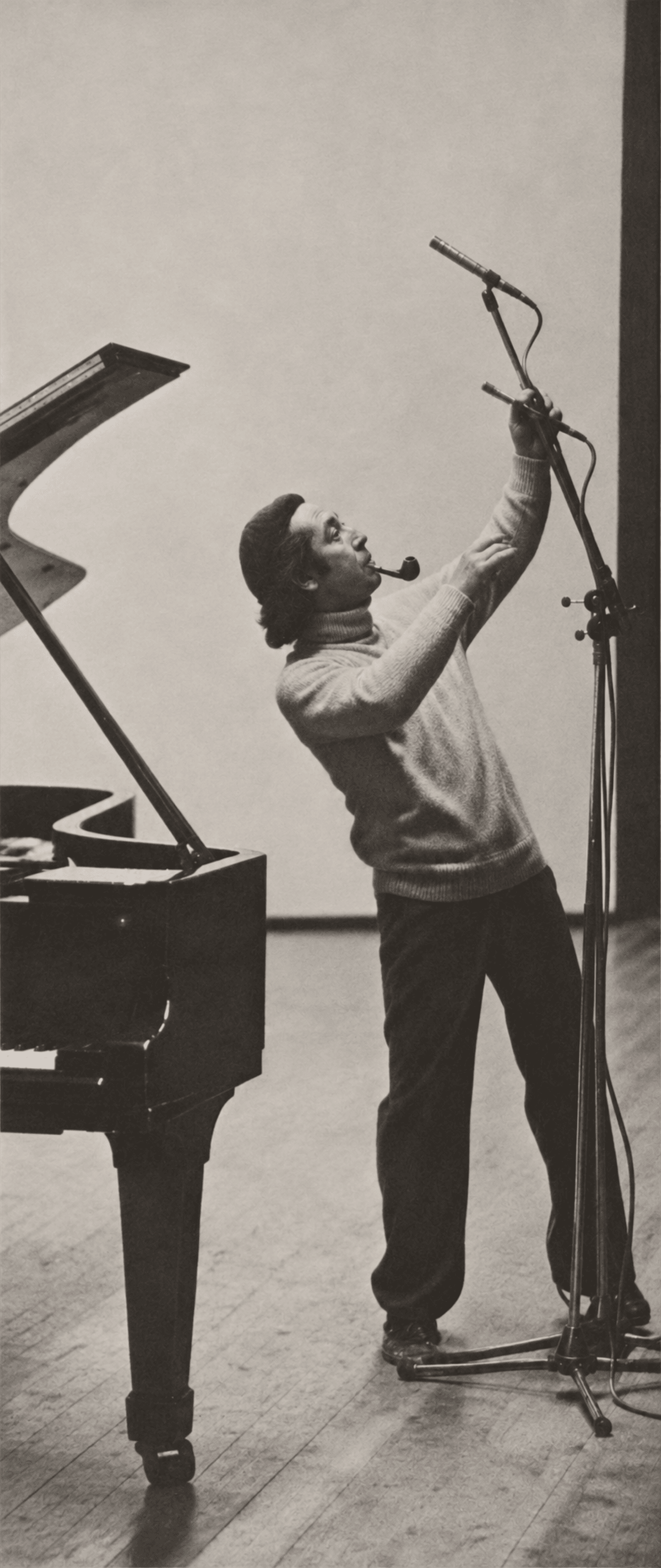
「太過低調」的首演
菅野的邀請裡,還有另一層心意。他在解說裡坦白寫道,卡汀這次在日本的首演「顯得過於低調沉潛」:東京只有一場日場音樂會,其餘只在太田、仙台、佐賀等地悄然演了幾場便要返國。
「正因如此,能趁他訪日之際錄製完成這部唱片,能為日本樂迷深入領略卡汀高超純粹的鋼琴藝術境界提供一份助益,我深感榮幸與欣慰。」
一位好鋼琴家來了又走,幾乎沒有人聽到。菅野感覺到這樣真的太可惜了,希望把它錄下來。
一年半前他為列日涅夫錄音,是因為九年的友情。這一次他和卡汀是初次見面,信任不是用時間換來的,而是從聲音開始的——一個聽到了,一個被聽到了。中文裡有個詞剛好就是在說這種關係:知音。
第一張:1974年11月25日
錄音只用了一天。
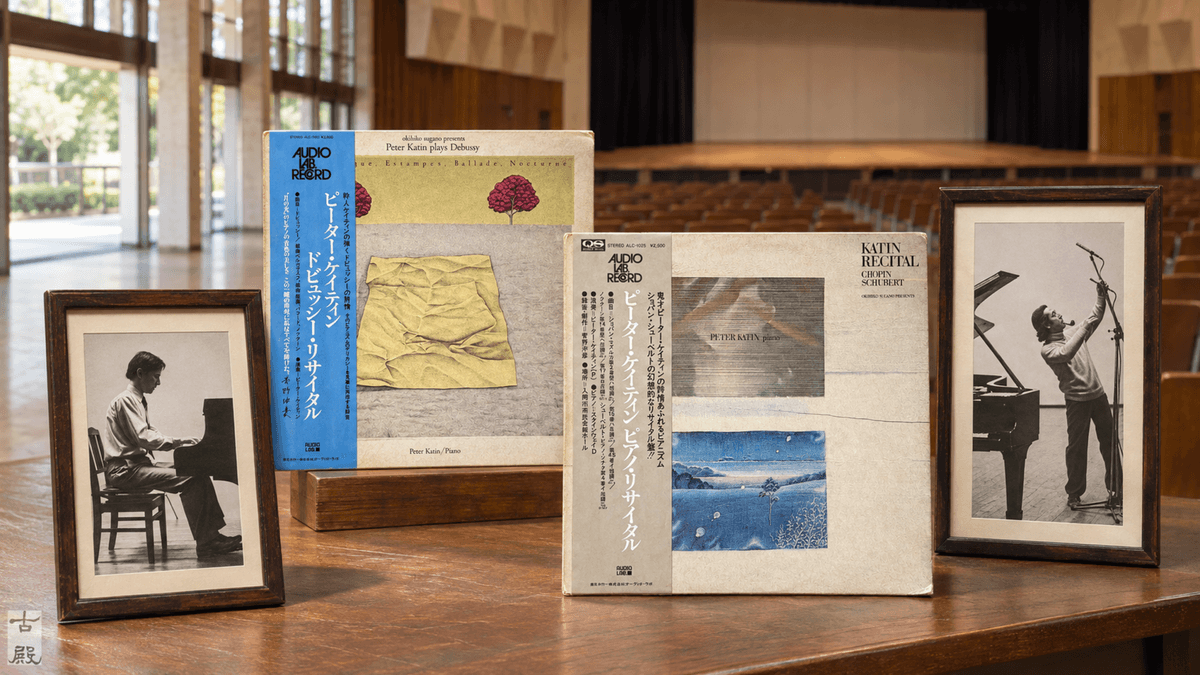
地點不在東京的錄音室,而在埼玉縣的入間市民會館——一座真正的音樂廳。鋼琴是漢堡原廠的史坦威 D 型。曲目是蕭邦的三首馬祖卡、兩首夜曲,和舒伯特(Franz Schubert,1797-1828)的a小調鋼琴奏鳴曲 D.537。1975年,這張唱片以 Audio Lab ALC-1025 發行,封面右上角印著一行小字:OKIHIKO SUGANO PRESENTS(菅野沖彥出品)。
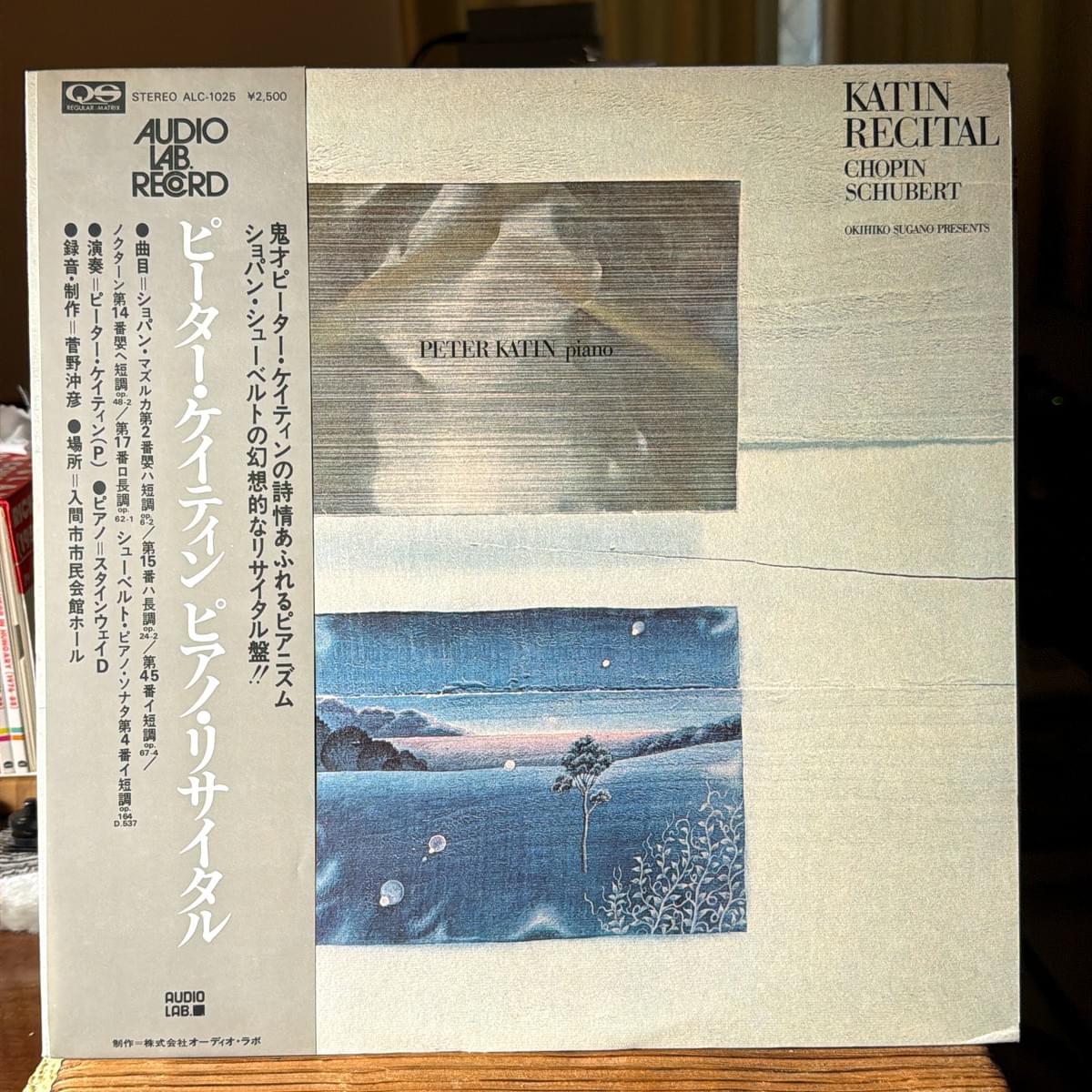

封底上的錄音清單
當年菅野製作的唱片,都會有詳細的「RECORDING DATA(錄音紀錄)」。從麥克風到壓片廠,整條錄音鍵路全部公開:
- 錄音總監兼混音:O. Sugano
- 助理總監:Y. Sasaki
- 錄音工程師:S. Ohtsuka
- 助理工程師:M. Kikuchi、K. Furukawa
- 調律師:N. Kinebuchi
- 麥克風:Neumann U-87、Schoeps CMT-56
- 混音台:Quad Eight LM-6200、Ampex AM-10
- 錄音機:Ampex AG-440B × 4
- 編碼器:Sansui QS4
- 監聽喇叭:Altec 605B × 4
- 壓片:Victor Company of Japan
這份名單,其實就是一張團隊的組織圖。照從屬關係來看:
- 錄音總監兼混音:菅野沖彥。 團隊的最上層。他決定這張唱片要什麼樣的聲音,並在現場親手混音。
- 助理總監:Y. Sasaki。 在菅野底下,協助他統籌整場錄音。
- 錄音工程師:大塚慎司(Shinji Ohtsuka)。 負責麥克風、混音台、錄音機這些器材的技術執行。
- 助理工程師:M. Kikuchi、K. Furukawa。 在大塚底下協助工程工作。
- 調律師:杵淵直知(Naotomo Kinebuchi,1925-1979)。 負責讓這台史坦威處在最好的狀態。
一位總監,底下一位助理總監;一位工程師,底下兩位助理工程師;再加上一位調律師。這不是一個人的錄音,而是一個分工清楚、以菅野為首的團隊。
這份名單裡,最該留意的是第一行:錄音總監與混音,都是菅野自己。
唱片內頁還有一張黑白照片:菅野叼著煙斗,踮起腳尖,親手調整高高的麥克風架,身旁是打開琴蓋的史坦威。錄音師不是坐在控制室裡等著,而是自己站在廳裡,站在鋼琴旁邊。
卡汀想要的,和菅野做的
卡汀後來說過,他偏愛現場演奏;如果要錄音,他希望在「有音樂會氣氛的場地」錄。
菅野做的剛好就是這件事:不進錄音室,把器材搬進音樂廳,去收廳堂的空氣。對一位偏愛現場的鋼琴家來說,這可能是他能遇到最好的錄音方式之一。
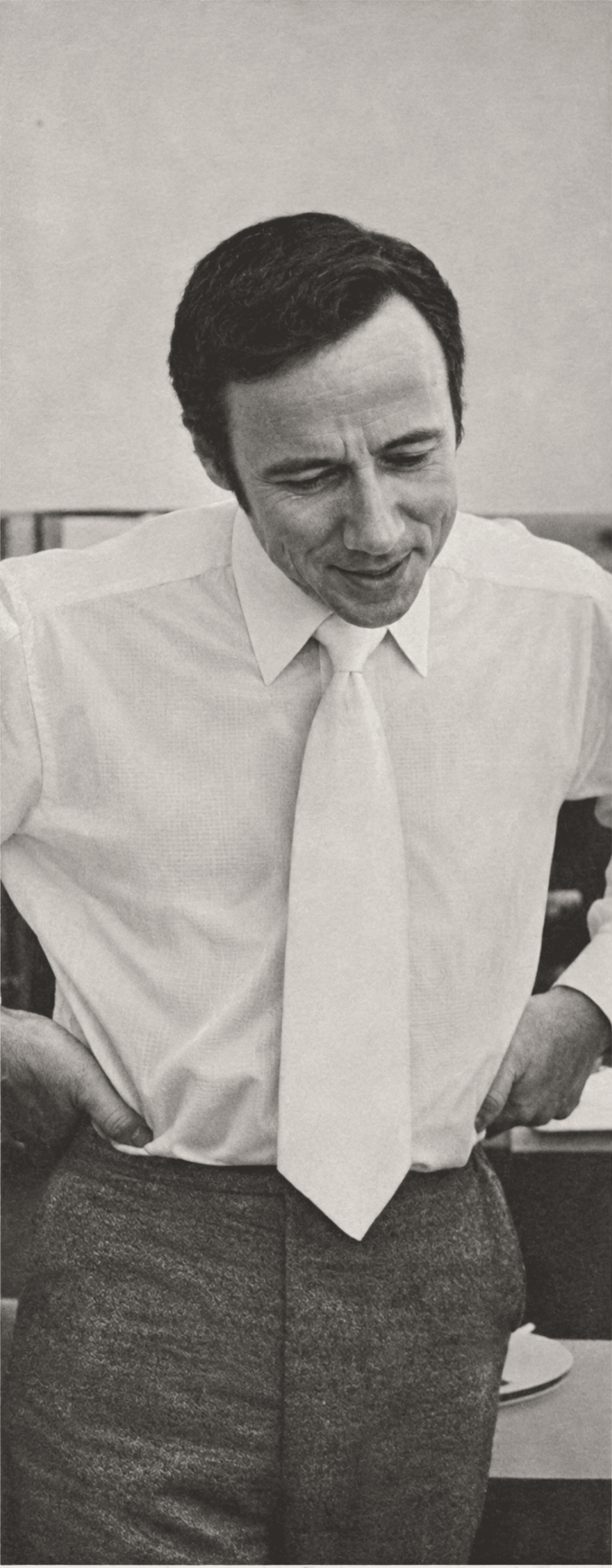
菅野點名的一段
在解說的最後,菅野點名了一個樂章:「舒伯特 A 小調奏鳴曲、尤其是第二樂章那難以言喻的絕美境界。」
有意思的是,為這張唱片寫曲目解說的津守健二,在談這首奏鳴曲時,寫的是舒伯特這一年結識了男中音歌手約翰·米夏埃爾·福格爾(Johann Michael Vogl,1768-1840):「能夠得遇深刻理解自身才華的知音,在舒伯特心底點亮了一盞明燈;這首奏鳴曲處處映射著這份明朗開闊的晴朗心境。」
一首關於「遇到知音」的奏鳴曲,放在一張因為「遇到知音」而誕生的唱片上。這或許只是巧合,但巧合得很美。
以菅野為首的團隊:彼此熟悉,所以信任
如果把菅野這幾年的錄音清單放在一起,會看到一件容易被忽略的事:他身邊的人,幾乎沒有換過。
- 列日涅夫(1973年4月24日):錄音總監兼混音 菅野沖彥;錄音工程師 S. Ohtsuka;鋼琴調律師 N. Kinebuchi
- 卡汀第一張(1974年11月25日):錄音總監兼混音 菅野沖彥;錄音工程師 S. Ohtsuka;鋼琴調律師 N. Kinebuchi;助理總監 Y. Sasaki;助理工程師 M. Kikuchi、K. Furukawa
- 卡汀第二張(1976年2月15、16日):錄音總監兼混音 菅野沖彥;錄音工程師 S. Ohtsuka;鋼琴調律師 N. Kinebuchi;助理總監 Y. Sasaki;助理工程師 M. Kikuchi、T. Ohmura
(依三張唱片實物上的 RECORDING DATA;嶋護編著的《菅野レコーディングバイブル(菅野錄音聖經)》列出的也是同一組人。)
錄音工程師大塚慎司、調律師杵淵直知,從1973年列日涅夫那場錄音,一直延續到1976年卡汀的第二張。同一年,大塚也以菅野團隊成員的身分,和菅野一起,為 ECM 錄下了基斯·傑瑞(Keith Jarrett,1945-)在日本的鋼琴獨奏巡演《Sun Bear Concerts》(1976年11月在京都、大阪、名古屋、東京、札幌錄製,1978年以十張 LP 的龐大套裝發行),唱片標題也是菅野提議的。ECM 創辦人兼製作人曼弗雷德·艾歇爾(Manfred Eicher,1943-)是一位以聲音美學著稱、對錄音極為講究的製作人,他願意把十張唱片的聲音交給菅野與他的團隊——這本身也是一種信任。
當卡汀走進入間市民會館時,他面對的不是一家唱片公司臨時組起來的錄音班底,而是一群彼此熟悉、已經一起工作多年的人。可以想像,錄音師知道工程師會怎麼擺麥克風,工程師知道錄音師要什麼聲音,調律師知道這群人要一台什麼樣的鋼琴。菅野錄音,從來不只是菅野一個人,而是一個以他為首、長期合作的團隊。而這個團隊的核心,和菅野與卡汀之間一樣,也是信任——不是靠合約綁在一起,而是因為長年一起工作、彼此熟悉,所以彼此信任。卡汀走進入間市民會館時,走進的是一個早已充滿信任的地方。
換句話說,菅野的團隊,本身就是他對「人」的關係的呈現:互相認識,理念一致,彼此交心。
被錄下來的,都是朋友
不只團隊如此。翻開 Audio Lab 的目錄,會發現被菅野錄下來的音樂家,不論古典還是爵士,幾乎都是他的朋友:他的弟弟菅野邦彥;他長年的音樂夥伴、鋼琴家宮澤明子(Meiko Miyazawa,1941-2019)——菅野自己寫過,他以她「音樂夥伴」的身分為她做了許多張獨奏唱片;認識了九年的列日涅夫;還有一起在爵士圈走過數十年的樂手們。
這些人不是「客戶」,而是有交往、有交流,甚至彼此深入了解的知心朋友。菅野的錄音之所以能成為一件件絕佳的錄音藝術作品,或許正是因為他只錄他真正了解的人。了解一個人,才知道他最好的聲音在哪裡;成為朋友,對方才願意把那個聲音交出來。而且他們多半不是只錄一次,而是長期合作、一錄再錄:宮澤明子在 Audio Lab 留下了一連串的獨奏唱片,爵士單簧管手北村英治(Eiji Kitamura,1929-)從1973年與菅野邦彥合作的《Collaboration》開始,也一再出現在菅野的錄音清單裡。一次次合作之後,錄音師與音樂家之間,已經不需要太多言語。
卡汀是一位來自英國的鋼琴家。他與菅野認識的時間不長,但從那個握手開始,他們就成了知心朋友。
調律師的名字
三張唱片的錄音清單上,都印著調律師的名字,和錄音工程師並列。
這位調律師就是杵淵直知,日本高度受到推崇的傳奇調律師。他師承大橋幡岩,1961年獨自前往德國,在 Grotrian、Steinway 等歐洲鋼琴工廠累積技術經驗;回國後擔任桐朋學園、NHK 音樂廳的專屬調律師。1979年,他因腦溢血過世,得年54歲。
把調律師印在唱片上,並不是每家唱片公司都會做的事。但對菅野來說,這很自然:一張鋼琴唱片的聲音,不是從麥克風開始的,而是從一台被調好的琴開始的。調律師是這張唱片的作者之一。
一個讓每個人都留下名字的團隊,跟一個不記名的工廠,是兩種不同的工作方式。
第二張:十五個月後
1976年二月,卡汀再次來到日本。
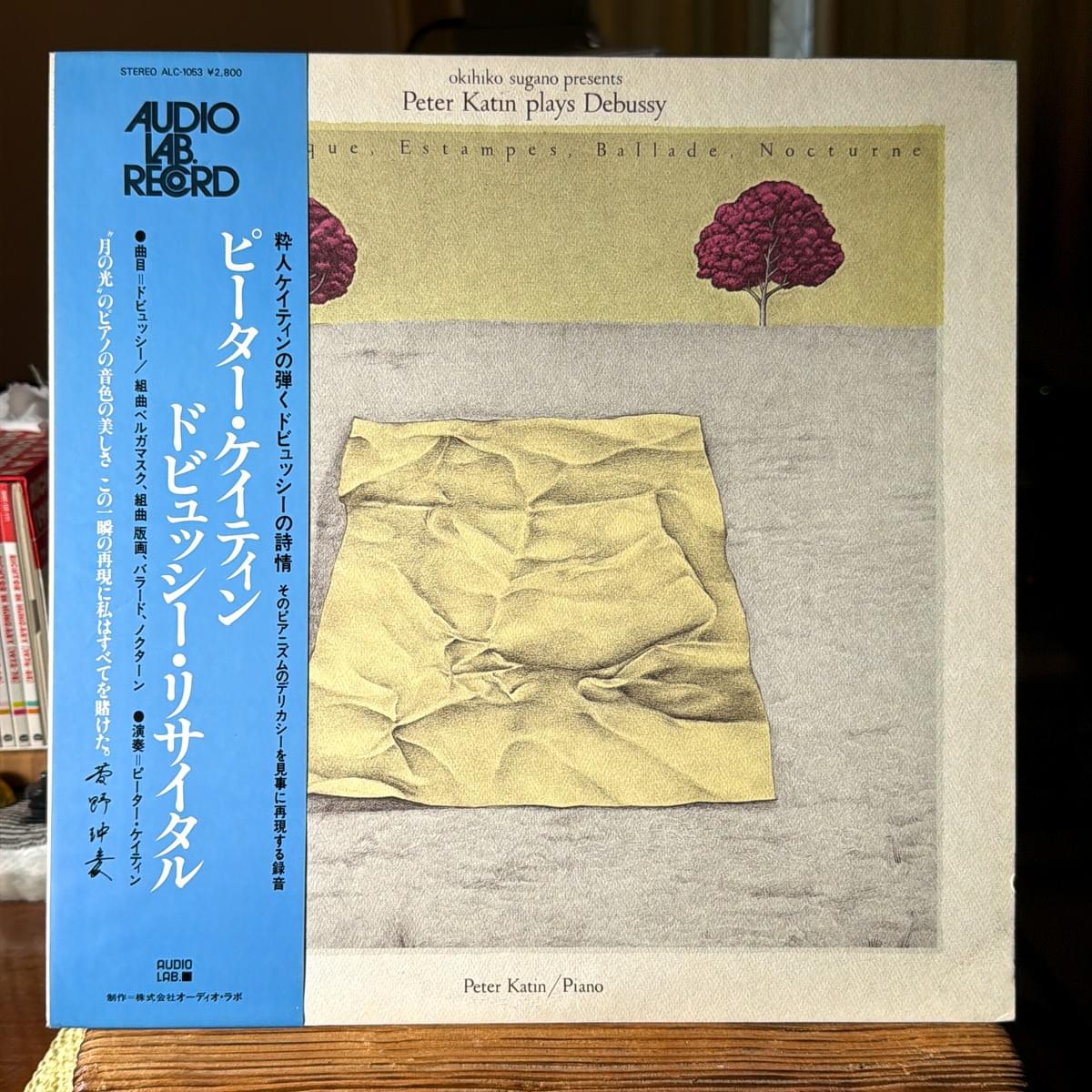
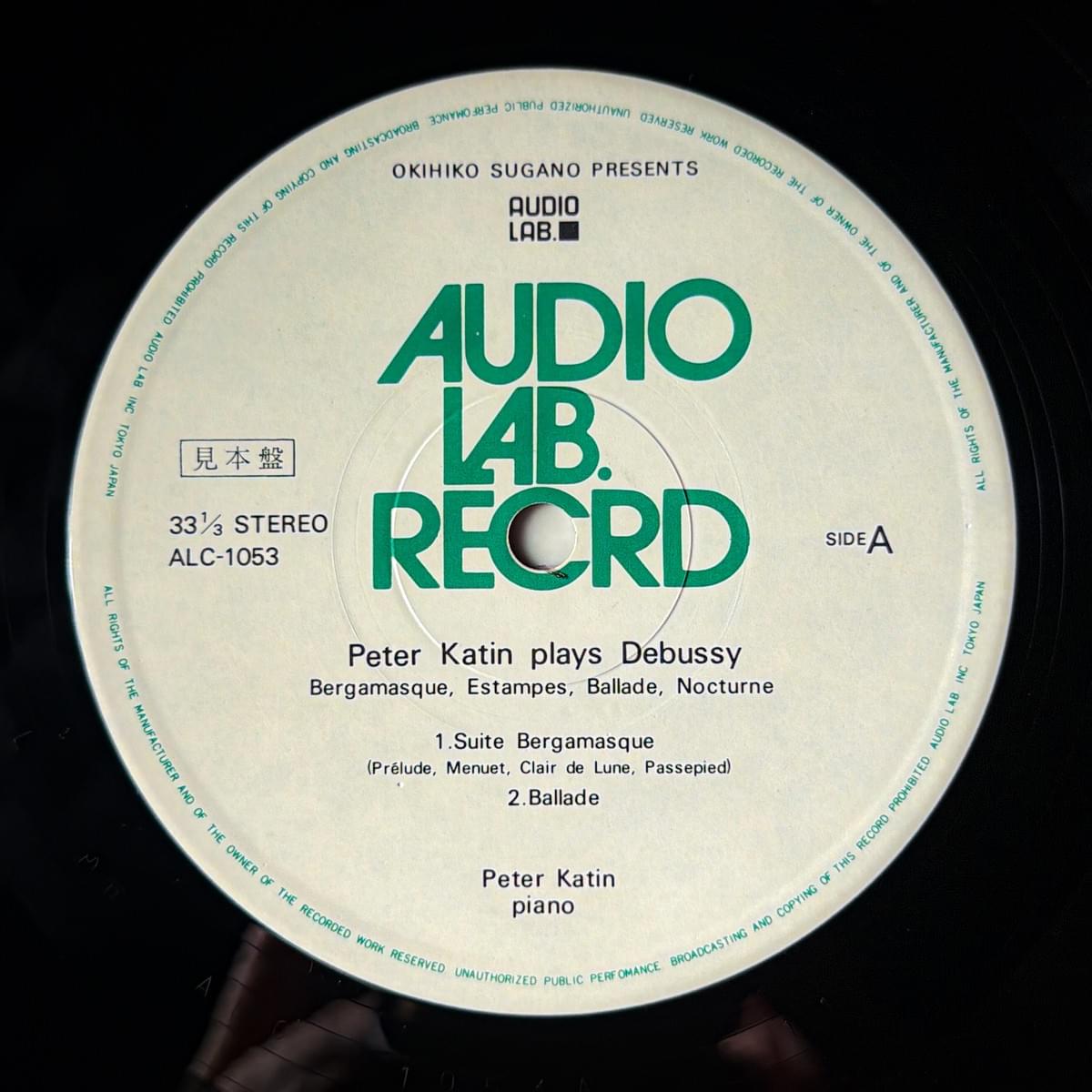
2月15日、16日,他回到同一座入間市民會館,面對同一組人,錄下一整張德布西(Claude Debussy,1862-1918):《貝加馬斯克組曲》、《版畫》,以及很少被彈的《敘事曲》與《夜曲》。編號 ALC-1053。
兩次錄音之間,有些事沒有變,有些事變了。
- 錄音:ALC-1025 是1974年11月25日,一天;ALC-1053 是1976年2月15、16日,兩天
- 卡汀來日:第一張是第一次;第二張是第二次
- 廳堂:兩張都在入間市民會館
- 曲目:第一張是蕭邦、舒伯特的獨奏會;第二張是整張德布西
- 錄音機:第一張用 Ampex AG-440B × 4;第二張用 Scully 280
- 解說:第一張是津守健二、菅野沖彥;第二張是小林利之
沒有變的,是人與地方。 同一座廳、同一位工程師、同一位調律師。第一次合作可能只是一次邀約;有第二次,表示雙方都想再來一次。
變了的,是菅野自己。 在這十五個月裡,菅野的錄音方式改變了:卡汀的第二張不再用四聲道,錄音機也從 Ampex 換成了 Scully。在《菅野錄音聖經》依年代排列的錄音清單裡,卡汀的這張德布西正好是1976年的第一筆,而由實物上的錄音清單看,它也是菅野改用 Scully 錄音機最早的一批錄音之一。卡汀第二次面對的菅野,是一位換了方法的菅野。
變了的,也是曲目。 第一張是一場典型的獨奏會;第二張是一個更集中、也更大膽的企劃——整張德布西,還放進了兩首鮮少有人錄的早期小品。
印在側標上的一句話
這一次,菅野沒有寫解說,解說交給了樂評家小林利之。但他在唱片的側標上,留下了一句親筆題字和簽名:
〈月光〉中鋼琴音色之美——為了重現這一瞬間,我賭上了一切。
一位錄音師把自己的名字印在側標上,為一位鋼琴家的一個音色作保。他賭的不只是自己的錄音技術,也是他對卡汀的判斷:這位鋼琴家的〈月光〉,值得他賭上一切。
從第一張內頁那句「我深感榮幸與欣慰」,到第二張腰帶上那句「我賭上了一切」,十五個月之間,菅野的語氣變得更重了。
溝紋裡的〈月光〉
〈月光〉是人們對德布西最熟悉的一首曲子,也是對德布西最大的誤會。
熟悉,是因為它是德布西少數以美妙旋律為主題的鋼琴作品,一聽就能哼。但它仍然是一首德布西——節奏的微妙浮動、細節與層次的勾勒,才是這首曲子真正的核心。很多人把它彈成一首動聽的旋律,彈得太甜、太慢,彈得只剩下氣氛;也有人把它彈成一片朦朧的音霧,旋律反而不見了。
要保住〈月光〉的旋律,又要把其中的結構與層次呈現出來,是一件無比困難的事。這首人人都能彈的曲子,其實很少有人彈得好。
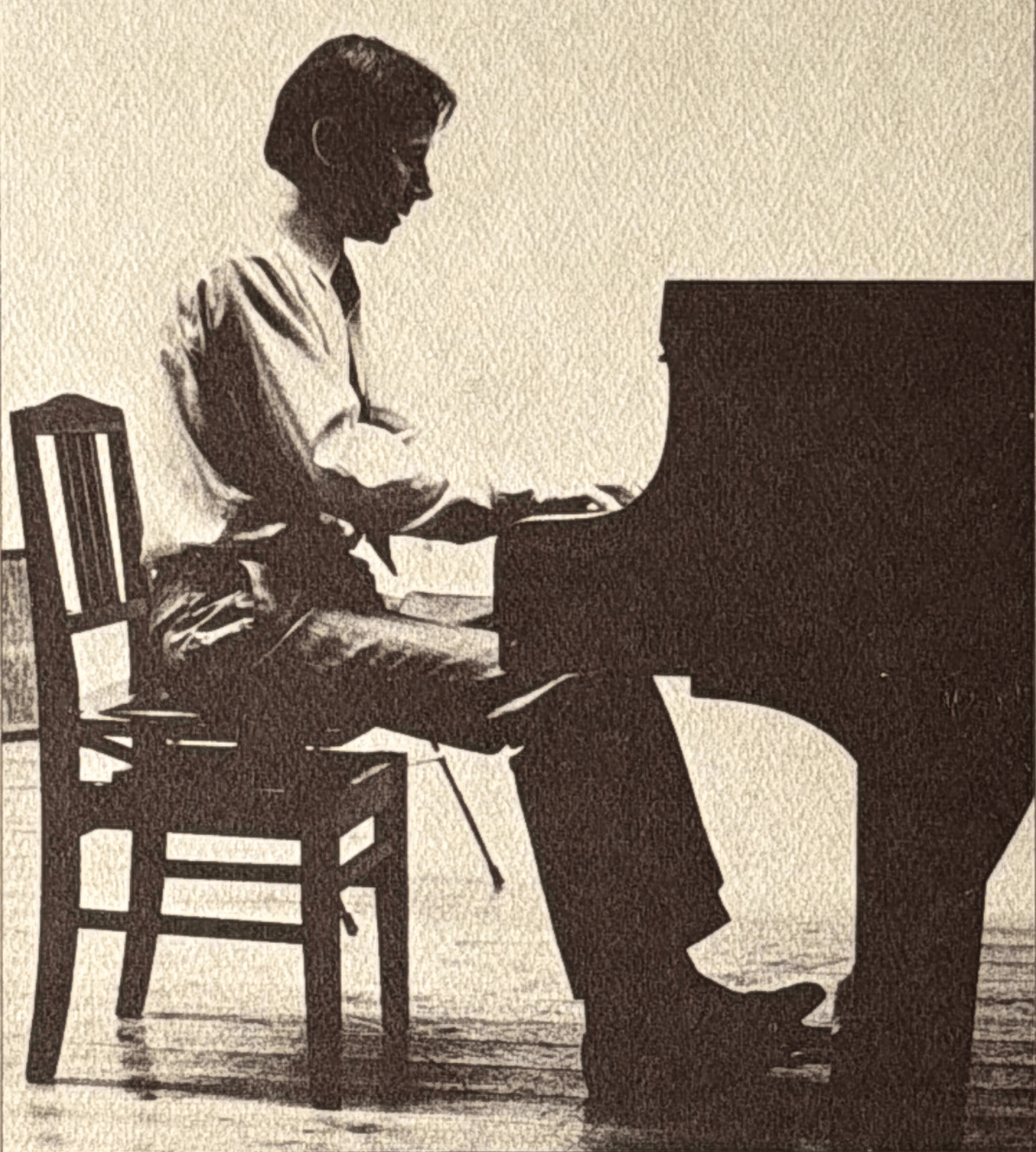
放下這張唱片的唱針,聽到的是另一回事。菅野在 FM 東京第一次聽到卡汀時寫下的那些——「打磨至極致微細的弱音、精妙踏板控制所勾勒出的如夢似幻之境,以及自極度透明的次強音延伸至強音那層次繁複繽紛的色彩漸變」——在這首〈月光〉裡全都聽得到。一首普羅大眾耳熟能詳的音樂,一旦彈到非常高超的境界,就是這個樣子。
但有一點,和菅野當年的描述不一樣。菅野在廣播節目裡聽到的,是一場「通篇籠罩在高度緊繃張力之下」的驚人演繹;而這張唱片裡的〈月光〉,聽起來卻是平靜的、極度放鬆的,沒有任何陌生感,好像卡汀就坐在自己家裡的鋼琴前。
但實際上那份緊繃並沒有消失。只是聽的人完全感覺不到任何壓力,可以非常放鬆,也聽得出彈琴的人是在自在、心情放鬆的狀態下彈奏的;可是仔細聽它的層次與力度,卻又是非常緊湊、充滿力量的。每一個弱音要多弱、每一次踏板何時放開、旋律與底下的層次如何同時被聽見,都緊緊相繫。卡汀的緊繃與平靜,在菅野的錄音裡交融成了一件事:放鬆的是心情,緊湊的是音樂。
這已經不只是技巧的層次,而是演奏藝術裡心理與生命的層次。手指可以練到精準,但要在精準之中同時保有自在,靠的是彈琴的人當下的心。
這或許也是菅野一聽就懂卡汀的地方。他第一次聽到的,就是這兩面:表面的平靜,與底下的繃緊。一位錄音師聽得出平靜底下的張力,才知道要怎麼把它完整地錄下來。
這就是我所說的「信任」。信任帶來放鬆,放鬆帶來自在——而在一個沒有事後修補的錄音現場,這份自在就直接成了溝紋的一部分。唱片裡的〈月光〉,融進的不只是琴聲,還有那個當下真實存在過的人與關係。
第三個層次:被錄進去的「信任」
菅野沖彥一生被公認為錄音技術與錄音思想的巨匠。他鑽研麥克風的擺位、母帶的處理,提出「唱片演奏家」的理念。這是他的第一、第二個層次。
古殿在列日涅夫那篇文章裡寫過:在類比時代,他的錄音藝術其實還有第三個層次,一個很少被談論、卻可能是最動人的層次——
人與人之間的信任與情感,本身也是一種可以被錄下來的真實。
卡汀的故事,可以讓這句話更具體一點。
一個很少被說出來的事實
菅野的錄音被討論了幾十年。人們談他的麥克風、他的混音台、他的錄音機,談他的「唱片演奏家」理念,談嶋護為每張唱片打的音質分數。
但有一件事,就殿主所見,很少有人特別拉出來談,連日本也是如此:
菅野錄下的人,幾乎都是他的朋友與長期夥伴;和他一起錄音的人,也是。
這不是什麼秘密。它就印在每一張唱片的 RECORDING DATA 裡。只是這些事實一直分散在各處,沒有被放在一起看。
把它們放在一起,就會看到三層信任:
團隊之間的信任:同一位工程師、同一位調律師,從1973年一直合作到1976年,長年一起工作、彼此熟悉。
錄音師與音樂家之間的信任:被錄下的人,是弟弟、是長年的音樂夥伴、是九年的老朋友,而且一錄再錄。
菅野與卡汀之間的信任:一位初次見面的外國鋼琴家,從一次聆聽、一個握手開始,被接納進這個圈子。
這三層加在一起,才是菅野錄音真正的底氣。所以,如果要問菅野的錄音到底好在哪裡?除了大家公認的器材、技術與理念,人是其中很重要、而且不可忽視的一部分。器材可以買到,技術可以學會,但人與人之間的信任,只能一點一點累積。
沒有「事後」的錄音
今天的錄音,可以分軌、修音、事後重新混音,演奏者和錄音師甚至不必同時在場。一個不夠好的音,可以被換掉;一個不夠好的平衡,可以之後再調。
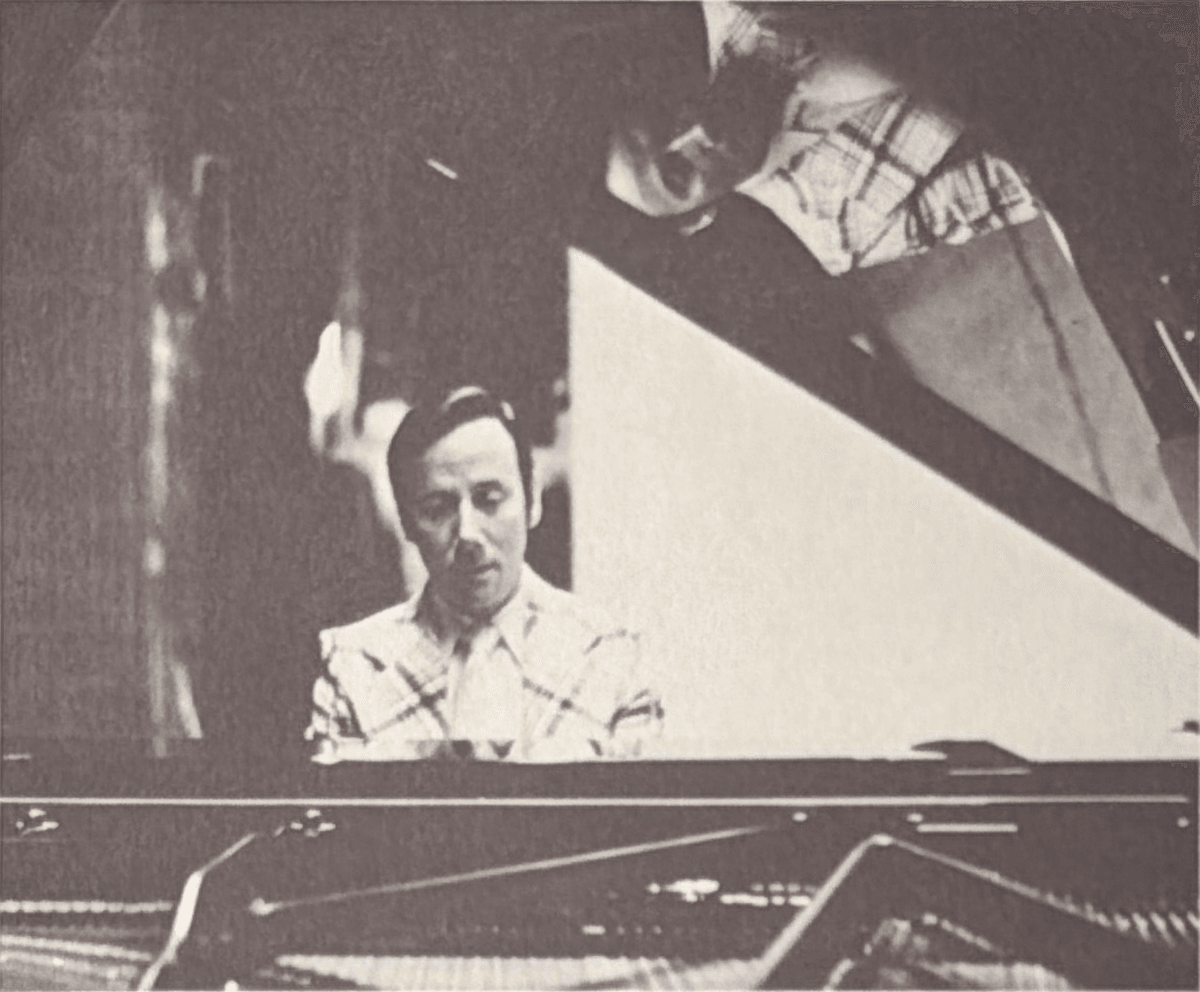
菅野的做法剛好相反。他在錄音現場,就把幾支麥克風即時混成最後要發行的聲道,直接錄進母帶,不留可以事後重混的分軌素材。封底上「Director, Mixer」寫在同一個名字下,意思就是:錄音的那一刻,就是混音的那一刻。演奏結束、母帶停下,這張唱片的聲音就決定了。
一切都是前置作業。英文音響媒體 Positive Feedback 介紹菅野時,把這種做法比作「直刻唱片」:少了一代磁帶,聲音更直接,但也要求演奏者技藝純熟、準備充分——因為沒有事後補救的餘地。而卡汀的第一張唱片,只有一天。
「作品」不只是鋼琴家的
今天我們聽一張唱片,習慣把它當成「某某演奏家的作品」。但卡汀的這兩張唱片,封底上有一串名字:錄音師、助理、工程師、調律師、插畫家、設計師。封面上印的是「OKIHIKO SUGANO PRESENTS」。
它們不是一個人的作品,是一群人的作品。而把這群人連在一起的,是一個握手。
今天還會有這樣的唱片嗎?
1982年,日本的 CD 剛上市。卡汀的德布西在這一年就出了 CD 版,當年售價 3,500 日圓,比黑膠還貴。2004年,它又被復刻了一次。一張在入間市民會館用兩天錄完的唱片,就這樣走過了類比與數位兩個時代。
可是,如果是今天,這兩張唱片還會誕生嗎?
Audio Lab 誕生在一個特別的年代。
那是日本昭和經濟最強盛的黃金時代。在那個時代,一位像菅野沖彥這樣的能人與才子,可以靠自己的人格魅力與才能做很多事:專業的工程師、調律師願意靠近他,理念相同的音樂家願意長期和他合作,有財力的企業也願意出錢支持他。
卡汀與菅野的相遇本身,就是這個時代的縮影。他們是在一個叫「Denon Live Concert」的廣播節目裡遇見的——一家音響企業冠名、讓來日的演奏家現場演出的節目。而更早之前,菅野在朝日新聞的「有聲雜誌」裡學會錄音、在大阪國際音樂節裡結識世界級的音樂家,背後也都是一個愿意為文化花錢的社會。
人格、才能、朋友、金錢,在那個年代剛好都在了。
其實不必等到今天。日本經歷泡沫經濟之後,像 Audio Lab 這樣的品牌,就已經很難再出現了。
製作、發行一張唱片,首先要考慮的不再是自己的創作理念與藝術堅持,而是市場需求。在市場需求底下,看看能不能勉強放進一些理念與堅持;放不進去,就只能先從市場開始。這不是誰的錯,所有東西都有成本與盈利的問題。
但 Audio Lab 的順序剛好反過來。先有一個錄音師想錄的人、想留住的聲音,然後才有唱片。卡汀的兩張唱片,就是這樣來的。
有意思的是,大約也在泡沫經濟之後,1990年以後,菅野幾乎就不再錄音了。1990年代的錄音作品非常非常少,和1990年以前一比,差別一目了然。他的身分轉變成一位專職的音響評論家與音響作家。這兩件事之間是不是有關係,很難說;但放在一起看,很像一個時代安靜地關上了門。
關上門的也不只是 Audio Lab。同樣創立於1970年前後、專錄日本爵士樂的「三盲鼠」(Three Blind Mice,簡稱 TBM),是另一個例子。英文音響媒體 Positive Feedback 把它和 Audio Lab 並提,說兩者對錄音與發行抱持同樣高的標準;菅野的弟弟菅野邦彥,也曾在1974年為 TBM 錄過唱片。後來,TBM 也不再錄音,原本的唱片公司倒閉消失,只剩下它的錄音,以再版的形式繼續存在。
唱片公司會倒閉,錄音師會停下來,但那個時代錄下的聲音,還在。
今天的音樂產業效率更高。一位鋼琴家的錄音,會先經過經紀公司、唱片公司的市場評估、合約條款;錄音可以分幾天、幾個地方完成,事後再剪接修飾。一位在東京只開了一場日場音樂會的鋼琴家,大概很難通過這些評估。
而卡汀與菅野的合作,不需要這些。它需要的是:一位聽得見小聲音的人,一位願意放心彈琴的人,一座好廳,一台調好的琴,和一個不能重來的當下。
菅野有一個理念:聽者用自己的音響放一張唱片,就是一次「演奏」。那麼,當你在自己的房間裡放下這張唱片的唱針,你也是這條鏈的最後一環。一位鋼琴家、一位錄音師、一群工程師與調律師、一座廳,然後是你。
*****
【Gudian Music Stories】A Handshake, Two Records: Peter Katin (1930–2015), Okihiko Sugano (1932–2018), and the Recording of "Trust"
A Handshake
Tokyo, 1974. Inside a broadcast studio during a live radio session.
A British pianist had just concluded his performance of Chopin polonaises and nocturnes. The program's host stepped forward and said to him: I want to make a record with you.
There was no talent agency running interference, no protracted contract negotiation, and no corporate label marketing pitch. The pianist’s reply was direct. Taking the host’s hand, he said:
"Let us make a wonderful record together!"
The pianist was Peter Katin (1930–2015). The host was Japanese balance engineer Okihiko Sugano (1932–2018).
This account comes from Sugano’s own pen, printed inside the album gatefold. There were no private diaries or memoirs—only those few sentences inked upon paper. Over the ensuing fifteen months, that initial handshake yielded two albums.The second was recorded in 1976 inside a municipal hall in Saitama Prefecture, where forty-five-year-old Katin committed Claude Debussy’s Clair de lune to tape. Across the obi strip of that second release, Sugano set down an inscription: "To recreate the beauty of the piano's tone in 'Clair de lune' at that exact instant, I staked everything."
What transpired between that handshake and "staking everything"?
An earlier essay in this series explored Katin as an artist. This essay turns to the communion between two men—and to an elusive question:
In the analog era, when human trust was pressed directly into the microgroove, what kind of artistic truth did it leave behind?
When posterity assesses Sugano’s engineering—what made his art singular—the conversation typically turns to gear:microphone arrays, session topologies, and his philosophical concept of the "Record Playing Artist" (Record Ensōka).Those technical appraisals are valid. Yet few have examined the human bonds undergirding those sessions. This essay focuses squarely on that missing dimension: the human element.
Who Was Okihiko Sugano?
To Japanese audiophiles, the term "Sugano Recording" requires no translation. The same holds true across Chinese-speaking audio circles.
Sugano belonged to a family steeped in the arts: his younger brother, Kunihiko Sugano (b. 1936), was an established Japanese jazz pianist, alongside painters and briar-pipe artisans within the family tree.
In 1959, at age twenty-seven, Sugano joined the editorial team of Asahi Sonorama—the world's first sound magazine,published by the Asahi Shimbun. Because the format was uncharted territory, company leadership granted the young staff creative freedom. Over the following decade, Sugano learned writing, production, and audio engineering from the ground up. The president of Asahi Shimbun was an ardent classical music patron who organized the annual Osaka International Festival; tasked with welcoming international guests, Sugano crossed paths with conducting titans including André Cluytens (1905–1967), Pierre Monteux (1875–1964), and Charles Munch (1891–1968).
In 1969, he stepped away from the magazine to establish his own independent label: Audio Lab Record. Planning,production, and live balancing were executed entirely by his own hand. The catalog he assembled in the 1970s stands today as an audiophile landmark of Japan's Showa era.
For decades, he served as a senior columnist for Japan's premier audio journal, Stereo Sound, where he formulated the concept of the "Record Playing Artist": the conviction that a listener reproducing a phonograph record through a home playback system is engaged in an act of artistic interpretation. His dedicated column became an institution; following a debilitating illness, the column ceased, leaving no successor behind.
Sugano ranks among the preeminent recording engineers of modern Japan. His work was defined by critical taste:eschewing commercial hype, he prioritized balance between acoustic space and musical line. As chronicled in the Polish journal High Fidelity, he had hoped to study the piano in his youth; unable to pursue that dream, he began dismantling phonographs, entering the world of sound through hands-on technical exploration. He was also a devoted pipe smoker,and an avid collector of acoustic gramophones and 78 RPM shellacs.
A Precedent
Prior to meeting Katin, Sugano had already produced an album for a foreign virtuoso that existed solely by virtue of friendship.
On April 24, 1973, inside the Aoyama Tower Hall in Tokyo, Sugano recorded the only solo cello album ever made by his friend of nine years, Soviet-emigré cellist Vsevolod Lezhnev (b. 1931)—a story chronicled in an earlier essay.
A year and a half later, Sugano crossed paths with Katin. This time, they were not old friends.
The Ear of a Balance Engineer
Sugano hosted a regular program on FM Tokyo titled Denon Live Concert, where touring musicians performed live before broadcast microphones.
He knew Katin by reputation as an established British concert pianist. Yet hearing him live was an entirely new encounter.
Sugano later set down his impressions:
"The astonishing performance, enveloped from start to finish in acute internal tension, struck me with immense force: the whisper-quiet pianissimos polished to microscopic delicacy; the dreamlike world conjured through pedal control; and the multi-hued dynamic gradients bridging transparent mezzo-fortes to fortissimos..."
Notice the emphasis of those remarks. Sugano did not begin with programmatic "interpretation"; he addressed the physical parameters of the sound: the delicacy of the pianissimos, the pedaling, and the dynamic graduation. This was the analytical ear of a balance engineer listening for "beauty that could be preserved on tape."
Yet he looked past the physics:
"More crucially, transcending mere pianistic mechanics, his playing carried a compelling expressive authority that seized the listener's spirit, drawing one unawares into his musical world... anchored by a profound intellectual grasp of the architecture of the score."
Then followed the handshake.
An "Overly Modest" Debut Tour
Sugano’s proposal was guided by an underlying impulse. In the liner notes, he acknowledged that Katin’s inaugural Japanese tour had slipped by with little fanfare: a single afternoon recital in Tokyo, followed by modest engagements in Ota, Sendai, and Saga before his scheduled flight home.
"Precisely for this reason, to capture this album during his visit to Japan—and to provide domestic music lovers with a pathway into Katin’s refined pianistic art—fills me with gratitude."
An exceptional artist had arrived and was about to depart, largely unheard. Sugano felt that loss, and resolved to record him.
His 1973 session with Lezhnev had been built upon nine years of friendship. With Katin, he was meeting a stranger. Trust was established not through years of shared history, but through sound—one man played, the other heard. The Chinese language preserves a word for this communion: zhīyīn (知音)—the one who understands your tone.
Album One: November 25, 1974
The session was completed in a single day.
The venue was not a commercial recording studio in Tokyo, but the Iruma Civic Auditorium in Saitama Prefecture—a dedicated concert hall. The instrument was a Hamburg Steinway Model D. The repertoire comprised three Chopin mazurkas, two nocturnes, and Franz Schubert’s (1797–1828) Piano Sonata in A minor, D. 537. Released in 1975 under catalog number Audio Lab ALC-1025, the upper-right corner of the jacket bore a modest line of type: OKIHIKO SUGANO PRESENTS.
Audio Lab ALC-1025 | Production Ledger (RECORDING DATA)
------------------------------------------------------
Recording Director & Mixer: Okihiko Sugano
Assistant Director: Y. Sasaki
Recording Engineer: Shinji Ohtsuka
Assistant Engineers: M. Kikuchi, K. Furukawa
Piano Technician / Tuner: Naotomo Kinebuchi
Microphones: Neumann U-87, Schoeps CMT-56
Mixing Consoles: Quad Eight LM-6200, Ampex AM-10
Tape Transports: Ampex AG-440B × 4
Quadraphonic Encoder: Sansui QS4
Monitor Loudspeakers: Altec 605B × 4
Plating & Pressing: Victor Company of Japan (JVC)
The Chain of Command
Sugano’s releases documented technical parameters openly, detailing the signal path from capsule to pressing plant. The credits outline an integrated team:
- Recording Director & Mixer: Okihiko Sugano. Standing at the apex of the team, he decided the aesthetic profile of the recording and balanced the multi-microphone feed live at the console.
- Assistant Director: Y. Sasaki. Working directly beneath Sugano, coordinating logistics across the hall.
- Recording Engineer: Shinji Ohtsuka. Managing the hardware: microphone cables, mixing consoles, and analog tape transports.
- Assistant Engineers: M. Kikuchi, K. Furukawa. Supporting Ohtsuka across the stage and control room.
- Concert Tuner: Naotomo Kinebuchi (1925–1979). Responsible for keeping the Hamburg Steinway regulated and voiced throughout the session.
A director and assistant director; a balance engineer and two assistants; and a dedicated concert technician. This was a cohesive unit operating under Sugano's leadership.
The defining credit is the first: Sugano served simultaneously as Director and Mixer.
An interior photograph captures Sugano, pipe in mouth, balancing on tiptoe to adjust a tall microphone boom, the open lid of the Steinway beside him. Rather than remaining isolated behind the glass, the engineer stood on the concert stage, next to the instrument.
What Katin Sought, and What Sugano Delivered
Katin stated that he preferred live concert performance; if he had to enter a studio, he sought an acoustic space that carried the atmosphere of a recital hall.
Sugano met that demand: avoiding dry studio spaces, hauling his monitoring racks and tape machines directly into a concert hall, and capturing the ambient volume of the room. For a pianist who drew his inspiration from the hall, this was the ideal recording environment.
The Movement Sugano Singled Out
At the conclusion of his liner notes, Sugano directed the listener's attention to a specific movement: "the ineffable, sublime realm attained in the second movement of Schubert's A minor Sonata."
Annotator Kenji Tsumori pointed out that Schubert composed this sonata during the year he met baritone Johann Michael Vogl (1768–1840): "Meeting a companion who understood his creative genius lit a lamp within Schubert's heart; this sonata reflects that clear, unburdened spirit."
A sonata celebrating an encounter with an understanding friend, pressed onto an album born of that exact same communion. If a coincidence, it was an appropriate one.
The Sugano Team: Trust Built Through Familiarity
Surveying Sugano’s session logs across those years reveals a continuity in personnel:
- Lezhnev (April 24, 1973): Director & Mixer: O. Sugano; Engineer: S. Ohtsuka; Tuner: N. Kinebuchi
- Katin I (November 25, 1974): Director & Mixer: O. Sugano; Engineer: S. Ohtsuka; Tuner: N. Kinebuchi; Assistant Director: Y. Sasaki; Assistants: M. Kikuchi, K. Furukawa
- Katin II (February 15–16, 1976): Director & Mixer: O. Sugano; Engineer: S. Ohtsuka; Tuner: N. Kinebuchi; Assistant Director: Y. Sasaki; Assistants: M. Kikuchi, T. Ohmura
Recording engineer Shinji Ohtsuka and concert tuner Naotomo Kinebuchi formed the core of the unit, working together from the 1973 Lezhnev date through Katin's 1976 sessions. That same year, Ohtsuka and Sugano partnered with ECM founder Manfred Eicher (b. 1943) to balance Keith Jarrett's (b. 1945) solo piano tour across Japan—the monumental ten-LP box set Sun Bear Concerts, tracked in November 1976 across Kyoto, Osaka, Nagoya, Tokyo, and Sapporo (an album title suggested by Sugano himself). Eicher, renowned for his demanding aesthetic standards, entrusted a multi-disc flagship project to Sugano and his crew—an act of professional trust.
When Katin stepped into the Iruma Civic Auditorium, he was met not by freelance studio hands hired for the afternoon,but by a close-knit group of craftsmen who had worked alongside one another for years. The mixer knew how his engineer placed capsules; the engineer knew the balance his director sought; the technician knew the touch and timbre the team wanted from the piano. Sugano’s sessions represented an ensemble effort. The foundation of that team was trust—forged through sustained collaboration. Katin entered a room where trust was already established.
Sugano’s crew mirrored his broader view of human relationships: working with people he knew, whose values aligned with his own.
The Recorded Roster: A Gathering of Friends
This philosophy extended to the performers. Browsing the Audio Lab catalog reveals that the artists Sugano recorded—across classical and jazz—were almost exclusively friends and long-standing colleagues: his brother, Kunihiko Sugano; pianist Meiko Miyazawa (1941–2019), for whom Sugano produced multiple solo LPs in his self-described role as her "musical partner"; Lezhnev, a friend of nine years; and jazz veterans who had shared bandstands with him for decades.
These musicians were companions rather than commercial clients. Sugano’s recordings achieved their enduring quality in part because he worked with artists he understood. Knowing a musician intimately reveals where their finest tone resides; establishing friendship allows them to offer that sound without reserve. These relationships were iterative: Miyazawa set down an extensive solo series for Audio Lab, while jazz clarinetist Eiji Kitamura (b. 1929)—beginning with his 1973 collaboration with Kunihiko Sugano—returned to the studio with him repeatedly. Over time, words in the control room became largely unnecessary.
Katin was a visiting English artist. Their acquaintance was brief, yet from that initial handshake, they understood one another.
The Piano Technician's Name
Across all three production ledgers, the concert tuner’s name appears alongside the balance engineers: Naotomo Kinebuchi.
Kinebuchi was a revered figure in Japanese piano technology. Having studied under Hataiwa Ohashi, he traveled independently to West Germany in 1961, refining his craft inside the workshops of Grotrian-Steinweg and Steinway & Sons. Returning to Japan, he served as the resident concert technician for Toho Gakuen and the NHK Symphony Orchestra. In 1979, he died of a cerebral hemorrhage at fifty-four.
Printing the piano technician's name on an album jacket was unusual for commercial labels. To Sugano, the acknowledgment was obvious: the sound of a piano record begins not at the microphone capsule, but at the regulated hammer hitting the string. The technician was an author of the performance.
A collective where every hand is acknowledged represents a fundamentally different working model from an anonymous assembly line.
Album Two: Fifteen Months Later
In February 1976, Katin returned to Japan.
On February 15 and 16, he walked back onto the stage of the Iruma Civic Auditorium to face the same team, recording an all-Debussy program: the Suite bergamasque, Estampes, and the rarely programmed early Ballade and Nocturne, issued under catalog number ALC-1053.
A Comparative View of the Two Sessions
---------------------------------------------------------------------------------
Parameter ALC-1025 (Chopin / Schubert) ALC-1053 (Debussy)
---------------------------------------------------------------------------------
Session Dates: November 25, 1974 (Single day) February 15–16, 1976 (Two days)
Katin's Japan Tours: Inaugural visit Second visit
Hall: Iruma Civic Auditorium Iruma Civic Auditorium
Program Design: Recital showcase Integrated Debussy monograph
Mastering Deck: Ampex AG-440B × 4 (Quadraphonic) Scully 280 (Two-channel Stereo)
Liner Essayists: Kenji Tsumori, Okihiko Sugano Toshiyuki Kobayashi
---------------------------------------------------------------------------------
The personnel and the hall remained constant: the same room, the same engineer, the same technician. A first session might be an experiment; returning for a second confirmed that both parties wished to continue.
What shifted was Sugano’s technical approach. Over those fifteen months, Sugano moved away from matrixed quadraphonic workflows, retiring the Ampex decks in favor of an unadorned Scully 280 two-track transport. In the chronological registry of The Sugano Recording Bible, this Debussy album stands as his inaugural entry for 1976,marking one of his earliest deployments of the Scully machine. Katin faced an engineer who had streamlined his technical path.
The program also evolved: moving from a diverse recital bill to an integrated Debussy monograph, complete with two overlooked early scores.
The Inscription on the Obi Strip
This time, Sugano stepped back from drafting program notes, delegating the text to critic Toshiyuki Kobayashi. Instead,he placed a signed personal inscription across the obi strip:
"The beauty of the piano's tone in 'Clair de lune'—to recreate that fleeting instant, I staked everything."
An engineer placing his name on the obi strip as a guarantor of a pianist’s tone. He was backing his own technical craft, as well as his judgment of Katin: that this reading of Clair de lune was worth staking everything upon.
Between the modest gratitude of the first album's notes and the absolute conviction of this second inscription, Sugano’s stance had sharpened.
Clair de lune
in the Microgroove
Clair de lune is Debussy’s most widely recognized keyboard work, and the one most routinely misunderstood.
Familiar because it is built upon an accessible melodic line, it remains an intricate study in dynamic touch: its subtle metric shifts, inner voices, and harmonic overtones form the core of the piece. Many pianists treat it merely as a sentimental tune, dragging the tempo and dissolving it into sweet background atmosphere; others veil it in impressionistic fog until the melodic arch is lost.
Preserving the cantabile while articulating the underlying structural architecture is demanding. A work that every student plays is one that few manage to realize with distinction.
Lower the stylus into this pressing, and an entirely different perspective emerges. Everything Sugano noted during that initial radio broadcast—"the whisper-quiet pianissimos polished to microscopic delicacy; the dreamlike world conjured through pedal control; and the multi-hued dynamic gradients bridging transparent mezzo-fortes to fortissimos"—is audible in this performance. An overplayed work performed at the height of an artist's powers sounds like this.
Yet one dimension diverged from Sugano's initial impressions. At FM Tokyo, Sugano had heard a performance "enveloped in acute internal tension"; on this disc, Clair de lune unfolds with calm, unforced ease, as though Katin were seated at his own piano at home.
The tension had not vanished; it had retreated beneath the surface. The listener feels no strain, recognizing that the pianist is operating in a relaxed, comfortable frame of mind. Yet follow the harmonic layers, and the metric discipline remains tight and focused. The delicate balance of each dynamic level, the release of the sustaining pedal, and the clarity between the melody and its accompaniment are closely integrated. Katin’s equilibrium and Sugano’s balance converged: the artist's mind was at ease, while the musical line remained disciplined.
This touches the psychology of performance. Mechanical precision can be drilled; maintaining ease within that precision requires inner calm in the moment.
This was what Sugano recognized in Katin: calm on the surface, backed by tension underneath. An engineer who detects the structural tension beneath an unforced surface understands how to preserve it on tape.
This is the essence of trust. Trust allows an artist to relax, and that ease becomes part of the microgroove. Clair de luneon this record holds not only the acoustic tone of the piano, but the living relationship present in the room that afternoon.
The Third Dimension: The Recording of "Trust"
Okihiko Sugano is remembered for his engineering discipline and philosophical writings on sound: his microphone arrays, analog mastering, and the concept of the "Record Playing Artist." Those form the first two dimensions of his legacy.
In my essay on Lezhnev, I suggested a third dimension, seldom discussed yet moving:
Human trust and affection are themselves realities that can be captured in analog grooves.
Katin’s sessions give that observation tangible weight.
An Overlooked Reality
Sugano’s legacy has been debated for half a century: his capsules, his consoles, his Scully transports, and the audio ratings assigned to his catalog by critic Mamoru Shima.
Yet one foundational reality has received little dedicated attention:
The artists Sugano chose to record were almost invariably his friends and long-standing partners; and the crew standing beside him was the same.
This was no secret; it is documented across the production ledgers. But because those notes remained scattered across separate issues, they were rarely assembled into a single portrait.
Viewed together, three concentric circles of trust emerge:
- Trust Within the Crew: An identical balance engineer and piano technician working together from 1973 through 1976, bound by shared habits and mutual understanding.
- Trust Between Engineer and Artist: Tracking his brother, his long-term musical partner, and an intimate of nine years, returning to the studio with them repeatedly.
- Trust Between Sugano and Katin: A foreign artist met by chance, welcomed into that circle from a single hearing and a handshake.
These three tiers formed the foundation of Sugano’s acoustic world. Why do his recordings sound singular? Alongside hardware, microphone technique, and aesthetic philosophy, human relationships formed an integral part of the equation.Hardware can be purchased and microphone arrays can be copied; human trust can only be accumulated over time.
Recording Without a Safety Net
Modern digital recording permits multi-tracking, pitch correction, and post-session editing; artist and balance engineer need not share the same room. A flawed measure can be replaced; an imperfect balance can be adjusted in the DAW months later.
Sugano operated on the opposite principle: mixing his microphone feeds live down to the two-track stereo master on site,leaving no unmixed stems for subsequent revision. Printing "Director, Mixer" under a single credit meant that the moment of tracking was the moment of mixing. When the performance ended and the tape transport stopped, the balance of the record was sealed.
Everything depended on preparation. Writing in Positive Feedback, an American audio journal likened this practice to direct-to-disc mastering: bypassing multi-track tape generations yields greater transient immediacy, but demands absolute technical command from the artist—there is no safety net. Katin’s first album was completed in a single day.
An Album Belongs to More Than Just the Pianist
Today, a classical record is routinely regarded as the exclusive work of the soloist. Yet on Katin’s two Audio Lab jackets,a ledger of names is printed across the rear sleeve: director, assistant, balance engineer, technician, illustrator, and layout designer. Across the front cover runs the line: OKIHIKO SUGANO PRESENTS.
These were collaborative works, held together by a handshake.
Could Such Records Be Made Today?
In 1982, the compact disc arrived in Japan. Katin’s Debussy album was transferred to CD that very year, retailing for ¥3,500—substantially more expensive than vinyl. In 2004, it was remastered again. An album completed in two days inside a municipal auditorium in Saitama traversed both the analog and digital eras.
Could such an album come into being today?
Audio Lab belonged to a specific historical window: the economic peak of Japan’s Showa era. In that climate, an independent figure like Okihiko Sugano could assemble projects through personal charisma and artistic vision: elite engineers and technicians rallied to his side, like-minded artists formed long-term partnerships, and patrons provided financial backing.
Katin and Sugano’s meeting reflects that era. They crossed paths on Denon Live Concert—a live broadcast series underwritten by a consumer electronics corporation, presenting visiting virtuosos over public airwaves. Earlier in his career, Sugano’s apprenticeships on Asahi Sonorama and his encounters with international conductors at the Osaka Festival were made possible by an economy willing to invest in cultural heritage.
Character, technical skill, companionship, and capital aligned during those decades.
Following the collapse of Japan’s bubble economy, independent labels built on the model of Audio Lab struggled to survive. Recording production became governed primarily by market projections rather than personal artistic conviction.A project had to prove its commercial viability before artistic priorities could be considered. That shift was driven by economic realities; every enterprise faces overhead and margins.
Audio Lab inverted that order: first came an artist the engineer wished to hear and a sound he wished to preserve; only then did the record follow. That was how Katin’s two albums were born.
Following the economic contraction of 1990, Sugano largely ceased recording. His session credits in the 1990s are sparse compared to the decades that preceded them, as he transitioned into writing and audio criticism. Whether this was directly tied to changing economic conditions remains an open question; yet viewed in retrospect, it marks the quiet closing of an era.
Audio Lab was not alone. Three Blind Mice (TBM)—founded around 1970 to document Japanese modern jazz—followed a similar trajectory. Positive Feedback cited TBM alongside Audio Lab as benchmarks of uncompromising production; Kunihiko Sugano had cut albums for TBM as early as 1974. Over time, TBM ceased tracking new sessions,its original corporate structure dissolved, and its catalog survived primarily through historic reissues.
Labels close their doors and balance engineers step away from the console, but the sounds preserved during that golden era remain.
The modern recording industry operates with greater logistical efficiency. A pianist’s recording schedule is vetted by agencies, legal departments, and marketing teams; tracking can be split across cities and patched together in post-production. A soloist mounting a single afternoon recital in Tokyo would struggle to clear those corporate hurdles today.
Katin and Sugano required none of that apparatus. What they needed was simpler: an engineer with ears attentive to subtle details, a pianist willing to play with an easy mind, a good hall, an instrument properly regulated, and an unrepeatable afternoon.
Sugano held that when a listener plays a record through their home system, that act is itself an artistic interpretation.When you lower the stylus into this disc in your own room, you become the final link in that chain: a pianist, an engineer,a crew of technicians, a hall—and then, you.