
【古殿唱片音樂故事】這份舒曼《克萊斯勒魂》,原本只彈給一位學生聽:拉札爾·列維(Lazare-Lévy,1882-1964)
古殿殿主
一張十吋的黑膠唱片,比一般的 LP 小一圈,正反兩面。裡面沒有管弦樂團,沒有名指揮,只有兩首莫札特(Wolfgang Amadeus Mozart,1756-1791)的鋼琴奏鳴曲,由一位七十歲的老鋼琴家獨自彈完。
2017 年 2 月,這張唱片在拍賣網站上以 3211 英鎊成交,照今天的匯率,大約是新台幣十四萬元。這不是偶然:2009 年與 2010 年,同一張唱片也分別拍出了 2559 美元和 3162 美元。
一張老鋼琴家的莫札特獨奏,到底是哪一位鋼琴家,有這樣的能耐?
他叫拉札爾·列維(Lazare-Lévy,1882-1964)。年輕時,巴黎音樂學院的院長聖桑(Camille Saint-Saëns,1835-1921)常坐在他獨奏會的第一排;他的學生名單裡有克拉拉·哈絲姬兒(Clara Haskil,1895-1960)、所羅門(Solomon Cutner,1902-1988)、莫妮克·阿絲(Monique Haas,1909-1987),甚至還有後來寫出〈4分33秒〉的約翰·凱吉(John Cage,1912-1992)。
可是他自己留下的錄音少得驚人:幾面法國 HMV 的 78 轉、1950 年訪日時在橫濱為日本 Victor 錄下的一批小品(78轉套裝)、1951 年在以色列錄的一張七吋 Crown LP、1952 年 Ducretet-Thomson 的這張十吋莫札特,以及少數廣播實況。他的唱片之所以貴,是因為少;而少,是因為他不喜歡錄音。但光是少,並不足以讓一張唱片值這個價錢。收藏家願意為一張七十歲老人的莫札特付出十四萬元,顯示的是他在音樂界、在歷史中的份量。在他的商業錄音裡,舒曼(Robert Schumann,1810-1856)只有 1950 年在日本錄下的《幻想小品》兩首小曲。
但他留下最動人的一份錄音,不在任何一張商業唱片裡。
那是二次大戰剛結束不久的巴黎。六十出頭的列維坐在琴前,彈奏舒曼的《克萊斯勒魂》(Kreisleriana)。聽眾只有一個人——他的學生。學生手邊擺著一台早期的磁帶錄音機。
這段演奏沒有唱片公司、沒有錄音師,也不打算發行。
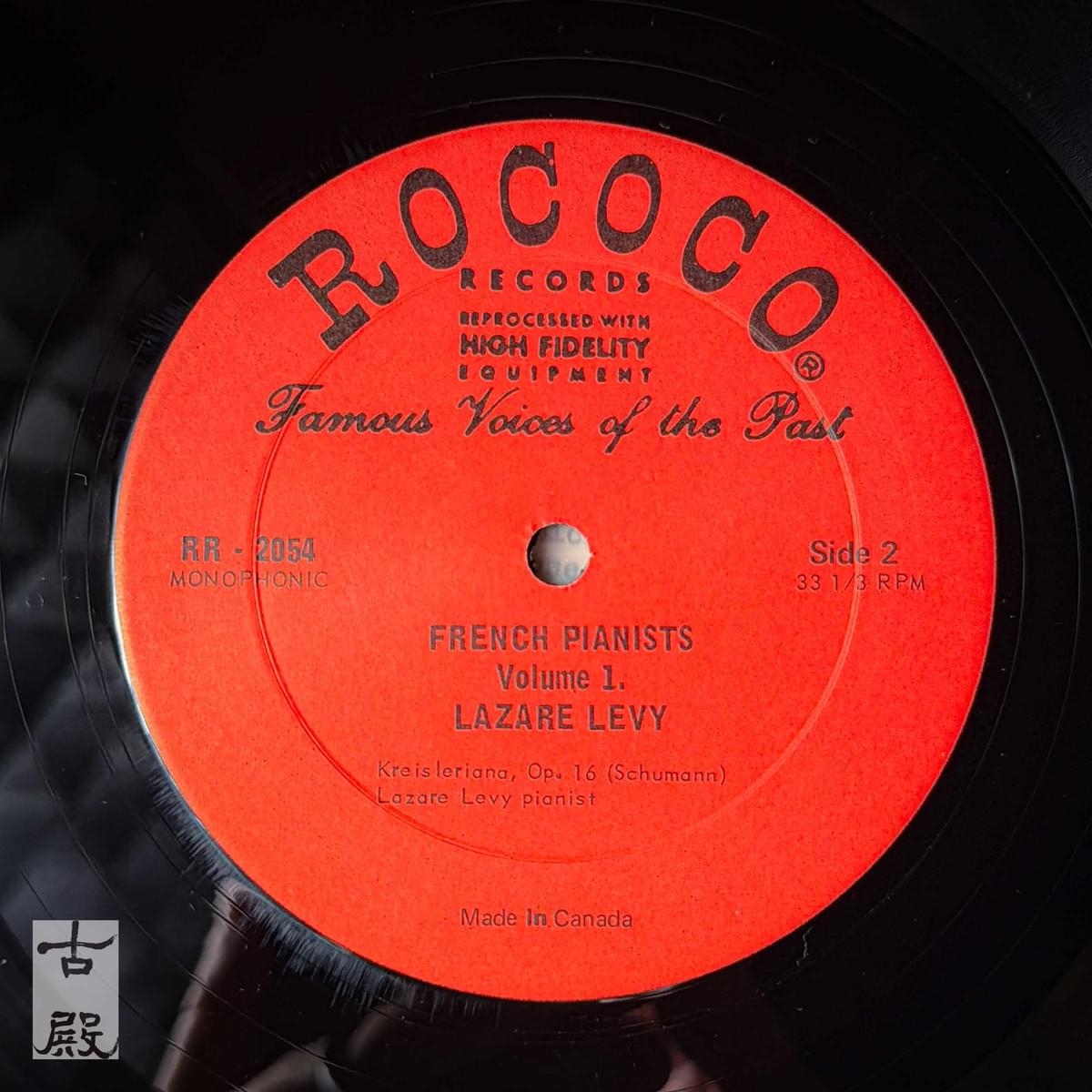
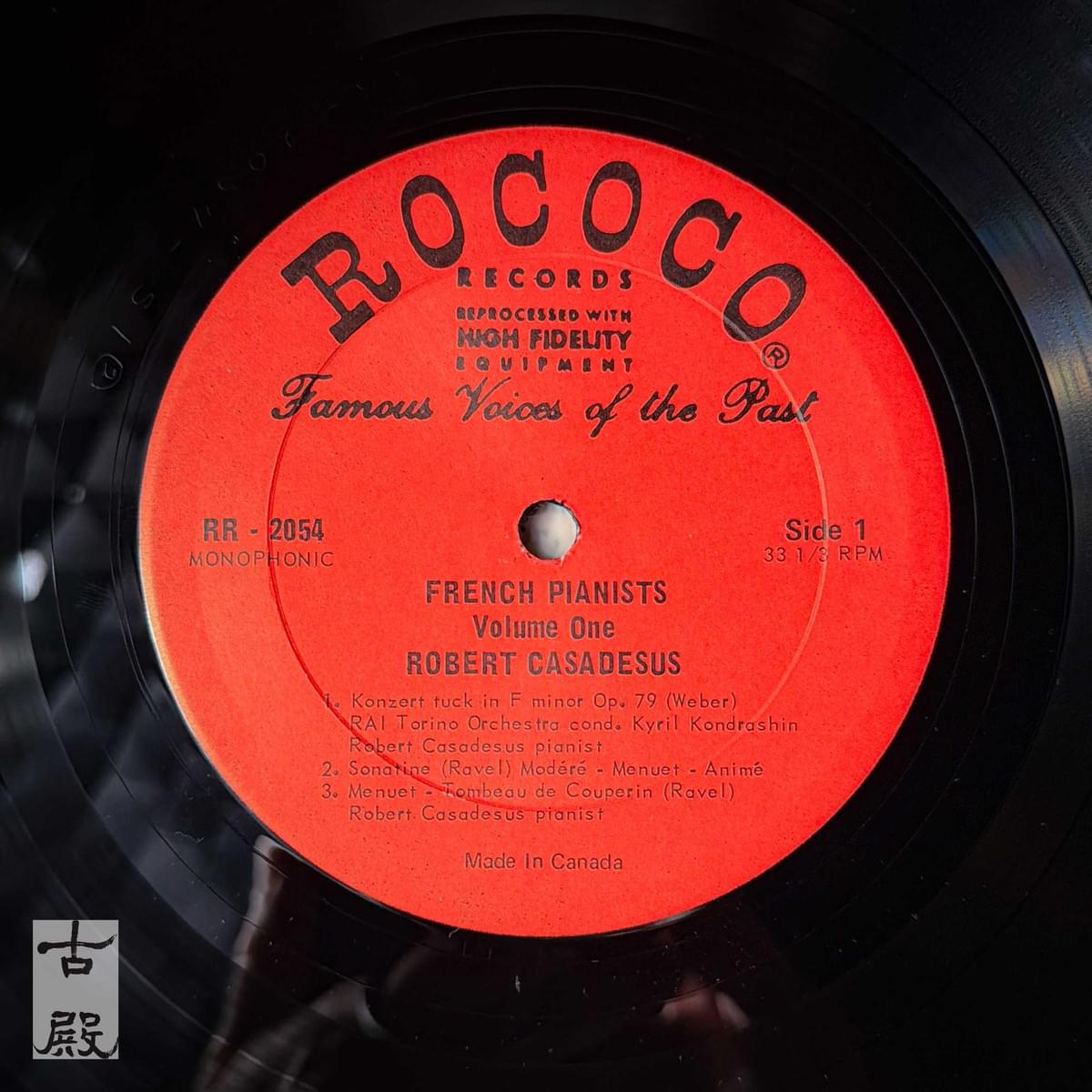
三十年後,這卷為一個學生錄下的磁帶,出現在大西洋對岸加拿大多倫多一家小廠的唱片上:Rococo RR-2054《French Pianists, Volume I》的第二面。
它怎麼走到那裡?而在他坐下來彈這首舒曼之前的那幾年,又發生了什麼事?
一張淺藍色的唱片
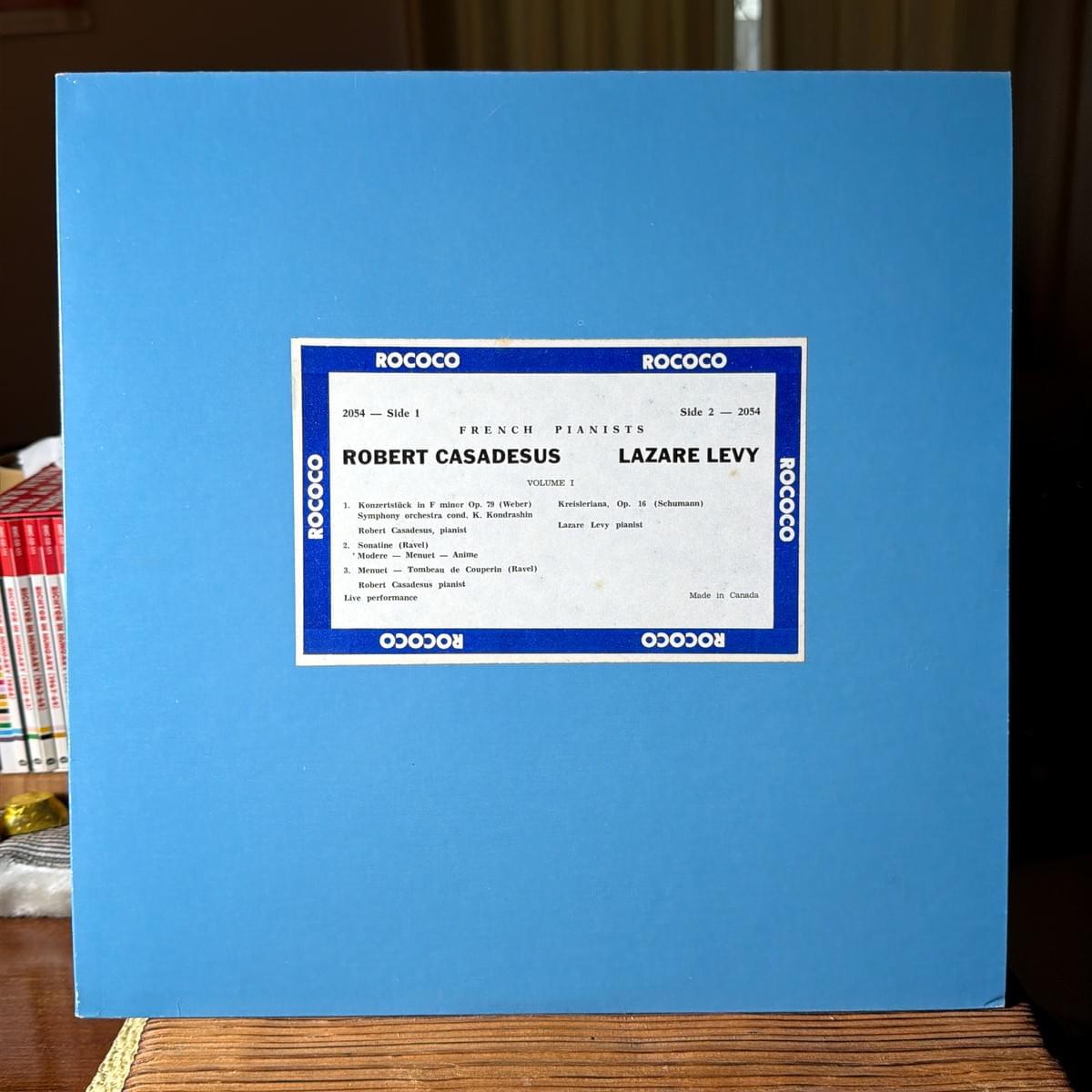
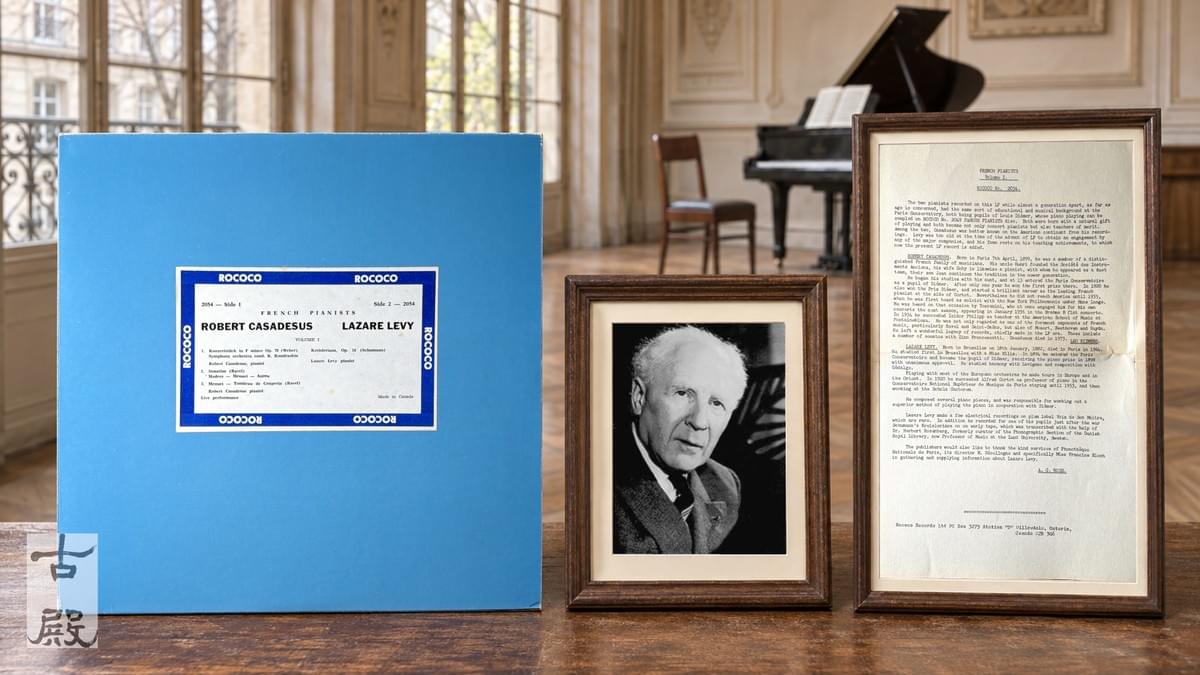
RR-2054 的封套是一張素面淺藍色硬紙板,正中央貼著一張藍框白底的印刷標籤,唱片裡夾著一張對折的打字說明書,字母有些是浮起的、有些淡掉了,看得出是打字機一個鍵一個鍵敲出來的。說明書的第一段寫著:這兩位鋼琴家年紀差了將近一個世代,卻出自同一位老師——巴黎音樂院的路易·迪埃梅(Louis Diémer,1843-1919)。
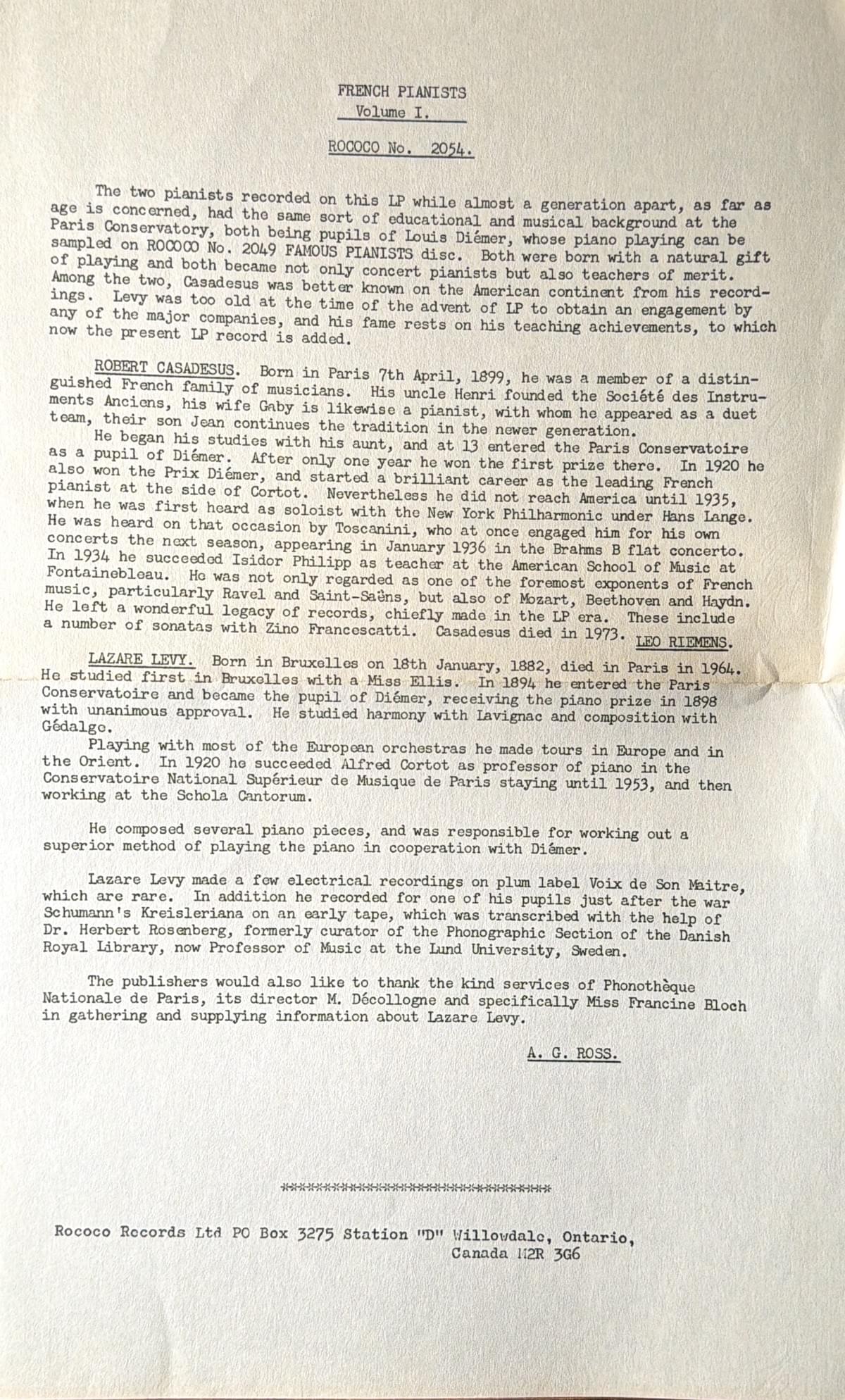
說明書寫列維的部分不長。寫到他的錄音時,只有兩句:他為法國的 Voix de son Maître(法國 HMV)錄過幾面電氣錄音,很稀少;此外,戰後不久,他為一位學生在早期磁帶上錄下了《克萊斯勒魂》。
就這樣。一位影響了半個世紀法國鋼琴的老師,留給唱片史的,只有這麼幾行字。
迪埃梅門下的少年
列維 1882 年 1 月 18 日生在布魯塞爾,父母是法國人。據說是普法戰爭後,家人為了躲避德軍占領才遷到比利時。
他先在布魯塞爾跟一位英國籍的女老師學琴,十二歲那年(1894)進入巴黎音樂院,拜在迪埃梅門下;和聲跟拉維尼亞克(Albert Lavignac,1846-1916)學,作曲跟蓋達爾吉(André Gedalge,1856-1926)學。1898 年,十六歲的他在全體評審一致通過下拿到鋼琴一等獎畢業。
二十歲左右,他在柯隆(Édouard Colonne,1838-1910)指揮下登台,彈的是舒曼的 A 小調鋼琴協奏曲。舒曼,從一開始就在他的生命裡。
他的曲目很寬:1911 年就彈了阿爾班尼士(Isaac Albéniz,1860-1909)《伊比利亞》第一冊,拉赫曼尼諾夫、法雅的作品還是新曲的時候他就在彈,也很早就為米堯(Darius Milhaud,1892-1974)、杜卡斯(Paul Dukas,1865-1935)發聲。他巡迴過土耳其、埃及、巴勒斯坦、雅典與維也納。1930 年代,是他聲望最高的時候。
迪埃梅出版的《高級鋼琴教本》(Méthode supérieure),是二十五歲的列維參與合寫的。解說中也提到這件事:他與迪埃梅一起整理出一套「更好的彈琴方法」。從那時起,他就不只是一位演奏家了。
他不收所羅門的學費
1914 年起,列維在巴黎音樂院代課;1923 年,他接下阿爾弗雷德·柯爾托(Alfred Cortot,1877-1962)留下的鋼琴教授位置。
有樂評稱他是巴黎最偉大的鋼琴老師之一,甚至可能是最偉大的那一位。看看他教過的人,這句話並不誇張:哈絲姬兒、所羅門、莫妮克·阿絲、米歇爾·普拉松(Michel Plasson,1933-)、安德烈·柴可夫斯基(André Tchaikowsky,1935-1982)、約翰·凱吉、安涅莉·邦黛薇(Agnelle Bundervoët,1922-2015)、作曲家盧卡斯·佛斯(Lukas Foss,1922-2009)、管風琴家尚·朗格萊(Jean Langlais,1907-1991)……
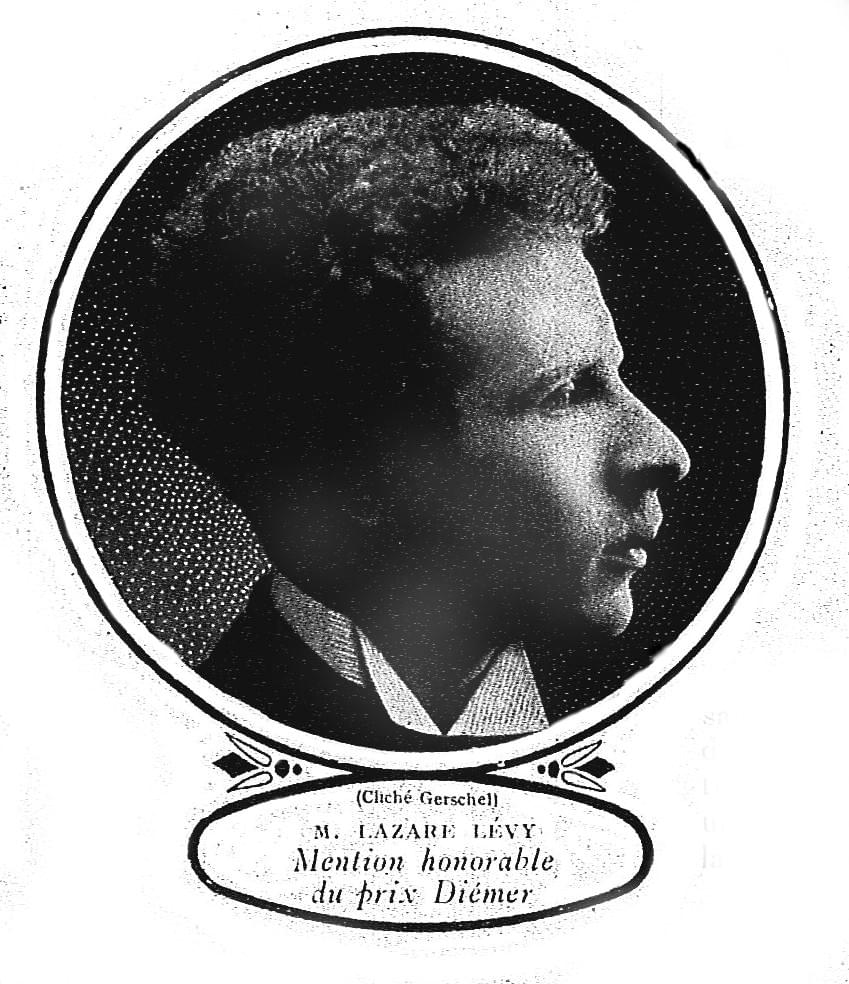
英國鋼琴家所羅門一次大戰後在巴黎跟他學了兩年。據所羅門的傳記記載,列維一毛錢學費都不肯收。
所羅門不是唯一的例子。十歲的安涅莉·邦黛薇剛從馬賽音樂院拿下畢業首獎,母親帶她到巴黎來見列維。列維不但協助她進入巴黎音樂院,還免費私下教她。為了等列維的高級班空出名額,她寧可多等一年,連音樂院另一位鋼琴教母瑪格麗特·隆(Marguerite Long,1874-1966)親自來爭取,都被她婉拒。1936 年,十四歲的她才終於進入列維門下。
Rococo 的解說說得很直白:列維到 LP 時代來臨時,年紀已經太大,沒有一家大唱片公司願意和他簽約;他的名聲,靠的是教學。
市場只看見還在上升的人。可是這份名聲,是他一個學生、一個學生慢慢累積出來的。
作曲家羅蘭-馬努埃爾(Roland-Manuel,1891-1966)對他的描述最貼切:列維把大部分的心力,都獻給了教學這件艱難的工作;他以令人敬佩的謙遜服務音樂,而不是讓音樂來服務他。
蕭邦大賽評審席上的法國代表
列維錄音少,演奏會也不算多。但在鋼琴界內部,他的份量很少有人能比。世界級的鋼琴大賽要找法國的評審,多半會想到他。
以華沙的蕭邦國際鋼琴大賽為例,列維三度以法國代表的身分坐上評審席:
- 1937 年第三屆:與他同席的有擔任副主席的威廉·巴克豪斯(Wilhelm Backhaus,1884-1969)。這屆的冠軍是蘇聯的雅可夫·札克(Yakov Zak,1913-1976)。
- 1949 年第四屆:戰後第一屆,也是蕭邦逝世百年。華沙愛樂廳毀於戰火,比賽只能改在羅馬劇院舉行。列維與瑪格麗特·隆一同代表法國;這屆由哈莉娜·切爾尼-斯特凡斯卡(Halina Czerny-Stefańska,1922-2001)與貝拉·達維多維奇(Bella Davidovich,1928-)並列第一。
- 1955 年第五屆:評審團裡有米開郎傑利(Arturo Benedetti Michelangeli,1920-1995)、列夫·奧伯林(Lev Oborin,1907-1974),還有來自中國的馬思聰(Ma Sicong,1912-1987)。這屆的冠軍是波蘭的亞當·哈拉謝維奇(Adam Harasiewicz,1932-),第二名是年輕的阿胥肯納吉(Vladimir Ashkenazy,1937-)。
請留意後兩屆的年份。戰後的列維,在巴黎音樂院已經回不到原來的位置——但世界還是把法國的那張評審椅留給了他。
1955 年 2 月,他人在華沙當評審,也在重建後的華沙愛樂廳開了一場獨奏會。據法國鋼琴史研究者弗雷德里克·戈桑(Frédéric Gaussin,生年待考)的整理,那場獨奏會的曲目包括舒曼的《克萊斯勒魂》與《幻想小品》,其中《幻想小品》後來由波蘭 Muza 唱片發行成十吋 LP,今天也是收藏家眼中的珍品。一位幾乎不錄音的鋼琴家,留下的少數聲音,常常就是這樣在旅途中被偶然捕捉下來的。
1940 年之後
唱片解說中寫他在音樂院任教「一直到 1953 年」。這句話省略了一段歷史。
1940 年,德軍占領巴黎。列維是猶太人,又擔任公職,於是被解除教職,位置由馬塞爾·錢皮(Marcel Ciampi,1891-1980)接替。有評論者指出,主導這次解職、對多年同事毫不留情的,正是當年把教席交給他的學長柯爾托。
戰爭期間,列維拒絕在德軍控制的電台演奏。為了不被抓走,他用假證件、換了好幾個名字,不斷搬家躲藏。
但他和學生之間的聯繫沒有斷。列維被解職後,邦黛薇跟著列維的助手繼續學琴。1942 年 6 月,她拿到音樂院的最高文憑首獎,寫信給不知身在何處的老師,請他為自己在巴黎的首演音樂會寫一篇文章。列維不只答應,還把自己的作品《主題與變奏》(Thème et Variations)題獻給她,由她首演。
一位躲藏中的老師,在最危險的年份,把一首曲子交給學生,讓她在巴黎的舞台上替他彈出來。戰後,邦黛薇成為法國最頂尖的鋼琴家之一,她為 Ducretet-Thomson 錄製的第一張唱片——布索尼改編的巴哈——一出版就拿下法國唱片大獎。
他的兒子菲利普(Philippe Lévy)加入了抵抗運動,被捕後送進德朗西(Drancy)集中營,遭到納粹黨衛軍軍官阿洛伊斯·布倫納(Alois Brunner,1912-約2001)刑求,最後遇害。
1944 年巴黎解放,列維重新獲得任命,卻再也回不到原來的位置。
然後,在戰後不久的某一天,他坐下來,為一個學生彈了《克萊斯勒魂》。
為什麼是《克萊斯勒魂》?
「克萊斯勒」指的是德國作家霍夫曼(E. T. A. Hoffmann,1776-1822)筆下的人物:一位才華洋溢、情緒極端、在狂熱與憂鬱之間擺盪的樂長約翰內斯·克萊斯勒。1838 年,二十八歲的舒曼借這個人物寫下八首鋼琴曲,題獻給蕭邦(Frédéric Chopin,1810-1849)。那一年,他和克拉拉(Clara Schumann,1819-1896)的婚事正被克拉拉的父親強力阻擋。
這是舒曼最分裂、也最內省的作品之一:快與慢、激動與安靜,一首接著一首輪替,像一個人在跟自己對話。
我們無法確知列維為什麼選這首曲子,解說中沒有說,他也沒有留下自己的話。但有一個線索:據戈桑的整理,列維留下的《克萊斯勒魂》不少於四個版本——除了這份為學生錄下的磁帶,還有 1950 年的一份電台錄音,以及 1955 年他在華沙擔任蕭邦大賽評審期間,由波蘭電台錄下的獨奏會。
在他的商業唱片裡,舒曼只有兩首小品。可是在私下、在電台、在音樂會上,他一次又一次回到這部作品。對一位不愛錄音的鋼琴家來說,這幾乎就是一份告白。
而我們也知道,彈這首曲子的人,剛剛經歷了什麼。
樂評對他這份《克萊斯勒魂》的描述,是一種不同於柯爾托、也不同於伊夫·納特(Yves Nat,1890-1956)的「法國式舒曼」:不誇張、結構穩固。另一位樂評形容他的彈性速度是「適度的狂喜」——帶著節制的尊嚴,而不是一路拉扯。錄音的聲音有點空洞,畢竟不是為了出版而錄的專業錄音,但聽得出是一架法國艾拉爾(Érard)鋼琴。
這給了我們一個聆聽的入口:
先聽他沒有做什麼。 《克萊斯勒魂》很容易被彈成情緒的大爆發。經歷過那樣的戰爭、失去兒子的人,大可以把一切都傾倒在琴鍵上。試著聽聽看:他在哪些地方忍住了?那份克制,是冷淡,還是比哭喊更深的東西?
再拿柯爾托來對照。 柯爾托在 1930 年代為 HMV 錄過這首曲子的 78 轉唱片。同一部作品,兩位先後坐過同一個教席、又在戰時站在對立面的教授,彈出來的舒曼有什麼不同?這個問題沒有標準答案,答案只在你自己的耳朵裡。
這首曲子,也在他的學生手上活了下去。莫妮克·阿絲 1948 年在法蘭克福電台、1951 年為 DG,都錄下了自己的《克萊斯勒魂》。有樂評提到,列維的高級班比起同時代其他名師,更重視詮釋與表達的自由。老師自己的版本幾乎無人聽過,學生的版本却在黃標籤上發行到世界各地。
一卷磁帶的旅程
那卷磁帶沒有留在巴黎。
我們不知道錄下它的學生是誰,解說中沒有寫出名字。但我們知道,這卷磁帶後來經過了哪些人的手。
第一位是赫伯特·羅森堡(Herbert Rosenberg,1904-1984)。解說說,這份錄音是在他的協助下轉錄的,並稱他是丹麥皇家圖書館留聲部門的前主任、現任瑞典隆德大學音樂教授。據丹麥國家百科的記載,羅森堡生於德國法蘭克福,1964 年到 1973 年在丹麥國家唱片典藏館(Nationaldiskoteket)任職,1966 年起又任教於瑞典南部的馬爾默音樂學院。一位在德國出生、在丹麥照管國家唱片典藏的學者,替一位法國猶太鋼琴家把私人磁帶轉成可以出版的母帶——這條路線本身,就是一張戰後歐洲的地圖。
第二位是法蘭辛·布洛赫(Francine Bloch,1916-2005)。解說中感謝巴黎國家聲音資料館(Phonothèque Nationale)、館長 Décollogne 先生,特別是布洛赫小姐,替他們蒐集、提供列維的資料。布洛赫 1970 年代曾為這座資料館錄下許多音樂家的訪談,是法國聲音檔案的早期守護者之一。
最後是多倫多的 Rococo 唱片。這家小廠由安德烈·羅斯(André Ross)與合夥人在 1950 年代中期創立,原本專門把罕見的 78 轉唱片與蠟筒錄音轉成 LP。說明書末尾的署名「A. G. ROSS」,就是他。卡薩德許那一段的說明,則由荷蘭唱片學家李奧·里門斯(Leo Riemens,1910-1985)執筆。
Rococo 的定位從一開始就很清楚:專門出版大唱片公司不會出的東西——罕見的 78 轉與蠟筒、電台廣播的音源、私人或特殊場合的錄音。封套是素面的硬紙板貼上一張標籤,說明書是打字機敲出來的,廠牌標語寫著「Famous Voices of the Past」。在大公司的目錄裡,商業價值決定一份錄音能不能被聽見;在 Rococo 這樣的小廠,問題只有一個:這個聲音值不值得留下來。
巴黎的學生、丹麥的典藏館員、巴黎國家資料館的訪談者、多倫多的唱片行老闆。一份從來沒打算公開的演奏,靠著這一串人的手,在 1970 年代中期變成一張唱片。
戈桑對這張唱片的描述更直接:它是一張未經當事人同意、以 Rococo 名義出版的加拿大「盜版」,而內容實際上是一位學生在私人場合錄下的示範演奏。
但換一個角度想:如果他們當年沒有出這份錄音呢?接下來的三十年,世上不會有任何一張唱片讓人聽到列維的《克萊斯勒魂》。直到 2005 年 Tahra 從鋼琴家的私人檔案裡找出一份,而那一份還是不完整的。學生手上的那卷磁帶,很可能就留在某個抽屜裡,跟著錄下它的人一起被遺忘。這份錄音,可能也就這樣消失了。
再想一層:一家盜版公司如果只為了賺錢,大可以去翻印暢銷的名盤。偏偏 Rococo 選的,是一位幾乎沒有唱片、在北美幾乎無人知曉的老教授,為一個學生彈的舒曼。這樣的唱片注定賣不了幾張,封套也只是一張素面硬紙板。願意花力氣轉錄、查資料、寫說明書,去出一張賺不了錢的唱片,本身就說明了這間公司除了生意,還有自己的理念。
而正因為它原本就不是為了出版而錄的,它反而有了另一種特別的價值。沒有錄音室,沒有製作人,沒有重錄與剪接,彈琴的人也沒有想到有一天會有陌生人聽見。它記下的,不是一位鋼琴家「對外發表」的樣子,而是一位老師在一個學生面前,最自然的樣子。
一件事,可以同時是侵犯,也是保存——你會怎麼看待它?
還有一件事值得停下來想一想。錄下這份演奏的磁帶錄音,是德國在戰爭年代發展成熟的技術,戰後才流傳到各國。一位剛從迫害中活下來、失去兒子的猶太鋼琴家,他最私密的一份舒曼,最後是靠這項技術保存下來的。歷史沒有替這件事下評語,它只是發生了。
2005 年,法國 Tahra 唱片出版三片裝 CD《L'École Lazare-Lévy》,也收錄了這份《克萊斯勒魂》,長二十分二十五秒,註明「不完整」,來源是鋼琴家本人的私人檔案,沒有日期。據鋼琴家錄音年表網站 Classical Pianists 的整理,Tahra 版彈到第六首約兩分鐘處便中斷。《克萊斯勒魂》共八首,全曲通常在三十分鐘上下;換句話說,Tahra 版少了第六首的後半,以及最後兩首。
那麼,Rococo 這張黑膠上的版本,也停在同一個地方嗎?如果是,兩者幾乎可以確定出自同一卷磁帶。如果 Rococo 彈到了第八首,那麼五十年前在多倫多壓成的這張黑膠,反而保存了比 2005 年 CD 更完整的一份列維。說明書沒有說。答案在溝槽裡,要放下唱針,一首一首數到第八首才知道。
一份不完整的錄音,算不算真正認識了一位鋼琴家?還是說,正因為它是給一個學生的、不完整的、帶著空洞聲響的,它反而比任何精心製作的錄音室唱片,更接近那個人在那個時刻的真實?
同一張唱片的另一面
RR-2054 的第一面屬於卡薩德許:韋伯(Carl Maria von Weber,1786-1826)的《音樂會曲》(Konzertstück),由基里爾·孔德拉辛(Kirill Kondrashin,1914-1981)指揮杜林 RAI 管弦樂團協奏;接著是拉威爾(Maurice Ravel,1875-1937)的《小奏鳴曲》與《庫普蘭之墓》中的〈小步舞曲〉。
卡薩德許是迪埃梅門下另一位得意弟子,在美國唱片市場大受歡迎,LP 時代留下了大量錄音。列維則幾乎什麼都沒留下。
同一位老師、同一張唱片,正反兩面,正好是兩種命運:一位被唱片工業完整記錄,一位幾乎被遺漏。Rococo 把他們放在一起,或許只是因為師承相同。但翻過唱片的那一刻,你聽見的不只是兩位鋼琴家,也是一個時代怎麼決定誰被留下來。
結語
列維 1964 年 9 月 20 日在巴黎過世,享年八十二歲。
他教出來的學生,把他的方法帶到倫敦、日內瓦、紐約——也帶到了東京:日本鋼琴家安川加壽子(Kazuko Yasukawa,1922-1996)正是他最重要的學生之一,他 1950 年訪日時留下的錄音,就是這段師生緣的見證。而他自己的聲音,散落在少少幾張 78 轉與 LP 裡,很少人聽過——還有這一份原本只為一個人彈的舒曼。
日本 Victor 當年為他出版的,是一套三張 78 轉的 Red Seal 唱片冊《Pièces choisies》(精選小品),只在日本發行。灰白色的封面上,是一幅他老年的素描肖像,右上角一面小小的法國三色旗,肖像旁寫著他的簽名,和一行法文:「7 novembre 1950, Tokyo」。1950 年 11 月 7 日,東京。那是戰爭結束五年後,一位失去兒子的六十八歲鋼琴家,在地球另一端留下的日期。
如果你只能為一個在乎的人錄下一首曲子,不為發行、不為留名——你會彈什麼?
******
[Gudian Record Stories]This Schumann Kreisleriana Was Originally Played for a Single Student: Lazare-Lévy (1882–1964)
A ten-inch vinyl record—a size smaller than a standard twelve-inch LP—pressed on two sides. Inside its grooves, there is no symphony orchestra, no celebrated conductor; only two piano sonatas by Wolfgang Amadeus Mozart (1756–1791), played alone by a seventy-year-old pianist.
In February 2017, a copy of this record sold at auction for £3,211—roughly NT$140,000 at current exchange rates. Nor was that sale an anomaly: in 2009 and 2010, copies of the exact same disc fetched $2,559 and $3,162, respectively.
What kind of pianist possesses the artistic stature to command such prices for a ten-inch solo Mozart LP recorded at age seventy?
His name was Lazare-Lévy (1882–1964). In his youth, Camille Saint-Saëns (1835–1921), then director of the Paris Conservatoire, regularly sat in the front row at his recitals; his roster of pupils included Clara Haskil (1895–1960), Solomon (Solomon Cutner, 1902–1988), Monique Haas (1909–1987), and even John Cage (1912–1992), future composer of 4'33".
Yet the recorded legacy Lazare-Lévy left behind is remarkably sparse: a handful of French HMV 78 RPM sides, a set of short pieces recorded in Yokohama for Japanese Victor during his 1950 tour of Japan (issued as a 78 RPM album), a seven-inch Crown LP recorded in Israel in 1951, that 1952 ten-inch Ducretet-Thomson Mozart disc, and a few surviving radio broadcasts. His records are expensive because they are rare; and they are rare because he disliked recording. Scarcity alone, however, never makes a record worth fourteen hundred hundred Taiwan dollars—collectors pay that sum because of the stature he held in musical history. Within his commercial discography, Robert Schumann (1810–1856) is represented solely by two short pieces from the Fantasiestücke, taped in Japan in 1950.
Yet the most moving recording he ever left behind never originated as a commercial release at all.
The setting was Paris, shortly after the end of the Second World War. Now in his early sixties, Lazare-Lévy sat down at the keyboard to perform Schumann’s Kreisleriana. His audience consisted of a single person: one of his students, who had placed an early magnetic tape recorder beside the piano.
There was no record company in the room, no balance engineer, and no intention of ever issuing the tape.
Thirty years later, that private reel recorded for a single pupil surfaced across the Atlantic on Side Two of an LP issued by a small independent label in Toronto, Canada: Rococo RR-2054, French Pianists, Volume I.
How did that tape make its way to Toronto? And what had transpired in Lazare-Lévy’s life during the years just before he sat down to play that Schumann?
A Pale Blue Jacket
RR-2054 is housed in a plain, pale-blue cardboard sleeve with a white, blue-bordered printed label pasted at its center. Tucked inside is a folded, typewritten insert sheet—some letters embossed slightly deeper into the paper, others fainter, clearly struck key by key on a manual typewriter. The opening paragraph notes that although the two pianists featured on the disc were separated by nearly a generation, both emerged from the studio of the exact same teacher: Louis Diémer (1843–1919) of the Paris Conservatoire.
The passage devoted to Lazare-Lévy is brief. Addressing his discography, it offers just two sentences: he cut a small number of electrical sides for La Voix de son Maître (French HMV), now exceedingly scarce; and shortly after the war, he recorded Schumann’s Kreisleriana on early magnetic tape for one of his students.
That is all. A pedagogue who shaped half a century of French pianism summed up in a few typewritten lines.
A Youth in Louis Diémer’s Studio
Lazare-Lévy was born in Brussels on January 18, 1882, to French parents who had reportedly relocated to Belgium following the Franco-Prussian War to escape German occupation.
After initial lessons in Brussels with an Englishwoman, he entered the Paris Conservatoire in 1894 at the age of twelve, joining Diémer’s piano class while studying harmony with Albert Lavignac (1846–1916) and composition with André Gedalge (1856–1926). In 1898, at sixteen, he graduated with a unanimous Premier Prix in piano.
Around age twenty, he made his major orchestral debut under Édouard Colonne (1838–1910), performing Schumann’s Piano Concerto in A minor. Schumann had stood at the center of his musical life from the very beginning.
His repertoire was remarkably wide-ranging: as early as 1911 he championed Book I of Isaac Albéniz’s (1860–1909) Iberia, performed works by Rachmaninoff and Manuel de Falla while the ink was still fresh on the scores, and advocated early on for Darius Milhaud (1892–1974) and Paul Dukas (1865–1935). He toured Turkey, Egypt, Palestine, Athens, and Vienna, reaching the height of his concert renown during the 1930s.
When Diémer published his Méthode supérieure for piano, it was co-authored by twenty-five-year-old Lazare-Lévy—a collaboration noted in the Rococo insert, which credits him with helping codify a more refined, rational method of keyboard technique. From that point onward, he was far more than a performing virtuoso.
Refusing Tuition from Solomon
Beginning in 1914, Lazare-Lévy served as a substitute professor at the Paris Conservatoire; in 1923, he formally succeeded Alfred Cortot (1877–1962) in the permanent piano professorship.
Critics have hailed him as one of the greatest piano teachers in Parisian history—perhaps the very greatest. Surveying his roster of students, that claim requires no exaggeration: Clara Haskil, Solomon, Monique Haas, Michel Plasson (b. 1933), André Tchaikowsky (1935–1982), John Cage, Agnelle Bundervoët (1922–2015), composer Lukas Foss (1922–2009), and organist Jean Langlais (1907–1991).
The great British pianist Solomon studied with him in Paris for two years following the First World War. According to Solomon’s biography, Lazare-Lévy refused to accept a single franc in tuition.
Solomon was hardly an isolated case. When ten-year-old Agnelle Bundervoët graduated with a First Prize from the Marseille Conservatory, her mother brought her to Paris to play for Lazare-Lévy. Not only did he guide her admission into the Paris Conservatoire, he coached her privately free of charge. To wait for an opening in Lazare-Lévy’s advanced class, she willingly delayed entry for a full year, even declining a personal invitation from Marguerite Long (1874–1966), the other reigning matriarch of the Conservatoire. In 1936, at age fourteen, she finally entered his studio.
The Rococo insert states the commercial reality bluntly: by the time the LP era arrived, Lazare-Lévy was already elderly, and no major record company cared to sign him; his enduring reputation rested on his teaching.
The commercial market notices only rising stars. Yet Lazare-Lévy built his monument quietly, one pupil at a time.
Composer Roland-Manuel (1891–1966) captured his character best: Lazare-Lévy devoted the lion's share of his energy to the demanding labor of teaching, serving music with admirable humility rather than asking music to serve him.
France’s Representative on the Chopin Competition Jury
Though Lazare-Lévy made few records and gave relatively few concerts in later years, his authority inside the piano world was virtually unmatched. Whenever major international competitions sought a French juror, his name stood at the top of the list.
At the International Chopin Piano Competition in Warsaw, he represented France on the jury three times:
- 1937 (Third Competition): Serving alongside jury vice-chairman Wilhelm Backhaus (1884–1969), in the year Soviet pianist Yakov Zak (1913–1976) took First Prize.
- 1949 (Fourth Competition): The first postwar edition, marking the centenary of Chopin’s death. With the Warsaw Philharmonic Hall still lying in ruins, the competition was held at the Roma Theatre. Lazare-Lévy represented France alongside Marguerite Long, awarding joint First Prizes to Halina Czerny-Stefańska (1922–2001) and Bella Davidovich (b. 1928).
- 1955 (Fifth Competition): Joining a panel that included Arturo Benedetti Michelangeli (1920–1995), Lev Oborin (1907–1974), and Chinese violinist-composer Ma Sicong (1912–1987), when Poland’s Adam Harasiewicz (b. 1932) won First Prize ahead of young Vladimir Ashkenazy (b. 1937).
Look closely at the dates of those last two competitions. In postwar Paris, Lazare-Lévy was never restored to his former chair at the Conservatoire—yet the international musical world continued to reserve France’s seat on the jury for him alone.
In February 1955, while serving on the jury in Warsaw, he gave a solo recital in the newly rebuilt Warsaw Philharmonic Hall. According to French piano historian Frédéric Gaussin, that program included Schumann’s Kreisleriana and Fantasiestücke—the latter subsequently issued by the Polish state label Muza as a ten-inch LP that has become a prized collector's rarity. For an artist who shunned the recording studio, his rare surviving documents were almost always captured in passing during his travels.
After 1940
The Rococo sleeve notes state simply that he taught at the Conservatoire "until 1953." That single phrase passes over a painful chapter of history.
In 1940, German forces occupied Paris. Because Lazare-Lévy was Jewish and held a state appointment, he was stripped of his professorship, his chair handed over to Marcel Ciampi (1891–1980). Historians have noted that the colleague who engineered that dismissal without hesitation was none other than Alfred Cortot—the very predecessor who had passed the chair to him in 1923.
Throughout the occupation, Lazare-Lévy refused to perform for German-controlled radio. To evade arrest, he adopted false identity papers, lived under several assumed names, and moved repeatedly from one hiding place to another.
Yet his bond with his pupils remained unbroken. Following his dismissal, Agnelle Bundervoët continued her studies with his teaching assistant. When she won her Premier Prix at the Conservatoire in June 1942, she sent word to her teacher in hiding, asking him to write an introductory note for her Paris debut recital. Lazare-Lévy not only agreed, he composed and dedicated his Thème et Variations to her for the premiere.
A hunted teacher in hiding during the darkest years of the occupation, placing a new score into his pupil's hands so she might give it voice on a Parisian stage. After the war, Bundervoët rose to become one of France's foremost pianists; her debut LP for Ducretet-Thomson—Busoni’s Bach transcriptions—won the Grand Prix du Disque immediately upon release.
Lazare-Lévy’s son, Philippe Lévy, joined the French Resistance. Captured by the Gestapo, he was sent to the Drancy internment camp, tortured by SS officer Alois Brunner (1912–c. 2001), and murdered.
When Paris was liberated in 1944, Lazare-Lévy was formally reinstated—yet he never truly returned to the life or the chair that had been taken from him.