
【古殿唱片音樂故事】正統德奧傳統最早的貝多芬:約瑟夫·沃夫斯塔爾(Josef Wolfsthal,1899-1931)的貝多芬小提琴協奏曲,為何重要?
古殿殿主
1930 年冬天,柏林。一位三十歲的小提琴家去參加了一場葬禮。
葬禮之後,他著了涼。幾個星期後,感冒轉成了肺炎。1931 年 2 月 3 日,他去世了,三十一歲。
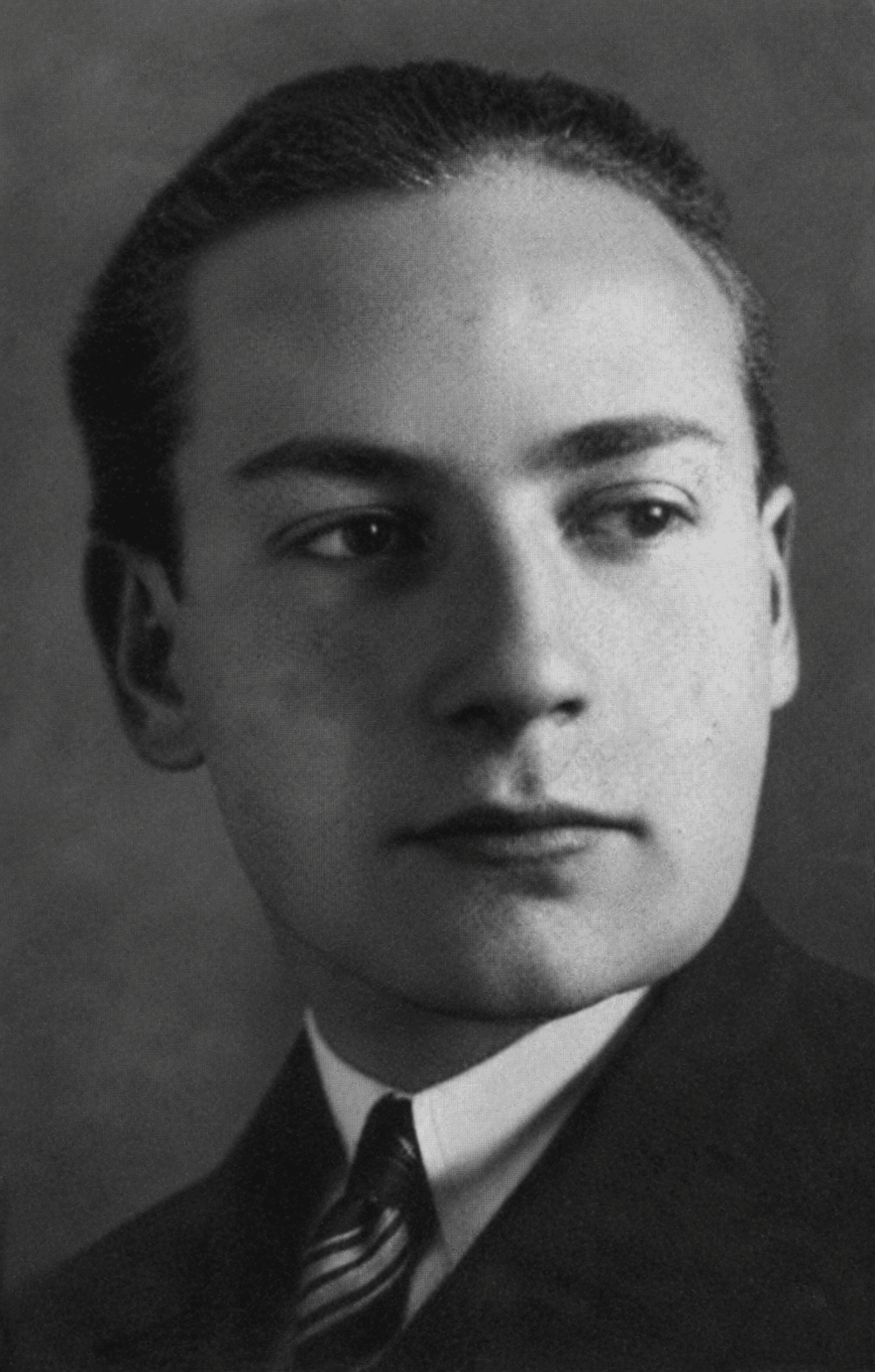
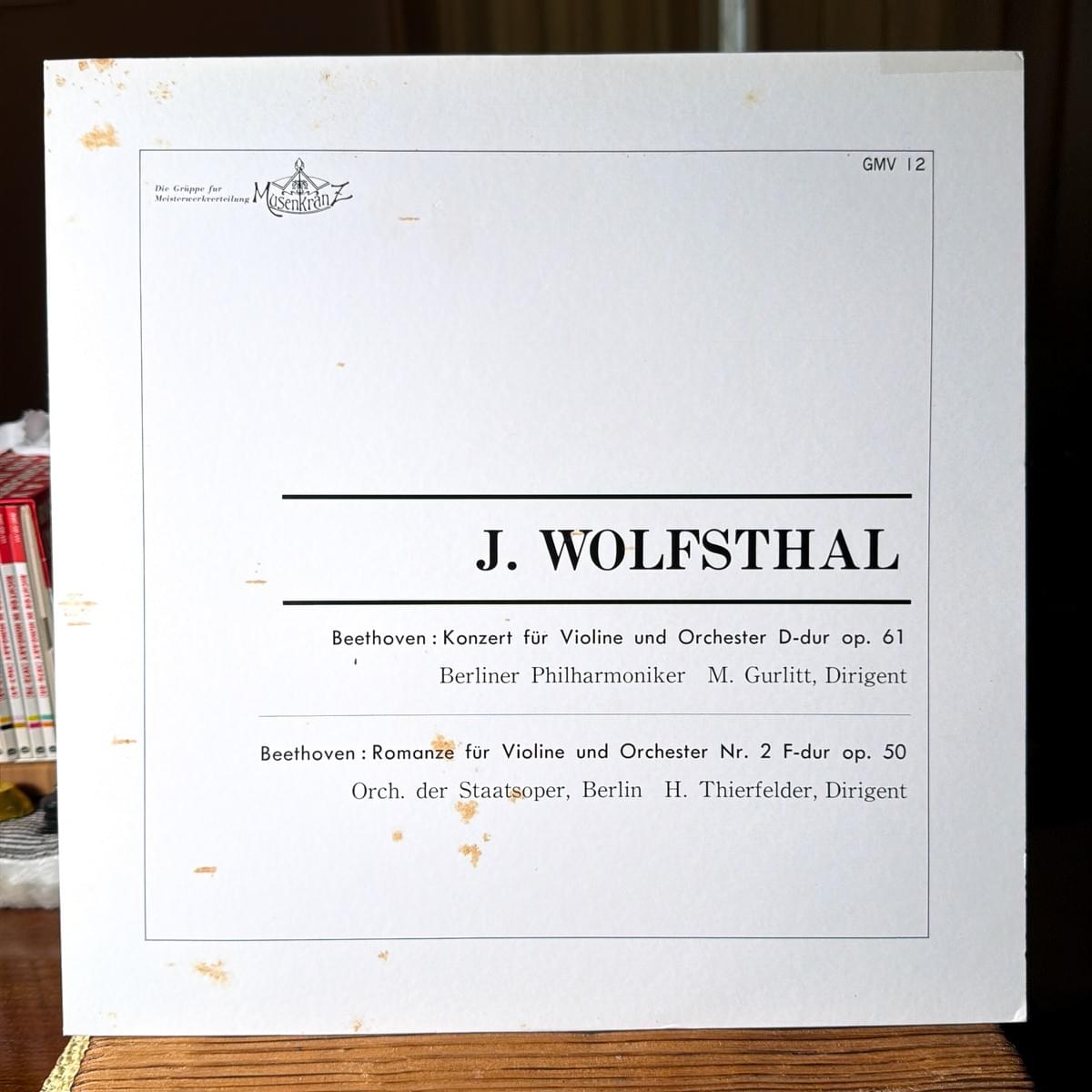
他叫約瑟夫·沃夫斯塔爾(Josef Wolfsthal,1899-1931)。在那個冬天之前,他是柏林最被看好的小提琴家之一:二十六歲就當上柏林高等音樂學院的教授,理查·史特勞斯(Richard Strauss,1864-1949)器重他,保羅·亨德密特(Paul Hindemith,1895-1963)和他一起組三重奏。照那條路走下去,德國小提琴界最高的那個位置,很可能就是他的。
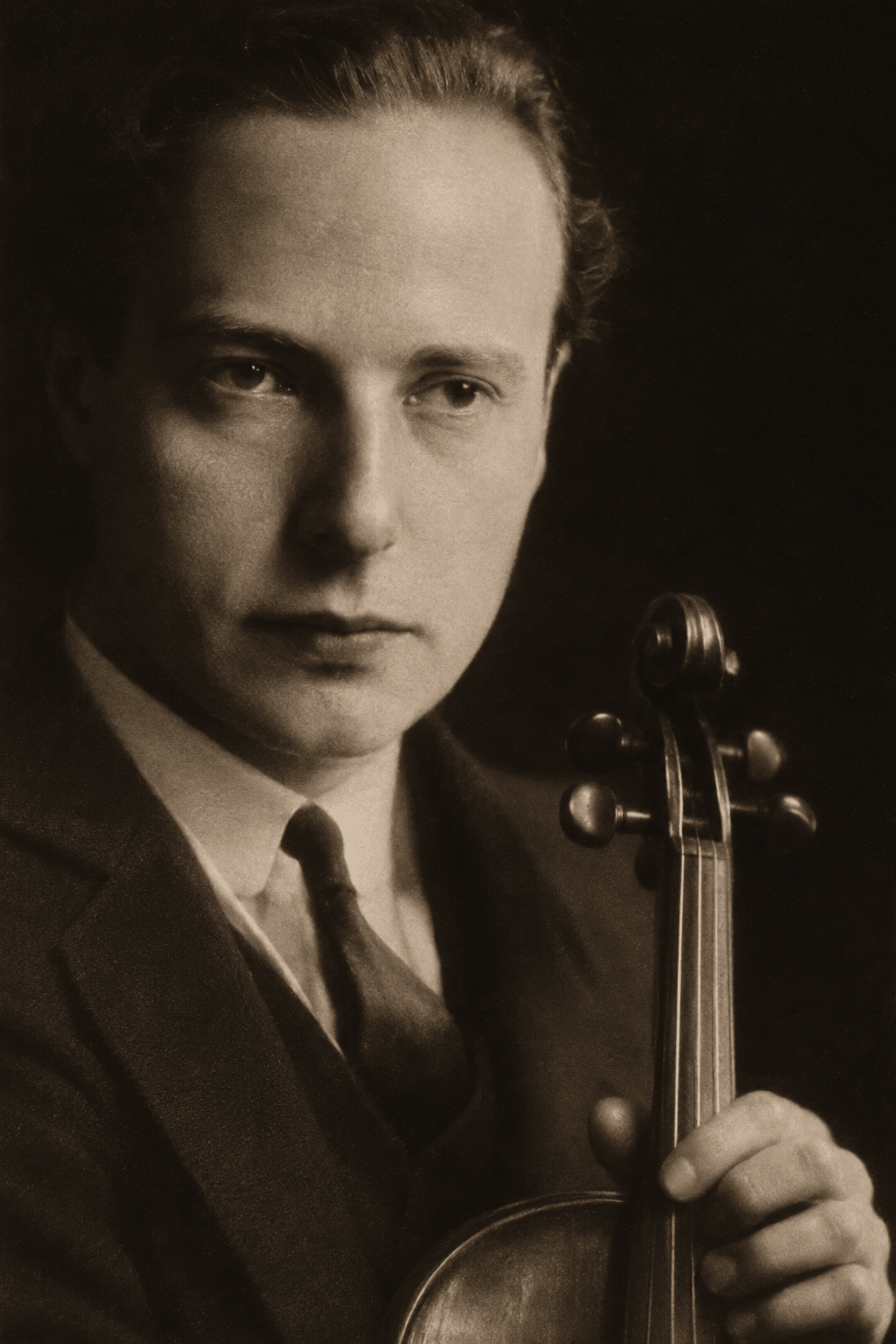
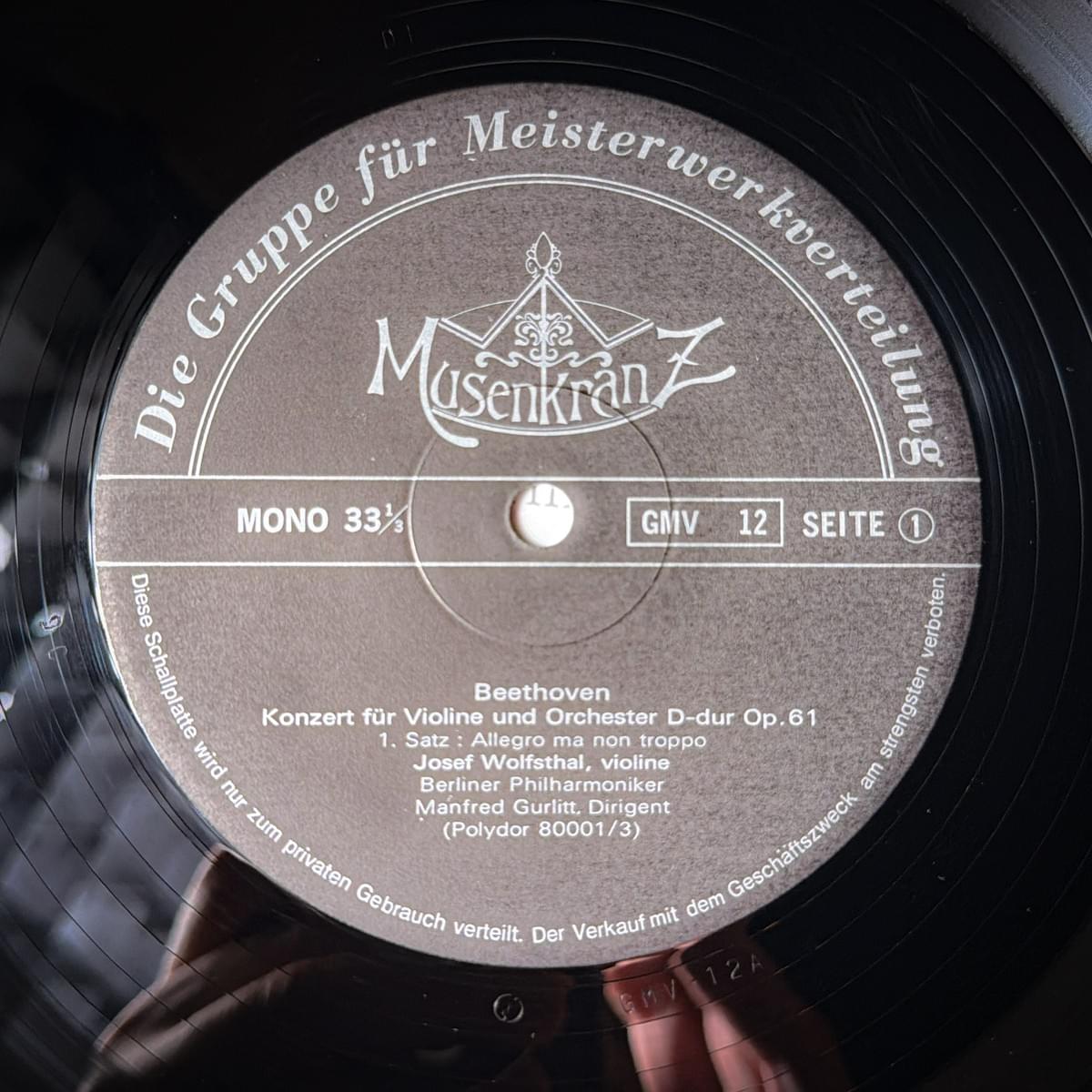
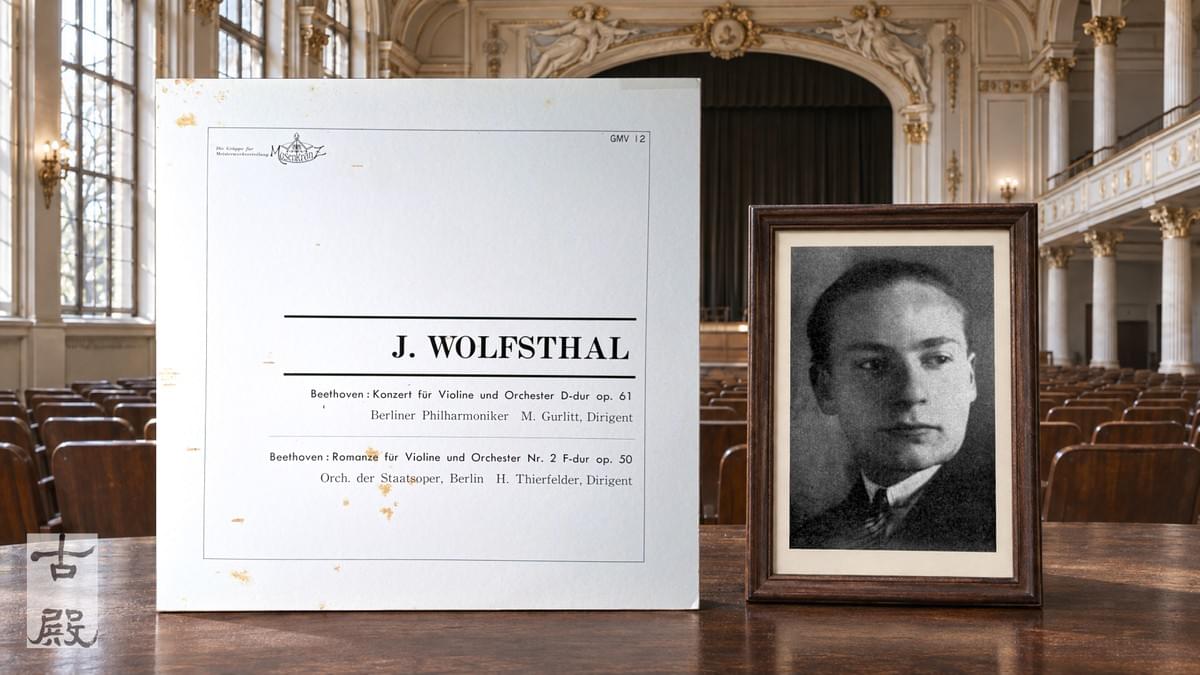
他來不及留下太多錄音。其中最重要的一份,是 1929 年和柏林愛樂錄的貝多芬小提琴協奏曲,也就是這張日本私家唱片 Musenkranz GMV 12 上的這一份。
這篇想說的是:為什麼這一份貝多芬,比它看起來重要得多。
一首曲子,一個人
要知道這張唱片為什麼重要,得先從一位沒有錄過這首協奏曲的人說起。
貝多芬(Ludwig van Beethoven,1770-1827)的小提琴協奏曲,1806 年在維也納首演時反應平淡,此後幾十年很少有人演奏。1844 年,一位十二歲的匈牙利少年在倫敦,由孟德爾頌(Felix Mendelssohn,1809-1847)指揮,拉了這首曲子。從那一天起,它開始變成小提琴曲目裡的中心。
這位少年是姚阿幸(Joseph Joachim,1831-1907)。他後來為這首協奏曲寫的裝飾奏,成為後世最常被使用的版本之一。他生於匈牙利,卻在後半生成為德國音樂界最高的領袖人物,是柏林高等音樂學院的創院院長。他代表的,是德奧傳統的音樂詮釋傳承。
從那一天起,姚阿幸就和這首協奏曲綁在一起,綁了一輩子。他幾乎就是這首曲子的代言人。而因為這首曲子,一個德奧小提琴學派的形象與地位也跟著立了起來:小提琴不是用來炫技的,而是用來替作曲家說話的。
這個形象,是對著一個人立起來的——帕格尼尼(Niccolò Paganini,1782-1840)。帕格尼尼的風暴席捲歐洲,讓整一代小提琴家都在比誰拉得更快、更難、更驚人。姚阿幸少年時也常常演奏炫技曲,但大約從 1853 年起,他走進布拉姆斯(Johannes Brahms,1833-1897)與舒曼(Robert Schumann,1810-1856)夫婦的圈子,他的一生從此大轉彎:炫技的展示曲被他放下了,取而代之的是貝多芬的協奏曲、巴赫(Johann Sebastian Bach,1685-1750)的無伴奏奏鳴曲與組曲。那些在他之前幾乎沒人拉的作品,後來成了每一位小提琴家的核心曲目。美國音樂學者的說法是:「姚阿幸幫忙把帕格尼尼的幽靈趕出了舞台」。這不是品味的小差異,而是他後來有意識選擇的對立。他高舉的是巴赫、貝多芬、孟德爾頌、舒曼、布拉姆斯這一路的音樂,也就是後來被稱為「德奧」的音樂主張。「德奧傳統」這個說法,有很大一部分是由他這樣的人一首曲子、一場音樂會地立起來的。
姚阿幸僅在 1903 年他72歲的時候,留下過幾面錄音,但都是短曲。他一生最重要的貝多芬協奏曲,沒有留下他自己的聲音。
柏林的那個位置
姚阿幸影響力太大,桃李滿天下。如果只問「誰受過姚阿幸的指點」,答案會是整整一個世代的小提琴家,反而沒有意義。
真正有分量的,是他留在柏林的那個位置:柏林高等音樂學院的院長與小提琴教授。在二十世紀初,這不是一份普通的教職。它在社會上、在音樂界裡被看待的方式——它代表的是德國音樂界的權威。
姚阿幸之後,這個位置大致是這樣傳下來的:亨利·馬特洛(Henri Marteau,1874-1934)接任;1918 年,二十七歲的阿道夫·布許(Adolf Busch,1891-1952)接下馬特洛的教座,當時被視為姚阿幸的正統繼承人;1926 年,二十六歲的沃夫斯塔爾成為學院教授;1931 年,庫倫肯普夫(Georg Kulenkampff,1898-1948)回到學院任教。
這一連串名字裡,最早把姚阿幸最重要的這首協奏曲錄進唱片的,是沃夫斯塔爾。
沃夫斯塔爾是誰?
他 1899 年生於維也納,出身來自加利西亞的猶太音樂家庭,父親是小提琴教師。十歲起,他跟著卡爾·佛萊什(Carl Flesch,1873-1944)學了六年琴。佛萊什和姚阿幸一樣生於匈牙利,後來也以柏林為教學重鎮。德奧傳統從來不是用國籍劃分的,而是用傳承。
1916 年 4 月 7 日,十六歲的他第一次正式登台,和老師佛萊什一起拉巴赫的《雙小提琴協奏曲》,伴奏的是柏林愛樂。十三年後,這張唱片上的貝多芬,也是柏林愛樂。
之後他先在不來梅接替庫倫肯普夫當樂團首席,再到斯德哥爾摩,最後回到柏林,擔任國立歌劇院管弦樂團首席。常來指揮這個樂團的史特勞斯很器重他,史特勞斯親自指揮的《貴人迪伯》錄音裡,那段小提琴獨奏就是他拉的。
他也不只拉古典。1928 年他在克倫培勒(Otto Klemperer,1885-1973)主持的克羅爾歌劇院擔任副首席,參與亨德密特《室內樂第五號》的首演;1929 年起,他與亨德密特、大提琴家艾曼紐爾·費爾曼(Emanuel Feuermann,1902-1942)組成弦樂三重奏,是二十世紀最著名的弦樂三重奏之一。他的學生西蒙·郭德堡(Szymon Goldberg,1909-1993),後來接下了他在這個三重奏裡的位子。
對一位三十歲的小提琴家來說,這是一條幾乎看得到盡頭的路:柏林、學院、姚阿幸留下的那個位置。
1929 年,柏林愛樂,古利特
1929 年,他第二次錄下貝多芬的協奏曲。這一次是完整全曲的電氣錄音,柏林愛樂伴奏,德國 Polydor 以五張十面的蟲膠發行。他用的裝飾奏,是姚阿幸寫的。(1925年他第一次錄,但當年是使用物理聲學錄音方式,而且並非完整全曲,因為錄音技術的原因使用的是刪節版本)
英國樂評者形容這份演奏音色甜美、集中,幾乎不用滑音,第一樂章的速度流暢而不煽情,帶著一種俐落的現代感。《企鵝唱片指南》則說,他的技藝令人屏息,讓人對這位佛萊什的學生三十多歲就去世感到惋惜。
指揮是曼弗雷德·古利特(Manfred Gurlitt,1890-1972)。這位柏林出生的作曲家兼指揮家,後來因猶太血統在納粹時期受到排擠,1939 年流亡日本,此後再也沒有回到德國。1941 年,他在東京指揮中央交響樂團,錄下台灣出生的作曲家江文也(Jiang Wen-Ye,1910-1983)《台灣舞曲》的世界首次錄音,由日本 Victor 以 A-4201 發行。
同一雙指揮的手,1929 年在柏林伴著沃夫斯塔爾拉貝多芬,十二年後在東京把《台灣舞曲》刻進了蟲膠唱片。
三種聲音
沃夫斯塔爾不是第一位完整錄下這首協奏曲的人。這一點要先說清楚。
一般公認的第一份完整錄音,是英國小提琴家伊索德·曼吉斯(Isolde Menges,1893-1976)1923 年在倫敦錄的。但她十六歲就到聖彼得堡,進入李奧波德·奧爾(Leopold Auer,1845-1930)的班上。奧爾雖然也是姚阿幸的學生,後來卻在俄國自成一派,成了俄國學派的宗師。
把 1920 年代這首協奏曲最早的三份重要錄音放在一起,就是三個學派:
- 1923 年,曼吉斯,倫敦:俄國學派。
- 1926 年,弗里茲·克萊斯勒(Fritz Kreisler,1875-1962),柏林:維也納。滑音甜美,裝飾奏是自己寫的。
- 1929 年,沃夫斯塔爾,柏林:柏林的德奧傳統。少用滑音,裝飾奏是姚阿幸的。
克萊斯勒和沃夫斯塔爾都是維也納出生的,兩個人拉出來的貝多芬卻完全不同。一個人屬於哪個傳統,看的不是他從哪裡來,而是他站在哪裡。
三位繼承人,三種命運
如果沃夫斯塔爾沒有去世,照這條線發展,他很可能就是接下柏林那個位置的人。但 1930 年代初,姚阿幸在柏林的這條線,在三位繼承人身上,走出了三種命運。
布許選擇離開。 布許不是猶太人,卻堅決反對納粹。他 1927 年已定居瑞士巴塞爾,1933 年起拒絕再回德國演出。他一生拉這首協奏曲據記約四百次,全曲錄音卻要等到 1942 年,在流亡中的紐約才留下。
沃夫斯塔爾被疾病帶走。 1930 年冬天,他在柏林參加一場葬禮後受了寒,幾週後轉成肺炎,1931 年 2 月 3 日去世。他是猶太裔。兩年後納粹上台,和他組三重奏的費爾曼被學院解聘,老師佛萊什、學生郭德堡也先後離開德國。就算他活過了 1931 年,也很難躲過 1933 年。
庫倫肯普夫留下來頂住了位置。 他回到學院任教的那一年,正是 1931 年。當年沃夫斯塔爾在不來梅接的是他的首席位置;十多年後,換他在柏林接下沃夫斯塔爾留下的空位。他的貝多芬協奏曲,錄於 1936 年納粹時期的柏林。
三份錄音,三個時代:威瑪的柏林、納粹的柏林、流亡的紐約。姚阿幸在柏林的傳承,在納粹上台之前錄下的貝多芬協奏曲,就是沃夫斯塔爾這一份。
手上這張 GMV 12
Musenkranz 是日本一個歷史名盤頒布會自主製作的私家唱片,只發給會員,不對外販售。封套與標籤都用德文,標籤外緣印著「僅供私人使用」的聲明。它當年發行的每一種數量都很有限,三十多年後的今天,每一張都非常難找。而就目前研究過的幾張來看,它選的幾乎都是當時市面上還沒有發行過的東西:不是世界首次發行(例如從未面世的廣播錄音),就是世界首次黑膠化。GMV 12 屬於後者:這份錄音的世界首次發行,是 1929 年的原始蟲膠;GMV 12 則是它的世界首次黑膠化。
還有一件事。這份 1929 年的完整錄音,後來最早的復刻是英國歷史轉錄廠牌 Pearl 在 1989 年發行的 CD。Pearl 的許多 CD,原本都曾先有黑膠版,但這一張找不到任何黑膠版的蹤跡,很可能從一開始就只有 CD。依目前查得到的資料,GMV 12 是這份錄音唯一的黑膠發行,也就是目前所知的世界首次黑膠化轉錄發行。從蟲膠直接跳到 CD 的這份聲音,在黑膠時代留下的位置,可能就只有這一張不對外販售的日本自主製作會員盤。
這件事本身就很耐人尋味。從 1950 年代進入黑膠時代,到 1989 年前後 Musenkranz 做出這張唱片,三十多年間,歷史錄音的 LP 復刻一張接一張地出,這份正統德奧傳統的貝多芬協奏曲卻始終沒有被轉到黑膠上。原因可能不只一個:他三十一歲就去世,來不及在聽眾心中留下名字;他去世兩年後納粹上台,一位猶太裔音樂家的唱片在德國不會再被推廣;戰後的唱片工業忙著錄新的立體聲,而歷史復刻的聯光燈,又大多打在福特萬格勒、克萊斯勒這些名字上。英國與法國 HMV 從 1950 年代中後期起,就以《世紀大師錄音》(COLH 系列,日本對應的是 GR 系列)有計畫地把大師的歷史錄音黑膠化;但那是 HMV 自己的錄音庫。沃夫斯塔爾這份屬於德國 Polydor/德國留聲機公司,不在 HMV 的範圍裡,而德國那一邊,也沒有人想起它。一份錄音重不重要,和它有沒有被記得,從來是兩件事。沃夫斯塔爾的貝多芬,就是一份不應該被遺忘、卻實實在在被遺忘了很久的錄音。整個黑膠時代沒有人把它轉成 LP,這件事本身,就是它沒有被注意到的證據。
進入 CD 時代之後,情況就完全不同了。繼 1989 年的 Pearl 之後,英國 Symposium 的《偉大小提琴家》系列(1992)、《貝多芬全集》第二十集的歷史錄音卷(1997)、Pristine Audio(2010)、Infinity(2021)、Altair 與法國 Forgotten Records(2022),先後把它做成了 CD 與數位版本。三十多年沒有人轉到黑膠上的聲音,在 CD 時代反而一版接一版。但黑膠時代始終只有 GMV 12 這一張。
「第一」與「代表」
沃夫斯塔爾的貝多芬不是第一份完整錄音,曼吉斯比他早了六年。但在姚阿幸留在柏林的那個位置上,他是最早把姚阿幸最重要的這首協奏曲錄進唱片的人;而且在納粹上台、這條線斷裂之前,他的這一份,就是唯一的一份。
姚阿幸自己沒有留下這首協奏曲的錄音。那個由他一手立起來的正統德奧傳統,它的核心曲目是什麼聲音,我們只能從後來的人身上去聽。而沃夫斯塔爾 1929 年這一份,就是這個正統的德奧傳統留下的、最重要的貝多芬小提琴協奏曲錄音之一:柏林、柏林愛樂、姚阿幸的裝飾奏,以及一位站在姚阿幸留下的位置上的小提琴家。
當我們說一份錄音「重要」的時候,我們在意的是它最早,還是它代表了什麼?如果是你,會先聽曼吉斯,還是先聽沃夫斯塔爾?
*****
[Gudian Record Stories]The Earliest Beethoven of the Orthodox Austro-German Tradition: Why Josef Wolfsthal’s (1899–1931) Recording of the Beethoven Violin Concerto Matters
Winter 1930, Berlin. A thirty-year-old violinist attended a funeral.
After the service, he caught a chill. Within weeks, the cold developed into pneumonia. On February 3, 1931, he passed away at the age of thirty-one.
His name was Josef Wolfsthal (1899–1931). Prior to that winter, he stood as one of the brightest prospects in German musical life: appointed professor at the Berlin Hochschule für Musik at just twenty-six, esteemed by Richard Strauss (1864–1949), and partnering with Paul Hindemith (1895–1963) in a celebrated string trio. Had his path continued uninterrupted, the supreme chair of the German violin world would almost certainly have been his.
He had little time to leave an extensive discography. The most significant document he did leave behind is his 1929 recording of the Beethoven Violin Concerto with the Berlin Philharmonic—preserved on this private Japanese vinyl issue, Musenkranz GMV 12.
This essay examines why this specific Beethoven recording matters far more than casual appearances suggest.
One Work, One Man
To grasp the historical weight of this record, one must begin with a musician who never recorded the concerto at all.
When Ludwig van Beethoven’s (1770–1827) Violin Concerto premiered in Vienna in 1806, it met with a lukewarm reception and languished in relative neglect for decades. In 1844, a twelve-year-old Hungarian boy stepped onto a London stage to perform the work under the baton of Felix Mendelssohn (1809–1847). From that afternoon forward, the concerto moved to the very center of the violin repertoire.
That boy was Joseph Joachim (1831–1907). The cadenzas he later composed for the work became the standard text for generations of soloists. Though born in Hungary, Joachim spent the second half of his life as the towering patriarch of German musical life and the founding director of the Berlin Hochschule für Musik. He embodied the interpretive lineage of the Austro-German tradition.
From that 1844 London performance onward, Joachim remained bound to Beethoven’s concerto for life, serving as its foremost apostle. Through this work, a clear aesthetic identity for the Austro-German violin school took shape: the violin was not an instrument for empty display, but a vessel through which the composer spoke.
That identity was forged in conscious opposition to one figure: Niccolò Paganini (1782–1840). Paganini’s virtuoso storm had swept across Europe, driving an entire generation of violinists to compete in speed, technical pyrotechnics, and theatrical shock. Joachim himself played bravura showpieces in his youth, yet around 1853, upon entering the inner circle of Johannes Brahms (1833–1897) and Robert and Clara Schumann, his artistic compass turned decisively: he set aside superficial display pieces in favor of the Beethoven Concerto and J. S. Bach’s (1685–1750) solo sonatas and partitas—scores rarely heard in public prior to his advocacy, which subsequently became the bedrock of every violinist’s repertoire. As American musicologists have observed, Joachim helped drive the ghost of Paganini from the concert stage. This was no minor shift in taste, but a deliberate philosophical stance. He championed the lineage running from Bach through Beethoven, Mendelssohn, Schumann, and Brahms—the canon that came to define the "Austro-German tradition," built piece by piece and concert by concert through his example.
Joachim entered the studio only once, in 1903 at age seventy-two, cutting a handful of short sides. His defining monument—the Beethoven Violin Concerto—was never captured in his own hands.
That Chair in Berlin
Joachim’s pedagogical reach was vast, influencing an entire generation of violinists across Europe. Simply asking who studied under Joachim yields a list too broad to define a direct lineage.
What carried decisive institutional weight was the chair he left behind in Berlin: the directorship and principal violin professorship of the Berlin Hochschule für Musik. In the early twentieth century, this was no ordinary academic post; within German society and musical culture, it represented the supreme seat of interpretive authority.
Following Joachim, that chair passed through a clear line of succession: Henri Marteau (1874–1934) assumed the post; in 1918, twenty-seven-year-old Adolf Busch (1891–1952) succeeded Marteau, widely regarded as Joachim’s orthodox heir; in 1926, twenty-six-year-old Josef Wolfsthal joined the faculty as professor; and in 1931, Georg Kulenkampff (1898–1948) returned to teach at the institution.
Among all the figures holding that Berlin lineage, the very first to commit Joachim’s signature Beethoven concerto to disc was Wolfsthal.
Who Was Josef Wolfsthal?
Born in Vienna in 1899 into a Jewish musical family originally from Galicia, Wolfsthal received his earliest lessons from his father, a violin teacher. At age ten, he began six years of intensive study under Carl Flesch (1873–1944)—who, like Joachim, was born in Hungary before making Berlin his pedagogical center. The Austro-German tradition was never defined by passport or birthplace, but by artistic lineage.
On April 7, 1916, sixteen-year-old Wolfsthal made his formal debut performing Bach’s Double Violin Concerto alongside his teacher Flesch, accompanied by the Berlin Philharmonic. Thirteen years later, on this Beethoven recording, the orchestra behind him was once again the Berlin Philharmonic.
He went on to succeed Kulenkampff as concertmaster in Bremen, moved to Stockholm, and eventually returned to Berlin as concertmaster of the Berlin State Opera Orchestra. Richard Strauss, a frequent guest conductor there, held him in high regard; on Strauss’s own recording of Le Bourgeois Gentilhomme, it is Wolfsthal who plays the prominent violin solo.
Nor did he confine himself to the classical canon. In 1928, serving as associate concertmaster at Otto Klemperer’s (1885–1973) avant-garde Kroll Opera, he participated in the premiere of Hindemith’s Kammermusik No. 5; beginning in 1929, he joined Hindemith and cellist Emanuel Feuermann (1902–1942) to form one of the twentieth century’s most celebrated string trios—a chair later assumed after his death by his own pupil, Szymon Goldberg (1909–1993).
For a thirty-year-old violinist, the trajectory was unmistakable: Berlin, the Hochschule, and the mantle bequeathed by Joachim.
1929: The Berlin Philharmonic and Manfred Gurlitt
In 1929, Wolfsthal recorded the Beethoven Violin Concerto for the second time—this time in a complete, electrical recording with the Berlin Philharmonic, issued in Germany by Polydor across five ten-inch/twelve-inch shellac discs (ten sides). He performed Joachim’s cadenzas. (He had previously recorded an abridged version in 1925 using the acoustic process, truncated due to the technical constraints of pre-electric horn recording.)
British reviewers have praised the reading for its sweet, focused tone, sparing use of portamento, and a brisk, unsentimental first-movement tempo marked by clean modern poise. The Penguin Guide to Recorded Classical Music noted his breathtaking technical command, lamenting the premature loss of this gifted Flesch disciple in his early thirties.
On the podium stood Manfred Gurlitt (1890–1972). Born in Berlin, this composer and conductor was marginalized under the Nazi regime due to his Jewish heritage, fleeing to Japan in 1939 and never returning to live in Germany. In 1941 in Tokyo, conducting the Central Symphony Orchestra, Gurlitt led the world-premiere recording of Formosan Dance by Taiwanese-born composer Jiang Wen-Ye (1910–1983), issued on Japanese Victor A-4201.
The very same conducting hands that accompanied Wolfsthal’s Beethoven in Berlin in 1929 etched Formosan Dance into shellac in Tokyo twelve years later.
Three Voices
To be clear, Wolfsthal was not the first violinist to record the complete Beethoven concerto.
The generally recognized first complete recording was cut in London in 1923 by British violinist Isolde Menges (1893–1976). Yet Menges had traveled to St. Petersburg at age sixteen to study under Leopold Auer (1845–1930); although Auer had studied with Joachim in his youth, he forged an independent Russian school in St. Petersburg.
Placing the three landmark 1920s recordings of the concerto side by side reveals three distinct traditions:
- 1923 | Isolde Menges (London): The Russian school.
- 1926 | Fritz Kreisler (Berlin): The Viennese tradition—luscious portamento, performing his own cadenzas.
- 1929 | Josef Wolfsthal (Berlin): The Berlin Austro-German lineage—restrained portamento, performing Joachim’s cadenzas.
Kreisler and Wolfsthal were both born in Vienna, yet their readings of Beethoven belong to different worlds. An artist’s tradition is determined not by where they were born, but by where they choose to stand.
Three Heirs, Three Fates
Had Wolfsthal lived, he stood directly in line to inherit the leadership of the Berlin school. Instead, in the early 1930s, Joachim’s Berlin lineage fractured across three heirs into three divergent fates:
- Adolf Busch chose exile. Though not Jewish, Busch was an uncompromising opponent of the Nazi regime. Having settled in Basel, Switzerland in 1927, he refused to perform in Germany from 1933 onward. Although he reportedly performed the Beethoven concerto roughly four hundred times in concert, his sole studio recording had to wait until 1942 in New York exile.
- Josef Wolfsthal was claimed by illness. Catching a chill at a Berlin funeral in the winter of 1930, he succumbed to pneumonia on February 3, 1931. Being Jewish, had he survived 1931, he would have faced the upheavals of 1933—when his trio partner Feuermann was dismissed from the Hochschule, and both his teacher Flesch and his pupil Goldberg were forced out of Germany.
- Georg Kulenkampff remained in the chair. He returned to teach at the Hochschule in 1931—stepping into the Berlin vacancy left by Wolfsthal, just as Wolfsthal had once succeeded him as concertmaster in Bremen over a decade earlier. Kulenkampff recorded his Beethoven concerto in Nazi-era Berlin in 1936.
Three recordings, three historical moments: Weimar Berlin, Nazi Berlin, and New York exile. Wolfsthal’s 1929 disc stands as the sole Beethoven concerto recorded by Joachim’s Berlin lineage prior to the Nazi seizure of power.
The Pressing in Hand: Musenkranz GMV 12
Musenkranz was a private subscription label produced independently by a Japanese historical record society, distributed strictly to members and never sold in retail shops. Styled from sleeve to label in German, the perimeter print carries a notice restricting copies to private use. Pressed in tiny quantities, every volume in the series has become exceedingly scarce more than three decades later. Across the titles documented so far, the series focused exclusively on recordings unavailable commercially at the time—either world-premiere airchecks or world-premiere transfers to vinyl. GMV 12 belongs to the latter: following its initial 1929 shellac publication, this LP represents its world-premiere microgroove transfer.
One further historical detail stands out: the earliest subsequent reissue of this 1929 performance was a 1989 CD on the British historical label Pearl. While many Pearl CDs were preceded by LP editions, no trace exists of any vinyl transfer of this recording prior to GMV 12—indicating that Pearl went straight to compact disc. To the best of current discographical knowledge, GMV 12 stands as the sole LP edition ever pressed of this performance, bridging the sixty-year gap from shellac to the digital era via a private Japanese collector’s pressing.
That thirty-year vinyl silence is telling. From the dawn of the LP era in the 1950s until Musenkranz pressed this disc around 1989, historical reissues poured onto vinyl, yet this cornerstone Beethoven recording of the orthodox Austro-German lineage remained untransferred. Several factors explain the neglect: Wolfsthal died at thirty-one before cementing international celebrity; two years after his death, the Nazi regime erased Jewish artists from German catalogs; and postwar reissue campaigns—such as HMV’s Great Recordings of the Century (COLH / Japanese GR series)—drew exclusively from EMI’s own vaults, whereas Wolfsthal’s masters belonged to German Polydor / Deutsche Grammophon, where no one stepped forward to champion them. Historical importance and public memory rarely move in lockstep; the complete absence of a commercial LP edition throughout the vinyl era is proof of how thoroughly this recording was overlooked.
With the arrival of the CD era, the tide turned: following Pearl in 1989 came Symposium’s Great Violinists(1992), Deutsche Grammophon’s Complete Beethoven Edition Vol. 20 (1997), Pristine Audio (2010), Infinity (2021), and Altair and Forgotten Records (2022). A performance ignored throughout the LP age suddenly appeared in edition after edition—leaving GMV 12 as its solitary monument in analog vinyl.
"First" Versus "Representative"
Wolfsthal’s Beethoven was not the first complete recording of the concerto; Isolde Menges preceded him by six years. Yet within the institutional chair Joachim established in Berlin, Wolfsthal was the earliest artist to commit Joachim’s signature concerto to disc—and the only one to do so before the political rupture of 1933 severed that lineage.
Joachim left no recording of the concerto himself. To hear what the core repertoire of his orthodox Austro-German tradition sounded like, we must listen through his direct heirs. Wolfsthal’s 1929 recording stands as one of the supreme documents of that school: Berlin, the Berlin Philharmonic, Joachim’s cadenzas, and a violinist occupying Joachim’s own chair.
When we judge a recording to be "important," do we value it for being chronologically first, or for what it represents? Given the choice, would you reach first for Menges, or for Wolfsthal?