
【古殿唱片音樂故事】只讀到中學、在咖啡館拉中提琴,後來成了新音樂戰將,寫出了指揮教科書,成了名譽博士:赫曼·薛爾辛(Hermann Scherchen,1891-1966)的一生
古殿殿主
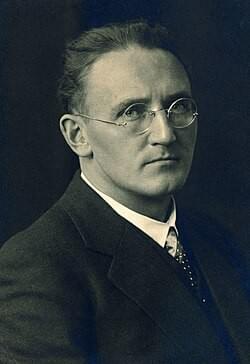
1907 年的柏林,一個十六歲的少年在咖啡館裡拉中提琴。他的父親開旅店,祖父是裁縫,他自己只讀完一所不以升大學為目標的實科中學,完全沒有進過音樂學院。
二十二年後,這個少年寫出了一本《指揮教本》,後來被譯成英文、一版再版,成為學指揮的人必讀的教科書。再過一年,一所大學頒給他榮譽博士。他甚至回到柏林音樂學院當老師——教一群有學籍的學生。
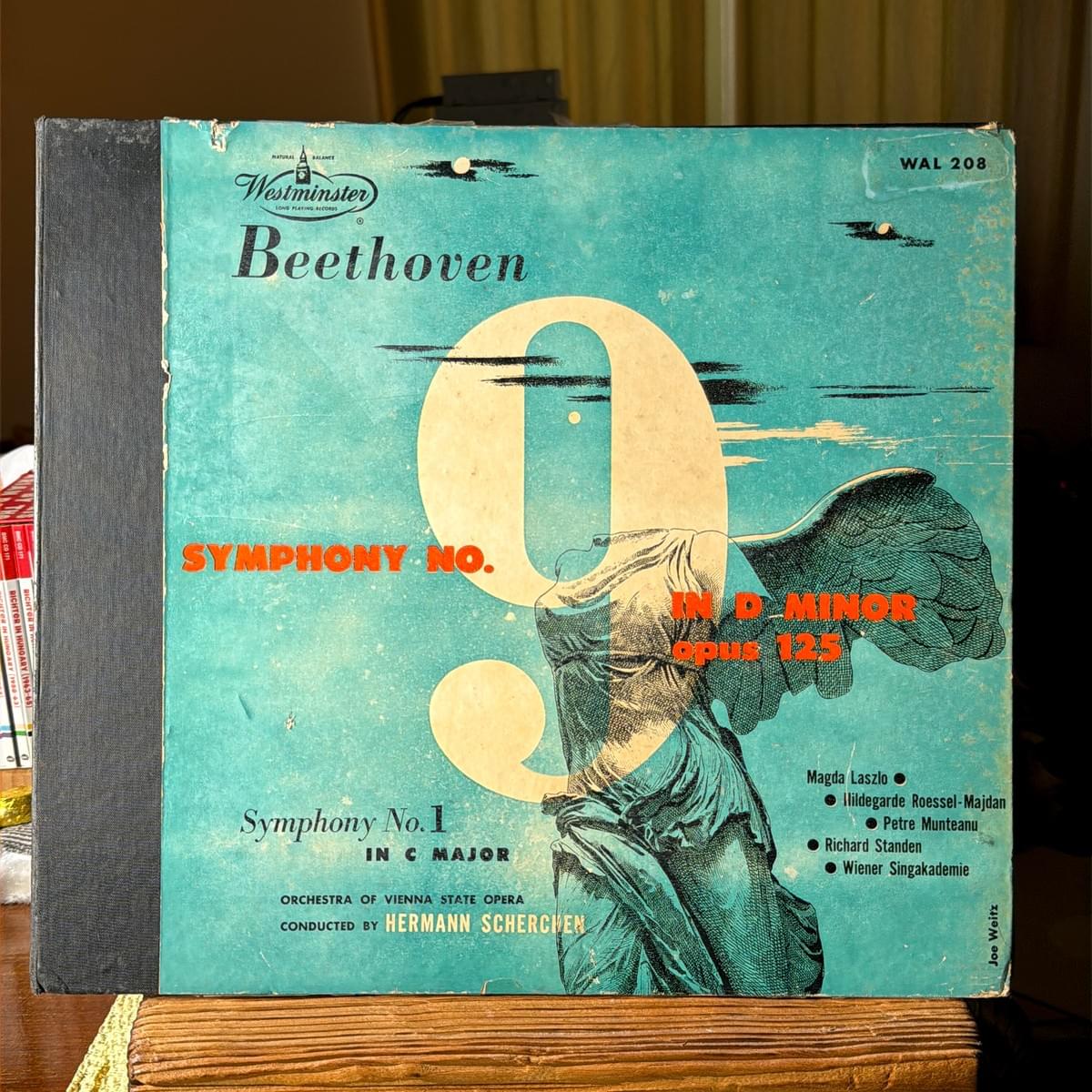
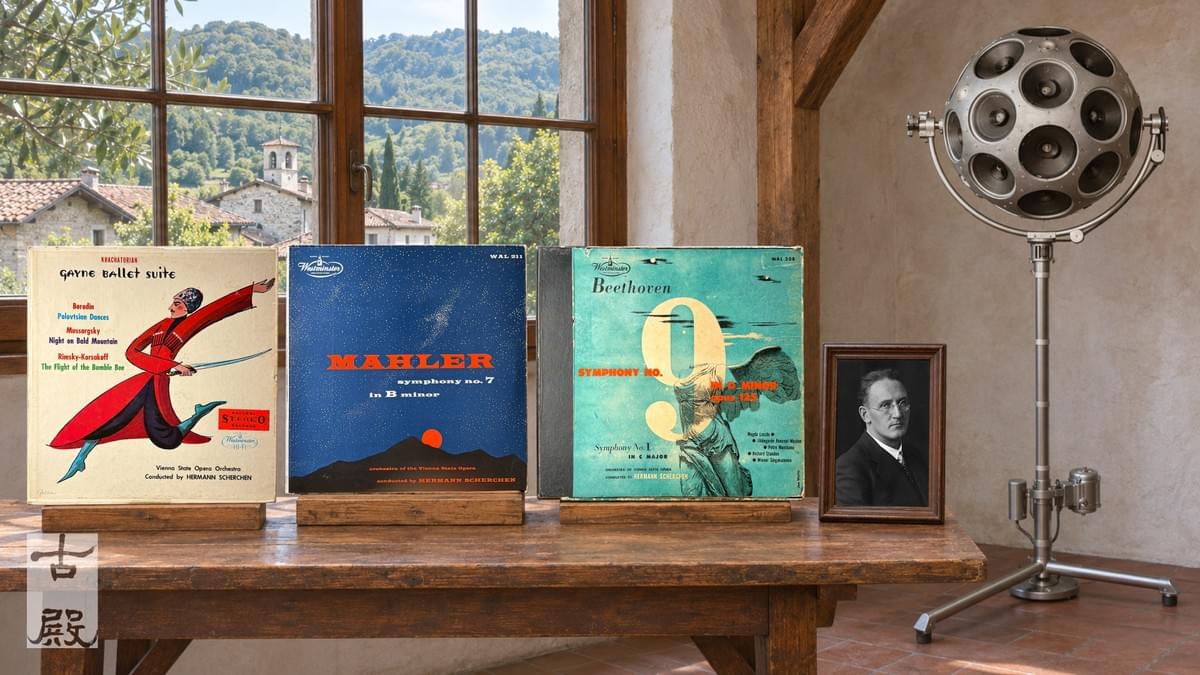
他是赫曼·薛爾辛(Hermann Scherchen,1891-1966)。如果你聽過 1950 年代 (Westminster西敏寺) 唱片上的貝多芬、馬勒、海頓,很可能已經聽過他。但你可能不知道,這位指揮家一生最有趣的地方,是他所有的本事,都不是在教室裡學來的。
從咖啡館到柏林愛樂
薛爾辛小時候學過小提琴,後來改拉中提琴。中學畢業後,他先在咖啡館樂隊謀生,1907 年進入柏林的布呂特納管弦樂團,並且在 1907 至 1910 年間坐進柏林愛樂的中提琴席。
當時站在柏林愛樂指揮台上的,是當時世界上最偉大的指揮家尼基許(Arthur Nikisch,1855-1922)。一個沒有學歷的年輕中提琴手,就這樣坐在樂團中間,用耳朵和身體吸收德奧指揮傳統。他的「音樂學院」,就是樂團的座位。
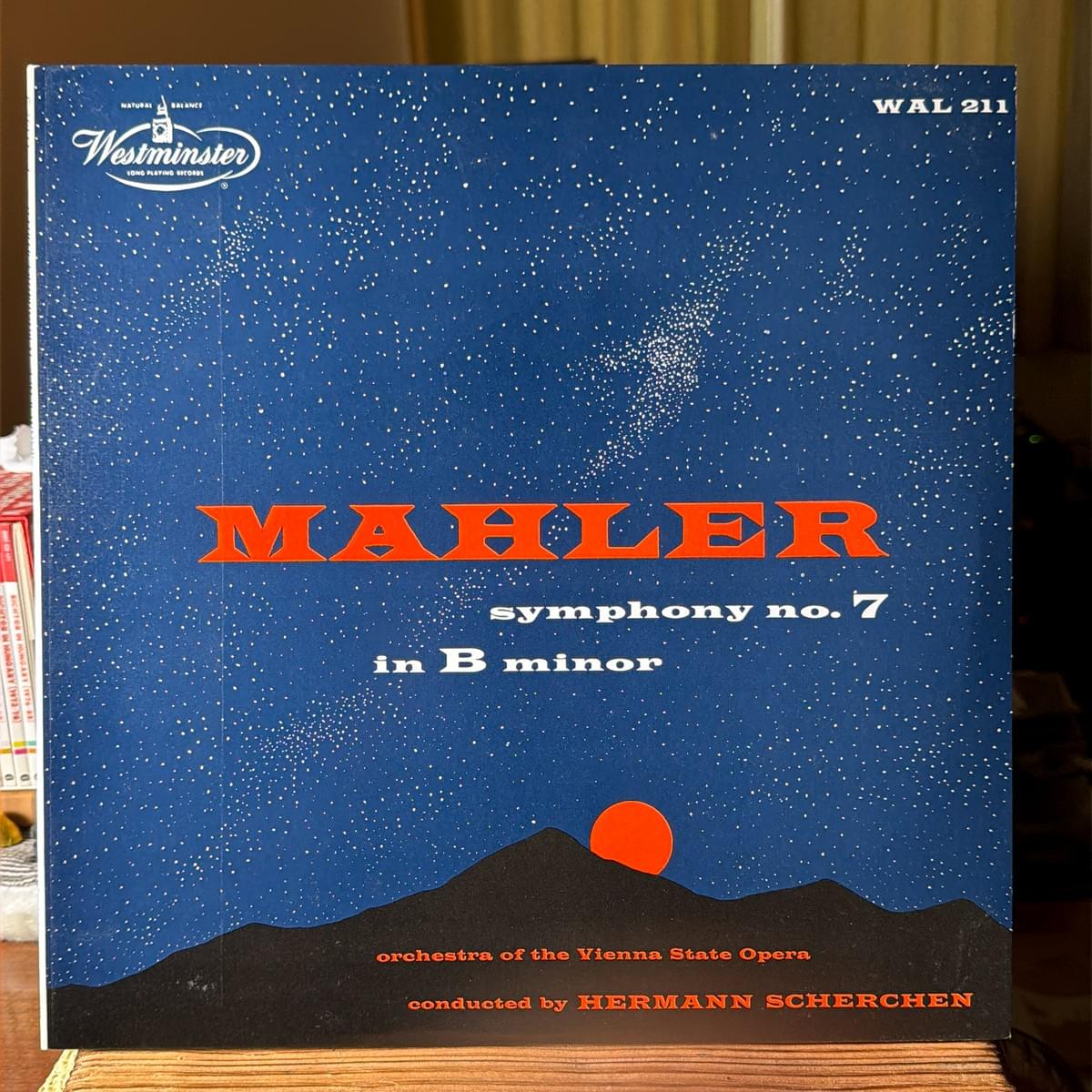
1911 年,指揮家奧斯卡·弗里德(Oskar Fried,1871-1941)在柏林指揮馬勒第七號交響曲,薛爾辛就在樂團裡。這次演出在他心裡留下很深的印記。四十二年後的 1953 年夏天,他在維也納錄下了這首交響曲史上第一個錄音室版本。
荀白克的助手
同一年,薛爾辛走進了另一個世界。他成為當時前衛音樂領袖阿諾·荀白克(Arnold Schoenberg,1874-1951)的助手,協助排練《月光小丑(Pierrot lunaire)》。1912 年 10 月,這部作品由荀白克親自指揮在柏林首演,之後的巡演則由薛爾辛接過指揮棒——這是他的指揮首演。日本樂評家岡俊雄甚至說,沒有薛爾辛熱心的後援,這場首演未必能實現。
從這裡開始,薛爾辛身上同時連著兩條線:一條是尼基許所代表的德奧浪漫傳統,一條是荀白克開啟的前衛新音樂。他一生的音樂,都在這兩條線之間拉扯。
戰俘
1914 年,薛爾辛在柏林指揮了馬勒第五號,接著前往拉脫維亞的里加,就任交響樂團指揮。幾個月後一次大戰爆發,里加屬於俄羅斯帝國,這位德國年輕人立刻成了「敵國僑民」,被拘禁起來。他在拘禁中度過了整場戰爭,直到 1918 年才回到柏林。
四年的拘禁,是一個音樂家最可能崩潰的年紀。但回到柏林的薛爾辛,幾乎立刻全速前進。
為新音樂而戰(1918–1933)
1918 年起,薛爾辛在柏林一口氣做了很多事:創立「新音樂協會」、組成薛爾辛弦樂四重奏、指揮工人合唱團、1919 年創辦現代音樂刊物《Melos》,並在柏林音樂學院任教。
1922 年,他接替福特萬格勒(Wilhelm Furtwängler,1886-1954),主持法蘭克福博物館音樂會。1923 年,他經瑞士萊因哈特家族推薦,開始與溫特圖爾音樂學院合作,一合作就是二十七年。同一時期,他在國際現代音樂協會的音樂節上首演了大量新作,包括阿爾班·貝爾格(Alban Berg,1885-1935)的《伍佐克》三個片段(1924)與《酒》(1929)。
他也是最早擁抱廣播的指揮之一。1924 年,他為荀白克五十歲生日辦了第一場廣播音樂會;1928 年,他出任柯尼斯堡廣播電台的音樂總監;1930 年,他在巴登-巴登音樂節首演布萊希特的廣播教育劇《林白飛行》;1932 年,他擔任柏林帝國廣播公司的音樂顧問。對他來說,廣播不是音樂的替代品,而是讓音樂走進每一個普通家庭的通道。
1929 年,《指揮教本》出版。1930 年,柯尼斯堡大學頒給他榮譽博士。那個在咖啡館拉琴的少年,只用了二十幾年。
離開德國
薛爾辛是公開的反法西斯者。納粹掌權前後,他離開德國,定居瑞士,從此沒有再以德國為家。他沒有成為瑞士人,瑞士歷史辭典仍記他為「德國人」——一個離開祖國、卻也不曾成為別人的德國人。
流亡沒有讓他停下。1936 年,他在巴塞隆納首演了貝爾格《小提琴協奏曲》,那時貝爾格已經去世。同一年,他在北平與中國作曲家蕭淑嫻(Hsiao Shu-sien,1905-1991)結婚,女兒童娜·薛爾辛(Tona Scherchen)後來也成為作曲家。1949 年,母女兩人回到中國。這段姻緣,是薛爾辛一生中最少被談到、對華人讀者卻最有親切感的一章。
1945 至 1950 年,他任瑞士貝羅明斯特電台音樂總監,指揮蘇黎世錄音室樂團。1950 年,他出版《人人的音樂》,獻給「不知名的收音機聽眾」。
維也納的唱片時代
也是 1950 年,創立不久的美國西敏寺(Westminster)唱片公司找上了他。接下來十幾年,薛爾辛在維也納、倫敦與巴黎,為這家紐約的唱片公司在歐洲錄下大量唱片。製作人庫特·李斯特(Kurt List,1913-1970)說:「薛爾辛的結果,從不無聊,也不會讓你無動於衷。」
- 貝多芬:1951 至 1954 年錄製交響曲全集。在福特萬格勒式的浪漫派讀法之後,薛爾辛被認為是第一位認真嘗試落實貝多芬節拍器標記的指揮,比後來的古樂運動早了約三十年。
- 馬勒:在馬勒還沒有成為標準曲目的年代,他錄下第一、二、五、七號與第十號慢板。第七號是馬勒交響曲中最晚被錄音的一首,而他的 1953 年版本就是世界上第一份錄音。
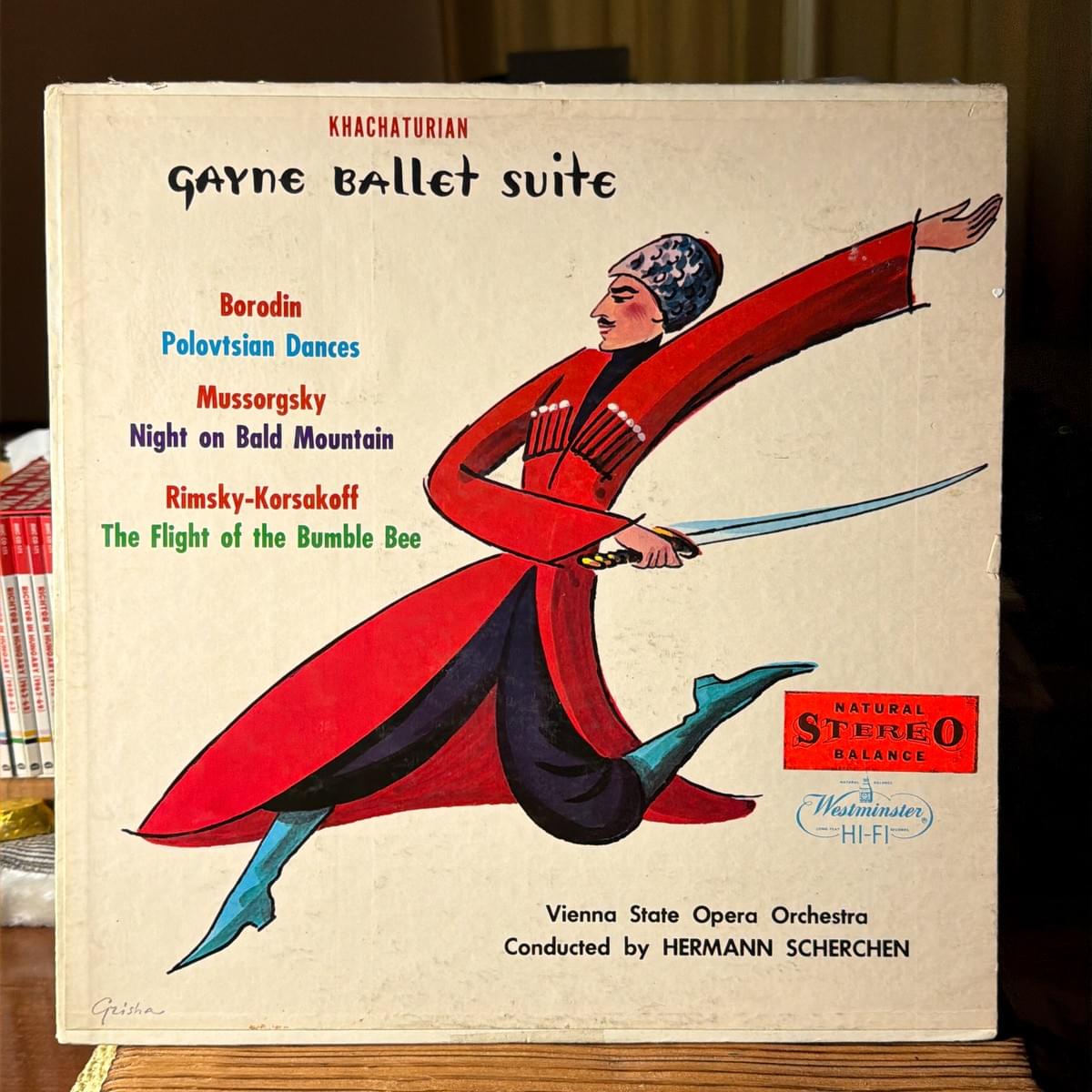
- 立體聲:1957 年夏天,他在維也納密集錄製立體聲,從哈察都良的《劍舞》到林姆斯基-高沙可夫的《天方夜譚》。他指揮的海頓《軍隊》交響曲立體聲錄音,曾是發燒音響店裡最受歡迎的示範曲。
一位荀白克的學生、《指揮教本》的作者,在晚年為一般家庭錄下《劍舞》與《大黃蜂的飛行》。他並不覺得這是降格。他說過一句話:
「音樂不必被理解,它必須被聽見。」
把空間關掉的人
然而薛爾辛最不尋常的一面,不在指揮台上。
1954 年起,他在瑞士提契諾州的山村格拉韋薩諾,得到聯合國教科文組織支持,在自家旁邊蓋了一座實驗電聲工作室:一間錄音室、一間隔音室。牆上頂著馬毯、地毯和蛋盒,喇叭系統是他自己設計的,設備還不斷地添。他說:
「我想要一個能把空間關掉的空間。」
他每年在這裡舉辦會議,邀請各國的作曲家、科學家與錄音工程師討論現代音樂、電子音樂與聲音工程。年輕的作曲家伊阿尼斯·澤納基斯(Iannis Xenakis,1922-2001),就是在薛爾辛的鼓勵下,開始在這裡用文字發表自己的理論。薛爾辛還自己辦了一份雜誌,副標題叫「音樂、電聲學與聲音科學的邊界問題」,從 1955 年辦到 1966 年,後來的封面是建築師柯比意(Le Corbusier,1887-1965)設計的。
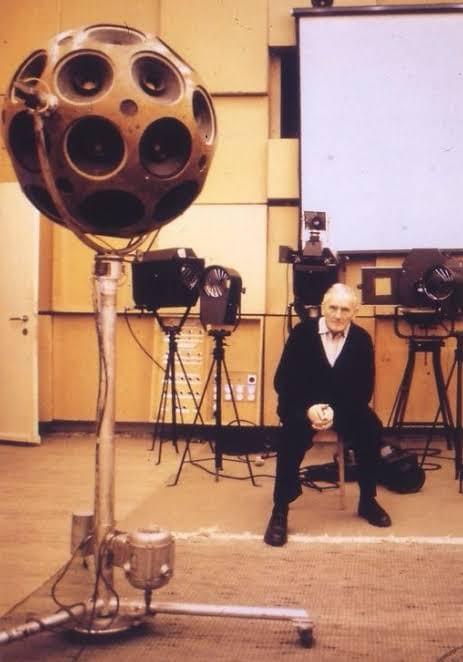
1959 年前後,他開發出一顆旋轉的喇叭球:直徑 75 公分的合板球上裝了 32 個喇叭,懸掛在萬向環上,可以同時垂直和水平旋轉,向四面八方均勻發聲。他叫它「零輻射器」。
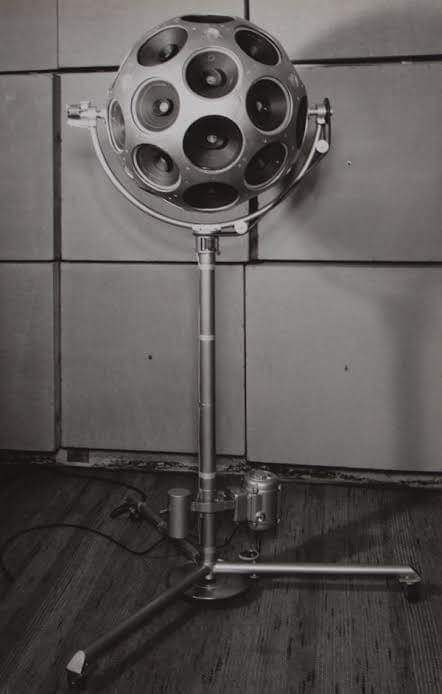
為什麼要做這個東西?因為他發現,愈來愈多人透過喇叭聽音樂,而他認為立體聲並不能重現人在一個真實空間裡聽到的感受。
這個細節很耐人尋味:同一個年代,他一面為唱片公司錄製主打「自然立體平衡」的唱片,一面在自己的山村實驗室裡,質疑立體聲到底夠不夠真實。他在意的,從來不是錄音的規格,而是一個人坐在一個空間裡,身體到底聽到了什麼?
Hermann Scherchen's Nullstrahler w
最後的指揮
薛爾辛對「新音樂」的熱情,一直到晚年都沒有減退。1951 年,他在達姆施塔特第一次演出了荀白克《摩西與亞倫》中的音樂,後來又為同事漢斯·羅斯包德(Hans Rosbaud,1895-1962)的首演整理總譜。他的「新音樂」,不是他年輕時的新音樂,而是真的一直在往前走的「新音樂」。
這位幾十年來為美國唱片公司錄音的指揮,要到 1964 年才第一次在美國登台,指揮費城管弦樂團。
1966 年 6 月,他在佛羅倫斯指揮馬利皮耶羅的《奧菲德》時心臟病發,四天後的 6 月 12 日去世,享年七十四歲,葬在瑞士格拉韋薩諾。他去世後,那份雜誌停刊,山村裡的工作室也關閉了。那顆旋轉的喇叭球,今天收藏在柏林藝術學院。
最後:沒有學歷的人的最高成就
今天,一個沒有音樂學院學歷的年輕人,很難坐進世界頂尖樂團,更難站上指揮台。一個指揮家同時辦雜誌、經營廣播、蓋錄音室、發明喇叭、請建築師設計音樂廳,在分工精細的今天,幾乎是不可想像的。
薛爾辛的一生沒有被任何學科框住。他的知識來自咖啡館的樂隊、柏林愛樂的座位、荀白克的排練室、廣播電台的麥克風、維也納的錄音室,和一間頂著蛋盒的山村實驗室。每一樣都是他用耳朵、用手、用時間換來的。
他留給我們的不只是唱片。他留下的是一個問題:如果沒有任何學歷替你背書,你會從哪裡開始,去學你真正想學的東西?
*****
【Stories of the Ancient Palace Vinyl Records】A High School Graduate Who Played Viola in Cafés, Became a Champion of New Music, Penned the Standard Conducting Textbook, and Earned an Honorary Doctorate: The Life of Hermann Scherchen (1891–1966)
Berlin, 1907. A sixteen-year-old boy was playing viola in a café ensemble. His father ran a modest inn, his grandfather was a tailor, and he himself had completed only a practical secondary school (Realschule) not geared toward university admission—never setting foot inside a music conservatory.
Twenty-two years later, that boy authored Handbook of Conducting, a volume subsequently translated into English, reprinted across decades, and established as required reading for every aspiring conductor. A year after that, a university bestowed an honorary doctorate upon him. He even returned to the Berlin Hochschule für Musik as a professor—teaching enrolled conservatory students.
His name was Hermann Scherchen (1891–1966). If you have ever spun 1950s Westminster LPs of Beethoven, Mahler, or Haydn, you have likely already heard his work. Yet what makes this conductor’s biography truly remarkable is that everything he mastered was learned outside the classroom.
From Café Bands to the Berlin Philharmonic
Scherchen began on the violin in childhood before switching to the viola. After leaving secondary school, he earned his living in café orchestras, joined Berlin’s Blüthner Orchestra in 1907, and between 1907 and 1910 occupied a viola desk in the Berlin Philharmonic.
Standing on the Berlin Philharmonic podium at that time was Arthur Nikisch (1855–1922), regarded as the supreme conductor in the world. Seated in the middle of the orchestra without a single academic credential, young Scherchen absorbed the Austro-German conducting tradition directly through his ears and his body. His "conservatory" was his chair in the string section.
In 1911, conductor Oskar Fried (1871–1941) led Gustav Mahler’s Symphony No. 7 in Berlin with Scherchen playing in the ranks. That performance left an indelible mark on him. Forty-two years later, in the summer of 1953, Scherchen entered a Vienna studio to set down the world’s first commercial studio recording of that very symphony.
Schoenberg’s Assistant
That same year, Scherchen stepped into an entirely different musical universe. He became assistant to Arnold Schoenberg (1874–1951), the vanguard leader of modern music, helping prepare rehearsals for Pierrot lunaire. In October 1912, Schoenberg conducted the Berlin premiere himself, after which Scherchen took over the baton for the subsequent tour—marking his formal conducting debut. Japanese music critic Toshio Oka went so far as to observe that without Scherchen’s tireless organizational backing, that historic premiere might never have materialized.
From that moment onward, two distinct artistic currents ran through Scherchen’s veins: the Austro-German Romantic lineage embodied by Nikisch, and the radical frontier of New Music opened by Schoenberg. His entire musical life played out in the creative tension between those two poles.
Prisoner of War
In 1914, Scherchen conducted Mahler’s Fifth Symphony in Berlin before traveling to Riga, Latvia, to assume leadership of the local symphony orchestra. Months later, the First World War erupted. Because Riga then belonged to the Russian Empire, the young German musician was immediately classified as an "enemy alien" and interned. He spent the entire duration of the war in captivity, returning to Berlin only in 1918.
Four years of internment arrived at the exact age when a young musician’s career is most easily broken. Yet upon returning to Berlin, Scherchen surged forward at full speed.
Fighting for New Music (1918–1933)
From 1918 onward, Scherchen launched an astonishing array of initiatives in Berlin: founding the Neue Musikgesellschaft (New Music Society), forming the Scherchen String Quartet, conducting workers’ choruses, launching the contemporary music journal Melos in 1919, and joining the faculty of the Berlin Hochschule für Musik.
In 1922, he succeeded Wilhelm Furtwängler (1886–1954) at the helm of the Frankfurt Museum Concerts. In 1923, on the recommendation of the Swiss Reinhart family, he began a twenty-seven-year artistic partnership with the Musikkollegium Winterthur. Over the same period, he led landmark premieres at the festivals of the International Society for Contemporary Music (ISCM), including the Three Fragments from Wozzeck (1924) and the concert aria Der Wein (1929) by Alban Berg (1885–1935).
He was also among the earliest conductors to embrace radio broadcasting. In 1924, he organized the first broadcast concert celebrating Schoenberg’s fiftieth birthday; in 1928, he became music director of Königsberg Radio; in 1930, he premiered Bertolt Brecht’s radio learning-play The Lindbergh Flight at the Baden-Baden Festival; and in 1932, he served as musical advisor to the Reichs-Rundfunk-Gesellschaft in Berlin. To Scherchen, radio was never an inferior substitute for the concert hall, but a vital conduit bringing music directly into ordinary homes.
In 1929, his Handbook of Conducting (Lehrbuch des Dirigierens) was published. In 1930, the University of Königsberg conferred an honorary doctorate upon him. The boy who had played viola in Berlin cafés had accomplished all of this in just over two decades.
Leaving Germany
An outspoken anti-fascist, Scherchen left Germany around the time the Nazis seized power, settling in Switzerland and never again making Germany his home. He never naturalized as a Swiss citizen; the Historical Dictionary of Switzerland still records him simply as "German"—a German who departed his homeland without ever becoming anyone else.
Exile did nothing to slow him down. In 1936 in Barcelona, he conducted the posthumous world premiere of Alban Berg’s Violin Concerto. That same year, in Beiping (Beijing), he married Chinese composer Hsiao Shu-sien (1905–1991); their daughter, Tona Scherchen, would also grow up to become a celebrated composer. In 1949, mother and daughter returned to China. That marriage remains one of the least-discussed chapters of Scherchen’s biography in the West, yet holds special resonance for Chinese readers.
From 1945 to 1950, he served as music director of Radio Beromünster in Switzerland, conducting the Zurich Radio Orchestra. In 1950, he published Music for Everyone (Musik für jedermann), dedicating the volume "to the unknown radio listener."
The Viennese Record Era
Also in 1950, the newly founded American label Westminster approached him. Over the ensuing decade and more, Scherchen recorded an immense catalog in Vienna, London, and Paris for the New York-based company. As Westminster producer Kurt List (1913–1970) remarked: "The results with Scherchen are never dull, and they never leave you indifferent."
- Beethoven: Between 1951 and 1954, he recorded a complete cycle of the symphonies. Coming directly after the grand Romantic tradition of Furtwängler, Scherchen is widely recognized as the first conductor to seriously attempt realizing Beethoven’s original metronome markings—anticipating the historically informed performance movement by roughly three decades.
- Mahler: In an era before Mahler had entered the standard orchestral repertoire, he recorded the First, Second, Fifth, and Seventh Symphonies alongside the Adagio from the Tenth. The Seventh was the last of Mahler’s symphonies to enter the catalog, and Scherchen’s 1953 Vienna taping stood as its world-premiere recording.
- The Stereo Era: In the summer of 1957, he engaged in intensive stereo sessions in Vienna, spanning everything from Khachaturian’s Sabre Dance to Rimsky-Korsakov’s Scheherazade. His stereo recording of Haydn’s Military Symphony became one of the most popular demonstration discs in hi-fi audio showrooms.
A disciple of Schoenberg and author of the definitive treatise on conducting, spending his twilight years recording Sabre Dance and Flight of the Bumblebee for ordinary living rooms—Scherchen never viewed this as slumming. As he once put it:
"Music does not need to be understood; it must be heard."
The Man Who Turned Off the Room
Yet the most extraordinary facet of Hermann Scherchen’s life lay off the podium altogether.
Beginning in 1954, backed by UNESCO, he constructed an experimental electro-acoustic studio beside his home in Gravesano, a mountain village in Switzerland’s Ticino canton: a recording studio paired with an anechoic chamber. The walls were lined with horse blankets, carpets, and egg cartons, housing loudspeaker systems of his own design alongside a constantly expanding array of electronic gear. His goal, he stated, was clear:
"I want a space capable of switching off space itself."
Each year, he convened symposia at Gravesano, gathering composers, acousticians, and recording engineers from around the world to debate contemporary music, electronic composition, and sound engineering. It was at Gravesano, under Scherchen’s encouragement, that young composer Iannis Xenakis (1922–2001) first began publishing his theoretical writings. Scherchen also founded and edited his own journal, Gravesaner Blätter, subtitled "For Musical, Electro-Acoustic, and Sound-Scientific Borderline Problems," publishing it from 1955 until 1966 with later covers designed by the architect Le Corbusier (1887–1965).
Around 1959, he engineered a rotating spherical loudspeaker: a plywood sphere 75 centimeters in diameter studded with 32 drivers, suspended inside a gimbal mount so it could rotate simultaneously on vertical and horizontal axes, radiating sound omnidirectionally. He named it the Nullstrahler ("Zero Radiator").
Why build such a contraption? Because he observed that more and more listeners were experiencing music through loudspeakers, and he was convinced that conventional two-channel stereo could not replicate how the human body perceives sound inside a real architectural space.
That detail is endlessly revealing: in the very same years he was recording "natural stereo balance" LPs for Westminster, he was secluded in his Swiss mountain laboratory questioning whether stereo was truthful enough. What mattered to him was never technical specifications on a jacket, but what a human body actually hears while seated inside a room.
The Final Downbeat
Scherchen’s passion for New Music never dimmed with age. In 1951 at Darmstadt, he conducted the first public performance of music from Schoenberg’s Moses und Aron (The Dance Around the Golden Calf), later preparing the score for his colleague Hans Rosbaud’s (1895–1962) complete premiere. His "New Music" was never frozen in the avant-garde of his youth; it was a frontier that kept moving forward alongside him.
Despite recording prolifically for an American label for over a decade, he did not make his American conducting debut until 1964, stepping onto the podium of the Philadelphia Orchestra.
In June 1966, while conducting Gian Francesco Malipiero’s L'Orfeide in Florence, he suffered a heart attack, passing away four days later on June 12 at the age of seventy-four. He was buried in Gravesano. Upon his death, Gravesaner Blätter ceased publication and his mountain laboratory closed its doors. Today, his rotating Nullstrahler sphere is preserved in the collection of the Academy of Arts in Berlin.
Epilogue: The Highest Achievement of a Man Without Credentials
Today, a young musician without a conservatory degree could scarcely win a seat in a world-class orchestra, let alone mount its podium. And a conductor who simultaneously edits a journal, directs radio networks, builds acoustic laboratories, invents spherical loudspeakers, and collaborates with Le Corbusier on concert hall designs is virtually unimaginable in our era of hyper-specialization.
Hermann Scherchen refused to let any academic boundary confine him. His education came from café bands, a viola desk in the Berlin Philharmonic, Schoenberg’s rehearsal rooms, radio broadcast microphones, Viennese recording halls, and a mountain laboratory lined with egg cartons. Every ounce of his mastery was earned through his ears, his hands, and his time.
What he leaves behind is more than a vast discography. He leaves us with a question: If no degree or institution stood behind you to vouch for your credentials, where would you begin in order to learn what you truly wish to master?