
【古殿唱片音樂故事】維拉西科原本是村人的歌:從情歌到聖誕歌的五百年——帕尼亞瓜(Gregorio Paniagua,1944-2026)的《維拉西科》
古殿殿主
再過一個多月,西班牙與中南美洲的街頭巷尾,又會響起一種叫做 villancico(維拉西科)的歌。對今天的西班牙語世界來說,這個字就是「聖誕歌」的意思。
但五百年前不是這樣。為這張唱片寫日文解說的日本西班牙音樂學者濱田滋郎(Jiro Hamada,1935-2021)開宗明義就說:它的字根是 villano——村人、鄉下人、平民。維拉西科本來是「平民之歌」:一個姑娘想在清晨把乾淨的襯衫送給丈夫;一個住在河對岸的情人,問對方究竟過不過水來;一個已經嫁了人的女孩,請窗外的夜鶯去告訴意中人:我已經嫁了。
這些歌大多沒有留下作者的名字,靠著幾本「歌曲集」活到今天:藏在馬德里王宮圖書館的《王宮歌曲集》、麥迪納塞利公爵家世代保存的《麥迪納塞利歌曲集》,還有一本 1556 年在威尼斯印行、後來流落到瑞典烏普薩拉大學的精選集。濱田還點出,這種「疊句—詩節—疊句」的形式,直系祖先是摩爾人統治西班牙時期興起的詩形。十七世紀以後,維拉西科才變成配上管弦樂、幾乎都為聖誕與天主教節日而寫的大型合唱曲。
村人的情歌,就這樣被教堂與節日收編了。
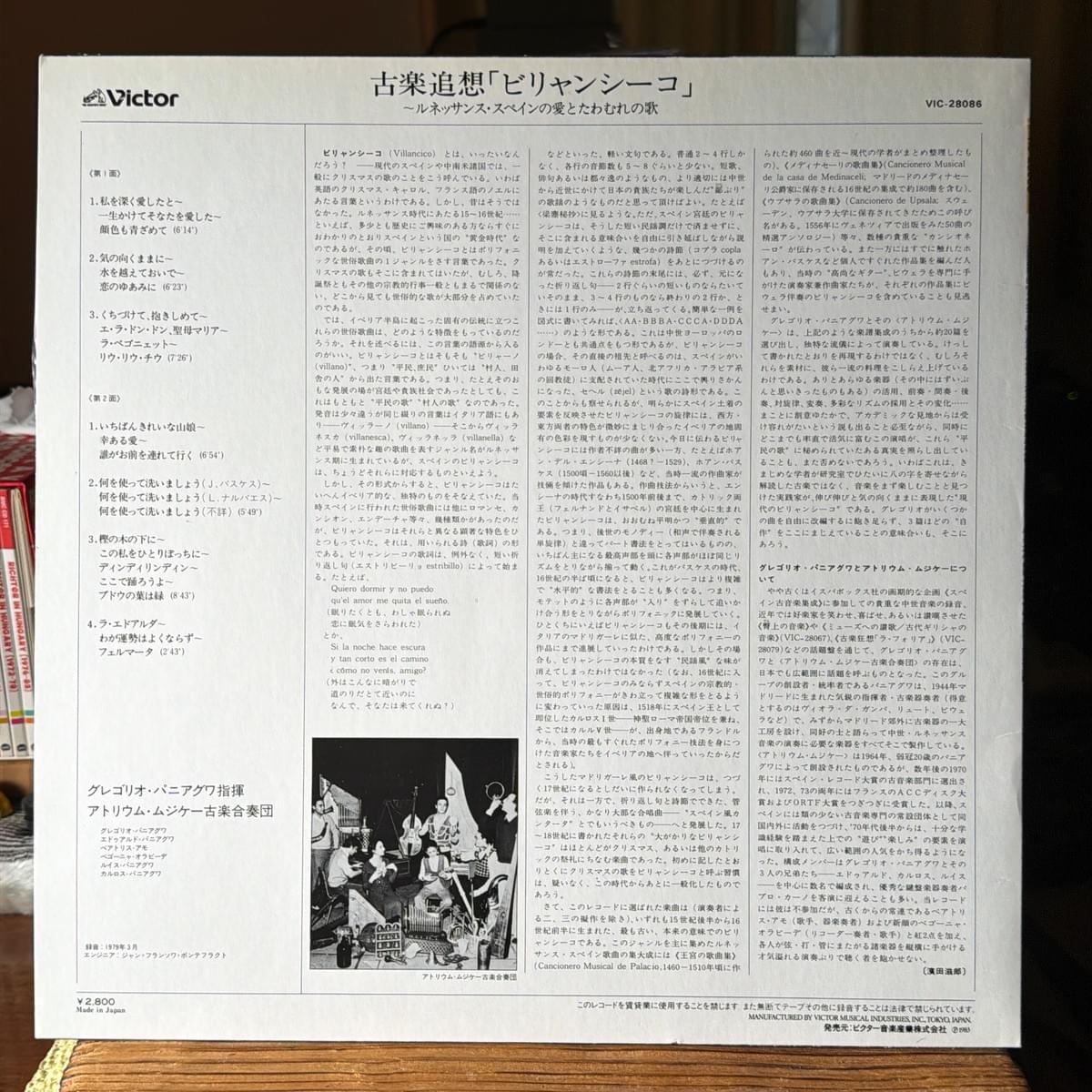
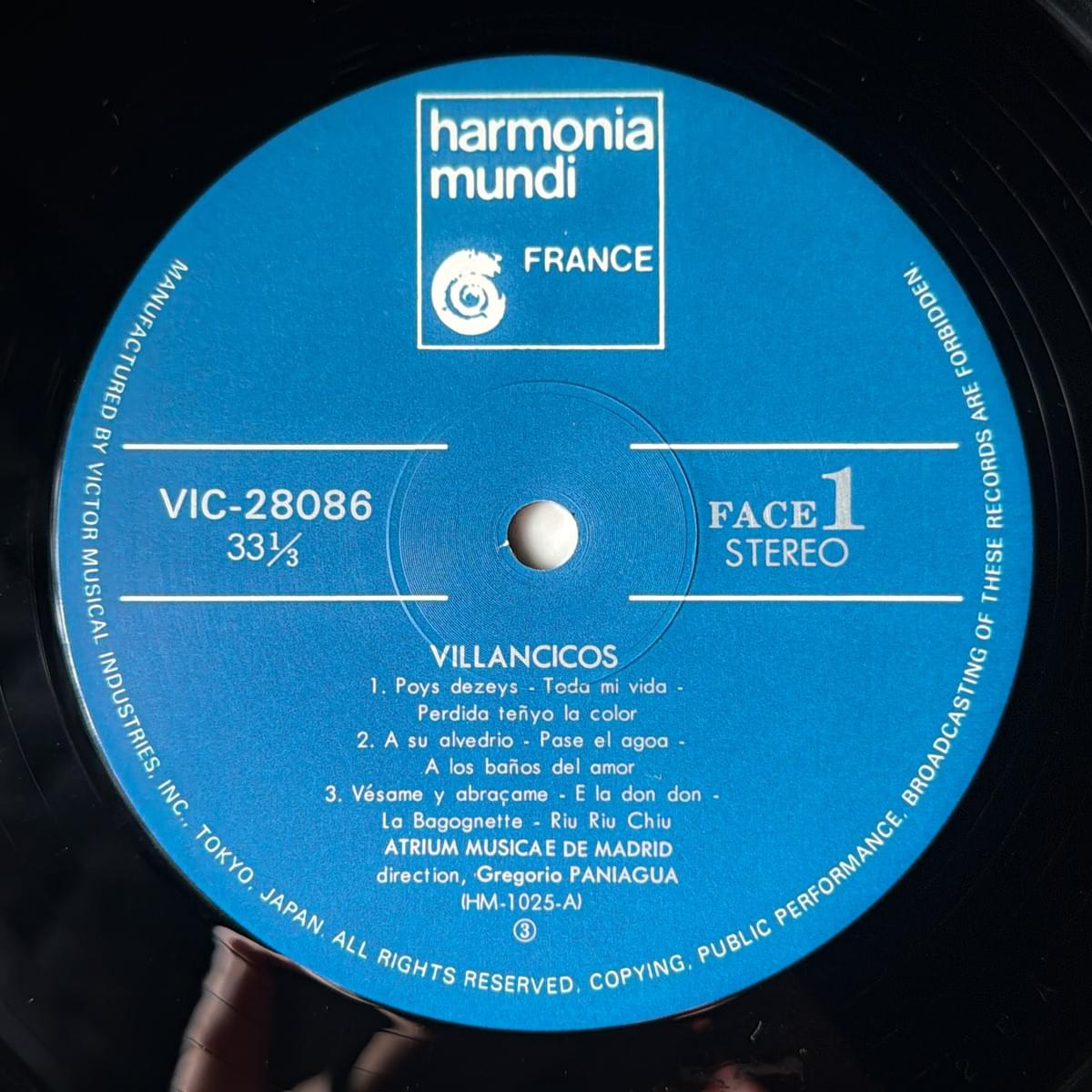
1979 年 3 月,西班牙古樂家格雷戈里奧·帕尼亞瓜帶著他的馬德里古樂廳合奏團(Atrium Musicae de Madrid),把大約二十首這樣的歌錄成了一張唱片,法文副題寫著「十五、十六世紀西班牙民間歌曲」。可是仔細看內頁的曲目表,你會發現一件奇怪的事:在這些五百年前的歌中間,夾著三首 1978、79 年才寫成的曲子——作曲者,就是帕尼亞瓜自己。
一位古樂家,為什麼要把自己的曲子放進一張古代民歌的唱片裡?要回答這個問題,得先認識這個人。
一個不肯當「學究」的人
帕
尼亞瓜 1944 年生於馬德里。濱田在封底記下幾件很少見的事:他最初念的是醫學,同時學大提琴、吉他與指揮;二十歲創立合奏團;二十多歲就在馬德里郊外開了一間大型古樂器工坊,演奏所需的中世紀與文藝復興樂器,全都自己做。依濱田的記載,合奏團 1970 年獲選西班牙唱片大獎古樂部門,1972、73 年又連續拿下法國查爾斯·克羅學院唱片大獎與 ORTF 大獎。
醫學、演奏、指揮、樂器製作——在一般人的人生裡,這是四種職業、四條各自封閉的路。帕尼亞瓜卻把它們走成了同一條:要演奏古樂,就得有古樂器;買不到,就自己做;做出來了,就得懂得怎麼讓一群人一起把它奏響。對他來說,這些不是彼此隔開的「專業」,而是同一件事的不同面。
以正統古樂家的標準,這已經是一條光明大道。可是七〇年代後半,帕尼亞瓜轉了彎。濱田的說法是:他在充分的學術經驗之上,把「遊戲」與「樂趣」帶進演唱,加入娛樂性與幽默感,贏得了跨越類型的人氣;但也因此招來「頭腦僵硬的人」的批評,說他是「異端」、是「胡來」。
如果把他在 Harmonia Mundi 這幾年錄的唱片排在一起,會看到這個轉彎是一步一步走出來的。1976 年的《阿拉伯=安達魯西亞音樂》,他向口傳的傳統取經——那些音樂從來沒有寫成樂譜,只活在一代傳一代的演奏者手上。1977 年的《奧爾蒂斯:裝飾變奏曲》,他回到樂譜,認真面對一本十六世紀的即興教本。到了 1979 年這張《維拉西科》,樂譜還在,但他開始把自己的生活放進去。再過一年,就是幾乎整張由他自己構想的《西班牙的佛利亞》。
口傳、樂譜、生活、創作——《維拉西科》正站在從「重現」走向「創作」的那個轉折點上。
把樂譜當成食材
濱田對這張唱片的描述,用了一個很傳神的比喻:帕尼亞瓜並不是照譜重現,而是把樂譜當成「素材」,用自己一流的方法「料理」。各式各樣的樂器——他特別說,其中不乏相當大膽的選擇——加上前奏、間奏、後奏、對旋律、變奏與多樣的節奏。濱田坦白說,學院派必然會認為這樣「難以接受」;但正是這種率直、活潑的演唱,照亮了藏在「平民之歌」裡的某種真實。
他接著寫下的一句話,幾乎可以當作這張唱片的宣言:
這不是認真的學者在研究室裡皺著眉頭解說的古樂,而是一位把「音樂首先是樂趣」當作第一要義的實踐家,隨心所欲地唱出來的「現代的維拉西科」。
為什麼需要「料理」?因為樂譜記下的,只有旋律與和聲。當年的人在節慶、在田邊、在貴族的客廳裡怎麼唱,用什麼伴奏,唱到第幾段開始加花、哪裡大家一起拍手接副歌,全都沒有寫下來。學院的做法,是只演奏寫下來的部分;帕尼亞瓜的做法,是把沒寫下來的部分也想像回來。前者的風險是把一首活潑的民歌唱成標本,後者的風險是加進古人從未有過的東西。
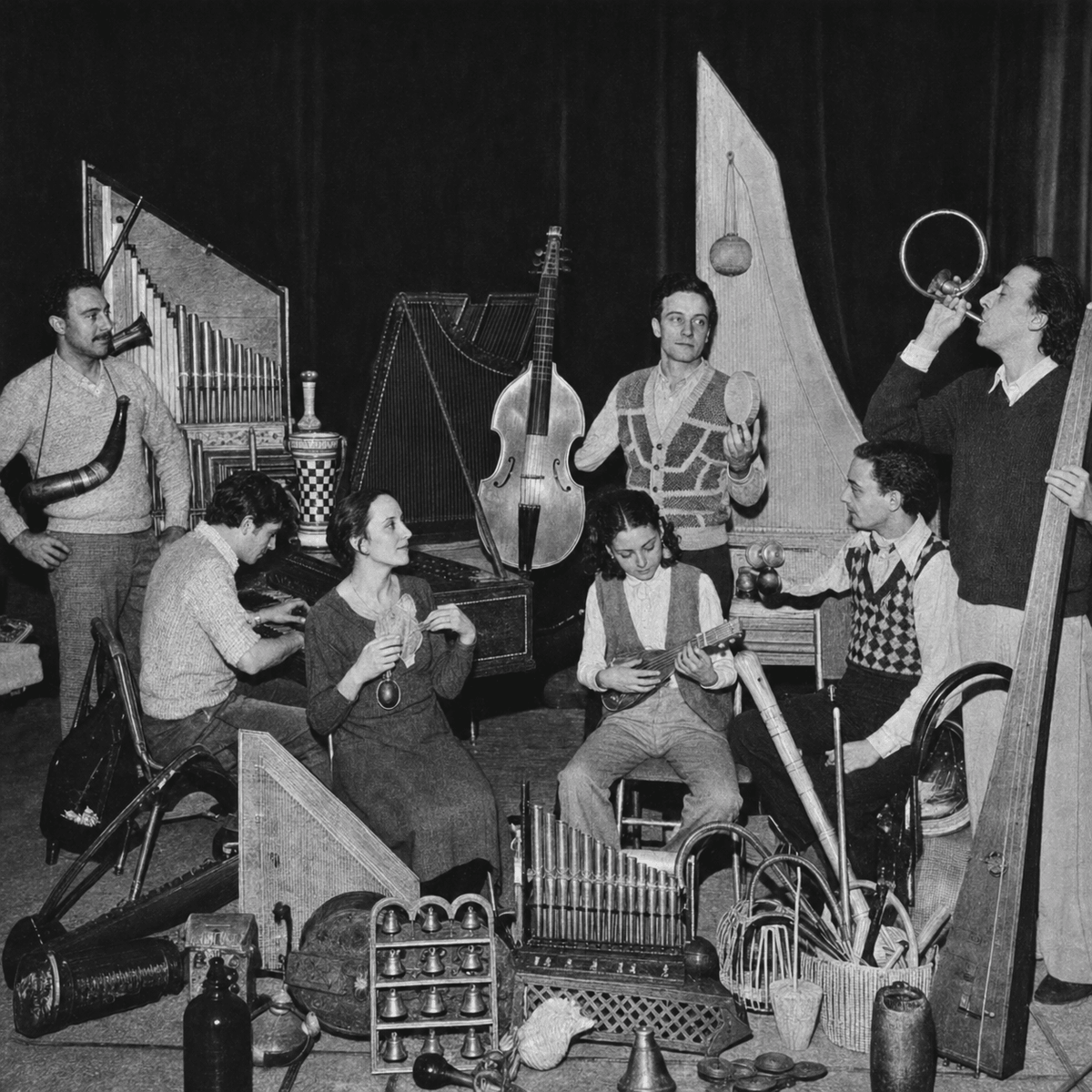
唱片本身就是證據。內頁裡有一張大表,逐曲列出六位團員在每一首裡各自拿了什麼:除了比維拉琴、古大提琴、直笛、曲管笛這些「本分」的古樂器,還有摩洛哥的達布卡鼓、鐵琴、鳥笛、葫蘆、滑管——以及一項在任何樂器學書裡都找不到的「牙齒咬合聲」。北非的鼓聲出現在西班牙民歌裡,恰好呼應了這些歌血緣裡的摩爾源頭。
如果你想試著聽聽這份「料理」是怎麼做的,可以從這幾個地方入口:
同一首歌的三次人生(第二面第 2 段) 《用什麼洗呢》是一首哀傷的民謠:只有我的臉龐在悲傷中失去了光澤,我要用什麼來洗它?帕尼亞瓜把它在十六世紀留下的三個版本連在一起:先是塞維亞作曲家胡安·巴斯克斯(Juan Vásquez,約1500-1560以後)的四聲部編曲(這裡改由樂器合奏),再來是格拉納達的比維拉琴家路易斯·德·納瓦埃斯(Luis de Narváez,活躍於1526-1549)的比維拉琴伴唱版(原本一把比維拉琴,這裡增成兩把),最後是烏普薩拉那本精選集裡的佚名四聲部版。聽的時候試著追蹤那條旋律:它在哪一個版本裡最像一個人在哭?
一半西班牙文、一半蹩腳法文(第一面第 2 段) 《過水來吧》的歌詞很怪,西班牙文與帶著口音的法文各占一半。這種把各國語言混在一起的滑稽歌曲,當時在西班牙相當流行。五百年前的村人,也會在情歌裡夾雜外語開玩笑——帕尼亞瓜的「遊戲」,其實本來就寫在這些歌裡。
一首替換了歌詞的情歌(第二面第 1 段) 中間那首是胡安·德爾·恩西納(Juan del Encina,1468?-1529)的作品,他以牧歌劇詞被稱為「西班牙戲劇之祖」。但帕尼亞瓜在這裡做了一個不尋常的嘗試:他沒有唱恩西納的原詞《幸運的愛》,而是換上一首韻律完全相同的詩《向不自量力的鷹》,作者是葡萄牙劇作家希爾·維森特(Gil Vicente,1470?-1536?)。「一曲配上別人的詞」,是文藝復興時代常見的做法——帕尼亞瓜不是發明了這種自由,而是把它拿了回來。
嫁了人的姑娘與夜鶯(第二面第 3 段) 《Dindirindin》是鐘聲的擬聲詞,聽起來像喜慶的歌;可是歌詞裡,是一個不情願嫁人的姑娘,對飛來的夜鶯說:去告訴我的意中人,我已經嫁了。濱田特別註明,這首歌前面那段很有氣氛的前奏,是帕尼亞瓜的創作。聽聽看,那段前奏先把你帶到了哪裡,歌聲才開始。
聽完這幾首,你也許會發現:帕尼亞瓜的「料理」並不是隨意加料。換詞、混語、一首歌有好幾個版本,都是這些歌在五百年前本來就有的活法。他做的,是把這種活法重新打開。
寫進五百年長鏈裡的三首新歌
現在可以回到開頭那個問題了。
內頁大表的「出典」一欄,大多寫著《王宮歌曲集》、《烏普薩拉歌曲集》這些五百年前的書名。但有三格寫的是:「1978 年,托雷多」、「1978 年,托雷多」、「1979 年,Notre-Dame des Anges(天使聖母)」。作曲者都是格雷戈里奧·帕尼亞瓜。
第一首叫《La Bagognette》,是兩把中音直笛的二重奏,夾在烏普薩拉精選集的幾首歌中間。濱田說,這個曲名似乎來自新加入的團員貝戈尼亞·奧拉維德(Begoña Olavide)的名字——而內頁大表也顯示,吹這首二重奏的,正是她與帕尼亞瓜的弟弟愛德華多·帕尼亞瓜(Eduardo Paniagua,1952-)。一位剛入團的新人,第一張唱片裡就有一首以她為名、由她親自吹奏的曲子。
第二首《La Edoarda》,同樣是這兩位的中音直笛二重奏;從曲名看,很可能是寫給愛德華多的(這一點濱田沒有說,是我們的推測)。一首給新來的團員,一首給自己的弟弟,都寫於 1978 年的托雷多。
第三首《Fermata》(延長記號)是全張唱片的最後一首,寫於錄音當年。這張唱片錄於法國普羅旺斯的福爾卡爾奇耶一帶,附近恰好有一座同名的天使聖母小教堂;如果兩者是同一個地方,那麼這張唱片的最後一首歌,就是在錄音現場寫成的(此點亦待證實)。
想想這件事的意思。五百年前那些沒有留下名字的村人,寫歌給自己的情人、鄰居、嫁出去的女兒;五百年後,帕尼亞瓜寫歌給他的團員、他的弟弟、他錄音的那個地方。他不是站在玻璃櫃外面「復原」平民之歌的人,「他是把自己的生活,接進了平民之歌的長鏈裡。」對他來說,維拉西科不是一個已經結束的歷史類別,而是一種他自己也還在寫的歌。「他也徹底實踐了當年這些歌在生活中被創造出來的狀態。」
這也解釋了,為什麼這三首新曲放在古歌之間一點也不突兀。它們沒有刻意模仿古風,也沒有炫耀現代作曲技法,只是同一群人、用同一批樂器、在同一個屋簷下,為身邊的人寫的歌——正如五百年前那些歌的誕生方式。
這張唱片的團員名單,也很像一個「村子」:帕尼亞瓜、他的弟弟愛德華多與路易斯、同姓的卡洛斯,加上老成員碧雅翠絲·阿莫(Beatriz Amo)與新來的奧拉維德。濱田還特別提到,常合作的鍵盤手巴勃羅·卡諾(Pablo Cano)這次沒有參加。六個人、幾十件樂器,每個人都要跨弦、管、打擊三類輪流上陣——這不是一個各司其職的樂團,而是一群一起唱歌的人。
錄音師尚=法蘭索瓦·龐特弗拉克特(Jean-François Pontefract),後來也錄了他們最著名、也最瘋狂的《佛利亞》。《維拉西科》是那場狂想的前夕:遊戲已經開始,但還保留著民歌的溫度與哀愁。
尾聲:延長記號
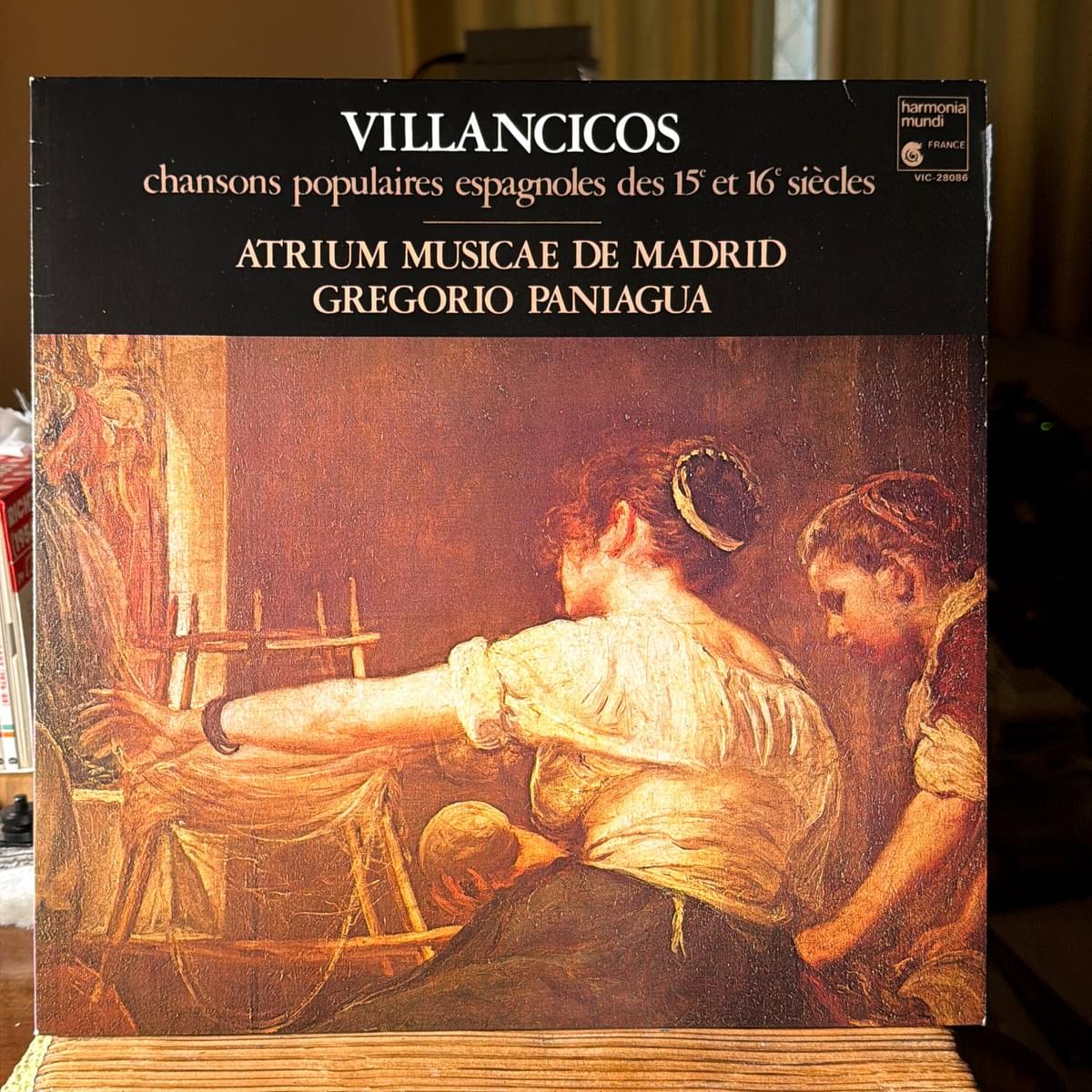
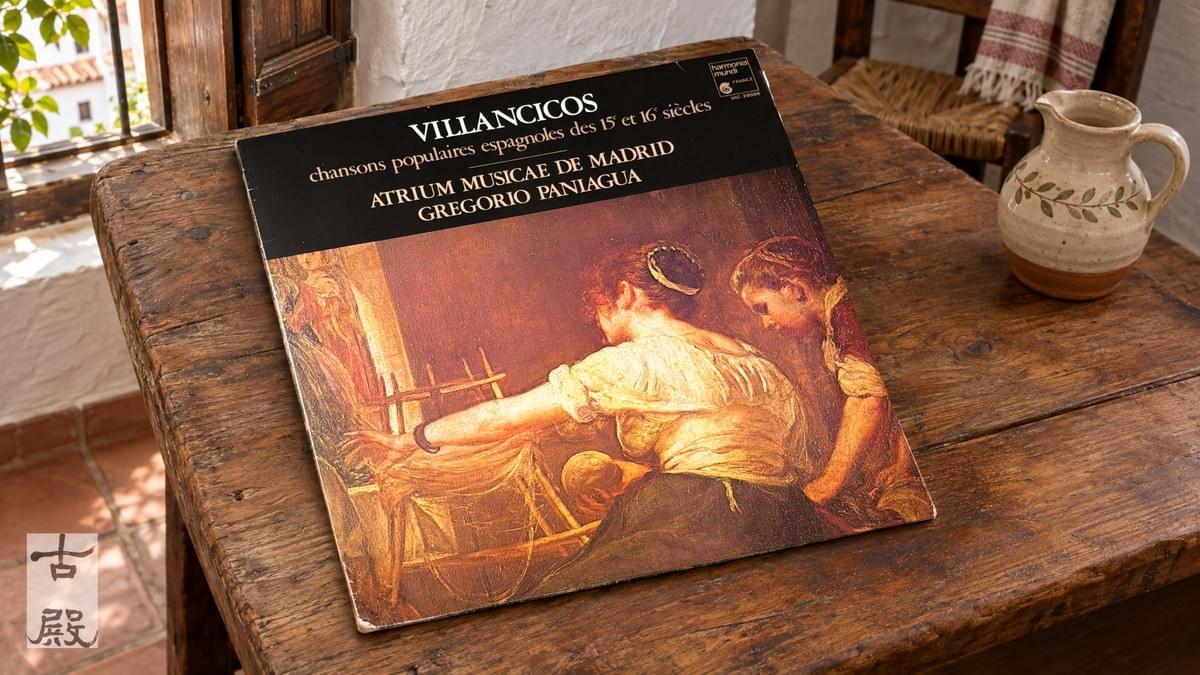
這張唱片的封面,是一位穿白色上衣、背對觀者的年輕女子正在繞線。封套上沒有標明出處,比對之下,它應該是西班牙黃金時代的畫家維拉斯奎茲(Diego Velázquez,1599-1660)《紡紗女》的右側局部。普拉多美術館說,畫中這位白衣女子是希臘神話裡的阿拉克妮——一個敢用自己的手藝,向智慧女神雅典娜挑戰的凡人。封面挑這幅畫是否有此用意,我們無從得知;但放在帕尼亞瓜身上,這個影子未免太過貼切。
有意思的是,替這位「異端」說出道理的,正是一位學者。濱田滋郎為這張唱片寫了整面封底解說、一份逐段的曲目備忘,還親手翻譯了歌詞。他知道學院派會怎麼說,也寫了出來;但他選擇站在「實踐家」這一邊。一個最懂規矩的人,為一個最不守規矩的人背書。
今天,任何人都可以在網路上找到《王宮歌曲集》的資料,也能在幾秒內查出「維拉西科」的定義。知識本身已經不再稀少,但稀少的是另一件事:敢不敢像帕尼亞瓜那樣,跨過醫學、演奏、樂器、文獻之間的牆,把自己的生活給放進去實踐。
2026年帕尼亞瓜離開了人世,他留給這張唱片的最後一首歌,叫《Fermata》——延長記號。在樂譜上,它的意思是:這個音,由演奏者自己決定要延長多久。五百年前的村人把歌唱到了一種長度,帕尼亞瓜又把它延長了一段。
那麼,如果今天有人在一首五百年前的歌裡,加進一段他昨天才寫的旋律——你會說他破壞了傳統,還是延續了傳統?
*****
[Gudian Record Stories] Villancicos Were Originally Songs of Villagers: Five Hundred Years from Love Ballads to Christmas Carols—Gregorio Paniagua’s (1944–2026) Villancicos
In little more than a month, the streets and alleyways across Spain and Latin America will once again echo with a musical form known as the villancico. To the contemporary Spanish-speaking world, the word simply means "Christmas carol."
Five hundred years ago, however, it meant something else entirely. Japanese Hispanist and musicologist Jirō Hamada (1935–2021), who penned the Japanese liner notes for this album, states the etymology at the outset: its root is villano—a villager, a rustic, a commoner. Originally, the villancico was a "song of the common people": a young bride longing to bring a clean shirt to her husband at dawn; a lover standing on the opposite riverbank asking whether their beloved will cross the water; a newly wedded girl pleading with a nightingale outside her window to carry word to her sweetheart: Go tell him I am married now.
Most of these songs survived without their authors' names, preserved in a handful of manuscript cancioneros(songbooks): the Cancionero de Palacio housed in the Royal Library of Madrid, the Cancionero de Medinaceli passed down through the ducal house of Medinaceli, and an anthology printed in Venice in 1556 that eventually made its way to Uppsala University in Sweden. Hamada notes that their signature estribillo–copla–estribillo (refrain–verse–refrain) structure descends directly from poetic forms that flourished during Moorish rule in Spain. It was only after the seventeenth century that the villancico was absorbed by the Church, transforming into large-scale choral works with orchestral accompaniment composed almost exclusively for Christmas and Catholic feast days.
The love songs of villagers had been drafted into the service of the cathedral and the liturgical calendar.
In March 1979, Spanish early-music pioneer Gregorio Paniagua and his ensemble, Atrium Musicae de Madrid, recorded roughly twenty of these songs onto an LP subtitled in French Chansons populaires espagnoles des XVe et XVIe siècles (15th- and 16th-Century Spanish Popular Songs). Yet inspect the tracklist inside the gatefold closely, and a curious anomaly stands out: tucked among these five-hundred-year-old ballads are three pieces composed in 1978 and 1979—by Gregorio Paniagua himself.
Why would an early-music specialist insert his own compositions into an album of Renaissance folk songs? To answer that, one must first meet the man.
A Man Who Refused to Be a Pedant
Born
in Madrid in 1944, Paniagua followed an unconventional path, as Hamada details on the rear sleeve: he initially studied medicine while pursuing the cello, guitar, and conducting; founded his ensemble at age twenty; and in his mid-twenties established an extensive historical instrument workshop on the outskirts of Madrid, building the medieval and Renaissance instruments required for his performances with his own hands. According to Hamada, the ensemble won the Spanish National Record Award in the Early Music category in 1970, followed in consecutive years (1972 and 1973) by the Grand Prix du Disque from the Académie Charles Cros and the ORTF Grand Prix in France.
Medicine, instrumental performance, conducting, luthiery—in most lives, these represent four separate professions, four walled-off trajectories. Paniagua merged them into a single pursuit: to play early music, one needed historical instruments; if they could not be bought, one had to build them; once built, one had to learn how to make an ensemble breathe life into them together. To him, these were never isolated specialties, but facets of a single craft.
By the standards of orthodox early music, he was already on a distinguished path. Yet in the second half of the 1970s, Paniagua took a sharp turn. As Hamada puts it, building upon rigorous scholarly foundations, he injected "play" and "joy" into his interpretations—adding theatricality and wit that won him broad audiences across genres, while inevitably drawing fire from "rigid minds" who dismissed him as a "heretic" and a "charlatan."
Lining up his Harmonia Mundi recordings from these years reveals how deliberately he walked that turn. In 1976’s Musique Arabo-Andalouse, he drew from living oral traditions—music never committed to notation, surviving solely in the hands of performers passing it from generation to generation. In 1977’s Diego Ortiz: Recercadas, he returned to the printed page, confronting a sixteenth-century treatise on ornamentation and improvisation. By 1979’s Villancicos, the historical scores were still on the stand, yet he began weaving his own lived experience into them. A year later came La Folia de la Spagna, conceived almost entirely from his own imagination.
Oral tradition, printed score, lived life, original creation—Villancicos stands precisely at the crossroads where historical reconstruction gives way to living creation.
Treating the Score as Raw Ingredients
Hama
da offers an apt culinary metaphor to describe this album: rather than reproducing the printed notes verbatim, Paniagua treated the scores as raw ingredients, "cooking" them with his own seasoned artistry. An array of instruments—including, Hamada notes, some remarkably daring choices—was layered with preludes, interludes, postludes, counter-melodies, variations, and shifting rhythms. Hamada candidly admits that strict academics would inevitably find the results "unacceptable"; yet it was precisely this candid, spirited delivery that illuminated an essential truth hidden inside these songs of common folk.
Hamada’s next sentence serves as a manifesto for the entire album:
This is not early music lectured upon with furrowed brows by solemn scholars in a study; it is a "modern villancico" sung freely by a practitioner whose foremost principle is that "music is, first and foremost, joy."
Why did these scores require "cooking"? Because Renaissance notation preserved only the bare melodic contour and basic harmony. How people actually sang at village feasts, along country lanes, or inside noble drawing rooms—what instruments accompanied them, on which verse a singer began to improvise ornaments, where the company joined in clapping on the refrain—none of that was ever written down. The academic approach plays strictly what is inked on the page; Paniagua’s approach imagines back into existence everything that went unrecorded. The former risks turning a living folk song into a museum specimen; the latter risks introducing elements the ancients never knew.
The physical record is its own evidence. Inside the gatefold sits an exhaustive matrix cataloging every instrument played by each of the six ensemble members on every track: alongside "orthodox" period instruments like the vihuela, violone, recorder, and crumhorn, the ledger lists Moroccan darbukas, metallophones, bird whistles, gourds, slide whistles—and one entry found in no organological treatise: "clicking of teeth." North African percussion resounding inside Spanish folk ballads directly echoes the Moorish ancestry running through their blood.
To hear how this culinary craft works in practice, listen closely to four moments on the disc:
Three Lives of a Single Song (Side B, Band 2): ¿Con qué la lavaré? ("With what shall I wash it?") is a plaintive lament: My face alone has lost its luster in sorrow; with what shall I wash it? Paniagua strings together three surviving sixteenth-century settings of the tune: first, a four-part polyphonic setting by Seville composer Juan Vásquez (c. 1500–after 1560), realized here by an instrumental consort; second, a voice-and-vihuela arrangement by Granada master Luis de Narváez (fl. 1526–1549), expanded here from one vihuela to two; and finally, an anonymous four-voice setting from the Uppsala anthology. As you listen, follow that melodic thread: in which version does it sound most like a human voice weeping?
Half Spanish, Half Broken French (Side A, Band 2): The text of Pase el agoa ("Cross the water") is a curious hybrid, split evenly between Castilian Spanish and heavily accented, mangled French. Such macaronic comic songs blending languages were wildly popular in Renaissance Spain. Five hundred years ago, villagers were already slipping foreign phrases into love songs for a laugh—Paniagua’s sense of play was written into the texts from the very start.
A Love Song with Borrowed Lyrics (Side B, Band 1): Here we encounter Juan del Encina (1468?–1529), hailed as the patriarch of Spanish drama for his pastoral eclogues. Yet Paniagua makes an unorthodox move: instead of singing Encina’s original text (Dichoso amor), he substitutes a poem of identical meter, A la gala del zagal (or To the Presumptuous Falcon), by Portuguese playwright Gil Vicente (1470?–1536?). Setting new verses to an existing tune (contrafactum) was commonplace during the Renaissance—Paniagua did not invent that liberty; he reclaimed it.
The Married Bride and the Nightingale (Side B, Band 3): Dindirindín imitates the pealing of festive bells, sounding at first like a joyful celebration; yet the lyrics tell of a reluctant young bride pleading with a passing nightingale to carry word to her true love that she has been married off. Hamada points out that the evocative instrumental prelude introducing the song is Paniagua’s own composition. Listen to where that prelude carries you before the singing even begins.
After hearing these tracks, one realizes that Paniagua’s "seasoning" is never arbitrary gimmickry. Swapping lyrics, mixing languages, and reworking a single melody across multiple settings were precisely how these songs lived five centuries ago. What he did was reopen that living tradition.
Three New Songs Woven into a Five-Hundred-Year Chain
Now
we can return to the question posed at the start.
In the "Sources" column of the gatefold matrix, most entries list five-century-old collections: Cancionero de Palacio, Cancionero de Upsala. Yet three rows read: "1978, Toledo," "1978, Toledo," and "1979, Notre-Dame des Anges." All three list the same composer: Gregorio Paniagua.
The first, La Bagognette, is a duet for two alto recorders tucked amid selections from the Uppsala anthology. Hamada notes that the title appears to derive from the name of newly arrived ensemble member Begoña Olavide—and the chart confirms that the two players performing the duet are Olavide and Paniagua’s younger brother, Eduardo Paniagua (b. 1952). A newcomer joining the ensemble finds a piece named in her honor, played by her own hands, on her very first recording.
The second, La Edoarda, is likewise a duet for two alto recorders performed by the same pair; judging from the title, it was almost certainly composed for Eduardo (a detail Hamada leaves unmentioned, though the deduction is clear). One piece for a new colleague, one for his brother—both penned in Toledo in 1978.
The third, Fermata, closes the entire album, composed in the year of the sessions. The record was tracked near Forcalquier in Provence, France, where a chapel named Notre-Dame des Anges stands nearby; if the inscription refers to that sanctuary, the final track on the album was composed on location during the sessions (a detail awaiting further archival confirmation).
Consider what this means. Five hundred years ago, nameless villagers wrote songs for their sweethearts, their neighbors, and their married daughters; five centuries later, Paniagua wrote songs for his ensemble colleagues, his brother, and the sanctuary where they recorded. He was not an antiquarian standing outside a glass display case attempting to "restore" the songs of commoners—he was linking his own lived life directly onto the centuries-old chain of popular song. To him, the villancico was not a closed historical chapter, but a living genre he was still actively writing. He embodied the very social conditions out of which those songs had originally been born.
That explains why these three new pieces sit among the Renaissance songs without a trace of friction. They neither mimic archaic idioms nor flaunt modernist compositional tricks; they are simply songs written by the same friends, played on the same instruments, beneath the same roof, for the people beside them—born in the exact manner of their five-hundred-year-old ancestors.
Even the ensemble roster reads like a tight-knit village: Gregorio Paniagua, his brothers Eduardo and Luis, Carlos Paniagua, veteran member Beatriz Amo, and newcomer Begoña Olavide. Hamada notes that longtime harpsichordist Pablo Cano sat out these sessions. Six musicians, dozens of instruments, every member rotating across strings, winds, and percussion—not a compartmentalized orchestra, but a circle of friends singing together.
Balance engineer Jean-François Pontefract would later record their celebrated, anarchic La Folia. Villancicos stands as the eve of that wild fantasia: the game had begun, yet it still held the unvarnished warmth and melancholy of village song.
Coda: The Fermata
The
cover reproduces a detail of a young woman in a white blouse, turned away from the viewer as she winds yarn. Uncredited on the jacket, comparison reveals it to be the right-hand section of Las Hilanderas(The Spinners) by Spanish Golden Age master Diego Velázquez (1599–1660). According to the Museo del Prado, this figure in white represents the mythical Arachne—the mortal weaver who dared challenge Athena, goddess of wisdom, with the craft of her own hands. Whether the cover designer intended that allusion we cannot know; yet applied to Gregorio Paniagua, the parallel could hardly be more fitting.
Remarkably, it was a scholar who articulated the defense of this musical "heretic." Jirō Hamada contributed the entire rear-cover essay, a track-by-track analytical commentary, and complete Japanese translations of the lyrics. He understood full well how academic orthodoxy would judge the disc, and set those objections down in print—yet he chose to stand beside the practitioner. A scholar who knew every rule of the canon vouching for the artist who broke them.
Today, anyone can look up the Cancionero de Palacio online or pull up a definition of the villancico in seconds. Information is no longer scarce. What remains rare is something else entirely: the courage to step across the walls separating medicine, performance, luthiery, and archival scholarship, and bring one's own living life into the music.
In 2026, Gregorio Paniagua passed away. The final piece he left on this record is titled Fermata. In musical notation, a fermata instructs the performer to hold a note for as long as they choose. Five hundred years ago, villagers sang their songs to a certain measure; Gregorio Paniagua held that note a little longer.
If someone today weaves a melody written yesterday into a five-hundred-year-old song—would you say they have broken tradition, or kept it alive?