
【古殿唱片音樂故事】日本偉大古典音樂製作人井阪紘(Hiroshi Isaka,1940-)與唱片品牌Camerata :從卡爾·萊斯特(Karl Leister,1937-)兩張唱片故事談起
古殿殿主
一場沒錄成的錄音
1978 年春天,一位日本唱片製作人在維也納等著錄音,卻等不到他的演奏家。
他叫井阪紘(Hiroshi Isaka,1940-),他準備為維也納弦樂四重奏團(Wiener Streichquartett)錄製莫札特《普魯士四重奏》。偏偏那時,赫伯特·馮·卡拉揚(Herbert von Karajan,1908-1989)正在維也納國立歌劇院排演,而且出了狀況。井阪後來在唱片封底回憶:男高音佛朗哥·波尼索利(Franco Bonisolli,1938-2003)聲音出了問題,首演拖延一場,改由普拉西多·多明哥(Plácido Domingo,1941-)頂替。歌劇院一團糟,坐在樂池裡的維也納愛樂(Wiener Philharmoniker)團員全被綁住了。導致歌劇排演臨時插隊佔用了維也納弦樂四重奏團團員們原定的錄音檔期,——而維也納弦樂四重奏團的四位成員,正是維也納愛樂的首席。在維也納無法進行錄音;萬般無奈之下,我們只好臨時飛往柏林,借用 Teldec 錄音室完成錄製。
錄音結束的隔天,柏林愛樂(Berliner Philharmoniker)的低音提琴手克勞斯·史托爾(Klaus Stoll,1943-)在家裡開了一場派對。井阪在那個晚上,把一位客人介紹給了維也納來的四位演奏家——柏林愛樂的首席單簧管,卡爾·萊斯特(Karl Leister,1937-)。
三年後,這五個人在維也納錄下了莫札特的《單簧管五重奏》。這張唱片,和後來萊斯特在柏林錄的布拉姆斯,都屬於同一個廠牌:井阪一手創立的 Camerata。一場卡拉揚的歌劇院風波,意外牽起了柏林、維也納與東京——也牽出了這篇文章要說的兩件事:萊斯特是誰?以及一個日本製作人為什麼要把錄音室搬到歐洲?
柏林愛樂的單簧管首席之聲
卡爾·萊斯特 1937 年 6 月 15 日生於德國北海邊的威廉港。他的啟蒙老師是父親——柏林 RIAS 交響樂團(RIAS-Symphonie-Orchester Berlin)的單簧管手。很多人的樂器是從教室裡學來的,萊斯特的第一口氣,是在家裡從父親的樂團生活裡吸進去的。
他 1953 年起在柏林音樂院就讀,1957 年才 19 歲,就成為柏林喜歌劇院(Komische Oper Berlin)的首席單簧管,在指揮瓦茨拉夫·紐曼(Václav Neumann,1920-1995)與導演瓦爾特·費爾森斯坦(Walter Felsenstein,1901-1975)的劇院裡學會了在樂池裡唱歌。1959 年22歲,他進入卡拉揚的柏林愛樂,一待就是三十多年,直到 1993 年。無論是他自己或後來的評價,都把與卡拉揚共事的三十年,視為他藝術生命中最重要、最具塑造力的一段。一代樂迷在卡拉揚錄音裡聽到的那一線圓潤單簧管,有很大一部分就是他。
但萊斯特並不只是「柏林愛樂裡的一聲」。他與阿瑪迪斯四重奏(Amadeus Quartet)、維米爾四重奏(Vermeer Quartet)、基東·克萊曼(Gidon Kremer,1947-)等人合作室內樂,參與創立「柏林獨奏家」(Berliner Solisten)與「維也納-柏林合奏團」(Ensemble Wien-Berlin),一生錄音逾百張,幾乎把單簧管曲目錄過一遍;1993 年自柏林愛樂退休後,到 2002 年都在柏林漢斯·艾斯勒音樂院任教,也在卡拉揚學院教出許多後來各大樂團的單簧管好手。
他到底好在哪裡?厲害在哪裡?
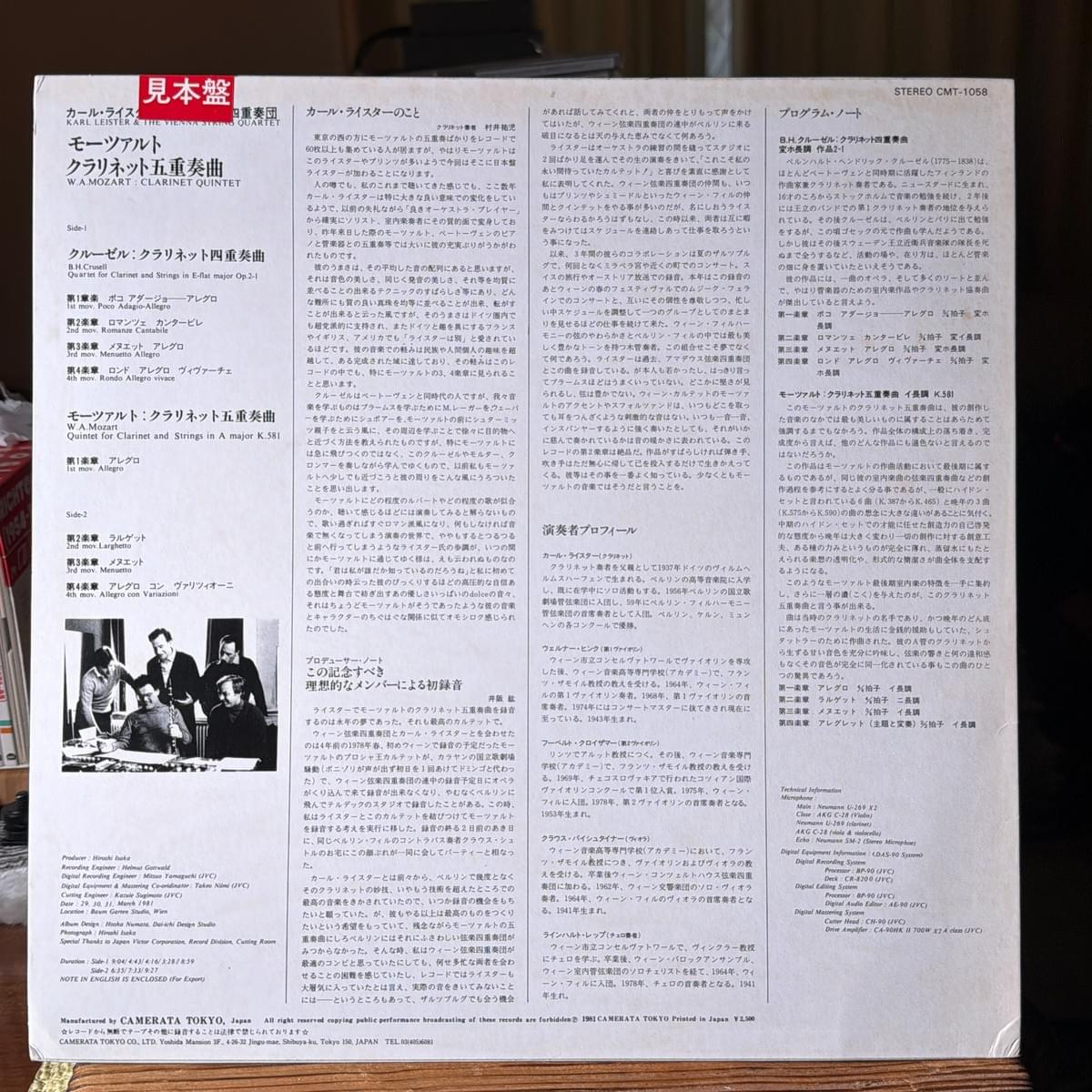
CMT-1058 唱片封底有一篇日本單簧管名家村井祐兒(Yuji Murai,生卒年待查)寫的〈關於卡爾·萊斯特〉,是專業同行眼中的萊斯特。村井說,萊斯特的長處在「平均」:音色美、發音美,而且能把它們一個接一個均勻地排列下去,遇到再難的段落也一樣。這聽起來樸素,實際上是最難的事。村井還觀察到,在德語區以外、音色品味截然不同的法國、英國與美國,但大家卻都說:「萊斯特是例外」。他認為萊斯特音樂裡的「輕」,不是民族風格或個人趣味,而是一種已經完成的境界,所有的人都能認同的至高境界。。
還有一件事,可以看出萊斯特是怎樣的人:他對自己的舊錄音並不滿足。他早年已經與資深如阿瑪迪斯四重奏錄過莫札特的五重奏;井阪說,那時他仍年輕,成果不如他同期錄的布拉姆斯。而布拉姆斯的《單簧管奏鳴曲》,他在三十年間,前後錄了四次。他仍想要再錄一次,挑戰看看有沒有新的東西出來。
Camerata 的這兩張唱片,正好都是他「重新說一次」的時刻。
一個製作人,把錄音室搬到維也納
井阪紘 1940 年生於日本和歌山,少年時代就聽遍古典音樂。他在同志社大學讀經濟,參加的是男聲合唱團「同志社 Glee Club」。1964 年24歲他進入日本勝利唱片(JVC),從業務做起,後來成為古典音樂製作人,十四年間做了一百五十多張唱片,拿下文化廳藝術祭大賞等許多獎項。
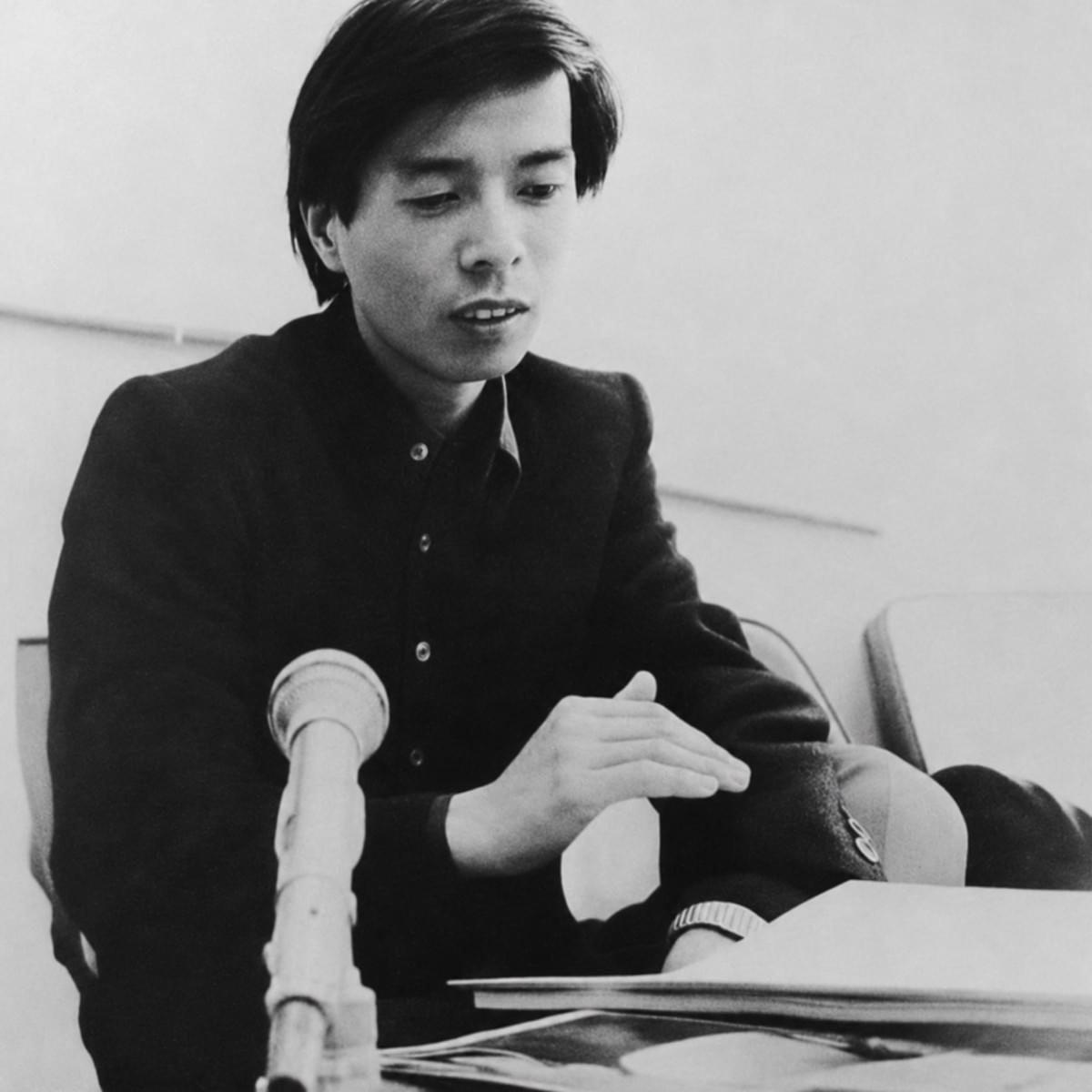
一個從小浸淫在古典音樂裡長大的日本人,進了大唱片公司,成為古典音樂製作人——走到這裡,已經是許多愛樂者夢想的工作。但 1978 年,他卻辭職了。他不是要離開古典音樂,離開唱片產業,而是要去實現一個在大公司裡無法實現的理想。(大公司有大公司的制度與限制,沒有那麼自由,無法自己想做什麼就做什麼)
這個理想可以說得很具體:以一個日本人的出身,帶著自己十四年累積的經驗與人脈,在有限的經費下把每一分力氣發揮到極致;帶著日本領先的錄音技術與設備到歐洲去,錄歐洲第一線、第一流的音樂家;做出來的唱片,不只賣給日本,也要賣到全世界。
Camerata 的公司簡介是這樣寫的:以井阪為中心,把唱片製作,與音樂會、音樂節這些音樂軟體產業「整合」在一起,而且一開始就要做「國際通用」的生意。當時的唱片工業裡,「做唱片」與「辦音樂會、音樂節」是兩個各自運作的世界。而抱著這麼大的理想起步時,公司只有三個人。
這樣的理想,靠單一專長是做不到的。它需要一種「全面的能力」:要聽得懂音樂,判斷哪個組合值得等三年;要懂錄音技術,知道該帶哪一台機器、找哪一位工程師;要懂生意,他在日本勝利唱片正是從業務做起,要知道唱片怎麼賣出去;要辦得了音樂節、寫得出封套筆記、拿得起相機拍封面;更要懂得與人相處,讓維也納與柏林的首席願意跟一個日本小公司合作。而比能力更難的,是「把理想落實的實踐力」——很多人都有理想,但能十年建一個維也納據點、四、五年錄完一套全集、四十多年不停下來的人,少之又少。
(關於成立年份,Camerata 官方資料與和歌山縣的文化功勞獎資料都記為 1975 年,但井阪離開日本勝利是 1978 年,舊版公司簡介也寫「1978 年設立、三人出發」,井阪自己在追悼維爾納·辛克(Werner Hink,1943-2024)的文章裡也說是 1978 年辭去日本勝利、立起「Camerata」這個廠牌。合理的理解是公司註冊在前,正式運作在井阪辭職之後;兩說並存,以供檢索。)
接下來幾年的發展,幾乎是照著這個理念走出來的:
- 1979 年:兩張專輯同時獲文化廳藝術祭優秀賞。
- 1980 年:第一屆「草津夏季國際音樂學院&音樂節」開辦,井阪任事務局長,至今每年舉辦。一個唱片公司的老闆,去經營一個音樂節——這就是「整合」的實際模樣。
- 1981 年:把錄音重心放到維也納,另設負責錄音與出版的 Camerata Music,在東京代代木設立剪輯工作室。同年開始與維也納弦樂四重奏團錄製法蘭茲·舒伯特(Franz Schubert,1797-1828)弦樂四重奏全集。
- 1982 年:全集的維也納第一彈《死與少女》獲音樂之友社「唱片學院賞」。
井阪後來在追悼維也納弦樂四重奏團第一小提琴辛克的文章裡說,舒伯特弦樂四重奏全集,是他立起「Camerata」這個廠牌時,就認定要第一個做的事。和歌山縣的資料則說,他獨立之後花了約十年,才把維也納的錄音據點建立起來。1995 年,奧地利政府授予他學術藝術榮譽十字勳章;2023 年,日本文化廳長官表揚他長年作為古典音樂製作人的貢獻。
為什麼是維也納?一個日本唱片公司要錄舒伯特、莫札特,最省事的做法是把演奏家請到東京。井阪反過來,把自己搬過去——搬到那些音樂原本生長的城市,搬到演奏家各自的「主場」,在他們的空間、他們的生活節奏裡錄音。這個選擇,在後面兩張唱片上都看得到。
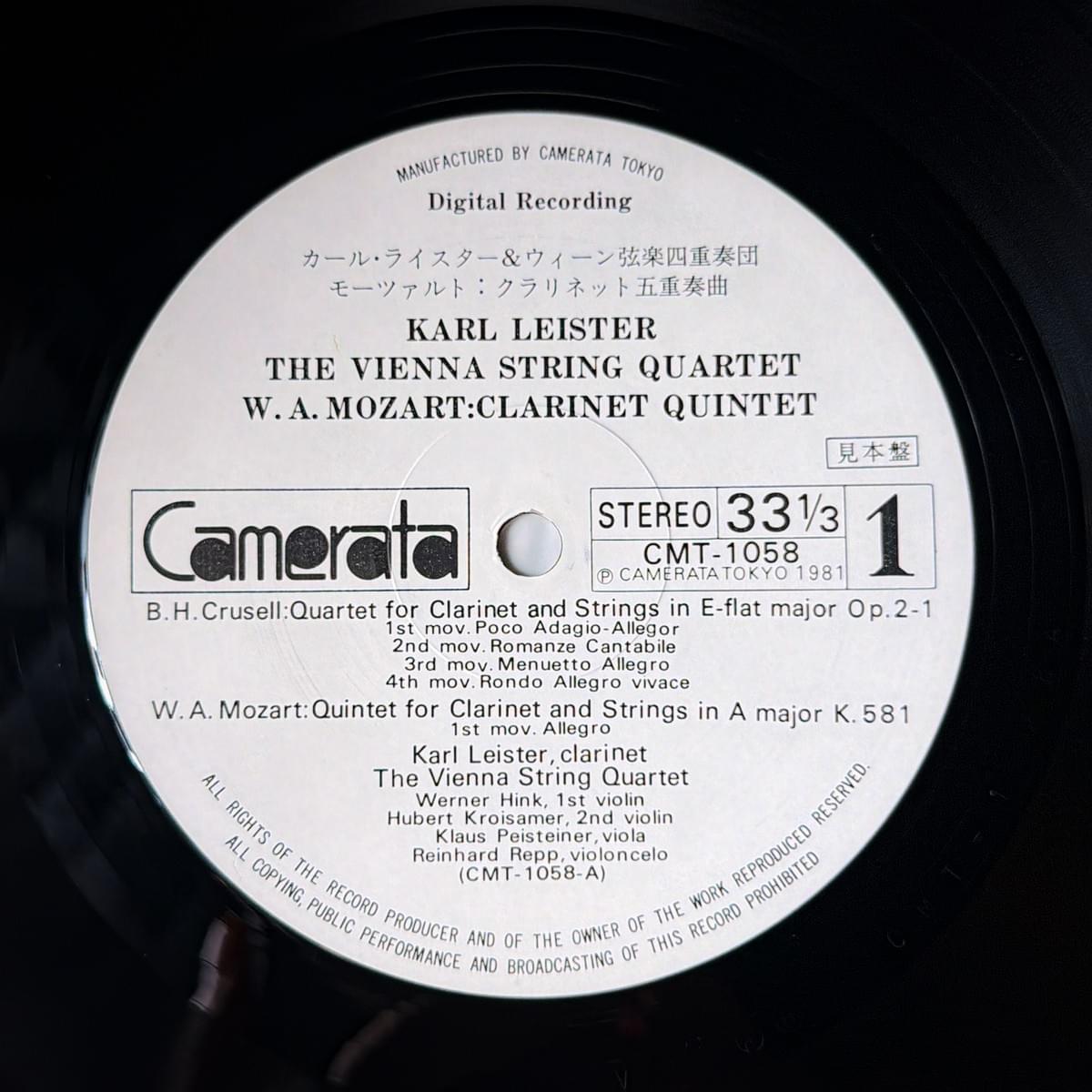
第一張:等了三年的莫札特(CMT-1058)
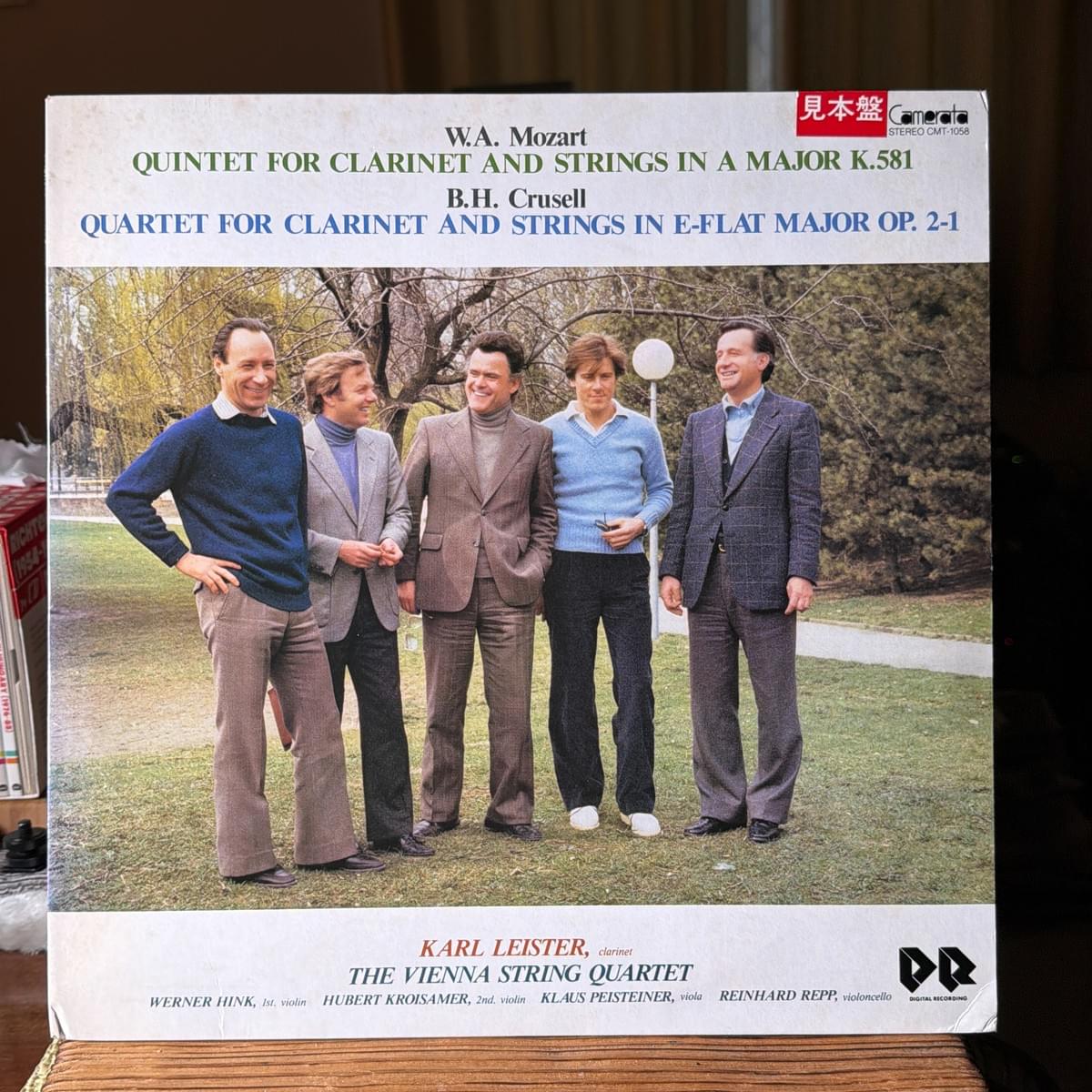
回到 1978 年那場家庭派對。井阪一直想讓萊斯特錄沃夫岡·阿瑪迪斯·莫札特(Wolfgang Amadeus Mozart,1756-1791)的《單簧管五重奏》,而且要配上最好的四重奏。他在封底的製作人筆記裡說,他一直找不到一個在柏林配得上萊斯特的四重奏;他心中的最佳組合是維也納弦樂四重奏團,但兩邊都太忙,他也不確定萊斯特是否喜歡他們的聲音。
事情是這樣發生的:萊斯特利用自己樂團排練的空檔,兩度跑到錄音室聽四重奏團錄音。聽完,他很直接地告訴井阪:這正是他等了很久的四重奏。而對維也納四人來說,平常合作五重奏的,多是阿弗烈·普林茲(Alfred Prinz,1930-2014)、彼得·許密德爾(Peter Schmidl,1941-)這些維也納愛樂的單簧管同事——久聞大名的萊斯特當然是一件大事。
但他們沒有馬上錄音。接下來的三年,五個人在薩爾茲堡的夏天一起開音樂會,在米拉貝爾宮與附近的城鎮演出,一起去瑞士巡演,為奧地利廣播錄音。兩邊都是行程滿檔的樂團首席,他們互相配合、擠出時間,累積出一個「組合」的整體感。1981 年 3 月 29 日到 31 日,他們才在維也納的 Baum Garten Studio(應即 Casino Baumgarten,一座 1779 年興建的宮殿改建的錄音場地)錄下這張唱片。井阪為這張唱片寫的筆記,標題就叫〈值得紀念的、理想陣容的初錄音〉。
四位維也納愛樂的首席。第一小提琴辛克是維也納愛樂的樂團首席,也是這個四重奏團 1964 年的創立者;第二小提琴胡伯特·克羅伊薩默(Hubert Kroisamer,1953-)、中提琴克勞斯·派斯泰納(Klaus Peisteiner,1941-)、大提琴萊因哈特·雷普(Reinhard Repp,1941-),全是各聲部首席。封底的簡歷透露了一個不太有人注意的細節:辛克、克羅伊薩默與派斯泰納,都是在維也納音樂學院跟同一位老師法蘭茲·薩莫希爾(Franz Samohyl,1912-1999)學的琴。同一位老師、同一個樂團、同一座歌劇院的樂池——「維也納的弦樂聲音」不是一個形容詞,是幾十年的共同生活。
井阪形容這個組合:維也納愛樂弦樂的柔和溫暖,配上柏林愛樂最美、最豐潤的木管,這才是夢幻組合。他還寫道,維也納四重奏的重音與強音,不論何時聽都不刺耳;他特別點名,這張唱片的第二樂章 Larghetto 是絕品。
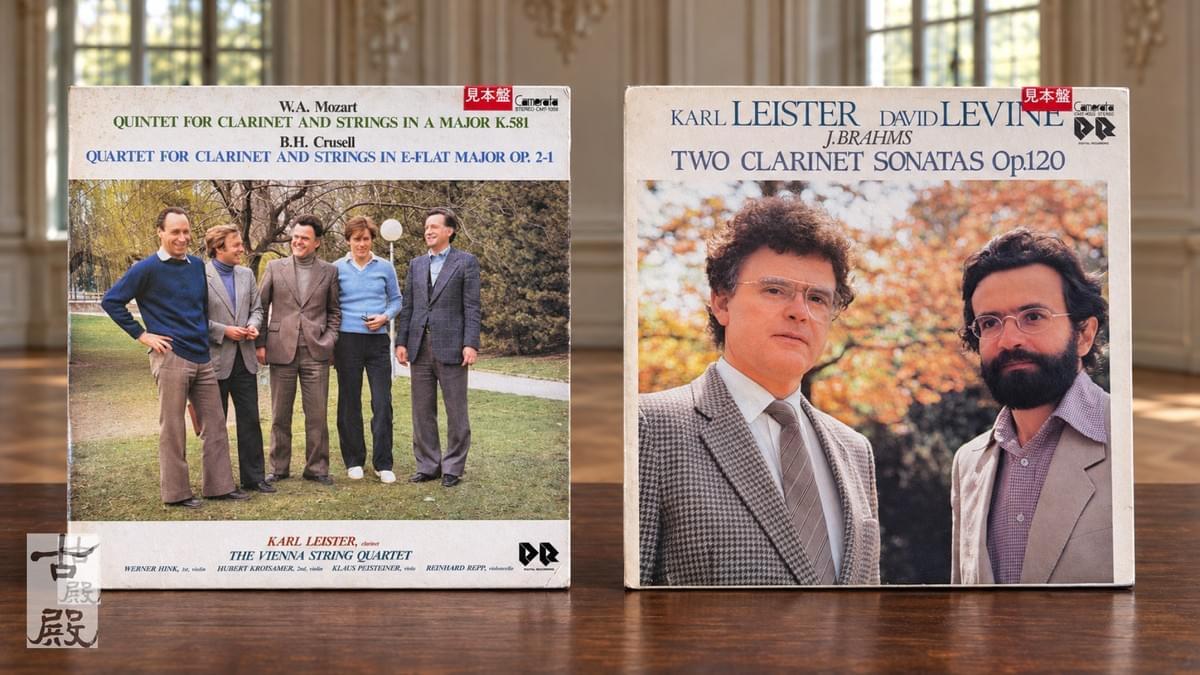
封底上的「身體」。這張唱片的封面照片,是井阪自己拍的——五個人站在春天的公園裡笑著。而封底右下角,寫著每一支麥克風的型號:主麥克風兩支 Neumann U-269、小提琴與中大提琴前的 AKG C-28、單簧管前另一支 U-269、收殘響的 Neumann SM-2。再下來是一整套 JVC DAS-90 數位系統——這是 JVC 在 1980 年才推出的 16 位元數位母帶系統,比 CD 上市還早一年。錄音、剪輯到刻片,全是 JVC 的工程師與設備,最後在日本勝利唱片的刻片室刻成漆盤。離開 JVC 三年的井阪,仍然與老同事們一起,用當時最新的技術把維也納的聲音帶回東京。
第二張:一個半小時的布拉姆斯(CMT-4020)
如果說第一張是井阪「把萊斯特帶到維也納」,第二張就反過來:是萊斯特把井阪請到柏林。
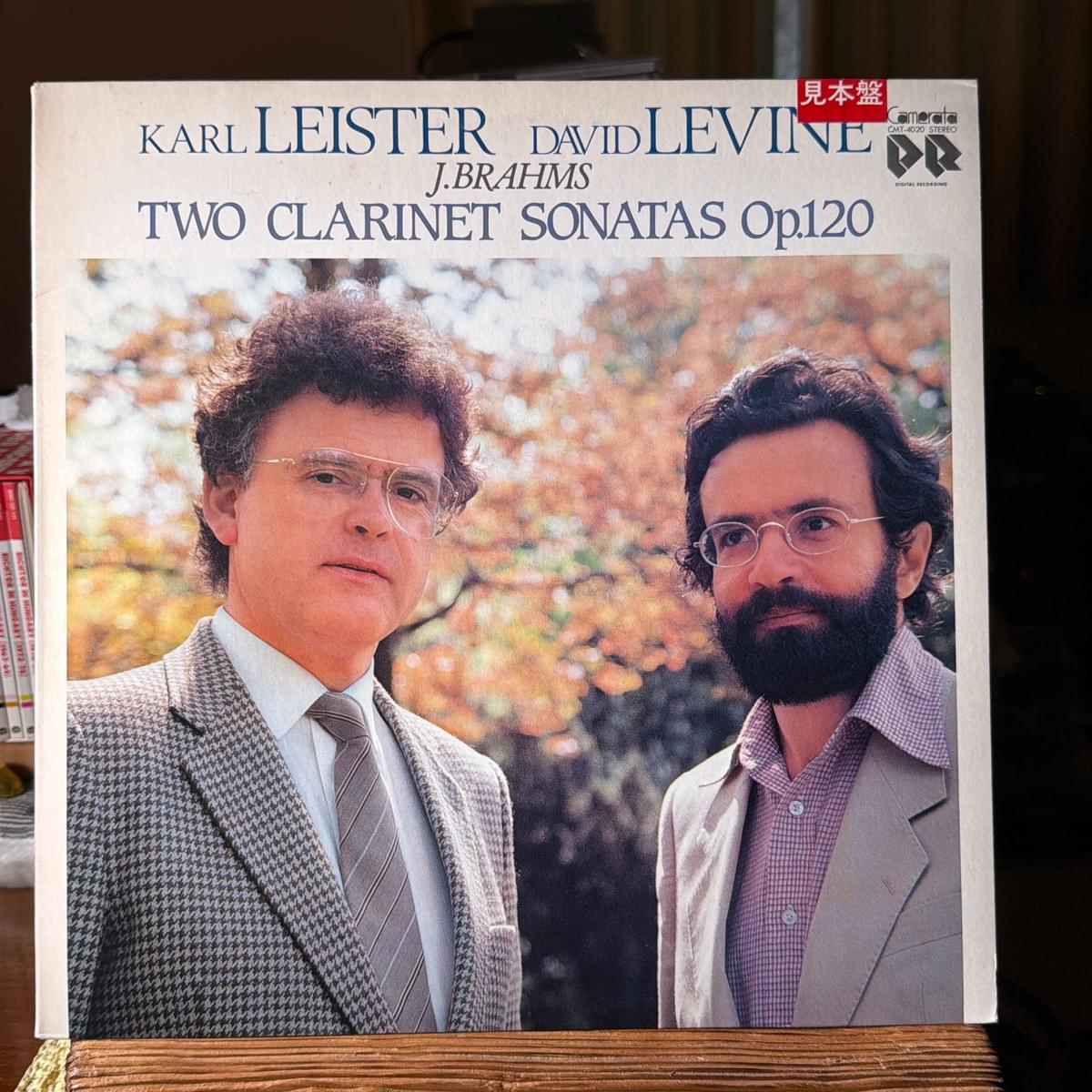
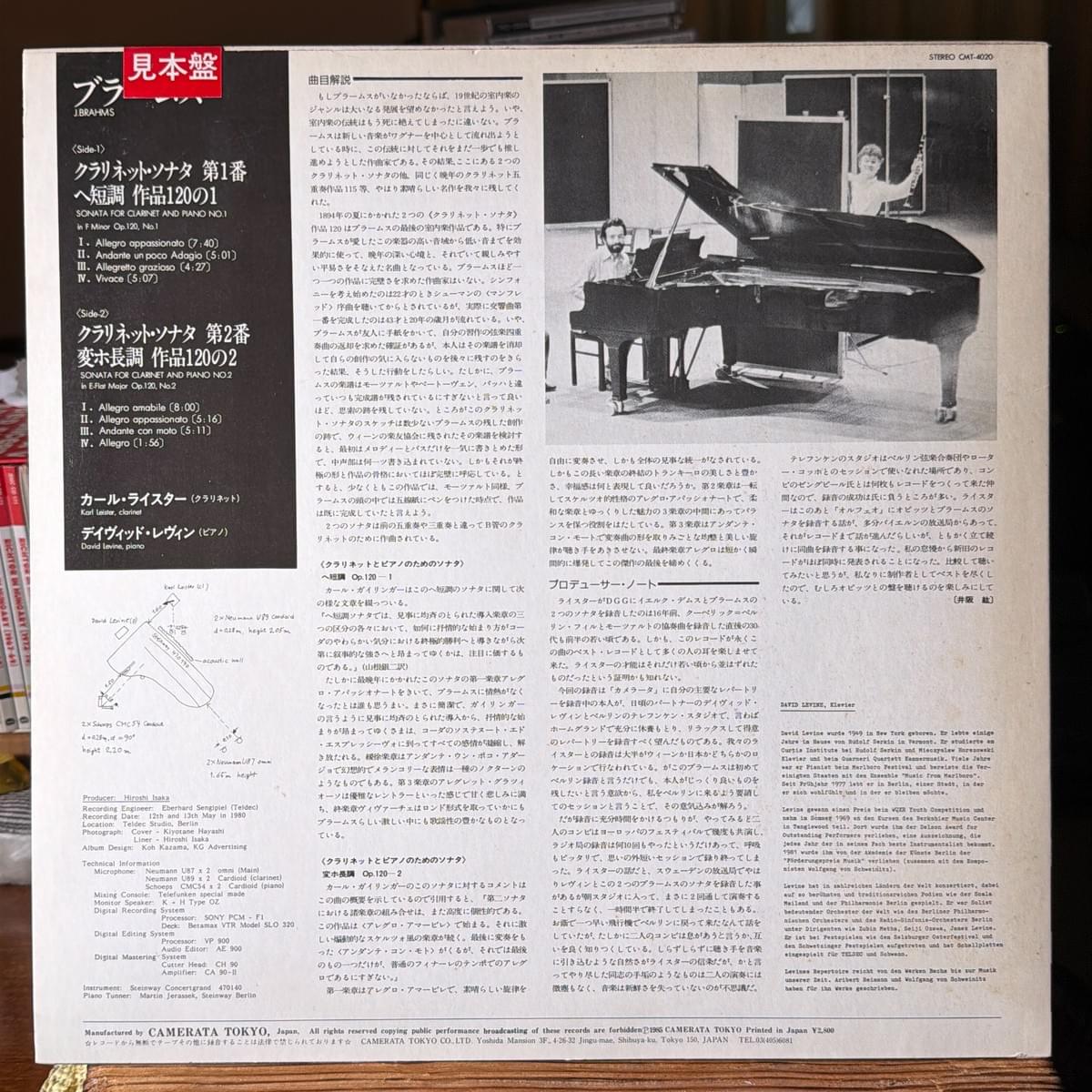
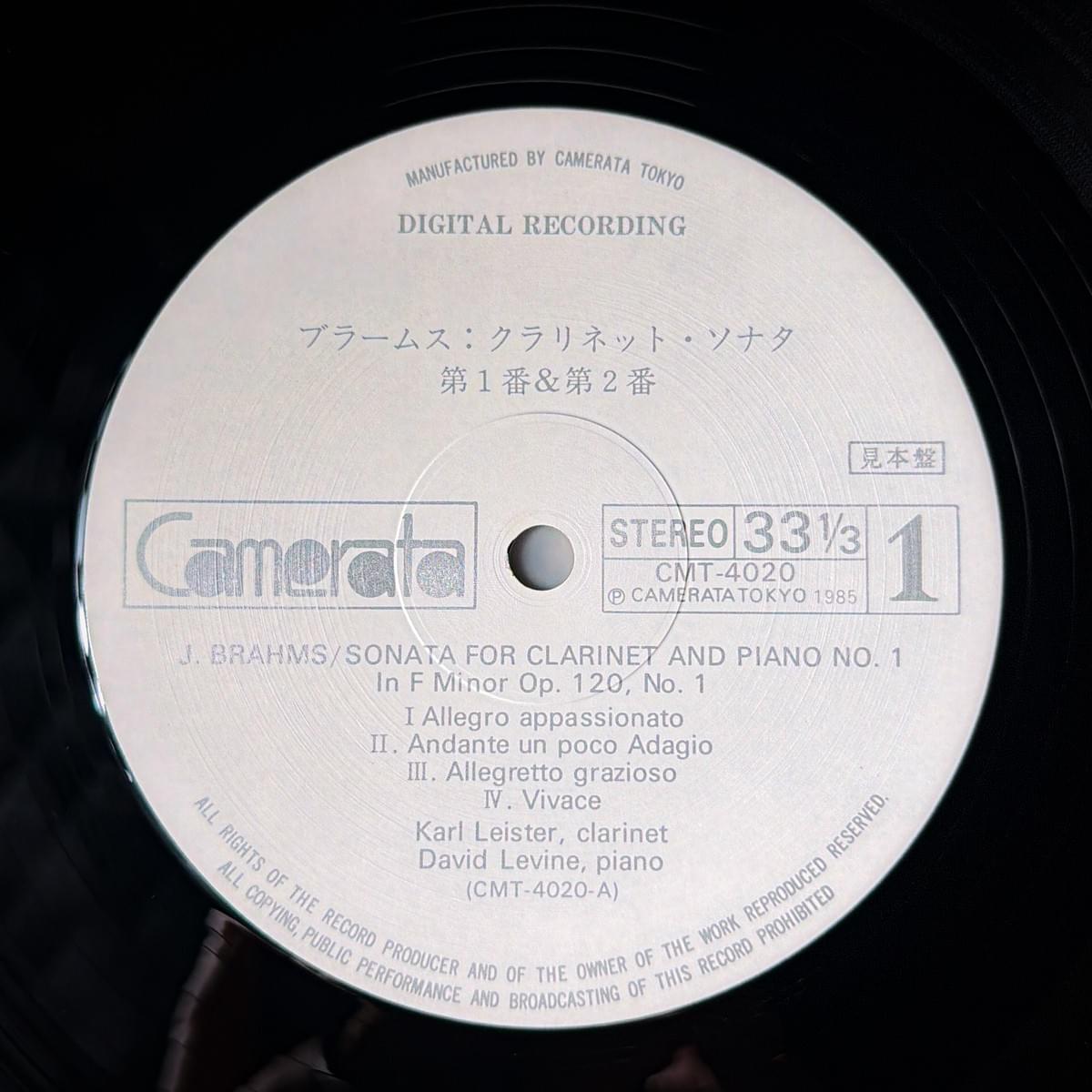
Camerata 與萊斯特的錄音,多半在維也納或日本完成。但這一次錄約翰尼斯·布拉姆斯(Johannes Brahms,1833-1897)最後的室內樂作品——兩首《單簧管奏鳴曲》作品 120,井阪在筆記裡說,是萊斯特自己想「留下真正好的東西」,希望在自己熟悉的柏林 Teldec 錄音室、與日常搭檔一起、在「主場」休息充分之後放鬆地錄,所以請井阪到柏林來。
從塞爾金家來的鋼琴家。那位搭檔是大衛·列文(David Levine,1949-1993)。封底右下角印著一段未翻譯的德文簡歷:他 1949 年生於紐約,少年時曾在佛蒙特州魯道夫·塞爾金(Rudolf Serkin,1903-1991)家中住過幾年,在柯蒂斯音樂院隨塞爾金與米奇斯瓦夫·霍爾紹夫斯基(Mieczysław Horszowski,1892-1993)學琴,隨瓜奈里四重奏(Guarneri Quartet)學室內樂,在馬爾波羅音樂節(Marlboro Music Festival)當了多年鋼琴家。1977 年春,他搬到柏林,簡歷說他在這個城市「感到自在、想留下來」。一位在柏林落腳的美國人,一位柏林愛樂的德國首席——布拉姆斯的奏鳴曲要的正是兩件樂器平起平坐的對話,而馬爾波羅正是這種室內樂精神的大本營。
井阪本來打算花充分的時間錄音。結果,這對搭檔在歐洲的音樂節已經合作多次、在電台錄過十幾次,連呼吸都完全一致,很快就錄完了。萊斯特還講了一件事:他們曾在瑞典電台錄這兩首奏鳴曲時,早上進錄音室,各拉兩遍,一個半小時就結束,午後搭飛機回柏林。井阪說,他們那種把事情做盡了的同志般的熟練,全無疑態,音樂卻一點也沒失去新鮮感——他覺得不可思議。
這張唱片也是列文少數正式發行的錄音之一。他後來在杜塞道夫開大師班,學生裡有後來的法齊爾·賽伊(Fazıl Say,1970-);但 1993 年 6 月,他就在柏林辭世,年僅四十出頭。
同一組曲子,三十年四次。萊斯特第一次錄這兩首奏鳴曲,是 1968 年 7 至 8 月在柏林為 DG 與約爾格·德慕斯(Jörg Demus,1928-2019)錄的,那年他 31 歲;井阪說那張唱片長年是許多人心中的最佳版。後來他又與格哈德·奧皮茲(Gerhard Oppitz,1953-)為 Orfeo 錄過,再與列文錄了這張,1997 年又與費倫茨·博格納爾(Ferenc Bognár,1949-)為 Nimbus 重錄。井阪在筆記結尾坦白說,新舊唱片幾乎同時發行,他自己也想比較;但作為製作者他已盡力,反而很期待聽奧皮茲的版本。一個製作人在自家唱片上替「對手」說好話,這種話今天在唱片封套上大概很難再看到。
一張手繪的錄音室平面圖。封底左下角還有一張很少見的東西:錄音師艾伯哈特·森皮爾(Eberhard Sengpiel,1940-2014)的麥克風佈置圖。圖上畫著列文、萊斯特、編號 470140 的史坦威音樂會大鋼琴、後方的聲學牆;單簧管前兩支 Neumann U89,間距 28 公分、高 2.05 公尺,鋼琴前兩支 Schoeps,夾角 90 度、高 2.20 公尺。森皮爾是 Teldec 的錄音師,後來幾度獲葛萊美獎,也在柏林藝術大學教了多年錄音。井阪說這次錄音的成果「多虧了他」。把一個房間裡每一支麥克風的高度都印給聽眾看,等於把那兩天的空間交到了聽眾手上。
Camerata 的唱片,為什麼和別人不一樣?
把這兩張唱片並排放在桌上,不必聽,光是讀封套,就能看出 Camerata 的唱片是怎麼做出來的。
一、製作人就在唱片裡。井阪的名字不只出現在唱片裡。他為兩張唱片各寫了一篇製作人筆記,用第一人稱說這張唱片是怎麼來的、他為什麼要做、過程中發生了什麼;CMT-1058 的封面照與 CMT-4020 封底的錄音室照,也都是他拍的。大唱片公司的封套,通常是樂評家以第三者的口吻說明作品;Camerata 的封套,是做這張唱片的人親自說明他在做什麼。
二、先有交情,再有錄音。萊斯特與維也納四重奏一起演出了三年才進錄音室;萊斯特與列文在音樂節與電台合作了十幾次才錄布拉姆斯。這正是井阪「把唱片與音樂會整合」的理念落實在唱片上的樣子:錄音不是一個從零開始的工作日,而是一段合作關係裡的一個節點。
三、到音樂的「在地主場」錄音。維也納愛樂的首席在維也納錄,柏林愛樂的首席在柏林錄。一個日本唱片公司,把自己搬到歐洲演奏家的城市,錄他們的聲音。
四、把錄音技術資訊全部公開。兩張唱片都把麥克風型號、數位設備、剪輯與刻片系統一一列出,布拉姆斯還附上手繪平面圖、鋼琴編號與調音師名字。這些在 1980 年代初是「數位錄音」剛起步時的資料:用的是 JVC 的專業數位母帶系統,或是 Sony 剛上市的可攜式 PCM 處理器,最後都由 JVC 的刻片頭刻成黑膠。換句話說,這兩張唱片是「數位錄音、類比溝槽」:聲音先被編成數字,再被刻片頭翻譯回連續的振動。當年那些 U-matic 帶與 Betamax 帶今天大概很難讀取了,黑膠卻還能播放。
五、用很多人的眼睛看同一位演奏家。CMT-1058 的封底有四欄解說:單簧管同行村井祐兒寫萊斯特,井阪寫製作經過,另有演奏者簡歷與曲目解說;CMT-4020 則把列文的德文簡歷原封不動地印上。一個專業演奏家從內行的角度說「他好在哪裡」,一個製作人說「我們怎麼做出來」,這種組合讓一張唱片的封套本身就是一份文獻。
這些特色,放在今天看,可以歸成一句話:
Camerata 記錄的不只是聲音,還有聲音是在什麼樣的人與人關係裡生出來的。
大唱片公司有大唱片公司的全球發行力,這是小廠牌比不上的;但一個製作人肯花三年等一個組合、走到演奏家的城市、在封套上用自己的話交代一切——這種做法,正是小廠牌獨有的。而當唱片工業後來走向整併與全球化、一切以效率計算時,這樣的節奏就更難重現了。
從現在回頭看,這件事有多難得?
一個只有三個人的日本公司,在 1981 年把錄音重心放到維也納,用剛問世的數位設備錄維也納愛樂與柏林愛樂的首席,一做就是四十多年。放在今天,這件事幾乎不可想像。以下是幾個自然會問的問題,以及目前找得到的答案。
但錢從哪裡來?井阪在追悼辛克的文章裡說了一個很實際的故事。他還在日本勝利時,維也納弦樂四重奏團 1973 年與日本 RCA 簽約,在維也納錄了舒伯特《死與少女》等曲。他想把剩下的舒伯特弦樂四重奏也錄完,但公司開會的結論只有一個:錄音經費與唱片銷售不成比例。大公司做不到的事,正是他自己出來做的理由之一。
那麼三個人的小公司,又怎麼負擔得起維也納錄音?井阪的答案是「時機」。那正是錄音從磁帶轉向數位的年代,日本勝利公司也需要為自己生產的專業數位錄音機做宣傳,於是允許他把重達 15 公斤以上的實驗機器帶到維也納,還負擔了一半的航空運費。一個廠商需要展示新技術,一個製作人需要錄他的夢想曲目,兩個需求剛好對上。CMT-1058 封底那一長串 JVC 設備與 JVC 工程師的名字,就是這段合作留在唱片上的證據。這也正是井阪理想的實際樣子:經費有限,就把日本的技術、老東家的人脈與自己的判斷,全部用到極致。
製作人的態度。舒伯特弦樂四重奏全集一錄就是四到五年,連初期作品都不放過。井阪說,一切都是「為舒伯特的創作服務」的音樂活動。辛克與鋼琴家的二重奏,他也決定「就算花時間」,用 Baumgarten 的貝森多夫鋼琴一首一首仔細錄。回頭看兩張唱片上的筆記:三年等一個組合、在自家唱片上坦白說「很期待聽對手的版本」——這些都不是商業計算會得出的做法。
設備與技術。井阪說,舒伯特全集是最早期的數位錄音,錄完從維也納回國時,兩張 LP 的量可以收進 10 到 12 卷 U-matic 錄影帶帶回東京。也就是說,那個年代的「母帶」是一箱被人拎回來的錄影帶。而幾年後的 CMT-4020,已經改用 Sony 的可攜式 PCM-F1 搭 Betamax,設備更輕便了——兩張唱片並排,恰好是早期數位錄音從「實驗機器」走向「可以帶著走」的兩個階段。
為什麼願意長期在歐洲?井阪獨立後花了約十年,才把維也納的錄音據點建立起來。維也納的弦樂聲音,是在維也納的歌劇院、音樂廳與教室裡長出來的;要錄到它,最好的方法是人到那裡。後來 Camerata 的錄音據點除了維也納,近年也設到了義大利,並得到維也納樂友協會等機構的協助,錄製具歷史與文獻價值、卻已被遺忘的作品。
怎麼與歐洲音樂家建立關係。答案是時間。井阪與辛克的合作從 1973 年開始,前後超過五十年。1978 年他辭去日本勝利、立起「Camerata」這個廠牌時,第一個願意加入、對他說「我們一起工作吧」的,就是辛克他們。一個剛辭職、還沒有自己的品牌的製作人,得到維也納愛樂首席的這句話,意義不言可喻。與義大利鋼琴家布魯諾·卡尼諾(Bruno Canino,1935-)的合作也是一樣:井阪受訪時說,兩人大概是合得來,後來他也被請到義大利錄音;私底下他會去卡尼諾米蘭的家,也在維也納一起吃飯喝酒。Camerata 的合作,很多是在餐桌邊慢慢長出來的。
那個年代的距離。在沒有電子郵件、沒有網路傳檔的年代,每一次錄音都意味著一個人帶著機器飛過半個地球,再帶著一箱錄影帶飛回來。決定錄什麼、和誰錄,靠的是當面聽過、一起吃過飯、在一場派對上被介紹過。這種距離,讓每一次合作都必須先有信任;而信任,只能用時間換。
Camerata 現在怎麼樣了?它還在,這本身就很不容易。井阪仍是代表取締役社長與製作人,2024 年辛克過世時,年過八十的他正在維也納。Camerata 目前仍在做 CD、辦音樂會、經紀人,2026 年 6 月還發行了年輕小提琴家的首張專輯;2026 年初唱片行的 Camerata 專題促銷仍有近八百種在市。草津夏季國際音樂學院&音樂節從 1980 年辦到今天。井阪還寫了《一張唱片之中(一枚のディスクに)》,2006出版,2000 到 2008 年在東京藝術大學研究所講授「唱片錄音藝術」。
井阪回憶,CD 時代的全盛期,Camerata 的主要目錄曾經整批擺在紐約曼哈頓的 Tower Records 架上寄賣,貨值約三百萬日圓;維也納愛樂的團員到紐約巡演時,走進唱片行就看得到自己的 CD——「賣到全世界」的理想,當時已經擺上了紐約的貨架。如今大環境已經完全不同。2023 年,井阪寫過一篇文章:年輕人不再買 CD,音樂院學生也多用串流聽音樂;當年的 Tower Records 美國分店早在 2006 年破產;延續半世紀的《唱片藝術》月刊也在那年宣布停刊。一個依靠「有人買唱片、有人讀樂評」的小廠牌,活到了唱片與樂評都縮小的時代。那些 1980 年代的 LP ——一個製作人親筆的筆記、一張手繪的麥克風圖、一個印在標籤上的「見本盤」——因此更像是一個時代的工作方式被保存下來的實物。
如果那場歌劇沒有出事?
如果 1978 年那場歌劇順利開演,維也納弦樂四重奏團就會在維也納錄完《普魯士四重奏》,不必飛到柏林,也就不會在柏林那場派對裡遇到萊斯特。一張唱片背後,似乎常常是一連串沒有人安排過的偶然,但回頭看也好像是被安排好的必然。
但「偶然/必然」只是開頭。真正讓 CMT-1058 成為「理想陣容的初錄音」的,是接下來那三年:薩爾茲堡的夏天、瑞士的巡演、廣播錄音、彼此擠出來的行程。讓 CMT-4020 只需幾個小時就錄完的,也是前面十幾次的一起演奏。錄音室裡的那幾個小時之所以順利,是因為前面已經有很長的時間。
今天我們聽音樂,幾乎不會去想一段聲音背後有多少年的相處。當你放下唱針,聽到維也納的弦樂在第二樂章裡把萊斯特的單簧管輕輕托起來,那個托起來的力道,是三年的時間合成的。
在你自己的生活裡,有哪一件事是你願意先花三年與人相處,才開始「正式」去做的?
******
[Gudian Record Stories] Great Japanese Classical Producer Hiroshi Isaka (b. 1940) and the Camerata Label: Told Through Two Records by Clarinetist Karl Leister (b. 1937)
A Recording Session That Never Happened
Spring 1978. A Japanese record producer sat waiting in Vienna for a recording session, yet his musicians never arrived.
His name was Hiroshi Isaka (b. 1940), and he had booked studio time to record Mozart’s Prussian Quartets with the Wiener Streichquartett (Vienna String Quartet). Unfortunately, Herbert von Karajan (1908–1989) was conducting rehearsals at the Vienna State Opera at that exact moment—and hit a sudden snag. As Isaka later recalled on the album’s rear jacket: tenor Franco Bonisolli (1938–2003) suffered vocal trouble, forcing the opening night to be postponed and Plácido Domingo (b. 1941) to be flown in as an emergency replacement. The opera house was thrown into chaos, locking down every member of the Vienna Philharmonic in the pit. The rescheduled opera rehearsals swept aside the string quartet’s booked session dates—for all four members of the Wiener Streichquartett were principal chairs of the Vienna Philharmonic. Recording in Vienna proved impossible; left with no alternative, Isaka and the four musicians flew out to Berlin on short notice, booking emergency time at the Teldec studios to finish the album.
The evening after those sessions wrapped, Berlin Philharmonic double bassist Klaus Stoll (b. 1943) hosted an informal gathering at his home. That night, Isaka introduced his four Viennese string principals to another guest: the Berlin Philharmonic’s principal clarinetist, Karl Leister (b. 1937).
Three years later, those five musicians reunited in Vienna to record Mozart’s Clarinet Quintet. That LP, along with Leister’s subsequent Brahms sessions in Berlin, was issued by a single imprint: Camerata, the independent label founded by Isaka himself. A scheduling crisis in Karajan’s opera pit had inadvertently linked Berlin, Vienna, and Tokyo—setting the stage for two stories: who Karl Leister truly is, and why a Japanese producer chose to relocate his recording operations to the heart of Europe.
The Principal Clarinet Voice of the Berlin Philharmonic
Karl Leister was born on June 15, 1937, in Wilhelmshaven along Germany’s North Sea coast. His first teacher was his father, a clarinetist with the RIAS Symphony Orchestra in Berlin. While most musicians learn their craft inside conservatory practice rooms, Leister drew his first musical breath at home, steeped in his father’s orchestral life.
Entering the Berlin Hochschule für Musik in 1953, he was appointed principal clarinetist of the Komische Oper Berlin in 1957 at just nineteen years old, learning how to make his instrument sing from the opera pit under conductor Václav Neumann (1920–1995) and stage director Walter Felsenstein (1901–1975). In 1959, at twenty-two, he joined Karajan’s Berlin Philharmonic, occupying the principal chair for over three decades until 1993. Both Leister and music historians regard those thirty-plus years beside Karajan as the defining, formative core of his artistic life. That warm, singing clarinet line heard across an entire generation of Karajan recordings belongs largely to him.
Yet Leister was far more than a single orchestral voice. He collaborated extensively in chamber music with the Amadeus Quartet, the Vermeer Quartet, and Gidon Kremer (b. 1947), co-founding both the Berliner Solisten and the Ensemble Wien-Berlin. Across his career, he left behind more than a hundred recordings, surveying virtually the entire clarinet repertoire. Following his retirement from the Berlin Philharmonic in 1993, he taught at the Hanns Eisler Academy of Music in Berlin until 2002, mentoring a generation of orchestral principal clarinetists at the Herbert von Karajan Academy.
What Defined His Artistry?
On the back cover of Camerata CMT-1058 sits an essay titled On Karl Leister by celebrated Japanese clarinetist Yuji Murai—an appraisal from a fellow specialist. Murai observed that Leister’s supreme gift lay in evenness: beauty of tone and purity of articulation aligned note after note without seam or effort, even across the most treacherous technical passages. It sounds deceptively simple, yet remains the hardest feat on any wind instrument. Murai further noted that across France, Britain, and the United States—traditions with tonal ideals distinct from the German school—critical consensus always added the same caveat: "Leister is the exception." To Murai, the effortless lightness in Leister’s playing was neither a national style nor an idiosyncratic mannerism, but an aesthetic plateau that listeners across all traditions recognized as supreme.
One further detail illuminates Leister’s artistic character: he was rarely satisfied with his own past recordings. Years earlier, he had recorded the Mozart Quintet with the veteran Amadeus Quartet; Isaka noted that Leister felt he had been too young then, and the result fell short of the Brahms Quintet he had cut during the same period. As for Brahms’s two Clarinet Sonatas, Leister recorded them four times over thirty years—each time returning to test whether new interpretive truth could be uncovered.
Both of these Camerata LPs capture him in the act of "speaking the music anew."
A Producer Who Moved His Studio to Vienna
Born in Wakayama, Japan, in 1940, Hiroshi Isaka immersed himself in classical records from boyhood. Studying economics at Doshisha University, he sang with the renowned male chorus, the Doshisha Glee Club. In 1964, at age twenty-four, he joined Victor Company of Japan (JVC), starting in sales before rising to become a classical producer. Over fourteen years, he produced more than 150 albums, earning multiple accolades including the prestigious Arts Festival Grand Prize from Japan's Agency for Cultural Affairs.
A lifelong classical enthusiast working as a senior classical producer at a major Japanese record label—to most music lovers, he had already arrived at the dream job. Yet in 1978, he resigned. He was not walking away from classical music or the recording industry; he was leaving to pursue a vision that corporate structures made impossible. Large companies carry rigid institutional constraints that limit individual artistic freedom.
Isaka’s vision was concrete: as a Japanese producer carrying fourteen years of studio experience and professional relationships, he intended to stretch limited capital to its absolute limit; transport leading-edge Japanese recording gear directly to Europe to capture front-rank European musicians on their home turf; and distribute those recordings not merely in Japan, but globally.
Camerata’s corporate profile stated the mission clearly: centered around Isaka, the company sought to integrate record production with concert management and music festivals, operating as an international enterprise from day one. In the record industry of the late 1970s, "making records" and "presenting concerts and festivals" were separate worlds. Launching such an ambitious model, the entire company consisted of just three people.
Executing that vision demanded comprehensive versatility: musical discernment to recognize an ensemble worth waiting three years to record; technical mastery to select the right digital transports and balance engineers; commercial acumen honed during his early days in JVC sales; organizational skill to run festivals, write program notes, and photograph cover portraits; and interpersonal tact to persuade principal players of the Vienna and Berlin Philharmonics to partner with a three-person Japanese startup. Harder still was sustained execution—many harbor ideals, but few spend a decade building a recording base in Vienna, four or five years completing a major cycle, and over forty years carrying the enterprise forward without pause.
(Note on founding dates: Official Camerata registries and Wakayama Prefecture cultural awards list 1975 as the corporate registration year, whereas Isaka resigned from JVC in 1978, and early company brochures state "Established 1978, launched with three staff"—a timeline Isaka confirmed in his memorial tribute to violinist Werner Hink. The company was incorporated on paper prior to launching full-scale operations upon his departure from JVC.)
The milestones of the ensuing years followed that blueprint directly:
- 1979: Two Camerata releases simultaneously win Excellence Awards at the Agency for Cultural Affairs Arts Festival.
- 1980: Launch of the inaugural Kusatsu International Summer Music Academy & Festival, with Isaka serving as Secretary-General—an annual institution running continuously to this day. A record company president personally directing a major summer festival: the practical realization of his integrated model.
- 1981: Recording operations shift decisively to Vienna alongside the establishment of Camerata Music and an editing studio in Yoyogi, Tokyo. That same year, sessions commence with the Wiener Streichquartett for a complete cycle of Franz Schubert’s (1797–1828) string quartets.
- 1982: The inaugural Viennese release in the cycle, Death and the Maiden, wins the Record Academy Award from Ongaku no Tomo Sha.
In his memorial essay for first violinist Werner Hink (1943–2024), Isaka recalled that recording the complete Schubert string quartets had been his top priority from the moment he launched Camerata. According to Wakayama Prefecture archives, it took Isaka roughly ten years after going independent to solidify his Viennese recording infrastructure. In 1995, the Austrian government awarded him the Austrian Cross of Honour for Science and Art; in 2023, Japan’s Commissioner for Cultural Affairs honored him for his lifelong contributions as a classical producer.
Why Vienna? For a Japanese label looking to record Schubert or Mozart, the economical path was flying musicians to Tokyo. Isaka reversed the equation, relocating himself to the cities where the music was born, capturing musicians inside their native halls and daily rhythms. That philosophy defines both of these Leister albums.
Album One: Mozart After a Three-Year Wait (CMT-1058)
Return to that 1978 evening gathering in Berlin. Isaka had long hoped to record Wolfgang Amadeus Mozart’s (1756–1791) Clarinet Quintet with Leister, paired with an ensemble of the highest caliber. In his producer’s notes on the rear jacket, Isaka admits he had struggled to find a quartet in Berlin suited to Leister’s voice; his ideal match was the Wiener Streichquartett, though both sides maintained relentless schedules, and he was uncertain whether Leister would feel an affinity for their tonal style.
Events unfolded organically: taking advantage of breaks between Berlin Philharmonic rehearsals, Leister dropped by the Teldec studio twice to listen to the Viennese quartet record. Afterward, he told Isaka directly: This is the quartet I have been waiting for. For the four Viennese principals—accustomed to performing the quintet with Vienna Philharmonic colleagues like Alfred Prinz (1930–2014) or Peter Schmidl (b. 1941)—collaborating with Berlin’s renowned principal was an exciting prospect.
Yet they did not rush into the studio. Over the following three years, the five musicians performed together during summers in Salzburg—at Schloss Mirabell and surrounding towns—toured Switzerland together, and recorded for Austrian Radio. Navigating packed orchestral calendars, they carved out rehearsal and concert windows to forge a unified chamber voice. Only between March 29 and 31, 1981, did they gather at Vienna’s Baumgarten Studio (Casino Baumgarten, a historic 1779 palace converted into an acoustic hall) to commit the score to tape. Isaka titled his sleeve essay: A Memorable Debut Recording by an Ideal Lineup.
The ensemble united four principal chairs of the Vienna Philharmonic: first violinist Werner Hink was concertmaster of the Vienna Philharmonic and had founded the quartet in 1964, joined by second violinist Hubert Kroisamer (b. 1953), violist Klaus Peisteiner (b. 1941), and cellist Reinhard Repp (b. 1941). A detail tucked inside the biographies reveals that Hink, Kroisamer, and Peisteiner had all studied at the Vienna Music Academy under the same pedagogue, Franz Samohyl (1912–1999). One teacher, one orchestra, one opera pit: the "Viennese string sound" was not an abstract label, but decades of shared musical life.
Isaka described the pairing: the warm, velvety glow of Viennese strings meeting the purest, richest woodwind voice of Berlin—a dream ensemble. He noted that the Viennese quartet’s accents and fortissimos never turned harsh, singling out the second-movement Larghetto as pure perfection.
The Technical Blueprint on the Sleeve. Isaka shot the front cover portrait himself—the five musicians smiling together in a sunlit spring park. In the lower-right corner of the rear sleeve sits a full hardware inventory: two Neumann U-269 main microphones, AKG C-28 spot mics on the strings, a dedicated U-269 on the clarinet, and a Neumann SM-2 stereo mic capturing hall ambiance, all feeding a JVC DAS-90 digital mastering system—a 16-bit digital unit introduced by JVC in 1980, one full year prior to the commercial launch of the compact disc. Tracking, digital editing, and lacquer cutting were handled by JVC engineers, with the master lacquers cut at JVC’s Tokyo mastering suite. Three years after leaving JVC, Isaka was collaborating with former colleagues to bring Viennese acoustics home to Tokyo using state-of-the-art digital hardware.
Album Two: Ninety Minutes of Brahms (CMT-4020)
Where the first album saw Isaka bring Leister to Vienna, the second reversed the direction: Leister invited Isaka to Berlin.
Most of Camerata’s sessions with Leister took place in Vienna or Japan. Yet when it came time to record Johannes Brahms’s (1833–1897) twilight chamber masterpieces—the two Clarinet Sonatas, Op. 120—Isaka noted that Leister wished to leave behind something truly definitive, asking Isaka to come to Berlin so he could record in the familiar acoustics of Teldec Studio, beside his regular recital partner, rested and relaxed on his home turf.
A Pianist from Rudolf Serkin’s Household. That partner was American pianist David Levine (1949–1993). Printed in untranslated German on the lower-right back cover is his biography: born in New York in 1949, Levine spent several adolescent years living in the Vermont home of Rudolf Serkin (1903–1991), studying at the Curtis Institute under Serkin and Mieczysław Horszowski (1892–1993), coaching chamber music with the Guarneri Quartet, and spending seasons at the Marlboro Music Festival. In the spring of 1977, he relocated to Berlin, where, as the note states, he "felt at home and wished to stay." An American pianist rooted in Berlin paired with the Berlin Philharmonic’s German principal—Brahms’s sonatas demand an equal, conversational partnership between keyboard and wind, and Marlboro was the spiritual home of that chamber ethos.
Isaka had blocked out generous studio days for the project. Yet having performed the works together repeatedly at European festivals and across more than a dozen radio broadcasts, the duo breathed as a single organism and completed the sessions swiftly. Leister shared an anecdote: when taping both sonatas for Swedish Radio earlier, they had entered the studio in the morning, played two takes of each work, wrapped up within ninety minutes, and caught an afternoon flight back to Berlin. Isaka marveled at their effortless, fraternal mastery—completely free of hesitation, yet preserving the spontaneity of a first reading.
This LP stands as one of Levine’s few commercial studio recordings. He later taught masterclasses in Düsseldorf—mentoring young talents including Fazıl Say (b. 1970)—before passing away in Berlin in June 1993 while still in his early forties.
Four Traversals Across Thirty Years. Leister first recorded the Op. 120 sonatas in Berlin for Deutsche Grammophon in July and August 1968 at age thirty-one with Jörg Demus (1928–2019)—an edition Isaka acknowledged had long served as a benchmark for collectors. Leister later recorded them with Gerhard Oppitz (b. 1953) for Orfeo, then with Levine for Camerata, and finally in 1997 with Ferenc Bognár (b. 1949) for Nimbus. At the close of his liner notes, Isaka wrote with disarming candor that since the Camerata and Orfeo discs were hitting shops almost simultaneously, he looked forward to comparing them himself—adding that having done his utmost as producer, he was genuinely eager to hear Oppitz’s version. A producer praising a rival release on his own album jacket is a gesture rarely seen in commercial publishing today.
A Hand-Drawn Studio Floorplan. Tucked into the lower-left corner of the rear cover is a rare technical document: a hand-sketched microphone layout drawn by balance engineer Eberhard Sengpiel (1940–2014). The diagram maps Levine, Leister, Steinway concert grand No. 470140, and the rear acoustic baffles; two Neumann U-89 microphones stand before the clarinet spaced 28 cm apart at a height of 2.05 meters, while two Schoeps capsules sit before the piano angled at 90 degrees at 2.20 meters. A veteran Teldec engineer who later won multiple Grammy Awards and taught sound engineering for years at the Berlin University of the Arts, Sengpiel earned Isaka’s explicit credit for the album’s acoustic success. Printing exact microphone heights on the jacket effectively handed the physical dimensions of that room directly to the listener.
Camerata CMT-4020 | Studio Floorplan Specifications---------------------------------------------------------------------
Venue: Teldec Studio, Berlin
Balance Engineer: Eberhard Sengpiel
Instrument: Steinway Concert Grand No. 470140
Clarinet Mics: 2 × Neumann U-89 (28 cm spacing, 2.05 m height)
Piano Mics: 2 × Schoeps (90° stereo pair, 2.20 m height)
Digital Capture: Sony PCM-F1 Portable Digital Processor + Betamax
---------------------------------------------------------------------
Why Camerata Records Stand Apart
Place these two LPs side by side on a table; even before dropping the needle, simply reading the jackets reveals how Camerata built its records:
- The Producer Speaks Directly from the Sleeve. Isaka’s name is not buried in fine print. He contributed first-person essays to both albums, recounting how the project came together, why he pursued it, and what happened behind the scenes; he also shot the front cover of CMT-1058 and the studio photograph on CMT-4020. Major labels rely on third-party critics to provide formal commentary; Camerata’s sleeves feature the maker explaining his craft firsthand.
- Rapport Precedes the Microphone. Leister and the Viennese quartet toured and broadcast together for three years before entering the studio; Leister and Levine performed across festivals and radio studios over a dozen times before taping Brahms. This is Isaka’s integration of live concert life and recording made tangible: the session is not an isolated workday starting from zero, but a milestone within an ongoing artistic relationship.
- Recording on the Musicians' Home Turf. Vienna Philharmonic principals tracked in Vienna; Berlin Philharmonic principals tracked in Berlin. A Japanese independent label relocating its operations to the European cities where the performers lived and breathed.
- Complete Technical Transparency. Both sleeves document microphone models, digital converters, and cutting lathes, while the Brahms release includes a hand-drawn floorplan, piano serial number, and concert tuner credits. Representing the dawn of digital audio in the early 1980s—utilizing JVC’s DAS-90 system and Sony’s early portable PCM processor before cutting to analog vinyl via JVC lathes—these discs embody "digital capture, analog groove." While those early U-matic and Betamax tape formats are increasingly difficult to play back today, the vinyl records continue to sing effortlessly.
- Multiple Perspectives on the Artist. The back cover of CMT-1058 features four columns: clarinetist Yuji Murai evaluating Leister as a fellow player, Isaka recounting the production history, alongside biographies and score notes; CMT-4020 preserves Levine’s German biography untranslated. A fellow specialist explaining why an artist excels, paired with a producer explaining how the sound was captured, turns the physical jacket into a historical document.
Viewed today, these hallmarks condense into a single truth: Camerata documented not merely acoustic vibrations, but the human relationships out of which that sound was born.
Major corporations command global distribution networks that boutique labels cannot rival; yet a producer willing to wait three years for an ensemble to gel, travel to the musicians’ hometowns, and speak candidly in his own voice on the jacket—that belongs uniquely to independent artisanal labels. As the industry consolidated around corporate efficiency, that unhurried rhythm grew increasingly rare.
Looking Back: How Rare Was This Undertaking?
A three-person Japanese company shifting its recording base to Vienna in 1981, deploying early digital recorders to document principal chairs of the Vienna and Berlin Philharmonics, and sustaining that output for over four decades—viewed from the present day, such an enterprise seems almost unthinkable. Several practical questions naturally arise:
Where did the funding come from? In his tribute to Werner Hink, Isaka shared a pragmatic story. During his JVC tenure, the Wiener Streichquartett had signed with RCA Japan in 1973 to record Schubert’s Death and the Maiden in Vienna. Isaka wanted to record the remaining Schubert quartets, but corporate management rejected the pitch: studio overhead outweighed projected LP sales. What a major corporation refused to greenlight became the catalyst for his independence.
How could a three-person startup afford Viennese sessions? Isaka’s answer was timing. The industry was transitioning from analog tape to digital capture, and JVC needed real-world showcases for its new professional digital recorders. Management permitted Isaka to fly their experimental gear—weighing over fifteen kilograms—to Vienna, even subsidizing half the air freight. A manufacturer needing field validation met a producer chasing his dream repertoire. That long list of JVC gear and engineers on the back of CMT-1058 is the physical record of that alliance—Isaka stretching limited capital by uniting Japanese technology, former colleagues, and personal conviction.
The Producer’s Ethos. The complete Schubert quartet cycle took four to five years to set down, embracing even the composer's juvenile scores. Isaka viewed the project as an act of service to Schubert’s creative legacy. Similarly, for Hink’s violin-and-piano duo recordings, he committed to recording each work unhurriedly on Baumgarten’s Bösendorfer grand. Waiting three years for an ensemble or praising a competitor’s release on one’s own LP sleeve are gestures born of artistic dedication rather than commercial spreadsheets.
Equipment and Media. Isaka recalled that the early Schubert sessions were captured on prototype digital transports; returning to Tokyo from Vienna, two LPs' worth of music filled ten to twelve U-matic video cassettes—meaning the "master tapes" were literally a suitcase of videotapes hand-carried onto a commercial flight. A few years later, CMT-4020 transitioned to Sony’s compact portable PCM-F1 paired with a Betamax deck. Placed side by side, the two LPs trace digital recording’s evolution from heavy studio prototypes to portable field units.
Why Commit Long-Term to Europe? It took Isaka nearly a decade after going independent to establish his Viennese recording base. The Viennese string sound is nurtured inside Vienna’s opera pits, concert halls, and conservatories; to capture it authentically, one had to be physically present. In later years, Camerata expanded its European footprint into Italy, partnering with institutions like the Musikverein in Vienna to unearth historically significant, neglected works.
Building Trust with European Musicians. The answer was time. Isaka’s partnership with Werner Hink spanned more than fifty years starting in 1973. When Isaka resigned from JVC in 1978 to launch Camerata, Hink and his quartet were the first to step forward, saying: "Let us work together." For a newly independent producer without an established catalog, that endorsement from the Vienna Philharmonic’s concertmaster meant everything. His bond with Italian pianist Bruno Canino (b. 1935) grew the same way: hitting it off personally, Isaka was soon invited to record in Italy, visiting Canino’s Milan home and sharing meals and wine in Vienna. Many of Camerata’s finest recordings took shape around a dinner table.
The Tyranny of Distance. In an era before email or digital file transfers, every project required flying halfway around the globe with cases of hardware and returning with suitcases of tape. Deciding what to record and with whom rested on face-to-face auditions, shared meals, and introductions at evening gatherings. That physical distance meant every collaboration had to be anchored in trust—and trust could only be earned over time.
Where is Camerata today? Remarkably, it is still active. Isaka remains president and active producer; when Werner Hink passed away in 2024, Isaka—then in his eighties—was in Vienna. Camerata continues to release CDs, manage artists, and organize concerts, issuing a debut album by a young violinist as recently as June 2026, with nearly eight hundred catalog titles remaining active in retail promotions. The Kusatsu International Summer Music Academy & Festival has run every summer since 1980. Isaka also chronicled his philosophy in his 2006 book Upon a Single Disc(Ichimai no Disuku ni), and lectured on the art of sound recording at the Tokyo University of the Arts graduate school from 2000 to 2008.
Isaka recalled that at the peak of the CD era, Camerata’s core catalog occupied dedicated display racks on consignment at Tower Records in Manhattan, representing roughly three million yen in inventory; when Vienna Philharmonic musicians toured New York, they could walk into the store and pull their own Camerata CDs off the shelf—the dream of global reach realized. Today, the landscape has shifted. In a 2023 essay, Isaka noted that younger generations no longer buy CDs, and conservatory students rely on streaming platforms; Tower Records’ US stores shuttered in 2006, and Japan’s half-century-old journal Record Geijutsu ceased publication. A boutique label built on physical collectors and print criticism has endured into an era where both have receded. Those 1980s LPs—bearing a producer’s first-person notes, a hand-drawn mic diagram, and a "Sample" promo stamp on the label—stand as physical artifacts of a vanished craft.
What If That Opera Had Gone Off Without a Hitch?
Had that 1978 Vienna State Opera premiere proceeded as scheduled, the Wiener Streichquartett would have recorded Mozart’s Prussian Quartets in Vienna without flying to Berlin, and would never have crossed paths with Karl Leister at Klaus Stoll’s party. Behind every great recording lies a chain of unscripted accidents that, in retrospect, feel like inevitability.
Yet chance is only the spark. What made CMT-1058 a memorable debut by an ideal lineup were the three years that followed: summers in Salzburg, Swiss tours, radio broadcasts, and calendars bent to make room for chamber music. What allowed CMT-4020 to be tracked in a matter of hours were the dozens of concerts and broadcasts that preceded it. Those effortless hours in the studio were made possible by years of shared living.
When we put on a record today, we rarely pause to measure how many years of human fellowship sit behind a phrase. When you lower the stylus and hear the Viennese strings gently cradle Leister’s clarinet in the second movement, that buoyancy is the product of three years of patient listening.
In your own life, is there an endeavor for which you would gladly spend three years building quiet companionship before ever stepping onto the stage?