
【古殿唱片音樂故事】鋼琴家中的鋼琴家:她不表演,她在「生活」
古殿殿主
坐在「古殿」的沙發上,聽著1960年代由匈牙利國營Qualiton唱片公司錄製的安妮·費雪(Annie Fischer,1914-1995)彈奏的音樂時,我常在想:那些以精準、理智、甚至以狂傲著稱的鋼琴巨匠與樂評人們,竟然全都對她推崇備至。這讓安妮·費雪成了音樂圈中一個獨特的座標——她是「鋼琴家中的鋼琴家」。
為什麼大師們都愛她?
如果你問當今最狂放不羈的「鋼琴女皇」阿格麗希(Martha Argerich,1941-),她最崇拜誰?她會毫不猶豫地告訴你:「在所有女性鋼琴家中,我最喜歡的就是安妮·費雪。」對於一向以生命力爆發著稱的阿格麗希來說,費雪琴聲中那種自然燃燒的能量,正是她靈魂的共鳴。
而那位以精確、理性、冷靜著稱的義大利巨匠波里尼(Maurizio Pollini,1942-2023),對費雪的評價則更帶有一種詩意。他形容費雪的彈奏:「擁有一種孩子般的樸素、直率和驚奇感。」
你想想,在職業演奏者的世界裡,每天面對的是枯燥的練習、繁瑣的巡演與沉重的名聲,要維持這種對音樂的「初衷」與「驚奇感」是多麼困難的事。
但安妮·費雪做到了,她不表演,她在「生活」。
李希特的眼淚:對「不完美」的最高致敬
在布魯諾·蒙桑戎編纂的《李希特:對話錄與筆記》中,李希特對同行一向要求極高,甚至異常毒舌,但他對安妮費雪的藝術造詣卻展現了難得的敬意。他最佩服的地方在於,費雪不是在演奏音樂,而是在音樂中呼吸。
李希特注意到費雪在現場演奏時,有時會出現技術上的小失誤或錯音,但他認為這完全無損於她的偉大。他曾感嘆道,費雪的演奏充滿了「人性的真實」。比起那些技術精確但缺乏靈魂的鋼琴家,他更願意聆聽費雪那種充滿激情、甚至帶點危險感的藝術表現。
連「毒舌樂評人」都臣服的強度
除了鋼琴大師,連那些以挑剔著稱、甚至被戲稱為「毒舌」的美國專業樂評人,在安妮·費雪面前也放下了武裝。
例如著名的David Hurwitz。他在音樂界是出了名的毒舌,甚至有點語不驚人死不休,但在2004年評論費雪的莫札特錄音時,他毫不吝嗇地給出了滿分10分的藝術肯定。他在Wikipedia上常被引用的一段話,其實被後人簡化了。大家常說費雪具備「技術力量與精神深度」,但這其實是編輯者的概括,Hurwitz本人的用詞遠比這更鮮活、更具體。
Hurwitz用了「特有的強度」(characteristic intensity)來形容費雪。他發現費雪不只是在彈鋼琴,她是在跟樂團進行一場「真正的對話」。特別是在慢板樂章中,她對周遭一切的「即時回應」令人著迷。他甚至讚美費雪即使在最快速、最複雜的段落中,也從不失焦,永遠能精準掌握旋律的核心(always maintains the melodic focus)。
對Hurwitz來說,費雪的藝術不是抽象的深度,而是那種「發自內心的語調起伏」(heartfelt inflections)。這種「強度」,正是因為她在那一刻、那個當下,是完全誠實透明地活在音樂裡。
她最討厭錄音室:音樂是「活」的,不是「標本」
在這裡,我要分享一個關於安妮·費雪很有趣、甚至有點固執的理念。她非常不喜歡在錄音室工作,甚至認為在沒有觀眾的情況下進行的任何詮釋,都是「人為限制」的。
對她而言,音樂不是放在博物館裡的標本,而是一場活生生的對話。她曾說過:「音樂從來沒有『完成』的一刻。」
這就引出了她生命中最重要的故事:那套完整的貝多芬鋼琴奏鳴曲全集。這項工程從 1977年開始,整整磨了15年。身為一個對自己極度苛刻的完美主義者,她在錄音室裡反覆推敲。但最令人震撼的是,即便磨了15年,即便錄音已經在那裡了。
安妮·費雪在生前始終不同意出版這套作品。
對她來說,只要錄音室的紅燈亮起,音樂就彷彿被關進了罐頭。那種「不夠真實」的焦慮讓她選擇把這些瑰寶藏起來。這套錄音,最終是在她去世之後才被公開發行。
莫札特的陰影與光:Qualiton LPX 1223
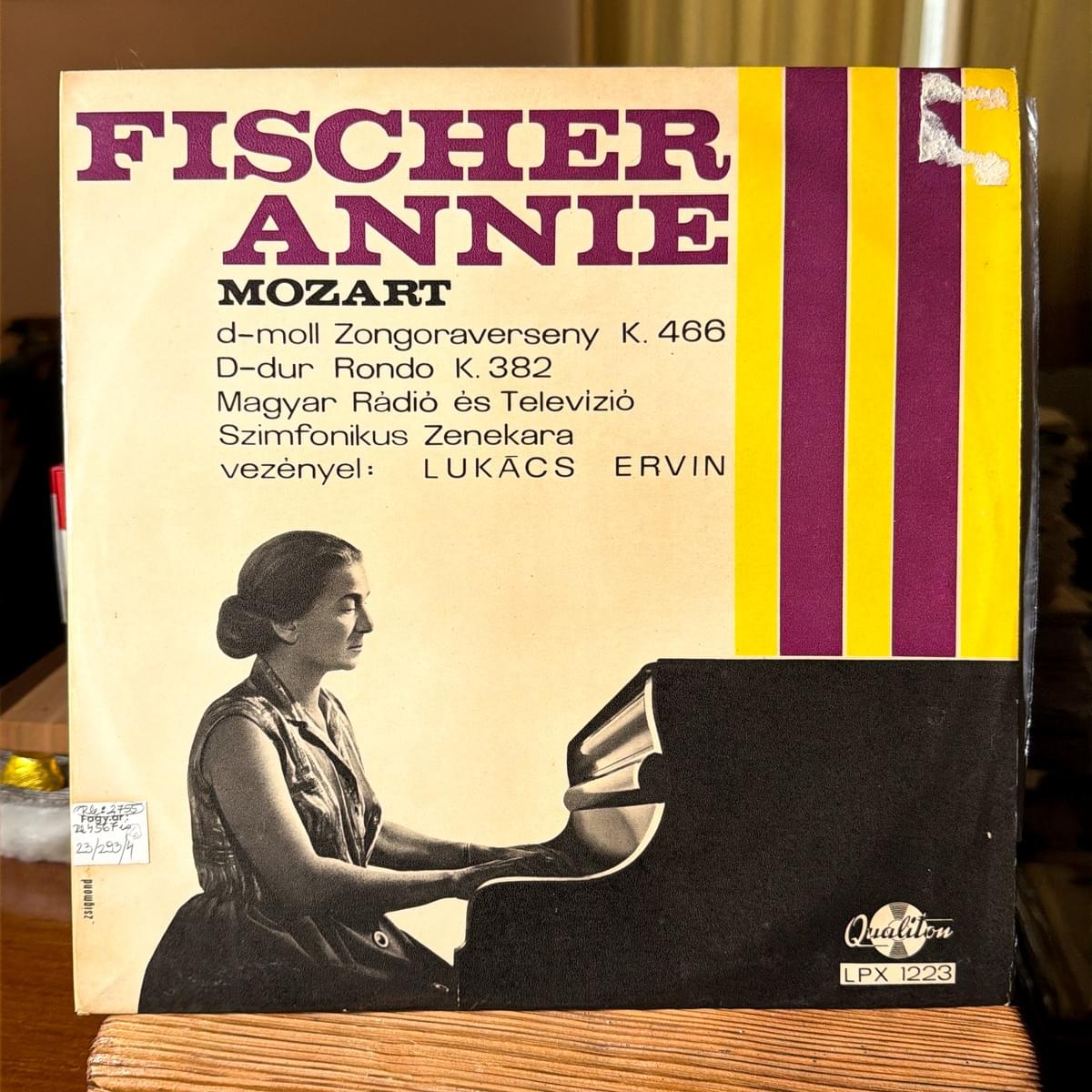
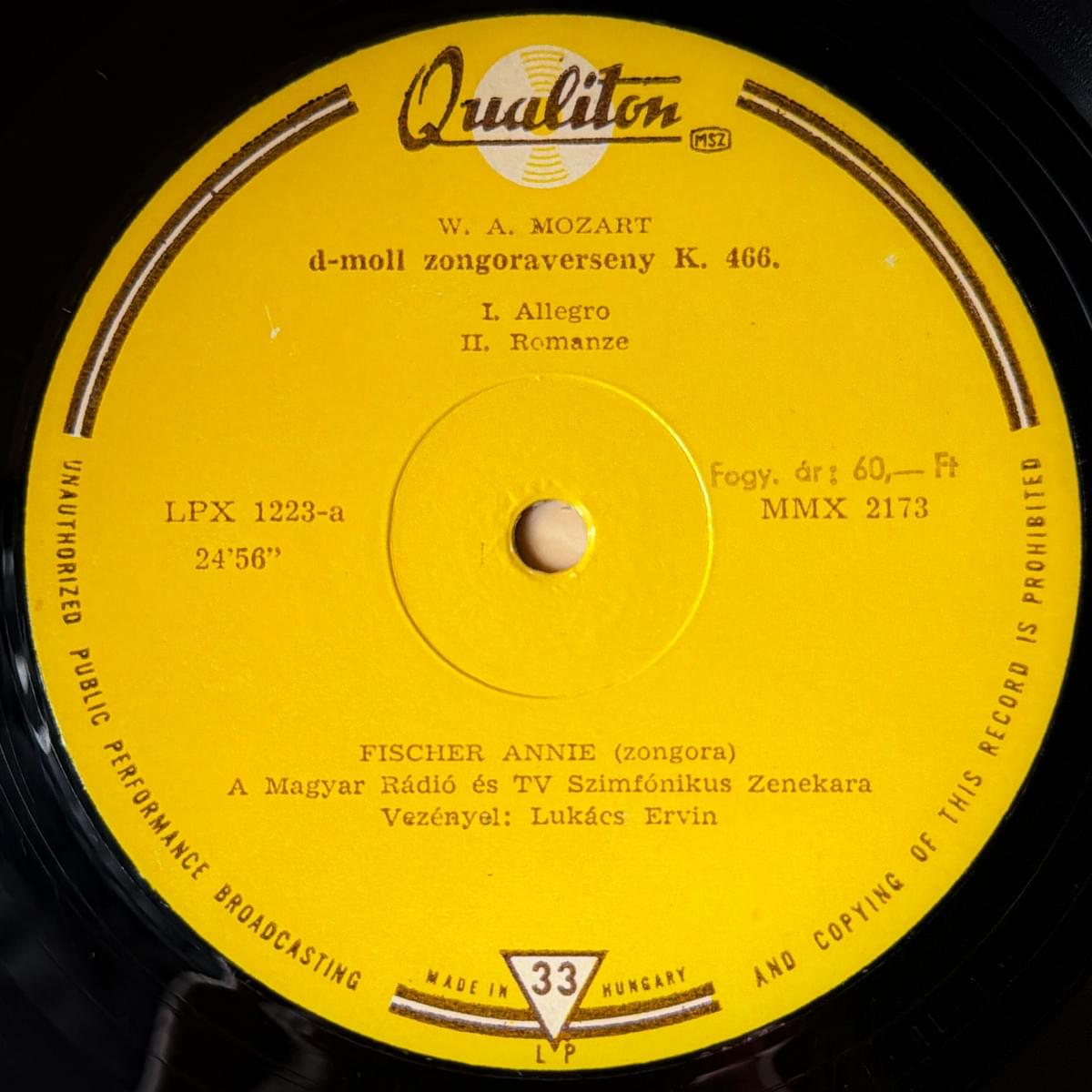
我們先來看這張編號為LPX 1223的唱片。這是一張由匈牙利國營唱片Qualiton發行的莫札特。由指揮家埃爾文·盧卡奇(Ervin Lukács)率領匈牙利廣播電視交響樂團與費雪合作。
關於這張錄音,有個非常瘋狂的市場軼事。到了1993、1994年間,Qualiton改制後的廠牌Hungaroton曾將這張專輯數位化發行成CD(編號 HCD31492)。沒想到因為發行量極稀少,這張首版CD後來在收藏市場上竟然一度被炒作到400美金的天價!
這價格是「太想擁有」稀缺性來證明價值所致。但我要告訴你,如果你真的想聽見安妮·費雪在琴鍵上那種「呼吸感」,原始的黑膠唱片可能才是更好的選擇。
當你聽這部《D小調鋼琴協奏曲 (K. 466)》時,你會在那種陰鬱的開端裡,聽到一種現代人最熟悉的「焦慮」與「衝突」。李希特推崇費雪的莫札特,是因為她的觸鍵能捕捉到那種既明亮又憂鬱的幽微情感。在費雪的手中,那種如歌般的旋律聽起來不像是在唱歌,更像是在跟你促膝長談。那種「詩意」,是黑膠溝槽裡最真實、最不造作的顫動。
穿過苦難,走向星辰:Qualiton LPX 1288
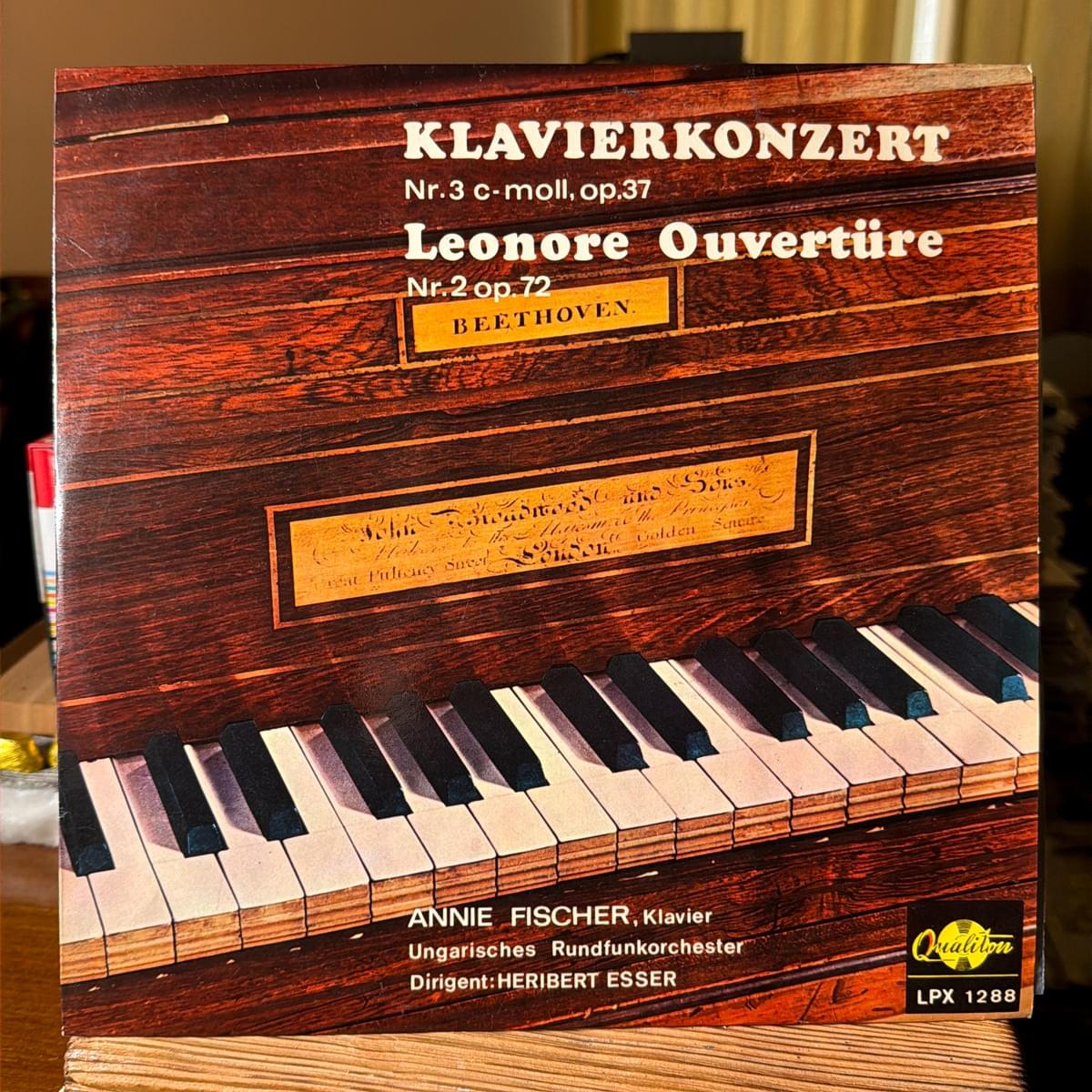
另一張我想推薦給你的,是編號LPX 1288的貝多芬《第三號鋼琴協奏曲》,由赫里伯特·埃塞爾(Heribert Esser)指揮。
提到與費雪的合作,就不能不提鐵血指揮大師克倫培勒(Otto Klemperer,1885-1973)。這位極其挑剔的巨匠,卻非常欣賞費雪在音樂中展現出的那種「英雄氣概」與「室內樂式的細膩平衡」。
在LPX 1288這張錄音中,那種「不甘於哀訴」的韌性,簡直就是安妮·費雪與貝多芬靈魂的重疊。貝多芬寫這首曲子時,正處於耳朵開始失靈的恐懼中。費雪的彈奏展現了一種少見的英雄力量,那不是外放的炫技,而是從內心深處自然流露出來的「誠實」。克倫培勒曾認為,費雪不需要刻意強調技術,音樂本身就在她的指尖自然流淌。在此時她就是貝多芬的偉大詮釋者。

為什麼我們現在還需要聽安妮·費雪?
安妮·費雪那種直到生命盡頭都不肯對不真實妥協的堅持,再聽聽看她那種「孩子般的樸素」。你會發現,原來偉大的藝術不需要無懈可擊的技巧,只需要一顆誠實的心。當你學會跟李希特一樣欣賞她音樂裡的那些「不完美」,你或許也能開始理解原來不完美才是真正的完美。
這就是「古殿」想帶來價值:透過聲音的歷史生命遺蹟,建構一個屬於你自己的、安靜的人文空間。
實體音樂:
實體音樂:
*******
【The Paleo-Hall Music Stories】 The Pianist's Pianist: She Doesn't Perform, She "Lives"
Sitting on the sofa at "Paleo-Hall," listening to the music of Annie Fischer (1914-1995) recorded in the 1960s by the Hungarian state-owned label Qualiton, a thought often crosses my mind: How is it that the greatest piano titans and critics—those known for their precision, cold logic, and even occasional arrogance—all hold her in such absolute reverence? This has made Annie Fischer a unique coordinate in the musical world: she is "the pianist's pianist."
Why do the Masters Love Her?
If you were to ask Martha Argerich (1941-), the "Piano Queen" known for her untamed spirit, whom she admires most, she would tell you without hesitation: "Of all the female pianists, my favorite is Annie Fischer." For Argerich, whose own playing is famous for its explosive vitality, the naturally burning energy in Fischer’s touch is the resonance of her own soul.
Then there is Maurizio Pollini (1942-2023), the Italian giant famed for his pinpoint accuracy and cool rationality. His appraisal of Fischer was more poetic. He described her playing as possessing "a childlike simplicity, immediacy, and wonder."
Think about it: in the world of professional performers, facing the drudgery of practice, the exhaustion of touring, and the crushing weight of fame every day—how difficult is it to maintain that "beginner's mind" and a sense of "wonder" toward music?
But Annie Fischer did it. She didn't perform; she "lived" the music.
Richter's Tears: The Ultimate Tribute to "Imperfection"
In Sviatoslav Richter: Notebooks and Conversations, compiled by Bruno Monsaingeon, Richter—who was notoriously demanding of his colleagues and often devastatingly sharp-tongued—showed a rare level of respect for Annie Fischer’s artistry. What he admired most was that Fischer didn't just play the music; she breathed within it.
Richter noticed that when Fischer performed live, she would occasionally make minor technical slips or hit wrong notes, but he believed this in no way diminished her greatness. He once sighed that her playing was filled with "human truth." Compared to those pianists who are technically flawless but lack a soul, he much preferred to listen to Fischer’s passionate, and even slightly "dangerous," artistic expression.
Surrender of the "Acid-Tongued" Critic
Beyond the piano masters, even the most fastidious professional critics—the ones often dubbed "acid-tongued"—laid down their arms before Annie Fischer.
Take the famous David Hurwitz, for example. Known for his biting remarks and provocative style, he didn't hold back in 2004 when reviewing Fischer’s Mozart recordings, awarding her a perfect 10/10 for artistic merit. A quote often cited on Wikipedia regarding her "technical power and spiritual depth" is actually a simplified summary by an editor. Hurwitz’s own words were much more vivid and specific.
Hurwitz used the term "characteristic intensity" to describe Fischer. He found that she wasn't just playing the piano; she was engaged in a "true conversation" with the orchestra. Particularly in the slow movements, her "immediate response" to everything around her was mesmerizing. He even praised how she never lost focus, even in the fastest or most complex passages, "always maintaining the melodic focus."
For Hurwitz, Fischer’s art wasn't about an abstract "depth," but rather those "heartfelt inflections." This "intensity" came from the fact that at that very moment, she was living in the music with complete honesty and transparency.
She Hated the Studio: Music is "Alive," Not a "Specimen"
I want to share a fascinating, and perhaps slightly stubborn, philosophy of Annie Fischer. She strongly disliked working in the recording studio, believing that any interpretation performed without an audience was "humanly restricted."
To her, music was not a specimen to be kept in a museum, but a living dialogue. She once said, "An interpretation is never 'finished'."
This leads to the most important story of her life: her complete set of Beethoven Piano Sonatas. This project began in 1977 and lasted for 15 years. As a self-critical perfectionist, she refined and re-recorded them endlessly in the studio. But the most shocking part is that even after 15 years, even though the recordings were completed...
Annie Fischer never agreed to publish them during her lifetime.
To her, the moment the red "Recording" light turned on, the music felt as if it were being shoved into a tin can. The anxiety of it "not being real enough" drove her to hide these treasures away. The set was finally released only after her death.
Shadows and Light in Mozart: Qualiton LPX 1223
Let’s look at the record numbered LPX 1223. This is a Mozart album released by the Hungarian state label Qualiton, featuring Fischer collaborating with conductor Ervin Lukács and the Hungarian Radio and Television Symphony Orchestra.
There is a wild market anecdote about this recording. In the early 90s, the successor label Hungaroton released this album on CD (catalog number HCD31492). Because the initial pressing was so small, this first-edition CD once reached a staggering price of $400 USD on the collector's market!
Such a price is the result of a desperate desire to "own" rarity as a status symbol. But I tell you, if you truly want to hear that "sense of breath" from Annie Fischer’s fingertips, the original vinyl record is likely the better choice.
When you listen to this Piano Concerto No. 20 in D Minor (K. 466), you will hear in its somber opening a sense of "anxiety" and "conflict" that is all too familiar to modern people. Richter admired Fischer's Mozart because her touch captured that delicate emotion—both bright and melancholic. In Fischer’s hands, the cantabile melodies don't sound like singing; they sound like a heart-to-heart conversation. That "poetry" is the most honest, unadorned vibration found within the grooves of the vinyl.
Through Hardship to the Stars: Qualiton LPX 1288
Another record I recommend is LPX 1288, Beethoven’s Piano Concerto No. 3, conducted by Heribert Esser.
When discussing collaborations with Fischer, one must mention the "Iron Commander" Otto Klemperer (1885-1973). This notoriously picky giant deeply admired the "heroic spirit" and "chamber music-like delicate balance" Fischer displayed.
In the LPX 1288 recording, that resilience—the refusal to merely "lament"—is a perfect overlap of Annie Fischer’s soul with Beethoven’s. Beethoven wrote this piece while facing the terror of his encroaching deafness. Fischer’s playing reveals a rare heroic power that isn't about outward virtuosity, but an "honesty" flowing naturally from within. Klemperer believed that Fischer didn't need to emphasize technique; the music simply flowed from her fingertips. In these moments, she was the ultimate interpreter of Beethoven.
Why Do We Still Need Annie Fischer Today?
Annie Fischer’s persistence in refusing to compromise on "truth" until the very end, and that "childlike simplicity" in her playing—these are the things we lack today. You will find that great art doesn't require flawless technique; it only requires an honest heart. When you learn, like Richter, to appreciate the "imperfections" in her music, you might begin to understand that imperfection is, in fact, the truest perfection.
This is the value we wish to bring at "Paleo-Hall": through the historical remains of sound, we help you build a quiet, humanistic space of your own.