
【古殿唱片音樂故事】等了將近八十年的兩首曲子,在東德的一座教堂裡第一次被錄下——布魯赫《小夜曲》與《追憶》的世界首錄音
古殿殿主
批評作曲家的唱片解說
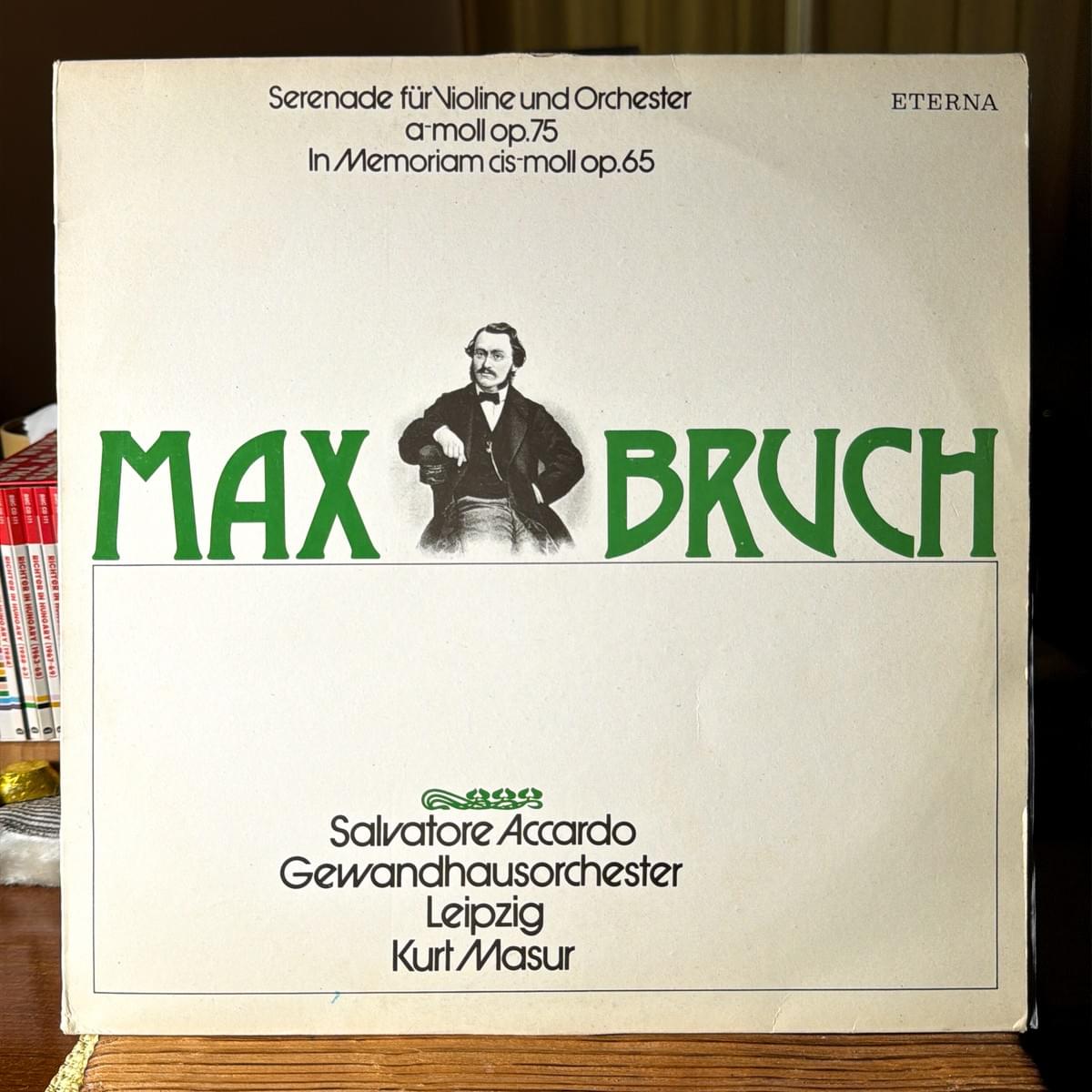
這張唱片的封底解說上,有一段很奇怪的話。
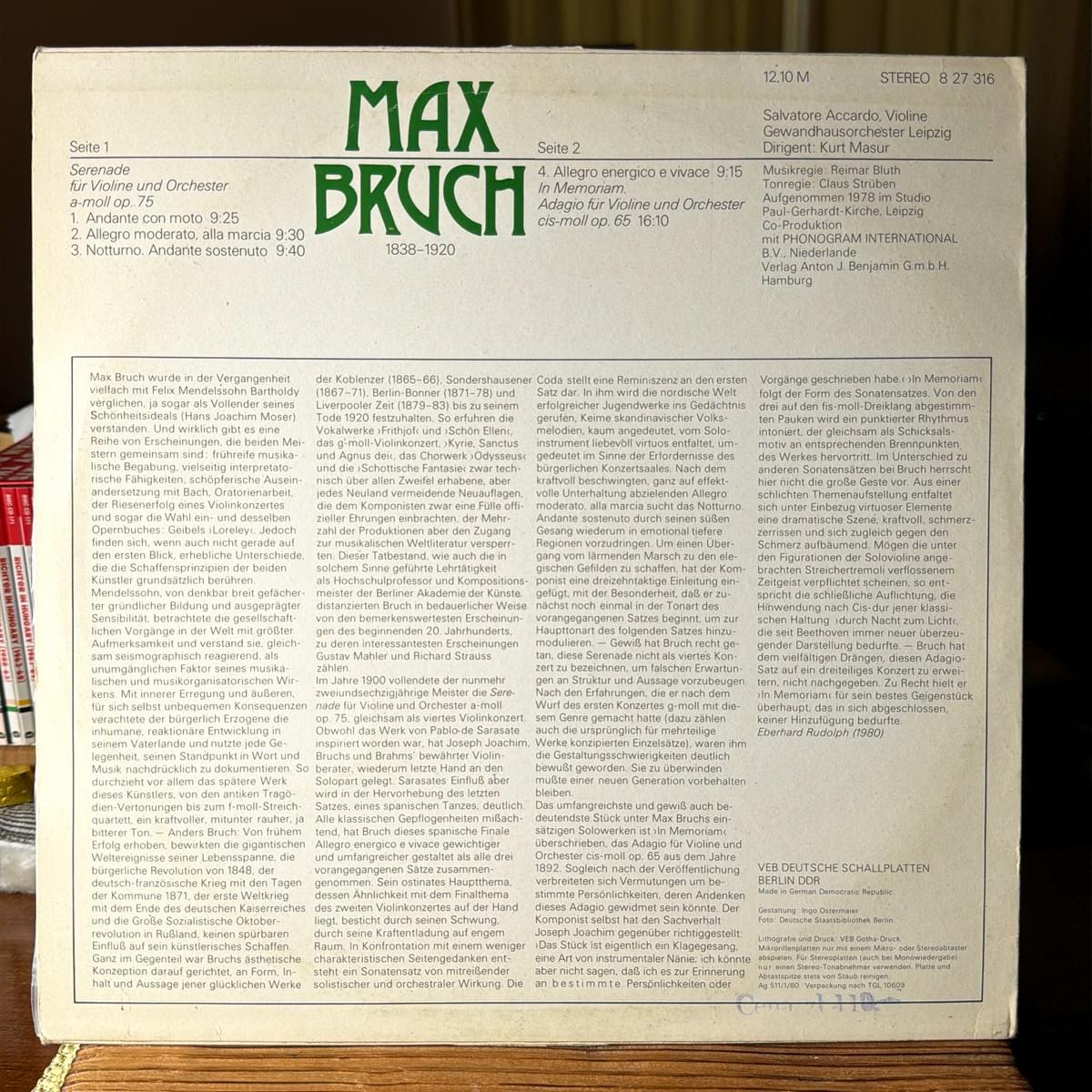
一般的唱片解說,總是盡力讚美作曲家。可是這張1980年在東德出版的唱片,介紹作曲家時,卻花了將近三分之一的篇幅數落他:一生經歷了1848年革命、巴黎公社、第一次世界大戰與「俄國偉大的十月社會主義革命」,這些天翻地覆的歷史巨變,卻「皆未曾對他的藝術創作產生絲毫可感知的影響」,因此他絕大多數的作品,被「徹底阻隔在世界音樂經典殿堂的大門之外」。
一張唱片,在封底的解說上批評作曲家。
更奇怪的是,唱片裡的兩首曲子,在這之前,世界上從來沒有人錄過音。
它們是馬克斯·布魯赫(Max Bruch,1838-1920)的《小夜曲》作品75與《追憶》作品65。樂譜出版了七、八十年,直到1978年,才第一次被錄成唱片。是由一位義大利小提琴家、一位東德指揮、一支德國最古老的樂團——在一座東德的教堂裡,與荷蘭的西方唱片公司合作的錄音。
這張唱片背後,藏著一個作曲家的執拗、一段冷戰時代的合作,還有一個問題:同一份錄音,東西兩邊各出了一版,哪一版才最接近真實?
只有「一首」協奏曲的作曲家?
提到布魯赫,幾乎所有人只想到一首曲子:G小調第一號小提琴協奏曲。
這首曲子太成功了,成功到吞掉了他的其他一切。布魯赫一生為小提琴與管弦樂團寫了九部作品,包括三首協奏曲、《蘇格蘭幻想曲》,以及這張唱片上的兩首。可是樂評人永遠拿它們跟G小調比,然後說「不如」。晚年的布魯赫,為此深感受傷與苦澀。
這張唱片的封底作者埃伯哈德·魯道夫(Eberhard Rudolph),用東德的共產唯物史觀解釋這件事。他先把布魯赫與孟德爾頌(Felix Mendelssohn Bartholdy,1809-1847)對照:孟德爾頌像地震儀一樣,敏銳回應時代的變遷;布魯赫卻始終緊抱著年輕時那些成功作品的形式,「一再規避任何開拓探索」,也因此與馬勒(Gustav Mahler,1860-1911)、理查·史特勞斯(Richard Strauss,1864-1949)這些新世紀的音樂新星拉開了距離。
但換一個角度看,這份「不變」,也可以是另一種東西:執拗、固執。
最好的證據,就是《追憶》。這首單樂章的柔板發表後,各方熱切催促他把它擴充成完整的三樂章協奏曲——那樣更好賣,也更像一部「大作品」。布魯赫始終不肯妥協。他認為《追憶》是自己一生最傑出的小提琴作品,結構已然自足圓滿,絕不容許任何添枝加葉。
一個被市場和評論逼著改變的人,選擇不改。
魯道夫在1980年看見的,是一位跟不上時代的保守作曲家;四十多年後的我們看見的,或許是一位作曲家對自己作品最深的信念。
兩首曲子的身世
《小夜曲》:被拋棄的「第四號協奏曲」
《小夜曲》A小調作品75,1899年在德國科隆寫成,1900年由柏林 Simrock 出版。封底說,這部六十二歲完成的作品,「本質上無異於他的第四號小提琴協奏曲」。
它原本是為西班牙小提琴家帕布羅·德·薩拉沙泰(Pablo de Sarasate,1844-1908)而寫的,末樂章那首西班牙舞曲,就是寫給他的。可是薩拉沙泰起初熱情,後來卻失去興趣,始終沒有公開演奏,兩人因此決裂。最後替獨奏聲部定稿的,是布魯赫與布拉姆斯(Johannes Brahms,1833-1897)共同倚重的小提琴顧問約瑟夫·姚阿幸(Joseph Joachim,1831-1907)。1901年5月,它才由一位比利時小提琴家在巴黎首演。
布魯赫在這首曲子裡打破了古典規範:西班牙風格的終樂章,比前三個樂章加起來還要厚重龐大。他沒有把它命名為「第四號協奏曲」——封底認為這是明智之舉,避免了外界對它的結構與內涵產生錯誤的期待。
《追憶》:一首不知悼念誰的輓歌
《追憶》升C小調作品65,寫於1892年底到1893年初,題獻給姚阿幸。作品一發表,外界就紛紛揣測它在悼念哪一位逝者。布魯赫在給姚阿幸的信裡澄清:
「這首樂曲本質上是一首哀歌,一種器樂化的輓歌(Nänie);但我不能說這是為了紀念任何特定的人物或歷史事件而創作的。」
全曲一開始,定音鼓在升F小調三和弦的三個音上,敲出帶附點的沉重節奏,像命運的召喚,在全曲的關鍵處一再湧現;最後,音樂迎向升C大調——封底說,那是自貝多芬以來「穿透黑夜走向光明」的德奧古典情操。
一首沒有特定悼念對象的輓歌。或許它悼念的,是每一個聽它的人心裡的那個人。
1978年,萊比錫的一座教堂
1970年代,西方的 Philips 唱片公司與東德的國營唱片公司 VEB Deutsche Schallplatten 之間,有一種特別的合作:西方派出明星獨奏家、負責國際發行;東德提供樂團、錄音場地與錄音團隊。錄好的音樂,兩邊各自擁有版權,各自出版。
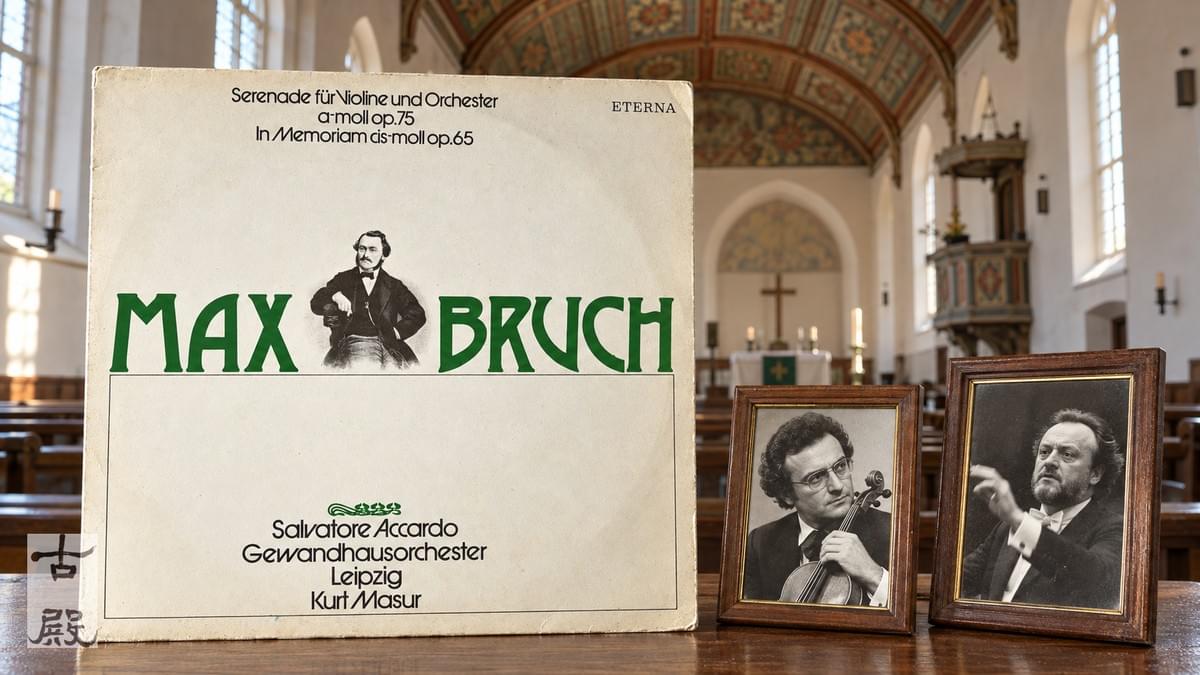
1977到1978年,Philips 把義大利小提琴家薩爾瓦多·阿卡多(Salvatore Accardo,1941-)派到萊比錫,與庫特·馬索(Kurt Masur,1927-2015)指揮的萊比錫布商大廈管弦樂團,錄下布魯赫為小提琴與管弦樂團所寫的全部作品。
這個組合本身就很有意思。
阿卡多1958年十七歲就奪得熱那亞帕格尼尼大賽首獎,1970年代初又為 DG 錄下史上第一套帕格尼尼(Niccolò Paganini,1782-1840)六首小提琴協奏曲全集,是公認的帕格尼尼專家。Philips 的萊比錫錄音,是他從炫技專家走向德奧浪漫派主流曲目的起點——而他接下的第一個大計畫,偏偏是冷門的布魯赫全集。
布商大廈管弦樂團創立於1743年,孟德爾頌曾是它的樂長。封底一開頭就把布魯赫與孟德爾頌相提並論,在這支樂團的錄音裡讀到這句話,格外耐人尋味。
但1978年的布商大廈管弦樂團,沒有自己的家。舊音樂廳毀於二戰,新廳要到1981年才落成。這次錄音,是在萊比錫的保羅·格哈特教堂錄音室進行的——那是東德國營唱片公司長年使用的錄音場地。這張唱片裡的空間感,是一座教堂的空間感。
錄音團隊全是東德人:音樂監製萊馬爾·布盧特(Reimar Bluth),錄音工程克勞斯·斯特魯本(Claus Strüben)。
1978年,Philips 以四張 LP 的套裝(6768 065,荷蘭壓製)發行了這套全集。套裝的曲目表上,有幾首作品旁邊印著一個小星號,註明「Erste Schallplattenaufnahme」——首次唱片錄音。《小夜曲》與《追憶》,都在其中。
樂譜出版七、八十年後,這兩首曲子終於有了第一個錄音。
同一捲錄音,兩個世界
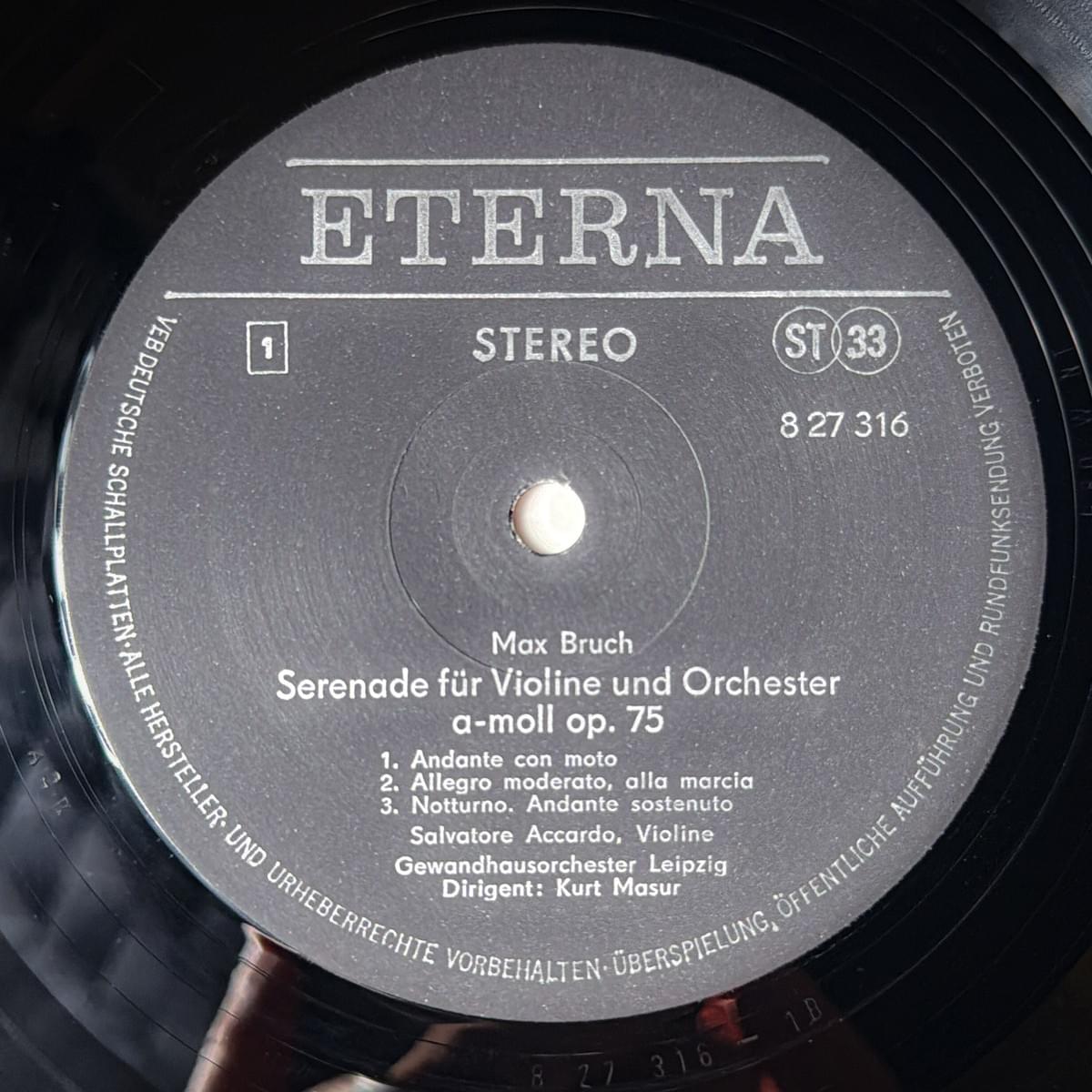
Philips 的單張版(9500 590)在1978到1979年間,陸續在德、奧、瑞、荷蘭、法國、紐西蘭等地發行,這是這份錄音的世界首發。東德則在1980年,以 ETERNA 8 27 316 出版了自己的版本。
聲音來自同一場錄音,兩張唱片卻幾乎是兩個不同的物件。
最後:
放上這張唱片,請先聽B面的《追憶》。
阿卡多與馬索演奏了16分10秒。我查到的兩個後來的錄音,分別是13分40秒與14分43秒。慢了將近兩分鐘,不是技術上的選擇,而是態度:他們把這首「輓歌」當成真正的輓歌來拉,讓開頭那三聲定音鼓有時間沉下去,壓在胸口。
那是1978年萊比錫一座教堂裡的空氣,是一支還沒有家的樂團的聲音,是一位作曲家拒絕修改的作品,第一次被聽見。
布魯赫不肯為了市場擴充《追憶》;東德的唱片公司,也沒有為了市場修飾這份錄音。兩種「不改」,隔了將近九十年,在同一張唱片上相遇。
******
【Gudian Music Stories】Waiting Nearly Eighty Years for Their First Grooves: Max Bruch’s Serenade and In Memoriam Recorded in an East German Church
Liner Notes That Scold the Composer
On the back cover of this LP sleeve sits a peculiar commentary.
Conventional liner notes routinely shower the composer with praise. Yet this sleeve—printed in East Germany in 1980—devotes nearly a third of its space to rebuking the man: he lived through the Revolutions of 1848, the Paris Commune, the First World War, and the "Great October Socialist Revolution in Russia," yet these tectonic historical upheavals "failed to exert the slightest discernible influence on his artistic output." Consequently, the author asserts, the vast majority of his catalog was "firmly barred from entering the sacred pantheon of world musical classics."
A commercial phonograph record openly chastising its own composer on the rear jacket.
Stranger still: prior to this disc, neither of the two featured works had ever been recorded in the history of the gramophone.
The pieces are Max Bruch’s (1838–1920) Serenade, Op. 75, and In Memoriam, Op. 65. The printed scores had circulated for seventy to eighty years, yet had to wait until 1978 to be committed to vinyl. The performance brought together an Italian virtuoso, an East German conductor, and Germany’s oldest civic orchestra—recording inside an East German church in collaboration with a Western Dutch label.
Concealed within this release is a composer’s stubborn pride, a Cold War cultural partnership, and an intriguing question: when both East and West pressed their own editions from the same master tape, which one brought us closer to the truth?
A Composer Defined by a "Single" Concerto
Mention Max Bruch, and almost everyone thinks of one piece: the Violin Concerto No. 1 in G minor, Op. 26.
Its runaway success was so complete that it eclipsed everything else he wrote. Over his lifetime, Bruch composed nine concertante works for violin and orchestra, including three full concertos, the Scottish Fantasy, and the two pieces gathered on this disc. Yet critics invariably measured them against the G minor concerto, declaring them inferior. In his twilight years, Bruch harbored deep bitterness over that reception.
Eberhard Rudolph, author of the East German liner notes, interpreted this disparity through a Marxist materialist lens. He contrasted Bruch with Felix Mendelssohn (1809–1847): Mendelssohn acted like a seismograph, registering the societal shifts of his era, whereas Bruch clung tenaciously to the forms of his youthful triumphs, "continually evading exploratory breakthroughs," distancing himself from turn-of-the-century modernists like Gustav Mahler (1860–1911) and Richard Strauss (1864–1949).
Looked at another way, this refusal to shift can be seen as something else: steadfast conviction.
The clearest proof rests in In Memoriam. Following the premiere of this single-movement Adagio, publishers and colleagues urged Bruch to expand it into a conventional three-movement concerto—which would be far easier to sell as a "major work." Bruch refused to budge. He considered In Memoriam among his finest creations for the violin, its form self-contained and complete, refusing to append decorative movements.
Faced with pressure from the market and the critics to conform, he chose to leave it untouched.
Where Rudolph in 1980 saw an outdated, conservative composer, we looking back more than four decades later might see an artist standing behind his own artistic convictions.
The Origins of the Two Works
The Serenade: The Abandoned "Fourth Concerto"
The Serenade in A minor, Op. 75, was completed in Cologne in 1899 and published by Simrock in Berlin in 1900. The rear sleeve notes that this work, finished at age sixty-two, "is essentially indistinguishable from a Fourth Violin Concerto."
Bruch originally tailored it for Spanish virtuoso Pablo de Sarasate (1844–1908); the fiery Spanish dance of the finale was written with his fingers in mind. Yet while Sarasate was enthusiastic at first, his interest cooled, and he never performed it publicly, leading to a bitter break between the two men. The final solo part was edited by Joseph Joachim (1831–1907), the artistic adviser shared by both Bruch and Johannes Brahms (1833–1897). The piece was finally premiered in Paris in May 1901 by a Belgian violinist.
Bruch departed from classical proportions in this score: the Spanish-inflected finale is heavier and more expansive than the preceding three movements combined. He chose not to label it a "concerto"—a wise decision, the sleeve notes observe, which prevented listeners from projecting conventional structural expectations onto the piece.
In Memoriam: An Elegy for an Unknown Mourner
In Memoriam in C-sharp minor, Op. 65, was composed between late 1892 and early 1893, dedicated to Joachim. Following its publication, rumors circulated regarding whom the piece was mourning. Bruch clarified the matter in a letter to Joachim:
"The piece is essentially a lament, an instrumental elegy (Nänie); but I cannot say that it was written in memory of any specific individual or historical event."
The work opens with the timpani tapping a heavy, dotted motif across the triad of F-sharp minor—sounding like a summons of fate that recurs at critical harmonic junctures. Eventually, the music resolves into C-sharp major, embodying the Austro-German tradition tracing back to Beethoven: journeying per aspera ad astra—through darkness into light.
An elegy dedicated to no specific soul. Perhaps it was meant to mourn whoever each listener holds in their heart.
1978: A Church in Leipzig
During the 1970s, a distinct working arrangement developed between the Western label Philips and East Germany’s state-owned recording enterprise, VEB Deutsche Schallplatten: the West supplied international star soloists and managed global distribution; the East provided the orchestra, recording venue, and engineering staff. Once master tapes were completed, each side retained rights to press and release the music within its respective sphere.
Between 1977 and 1978, Philips dispatched Italian violinist Salvatore Accardo (b. 1941) to Leipzig to record the complete works for violin and orchestra by Max Bruch with the Leipzig Gewandhaus Orchestra under Kurt Masur (1927–2015).
The personnel formed an intriguing match.
In 1958, at age seventeen, Accardo won the Paganini Competition in Genoa. In the early 1970s, he set down the world's first complete studio cycle of Niccolò Paganini’s (1782–1840) six violin concertos for Deutsche Grammophon, cementing his reputation as an undisputed Paganini specialist. These Leipzig sessions for Philips marked his deliberate transition from virtuoso showpieces to the core Austro-German Romantic repertoire—and his first major undertaking was this complete Bruch cycle.
The Gewandhaus Orchestra was founded in 1743, with Felix Mendelssohn once serving as its Kapellmeister. Reading the sleeve notes compare Bruch to Mendelssohn on a release featuring this particular orchestra carries an added layer of historical resonance.
Yet in 1978, the Gewandhaus Orchestra lacked a permanent concert home. Their historic hall had been destroyed during the Second World War, and the new hall would not open until 1981. The sessions took place inside the Paul-Gerhardt-Kirche studio in Leipzig—a church venue used for decades by East Germany’s state recording company. The acoustic volume captured in these grooves is that of an authentic church interior.
The engineering team was entirely East German: recording producer Reimar Bluth, balanced by sound engineer Claus Strüben.
In 1978, Philips issued the complete traversal as a four-LP boxed set (catalog number 6768 065, pressed in the Netherlands). On the set's tracklist, several selections were marked with a small asterisk and the note: "Erste Schallplattenaufnahme"—First Commercial Recording. Both the Serenade and In Memoriam were among them.
Seven to eight decades after the ink had dried on the scores, both works finally found their way onto disc.
One Master Tape, Two Worlds
Philips issued the single-LP edition (catalog number 9500 590) between 1978 and 1979 across West Germany, Austria, Switzerland, the Netherlands, France, and New Zealand, serving as the international premiere release. Meanwhile, in 1980, East Germany pressed its domestic issue under ETERNA 8 27 316.
The performances stem from the identical master tape, yet the physical artifacts belong to two distinct worlds.
Closing Thoughts
When you set this record on the platter, begin with In Memoriam on Side B.
Accardo and Masur pace the movement at 16 minutes and 10 seconds. Two subsequent recordings by other artists clock in at 13 minutes 40 seconds and 14 minutes 43 seconds. That extra breathing room—taking nearly two minutes longer—was not a technical lapse, but an interpretive choice: they treat this "instrumental elegy" as an authentic lament, giving those three opening timpani strikes room to resonate through the hall.
That is the air of a Leipzig church in 1978; that is the sound of an orchestra without a permanent home; that is an uncompromised score being heard on disc for the very first time.
Bruch refused to expand In Memoriam to satisfy commercial tastes; the East German label refused to sanitize their commentary to appease consumer marketing. Two acts of quiet obstinacy, meeting across nearly ninety years in the grooves of a single record.