
【古殿唱片音樂故事】被死神忌妒的琴音?一場以生命為祭品的永恆燃燒——聽見法國傳奇女小提琴家吉娜特.努娃 (Ginette Neveu) 的「光彩孤寂」
古殿殿主
前言:巴黎公墓的百年回響
2019 年 8 月 11 日,巴黎拉雪茲神父公墓。一群人圍繞在一座墓前,有人拉著小提琴,有人低頭拭淚。這一天,是法國小提琴家吉娜特努娃 (Ginette Neveu,1919-1949)的一百歲冥誕。
她的姪子皮埃爾(Pierre Neveu)在墓前說了一段話,讓在場所有人動容:「親愛的吉娜特,對我來說,妳從未停止重生……」
為什麼一個過世了七十年的小提琴家,至今仍讓人如此念念不忘? 因為在古典音樂的歷史長河裡,有一種極為罕見的時刻,我們稱之為:
「音樂藝術之神降臨」。
那不是形容詞,那是動詞。
那是當一個演奏家,不再是為了名聲、財富,甚至不是為了取悅台下的觀眾而拉琴;在那一刻,她把自己當成了祭司,登上了神聖的祭壇。那種聲音,聽過一次,你的靈魂就會被燙出一個印記。
今天要介紹的主角,就是這樣一位「以生命獻祭」的女神——吉娜特努娃(Ginette Neveu, 1919-1949)。她的一生只有短短三十年,像一顆流星劃破二十世紀的夜空,亮到連死神都嫉妒,最後不得不親手將她收回。

一、當音樂不再是表演,而是「獻身」
殿主常跟來到「古殿」的朋友說:
「完美是無聊的,真實才有力量。」
努娃的音樂,就是這種「真實」的極致。權威提琴雜誌《The Strad》曾形容她的音色是「充滿陽剛氣概」(masculine)、「充滿肌肉感」(muscular)。這在當時的女性演奏家身上是極為罕見的。她不走優雅柔美的路線,她要的是力量,是燃燒。
她曾經如預言般寫下這樣一段話,我看的時候背脊發涼:
「真正的偉大很可能,就是某種充滿光彩的孤寂。人們有時會因為恐懼死亡而迷失方向,可是卻忘記,死亡本身有時往往就是最崇高的,而我們應該把死亡視為是對於我們一生所為所行的最大報償。」
你聽聽看,這是一個年輕女孩該說的話嗎?這分明是一個看透了生命本質的老靈魂。
對於努娃來說,拉小提琴不是才藝表演,而是一種「修行」。你看過她拉琴的照片嗎?她幾乎不化妝,眼神犀利得像老鷹,拉琴時身體前傾,像個戰士,又像是站在祭壇上的祭司。
她不討好你,她要的是征服你,或者說,帶著你一起燃燒。
這正是我們現代人最缺少的東西——「專注的生命力」。
我們每天焦慮,是因為我們把能量散得太開,想抓的東西太多。但努娃教我們的是:
把所有的熱情聚在一個點上,哪怕燃燒殆盡,也要發出最亮的光。
二、15歲的逆襲,擊敗蘇聯巨人的少女
把時間拉回1935年,波蘭華沙。
那一年舉辦了第一屆維尼奧福斯基國際小提琴大賽。這可不是普通的比賽,這是當時全世界小提琴界有史以來首次的「華山論劍」。
當時的奪冠大熱門是誰?是來自蘇聯的傳奇、後來被稱為「小提琴沙皇」的大衛.歐伊斯特拉夫(David Oistrakh, 1908-1974)。那年他27歲,正值巔峰,琴藝完美無瑕,已當上莫斯科音樂學院教授,背後還有強大的蘇聯國家機器支持。基本上,大家都覺得金牌已經刻上了他的名字。
結果,殺出了一個程咬金。一個來自法國,年僅15歲 (未滿16歲) 的小女孩,吉娜特努娃。
努娃並非橫空出世,她出身音樂世家,從小就是個「瘋子」。據說她7歲時,媽媽發現她站在家裡的餐桌上練琴,一遍又一遍重複困難的樂段。媽媽問她在幹嘛,她說:「我假裝我在音樂廳舞台上,我要克服怯場。」
這種人,註定不會平凡。她在巴黎音樂院師從名師,12歲就在維也納大賽初試啼聲。而1935年這場大賽,是她命中注定的戰場。
您可以想像那個畫面嗎?一個未成年的小女生,站在舞台上,面對著技術完美的大衛王。但當她琴弓一拉,那首拉威爾的《茨岡 (吉普賽舞曲)》(Tzigane)瞬間點燃了整個音樂廳。那不是小女孩在拉琴,那是神明附體。
最後,15歲的努娃擊敗了來自全世界各地最頂尖的55位高手,甚至還擊敗了27歲的歐伊斯特拉夫,拿下了首獎。根據資料,她甚至大勝第二名的大歐26分。
連大歐都輸得心服口服。大衛.歐伊斯特拉夫事後寫信給太太說:「對於第二名我已經很滿意了……努娃小姐擁有天神般的琴藝……如果不給她第一名,那是不公平的。」
誰叫我遇到的是「天神」呢!
三、1949年,被切斷的樂章與消失的名琴
然而,天才往往不長壽。或許是因為他們燃燒得太快。
1949年10月27日,這是古典音樂史上最黑暗的日子之一。努娃剛滿30歲,正處於藝術生涯的最頂峰。她帶著鋼琴家哥哥讓(Jean Neveu,1918-1949),登上了法國航空飛往紐約的班機。這是她第三次美國巡演,那裡的觀眾正如痴如醉地等著她。
飛機在葡萄牙亞速群島附近撞上了山壁。機上48人全數罹難。
這個名單裡,還有當時的法國世界拳王馬賽爾賽爾當(Marcel Cerdan, 1916-1949),他正趕去紐約見他的愛人——法國香頌女王琵雅芙(Édith Piaf, 1915-1963)。一場空難,同時粉碎了音樂界與體育界的兩顆巨星。
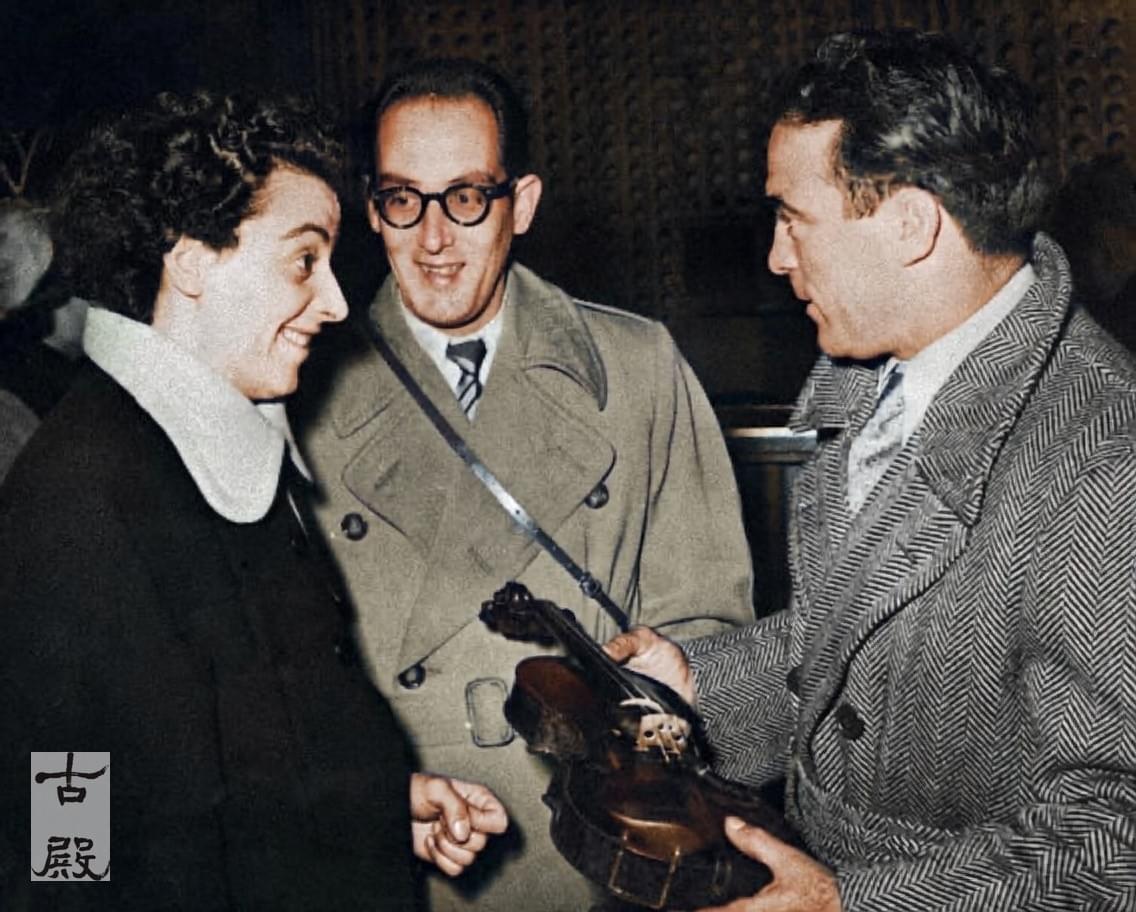
登機前努娃兄妹跟拳王的最後合影
Neveu的空難似乎有很多不可思議的預言。她生前時常提到如何面對死亡。在空難發生前八天,她跟哥哥在巴黎舉辦了一場音樂會。根據她的姪子皮埃爾回憶,這場音樂會被他們自己戲稱為:
「告別音樂會」(Concert d'adieu)。
寫到這裡真令人起雞皮疙瘩:通常巡演前的音樂會叫「行前音樂會」或「啟程音樂會」,用「告別」大多是為了暫別舞台或引退。但她在去美國前——那是戰後多麼充滿希望的旅程啊——他們卻用了「告別」這個字眼,彷彿靈魂深處已經預知了什麼。
努娃的姪子皮埃爾在2019年的「努娃誕生100週年追思會」上,顫抖著回憶起那一晚的場景:
「那一幕彷彿就在今天——當時我九歲半——在音樂會結束時,我衝上舞台撲進妳的懷裡,那是多麼巨大的快樂……」
那個9歲的孩子當時以為那是慶祝的擁抱,後來才明白,那是訣別的擁抱。這不只是歷史,這是關於「人」最深的痛與愛。
除了人的悲劇,還有一個關於「琴」的故事,特別讓人心碎,也特別發人深省。
努娃當時隨身攜帶的,是她在1935年為了參加比賽買下的戰友——一把 1730年製的 Omobono Stradivari(歐莫波諾・史特拉底瓦里)。
這把琴非常特別。製琴師 Omobono 是偉大的安東尼奧・史特拉底瓦里的兒子,但他不像父親那樣追求外觀的完美精緻。這把琴外觀粗獷、強壯,甚至有點「醜」,不修邊幅。但它卻擁有史特拉底瓦里家族標誌性的濃郁音色,那種野性與力量,簡直就是為了努娃而生的。
關於這把琴的結局,有三個版本的傳說:
守護版:搜救人員發現努娃遺體時,她的雙手還緊緊抱著琴盒,至死都在守護音樂。
現實版:來自當時賣琴給她的琴商 Vatelot。空難後,官員帶回了空的琴盒。官員說,他們在當地看到有村民拿著一把「舊提琴」,但因為看起來「又舊又破」,拉出來的聲音也不好聽,所以他們判定那是垃圾,就沒有帶回來。
神話版:根據《The Strad》記載,甚至有傳說指出,「後來有人在亞速群島當地,聽到一位民間小提琴手正在演奏一把非凡的樂器……」這簡直像是武俠小說的情節,彷彿琴的靈魂拒絕死去。
但無論哪個版本,這把價值連城的名琴,最終都消失在歷史中。
這不正是我們這個時代的縮影嗎? 我們太習慣看精美的包裝、看亮麗的數據,卻往往把真正有靈魂、但外表樸拙的東西(像那把「又舊又破」的名琴),當作垃圾丟掉。努娃的琴是這樣,有時候,我們對待老錄音、對待生活,不也是這樣嗎?
四、來自漢堡的奇蹟——1948年布拉姆斯協奏曲
努娃留下的錄音不多,因為她過世得太早,那還是單聲道蟲膠唱片的年代。但在「古殿」,我們最珍視的,是她去世前留下的幾份**「現場錄音」**。
為什麼要聽現場?因為現場是「活」出來的。在錄音室裡,你可以重來一百次;但在舞台上,你只有一次機會。那種走鋼索般的張力,那種與樂團、觀眾共同呼吸的氣場,是真正的藝術精華。
我特別想推薦給大家這份神蹟般的錄音:
1948年5月3日,德國漢堡,努娃演奏布拉姆斯小提琴協奏曲。現場實況錄音。
當時二戰剛結束不久,漢堡滿目瘡痍,人們的心靈是破碎的。這時候,一位法國女小提琴家來了。
指揮:漢斯·施密特-伊瑟斯泰特 (Hans Schmidt-Isserstedt, 1900-1973)
- 樂團:北德廣播交響樂團 (Sinfonieorchester des Norddeutschen Rundfunks)
- 音樂一開始,你就能聽到不同於現代錄音的「粗糙感」。那是歷史的雜訊,是現場空氣氛圍的灰塵。但我拜託你,不要因為這些雜訊就切歌。——試著穿透那些雜訊,去抓裡面的生命肉體感。
努娃的布拉姆斯,不像一般男性演奏家那樣四平八穩。她的小提琴有一種「韌性」,像是在廢墟中長出的野花,又像是燒得通紅的鐵條。
當年的漢堡報紙激動地寫道:「她帶來了一場完美無瑕的演出……那發自內心的長時間喝采是實至名歸的。」在這個晚上,法國人和德國人沒有仇恨,只有被音樂洗滌過的靈魂。
五、絕響——1949年最後的貝多芬與茨岡
如果說1948年的布拉姆斯是高峰,那1949年的這兩份錄音,就是她留給世界的遺書。
一份是貝多芬小提琴協奏曲(1949年9月25日現場實況錄音)。
指揮:漢斯·羅斯鮑德 (Hans Rosbaud, 1896-1962)
- 樂團:西南德廣播交響樂團 (SWF Symphony Orchestra)
- 距離她空難過世僅僅一個月。這首曲子被稱為王者,需要崇高、純淨的心境。在這份錄音裡,努娃展現了驚人的「神聖」特質。第一樂章她乘風破浪,颯爽英姿;到了第二樂章,聲音變得好輕、好細,充滿了「光澤」。她運用極度細膩的最弱音,彷彿身心都隱藏到了音樂背後。那是一種祈禱,一種對未知未來的凝視。
另一份則是拉威爾的《茨岡 (吉普賽舞曲)》(1949年1月現場實況錄音)。
指揮:查爾斯·孟許 (Charles Munch, 1891-1968)
- 樂團:愛樂交響樂團 (Philharmonic-Symphony Orchestra)
- 如果貝多芬是「聖女」,那茨岡裡的努娃就是「烈女」。那是濃郁的官能美,琴弦在叫,心靈也在叫。日本樂評家宇野功芳盛讚這是「史上最偉大的茨岡」,因為她拉出了吉普賽人那種流浪、熾熱、不被拘束的靈魂。
這兩份錄音放在一起聽,你會非常感慨。一個月後,這雙手就停止了演奏,那把被誤認為廢柴的名琴也化為了烏有。但幸好,聲音被留下來了。
結語
各位朋友,努娃的音樂告訴我們一件事:生命不在於長短,而在於濃度。
她用30年的時間,燃燒出了別人100年都發不出的光。
她的音樂不是用來放鬆的背景音,它是一帖藥,一帖讓你重新感覺到「我還活著、我還有熱情」的猛藥。
下次,當你來到古殿時,試著閉上眼睛。想像那個不化妝、眼神銳利的法國女生,正站在1949年的舞台上。她深吸一口氣,弓弦觸碰琴弦的那一剎那——
那是音樂之神降臨的時刻。
【古殿私房唱片指南:關於黑膠版本】
一、漢堡奇蹟:布拉姆斯小提琴協奏曲 (1948)
這份1948年5月3日的漢堡現場錄音,是黑膠迷心中的聖杯。它從未正式發行,直到80年代才重見天日。針對市面上幾個重要的轉錄版本,古殿有以下的聆聽建議:
1.法國 STIL (1981)
特質:粗獷生猛、現場原味
這是這份錄音最早問世的黑膠版本。法國 STIL 的轉錄風格非常直接,聲音非常**「粗獷」**、生猛。聽這張,你彷彿能直接觸碰到努娃琴弓與琴弦摩擦的火花,是最接近「現場原味」的選擇。
2.西德 ACANTA (1982)
特質:忠實還原、發燒名盤
隔年發行的第二份出版。這張製作非常**「忠實」**,德系的轉錄非常忠實,厚度與動態,平衡度極佳,是發燒友公認最標準、也爭相收藏的名盤。
3.日本 PHILIPS 特殊企劃 (1982)
特質:細膩光澤、超級黑膠
屬於「SUPER VINYL PHILIPS AUDIOPHILE COLLECTOR’S」系列。這個版本以**「最高音質」為號召,使用特殊的 Super Vinyl 壓製,聲音「細膩度」**極高。它呈現出與法國版(粗獷)和西德版(忠實)截然不同的美學,讓你聽到更多努娃在弱音處理上那些令人屏息的光澤與細節。
4.Tahra / King International (2016 日本發行)
特質:掛名行銷、味道盡失(殿主親身實證地雷)
編號 TALTLP-003/4 (2LP SET)。這是掛上法國著名歷史錄音廠牌 Tahra,並由日本轉錄,King International 發行的雙黑膠版本。雖是晚近發行,但在古殿的聽感中,其聲音最為「平實平庸」,甚至修飾到「味道盡失」。這是一個警示:有時候現代技術的過度介入,反而會殺死了歷史錄音中那種最珍貴的野性與生命力。
二、天鵝之歌:貝多芬小提琴協奏曲 (1949)
這是努娃離世前一個月的最後錄音,市面上有三個關鍵版本,分別代表了三種截然不同的聆聽境界:
1.歷史的見證:日本 THE BRUNO WALTER SOCIETY (1983)
編號: OS-7118-BS (GINETTE NEVEU MEMORIAL 1983)
點評: 世界首次黑膠發行版。這是著名的「努娃紀念盤」。日本樂評家宇野功芳正是聽了這張唱片,才寫下了那句感嘆:「如果是在現場聽,想必更是……」。它帶有80年代日本轉錄特有的類比味,是文獻派的首選。這張同時還收入了:拉威爾的《茨岡(吉普賽舞曲)》(1949年1月錄音)。
2.夢幻的極品:美國 GREEN HILL (1990 限定盤)
點評: 這是黑膠收藏圈的「獨角獸」。據傳 Green Hill 取得了保存極佳的原始廣播母帶,並堅持無動態壓縮、無濾波去噪,直接刻片。據說全球僅壓製300張。它抹去了時光的隔閡,聲音之鮮活,彷彿努娃就在你面前,用生命拉奏出最後的音符。
3.現代的警示:Tahra / King International (2016 日本發行)
編號: TALTLP-003/4 (2LP SET)
點評: 雖然是掛上名廠 Tahra、日本發行的重量盤,但在聽感上卻最為**「平實平庸」**。這是一個警示:有時候現代技術的過度介入,反而會殺死了歷史錄音中那種最珍貴的野性。
實體音樂:
實體音樂:
*******
[Gu Dian Vinyl Music Story] A Sound Envied by Death? An Eternal Burning as a Sacrifice of Life—Hearing the "Radiant Solitude" of French Legend Ginette Neveu
Prologue: Echoes from Père Lachaise
August 11, 2019, Père Lachaise Cemetery, Paris. A group of people gathered around a grave; someone played the violin, while others wiped away tears. This day marked the 100th birth anniversary of the French violinist Ginette Neveu (1919-1949).
Her nephew, Pierre Neveu, spoke a sentence at the graveside that moved everyone present: "Dear Ginette, for me, you have never stopped being reborn..."
Why is a violinist who passed away seventy years ago still so deeply missed? Because in the long river of classical music history, there is an extremely rare moment we call:
"The Descent of the God of Musical Art."
That is not an adjective; it is a verb.
It is when a performer plays no longer for fame, wealth, or even to please the audience below the stage; in that moment, she transforms into a priestess and ascends the sacred altar. That kind of sound—hear it once, and your soul will be branded with its mark forever.
The protagonist we are introducing today is such a goddess who "offered her life as a sacrifice"—Ginette Neveu. Her life lasted only a short thirty years, like a meteor tearing through the night sky of the twentieth century, shining so brightly that even Death grew jealous and eventually had to reclaim her by his own hand.
I. When Music is No Longer Performance, But "Devotion"
The Master often tells friends who visit "Gu Dian": "Perfection is boring; truth has power."
Neveu's music is the ultimate form of this "truth." She once wrote a passage that felt like a prophecy, sending chills down my spine when I read it:
"True greatness is likely a kind of radiant solitude. People sometimes lose their way because they fear death, but they forget that death itself is often the most sublime thing, and we should regard death as the greatest reward for what we have done in our lives."
Listen to this—are these the words of a young girl? This is clearly an old soul who has seen through the essence of life.
For Neveu, playing the violin was not a talent show, but a form of "spiritual practice." Have you seen photos of her playing? She didn't dress flamboyantly or wear heavy makeup like many female musicians of her time. No, she wore almost no makeup, her eyes were sharp as a hawk's, and she leaned forward while playing, looking like a warrior, or a priestess standing upon an altar.
She didn't want to please you; she wanted to conquer you, or rather, take you with her to burn together.
This is exactly what we modern people lack most—"Focused Vitality." We are anxious every day because we scatter our energy too wide, trying to grasp too many things. But Neveu teaches us: Gather all your passion into a single point, and even if you burn out, you must emit the brightest light.
II. The 15-Year-Old's Counterattack: Defeating the Soviet Giant
Let's turn back time to 1935, Warsaw, Poland.
That year, the first Henryk Wieniawski International Violin Competition was held. This was no ordinary contest; it was the first "Clash of the Titans" in the history of the global violin world.
Who was the favorite to win? It was the legend from the Soviet Union, the man later known as the "Tsar of the Violin," David Oistrakh (1908-1974). He was 27 years old, at his peak, with flawless technique, already a professor at the Moscow Conservatory, and backed by the powerful Soviet state machine. Basically, everyone felt the gold medal already had his name engraved on it.
But then, a dark horse emerged. A little girl from France, only 15 years old (not yet 16), Ginette Neveu.
Neveu did not appear out of nowhere. She came from a musical family and was a "maniac" from a young age. It is said that at age 7, her mother found her standing on the dining table practicing difficult passages over and over. When asked what she was doing, she said, "I'm pretending I'm on a concert hall stage; I want to overcome stage fright."
Such a person is destined to be extraordinary. She studied under masters at the Paris Conservatory and made her debut at the Vienna Competition at age 12. But this 1935 competition was her destined battlefield.
Can you imagine the scene? An underage girl standing on stage facing the technically perfect King David. But the moment she drew her bow, Ravel's Tzigane instantly ignited the entire concert hall. That wasn't a little girl playing the violin; it was a deity possessing a body.
In the end, 15-year-old Neveu defeated 55 top experts from around the world, even defeating 27-year-old Oistrakh to take the First Prize. According to records, she beat the runner-up, Oistrakh, by a massive margin of 26 points.
Even Oistrakh accepted the defeat graciously. He later wrote to his wife: "I am already very satisfied with second place... Miss Neveu possesses god-like skill... It would be unfair not to give her first place."
After all, who could blame him for encountering a "God"?
III. 1949: The Severed Movement and the Vanished Violin
However, geniuses often do not live long. Perhaps because they burn too quickly.
October 27, 1949, was one of the darkest days in the history of classical music. Neveu had just turned 30 and was at the absolute peak of her artistic career. She boarded an Air France flight to New York with her brother, the pianist Jean Neveu (1918-1949). This was to be her third American tour, where audiences were waiting for her in ecstasy.
The plane crashed into a mountain near the Azores, Portugal. All 48 people on board perished.
The passenger list also included the French world boxing champion Marcel Cerdan (1916-1949), who was rushing to New York to see his lover, the French chanson queen Édith Piaf (1915-1963). A single crash shattered two superstars of the music and sports worlds simultaneously.
Neveu's crash seemed to have many incredible foreshadowings. She often spoke about how to face death while she was alive. Eight days before the crash, she and her brother held a concert in Paris. According to her nephew Pierre, they jokingly referred to this concert themselves as: "The Farewell Concert" (Concert d'adieu).
Writing this gives me goosebumps: Usually, a concert before a tour is called a "Departure Concert" or "Gala." Using the word "Farewell" implies leaving the stage or retirement. Yet, before heading to America—on a journey so full of post-war hope—they used the word "Farewell," as if their souls had already foreseen something.
Neveu's nephew, Pierre, trembled as he recalled that night at the "Neveu Centenary Memorial" in 2019: "That scene feels like it was just today—I was nine and a half—at the end of the concert, I rushed onto the stage and threw myself into your arms; it was such immense joy..."
The 9-year-old child thought it was a hug of celebration. Only later did he understand it was a hug of finality. This is not just history; this is the deepest pain and love of a human being.
Beyond the human tragedy, there is a story about a "Violin" that is particularly heartbreaking and thought-provoking.
What Neveu carried with her was the comrade-in-arms she bought for the competition in 1935—a 1730 Omobono Stradivari.
This violin was very special. The maker, Omobono, was the son of the great Antonio Stradivari, but unlike his father, he did not pursue visual perfection and refinement. This violin looked rugged, strong, even a bit "ugly" and unkempt. But it possessed the Stradivari family's signature rich tone, a kind of wildness and power that was simply born for Neveu.
Regarding the fate of this violin, there are three versions of the legend:
The Guardian Version: When rescuers found Neveu's body, her arms were still tightly embracing the violin case, guarding the music until death.
The Realistic Version: From the luthier Vatelot, who sold her the violin. After the crash, officials brought back an empty case. They said they saw villagers locally holding an "old violin," but because it looked "old and broken" and sounded bad when played, they determined it was trash and did not bring it back.
The Mythological Version: According to The Strad, there is even a legend that "someone later heard a folk fiddler in the Azores playing an extraordinary instrument..." It reads like a plot from a martial arts novel, as if the soul of the violin refused to die.
But no matter which version, this priceless famous violin ultimately vanished into history.
Isn't this a microcosm of our time? We are too accustomed to looking at exquisite packaging and shiny data, yet we often treat things that have true souls but humble appearances (like that "old and broken" famous violin) as trash to be thrown away. Neveu's violin was like this; sometimes, isn't that how we treat old recordings and life itself?
IV. The Miracle from Hamburg—The 1948 Brahms Concerto
Neveu didn't leave many recordings because she died too young, in the era of mono shellac records. But at "Gu Dian," what we cherish most are the few "Liv
e Recordings" she left before she passed away.
Why listen to live recordings? Because live performance is "lived." In a studio, you can start over a hundred times; but on stage, you only have one chance. That tightrope-walking tension, that field of breath shared with the orchestra and audience, is the true essence of art.
I especially want to recommend this miraculous recording to everyone: May 3, 1948, Hamburg, Germany. Neveu performing the Brahms Violin Concerto. Live Recording.
World War II had just ended; Hamburg was devastated, and people's souls were broken. At this time, a French female violinist arrived.
Conductor: Hans Schmidt-Isserstedt (1900-1973)
Orchestra: North German Radio Symphony Orchestra (NDR)
As the music starts, you will hear a "roughness" different from modern recordings. That is the noise of history, the dust of the live atmosphere. But I beg you, do not skip the track because of this noise. Try to penetrate that noise and grasp the visceral life force within.
Neveu's Brahms is not steady and safe like typical male performers. Her violin has a "resilience," like a wildflower growing in ruins, or like a red-hot iron bar.
The Hamburg newspapers of the time wrote excitedly: "She brought a flawless performance... the applause that came from the heart for a long time was truly deserved." On this night, there was no hatred between the French and the Germans, only souls cleansed by music.
V. The Swan Song—The 1949 Final Beethoven and Tzigane
If the 1948 Brahms was a peak, then these two recordings from 1949 are her last will and testament to the world.
One is the Beethoven Violin Concerto (Live Recording, September 25, 1949).
Conductor: Hans Rosbaud (1896-1962)
Orchestra: SWF Symphony Orchestra
Recorded just one month before her death. This piece is known as the King of Concertos, requiring a sublime, pure state of mind. In this recording, Neveu reveals an astonishing "Holy" quality. In the first movement, she rides the wind and waves, dashing and heroic; by the second movement, the sound becomes so light, so fine, full of "luster." She uses an extremely delicate pianissimo, as if her body and mind are hidden behind the music. It is a prayer, a gaze into the unknown future.
The other is Ravel's Tzigane (Gypsy) (Live Recording, January 1949).
Conductor: Charles Munch (1891-1968)
Orchestra: Philharmonic-Symphony Orchestra (NYPO)
If Beethoven is the "Saint," then Neveu in Tzigane is the "Fierce Woman." It is rich carnal beauty; the strings are screaming, and the soul is screaming. The Japanese music critic Uno Kōhō praised this as "The greatest Tzigane in history" because she drew out the wandering, fiery, unrestrained soul of the Gypsy.
Listening to these two recordings together, you will feel deeply emotional. One month later, these hands stopped playing, and that violin, mistaken for firewood, turned to nothing. But fortunately, the sound remained.
Epilogue
Friends, Neveu's music tells us one thing: Life i
s not about length, but about density.
She used 30 years to burn with a light that others couldn't emit in 100 years.
Her music is not background noise for relaxation; it is medicine—a strong dose that makes you feel "I am still alive, I still have passion" again.
Next time you come to Gu Dian, try closing your eyes. Imagine that French girl with no makeup and sharp eyes, standing on the stage in 1949. She takes a deep breath, and the moment the bow touches the string—
That is the moment the God of Music descends.
[Gu Dian Private Vinyl Guide: About the Versions]
I. The Hamburg Miracle: Brahms Violin Concerto (1948)
This live recording from Hamburg on May 3, 1948, is the Holy Grail for vinyl fans. It was never officially released on shellac and only saw the light of day in the 80s. Regarding the important transfer versions on the market, Gu Dian offers the following listening suggestions:
France STIL (1981)
- Characteristic: Rough, Raw, Original Live Flavor
- This is the earliest vinyl release of this recording. The transfer style of the French label STIL is very direct; the sound is very "Rough" and raw. Listening to this, you feel as if you can directly touch the sparks from the friction between Neveu's bow and strings. It is the choice closest to the "original live flavor."
West Germany ACANTA (1982)
- Characteristic: Faithful Restoration, Audiophile Classic
- The second publication, released the following year. This production is very "Faithful." The German transfer is very loyal, with excellent thickness, dynamics, and balance. It is recognized by audiophiles as the standard and is a highly sought-after famous disc.
Japan PHILIPS Special Project (1982)
- Characteristic: Delicate Luster, Super Vinyl
- Part of the "SUPER VINYL PHILIPS AUDIOPHILE COLLECTOR’S" series. This version claims "Highest Sound Quality" and uses special Super Vinyl pressing. The "Delicacy" of the sound is extremely high. It presents an aesthetic completely different from the French (Rough) and West German (Faithful) versions, allowing you to hear more breathless luster and details in Neveu's soft playing.
Tahra / King International (2016 Japanese Release)
- Characteristic: Marketing Gimmick, Flavorless (Master's Verified Landmine)
- Catalog No. TALTLP-003/4 (2LP SET). This is a double vinyl version released by King International, utilizing the name of the famous French historical label Tahra but transferred in Japan. Although a recent release, in Gu Dian's listening experience, its sound is the most "Flat and Mediocre," polished to the point where "All Flavor is Lost." This is a warning: Sometimes the excessive intervention of modern technology kills the most precious wildness and vitality in historical recordings.
II. The Swan Song: Beethoven Violin Concerto (1949)
This is the final recording from the month before Neveu's death. Three key versions on the market represent three completely different listening realms:
The Historical Witness: Japan THE BRUNO WALTER SOCIETY (1983)
- Catalog No.: OS-7118-BS (GINETTE NEVEU MEMORIAL 1983)
Comment: The world's first vinyl release. This is the famous "Neveu Memorial Disc." It was after listening to this record that the Japanese critic Uno Kōhō wrote the sigh: "If I had heard it live, it must have been even more..." It carries the analog flavor unique to 80s Japanese transfers and is the top choice for documentarians. This disc also includes Ravel's Tzigane (Recorded Jan 1949).
The Dreamy Masterpiece: USA GREEN HILL (1990 Limited Edition)
- Comment: This is the "Unicorn" of the vinyl collecting world. Rumor has it that Green Hill obtained the excellently preserved original broadcast master tape and insisted on direct cutting with no dynamic compression and no noise filtering. It is said only 300 copies were pressed worldwide. It erases the gap of time; the sound is so alive, it’s as if Neveu is right in front of you, playing the final notes with her life.
The Modern Warning: Tahra / King International (2016 Japanese Release)
- Catalog No.: TALTLP-003/4 (2LP SET)
Comment: Although it is a heavyweight release licensed by the famous label Tahra and issued in Japan, the listening experience is the most "Flat and Mediocre." This is a warning: Sometimes excessive modern technological intervention kills the precious wildness found in historical recordings.