
【古殿唱片音樂故事】一間以「發燒天碟」聞名的廠牌「DYNAMIC」 ,為什麼會把歷史雜訊刻進黑膠?
古殿殿主
一個顛覆認知的出版
如果稍微涉獵過發燒唱片,DYNAMIC 這個名字一定知道。這間義大利熱那亞廠牌,這幾十年來在國際發燒圈的位置很清楚:極高的錄音規格、極寬的動態範圍、極講究的母帶處理——它是那種會在唱片封套上驕傲印上「Wide Dynamic Range」的廠牌,追求的是最乾淨、最逼真、最接近現場的聲音。
但手上這張 DS 4020,封套同樣印著「Wide Dynamic Range Stereo Recording」,裡面裝的內容,卻好像是這間燒發廠牌的反面。
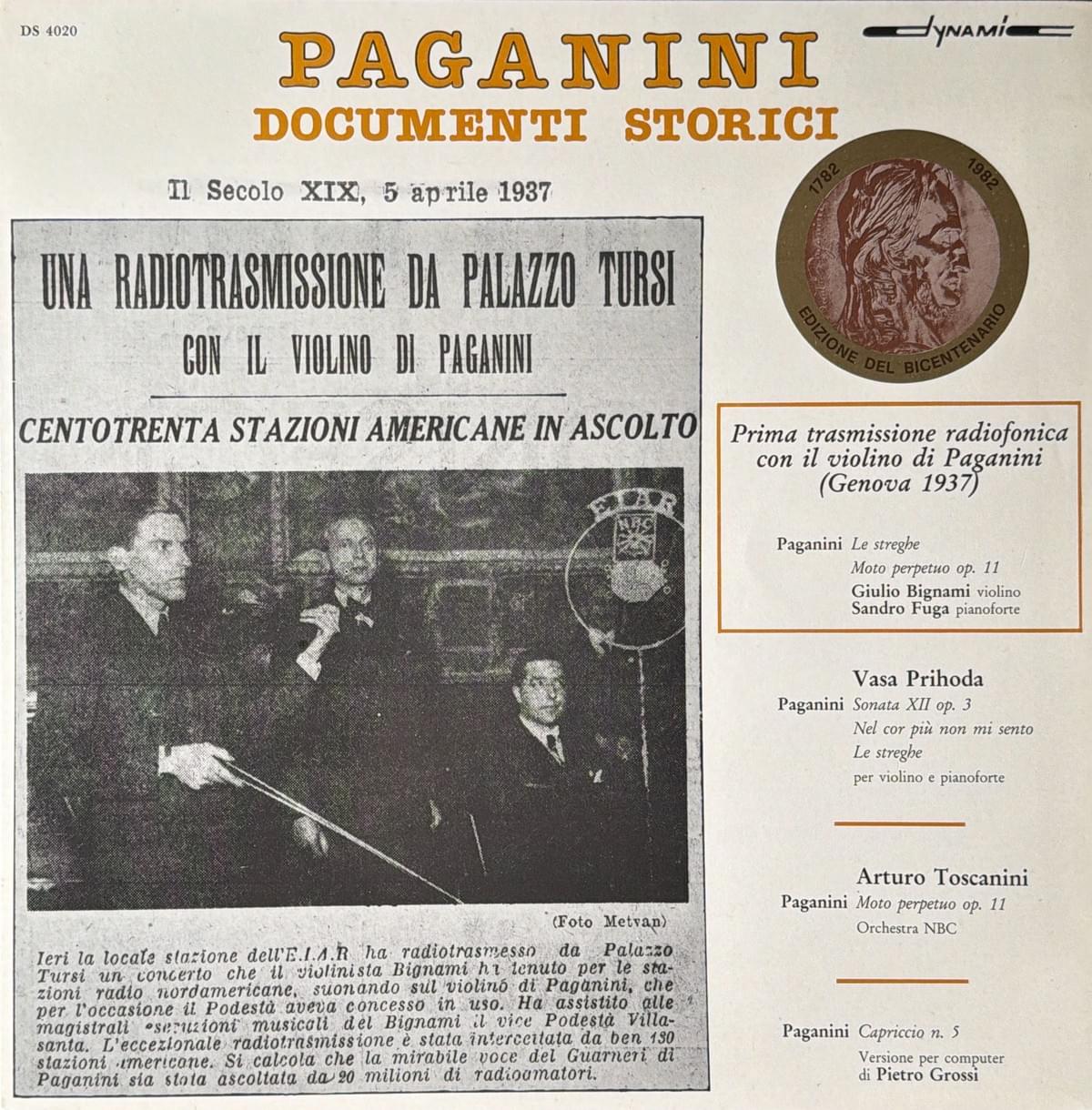
A 面第一軌,是一段 1937 年從短波無線電截收下來、又在紐約以 78 轉唱片搶救保存的廣播訊號。訊號衰減、失真、底噪——這些正是「發燒」兩個字要極力消滅的東西。而 DYNAMIC 不但沒有想辦法把它修乾淨,還在封底英文解說裡,直接把這些瑕疵稱為一種「patina」——時間的「包漿」,說它讓這份文獻「更真實」。
一間標榜發燒高傳真的廠牌告訴你:這張唱片裡最珍貴的部分,恰恰是那些技術上「不合格」的雜訊。
如果你是因為 DYNAMIC 那些工整、乾淨、動態驚人的發燒錄音才認識這個廠牌——歌劇全集、帕格尼尼作品全集、一張張錄音室裡精心打磨出來的「示範片」——這張 DS 4020 大概會讓你完全認不出這是同一間公司做的事。這正是這張唱片最有意思的地方:它幾乎沒有出現在 DYNAMIC 一般的「發燒片單」討論裡,但它背後藏著的,反而是整間廠牌最核心的靈魂。
這個決定,說不通,除非你知道 1937 年 4 月 4 日,義大利熱那亞發生了什麼事。
被鎖在玻璃櫃裡一百年的琴,被拿出來廣播了一次
1840 年,帕格尼尼(Niccolò Paganini, 1782–1840)立下遺囑,把他最鍾愛的那把瓜奈里名琴「Il Cannone」(加農砲)留給出生地熱那亞,條件是「永久保存」。這把 1743 年 Guarneri del Gesù 製作的名琴,從此被鎖進玻璃展示櫃,一鎖將近一百年,誰都不准碰。
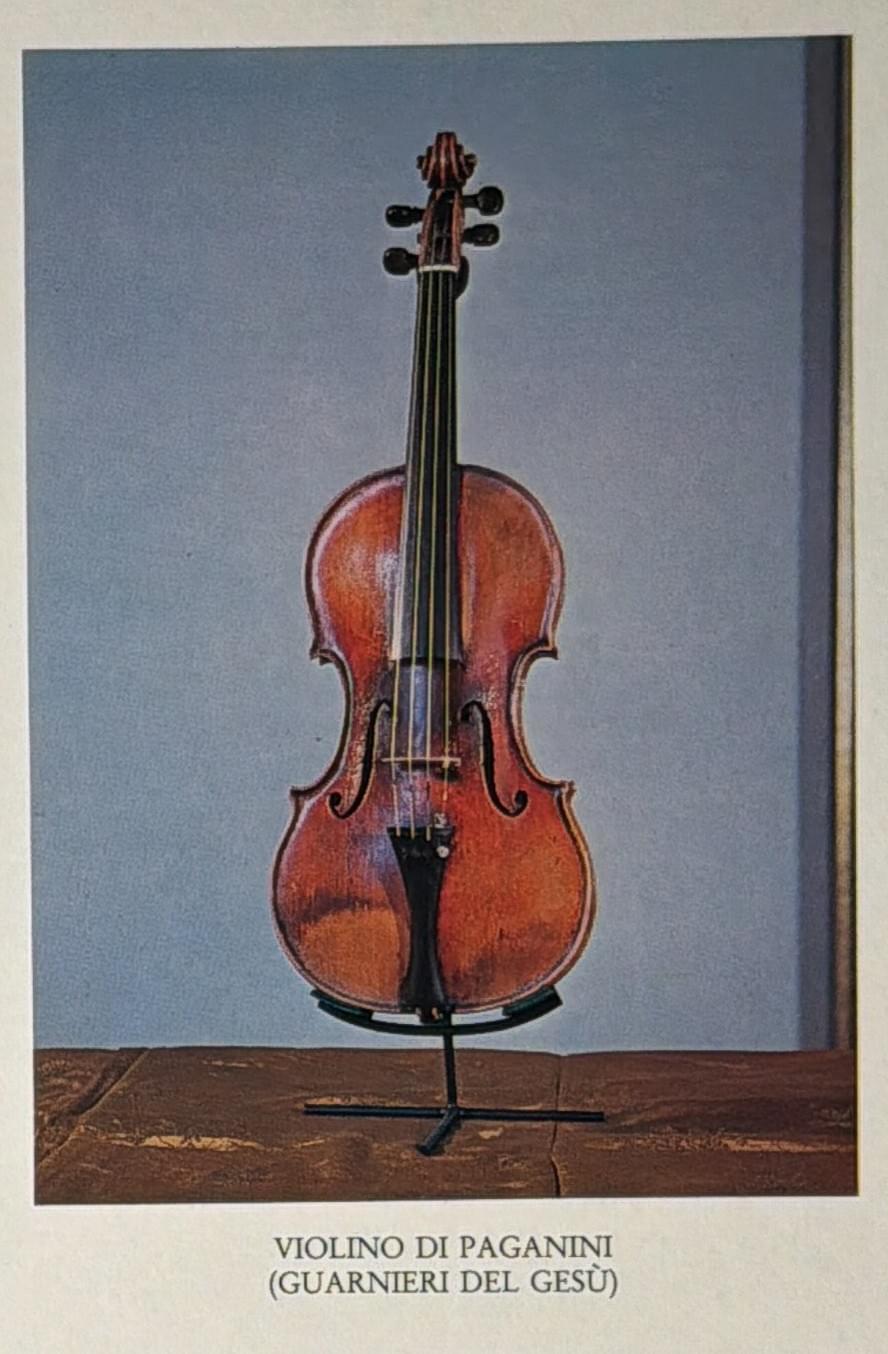
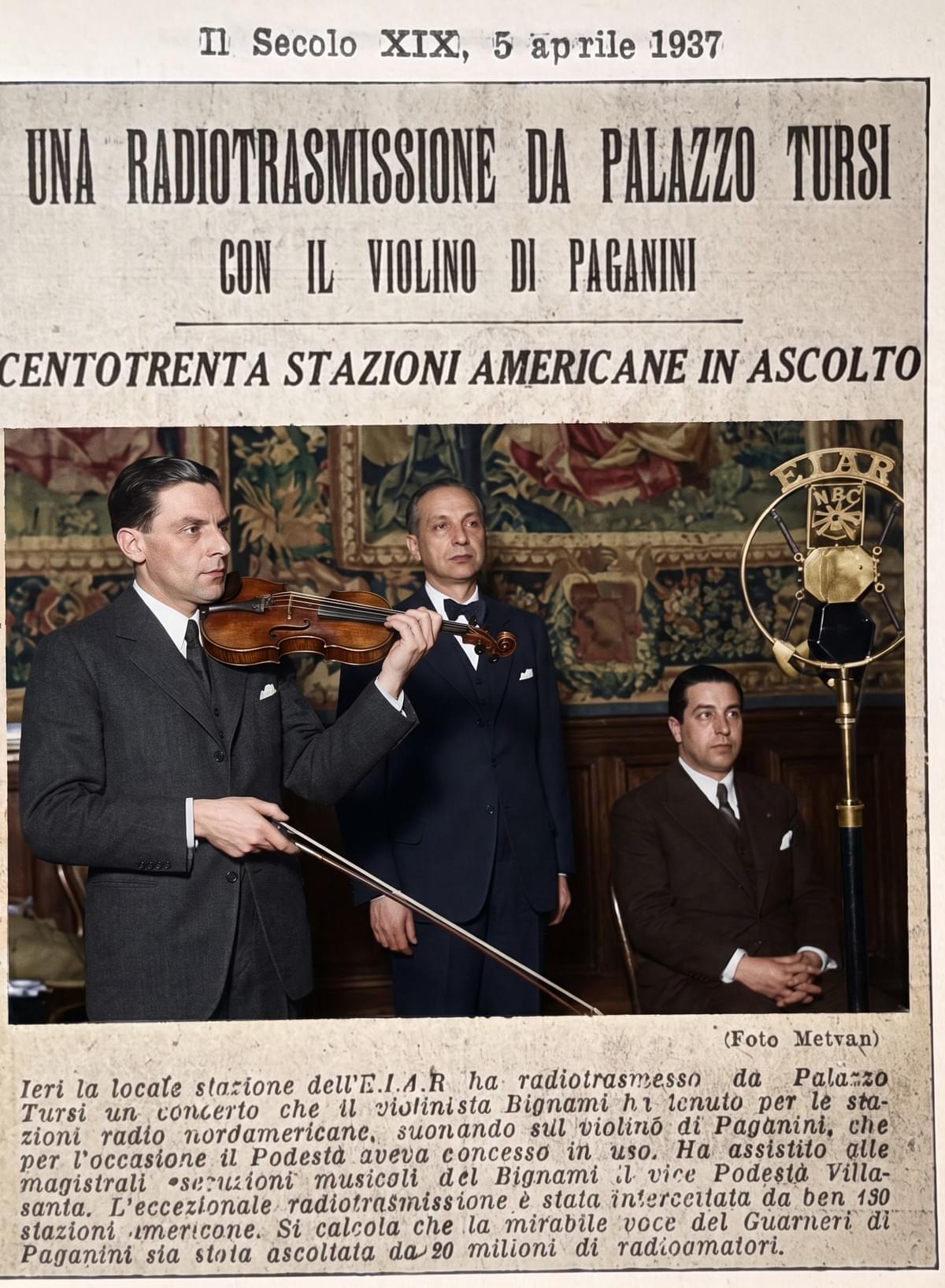
1937 年,熱那亞市政府破了一次例。他們把這把琴從密封的玻璃櫃裡取出,交給義大利小提琴家朱利奧·比尼亞米(Giulio Bignami),在市府大樓 Palazzo Tursi 裡進行一場面向美國聽眾的短波廣播。這是人類第一次,透過廣播電波聽見帕格尼尼那把琴本人的聲音。
訊號跨過大西洋,被超過一百三十個美國電台接收,估計聽眾人數兩千萬。紐約那端的技術人員,把接收到的訊號直接錄進 78 轉唱片——這是唯一保存下來的方式,錄音品質完全取決於那天短波電離層的狀態。
這段錄音先天注定不可能「高傳真」。它不是母帶問題,是物理限制:電磁波穿越大西洋的過程本身,就會衰減、變形。DYNAMIC 選擇把這個先天缺陷,原樣保留在這張紀念帕格尼尼誕生兩百週年(1782–1982)的唱片裡,而不是用任何後製手段去「修復」它。
這不是懷舊,是一篇學術論文
如果 DS 4020 只是把 1937 年那段廣播收錄進去,它會是一張很珍貴的歷史文獻唱片——但也僅止於此。真正讓這張唱片不一樣的,是它接下來的選擇。
B 面最後一軌,DYNAMIC 找來義大利電腦音樂先驅彼得羅·格羅西(Pietro Grossi, 1917–2002),專為這張唱片新製作了一個《隨想曲第五號》的電腦合成版本。格羅西當時已經用電腦處理過巴哈,這一次他把帕格尼尼原曲的十二個聲部輸入 TAU2 音訊終端機,複製、移半音、鏡像反轉,做出一種金屬感強烈、帶著攻擊性的電子聲響——1982 年,個人電腦都還沒普及的年代。
把這一軌放進去,不是湊數,也不是趕時髦。這是一個刻意的策展動作。
整張唱片其實是一條刻意鋪陳的時間軸:1937 年短波廣播裡帕格尼尼本人的琴聲、1920 至 30 年代瓦薩·普里霍達(Vasa Prihoda, 1900–1960)的商業 78 轉錄音、托斯卡尼尼(Arturo Toscanini, 1867–1957)與 NBC 交響樂團的管弦樂版錄音室錄音、最後是 1982 年的電腦合成——同一位作曲家的旋律,被四個世代的錄音技術輪流捕捉了一次。從電磁波的物理限制,到錄音室母帶,再到電腦運算出來的聲音,這張唱片把「人類怎麼保存聲音」這件事,濃縮成了二十四分半的時間軸。
但這條時間軸真正要說的,不是技術史,是一個更大的論點——帕格尼尼這個人、這些旋律,沒有被鎖死在十九世紀的小提琴技巧裡。他可以活在短波廣播電台裡,可以活在商業唱片工業裡,可以活在管弦樂團的編制裡,也可以活在一台終端機的電子運算裡。每一個時代,都有辦法用自己的技術語言,重新讓帕格尼尼「發聲」一次。
而這個時間軸的起點,又連回到 1743 年——那塊被克雷莫納製琴師刨開的雲杉木板。從一塊木頭,到弓弦振動,到空氣裡的聲波,到電磁波,到蟲膠溝槽,再到電腦裡的十二個聲部——這張唱片的入口,深得沒有底。
一個學者的私人使命,如何變成一間唱片公司
會做出這種選擇,跟 DYNAMIC 這間廠牌背後那個創辦人的性格,有直接關係。
愛德華·尼爾(Edward Neill, 1929–2001)不是一般意義上「懂音樂」的愛好者。他是國際公認的帕格尼尼研究權威——後來主編了帕格尼尼書信全集《Epistolario di Nicolò Paganini》,撰寫過至少兩本帕格尼尼傳記,也是牛津《Grove Music Online》音樂辭典裡「Paganini」這個詞條的撰寫人。換句話說,在帕格尼尼研究這個領域裡,他是站在金字塔頂端的少數人之一。
正是這種學術份量,讓 DYNAMIC 從一開始就不是一間單純追求商業發燒市場的廠牌。尼爾創辦這間小作坊,起點是一個很單純的執念:熱那亞的圖書館與檔案室裡,躺著大量從未被灌錄、從未被世人真正聽過的帕格尼尼手稿與相關史料。這些東西存在紙上,存在樂譜裡,卻從來沒有變成過聲音。尼爾想做的,是把它們一份一份地錄出來、出版出來——DS 4020 正是這個使命下最早期、也最重要的成果之一,解說文字同樣由他本人親自撰寫。
這也解釋了為什麼 B 面第一軌選的是普里霍達演奏的《我心不復平靜》變奏曲——這是帕格尼尼手稿早已遺失、只靠十九世紀音樂學者卡爾·古爾(Karl Guhr, 1787–1848)現場聽寫記錄下來才得以倖存的作品。整張唱片的選曲邏輯,不是「哪首曲子好聽?」,而是「哪一段聲音的存在本身,就是一場僥倖」——這正是一個研究帕格尼尼手稿多年的學者,才會有的選曲直覺。
瓦薩·普里霍達這個名字,也值得多說一句。他是最早錄製帕格尼尼作品的小提琴家之一,靠著托斯卡尼尼的提攜,曾經六個月內開了八十多場音樂會。但他的生涯留下一道陰影——二戰期間,他繼續在納粹德國及其佔領區演出,戰後一度被捷克政府以「通敵」之名審查、禁演。封底解說對此隻字未提,只提到他極度在意自己的名字要被正確念出來:「Vascia Pschioda」。歷史文獻的收錄邏輯,往往就是這樣——留下聲音紀錄,不評判人。
愛德華·尼爾(Edward Neill)自己寫下的答案
這張唱片的策展邏輯,撰寫內頁解說的創辦人愛德華·尼爾,在文末自己就把整個構思說得很清楚。
他在解說的收尾處,特地列出了一長串跨越一百五十年、曾經改編或引申帕格尼尼作品的音樂家名字:舒曼(Robert Schumann, 1810–1856)、李斯特(Franz Liszt, 1811–1886)、莫謝萊斯(Ignaz Moscheles, 1794–1870)、布拉姆斯(Johannes Brahms, 1833–1897),一路到近代的拉赫曼尼諾夫(Sergei Rachmaninoff, 1873–1943)、卡塞拉(Alfredo Casella, 1883–1947)、達拉皮科拉(Luigi Dallapiccola, 1904–1975)、盧托斯瓦夫斯基(Witold Lutosławski, 1913–1994),乃至當時最新的蘇聯作曲家許尼特克(Alfred Schnittke, 1934–1998)與法利克。
尼爾的結論很直接:這一切證明,帕格尼尼即使與我們相隔了一個多世紀的歲月,依然持續為當代的音樂家提供源源不絕的思考靈感。
這句話,才是整張唱片真正的主題句。
1937 年那段短波廣播、普里霍達的商業錄音、托斯卡尼尼的管弦樂版本、格羅西的電腦合成——四段錄音表面上是四種技術的展示,實際上是尼爾拿聲音本身,替這句話做的四個歷史例證。他不是在寫一篇音樂學論文附上譜例,他是把論證直接刻進了黑膠的溝槽裡:你聽,一百五十年來從沒有一個時代的音樂家真正「用完」帕格尼尼,每個世代都還在用自己的方式重新理解他、重新演繹他。放進 1982 年的電腦音樂,正是尼爾在替這個論點補上最新、也最大膽的一筆——連電腦運算這種當時最前衛的聲音生成技術,都還是在跟帕格尼尼對話。
帕格尼尼永垂不朽,不是因為他被供在博物館的玻璃櫃裡供人瞻仰,而是因為他始終有辦法與時俱進——跟著每一個時代的技術與美學,重新活過來一次。這才是 DYNAMIC 這張唱片,真正想留給後人的東西。
從黑膠到 CD:一場出版思維的轉向
這張唱片的故事,還沒有在 1982 年結束。
大約在 1990 年前後,DYNAMIC 把這批歷史文獻重新編輯,首次以 CD 形式再次發行——編號 CDS001,標題改為《Paganini: Historical Documents》(部分資料庫將這個年份記錄為 1999 年,但那更可能是廠牌加入 Naxos 集團發行系統後,重新被數位編目的年份,而不是 CD 實際首次上市的時間;考量 DYNAMIC 自身的發展節奏,1990 年前後才是比較合理的判斷)。
要理解這次重新出版的意義,得先看 DYNAMIC 這幾年之間發生了什麼事。1978 年創立時,它還是莫塞蒂·卡薩雷托(Pietro Mosetti Casaretto, 1925–2012)夫婦的家庭事業,在教堂、小禮拜堂、私人別墅裡錄音;1985 年,公司才搬進熱那亞 Righi 山丘上的 Villa Quartana,蓋起一間可以容納小型室內樂團的正式錄音室。也就是說,DS 4020 出版的 1982 年,DYNAMIC 還是一間剛起步、帶著濃厚個人色彩的小廠牌;等到它把這批文獻重新做成 CD 的時候,已經是一間有了正式錄音場地、開始建立系統性目錄的公司。
這個轉變,清楚地寫進了 CD 版本的曲目安排裡。
CD 版本拿掉了彼得羅·格羅西那段 1982 年的電腦合成《隨想曲第五號》——LP 版本裡最大膽、最實驗性的一段內容,在 CD 上消失了。取而代之的,CD 開頭放的是薩爾瓦托雷·阿卡多(Salvatore Accardo, 1941– )演奏的《Barucabà 變奏曲》,長達三十多分鐘。
阿卡多這個選擇不是隨意的。根據 DYNAMIC 自己的廠史記載,這位小提琴家演奏的《Barucabà 變奏曲》,正是 DYNAMIC 有史以來發行的第一張黑膠唱片——比 DS 4020 還要早。把這段錄音放進 CD 版本的開頭,等於是把整個「歷史文獻」系列,重新接回廠牌自己最初的起點,用自己的第一份出版品,替這批 1937 年的廣播檔案掛保證。
這是兩種完全不同的出版邏輯。1982 年的尼爾,以音樂學家的身分,用一張黑膠做了一篇論文——刻意把電腦合成聲音放進去,證明帕格尼尼能與任何時代的技術對話,帶著實驗性與個人觀點。1990 年前後的 CD 版本,則是一間已經站穩腳步、準備往「權威版本」方向發展的廠牌所做的判斷——用自己最具代表性的招牌演奏家,取代那段聽起來像實驗室產物的電子音樂,讓這份文獻更貼近「正典」而不是「奇觀」。
DYNAMIC 自己從沒有公開解釋過這次刪換的理由——沒有任何聲明說:「我們決定拿掉電腦版,是為了更符合市場」。但曲目本身的變化,已經把答案寫得很清楚:一張唱片,拿掉了它最激進的部分,換上了自己最安全、最有商業代表性的招牌演奏家。這不需要廠牌承認,證據本身就是結論。
這個轉向,後來也證明是 DYNAMIC 真正走的路——它在往後幾十年,陸續完成了帕格尼尼小提琴獨奏全集、協奏曲全集,最終在 2018 年推出橫跨 40 張 CD 的《帕格尼尼全集》,把畢生所有已知作品收錄在一套系統性的出版計畫裡。CDS001 上那個被拿掉的電腦合成版本,某種意義上,是 DYNAMIC 從一間帶著實驗精神的地方文化廠牌,走向系統性商業出版機構過程中,留下的最後一絲痕跡。
而手上這張 1982 年的義大利原版黑膠,保留的是那個轉向發生之前、尼爾還親自主導選曲的版本——電腦合成聲音與 1937 年短波雜訊並列在一起,這個組合,在後來的 CD 與全集裡都不再出現。這是兩個版本之間,一個單純的、可以直接比對出來的事實。它代表著什麼、哪一個版本更貼近你想聽見的東西,交給你自己判斷。
最後:為什麼要聽歷史錄音?
把玻璃展示櫃裡鎖了近百年的傳世名琴,交到一個獨立演奏家手上,透過當年還很不穩定的短波技術,直播給兩千萬個陌生人聽——這件事,今天不會發生第二次。就算現在的網路科技更發達,更方便,更容易向全球展示,但經過全球化時代的荼毒後,古典音樂在目前仍否有幾十萬的流量都令人存疑。
1982 年 DYNAMIC 面對這批古老歷史錄音時,做出的保存與展示歷史的選擇。當時的發燒唱片工業,正是往「更乾淨、更逼真」一路狂奔——這也是四十年後「黑膠復興」與「Lo-Fi 美學」重新被追捧之前,幾乎沒有人願意公開說出口的立場:把失真本身,當成一種值得保存的真實。
DYNAMIC 沒有用行銷術語包裝這件事,只是在封底寫了很樸素的一句話——這些瑕疵不影響文獻的可聽性,反而給了它時間的包漿,一種更真的真實感。
寫到這裡,這張唱片其實一直在回答一個我自己也常常被問到的問題:為什麼要聽歷史錄音?串流平台上,任何一位當代小提琴家演奏的帕格尼尼,音質都遠比這張 1937 年的短波廣播乾淨、精準。為什麼還要特地找一張黑膠,聽一段夾雜著雜訊與訊號衰減的老錄音?
愛德華·尼爾花了一輩子研究帕格尼尼的手稿、書信、生平,他最清楚一件事:紙上的樂譜,不管印得多精美,都不是帕格尼尼本人真正的意義。真正讓一個歷史人物「活起來」的,還要加上聲音本身留下的歷史痕跡——那個痕跡連結著錄音當天的空氣、那把琴、那個房間、那個廣播訊號一路穿越大西洋所經歷的一切。這條連結,沒有辦法被壓縮、被取樣、被完美複製,只能被保存,然後一次又一次地,被有心人重新播放出來。
這也是「古殿」長年一直在做的事。不是因為老唱片音質比較好,而是因為每一張老唱片,都連結著一整段那個年代的錄音、演奏者當下的狀態、那個時代的人怎麼理解這首曲子的歷史狀態。
*******
【Gudian Music Stories】Why Did DYNAMIC, an Audiophile Label, Standardize Historical Noise into Vinyl?
A Mind-Bending Release
If you’ve dabbled even a little in the world of audiophile records, the name DYNAMIC will inevitably ring a bell. For decades, this Italian label based in Genoa has occupied a crystalline niche in the global audiophile community: sky-high recording specs, ultra-wide dynamic range, and meticulous mastering. DYNAMIC is the kind of label that proudly prints "Wide Dynamic Range" right on its album jackets—a studio devoted to chasing the cleanest, most vivid, and true-to-life sound possible.
Yet, holding this album—catalogue number DS 4020—you’ll find the exact same bold phrase printed on its sleeve: "Wide Dynamic Range Stereo Recording." But the music grooves etched inside seem to represent the complete antithesis of an audiophile label.
Track 1 on Side A is a fragment of a shortwave radio signal intercepted in 1937, later rescued and preserved on a 78 rpm disc in New York. Signal decay, distortion, static background noise—these are the very demons an "audiophile" press exists to exorcise. Yet, DYNAMIC made no attempt to clean it up. Instead, in their liner notes on the back cover, they plainly described these flaws as a "patina"—the weathered finish of time—arguing that it rendered the document "all the more authentic."
Think about that for a second. A label famed for hi-fi transparency is telling you: The most precious element in this record is precisely the noise that renders it technically "subpar."
If your impression of DYNAMIC was built on their immaculate, ultra-clean, dynamic-shocking showcase records—complete opera sets, Paganini’s entire oeuvre, pristine "demonstration discs" polished in state-of-the-art studios—this DS 4020 album would feel almost unrecognizable. That is precisely what makes it so fascinating. You’ll rarely see it mentioned in standard audiophile forums, yet buried right beneath its grooves lies the label's truest soul.
This publishing decision makes no sense—until you realize what happened in Genoa, Italy, on April 4, 1937.
A Violin Locked in Glass for a Century, Unsealed for a Single Broadcast
In 1840, Niccolò Paganini (1782–1840) penned his last will, bequeathing his most cherished instrument—a Guarneri violin nicknamed "Il Cannone" (The Cannon)—to his hometown of Genoa, under one strict condition: it must be preserved in perpetuity. Crafted in 1743 by the master Guarneri del Gesù, this legendary instrument was locked inside a glass display case. There it stayed, untouched and sealed away, for nearly a century. Nobody was allowed to touch it.
Then, in 1937, the City of Genoa broke its own rule.
They retrieved the masterpiece from its glass enclosure and handed it to Italian violinist Giulio Bignami. Inside the municipal palace, Palazzo Tursi, Bignami performed a live shortwave broadcast beamed directly across the ocean to an American audience. For the first time in human history, the actual voice of Paganini’s own violin traveled through radio waves into listening ears.
The signal traversed the Atlantic, picked up by over 130 American radio stations and reaching an estimated 20 million listeners. On the New York side, sound engineers recorded the incoming signal straight onto 78 rpm lacquer discs. It was the only way to preserve it—meaning the audio quality depended entirely on the atmospheric state of the ionosphere that specific day.
By its very physical nature, this recording could never be "hi-fi." The defect wasn't a master tape issue; it was raw physics. As electromagnetic waves crossed the ocean, they inevitably faded and warped. When DYNAMIC prepared their 1982 album celebrating the bicentennial of Paganini's birth (1782–1982), they chose to preserve this inherent physical flaw intact, refusing to apply modern post-production tricks to "fix" it.
This Isn't Nostalgia—It's an Academic Paper
Had DS 4020 simply archived that 1937 shortwave broadcast, it would still be a prized historical record—and nothing more. What sets this album apart is the structural choice that follows.
For the final track on Side B, DYNAMIC commissioned Pietro Grossi (1917–2002), a pioneer of Italian computer music, to produce a brand-new, computer-synthesized version of Paganini's Caprice No. 5. Grossi, who had previously processed Bach with computers, fed twelve parts of Paganini’s score into a TAU2 audio terminal. By duplicating, shifting semitones, and mirror-inverting the notes, he synthesized an aggressive, highly metallic electronic soundscape—back in 1982, when personal computers hadn't even entered average households.
Placing this track at the end wasn't a gimmick or an attempt to look trendy. It was a deliberate act of curation.
The entire album is, in fact, a carefully constructed timeline:
- Paganini’s violin sounding through the 1937 shortwave radio broadcast
- Commercial 78 rpm shellac recordings from the 1920s–30s by Váša Příhoda (1900–1960)
- Orchestral studio recordings with Arturo Toscanini (1867–1957) and the NBC Symphony Orchestra
- The 1982 computer synthesis
The melody of a single composer, captured in turn by four generations of sound technology. From atmospheric electromagnetic waves, to studio tape, to computer algorithm—the album condenses the entire history of "how humans preserve sound" into a 24-and-a-half-minute timeline.
Yet this timeline isn't merely telling a story of technological evolution; it presents a grander thesis: Paganini, as a figure and a musical force, was never locked inside 19th-century violin technique. He could live inside shortwave broadcasts, inside commercial record industries, inside grand orchestral arrangements, or inside the electronic calculations of a computer terminal. Every era finds a way to let Paganini "speak" through its own technological voice.
And the root of this timeline winds all the way back to 1743—to a slab of spruce wood carved open by a Cremonese luthier. From a block of wood, to the vibration of horsehair on string, to air waves, to electromagnetic signals, to shellac grooves, and finally into twelve computer-synthesized voices—the depth of this album's doorway is virtually bottomless.
How a Scholar’s Personal Mission Became a Record Label
Such a curatorial vision stems directly from the character of DYNAMIC’s founder.
Edward Neill (1929–2001) wasn't just a casual music enthusiast. He was a globally recognized authority on Paganini—later editing the complete collection of Paganini's letters (Epistolario di Nicolò Paganini), authoring at least two biographies, and penning the definitive entry for "Paganini" in the Oxford Grove Music Online dictionary. In short, he stood at the absolute pinnacle of Paganini scholarship.
It was this scholarly weight that ensured DYNAMIC was never just a commercial audiophile label. Neill started this small workshop out of a pure, singular obsession: Genoa’s libraries and archives were filled with original Paganini manuscripts and historical documents that had never been recorded or heard by human ears. They existed on paper, as notation, but never as living sound. Neill wanted to record and publish them, piece by piece. DS 4020 was one of the earliest and most vital milestones of this mission, complete with liner notes authored by Neill himself.
This also reveals why the first track on Side B features Váša Příhoda’s performance of the variations on Nel cor più non mi sento—a piece whose original manuscript was lost long ago, surviving only because 19th-century musicologist Karl Guhr (1787–1848) transcribed it by ear during a live concert. The selection logic of this record wasn't "which piece sounds prettiest?" but rather "which sound's very survival was an act of pure luck?" That is the instinct of a scholar who spent decades buried in original manuscripts.
Váša Příhoda himself deserves a brief mention. He was among the earliest violinists to record Paganini, and with Toscanini's support, once played over 80 concerts in a span of six months. Yet his career was cast in shadow: during WWII, he continued performing in Nazi Germany and occupied territories. After the war, he was investigated and banned from performing by the Czechoslovak government under charges of collaboration. The album's back cover mentions none of this controversy, recording only his obsession with people pronouncing his name correctly: *"Vascia Pschioda."*Historical archivism often works this way—it preserves the sound, passing no judgment on the person.
Edward Neill’s Own Answer
The curatorial philosophy behind this record was made explicitly clear by Edward Neill at the end of his sleeve notes.
In closing, Neill carefully listed a long lineage of composers spanning 150 years who had adapted or drawn inspiration from Paganini: Schumann, Liszt, Moscheles, Brahms, leading up to modern masters like Rachmaninoff, Casella, Dallapiccola, Lutosławski, and even contemporary Soviet composers like Schnittke and Falik.
Neill’s conclusion was direct: All of this proves that Paganini, though separated from us by over a century, continues to provide an endless wellspring of inspiration for contemporary musicians.
That single statement is the true thesis of the entire record.
The 1937 shortwave broadcast, Příhoda’s commercial release, Toscanini’s orchestral version, and Grossi’s computer synthesis—on the surface, these four recordings represent four technologies. In truth, Neill was using sound itself to provide four historical proofs for his statement. He wasn't writing a musicology paper with printed score examples; he was etching his argument straight into the grooves of a vinyl record: Listen. In 150 years, no generation of musicians has ever "exhausted" Paganini. Every era continues to understand and reinterpret him in its own language.
Including the 1982 computer synthesis was Neill’s boldest, most contemporary addition to the thesis—showing that even computer algorithms, the most avant-garde sound-generation technology of the day, were still engaged in a dialogue with Paganini.
Paganini remains immortal not because he is enshrined inside a museum glass case for people to admire, but because he constantly finds a way to evolve—waking up anew alongside the technology and aesthetics of every passing era. That is what DYNAMIC truly wanted to pass down to future listeners.
From Vinyl to CD: A Shift in Publishing Mindset
The story of this record didn't end in 1982.
Around 1990, DYNAMIC re-edited these historical archives and released them for the first time on CD under catalogue number CDS001, retitled Paganini: Historical Documents. (Some databases record the release year as 1999, but that likely reflects the re-indexing date when the label joined Naxos's global distribution network rather than the actual CD market launch. Given DYNAMIC’s timeline, 1990 remains the most logical estimate).
To understand the weight of this reissue, one must look at what happened to DYNAMIC during those intervening years. When founded in 1978, it was a home-grown family project run by Pietro Mosetti Casaretto and his wife, recording in local churches, chapels, and private villas. By 1985, the company moved to Villa Quartana on Genoa’s Righi hill, building a formal recording studio capable of housing a small chamber orchestra. In other words, when DS 4020 came out in 1982, DYNAMIC was an adventurous startup marked by strong personal personality. By the time it reformatted these documents onto CD, it had evolved into an established label with a proper venue, building a systematic classical catalog.
This transformation was written directly into the CD’s tracklist.
The CD version removed Pietro Grossi’s 1982 computer-synthesized Caprice No. 5—the most radical, experimental track on the LP was gone. In its place, the CD opened with Salvatore Accardo performing the Barucabà Variations, spanning over 30 minutes.
Choosing Accardo was no coincidence. According to DYNAMIC’s own company history, Accardo’s recording of the Barucabà Variations was the very first vinyl record DYNAMIC ever released—predating DS 4020. Placing it at the beginning of the CD reissue anchored the entire "Historical Documents" series back to the label’s own origins, using their debut release to endorse the 1937 archival broadcast.
These represent two entirely different publishing philosophies:
- The 1982 LP saw Neill acting as a musicologist, crafting a thesis on vinyl. By intentionally including computer synthesis, he sought to prove that Paganini could converse with any technological age—a choice filled with experimental flair and personal perspective.
- The ~1990 CD, on the other hand, reflected a mature label stepping toward authority. By replacing a piece of electronic music that sounded like a laboratory experiment with their flagship, canonical violinist, they aligned the document closer to "the canon" rather than "a curiosity."
DYNAMIC never publicly explained why they made this swap—there was no formal statement saying, "We removed the computer version to better fit the market." But the tracklist changes speak for themselves: the most radical portion was excised, replaced by their safest, most commercially recognizable artist. The evidence is the conclusion.
This shift mapped out DYNAMIC’s future direction. In the following decades, the label systematically recorded Paganini’s complete solo violin works and complete concertos, culminating in 2018 with a monumental 40-CD Box Set (Paganini Complete Edition), collecting every known work into a single unified archive. That omitted computer synthesis track on CDS001 remains, in a sense, the last trace left behind as DYNAMIC transitioned from a local, experimental cultural label into a systematic commercial institution.
The original 1982 Italian vinyl pressing captures that brief moment before the shift occurred—a time when Neill personally curated the tracklist, placing computer synthesis right alongside 1937 shortwave static. That unique pairing never appeared again on CD or in future box sets. It stands as a simple, verifiable historical contrast between two eras. What it signifies, and which version resonates more with what you wish to hear, is entirely up to you to decide.
In Closing: Why Listen to Historical Recordings?
Handing a 200-year-old priceless violin—locked in glass for nearly a century—to an independent performer, and broadcasting its voice live to 20 million strangers across unstable shortwave radio waves: something like that would never happen today. Even with modern internet technology making global broadcasting vastly easier and more convenient, it remains doubtful whether classical music could command hundreds of thousands of streams in our fragmented, post-globalized era.
In 1982, when DYNAMIC faced these ancient historical recordings, they made a conscious choice about how to preserve and present history. Back then, the audiophile record industry was racing toward "cleaner, crisper, more real" sound. Decades before the "vinyl revival" or "Lo-Fi aesthetics" became fashionable, DYNAMIC took a stance few dared to voice publicly: treating distortion itself as a form of truth worth preserving.
DYNAMIC didn't dress it up in marketing jargon. They simply wrote a humble sentence on the back cover: These flaws do not diminish the document's legibility; rather, they give it the patina of time—a truer sense of reality.
Bringing this journey to a close, this record continuously answers a question I am often asked myself: Why listen to historical recordings?
On any streaming platform, a modern violinist playing Paganini will sound infinitely cleaner and more precise than a 1937 shortwave radio broadcast. Why go out of your way to find a vinyl record just to listen to an old performance buried under static and fading signals?
Edward Neill spent his life studying Paganini’s manuscripts, letters, and biography, and he understood one fundamental truth: Printed sheet music, no matter how exquisitely produced, does not capture the full, true meaning of Paganini himself.
What truly brings a historical figure to life requires the physical traces left behind in sound—traces bound to the air in the room that day, to the violin, to the room, and to everything that shortwave signal encountered as it crossed the Atlantic. That connection cannot be compressed, sampled, or perfectly duplicated. It can only be preserved, and then, time and again, brought back to life by those who listen with heart.
This is precisely what we at Grand Hall Records have dedicated ourselves to doing. Not because old records boast "better sound quality," but because every historic pressing connects us directly to the atmosphere of an era, the artist's living state of mind, and the historical reality of how people back then experienced and understood the music.