
他寫完了,卻來不及聽見:關於馬勒、華爾特,與那一首名為「繼承」的交響曲~~1912年馬勒交響曲第九號的世界首演
古殿殿主
【前言:從一個人的預言,到全世界的迴響】
現在每個月在世界各地可能都有馬勒交響曲的演出,馬勒的音樂已成為古典音樂領域中的異常熱點。
時間回到1911年,古斯塔夫·馬勒(Gustav Mahler,1860-1911)去世時,年僅51歲。 那時候,他的音樂乏人問津,甚至被視為繁雜無章。據說在生命走到盡頭前,他留下了一句有如預言般的證言:
「我的時代終將來臨。」
音樂創作是殘酷的,若沒有被演奏、被推廣,它就不曾真正存在於世。馬勒離世後的這一百多年,世界樂壇回應了他的預言,展開了一場漫長而壯闊的「馬勒復興運動」:
1920年代的萌芽: 由馬勒的好友孟根堡(Willem Mengelberg,1871-1951)在阿姆斯特丹主導首屆馬勒音樂節,試圖為馬勒在音樂史上爭一席之地。
1960年代的爆發: 在馬勒的親傳弟子布魯諾·華爾特(Bruno Walter,1876-1962)與明星指揮家伯恩斯坦(Leonard Bernstein,1918-1990)的推動下,馬勒的作品終於衝破藩籬,持續復興。
2020年代的盛世: 如今,馬勒已成為世界古典音樂演出的核心。特別是在2025至2027年間,這股預言正以一種當年馬勒絕對無法想像的磅礴規模,在全球應驗。
最近這三年,世界各地將迎來馬勒演出的最高峰:
荷蘭(2025): 阿姆斯特丹馬勒音樂節(第三屆) 將於皇家音樂大會堂舉行,慶祝首屆音樂節105週年。包括柏林愛樂、維也納愛樂等五大頂尖樂團齊聚,演繹全套交響曲。
美國(2026-2027): 紐約卡內基音樂廳 將由指揮家聶澤-賽金(Yannick Nézet-Séguin)率領大都會歌劇院、費城管弦樂團與維也納愛樂,完成全套馬勒交響曲的壯舉。
奧地利(2026): 斯坦巴赫馬勒音樂節 將以「馬勒的宇宙」為題,紀念《第三號交響曲》創作130週年,帶領聽眾回到馬勒創作的原點。
而在這波浪潮中,亞洲觀點詮釋權,更強勢力道介入: 日本的NHK交響樂團 成為史上首個受邀參與阿姆斯特丹馬勒音樂節的亞洲樂團;而在台灣NSO國家交響樂團與TSO臺北市立交響樂團(在殷巴爾大師帶領下)也紛紛啟動全本演出計畫。
看似全世界都在歡慶馬勒,都在討論他的偉大。
但是,如果我們把時間倒回馬勒生命結束之前呢?
那時沒有掌聲,沒有音樂節,沒有全套演出計畫。 那時只有一個垂死的人,和他桌上一疊還沒被聽見的總譜。
如果生命只剩下一首曲子的時間,你會把這最後的聲音,託付給誰?
一、 被點燃的靈魂:兩人的相遇與相知
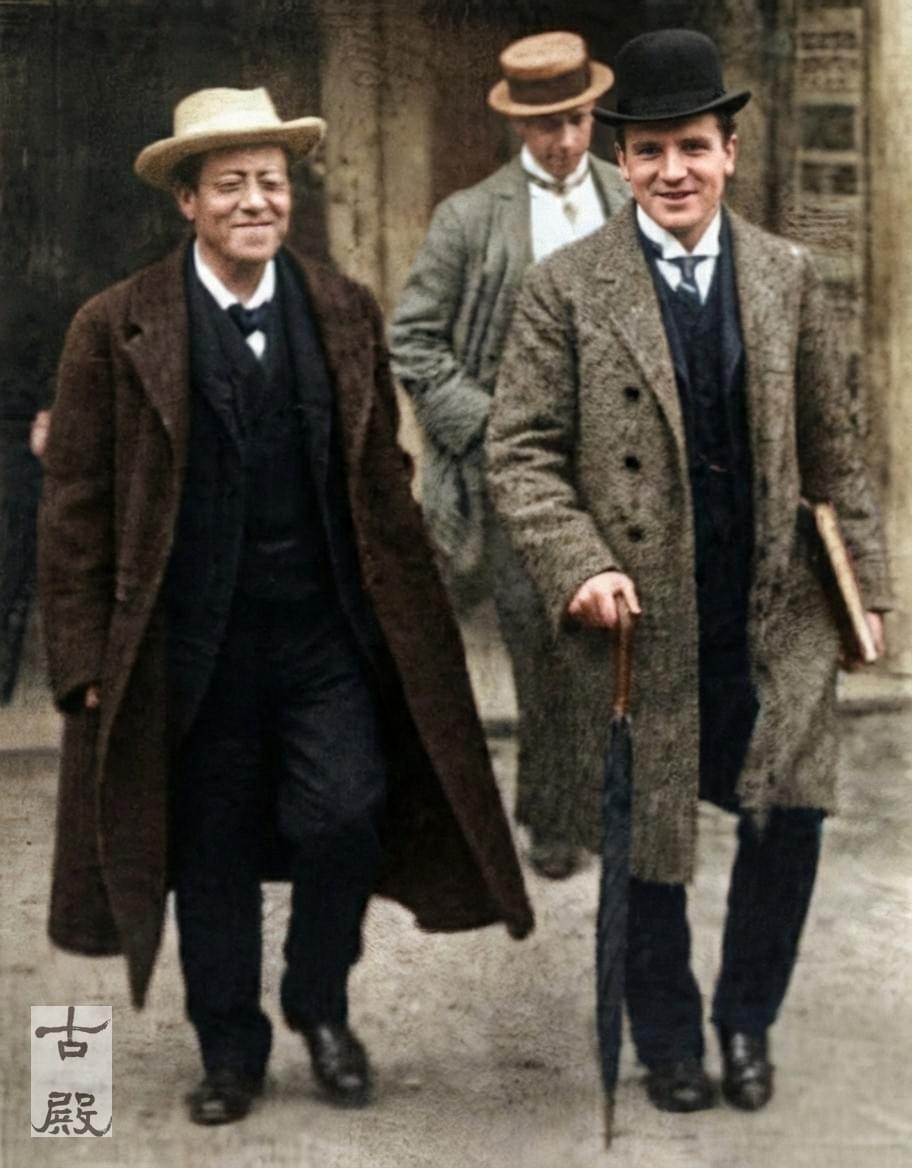
馬勒與華爾特的相遇於德國漢堡市立歌劇院 (Hamburg Stadttheater):1894年華爾特18歲還是個音樂學院剛畢業的菜鳥。馬勒當年34歲,已是漢堡歌劇院的首席指揮與音樂總監,名聲正盛。他們兩人相差15歲,不僅是年齡,更是境界的差異。華爾特當時是「合唱指揮與聲樂藝術指導」,他還記得第一次見到馬勒指揮時就被「嚇壞了」(正面的震撼),在回憶錄裡說,他在漢堡遇見馬勒的那一刻,才是他藝術生命的真正覺醒。
然後故事要從1901年說起。
1. 生命本身突然變得浪漫起來
1901年在馬勒的邀請下(當時馬勒擔任維也納宮廷歌劇院總監,這是當時歐洲音樂界最有權勢的職位),華爾特進入了音樂的聖殿——維也納國立歌劇院 (Vienna Court Opera) 擔任助理指揮 (Kapellmeister)。他的首演便是指揮威爾第的《阿依達》,在那裡,他直接受教於馬勒,開啟了長達七年的追隨。
這七年,對華爾特來說,是一場靈魂的震撼教育。 他在後來那本動人的回憶錄《主題與變奏》中,留下了這段深情的告白:
「馬勒在相貌和舉止上給我的印象是一位天才,一位惡魔;生命本身突然變得浪漫起來。我無法更好地描述馬勒人格的原始力量,只能說它對一位年輕音樂家的不可抗拒的影響,是產生一種對生命的全新態度……我被迷住了,觀察到先前在他排練時所展現的那種強度、那種精神張力,現在在他的談話中顯現出來。」
2. 哲學的共鳴:從叔本華到尼采
馬勒對華爾特的影響,遠遠超過了音樂技術。 你能想像那種衝擊嗎?這位大師帶著年輕的華爾特,不只聊音符與節拍,他們深入討論叔本華的悲觀主義、尼采的超人哲學,以及杜斯妥也夫斯基筆下的苦難與救贖。
在這七年的形影不離中,馬勒用他那種近乎神經質的、高強度的生命狀態,徹底重塑了華爾特的世界觀。對華爾特來說,馬勒不僅是嚴厲的上司,他是導師、是朋友,更是「精神上的父親」。
3. 病榻前的承諾:最後的守護
華爾特在馬勒身邊迅速成長。1910年,他甚至協助馬勒挑選與指導《第八號交響曲》首演的獨唱歌手。他的名聲隨之水漲船高,受邀至倫敦、羅馬等地指揮。
但命運的鐘聲敲響了。1911年5月18日,馬勒病危。當這位巨人嚥下最後一口氣時,華爾特就守在他的病榻旁。
那一刻,華爾特失去的不只是一位導師,他失去的是他在這個世界上的精神支柱。 但悲傷沒有讓他停下腳步,因為他知道馬勒還留下了未完成的遺願。
馬勒過世後不到一個月,華爾特寫信給姊姊,堅定地說他將指揮馬勒遺作的首演。
他兌現了承諾: 先是在1911年11月,於慕尼黑首演了《大地之歌》(Das Lied von der Erde); 緊接著,就是我們即將見證的歷史時刻
——1912年6月26日,華爾特指揮維也納愛樂,進行了《第九號交響曲》的世界首演。
二、無聲的遺囑:這是我唇邊未說完的話
1. 死亡陰影下的甜蜜掙扎
時間來到1910年秋天,生命的倒數計時已經開始。 馬勒預感到自己的時間不多了,他的身體狀況急轉直下。在給華爾特的信中,他坦承:
「在孤獨中,我的注意力更加向內心轉移,這讓我更加清楚地感覺到我身體上的一切都不對勁。」
但矛盾的是,死神越近,生命越甜。 他在同一年年初也寫道:
「我比以往任何時候都更渴望生命,我發現『存在的習慣』比以往任何時候都更甜美。」
這種極致的矛盾——既被死亡勒住喉嚨,又瘋狂眷戀著活著的每一口呼吸——成為了《第九號交響曲》的核心靈魂。這不是一首單純的輓歌,這是對這個世界最深情的眷戀與拉扯。
2. 唯一的題獻:交給「另一個我」
馬勒在完成這首鉅作後,做了一個極不尋常的決定。 這首曲子,馬勒自己連一個音都還沒親耳聽過,但他將總譜直接交給了華爾特。 他在信裡對華爾特說:
「在這部作品中,我說出了長久以來一直縈繞在我唇邊的話語。」
這句話,後來成了遺言。 在總譜的扉頁上,馬勒寫下了簡單卻重如千鈞的一行字:
「獻給我的朋友布魯諾·華爾特」(Dedicated to my friend Bruno Walter)。
這是馬勒一生中,唯一題獻給華爾特的作品。 為什麼是他? 馬勒的遺孀艾瑪·馬勒(Alma Mahler,1879-1964)後來給出了答案,她稱華爾特為「馬勒最親密的知己」(Mahler's closest confidant)。在那個沒人聽得懂馬勒的年代,只有華爾特聽得懂那些音符背後的哲學——那些關於叔本華的悲觀、關於尼采的超人意志,以及關於生與死的永恆辯證。
3. 死生契闊的託付
1911年5月18日,馬勒病逝,享年51歲。 他把這部描寫「死亡與告別」的鉅作,連同他在世間最後的聲音,全權託付給了這位年輕人。
這份總譜的重量,壓在了35歲的華爾特肩上。這不再是一份工作,這是一份死生契闊的「託付」。 艾瑪·馬勒請求華爾特執行首演的任務。於是,華爾特擦乾眼淚,先是在1911年11月首演了《大地之歌》(Das Lied von der Erde),緊接著,便是那場將載入史冊的《第九號交響曲》世界首演。
他知道,他要指揮的不是音樂,而是恩師唇邊那句來不及說完的再見。
三、 1912年的維也納:一場震撼世界的「首演」
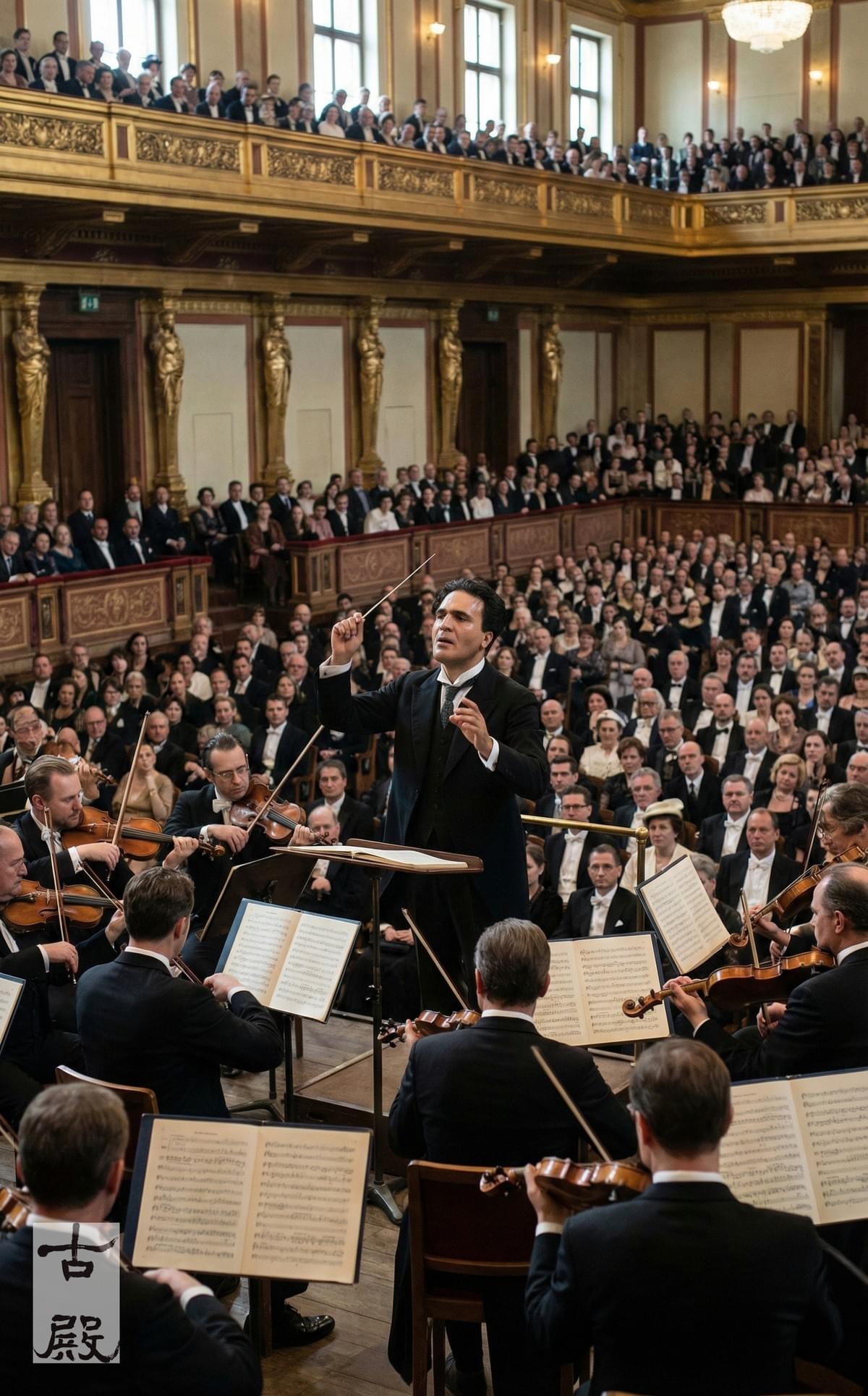
馬勒過世一年後,1912年6月26日。 維也納音樂協會大廳(金色大廳),空氣凝重得讓人窒息。
這是「維也納音樂節週」的重頭戲。主辦方做了一個極大膽、極具象徵意義的安排:他們把馬勒的第九號,與貝多芬的第九號(由菲利克斯·魏因加特納(Paul Felix von Weingartner,1863-1942)指揮)、布魯克納的第九號(由亞瑟·尼基什(Arthur Nikisch,1855-1922)指揮)並列演出。
這是在告訴世人:
馬勒,是這些偉大巨人的繼承者。
當晚,36歲的華爾特站上指揮台,面對著維也納愛樂。 你可以想像他當時的心情嗎?他手裡拿著的,是恩師的遺物;他要指揮的,是恩師的葬禮進行曲。
根據記載,那晚的演出震撼了全場。雖然當時的觀眾習慣在每個樂章結束後鼓掌(是的,那時候的音樂會形式跟現在的可能有些不同),但在最後那段著名的慢板樂章結束時,那種彷彿生命絲線斷裂的寂靜,讓所有人動容。
當時才15歲的天才作曲家康果爾德(Erich Wolfgang Korngold,1879-1957)在報紙上激動地寫道,華爾特的指揮「充滿了深刻的理解與情感的投入」。
那晚之後,世界終於承認:馬勒的第九號,是屬於歷史的經典。 而華爾特,用這場首演告訴在天之靈的馬勒:「你沒說完的話,我替你說完了。」
但,故事還沒結束。
1912年的首演雖然成功,卻因為當時錄音技術的限制,那晚的聲音像煙一樣消散在空氣中,無法留存。
華爾特以為他完成了任務。但他沒想到,命運在26年後,為他準備了另一場更殘酷、卻也更偉大的考驗。
下集預告: 1938年,納粹的坦克車開到了維也納門口。在逃亡的前夕,華爾特再次打開了這本總譜……
********
【活動資訊:見證歷史的聲音】 古殿歷史名曲音樂喫茶|第40場:布魯諾·華爾特 (Bruno Walter) 之夜
- 特別收錄: 現場將實體播放1938年馬勒第九號交響曲世界首次錄音
- 時間: 2026年2月27日 (週五) 19:30 - 21:00
- 地點: 古殿樂藏 (台北市北投區西安街一段169號2樓)
- 費用: 600元 (含精緻咖啡飲品)
- 席位: 僅限 10 位 (請填表單報名,表單在留言中)
(「古殿歷史名曲音樂喫茶」是台灣目前唯一固定舉辦此類深度歷史聆聽活動的空間。)
【活動資訊:見證歷史的聲音】 古殿歷史名曲音樂喫茶|第40場:布魯諾·華爾特 (Bruno Walter) 之夜
👉 立即預約您的時空席位 (需匯款確認): https://forms.gle/1E9v295gE5nNrdrD8
********
He Wrote It, But Never Heard It: About Mahler, Walter, and a Symphony Named "Inheritance" ~~ The 1912 World Premiere of Mahler’s Symphony No. 9
From One Man's Prophecy to the World's Echo
Right now, somewhere in the world, Mahler’s music is being played. He has become an absolute phenomenon in classical music.
But let’s travel back to 1911. When Gustav Mahler passed away, he was only 51. Back then, people barely cared about his music. Some even thought it was messy and chaotic. It is said that before he reached the end of his life, he left behind a statement that sounded like a prophecy:
"My time will come."
Creating music is a cruel business. If it isn't played or promoted, it doesn't truly exist. In the century since Mahler left us, the music world has answered his prophecy with a long, magnificent "Mahler Renaissance":
- The 1920s Spark: His close friend Willem Mengelberg led the first Mahler Festival in Amsterdam, fighting to secure Mahler a place in history.
- The 1960s Explosion: Thanks to his disciple Bruno Walter and the star conductor Leonard Bernstein, Mahler’s work finally broke through the barriers.
- The 2020s Golden Age: Today, Mahler is the core of classical music. Especially between 2025 and 2027, his prophecy is coming true on a massive global scale that Mahler himself could never have imagined.
Just look at the next three years—it’s the peak of Mahler performances worldwide:
- Netherlands (2025): The 3rd Mahler Festival at the Concertgebouw in Amsterdam. Five top orchestras, including the Berlin and Vienna Philharmonics, will play the complete symphonies.
- USA (2026-2027): At Carnegie Hall, Yannick Nézet-Séguin will lead the Met Opera, Philadelphia Orchestra, and Vienna Philharmonic in a complete Mahler cycle.
- Austria (2026): The Steinbach Mahler Festival will explore "Mahler's Universe."
Even here in Asia, the wave is strong. Japan's NHK Symphony is the first Asian orchestra invited to the Amsterdam festival. In Taiwan, both the NSO and TSO are launching full performance projects.
It seems the whole world is celebrating Mahler and discussing his greatness.
But, what if we rewind the clock to before Mahler died?
There was no applause. No festivals. No grand plans. There was only a dying man, and a stack of sheet music on his desk that no one had ever heard.
If you had only enough time left for one last song, who would you trust with your final voice?
1. Two Souls Ignited: Meeting and Understanding
Mahler and Bruno Walter met at the Hamburg Opera House in 1894. Walter was just an 18-year-old rookie, fresh out of the conservatory. Mahler was 34, a famous chief conductor.
The gap between them wasn't just 15 years of age; it was a gap in existence. Walter remembers being "terrified" (in a good way) the first time he saw Mahler conduct. He wrote in his memoirs that meeting Mahler was the moment his artistic soul truly woke up.
Then, life suddenly became romantic. In 1901, Mahler invited Walter to the Vienna Court Opera—the most powerful musical institution in Europe. Walter became his assistant conductor. For seven years, he shadowed Mahler.
Those seven years were a shock to Walter’s soul. He later wrote this moving confession:
"Mahler... struck me as a genius, a demon; life itself suddenly became romantic... I cannot describe his power better than to say it gave me a completely new attitude toward life."
A Philosophical Resonance Their bond went way beyond music technique. Can you imagine the intensity? This master didn't just teach the young Walter about notes and beats. They debated Schopenhauer’s pessimism, Nietzsche’s "Superman" philosophy, and the suffering and redemption in Dostoevsky’s novels.
Mahler wasn't just a boss. He was a mentor, a friend, and a "spiritual father."
The Promise at the Bedside When Mahler fell critically ill in 1911, Walter was right there. When the giant took his final breath on May 18th, Walter was by his bedside.
He didn't just lose a mentor; he lost his spiritual pillar. But grief didn't stop him. Less than a month later, Walter wrote to his sister, determined to conduct the premieres of Mahler’s final works.
He kept his promise. First with Das Lied von der Erde (The Song of the Earth) in 1911, and then, the moment we are looking at: The world premiere of the Ninth Symphony in 1912.
2. The Silent Will: Unspoken Words on My Lips
A Sweet Struggle in the Shadow of Death By the autumn of 1910, the countdown had begun. Mahler knew his time was short. He wrote to Walter: "In my solitude... I feel more clearly that everything in my body is wrong."
But here is the contradiction: The closer death came, the sweeter life tasted. He also wrote: "I am thirstier for life than ever before."
This extreme paradox—being choked by death while madly in love with every breath—is the soul of the Ninth Symphony. It’s not just a funeral song; it’s a deep, emotional tug-of-war with the world.
The Only Dedication Mahler made an unusual decision. He handed the score of the Ninth—music he had never heard with his own ears—directly to Walter. He wrote:
"In this work, I have said what has long been on the tip of my tongue."
On the title page, he wrote a simple but heavy line: "Dedicated to my friend Bruno Walter."
This was the only work Mahler ever dedicated to Walter. Why him? Because, as Mahler’s wife Alma said, Walter was his "closest confidant." Only Walter understood the philosophy behind the notes—the struggle between life and death.
A Trust Beyond Life and Death When Mahler died, the weight of this masterpiece fell on 35-year-old Walter’s shoulders. It wasn't a job anymore. It was a sacred trust. He knew he wasn't just conducting music; he was speaking the "goodbye" his teacher never got to say.
3. Vienna, 1912: A Premiere that Shook the World
June 26, 1912. The Golden Hall in Vienna. The air was so heavy you could hardly breathe.
The organizers made a bold move. They programmed Mahler’s Ninth alongside Beethoven’s Ninth and Bruckner’s Ninth. The message was clear: Mahler is the heir to these giants.
That night, 36-year-old Walter stood on the podium. Can you imagine how he felt? He was holding his teacher’s relic. He was conducting his teacher’s own funeral march.
The performance shook everyone. When the final, famous Adagio movement faded into silence—a silence that felt like the thread of life snapping—the audience was deeply moved. The 15-year-old prodigy Erich Korngold wrote that Walter’s conducting was "full of profound understanding."
That night, the world finally admitted: Mahler’s Ninth is a classic for the ages. And Walter told Mahler’s spirit: "The words you couldn't finish, I have spoken for you."
But... the story isn't over.
The 1912 premiere was a success, but because recording technology wasn't ready, that night's sound vanished into the air like smoke.
Walter thought he had completed his mission. But he didn't know that fate had prepared a cruel, yet even greater test for him 26 years later.
Next Episode Preview: In 1938, Nazi tanks rolled up to the gates of Vienna. On the eve of his escape, Walter opened this score once again...