
【古殿唱片音樂故事】在崩壞的世界邊緣,聽見人類求生的吶喊:解密1942年福特萬格勒的《貝多芬第九》——西方世界最早的福特萬格勒戰時錄音(Unicorn UK)正式授權傳奇
古殿殿主
前言:從蘇聯戰利品到西方世界的震撼彈
威廉·福特萬格勒(Wilhelm Furtwängler,1886-1954),在他過世後的幾十年間,為什麼全世界的樂迷還像瘋了一樣,在地毯式搜索他的錄音?特別是那一批在二戰砲火下(1939-1945)留下的「戰時錄音」。
(之前殿主曾寫過幾篇介紹過,如:1944年貝多芬第三號交響曲,1943年布拉姆斯第二號鋼琴協奏曲等「戰時錄音」)
理由很簡單,因為那些聲音不是演出來的,那是用命搏出來的。
試想一下,當空襲警報隨時會響起,當明天不再理所當然,音樂就不再只是娛樂,而是一種證明自己還「活著」的儀式。
在這些錄音中,有一場演出被公認為人類錄音史上最震撼人心的時刻,那就是:
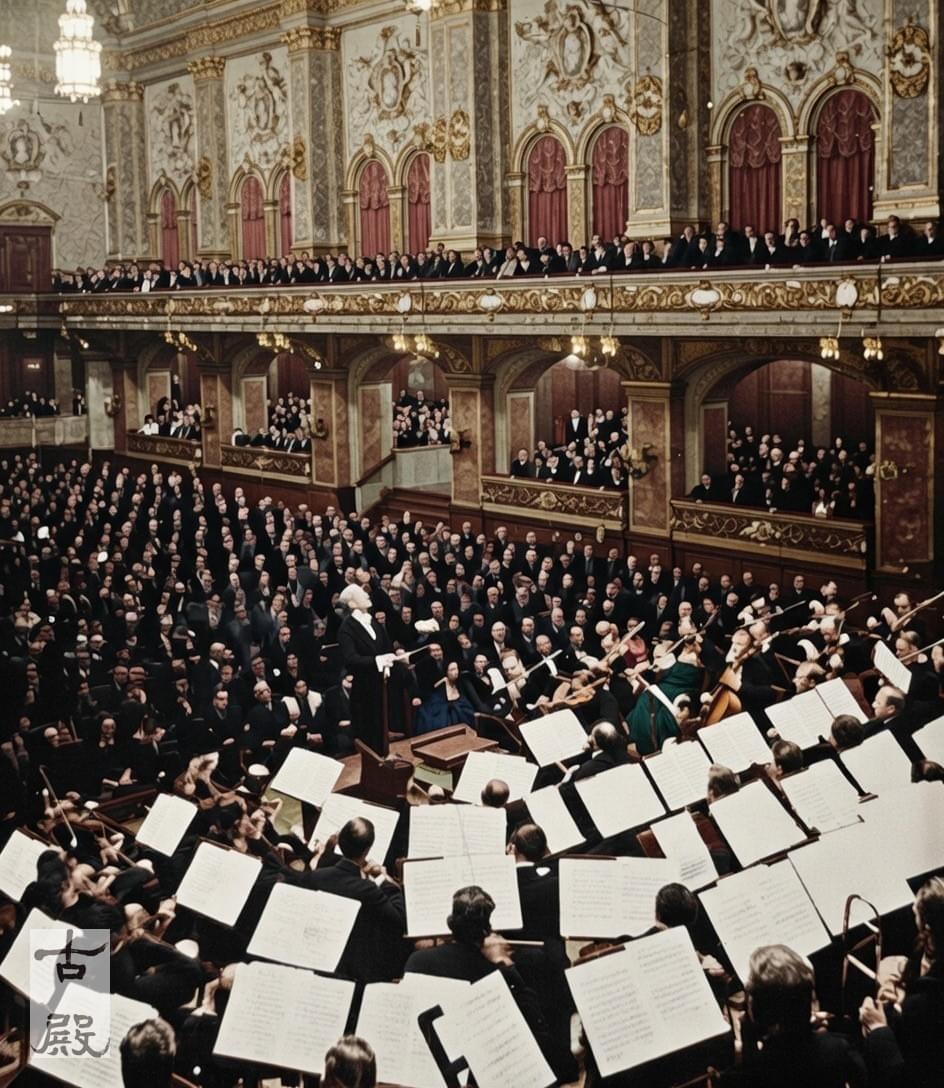
1942年3月,他指揮柏林愛樂樂團演奏的貝多芬《第九號交響曲》。
這份錄音的命運,跟它的音樂一樣曲折。它曾是蘇聯軍隊從柏林廣播大樓搶走的「戰利品」,被鎖在鐵幕後長達數年。直到後來,透過一段宛如諜報電影般的交涉過程,才終於以Unicorn(獨角獸) 這個唱片廠牌,成為西方世界最早獲得正式授權的商業發行版。
今天,我就要帶大家透過這張黑膠,在當時那個崩壞的世界邊緣,聽見人類求生的吶喊。
一、所謂「戰時錄音」:這不是音樂,是倖存者的證詞
大家常在唱片封面上看到「戰時錄音(Wartime Recordings)」這個詞,指的就是1939到1945年,福特萬格勒指揮柏林愛樂或維也納愛樂的現場。
但在古殿,我更願意把它定義為一種「極限狀態的生命紀錄」。
1. 納粹黑科技:被戰爭逼出來的「高傳真」先驅
這裡有個很諷刺的歷史玩笑。當時德國為了政治宣傳,開發出了領先全世界的「磁帶錄音技術(Magnetophon)」。當其他國家還在用充滿雜訊的直刻唱片時,德國第三帝國廣播電台(RRG)已經能用磁帶捕捉到驚人的動態範圍,甚至在1944年就開始玩立體聲實驗了。
這項原本為了戰爭服務的黑科技,卻意外地幫全人類做了一件好事:它把七十多年前,柏林愛樂大廳裡那種空氣的振動、樂手的呼吸,甚至是觀眾壓抑的咳嗽聲,都奇蹟般地凍結了下來。
這告訴我們什麼?
科技本身冰冷,但當它遇上了燃燒靈魂的藝術家,它就成了保存歷史生命狀態的時光機。
2. 被蘇聯紅軍打包的「戰利品」
這些母帶的命運,比電影還戲劇化。1945年蘇聯紅軍攻進柏林,進入第三帝國廣播電台的大樓後,把這些珍貴的磁帶當作「戰利品」,一箱箱搬回了莫斯科。
這就是為什麼在很長一段時間裡,西方世界根本不知道這些錄音的存在,或者只能聽到品質很爛的東德廣播電台流出的拷貝版,或是多次盜拷版。直到60年代冷戰局勢鬆動,這些被囚禁在鐵幕後的聲音才重見天日。當它們再次響起時,整個西方樂壇都嚇傻了——原來我們錯過了這麼多。
3. 瀕死前求生的爆發力
英國音樂評論家也是英國福特萬格勒協會主席Paul J. Minchin曾說:
「福特萬格勒在1942年至1944年間的演出特點,在於第一樂章和最後樂章中巨大的驅動力和力量。」
在戰爭的陰影與納粹政權的壓力下,福特萬格勒的指揮呈現出一種近乎崩潰邊緣的張力,音樂成為了他與聽眾唯一的精神避難所。這種在極限狀態下迸發出的生命力,賦予了戰時錄音無法複製的獨特魅力。
在納粹的監視下,在隨時可能落下的炸彈陰影中,福特萬格勒的指揮不是在表演,而是在「求生」。音樂成了他和聽眾唯一的防空洞。那種張力,是一種「不知道還有沒有明天」的絕望感所逼出來的生命力。
這就是戰時錄音無法被複製的原因:
和平年代的音樂家可以追求完美,但只有戰火下的音樂家,才能演奏出這種「活著」的痛楚。
二、1942年3月:在地獄門口舉辦的慶典
如果時光能倒流,這絕對是一場「非去不可」的音樂會。
1. 最後的繁華:布魯諾·基特爾合唱團的絕響
這場演出發生在1942年3月22日至24日。表面上,這是柏林愛樂例行的定期音樂會,而且還有一個喜氣洋洋的名目:「布魯諾·基特爾合唱團(Bruno Kittel Chorus)創立40週年紀念」。
但在那個當下,慶祝40週年是多麼諷刺的一件事。 這是一個德國最頂尖的合唱團,他們曾經代表著德意志文化的榮光。但在這場演出後不久,隨著柏林被炸成廢墟,這個合唱團也跟著灰飛煙滅,消失在歷史的長河裡。
所以,當你在唱片裡聽到那龐大的合唱聲浪時,請你記住:這不是歌聲,這是他們留給這世界最後的遺言。
參與這場「最後儀式」的,都是當時的夢幻陣容:
指揮: 威廉·福特萬格勒(那個痛苦的靈魂)
樂團: 柏林愛樂樂團(那群在此刻只為生存而奏的樂手)
獨唱家:
提拉·布里姆 (Tilla Briem):德國女高音,以演唱藝術歌曲與神劇聞名,1934-36年間曾活躍於柏林國立歌劇場。
伊莉莎白·亨根 (Elisabeth Höngen):德國著名女低音,1943年起成為維也納國立歌劇場專屬歌手,曾參與福特萬格勒在史卡拉劇院的《指環》演出。
彼得·安德斯 (Peter Anders):當時極受歡迎的男高音,曾長期效力於柏林國立歌劇場,1954年不幸死於車禍。
魯道夫·瓦茨克 (Rudolf Watzke):波希米亞出身的男低音,活躍於拜魯特與柏林,亦是一位知名的聲樂教師。
布魯諾·基特爾合唱團
1902年由基特爾創立,為二戰前德國頂尖合唱團,與柏林愛樂有深厚合作關係,惜隨柏林陷落而消失。此錄音極可能是其與福特萬格勒最後的合作。
2. 野蠻的文獻:收回第九號交響曲
為什麼這版錄音會被稱為「傳奇」?
如果你聽過1951年戰爭結束後他在拜魯特指揮的那版《貝九》,那是戰後重生的喜悅,充滿神聖的光輝。但1942年這一版,戰爭時期的《貝九》,差異巨大。
第一樂章: 定音鼓敲得像重砲轟擊。那不是節奏,那是戰火的聲音。評論家說這讓人「膽戰心驚」,因為那聽起來就像是命運在敲門,而且是帶著異常巨大的急促感。
終樂章的狂奔: 最讓人起雞皮疙瘩的是最後的結尾。通常指揮家會讓《歡樂頌》在此刻輝煌結束,但福特萬格勒卻瘋狂地無限加速(Accelerando)。
那種速度,快到樂團幾乎要解體,快到合唱團幾乎唱斷氣。那不是邁向勝利的衝刺,那是一種「潰逃」。
就像湯瑪斯·曼在小說《浮士德博士》裡寫的那句名言:
「我要收回第九號交響曲!因為人類所有高貴的希望都前功盡棄了。」
在這張唱片裡,福特萬格勒真的把貝多芬的「歡樂」收回了,他還給我們的是赤裸裸的「絕望」。
3. 關於「黑色貝九」的傳說
既然聊到1942年,很多資深樂迷會問:「那希特勒生日前夜那場呢?」
沒錯,就在這場演出的下個月(4月19日),福特萬格勒被納粹宣傳部長戈培爾(Paul Joseph Goebbels,1897-1945)設局,被迫在希特勒生日前夜的納粹黨慶上指揮《貝九》,那就是著名的「黑色貝九」。
雖然那場演出後來也被發現了(一度以為遺失,直到21世紀初才重見天日),每一份紀錄的存世與發現,都是非常珍貴的歷史遺產,有其歷史意義,但前一個月3月的這一場,才是原始藝術家意識上純度最高,最展現其自由意識的版本。
因為4月那場是被納粹宣傳部長戈培爾設計,被迫接收的「政治任務」,而3月這場,儘管同樣身處地獄,卻是福特萬格勒與柏林愛樂、基特爾合唱團,為了音樂、為了彼此而做的最後一次生命燃燒。
(那場演出的錄音長期被認為已經遺失,直到21世紀初才由私人收藏家Christian Zwarg在柏林發現了相關的醋酸盤並予以出版。首次出版是2004年以CD形式:Archipel ARPCD 0270。
三、Unicorn 的奇蹟:倫敦獵人的精準眼光與聲音救援
我們現在能聽見1942年那場驚心動魄的演出,這件事本身就是一個奇蹟。因為這捲母帶,曾經是蘇聯軍隊的戰利品,也差點毀在傲慢的美國科技手裡。
這是一個關於「失而復得」的故事。
1. 被科技殺死的《英雄》:著名的「Urania 事件」
在講這張神盤之前,我必須先講一個反面教材,這也是古殿一直強調「規格不是一切,人味才是關鍵」的最佳證明。
1953年,美國一家叫烏拉尼亞(Urania)的唱片公司,他們從東德廣播電台弄到了一份福特萬格勒戰時錄音的磁帶拷貝(貝多芬《英雄》交響曲)。他們興高采烈地發行了,結果卻鬧出了唱片史上最大的烏龍。
為什麼?因為「規格錯了」。 當時德國的磁帶機技術獨步全球,帶速標準跟後來美國商業生產機器不同。唱片公司的工程師沒有注意到,直接用美國的標準去播放德國的磁帶。結果發生了什麼事?
聲音變快了,音高變尖了(Pitch High)。
原本莊嚴厚重、充滿悲劇色彩的《英雄》,變成了像吸了氦氣一樣的卡通配樂,變成了一種歇斯底里的尖叫。福特萬格勒本人聽到這張唱片時氣瘋了,他甚至去打官司,說出了那句名言: 「這不是我的指揮!我不承認!」
這就是為什麼我常說,如果沒有「文化」做底蘊,科技與商業就是破壞者。
(關於「烏拉尼亞」貝多芬第三號,之前殿主也曾寫過更詳細的專文介紹)
2.鐵幕後的幻影:從「初期版」到「梅洛蒂亞(Melodiya)」
回到我們談的「戰時貝九」。 1945年蘇聯紅軍攻進柏林後,把這些母帶當作戰利品搬回了莫斯科。在很長一段時間裡,這些錄音就像傳說中的「幽靈」,西方世界只聞樓梯響。
直到 1962年 左右,這層神秘的面紗才被掀開一角。 當時著名的蘇聯國營唱片公司Melodiya甚至還沒正式成立,這份錄音就先以 "Pre-Melodiya" 的形式悄悄問世了(編號 33D-010851-54)。
這些最初期的版本極為稀有,並非統一的大量壓制,而是由全蘇聯錄音室(VSG)或散落在各地的工廠製作。其中最讓資深收藏家瘋狂的,莫過於編號 D-010851 的早期壓片。(這就是傳說中的蘇聯首版系譜之一。封面上印著粗獷的貝多芬素描與俄文標題「БЕТХОВЕН」,唱片標籤則是早期的 VSG 藍標。請注意圖片下方的結標價格——在2011年,這樣一套唱片竟拍出了 5300 美金(約台幣17萬)的天價!這足以證明它在黑膠考古學中至高無上的地位。)
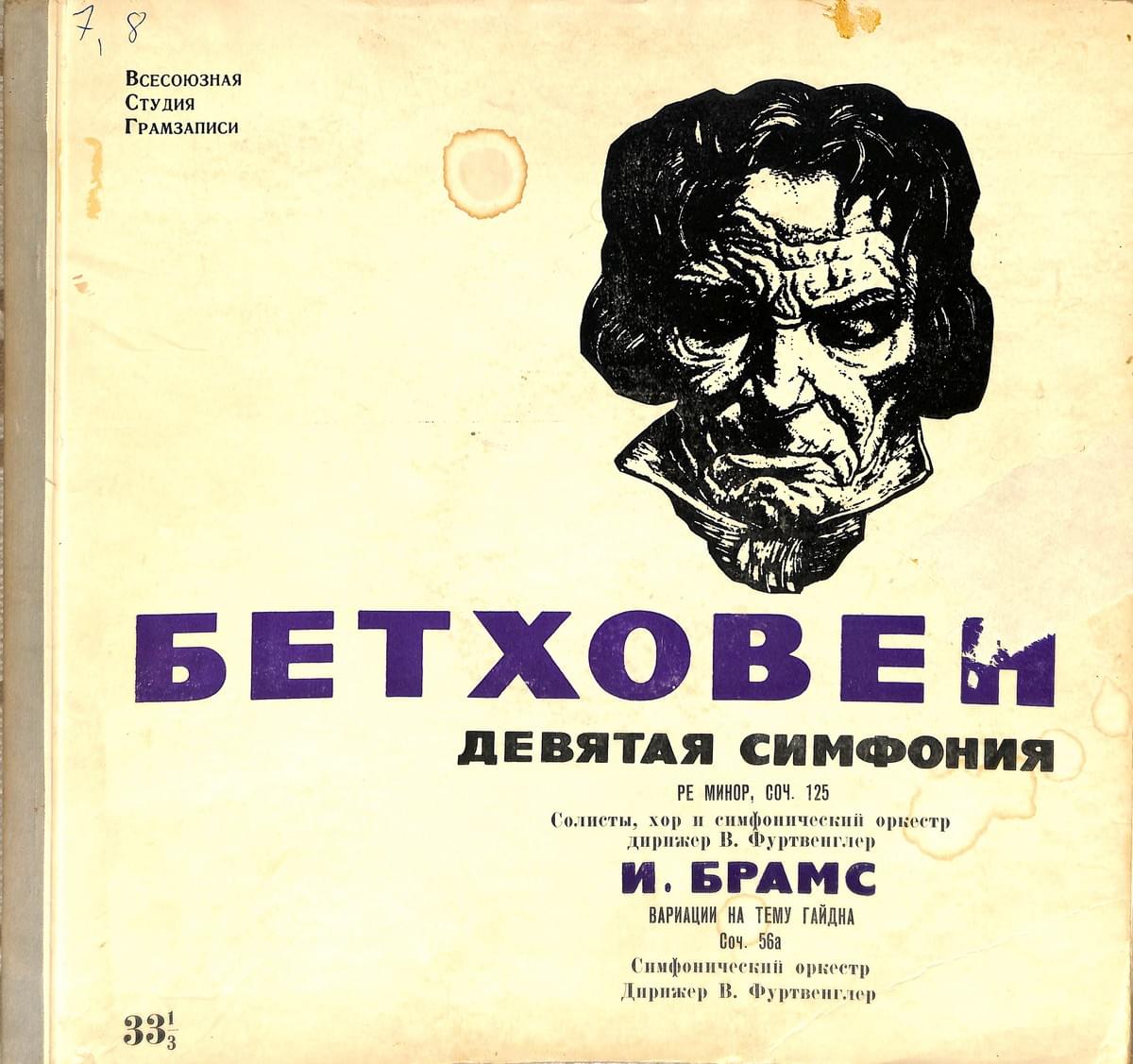
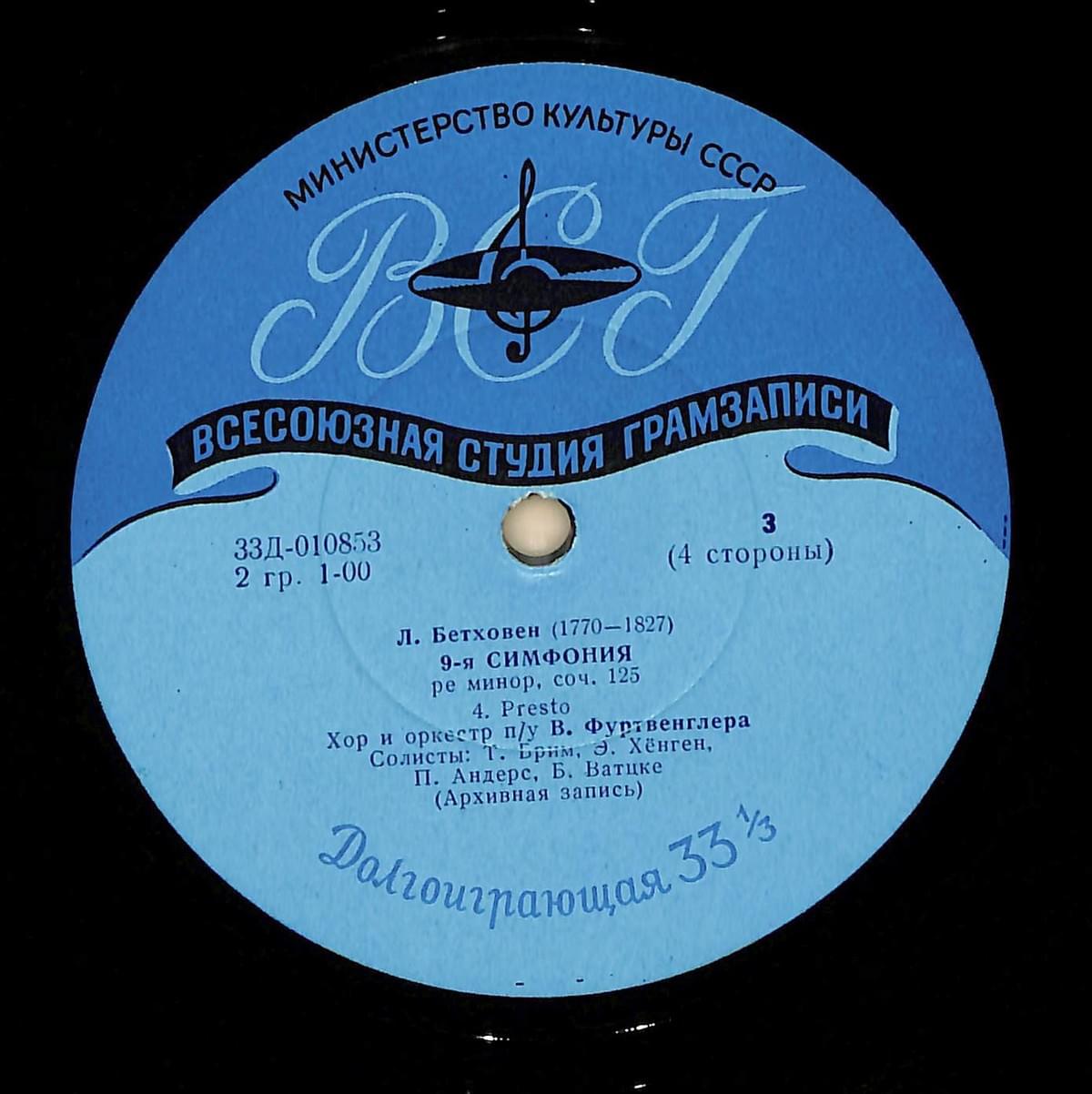
一直要等到1963年Melodiya正式成立後,大約在1966年左右,我們才終於看到了掛著正規Melodiya廠牌與編號(Melodiya D 010851-010854)的版本出現。但無論是早期的火炬標還是後來的梅洛蒂亞,這些唱片當時都只被允許在鐵幕內流傳,未經任何西方世界概念中的正式授權。對當時的西方樂迷來說,這就是只存在於傳聞中、遙不可及的「幻之名盤」。
3. Record Hunter的慧眼與獨角獸的誕生
真正的轉機,來自一位偉大的女性——福特萬格勒的遺孀,伊莉莎白 福特萬格勒(Elisabeth Furtwängler,1910-2013)。
她不願意讓這些充滿靈魂的錄音流落在外,更不願意看到像Urania那樣的慘劇再次發生。她展開了強硬的交涉,最終逼得蘇聯當局點頭,將這批屬於德國文化遺產的原始磁帶母帶拷貝,歸還到了她位於瑞士的手中。
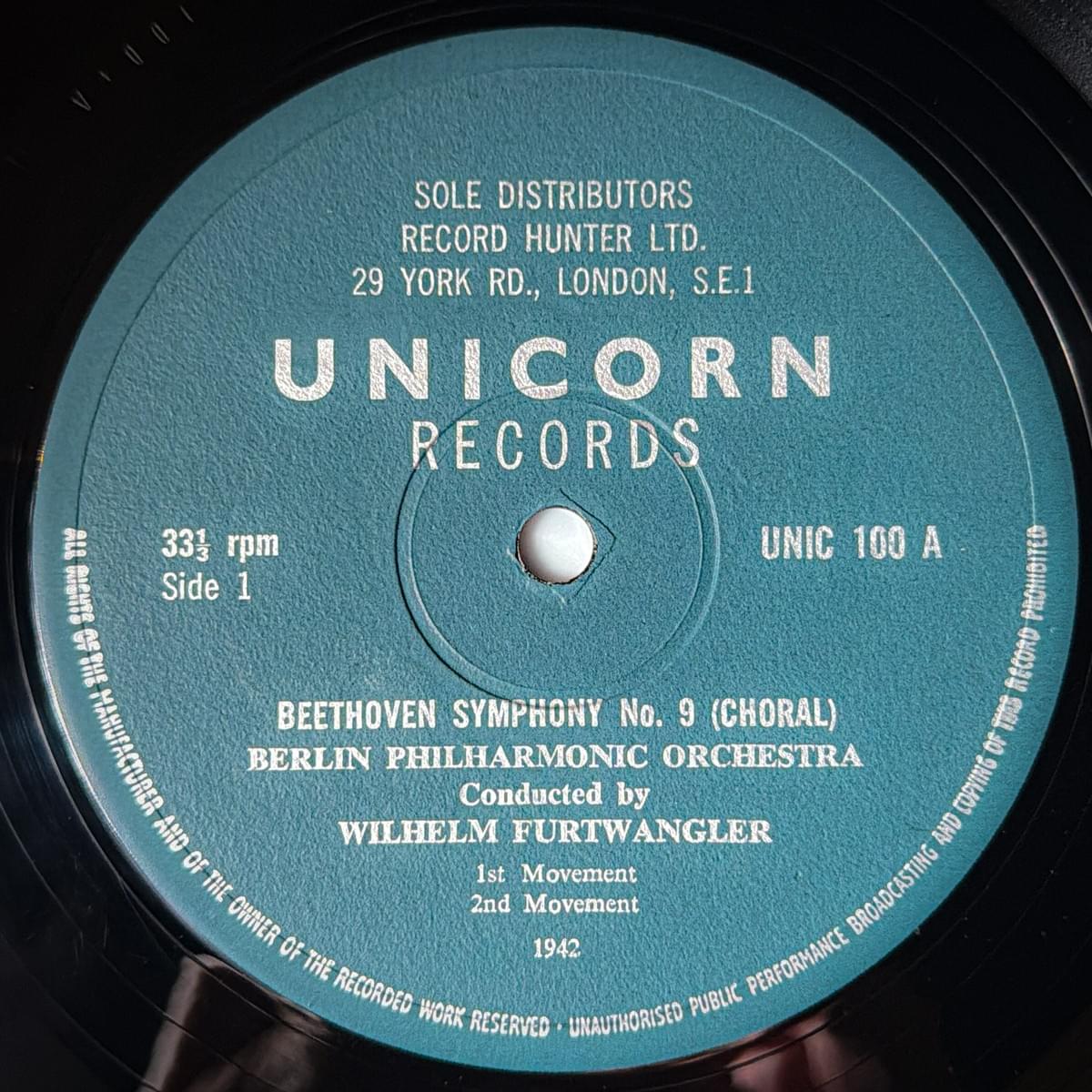
就在這時,一位關鍵人物登場了:倫敦Record Hunter公司的總監John C. Goldsmith。他一聽到磁帶原始母帶拷貝回到瑞士的消息,隨即展開積極交涉。這不只是一場商業談判,更是一次對歷史聲音的搶救行動。最終,Record Hunter公司成功獲得了這批錄音在西方的正式發行權,並決定透過Unicorn(獨角獸) 這個廠牌,將這份震撼世界的錄音正式發行。
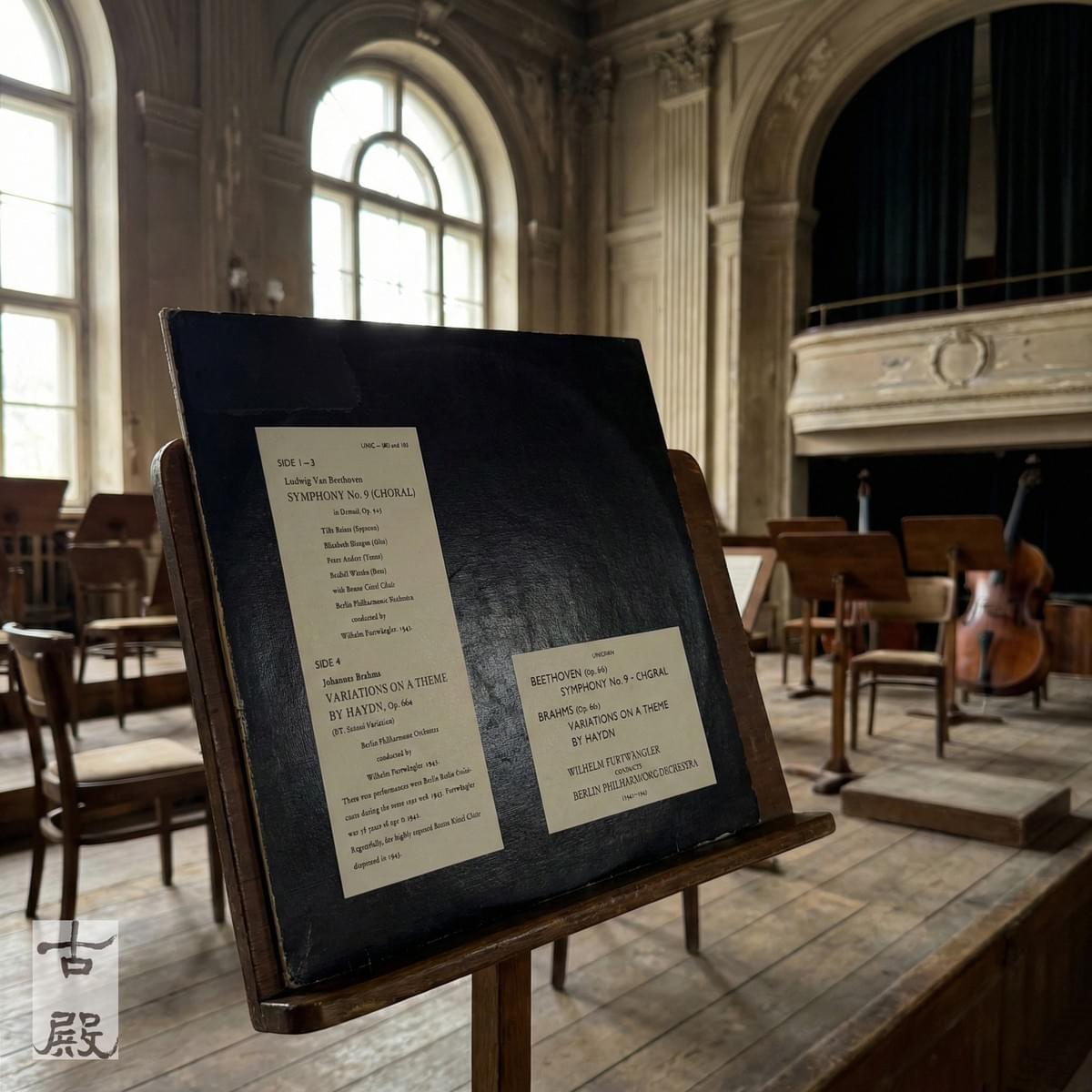
這就是我們今天看到的這套 UNICORN UK UNIC-100 & 101。
4. 這套唱片的歷史價值?
因為它是「正統」: 這是第一份經過福特萬格勒家族點頭認可的發行。它洗刷了過去那些盜版、錯誤轉錄的污名,還給了大師一個清白。
因為它是「直刻」: 它不是拿蘇聯的黑膠去翻錄的,而是直接從伊莉莎白拿回來的原始磁帶母帶拷貝進行刻片。加上70年代英國頂尖的製盤工藝,它保留了最多的「空氣感」。(經殿主與蘇聯1962年原始33D-010851-54比較,UNICORN UK UNIC-100 & 101版本製作非常精良)
因為它是「夢想的實現」: 正如日本知名樂評家小石忠男在解說裡寫的,這張唱片的問世,在1969-1970年間的當時,無數樂迷夢想的實現。
最後
這張唱片經歷了納粹的紀錄、柏林的砲火、蘇聯的掠奪、冷戰的封鎖,最後由Record Hunter獨具慧眼地把它帶回西方世界正式商業出版,才轉動在我們的唱盤上。它本身就像是一個歷經劫難的倖存者,身上的每一條溝槽,都刻滿了故事。
聽聽看,在那個世界即將毀滅的邊緣,人類是如何用盡最後一絲力氣,吼出對生命的渴望。那種力量,絕對能讓你重新找回面對未來的希望。
實體音樂:
*******
Hearing the Cry for Survival at the Edge of a Crumbling World: Decoding Furtwängler's 1942 Beethoven Ninth
—— The Legend of the First Officially Authorized Western Release of Furtwängler's Wartime Recordings (Unicorn UK)
Preface: From Soviet War Booty to a Shockwave in the West
Wilhelm Furtwängler (1886-1954). In the decades following his death, why have music lovers around the world searched like madmen, scouring the earth for his recordings? Especially those "Wartime Recordings" left behind amidst the artillery fire of World War II (1939-1945).
(The Master has previously written introductions for other wartime recordings, such as the 1944 Beethoven Symphony No. 3 and the 1943 Brahms Piano Concerto No. 2).
The reason is simple: these sounds were not merely performed; they were fought for with lives.
Imagine a time when air raid sirens could scream at any moment, when tomorrow was no longer guaranteed. In such times, music ceases to be mere entertainment and becomes a ritual to prove that one is still "alive."
Among these recordings, one performance is universally recognized as the most soul-shaking moment in the history of recorded sound: The Beethoven Symphony No. 9 conducted by Furtwängler with the Berlin Philharmonic in March 1942.
The fate of this recording is as twisted as the music itself. It was once "war booty" seized by the Soviet army from the Berlin Radio Building, locked behind the Iron Curtain for years. It was not until much later, through a negotiation process worthy of a spy thriller, that it finally became the first officially authorized commercial release in the Western world under the Unicorn label.
Today, I will take you through this vinyl record to hear the cry for human survival at the edge of that crumbling world.
I. The So-Called "Wartime Recordings": Not Music, but a Survivor's Testimony
You often see the term "Wartime Recordings" on album covers, referring to Furtwängler's live performances with the Berlin Philharmonic or Vienna Philharmonic between 1939 and 1945.
But at Gu Dian, I prefer to define them as "Life Records in an Extreme State."
1. Nazi Black Tech: The "High Fidelity" Pioneer Forced by War
Here lies a very ironic historical joke. At the time, for political propaganda, Germany developed the world-leading "Magnetophon" (magnetic tape recording technology). While other countries were still using static-filled direct-cut discs, the Reich Broadcasting Corporation (RRG) was already using magnetic tape to capture an astonishing dynamic range, and had even begun stereo experiments by 1944.
This "black technology," originally intended to serve the war effort, unexpectedly did a great service for all humanity: it miraculously froze the vibration of the air, the breathing of the musicians, and even the suppressed coughs of the audience in the Philharmonie hall from over seventy years ago.
What does this tell us? Technology itself is cold, but when it meets an artist with a burning soul, it becomes a time machine that preserves the state of historical life.
2. "War Booty" Packed by the Red Army
The fate of these master tapes is more dramatic than a movie. In 1945, the Soviet Red Army stormed Berlin, entered the RRG building, and carted these precious tapes back to Moscow box by box as "war booty."
This is why, for a long time, the Western world didn't even know these recordings existed, or could only hear terrible quality copies leaked from East German radio or multiple-generation bootlegs. It wasn't until the thawing of the Cold War in the 1960s that these voices imprisoned behind the Iron Curtain saw the light of day again. When they rang out once more, the entire Western music world was stunned—we had missed so much.
3. The Explosive Power of Survival Before Death
Paul J. Minchin, a British music critic and Chairman of the Wilhelm Furtwängler Society, once said: "The characteristic of Furtwängler's performances between 1942 and 1944 lies in the tremendous drive and power in the first and last movements."
Under the shadow of war and the pressure of the Nazi regime, Furtwängler's conducting presented a tension bordering on collapse. Music became the only spiritual sanctuary for him and his audience. This vitality, bursting forth under extreme conditions, endowed the wartime recordings with a unique, unreplicable charm.
Under Nazi surveillance, under the shadow of falling bombs, Furtwängler was not "performing"; he was "surviving." Music became the only air raid shelter for him and the listeners. That tension was a life force forced out by the despair of "not knowing if there is a tomorrow."
This is why wartime recordings cannot be replicated: Musicians in peacetime can pursue perfection, but only musicians under fire can play the pain of "being alive."
II. March 1942: A Celebration at the Gates of Hell
If time travel were possible, this is absolutely a concert one "must attend."
1. The Last Splendor: The Swan Song of the Bruno Kittel Choir
This performance took place from March 22nd to 24th, 1942. On the surface, it was a routine subscription concert for the Berlin Philharmonic, with a celebratory title: "T
he 40th Anniversary of the Bruno Kittel Chorus."
But in that moment, celebrating a 40th anniversary was such an ironic thing. This was one of Germany's premier choirs, once representing the glory of German culture. Yet, shortly after this performance, as Berlin was bombed into ruins, this choir vanished into the river of history.
So, when you hear that massive wall of choral sound on the record, please remember: This is not singing; this is their final testament left to the world.
The "Dream Team" participating in this "Final Ritual" included:
Conductor: Wilhelm Furtwängler (that tormented soul)
Orchestra: Berlin Philharmonic (musicians playing only for survival at this moment)
Soloists:
- Tilla Briem (Soprano): Famous for lieder and oratorios.
Elisabeth Höngen (Contralto): Famous German contralto, later a regular at the Vienna State Opera.
Peter Anders (Tenor): Extremely popular at the time, tragically died in a car accident in 1954.
Rudolf Watzke (Bass): Bohemian-born bass, active in Bayreuth and Berlin.
Bruno Kittel Chorus: Founded in 1902, a top German choir before WWII. This recording is likely their final collaboration with Furtwängler.
2. A Savage Document: Taking Back the Ninth Symphony
Why is this recording called a "legend"?
If you have heard his 1951 Bayreuth Ninth after the war, that was the joy of rebirth, full of divine light. But the 1942 version, the Wartime Ninth, is vastly different.
First Movement: The timpani sounds like heavy artillery bombardment. That is not rhythm; that is the sound of war. Critics say it is "terrifying" because it sounds like Fate knocking at the door with an abnormally massive sense of urgency.
The Sprint of the Finale: The most goosebump-inducing part is the very end. Usually, conductors let the "Ode to Joy" end brilliantly. But Furtwängler drives a mad, infinite acceleration (Accelerando).
That speed is so fast the orchestra almost disintegrates, so fast the choir almost runs out of breath. It is not a sprint toward victory; it is a "rout."
It is just like the famous line Thomas Mann wrote in his novel Doctor Faustus: "I want to take back the Ninth Symphony! Because all the noble hopes of mankind have been in vain."
In this record, Furtwängler truly "took back" Beethoven's joy, and what he returned to us was naked despair.
3. The Legend of the "Black Ninth"
Speaking of 1942, many veteran fans will ask: "What about the performance on the eve of Hitler's birthday?"
Yes, just the month after this performance (April 19th), Furtwängler was set up by Nazi Propaganda Minister Joseph Goebbels and forced to conduct the Ninth at a Nazi party celebration for Hitler's birthday. That is the famous "Black Ninth."
Although that recording was also discovered later (long thought lost until resurfacing in the 21st century), every surviving record is a precious historical legacy. However, the performance from March—the month prior—is the version that represents the highest purity of the artist's original consciousness and demonstrates his free will.
The April concert was a "political mission" forced upon him by Goebbels. The March concert, though equally situated in hell, was a final burning of life by Furtwängler, the Berlin Philharmonic, and the Kittel Choir for the sake of music and for each other. (The recording of the April performance was long thought lost until private collector Christian Zwarg discovered the relevant acetate discs in Berlin in the early 21st century. First published on CD in 2004: Archipel ARPCD 0270).
III. The Unicorn Miracle: The London Hunter's Sharp Eye and Sound Rescue
The fact that we can now hear that thrilling performance from 1942 is a miracle in itself. Because this master tape was once Soviet war booty, and it was nearly ruined by arrogant American technology.
This is a story about "Lost and Found."
1. The
Eroica Killed by Technology: The Famous "Urania Incident"
Before talking about this divine disc, I must mention a counter-example. This is the best proof of Gu Dian's motto: "Specs are not everything; the human touch is key."
In 1953, an American record company called Urania obtained a tape copy of a Furtwängler wartime recording (Beethoven's Eroica) from East German radio. They released it happily, but it resulted in the biggest blunder in record history.
Why? Because the "specs were wrong." At the time, German magnetic tape technology was unique in the world, and the tape speed standard differed from later American commercial machines. The record company's engineers didn't notice and played the German tape using American standards. The result?
The sound became faster, and the pitch went sharp (Pitch High).
The originally solemn, heavy, and tragic Eroica became a cartoon soundtrack that sounded like it had inhaled helium—a hysterical shriek. Furtwängler himself was furious when he heard it, even filing a lawsuit and declaring: "That is not my conducting! I do not recognize it!"
This is why I often say: without "culture" as a foundation, technology and commerce are destroyers.
2. The Phantom Behind the Iron Curtain: From "Early Editions" to "Melodiya"
Back to our "Wartime Ninth." After the Red Army took the tapes to Moscow in 1945, these recordings were like "ghosts" for a long time—rumored in the West but never heard.
It wasn't until around 1962 that the veil of mystery was lifted slightly. At that time, the famous Soviet state record company Melodiya hadn't even been formally established, yet this recording quietly appeared in a "Pre-Melodiya" form (Catalog No. 33D-010851-54).
These earliest versions are extremely rare. They were not mass-pressed uniformly but were produced by the All-Union Recording Studio (VSG) or scattered factories. The one that drives veteran collectors the craziest is the early pressing with catalog number D-010851.
(This is one of the legendary Soviet first edition lineages. The cover features a rough sketch of Beethoven and the Russian title "БЕТХОВЕН," and the label is the early VSG Blue Label. Note the closing auction price—in 2011, such a set sold for a sky-high price of $5,300 USD (approx. 170,000 TWD)! This is enough to prove its supreme status in vinyl archaeology.)
It wasn't until Melodiya was formally established in 1963 that we finally saw versions with the regular Melodiya label and numbering (Melodiya D 010851-010854) appear around 1966. But whether it was the early "Torch" label or the later Melodiya, these records were only allowed to circulate within the Iron Curtain and were unauthorized by Western standards. To Western music lovers at the time, this was a "Phantom Disc" that existed only in rumors, forever out of reach.
3. Record Hunter's Insight and the Birth of Unicorn
The real turning point came from a great woman—Furtwängler's widow, Eli
sabeth Furtwängler (1910-2013).
She was unwilling to let these soul-filled recordings remain lost, nor did she want to see a tragedy like the Urania incident happen again. She launched tough negotiations and finally forced the Soviet authorities to agree to return the copies of the original magnetic master tapes—which belonged to German cultural heritage—to her in Switzerland.
At this moment, a key figure appeared: John C. Goldsmith, director of the London-based Record Hunter company. Hearing that the master tape copies had returned to Switzerland, he immediately began active negotiations. This was not just a business deal; it was a rescue operation for historical sound. Finally, Record Hunter successfully obtained the official rights to release these recordings in the West and decided to release this world-shaking recording under the Unicorn label.
This is the UNICORN UK UNIC-100 & 101 set we see today.
4. What is the Historical Value of this Set?
Bec
ause it is "Orthodox": This is the first release approved by the Furtwängler family. It washed away the stigma of past bootlegs and incorrect transfers, restoring the Maestro's name.
Because it is "Direct Cut": It was not dubbed from Soviet vinyl but cut directly from the master tape copy Elisabeth brought back. Combined with the top-tier British mastering craftsmanship of the 70s, it preserves the most "airiness." (The Master has compared this with the original Soviet 1962 33D-010851-54 version; the UNICORN UK UNIC-100 & 101 production is excellent).
Because it is a "Dream Realized": As the famous Japanese music critic Tadao Koishi wrote in the liner notes, the release of this record in 1969-1970 was the realization of a dream for countless music lovers.
Final Thoughts
This record has survived Nazi documentation, the artillery fire of Berlin, Soviet looting, and the blockade of the Cold War, finally being brought back to the Western world for official commercial publication by the unique eye of Record Hunter, only to spin now on our turntables. It is itself a survivor of catastrophe; every groove on its surface is carved with stories.
Listen to it. Listen to how, at the edge of a world about to be destroyed, humanity used its last ounce of strength to roar out a desire for life.
That power will absolutely help you find the hope to face the future again.