
【古殿唱片音樂故事】連鋼琴巨人都害怕的「完美陷阱」:在莫札特的音符裡,找回我們遺失的慢時間
古殿殿主
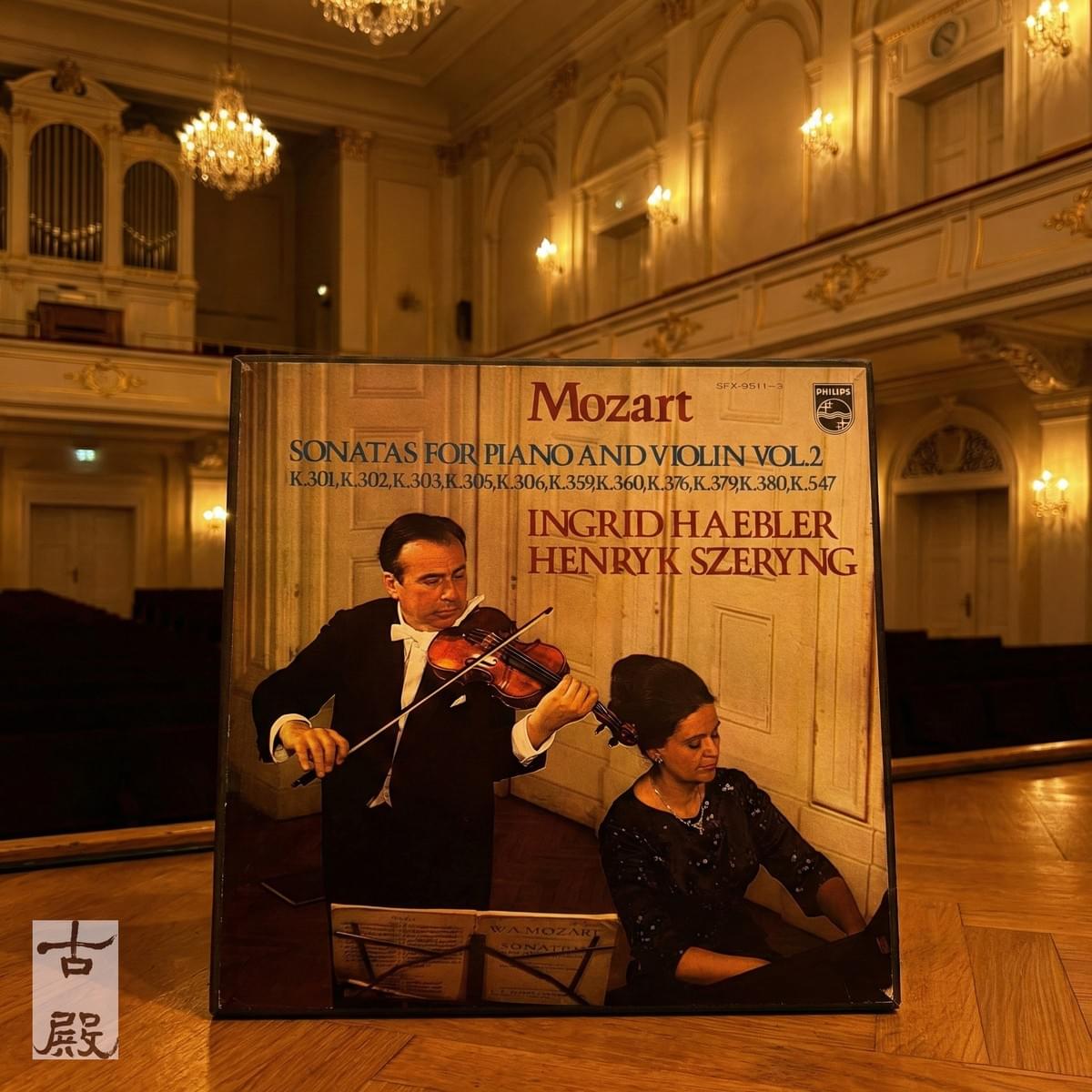
今天要和大家分享,是一套能把我們從讓心跳穩下來、肩頸放鬆的奇妙演奏錄音——Henryk Szeryng (謝霖) 與 Ingrid Haebler (海布勒) 在 1969 年到 1972 年間錄製的莫札特小提琴奏鳴曲全集。
但在此之前,我們得先解開一個音樂史上的巨大謎團:為什麼莫札特的音樂,會成為所有頂尖大師最害怕的「陷阱」?
一、 連巨人也迷惘的陷阱:莫札特到底「難」在哪裡?
大鋼琴家許納貝爾(Artur Schnabel)曾留下一句非常幽默卻一針見血的名言:
「莫札特的音樂對小孩子來說太容易,對音樂家來說太難。」
小孩子彈莫札特,覺得旋律好聽,照著譜彈就開心極了。但對真正的音樂家來說,這簡直是個噩夢。想像一下,莫札特的音符那麼少,整首曲子透明得像一杯白開水,你沒有任何濃烈的和聲可以掩護,也沒有複雜的踏板可以躲藏。在莫札特面前,演奏家是完全「裸體」的。
更致命的是莫札特音樂裡的「多義性」。
蘇聯鋼琴巨人李希特(Sviatoslav Richter)晚年曾有過一個近乎無力的告白。他說,莫札特對他來說是最「難」的,因為他每次演奏都摸不著頭緒,不知道曲子的核心到底在哪裡。每一次彈,莫札特彷彿都在變,只有莫札特會這樣。
為什麼連李希特這樣的巨人都會迷惘?因為莫札特的音樂,是一面「沒有自我」的鏡子。
如果今天彈貝多芬,核心是「掙扎與勝利」,你只要用力對抗命運就對了;彈蕭邦,核心是「詩意與亡國之痛」,你把憂鬱放進去就能感動人。但莫札特是「空的」。他什麼情緒都有一點,卻又什麼都不執著。這種極致的平衡,讓習慣去尋找「深刻意義」的現代演奏家完全無所適從——你以為你今天懂他了,下次上台卻發現完全不是那麼回事。
現代演奏家的困境:有了完美技術,卻遺失了「貴族氣質」
客觀地說,我們現在的演奏家,技術簡直完美到了極點。但當他們碰上莫札特的小提琴奏鳴曲時,往往敗下陣來。為什麼?因為他們缺乏了一種叫做**「貴族氣質」**的東西。
這裡說的貴族,絕對不是指戶頭裡有多少錢、開什麼跑車,而是一種文化、靈性與教養的高度。18 世紀的沙龍音樂,講究的是一種「不費力的優雅」。這就像是兩個極有教養的人在對話:我提出一個想法,你溫和地回應;不搶話、不炫耀、不過度宣洩情緒。
核心叩問:你把「時間」花在了哪裡?
為什麼以前的大師有這種氣質,現在的人卻沒有?我反覆想了很久,發現最核心的答案在於:「時間的質地」。
當代演奏家的時間,被現代社會切割成無數的碎片:趕著練琴、趕著比賽、趕飛機、還要趕著經營社群媒體。每一分鐘都必須「有效率」、「有產值」。
但謝霖和海布勒那一代人呢?他們擁有一種我們現代人極度匱乏的東西——「無用的慢時間」。
他們把時間花在閱讀托爾斯泰與歌德上,花在博物館裡凝視一幅畫上,花在與朋友深夜的長談上,甚至只是無所事事地看著窗外發呆。正是這些看似「無用」的時間,孕育了他們精神的深度與從容的底蘊。
你無法用一個焦慮、隨時都在算計的心智,去演奏出從容、有呼吸感的莫札特。
你把時間花在什麼地方,決定了你是一個什麼樣的人;而你是一個什麼樣的人,就決定了你手下的莫札特會是什麼樣子。
面對莫札特那面千變萬化的鏡子,李希特選擇了真誠地苦苦追尋;而謝霖與海布勒的解法則是:不去找核心,而是用他們一生的文化底蘊,為莫札特打造一個極度優雅、節制、有教養的「容器」。當這個容器足夠乾淨、高貴,莫札特那個游移的靈魂自然就會在裡面安頓下來。
二、 歷史的機緣:為什麼是謝霖與海布勒?
要聽懂謝霖與海布勒的珍貴,我們得把時間軸拉開,看看莫札特小提琴奏鳴曲在黑膠史上的脈絡。這不是一個「誰打敗誰」的競爭故事,你會發現,歷史其實充滿了各種美好的遺憾與獨特的風景。
1950年代的遺憾(未完成的維也納奶油味):巴利利(Barylli) 與 史柯達(Badura-Skoda) 留下了純正鬆軟的維也納在地甜味。那源自維也納土地與生活的真實樣貌,可惜當時還是單聲道,且沒有錄完全集。
1950年代末的痛(斷翼的神性對話): 葛羅米歐(Grumiaux) 與哈絲姬兒(Haskil) 的合作是真正的「天作之合」。但1960年哈絲姬兒的意外辭世,讓這套神級錄音永遠成了未完成的斷章,是一份無比遺憾的經典。
1970年代的火花(巨人的短暫交會): 大歐(David Oistrakh) 與 史柯達(Badura-Skoda)擦出了王者與學者的激烈火花,但 大歐只是匆匆作客,他們僅留下了幾首選曲,十分可惜。這也是「殿主」非常喜愛的版本。
同場加映:倫敦的智性之光(1975年 Decca): 這是謝霖與海布勒在70年代最強勁的對照組——郭德堡(Szymon Goldberg)與魯普(Radu Lupu)。郭德堡是老派的柏林愛樂前首席大師,魯普則是當年的鋼琴天才。他們的莫札特比 Philips 版更內斂、更深沉,帶有一種哲學式的「深邃對話」。在Kingsway Hall的錄音空間裡,你能聽見極其迷人的空間感與鋼琴木頭味。如果你喜歡「深思熟慮」的莫札特,這套絕對是首選。
1980年代的重擊(明星的光環): 到了帕爾曼(Perlman)與巴倫波因(Barenboim)的錄音,華麗且充滿張力。但對於需要「節制美」的莫札特來說,這似乎化了太濃的妝,犧牲了室內樂最珍貴的親密感。從這裡開始,那份「貴族氣質」基本已經消散,正式進入了資本主義全球化的前哨站。
謝霖與海布勒:一場被歷史選中的「圓滿」
回看這張歷史地圖,謝霖與海布勒在1969到1972年間的錄製,完全是歷史機緣的完美促成。他們剛好站在了最美好的時間點上,順利完成了一份近乎全本的錄音。
那正是類比錄音(Analog)技術最成熟、捕捉空氣感最敏銳的黃金時代。所謂「黃金時代」,也是當時的錄音設備仍是使用「真空管」的設計,聲音美學有著一股溫暖的金黃色微光,(此後就進入晶體設計的時代,更規模化,但也更冷調)更重要的是,他們擁有一種現代社會已經絕跡的「連續性」。
謝霖,這位精通七國語言、曾見證過二戰殘酷的波蘭流亡政府外交官,他看過真正的地獄,所以他比誰都渴望在音樂中重建「文明的秩序」;而海布勒,這位道地的維也納淑女,用她珍珠般溫潤的觸鍵,為這份秩序提供了最溫柔、最穩定的土壤。
三、被嫌棄的「瓷娃娃」,與最文明的對話
如果你去翻看一些現代樂評(比如個性狂烈的知名的Dave Hurwitz),你會發現一個很有趣的現象。有些習慣了現代重口味的評論家,會嫌棄海布勒在這裡的表現。他們覺得她彈得太乖、太小心翼翼,簡直像個「易碎的德勒斯登瓷娃娃,完全沒有像阿格麗希(Martha Argerich)或內田光子那種現代的戲劇張力與冒險感。
其實海布勒的「乖」,其實這就是源自於土壤與生活的維也納古典風格,她的觸鍵就像散落的珍珠,溫暖、規矩、絕不濫情。她不需要用誇張的強弱來證明自己的存在,她甘願退一步,為整首曲子提供一個最穩定、最讓人安心的和聲地基。
而站在這個地基上的謝霖,更是把他本身就擅長的「文化貴族氣質」發揮到了極致。
他的小提琴沒有那種為了討好觀眾而刻意擠出來的「黏膩感」,音準精確,線條流暢得不可思議。他比同門師兄葛羅米歐(Grumiaux)多了一份嚴謹的建築感。聽謝霖拉琴,你會覺得這是一個穿著西裝、極具文化教養(civilized)的紳士在說話。
1969 年到 1972 年,他們特別選在奧地利薩爾茲堡的莫札特音樂院(Mozarteum)分兩次錄下這套作品。為什麼挑這裡?因為他們要捕捉空氣中最純正的「地緣音色」。
在這套錄音裡,Philips的錄音師把兩件樂器的比例抓得完美無瑕,沒有誰蓋過誰。給出了當時類比黃金時代立體聲時代一個最巧妙的因緣際會。
四、尋找遺跡:這套錄音的黑膠版本尋寶圖
既然聊到了這套偉大的錄音,身為一個天天泡在歷史聲音裡的歷史黑膠迷,我忍不住想和大家分享這套唱片在實體發行史上的版本脈絡。
隨著時間推移,Philips 在歐洲與日本採取了截然不同的發行策略。這不僅造就了今日收藏市場的價格階級,更像是一部微縮的文化態度演變史。
【起源的聖杯】1969~1973年:歐版單張首發
這是聲音最鮮活、空氣感最好,但也最讓藏家痛苦的「初版時代」。當時是單張獨立發行,標籤是經典的「紅底銀字」(Red Label / Silver Lettering)。 大魔王: 許多藏家辛辛苦苦收齊了前五張,卻往往卡在編號 6500 143 這一張。光是這張稀缺的荷蘭原版,單張成交價就曾衝破 7,000 元台幣。如果一次收齊 6 張荷蘭紅銀標初版,身價高達 16,000 元台幣以上。這就是追尋極致「真實感」的代價。(當時也有英國版,同樣封面與紅銀標,價格會稍微低一點,但也是要一張一張慢慢收集。)
【平行時空的儀式】1970年代初期:日版「分輯」首發
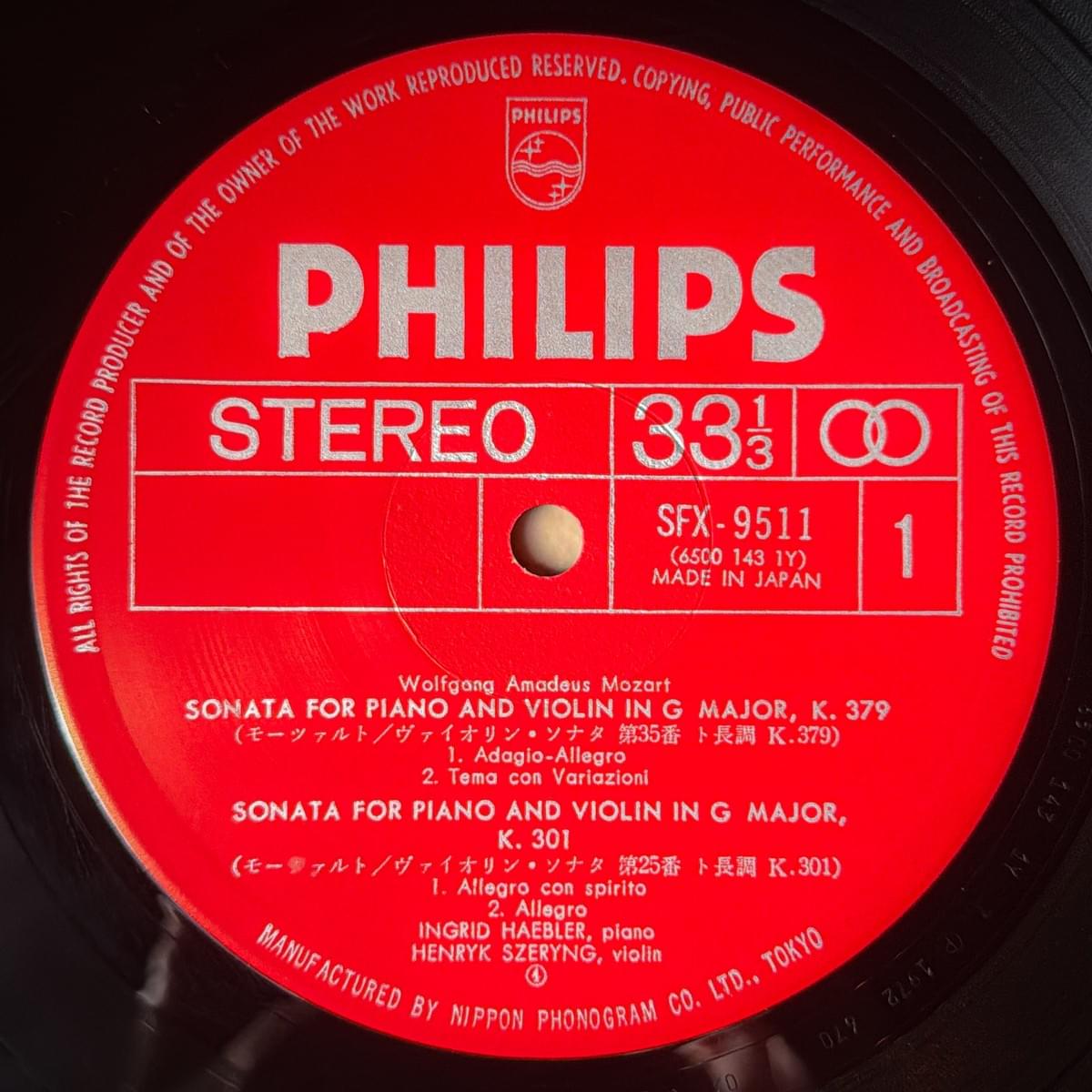
當歐洲還在慢吞吞地一張一張發行時,日本展現了驚人的企劃力。他們沒有等到全部錄完才出全集,而是分兩次(Vol. 1 與 Vol. 2)出版了精美的三枚組盒裝。標籤是紅底銀字加上代表早期高音質的「雙環交疊」。 這兩套盒子,忠實記錄了這兩位大師三年間的時光流動,充滿了東方特有的儀式感。狀態極佳的套裝,至今仍是藏家眼中的逸品。(日本後來也有出單張版,但並沒有全部都出齊。)
【普及的妥協】1970年代中後期:歐版六枚組全集盒裝
為了推廣莫札特全集,荷蘭母廠開始大規模再版,推出了6LP的全集盒裝。這時 Philips 的標籤已經全面換成了「深藍底白字」。 雖然荷蘭壓片品質依然穩定,但在發燒友挑剔的耳朵裡,藍白標象徵著「第二代」的聲音,空氣感與鮮活度確實略遜於紅銀初版。但即便如此,因為演繹實在太經典,狀態好的藍標盒裝依然能在市場上賣出 15,000 元台幣的高價,證明了這兩人的莫札特,永遠有著無可取代的魅力。
【職人的頑固】1970年代末~1980年代:日版六枚組全集盒裝
這是我在梳理歷史資料時,覺得最感動、也是性價比最高的一個版本! 當歐洲母廠已經全面向市場妥協,改成「藍標」時,日本 Philips 在推出6LP全集盒裝(PC系列)時,竟然頑固地保留了早期「紅底銀字」的設計語彙。 這不僅僅是包裝上的差異,這代表著日本職人對於這套錄音原始「高貴感」的無聲堅持。
最後,永遠的經典
我們為什麼還要大費周章地去尋找這些半個世紀前的老黑膠?
因為聆聽這份歷史的遺產,最珍貴的價值在於幫我們「建立認知」。
能夠透過這些保留著真實人味的錄音,重新建立對「好音樂」的認知——去真切地體會到,品味、文化修養與精神的深度,才是音樂真正的核心
競爭,往往是許多焦慮與痛苦的來源。當我們放下對競爭與炫技的執著,不再追求表面上的贏,我們會把重心放回自己身上,專注於如何讓自己的生活品質變得更好、生命狀態更穩定健康。
古殿真正想給的,從來都不是「音效規格」,而是一場生活感知的復健,一條「讓人回到自己」的路徑。
當你把這張黑膠放上唱盤,看著唱針緩緩落下,聽著謝霖與海布勒用那種「不多不少」的分寸感,從容地展開對話時,你會發現,你找回的不只是莫札特的音符,而是看見了另一種美好生命的可能。
******
[Gu Dian Record & Music Stories] The "Perfect Trap" That Terrified Even Piano Giants: Rediscovering Our Lost Slow Time in Mozart’s Notes
Today, I want to share with you a miraculous recording that can steady our heartbeats and relax our shoulders—the complete Mozart Violin Sonatas recorded by Henryk Szeryng and Ingrid Haebler between 1969 and 1972.
But before we do that, we must first solve a great mystery in music history: Why did Mozart’s music become a "trap" feared by all top-tier masters?
I. The Trap That Confounds Even Giants: What Makes Mozart So "Difficult"?
The great pianist Artur Schnabel once left us a very humorous yet penetrating quote: "Mozart's music is too easy for children, and too difficult for musicians."
When children play Mozart, they find the melodies beautiful and are simply happy playing what's on the sheet music. But for true musicians, it is an absolute nightmare. Imagine this: Mozart uses so few notes, and the texture of his music is as transparent as a glass of plain water. There are no dense harmonies to cover your mistakes, nor complex pedaling to hide behind. In front of Mozart, a performer is completely "naked."
Even more fatal is the "polysemy" (ambiguity) in Mozart’s music.
In his later years, the Soviet piano giant Sviatoslav Richter made a nearly powerless confession. He said Mozart was the most "difficult" for him because every time he performed, he couldn't make heads or tails of it; he never knew where the core of the piece actually was. With every performance, Mozart seemed to change. Only Mozart was like this.
Why would a giant like Richter feel so lost? Because Mozart's music is a mirror with "no ego."
If you play Beethoven today, the core is "struggle and victory"; you just need to lean into fighting fate. If you play Chopin, the core is "poetry and the sorrow of a lost nation"; you put your melancholy into it, and you will move people. But Mozart is "empty." He has a little bit of every emotion, yet he clings to none of them. This ultimate balance and fluidity leave modern performers—who are so used to searching for "profound meaning"—completely at a loss. You think you understand him today, only to step on stage next time and find it’s a completely different story.
The Dilemma of Modern Performers: Perfect Technique, but Lost "Aristocratic Temperament"
Objectively speaking, the technique of our modern performers is absolutely flawless. Yet, when they encounter Mozart's violin sonatas, they often fall short. Why? Because they lack something called "aristocratic temperament."
The "aristocratic" here absolutely does not refer to how much money is in one's bank account or what sports car one drives. It is an elevation of culture, spirituality, and upbringing. Eighteenth-century salon music was all about sprezzatura(an effortless grace). It is the art of conversation: I propose an idea, and you respond gently; no one interrupts, no one shows off, and no one excessively vents their emotions.
The Core Question: Where Did You Spend Your "Time"?
Why did the masters of the past possess this temperament, while people today do not? I thought about this over and over, and I realized the core answer lies in: "The texture of time."
The time of contemporary performers is sliced into countless fragments by modern society: rushing to practice, rushing to competitions, rushing to catch flights, and rushing to manage social media. Every minute must be "efficient" and "productive."
But what about the generation of Szeryng and Haebler? They possessed something we modern people drastically lack—"seemingly useless slow time."
They spent their time reading Tolstoy and Goethe, gazing at paintings in museums, having deep late-night conversations with friends, or even just staring out the window doing nothing. It was precisely these seemingly "useless" hours that nurtured their spiritual depth and underlying composure.
You simply cannot play an unhurried, breathing Mozart with an anxious mind that is constantly calculating.
Where you spend your time determines what kind of person you are; and what kind of person you are determines what your Mozart will sound like.
Faced with Mozart's ever-changing mirror, Richter chose to sincerely and painstakingly search for the core. The solution of Szeryng and Haebler, however, was different: They didn't look for the core. Instead, they used their lifelong cultural refinement to build an immensely elegant, restrained, and well-mannered "container" for Mozart. When the container is sufficiently pure and noble, Mozart's wandering soul naturally settles within it.
II. Historical Serendipity: Why Szeryng and Haebler?
To truly understand the preciousness of Szeryng and Haebler, we need to stretch out the timeline and look at the context of Mozart's violin sonatas in vinyl recording history. This is not a story of "who beat whom." You will find that history is actually full of beautiful regrets and unique landscapes.
- The Regret of the 1950s (The Unfinished Viennese Creaminess): Walter Barylli and Paul Badura-Skoda left us an authentic, soft, and sweet local Viennese flavor. It reflected the true landscape of Viennese soil and life, but unfortunately, it was in mono, and they never completed the entire set.
- The Pain of the Late 1950s (Broken Wings of a Divine Dialogue): Arthur Grumiaux and Clara Haskil's collaboration was a true "match made in heaven." But Haskil's sudden passing in 1960 turned this god-tier recording into an eternally unfinished fragment—a deeply regrettable classic.
- The Sparks of the 1970s (A Brief Encounter of Giants): David Oistrakh and Paul Badura-Skoda struck fierce sparks between a king and a scholar, but Oistrakh was only a fleeting guest. They only left behind a few selected pieces, which is a great pity. This is also a version that I, the Master of Gu Dian, absolutely love.
- Bonus Track: London's Intellectual Light (1975, Decca): This was Szeryng and Haebler's strongest counterpart in the 70s—Szymon Goldberg and Radu Lupu. Goldberg was an old-school master (former concertmaster of the Berlin Philharmonic), and Lupu was the piano genius of the day. Their Mozart is more introverted and profound than the Philips version, carrying a philosophical "deep dialogue." Recorded in Kingsway Hall, you can hear a mesmerizing sense of space and the woody tone of the piano. If you like a "thoughtful" Mozart, this is the top choice.
- The Heavy Blow of the 1980s (The Halo of Superstars): By the time we get to Itzhak Perlman and Daniel Barenboim's recording, it is gorgeous and full of tension. But for Mozart, who requires the "beauty of restraint," it felt as if they had applied far too much makeup, sacrificing the precious intimacy of chamber music. From this point on, that "aristocratic temperament" essentially dissipated, marking the dawn of capitalist globalization.
Szeryng and Haebler: A "Completion" Chosen by History
Looking back at this historical map, Szeryng and Haebler’s recordings from 1969 to 1972 were the perfect manifestation of historical serendipity. They happened to stand at the most beautiful point in time and successfully completed a nearly full set of recordings.
That was the golden age when analog recording technology was at its most mature, capturing the air and space with acute sensitivity. This "golden age" also meant that recording equipment still utilized vacuum tube designs, giving the sonic aesthetic a warm, golden glow (after this, the era of transistor design began, which was more scalable but also colder). Even more importantly, they possessed a kind of "continuity" that is extinct in modern society.
Szeryng, a diplomat for the Polish government-in-exile who spoke seven languages and witnessed the cruelties of WWII, had seen true hell. Because of this, he desired more than anyone to rebuild the "order of civilization" through music. Meanwhile, Haebler, an authentic Viennese lady, used her pearlescent, warm touch to provide the gentlest, most stable soil for this order.
III. The Despised "Porcelain Doll" and the Most Civilized Conversation
If you look at some modern music critics (like the famously fierce Dave Hurwitz), you will notice a very interesting phenomenon. Some critics accustomed to modern, heavy-handed tastes despise Haebler's performance here. They feel she plays too obediently, too cautiously, almost like a "fragile Dresden china figure," entirely lacking the modern dramatic tension and sense of adventure found in Martha Argerich or Mitsuko Uchida.
In reality, Haebler's "obedience" is exactly the Viennese classical style born from that soil and lifestyle. Her touch is like scattered pearls—warm, well-behaved, and never sentimental. She does not need to use exaggerated dynamics to prove her existence; she is willing to take a step back and provide the most stable, reassuring harmonic foundation for the entire piece.
And standing on this foundation, Szeryng pushed his innate "cultural aristocratic temperament" to the absolute limit.
His violin lacks that "sticky" quality forced out just to please the audience. His intonation is impeccably precise, and his phrasing is unbelievably smooth. Compared to his peer Grumiaux, he has a stricter sense of architecture. Listening to Szeryng play, you feel as though a gentleman in a suit, possessing immense cultural refinement (civilized), is speaking to you.
Between 1969 and 1972, they specifically chose to record this set in two sessions at the Mozarteum in Salzburg, Austria. Why pick this location? Because they wanted to capture the purest "local tone" in the air.
In this recording, the Philips sound engineers captured the proportions of the two instruments flawlessly; neither overpowers the other. It presented one of the most ingenious encounters of the stereo analog golden age.
IV. Seeking Relics: A Vinyl Treasure Map for This Recording
Since we are talking about this magnificent recording, as a historical vinyl fanatic who immerses himself in historical sounds every day, I can't help but share the lineage of this record's physical release history.
As time went on, Philips adopted entirely different release strategies in Europe and Japan. This not only created the price hierarchy in today's collector's market but also serves as a microcosm of shifting cultural attitudes.
- [The Holy Grail of Origins] 1969–1973: European Single LP First Pressings This is the "First Press Era" with the most vivid sound and the best sense of air, but it's also the most painful for collectors. Back then, they were released as independent single LPs, featuring the classic "Red Label / Silver Lettering." The Final Boss: Many collectors painstakingly gather the first five records, only to get stuck on the elusive 6500 143. Just for this scarce Dutch original, the transaction price for a single LP has topped NT7,000.IfyoumanagetocollectallsixDutchred/silverfirstpressingsatonce,thevaluecansoaraboveNT16,000. This is the price of pursuing the ultimate "sense of reality." (There were also UK pressings with the same covers and red/silver labels; they are slightly cheaper but still require collecting one by one.)
- [The Ritual in a Parallel Universe] Early 1970s: Japanese "Split" First Pressings While Europe was slowly releasing them one by one, Japan showcased astonishing planning capabilities. They didn't wait until all recordings were finished to release a complete set; instead, they published them in two beautifully crafted three-LP box sets (Vol. 1 and Vol. 2). The labels were red with silver lettering, featuring the "overlapping double rings" that symbolized early high-fidelity sound. These two boxes faithfully recorded the flow of time between these two masters over three years, brimming with a uniquely Eastern sense of ritual. Sets in excellent condition remain highly coveted treasures among collectors. (Japan later released single LPs as well, but never completed the entire series.)
- [The Compromise of Popularization] Mid-to-Late 1970s: European 6-LP Complete Box Set To promote the complete Mozart edition, the Dutch parent company began massive reissues, releasing a 6-LP box set. By this time, Philips had completely changed its labels to "Dark Blue Label / White Lettering." While the Dutch pressing quality remained stable, to the picky ears of audiophiles, the blue/white label symbolized a "second-generation" sound. The sense of air and vividness was indeed slightly inferior to the red/silver first pressings. Yet, even so, because the performance is just too classic, a blue-label box set in good condition can still fetch high prices on the market, proving that these two musicians' Mozart possesses an irreplaceable charm forever.
- [The Stubbornness of the Artisan] Late 1970s–1980s: Japanese 6-LP Complete Box Set While organizing historical data, I found this to be the most moving version, and also the one with the highest cost-to-performance ratio! When the European parent company had entirely compromised with the market and switched to the "Blue Label," Philips Japan, upon releasing their 6-LP box set (the PC series), stubbornly retained the early "Red Label / Silver Lettering" design language. This wasn't just a packaging difference; it represented the silent insistence of Japanese artisans on the original "nobility" of this recording.
Finally, a Forever Classic
Why do we go to such great lengths to seek out these half-century-old vinyl records?
Because the most precious value in listening to this historical heritage lies in helping us "establish cognition."
Through these recordings that preserve a genuine human touch, we can rebuild our cognition of what "good music" is—to truly experience that taste, cultural refinement, and spiritual depth are the true core of music.
Competition is often the source of much anxiety and pain. When we let go of our obsession with competition and technical showboating, and no longer pursue superficial "winning," we shift our focus back to ourselves. We begin to concentrate on how to improve the quality of our own lives and achieve a more stable, healthy state of being.
What Gu Dian truly wants to offer has never been "audio specifications," but rather a rehabilitation of our perception of life—a path to "return to oneself."
When you place this vinyl record on the turntable, watch the needle slowly drop, and listen to Szeryng and Haebler effortlessly unfold their conversation with that perfect "just right" sense of proportion, you will discover that what you have found is not just Mozart's notes, but a glimpse into another beautiful possibility of life.