
【古殿唱片音樂故事】傅立葉最好的德佛札克大提琴協奏?維也納金色大廳是單聲道錄音的天堂?
古殿殿主
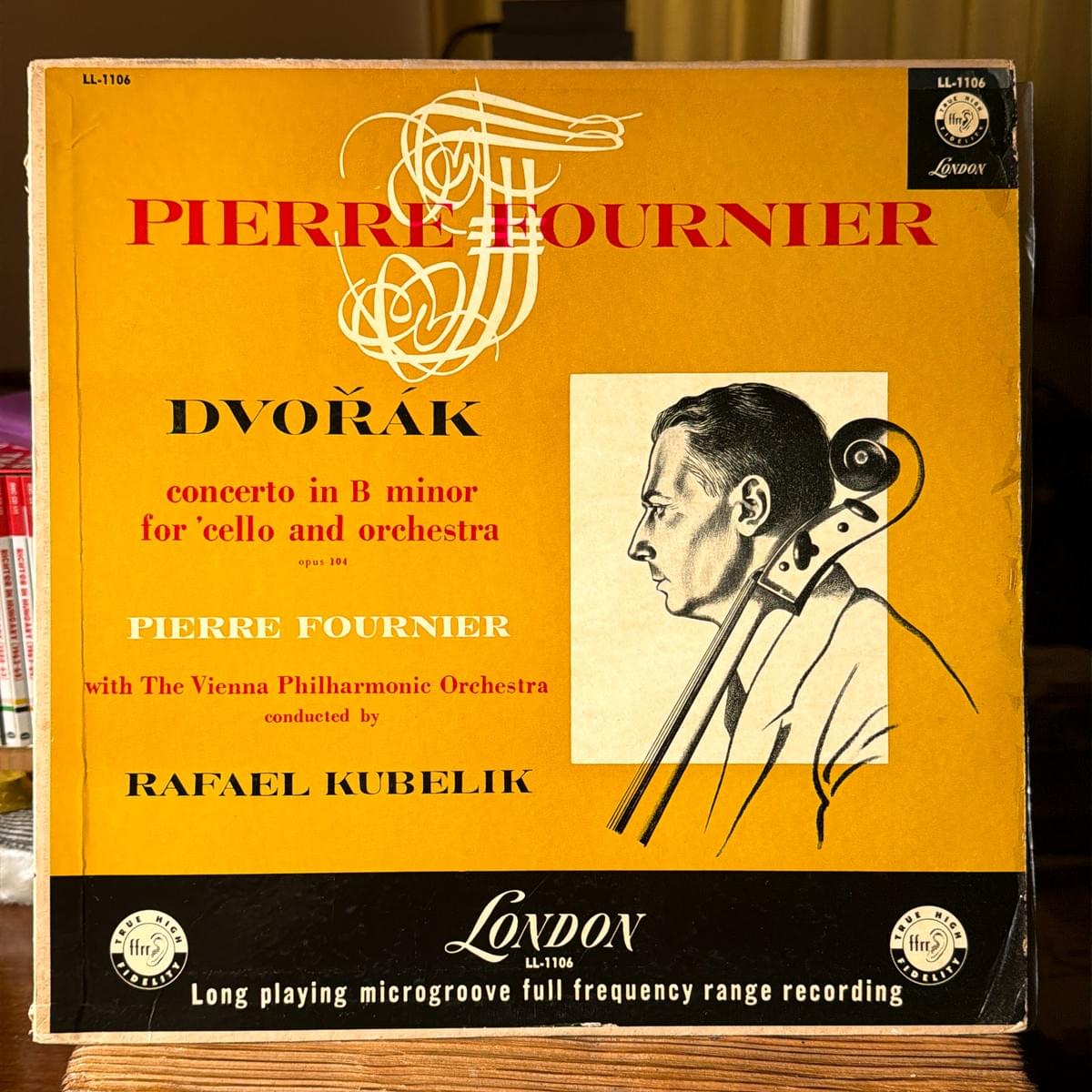
這張 1954 年由 London(英國製造的 Decca 海外版)發行的德弗札克《b 小調大提琴協奏曲》,編號 LL-1106。它在老黑膠迷眼中是實打實的珍貴寶貝,但在我們今天的故事裡,它是一個關於如何打造一個從裡到外都整合在一起的藝術品的故事。
那道跨越時空的鄉愁:德弗札克大提琴協奏曲
如果說音樂史上有一首作品能被稱為「大提琴協奏曲之王」,那絕對是德弗札克的這首《b 小調大提琴協奏曲》。
這首曲子誕生於 1894 年,當時德弗札克人在紐約,心卻繫著遙遠的祖國捷克。這首音樂裡裝滿了那種讓人心碎的鄉愁,以及對生命最深刻的告別。對於聽眾來說,這首曲子就像是一面鏡子,照見我們每個人內心深處那個「回不去的家」。
精準的弓法、高貴的音色,這首曲子對大提琴家來說,是技術的終極考驗,更是靈魂的試金石。而有一位大提琴家,他的一生幾乎與這首曲子交織在一起,他就是皮耶·傅尼葉(Pierre Fournier, 1906–1986)。
憂患中開出的優雅之花:大提琴的貴族
傅尼葉 1906 年出生於巴黎。本該擁有燦爛童年的他,卻在幼年時不幸罹患了小兒麻痺症。這場病奪走了他雙腿的靈活性,讓他一生行走不便。在那個體能決定很多事情的年代,這對一個孩子來說是多麼深重的憂患。
因為雙腿不能動,他把所有的生命能量,全部傾注到了他的右手與手臂。
當其他大提琴家在舞台上用誇張的身體律動來表現情感時,傅尼葉只能靜靜地坐著。但也因為如此,他的右手弓法達到了人類所能想像的最高境界——那是極度的精準、極度的高貴、以及一種完全不著痕跡的優雅。
同時代的另一位法國大提琴巨擘保羅·托特利耶(Paul Tortelier, 1914–1990)曾感嘆道:「Pierre,我多希望擁有你的右手(弓法)。」而傅尼葉則是謙遜地回答:「Paul,我多希望擁有你的左手(按指技巧)。」這就是他被譽為「大提琴的貴族」的原因。
德弗札克大提琴協奏曲是傅尼葉一生的「招牌曲目」。他的音樂,從來不是用來「證明技術」的。他在拉這首曲子時,每一個揉音、每一處換弓,都不是為了炫技,而是為了「呼吸」。那是一種在憂患中磨練出來,活生生的生命力。
14 次靈魂對話:為什麼 1954 年是唯一的絕響?
傅尼葉對這首曲子有一種近乎偏執的熱愛。他的一生留下了高達 14 次的錄音紀錄(實際演出的次數必定是這個的數倍以上),每一次錄音,都像是在對生命進行一次新的提問。
Pierre Fournier — 德弗札克大提琴協奏曲 完整錄音清單
- 1942年:威廉·福特萬格勒 指揮 柏林愛樂(現場錄音,僅存第二樂章)
- 1944年:Eugène Bigot 指揮 巴黎拉穆魯管弦樂團(未出版)
- 1945年:傑利畢達克 指揮 倫敦愛樂(現場錄音 / Classica d'Oro)
- 1948年:庫貝力克 指揮 愛樂管弦樂團(錄音室條件 / 78轉 HMV)
- 1954年:庫貝力克 指揮 維也納愛樂(錄音室條件 / London LL-1106 ffrr)
- 1956年:Schmidt-Isserstedt 指揮 北德廣播交響樂團(廣播錄音 / Tahra)
- 1959年:George Sebastian 指揮 捷克愛樂(現場錄音(?) / Arlecchino)
- 1962年:舍爾興 指揮 盧加諾廣播樂團(現場錄音 / Tahra)
- 1962年:舍爾興 指揮 RSI 瑞士義語廣播(現場錄音 / Aura)
- 1962年:喬治·塞爾 指揮 柏林愛樂(錄音室條件 / DG 立體聲名盤)
- 1962年:喬治·塞爾 指揮 科隆廣播交響樂團(廣播錄音 / Medici Masters)
- 1973年:柯林·戴維斯 指揮 BBC 交響樂團(現場錄音 / BBC)
- 1976年:傑利畢達克 指揮 法國國家廣播交響(現場錄音 / Pearl)
- 1970年代:傑利畢達克 指揮 法國國家廣播交響(現場錄音 / Toshiba LD)
在這 14 個足跡中,發行過黑膠的只有 3 筆(其中包括一次蟲膠版)。很多人會推崇 1962 年的立體聲版,但那像是一座精確的鋼鐵建築;而這張 1954 年錄音 卻佔據了一個極其特殊的位置:
這是傅尼葉漫長的錄音生涯中,「唯一一次」與維也納愛樂(VPO)在金色大廳合作錄製的絕響。
維也納之聲:那個年代獨特的「呼吸感」
這張錄音的偉大,也來自於指揮家庫貝力克(Rafael Kubelík, 1914–1996)與維也納愛樂(VPO)的奇蹟碰撞。
1950 年代的維也納愛樂正值黃金時代。成員大多接受過二戰前維也納傳統的嚴格訓練,樂團音色溫慢而具有特殊的「維也納腔」,尤其是那木管與法國號的合奏質感,在世界樂壇幾乎無可比擬。
最讓人著迷的是,維也納愛樂的演奏有一種獨特的「呼吸感」。這種氣息並非刻意磨練的技術,而是根源於維也納愛樂悠久的文化傳統,以及樂團與其精神家園——金色大廳(Musikverein)之間那種「樂團與空間合一」的長期默契。當樂團在金色大廳演奏時,樂器的鳴響與空間的殘響已不再是物理的疊加,而是渾然天成的一體。
他們不像後來在塞爾或卡拉揚調教下的樂團那般精密如機器,他們是跟著獨奏者的弓一起吐氣、一起猶豫、一起嘆息。這種水乳交融的特質,使他們成為詮釋這首充滿波希米亞鄉愁之曲的天造之合。當時的庫貝力克正處於流亡狀態,音樂裡滿是「淌血」的鄉愁。在 Musikverein 金色大廳的殘響包圍中,這種「同步呼吸」的生命狀態,被完美地封存了下來。
聲音的真實:當「規格」遇上「美學」
在進入這張錄音的技術層面之前,我們必須先釐清一件事:究竟什麼才是「真實的聲音」?
現代音響觀念往往將「真實」等同於「規格」——更高解析、更多聲道、更寬的動態。但歷史告訴我們,聲音的真實可能與商業模式無關,而是一種美學與藝術的選擇。
Decca 史上最偉大、最傳奇的錄音工程師威金斯(Kenneth Wilkinson, 1912–2004),一生橫跨了從單聲道的 78 轉蟲膠時代、黑膠時代到數位 CD 時代。在他晚年回顧一生時,他曾留下一個震撼世人的結論:他認為在他錄過所有的聲音中,最真實的,其實是早期 78 轉單聲道的「直刻錄音」。
這給了我們一個極其重要的線索:即使在 1953 年 Decca 開始實驗立體聲,到 1958 年立體聲正式問世,這段期間許多頂尖的製作人與錄音師,依然在專業美學上堅信——單聲道的聲音才是最真實的。 對於他們來說,單聲道不是「缺失了另一半聲道」,而是能將音樂的能量密度完整匯聚在一起,產生一種比立體聲更直接、更有實體感的「生命脈動」。
金色大廳:單聲道錄音的「終極聖殿」
這座建於 1870 年的音樂廳,以其經典的「鞋盒型」(shoebox)聲學結構著稱。它的木板牆壁提供了極佳的中頻溫暖感,而約 1.8 至 2 秒的混響時間,更是接近管弦樂錄音的理想值。
然而,這裡有一個違反直覺的歷史轉折。
Decca 在 1954 年後逐漸發現,Musikverein 對立體聲錄音並不理想。那均質而完美的殘響,會導致左右聲道的定位模糊不清。因此,自 1955 年起,Decca 便將立體聲主場遷往索菲恩大廳(Sofiensaal)。
這個「被立體聲嫌棄」的事實,反過來成全了這張 1954 年的單聲道錄音。
對於單聲道而言,金色大廳那種把所有聲部揉合在一起、金碧輝煌卻又水乳交融的空間殘響,恰恰是最完美的黏合劑。所有的聲音能量集中在一點爆發,反而帶來一種極度高密度、極度有實體感的聽覺體驗。這張錄音正好踩在 Decca 徹底遷出 Musikverein 之前的最後巔峰,它精準地封存了單聲道技術最成熟、那個輝煌空間即將退出核心舞台的一瞬間。
製作錄音團隊:讓偉大發生的人
我們必須向這張唱片幕後兩位真正的守護者致敬。他們用自己的專業,默默在背後搭建了一個最安穩的舞台。他們沒有在唱片封面留下巨大的名字,但只要把唱針放下去,那種充滿人味的感動,便是他們存在過最真實的證明。
製作人維克多·奧洛夫(Victor Olof, 1898–1974)
奧洛夫是一個被訓練成小提琴家、卻以耳朵成就傳奇的製作人。這位瑞典裔英國人,年輕時曾與指揮大師布魯諾·華爾特(Bruno Walter, 1876–1962)同台演出,後來被 Decca 技術總監阿瑟·哈迪(Arthur Haddy)相中,轉型為錄音製作人。
他是戰後 Decca 拓展國際錄音的核心人物,合作對象盡是卡爾·貝姆(Karl Böhm, 1894–1981)、埃里希·克萊伯(Erich Kleiber, 1890–1956)、巴克豪斯(Wilhelm Backhaus, 1884–1969)等一代宗師。奧洛夫有一個鮮明的特點:他對立體聲幾乎毫無興趣,他的全副心神都貫注於單聲道錄音。
在 1954 年的維也納現場,奧洛夫完全集中在單聲道版本的音質。他不用多麥克風、不做事後修補,他用的是「音樂家的耳朵」去拿捏傅尼葉的大提琴和整個維也納愛樂之間的「呼吸距離」。這正是此錄音音色精純、大提琴聲音自然融入樂團卻又清晰可辨的根本原因。
錄音工程師西里爾·溫德班克(Cyril Windebank, 1920–2012)
在 Decca 黃金時代的「不可比擬的工程師群」中,溫德班克是最重要卻最低調的名字之一。在 Decca 的內部矩陣刻板暗碼系統中,字母「F」就代表著 Cyril Windebank,顯示他不僅主導現場錄音,也深度參與後期母版切割,全程掌控音質。
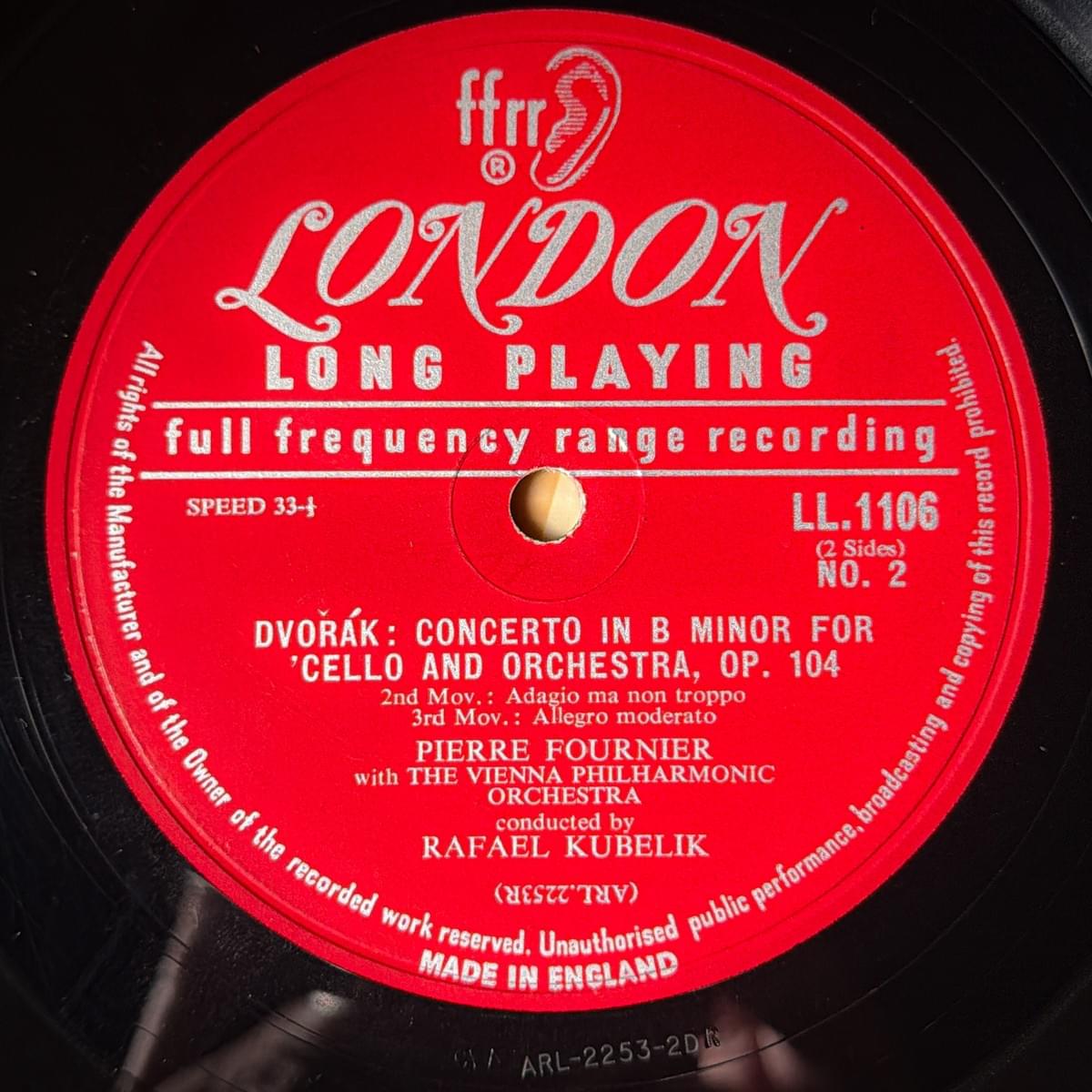
1954 年春夏兩季,溫德班克在金色大廳留下了大量重要錄音,包括布魯克納第三交響曲與布拉姆斯《德意志安魂曲》。他掌控著軍事等級的 ffrr (Full Frequency Range Recording) 技術。他在現場調校麥克風的那一刻,其實就是在幫我們這群半個世紀後的聽眾,把當時的時空膠囊給完美封存起來。
這張專為北美市場壓製的 London LL-1106 採用 RIAA 均衡曲線,擁有純正的英國 Decca 頂級壓片血統,是單聲道技術最成熟、卻也即將消逝前的最後巔峰。
完美的交會:當靈魂、空間與技術「成就最好」
回望這份 1954 年的錄音,我們發現它之所以具備如此特殊的價值與意義,是因為它達成了一次極其罕見的「完全同步」。
這是一份從演奏家、到樂團、到音樂廳、再到錄音技術都緊密合在一起的紀錄。傅尼葉在憂患中磨練出的「生命情調」,維也納愛樂在傳統中薰陶出的「呼吸感」,與音樂協會大廳(Musikverein)那最適合單聲道的金色空間,在 ffrr 這種追求極致真實的美學守護下,完美地交織在了一起。
這份錄音的存在,證明了真正的藝術品,從來不是為了賣錢,而是為了如何能「成就最好」。
在商業浪潮席捲而來的前夕,這群職人選擇隱身在音樂背後,用最誠實的耳朵封存了一個活生生的生命片段。它跨越了 70 年的時光,依然在溝槽中靜靜等待著,等待那根唱針放下,重新為我們找回那份不被肢解、不被計算,最真實的溫暖與感動。
實體音樂:
******
[Classical Palace Music Stories]
Fournier’s Best Dvořák Cello Concerto? The Vienna Musikverein as a Mono Recording Paradise?
Let’s talk about this 1954 Dvořák Cello Concerto in B minor, released by London (the overseas label for the UK's Decca), catalog number LL-1106. Vintage vinyl fans treat this record like an absolute treasure. But in our chat today, I want to tell you a story about how this record became a masterpiece where every single piece—from the soul of the musician to the physical space of the hall—clicks together perfectly.
Imagine putting this record on after a long, exhausting day at work. It's not just music; it's a journey to help you unwind and find yourself again.
Homesickness Across Time and Space: Dvořák’s Cello Concerto
I
f there’s one piece in music history that deserves the title "King of Cello Concertos," it’s definitely this one.
Dvořák wrote it back in 1894 when he was living in New York, but his heart was thousands of miles away in his homeland, the Czech Republic. It’s packed with this heartbreaking homesickness and a profound, beautiful farewell to life. When you sit back on your sofa and truly listen to it, the music acts like a mirror. It reflects that deep, inner "home we can't return to" that we all carry inside us.
It’s the ultimate test of technique and a touchstone for the soul for any cellist. And there’s one cellist whose life is practically intertwined with this piece: Pierre Fournier (1906–1986).
An Elegant Flower Blooming in Hardship: The Aristocrat of the Cello
F
ournier was born in Paris in 1906. He should have had a brilliant, carefree childhood, but he tragically contracted polio as a young boy. The illness took away the mobility in his legs, making walking a lifelong struggle. In an era where physical ability dictated so much, imagine the heavy, anxious burden this put on a child.
But here is where the story turns. Because he couldn't use his legs, he channeled every ounce of his life energy into his right hand and arm.
When other cellists used dramatic, sweeping body movements on stage to express emotion, Fournier had to just sit quietly. But exactly because of this "limitation," his right-hand bowing technique reached a level of perfection most humans can only dream of. It was fiercely precise, incredibly noble, and effortlessly elegant.
Even his contemporary, another French cello giant named Paul Tortelier, once sighed, "Pierre, how I wish I had your right hand (bowing)." Fournier humbly replied, "Paul, how I wish I had your left hand (fingering)." That’s exactly why people called him the "Aristocrat of the Cello."
This Dvořák concerto was Fournier’s absolute signature piece. But he never used the music to "show off" his tech skills. When he played this, every vibration of the string, every change of the bow wasn't a trick; it was a breath. It’s a raw, living energy polished through his own life's hardships.
14 Soulful Conversations: Why is 1954 the Only Ultimate Masterpiece?
F
ournier had an almost obsessive love for this concerto. Over his lifetime, he left behind 14 recorded versions of it (and he probably played it live hundreds of times more). Every single recording feels like he’s asking life a brand-new question.
Pierre Fournier’s Complete Recording List of Dvořák’s Cello Concerto:
1942: Wilhelm Furtwängler / Berlin Philharmonic (Live, 2nd movement only)
1944: Eugène Bigot / Orchestre Lamoureux (Unpublished)
1945: Sergiu Celibidache / London Philharmonic (Live / Classica d'Oro)
1948: Rafael Kubelík / Philharmonia Orchestra (Studio / 78rpm HMV)
1954: Rafael Kubelík / Vienna Philharmonic (Studio / London LL-1106 ffrr)
1956: Hans Schmidt-Isserstedt / NDR Symphony (Broadcast / Tahra)
1959: George Sebastian / Czech Philharmonic (Live(?) / Arlecchino)
1962: Hermann Scherchen / Lugano Radio Orchestra (Live / Tahra)
1962: Hermann Scherchen / RSI Swiss Italian Radio (Live / Aura)
1962: George Szell / Berlin Philharmonic (Studio / DG Stereo Classic)
1962: George Szell / Cologne Radio Symphony (Broadcast / Medici Masters)
1973: Colin Davis / BBC Symphony (Live / BBC)
1976: Sergiu Celibidache / Orchestre National de France (Live / Pearl)
1970s: Sergiu Celibidache / Orchestre National de France (Live / Toshiba LD)
Out of these 14 footprints, only three were officially released on vinyl (including one old shellac record). A lot of folks rave about his 1962 stereo version, but to me, that one feels a bit like a highly precise, cold steel building.
This 1954 recording, however, holds a magical spot. Why? Because out of his long career, this is the only time he recorded it in the famous Golden Hall (Musikverein) with the Vienna Philharmonic (VPO).
The Vienna Sound: The Unique "Sense of Breathing" of That Era
T
he greatness of this record also comes from the miraculous spark between conductor Rafael Kubelík and the Vienna Philharmonic.
In the 1950s, the VPO was in its absolute golden age. Most members had rigorous, pre-WWII traditional Viennese training. They played with a warm, unhurried tone—a special "Viennese accent." The way their woodwinds and French horns blended was simply unmatched.
But what really draws me in is their unique "sense of breathing." This wasn't a forced technique; it was a deep cultural tradition. They had this unspoken, long-standing bond with their spiritual home, the Musikverein. When they played there, the instruments and the hall's natural echoes didn't just stack on top of each other—they melted into one living entity.
They weren't acting like precise, modern machines. They breathed out, hesitated, and sighed right alongside Fournier’s bow. Wrapped in the echoes of the Golden Hall, while Kubelík himself was living in exile and pouring his own bleeding homesickness into the music, this "synchronized breathing" was perfectly captured and sealed in time.
The Truth of Sound: When "Specs" Meet "Aesthetics"
B
efore we talk about the tech side of this record, I want to ask you a question: What exactly is "true sound"?
Today, we are bombarded with marketing that tells us "true" means better specs—higher resolution, more channels, wider dynamics. But history tells us that true sound isn't about cold data; it’s an artistic choice.
Kenneth Wilkinson (1912–2004), Decca’s most legendary sound engineer, lived through the 78-rpm mono era, the vinyl era, and the digital CD era. Looking back on his life, he dropped a beautiful conclusion: Out of everything he ever recorded, he believed the most "real" sound was actually the early 78-rpm mono "direct-to-disc" recordings.
This gives us a huge clue. Even between 1953 and 1958, when stereo was just hitting the scene, top producers firmly believed that mono was the truest sound. To them, mono wasn't "missing a channel." It gathered all the music's energy into one dense, focused point, creating a direct, physical "pulse of life" that stereo often sacrifices.
The Golden Hall: The "Ultimate Sanctuary" for Mono Recording
B
uilt in 1870, the Musikverein is famous for its classic "shoebox" acoustics. Its wooden walls offer an incredibly warm mid-frequency sound, and its 1.8 to 2-second reverb is practically perfect for orchestras.
But here’s a counter-intuitive twist in history.
After 1954, Decca realized this hall actually wasn't great for the new stereo tech. That perfect, uniform echo made it hard to pinpoint the left and right channels. So, they moved their stereo operations away.
But guess what? The very thing that made the hall "bad" for stereo made it an absolute paradise for this 1954 mono recording! For a single-channel recording, that golden, melting echo acted like the perfect glue. All the sound energy bursts from a single point, giving you an intensely dense, physically real listening experience. This record caught the absolute peak of mono technology just before Decca moved out of the hall forever.
The Production Team: The People Who Made Greatness Happen
W
e have to pay our respects to the two silent guardians behind this record. They didn't plaster their names in huge letters on the cover, but the moment the needle drops, the human warmth you feel is the truest proof they were there.
Producer Victor Olof (1898–1974): Trained as a violinist, Olof became a legend through his ears. He wasn't interested in the new stereo fad; he poured his entire soul into mono recordings. During this 1954 session, he didn't use a bunch of microphones or fix things on a computer later. He used his "musician's ear" to capture the exact, natural "breathing distance" between Fournier's cello and the orchestra.
Sound Engineer Cyril Windebank (1920–2012): A crucial but low-key hero. Armed with Decca's incredible ffrr(Full Frequency Range Recording) tech, the moment he adjusted those mics, he was basically packing a perfect time capsule for us to open half a century later. This specific US/Canada pressing (London LL-1106) carries that pure British Decca bloodline.
A Perfect Intersection: When Soul, Space, and Tech "Achieve the Best"
L
ooking back at this 1954 recording, it’s so special because it achieved an incredibly rare "perfect sync."
It’s a record where the cellist, the orchestra, the hall, and the tech all merged into one. Fournier's life-tempered emotion, the orchestra's natural breathing, the golden mono space of the Musikverein, and the honest ears of the production team all came together.
This record proves that real art isn't about chasing the latest specs or maximizing profits; it’s about achieving the absolute best state of being. Right before the tidal wave of modern commercialization hit, these craftsmen hid behind the music, saving a living, breathing slice of life.
70 years later, it’s still waiting in the grooves for the needle to drop. It’s waiting to help us turn off our racing, anxious minds, relax our tense shoulders, and find our true, human selves again in this loud world.