
【古殿唱片音樂故事】長達四十二年的攀登~~鄭京和與巴哈無伴奏
古殿殿主
有一件事,幾乎很少人注意到:
鄭京和在2016年錄製巴哈無伴奏全集的時候,距離她上一次進錄音室,已經將近二十年。
二十年!
在音樂圈,二十年的沉默幾乎等於消失。唱片公司不等你,樂評人不等你,下一代的小提琴家早已填滿了你的位置。一個曾經被譽為同世代最炙手可熱的小提琴家,在沉默了將近二十年之後走進錄音室,選擇的第一個挑戰,居然是整個小提琴文獻裡最艱難的一座山峰:巴哈的六首無伴奏奏鳴曲與組曲。
不是一首。是全部六首。
她說:「這是我音樂旅程中永無止境的追尋。」
一九七四年,倫敦郊外的一間教堂
故
事要從四十二年前說起。
1974年秋天,倫敦西南方的彼得舍姆(Petersham)小鎮,一座英國磚造教堂:全聖教堂(All Saints' Church)。這座1908年的建築,一生都活在聖與俗之間——它太小,裝不下一個教區;二戰期間被徵用為防空指揮所;戰後成了錄音場地。Decca 唱片公司的錄音師 James Lock 在這裡架起麥克風,等待一個26歲的韓國女性走進來。
她的名字是鄭京和。
三年前,她剛剛因為臨時替補帕爾曼,在倫敦與 LSO 合作演出柴可夫斯基小提琴協奏曲,一夜之間讓全英國的報紙把她的名字放上頭版。她成為第一個與 Decca 簽訂獨家合約的韓國藝術家。
那個秋天,她進了彼得舍姆的教堂,錄下了巴哈 d 小調組曲第二號與 C 大調奏鳴曲第三號——計畫是先錄這兩首,之後再回來錄完全部六首。
然後,她放下了琴。
「之後」——就這樣沒有到來。
那座山,後來成了她唯一的光
在那
個「之後」裡,發生了很多事。
她結婚了。有了孩子。一年120場的演出削減到40場。她說:「不再只有我自己,而是孩子、丈夫、家庭,成為一個妻子。我從來沒有作為藝術家妥協過,但在婚姻裡不妥協,婚姻就無法運作。這是另一段旅程。」
然後是2005年。她的左手食指出了問題,任何劑量的藥物都無法治癒。就在與指揮家葛吉耶夫的音樂會前夕,手指完全失去功能。此後五年,她無法公開演奏。
五年。
你很難想像那是什麼樣的五年。一個用琴弓說話了幾十年的人,突然間什麼都說不出來。
但巴哈沒有離開她。
那五年裡,她在腦中,不用樂器,一個音符一個音符地,把那六首無伴奏走了無數遍。那些在1720年被巴哈寫下、可能帶著對亡妻悲痛的音符,陪著一個手指壞了、無法演奏的女人,在沉默裡度過了五年。她後來在茱莉亞任教,特別著重在巴哈奏鳴曲與組曲的教學——因為這音樂已經不只是她尚未完成的志業,而是在最黑暗的時候支撐她走下去的東西。
是巴哈陪她走過了那五年。
不是比喻。是真實發生的事。
2010年,她重返舞台。
但她沒有選擇那些輕鬆的路。
復出後,她選擇的第一個重大曲目,就是巴哈的全部六首無伴奏——在一場音樂會裡,一場演完,不間斷。
這個選擇,說是「挑戰」,不如說是「還願」。
陪著她走過那五年黑暗的音樂,她要以最完整的形式,當著所有人的面,把它還給世界。
這在演奏史上幾乎是前所未見的壯舉。大多數勇敢的小提琴家會分兩場;最大膽的,才敢連續兩個晚上演完。而她,一個剛從手指傷勢復出、已將近七十歲的女性,選擇獨自站在舞台上,不間斷地演奏超過兩個半小時的巴哈。
2014年,她在英國巡迴演出這個曲目。《星期日泰晤士報》的樂評人聽完,寫下了日後被印在錄音封套上的那句話:
「簡單,卻強烈得令人窒息,堪稱偉大。」
那不是對一張唱片的評語。那是對一個女人站在舞台上、用她從黑暗裡帶回來的聲音,完成了一次感恩的還願之後,樂評人能找到的最誠實的幾個字。
現場演出成功了。然後,她才走進錄音室。
二○一六年,六月的布里斯托
201
6年2月,她走進英格蘭布里斯托的聖喬治音樂廳(St George's Music Hall)。
這一次,她68歲。距離1974年那次 Petersham 的錄音,整整四十二年。距離她上一次進錄音室,將近二十年。
錄音從2月橫跨到6月,分四個階段完成。製作人 Alain Lanceron、錄音師 Phil Hobbs,在這座前教堂改建的音樂廳裡,把麥克風架在她面前。
她拿的,是她用了幾十年的瓜奈里名琴「Rode」del Gesù(1734年製)。就是這把琴,陪著她走完了這最後的攀登。
六首。全部。
巴哈在1720年把完整手稿謄寫整齊,就在那個夏天,他從差旅歸來,發現妻子瑪利亞·芭芭拉已過世並入土一週。他什麼都不知道,妻子的離世甚至沒有人通知他。學者相信,最後那首長達十五分鐘的夏香舞曲,可能是他悲痛的最初宣洩,也是對亡妻最深的告別。
鄭京和說,她在巴哈所有的無伴奏作品裡,都能聽見苦難——不只夏康舞曲,是全部六首。
那個2016年6月最後一天,當她拉完 E 大調組曲第三號的最後一個音,她完成了一件他攀登了四十二年的事。
兩張黑膠,同一座山的兩個先後足跡
第一張:
1974年11月,Petersham 錄音,日本 London / King Record 版,唱片編號 SLA-1135。鮮紅色標籤,FFSS Full Frequency Stereophonic Sound,King Record 東京壓製。一個26歲的鄭京和,在加拉米安傳統最純粹的狀態下,演奏了巴哈的兩首。
評論家說,這個版本「火氣充沛,技術耀眼」——那是一個知道自己要往哪裡走、但還沒有走到的人的聲音。
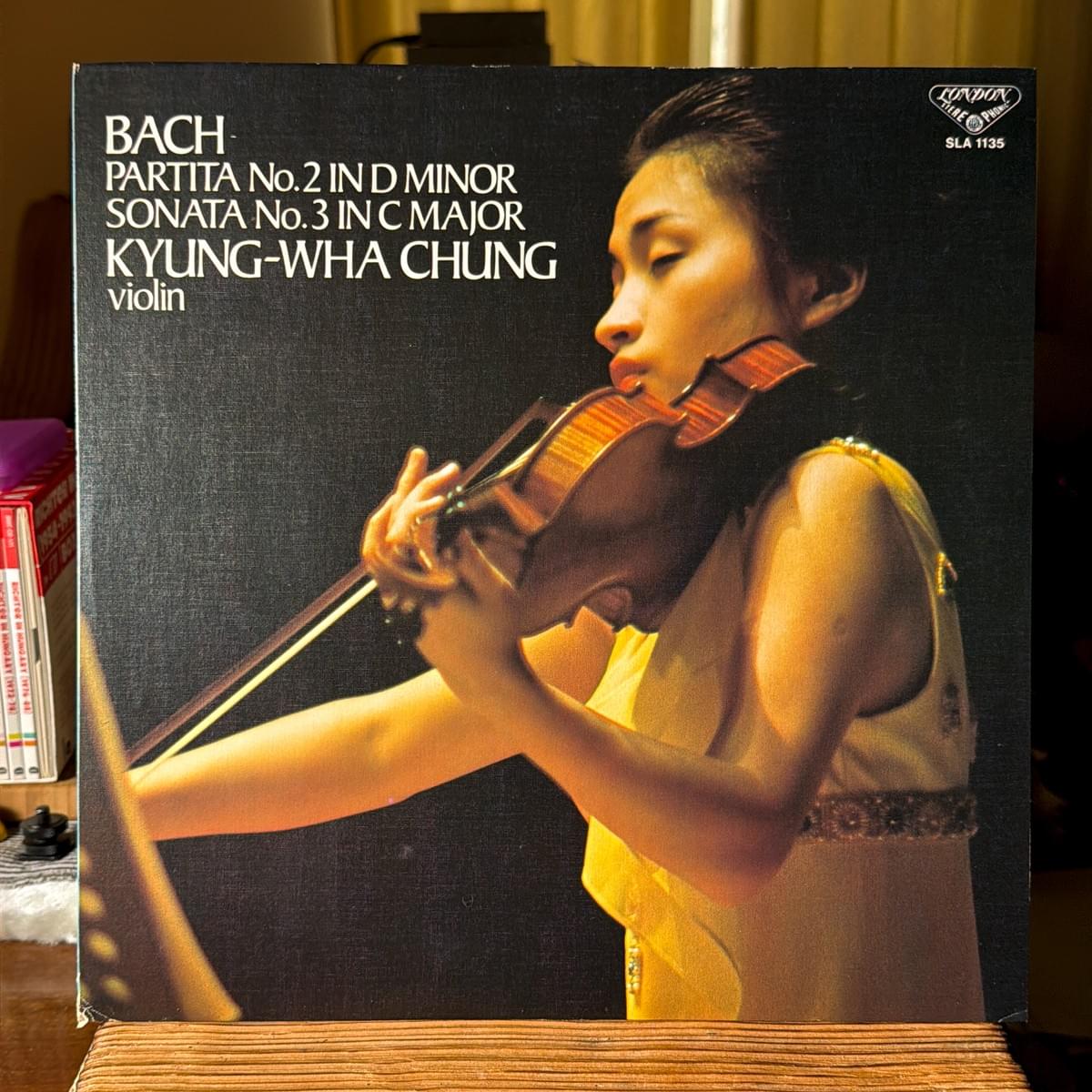
第二張:2016年,Warner Classics,3LP 黑膠套裝,橘色標籤,180克歐洲壓製,0190295713928。一個68歲的鄭京和,在二十年沉默之後,完整地演奏了全部六首。
評論家說,這個版本「技術上的任何衰退,都遠遠被純粹的理智控制所超越」——那是一個已經知道答案、知道代價、也知道時間有限的人的聲音。
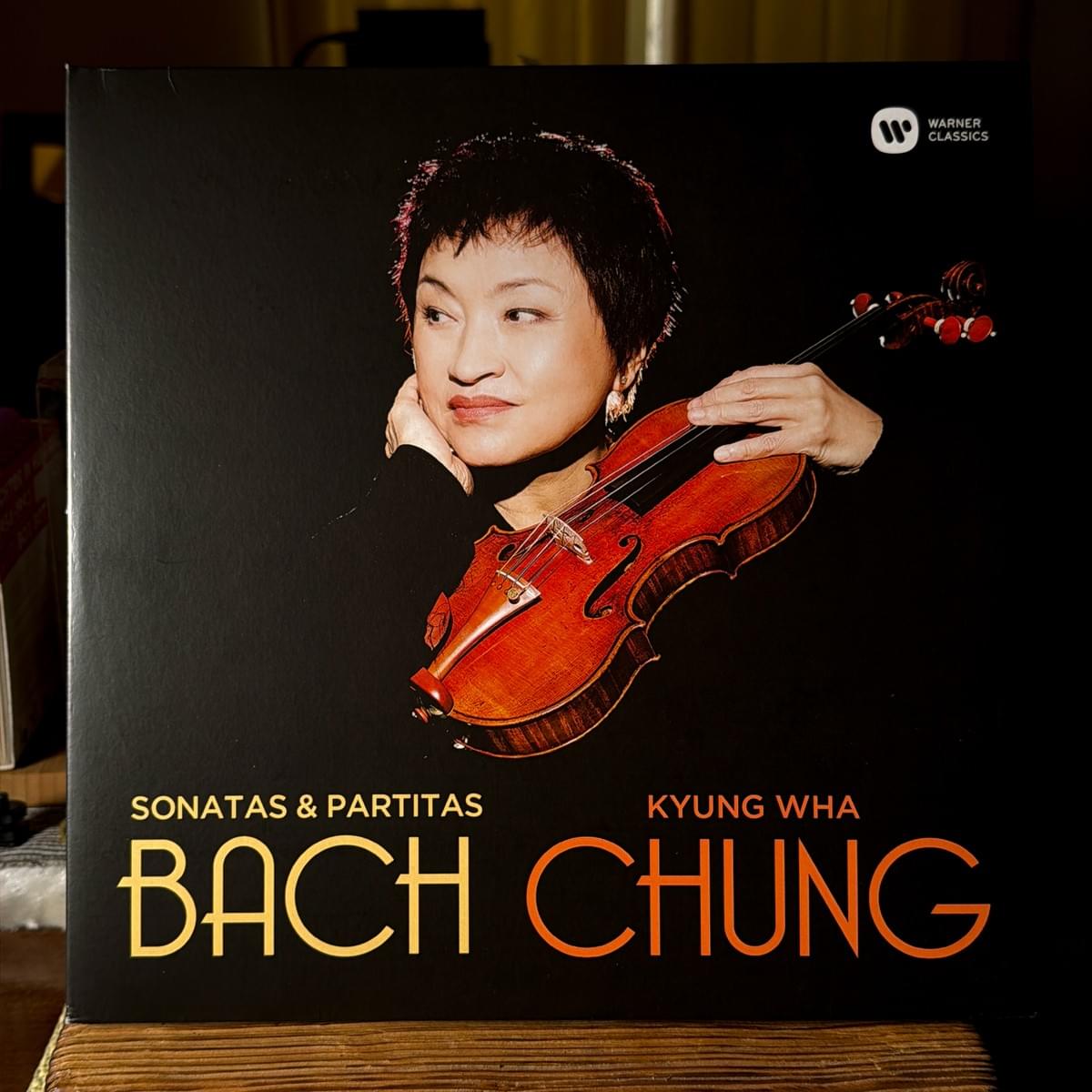
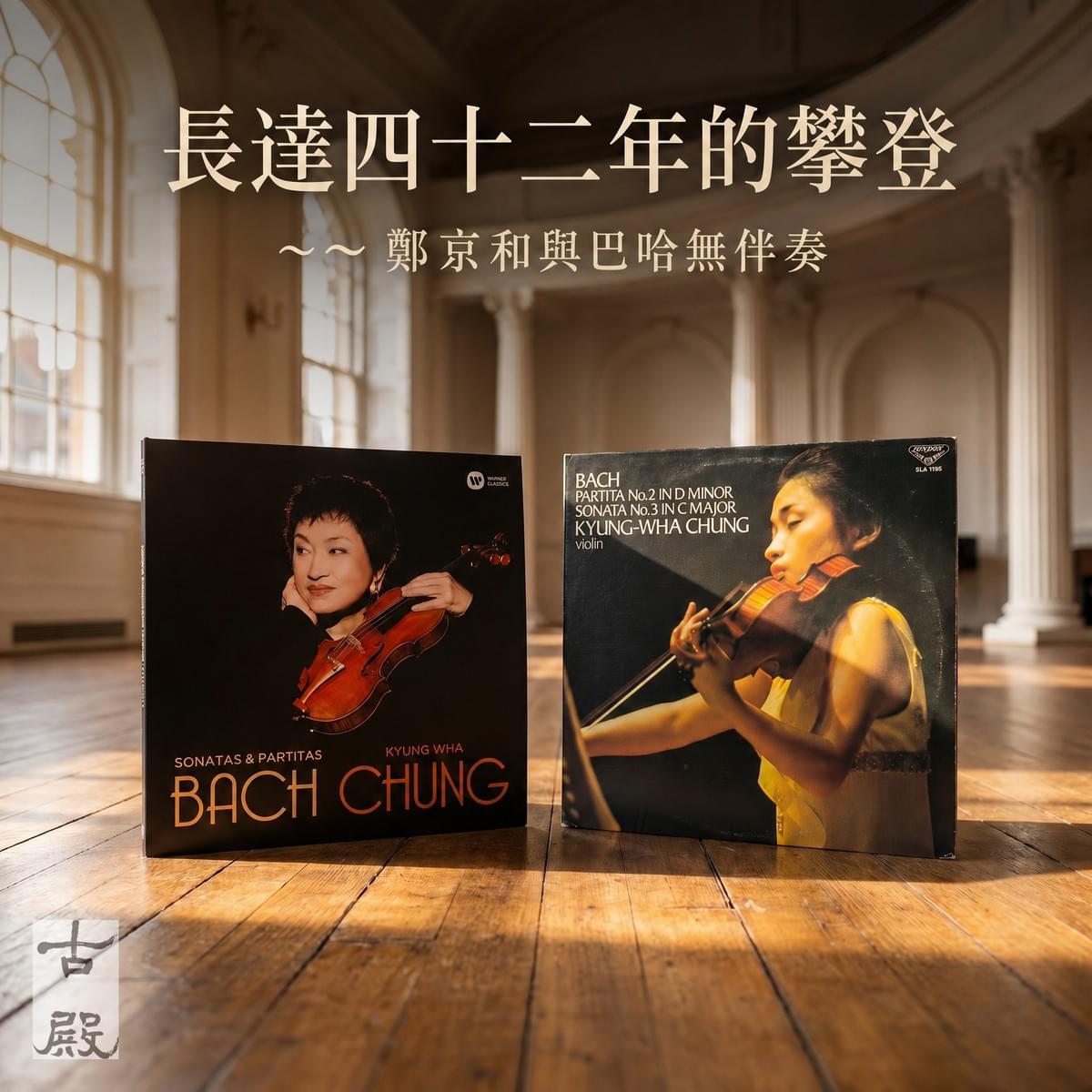
兩張唱片放在一起,你聽見的不是兩個版本。你聽見的是同一個人,在生命的兩個不同深度,面對同一份音樂時,身體裡發生的不同事情。
這種比較,在音樂史上極為罕見。大多數的藝術家,要麼只有年輕時的錄音,要麼只有老年時的版本。能夠清晰地看見「起點」與「終點」之間整整四十二年的跨度,並且兩張都以黑膠的物理形式保存下來——這本身就是一件極不尋常的事。
「永無止境的追尋」
一位樂評人
在聽完這個2016年的全集錄音之後,寫道:「我可以輕易地、令人滿足地與成熟鄭京和的巴哈共處,只要我有時也能把她年輕時那張充滿活力的 Decca 唱片拿出來聆聽就好。」
這句話很美,但也很十分準確。
因為這兩張唱片本來就不是競爭關係。1974年的那張,記錄的是一個人在攀登之前站在山腳、仰望山頂的狀態;2016年的這張,記錄的是同一個人,在歷經婚姻、孩子、受傷、沉默、重返之後,終於站上山頂,回頭看自己走過的路。
******
【Ancient Palace Records — Music Stories】A Forty-Two Year Climb: Kyung-Wha Chung and the Bach Solo Sonatas and Partitas
There
is one profound detail that almost completely escaped public notice:
When Kyung-Wha Chung walked into the studio in 2016 to record the complete Bach Sonatas and Partitas for Solo Violin, it had been nearly twenty years since she last stepped inside a recording studio.
Twenty years.
In the music world, twenty years of silence is practically synonymous with disappearance. Record labels don’t wait for you, critics don’t wait for you, and the next generation of violinists has long since claimed your spot. For a musician once hailed as the most fiery and sought-after violinist of her generation to step back into the studio after two decades of silence, her chosen comeback challenge was staggering: the absolute highest peak in the entire violin repertoire—Bach’s six Sonatas and Partitas.
Not just one or two. All six.
As she beautifully put it: "This has been an endless quest in my musical journey."
Autumn, 1974: A Church on the Outskirts of London
Our s
tory begins forty-two years earlier.
In the autumn of 1974, in Petersham, a small town southwest of London, stood All Saints' Church—a traditional British brick structure built in 1908. Throughout its existence, this building lived a dual life between the sacred and the secular. It was too small to house a full parish; during World War II, it was requisitioned as an air-raid command post; and after the war, it became a recording venue.
Inside this church, Decca’s legendary audio engineer James Lock set up his microphones, waiting for a 26-year-old South Korean woman to walk through the doors.
Her name was Kyung-Wha Chung.
Just three years prior, she had stepped in at the last minute for an ailing Itzhak Perlman to play the Tchaikovsky Violin Concerto with the London Symphony Orchestra. Overnight, British newspapers splashed her name across front pages. She became the very first Korean artist to sign an exclusive contract with Decca.
That autumn, inside the Petersham church, she recorded Bach’s Partita No. 2 in D minor and Sonata No. 3 in C major. The plan was simple: record these two first, and return later to complete the remaining four.
But then, she laid down her bow.
That "later" never came.
The Mountain That Became Her Only Light
A gre
at deal happened during that missing "later."
She got married. She had children. Her grueling schedule of 120 concerts a year was scaled back to 40. Looking back, she reflected: "It was no longer just about me. It was about the children, my husband, the family—becoming a wife. I have never compromised as an artist, but if you don't compromise in a marriage, the marriage cannot work. It was a different kind of journey."
Then came 2005. A severe injury struck her left index finger. No amount of medication could cure it. On the very eve of a major concert with conductor Valery Gergiev, her finger failed her completely. For the next five years, she could not perform in public.
Five years.
It is hard to fathom what those five years must have felt like. For someone who had spoken through a violin bow for decades, to suddenly be plunged into absolute muteness.
Yet, Bach never left her side.
During those five years, without ever picking up her instrument, she walked through those six solo works in her mind, note by note, countless times. Those notes, penned by Bach in 1720 while likely grieving the sudden death of his first wife, kept company with a woman whose finger was broken and who could no longer play. They sat together in the silence of those five years. Later, when she taught at Juilliard, she placed immense emphasis on teaching these Bach Sonatas and Partitas. This music had ceased to be merely an unfinished professional goal; it had become the very anchor that sustained her through her darkest hours.
It was Bach who carried her through those five years.
This is not a metaphor. It is what actually happened.
The Ultimate Vow of Return
In 20
10, she returned to the stage. But she did not choose an easy path.
For her major comeback repertoire, she chose the complete Bach Sonatas and Partitas—performed entirely in a single marathon concert, without interruption.
This choice was less a "challenge" and more the fulfillment of a sacred vow.
The very music that had guided her through five years of darkness was now to be given back to the world, in its most absolute and complete form, right before everyone's eyes.
This was a feat virtually unprecedented in performance history. Most brave violinists split the cycle into two concerts; only the absolute boldest would dare to play them over two consecutive evenings. Yet she, a woman nearing seventy, freshly recovered from a career-threatening injury, chose to stand alone on stage and play Bach continuously for over two and a half hours.
In 2014, she took this repertoire on a tour across the UK. After attending her performance, a critic for The Sunday Timeswrote a line that would later be printed on her album cover:
"Simple, breathtakingly intense, and monumental."
Those were not words written about a mere commercial recording. Those were the most honest words a critic could find to describe a woman standing on a stage, using a voice she brought back from the dark to fulfill a deeply personal vow of gratitude.
The live performances were a triumph. Only then did she finally step back into the recording studio.
June, 2016: Bristol, England
In Fe
bruary 2016, she walked into St George’s Bristol.
This time, she was 68 years old. Exactly forty-two years had passed since that 1974 Petersham recording. Nearly twenty years had passed since her last time in a studio.
The recording sessions spanned from February to June, completed in four distinct stages. Producer Alain Lanceron and engineer Phil Hobbs set up their microphones before her in this beautiful former church-turned-concert hall.
In her hands was the companion of her decades-long journey: the legendary 1734 "Rode" Guarneri del Gesù violin. This was the instrument that accompanied her on this final, monumental climb.
Six pieces. The complete set.
History tells us that Bach neatly transcribed the final manuscript of these pieces in the summer of 1720. Upon returning from a trip with his employer, he arrived home to find that his wife, Maria Barbara, had already died and been buried a week prior. He had no forewarning; no one had even been able to send him the news. Scholars believe that the final 15-minute Chaconne was his initial outpouring of grief—a profound, ultimate farewell to his departed wife.
Kyung-Wha Chung noted that she could hear suffering in every single note of Bach's solo violin works—not just in the Chaconne, but across all six pieces.
On the final day of June 2016, as she drew her bow across the last note of the Partita No. 3 in E major, she finally completed a climb that had taken her forty-two years.
Two Vinyl Records: Two Footprints on the Very Same Mountain
When
you hold the physical records, you see the journey manifest:
The First Album: Recorded in November 1974 at Petersham. Released on the Japanese London / King Records label (Catalog No. SLA-1135). A vibrant red label, FFSS (Full Frequency Stereophonic Sound), pressed by King Records in Tokyo. Here is a 26-year-old Kyung-Wha Chung, playing two of the Bach pieces in the absolute purest tradition of her mentor, Ivan Galamian.
What the critics said: This version is "fiery and technically dazzling"—it is the voice of someone who knows exactly where they want to go, but has not quite arrived there yet.
The Second Album: Recorded in 2016, released by Warner Classics as a 3LP vinyl box set. Orange labels, 180g European pressing (Barcode: 0190295713928). Here is a 68-year-old Kyung-Wha Chung, performing the complete six works after twenty years of silence.
What the critics said: In this version, "any technical decline is entirely overwhelmed by pure intellectual control"—it is the voice of someone who already knows the answers, knows the price that was paid, and knows that time is finite.
When you place these two pressings side by side, you aren't listening to two competing interpretations. You are listening to the exact same human being, at two entirely different depths of life, facing the exact same music, and experiencing completely different shifts within her body and soul.
This kind of comparison is incredibly rare in music history. Most artists leave us recordings only from their youth, or only from their twilight years. To be able to look so clearly at a span of forty-two years between the "starting point" and the "destination"—and to have both preserved in the physical, organic format of vinyl—is nothing short of a miracle.
"An Endless Quest"
After
listening to the complete 2016 recording, a music critic wrote:
"I can easily and happily live with the mature Kyung-Wha Chung’s Bach, provided that I can also occasionally pull out her vibrant, youthful Decca record from years ago."
These words are beautiful, but more importantly, they are entirely accurate.
These two albums were never meant to compete with one another. The 1974 recording captures a person standing at the foot of the mountain, looking up at the summit before the climb. The 2016 recording captures that very same person who, having lived through marriage, motherhood, injury, silence, and a triumphant return, finally stands at the peak, looking back gently at the long road she traveled to get there.