
【古殿唱片音樂故事】傳統詮釋的高峰:謝霖 1967 年巴哈無伴奏全本
古殿殿主
今天要介紹的,是小提琴大師亨利克·謝霖(Henryk Szeryng,1918-1988) )在 1967 年錄製、1968 年出版的第二套巴哈《無伴奏小提琴奏鳴曲與組曲》全本。這不只是他第一套立體聲錄音,更是整個 20 世紀小提琴史上,傳統詮釋的集大成典範。
這套錄音,在歷史上未必被所有人視為「最好的版本」,但是,若說謝霖 1967 年這套錄音是「影響後世深遠的版本」,大概很難有人異議。
喜馬拉雅山的征服史:巴哈無伴奏的錄音譜系
在深入謝霖的世界之前,我們必須先看清這座被大師們稱為「小提琴家喜馬拉雅山」的征服史。這套曲目(BWV 1001-1006)在錄音史上留下的足跡,正是小提琴藝術演進的縮影:
- 1929–1936年:曼紐因(Yehudi Menuhin)/HMV,蟲膠 78 轉唱片 這是人類史上第一套完整錄製巴哈無伴奏的全本錄音。錄製時曼紐因年僅 13 至 20 歲,正值神童頂峰。這套錄音師承德國學派阿道夫布許(Adolf Busch)從姚阿幸傳承來的結構嚴謹,同時流露出他的老師安奈斯可賦予的靈性色調。
- 1948–1949年:安奈斯可(Georges Enescu)/Continental Records,世界第一套 LP 全本 當時安奈斯可在美國巡迴,同鄉成立唱片公司邀請錄下這整套全本,在 1950 年發行,恰逢巴哈逝世200週年,是世界上第一套以黑膠唱片格式完整發行的巴哈無伴奏。安奈斯可——這位被卡薩爾斯稱為「莫扎特以來最偉大音樂現象」的羅馬尼亞天才——晚年聽力已有若干退化,音準不再完整,但詮釋的靈性深度無人能及。當時美國樂評界形容其演奏帶有「粗獷、溫暖而人性化的品質」,並在明亮段落中注入了「幾乎如吉普賽人般的熱情」。他稱巴哈的無伴奏是「小提琴家的喜馬拉雅山」,這句話成為整個小提琴世界對這套作品最具代表性的描述。
- 1950年:施奈德(Alexander Schneider)/Mercury Records 與安奈斯可版幾乎同年發行,另一套1950年巴哈逝世200週年獻禮。施奈德是布達佩斯四重奏的第二小提琴手,也是卡薩爾斯的親密合作者,演奏帶有室內樂的精密結構感。
- 1952年:海飛茲(Jascha Heifetz)/RCA Victor 追求令人屏息的清晰度與速度,確立了一個極致的技術詮釋座標。這是海飛茲一生唯一的一套全本錄音。
- 約 1954–1955年:謝霖(Henryk Szeryng)第一版/Mercury,單聲道 謝霖重返舞台後的第一個重大計畫。單聲道,情感衝力極強,佛萊什技術科學學派的嚴謹性在此版中格外鮮明。獲得法國唱片大獎。
- 1955年:西格第(Joseph Szigeti)/Vanguard 雖然技術不再完整,但身為 20 世紀最知性的演奏家,他對巴哈結構的理解與洞察力堪稱典範。
- 約 1956–1957年:米爾斯坦(Nathan Milstein)第一版/Capitol,單聲道 貴族氣質的演奏,俄國學派豐厚音色與法蘭克福風格結構的融合。
- 1956–1957年:曼紐因第二版/HMV,單聲道 曼紐因的「成熟版」,相較於神童時代,此版更顯沉思與省察。
- 1960–1961年:葛羅米歐(Arthur Grumiaux)/Philips,第一套立體聲全本 葛羅米歐完美繼承了安奈斯可的靈性,並加入比法學派特有的清澈線條美。
- 1967年:謝霖第二版/Deutsche Grammophon,立體聲 這便是本文介紹的、站在漫長歷史頂端的「傳統詮釋集大成者」。
最後一位歐洲人文主義貴族:亨利克·謝霖
謝霖 1918 年出生於波蘭華沙近郊,這正是蕭邦的出生地。錄製這套 1967 年錄音時,他正值 49 歲的巔峰。他精通七種語言,讓他拉琴時帶著一種特殊的「文化重量」。
謝霖 7 歲時,同鄉前輩大師胡伯曼聽完他拉琴後驚嘆其天賦,建議他去柏林隨卡爾·佛萊什(Carl Flesch) 學習。謝霖曾說他掌握的所有技巧都是從佛萊什那裡學來的。後來移居巴黎,他又從 安奈斯可 (Enescu) 和 提博 (Thibaud) 身上吸收了深厚的音樂造詣。
二戰期間,他以志願兵身份加入盟軍,在流亡波蘭政府擔任翻譯,並在野戰醫院舉行超過 300 場慰問演出。1942 年他定居墨西哥。直到 1954 年遇見魯賓斯坦,謝霖才重新回到世界級舞台。他拉琴不是為了炫技,而是為了傳承文明的秩序。
幕後推手:同居時代下的黃金三角
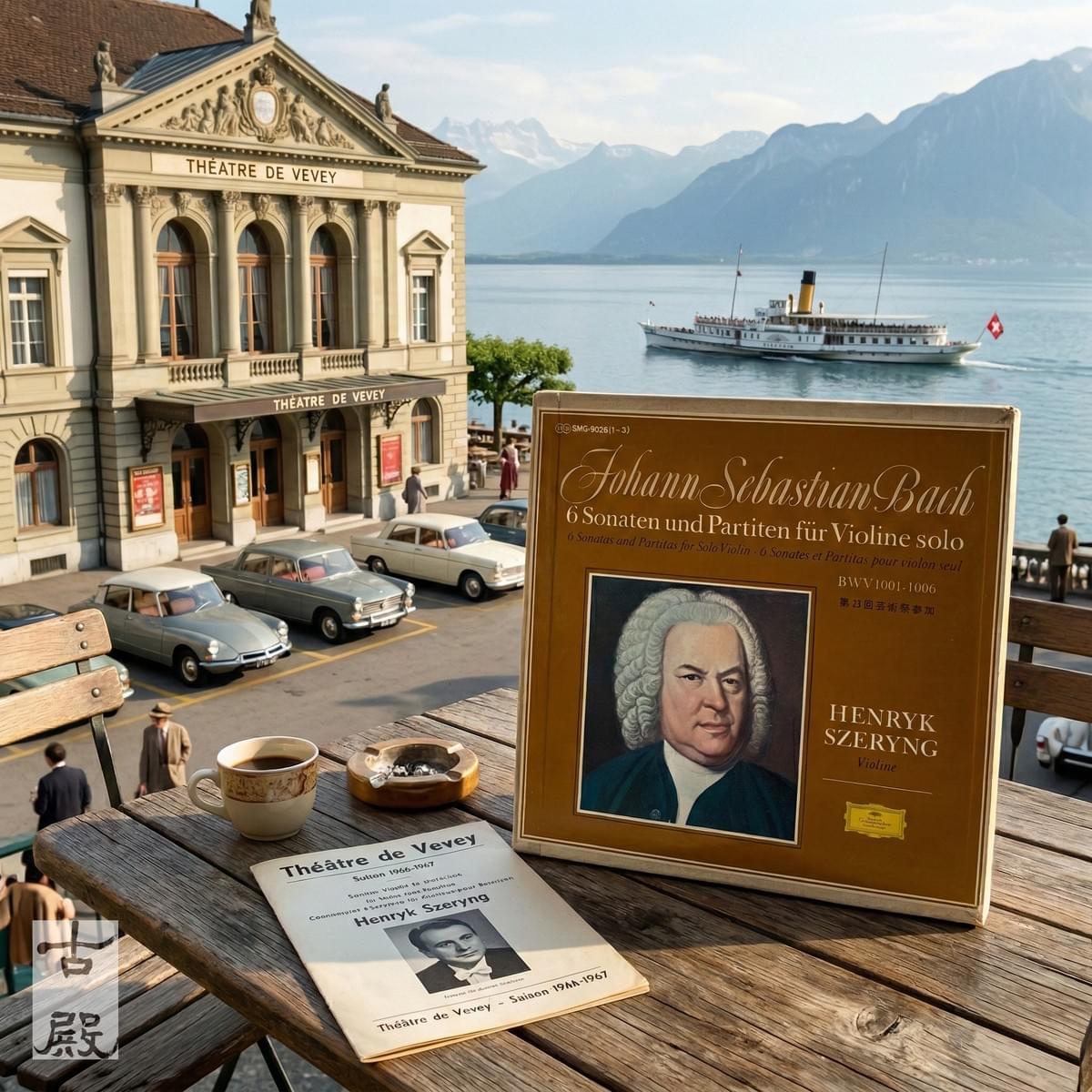
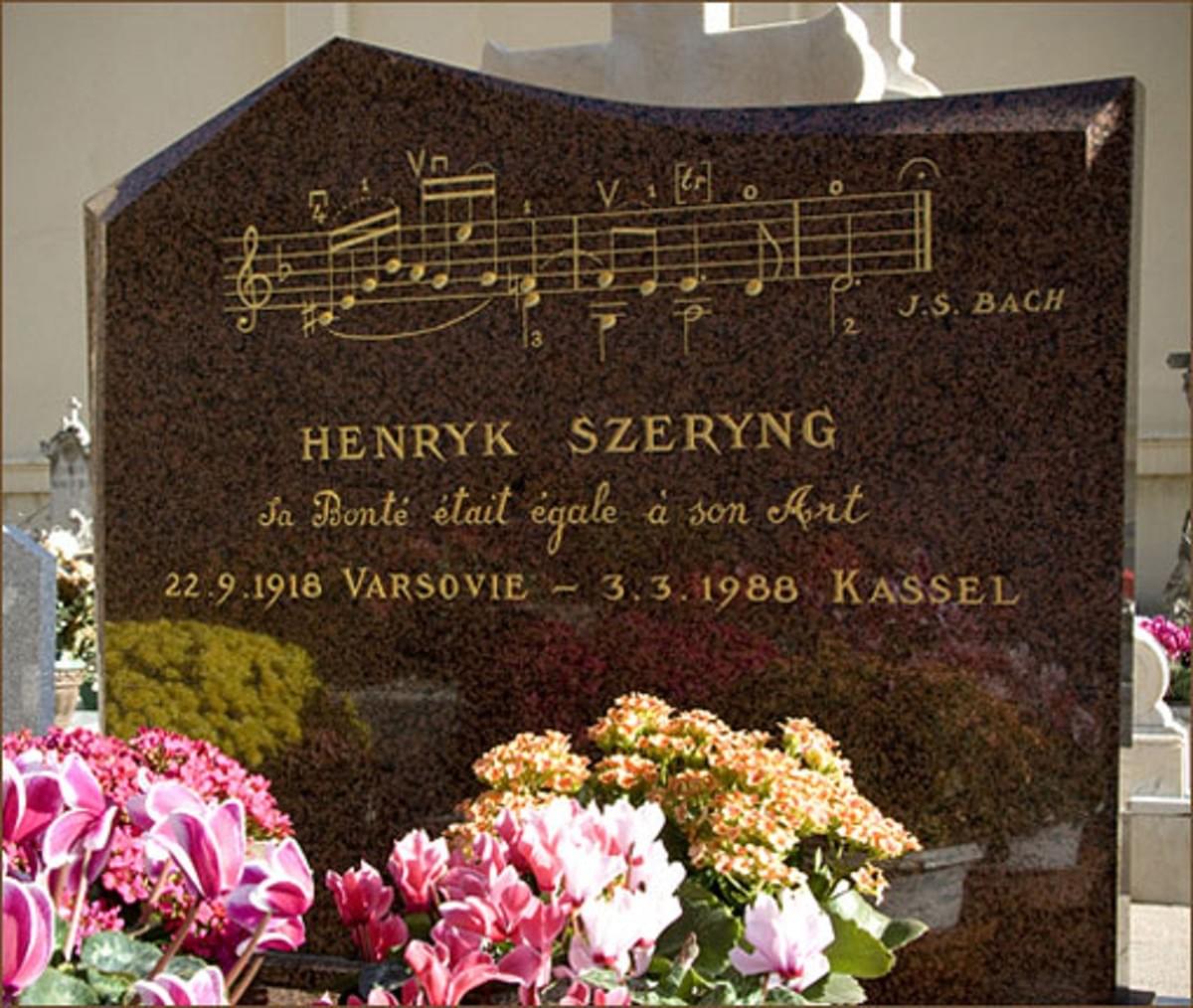
這套 1967 年的錄音,背後藏著一個有趣的歷史故事。為什麼唱片封面上掛的是 DG (德國留聲機) 的標誌,但製作人卻是 Philips (飛利浦) 的當家大將?
這就是黑膠迷人之處。當時 Philips 與 DG 這兩家大公司處於一種「同居」合作關係,頂尖人才常會互相串門。這套巴哈錄音,正是兩家公司聯手打造的巔峰。
1. 製作人:維多里奧·內格里 (Vittorio Negri, 1923–1998)
內格里不僅是個製作人,他本身就是一位深度音樂學者與指揮家。
- 巴洛克權威:他是傳奇樂團「義大利音樂家合奏團 (I Musici)」的靈魂人物。他對巴洛克時期的織體與節奏,有著近乎苛求的品味。
- 謝霖的靈魂伴侶:謝霖是理性的學者,內格里則追求「骨架清晰、透明乾淨」的聲響。兩人簡直是伯牙與叔齊,共同追求那種「巴哈式的神性秩序」。他賦予這份錄音一種神聖的空間感,讓琴聲聽起來有一種頂天立地的氣勢。
2. 錄音師:安東尼·布克文斯基 (Antoni Buczyński / A. Bukwiński)
他是當時 Philips 與 DG 體系中頂尖錄音大師。
- 捕捉「靈魂」的耳朵:布克文斯基擅長處理「單件樂器」與「空間」的關係。在他手中,錄音師不只是錄下聲音,而是錄下「空氣的流動」。
- 沃韋劇院的神來之筆:沃韋劇院 (Vevey Theatre)位於瑞士日內瓦湖畔,當地是一座帶有濃郁人文氣息的小城——查理·卓別林晚年也選擇在此定居。劇院的音響空間相當乾燥,這是一個重要的技術選擇:錄製無伴奏獨奏小提琴,過多的殘響會模糊線條,而適度乾燥的空間使謝霖每一個音符的質地都清晰可辨,既不孤單,又有頂天立地的氣勢。布克文斯基沒有把麥克風塞到琴橋上,而是給了謝霖足夠的空間,讓琴聲、空間與牆壁產生共振。這就是為什麼謝霖的琴聲聽起來有一種「呼吸感」,甚至好像在眼前。
1967 年錄音特色:與「Le Duc」的十年情緣
這套錄音的特色在於:
- 文化貴族的尊嚴與克制:不求奇炫,以最誠實的態度面對樂譜。
- 複音聲部的透明感:得益於深厚的作曲背景,謝霖處理賦格聲部時,清晰得像在你面前攤開了總譜,熟悉程度幾乎是跟樂譜合而為一。無論去哪裡旅行,謝霖一定隨身帶著這套作品的樂譜,幾乎是與這套作品生活在一起。
- Le Duc 的共鳴:1967 年錄音時,謝霖已與 1743 年製作的瓜奈里耶穌名琴 「Le Duc」 相伴整整十年。謝霖辭世後,這把琴沉睡了 30 年,2019至2020年間,由古樂器拍賣商暨信託機構Tarisio宣布,將這把琴以長期借用方式,獨家交給德裔美籍小提琴家奧古斯丁·哈德利希(Augustin Hadelich)演奏。我們在這套錄音中聽到的,正是這把名琴巔峰的呼吸。
傳統詮釋的最高峰:為何它是後世的黃金標準?
這套錄音在 1968 年發行後,獲得了法國唱片大獎 (Grand Prix du Disque)。
結構的典範: 內格里的「音樂修養」碰上布克文斯基的「物理聽覺」,確保了謝霖拉出的每一條對位線都清晰可辨。你在聽這份黑膠時,腦袋會不自覺地跟著旋律走,原本混亂的思緒會被這種結構感「梳理」開來。
真實的距離: 布克文斯基保留的「距離感」,讓你有一種「我就坐在大師前面五公尺處」的真實感。在 1960 年代謝霖帶來了一種「優雅的秩序」。這影響了後來幾十年的小提琴家,無論是克萊曼、夏漢,還是帕爾曼,甚至是每一位演奏巴哈無伴奏的小提琴家,都必然參考謝霖的這份版本。
不斷的再版:此錄音被DGG多次以不同格式重新發行,黑膠、CD,SACD版,最終在謝霖誕辰100週年(2018年)以限量2000套編號的180g黑膠復刻版重新發行,半個世紀以來從未真正從市場上消失——這份錄音可能是史上發行版本與數量最多的版本。
結語:對謝霖而言,巴哈是靈魂的聖經
謝霖曾說:「演奏巴哈對我來說是一種宗教體驗。」無論去哪裡旅行,一定隨身帶著這套作品的樂譜。1967年這套錄音,是他第二度全面面對這部作品,帶著更豐厚的人生積澱,以全部的生命與巴哈對話。
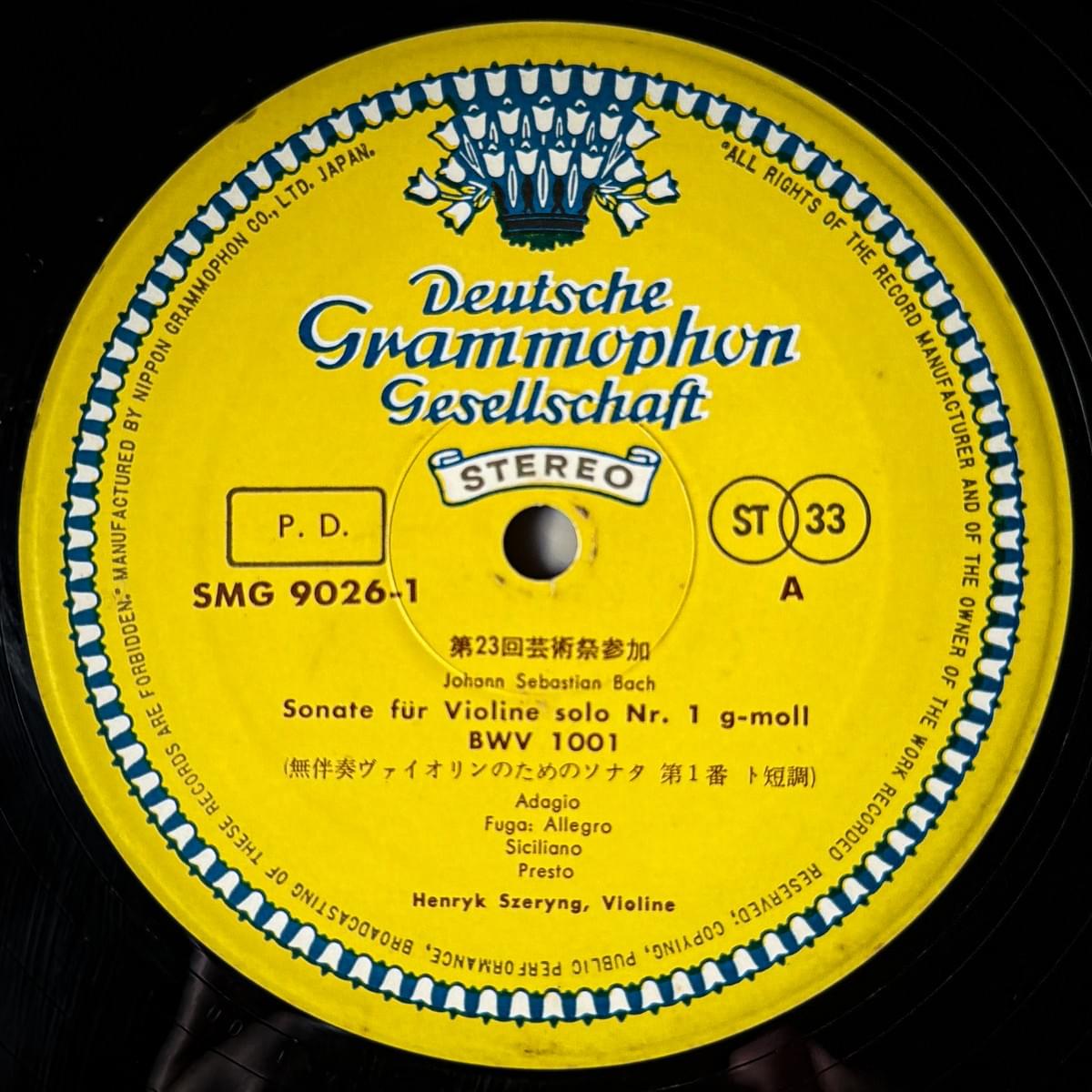
他最終選擇刻在墓碑上的,不是任何文字,而是《第二號組曲》夏康舞曲(Chaconne)的最後幾小節樂譜。這說明了這部作品在他生命中佔據的位置,遠超過一份「曲目」——那是靈魂最終的告白。
實體音樂:
******
[Hall of Ancient Records: Music Stories]The Summit of Tradition: Henryk Szeryng’s 1967 Bach Solo Violin Cycle
Today, I want to share a story about a recording that feels like a cornerstone for the soul: the 1967 recording of Bach’s Sonatas and Partitas for Solo Violin by the great master Henryk Szeryng. Published in 1968, this wasn't just his first stereo recording of the cycle; it stands as the definitive peak of traditional interpretation in 20th-century violin history.
While history might debate whether this is the "absolute best" version, few would argue against the fact that Szeryng’s 1967 cycle is the version that most deeply influenced everything that came after it.
Conquering the Himalayas: A Lineage of Bach Solo Recordings
Before we dive into Szeryng’s world, we have to look at the mountain range itself. Masters often call this cycle (BWV 1001-1006) the "Himalayas for Violinists." The history of its recordings is essentially a miniature history of the evolution of violin art:
- 1929–1936: Yehudi Menuhin (HMV, 78rpm): The first complete recording in history. Menuhin was only 13 to 20 years old—a child prodigy at his peak. It combined the rigorous German structure of Adolf Busch with the spiritual color of Georges Enescu.
- 1948–1949: Georges Enescu (Continental Records): The world’s first complete set on LP. Enescu—whom Casals called "the greatest musical phenomenon since Mozart"—was in his later years. His intonation was no longer perfect, but the spiritual depth was unparalleled. He was the one who famously dubbed these works the "Himalayas," a description that has defined the cycle ever since.
- 1952: Jascha Heifetz (RCA Victor): A pursuit of breathtaking clarity and speed. This remains a benchmark for technical perfection.
- 1954–1955: Henryk Szeryng’s First Version (Mercury, Mono): Recorded after his return to the stage. It was intense and rigorous, winning the Grand Prix du Disque.
- 1960–1961: Arthur Grumiaux (Philips): The first complete stereo set. It inherited Enescu’s spirituality but added the crystalline elegance of the Franco-Belgian school.
- 1967: Henryk Szeryng’s Second Version (DG, Stereo): The subject of our story today—the "Ultimate Traditionalist" standing at the summit of this long history.
The Last Noble of European Humanism: Henryk Szeryng
Szeryng was born in 1922 near Warsaw, the very birthplace of Chopin. When he recorded this 1967 set, he was 45—at the absolute zenith of his powers. He was a polyglot who spoke seven languages, and that "cultural weight" is palpable in his playing.
His life was defined by service. During WWII, he joined the Allied forces as a volunteer, serving as a translator for the exiled Polish government and performing over 300 concerts in field hospitals. He didn’t play to show off; he played to preserve the order of civilization. When you hear him, you aren't just hearing a violin; you are hearing a "Humanist Noble" speaking through strings.
Behind the Scenes: The Golden Triangle
There’s a fascinating bit of history behind this recording. Although the cover bears the D
eutsche Grammophon (DG)logo, the producer was actually a titan from Philips. At the time, these two giants were in a "cohabitation" partnership, sharing talent and resources.
The Producer: Vittorio Negri Negri was more than a producer; he was a scholar and conductor. As an authority on Baroque music, he had an exacting taste for texture and rhythm. He and Szeryng were soulmates in their pursuit of "Bach’s divine order." Negri gave this recording a sacred sense of space, making the violin sound monumental.
The Engineer: Antoni Buczyński Buczyński had an ear for the "soul" of an instrument. He didn't just record sound; he recorded the movement of air.
The Venue: Vevey Theatre, Switzerland Located by Lake Geneva (where Charlie Chaplin chose to spend his final years), the theatre offered a "dry" acoustic. This was a deliberate choice. Too much reverb blurs the intricate lines of Bach’s polyphony. The moderate dryness makes every note of Szeryng’s distinct and clear, yet resonant. Buczyński didn't shove the microphone into the violin's bridge; he gave it space to breathe.
Why It Remains the Gold Standard
When this set was released in 1968, it immediately won the Grand Prix du Disque. But its value goes beyond awards:
Transparency of the "State": Thanks to his background in composition, Szeryng handles the fugues with such clarity it’s as if the score is being unfolded right before your eyes.
The "Le Duc" Resonance: At the time of this recording, Szeryng had been playing his 1743 Guarneri del Gesù, the "Le Duc," for ten years. What we hear is the peak "breathing" of one of the world’s most legendary instruments.
A Realistic Distance: The recording captures a sense of "distance" that makes you feel as though you are sitting exactly five meters in front of the master. It provides an "elegant order" that has influenced every violinist since, from Gidon Kremer to Augustin Hadelich.
Conclusion: Bach as a Bible for the Soul
Szeryng once said, "P
laying Bach is a religious experience for me." No matter where he traveled, he always carried the score of this cycle with him. It wasn't just repertoire; it was how he spoke to the universe.
Perhaps the most touching proof of this is his final request. He chose not to have words engraved on his tombstone. Instead, he chose the musical notes from the final bars of the Chaconne from Partita No. 2. It was his soul’s final confession.