
【古殿唱片音樂故事】兩個秘密,與首次訪美——1955年,大衛·歐伊斯特拉夫(David Oistrakh,1908-1974)來到美國的那個下午
古殿殿主
1955年,有兩個秘密在同一個時間點交匯。
第一個秘密,關於一個人。
他的名字在西方樂界流傳了將近二十年,卻沒有人見過他。那些從蘇聯輾轉流出的錄音,讓評論家和樂迷知道有這樣一個人存在——但那只是聲音,沒有身體,沒有臉,沒有站在台上的那個人。他是一個傳說,一個被鐵幕遮蔽了三十年的謎。
第二個秘密,關於一套母帶。
就在他抵達美國、走進錄音室的同時,RCA Victor 的工程師在他完全不知情的情況下,悄悄架設了第二套麥克風系統,對同一場演奏進行了獨立的立體聲錄音。那套母帶被靜靜地放進倉庫,封存了將近八年,沒有對任何人宣布。連他自己都不知道,自己參與了一個正在改變錄音歷史的技術實驗。
這兩個秘密,性質完全不同。一個是人的秘密,一個是技術的秘密。但它們在1955年的幾個下午,在卡內基廳與波士頓交響廳,交匯在同一個人的身上——
大衛·奧伊斯特拉夫(David Oistrakh, 1908—1974)。後面簡稱大歐
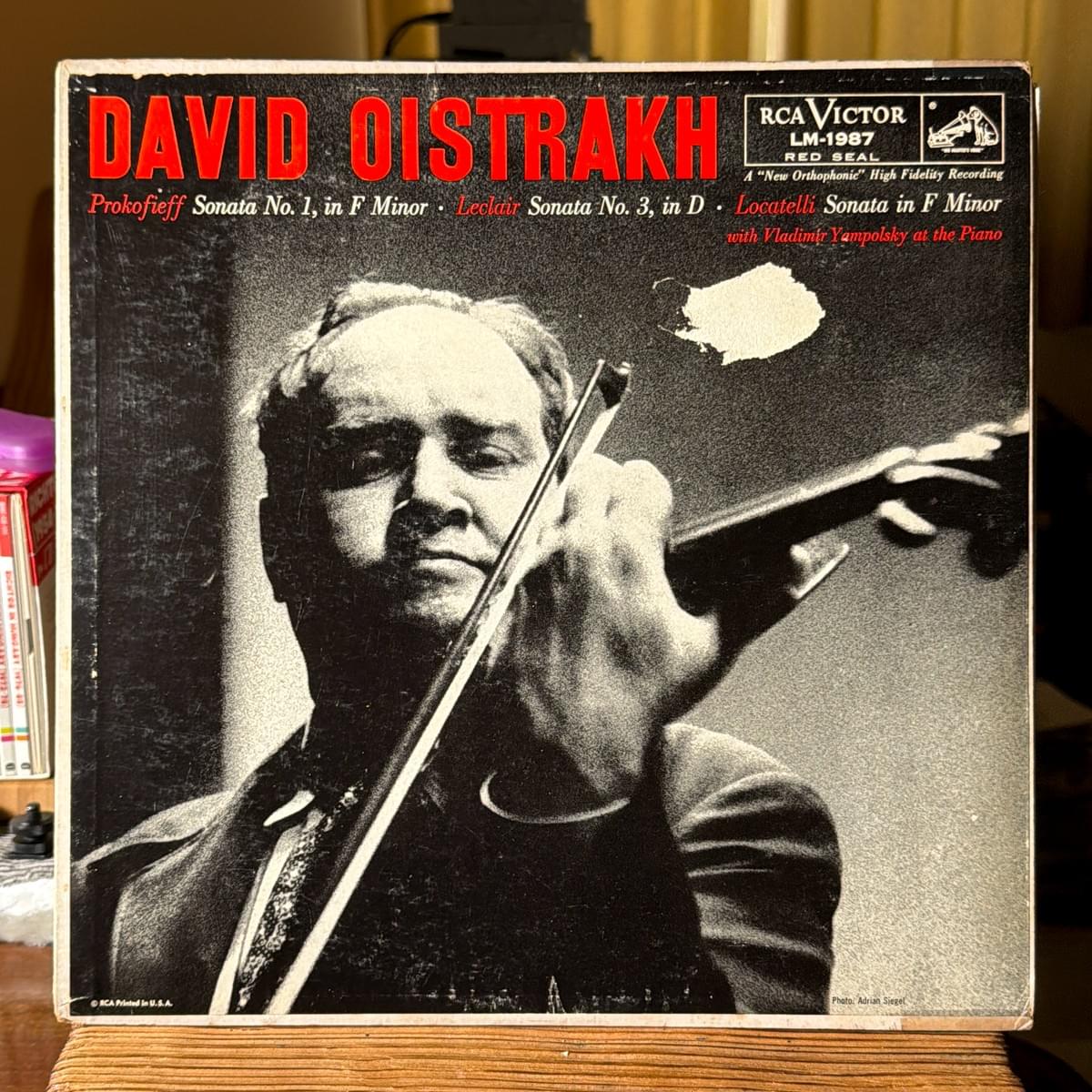
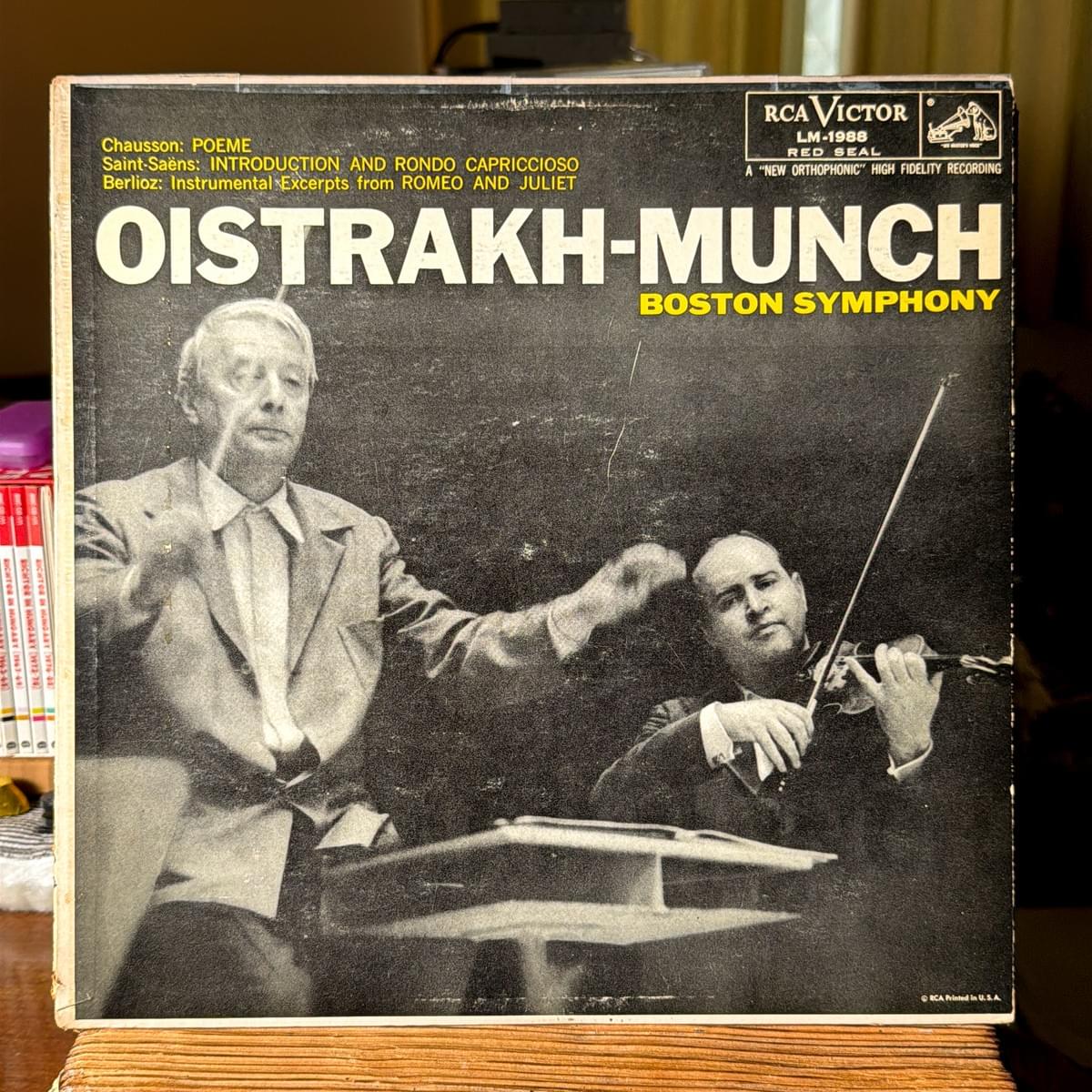
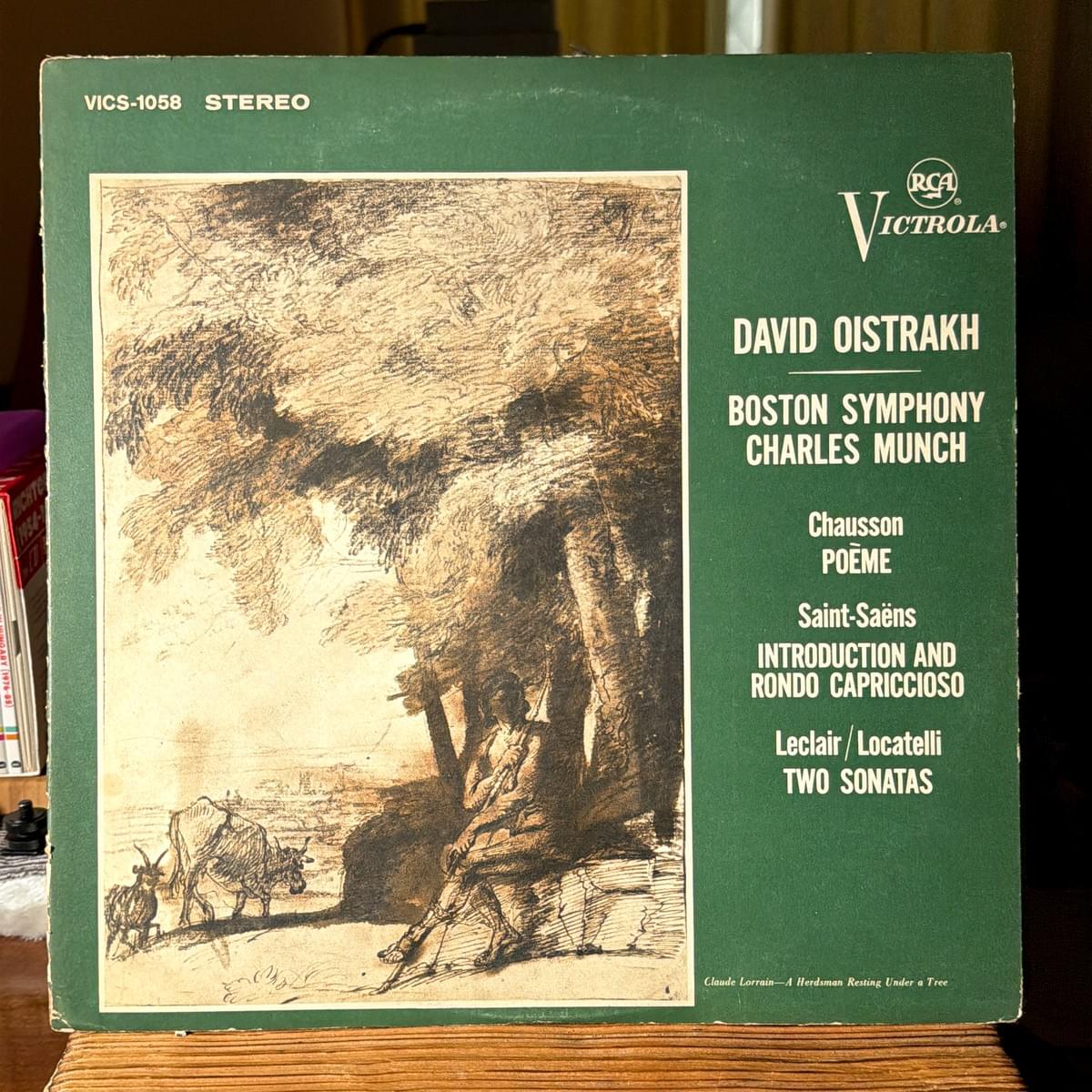
他留下的聲音,現在在這三張黑膠唱片的溝槽裡:RCA Victor LM-1987、LM-1988,以及八年後才出現的 RCA Victrola VICS-1058。
這是這三張唱片裡,兩個秘密與一次訪演的故事。
第一個秘密:一個名字,等了三十年
1
955年以前,大歐對西方樂界來說,是一個傳說。
不是比喻。是字面意義上的傳說——人們聽說過他,沒有親眼見過他,卻沒有人不知道他的名字。
大歐(David Oistrakh, 1908—1974)1908年生於烏克蘭奧德薩,五歲開始學琴,在名師彼得·斯托利亞爾斯基門下接受嚴格訓練,1926年自奧德薩音樂學院畢業,1929年在莫斯科正式登台。此後,他的聲音只在蘇聯與東歐流傳。
不是因為不夠好。是因為出不去。
史達林時代的蘇聯,音樂家是國家財產。出境演出,需要審批。名氣越大,管制越嚴——因為他們是最有價值的宣傳工具,也是最危險的出逃誘因。奧伊斯特拉赫在國內的聲譽早已如日中天,但那道鐵幕,把他關在裡面,也把西方聽眾關在外面。
西方樂界是從輾轉流出的錄音裡認識他的。那些在蘇聯國內製作、零星傳到西歐的唱片,讓評論家和樂迷知道有這樣一個人存在。但那只是聲音,沒有身體,沒有臉,沒有站在台上的那個人。
1937年,他在布魯塞爾的意沙易(Eugène Ysaÿe)國際小提琴大賽奪冠——那個以比利時小提琴宗師命名的比賽。這個消息傳到西方,但人沒有跟著來。
1951年,他終於獲准前往西歐。1953年,史達林死了。1954年,他在英國首演。歐洲錄音開始流傳,美國的音樂雜誌開始刊登從歐洲回來的旅行者帶回的報告——那些報告的措辭,越來越接近「傳說」這個詞。
1955年,他終於被允許來到美國。
LM-1987 封底,樂評人路易斯·賓寇利(Louis Biancolli)這樣記述那個時刻的氛圍:
「歐洲的錄音已經讓期待升至頂點,加上從美國旅客口中帶回的、關於一種幾近傳奇的完美演奏的盛讚報告,那個下午,卡內基廳的聽眾,每一個人都繃緊了神經等待著。」
1955年11月20日,星期日,下午5點30分
卡內
基廳的演出還沒開始,售票窗口外已經大排長龍,一路延伸到街區的盡頭。
賓寇利寫道:
「大約三千名持票者擠進了這座古老的廳堂,數百人被安置在舞台上。估計有五千人在過去數週內徒勞地尋求票券。卡內基廳售票窗口外的隊伍,一路延伸到街角——就像早些時候為他的蘇聯鋼琴同胞埃米爾·吉列斯(Emil Gilels)排隊時一樣。」
五千人無票求票。數百人站在舞台上。一條從售票窗口延伸到街角的人龍。
這不是一場普通的音樂會。這是美國第一次,在真實的空間裡,見到那個傳說。
然後他出場了。
賓寇利接下來的文字,是整個封底最精彩的部分:
「現在他就站在那裡——一個誠懇、謙遜的人,身材不高,略顯圓潤。這個來自遠方俄羅斯、神情凝重的弓弦大使身上,沒有半點誇張英雄的氣息。這不是一個沉溺於弦樂雜技特技表演的特技演員。站在我們面前的,是一個更高層次的小提琴家——一個關注音樂、關注風格與內涵,而不是關注炫技和刻意展示個人魅力的音樂家。」
他沒有誇張的肢體動作。他安靜地走向他在樂團裡的位置。他的笑容溫暖而有禮,但不過分熱絡。他站著演奏,雙腳分開,身體幾乎靜止不動。只有在某個樂句攀上頂點時,他的身體才會突然伸展到全高——「一個令人震撼的效果」,賓寇利這樣形容。
然後他開始演奏。
「作曲家的另一個自我」
他帶來
的第一首曲子,是普羅高菲夫《F小調小提琴奏鳴曲第一號》Op. 80。
這首曲子的身世,幾乎就是大歐本人的縮影。普羅高菲夫在1938年開始動筆——那是史達林大清洗最血腥的年代,整個蘇聯文化界籠罩在恐懼之下。他寫完第一樂章,停下來。整個二次大戰,疏散、轟炸、前線演出、在烏拉山區顛沛流離,這首奏鳴曲的草稿跟著他,但沒有被完成。直到1946年,戰爭結束後的第一年,他才回頭,把這首跨越了八年的曲子寫完。
普羅高菲夫把它題獻給了大歐。由大歐自首演。
排練時,普羅高菲夫告訴大歐,第一樂章結尾那些輕聲的急速音階,應該聽起來「像墓地裡的風」。
大歐後來說:「說完這句話之後,整首奏鳴曲的靈魂對我們而言就有了更深的意義。」
1953年普羅高菲夫去世。葬禮上演奏的,是這首奏鳴曲的第一和第三樂章。作曲家用自己的音樂送自己離開。而那個送他的人,正是奧伊斯特拉赫。
1955年,大歐帶著這首曲子踏上卡內基廳的舞台。他沒有帶一首討好美國耳朵的安全曲目,沒有帶一首技巧炫耀的表演性作品。他帶來的,是一首他與一個剛去世的朋友之間最深刻的對話——一首以鋼琴低音模擬喪鐘、以小提琴高音模擬墓地之風的作品。
賓寇利這樣描述演奏過程中聽眾的反應:
「聽眾的溫度在攀升,這是同樣令人興奮的事。人們漸漸感受到,這是怎樣的一位藝術家,對音樂的感受也在深化,視角也在緩緩調整。最終,聽眾以最後的盛情款待了這位蘇聯訪客——他們臣服的,與其說是那個演奏者,不如說是他所演奏的、如此美麗而忠實的音樂。」
演出結束後,《紐約客》的樂評人温斯洛普·薩金特(Winthrop Sargeant)寫下了那句後來被印在 VICS-1058 封底的話:
「近幾十年來登場的小提琴家中,他是最優秀的……我一直在聆聽這樣的演奏。」
賓寇利在 LM-1987 封底的最後一句,是整段文字的高峰:
「他從不阻礙作曲家或他的音樂。相反,他成為了每一個詮釋者所追求的那個難以捉摸的理想——作曲家的另一個自我。」
the composer's other self.
在普羅高菲夫親自題獻這首奏鳴曲給大歐、親自指導他排練、親口告訴他「那是墓地裡的風」的脈絡下,這句話的重量無法言說。
他帶來的第二組音樂:一條傳承的鏈
波士頓的
錄音,是另一種對話。
1955年12月14日,在波士頓交響廳(Symphony Hall, Boston),大歐與指揮孟許(Charles Munch)、波士頓交響樂團合作,錄製了蕭頌《詩曲》Op. 25 與聖桑《序奏與輪旋奏鳴曲》Op. 28。這成為 LM-1988 的A面。
艾利在 LM-1988 封底描述大歐的弓法,用了一個令人難忘的比喻:
「毫無疑問,奧伊斯特拉赫最高的成就在於他的弓法,它讓他能夠表達一種延綿的歌唱線條,綿延到幾乎讓人聯想到一把配備了內建延音踏板的小提琴;人們往往難以察覺他的下弓在哪裡結束、上弓在哪裡開始。他運弓的力道、攻擊和技法變化是無窮無盡的。他能用弓製造出一個時刻像吉普賽提琴手般溫暖的音色,下一刻又像長笛般的光澤。他的音色調色盤,確實沒有極限。」
蕭頌《詩曲》是1896年作曲,題獻給意沙易,並由意沙易首演。
而1937年,大歐在布魯塞爾贏得的那個大賽,正是以意沙易命名的意沙易國際小提琴大賽。
意沙易啟發了蕭頌的《詩曲》,又在1937年的大賽中,把他的名字傳給了大歐。當大歐在波士頓錄製這首蕭頌,他演奏的是一首從意沙易身上誕生的曲子。
艾利在封底特別點出這個聯繫:
「《詩曲》首次在西班牙的一場音樂聚會上演出,當時蕭頌正在巡演。獨奏者是意沙易,這部作品也是題獻給他的——而他那首無伴奏《奏鳴曲-敘事曲第三號》,正是奧伊斯特拉赫在最近美國巡演音樂會上的保留曲目。」
同一張封底,也記下了蕭頌的死法——這段描述,讓人難以忘懷:
「蕭頌在1896年創作《詩曲》,距他在巴黎一個小山坡上騎腳踏車失控、撞上牆壁、當場死亡,還有三年。」
一個詞,「當場死亡」——die instantly——印在一張唱片的封底,是1956年的文字。七十年後讀起來,仍然讓人一震。
那把琴的身份
LM-19
87 封底最後有一段關於大歐所用的琴的描述,是整個封底文字裡最值得細讀的一段:
「如果大歐純粹而完美的風格讓我們與這些音樂及其時代建立了親密的聯繫,那麼他所演奏的樂器也同樣如此——那是一把製於1719年的史特拉底瓦里,就在洛卡泰利和雷克萊爾寫下他們的奏鳴曲幾年之前。雖然這把琴在技術上屬於蘇聯國家收藏,但人們衷心同意《紐約時報》霍華德·陶伯曼(Howard Taubman)的話:無論誰擁有這把琴,奧伊斯特拉赫『讓它聽起來像是他生來就把它握在手裡的。』」
1719年製造的史特拉底瓦里。屬於蘇聯國家。
那把琴是大歐的,又不是他的。就像他這個人:屬於蘇聯,又不只屬於蘇聯。1955年他站在卡內基廳,那把1719年的琴在他手裡,他讓它聽起來「像是生來就把它握在手裡的」——但演出結束,他要回去,琴也要回去。
這個細節,是冷戰時代最精準的一個縮影。
第二個秘密:同步進行的另一套錄音
現在說那個藏
了將近八年的秘密。
1955年12月14日,波士頓交響廳,大歐與孟許錄製蕭頌和聖桑的那一天——Discogs 的版本資料裡,有一行幾乎從來不被注意的文字:
「Chausson & Saint-Saëns recorded December 14, 1955 (recorded in stereo).」
那兩首曲子,是以立體聲錄製的。
但 LM-1988 是單聲道唱片。
RCA 的工程師,在用單聲道母帶壓製 LM-1988 的同時,把另一套立體聲母帶靜靜地放進了倉庫,沒有對任何人宣布這件事。
LM-1987 也是一樣。普羅高菲夫奏鳴曲、雷克萊爾、洛卡泰利——這批與揚波斯基合作的室內樂錄音,同樣在1955年完成,同樣以單聲道LP對外發行,而立體聲版本的母帶,同樣靜靜地積壓在倉庫裡。
換言之:這兩張唱片裡大歐所有的演奏——無論是波士頓的管弦樂合作,還是室內樂奏鳴曲——RCA 都同步錄製了立體聲版本,然後全部沒有發行。
1955年,立體聲黑膠根本還不存在。它要等到1958年才正式商業化。那天在波士頓、在錄音室裡,RCA 的技術團隊在錄製一個他們自己也不確定未來的東西。
這不是意外。這是當時RCA正在實踐的一個政策。
就在前一年,1954年3月6日,RCA Victor 的工程師在芝加哥管弦樂廳錄製萊納(Fritz Reiner)指揮芝加哥交響樂團演奏理查·史特勞斯《英雄的生涯》時,做了完全相同的事:單聲道錄音對外發行,立體聲實驗母帶悄悄封存。那份封存的記述,後來只出現在一個極為罕見的 LM-1807 豪華摺頁裝版本裡,由當時美國最重要的音響評論家達雷爾(R.D. Darrell)親筆記載:這是「RCA Victor 持續發展和研究錄音技術政策的一部分」。
換言之,1954到1955年間,RCA 在幾乎所有重要的錄音現場,都同步進行著立體聲實驗——外界看到的是單聲道唱片,倉庫裡積累的是立體聲母帶,等待一個尚未到來的技術時代。
大歐在美國的RCA所有錄音,就這樣完整地參與了這個他自己可能也不知道的歷史實驗。LM-1987 與 LM-1988,是這個政策在1955年留下的兩份標本。
八年的等待,與一個沒有答案的選擇
1958年,R
CA 正式推出 Living Stereo 系列,以 LSC 編號發行立體聲唱片,席捲市場。
那些在1954到1957年間積累的立體聲母帶,大多在這一波裡公開了——萊納的史特勞斯系列、孟許的法國曲目、一批又一批被後世奉為天碟的 Living Stereo 錄音。
但大歐1955年的全部錄音,沒有出現在1958年的 Living Stereo 系列裡。
它們一直等到1963年,才以 RCA 的副牌 Victrola 的形式出現——編號 VICS-1058,深綠色封面,一幅克勞德·洛蘭(Claude Lorrain)的田園素描,低調地上市。不是光環閃耀的 Living Stereo,是副牌的 Victrola 系列。
為什麼缺席 Living Stereo 八年?
一個最可能的解釋,涉及冷戰的現實。大歐是蘇聯公民,國家的人民藝術家,他與 RCA 的錄音合約是透過蘇聯國家藝術機構 Gosconcert 仲介的,不是個人直接簽約。1958年,美蘇關係依然緊繃,要重新談判立體聲版本的發行授權,很可能需要通過整個蘇聯官僚機器的審批。等到1963年,赫魯雪夫的文化解凍已經持續了一段時間,那些談判才或許得以完成。
但這個解釋仍然留下另一個問題:為什麼是 Victrola 副牌系列,而不是正價的 LSC 系列?1963年的大歐,名氣比1958年更大,不是更小。這個問題,目前沒有答案。
VICS-1058 的選曲邏輯,與一個尚未解開的缺席
現在仔細看 VI
CS-1058 的選曲,它的邏輯其實非常清楚——同時也留下了一個至今無法解釋的空白。
這張1963年的立體聲唱片,是把兩張原版唱片裡所有大歐演奏的部分重新組合而成的:
LM-1988 的 A 面(蕭頌《詩曲》+聖桑《序奏與輪旋》)→ 進入 VICS-1058 A 面 LM-1987 的 B 面(雷克萊爾奏鳴曲+洛卡泰利-意沙易奏鳴曲)→ 進入 VICS-1058 B 面
捨去的兩組,各有清楚的理由:
LM-1988 的 B 面是白遼士《羅密歐與茱麗葉》管弦樂選曲——那一面是孟許與波士頓交響樂團的純管弦樂演出,大歐並未參與。把它放進一張以大歐為主角的立體聲唱片,從邏輯上就不成立。捨去它,理由清楚。
LM-1987 的兩面都有大歐,但一張12吋LP的容量有其物理限制——一面大約只能容納22到25分鐘的音樂,要把整張 LM-1987 的內容全數放進去,根本放不下。必須在A面的普羅高菲夫奏鳴曲,與B面的雷克萊爾和洛卡泰利之間,擇一捨去。
RCA 選擇了留下 B 面,捨去 A 面的普羅高菲夫。
為什麼?
黑膠的物理容量限制解釋了「必須捨去其中一面」,但無法解釋「為什麼捨去的是普羅高菲夫那面,而不是另一面」。
普羅高菲夫《F小調小提琴奏鳴曲第一號》Op. 80,是大歐這批美國錄音裡份量最重的作品——那是一首普羅高菲夫親自題獻給他、由他親自首演、在作曲家葬禮上由他演奏送別的曲子。如果這批錄音有任何一首是核心,那就是這首。
然而,它從 VICS-1058 消失了,也從此再沒有以正式立體聲LP的形式出現過。
是版權問題?是容量計算的結果?是商業判斷?還是某個現在已無從追溯的決定?
目前沒有任何文獻記載了這個選擇背後的理由。這個缺席,就像 Living Stereo 系列裡 LSC-1807(萊納《英雄的生涯》立體聲版)的永久缺席一樣,是一個藏在版本史裡、從來沒有人正式追問過的空白。
它值得被追問。但答案,可能已成羅生門。
三張唱片,一個完整的歷史節點
現在,古殿手上有這
三張唱片:RCA Victor LM-1987、LM-1988,與 RCA Victrola VICS-1058。
LM-1987:黑色封面,大歐近距離演奏的黑白特寫,攝影師 Adrian Siegel 拍攝,唱片標籤是深溝棕色影子狗,美國原版單聲道首版,約1956年發行。
LM-1988:黑色封面,孟許與大歐在指揮台前的合照,孟許的手向前伸,大歐握著弓靜靜地看著他。唱片標籤是深溝棕色影子狗,美國原版單聲道首版,約1956年發行。
VICS-1058:深綠色封面,洛蘭素描,RCA Victrola 大字標識。唱片標籤是深紅深溝標籤,立體聲標記,1963年發行。
把這三張放在一起,你得到的是一條完整的歷史弧線:
一次訪演的現場溫度(封底文字)。兩套同步錄製的母帶(一套單聲道,一套立體聲)。八年的冷戰等待。一個靜悄悄上市的立體聲再版。以及兩個至今仍沒有完整答案的問題。
LM-1987 封底的文字,寫於1956年,距離那場卡內基廳首演不過幾個月。那些文字不是回顧,是當下的記錄。賓寇利坐在打字機前,寫下「a huge audience, keyed to a high pitch of expectancy」,那個expectancy(期待)還沒有完全消散。艾利寫下「the first American recording with orchestra made by the distinguished violinist」,那個「第一次」還是新鮮的事實,不是歷史。
這就是黑膠唱片裡最難得的東西。不只是聲音,是那個當下的空氣,那是一個歷史的「時空寶盒」。
******
【Ancient Hall Records: Stories of Music】 Two Secrets and a Maiden Voyage to America—The Afternoon David Oistrakh Arrived in the United States, 1955
In the ye
ar 1955, two completely different secrets converged at the exact same point in time.
The first secret was about a man. For nearly twenty years, his name had whispered through the Western musical world like a myth, yet no one had ever seen him. The recordings that had trickled out of the Soviet Union through various winding paths let critics and music lovers know such a soul existed—but it was only a voice. There was no physical presence, no face, no man standing under the stage lights. He was a legend, an enigma shrouded by the Iron Curtain for three decades.
The second secret was about a set of master tapes. At the very moment he arrived in America and stepped into the recording studio, engineers at RCA Victor—entirely without his knowledge—quietly set up a second microphone system to capture a completely independent stereo recording of the exact same performance. Those master tapes were then silently tucked away into the warehouse, sealed for nearly eight years without a word to the public. Even the man himself had no idea he had just participated in a technological experiment that was altering the very course of recording history.
These two secrets were entirely different in nature. One belonged to humanity; the other belonged to technology. Yet, over a few afternoons in 1955, within the walls of Carnegie Hall and Boston’s Symphony Hall, they crossed paths within the body of a single person:
David Oistrakh (1908–1974). (Whom we shall affectionately call "Big David.")
The voice he left behind now rests within the grooves of three vinyl records: RCA Victor LM-1987, LM-1988, and RCA Victrola VICS-1058, which only surfaced eight years later.
This is the story of those three records, two secrets, and one historic concert tour.
The First Secret: A Name That Waited for Thirty Years
Before 19
55, to the Western musical world, Big David was a legend. Not metaphorically. It was a literal legend—people had heard of him, had never laid eyes on him, yet there wasn't a soul who didn't know his name.
Born in Odessa, Ukraine, in 1908, Big David began learning the violin at the age of five. Under the strict tutelage of the legendary master Pyotr Stolyarsky, he underwent rigorous training, graduating from the Odessa Conservatory in 1926 before making his formal debut in Moscow in 1929. From that moment on, his voice echoed only within the Soviet Union and Eastern Europe.
It wasn't because he wasn't good enough. It was because he couldn't leave.
In Stalin’s Soviet Union, musicians were treated as state property. Touring abroad required endless approvals. The greater the fame, the tighter the control—because these artists were the regime's most valuable propaganda tools, and simultaneously, its most dangerous flight risks. While Oistrakh’s reputation at home had long reached the heavens, that heavy Iron Curtain kept him locked inside, and kept Western listeners locked out.
The West came to know him through recordings that traveled by word of mouth and devious routes. Those LPs, pressed inside the Soviet Union and scattered sparsely into Western Europe, offered proof of life. But again, it was just a disembodied sound—no body, no face, no living presence on a stage.
In 1937, he claimed first prize at the Eugène Ysaÿe International Violin Competition in Brussels—a competition named after the grand master of the Belgian violin lineage. The news rippled across the West, but the man himself did not follow.
By 1951, he was finally permitted to travel to Western Europe. In 1953, Stalin passed away. In 1954, he made his debut in the UK. European recordings began to circulate widely, and American music magazines started publishing accounts brought back by travelers returning from Europe—reports whose language edged closer and closer to the word "mythical."
Then, in 1955, he was finally granted permission to come to America.
On the back cover of LM-1987, music critic Louis Biancolli captured the sheer electricity of that moment:
"European recordings had keyed expectation to a high pitch, and when these were added to glowing reports brought back by American travelers of a near-fabulous perfection of performance, a Carnegie Hall audience sat on tenterhooks that afternoon."
Sunday, November 20, 1955, at 5:30 PM
Before th
e music even began at Carnegie Hall, the box office lines were massive, snaking all the way to the end of the block.
Biancolli wrote:
"Some three thousand ticket-holders jammed the ancient auditorium, with several hundred accommodated on the stage. An estimated five thousand had vainly sought admission during the preceding weeks. The line outside the Carnegie Hall box office stretched down the corner—as it had earlier for his Soviet keyboard compatriot, Emil Gilels."
Five thousand souls searching in vain for a ticket. Hundreds standing directly on the stage. A human dragon stretching from the box office to the street corner. This was no ordinary concert. This was the first time America would look upon the legend in a real, physical space.
And then, he walked out.
Biancolli’s subsequent description is the crown jewel of the entire liner notes:
"Now there he was—a sincere, modest man, not tall, slightly round. There was no air of the flamboyant hero about this grave ambassador of bow and string from far-off Russia. This was no acrobat indulging in string pyrotechnics. Standing before us was a violinist of a higher order—a musician concerned with music, with style and substance, rather than virtuosity and calculated charisma."
There were no exaggerated gestures. He walked quietly to his place before the orchestra. His smile was warm and polite, but never overly familiar. He stood to play with his feet firmly planted, his body almost entirely still. Only when a phrase scaled a dramatic peak would his body suddenly straighten to its full height—"a shattering effect," as Biancolli described it.
Then, he began to play.
"The Composer's Other Self"
The very
first piece he offered was Prokofiev’s Violin Sonata No. 1 in F minor, Op. 80. The life story of this piece was a microcosm of Big David's own existence. Prokofiev began writing it in 1938—during the bloodiest years of Stalin's Great Purge, when the entire Soviet cultural landscape was paralyzed by fear. After finishing the first movement, he stopped. Throughout the entirety of World War II—through evacuations, bombings, front-line performances, and wandering through the Ural Mountains—the sketches of this sonata followed him, unfinished. It wasn't until 1946, the first year after the war ended, that he returned to finish this piece that had spanned eight painful years.
Prokofiev dedicated it to Big David. Naturally, Big David gave its premiere.
During rehearsals, Prokofiev told Big David that those soft, rapid scales at the end of the first movement should sound "like wind in a graveyard."
Big David later recalled: "After those words, the entire soul of the sonata took on a deeper meaning for us."
When Prokofiev passed away in 1953, the first and third movements of this very sonata were played at his funeral. The composer was ushered out of this world by his own music. And the man who sent him off was none other than Oistrakh.
In 1955, Big David brought this piece to the stage of Carnegie Hall. He did not bring a safe, pleasing piece to coddle American ears, nor a flashy showpiece designed to flaunt his technique. He brought the deepest, most profound dialogue between himself and a friend who had just departed—a work where the piano mimics a funeral knell and the violin evokes the wind sweeping across graves.
Biancolli described the audience's reaction as the music unfolded:
"The temperature of the audience rose, which was equally exciting. People began to feel what kind of artist this was; their feeling for the music deepened, and their perspective slowly adjusted. In the end, the audience treated the Soviet visitor to a final ovation—they surrendered not so much to the performer as to the beautiful and faithful music he played."
After the performance, The New Yorker critic Winthrop Sargeant wrote the words that would later be stamped onto the back cover of VICS-1058:
"He is the finest of the violinists to appear in recent decades... I have been waiting to hear playing like this."
Biancolli’s final sentence on the back of LM-1987 marks the peak of the entire text:
"He never gets in the way of the composer or his music. Instead, he becomes that elusive ideal every interpreter strives for—the composer’s other self."
"The composer's other self."
In the context of Prokofiev personally dedicating this sonata to Big David, personally guiding his rehearsals, and whispering to him that "it is the wind in a graveyard," the weight of that phrase defies language.
His Second Offering: A Chain of Heritage
The recor
ding in Boston captured a completely different kind of dialogue.
On December 14, 1955, at Symphony Hall in Boston, Big David collaborated with conductor Charles Munch and the Boston Symphony Orchestra to record Chausson’s Poème, Op. 25 and Saint-Saëns’ Introduction and Rondo Capriccioso, Op. 28. This became Side A of LM-1988.
Describing Big David’s bowing technique on the back cover of LM-1988, critic James Hinton, Jr. used an unforgettable metaphor:
"Undoubtedly Oistrakh’s supreme achievement lies in his bowing, which enables him to articulate a sustained cantabile line so seamless that it almost suggests a violin equipped with an built-in sustaining pedal; it is often impossible to detect where his down-bow ends and his up-bow begins. His variations of pressure, attack, and texture are infinite. He can produce with his bow a tone as warm as a Gypsy fiddler one moment and as brilliant as a flute the next. His palette of tonal colors is truly without limit."
Chausson’s Poème was composed in 1896, dedicated to Ysaÿe, and premiered by Ysaÿe. And back in 1937, the competition that Big David won in Brussels was the Ysaÿe International Violin Competition, named after that very same master.
Ysaÿe inspired Chausson’s Poème, and then passed his legacy down to Big David through the 1937 competition. When Big David recorded this Chausson piece in Boston, he was playing music born directly from Ysaÿe's spirit.
The liner notes specifically highlighted this beautiful thread of fate:
"The Poème was first performed at a musical gathering in Spain while Chausson was on tour. The soloist was Ysaÿe, to whom the work is dedicated—and whose unaccompanied Sonata-Ballade No. 3 was a staple of Oistrakh’s recent American tour programs."
That same back cover also preserved the tragic nature of Chausson’s death—a description that lingers in the mind:
"Chausson composed the Poème in 1896, just three years before he lost control of his bicycle on a hillside in Paris, crashed into a wall, and died instantly."
That phrase—"died instantly"—printed on the back of a record jacket, written in 1956. Reading it seventy years later, it still hits with a sudden, startling chill.
The Identity of the Violin
At the ve
ry end of the LM-1987 liner notes, there is a passage regarding the violin Big David used. It is perhaps the most profound piece of text on the entire jacket:
"If Oistrakh's pure and flawless style brings us into intimate contact with this music and its period, so does the instrument he plays—a Stradivarius made in 1719, just a few years before Locatelli and Leclair wrote their sonatas. Although the instrument belongs technically to the State Collection of the U.S.S.R., one heartily concurs with Howard Taubman of The New York Times that whoever owns it, Oistrakh 'makes it sound as if he had been born with it in his hands.'"
A Stradivarius made in 1719. Owned by the Soviet State. That violin belonged to Big David, yet it did not belong to him at all. Just like the man himself: he belonged to the Soviet Union, yet he belonged to the entire world. In 1955, as he stood in Carnegie Hall with that 1719 instrument in his hands, he made it sound "as if he had been born with it in his hands"—but when the concert ended, he had to go back, and the violin had to go back too.
This tiny detail is the most precise, heartbreaking snapshot of the Cold War era.
The Second Secret: The Shadow Recording Sessions
Now, let
us speak of that secret hidden away for nearly eight years.
On December 14, 1955, at Boston Symphony Hall—the day Big David and Munch recorded Chausson and Saint-Saëns—there is a line of text in the Discogs release data that almost everyone misses:
"Chausson & Saint-Saëns recorded December 14, 1955 (recorded in stereo)."
Those two pieces were recorded in stereo. Yet, LM-1988 was a mono record.
While RCA engineers were pressing LM-1988 using the mono master tapes, they quietly took the alternative stereo master tapes and slid them into the dark archives without telling a soul.
The exact same thing happened to LM-1987. The Prokofiev sonata, the Leclair, the Locatelli—this entire batch of chamber recordings with pianist Vladimir Yampolsky was completed in 1955 and released to the public as a mono LP, while the stereo versions of the master tapes sat silently accumulating dust in the warehouse.
In other words: for every single note Big David played on these two records—whether it was the symphonic collaboration in Boston or the chamber sonatas—RCA recorded a parallel stereo version, and then chose to release none of them.
In 1955, stereo vinyl didn't even exist commercially. It wouldn't hit the market until 1958. On that day in Boston, inside the studio, RCA’s technical team was recording for a future they couldn't even see yet.
This was no accident. This was a deliberate policy RCA was experimenting with at the time.
Just the year before, on March 6, 1954, RCA Victor engineers did the exact same thing at Chicago's Orchestra Hall when they recorded Fritz Reiner conducting the Chicago Symphony Orchestra in Richard Strauss’s Ein Heldenleben: the mono recording went out to the world, while the experimental stereo master tape was secretly locked away. The chronicle of that hidden recording only appeared later in an incredibly rare deluxe gatefold edition of LM-1807, penned by R.D. Darrell, America’s most important audio critic at the time: it was part of "RCA Victor’s policy of continuous development and research in recording technique."
Between 1954 and 1955, RCA carried out stereo experiments at almost every major recording session. What the public saw were mono LPs; what accumulated in the warehouses were stereo master tapes, waiting for a technological dawn that had not yet arrived.
Every single recording Big David made for RCA in America was part of this historical experiment—one he likely knew nothing about. LM-1987 and LM-1988 are two beautiful specimens left behind by this policy in 1955.
An Eight-Year Wait, and a Choice Without an Answer
In 1958,
RCA officially launched its Living Stereo series under the LSC catalog numbers, taking the market by storm.
Most of those stereo master tapes accumulated between 1954 and 1957 were finally brought into the light during this wave—Reiner’s Strauss series, Munch’s French repertoire, batch after batch of recordings that later generations would worship as absolute sonic benchmarks.
Yet, Big David’s complete 1955 recordings were nowhere to be found in the 1958 Living Stereo lineup.
They waited all the way until 1963, only to surface on RCA’s budget reissue label, Victrola—catalog number VICS-1058, featuring a deep green cover adorned with a pastoral sketch by Claude Lorrain. It slipped into the market completely under the radar. It wasn't given the glorious, shining Living Stereo badge; it was relegated to the secondary Victrola series.
Why were they missing from Living Stereo for eight long years?
The most plausible explanation lies in the reality of the Cold War. Big David was a Soviet citizen, a People's Artist of the USSR. His recording contract with RCA was brokered through the Soviet state arts agency, Gosconcert, not signed by him as an individual. In 1958, relations between the US and the Soviets remained incredibly tense. Renegotiating the rights to release stereo versions likely required wading through the thick, slow gears of the entire Soviet bureaucratic machine. By 1963, Khrushchev’s cultural thaw had been underway for some time, which may have finally allowed those negotiations to pull through.
But that explanation still leaves another puzzle unsolved: why release it on the budget Victrola label instead of the full-priced, premium LSC series? By 1963, Big David’s international fame was greater than it was in 1958, not less. This question remains unanswered to this day.
The Curation of VICS-1058, and a Missing Masterpiece
If you ex
amine the tracklist of VICS-1058 closely, the curation logic makes perfect sense—yet it leaves a massive, unexplained void.
This 1963 stereo record was built by taking all the portions featuring Big David from the two original mono LPs and stitching them back together:
Side A of LM-1988 (Chausson’s Poème + Saint-Saëns’ Introduction and Rondo) → Became Side A of VICS-1058.
Side B of LM-1987 (Leclair Sonata + Locatelli-Ysaÿe Sonata) → Became Side B of VICS-1058.
The two sections left on the cutting room floor were omitted for seemingly clear reasons:
Side B of LM-1988 featured orchestral selections from Berlioz’s Roméo et Juliette—a purely symphonic performance by Munch and the Boston Symphony Orchestra, featuring no violin solos from Big David. Leaving it on a stereo record dedicated entirely to Oistrakh wouldn't make sense. Omitting it was a logical choice.
While both sides of LM-1987 featured Big David, a 12-inch vinyl record has strict physical limits. A single side can comfortably hold only about 22 to 25 minutes of music. Trying to cram the entirety of LM-1987 onto one side of the new record was a physical impossibility. A choice had to be made between the Prokofiev sonata on Side A, or the Leclair and Locatelli sonatas on Side B.
RCA chose to keep Side B, completely discarding the Prokofiev on Side A.
Why?
Physical capacity explains why they had to drop one side, but it fails to explain why they chose to sacrifice Prokofiev over the others.
The Prokofiev Violin Sonata No. 1 in F minor, Op. 80 was the heaviest, most monumental work in Big David’s American recording sessions. It was the piece Prokofiev personally dedicated to him, the piece he premiered, and the piece he played to bid farewell to the composer at his funeral. If any work was the absolute heart and soul of these sessions, it was this one.
Yet, it vanished from VICS-1058, and it never appeared on an official stereo LP ever again.
Was it a copyright hurdle? A calculated decision based on track timings? A commercial judgment? Or a whim lost to time?
To this day, there is not a single shred of documentation explaining the reason behind this choice. This missing piece—much like the permanent absence of a stereo version of LSC-1807 (Reiner’s Ein Heldenleben) in the Living Stereo catalog—remains a blank space in record history that no one has ever formally questioned.
It deserves to be questioned. But the truth may forever remain a Rashomon story.
Three Records, One Living Gateway to History
Today, th
ese three records sit together in the Ancient Hall: RCA Victor LM-1987, LM-1988, and RCA Victrola VICS-1058.
LM-1987: A black cover featuring a black-and-white close-up of Big David lost in performance, captured by photographer Adrian Siegel. The label is the deep-groove, plum-colored "Shaded Dog"—the original US mono first pressing, issued around 1956.
LM-1988: A black cover showing Munch and Big David standing together at the podium. Munch’s hand is stretched forward, while Big David holds his bow, watching him intently. The label is also the deep-groove, plum-colored "Shaded Dog"—the original US mono first pressing, issued around 1956.
VICS-1058: A deep green cover featuring Lorrain's sketch with the bold RCA Victrola typography. The label is a deep red, deep-groove press with stereo markings, issued in 1963.
When you place these three side by side, you are holding a complete, unbroken arc of history:
The raw, living temperature of a concert tour preserved in text. Two sets of master tapes captured in parallel (one mono, one stereo). Eight years of waiting in the cold of the Cold War. A stereo reissue that slipped quietly into the world. And two profound questions that still whisper from the grooves.
The words on the back of LM-1987 were written in 1956, only a few months after that legendary Carnegie Hall debut. Those notes are not an archive; they are a living record of the present moment. As Biancolli sat at his typewriter, writing of "a huge audience, keyed to a high pitch of expectancy," that very expectancy had not yet faded from the air. When Hinton wrote of "the first American recording with orchestra made by the distinguished violinist," that "first time" was a fresh, breathing reality, not a footnote in a history book.
This is the rarest treasure hidden within vinyl records. It isn't just the audio fidelity; it is the very air of that fleeting moment. It is a time capsule, holding open a doorway to the past.