
1909年巴黎音樂學院傳奇競賽,創造200年來沒有的歷史:那一年她11歲,巴黎沒有人能拒絕她
古殿殿主
先說一件事,讓你知道這個故事有多不可思議。
巴黎音樂學院成立於1795年。兩百三十年過去了,柯爾托(Alfred Cortot,1877-1962)在這裡受訓,拉威爾在這裡幾度落榜,德布西在這裡拿到羅馬大獎。整個法國音樂精英的血脈,在這條走廊裡流過了一代又一代。
然而這所學院的鋼琴科有一個最年輕一等獎得主的紀錄,從1909年開始,至今從未被打破。
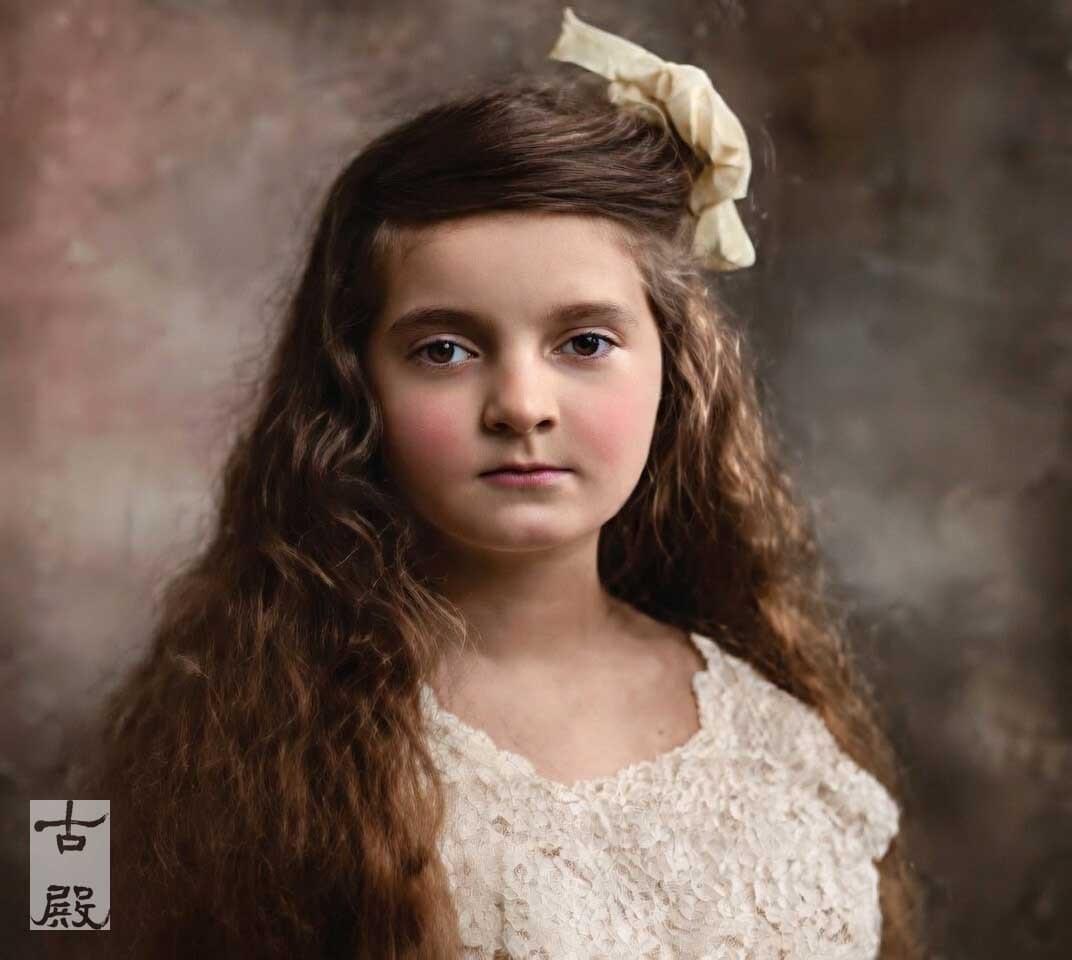
那個人叫芭蘭岑(Aline van Barentzen,1897-1981)。那一年,她11歲。
一、她不是應該在這裡的人
薩默維爾(Somerville)是美國麻薩諸塞州的一個普通小城。1897年,Aline Hoyle出生在那裡(芭蘭岑的原名)。沒有人預期一個來自那裡的孩子,有一天會讓巴黎最挑剔的一批耳朵集體點頭。
但她4歲就舉行了第一場公開音樂會。
不是家庭表演,是正式的公開獨奏會,4歲。
7歲,她上台演奏貝多芬第一號鋼琴協奏曲。不是前幾個樂句,是完整的演出,與管弦樂團合作。
她母親看著這一切,做了一個決定:帶她離開美國,渡過大西洋,去巴黎。
9歲時,Aline Hoyle 進入了巴黎音樂學院。
9歲進院,本身就是一個消息。這個機構不是為孩子設計的,它是為已成熟的年輕音樂家提供最後菁英訓練的地方。能通過嚴格入院考試的9歲孩子,幾乎是非常罕見。
她被安排在迪拉伯(Élie-Miriam Delaborde,1839-1913)班上——一位法國作曲家兼鋼琴家阿爾堪(Charles-Valentin Alkan,1813-1888)的嫡傳弟子,承接著19世紀法國鋼琴傳統最深沉的一支脈絡。另一位老師是瑪格麗特·隆(Marguerite Long,1874-1966),日後成為整個20世紀法國鋼琴教育的象徵人物。
兩位老師,一位代表19世紀浪漫主義的直接血脈,一位代表當代法國最精緻的演奏學派。在這兩個傳統之間,一個美國女孩每天練琴六小時,在巴黎安靜地長大。
二、那個夏天,喜歌劇院裡聚集了誰 ?
1909年,院長佛瑞(Gabriel Fauré,1845-1924)做出了一個決定:將年度畢業競賽(Concours de Sortie)從學院大廳移往巴黎喜歌劇院(Théâtre de l'Opéra-Comique)公開舉行。
這個搬移有其深意。封閉的學院考試變成了對整個巴黎城市開放的公開展示。觀眾席的一半由記者佔據,其餘是音樂圈人士、有錢的資助者、焦慮等待的家長,以及少數純粹來看熱鬧的巴黎人。空氣裡混著香水、期待與緊張。
評審席上,坐著法國音樂界當時最有份量的一排人。
佛瑞主持——他此時幾乎全聾,卻仍是那個時代最具感知力的人物之一,他自1905年出任院長以來,正致力於重塑整個音樂學院的價值觀,把德布西、拉威爾、杜卡斯等人引入評審委員會,讓外部的新視野進入這個本來相當封閉的體系。
安奈斯可(Georges Enesco,1881-1955)在席。普尼歐(Raoul Pugno,1852-1914)在席——他曾是易沙意(Ysaÿe)的鋼琴伴奏。迪梅(Louis Diémer,1843-1919)在席——曾任薩拉沙泰(Sarasate)的鋼琴伴奏。斯陶伯(Victor Staub,1872-1953)在席——迪梅的得意門生。
這不是一個普通的評審席。這是整個法國音樂傳統在那個時代最有份量的集合。
然後,考生一個接一個上台。
三、同一個舞台,三個人,三個國家
1909年的這場競賽,若干年後被音樂史學家反覆討論,不是因為它是一場普通的學院競賽,而是因為在同一個舞台上,偶然聚集了三個日後改寫20世紀鋼琴史的名字。
尤拉 菊勒(Youra Guller,1895-1980),俄羅斯—羅馬尼亞裔,在法國馬賽長大,9到10歲進入巴黎音樂學院,師承飛利浦(Isidore Philipp,1863-1958)。她與同期的哈絲姬兒,在音樂學院的每一個評核關口幾乎都緊緊相隨——有份傳記紀錄留下了一個驚人的細節:兩人的升級考試成績,十二票中菊勒得九票,哈絲姬兒得七票,年年如此,菊勒始終略勝一籌。
克拉拉 哈絲姬兒(Clara Haskil,1895-1960),羅馬尼亞猶太裔,1895年生,名義上在柯爾托班上就讀,但柯爾托本人並不常出現,她實際上主要受教於萊維(Lazare-Lévy,1882-1964)。同年,她還同時參加了提博(Jacques Thibaud,1880-1953) 主持的小提琴比賽,拿了第一名。
而此刻,三個人都在同一個喜歌劇院裡,等待同一個判決。
四、芭蘭岑上台
輪到芭蘭岑的時候,場裡必然有某種難以言說的奇異感。
競賽的形式是固定的:演奏指定曲目,加上視奏(lecture à vue)——拿到一份從未見過的樂譜,當場即時演奏。視奏這一關尤其殘酷:演奏曲目你可以練到天荒地老,但視奏測試的是音樂本能的深度,那個無法偽裝的層次。
考生會接連演奏同一首指定曲——評審和現場記者,就在這重複中辨認每一個細微的差異,記錄每一次呼吸的輕重。
一個孩子的身形,一雙還在長的手,站在這個最嚴肅的音樂殿堂,接受全法國最挑剔的一群耳朵的審判。
她坐下,開始演奏。
我們沒有那天的錄音。但我們有評審的文字。
五、那些評語
1909年7月10日,巴黎《Le Matin》刊出了樂評人 Georges Cochet 記錄了那天的現場:
「在所有人中,芭蘭岑小姐無可爭議地以她的年齡(十一歲十一個月)和無可挑剔的技術脫穎而出。誠然,在音樂文本的理解上她仍有許多要學,但這些應在音樂學院之外習得,讓她在此時離開是正義之舉。」
這段評語值得細讀。
它承認了她的技術:「無可挑剔」(impeccable technique)。但它留下了一句委婉的但書——對音樂文本的「理解」,她仍有許多要學。
這不是批評。這是一種奇特的認識:眼前這個孩子的手指已超越了她的年齡,但她的人生經歷尚未追上她的技術。她的手已經成熟,但她的心靈還是個孩子。
評審群體流傳下來的評語還有更直接的說法:她的演奏「有點古怪和特殊的不均衡感」,身材細小,「有著吸引人的清晰細節,偶爾還夾雜著不刻意修飾的粗魯,但她的演奏卻出奇地充滿自由感」。
「雖她直到現在仍還是像小孩鸚鵡學舌般學習,不過與生俱來的天份是無與倫比的。」
同一個評審席,對菊勒的描述則是完全另一種藝術家的標準:「鋼鐵般手指演奏技藝,音樂非常生動,有豐富的色彩變化,極具個性;混合了優雅與生命力,這不是憑運氣,而是有真正的自我風格。」
同場競技,兩種眼光。一個是「發現了一個奇蹟」的驚嘆,一個是「承認了一個藝術家」的尊重。
最終結果:一等獎——芭蘭岑與菊勒並列。
哈絲姬兒:二等獎。
二等獎這意味著她必須留校,隔年再戰。1910年,她終於在柯爾托班獲得一等獎畢業。那一年,評審是佛瑞、Moritz Moszkowski、普尼歐和 Ricardo Viñes。
六、「讓她離開是正義之舉」
評審的那句話,今天讀來仍然有一種奇特的分量。
「讓她離開是正義之舉(il est juste de la laisser partir)」——這不是逐出,是放行。你已拿到最高文憑,世界在等著你,留在這裡反而是一種屈辱。
她是第一位在巴黎音樂學院贏得鋼琴一等獎的美國人。而她以11歲11個月拿到這個獎的紀錄,兩百多年來無人打破。
想想這所學院的歷史厚度。它成立於1795年,它培育了整個法國乃至歐洲的音樂精英。在它的名冊上走過了多少天才:拉威爾在這裡幾度落榜,柯爾托在這裡受訓,德布西在這裡出發。
然而,這個由一個來自美國薩默維爾的11歲女孩創下的紀錄,在所有這些歷史的洪流中,矗立至今,無人能超越。
七、那個夏天之後
拿到一等獎之後,她的「心靈」旅程又繼續開始。
她前往柏林,跟隨巴爾特(Karl Heinrich Barth,1847-1922)和杜南伊(Ernst von Dohnányi,1877-1960) 深造。巴爾特是李斯特傳統的繼承者——這意味著芭蘭岑的技術根源可以直接上溯至李斯特。在柏林的同學裡,有一個年輕的魯賓斯坦(Arthur Rubinstein,1887-1982),還有一個肯普夫(Wilhelm Kempff,1895-1991)。
然後她再去維也納,師從萊徹第斯基(Theodor Leschetizky,1830-1915)。
萊徹第斯基的師承鏈是這樣的:他師承車爾尼(Czerny),車爾尼師承貝多芬。
萊徹第斯基見到她,幾乎不在技術上費時間,直接教她詮釋。他給的評語,今天讀來仍令人震撼——一個大師見到學生,宣告技術問題根本不存在,這本身就是最高的評價。
完整師承線:Beethoven → Czerny → Leschetizky → Barentzen
那個在喜歌劇院演奏的11歲女孩,最後成為了柯拉爾(Jean-Philippe Collard)和 卡察里斯(Cyprien Katsaris)的老師。她從被評審的孩子,走到坐上評審席的那一端。
八、為什麼她的名字你從未聽說過?
二戰之後,1950年代,芭蘭岑轉入教職。沒有新唱片,沒有音樂會。她的名字慢慢從報紙上消失,也淡出人們的視野,1960年代後的新一批樂迷,幾乎不知道她了。
「如果她是男性,我們所有人今天都會知道她的名字。」——這句話,是研究她的音樂史學者留下的判斷。
這不是煽情,這是20世紀女性鋼琴家處境的真實記錄。技術訓練直接上溯貝多芬嫡傳,曲目超過500首,首演過維拉羅伯茲(Villa-Lobos,1887-1959)、施密特(Florent Schmitt,1870-1958)、馬泰利(Henri Martelli,1895-1980) 的作品,1928年錄製了法雅《西班牙花園之夜》的「世界首錄」,三度獲得法國政府勳章——然而歷史的筆,沒有為她多停留。
1909年7月那個夏日,那個讓整個喜歌劇院靜默下來的琴聲,它悄悄地刻入了歷史,成為兩百年來從未有人越過的一條線。
4月17日(五),古殿歷史名曲音樂喫茶第43場,我們將播放她的蟲膠原版。包括那張1928年的《西班牙花園之夜》世界首錄,以及她1945年錄製的貝多芬「悲愴」——巴黎解放那一年,她48歲,走進錄音室,彈下了這首曲子。
那個聲音在溝槽裡等了將近一百年。
4月17日,我們現場把它播放出來。
*****
【活動資訊】 古殿歷史名曲音樂喫茶|第43場:巴黎音樂學院天才少女巴蘭岑(Aline van Barentzen,1897-1981)
時間: 2026年4月17日 (週五) 19:30 - 21:00
地點: 古殿樂藏 (台北市北投區西安街一段169號2樓)
費用: 600元 (含精緻咖啡飲品)
席位: 僅限 10 位 (請填表單報名,表單在留言中)
(「古殿歷史名曲音樂喫茶」是台灣目前唯一固定舉辦此類深度歷史聆聽活動的空間。)
【活動資訊:見證歷史的聲音】 古殿歷史名曲音樂喫茶|巴黎音樂學院天才少女巴蘭岑(Aline van Barentzen,1897-1981)
歡迎參與見證這個歷史時刻!
👉 立即預約您的時空席位 (需匯款確認):
The 1909 Paris Conservatoire Legend: A Record Unbroken for Two Centuries
That year, she was eleven. And Paris could not say no to her.
Let me tell you something first, just so you realize how incredible this story actually is.
The Paris Conservatoire was founded in 1795. Two hundred and thirty years have passed since then. This is the place where Alfred Cortot (1877–1962) was trained, where Maurice Ravel famously failed his exams multiple times, and where Claude Debussy won the Prix de Rome. The very bloodline of the French musical elite has flowed through these corridors, generation after generation.
Yet, the record for the youngest "Premier Prix" (First Prize) winner in the piano department has stood since 1909. To this day, it has never been broken.
Her name was Aline van Barentzen (1897–1981). That year, she was only 11.
I. She Wasn't "Supposed" to Be There
Somerville, Massachusetts, is an ordinary small city in the United States. In 1897, a girl named Aline Hoyle was born there (Barentzen was her later name). Nobody expected a child from there to one day make the most discerning ears in Paris nod in collective wonder.
But at the age of four, she gave her first public concert. I’m not talking about a little home performance; I mean a formal, public solo recital. At four years old.
By seven, she was on stage performing Beethoven’s Piano Concerto No. 1. Not just a few opening phrases, but the complete work, performing with a full orchestra.
Her mother saw all of this and made a life-changing decision: she would take her daughter away from America, cross the Atlantic, and head for Paris.
At nine years old, Aline Hoyle entered the Paris Conservatoire. Entering at nine was a news story in itself. This institution wasn't designed for children; it was a place that provided the final elite training for mature young musicians. For a nine-year-old to pass the rigorous entrance exam was almost unheard of.
She was placed in the class of Élie-Miriam Delaborde (1839–1913)—a direct disciple of the French composer and pianist Charles-Valentin Alkan (1813–1888), carrying the deepest lineage of the 19th-century French piano tradition. Her other teacher was Marguerite Long (1874–1966), who would later become the symbol of 20th-century French piano education.
Between these two traditions—one a direct bloodline of 19th-century Romanticism, the other representing the most refined modern French school—this American girl practiced six hours a day, growing up quietly in Paris.
II. That Summer: Who Gathered at the Opéra-Comique?
In 1909, the Director, Gabriel F
auré (1845–1924), made a decision: the annual graduation competition (Concours de Sortie) would be moved from the school’s hall to the Théâtre de l'Opéra-Comique to be held publicly.
This move had a deep significance. A closed academic exam was transformed into a public showcase for the entire city of Paris. Half the audience was filled with journalists; the rest were music insiders, wealthy patrons, anxious parents, and a few Parisians who just came for the spectacle. The air was thick with perfume, anticipation, and nerves.
Sitting on the jury was a row of the most influential figures in the French music world of that era.
Fauré presided—at this point, he was almost completely deaf, yet he remained one of the most perceptive figures of his time. Since becoming Director in 1905, he had been working to reshape the values of the Conservatoire, bringing figures like Debussy, Ravel, and Dukas onto jury committees to let fresh perspectives into what had been a rather closed system.
George Enescu (1881–1955) was there. Raoul Pugno (1852–1914) was there—the man who had been Ysaÿe’s piano accompanist. Louis Diémer (1843–1919) was there—Sarasate’s former accompanist. Victor Staub (1872–1953) was there—Diémer’s prize pupil.
This wasn't just a jury. It was a gathering of the greatest weight of the French musical tradition.
Then, one by one, the candidates walked onto the stage.
III. One Stage, Three Names, Three Nations
The 1909 competition has been discussed repeatedly by music historians over the years, not because it was an ordinary school contest, but because three names that would rewrite 20th-century piano history happened to gather on that single stage.
Youra Guller (1895–1980), of Russian-Romanian descent, grew up in Marseille and entered the Conservatoire around age nine or ten, studying under Isidore Philipp. She and her contemporary, Clara Haskil, followed each other closely at every academic milestone. A biography record leaves a startling detail: in their promotion exams, Guller would consistently receive nine out of twelve votes, while Haskil received seven. Year after year, Guller was always slightly ahead.
Clara Haskil (1895–1960), a Romanian Jew born in 1895, was nominally in Cortot’s class, though Cortot himself rarely showed up; she was actually taught primarily by Lazare-Lévy. That same year, she also entered the violin competition presided over by Jacques Thibaud and took first prize there as well.
And at this moment, all three were in the same Opéra-Comique, waiting for the same verdict.
IV. Aline Takes the Stage
When it was Barentzen’s turn, there must have been an indescribable sense of wonder in the room.
The format of the competition was fixed: perform the set piece, plus lecture à vue (sight-reading)—receiving a score you have never seen before and performing it instantly on the spot. The sight-reading round was particularly cruel: you can practice a repertoire piece until the end of time, but sight-reading tests the depth of your musical instinct—the level that cannot be faked.
The candidates would play the same set piece one after another. The judges and journalists would use this repetition to identify every subtle difference and record the weight of every breath.
A child’s silhouette, hands that were still growing, standing in the most serious temple of music, accepting judgment from the most discerning ears in France.
She sat down and began to play.
We don't have a recording of that day. But we have the written words of the judges.
V. The Reviews
On July 10, 1909, the Paris newspaper Le Matin published the review by Georges Cochet, who recorded the scene:
"Among everyone, Mlle. Barentzen undisputedly stood out due to her age (eleven years and eleven months) and her impeccable technique. True, she still has much to learn regarding the 'understanding' of the musical text, but these things should be acquired outside the Conservatoire; to let her leave at this time is an act of justice."
This review is worth reading closely.
It acknowledges her technique as "impeccable." But it leaves a polite caveat—that she still had much to learn regarding the "understanding" of the music.
This wasn't a criticism. It was a unique realization: the fingers of the child before them had surpassed her age, but her life experience had not yet caught up with her technique. Her hands were mature, but her soul was still a child's.
The reviews passed down by the jury were even more direct: her playing had "a slightly odd and peculiar sense of imbalance," she was small in stature, and her playing possessed "appealingly clear details, occasionally mixed with an unpolished roughness, yet her performance was surprisingly full of a sense of freedom."
"Though until now she has learned like a child mimicking a parrot, her innate talent is unparalleled."
From the same jury, the description of Youra Guller used a completely different standard of artistry: "Steel-like finger technique, music that is very vivid with rich color changes and great personality; a mix of elegance and vitality—this is not by luck, but true individual style."
The same stage, two different perspectives. One was the astonishment of "discovering a miracle," the other was the respect of "recognizing an artist."
The final result: First Prize (Premier Prix)—shared by Barentzen and Guller.
Clara Haskil received the Second Prize. This meant she had to stay at the school and try again the following year. In 1910, she finally graduated with a First Prize from Cortot’s class. That year, the judges were Fauré, Moszkowski, Pugno, and Ricardo Viñes.
VI. "To Let Her Leave is an Act of Justice"
That sentence from the jury still carries a strange weight today.
"To let her leave is an act of justice (il est juste de la laisser partir)"—this wasn't an expulsion; it was a release. You have already obtained the highest diploma; the world is waiting for you. To keep you here would be an insult.
She was the first American to win a First Prize in piano at the Paris Conservatoire. And her record of winning this award at 11 years and 11 months has remained unbroken for over two hundred years.
Think about the historical depth of this academy. It has cultivated the musical elite of all of France and Europe. So many geniuses have passed through its registers: Ravel failed here, Cortot trained here, Debussy started here.
Yet, this record set by an 11-year-old girl from Somerville, Massachusetts, stands alone in the flood of all that history, unsurpassed to this day.
VII. After That Summer
After winning the First Prize, her "spiritual" journey continued.
She went to Berlin to study further with Karl Heinrich Barth (1847–1922) and Ernst von Dohnányi (1877–1960). Barth was the heir to the Liszt tradition—meaning Barentzen's technical roots can be traced directly back to Franz Liszt. Among her classmates in Berlin were a young Arthur Rubinstein and Wilhelm Kempff.
Then she went to Vienna to study under Theodor Leschetizky (1830–1915).
Leschetizky’s lineage looks like this: he studied with Czerny, and Czerny studied with Beethoven.
When Leschetizky met her, he spent almost no time on technique; he went straight to teaching interpretation. His comments are still shocking to read today—for a master to meet a student and declare that technical problems simply do not exist is the highest possible praise.
The Full Lineage: Beethoven→Czerny→Leschetizky→Barentzen
That 11-year-old girl who played at the Opéra-Comique eventually became the teacher of Jean-Philippe Collard and Cyprien Katsaris. She moved from being the child judged by the jury to sitting on the jury herself.
VIII. Why Have You Never Heard Her Name?
After World War II, in the 1950s, Barentzen moved into teaching. There were no new records, no more concerts. Her name slowly vanished from the newspapers and faded from public view. The new generation of music lovers after the 1960s hardly knew of her.
"If she were a man, we would all know her name today." This judgment was left by a music historian who studied her life.
This isn't just being sentimental; it is a true record of the situation for female pianists in the 20th century. With a technical training tracing back to Beethoven, a repertoire of over 500 pieces, premieres of works by Villa-Lobos, Florent Schmitt, and Henri Martelli, the "world premiere recording" of Falla’s Nights in the Gardens of Spain in 1928, and three medals from the French government—yet the pen of history did not linger on her for long.
That piano sound from a summer day in July 1909, which silenced the entire Opéra-Comique, was quietly etched into history, becoming a line that no one has crossed for two hundred years.
On Friday, April 17th, for the 43rd session of Gudian’s Historical Masterpiece Music & Tea, we will play her original shellac records. This includes that 1928 world-first recording of Nights in the Gardens of Spain, and her 1945 recording of Beethoven’s Pathétique—the year Paris was liberated, she was 48 years old, and she stepped into the studio to play this piece.
That voice has been waiting in the grooves for nearly a hundred years.
On April 17th, we will bring it back to life in our space.