
【古殿唱片音樂故事】被歷史「搞錯」的18年:蘇聯鋼琴學派的「巨熊」是誰?與他為何會被「消失」又「重現」的故事?
古殿殿主
前言:1976年,那個震撼世界的45歲「新人」
想像一下,如果你在自己的專業領域默默苦練了幾十年,擁有著怪物級的實力,卻一直苦無舞台,甚至被體制困住。你會不會焦慮?會不會覺得這輩子就這樣了?
1975年,在著名音樂經紀人雅克·萊瑟(Jacques Leiser,1937-)的奔走下,一位被蘇聯當局限制多年的鋼琴家,終於獲准前往美國巡演。隔年(1976年)的1月19日,在俄亥俄州的牛津市,45歲的拉扎爾·貝爾曼(Lazar Berman,1930-2005)舉行了他生命中的美國首演。
這場演出,簡直像是在平靜的湖面丟下了一顆原子彈。美國樂壇瞬間陷入狂熱,媒體、電台和電視台瘋狂追逐他,那種盛況,幾乎只有當年冷戰時期范·克萊邦(Van Cliburn,1934-2013)從莫斯科凱旋歸來時才能相比。
《紐約時報》的首席樂評人哈羅德·荀柏格(Harold C. Schonberg,1915-2003)早在1961年於莫斯科聽過貝爾曼彈琴,當時他就驚嘆:「這位鋼琴家擁有20根手指,每一根都燃燒著火焰。」而聽完這場美國首演後,荀柏格再次被徹底折服:「他是幸運兒之一。他安靜地坐在鋼琴前,以最少的動作完成奇蹟,但他有能力讓聽眾陷入狂熱。」
就這樣,貝爾曼從美國一路紅回歐洲,成為當時全世界最炙手可熱的「新人」大師。
檔案室裡的塵封:遲來18年的真相
人紅了,各種報導就跟著來了。1976年2月,英國最權威的古典音樂雜誌《留聲機》(The Gramophone)刊登了一篇介紹貝爾曼的文章,裡面信誓旦旦地說貝爾曼「從未訪問過英國」,還報導他最近與指揮大師卡拉揚、柏林愛樂合作的柴可夫斯基第一號鋼琴協奏曲,是他「在西方世界的首次錄音」。
結果雜誌剛印出來,隔月就被狠狠打臉了。
英國Saga唱片公司的經理特德.佩里(Ted Perry,1931-2003)(他後來也創立了知名的Hyperion唱片)寫了一封信投書雜誌,揭開了一段被歷史遺忘的真相:
「你們全搞錯了!貝爾曼早在18年前就來過英國了!」
這到底是怎麼回事?原來,命運有時候就是這麼愛開玩笑。
時間倒轉回18年前的1958年3月23日。當時年僅27歲的貝爾曼,受Saga唱片的邀請來到倫敦皇家節日音樂廳(Royal Festival Hall)的小廳舉辦獨奏會,曲目包含了貝多芬與李斯特。音樂會結束後,Saga唱片立刻把他請進錄音室,用當時極為先進的立體聲(Stereo)技術,錄下了貝多芬的「熱情」與李斯特的b小調鋼琴奏鳴曲。
但為什麼這份足以震撼世界的錄音,會被歷史遺忘?
因為撞期了。貝爾曼倫敦首演那個星期天的晚上,隔壁的大音樂廳剛好有另一位蘇聯小提琴天才在表演,而另一個廳則有交響樂團在演柴可夫斯基。在宣傳不足與資源排擠下,當時的倫敦樂評界,幾乎沒有人「發現」這位坐在角落小廳裡的蘇聯「巨熊」。
當時錄音完成後,Saga唱片只發行了極少量的單聲道(Mono)版本(編號XID 5019),沒多久就絕版了。而那份珍貴的立體聲母帶,就這樣在陰暗的檔案室裡,靜靜地躺了18年。
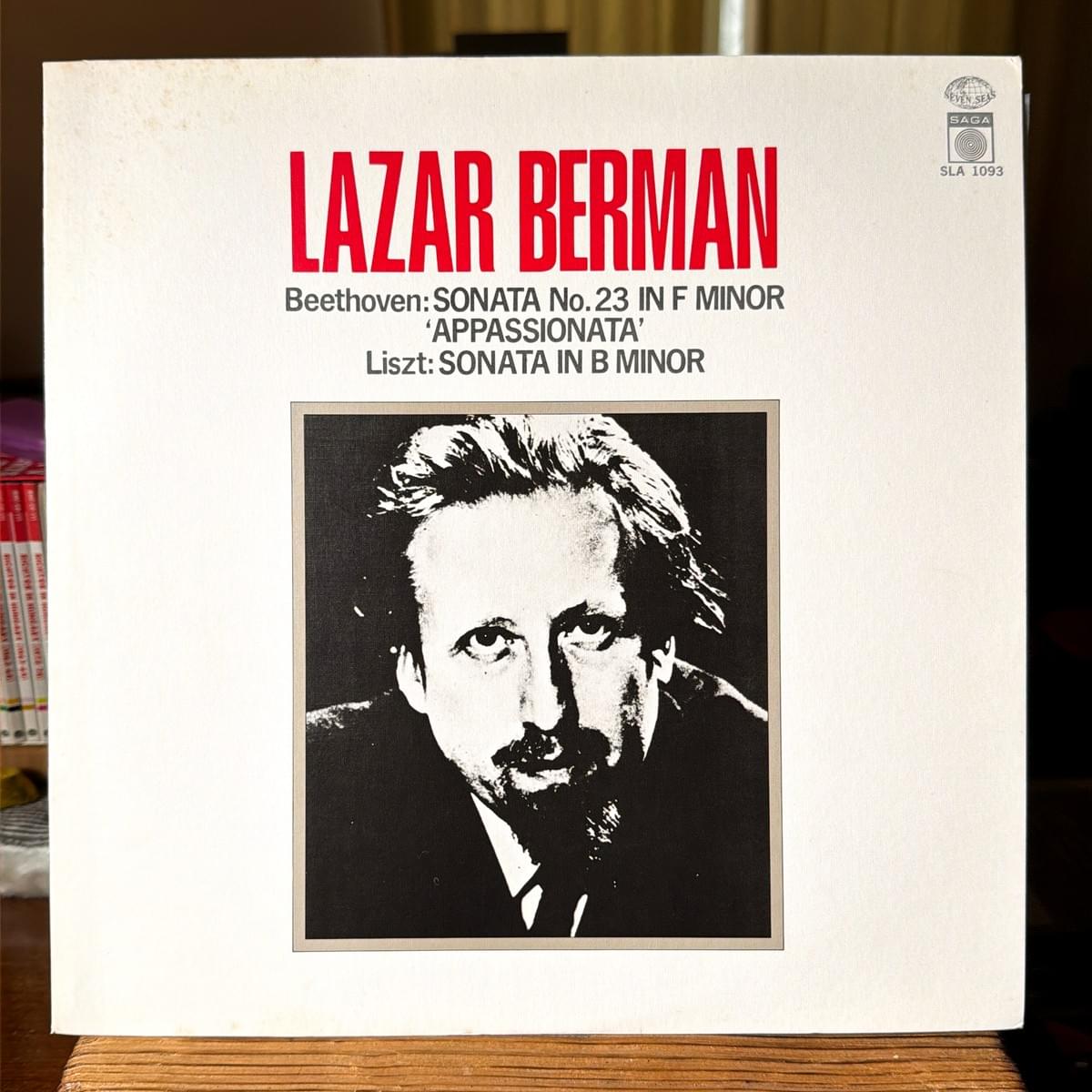
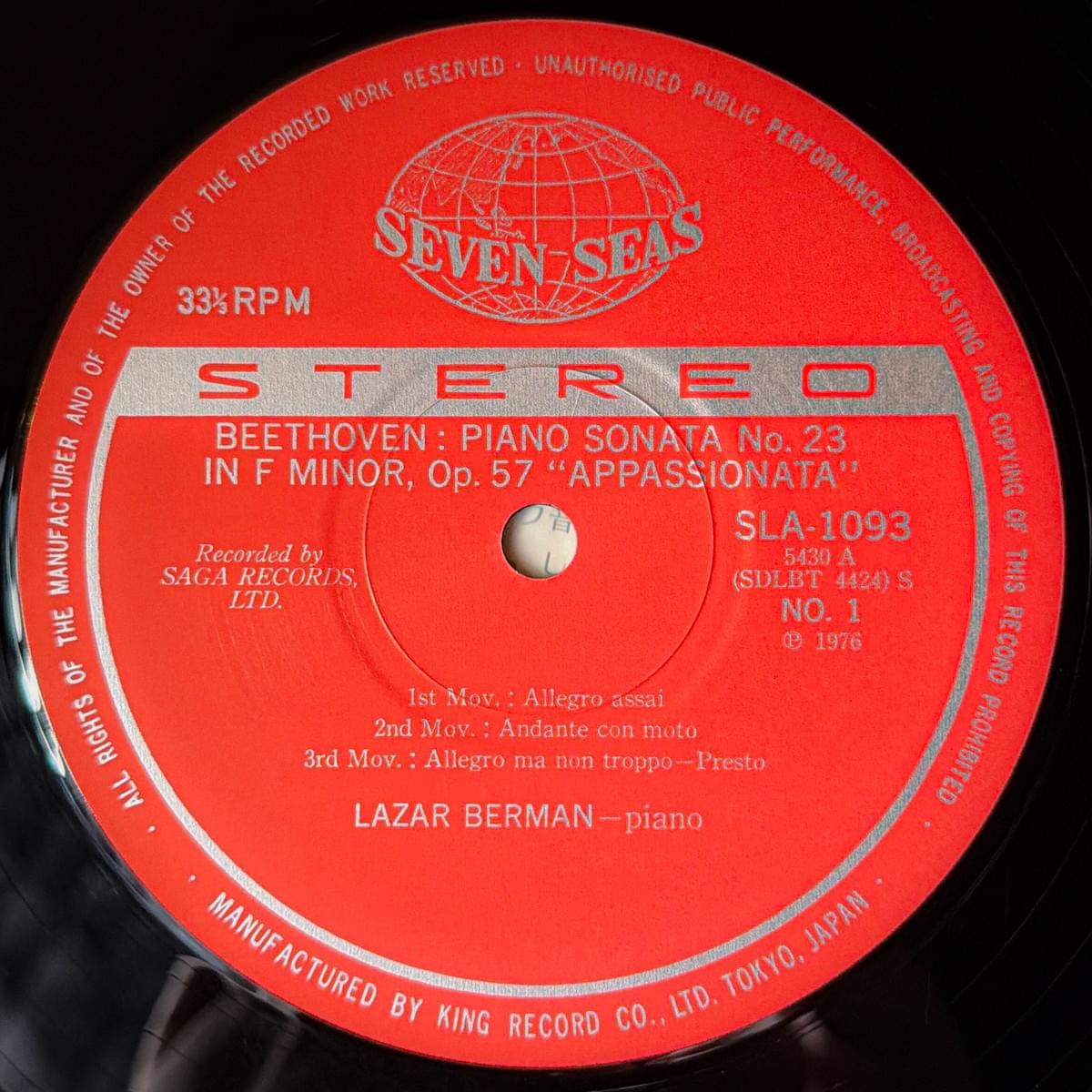
直到1976年貝爾曼再次轟動世界,佩里在投書雜誌打臉的同時,也決定將這份母帶重見天日,重新發行立體聲版本(編號SAGA 5430)。而我們現在眼前的這張日本SEVEN SEAS版(SLA-1093),正是1976年Saga唱片授權給King Record旗下的SEVEN SEAS系列所發行的日本珍貴原版。唱片封底的日文解說,鉅細靡遺地記錄了這段長達18年的「平反」過程。
小蝦米對抗大鯨魚:不該存在的「平價唱片」與一家新創公司的識人眼光
你知道這張唱片最讓我感動的,除了貝爾曼那雙經歷過風雪的巨掌之外,還有什麼嗎?是這家敢為他出唱片的「小蝦米」公司——Saga Records。
想像一下,在1950年代末期,歐洲的古典音樂唱片市場就像現在的科技巨頭一樣,完全被EMI、Decca、Philips這些大鯨魚壟斷。在那個年代,買一張新錄音的古典樂唱片非常昂貴,聽音樂簡直就是一種遙不可及的菁英專屬奢侈品。
但Saga這家公司非常有種,簡直就是當時古典樂界的「新創團隊」。他們一開始其實是想拍作曲家傳記電影的(原本叫 Saga Films),結果資金燒光了,只好轉型做唱片。
既然是小公司,當然沒錢去租英國那些富麗堂皇、設備頂級的大錄音室。那怎麼辦?他們做了一個完全「顛覆直覺」的決定:放棄追求完美的錄音室規格,扛著當時最新興的「便攜式磁帶錄音設備」,直接跑到漢堡、哥本哈根,甚至莫斯科去進行現場錄音。
他們打破了「好聲音必須依賴昂貴硬體與大廠牌」的迷思!用極低的成本,避開了高昂的錄音室費用,做出了高品質的「平價唱片」(一張只賣25先令,遠遠低於主流廠牌的價格)。
更讓我佩服的是他們的骨氣。當時有很多平價小廠牌,為了省錢、規避音樂家工會的酬勞規定,會給演奏者隨便塞個「假名」就發行。但Saga不玩這套。無論名氣大小,他們堅持在唱片上印上音樂家「真實」的名字。因為他們懂得尊重這些演奏者身為「人」的價值,而不是把他們當成賺錢的免洗筷。
這家充滿冒險精神的獨立小廠,簡直成了當時古典樂界最強大的「人才孵化器」。還記得前面提到那位寫信去權威雜誌打臉的經理特德·佩里(Ted Perry)嗎?他後來創立了享譽國際的Hyperion唱片公司;還有一位年輕錄音師詹姆斯·洛克(James Lock),也是在Saga這種艱難的環境下練就了一身捕捉真實聲音的真功夫,後來才被大廠Decca高薪挖角。
1958年,Saga為了尋找「新鮮血液」,把目光投向了當時在西方世界根本無人知曉的27歲蘇聯青年——貝爾曼。這需要多大的眼光與勇氣?在一個講究資歷、名氣與排場的社會裡,Saga選擇相信他們親耳聽到的純粹才華。他們為這個年輕人搭起了一個不加修飾的真實舞台。
諷刺的是,這家小公司最後撐不過資金危機,在1960年就倒閉被收購了;而這張錄音發行沒多久便絕版,貝爾曼本人也因為婚姻問題被蘇聯當局禁足,消失在西方的視野裡長達十幾年。這聽起來,是不是很像我們在職場或人生中常常遇到的無力感?你堅持做對的事、堅持給真正有才華的人機會,卻還是被現實的洪流給沖垮了,彷彿所有的努力都白費了。
但真實留下的痕跡,是永遠不會白費的。
直到18年後的1976年,當45歲的貝爾曼再次以中年之姿震撼整個西方樂壇時,Saga當年的那份眼光與勇氣才終於得到回報。這份曾經被遺忘的早期錄音,被重新發掘出來,以立體聲版再次發行(SAGA 5430)。
蘇聯鋼琴學派的「巨熊」到底是誰?在冰雪與戰火中淬鍊的求生本能
你可能會好奇,這位被形容為「巨熊」、擁有二十根燃燒手指的拉扎爾·貝爾曼,到底是什麼來歷?為什麼他的音樂裡,總是藏著一股讓人無法忽視的龐大生命力?
其實,他的一生,就是整個20世紀大時代下,人們如何在夾縫中求生存的縮影。
1930年,貝爾曼出生在蘇聯時代的列寧格勒(現在的聖彼得堡)的一個猶太家庭。他的母親原本也是一位鋼琴家,卻因為聽力受損,不得不放棄自己的夢想。你能想像那種痛嗎?就像是你最熱愛、最擅長的工作,突然有一天因為身體因素再也無法碰觸。於是,母親把所有的心血與未竟的夢想,全都傾注在這個孩子身上。
貝爾曼兩歲就開始摸琴,四歲就被冠上「神童」的稱號。到了九歲,他搬到莫斯科,遇到了一生中最重要的恩師——亞歷山大·戈登懷瑟(Alexander Goldenweiser,1875-1961)。這位老師可不是一般人,他是莫斯科音樂學院的院長,更是俄羅斯浪漫派鋼琴的祖師爺級人物。跟著這位老師整整18年,貝爾曼學到的不是冷冰冰的按鍵技術,而是如何把最濃烈的情感,毫無保留地揉進每一個音符裡。
但真正塑造貝爾曼靈魂的,不是音樂學院裡的掌聲,而是戰爭的殘酷。
1941年,第二次世界大戰爆發。才11歲的貝爾曼跟著大家逃難到伏爾加河畔。那裡沒有溫暖的暖氣,沒有舒適的琴房,只有足以把人凍僵的冰天雪地。在物資極度匱乏的情況下,為了讓兒子能繼續練琴,他的母親拿起剪刀,把一副珍貴手套的指頭部分一根一根剪掉,套在貝爾曼的手上。
在那個連活下去都要拼盡全力的年代,貝爾曼戴著破手套,在冰冷的琴鍵上彈奏著。他甚至在12歲那年,透過廣播向英國的聽眾彈奏了李斯特的《鐘》。
那根本不是在炫技,那是一個孩子在對著殘酷的世界吶喊:「我還活著!」這份在戰火中淬鍊出來的意志,讓他後來在1956年的伊莉莎白大賽(第五名)與李斯特大賽(第三名)中大放異彩,也才有了1958年受邀去倫敦Saga唱片錄音的機會。
「被消失」的12年:如果在職場上只給你一台「破鋼琴」,你還願意彈嗎?
1958年倫敦錄音結束後,貝爾曼本該像顆超新星一樣,在國際樂壇發光發熱。但歷史的劇本,卻在這裡給了他重重一擊。
因為他愛上了一位法國女性並結了婚(雖然這段婚姻很短暫),這徹底踩到了當時蘇聯官方的紅線。懲罰來得又快又狠:從1959年到1971年,整整12年,他被全面禁止出國演出。
很多人遇到這種事,可能就開始擺爛、懷疑人生,最後把自己也給毀了。
但貝爾曼沒有。
被禁止出國的這12年裡,他被困在蘇聯境內。他跟同樣是鋼琴家的妻子,擠在莫斯科一間超小的兩房公寓裡,一架巨大的鋼琴幾乎塞滿了他們的生活空間。
貝爾曼選擇了「死磕到底」。即使是用破鋼琴,即使台下沒人聽得懂,他依然沒有放棄對自己「狀態」的要求。他把每一次在偏鄉的演出,都當作是世界級的音樂會。他當時只能在蘇聯國營的唱片公司錄音,留下了史上最驚人的李斯特《超技練習曲》版本。
這12年,西方世界完全忘記了他。1958年那張Saga的錄音絕版了,連專業樂評人都根本不知道他曾經來過倫敦。他變成了一個只存在於傳聞中的「幽靈」。
但也正是這12年與破鋼琴為伍的沉潛,讓他把所有的鋒芒都內化成了生命的厚度。當1976年,他首次踏上美國舞台時,他已經不是當年那個只會飆速的年輕巨熊,而是一位懂得在指尖收放靈魂的真正大師。
「貝爾曼爭議」:技巧與音樂性的永恆辯論
1976年,當45歲的貝爾曼終於在美國爆紅時,你以為全世界都為他瘋狂了嗎?其實並沒有。當時的音樂圈,掀起了一場極度兩極的「貝爾曼爭議」。
愛他的人,說他是19世紀浪漫派大師的最後繼承人,是能把鋼琴變成一整支交響樂團的「魔法師」;但討厭他的人,批評起他來也是毫不留情。《紐約時報》的樂評人尖銳地說他彈琴「單調、乏味、沒有真正的激情」;指揮家杜拉第(Doráti Antal,1906-1988)覺得他的演出「沒什麼存在感」;甚至有其他鋼琴家批評他,說他腦子裡根本沒有音樂,只會「彈得很快、很大聲」,活生生就是一台冷冰冰的「技巧機器」。
為什麼會有這麼極端的評價?
我們得先認識一下貝爾曼這個人。他身高極高,體格魁梧,坐在鋼琴前就像一頭充滿力量的「巨熊」。他的技巧好到什麼程度?當時名震天下的另一位蘇聯前輩鋼琴大師吉利爾斯(Emil Gilels,1916-1985),曾經半開玩笑地留下了一句名言:
「我跟李希特(Sviatoslav Richter)的四隻手加起來,都敵不過貝爾曼的一雙手!」
這是一句多麼不可思議的讚美!在當時的蘇聯,貝爾曼的彈奏速度被視為一個傳奇。他自己也承認,年輕時的確曾沉迷於那種「赤裸裸的技術」與飆速的快感。
但這也是他最大的「缺點」,以及被世人誤解最深的地方。
很多人有一種刻板印象:擁有這種怪物級技巧、外表又像「巨熊」的人,彈出來的音樂一定充滿了壓迫感,像是一台沒有感情的打字機,或是只會狂轟猛炸的重裝坦克。
內容的反轉:不該存在的絕技~~溫柔與收斂
回到1958年錄製這張唱片,收錄了兩首曲子:貝多芬的第23號《熱情》鋼琴奏鳴曲,以及李斯特的《b短調鋼琴奏鳴曲》。
李斯特的音樂非常華麗,但也常常讓人覺得聽了很累。那種感覺,就像是現代職場無止盡的「工作」,每個人都在比誰講話更大聲、誰的資歷更漂亮、誰能做出最炫目的簡報。日本著名的樂評家吉田秀和,在這張唱片的解說裡就坦承,他以前一直很怕聽李斯特,因為覺得裡面的情感太誇張、太刻意了,很不真實。
直到他聽了貝爾曼。
吉田秀和聽完後大受震撼。他說,在貝爾曼的手下,那些原本需要鋼琴家「咬牙切齒、使盡全力」去炫技的艱難段落,貝爾曼卻彈得像是呼吸一樣自然。為什麼?因為技巧對他來說已經不再是阻礙。當一個人強大到不需要再向世界證明自己的實力時,他才有真正的「餘裕」去照顧每一個最微小的細節。
特別是那些裝飾音。吉田秀和說,他從來沒有聽過李斯特的裝飾音可以彈得這麼「真實」且「美麗」。那不是為了炫耀而炫耀,那是一種極致的親密感。貝爾曼在李斯特那種彷彿要吞噬一切的龐大結構中,為我們建構了一個極度安靜、充滿「人味」的心靈空間。
這就是亞歷山大·戈登懷瑟(Alexander Goldenweiser)背後的「如歌」的精髓。
接著我們把唱片翻面,聽聽貝多芬的《熱情》。
一聽到「熱情」這兩個字,我們的直覺就是要彈得慷慨激昂、火花四射對吧?沒錯,貝爾曼在第一跟第三樂章展現了驚人的爆發力。但真正讓這份錄音偉大的,是他對「保留」與「內斂」的理解。
彈奏這首曲子時,大部分演奏家都處在深深的焦慮中,覺得我必須時時刻刻展現出100%、甚至120%的實力,深怕一鬆懈,別人就會懷疑我的技術能力。但貝爾曼卻在很多別的鋼琴家會選擇火力全開的地方,反而把力量「收」了回來。
他彷彿在告訴自己:「這是貝多芬,不是李斯特。所有的沸騰與燃燒,都應該是內在情感的表達,不能只停留在表面聲音的巨大。」
尤其是在第二樂章的「行板」(Andante)。很多人只把這個慢板樂章當作是兩個激烈樂章之間的「中場休息」。但在貝爾曼的觸鍵下,這個樂章變成了一種極致的溫柔,一種充滿敬畏的凝視。在那幾分鐘裡,你會聽見一個龐大的靈魂,正小心翼翼地捧著一顆「如歌」的心。
唱片版本資訊總結 (Quick Reference)
- 鋼琴家: 拉扎爾.貝爾曼 (Lazar Berman, 1930-2005)
- 收錄曲目:
- 貝多芬:第23號鋼琴奏鳴曲 f短調 作品57《熱情》
- 李斯特:b短調鋼琴奏鳴曲 G178
- 錄音時間: 1958年3月 (於英國倫敦)
- 唱片版本: 日本 SEVEN SEAS 原版 (SLA-1093)
- 歷史意義: 1976年日本首次發行版。完整保留了英國Saga唱片1958年立體聲母帶的真實樣貌,見證了貝爾曼在西方世界真正意義上的首度錄音。
實體音樂:
*******
[Gu Dian Record Stories] The 18 Years "Mishandled" by History: Who was the "Giant Bear" of the Soviet Piano School, and How Did He "Disappear" and "Reappear"?
Foreword: 1976, the 45-Year-Old "Rookie" Who Shook the World
Imagine practicing silently in your professional field for decades, possessing monster-level skills, yet constantly lacking a stage, or even being trapped by the system. Would you feel anxious? Would you feel like your life was just stuck there?
In 1975, thanks to the tireless efforts of renowned music manager Jacques Leiser (1937-), a pianist who had been restricted by Soviet authorities for years was finally permitted to tour the United States. The following year, on January 19, 1976, in Oxford, Ohio, 45-year-old Lazar Berman (1930-2005) made his American debut.
This performance was like dropping an atomic bomb on a calm lake. The American music scene instantly went into a frenzy. Media, radio, and television stations chased him madly—a grand spectacle almost only comparable to when Van Cliburn (1934-2013) returned triumphantly from Moscow during the Cold War.
The New York Times chief music critic Harold C. Schonberg (1915-2003) had heard Berman play in Moscow as early as 1961, marveling then: "This pianist has 20 fingers, and each one is burning with fire." After hearing this American debut, Schonberg was thoroughly conquered once again: "He is one of the fortunate ones. He sits quietly at the piano, achieving miracles with minimal movement, yet he has the power to drive an audience into a frenzy."
Just like that, Berman's fame swept from America back to Europe, making him the hottest "newcomer" maestro in the world at the time.
Collecting Dust in the Archives: A Truth 18 Years Late
With fame came all sorts of reports. In February 1976, the authoritative British classical music magazine Gramophonepublished an article introducing Berman, confidently claiming he had "never visited Britain." It also reported that his recent recording of Tchaikovsky's Piano Concerto No. 1 with maestro Herbert von Karajan and the Berlin Philharmonic was his "first recording in the Western world."
Well, right after the magazine was printed, it got a massive slap in the face the very next month.
Ted Perry (1931-2003), the manager of the British label Saga Records (who later founded the famous Hyperion Records), wrote a letter to the magazine, uncovering a truth forgotten by history:
"You've got it all wrong! Berman was in the UK 18 years ago!"
What exactly happened? As it turns out, fate sometimes loves to play jokes on us.
Rewind 18 years to March 23, 1958. A 27-year-old Berman, invited by Saga Records, came to a small recital room at London's Royal Festival Hall to perform a program featuring Beethoven and Liszt. Immediately after the concert, Saga brought him into the studio and used the highly advanced stereo technology of the time to record Beethoven's "Appassionata" and Liszt's Piano Sonata in B minor.
But why was this earth-shattering recording forgotten by history?
Because of a scheduling clash. On the Sunday night of Berman's London debut, another Soviet violin genius was performing in the adjacent main hall, while a symphony orchestra was playing Tchaikovsky in yet another hall. With insufficient promotion and a squeeze on resources, almost no one in the London critic circle "discovered" this Soviet "Giant Bear" sitting in the corner room.
After the recording was finished, Saga Records only released a very small quantity of the mono version (catalog number XID 5019), which quickly went out of print. And that precious stereo master tape just lay quietly in a dark archive for 18 years.
It wasn't until 1976, when Berman shook the world again, that Perry—while correcting the magazine—also decided to bring this master tape back to the light of day, reissuing the stereo version (catalog number SAGA 5430). And the Japanese SEVEN SEAS edition (SLA-1093) we have in front of us right now is the precious Japanese original released in 1976, authorized by Saga to King Record's SEVEN SEAS series. The detailed Japanese liner notes on the back cover meticulously document this 18-year "vindication" process.
David vs. Goliath: The "Budget Record" That Shouldn't Exist & A Startup's Eye for Talent
You know what moves me the most about this record, aside from Berman's weather-beaten giant hands? It's the "underdog" company that dared to publish him—Saga Records.
Imagine this: in the late 1950s, the European classical music record market was completely monopolized by giant whales like EMI, Decca, and Philips, much like today's tech giants. Back then, buying a newly recorded classical record was incredibly expensive; listening to music was an elite, out-of-reach luxury.
But Saga had real guts. They were basically a "startup" in the classical music world at the time. They originally wanted to make biographical films about composers (they were called Saga Films), but when the funding burned out, they pivoted to making records.
Since they were a small company, they obviously didn't have the money to rent those magnificent, top-tier studios in the UK. So, what did they do? They made a completely counter-intuitive decision: they gave up chasing perfect studio specs, lugged around the newly emerging "portable magnetic tape recording equipment," and went directly to Hamburg, Copenhagen, and even Moscow for live recordings.
They shattered the myth that "good sound requires expensive hardware and major labels"! With extremely low costs, bypassing exorbitant studio fees, they produced high-quality "budget records" (sold for only 25 shillings, far below mainstream prices).
What I admire even more is their backbone. At the time, many small budget labels would slap a "pseudonym" on the performers to save money and bypass Musicians' Union payment rules. But Saga didn't play that game. Regardless of fame, they insisted on printing the musicians' "real" names on the records. Because they understood how to respect the value of these performers as human beings, rather than treating them like disposable chopsticks for making money.
This adventurous independent label became the most powerful "talent incubator" in the classical music world at the time. Remember Ted Perry, the manager who wrote to the authoritative magazine? He later founded the internationally acclaimed Hyperion Records. There was also a young recording engineer named James Lock, who honed his true skills in capturing authentic sound in Saga's tough environments, and was later poached by the major label Decca for a high salary.
In 1958, to find "fresh blood," Saga set its sights on a 27-year-old Soviet youth completely unknown in the West—Lazar Berman. How much vision and courage did that take? In a society that obsessed over seniority, fame, and pageantry, Saga chose to believe in the pure talent they heard with their own ears. They built an unvarnished, authentic stage for this young man.
Ironically, this small company couldn't survive its financial crisis and went bankrupt and was acquired in 1960. The recording went out of print shortly after its release, and Berman himself was grounded by Soviet authorities due to marriage issues, disappearing from Western view for over a decade. Doesn't this sound like the powerlessness we often face in our careers or lives? You insist on doing the right thing, insist on giving truly talented people a chance, but you still get washed away by the flood of reality, as if all your efforts were in vain.
But the traces left by truth are never in vain.
It wasn't until 18 years later, in 1976, when the 45-year-old Berman shocked the Western music world as a middle-aged man, that Saga's vision and courage from back then were finally rewarded. This once-forgotten early recording was rediscovered and reissued in stereo (SAGA 5430).
Who Was the "Giant Bear" of the Soviet Piano School? Survival Instincts Forged in Ice, Snow, and War
You might be wondering, what exactly is the background of this "Giant Bear" with twenty burning fingers? Why does his music always harbor a massive life force that you simply cannot ignore?
Actually, his life is a microcosm of how people survived in the cracks during the grand era of the 20th century.
In 1930, Berman was born into a Jewish family in Leningrad (now St. Petersburg) during the Soviet era. His mother was originally a pianist too, but due to hearing loss, she was forced to give up her dream. Can you imagine that pain? It's like your most beloved, most skilled profession suddenly becoming untouchable because of your body. So, his mother poured all her heart, soul, and unfulfilled dreams into her son.
Berman started touching the piano at age two and was crowned a "child prodigy" by age four. At nine, he moved to Moscow and met the most important mentor of his life—Alexander Goldenweiser (1875-1961). This teacher was no ordinary man; he was the director of the Moscow Conservatory and a founding father of Russian Romantic piano. Following this teacher for 18 full years, what Berman learned wasn't just cold key-pressing techniques, but how to pour the most intense emotions unreservedly into every single note.
But what truly shaped Berman's soul wasn't the applause in the conservatory, but the cruelty of war.
In 1941, World War II broke out. An 11-year-old Berman fled with everyone to the banks of the Volga River. There was no warm heating, no comfortable practice rooms, only freezing, icy weather that could chill a person to the bone. Under extreme material deprivation, to let her son continue practicing, his mother took scissors and cut off the fingertips of a precious pair of gloves, one by one, slipping them onto Berman's hands.
In an era where just staying alive took everything you had, Berman wore torn gloves and played on freezing piano keys. At age 12, he even broadcasted Liszt's "La Campanella" over the radio to British audiences.
That wasn't showing off technique at all; that was a child shouting to a cruel world: "I am still alive!" This willpower, forged in the fires of war, allowed him to shine brilliantly later in the 1956 Queen Elisabeth Competition (5th place) and the Liszt Competition (3rd place), which led to his invitation to London for the Saga recording in 1958.
The 12 "Disappeared" Years: If Work Only Gives You a "Broken Piano," Would You Still Play?
After the 1958 London recording, Berman should have shone brightly on the international stage like a supernova. But the script of history dealt him a heavy blow right here.
Because he fell in love with and married a French woman (though the marriage was brief), he completely crossed the red line of the Soviet authorities at the time. The punishment came swift and harsh: for 12 whole years, from 1959 to 1971, he was completely banned from performing abroad.
Many people facing this might just give up, doubt their life, and ultimately destroy themselves.
But Berman didn't.
During the 12 years he was banned from going abroad, he was trapped inside the Soviet Union. He and his wife, also a pianist, squeezed into a tiny two-room apartment in Moscow, where a massive grand piano took up almost all their living space.
Berman chose to fight to the bitter end. Even using broken pianos, even if the audience didn't understand, he still didn't compromise his standards for his own "state." He treated every performance in remote towns like a world-class concert. Back then, he could only record with the Soviet state-owned record company, yet he left behind the most astonishing version of Liszt's "Transcendental Études" in history.
For these 12 years, the Western world completely forgot about him. That 1958 Saga recording went out of print, and even professional music critics had no idea he had ever been to London. He became a "ghost" that only existed in rumors.
But it was precisely these 12 years of sinking deep with broken pianos that allowed him to internalize all his sharpness into the depth of his life. When he first stepped onto an American stage in 1976, he was no longer that young giant bear who only knew how to speed; he was a true master who knew how to release and retract his soul through his fingertips.
The "Berman Controversy": The Eternal Debate Between Technique and Musicality
In 1976, when the 45-year-old Berman finally blew up in the U.S., you might think the whole world went crazy for him, right? Not exactly. The music circle at the time sparked an intensely polarized "Berman controversy."
Those who loved him called him the last heir of the 19th-century Romantic masters, a "magician" capable of turning a piano into a full symphony orchestra. But his haters were ruthless. A New York Times critic sharply called his playing "monotonous, dull, without genuine passion"; conductor Antal Doráti (1906-1988) felt his performance "lacked presence"; other pianists even criticized him saying he had no music in his head, only knowing how to "play very fast and very loud," acting like a cold "technique machine."
Why such extreme reviews?
We have to understand who Berman was first. He was extremely tall and heavily built; sitting at the piano, he looked like a "giant bear" full of power. How good was his technique? Emil Gilels (1916-1985), another world-renowned Soviet senior piano master, once half-jokingly left behind a famous quote:
"My four hands combined with Sviatoslav Richter's are no match for Berman's two!"
What an unbelievable compliment! In the Soviet Union at the time, Berman's playing speed was considered a legend. He himself admitted that in his youth, he indeed was addicted to the thrill of "naked technique" and speeding.
But this was also his biggest "flaw" and where the world misunderstood him the most.
Many people have a stereotype: someone with monster-level technique and the appearance of a "giant bear" must play music that is full of oppression, like an emotionless typewriter, or a heavily armored tank just indiscriminately bombing away.
The Content Reversal: Unbelievable Skills Translating into Tenderness and Restraint
Going back to 1958 when this record was made, it features two pieces: Beethoven's Piano Sonata No. 23 "Appassionata" and Liszt's Piano Sonata in B minor.
Liszt's music is very gorgeous, but it often makes people feel tired listening to it. That feeling is just like endless "work" in the modern workplace—everyone competing to see who speaks louder, whose resume looks better, who can make the most dazzling presentation. The famous Japanese music critic Hidekazu Yoshida confessed in the liner notes of this record that he used to be terrified of listening to Liszt because he felt the emotions in it were too exaggerated, too deliberate, and very unreal.
Until he heard Berman.
Yoshida was deeply shocked after listening. He said that under Berman's hands, those difficult passages that normally required pianists to "grit their teeth and use all their strength" to show off, were played as naturally as breathing. Why? Because technique was no longer an obstacle for him. When a person is strong enough that they no longer need to prove their abilities to the world, they finally have the true "leeway" to care for every tiny detail.
Especially those grace notes. Yoshida said he had never heard Liszt's grace notes played so "authentically" and "beautifully." It wasn't showing off just to show off; it was an ultimate intimacy. Within Liszt's massive structure that seems ready to swallow everything, Berman built an extremely quiet, deeply "human" spiritual space for us.
This is the essence of the "cantabile" (singing style) passed down from Alexander Goldenweiser.
Then we flip the record over to listen to Beethoven's "Appassionata."
As soon as we hear the word "Appassionata" (Passionate), our instinct is that it must be played with generous excitement and sparks flying, right? Yes, Berman displayed terrifying explosive power in the first and third movements. But what truly makes this recording great is his understanding of "restraint" and "holding back."
When playing this piece, most performers are in a state of deep anxiety, feeling that they must demonstrate 100% or even 120% of their strength at all times, terrified that if they relax for a second, others will doubt their technical abilities. But Berman, in many places where other pianists would choose to fire on all cylinders, actually "pulled back" his power.
It was as if he was telling himself: "This is Beethoven, not Liszt. All the boiling and burning should be expressions of inner emotion, not just stopping at the immense surface volume."
Especially in the second movement, the "Andante." Many people just treat this slow movement as a "halftime break" between two intense movements. But under Berman's touch, this movement becomes an ultimate tenderness, a reverent gaze. In those few minutes, you will hear a massive soul, carefully holding a "cantabile" heart.
Record Version Summary (Quick Reference)
- Pianist: Lazar Berman (1930-2005)
- Tracks Included:
- Beethoven: Piano Sonata No. 23 in F minor, Op. 57 "Appassionata"
- Liszt: Piano Sonata in B minor, G. 178
- Recording Date: March 1958 (in London, UK)
- Record Version: Japanese SEVEN SEAS Original Edition (SLA-1093)
- Historical Significance: The 1976 Japanese first-edition release. It perfectly preserves the authentic sound of the 1958 Saga Records stereo master tape, witnessing Berman's true debut recording in the Western world.