
【古殿唱片音樂故事】歷史上的第一次:當主角不再是演奏家,而是 15 把傳奇名琴的靈魂——《克里蒙納的光榮》
古殿殿主
歡迎來到「古殿」。今天殿主要分享這張黑膠,份量很重。不只是因為它拿在手上的手感,而是因為它在人類錄音史上,就像是第一次登陸月球那樣的重要。
這張 1963 年發行的**《克里蒙納的光榮》(The Glory of Cremona)**,是歷史上第一張膽敢把「小提琴」本身當作主角,而把「演奏家」退居為引路人的唱片。
在這張唱片誕生之前,人們買唱片是為了聽海飛茲的技巧、聽歐伊斯特拉赫的厚重。但這張唱片問世後,世界第一次驚覺:「原來,每一把古琴都有自己的名字,都有自己的脾氣。」
它是後來所有「名琴錄音」的濫觴,是名琴鑑賞的開山祖師爺。
一場價值連城的「聽覺博覽會」
把時間拉回 1963 年的紐約。當時著名的樂器鑑賞家倫伯特·維利策爾 (Rembert Wurlitzer,1904-1963) 做了一個瘋狂的企劃。他動用了所有的關係,從收藏家、博物館那裡,借出了 15 把義大利克里蒙納 (Cremona) 學派最頂尖的小提琴。
這 15 把琴在當時的保險價值就高達 75 萬美元(你可以想像一下那個年代的物價,這簡直是天文數字)。為了這場錄音,這些平常被鎖在保險箱裡的國寶,排排站在麥克風前。
擔任這場歷史任務的演奏家,是當時以技巧著稱的魯傑羅·黎奇 (Ruggiero Ricci,1918-2012)。但他在這裡的角色非常特別——他必須隱藏自己的個性,讓這 15 把琴「說話」。
黃金時代的終結:克里蒙納的最後一抹餘暉
這張唱片之所以珍貴,是因為它完整記錄了一個偉大時代的興起與殞落。
我們在唱片裡聽到了阿瑪蒂的開創、史特拉第瓦里的完美、瓜爾內里的野性。但在這份名單中,有一位名字常被大眾忽略,卻是收藏家眼中的珍寶——卡洛·貝爾貢齊 (Carlo Bergonzi)。
他在克里蒙納聲譽卓著,但因某些不明原因,製作數量極少。唱片裡的這把 1731 年「康斯塔伯 (Constable)」貝爾貢齊琴,聲音介於史特拉第瓦里的輝煌與瓜爾內里的深沉之間。
而貝爾貢齊的存在,標示著一個令人感傷的歷史節點。
1740 年,吉羅拉莫·阿瑪蒂二世去世;1744 年,「耶穌·瓜奈里」去世;到了 1747 年,當卡洛·貝爾貢齊也離開人世時,這門藝術歷史上的一個偉大時代宣告結束。
但自那時起,沒有任何一把琴能完全比得上這些偉大樂器的非凡演奏性能和音色品質。其原因至今仍是一個謎?
雖然在此之後,克雷莫納和其他地方仍有精美的小提琴產出,但自那時起,沒有任何一把琴能完全比得上這些偉大樂器的非凡演奏性能和音色品質。這就像是某種魔法突然失傳了一樣。其原因至今仍是一個謎,儘管後世無數自稱天才的人繼續製作樂器,其中一些也確實具有很高的價值,但在這 200 多年後,頂尖的藝術家和名家們,仍然在尋求那幾十年間從克雷莫納誕生的偉大小提琴。
演奏家才知道的秘密:為什麼非要這些老琴不可?
你也許會問:「聲音不就是好聽跟不好聽嗎?為什麼非要這幾把幾百年前的木頭?」
這張唱片的導聆資料給了我們一個極為專業且深刻的解答。這些偉大小提琴的價值,不僅在於其聲音的美妙,還在於許多其他對藝術家至關重要的「細微差異」。這些差異對我們聽眾來說可能不那麼明顯,但對在台上搏命的演奏家來說,卻是天壤之別:
- 反應速度 (Response Speed):也就是發音的清晰度。當黎奇的弓毛一碰到弦,聲音是瞬間彈出來,還是拖泥帶水?老琴的反應就像頂級跑車的油門,隨傳隨到。
- 動態範圍 (Dynamic Range):在任何音量下,它能撐得住嗎?好的老琴,在大聲時不會破音,在極弱音時依然保有厚度。
- 均衡性 (Balance):樂器在各個音域發聲是否均勻?從低音 G 弦到高音 E 弦,聲音的質地是否統一?
- 效率 (Efficiency):這點最迷人。簡單說,就是「性價比」。也就是演奏家為獲得所尋求的效果,所需付出的能量多寡。一把好的克里蒙納名琴,演奏家不用費盡吃奶的力氣去拉,它自己就會共鳴,這讓演奏家能把力氣花在詮釋音樂,而不是與樂器搏鬥。
為什麼要「比較」聲音?這有什麼價值?
你也許會問:「聲音不就是好聽跟不好聽嗎?把 15 把琴放在一起比較,除了炫富,到底有什麼意義?」
這就是這張唱片最偉大的地方。它不是在炫耀財富,而是在進行一場**「聲音的考古學」與「歷史名琴聲音紀錄」**。比較的價值,在於讓我們聽見歷史的演變,以及人類工藝的極限。
這張唱片採用了非常嚴格的「控制變因」錄音法:
- 位置固定:里奇站在錄音室的同一個點,腳下貼了膠帶標記,死都不能動。
- 收音固定:麥克風的角度、距離、控制台的設定,一旦調好,全程鎖死。
- 變數唯一:唯一的改變,就是黎奇手中的那把琴。
透過這樣的比較,我們獲得了三個極其珍貴的價值:
第一:聽見「時代的需求」如何改變聲音?
從唱片的第一面開始,你會聽到最早的安德烈亞·阿瑪蒂 (Andrea Amati, 1560-70)。他的聲音比較小,比較溫暖、私密。為什麼?因為那個時代的小提琴是在宮廷的小房間裡演奏給國王聽的。 但當你聽到後面的耶穌·瓜奈里 (Guarneri del Gesù) 時,你會發現聲音突然變得像野獸一樣,穿透力極強。那是因為時代變了,音樂走出了宮廷,進入了大型音樂廳,琴聲必須要能壓過整個管弦樂團。 這張唱片,讓你用耳朵聽見了三百年的歷史演進。
第二:揭開「史特拉第瓦里」與「瓜奈里」的世紀之爭
小提琴界有兩大天王:史特拉第瓦里 (Stradivari) 和瓜奈里 (Guarneri)。這張唱片是讓一般人分辨這兩者差異的最好教科書。
- 史特拉第瓦里(如唱片中的 "Joachim" 或 "Sunrise"):黎奇形容他的聲音像「絲絨」,像管風琴,轉音非常滑順。它代表的是極致的**「完美與優雅」**。
- 瓜奈里(如唱片中的 "Gibson" 或 "Plowden"):這是里奇的最愛。它的聲音有核心,能承受極大的弓壓。黎奇說它像「義大利男高音」,你可以用力挖掘它,它會發出像啜泣、像吶喊的聲音。它代表的是**「人性與張力」**。
第三:見證「人與器」的對話
這張唱片最有趣的地方,在於你會發現,同一位演奏家(黎奇),在換了一把琴之後,他的運弓方式、他的語氣竟然變了。 黎奇自己說:「如果要讓小提琴發揮出最佳優勢,演奏家必須調整自己去適應它。」 這不是人在控制工具,而是工具在引導人。當你聽到黎奇用那把 16 世紀的 Gasparo da Salò 拉出深沈、帶有鼻音的《廣板》時,你聽到的不只是音樂,而是一位現代演奏家在向四百年前的製琴師致敬。
只有黑膠能保存的「空氣感」
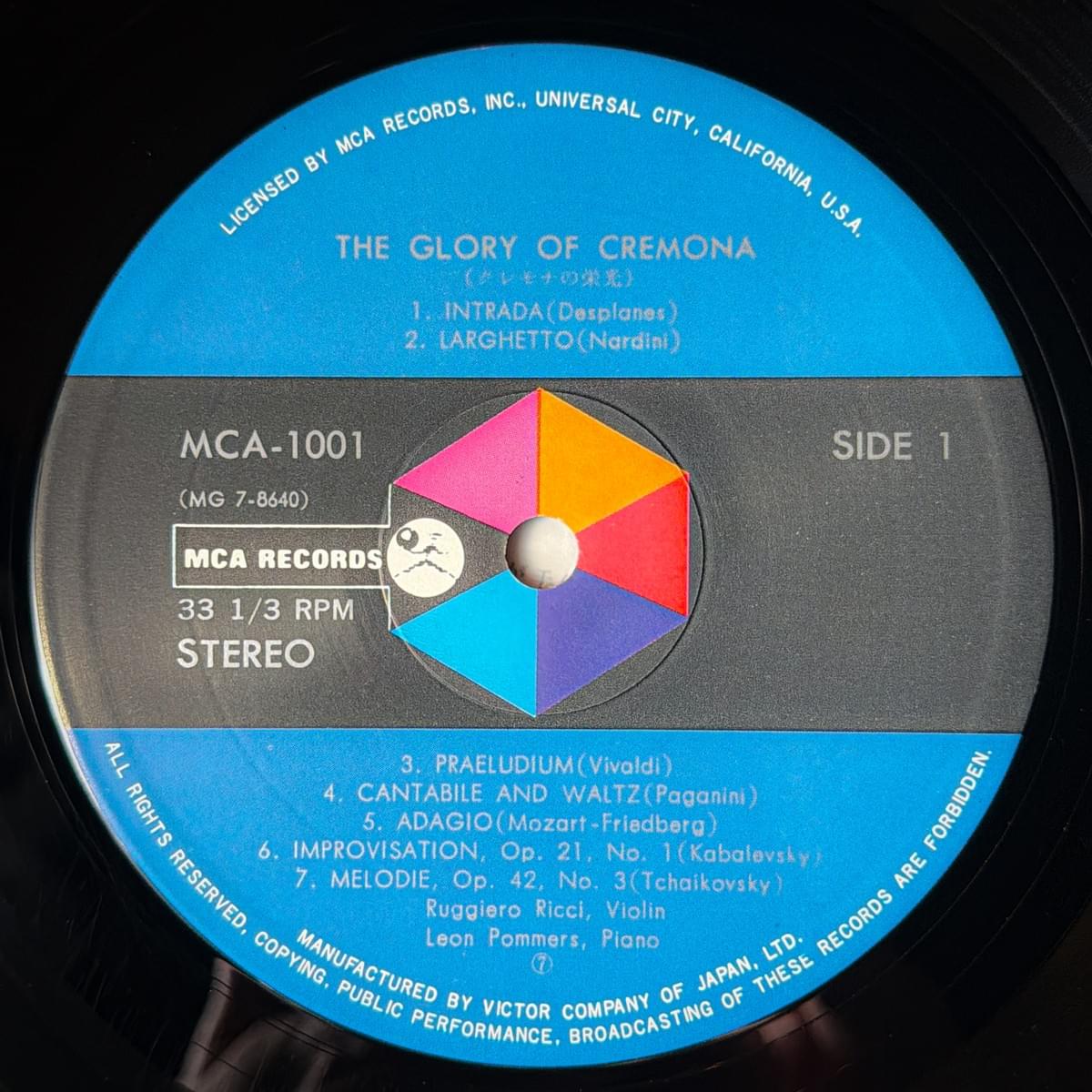
雖然這張唱片後來有發行各種版本(黑膠復刻、CD版本也非常多種),但我還是要說,這張 MCA 的早期日版黑膠(或是更珍貴的美國金標首版),它的聲音價值在於那種「空氣感」。
當你播放這張唱片時,請注意聽每一首曲子結束後的餘韻。你可以清楚地感覺到那把琴的木頭箱體是如何在振動,那種松香味,那種琴弦摩擦的質感。這是數位修復很難完全還原的「物理真實」。
一張聽覺的百科全書
《克里蒙納的光榮》之所以是經典,是因為它開啟了一扇門。它告訴我們,欣賞音樂不只是聽旋律,還可以聽音色、聽歷史、聽那個封印在木頭裡的靈魂。
在這張唱片裡,韋瓦第、帕格尼尼、布拉姆斯的音樂只是載體,真正的主角,是那些名叫「阿瑪蒂」、「史特拉第瓦里」、「瓜奈里」的木頭。
如果你想訓練自己的耳朵,想知道什麼叫做「名琴的聲音」,這張唱片就是你的第一本教科書,也是最美的一本。來古殿,我們把這張 1963 年的時光膠囊打開,一起回到那個眾神喧以此的克里蒙納。
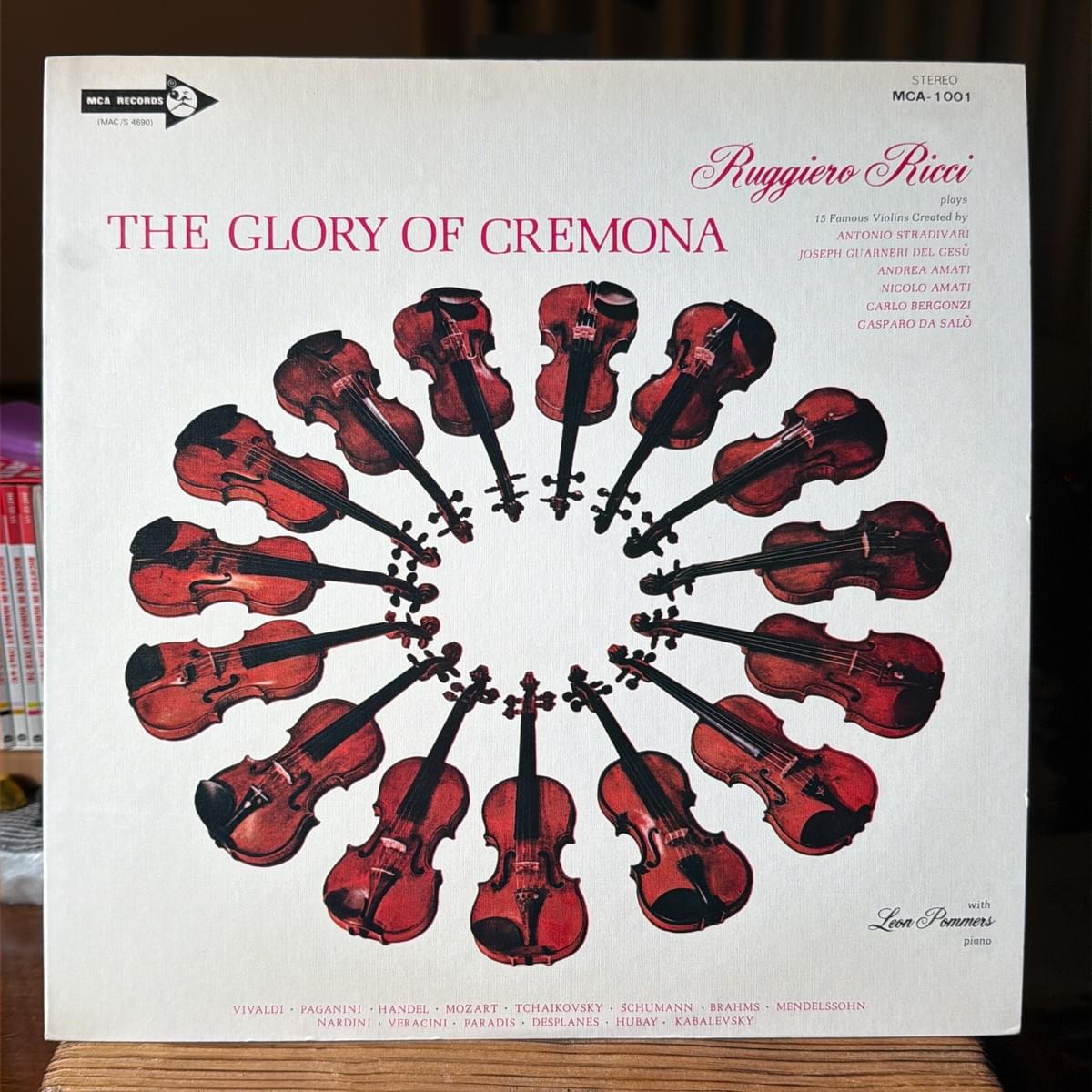
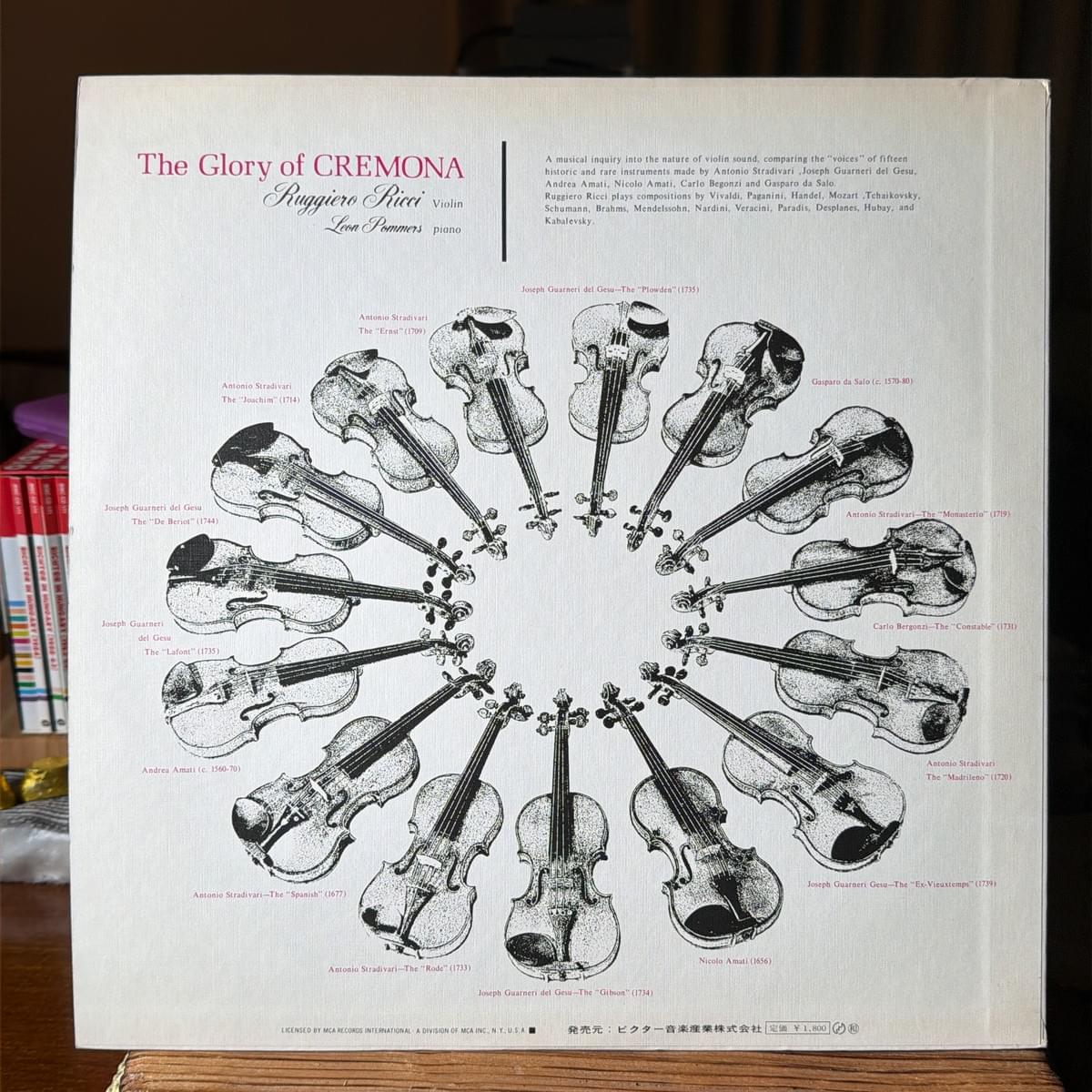
(15把小提琴)
- 耶穌·瓜奈里— "Plowden" (普勞登) (1735)
- 加斯帕羅·達·薩洛 (約 1570-80)
- 安東尼奧·史特拉第瓦里 — "Monasterio" (修道院) (1719)
- 卡洛·貝爾貢齊 — "Constable" (康斯塔伯) (1731)
- 安東尼奧·史特拉第瓦里 — "Madrileño" (馬德里人) (1720)
- 耶穌·瓜奈里 — "Ex-Vieuxtemps" (前魏奧當持有) (1739)
- 尼科洛·阿瑪蒂 (1656)
- 耶穌·瓜奈里 — "Gibson" (吉布森) (1734)
- 安東尼奧·史特拉第瓦里 — "Rode" (羅德) (1733)
- 安東尼奧·史特拉第瓦里 — "Spanish" (西班牙) (1677)
- 安德烈亞·阿瑪蒂 (約 1560-70)
- 耶穌·瓜奈里 — "Lafont" (拉豐) (1735)
- 耶穌·瓜奈里 — "De Beriot" (貝里奧) (1744)
- 安東尼奧·史特拉第瓦里 — "Joachim" (姚阿幸) (1714)
- 安東尼奧·史特拉第瓦里 — "Ernst" (恩斯特) (1709)
實體音樂:
*******
【Gu Dian Music Story】 A Historical First: When the Star Isn't the Player, but the Soul of 15 Legendary Violins — The Glory of Cremona
Hi there, welcome to "Gu Dian" (The Ancient Hall).
Today, I want to share a vinyl record with you that carries a lot of weight. I don’t just mean the physical weight of the record in your hands; I mean its weight in the history of human recording. Honestly, this album is as significant to audio history as the first moon landing was to science.
This record, "The Glory of Cremona," released in 1963, was the first time in history that someone dared to make the violin itself the protagonist, while the "performer" stepped back to become merely the guide.
Before this record was born, people bought albums to hear Heifetz’s dazzling technique or Oistrakh’s rich tone. But after this album hit the shelves, the world realized for the first time: "Wow, every antique violin has its own name, and its own temper."
It is the pioneer of all "instrument showcase" recordings that followed—the grand ancestor of sound connoisseurship.
A Priceless "Auditory Expo"
Let’s pull the timeline back to New York, 1963.
A famous instrument connoisseur named Rembert Wurlitzer (1904-1963) came up with a crazy project. He pulled every string he had, borrowing 15 of the absolute best violins from the Cremona school of Italy—sourced from private collectors and museums.
At the time, the insurance value for these 15 violins alone was $750,000. (Just imagine the cost of living back then—that number was astronomical). For this recording, these national treasures, usually locked away in dark safes, were lined up in front of the microphone.
The violinist tasked with this historic mission was Ruggiero Ricci (1918-2012), known for his incredible technique. But his role here was unique—he had to hide his own ego and personality to let these 15 violins "speak" for themselves.
The End of a Golden Age: The Last Glimmer of Cremona
This record is precious because it documents the rise and fall of a great era.
On this album, we hear the pioneering spirit of Amati, the perfection of Stradivari, and the wildness of Guarneri. But on this list, there is one name often overlooked by the public, yet treasured by collectors: Carlo Bergonzi.
He was renowned in Cremona, but for some unknown reason, he made very few instruments. The 1731 "Constable" Bergonzi featured on this record has a sound that sits right between the brilliance of a Stradivari and the depth of a Guarneri.
Bergonzi’s existence marks a heartbreaking historical turning point.
In 1740, Girolamo Amati II died; in 1744, "del Gesù" Guarneri died; and by 1747, when Carlo Bergonzi left this world, a great era in art history was officially declared over.
It feels as if some kind of magic was suddenly lost. Since then, although Cremona and other places continued to produce beautiful violins, no instrument has ever fully matched the extraordinary performance and tonal quality of those old masters. The reason remains a mystery. Even though 200 years have passed, top artists today are still searching for the ghosts of those few decades in Cremona.
A Secret Only Players Know: Why Must It Be These Old Violins?
You might be asking me: "Isn't sound just a matter of 'good' or 'bad'? Why do we have to obsession over these pieces of wood from hundreds of years ago?"
The liner notes of this record give us a very professional, yet profound answer. The value isn't just that they sound pretty. It's about "subtle differences" that are critical to the artist—differences that might be small to the audience, but mean the world to the person fighting for their life on stage:
- Response Speed: This is about clarity. When Ricci’s bow touches the string, does the sound pop out instantly, or does it drag? An old Italian violin reacts like the throttle of a top-tier sports car—immediate and precise.
- Dynamic Range: Can it hold up at any volume? A great old violin won’t crack when played loudly, and it maintains a rich texture even when played at a whisper.
- Balance: is the sound even across all ranges? From the low G string to the high E string, does the texture remain unified?
- Efficiency: This is the most fascinating part. Simply put, it's the "return on investment." With a great Cremona violin, the player doesn't have to strain to get the sound out. The violin resonates on its own. This allows the player to spend their energy on interpreting the music, rather than wrestling with the instrument.
Why "Compare" Sounds? What's the Value?
You might also ask: "Putting 15 violins together to compare them... isn't that just showing off wealth?"
No, and that’s what makes this record great. It’s not a display of riches; it is an act of "Sound Archaeology." The value of comparison lies in letting us hear the evolution of history and the limits of human craftsmanship.
This recording used a strict "controlled variable" method:
- Fixed Position: Ricci stood on the exact same spot in the studio (they taped the floor). He couldn't move an inch.
- Fixed Audio: The mic angle, distance, and console settings were locked. Once set, they weren't touched.
- Single Variable: The only thing that changed was the violin in Ricci’s hands.
Through this comparison, we gain three incredibly precious insights:
1. Hearing how "The Needs of the Era" changed sound. Side A starts with the earliest Andrea Amati (1560-70). His sound is smaller, warmer, more intimate. Why? Because violins back then were played in small palace chambers for kings. But when you get to the later Guarneri del Gesù, the sound suddenly becomes beast-like, with immense projection. That’s because the era changed—music moved out of palaces and into large concert halls. The violin needed to cut through an entire orchestra. This record lets your ears travel through 300 years of history.
2. Deciding the "Stradivari vs. Guarneri" Century Battle. The violin world has two kings: Stradivari and Guarneri. This record is the best textbook for ordinary people to hear the difference.
- Stradivari (like the "Joachim" or "Sunrise"): Ricci describes the sound as "velvet." It’s like a pipe organ—smooth, flawless transitions. It represents ultimate "Perfection and Elegance."
- Guarneri (like the "Gibson" or "Plowden"): This was Ricci’s favorite. The sound has a dense core and can take immense bow pressure. Ricci said it’s like an "Italian Tenor"—you can dig into it, and it will produce sounds like sobbing or shouting. It represents "Humanity and Tension."
3. Witnessing the Dialogue between "Man and Object." The most interesting part? You realize that the same player (Ricci) actually changes his bowing style and phrasing when he switches violins. Ricci himself said: "To get the best out of a violin, the player must adjust to fit it." It’s not the human controlling the tool; it’s the tool guiding the human. When you hear Ricci play a deep, nasal Larghetto on the 16th-century Gasparo da Salò, you aren't just hearing music. You are hearing a modern player paying respect to a craftsman from 400 years ago.
The "Airiness" Only Vinyl Can Keep
Although this album has been reissued many times (CDs, digital, etc.), I have to tell you: the early Japanese pressing of this MCA vinyl (or the even rarer American Gold Label first edition) has something special. It captures the "Airiness."
When you play this record, pay attention to the silence and decay after each track ends. You can physically feel the wooden body of the violin vibrating; you can almost smell the rosin and feel the texture of the bow hair on the string. This is a "physical reality" that digital restoration often scrubs away.
An Encyclopedia for Your Ears
The Glory of Cremona is a classic because it opened a door. It taught us that appreciating music isn't just about the melody—it's about listening to the timbre, listening to history, and listening to the soul sealed inside the wood.
In this record, the music of Vivaldi, Paganini, and Brahms are just vessels. The real stars are the pieces of wood named "Amati," "Stradivari," and "Guarneri."
If you want to train your ears, or if you want to know what a "masterpiece" really sounds like, this record is your first textbook—and the most beautiful one at that.
Come to Gu Dian. Let’s crack open this time capsule from 1963 together, and transport ourselves back to the glorious noise of the gods in Cremona.
(The 15 Violins Featured)
Joseph Guarneri del Gesù — "Plowden" (1735)
- Gasparo da Salò (c. 1570-80)
- Antonio Stradivari — "Monasterio" (1719)
- Carlo Bergonzi — "Constable" (1731)
- Antonio Stradivari — "Madrileño" (1720)
- Joseph Guarneri del Gesù — "Ex-Vieuxtemps" (1739)
- Niccolò Amati (1656)
- Joseph Guarneri del Gesù — "Gibson" (1734)
- Antonio Stradivari — "Rode" (1733)
- Antonio Stradivari — "Spanish" (1677)
- Andrea Amati (c. 1560-70)
- Joseph Guarneri del Gesù — "Lafont" (1735)
- Joseph Guarneri del Gesù — "De Beriot" (1744)
- Antonio Stradivari — "Joachim" (1714)
- Antonio Stradivari — "Ernst" (1709)