
【古殿唱片音樂故事】克萊本被全世界記住,和他一起拿金牌的人呢?瓦列里·克林莫夫(Valery Klimov,1931-2022)
古殿殿主
新聞影片裡的第二個人
1958年4月,莫斯科。冷戰正熱。
第一屆柴可夫斯基國際大賽的頒獎台上,作曲家德米特里·蕭士塔高維契(Dmitri Shostakovich,1906-1975)把鋼琴首獎,頒給了一個23歲的美國德州青年。蘇聯人把最高榮譽,給了對手的孩子。
他叫范·克萊本(Van Cliburn,1934-2013)。回到紐約,滿天彩帶等著他;他的唱片拿下葛萊美獎,後來有音樂廳、有國際鋼琴大賽,都用他的名字命名。
這段故事,很多樂迷都聽過。
但如果你去看當年的新聞影片,會發現同一場典禮,還有另一個畫面:一位26歲的蘇聯小提琴家走上台,接過小提琴組的金牌,向觀眾鞠了一個躬。
他叫瓦列里·克林莫夫(Valery Klimov,1931-2022)。
同一屆、同一個舞台、同樣是金牌。今天,全世界的樂迷都知道克萊本;知道克林莫夫的人,恐怕不到萬分之一。
演算法只會把已經有名的人推給你。而這篇文章想做的事剛好相反:介紹你認識一位、演算法不會主動告訴你的小提琴家。
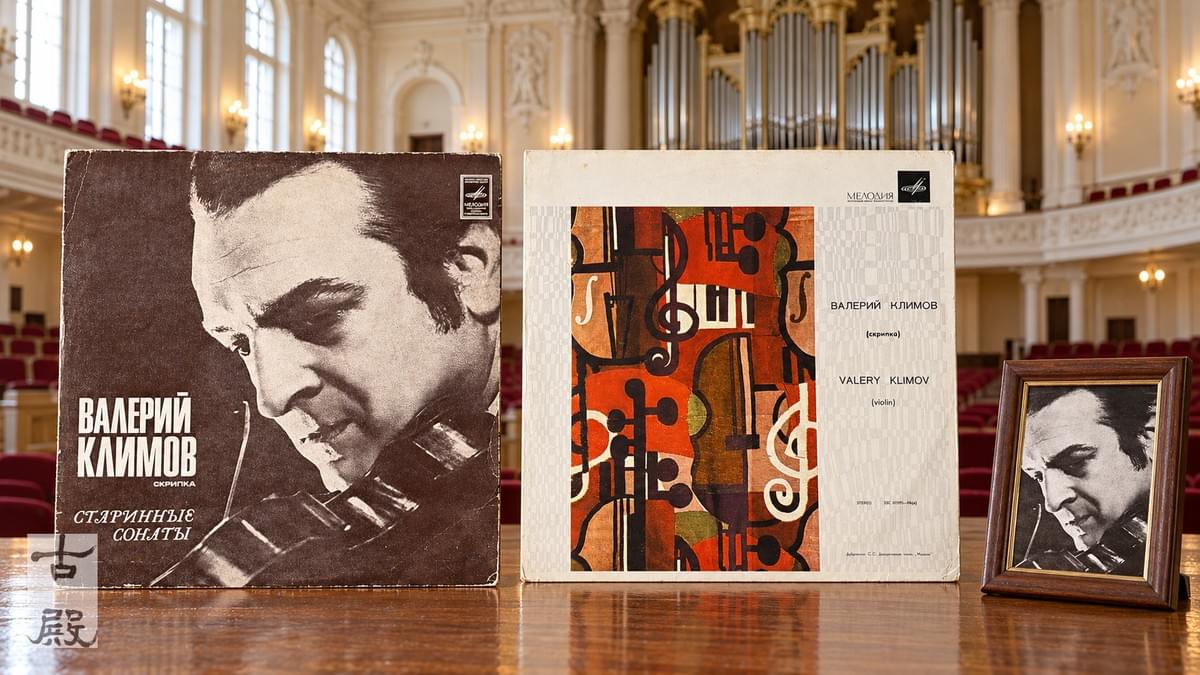
線索,就在古殿手上的兩張蘇聯唱片裡。
他是誰?
克林莫夫1931年生於烏克蘭基輔,爸爸是指揮家,也是他的第一位音樂老師。
7歲那年,他被送到奧德薩一所專收天才兒童的音樂寄宿學校,老師叫彼得·斯托利亞爾斯基(Pyotr Stolyarsky,1871-1944)。
這個名字你大概沒聽過。但二十世紀最偉大的小提琴家之一大衛·歐伊斯特拉夫(David Oistrakh,1908-1974)——樂迷口中的「大歐」——就是在他的教室裡學會拉琴的。
戰爭來了。小克林莫夫跟著學校疏散到史達林格勒,那座城市幾年後成了二戰最慘烈的戰場。戰後,他一路拉進了基輔音樂院。就在那裡,大歐聽見了他,邀他到莫斯科,收他做學生。
所以這條線是這樣的:老師教出了大歐,大歐再教出了克林莫夫。他先跟了師祖,再跟師父。
還有一個巧合:大歐的兒子伊果·歐伊斯特拉夫(Igor Oistrakh,1931-2021),和克林莫夫同一年出生。一個是老師的兒子,一個是老師的弟子,兩個同齡的年輕人,在同一位大師身邊長大。
1958年那面金牌,也不是突然掉下來的。在那之前,他已經在柏林、巴黎、布拉格的比賽裡一路得獎。
他拉得怎麼樣?又為什麼沒人記得?
認識一位新的小提琴家,最該先問的就是:他拉得怎麼樣?
聽過他的人,說法出奇地一致。當年的評審、作曲家哈察都量(Aram Khachaturian,1903-1978)說他:才華巨大,精神力量強大,技藝非凡。1968年的《紐約郵報》說,他明明已經站上炫技的高峰,對待音樂卻嚴肅而審慎,從不為技巧犧牲音樂。
把這兩句話放在一起,就是一個很清楚的輪廓:他不是拿技巧來驚豔你的小提琴家,而是拿技巧來服務音樂的那一種。
而且他的舞台一點也不小:和柏林愛樂、倫敦交響、費城管弦樂團同台,在卡內基音樂廳、維也納金色大廳、雪梨歌劇院都演奏過。
那他為什麼沒有成為另一個克萊本?
一半是時代。克萊本身後,是一整套美國唱片工業的錄音、發行與宣傳;克林莫夫身後,只有一家蘇聯國營唱片公司。那個年代,一位蘇聯音樂家能有多大名氣,很大程度要看國家讓他出去多少。
另一半,是他這個人。
克林莫夫低調、內斂、話不多,用今天的話說,是典型的 I 人。他不替自己製造話題,把力氣全放在音樂裡。二十多年的演奏生涯,他以主奏身分留下的錄音,大約只有二十份。他的老師大歐呢?錄音多到一本專書要用十多頁的附錄才列得完。
但他錄得少,不代表他不重要。替他伴奏的鋼琴家,正是大歐多年的固定搭檔;後來,連蘇聯名指揮葉夫根尼·史維特諾夫(Evgeny Svetlanov,1928-2002)都親自坐上琴椅,為他彈鋼琴。
克萊本是天生站在聚光燈下的人;克林莫夫則是那種站在燈下,也會低頭看著琴的人。
你身邊大概也有這樣的人:不發文、不爭功,但事情交給他,你最放心。
兩張唱片,一次轉身
1967年:老師親手交給他的那一段。
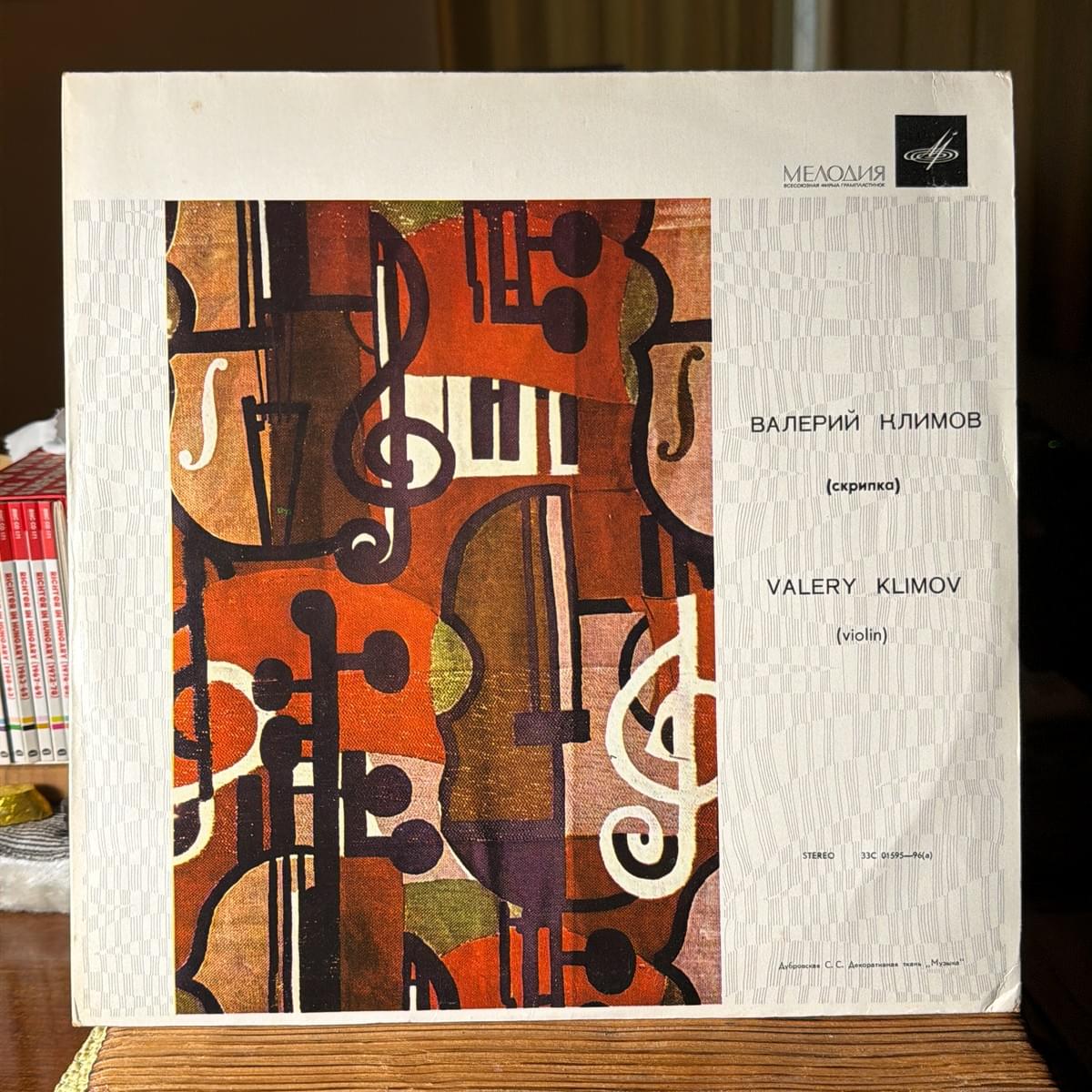
第一張唱片的封面不是照片,而是一件叫《音樂》的布藝作品:琴身、f 孔、高音譜號,織進粗糙的橘褐色布紋裡。裡頭是兩首人人都拉的名曲:莫札特第三號、孟德爾頌小提琴協奏曲。克林莫夫36歲。
重點在莫札特曲名下面,一行不起眼的小字:華彩(裝飾奏)樂段,大衛·歐伊斯特拉夫作。
華彩是協奏曲裡樂團全部停下、只剩小提琴一個人發聲的時刻。莫札特留給演奏者自己發揮,後來的名家各寫各的。選誰的華彩,就是在告訴大家:我從哪裡來。
1967年,大歐正在演奏生涯的巔峰,這些華彩要到一九七〇年代才在西方正式出版。所以克林莫夫拉的那一段,很可能是在音樂院的琴房裡,從老師手上直接接過來的。
下次聽到莫札特協奏曲裡樂團安靜下來的那一刻,你也許會多留意一下:這一段,是誰寫的?又是怎麼傳到這位演奏者手上的?
這張唱片的指揮也很有意思:29歲的馬克西姆·蕭士塔高維契(Maxim Shostakovich,1938-),蕭士塔高維契的兒子。而蕭士塔高維契和大歐是摯友,兩首小提琴協奏曲都是為大歐而寫。同一間錄音室裡,站著兩位大師的「下一代」。十四年後,馬克西姆在西德巡演時出走,移居美國。這張唱片,定格在一切都還沒發生的時刻。
1974年:那個話最少的學生。
1974年10月,大歐在阿姆斯特丹臨時去世,留下莫斯科音樂院小提琴系主任的位子,那是整個蘇聯小提琴教育最高的位置。
音樂院裡不缺名字響亮的人,老師的兒子伊果也在那裡任教。但接下這根棒子的,是那個話最少、最不出頭的學生。
低調的人,往往不是被看見的那一個,卻常常是被託付的那一個。
1977年:一張低著頭的封面。
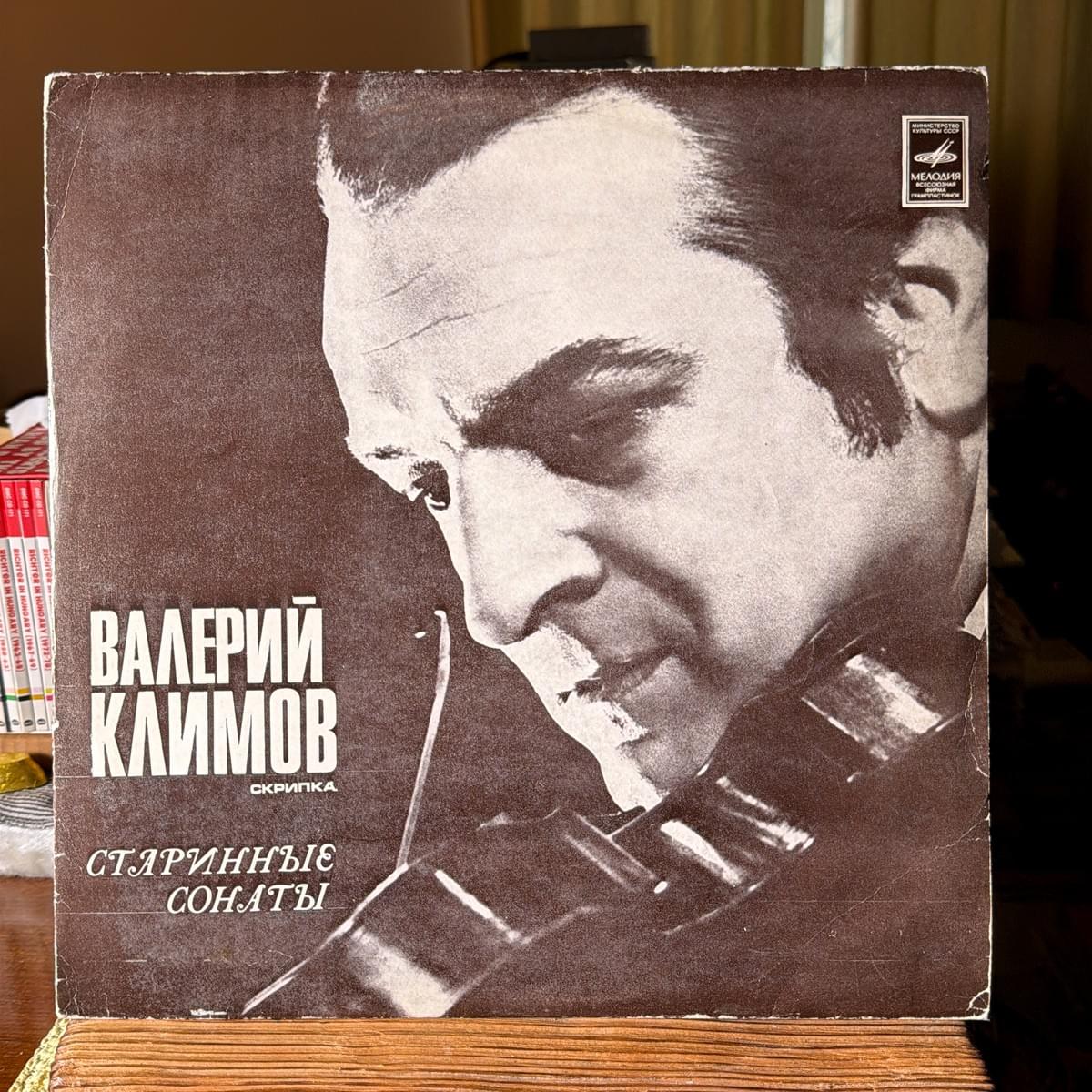
第二張唱片的封面,是克林莫夫低著頭、臉貼著琴的特寫,眼睛看著琴弦,沒有看鏡頭。
曲目更出人意料:不是炫技協奏曲,而是五首十八世紀前後的小提琴奏鳴曲,作曲家是塔替尼、韋拉契尼,和幾位連老樂迷都未必聽過的名字。一位大賽冠軍,接下系主任之後,選擇錄這樣一張唱片。
封底的解說透露了原因:他和一位鋼琴家花了大約三年,辦了一整套「小提琴奏鳴曲的發展」系列音樂會,從巴洛克一路演到普羅高菲夫。這張唱片,就是那段旅程裡巴洛克的那一章。他不是在挑一張好賣的唱片,而是在替學生、替聽眾,把小提琴的來時路整理出來。
唱片裡還藏著一位年輕人。帕格尼尼那首小提琴與吉他的奏鳴曲,吉他手亞歷山大·弗勞奇(Alexander Frauchi,1954-2008)錄音時大約二十二、三歲,還是個音樂院學生。後來,他成了俄國古典吉他的一代宗師。一位大賽冠軍,和一位還沒畢業的學生同錄一張唱片,「傳承」在這裡不是口號,而是一次實實在在的錄音。
他去了哪裡?
回到開頭:和克萊本同台領金牌的那個人,後來去了哪裡?
他去了老師留下的那間教室。
他在莫斯科音樂院一教就是二十四年,教出了後來活躍於國際舞台的學生。58歲那年,他又到德國任教,繼續教了許多年。柴可夫斯基、帕格尼尼、莫札特、西貝流士……這些國際大賽的評審席上,都坐過他。當年在頒獎台上鞠躬的年輕人,後來成了替下一代打分數的人。
2022年2月,克林莫夫去世,享年90歲。沒有音樂廳用他的名字,也沒有大賽用他的名字。
克萊本是被世界看見的人;克林莫夫是被老師託付的人。
如果是你,你想成為哪一種?
想認識他,可以從這裡開始聽:
- 莫札特第三號、孟德爾頌小提琴協奏曲(1967):名曲最好入門,還能聽見大歐的華彩。
- 柴可夫斯基小提琴協奏曲(1958):拿下金牌那一年的錄音。
- 哈察都量小提琴協奏曲:和斯維特拉諾夫合作,由當年評審他的作曲家所寫。
- 《古典奏鳴曲》(1977):聽他帶你回到小提琴的來時路。
古殿手上的這兩張唱片,一張是人人都拉的名曲,一張是很少人拉的巴洛克,剛好是他人生裡這次轉身的前後。歡迎洽詢古殿樂藏。
*******
【Gudian Music Stories】Van Cliburn Was Remembered by the Entire World; What About the Man Who Shared His Gold? Valery Klimov (1931–2022)
The Other Man in the Newsreel
April 1958. Moscow. The Cold War is at a white heat.
On the winner's podium of the inaugural International Tchaikovsky Competition, composer Dmitri Shostakovich (1906–1975) presents the first prize in piano to a twenty-three-year-old youth from Texas. The Soviets have awarded their highest cultural honor to a child of their bitterest rival.
His name is Van Cliburn (1934–2013). Returning home to New York City, ticker tape rains down from the sky; his debut recording carries off a Grammy Award; concert halls and an international piano competition will eventually bear his name.
It is a legend almost every classical music lover knows by heart.
Yet if you cue up the archival newsreels from that same afternoon, you will catch a second ceremony on the very same stage: a twenty-six-year-old Soviet violinist steps forward, accepts the gold medal for the violin division, and offers a modest, respectful bow to the audience.
His name is Valery Klimov (1931–2022).
The same inaugural competition. The same historic stage. The exact same gold medal. Today, classical music enthusiasts across the globe know Cliburn instantly; those who recognize Klimov's name barely amount to one in ten thousand.
Digital algorithms only feed you names that are already famous. This essay aims to do the opposite: to introduce you to an artist the algorithm will never point you toward.
The clues rest within two Soviet Melodiya LPs preserved in the Ancient Palace archives.
Who Was He?
Klimov was born in Kiev in 1931. His father was a conductor and his first musical mentor.
At age seven, he was sent to a specialized boarding school for musically gifted prodigies in Odessa, entering the studio of Pyotr Stolyarsky (1871–1944).
That pedagogue's name may sound unfamiliar, but it was inside Stolyarsky's studio that one of the supreme violinists of the twentieth century—David Oistrakh (1908–1974), affectionately known as "King David"—first learned to hold a bow.
Then war broke out. Young Klimov was evacuated with the school to Stalingrad, a city that within a few years would become the bloodiest battlefield of the Second World War. After the war, his playing carried him into the Kiev Conservatory. It was there that Oistrakh heard him, invited him to Moscow, and accepted him into his studio.
The pedigree is direct: the grand-master taught Oistrakh, and Oistrakh taught Klimov. He learned first under the progenitor, and then under the apostle.
There is another biographical parallel: Oistrakh’s son, Igor Oistrakh (1931–2021), was born in the exact same year as Klimov. One was the master’s son, the other his chosen pupil—two youths of identical age coming of age beside the same towering figure.
Nor did that 1958 gold medal arrive out of nowhere. Prior to Moscow, Klimov had already accumulated top honors in international competitions across Berlin, Paris, and Prague.
How Did He Play? And Why Did the World Forget Him?
When discovering an unfamiliar violinist, the first question to ask is simple: How did he sound?
Those who heard him live were remarkably consistent in their verdicts. One of the competition adjudicators, composer Aram Khachaturian (1903–1978), remarked on his immense artistic gifts, his commanding spiritual poise, and his formidable technical control. Reviewing his American debut in 1968, the New York Post noted that while his technical command stood at the summit of virtuosity, his relationship with music was sober and thoughtful, refusing to sacrifice musical substance on the altar of display.
Weave those testimonies together, and a portrait emerges: he was not a violinist who wielded technique to shock your senses, but the kind who deployed technique solely to serve the score.
His concert platform was not small: he shared stages with the Berlin Philharmonic, the London Symphony, and the Philadelphia Orchestra, performing in Carnegie Hall, the Musikverein in Vienna, and the Sydney Opera House.
Why, then, did he not become another Van Cliburn?
Part of the answer was historical circumstance. Behind Cliburn stood the commercial apparatus of the American recording industry—distribution networks, stereo promotion, and mass marketing. Behind Klimov stood only the state-run Soviet label, Melodiya. In that era, the international renown of a Soviet artist was governed largely by how often the state permitted them to travel abroad.
The other half lay in his personality.
Klimov was reserved, introspective, and soft-spoken—what our contemporary vernacular would call an archetypal introvert. He manufactured no public controversies, funneling all his vital energy into the instrument. Over a performance career spanning more than two decades, he left only about twenty commercial recordings as a featured soloist. And his mentor, David Oistrakh? Oistrakh’s recorded output is so vast that specialized discographies require dozens of appendix pages to catalog it all.
Yet recording sparingly does not mean recording insignificantly. His piano partner in the studio was Oistrakh’s longtime accompanist; later on, legendary Soviet maestro Evgeny Svetlanov (1928–2002) sat at the keyboard to accompany him in recital.
Cliburn was born to command the spotlight; Klimov was the sort of artist who, even when bathed in stage lights, kept his gaze lowered toward the fingerboard.
You likely know people like this in your own life: they post nothing online, they claim no credit, yet when an essential task is placed in their hands, they are the ones you trust most.
Two Records, a Decisive Turning Point
1967: The Cadenzas Handed Down by the Master
The sleeve of the first album features no artist portrait, but rather an applied textile design titled Music: the silhouette of a violin body, an f-hole, and a treble clef woven into coarse, orange-brown fabric. Within its grooves lie two cornerstones of the violin literature: Mozart’s Violin Concerto No. 3 and the Mendelssohn Violin Concerto. Klimov was thirty-six years old.
The telling detail sits directly beneath Mozart’s title, in a modest line of small Cyrillic type: Cadenzas by David Oistrakh.
A cadenza is the moment where the orchestral accompaniment falls silent, leaving the solo violin alone in the hall. Mozart left those measures to the performer's invention, and later virtuosos crafted their own. Choosing whose cadenzas to play is an artist’s way of declaring their lineage.
In 1967, Oistrakh stood at the peak of his concert career; his Mozart cadenzas would not be formally engraved and published in the West until the 1970s. The notes Klimov played on this recording were likely copied by hand directly from his teacher’s desk in a conservatory practice room.
The next time an orchestra falls silent for a cadenza in a Mozart concerto, pause and listen: Who composed these phrases? And through whose hands did they reach this performer?
The conductor on this disc is equally intriguing: twenty-nine-year-old Maxim Shostakovich (b. 1938), the son of Dmitri Shostakovich. Dmitri Shostakovich and David Oistrakh were lifelong intimates; both of Shostakovich's violin concertos were composed specifically for Oistrakh. Standing inside that single studio were the creative successors of both masters.Fourteen years later, Maxim would defect to the West while on tour in West Germany. This recording captures a moment before those Cold War paths diverged.
1974: The Quietest Student
In October 1974, David Oistrakh died suddenly while on tour in Amsterdam, leaving vacant the chair of the violin faculty at the Moscow Conservatory—the highest seat of pedagogical authority in Soviet violin playing.
The conservatory had no shortage of celebrated names; Oistrakh's own son, Igor, was an established professor on the faculty. Yet the mantle was passed to the student who spoke the least and sought the spotlight the least.
The quietest among us are rarely the most visible, yet they are often the ones chosen to shoulder the sacred trust.
1977: A Downcast Gaze on the Cover
The cover of the second LP presents a close-up of Klimov, cheek pressed against the wood, eyes focused on the strings,refusing to play to the camera.
The repertoire is unexpected: no virtuosic showpieces, but five early eighteenth-century violin sonatas by Tartini,Veracini, and composers whose names remain obscure even to veteran collectors. An international competition laureate,newly appointed to the conservatory chair, choosing to commit this quiet literature to tape.
The rear liner notes illuminate the motive: together with a pianist, he had spent roughly three seasons presenting a systematic concert cycle tracing The Evolution of the Violin Sonata, moving chronologically from the Baroque era to Prokofiev. This disc was the Baroque chapter of that journey. He was not picking an easy seller; he was organizing the historical foundations of his instrument for his students and his audience.
The record also conceals an emergent talent. In Paganini’s Sonata for Violin and Guitar, the guitarist is Alexander Frauchi (1954–2008), then a conservatory student barely twenty-two years old. Frauchi would later become a patriarch of the Russian classical guitar school. An established master sharing a disc with an enrolled student: mentorship here was an acoustic reality.
Where Did He Go?
Let us return to the beginning: where did the man who shared the podium with Van Cliburn ultimately go?
He went back to the classroom his teacher left behind.
He taught at the Moscow Conservatory for twenty-four years, mentoring students who would populate international concert stages. At fifty-eight, he accepted a professorship in Germany, teaching for many years more. The jury boxes of the Tchaikovsky, Paganini, Mozart, and Sibelius competitions all reserved a seat for him. The young man who once bowed on the podium in 1958 became the elder evaluating the generations that followed.
In February 2022, Valery Klimov passed away at the age of ninety. No concert hall bears his name; no international competition is named in his honor.
Van Cliburn was the artist seen by the world; Valery Klimov was the artist trusted by his teacher.
If it were up to you, which would you rather be?
Recommended Listening to Discover His Art:
- Mozart: Violin Concerto No. 3 / Mendelssohn: Violin Concerto (1967): An accessible entry point, featuring Oistrakh’s personal cadenzas.
- Tchaikovsky: Violin Concerto (1958): Recorded in the flush of his gold-medal triumph.
- Khachaturian: Violin Concerto: Partnered with Evgeny Svetlanov, playing a score composed by one of the jurors who evaluated him in 1958.
- Classical Violin Sonatas (1977): An exploration of the ancestral roots of the violin.
The two Soviet pressings in the Ancient Palace collection—one featuring familiar concertos, the other dedicated to forgotten Baroque sonatas—frame the turning point of his creative life. Visitors are always welcome to inquire at the Ancient Palace.