
【古殿唱片音樂故事】深夜,克里姆林宮打電話索要一張不存在的唱片——尤蒂娜(Maria Yudina,1899-1970),那個連史達林都拿她沒辦法的女人
古殿殿主
一個不可能完成的任務
某個深夜,莫斯科廣播電台總機突然響起電話。
對方自稱是史達林(Joseph Stalin,1878-1953)辦公室,要求立刻取得剛才現場直播的莫札特第23號鋼琴協奏曲錄音——史達林在收音機前聽到,深受感動,想要一份唱片。
問題是:那是廣播現場直播,根本沒有留下錄音。
按照當時的邏輯,這種要求如果辦不到,後果不堪設想。於是官員們連夜緊急召集鋼琴家與一支臨時拼湊的樂團,在深夜重新錄下整部協奏曲,隔天清晨把唯一一張母盤送進了克里姆林宮。
那位在深夜被緊急召回錄音室的鋼琴家,就是瑪麗亞·尤蒂娜(Maria Yudina,1899-1970)。
事後,史達林致贈她兩萬盧布作為謝禮。尤蒂娜回信致謝——卻告訴他,這筆錢已經全數捐給教會:「為史達林的罪過向主祈禱寬恕」。
這則軼事的真實性,至今沒有人能完全證實。但說出這個故事的人,是蕭士塔高維契(Dmitri Shostakovich,1906-1975)——那個在史達林治下活得小心翼翼的作曲家。他在回憶錄裡只留下一句話為尤蒂娜總結:「她有很多古怪之處,但我可以肯定一件事——她從不說謊。」
一個敢在感謝信裡教訓史達林的人,在那個年代,怎麼可能活下來?
接下來要從她的老師說起。
同一個課堂,三種命運
1910年代的列寧格勒音樂學院,鋼琴系教授列昂尼德·尼古拉耶夫(Leonid Nikolayev,1878-1942)的課堂上,坐著三個日後走向截然不同人生的年輕人:蕭士塔高維契、弗拉基米爾·索夫羅尼茨基(Vladimir Sofronitsky,1901-1961),還有尤蒂娜。
三個人日後的命運,幾乎是蘇聯藝術家所有可能結局的縮影——蕭士塔高維契學會了在體制內走鋼索,用音樂裡的雙重語言活下來;索夫羅尼茨基退進了自己的內心世界;尤蒂娜則選擇了最危險的一條路:她從不掩飾。
1930年,她被彼得格勒音樂學院解職。原因是有人問她是否信仰上帝,她如實回答:「是。」
這不是一時衝動的答案。1919年,尤蒂娜正式改宗東正教,此後終生未曾動搖。在無神論是官方意識形態的國家裡,她在音樂會上公開配戴大十字架演出,用朗誦被禁詩人的作品作為安可曲——某次在列寧格勒的獨奏會,她選擇朗誦帕斯捷爾納克(Boris Pasternak,1890-1960)的詩,之後被禁止公開演出長達五年,直到1966年禁令解除。她多次為政治犯請願奔走,她的知識界摯友巴赫金(Mikhail Bakhtin,1895-1975)長年流放,教導她宗教思想的神學家帕維爾·佛羅倫斯基(Pavel Florensky,1882-1937)1937年被處決,許多親友身陷古拉格(Gulag,蘇聯勞改營管理系統,關押政治犯與異議人士的集中營網絡)。
而尤蒂娜本人——終其一生,從未被逮捕,也從未入獄。
在那個連沉默都可能致命的年代,她選擇了最不沉默的活法,卻活了下來。這件事本身,就是二十世紀蘇聯藝術史上最難解釋的例外之一。
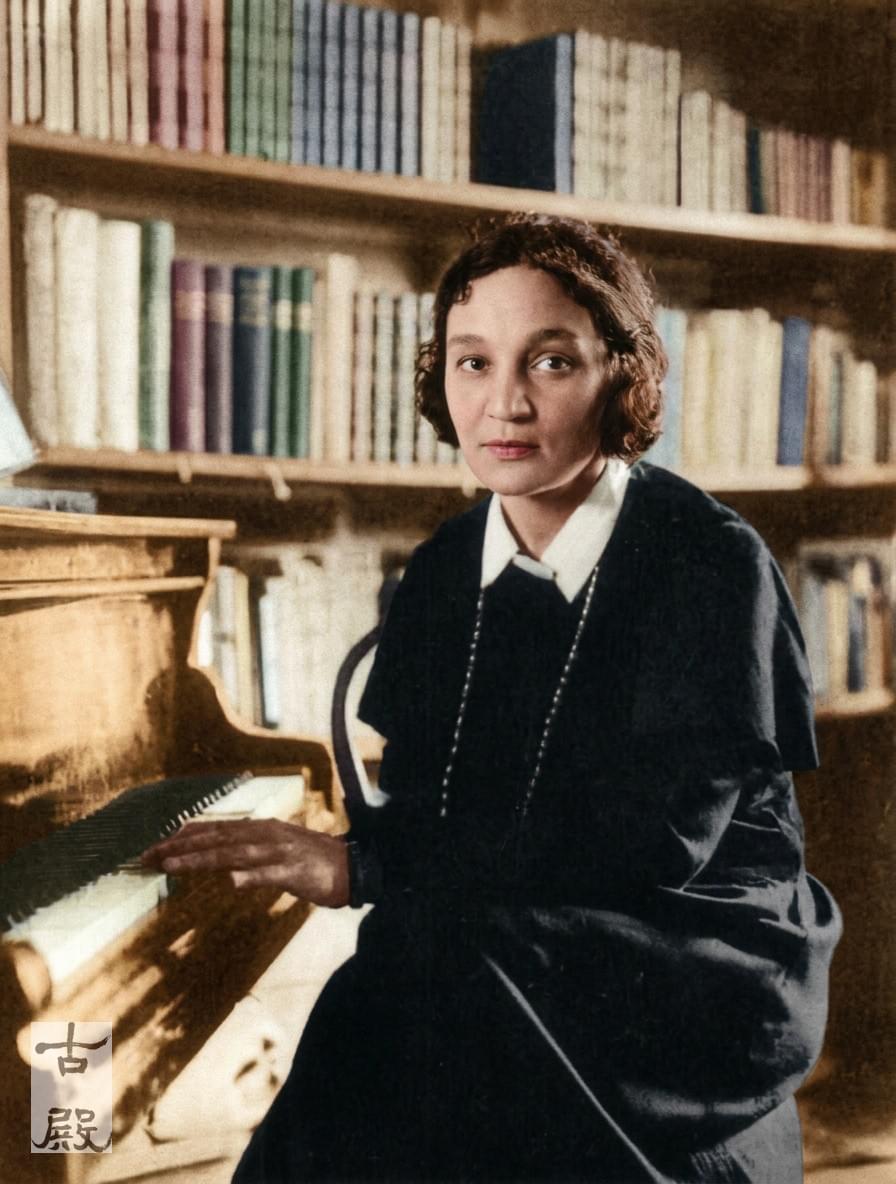
她透過演奏鋼琴替恩師發聲
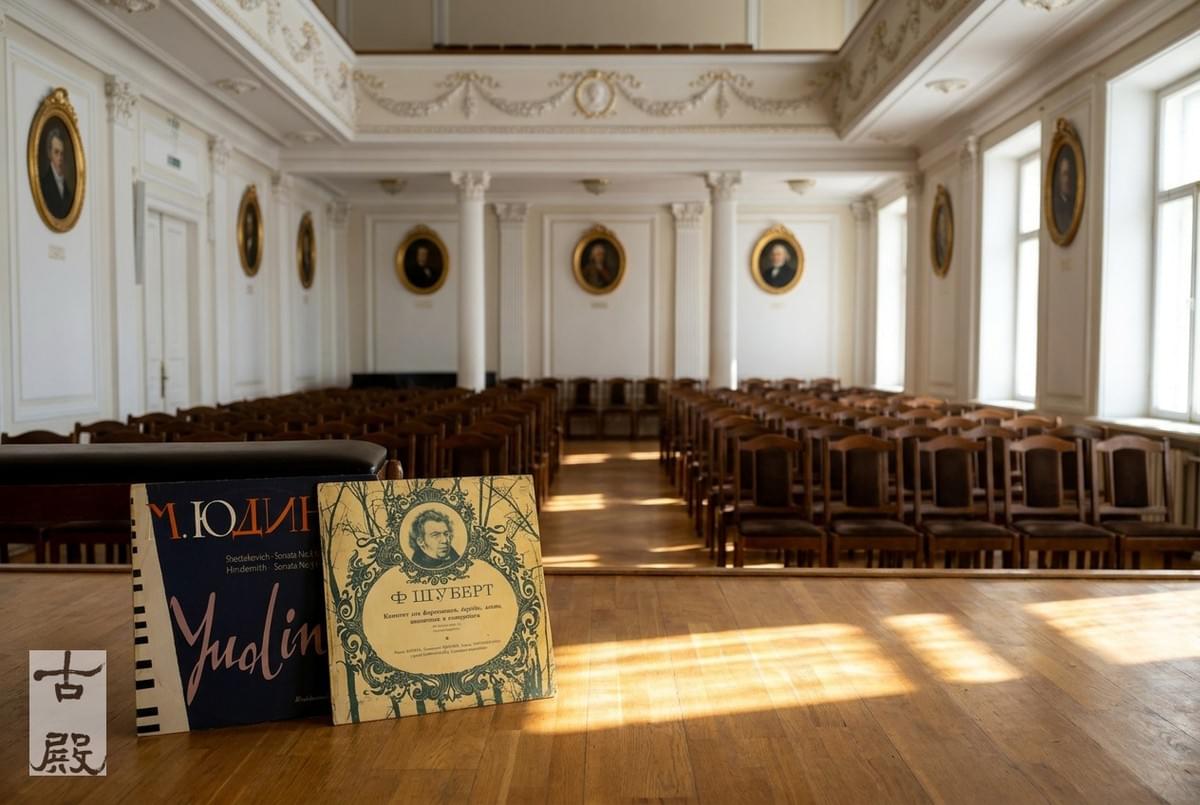
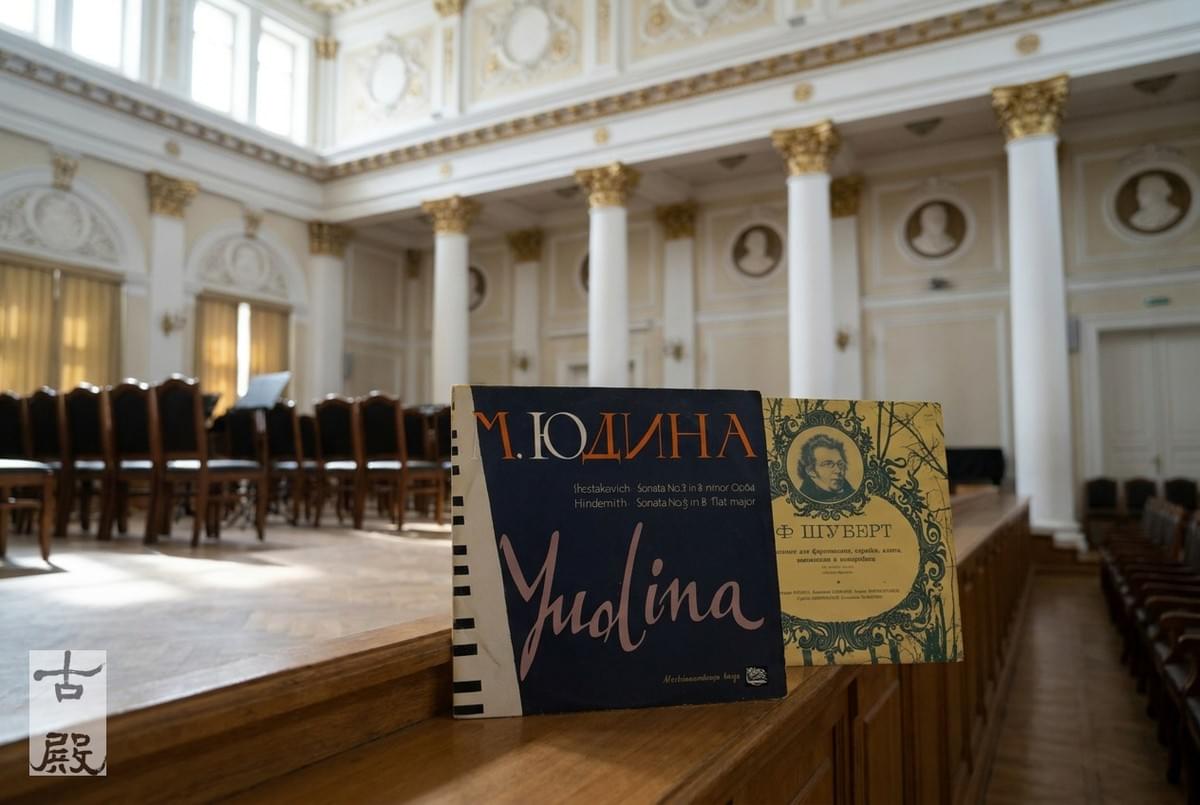
「古殿」手上這兩張1960年的錄音,剛好都落在尤蒂娜生命最緊繃的年代,她因為宗教立場與提倡西方現代音樂,被格涅辛學院解職,此後雖仍獲准登台,錄音卻遭全面禁止。換句話說,這兩份錄音,很可能正好卡在她被徹底噤聲之前的最後窗口。
其中一張,收錄了蕭士塔高維契《第二號鋼琴奏鳴曲》。這首曲子背後,藏著這張唱片最深的一層史料。
1943年,蕭士塔高維契在疏散地古比雪夫得知恩師尼古拉耶夫辭世,深受觸動,寫下這首b小調奏鳴曲,題獻給亡師,同年6月親自在莫斯科首演。
而錄下這份悼亡之作的尤蒂娜,正是尼古拉耶夫的另一個學生。
這不是「一位鋼琴家詮釋一位作曲家的作品」那麼簡單。這是一個學生,去演奏另一個學生寫給他們共同的老師的悼念之作。同一間教室裡學出來的兩個人,用完全不同的方式,各自向同一位恩師致意——蕭斯塔科維奇用筆,尤金娜用琴鍵。這條藏在唱片編號Д—07063背後的師承線索,一般聽眾根本無從察覺,卻是這張唱片之所以沉重的真正原因。
蕭士塔高維契對尤蒂娜的演奏,終生懷抱一種近乎辯論的仰慕。他常和莫斯科音樂學院的著名鋼琴教授涅高茲(Heinrich Neuhaus,1888-1964)爭論不休,究竟尤蒂娜的詮釋是「啟示」還是「離經叛道」。1950年,他甚至一度放下正在創作的《二十四首前奏曲與賦格》,專程跑去莫斯科音樂學院小廳,只為聽尤蒂娜彈一場巴赫《平均律》。
把亨德密特和蕭斯塔科維奇放在同一張唱片兩面,不是巧合
同一張唱片的B面,是亨德密特(Paul Hindemith,1895-1963)的《第三號鋼琴奏鳴曲》——一部結構森嚴、對位邏輯極其理性的德國現代主義作品。
這個選曲組合,其實是尤蒂娜整個藝術生涯的自畫像。
她終生致力於在蘇聯推廣被官方視為「西方頹廢音樂」的作品——巴爾托克(Béla Bartók,1881-1945)、貝爾格(Alban Berg,1885-1935)、亨德密特、奧涅格(Arthur Honegger,1892-1955)、梅湘(Olivier Messiaen,1908-1992)、荀貝格(Arnold Schoenberg,1874-1951),她完成了這些作曲家在蘇聯的多場首演,後來更在史特拉汶斯基(Igor Stravinsky,1882-1971)1962年重返蘇聯的過程中,扮演了關鍵的斡旋角色。
把體制內被允許、卻飽含個人哀悼的蕭士塔高維契,跟體制外、被視為危險的亨德密特,並置在同一張唱片的A、B兩面——這正是她一貫的姿態:一手緊緊抓著自己在列寧格勒建立的情感根基,另一手始終伸向官方不願讓聽眾聽到的聲音。
她也在1960年——同一年——因為這份堅持,被格涅辛學院解職。這張黑膠,可以說是她這場代價高昂的藝術立場,留下的最直接的聲音證據。
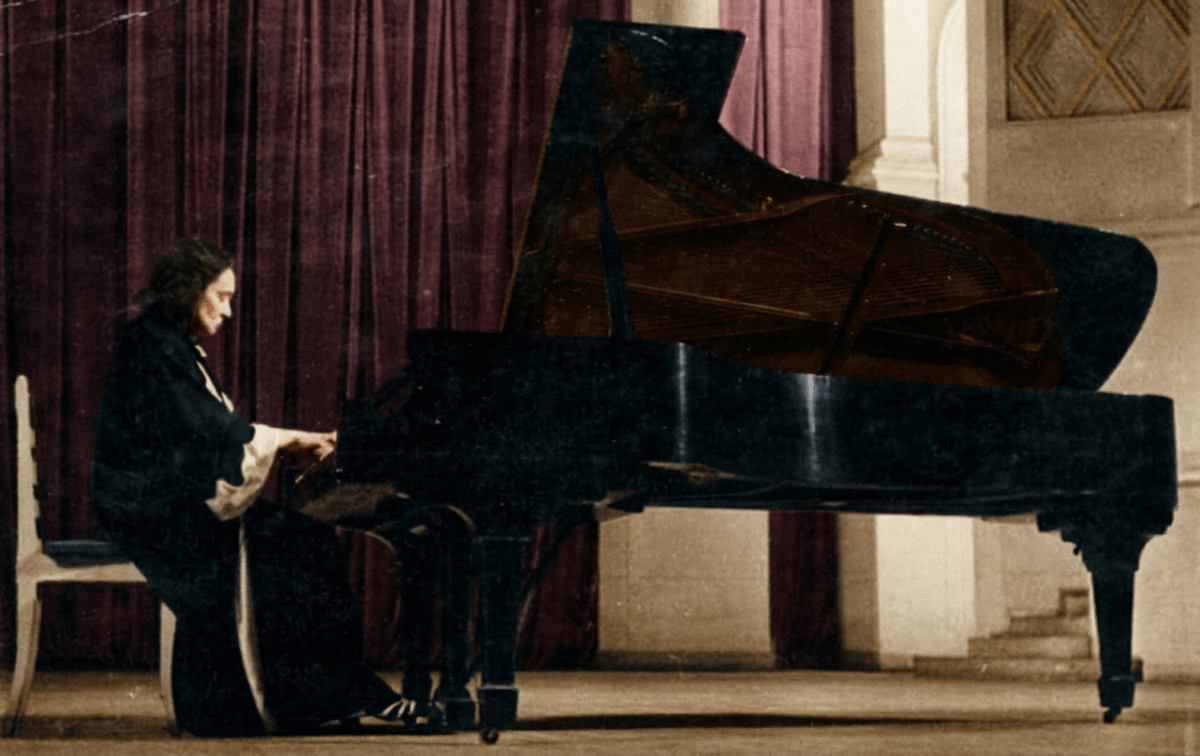
當她坐下彈室內樂,蕭士塔高維契最親密的夥伴就在她身邊
另一張1960年的錄音,是舒伯特《鱒魚五重奏》的現場錄音——1960年11月19日,在莫斯科音樂學院小廳。
跟尤蒂娜同台的三位絃樂手——崔加諾夫(Dmitri Tsyganov,1903-1992)、博里索夫斯基(Vadim Borisovsky,1900-1972)、希林斯基(Sergei Shirinsky,1903-1974)——正是貝多芬弦樂四重奏團的創始核心成員。這個樂團跟蕭士塔高維契合作了37年,首演了他十五首弦樂四重奏中的十三首。蕭士塔高維契晚期的四首四重奏,分別題獻給團員本人:博里索夫斯基被他稱為「人格中最吸引我的地方是——全部」。
也就是說,跟尤蒂娜一起演奏舒伯特這部帶著夏日鄉間氣息的作品的三個人,各自都背負著蕭士塔高維契親手寫給自己的一整首四重奏的重量。而這場演出的場地——莫斯科音樂學院小廳——正是蕭士塔高維契1940年親自坐上鋼琴,與這群樂手首演他《鋼琴五重奏》的同一個廳堂。
二十年前,作曲家本人在這裡與這群人合奏。二十年後,尤蒂娜與這群人的另外三位,在同一個空間裡演奏舒伯特。這是同一群人、同一個空間,跨越二十年,兩次「五重奏」彼此呼應的歷史迴聲。
她從不彈蕭邦,卻可能預示了顧爾德
尤蒂娜的演奏,有一種很特別的固執:她幾乎終生迴避浪漫派曲目,一輩子專注在巴赫與維也納古典樂派上。就算彈的是最「經典」的曲目,也從不套進傳統的詮釋框架——她演奏巴赫的方式,甚至被部分樂評認為,預示了後來顧爾德(Glenn Gould,1932-1982)的風格取向。
而室內樂,是她晚年投入心力最深的領域。她說過一句話,幾乎可以當作她整個藝術信條的濃縮:
「言說的重要性是根本,缺乏內容才是罪過。」
跟她合作過的鋼琴家阿列克謝·魯比莫夫(Alexei Lubimov,1944-),這樣描述她排練時的樣子:一部作品在她手下,從來不是「規格化的演練」,而是像重新被創造一次,把作曲家心靈最深處的東西,一點一點挖出來。她對每一個瞬間都有著異乎尋常的專注力,對合作夥伴的演奏,反應快得驚人。她的音樂會,甚至常常變成一種綜合藝術祭典——音樂、詩歌朗誦、哲學思辨、她與詩人畫家音樂家交往的回憶,全部揉在一起。
她信奉歌德(Johann Wolfgang von Goethe,1749-1832)《浮士德》裡的一句話:「在開始,先有行動。」——不是先想清楚才做,是先用整個生命的力量去做,思想在行動裡自然顯現。這句話,幾乎可以拿來解釋她這一生所有看起來「不理智」的選擇:公開戴十字架、朗誦禁詩、把史達林的兩萬盧布捐給教會。
不求名不求利,今天大概不會被記得
尤蒂娜終其一生,沒有拿過蘇聯官方任何一項重要藝術獎項或榮譽稱號——跟她同輩的費因伯格(Samuil Feinberg,1890-1962),拿過史達林獎、列寧勳章這些殊榮相比,這種空白極不尋常。她的聲望,幾乎完全建立在口耳相傳的傳奇,以及後來慢慢流散到西方的錄音上。直到1980年代初,她的錄音才開始在西方流通,國際知名度才逐漸建立起來。
換句話說,如果不是這些黑膠被留了下來、被整理、被再版,如果不是有人願意在半個世紀後,重新放上唱盤——尤蒂娜這個名字,很可能會停留在一小群蘇聯樂迷的記憶裡,永遠傳不出去。
她是那種「一輩子不追求曝光,只靠真實演奏留下痕跡,最後靠著實體錄音跨越半個世紀被重新發現」的路徑。
******
【Gudian Music Stories】In the Middle of the Night, the Kremlin Called to Demand a Non-Existent Record: Maria Yudina, the Woman Even Stalin Couldn't Break
An Impossible Mission
Late one night, the phone rang unexpectedly at the central switchboard of a Moscow radio station.
The caller identified themselves as the office of Joseph Stalin. The request was urgent: Stalin, listening to the radio late at night, had been deeply moved by a live broadcast of Mozart’s Piano Concerto No. 23 and demanded a copy of the recording immediately.
There was only one major problem: it was a live broadcast, and no recording had been made.
In USSR at the time, failing to fulfill a request from Stalin was unthinkable—the consequences could be fatal. In a state of sheer panic, officials hastily assembled the pianist and a makeshift orchestra in the dead of night to re-record the entire concerto. By early the next morning, the single master disc was delivered straight to the Kremlin.
The pianist summoned back to the studio in the middle of the night was Maria Yudina (1899–1970).
Afterward, Stalin sent her a reward of 20,000 rubles as a gesture of appreciation. Yudina wrote back to thank him—and informed him that she had donated every single ruble to the church: "To pray for the forgiveness of your sins before God."
To this day, no one can definitively prove the authenticity of this anecdote. But the man who shared it was Dmitri Shostakovich (1906–1975)—a composer who lived his life treading on thin ice under Stalin’s regime. In his memoirs, Shostakovich left a single sentence that defined Yudina:
"She had many eccentricities, but of one thing I am certain—she never lied."
How could someone who dared to lecture Stalin in a thank-you letter survive in that era? To understand, we have to start with her teacher.
One Classroom, Three Destinies
In the 1910s at the Leningrad Conservatory, three young students sat together in the classroom of piano professor Leonid Nikolayev (1878–1942). They would go on to live three radically different lives: Dmitri Shostakovich, Vladimir Sofronitsky (1901–1961), and Maria Yudina.
Their paths virtually epitomized every possible fate for a Soviet artist:
Shostakovich learned to walk a tightrope within the system, using a double musical language to survive.
Sofronitsky retreated entirely into his inner world.
Yudina chose the single most dangerous path: she hid nothing.
In 1930, she was dismissed from the Petrograd Conservatory. The reason? Someone asked if she believed in God, and she answered truthfully: "Yes."
This was no impulsive reaction. Yudina had officially converted to Russian Orthodoxy in 1919 and remained unwavering for the rest of her life. In a state where atheism was the official ideology, she wore a large cross while performing on stage. For her concert encores, she recited poems by banned authors. After reciting the poetry of Boris Pasternak (1890–1960) at a recital in Leningrad, she was banned from performing in public for five years—a restriction that was not lifted until 1966.
She constantly petitioned on behalf of political prisoners. Her close intellectual friend, Mikhail Bakhtin (1895–1975), spent years in exile. Pavel Florensky (1882–1937), the theologian who guided her religious thought, was executed in 1937. Countless friends and family members were swept away into the Gulag system.
Yet Yudina herself was never arrested and never spent a single day in prison.
In an era when even silence could be fatal, she chose the loudest way to live—and survived. That fact alone remains one of the most enigmatic anomalies in 20th-century Soviet art history.
Speaking for Her Master Through the Keys
The two 1960 recordings we hold here at Grand殿 capture Yudina during one of the most strained periods of her life. Dismissed from the Gnessin Institute due to her religious beliefs and her promotion of modern Western music, she was still allowed to perform live, but recording was strictly forbidden. In other words, these two recordings likely represent the last window of her creative voice right before she was completely silenced.
One of these records features Shostakovich’s Piano Sonata No. 2. Hidden behind this piece is the deepest layer of historical memory captured on the disc.
In 1943, while evacuated in Kuybyshev, Shostakovich was deeply shaken by the news of his beloved teacher Nikolayev's passing. In his grief, he composed this Sonata in B minor, dedicated it to his late master, and premiered it himself in Moscow that June.
And Yudina, who recorded this eulogy on keys, was Nikolayev’s other student.
This is far more than a simple case of "a pianist interpreting a composer’s work." It is one student playing a musical memorial written by another student for their shared mentor. Two artists who emerged from the exact same classroom, honoring their teacher in completely different ways: Shostakovich with his pen, and Yudina with her piano keys. This lineage hidden behind the record catalog number Д-07063 might go unnoticed by an average listener, but it is the true reason why this record carries such emotional weight.
Shostakovich harbored a lifelong admiration for Yudina’s playing that bordered on debate. He frequently argued with Heinrich Neuhaus (1888–1964), the famous professor at the Moscow Conservatory, over whether Yudina’s interpretations were "revelations" or "unorthodox heresy." In 1950, Shostakovich even temporarily set aside his work on his 24 Preludes and Fugues just to rush over to the Small Hall of the Moscow Conservatory to hear Yudina play Bach’s The Well-Tempered Clavier.
Pairing Hindemith and Shostakovich: No Coincidence
On the B-side of this same record lies Paul Hindemith’s (1895–1963) Piano Sonata No. 3—a work of rigorous structure and intensely rational counterpoint characteristic of German modernism.
This choice of pairing serves as a self-portrait of Yudina’s entire artistic career.
Throughout her life, she was dedicated to promoting works in the Soviet Union that the regime dismissed as "Western decadent music"—pieces by Béla Bartók, Alban Berg, Paul Hindemith, Arthur Honegger, Olivier Messiaen, and Arnold Schoenberg. She gave the Soviet premieres for many of these composers and later played a crucial mediating role when Igor Stravinsky returned to the USSR in 1962.
Placing Shostakovich—whose music was permitted by the regime yet laced with personal grief—on Side A, and Hindemith—who was deemed dangerous and outside the system—on Side B, was her characteristic stance: holding tightly with one hand to the emotional roots she built in Leningrad, while extending the other hand toward the sound that the authorities tried to keep the audience from hearing.
In 1960—that exact same year—she was dismissed from the Gnessin Institute for this very persistence. This vinyl record stands as the most direct acoustic evidence of her costly artistic conviction.
Sitting Down for Chamber Music with Shostakovich’s Closest Allies
The second 1960 recording is a live performance of Schubert’s Trout Quintet, captured on November 19, 1960, in the Small Hall of the Moscow Conservatory.
The three string players performing alongside Yudina—Dmitri Tsyganov, Vadim Borisovsky, and Sergei Shirinsky—were founding members of the renowned Beethoven Quartet. This ensemble collaborated with Shostakovich for 37 years and premiered 13 of his 15 string quartets. Shostakovich dedicated four of his late quartets to individual members of the group; of Borisovsky, he once remarked: "What attracts me most in his personality is... everything."
In short, the three musicians playing this lighthearted, summer-tinted Schubert piece with Yudina each carried the weight of a dedicated quartet written for them by Shostakovich.
Furthermore, the venue—the Small Hall of the Moscow Conservatory—was the exact same hall where Shostakovich himself sat at the piano twenty years prior in 1940 to premier his Piano Quintet with these very musicians.
Twenty years earlier, the composer himself played here with this group. Twenty years later, Yudina joined three of those same musicians in the exact same space to play Schubert. It was an echo of history—the same people, the same hall, across two decades, bridging two "quintets."
Bypassing Chopin, Anticipating Gould
Yudina’s playing carried a distinct stubborness: she spent almost her entire life avoiding the Romantic repertoire, dedicating herself instead to Bach and the Viennese Classics. Even when performing the most "traditional" repertoire, she refused to fit into conventional interpretive molds. Her approach to Bach was even viewed by some critics as a precursor to the stylistic directions later taken by Glenn Gould.
In her later years, chamber music became the field where she poured her deepest energy. She once made a statement that serves as a summary of her artistic creed:
"The importance of speech is fundamental; a lack of content is the true sin."
Pianist Alexei Lubimov, who collaborated with her, described her during rehearsals: under her hands, a piece was never a "standardized exercise." Instead, it was as if the piece were being re-created from scratch, digging out the deepest corners of the composer's soul bit by bit. She possessed an extraordinary focus on every single moment and responded with incredible swiftness to her partners' playing. Her concerts often grew into holistic artistic festivals—blending music, poetry recitals, philosophical debates, and memories of her interactions with poets, painters, and musicians.
She lived by a line from Goethe’s Faust: "In the beginning was the Deed."
It was not about thinking everything through before acting; it was about pouring one’s entire life force into doing, allowing thought to reveal itself through action. This phrase explains almost every seemingly "unwise" choice she made in her lifetime: wearing a cross publicly, reciting banned poetry, and donating 20,000 rubles from Stalin directly to the church.
Seeking Neither Fame Nor Fortune
Through
out her life, Maria Yudina was never awarded a single major artistic honor or official title by the Soviet government. Compared to her contemporary Samuil Feinberg (1890–1962), who received prestigious honors like the Stalin Prize and the Order of Lenin, this absence is extraordinary.
Her reputation was built almost entirely through word-of-mouth legends and the recordings that gradually leaked to the West. It wasn't until the early 1980s that her recordings began to circulate widely in the West, establishing her international acclaim posthumously.
If these vinyl records had not been preserved, organized, and reissued—if no one had been willing to place them back on a turntable half a century later—the name Maria Yudina might have remained locked within the memories of a small circle of Soviet music lovers, never reaching the rest of the world.
She walked a quiet path: seeking no exposure, leaving her imprint through raw, authentic performance, and ultimately being rediscovered across half a century through the medium of physical recordings.