
【古殿唱片音樂故事】並列冠軍的真相:約翰·奧格登(John Ogdon,1937-1989)與他的兩張黑膠遺產
古殿殿主
1962年5月,莫斯科,柴可夫斯基國際鋼琴大賽。
第一屆冠軍是美國人范克萊邦(Van Cliburn,1934-2013),主辦方蘇聯顏面盡失。第二屆,命令從官方最高層下來:務必拿回冠軍。
他們準備好了。
蘇聯的最低底線
要理解這個故事,必須先理解蘇聯派出的是什麼樣的人。
阿胥肯納吉(Vladimir Ashkenazy,1937-)從小就被蘇聯列為重要的比賽文化武器。他出自首屆蕭邦鋼琴大賽金牌得主歐柏林(Lev Oborin,1907-1974)門下,1955年,18歲,代表蘇聯參加第五屆蕭邦國際鋼琴大賽,獲得第二名。1956年,19歲,再次代表蘇聯出戰伊麗莎白王后大賽鋼琴組,拿下金牌。他參加的都是當時最具世界指標的頂級賽事,每一次都帶回不凡的成績。
到了1962年,他已經25歲。對競賽鋼琴家而言,這不再是最年輕的黃金期。但蘇聯為求絕對奪金,再次把他推上舞台——因為在整個蘇聯的鋼琴武器庫裡,沒有比他更有把握的人選。
早年的阿胥肯納吉,在整個鋼琴世界——無論鐵幕內外——都是超人般的存在。他身材矮小,不到160公分,手也不是特別大,但他的身體素質讓人無法相信。全身從頭到腳充滿結實的肌肉,核心力量驚人穩固,彈琴時穩如泰山,幾乎看不到多餘的搖晃。他的指力不是靠手指本身,而是從整個身體超級強大核心延伸出來的——就像一個頂尖運動員,把所有的力量集中在那個接觸點上。那個年代的阿胥肯納吉,琴音有一種金屬般的光澤,顆粒閃閃發光,清晰到幾乎殘酷。
有這樣的阿胥肯納吉參賽,蘇聯認為冠軍是確定的。
如果說范克萊邦1958年的冠軍,是蘇聯在傾全力備戰、卻完全沒有料到會出現這樣一個美國人的情況下,措手不及地接受了一個外國人的勝利——那麼奧格登1962年的並列冠軍,性質截然不同。
蘇聯有了第一屆的教訓。他們知道西方會來強敵,他們研究過,他們準備過,他們把所有可以動用的資源都動用了,務必不能讓1958年的事再發生一次。
然後奧格登出現了。又是出乎意料之外。
還有一件事值得說清楚:范克萊邦為什麼能一面倒?因為他是個「翩翩君子」——演奏姿態優雅動人,無人不喜歡他。更關鍵的是,他在美國是純正俄國鋼琴傳統的繼承人,等於是帶著俄國音樂的血脈回到俄國,讓蘇聯人民在情感上找到了親近感。連蘇聯觀眾都被他征服,幾乎是一面倒。
第二屆來的這個英國怪物,完全不是這樣。
奧格登高大,略顯笨拙,不修邊幅——不修邊幅到什麼程度?進入第二輪之後,主辦方找不到他。其他選手還在排練,還在緊張,還在互相打量。他不在。他居然飛回英國去了——因為那個週末他有預先排定的演出,他不打算取消。這件事差點讓他被取消參賽資格。
等他飛回莫斯科、站上決賽舞台,那雙巨大的手落下去,那種全然的自信與無拘束的自由所爆發出來的能量,讓所有人都沉默了。那不是優雅,那是恐怖。
蘇聯沒想到1958年會來一個范克萊邦。做足了準備,1962年又沒想到會來一個奧格登。「並列」,是他們面對這個「怪物」所能守住的最後一道防線。
所以哪一個冠軍更難?
作曲家在演奏
但這篇文章真正想說的,不是只是比賽。
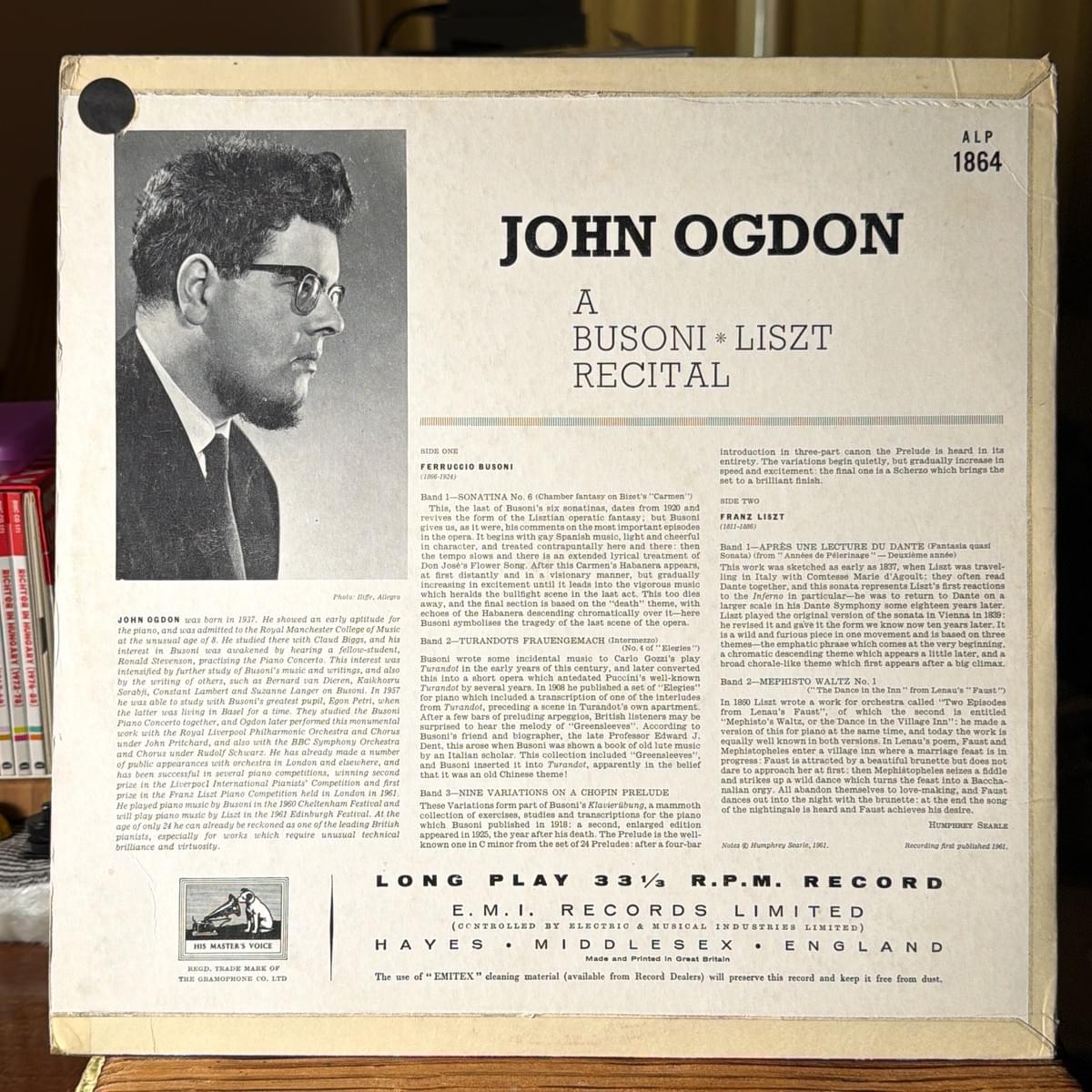
這張唱片是 HMV(His Master's Voice),編號:ALP 1864。封面是紫色、藍色、紅色交疊的抽象油彩筆觸,鮮黃色的「John Ogdon」字樣橫貫全版,發行於1961年。
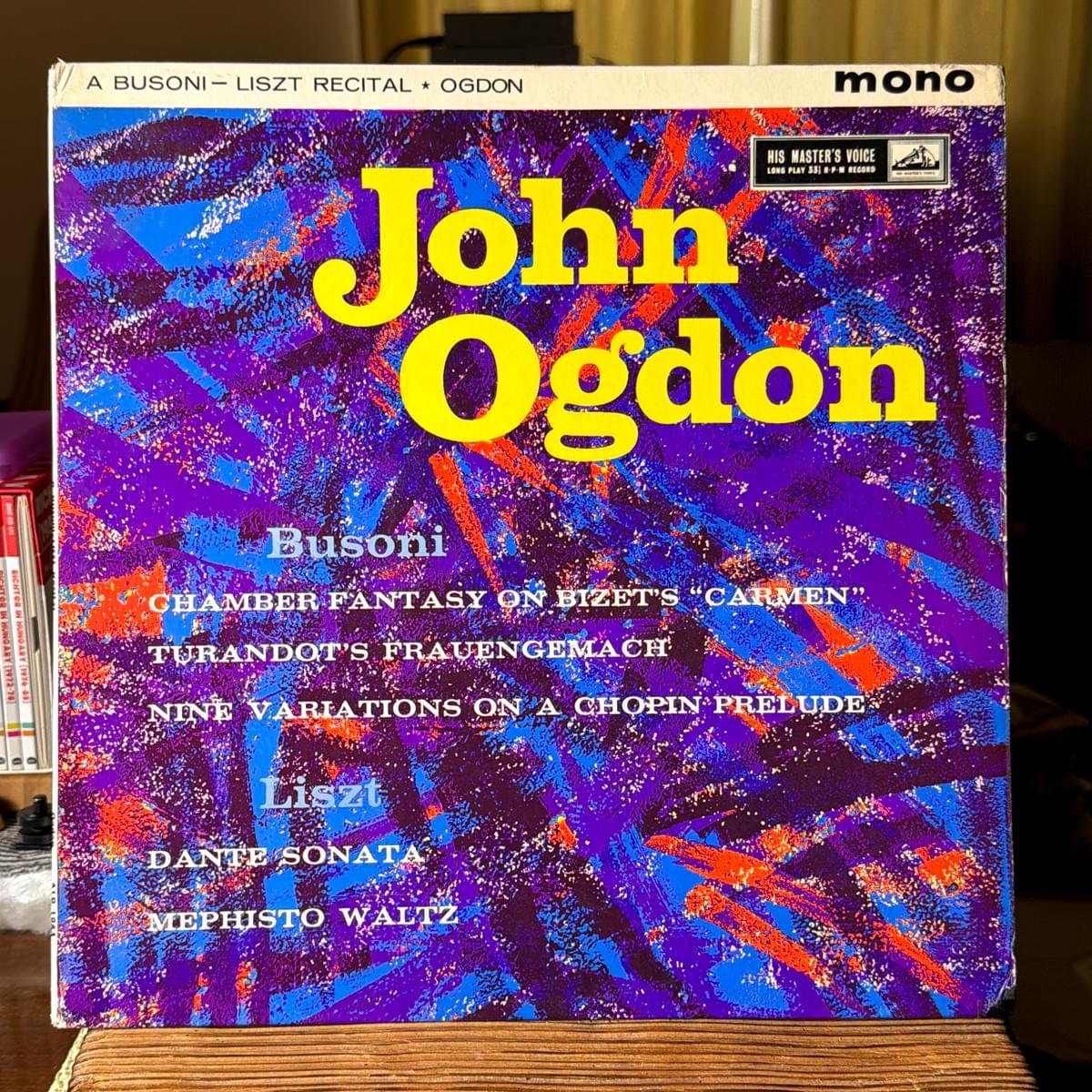
EMI 做這個出版決定的時候,奧格登還沒有任何國際知名度。但在英國音樂界的小圈子裡,他是已經公認的天才——1960年布梭尼大賽冠軍,1961年李斯特大賽冠軍。
這是一個商業押注,不是一筆確定的生意。發行量不會多,市場不會廣,曲目幾乎沒有大眾基礎。EMI 押的是一個判斷:這個人應該值得。
一年後,奧格登在莫斯科拿下金獎。從那一刻起,同樣的錄音內容變成了另一回事——是確定的商業價值,是「柴可夫斯基大賽聯合第一名」的招牌。
這就是為什麼 ALP 1864 在收藏上是另一個等級的東西。那個時候買這張唱片的人,買的就是一個眼光,另外這張相對發行量就少很多。
曲目是:布索尼和李斯特。
布索尼(Busoni)——他的作品晦澀、冷峻、技術艱深,幾乎沒有人演奏。但奧格登選了他,而且選了三首。B面才是李斯特:《但丁奏鳴曲》和《梅菲斯特圓舞曲》。
他不只是一個鋼琴演奏者,他也是一個作曲家。他自己創作了200多首作品,包括四部歌劇、兩部大型管弦樂作品、三部大合唱,以及大量鋼琴獨奏曲和兩首鋼琴協奏曲——第一首他自己錄製了。這讓他理解李斯特和布索尼的方式,是一種內在精神上的感同身受。李斯特自己是作曲家,布索尼自己是作曲家,拉赫曼尼諾夫自己是作曲家——那個時代的偉大鋼琴家,幾乎沒有一個不同時創作。奧格登繼承的,不只是演奏技術,而是那種「作曲家演奏自己熟悉的語言」的內在視角。
他演奏布索尼,像一個同行在閱讀同行的手稿。
一條從19世紀延伸來的血脈
奧格登在還是學生的時候,聽到同學練習布索尼的鋼琴協奏曲——那首長達70分鐘、有男聲合唱、幾乎沒有人演奏過的怪物作品——然後就著迷了。1957年,他20歲,前往瑞士巴塞爾,師從布索尼最重要的傳人埃貢·佩特里(Egon Petri,1881–1962)。
佩特里見到他的第一個震驚是:奧格登不帶樂譜。不是忘了帶,是根本不需要。那首巨大複雜的布索尼協奏曲,他已經背得滾瓜爛熟,可以從任何一個小節開始接著彈下去。
佩特里說:「他是我教過最出色的學生。」
這條師承鏈條,是整個鋼琴史上最重要的傳承線之一:
李斯特 → 布索尼 → 佩特里 → 奧格登
布索尼相信:巴哈是鋼琴的根基,李斯特是頂峰。演奏者的任務不是重現感情,而是重建結構。這種冷峻的、幾乎「反浪漫主義」的智識態度,從19世紀一路傳到了奧格登的指尖。
是奧格登向這條血統的公開致敬。那不是一張取悅聽眾的唱片,而是一個年輕作曲家對自己師承與精神淵源的誠實宣誓。
然而他沒有全然臣服
那張布索尼與李斯特的專輯,有一個讓人意外的細節。
B面的《梅菲斯特圓舞曲》,奧格登演奏的是李斯特的「原始版本」——而非佩特里畢生信奉的布索尼改編版。在這個老師的眼光裡,他選擇演奏「李斯特原版」幾乎是一種偏離。但奧格登24歲,他選擇偏離。
他回到了李斯特更直接、更肉身性的熱度——那個作曲家寫下這首曲子時,最初的野性衝動。
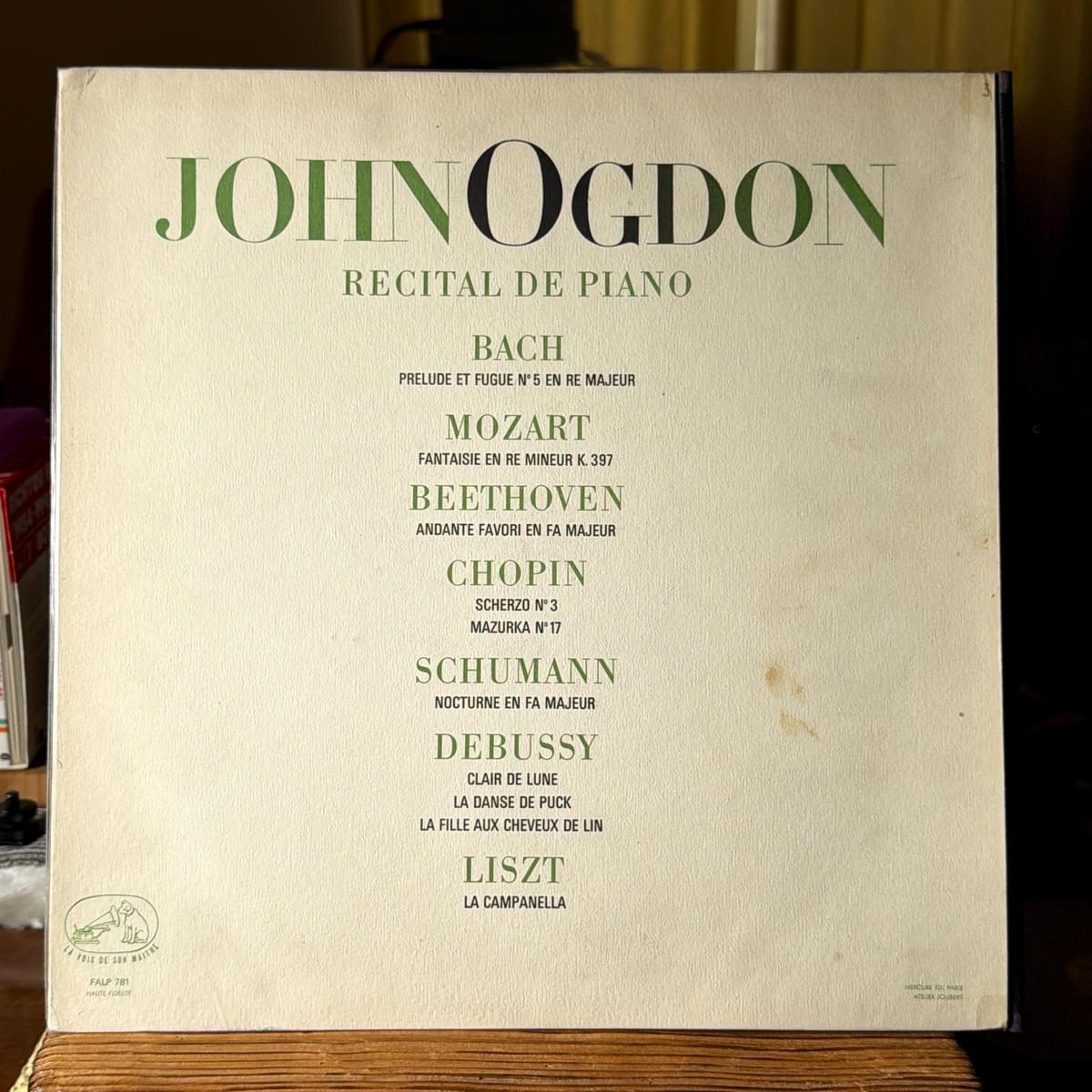
兩年後,他獲得柴可夫斯基大賽金牌,另外一張唱片,編號:FALP 781出版,同樣是李斯特,同樣面對版本選擇,這次壓軸的《鐘》(La Campanella)他選了布索尼改編版。
同一個人,同樣的師承,兩個不同的選擇。不是矛盾,是進化——1961年的他需要回到根源確認自己的熱度;大賽之後的他,願意展示更複雜的智識深度了。一個作曲家對同一個問題,在不同的生命時刻,選擇了不同的答案。
一個定時炸彈
奧格登有一件事,他在成名的時候沒有告訴任何人。
他父親有精神病史,他們家族有遺傳基因,從他出生那天起就在他的身體裡。
1973年,那個定時炸彈響了。他突然經歷嚴重的精神崩潰,最初被診斷為精神分裂症,後來確認為躁鬱症。從那之後,他陸陸續續復出,直到1989年8月1日在倫敦去世,終年52歲。
他每年演奏超過200場。他的曲庫涵蓋了鋼琴史上最艱深的作品,那些連職業鋼琴家都不敢碰的冷僻巨作。他的視奏能力,讓人幾乎懷疑那不是人類的能力範圍。
這一切,都在1973年之後慢慢地、以不同的方式繼續著——但那個最完整的、最燃燒的、還沒有任何陰影的奧格登,只存在於1961年到1973年之間。
最後
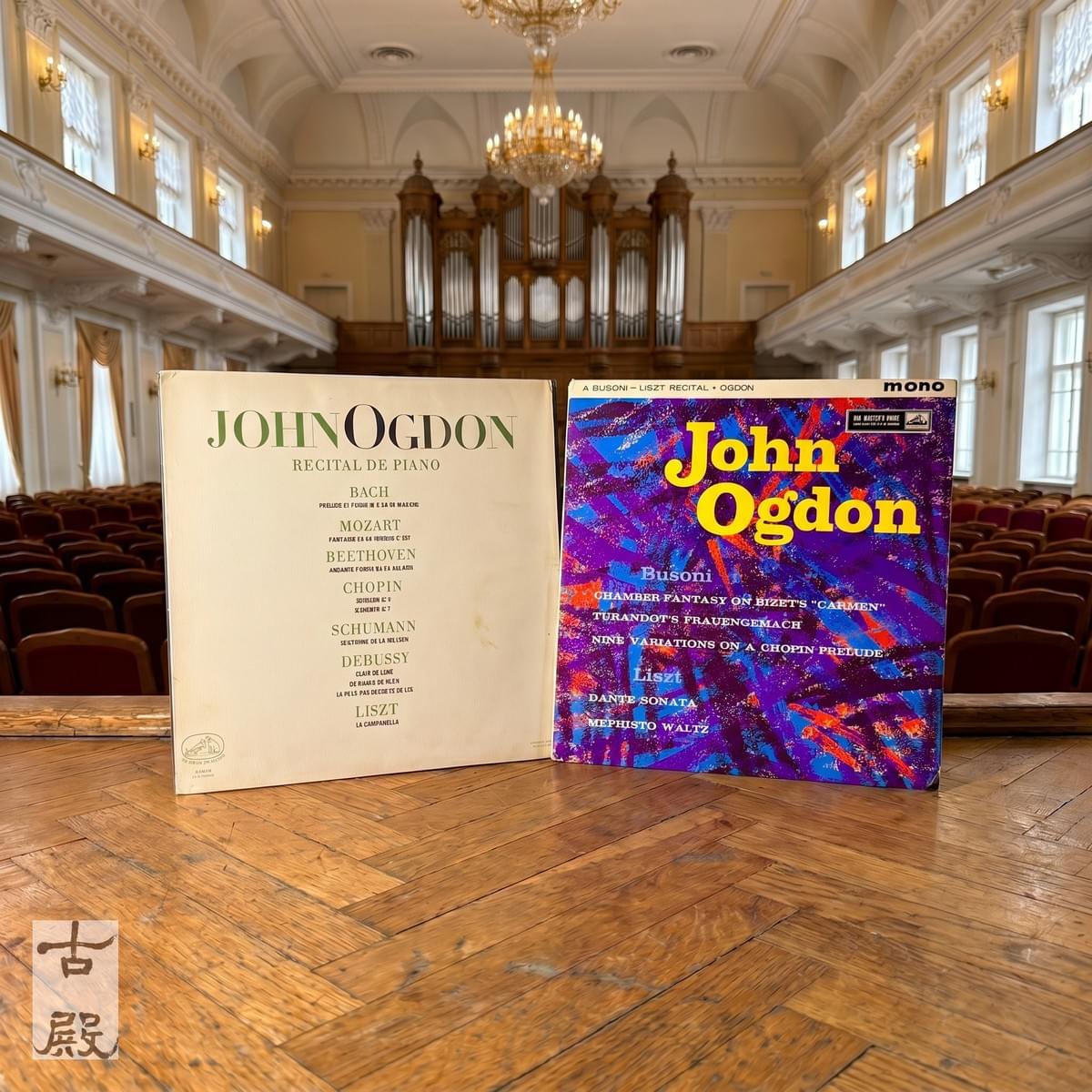
把這兩張唱片放在面前。
兩張唱片,兩個先後的時間點,同一個人。
那個在莫斯科決賽前飛回英國、差點被取消資格、在蘇聯主場硬是擠進並列冠軍的英國人——他從來不是因為大賽才成為大師的。大賽只是讓世界知道了一件早就存在的事。
早在1961年,艾比路錄音室那個冬日午後,當他選擇布索尼作為他的第一張商業錄音,那件事就已經確定了。
*******
[The Paleo-Hall Record Story] The Truth Behind the Joint Championship: John Ogdon (1937-1989) and His Two Vinyl Legacies
May 1962, Moscow. The Tchaikovsky International Piano Competition.
The winner of the inaugural competition was the American, Van Cliburn (1934-2013), a victory that left the Soviet organizers utterly humiliated. For the second competition, the order came down from the highest echelons of the government: The championship must be reclaimed at all costs.
They were ready.
The Soviet Union’s Last Line of Defense
To understand this story, one must first understand the kind of "weapon" the Soviet Union deployed.
Vladimir Ashkenazy (1937-) had been groomed since childhood as a vital cultural asset. He was a student of Lev Oborin, the gold medalist of the first Chopin Competition. By 18, Ashkenazy took second place at the 5th International Chopin Piano Competition. By 19, he secured the gold at the Queen Elisabeth Competition. He entered the world’s most prestigious arenas and returned with nothing less than extraordinary results.
By 1962, he was 25. For a competitive pianist, this was no longer the peak of "youthful" vigor, but the Soviet Union pushed him onto the stage once more to guarantee gold. In their vast arsenal of pianists, there was no one more reliable.
The young Ashkenazy was a superhuman presence in the piano world, both inside and outside the Iron Curtain. Standing less than 160 cm tall with relatively small hands, his physical prowess was nonetheless unbelievable. His body was composed of lean, solid muscle; his core strength was so stable that he sat like a mountain, with almost no wasted movement. His power didn't come from his fingers alone, but radiated from that incredibly strong core—much like a top-tier athlete concentrating all their force into a single point of contact. In those days, Ashkenazy’s tone had a metallic luster, his notes shimmering with a clarity that was almost cruel.
With Ashkenazy in the race, the Soviet Union believed the championship was a certainty.
If Van Cliburn’s 1958 victory was a case of the Soviets being caught off guard by a "miraculous American" they hadn't prepared for, then Ogdon’s 1962 joint championship was of a completely different nature.
The Soviets had learned their lesson. They knew powerful enemies would come from the West. They had studied, they had rehearsed, and they had mobilized every resource to ensure 1958 would not happen again.
Then came Ogdon. Again, the unexpected.
There is one distinction worth making: Why was Van Cliburn so universally loved? Because he was a "graceful gentleman." His playing posture was elegant, and he was easy to adore. More importantly, he was a pure heir to the Russian piano tradition trained in America; he returned to Russia carrying the "bloodline" of Russian music, allowing the Soviet people to find an emotional kinship with him. Even the Soviet audience was conquered.
The "British Monster" who arrived for the second competition was nothing like that.
Ogdon was tall, somewhat clumsy, and utterly unkempt. How unkempt? After entering the second round, the organizers couldn't find him. While other contestants were rehearsing, nervous, and sizing each other up, Ogdon was gone. He had actually flown back to the UK—he had a pre-scheduled performance that weekend and had no intention of canceling. This nearly got him disqualified.
When he finally flew back to Moscow and stepped onto the final stage, the moment those massive hands descended, the explosion of energy—born of absolute confidence and unfettered freedom—silenced everyone. It wasn't elegance; it was terror.
The Soviets didn't expect a Van Cliburn in 1958. Despite being fully prepared, they didn't expect an Ogdon in 1962. A "Joint Championship" was the final defensive line they could hold against this "monster."
So, which championship was harder to win?
A Composer at the Keys
B
ut what I truly want to share isn't just about the competition.
Consider the record HMV (His Master’s Voice), serial number: ALP 1864. The cover features abstract oil brushstrokes of overlapping purple, blue, and red, with "John Ogdon" emblazoned in bright yellow. It was released in 1961.
When EMI decided to publish this, Ogdon had no international fame. However, within the inner circles of the British music scene, he was already a recognized genius—winner of the Busoni Competition in 1960 and the Liszt Competition in 1961.
This was a commercial gamble, not a guaranteed success. The circulation would be small, the market narrow, and the repertoire had almost no mass appeal. EMI bet on a judgment: This man is worth it.
A year later, Ogdon took the gold in Moscow. From that moment, the same recording became something else entirely—a guaranteed commercial asset branded with the title "Joint First Prize Winner of the Tchaikovsky Competition."
This is why ALP 1864 is in a different league for collectors. Those who bought it back then were buying into a vision, and its original pressing is much rarer.
The repertoire: Busoni and Liszt.
Busoni's works are obscure, cold, and technically grueling; almost no one played them. Yet Ogdon chose him, and chose three of his pieces. Side B featured Liszt: the Dante Sonata and Mephisto Waltz.
To understand this choice, you must understand who Ogdon was.
He wasn't just a pianist; he was a composer. He wrote over 200 works, including four operas, two major orchestral pieces, three cantatas, and a vast amount of solo piano music and two concertos. This gave him an internal, spiritual empathy for Liszt and Busoni. Liszt was a composer; Busoni was a composer; Rachmaninoff was a composer. Almost every great pianist of that era was also a creator. What Ogdon inherited was not just technique, but the internal perspective of a composer playing a language they know intimately.
When he plays Busoni, it sounds like one colleague reading the manuscript of another.
A Bloodline Stretching from the 19th Century
Wh
ile still a student, Ogdon heard a classmate practicing Busoni’s Piano Concerto—a 70-minute "monster" of a work with a male chorus that almost no one performed—and became obsessed. In 1957, at age 20, he traveled to Basel, Switzerland, to study under Egon Petri (1881–1962), Busoni’s most significant disciple.
Petri’s first shock upon meeting him was that Ogdon brought no sheet music. Not because he forgot it, but because he didn't need it. He had memorized that massive, complex Busoni concerto so thoroughly he could start playing from any single bar.
Petri said: "He is the most brilliant student I have ever taught."
This lineage is one of the most vital successions in piano history: Liszt → Busoni → Petri → Ogdon
Busoni believed that Bach was the foundation of the piano and Liszt was its peak. The performer’s task was not to "reproduce emotion," but to rebuild structure. This cold, almost "anti-Romantic" intellectual attitude traveled from the 19th century straight to Ogdon’s fingertips.
ALP 1864 was Ogdon’s public tribute to this bloodline. It wasn't a record made to please the audience; it was a young composer’s honest declaration of his heritage and spiritual roots.
Yet, He Did Not Fully Surrender
The
re is a surprising detail in that Busoni and Liszt album.
In the Mephisto Waltz on Side B, Ogdon plays Liszt’s "original version"—rather than the Busoni arrangement that Petri had championed his whole life. In the eyes of his teacher, choosing the "Liszt original" was almost a deviation. But at 24, Ogdon chose to deviate.
He returned to Liszt’s more direct, visceral heat—the primal, wild impulse the composer felt when he first wrote the piece.
Two years later, after winning the Tchaikovsky Gold, another record was published (Serial: FALP 781). Again Liszt, again a choice of versions. This time, for the finale La Campanella, he chose the Busoni arrangement.
The same man, the same lineage, two different choices. It wasn't a contradiction; it was evolution. The 1961 Ogdon needed to return to the roots to confirm his own fire; the post-competition Ogdon was ready to display a more complex intellectual depth. A composer choosing different answers to the same question at different moments in his life.
A Time Bomb
Ther
e was one thing about Ogdon he told no one when he became famous.
His father had a history of mental illness. There was a genetic "time bomb" in his family, ticking inside his body since the day he was born.
In 1973, that bomb went off. He suffered a severe mental breakdown, initially diagnosed as schizophrenia and later confirmed as bipolar disorder. From then on, his career was a series of intermittent comebacks until he passed away in London on August 1, 1989, at the age of 52.
He performed over 200 concerts a year. His repertoire covered the most difficult works in history—obscure masterpieces that even professional pianists feared to touch. His sight-reading ability was so uncanny it barely seemed human.
All of this continued in various ways after 1973—but the most complete, most burning Ogdon, the one without a single shadow, exists only between 1961 and 1973.
Final Words
Place
these two records before you.
Two records, two points in time, the same man.
The Englishman who flew back home right before the Moscow finals, who nearly got disqualified, and who forced his way into a joint championship on the Soviet's home turf—he never became a master because of the competition. The competition simply allowed the world to discover something that had already existed.
Back in 1961, on a winter afternoon in Abbey Road Studios, the moment he chose Busoni for his first commercial recording, his greatness was already a settled fact.