
【古殿唱片音樂故事】西貝流士說:「再造這雙手,要等好幾個世代」——這位女子晚年,卻推著雜貨手推車在街頭撿東西度日~吉拉·巴絲塔博(Guila Bustabo,1919-2002)
古殿殿主
一句盛讚,與一輛購物車
1959年,一位歐洲樂評人寫下這樣一段回憶:多年前,吉拉·巴絲塔博(Guila Bustabo,1919-2002)為西貝流士(Jean Sibelius,1865-1957)本人演奏他的小提琴協奏曲,作曲家聽完後,說了一句後來被反覆引用的話——
「需要好幾個世代,才能再造這樣的一雙巧手。」她的西貝流士小提琴協奏曲也是獲得作曲家本人的親自認證。
同一年,她在赫爾辛基、慕尼黑、哥德堡、巴黎巡演,樂評人用盡了讚美的詞彙:「小提琴界的絕對首席女伶」、「近乎超自然的才華」、「不僅是最偉大的小提琴家之一,實際上也是最偉大的詮釋者之一」。
如果故事停在這裡,這會是一篇再單純不過的天才頌歌。
但十幾年後,一位曾與她共事的樂團同事回憶起晚年的她——推著一輛從超市順來的雜貨手推車,在美國伯明罕的街頭撿拾別人丟棄的東西。她最終在貧困與孤獨中離世。
一位讓西貝流士親自感嘆「幾個世代才出一次」的天才,怎麼會走到這一步?
答案,藏在她二十出頭那幾年做的一個選擇裡——確切地說,是她母親替她做的選擇。而我手上這張唱片,錄下的正是那個選擇發生的那一年。
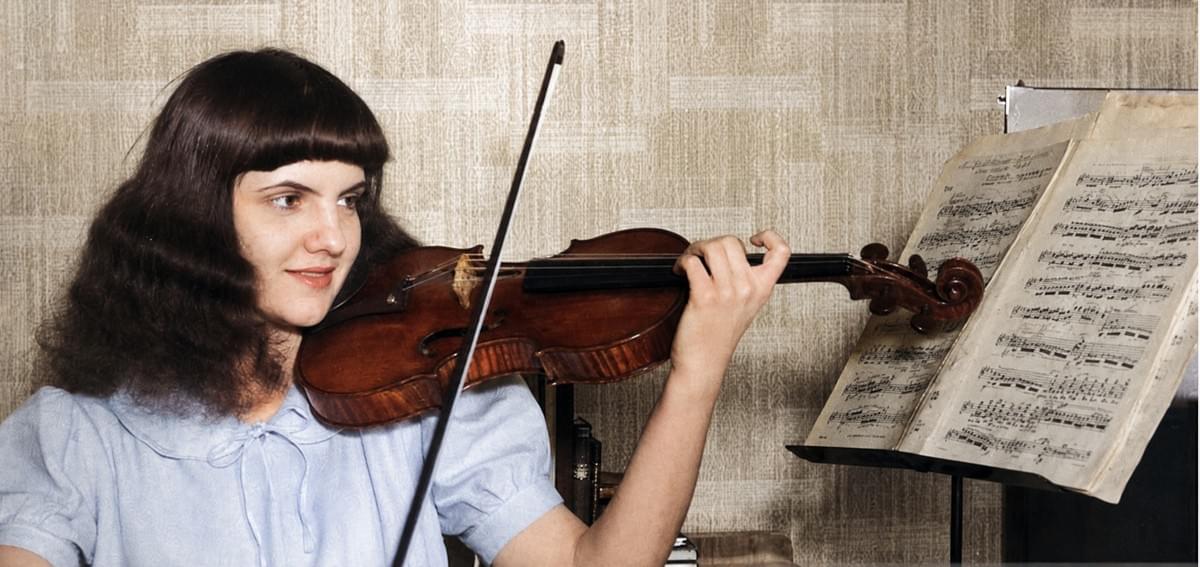
一個從沒有童年的童年
吉拉·巴絲塔博1919年出生於美國威斯康辛州的馬尼托沃克,義大利—法國—捷克混血。她的神童生涯,習琴速度快得驚人:兩歲由父親啟蒙拉琴,三歲已能識譜視奏,四歲進入芝加哥音樂學院,隨後被送到紐約,交給小提琴教育家路易.培辛格(Louis Persinger,1887-1966)親自調教——同一位老師門下,還有另一個後來舉世聞名的男孩,梅紐因(Yehudi Menuhin,1916-1999)。她後來的教育名單堪稱豪華:喬治.安奈斯可(George Enescu,1881-1955)、胡拜(Jenő Hubay,1858-1937)、沃爾夫-費拉里(Ermanno Wolf-Ferrari,1876-1948),還有意沙易(Eugène Ysaÿe,1858-1931)的高足萊昂.薩梅蒂尼(Léon Sametini,1886-1944)——師承橫跨了整個歐陸小提琴學派。
1929年11月2日,紐約人親眼見證了一件不可思議的事:一個十歲的小女孩,與紐約愛樂交響樂團合作,演奏維尼奧夫斯基(Henryk Wieniawski,1835-1880)那首以「魔鬼」聞名的升F小調第一號協奏曲——這首曲子充斥著十度雙音、八度、泛音與大跳把位,幾乎沒有一個空弦可以讓手指喘口氣,難到今天的音樂會曲目裡幾乎已經看不到它。《紐約先驅論壇報》形容她展現出「顯著的技巧、靈活與穩健」。
十四歲1933年,她展開歐洲巡演,與畢勤(Thomas Beecham,1879-1961)、孟根堡(Willem Mengelberg,1871-1951)這類指揮巨匠同台。關於她那把夢寐以求的瓜奈里名琴,還有一段廣為流傳的軼事:克萊斯勒(Fritz Kreisler,1875-1962)親自為她在倫敦的演出挑選了這把琴;在她倫敦事業最風光的時刻,一位貴族贊助人拉文斯黛爾女爵士(Lady Ravensdale,1896-1966)為她辦了一場榮譽晚宴,宴後直接將這把附帶完整流傳文件的名琴,作為禮物直接送給了這位年輕演奏家。
同一趟北歐巡演,她去了芬蘭拜會西貝流士,親自為他演奏他的協奏曲。作曲家聽完,擁抱了她,親吻了她的雙頰。
一個屬於她的世界,才剛剛展開。
母親的掌控,與一場沒有回頭路的選擇
巴絲塔博的演藝事業,自始至終掌握在一個人手裡——她的母親布蘭琪(Blanche Bustabo)。布蘭琪甚至讓女兒簽了文件,正式成為她的法定監護人與經紀人。
1939年,德軍入侵波蘭,歐陸戰事爆發。布蘭琪做了一個決定:法國淪陷後,母女倆選擇留下——留在納粹佔領下的巴黎、留在被吞併的奧地利、留在德軍佔領的荷蘭——繼續演出。這段期間,她與福特萬格勒(Wilhelm Furtwängler,1886-1954)、卡拉揚(Herbert von Karajan,1908-1989)、孟根堡、卡巴斯塔(Oswald Kabasta,1896-1946)這些活躍於軸心國音樂圈的指揮家同台。史料記載,巴絲塔博本人至少兩度試圖掙脫,都被母親尋回。她後來只淡淡說了一句:「我從未能擺脫我的母親。」
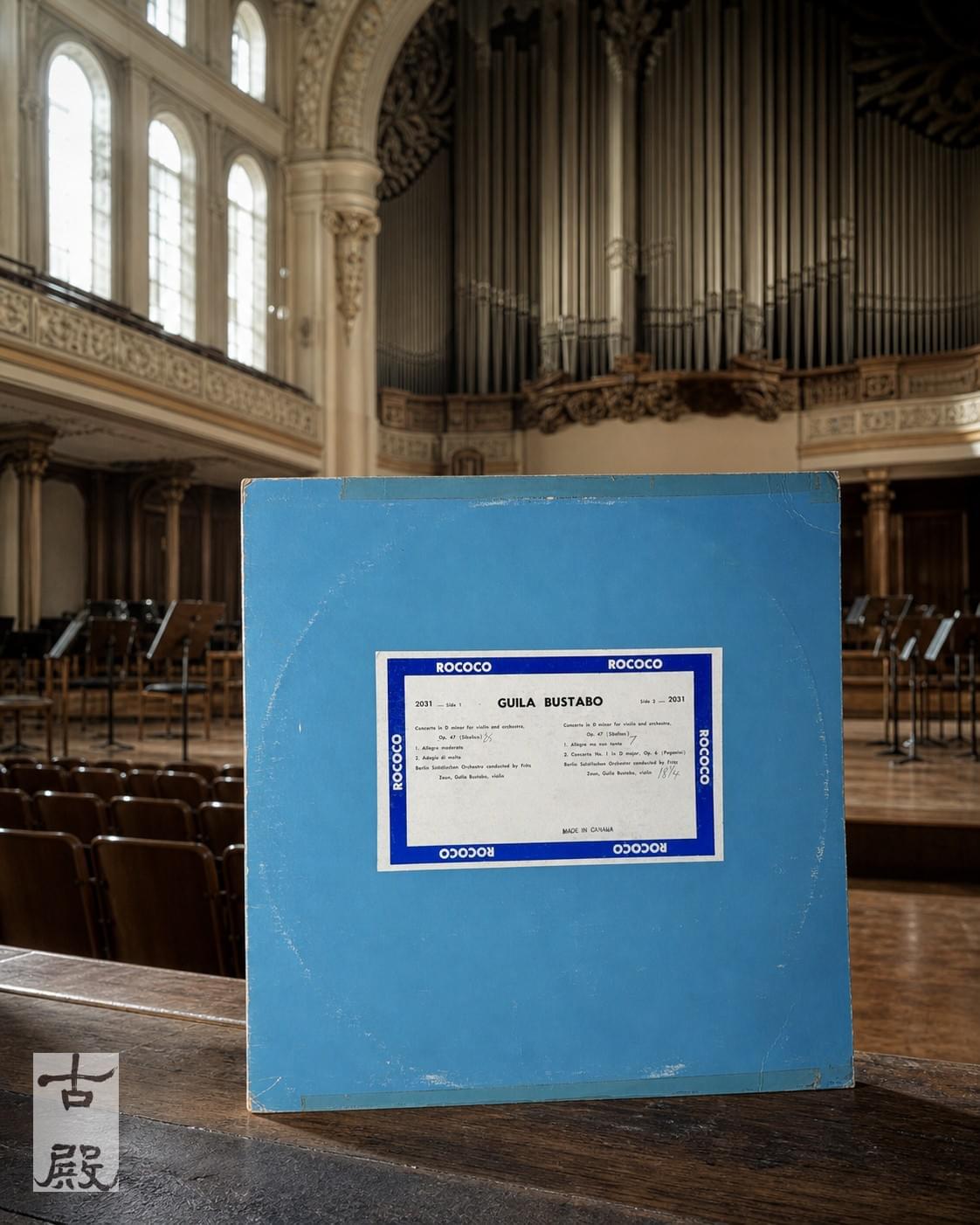
這張西貝流士協奏曲錄音,錄製於1940年的柏林——正是這段時期正中央的產物。指揮是弗里茲.薩恩(Fritz Zaun,1893-1966),樂團標籤上寫的是「柏林市立管弦樂團」。這不是一場光鮮的商業錄音,是戰時德國廣播電台留下的一份存播檔案。
戰爭結束,代價來了。盟軍在巴黎逮捕了母女倆,起因主要是她曾在孟根堡指揮下,於德軍佔領期間的阿姆斯特丹登台。美國軍方調查記錄明確寫著:她曾在納粹宣傳部特許下,於德國及德占地區演出,才華也曾被用於納粹的宣傳目的。她因此被盟軍佔領當局情報管制處列入黑名單——這些指控最終沒有起訴,卻足以讓她此後幾乎無法在美國本土重建演奏生涯。
需要說一句公道話:沒有任何史料顯示巴絲塔博本人公開表態支持納粹意識形態,主導這一切決定的,是那個牢牢掌控她事業的母親。但無論主導者是誰,那些演出紀錄客觀上確實發生了,也確實在戰後為她的人生投下了長達數十年的陰影——這正是這段歷史最沉重、也最無法簡化的地方。
有意思的是,1945年9月,正是下令逮捕她的巴頓將軍(George S. Patton,1885-1945),轉頭立即延攬她,讓她為駐歐美軍第七軍團展開三個月的勞軍巡演。一位曾經被列入黑名單的藝術家,因為才華,又被同一支軍隊請回舞台。
一張私家廠牌,替她保住了一段檔案
巴絲塔博戰後主要活躍於歐洲,商業唱片產業對她的關注,遠不及她的技藝所應得的程度。她一生正式商業錄音數量稀少得驚人。
這張唱片,正是因為這樣的空隙才得以存在。它是加拿大廠牌 Rococo Records 出版的「Famous Voices of the Past」系列第2031號——一個素面的淺藍色紙套,正面貼著白底藍框的制式標籤,唱片本身是紅底銀字,標榜「以高傳真設備重新處理」,加拿大壓製。
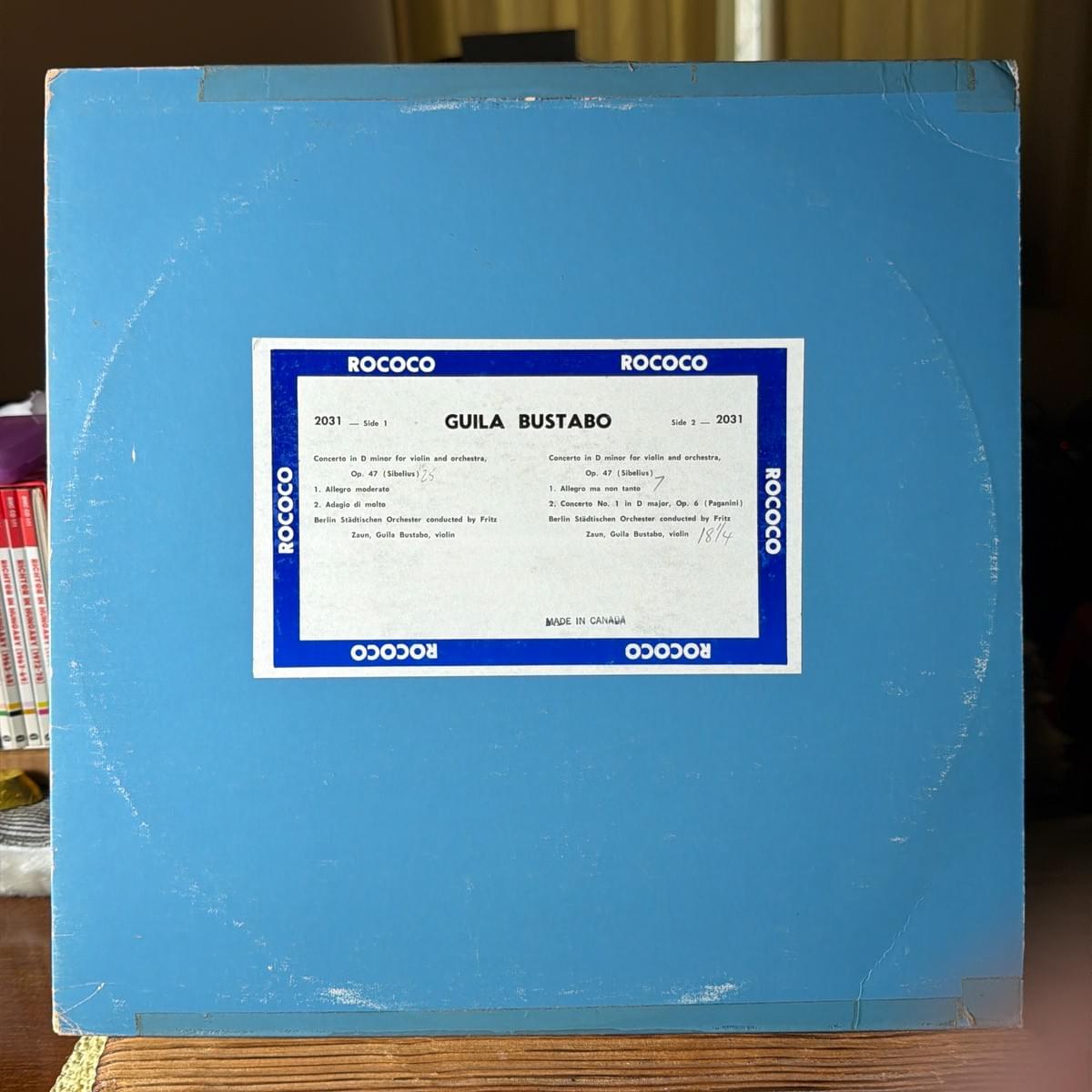
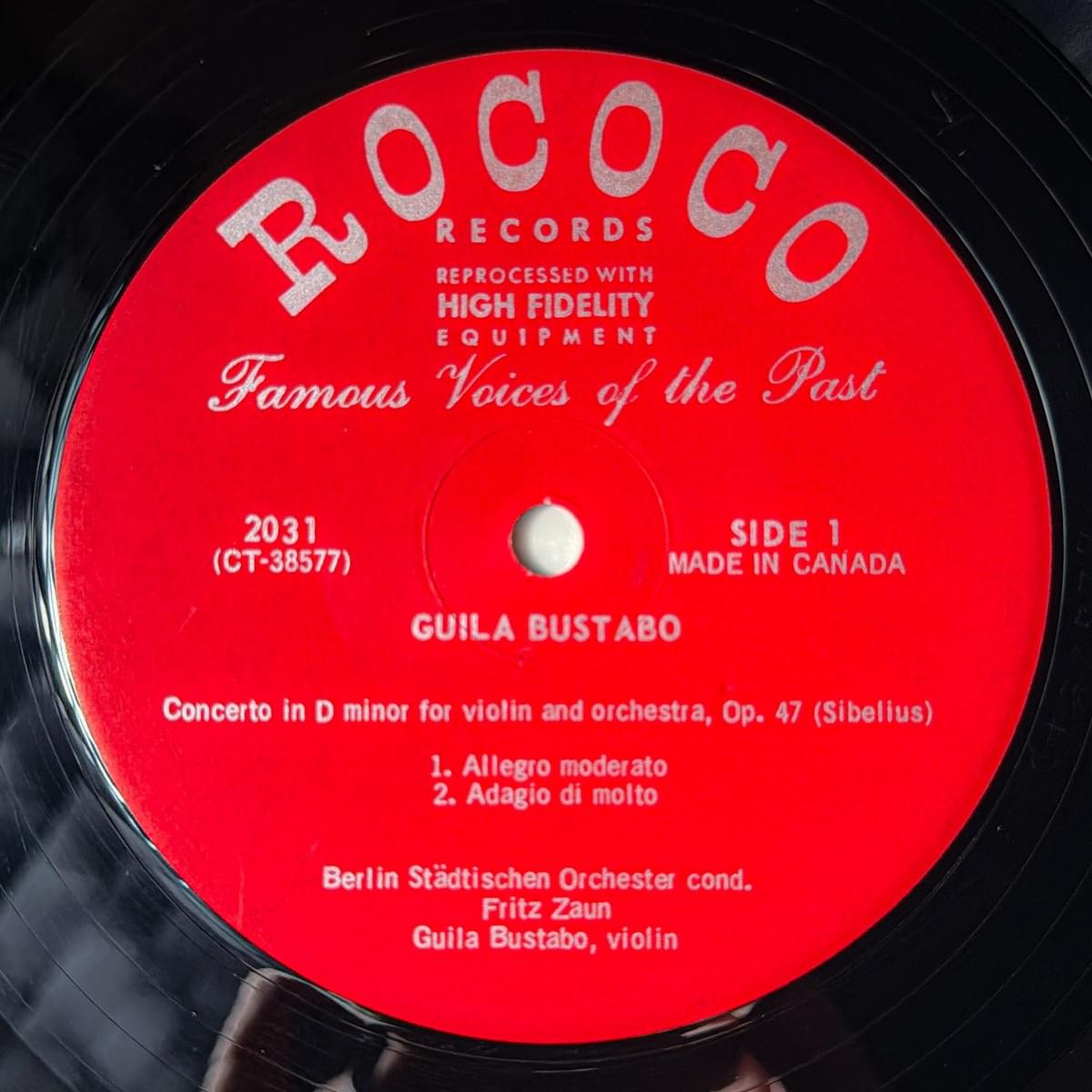
Rococo 由 André Ross 與 Leonard、Peter Court 兄弟於1951年在多倫多創立,最初只是一家經營歷史錄音與歐洲進口唱片的零售商,1950年代中期才開始推出自己的LP出版系列,專門重新發行那些正規唱片公司不會碰的珍稀78轉與滾筒錄音。到1977年,這個小廠牌已經默默發行了將近400張聲樂與器樂唱片——巴絲塔博這張1940年的柏林廣播檔案,就是其中之一。
隨附的文獻同樣值得細看:一份打字油印的曲目單、一份詹姆斯.克萊頓(James Creighton,1934-1998)親自撰寫的演奏家介紹,還有一頁1959年《Musical America》雜誌的剪報,上頭正是本文開頭那些讚譽的出處。
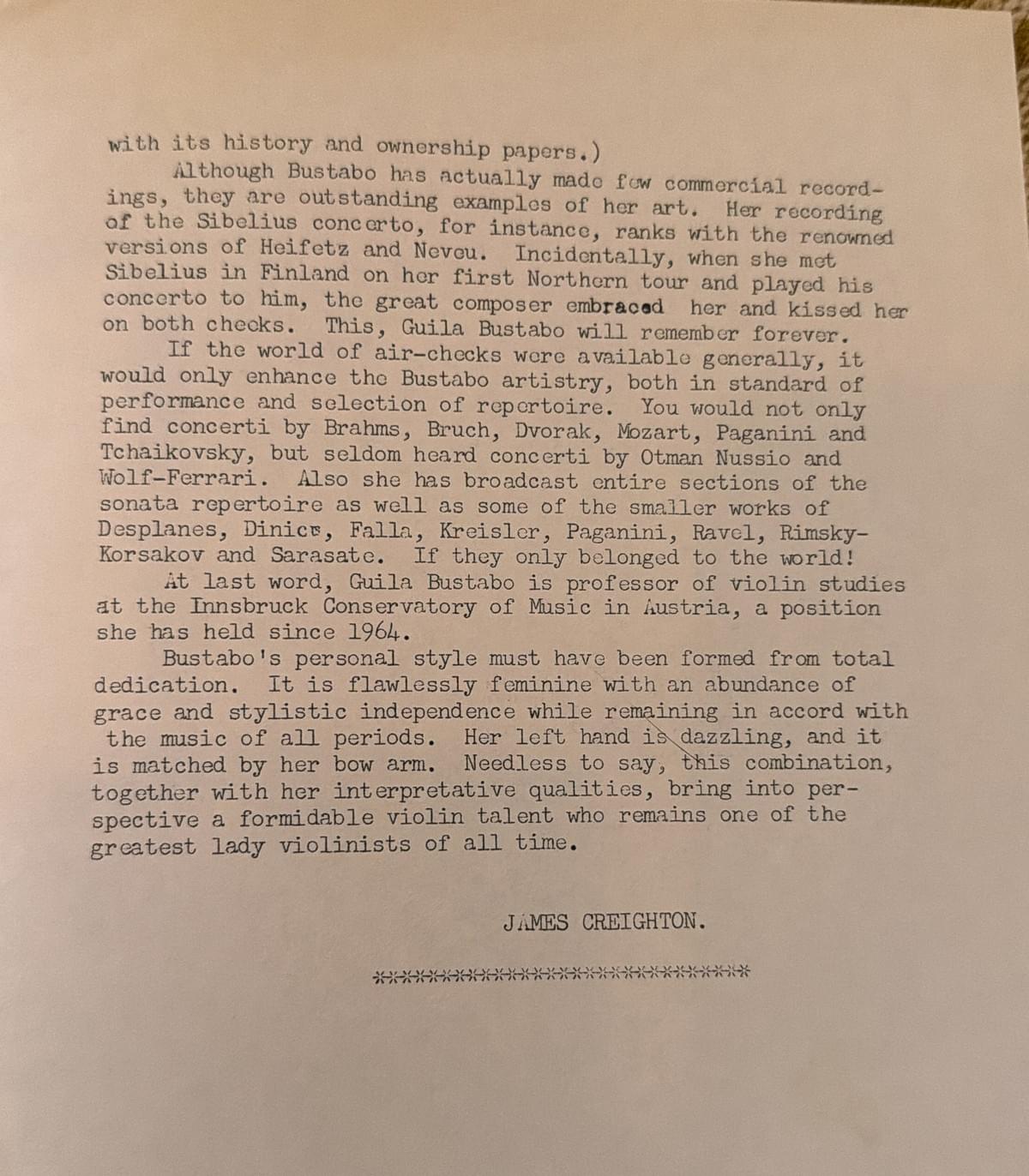
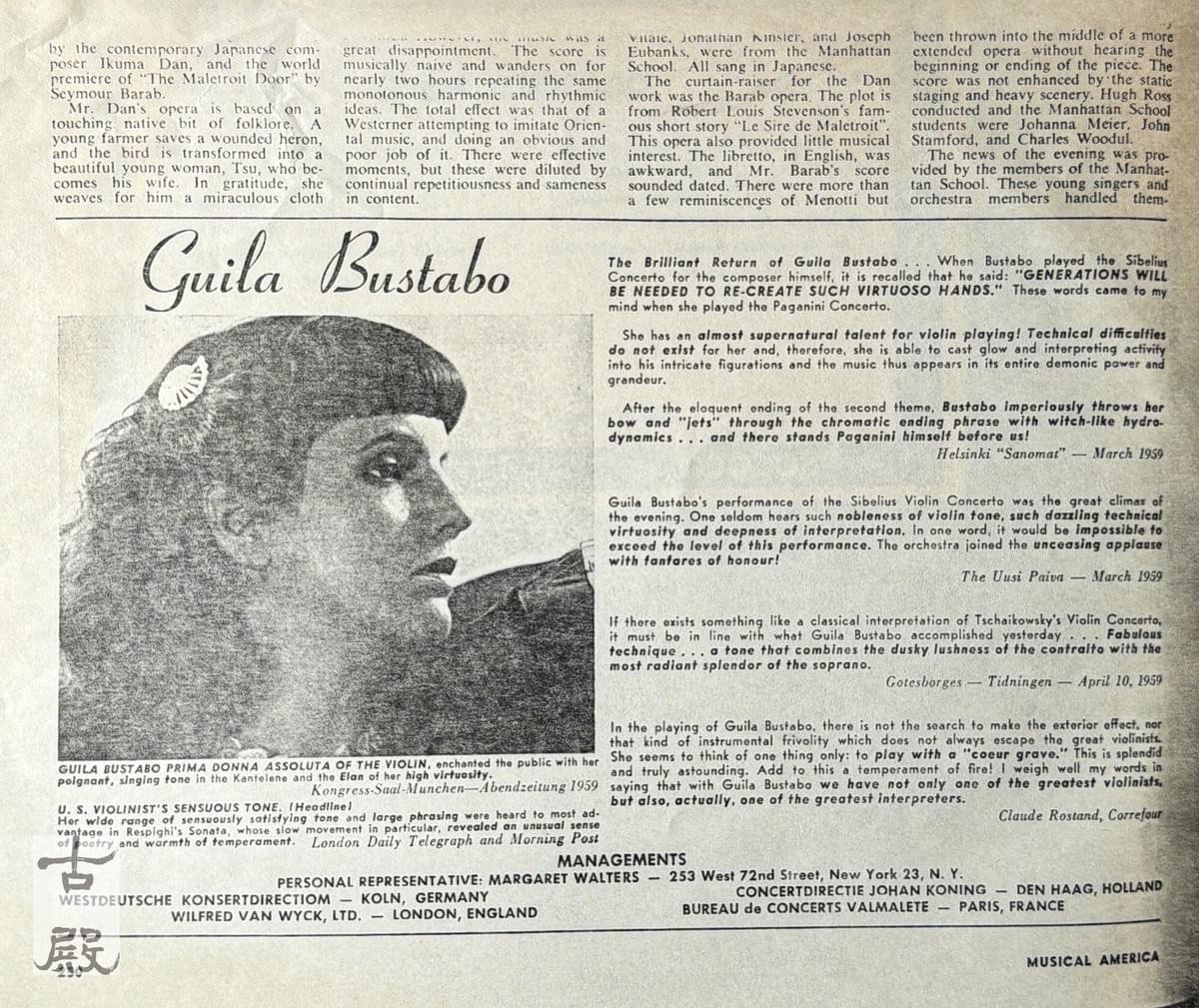
而撰寫這份介紹文字的克萊頓,本身就是份量十足的背書。他是加拿大最重要的錄音史料保存者之一——BBC唱片圖書館音源檔案員出身,此後在多倫多大學音樂圖書館任職三十年,1970年拿到加拿大藝術協會史上第一筆「錄音聲音研究」獎助金,用以完成他畢生代表作《Discopaedia of the Violin, 1889–1971》,1976年因此獲頒比利時意沙易獎章。就是這樣一位畢生鑽研小提琴錄音史的權威,在自己撰寫的文字裡,把巴絲塔博這份西貝流士錄音,與海飛茲(Jascha Heifetz,1901-1987)、努娃(Ginette Neveu,1919-1949)的經典版本並列。這不是廠牌文案的浮誇話術,是一位「音樂唱片目錄編纂家」認真給出的評價。
晚年
1948年,她與美國軍樂手艾迪森.史蒂格(Edison Stieg)結婚,1976年離婚。1964年起,她受聘為奧地利因斯布魯克音樂院的小提琴教授——那份隨唱片附上的介紹文字寫成的時候,這還是她「最新」的職位。1970年,她因躁鬱症被迫辭去教職。54歲那年,她加入阿拉巴馬交響樂團當一名普通團員,卻始終難以真正融入樂團的體制生活。母親布蘭琪直到1992年才過世,巴絲塔博僅比母親多活了十年,最終在貧困中於伯明罕孤獨離世。
那位曾被西貝流士感嘆「幾個世代才出一次」的手,晚年推的是一輛雜貨手推車。
這張唱片連結的,不只是一場1940年柏林的演出。它連結著一個被母親牢牢掌控、幾乎沒有選擇餘地的天才;連結著戰後盟軍情報單位那份寫著她名字的調查檔案;連結著晚年伯明罕街頭那輛手推車;也連結著詹姆斯.克萊頓在多倫多大學圖書館裡,替一位幾乎被遺忘的演奏家寫下介紹文字時的心情。這條路徑裡沒有一段是輕鬆的,但正因為沒有一段被篩選過、被美化過,它才顯得格外真實——實體的訊息,從不挑選它連結到的歷史是光明還是黑暗,它只是忠實地把一切都留下來了。
殿主一直相信,「越老越有價值」是理解老唱片、老演奏家最溫暖的一種方式。但巴絲塔博這張唱片提醒我,事情沒有那麼簡單——生命的積累,有時候不是溫潤的沉澱,而是帶著傷痕的殘留。這份1940年的錄音,正是那個複雜生命在藝術巔峰時刻,留下的一個無法抹去的物理痕跡。它不美化歷史,卻也沒有因為歷史的沉重,而抹殺掉溝槽裡那份技藝本身的真實光芒。
******
【Gudian Music Stories】 Sibelius Said: "It Takes Generations to Breed Such Hands" — Yet in Her Final Years, She Pushed a Grocery Cart Through the Streets Scavenging to Survive: Guila Bustabo (1919–2002)
Lavish Praise, and a Grocery Cart
In 1959, a European music critic recalled a moment from decades earlier: a young Guila Bustabo (1919–2002) had performed the Violin Concerto for Jean Sibelius (1865–1957) himself. Upon hearing her play, the composer uttered words that would be quoted for decades:
"It takes generations to breed such hands." Her interpretation of the Sibelius Violin Concerto carried the personal imprimatur of the master himself.
That same year, she toured Helsinki, Munich, Gothenburg, and Paris. Critics exhausted their vocabularies of adulation, calling her "the absolute prima donna of the violin," a performer of "almost preternatural talent," and "not only one of the greatest violinists, but truly one of the greatest interpreters."
Had the story stopped there, it would read as a straightforward ode to a prodigy.
Yet a dozen years later, an orchestral colleague recalled her final years—pushing a shopping cart scavenged from a supermarket through the streets of Birmingham, Alabama, picking up discarded items to get by. She eventually passed away in poverty and solitude.
How did a genius whom Sibelius praised as a once-in-generations phenomenon end up here?
The answer lies in a choice made when she was in her early twenties—or, more precisely, a choice made for her by her mother. And the record spinning in my hands right now captured the sound of the exact year that choice took shape.
A Childhood Denied
Guila Bustabo was born in 1919 in Manitowoc, Wisconsin, of mixed Italian, French, and Czech descent. Her rise as a child prodigy unfolded at an astonishing velocity: initiated on the violin by her father at two, reading sheet music at sight by three, entering the Chicago Musical College at four. She was soon sent to New York to study under the renowned pedagogue Louis Persinger (1887–1966)—the same mentor who taught another boy destined for global renown, Yehudi Menuhin (1916–1999). Her pedigree was nothing short of aristocratic: George Enescu (1881–1955), Jenő Hubay (1858–1937), Ermanno Wolf-Ferrari (1876–1948), and Léon Sametini (1886–1944), a prized pupil of Eugène Ysaÿe (1858–1931). Her lineage traversed the entire continent of European violin traditions.
On November 2, 1929, New York concertgoers witnessed an astonishing feat: a ten-year-old girl performing with the New York Philharmonic in Henryk Wieniawski’s (1835–1880) infamously fiendish Concerto No. 1 in F-sharp minor. Bristling with tenths, octaves, harmonics, and dizzying leaps, the score offers virtually no open strings for the fingers to catch a breath—so treacherous that it has largely vanished from today’s concert halls. The New York Herald Tribune praised her for displaying "remarkable technique, agility, and poise."
At fourteen, in 1933, she embarked on a European tour, sharing the stage with legendary conductors such as Sir Thomas Beecham (1879–1961) and Willem Mengelberg (1871–1951). A celebrated anecdote surrounds her dream instrument, a Guarneri del Gesù: Fritz Kreisler (1875–1962) personally helped select it for her London appearances. At the height of her triumph in London, an aristocratic patron, Lady Ravensdale (1896–1966), hosted a dinner in her honor and, following the banquet, presented the historic instrument—complete with its provenance documents—directly to the young virtuoso as a gift.
During that same Scandinavian tour, she visited Sibelius in Finland and played his concerto for him. When the final note faded, the composer embraced her and kissed both of her cheeks.
A world of her own seemed just about to unfold.
Maternal Control, and a Point of No Return
From the beginning, Bustabo’s career was governed by a single person: her mother, Blanche Bustabo. Blanche went so far as to have her daughter sign legal documents making her Guila’s official guardian and manager.
In 1939, German forces invaded Poland, igniting the war across Europe. Blanche made a fateful decision: after the fall of France, mother and daughter opted to remain behind—in Nazi-occupied Paris, annexed Austria, and the occupied Netherlands—continuing to perform. During this period, she shared stages with Wilhelm Furtwängler (1886–1954), Herbert von Karajan (1908–1989), Willem Mengelberg, and Oswald Kabasta (1896–1946), all prominent figures within Axis-controlled musical spheres. Historical accounts record that Bustabo attempted to break free at least twice, only to be tracked down and retrieved by her mother. Years later, she offered only a muted reflection: "I could never get away from my mother."
This recording of the Sibelius Concerto dates from Berlin in 1940—the very heart of that troubled era. The conductor was Fritz Zaun (1893–1966), leading an ensemble credited on the label as the "Städtisches Orchester Berlin." This was no glamorous commercial production, but a broadcast archival transcription preserved by wartime German radio.
When the war ended, the reckoning arrived. Allied forces arrested both mother and daughter in Paris, sparked largely by her appearances under Mengelberg in occupied Amsterdam. U.S. military intelligence records noted plainly that she had performed in Germany and occupied territories under special permits from the Reich Ministry of Public Enlightenment and Propaganda, and that her talents had served wartime promotional functions. Consequently, she was placed on the Allied Information Control Division blacklist. Though the investigation never led to formal prosecution, it proved fatal to any hopes of rebuilding a mainstream career on American soil.
Fairness requires stating that no historical evidence suggests Bustabo ever expressed personal sympathy for Nazi ideology; the helm was held entirely by the domineering mother who micromanaged her life. Yet regardless of who drove the choices, the performances took place on the historical record, casting a decades-long shadow across her postwar existence. That is precisely why this history remains so heavy and impossible to simplify.
In an ironic twist, in September 1945, General George S. Patton (1885–1945)—the very commander under whose authority she had been detained—turned around and engaged her for a three-month tour performing for the U.S. Seventh Army in Europe. An artist once blacklisted was, on the sheer merit of her gifts, summoned back to the stage by the very same military apparatus.
A Private Label Preserves an Archive
After the war, Bustabo performed primarily in Europe. The commercial recording industry offered her far less attention than her artistry warranted, leaving her legacy with a startlingly meager catalog of official studio releases.
This LP exists precisely because it slipped through that institutional crack. Issued on the Canadian private label Rococo Records as No. 2031 in its "Famous Voices of the Past" series, it comes in an unadorned light-blue sleeve bearing a simple blue-framed paper label, housing a red-and-silver disc marked "re-recorded using high fidelity equipment," pressed in Canada.
Founded in Toronto in 1951 by André Ross alongside brothers Leonard and Peter Court, Rococo began as a specialty shop importing historical and European recordings. By the mid-1950s, it launched its own LP series, dedicated to preserving rare 78s and cylinder recordings that major commercial labels would never touch. By 1977, this modest operation had quietly released nearly 400 vocal and instrumental albums—including Bustabo’s 1940 Berlin broadcast archive.
The accompanying documentation is equally worthy of scrutiny: a mimeographed typewritten insert, an artist profile authored by James Creighton (1934–1998), and a clipping from a 1959 issue of Musical America containing the glowing critical tributes cited at the opening of this piece.
Creighton’s involvement represents a formidable seal of authenticity. One of Canada’s preeminent audio archivists, he began as a recorded-sound librarian at the BBC before spending three decades at the University of Toronto Music Library. In 1970, he was awarded the Canada Council’s first-ever grant for recorded sound research, enabling him to complete his magnum opus, the Discopaedia of the Violin, 1889–1971, for which he received Belgium’s Eugène Ysaÿe Medal in 1976. It was an authority of this caliber who, in his notes for the release, placed Bustabo’s reading of the Sibelius alongside the benchmark accounts of Jascha Heifetz (1901–1987) and Ginette Neveu (1919–1949). This was no publisher’s hyperbole; it was the measured appraisal of a dedicated discographer.
The Later Years
In 1948, she married an American military musician, Edison Stieg; they divorced in 1976. In 1964, she was appointed professor of violin at the Innsbruck Conservatory in Austria—a post described as her "current" position at the time Creighton penned his liner notes. In 1970, severe bipolar disorder compelled her to resign. At fifty-four, she joined the Alabama Symphony Orchestra as a rank-and-file section player, though institutional orchestral life never sat comfortably with her. Her mother, Blanche, lived until 1992; Bustabo survived her by only ten years, passing away in Birmingham in poverty and isolation.
The hands that Sibelius once marveled would take generations to recreate ended their days pushing a wire grocery cart.
This record does not merely bridge us to a performance given in Berlin in 1940. It connects us to a prodigy trapped under her mother’s suffocating control with virtually no agency of her own; to an Allied intelligence file bearing her name; to a shopping cart rattled along the pavement of Birmingham; and to James Creighton sitting in a library at the University of Toronto, setting down words for an artist on the verge of being forgotten. None of this journey is comfortable. Yet precisely because it has not been sanitized or romanticized, it carries the weight of unvarnished truth. A physical sound artifact does not discriminate between the light and dark of the history it carries; it simply and faithfully preserves what happened.
I have always felt that believing "the older it gets, the more valuable it becomes" is the gentlest way to approach vintage records and legendary musicians. But Bustabo’s record reminds me that life is rarely that simple. The accumulation of lived experience is not always a warm, settled patina; sometimes it is a residue marked with scars. This 1940 recording is an indelible physical trace left by a complex human life at the height of its artistry. It does not whitewash history, yet neither does the burden of that history diminish the genuine, radiant brilliance captured within those grooves.