
【古殿唱片音樂故事】割草機擔任通奏低音,第一面永遠不會結束——帕尼亞瓜(Gregorio Paniagua,1944–2026)與馬德里古樂團的《La Folia》
古殿殿主
1982年,日本音樂評論家濱田滋郎(Hamada Jirō,1935–2021)替一張西班牙古樂唱片寫解說。試聽時他發現,第一面的音樂播完了,唱針卻沒有停下來。他後來坦白,自己能發現這件事純屬幸運:他用的是一台沒有自動停止裝置的老唱機。
日本勝利唱片(JVC)發行這張唱片時,特地在封底印了一行警語:本片第一面末尾施有機關,唱針不會走到盡頭,因此自動回臂機構不會作動。
也就是說,有人刻意做了一張不會結束的唱片。
第一面最後那段「永遠反覆、無限唱下去」的巧思,在 CD 版裡永遠不會出現。CD 的一軌播完就停,時間是固定的數字;只有黑膠唱片那條首尾相接的溝槽,能讓唱針一圈又一圈地走下去。這個設計不屬於音符,而屬於載體本身,只能以實體黑膠唱片的形式存在。
黑膠史上並非沒有無限迴圈溝槽。披頭四 1967 年的《比伯軍曹寂寞芳心俱樂部》(Sgt. Pepper's Lonely Hearts Club Band)英國原版,內圈就有一段反覆不休的怪聲;路・瑞德 1975 年的《金屬機器音樂》(Metal Machine Music),最後一面也以迴圈作結。但在古樂唱片裡,這樣的設計並不多見。更重要的是,這條迴圈不是隨手加上的噱頭,而是與音樂內容本身緊緊扣在一起。
因為 Folia 本身,就是一種迴圈。它建立在一組固定的低音與和聲進行上,一遍又一遍地反覆,所有變奏都在同一個循環裡展開。帕尼亞瓜讓第一面停在一條永遠轉下去的溝槽裡,等於把 Folia 的曲式推到了極限:固定低音不再需要樂手演奏,唱片自己就會一直唱下去。這個「瘋狂」,確實沒有盡頭。
我手上有這份錄音的兩個版本:一張法國 Harmonia Mundi 原版 HM 1050,一張日本 JVC 以 Super Vinyl 材料壓製的首版 VIC-28079。錄音完成於 1980 年,兩個版本卻都要到 1982 年才出版。
兩張唱片標示的時長,透露了兩種不同的呈現策略。法版 A 面標籤只寫「22'00」,對那條無限迴圈隻字未提,把它當成一個藏起來的巧思,留給聽者自己去發現。日版則寫成「第 1 面 22'06"……∞(?)」,還在封底加印警語,設法把這個巧思直接呈現在唱片上。一個選擇沉默,一個選擇說破;那個帶著問號的無限符號,本身就是一句俏皮的註解。
要理解一個人為什麼要這樣做,得先從這首曲子的名字說起。
一、一篇短文,是整張專輯的精神地圖
法國原版的封底,只印了一篇帕尼亞瓜親筆寫的短文,以法、英、德三種語言排印,沒有任何插科打諢,語氣完全是學術論文。濱田滋郎提醒讀者:原版封套背面只有這篇文章,所以乍看之下,這是一張正經的音樂史唱片。
我反覆讀了很多次。這篇短文處處有深意,沒有一句虛言,它是整張專輯創作的核心根源。它的結構分成四步,一步一步把讀者從民族性格帶進史料,再帶回人心。
第一步:「瘋狂」從哪裡生根
他沒有從音樂講起,而是從西班牙人講起,他自己也是西班牙人。西班牙人一向是現實主義者,卻始終直覺地認為,「瘋狂」是深遠之物,只有極有耐心的人,才能以無比緩慢的步伐抵達。在那裡,人人孤獨,每個人心裡各自背負一個完整的世界,沒有什麼比個人主義更普遍;每個人同時充滿陰影與光明,在不安與希望之間彼此疏離。於是,「瘋狂」特別容易在這片土地上生根。
第二步:「瘋狂」留下的文獻
接著他交出證據。Folia 最早的記載出現在約 1505 年,葡萄牙詩人兼音樂家吉爾・維森特(Gil Vicente,約 1465–約 1536)的宗教劇《女先知卡珊德拉》:劇中的所羅門、以賽亞、摩西與亞伯拉罕,唱了一首四聲部的 Folia,而那份樂譜早已失傳。1577 年,盲眼管風琴家薩利納斯(Francisco Salinas,1513–1590)在《音樂七書》中收錄了幾個 Folia 主題,並指出它源自葡萄牙。
1610 年,科瓦魯維亞斯(Sebastián de Covarrubias,1539–1613)在辭典裡留下最生動的一幕:一群裝扮成挑夫的人,肩上扛著穿女裝的少年,高舉雙手打鈴鼓、轉圈、遊行。聲音之吵、節奏之快,讓人以為他們全都失去了理智。這支舞因此以托斯卡納語「folle」(瘋癲、失去理智)命名。從十五到十八世紀,比維拉琴曲集與西班牙歌集裡處處可見它的蹤影。
第三步:「瘋狂」被馴服
十七世紀初,Folia 風靡全歐,也轉化為帕薩卡利亞或固定低音的形式。速度慢了下來,風格變得沉穩甚至嚴肅,原本狂歡般的生命力就此褪去。有些學究便趁機宣稱,Folia 其實源自義大利的數字低音,並非伊比利半島。帕尼亞瓜提醒:當時全歐洲的音樂家都叫它「西班牙的 Folia」,而那個時代的「España」,指的是包含葡萄牙在內的整個伊比利半島。
這段話,是帕尼亞瓜對當時「音樂學」學究現況的一次反抗。他在封底用最正經的文字反駁那些學究;到了內頁,他乾脆在〈逆流〉(ADVERSO FLUMINE)一曲的出處欄裡寫下:「一點點反音樂學的焦慮與不安。氧氣與臭氧。1980 年,Cercedilla。」
曲名是「逆流而上」,出處是「反音樂學」。他把自己對學科規訓的不安,當成一份史料,正式登錄在一張音樂史唱片裡。
第四步:回到寫下 Folia 的人
最後,他把話題從歷史收回到人心,寫下那段像樹一樣成熟、在春天的風暴中不焦慮的文字。這一段我留到文末再談。
這四步,正是整張唱片的藍圖。唱片上的三十多段音樂,有的是被馴服前的狂歡,有的是被馴服後的莊重;它們都從這篇短文長出來。
「然而……」濱田寫到這裡,就不打算再往下解釋了。
二、靈魂人物:兩度在畢業前離場的人
格雷戈里奧・帕尼亞瓜(Gregorio Paniagua,1944–2026)1944 年 2 月 2 日生於馬德里,是八個孩子中的老大。父親是熱愛古典音樂的醫師,在 Fundación Jiménez Díaz 創立了血液科。
他的少年經歷和古樂毫無關係。1960 與 1961 年,他是皇家馬德里青年籃球隊的隊長。他在父親任職的機構念醫學,讀到五年級時放棄,轉往馬德里音樂院學大提琴,又在只差一年畢業時離開。之後他隨溫辛格(August Wenzinger,1905–1996)學古大提琴,也跟切利比達克(Sergiu Celibidache,1912–1996)學指揮。
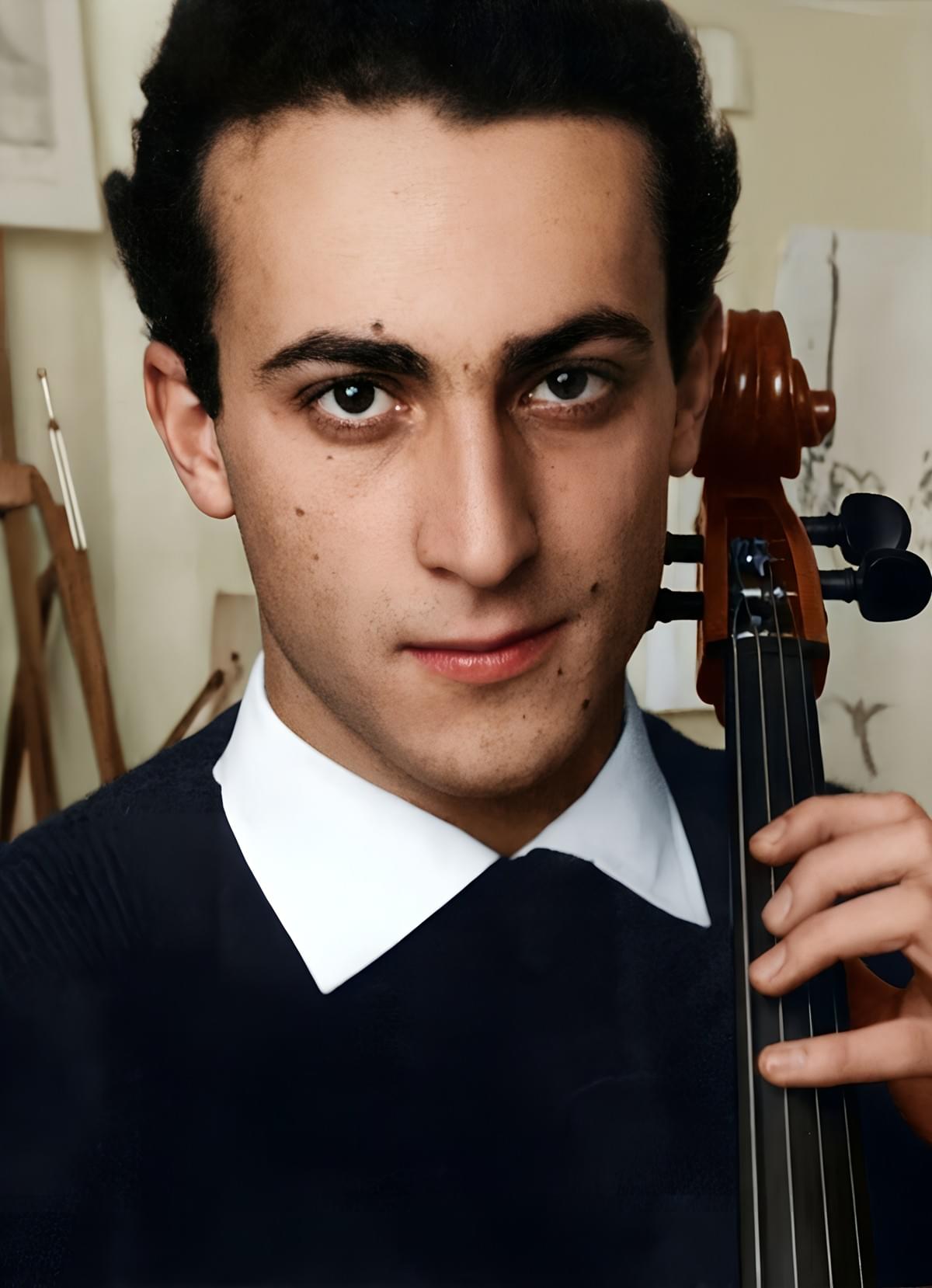
醫學院和音樂院,他都在即將拿到文憑前轉身。這種對體制的不耐煩,後來成了他的創作方法。
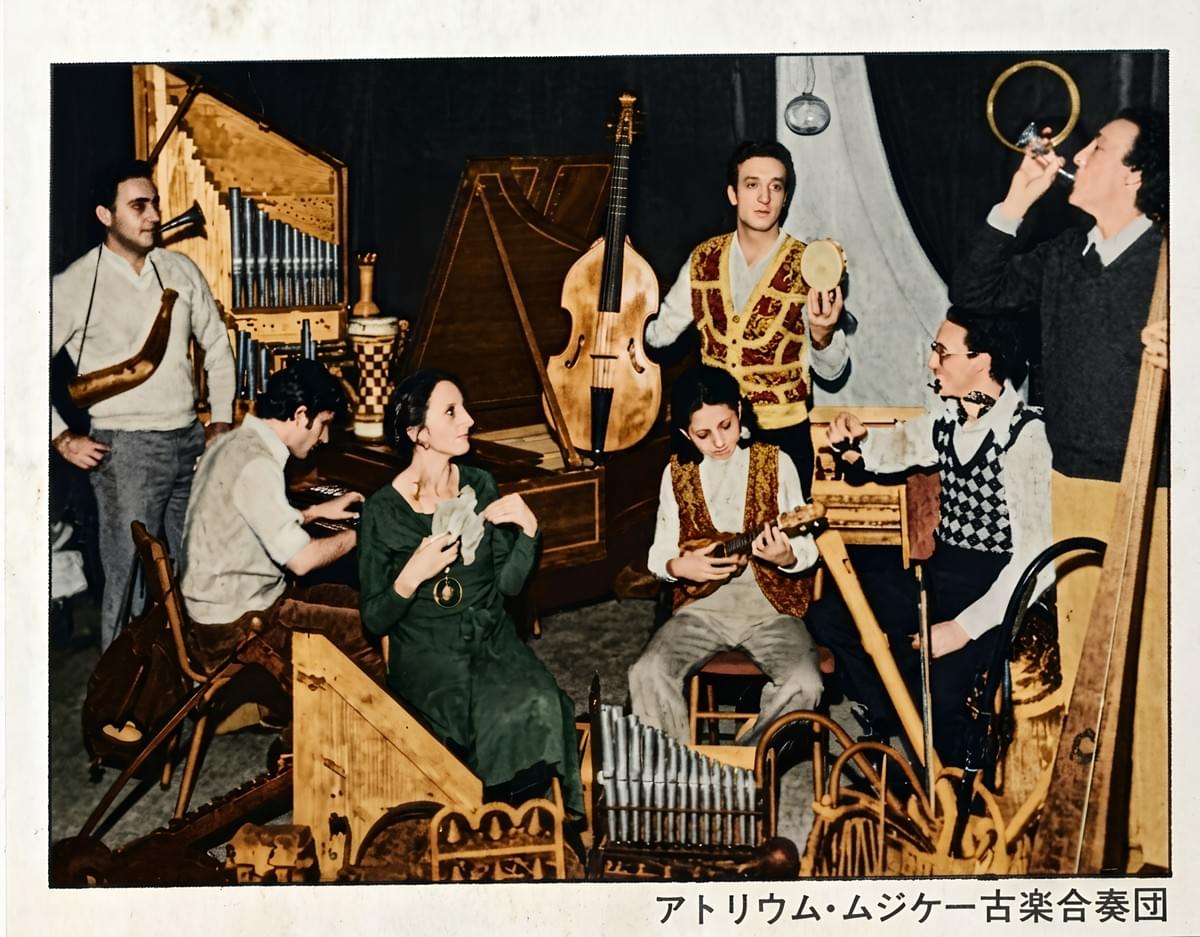
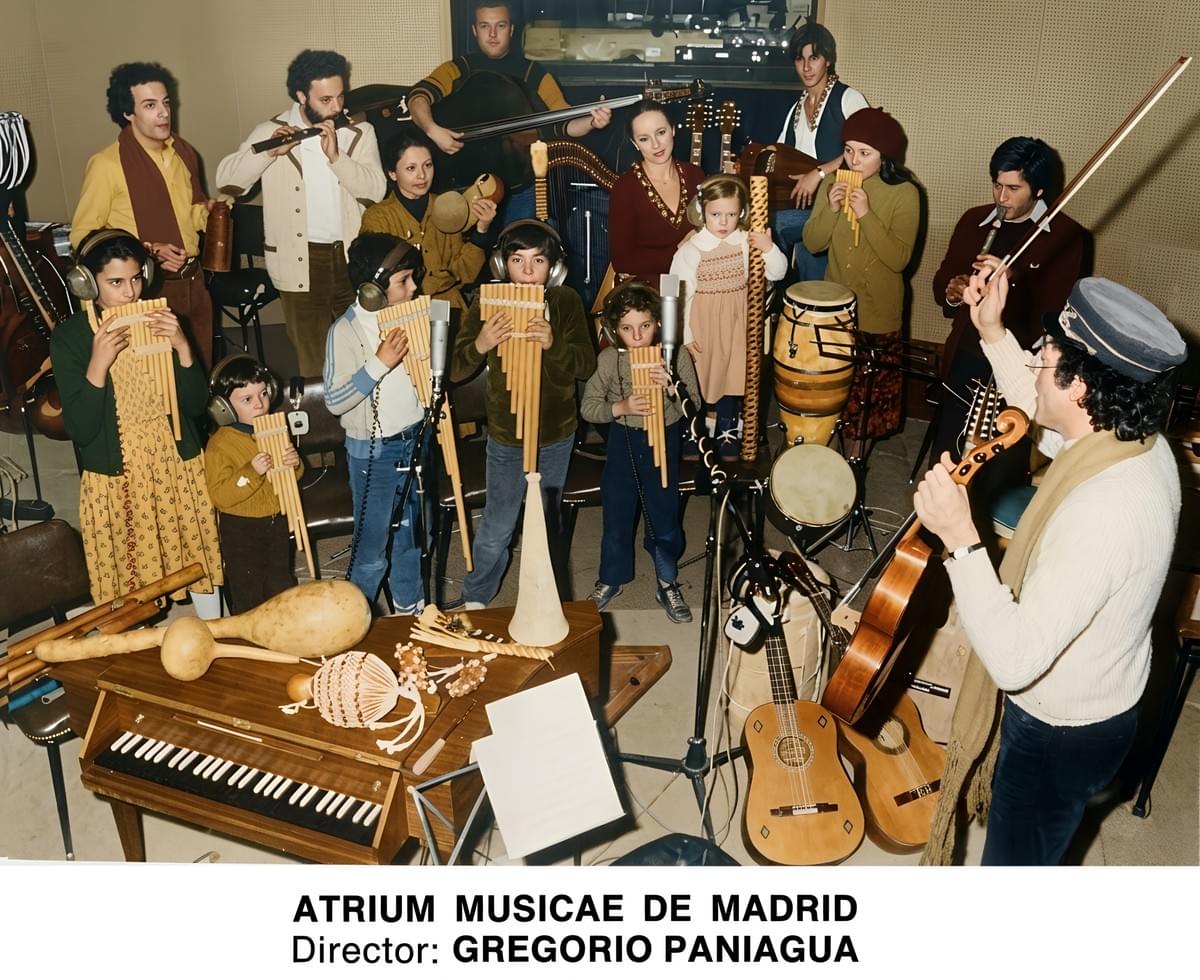
1964 年,二十歲的他創立馬德里古樂團(Atrium Musicae de Madrid),弟弟們陸續加入。在這張唱片上,愛德華多(Eduardo Paniagua,1952–)與路易斯(Luis Paniagua,生年待查)兩個弟弟都是核心成員。
古樂團最特別的工作,是自己製作樂器。帕尼亞瓜設立私人工坊,研究手抄本插畫、繪畫、浮雕、雕塑與彩陶,從古希臘一路到羅馬式、哥德式建築,再參照中世紀至巴洛克的樂器學論著,據此重建大部分古樂器。1975 年一段西班牙電視節目裡,他解說自己如何依照聖地牙哥大教堂正門上的雕刻,複製出中世紀弦樂器 organistrum。
一個不受學科限制的人
在我看來,帕尼亞瓜當年走過的路,正是我們迎向 AI 時代時,最值得參考與學習的榜樣。
他不受學科限制,也不受領域限制。醫學、籃球、大提琴、繪畫、古大提琴、指揮,他都認真走過一段;他用研究的熱情,把所有可能的面向一一探討,研究到很深之後,再把這些東西全都放到背後。
真正把學術研究到最深的人,會看見生命的本質。那本質從來不是單一面向,而是一把鑰匙,一聲打開整幅世界圖景的號角。
所以在嚴守學科規訓的學者眼中,他看起來是一個瘋狂、亂來的人。但實際上,他才是最厲害、也最懂得歷史與歷史生命的研究者。就像他在封底文章裡提到的那些「學究」,只看得見被馴服後的 Folia;帕尼亞瓜看見的,是它原本的瘋狂。某種意義上,他自己就是一首 Folia。
可惜今天的學院裡,仍然充滿被體制分科、分割、規訓的學者。每個人守著自己的一小塊領域,研究越做越細,卻越來越少人敢把所有面向重新連在一起。我們太欠缺像帕尼亞瓜這樣的人。
他也不是坐在象牙塔裡的研究者。他可以在檔案館與歷史文獻中扎根,也可以走到田野,去看真實的場景與人:到大教堂門口看石雕上的樂器,親手製作、復原那件樂器,再親手演奏它,感受樂器與人之間的連結。《La Folia》的出處欄裡,除了國家圖書館的手稿編號,也寫著 1979 年貝拿勒斯的印度拉格、馬德里 El Rastro 跳蚤市場一個約 1850 年的走音八音盒。
知識可以交給機器整理,但走進田野、動手製作、親身演奏,這一整條連結只能由人自己走完。帕尼亞瓜示範的,正是這種不受限的完整。
1976 年起,古樂團在法國 Harmonia Mundi 陸續推出《塔朗泰拉》(Tarentule – Tarentelle)、《安達魯西亞的阿拉伯音樂》(Musique Arabo-Andalouse)、《古希臘音樂》(Musique de la Grèce Antique)等作品。1978 年錄音的《古希臘音樂》是他最嚴謹的一面:只憑殘存的紙草斷片與重建的樂器,去逼近一種早已消失的聲音。
在這之前,他們已為西班牙 Hispavox 唱片公司紀念碑式的系列《西班牙古樂大系》做出重要貢獻。濱田滋郎說,帕尼亞瓜與古樂團無論從音樂學或美學角度,都具備孕育一流成果的知識與技術;但另一方面,他們又以超凡的幽默感與獨創性,把奇幻與遊戲大膽帶進企劃與演奏。
濱田對帕尼亞瓜的評價更直接:這位才以《古代希臘音樂》日本版席捲話題的西班牙「古樂專家」,已經有資格被列為唱片界的一大怪傑。他投身古樂,卻沒有陷入骨董玩物或墨守成規的泥淖,反而靈感泉湧、奇招迭出,永遠保有不可思議的鮮活生命力。
1980 年的六人陣容
- 格雷戈里奧・帕尼亞瓜:創團者、總監,演奏古大提琴、吉他等多種樂器。
- 愛德華多・帕尼亞瓜:格雷戈里奧的親弟,團中不可動搖的核心。
- 路易斯・帕尼亞瓜:格雷戈里奧的親弟,團中不可動搖的核心。
- 丹尼爾・德爾里奧(Daniel del Río,生卒年不詳):小提琴,因 1980 年這張錄音新加入。
- 安德烈亞斯・普里特維茨(Andreas Prittwitz,1960–):長笛與直笛,1980 年新加入,團中唯一的日耳曼血統成員。
- 阿爾貝蒂娜・多韋特(Albertina do Huete,生卒年不詳):鍵盤樂器,1980 年新加入,團中唯一的女性演奏家。
濱田形容三位新成員都展現了出色的實力與品味。換句話說,《La Folia》是一支新舊交替的隊伍:兩位弟弟守住家族的核心,三位新面孔帶來新的聲音。
兩年後,他錄下《La Folia》,走向完全相反的方向。
三、這張唱片到底錄了什麼?
打開法版的對開封套,裡面是一張巨大的表格。A 面標為帕尼亞瓜 1980 年的作品,B 面標為 1981 年的作品——他在這裡的身分是「作者」,不是編曲者。表格分為曲名、作者、「使用的出處」,以及六位樂手各自演奏的樂器。
曲名全是偽拉丁文:DEMENTIA PRAECOX ANGELORUM(天使的早發性痴呆)、THEATRALIS ET HIPOCRITAE(劇場性與偽善)、SINE PRAEPUTIUM(無包皮)。
表面上,這是一部嚴謹的 Folia 選集
濱田滋郎說,初看之下,這張唱片是一部極具學術價值的音樂史錄音,綜覽 Folia 在十六至十八世紀的各種歷史形態;原版封套背面又只印了帕尼亞瓜那篇正經的解說,更加深這種印象。
而它也確實是一部嚴謹宏大的〈Folia 選粹大系〉。曲目中有好幾首,是從西班牙內外罕為人知的古老手稿中發掘出來、首度錄音的珍品。它還以音樂實證揭示:西班牙文藝復興〈黃金世紀〉的某些著名歌曲,本質上正是 Folia。
濱田也釐清了 Folia 的音樂定義:它始終伴隨一組略帶變化的固定低音與和聲進行,基本上是小調舞曲,行進中旋律與和聲會轉入大調色彩。正因建立在這個固定架構上,所有 Folia 聽起來都有一種奇妙的家族相似感。帕尼亞瓜把這整個〈Folia 家族〉召集一堂,再為每一段冠上新的拉丁文標題。
濱田接著寫道:如果這張唱片僅止於此,他就不是帕尼亞瓜了。
真文獻與假出處並排
「出處」欄是整張唱片最精彩的地方,真實文獻與虛構出處交錯排列。
真實文獻包括:馬德里國家圖書館藏手稿 M 2810 的十一段 Folia 變奏、1593 年的《花束集》、1709 年馬丁・伊・科爾修士(Antonio Martín y Coll,約 1660–約 1734)編纂的鍵盤曲集、1721 年塞維亞的大鍵琴手稿、加斯帕・桑斯(Gaspar Sanz,1640–1710)1674 年的吉他教本、范艾克(Jacob van Eyck,約 1590–1657)1646 年的直笛曲集、帕斯奎尼(Bernardo Pasquini,1637–1710)的變奏曲,以及 1702 年倫敦沃爾什(John Walsh,約 1665–1736)出版的柯雷里直笛版。另有多首十五世紀《宮廷歌集》的歌曲,證明西班牙黃金世紀的某些名歌,本質上就是 Folia。
虛構出處就印在旁邊:「印第安納波利斯。泉水,自然產生之物,石油。」「一點點反音樂學的焦慮與不安。氧氣與臭氧。1980 年,Cercedilla。」「公共工程部。採集罌粟花。法國。」
香腸氣球、干邑酒瓶與割草機
樂器欄也一樣。有人演奏大鍵琴與古大提琴,也有人負責「橘色香腸氣球」「藍色香腸氣球」「寶獅汽車喇叭」「干邑酒瓶爆裂聲」「睪丸吉他」。〈數學的:憤怒之日〉整段只用一台「口袋合成器」,以電子音去敲中世紀的末日經。
A 面最後一首〈貴族的節制〉,出處是 1721 年塞維亞的〈莊重的 Folia〉,再加上法國公共工程部的罌粟花採集。帕尼亞瓜這一欄寫著「割草機第一號與割草除草機第二號,停止信號」,旁邊註明「通奏低音」。巴洛克音樂的根基是通奏低音,在這張唱片裡,這個位置交給了割草機。
開頭的水聲,B 面的一鞭
A 面開場〈生命之泉〉的出處,是維吉爾(Publius Vergilius Maro,前 70–前 19)的名句「萬物皆有淚」改寫而成的「萬物有淚,西班牙人有 Folia」。帕尼亞瓜用手指敲擊一整組巴洛克直笛的指孔,愛德華多負責「令人不安、失神的滴水敲擊」。許多樂迷記得的「開頭氣泡聲」,其實就是這兩種聲音。
B 面開頭同樣是玩笑。第一首〈纖細〉的出處是錄音師尚-弗朗索瓦・龐特弗拉克特(Jean-François Pontefract,約 1948–1951 年生,卒年不詳)本人,連 Harmonia Mundi 的郵遞區號都印上去,內容則是「宣布《西班牙的 Folia》第二部分即將開始」。錄音師被列為一首樂曲的史料來源。
接著是直笛獨奏〈北方而荒涼〉,根據范艾克 1646 年的變奏曲,是全片最寂靜的片段。下一首〈黃金中庸〉,帕尼亞瓜的樂器欄寫著「玩具手槍、鞭聲」。這一鞭在音響圈流傳了四十年,不少人在器材店試機時被它嚇到。
最後一首〈虛構的遁走與凱旋車〉,出處是一首題獻給聖伊爾德豐索・德拉格蘭哈村長的奏鳴曲,寫於 1979 年 8 月,標註「羅莎莉亞的 Folia」,收藏於帕尼亞瓜與碧雅翠絲・阿莫(Beatriz Amo,生卒年不詳)的私人檔案。阿莫同是古樂團成員,後來成為帕尼亞瓜的第二任妻子。樂器欄寫著「Land Rover」,整張唱片在汽車發動駛離的聲音中結束。
沒有用上的那一欄
右頁還有一欄,標題是「未使用的資料」。密密麻麻數十筆文獻:穆達拉(Alonso Mudarra,約 1510–1580)、巴爾德拉瓦諾(Enríquez de Valderrábano,生卒年不詳,活躍於 1547 年前後)、卡韋松(Antonio de Cabezón,1510–1566)、奧爾蒂斯(Diego Ortiz,約 1510–約 1570)1553 年的《裝飾變奏論》、卡瓦尼列斯(Joan Cabanilles,1644–1712),還有貢博西(Otto Gombosi,1902–1955)與莫澤(Andreas Moser,1859–1925)的德文、英文學術論文。
整張唱片最學術的一欄,全是他沒有用上的東西。這解釋了為什麼那些玩笑成立:只有讀完這些文獻的人,才有資格選擇不用它們。
四、「為什麼要這樣做?」
濱田滋郎的答案很誠實:他們大概只是覺得好玩。他說自己什麼也沒多想,只是笑著聽完。但他也發現,聽完之後,文藝復興西班牙歌謠的親切,以及巴洛克大鍵琴、直笛的輕巧優雅,都還清楚留在耳朵裡。
接著他提出一個問題:把古樂(甚至整個古典音樂)演奏得一律端正有禮,對生活在今天的我們來說,真的「自然」嗎?
回到 1610 年那段記載,答案就很清楚。Folia 的本來面目,是鈴鼓、喧鬧與群眾失控;十七世紀以後的莊重版本,其實是它被馴化後的模樣。帕尼亞瓜用香腸氣球和割草機去演 Folia,反而比正襟危坐的演奏,更接近它的原意。
史料不無趣,是我們不夠深
誰說歷史只是無趣的史料?帕尼亞瓜在 1980 年、在古樂復興的潮流裡,示範了另一種可能:只要理解得夠深、追求得夠真,歷史可以用非常有趣的方式呈現。它可以帶來瘋狂,帶來玩笑,而玩笑背後,是十足扎實的研究功力。
更難得的是,這張專輯的每一個環節都出自同一群人之手:從歷史研究,到樂器製作,到音樂轉化,到實際演奏,再到錄音現場的即興,全部連結在一起。沒有哪一段是外包的,也沒有哪一段是割裂的。
近五十年後,我們又站在一個面臨轉變的時代。我一直在想:到底是什麼,讓他充滿熱情與精神,全面地完成這張唱片?這股精神力量,正是今天的我們最需要去理解、去感受的東西。
五、錄音地點與錄音方式
封底只寫「1980 年 6 月錄音,錄音師尚-弗朗索瓦・龐特弗拉克特」(Jean-François Pontefract,約 1948–1951 年生,卒年不詳),沒有標示地點。
一場被收編的意外
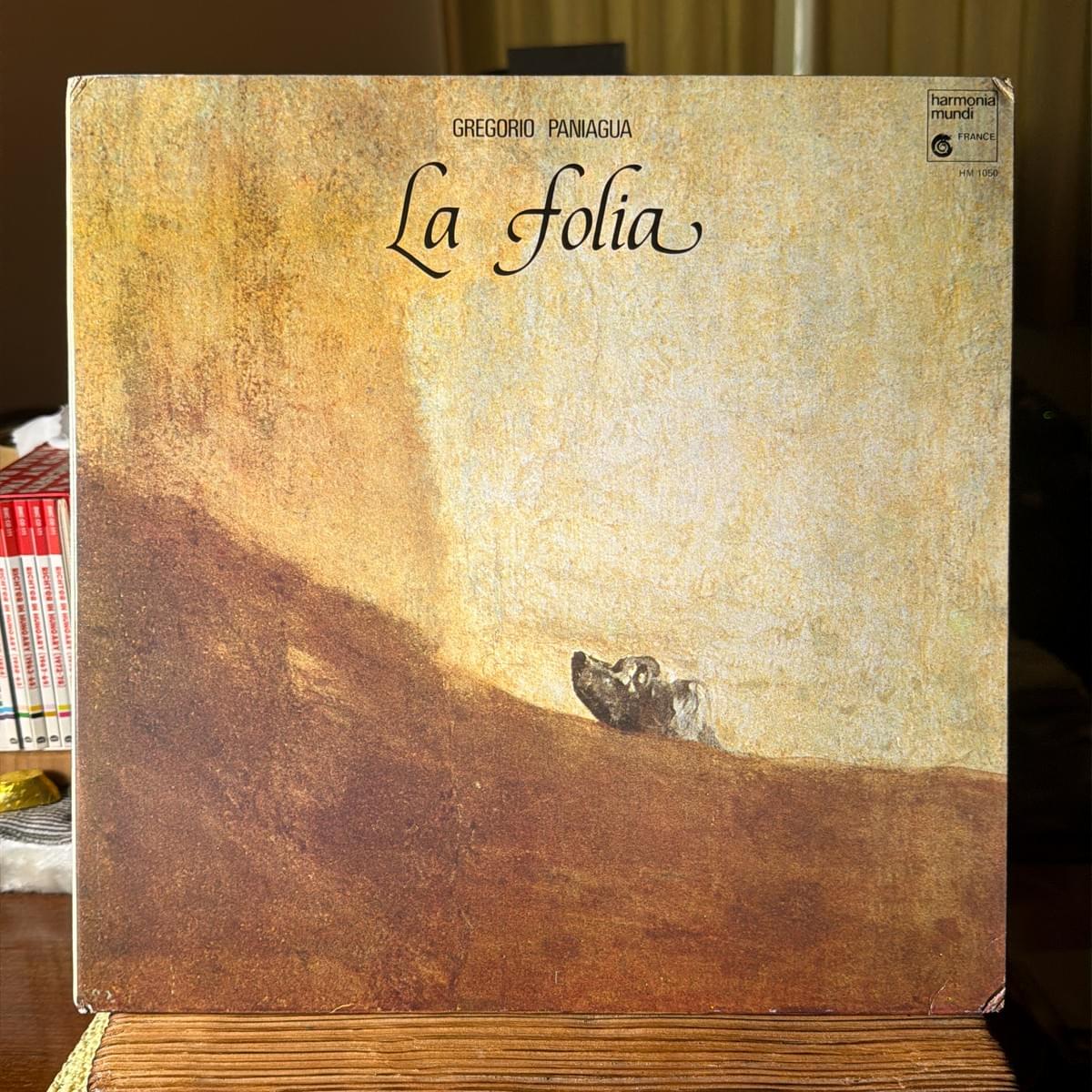
約 1996 年,Harmonia Mundi 在台灣的總代理——上揚唱片的老闆,親自前往法國阿萊城的 Harmonia Mundi 總部拜訪,見到創辦人庫塔茲(Bernard Coutaz,1922–2010)的妻子。封面就是她選的:她在畫廊看到哥雅(Francisco de Goya,1746–1828)的畫,覺得那隻探出頭的狗,和這張唱片的音樂氣質非常接近。
她也談到錄音現場:他們在一座教堂錄音,遠處有人在割草,又有人騎著機車離開再折返。這些不該出現的聲音都被錄了進去,龐特弗拉克特覺得放進唱片會更有意思,後製時便保留下來。
這段回憶的價值,遠超過它原本的用途。在我能找到的資料裡,唱片封套、Discogs 與廠牌官方介紹,都沒有記下錄音現場發生過什麼;中文世界對 Harmonia Mundi 這家公司、對這張唱片的認識,更是少得可憐。這篇原本只是代理商放在網站上的廠牌介紹,卻幾乎是中文領域唯一的第一手紀錄。
如今上揚的老闆與老闆娘都已辭世,這篇文章也沒有紙本原刊,只剩網站上的那一頁。它和那條不會結束的溝槽一樣,只存在於一個特定的載體上。
她記得的是意外。可是內頁表格把割草機、汽車都列成樂器,指定給某位樂手「演奏」。兩種說法可以同時成立:意外先發生,帕尼亞瓜再把它寫進樂譜,收編為方法。這正是這張唱片的精神。
是哪一座教堂?
我找到一條線索,但沒有找到確證。內頁有兩首曲子的出處指向同一個地方:〈在玻璃中〉寫「螢光的夢想,天使聖母院,Lurs,下阿爾卑斯省」,〈無名〉寫「不朽的天使聖母院」。
天使聖母院(Notre-Dame des Anges)是 Lurs 附近一座朝聖小教堂。Harmonia Mundi 在那段時期經常在此錄音:1980 年 1 月就有一場錄音在那裡進行,希利爾合唱團 1982 年 9 月也在此錄音。當時 Harmonia Mundi 的地址,是封底上的 Saint-Michel de Provence,與 Lurs 同在上普羅旺斯山區,相距不遠。
因此我推測,《La Folia》很可能錄於這座小教堂——但這仍是推論,不是定論。
兩支麥克風
錄音方式則明確得多。庫塔茲夫人說,他們會依樂團與音樂型態更換錄音地點和麥克風,但始終只用兩支麥克風,品牌多為 Neumann、Schoeps 與 B&K。兩支麥克風錄音的關鍵,在於找對空間、擺對位置,而龐特弗拉克特對聲音極為敏銳。
這就是這張唱片成為音響試機片的原因。日本錄音評論家高城重躬(Takajō Shigemi,1912–1999)在封帶上說,從強烈巨響到纖細微音都錄得異常鮮明;對照樂器一覽表逐一辨聽,樂趣倍增。
四十多種樂器、香腸氣球、鞭聲、汽車引擎,全部用兩支麥克風收進同一個自然殘響的空間。每件樂器的位置,不是混音台上擺出來的,而是它們在那個空間裡真實站立的位置。
發燒錄音與音響界的評價
這張唱片在音響界的地位,遠遠超出一般古樂唱片。
美國:TAS 超級唱片榜
美國音響雜誌《The Absolute Sound》(TAS)由哈利・皮爾森(Harry Pearson,1937–2014)創辦,它的「超級唱片榜」(Super LP List)是全世界發燒友找唱片的聖經。HM 1050《La Folia》多年來名列其中,姊妹作《古希臘音樂》(HM 1015)也同樣在榜上。直到今天,歐美二手市場上的賣家,仍習慣在這張唱片的標題上註明「TAS List」,當作品質的保證;連日本勝利的 VIC-28079,海外賣家也以「附封帶的 1982 年日本版、TAS 名盤」來介紹。
美國:Arthur Salvatore 的「神級」榜單
美國資深音響評論人亞瑟・薩爾瓦多(Arthur Salvatore)在他的網站上,把自己心目中有史以來聲音最好的二十六張唱片,列為最高等級「The Divinity」(神級)。《La Folia》就在其中。
他的評語幾乎用盡了音響界的形容詞:在每一項聲音指標上都出類拔萃,透明、直接、乾淨、自然、動態十足;音場寬大,背景噪音極低,連泛音結構、餘韻衰減與音色的細微變化都聽得一清二楚。他說這張唱片不只是 Harmonia Mundi 聲音最好的唱片之一,也是任何人做過的聲音最好的 LP 之一。他在少數幾次向朋友展示自家音響時,通常把這張留到最後才放,希望它成為客人離開時耳朵裡最後的記憶;他說,對一張唱片的讚美,沒有比這更高的了。
值得一提的是,在「古樂」類別裡,薩爾瓦多認為唯一在錄音工程上勝過《La Folia》的,正是帕尼亞瓜自己的《古希臘音樂》,他把「最佳古樂 LP」獎頒給了它。再加上古樂團早年的《比利安西科》(Villancicos,HM 1025),這二十六張神級唱片裡,有三張出自馬德里古樂團之手。
那一鞭,與各個版本的爭論
薩爾瓦多也特別提到 B 面開頭那一鞭:一段漫長、安靜的長笛獨奏,突然被幾記響亮的鞭聲打斷。他比較過法國原版、1985 年 ATR 的兩種重刻版,以及後來的 Speakers Corner 重刻版,結論是:只有 ATR 最早的薄盤,能把鞭聲的爆發力完整保留;其他版本都或多或少壓縮了那一鞭的衝擊。他開玩笑說,那張薄盤的鞭聲響到幾乎能讓人心臟病發作。
在他的比較裡,ATR 180 克重刻版最好,但極難找到;法國原版勝過 Speakers Corner 重刻版,更直接、更透明、動態更好,而且盤面「死寂無聲」,幾乎沒有底噪。收藏圈對版本的看法並不一致:也有 Discogs 的藏家認為,在所有重刻版之中,聲音資訊最完整的,終究還是法國首版與日本版。
殿主的實際比較
殿主手上正好同時有法國首版與日本 JVC Super Vinyl 首版,兩張放在同一套系統上比較過。或許有些收藏家會認為日本首版較好,原因有二:一是 JVC 使用的 Super Vinyl 材料,底噪更低,背景更乾淨;二是日本刻片,刻出來的動態比法國首版更大。
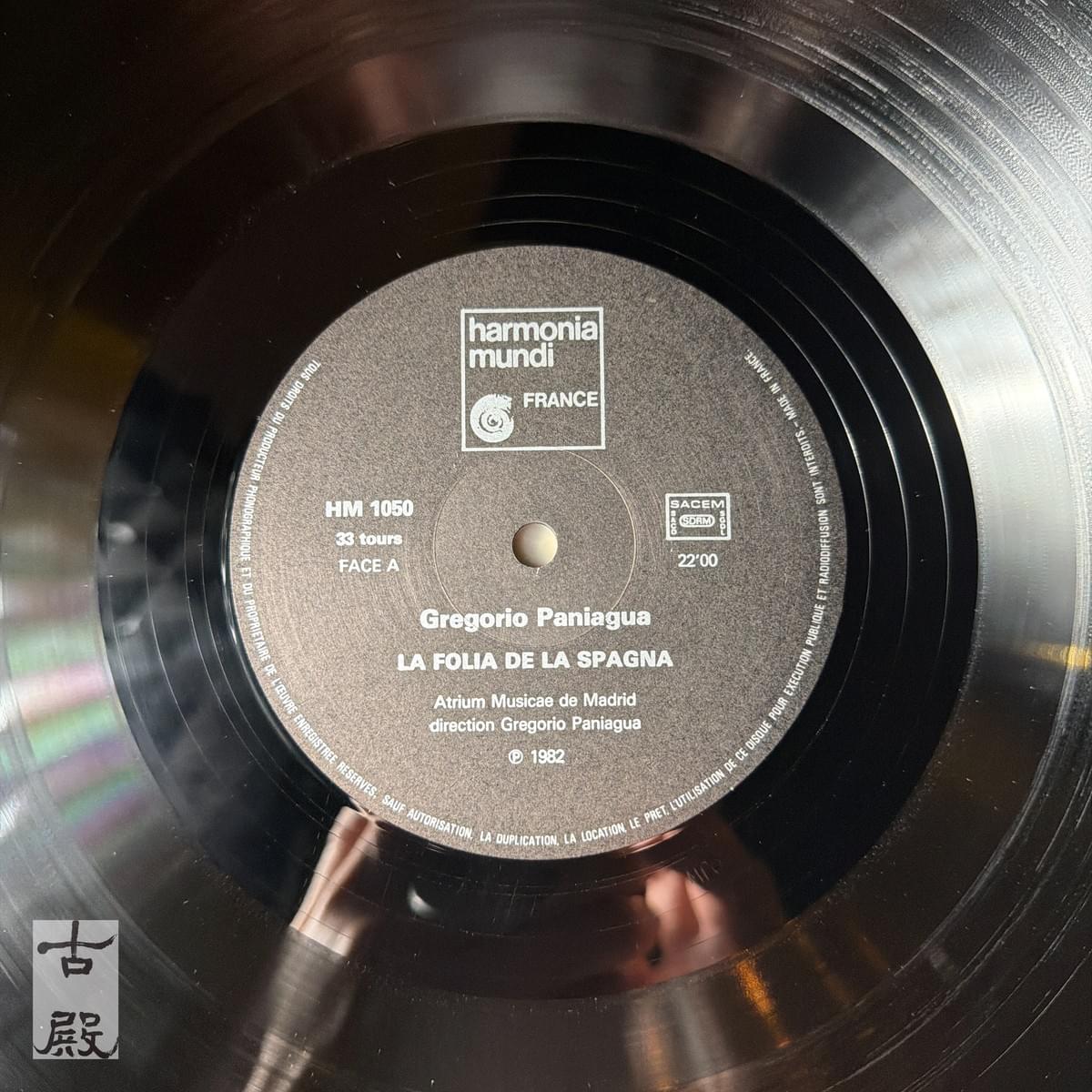
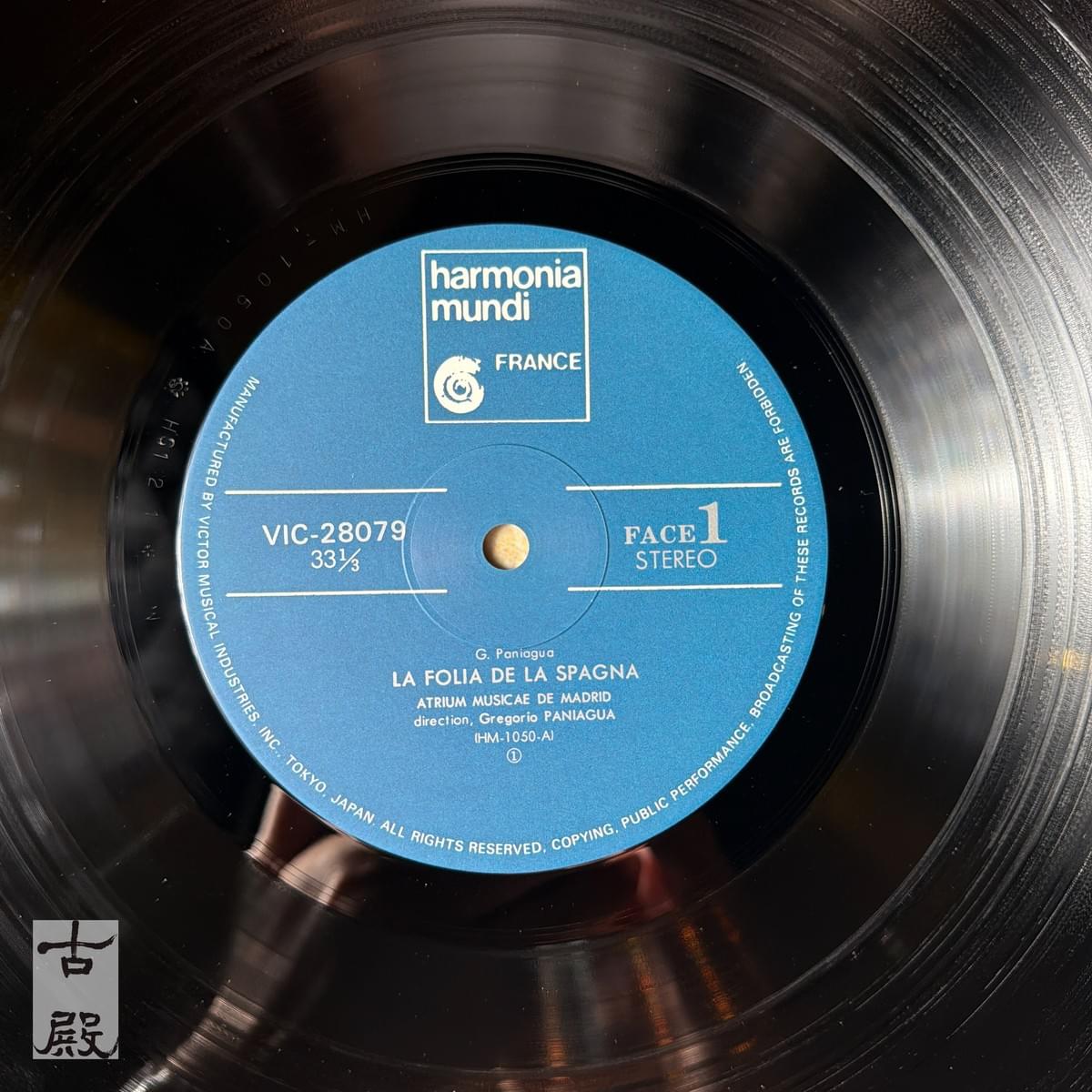
這也回到前面的刻片痕跡:日版不是法國金屬母盤的翻壓,而是拿法國母帶在日本重刻、用日本材料重壓的另一個版本。聲音的差異,就寫在那兩道不同位置的溝紋裡。
日本:長岡鐵男的推崇
在日本,長岡鐵男在封帶上稱它是不輸《古代希臘音樂》的優秀錄音盤。他 1984 年出版的《外盤 A 級セレクション》三卷,是日本發燒友挑選進口唱片的權威指南;2013 年復刊時附贈的 SACD 樣品片,就收錄了多首帕尼亞瓜與馬德里古樂團的錄音,足見他對這個樂團錄音的看重。
美國的 TAS、薩爾瓦多,日本的長岡鐵男、高城重躬,彼此的品味與標準並不相同,卻不約而同地把這張唱片放在最高的位置。而這一切,都來自 1980 年 6 月,一間教堂裡的兩支麥克風。
六、兩個版本,兩種記錄方式
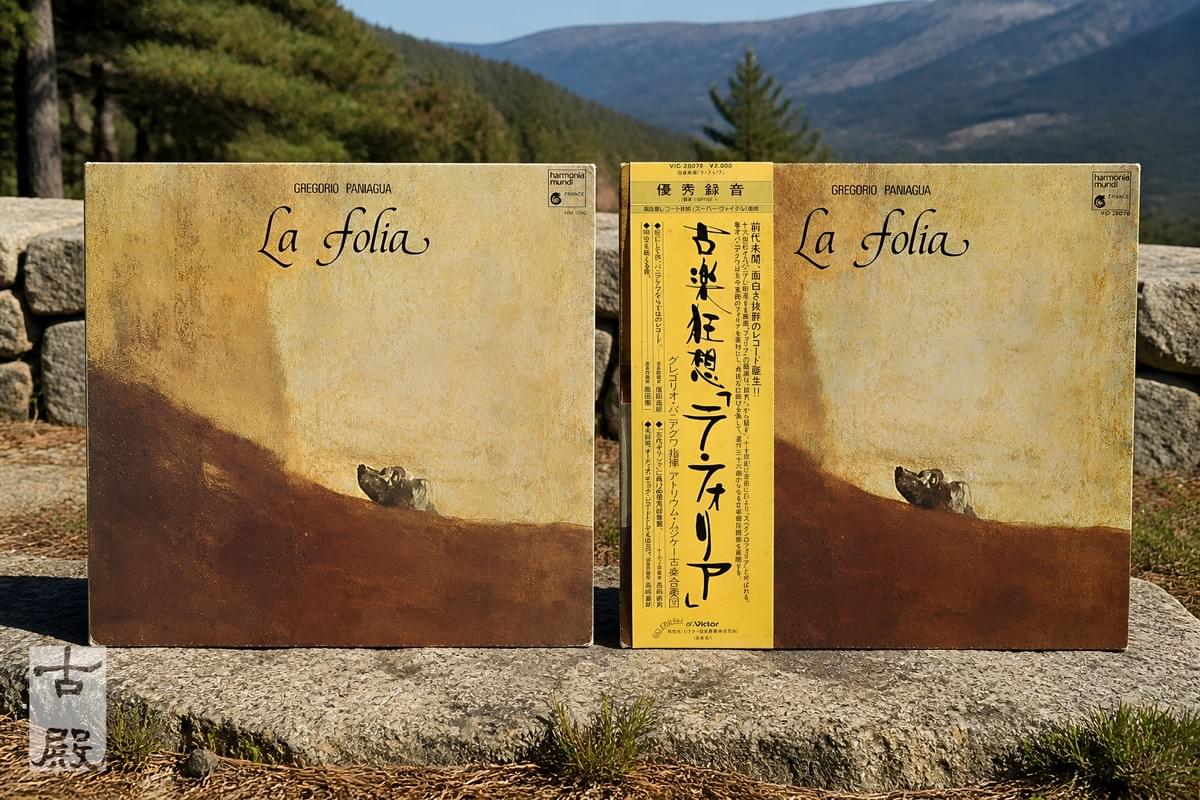
法版是作品本身,日版則是一份完整的「接收紀錄」。
法國原版 HM 1050
- 發行:℗1982,harmonia mundi s.a.,Saint-Michel de Provence。
- 刻片與壓片:法國製。
- 標籤:灰色,33 tours。
- 時長:A 面 22'00、B 面 22'22。
- 封套文字:帕尼亞瓜的法、英、德三語文章。
- 內頁:法文分軌、出處與樂器對照表。
- 附件:無。
- 第一面結尾:封套未說明,但實際刻有無限迴圈;音樂溝紋結束的位置離標籤較遠,之後再以一段收尾溝一路刻到靠近標籤處,才進入迴圈。
日本勝利首版 VIC-28079
- 發行:℗1982,ビクター音楽産業(Victor Musical Industries)。
- 刻片與壓片:杉本一家(日文讀音與生卒年待查)重新刻片,JVC Super Vinyl 材料。
- 標籤:藍色,並標 HM-1050-A/B。
- 時長:第 1 面 22'06"……∞(?)、第 2 面 22'21"。
- 封套文字:帕尼亞瓜原文日譯(濱田滋郎譯)、濱田兩篇專文、古樂團合照。
- 內頁:全表日譯,「不使用的資料」完整保留。
- 附件:黃色封帶,印有黑田恭一(Kuroda Kyōichi,1938–2009)、濱田滋郎、長岡鐵男(Nagaoka Tetsuo,1926–2000)、高城重躬的評語。
- 第一面結尾:明文警語,自動回臂不會作動;音樂溝紋刻得比法版更靠近標籤,最後的聲音出來一小段後,就直接進入無限迴圈。
同一個巧思,兩雙刻片的手
兩個版本的第一面內圈,都有那條無限迴圈的溝槽。但仔細看內圈的刻片痕跡與刻片線,就會發現兩者並不一樣。
法版的音樂溝紋,結束在離標籤較遠的地方,之後再以一段收尾溝一路刻到靠近標籤處,才收進無限迴圈。日版的刻片則整體更靠近標籤,最後的聲音出來一小段之後,就直接進入迴圈。
這個差異,只有拿著唱片、對著光才看得到,卻透露了很重要的事:日版不是用法國原廠的金屬母盤壓製的。如果是同一組金屬母盤,溝紋的位置會一模一樣。日本勝利是拿到法國原廠的母帶盤帶,由杉本一家在日本重新刻片,從漆盤、金屬母盤到壓片,整條工序都在日本重新做過一次。
同一個「永遠不會結束」的構想,由兩位刻片師用各自的手,刻進了兩張不同的唱片。
法版一本正經,不解釋自己的玩笑。日版則保存了 1982 年日本樂評界第一次遇到這張唱片時的困惑、大笑與敬意。
這種差異並不奇怪。日本勝利要在日本市場推薦的,是一張來自法國廠牌、形式極為特殊的專輯。日本唱片業的慣例,是由唱片公司事先選定音樂評論家或專業寫手撰寫解說,稿件在發行前完成,再製作成封底或內頁文字,之後才進入壓片與上市。
所以日版請來濱田滋郎寫專文,封帶印上六位評論者的讚辭,時長欄寫上「∞(?)」,封底再加印警語。盡量把唱片裡的巧思呈現出來,是引導日本樂迷理解這張唱片的必要工作,也是在增加樂迷的購買慾。法版把巧思藏起來,其實正與帕尼亞瓜的瘋狂與搞笑風格一致。他在封底寫一篇一本正經的學術文章,卻在內頁出處欄寫下石油泉水與反音樂學的焦慮;真正的玩笑從不自己說破,要等聽者自己踩進去,就像黑田恭一說的,它會悄悄伸出一隻腳把你絆倒。日版把巧思說出來,是為了替更多樂迷打開入口。兩者各有各的道理。
封帶背面的六則讚辭
日版封帶背面,印著一欄〈獻給這張唱片的讚辭〉。六位來自不同領域的評論者,各自聽見了一張不同的唱片。
黑田恭一(音樂評論家):在這張唱片面前,它會趁傾聽者屏息凝神時悄悄伸出一隻腳,將你冷不防絆倒。然而,這裡所展現的戲弄絕非單純的惡作劇。當你在古老幽渺的樂音中瞥見頑皮豹那狡黠的背影而驚呼連連之際,聽者早已徹底喪失了時間、空間與既定概念。這是真正超越時空的聲音。
戶口幸策(Toguchi Kōsaku,1927–2016;音樂評論家,摘自《唱片藝術》1982 年 9 月號〈海外 LP 試聽記〉):這種聲音營造方式,能將某個民族在特定時代的音樂,毫無隔閡地直接叩擊當代人的心靈。帕尼亞瓜的才華精準地掌握了箇中精髓,成就了一張引人入勝、意義非凡的唱片。
濱田滋郎(Hamada Jirō,1935–2021;音樂評論家):奇詭而痛快,是唯有帕尼亞瓜方能成就的錄音。通篇散落著看似深奧嚴肅的隱喻細節,我卻毫不費神思索,只是開懷大笑著聆聽完全曲。滿載著鮮活動人創意的無上之樂。
寺崎裕則(Terasaki Hironori,約 1933–2023;舞台導演):從西班牙乾燥焦褐的荒原、從交錯的光與影、從交織著鮮血與黃沙的歷史深處,民族的靈魂與古代舞曲佛利亞在此甦醒,並於現代重新呼吸。這是黑色幽默大師帕尼亞瓜親手打造、令人沉醉而遙遠的奇幻異想。
高城重躬(Takajō Shigemi,1912–1999;錄音評論家):最值得大書特書的,莫過於其出類拔萃的極致錄音水準——從狂暴強烈的轟鳴到纖細幽微的極弱音,皆以令人屏息的鮮明度捕捉無遺。若能對照著內頁樂器清單逐一辨聽,樂趣更添百倍。本片作為音響系統測試盤,亦具有極高價值。
長岡鐵男(Nagaoka Tetsuo,1926–2000;音響評論家,摘自《別冊 FM fan》):這是一張完全不輸給前作《古代希臘音樂》的優秀錄音名盤。帕尼亞瓜簡直就像是古典樂界的北野武(Kitano Takeshi,1947–),而馬德里古樂合奏團莫非就是古典樂界的「搞笑群星會(ひょうきん族)」?
封帶在最後註明「排名不分先後」。音樂評論家聽見的是時空,舞台導演聽見的是西班牙的土地與血,錄音與音響評論家聽見的是聲音本身。六種耳朵各取所需,恰好說明這張唱片有多少層:它同時是史料、是劇場、是笑話,也是一張試機片。
市場怎麼看這兩個版本
在 Popsike 收錄的拍賣紀錄中,附封帶的日本首版,曾經拍出比法國首版更高的價格。
- 日本 VIC-28079(附封帶):173 USD,2008 年 11 月 2 日。
- 日本 VIC-28079:153 USD,2010 年 9 月 19 日。
- 法國 HM 1050(mint,法國賣家):150 USD,2012 年 7 月 8 日。
- 法國 HM 1050(標明原版首版):123 USD,2011 年 3 月 5 日。
- 法國 HM 1050(near mint):106 EUR,2015 年 8 月 5 日。
以上只比較單張 LP,不含 Harmonia Mundi 的 3LP 套裝;樣本不多,也不含日本本地拍賣與實體店成交。
殿主自己的看法是:法國首版仍是這份錄音的第一順位,其次才是日版。法版是作者親手交出的樣子,日版是另一個國度對它的一次完整接收。但市場給出了另一個排序,這是現實,沒有好壞,照實呈現即可。
價格與價值,本來就不一定相同。價格記錄的是某一刻、某一群人願意付出多少;價值則要看這張唱片連結了多少東西。實際的份量與現實的行情,從來不必是同一件事。
被翻轉的狗
兩張封面還有一個共同點。哥雅的原畫中,狗仰起鼻子,眼睛望向上方偏右。我手上兩個版本的封面,狗頭卻都朝左——兩者都是鏡像翻轉,而且裁切過。
更讓人在意的是:根據攝影師尚・羅宏(Jean Laurent,1816–1886)當年拍下的底片,研究者確認那隻狗原本望著天上的兩隻鳥。這兩隻鳥,在壁畫從牆面轉移到畫布的過程中消失了。
那隻狗一直在看著某個已經不存在的東西。這張唱片的一部分,也只存在於特定的載體上:第一面那條不會結束的溝槽,只有在一台沒有自動回臂的唱盤上,才會真正發生。
七、Cercedilla
帕尼亞瓜於 2026 年 1 月 10 日過世,享年 81 歲。馬德里古樂團在 1980 年代初解散,成員各自發展;他本人繼續實驗,也涉足早期的數位樂器。換句話說,《La Folia》幾乎是這個家族樂團最後一張重要作品。
他在 Cercedilla 的鄉間住所過世。他把那棟房子稱為「修道院」。
1980 年,他在內頁出處欄寫下:「一點點反音樂學的焦慮與不安。氧氣與臭氧。1980 年,Cercedilla。」四十六年後,他在同一個地方離開。
在學究眼中瘋狂、亂來的他,反而是一個自始至終完整的人:從 Cercedilla 開始,到 Cercedilla 結束。
他在封底文章的最後寫道:那些寫下自己 Folia 的作曲家,其實並不清楚自己在做什麼。他們像樹一樣,不急著吸取汁液,卻吸收了一切;在春天的風暴裡,不焦慮能否再見到下一個春天。最後,他們愛上自己的瘋狂與孤獨,承受它帶來的痛苦,並成功讓自己的哀嘆變得美麗。
*******
【Gudian Music Stories】A Lawnmower as Basso Continuo, and a Side One That Never Ends: Gregorio Paniagua (1944–2026) and Atrium Musicae de Madrid’s La Folia
In 1982, Japanese music critic Jirō Hamada (1935–2021) was drafting liner notes for a Spanish early music release. During an audition, he noticed something peculiar: the music on Side One had finished, but the tonearm never lifted. He later admitted that discovering this was sheer luck—he happened to be using an older turntable lacking an auto-stop mechanism.
When Victor Musical Industries issued the album in Japan, they printed a prominent warning across the rear jacket: The end of Side One is specially engineered so that the stylus does not reach the inner lead-out groove; automatic tonearm returns will not engage.
In short: someone had deliberately pressed a record engineered never to end.
This perpetual locked loop on Side One cannot exist on CD. A compact disc track halts once played, confined to fixed numerical timestamps. Only the physical, interlocking groove of vinyl allows a stylus to trace circles through eternity. This concept belongs not to the musical notes on the page, but to the physical medium itself; it can exist solely in the format of an analog record.
Vinyl history is not entirely devoid of locked grooves. The original 1967 UK pressing of the Beatles’ Sgt. Pepper's Lonely Hearts Club Band concealed an unsettling, repetitive snippet in its run-out groove; Lou Reed closed the final side of his 1975 Metal Machine Music in an infinite loop. In early music, however, such a conceit is extraordinarily rare. More crucially, this loop was no superficial stunt—it was inextricably bound to the music.
Because La Folia, by its very nature, is a loop. Built upon a fixed bassline and ground harmony repeated endlessly, every variation unfolds inside the same cycle. By halting Side One within an infinite groove, Paniagua pushed the form of La Folia to its radical extreme: the ostinato no longer required musicians to perform it; the record spun it into perpetuity. This "madness" truly had no conclusion.
I keep two pressings of this recording in my collection: the original French Harmonia Mundi release (HM 1050), and the Japanese first pressing on JVC Super Vinyl (VIC-28079). Though recorded in 1980, both arrived in 1982.
Their stated running times reveal contrasting editorial strategies. The French Side One label reads simply "22'00", staying completely silent on the infinite loop, leaving it as a hidden conceit for the listener to stumble upon. The Japanese label, meanwhile, reads "Side 1: 22'06"… ∞ (?)", paired with the cautionary notice on the back cover, bringing the conceit out into the open. One chose reticence, the other disclosure; that infinite symbol capped with a question mark was a mischievous wink in itself.
To understand why anyone would do this, one must start with the title of the work.
I. A Short Essay as the Album's Spiritual Blueprint
The back cover of the original French release features only a brief essay penned by Gregorio Paniagua himself, printed in French, English, and German. Unadorned by jokes or levity, its tone is that of a rigorous academic paper. Jirō Hamada remarked that because the original sleeve bore only this text, a casual glance suggested nothing more than a sober contribution to musicology.
I have read this short essay many times. Every line is weighted with intent, devoid of empty rhetoric—it is the creative core of the entire album. Its structure moves methodically through four stages, guiding the reader from national temperament to historical documentation, and finally back to the human soul.
Stage One: Where "Madness" Takes Root
He begins not with music, but with the Spanish character—being Spanish himself. Spaniards are perennial realists, yet instinctively perceive "madness" as something profound, attainable only at an exceptionally patient, measured pace. There, every individual is solitary, carrying an entire universe within; individualism reigns supreme. Each person is simultaneously saturated with shadow and light, alienated amidst anxiety and hope. Thus, "madness" takes root naturally in this soil.
Stage Two: The Written Traces of "Madness"
Next, he presents historical testimony. The earliest mention of La Folia dates to roughly 1505, in the play The Sibyl Cassandra by Portuguese poet and playwright Gil Vicente (c. 1465–c. 1536). In it, Solomon, Isaiah, Moses, and Abraham sing a four-part Folia whose musical score has long been lost. In 1577, the blind organist Francisco de Salinas (1513–1590) transcribed several Folia motifs in his De musica libri septem, tracing its lineage to Portugal.
By 1610, Sebastián de Covarrubias (1539–1613) recorded its most vivid depiction in his lexicon: a band of men disguised as porters carrying a boy dressed in women's attire on their shoulders, playing tambourines, whirling, and parading with hands held high. The clamor was so loud and the tempo so manic that they seemed to have completely lost their minds. Thus the dance derived its name from the Tuscan folle (mad, senseless). From the fifteenth through the eighteenth centuries, it surfaced continuously in vihuela anthologies and Spanish songbooks (cancioneros).
Stage Three: The Taming of "Madness"
In the early seventeenth century, the Folia swept across Europe, gradually transmuting into a passacaglia or ground bass. The tempo decelerated, the atmosphere turned sedate and solemn, and its original bacchanalian vitality withered away. Academics capitalized on this shift, claiming the Folia stemmed from Italian figured bass rather than the Iberian Peninsula. Paniagua retorted: throughout Europe, composers called it Follia di Spagna, and in that era, Españaencompassed the entirety of Iberia, Portugal included.
This passage is Paniagua’s open revolt against academic pedantry. Having dismantled narrow scholasticism with sober prose on the cover, he went further inside: in the source notes for the track Adverso Flumine, he jotted: "A little anti-musicological anxiety and unrest. Oxygen and ozone. 1980, Cercedilla."
The title meant "Against the Current"; the source was listed as "Anti-Musicology." He logged his profound unease with disciplinary dogmatism directly into a musicological catalog as if it were historical documentation.
Stage Four: Returning to the Makers of the Folia
Finally, he steers the discourse away from dry chronology and back to the human psyche, comparing these composers to trees maturing unhurried through seasonal tempests. I will return to this passage at the close of this essay.
These four stages form the blueprint of the record. Across its thirty-plus musical sections—some preserving untamed frenzy, others displaying refined solemnity—everything grows directly out of this text.
"And yet..." Hamada writes at this juncture, choosing to explain no further.
II. The Soul of the Project: Walking Away Just Before the Finish Line
Gregorio Paniagua (1944–2026) was born in Madrid on February 2, 1944, the eldest of eight children. His father, a physician with a deep passion for classical music, founded the hematology department at the Fundación Jiménez Díaz.
His early youth was entirely detached from early music. In 1960 and 1961, he captained Real Madrid’s youth basketball team. He studied medicine at the institution where his father worked, leaving in his fifth year. He pivoted to the Madrid Royal Conservatory to study cello, only to abandon his studies with just a single year remaining. Later, he studied viola da gamba under August Wenzinger (1905–1996) and orchestral conducting under Sergiu Celibidache (1912–1996).
Both in medicine and at the conservatory, he walked out right before receiving formal accreditation. That fundamental impatience with institutional dogma became his lifelong creative method.
In 1964, at age twenty, he founded Atrium Musicae de Madrid, soon joined by his brothers. On this recording, his younger brothers Eduardo (b. 1952) and Luis were core pillars.
The ensemble’s most distinct discipline was building their own instruments. Paniagua established a private workshop, cross-referencing illuminated manuscripts, frescoes, stone reliefs, and terracotta wares—spanning ancient Greece, Romanesque, and Gothic architecture—against medieval and Baroque organological treatises to reconstruct forgotten instruments. In a 1975 Spanish television broadcast, he demonstrated how he reconstructed the medieval organistrumbased on stone carvings along the Portico of Glory at Santiago de Compostela.
A Mind Free of Disciplinary Boundaries
Paniagua’s path represents a vital point of reference for our contemporary era. He remained unbound by arbitrary intellectual silos. Medicine, basketball, cello, painting, viola da gamba, and conducting: he threw himself fully into each. Driven by research curiosity, he explored every discipline deeply, mastered its core, and then stepped outside its boundaries.
Those who pursue scholarship to its furthest limits perceive the true fabric of life. That essence is never a solitary data point; it is a key, a trumpet fanfare unveiling the whole canvas of the world.
To rigid pedants, he might have looked undisciplined or eccentric. In reality, he understood the vital breath of history far better than they did. The dogmatists on the album sleeve saw only the tamed, polished Folia; Paniagua perceived its raw, untamed spirit. In a sense, his very life was a Folia.
Modern academia remains crowded with scholars neatly cataloged, subdivided, and regulated by institutions. Each tends his own narrow plot, refining footnotes while fewer dare to synthesize the broader picture. We lack figures like Paniagua.
He never lingered in an ivory tower. Rooted in archives and primary sources, he also went into the field to touch physical materials and living cultures: studying stonework on cathedral arches, handcrafting and restoring the physical instrument, and playing it with his own hands to feel the resonance between tool and musician. His credit notes for La Folia cite not only shelf marks from the Biblioteca Nacional, but also a 1979 Indian raga heard in Benares and an out-of-tune music box from circa 1850 discovered at Madrid's El Rastro flea market.
Data aggregation can be delegated to machines, but venturing into the field, shaping wood, and feeling strings vibrate under human touch can only be lived by flesh and blood. Paniagua embodied this seamless integration.
From 1976 onward, Atrium Musicae released benchmark recordings on French Harmonia Mundi, including Tarentule – Tarentelle, Musique Arabo-Andalouse, and Musique de la Grèce Antique. The 1978 ancient Greek project represented his most rigorous scholarship: attempting to summon a vanished sound world using only fragmentary papyri and reconstructed ancient instruments.
Prior to this, they had contributed monumentally to Hispavox’s Colección de Música Antigua Española. Hamada noted that Atrium Musicae possessed the musicological rigor and instrumental mastery required for world-class scholarship; yet they consistently injected breathtaking humor, inventiveness, and theatrical play into their projects.
Hamada’s assessment went straight to the point: this Spanish specialist, who had caused such a stir with the Japanese release of Musique de la Grèce Antique, belonged among the true mavericks of the recording world. Devoted to ancient music, he never fell into antiquarian complacency. Instead, his work surged with wild imagination and an astonishingly vivid life force.
The 1980 Sextet
- Gregorio Paniagua: Founder, director; viola da gamba, guitar, and assorted instruments.
- Eduardo Paniagua: Gregorio’s brother, core member.
- Luis Paniagua: Gregorio’s brother, core member.
- Daniel del Río: Violin, joining for this 1980 session.
- Andreas Prittwitz (b. 1960): Flutes and recorders, joining in 1980; the only member of Germanic descent.
- Albertina do Huete: Keyboards, joining in 1980; the sole female instrumentalist.
Hamada praised the three newcomers for their remarkable sensibility and technique. La Folia captures an ensemble balancing continuity and renewal: two brothers preserving the familial core, while three fresh voices introduced new colors.
Two years after the ancient Greek album, Paniagua recorded La Folia, turning in an entirely irreverent direction.
III. What Was Actually Recorded?
Opening the gatefold of the French LP reveals a sprawling chart. Side One is marked as Paniagua’s composition from 1980, Side Two from 1981—here he credits himself as "author," not merely an arranger. The grid details movement titles, authorship, "sources used," and the distribution of instruments across the six players.
The movement titles are tongue-in-cheek pseudo-Latin: Dementia praecox angelorum (Early Dementia of the Angels), Theatralis et hipocritae (Theatricality and Hypocrisy), Sine praeputium (Without Prepuce).
Superficially, a Rigorous Folia Anthology
Jirō Hamada observed that at first glance, this appears to be an invaluable historical survey, documenting the evolution of the Folia across the sixteenth to eighteenth centuries—an impression reinforced by the sober essay on the back cover.
It is indeed a monumental anthology. Several works were unearthed from obscure archives across Europe and recorded here for the very first time. It proves through performance that certain celebrated songs of the Spanish Golden Age were, structurally, Folias.
Hamada also clarified the musical structure: an ostinato bass with harmonic variations, primarily a dance in minor mode that shifts into major tonalities as it progresses. Bound by this constant foundation, every variation shares an unmistakable family resemblance. Paniagua gathered this entire lineage under one roof, bestowing newly invented Latin titles upon each chapter.
Yet, as Hamada noted: had the record stopped there, it would not be Paniagua.
Authentic Manuscripts Beside Invented Sources
The source column is the album's most audacious section, interweaving legitimate historical scholarship with pure fiction.
Authentic citations abound: eleven Folia variations from Manuscript M 2810 in the Biblioteca Nacional de Madrid; the 1593 Silva de sirenas; the 1709 keyboard compilation by Fray Antonio Martín y Coll (c. 1660–c. 1734); a 1721 Seville harpsichord manuscript; Gaspar Sanz’s 1674 guitar manual; Jacob van Eyck’s 1646 recorder collection; variations by Bernardo Pasquini (1637–1710); and John Walsh’s 1702 London edition of Corelli’s Op. 5. Songs drawn from the 15th-century Cancionero de Palacio further ground the collection.
Right beside these sit absurd, surrealist entries: "Indianapolis. Springs, natural occurrences, petroleum." "A little anti-musicological anxiety and unrest. Oxygen and ozone. 1980, Cercedilla." "Ministry of Public Works. Gathering poppies. France."
Sausage Balloons, a Shattered Cognac Bottle, and Lawnmowers
The instrumentation list follows the same playful logic. Alongside harpsichords and viols, players are assigned "orange sausage balloon," "blue sausage balloon," "Peugeot car horn," "bursting sound of a cognac bottle," and "testicle-guitar." In Mathematica: Dies Irae, the entire movement is delivered using only a "pocket synthesizer," punching out medieval liturgical wrath via cheap electronic bleeps.
The final piece on Side One, Moderatio nobilium, cites a 1721 Seville Folia grave, alongside the French Ministry of Public Works gathering poppies. Paniagua’s credit reads: "Lawnmower No. 1 and Lawnmower/Weeder No. 2, Stop Signal," accompanied by the note "Basso continuo." The bedrock of Baroque music is the continuo; on this record, that sacred post is manned by a pair of two-stroke gardening tools.
Water Drops to Open, a Whip to Clear Side Two
The opening track on Side One, Fons vitae, borrows from Virgil’s Sunt lacrimae rerum ("There are tears for things"), twisting it into: "There are tears for things, but for Spaniards there is the Folia." Paniagua rhythmically taps the open tone holes of Baroque recorders, while Eduardo contributes "disturbing, fainting water-drop taps." The "bubbling liquid" listeners recall is simply these acoustic elements working together.
Side Two begins with equal mischief. The source for its overture, Subtilis, is listed as sound engineer Jean-François Pontefract himself, complete with Harmonia Mundi's postal code, described as "announcing that Part Two of La Folia de la Spagna is about to begin." The recording engineer is canonized as a primary historical source.
What follows is Septentrionalis et solivagus, a solo recorder variation based on Jacob van Eyck (1646)—the quietest, most fragile moment on the disc. It is immediately succeeded by Aurea mediocritas, where Paniagua’s instrumentation lists "toy pistol, whip crack." That singular whip crack has echoed through high-end audio salons for four decades, jolting generations of audiophiles testing their loudspeakers.
The closing movement, Effugium fictum et currus triumphalis, cites a sonata dedicated to the mayor of San Ildefonso de la Granja from August 1979, titled "Rosalia's Folia," preserved in the private archives of Paniagua and Beatriz Amo. Amo was an Atrium Musicae member who later became Paniagua’s second wife. The instrument listed is simply "Land Rover," and the entire record concludes with the rumble of an engine starting up and driving off into the distance.
The Column of Unused Sources
On the right-hand panel of the gatefold sits a column headed Fuentes no utilizadas ("Unused Sources"). It lists dozens of unmined texts: Alonso Mudarra, Enríquez de Valderrábano, Antonio de Cabezón, Diego Ortiz’s 1553 Trattado de Glosas, Joan Cabanilles, and German and English scholarly treatises by Otto Gombosi and Andreas Moser.
The most scholarly section of the packaging contains solely what he chose to leave behind. It explains why the irreverence works: only an artist who has thoroughly digested the archive has the authority to toss it aside.
IV. "Why Do This?"
Jirō Hamada gave an honest answer: they probably just thought it was fun. He noted that he listened with a broad smile, without overthinking it. Yet after the record stopped, the warmth of Spanish Renaissance song and the airy elegance of Baroque harpsichords and recorders lingered clearly in his mind.
He then posed a fundamental question: does rendering early music—and classical music as a whole—exclusively solemn and polite feel truly "natural" to our modern ears?
Returning to that 1610 description makes the answer clear. La Folia in its primeval state was raw percussion, noise, and collective abandonment; the refined courtly form of the seventeenth century was merely its domesticate. By playing it with sausage balloons and lawnmowers, Paniagua was arguably far closer to its foundational spirit than any starch-collared conservatory performance.
Archives Are Not Dull; We Simply Lack Depth
Who says history is confined to dry papers? In 1980, amid the crest of the Early Music Revival, Paniagua showed what was possible: with deep comprehension and a commitment to authenticity, history can be profoundly entertaining. It can hold space for madness, slapstick, and wonder, backed by unassailable research.
Remarkably, every link in this chain was forged by the same group of hands: from manuscript research to instrument building, musical arrangement, performance, and spontaneous studio improvisation. Nothing was outsourced; nothing was fragmented.
Nearly fifty years later, as we stand before another generational shift, I often wonder: what fueled the spirit that carried this project to completion? That creative force is precisely what we need to perceive and hold onto today.
V. The Recording Space and Technique
The sleeve notes tersely state: "Recorded June 1980, Sound Engineer Jean-François Pontefract." No location is specified.
A Serendipitous Intrusion
Around 1996, the owner of Sunrise Records—Harmonia Mundi’s distributor in Taiwan—visited the label’s headquarters in Arles, France, and met the wife of founder Bernard Coutaz (1922–2010). She was the one who had selected the cover art: encountering Goya’s painting in a gallery, she felt the emerging dog captured the essence of the album’s spirit.
She also reminisced about the recording session: they set up inside a chapel when a lawnmower started up in the distance, followed by a moped driving away and returning. These ambient intrusions bled into the sensitive microphones. Rather than scrap the takes, Pontefract felt they added life to the proceedings and retained them in the final master.
This recollection carries immense documentary weight. Across the gatefold notes, Discogs, and the label’s official histories, no record survives of what transpired during those sessions. This distributor's write-up remains one of the few firsthand accounts of the event.
With both the founders of Sunrise Records now deceased, their website entry has disappeared from the web, existing only in archived traces. Much like the infinite loop on Side One, the story survives tied to a fragile medium.
She recalled it as an accident. Yet the inner gatefold formally credits the lawnmower and automobile as instruments assigned to a performer. Both accounts can easily be true: an accident intruded, and Paniagua folded it into the score, turning happenstance into method. That adaptability captures the soul of this record.
Which Chapel Was It?
One clue points to a plausible setting. Two tracks in the notes list the same provenance: In vitro cites "Fluorescent dreams, Notre-Dame des Anges, Lurs, Basses-Alpes," while Anonymus mentions "The immortal Notre-Dame des Anges."
Notre-Dame des Anges is a pilgrimage chapel near Lurs. Harmonia Mundi used it regularly during this era; a session took place there in January 1980, and the Hilliard Ensemble tracked there in September 1982. At the time, Harmonia Mundi was based in Saint-Michel de Provence, just down the road from Lurs in the Alpes-de-Haute-Provence.
It is highly likely that La Folia was recorded within this chapel, though this remains an educated deduction.
Two Microphones
The recording technique is documented with certainty. Madame Coutaz explained that while locations and microphones changed to suit the ensemble, they strictly adhered to a stereo pair—relying primarily on Neumann, Schoeps, and Brüel & Kjær transducers. Two-mic recording demands exceptional acoustic synergy and meticulous placement, areas where Pontefract excelled.
This explains why the disc became an audiophile legend. Japanese audio critic Shigemi Takajō (1912–1999) noted on the obi strip that everything from thunderous transients to whisper-quiet detail was captured with breathtaking presence; cross-referencing each sound against the gatefold inventory doubled the pleasure of listening.
More than forty instruments, sausage balloons, whip cracks, and engine exhausts were gathered by a single pair of microphones within one shared acoustic volume. The stereo imaging was not manufactured on a mixing console; it was the actual, physical placement of bodies in that room.
Audiophile Stature and Critical Acclaim
The standing of this album in the audiophile world extends far beyond standard early music recordings.
The United States: The TAS Super LP List
Founded by Harry Pearson (1937–2014), The Absolute Sound (TAS) and its "Super LP List" became the undisputed bible for record-hunting audiophiles worldwide. HM 1050 La Folia held a long-standing place on this roster, accompanied by its sibling release, Musique de la Grèce Antique (HM 1015). Even today, dealers in European and American second-hand markets append "TAS List" to the title as an emblem of sonic excellence; overseas sellers introduce even the Japanese Victor VIC-28079 pressing as an "Audiophile TAS Gem with Obi."
The United States: Arthur Salvatore’s "The Divinity" List
On his veteran audio critique site, Arthur Salvatore compiled a summit of the twenty-six greatest sounding records ever made under his highest tier, "The Divinity." La Folia stands squarely among them.
His assessment exhausted nearly every superlative in the audio vocabulary: stellar across every sonic metric—transparent, direct, pristine, natural, and remarkably dynamic; boasting an immense soundstage with microscopic noise floors, exposing the finest harmonic overtone structures, room decay, and minute tonal gradations. He declared it not only one of Harmonia Mundi’s finest achievements, but among the absolute finest analog discs ever produced by anyone. On the rare occasions he demonstrated his home system to visiting friends, he saved this record for last, intending it to be their departing acoustic memory; as he put it, praise for a phonograph record comes no higher than that.
Notably, within the early music category, the only engineering achievement Salvatore ranked above La Folia was Paniagua’s own Musique de la Grèce Antique, to which he awarded "Best Early Music LP." Together with Atrium Musicae’s earlier Villancicos (HM 1025), three of the twenty-six discs on his "Divinity" list belong to this single ensemble.
That Whip Crack, and the Dispute Over Pressings
Salvatore also drew particular attention to the whip crack opening Side Two: a protracted, hushed recorder solo suddenly shattered by violent snaps. Comparing the French original against two 1985 ATR reissues and the later Speakers Corner audiophile remaster, he concluded that only the earliest lightweight pressing from ATR fully preserved the unbridled explosive impact of that crack, whereas other editions softened its visceral slam to varying degrees. He remarked humorously that the whip on that thin pressing was startling enough to risk inducing a heart attack.
In his evaluation, the ATR 180-gram reissue stood out as exceptional yet elusive; the French original surpassed the Speakers Corner cut by offering a more direct, transparent, dynamic sound on dead-silent vinyl surfaces. Collectors hold differing views: several Discogs connoisseurs maintain that among all releases, the fullest information density resides within the original French and Japanese pressings.
Firsthand Comparison by the Master of the Ancient Palace
I happen to have both the French first pressing and the Japanese JVC Super Vinyl first pressing in my listening room, and have compared them back-to-back on the same reference setup. Some collectors might prefer the Japanese first issue for two clear reasons: first, JVC’s Super Vinyl compound yields a significantly quieter background with lower surface noise; second, the Japanese mastering cut delivers an even larger dynamic swing than the French original.
This circles back to the cutting traces in the run-out groove: the Japanese issue was not pressed from French stampers, but represents an independent cut mastered in Japan from original tape copies and pressed on proprietary Japanese vinyl. That audible divergence is physically etched into those two distinct groove geometries.
Japan: Tetsuo Nagaoka’s Acclaim
In Japan, legendary critic Tetsuo Nagaoka heralded the disc on its obi as a masterclass in recording fidelity, fully matching Musique de la Grèce Antique. His three-volume 1984 guide, Import Disc Class-A Selection, stood as the authoritative roadmap for Japanese audiophiles navigating overseas pressings. When the series saw a revival in 2013, the accompanying sampler SACD highlighted multiple selections by Paniagua and Atrium Musicae, underlining the enduring esteem he held for their engineering.
Whether on Pearson’s TAS or Salvatore’s lists in the United States, or through Nagaoka and Takajō in Japan—critics of divergent temperaments and listening benchmarks converged in placing this album at the highest tier. And all of it radiated outward from two microphones hanging in a quiet French chapel in June 1980.
VI. Two Pressings, Two Cultures of Reception
The French original is the work itself; the Japanese pressing is a document of its reception.
French Original (HM 1050)
- Release: ℗1982, Harmonia Mundi s.a., Saint-Michel de Provence.
- Mastering & Pressing: Pressed in France.
- Label: Grey label, 33 tours.
- Duration: Side A: 22'00 / Side B: 22'22.
- Cover Text: Paniagua’s tri-lingual essay (French, English, German).
- Insert: French tracklist, source notes, and instrument inventory inside the gatefold.
- Extras: None.
- Side One Ending: Unmentioned on sleeve, but cut with an infinite locked groove. The modulated groove ends relatively far from the label, followed by a long lead-out cut that travels inward before settling into the lock.
Japanese First Pressing (Victor VIC-28079)
- Release: ℗1982, Victor Musical Industries.
- Mastering & Pressing: Recut by Kazuka Sugimoto (杉本一家), pressed on JVC Super Vinyl.
- Label: Blue label, carrying dual designations (HM-1050-A / B).
- Duration: Side 1: 22'06"… ∞ (?) / Side 2: 22'21".
- Cover Text: Japanese translation of Paniagua's essay by Jirō Hamada, two critical essays by Hamada, and an ensemble portrait.
- Insert: Complete Japanese translation of the inventory, retaining the "Unused Sources."
- Extras: Yellow obi strip featuring commendations from Kyōichi Kuroda, Jirō Hamada, Tetsuo Nagaoka, and Shigemi Takajō.
- Side One Ending: Explicit warning regarding disabled auto-return mechanisms. The modulated groove extends closer to the label; the final sound plays briefly before immediately entering the locked loop.
One Concept, Two Mastering Engineers
Both pressings feature a locked groove on Side One. Yet a close inspection under good light reveals that their run-out geometries differ entirely.
The French groove finishes farther out, followed by a long spiral inward before locking. The Japanese cut runs deeper toward the spindle hole, stepping directly into the loop as soon as the final audio plays.
This confirms that the Japanese release was not pressed from French metal parts. Had they shared stampers, the groove geometry would be identical. Victor Musical Industries obtained the master tapes from France, and Kazuka Sugimoto recut the lacquers in Japan, executing the entire plating and pressing process locally on JVC Super Vinyl.
The same conceit was cut into acetate by two different mastering engineers, each using his own hands.
The French sleeve remains deadpan, offering no explanation for its practical joke. The Japanese edition preserves the astonishment, laughter, and admiration that greeted the album on its 1982 Tokyo arrival.
This divergence makes commercial sense. Victor was marketing an eccentric release from an overseas catalog to a domestic market. In Japan, record companies routinely commissioned critics to write comprehensive liner notes prior to publication, integrating them into the packaging before pressing.
Victor brought in Hamada for essays, placed quotes from six critics across the obi, annotated the time as "∞ (?)", and added a turntable warning on the rear. Clarifying the album's quirks made it accessible and built an audience. The French original preferred discretion, matching Paniagua’s deadpan posture: a serious historical essay on the outside, and gasoline springs and anti-musicological angst within. A great joke never explains itself; it waits for you to step into it, tripping you up when you least expect it, as Kyōichi Kuroda observed. The Japanese edition chose to provide an open door. Both approaches have their place.
Six Voices on the Obi Strip
The rear of the Japanese obi features a panel titled Words of Praise for This Record, offering six distinct perspectives:
- Kyōichi Kuroda (Music Critic): "Before this record, a foot quietly shoots out to trip the listener just as they hold their breath in quiet reverence. Yet the mischief displayed here is no mere prank. While crying out in surprise at catching a glimpse of the Pink Panther's wily back amidst ancient, hazy melodies, the listener has completely lost all sense of time, space, and preconceived notions. This is a sound that truly transcends time."
- Kōsaku Toguchi (Music Critic, Record Geijutsu, Sept. 1982): "This approach to sound design allows the music of a specific culture and era to strike directly at the modern soul without the slightest barrier. Paniagua’s brilliance captures its purest essence, resulting in a profoundly captivating and significant recording."
- Jirō Hamada (Music Critic): "Bizarre, exhilarating, and an accomplishment only Paniagua could realize. Though peppered with seemingly profound and solemn metaphors throughout, I didn't spend an ounce of effort pondering them—I simply listened from start to finish with a wide, open laugh. Supreme joy, brimming with vivid and moving originality."
- Hironori Terasaki (Stage Director): "From the scorched, arid plains of Spain, from the interplay of shadow and light, and from the depths of a history steeped in blood and yellow sand, the soul of a people and the ancient dance of the Folia awaken here to breathe anew in our modern era. A distant and intoxicating fantasy, crafted by the hand of black-humor master Paniagua."
- Shigemi Takajō (Audio Critic): "Deserving of the highest praise is its peerless recording quality—from explosive, violent crescendos to the most delicate pianissimos, captured with breathtaking clarity. Cross-referencing each sound against the gatefold instrument list multiplies the listening pleasure a hundredfold. As an audio test disc, it holds immense value."
- Tetsuo Nagaoka (Audio Critic, Bessatsu FM Fan): "A monumental recording that easily rivals its predecessor, Musique de la Grèce Antique. Paniagua is practically the Takeshi Kitano of the classical world—and could Atrium Musicae de Madrid be the classical world’s Oretachi Hyōkin-zoku comedy troupe?"
The obi notes that names are listed in no particular order. A music critic heard spacetime collapse; a stage director felt the blood and soil of Spain; audio critics marveled at dynamic range. Six pairs of ears, each finding their own truth, illustrating the album's layers: historical document, theater, broad comedy, and audio demonstration disc.
The Market's Verdict
Auction histories on Popsike (tracking historical eBay listings) show that a clean Japanese first pressing with obi has occasionally commanded higher prices than its French counterpart:
- Japan VIC-28079 (with Obi): $173 USD (Nov 2, 2008)
- Japan VIC-28079: $153 USD (Sep 19, 2010)
- France HM 1050 (Mint, French seller): $150 USD (Jul 8, 2012)
- France HM 1050 (Stated 1st pressing): $123 USD (Mar 5, 2011)
- France HM 1050 (Near Mint): €106 EUR (Aug 5, 2015)
(Single LP releases only; excluding the Harmonia Mundi 3-LP box set and unrecorded Japanese domestic store sales.)
To my mind, the French original remains the definitive historical artifact, followed closely by the Japanese pressing. The French issue is the work as handed down directly by its creator; the Japanese release documents its transmission into another culture. The market has its own logic, which simply reflects reality without sentimentality.
Price and value do not always align. Price measures what a group of buyers is willing to pay at a single point in time; value is determined by the depth of connections a work sustains.
The Inverted Dog
Both editions share a curious design anomaly. In Goya’s original painting, the dog lifts its snout toward the upper right. On both album sleeves, the dog faces left—mirror-reversed and cropped.
Even more intriguing: photographs taken of the original mural by Jean Laurent (1816–1886) confirm that the dog was originally gazing at two birds in the sky. Those birds were lost when the fresco was transferred from the wall of the Quinta del Sordo to canvas.
The dog has spent decades gazing at something that no longer exists. Similarly, aspects of this album live only on specific physical formats: that endless groove on Side One can only ever happen beneath a tonearm that knows no hurry to lift.
VII. Cercedilla
Paniagua passed away on January 10, 2026, at the age of 81. Atrium Musicae de Madrid dissolved in the early 1980s as its members charted their own paths; he continued his experiments alone, eventually exploring early digital synthesis. La Folia stands as the final major statement from that family ensemble.
He died at his country retreat in Cercedilla—a home he called his "monastery."
In 1980, he had written in the liner notes: "A little anti-musicological anxiety and unrest. Oxygen and ozone. 1980, Cercedilla." Forty-six years later, he slipped away in that exact place.
To rigid pedants, he may have seemed erratic and unruly. In truth, he was whole from beginning to end: starting in Cercedilla, and resting in Cercedilla.
At the close of his sleeve essay, he reflected on the composers who had left behind their own Folias across the centuries: they were never entirely conscious of what they were fashioning. Like trees, they did not hasten the flow of their sap, yet they absorbed everything; in the storms of spring, they harbored no anxiety over whether another season would arrive. In the end, they learned to love their own madness and solitude, bore the pain it demanded, and succeeded in turning their lamentation into something beautiful.