
【古殿唱片音樂故事】被拒絕三次的人,推著嬰兒車造出了一家世界級唱片公司:BIS與一群週末樂手的十年
古殿殿主
三疊拒絕信
1970年代初,一個瑞典年輕人想替太太出一張長笛唱片。
他把錄音寄給全國每一家唱片公司。沒人回信。
他再寄一次,這次附上試聽卡帶。還是沒人回信。
第三次,他乾脆寄出整卷母帶。這次終於有人回了——全部是拒絕。
他把那些拒絕信分成三疊:
「古典音樂,沒興趣。」
「無名演奏家,沒興趣。」
「現代音樂?別鬧了。」
五十年後,這個年輕人親手創立的唱片公司,擁有兩千多張唱片,而且一張都沒有絕版過。它的名字叫 BIS。
但這篇文章想說的,不是今天那家國際知名的 BIS,而是五十年前、已經不存在的「第一間 BIS」。它留下的一些聲音,今天只找得到一個地方:黑膠。
推嬰兒車的人
這個年輕人叫羅伯特·馮·巴爾(Robert von Bahr,1943- )。

他媽媽是芬蘭的芭蕾舞首席,外曾祖父是赫爾辛基一位令人畏懼的樂評家,也是西貝流士(Jean Sibelius,1865-1957)的第一位出版商。這位外曾祖父寫樂評用的筆名,就叫「Bis」。
Bis 是義大利歌劇院裡,男高音唱完高音、觀眾大喊的那個字:再來一次! 馮·巴爾希望大家對他的唱片也是這樣,一聽再聽。他還不忘自嘲:外曾祖父的出版事業最後破產了,「我們正努力不要重蹈覆轍」。
他的起家本錢,少得可憐:一台 Revox 盤式錄音機,兩支麥克風。
被拒絕三次之後,太太的唱片最後勉強出了,結果賣得很好。他決定:乾脆自己來。1973年,BIS 成立。
剛創業的公司請不起物流。馮·巴爾研究了斯德哥爾摩的交通規定,發現一件事:帶行李箱搭地鐵要付錢,推嬰兒車却免費——而規定裡沒寫嬰兒車裡要裝什麼。
他買了一輛大嬰兒車,裝滿唱片,推著它跑遍城裡的唱片行。瑞典電視台還為他做了一集專題,「推嬰兒車的唱片人」從此出名。
那三疊拒絕信,後來成了 BIS 的信條。馮·巴爾說,BIS 的榮譽之詞是「選擇」:唱片公司的責任,是讓人們有機會去喜歡、去討厭、或者無感,而不是替他們先決定「沒興趣」。
他甚至半開玩笑地說:要好好謝謝那些不回信的唱片公司。

天文學家、圖書館員,和一座中世紀城堡
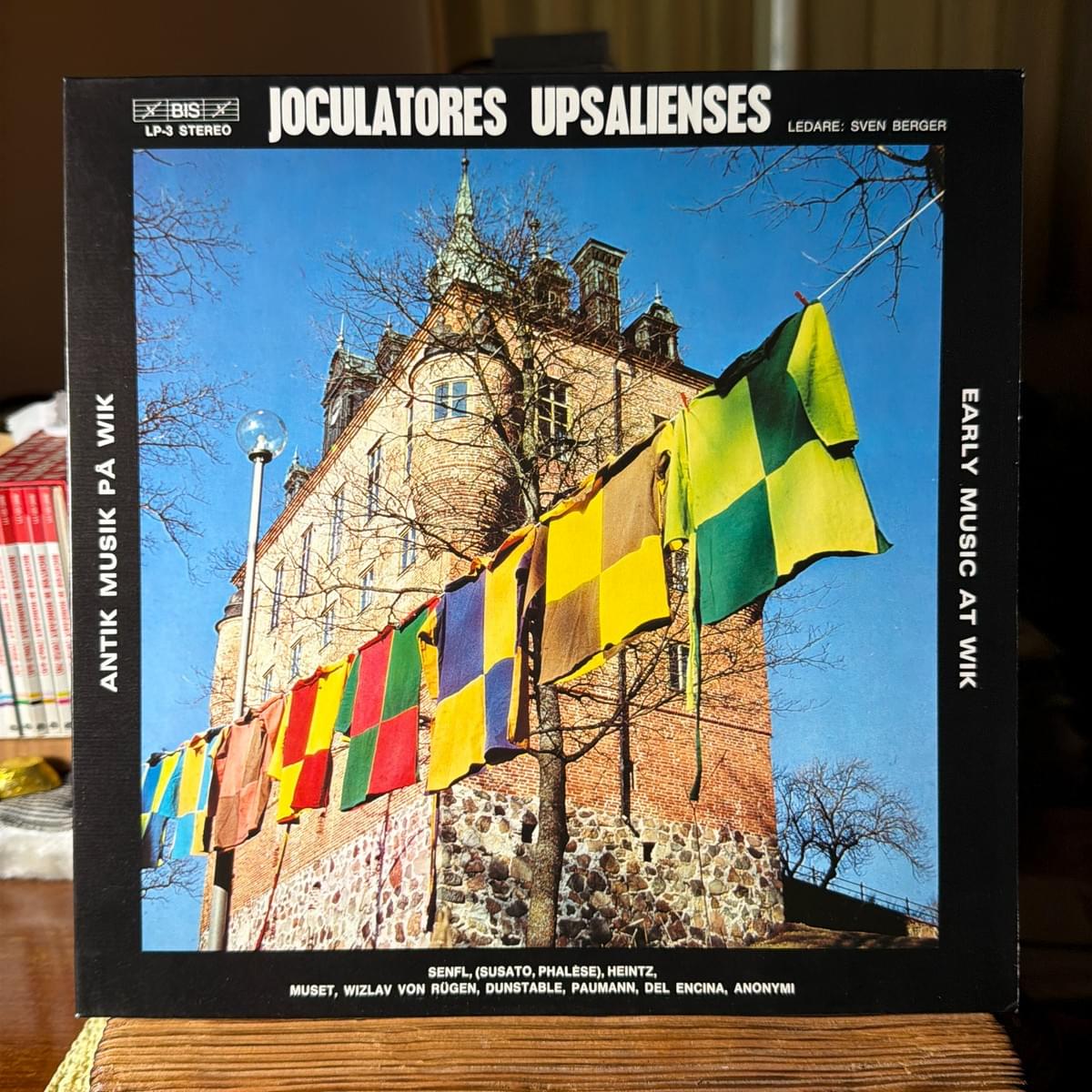
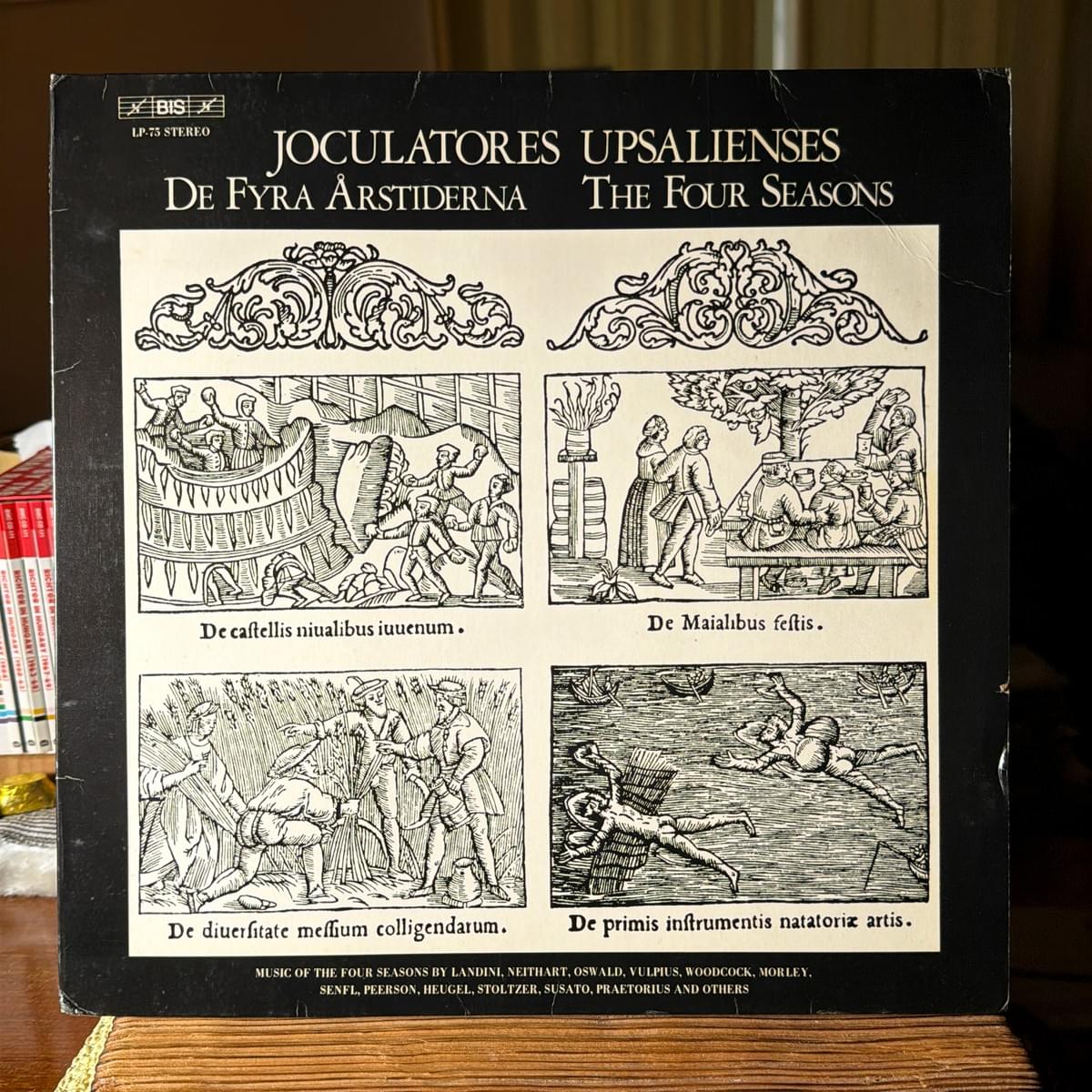
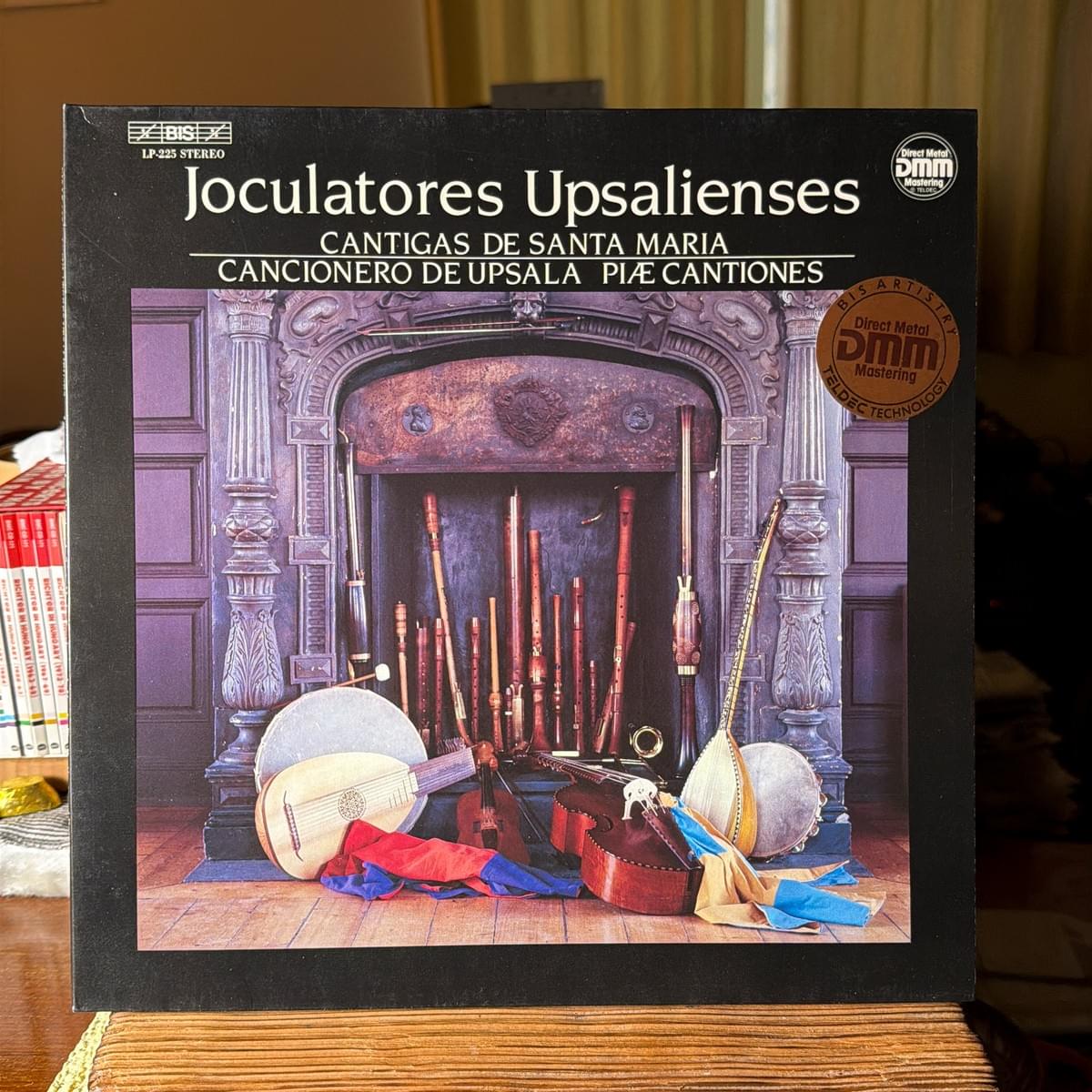
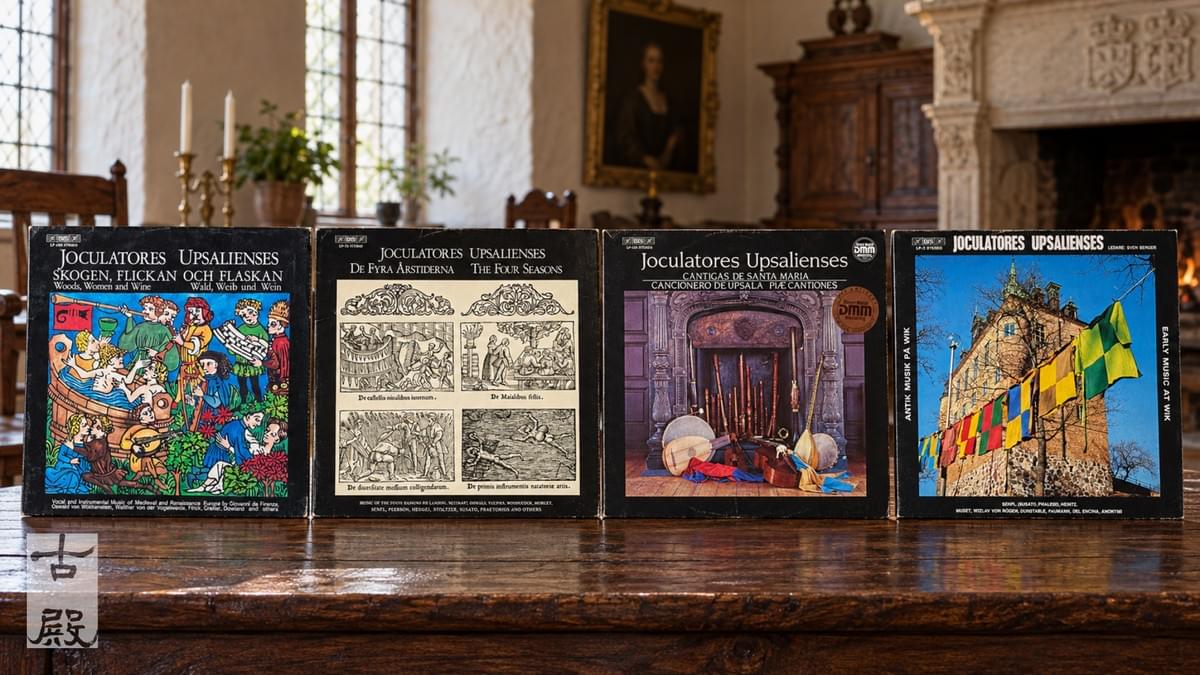
四張早期的 BIS 唱片。標籤都是同一種鮮艷的橘色,正中央一個小小的五線譜框,框裡三個字母:BIS。
四張都是同一個樂團:Joculatores Upsalienses,拉丁文的意思是「烏普薩拉的江湖藝人」。
這群人不是職業音樂家。封套上寫得很清楚:團員裡有天文學家、圖書館員、電腦工程師、化學家、博物館館長、幾位音樂老師,還有「甚至一位音樂家(!)」——連自己都拿來開玩笑。
他們平日上班,週末拿起克魯姆管、搖弦琴和中世紀提琴,演奏七百年前的歌。

四張唱片封底的錄音日期,一一查了是星期幾。結果發現:從1973年到1978年,每一場錄音都落在星期六或星期日;1982年最後一次,也是從星期五錄到星期日。十年間,全是週末。
錄音地點,是烏普薩拉郊外一座15世紀的中世紀城堡——維克城堡的騎士廳。石牆、木牆板、高窗,一座雕花石砦壁爐。四張唱片,前後十年,都在這個房間錄。

而每一次扛著器材走進城堡的,都是同一個人:馮·巴爾。
更有意思的是時間。BIS 第一號唱片的最後一場錄音,在1973年9月6日結束;兩天後的星期六,他就走進了這座城堡。這批錄音後來成了 BIS 的第三號唱片——一家日後的世界級唱片公司,誕生第一個月的聲音。
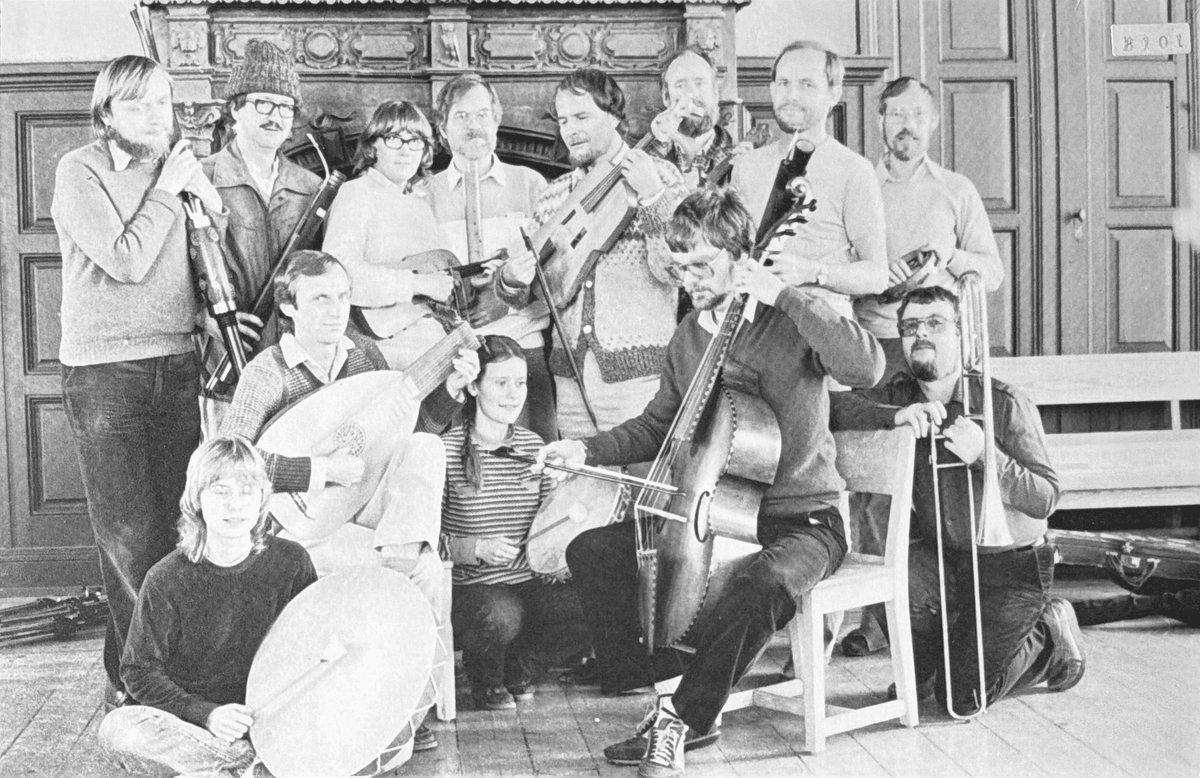
馮·巴爾說過,BIS 從來不進錄音室。他們上天下地去找一個「音樂自己聽起來就很美」的房間;只要找到了,這場仗就已經打贏了一半。他甚至說,自己並不相信技術本身。真正決定一張錄音好壞的,是在哪裡錄、怎麼錄。
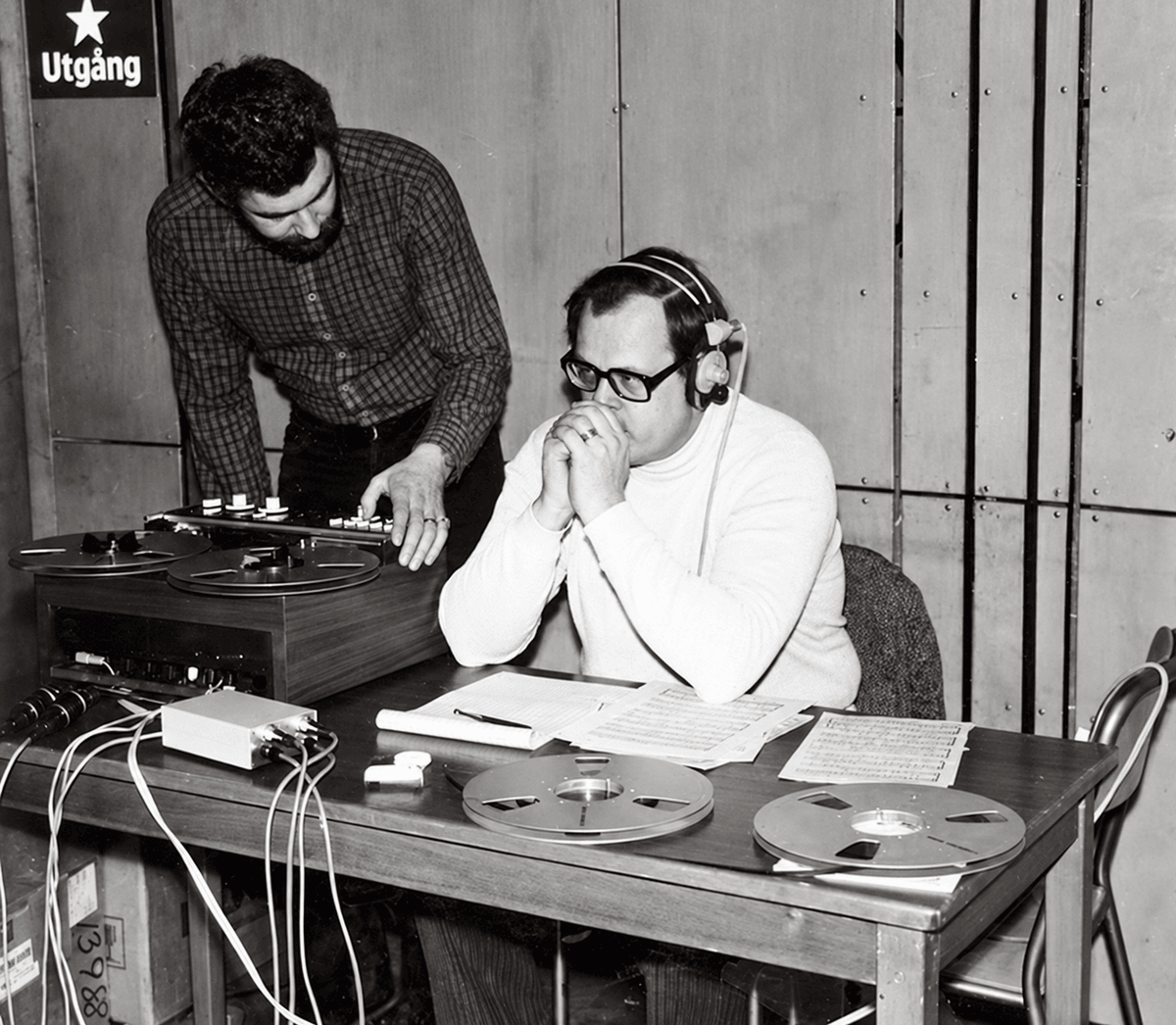
後三張唱片的封底,還特別註明了一句:不用杜比降噪。在降噪器已經是錄音室標配的年代,刻意寫出這一句,等於公開宣告:寧可保留一點磁帶底噪,也不讓任何電路去改變房間裡原本的聲音。
記住這一句,後面會用得到。

一連串「不划算」的決定
理想主義很容易說,難的是付帳單的時候還堅持。BIS 讓人佩服的,是一連串看起來很不划算的決定。
永不絕版。 賣不動的唱片也不下架。馮·巴爾說,藝術家拚盡全力留下最好的演奏,只因為賣得不夠好就讓它消失,是一種背叛。「在我看來,這是道德問題,不是財務問題。」
藝術家住進製作人家。 外國藝術家來瑞典錄音,直接住進他家,和他吵鬧的孩子們一起生活、一起洗三溫暖。錄音那天,藝術家有時還幫忙搬器材。他說這不會讓藝術家拉得更好,但彼此之間的默契會好得多,而這份默契,會聽得出來。
押注沒人看好的人。 當年沒有人願意讓日本樂團錄巴哈,大家說日本人只會模仿、沒有靈魂。馮·巴爾偏偏讓鈴木雅明(Masaaki Suzuki,1954- )與日本巴哈學院合唱團錄下巴哈全部的教會清唱劇,最後成了這個領域的里程碑。還有一位日本假聲男高音,在派對上站到椅子上唱歌,滴酒不沾的馮·巴爾聽得淚流滿面;他用日文唱日本歌的唱片,後來全球賣出超過五萬張。
不能出,就送給你。 如果錄完之後他判斷這份錄音不能用 BIS 的名義出版,他會把母帶免費送給藝術家,錄音成本一筆勾銷,唯一條件是不准出現他和 BIS 的名字。怕不怕別人拿去大賣?他說:完全不在乎。
他的價值排序,濃縮在一句話裡:銷售數字,排在願望清單的最後。
2023年,BIS 五十週年,馮·巴爾八十歲。認識他的人說,他凌晨三點還在倉庫裡打包唱片。問他要不要退休,他只回一個字:「不!」
四張黑膠,變成三張 CD
「永不絕版」,BIS 大致說到做到了。這四張黑膠的錄音,到了 CD 時代都還找得到。
但如果你去找 CD,會發現只有三張。
第四張去哪了?比對兩本 CD 解說冊才發現:1982年錄的最後一張,從來沒有以原來的樣子出過 CD。它被切成了兩半,A 面接在《四季」後面,B 面塞到《森林、女人與酒》前面。
這是為了讓 CD 的節目更連貫,立意不壞,絕大部分的音符也都還在。
可是,每一張黑膠原本的樣子,就這樣消失了:
- 《四季」原本從春天走到冬天,在聖誕歌裡結束;CD 版在冬天之後,又接上十二首西班牙歌。
- 《森林、女人與酒》原本以一首跳躍的舞曲開場,一路飲酒、狩獵、談情;CD 版却以十一首聖誕與勸善聖歌開場。
更可惜的是,最後一張的 B 面有三首舞曲,在古殿比對的兩張 CD 裡都沒有出現。
其中一首叫〈愚人進場〉。封套解說寫著:這首曲子多年來一直是這個樂團的招牌曲,却直到這張唱片才第一次錄音。一面鈴鼓先獨自起頭,高音直笛接上旋律,接著中世紀提琴、魯特琴與低音克魯姆管一一加入,愚人的隊伍全員到齊。
一個樂團演了多年的招牌曲,在 BIS 唯一的錄音,只留在一張西德壓製的黑膠上。
連「永不絕版」的公司,換載體的時候,也難免掉了一些東西。沒有重新出版的部分,實際上就是絕版了。
乾淨,是有代價的
BIS 的 CD 是回到原始母帶重新轉錄的,不是從黑膠翻錄。但殿主每次把原版黑膠和 CD 放在一起聽,總覺得少了一些東西:一些細節,一些空氣感。
這不是要爭論黑膠好還是 CD 好,而是去想:為什麼?
第一個原因,是 CD 的出身。1982年 CD 上市時,宣傳口號是「Perfect Sound Forever(完美的聲音,永遠不變)!」。沒有表面雜音,沒有爆豆聲,不會磨損。從那一刻起,整個產業都朝著「乾淨」前進。
但那些被當成「雜訊」一起清掉的東西裡,可能正藏著最細的部分:殘響最後消散的尾音、空間裡的細微聲響、樂器周圍的那一層空氣。
這有點像我們今天戴上降噪耳機的感覺。世界安靜了,但你也聽不到窗外的風、隔壁的翻頁聲,聽不到這個房間本來的樣子了。
其實,人耳在真實世界裡聽到的聲音,從來就不是乾淨的。走進一座教堂、一間老房子、一座城堡的騎士廳,你聽到的從來不是一個被整理過的聲音,而是聲音和空間、和空氣、和所有細小雜音交織在一起的整體。
黑膠是一種比較「落後」的技術。它沒有能力、也沒有打算把聲音整理乾淨,於是那些和雜音混在一起的殘響、空間與氣息,也一起被留了下來。還記得前面那句「不用杜比降噪」嗎?馮·巴爾當年就是選擇把磁帶的嘶聲,連同騎士廳的空氣一起留下。
這是一個弔詭:最落後的載體,保留了最多那個時代的空氣。
第二個原因,比規格更深。當年一張黑膠背後,是一整條人與手藝的鏈:城堡裡的錄音、親手剪接母帶的製作人、西德的刻片師與壓片廠、漢堡的印刷工。每一個環節,都有一群日復一日磨練手藝的人。
後來,刻片師退休了,工廠關了,磁帶與機器停產了。今天就算拿著同一卷母帶重新刻片,走的也已經是另一條路。那份細節與空氣感之所以再也做不出來,不只是技術問題,而是一個時代的整體條件,一去不返。
下一次放下唱針,在第一個音符響起之前,不妨先等幾秒。那幾秒的「安靜」,其實不是安靜。在這幾張唱片上,那是1973年維克城堡騎士廳的空氣。
兩間 BIS
今天的 BIS 還在,而且很成功。但它已經是另一間公司了。
以全球化時代興起為分界(大約就是蘇聯垮台後的1990年),BIS 前後幾乎是兩間公司。前一間,是馮·巴爾帶著一台 Revox、兩支麥克風,推著嬰兒車經營的北歐小廠;後一間,是數位錄音、大型錄音動輒三、四十支麥克風、藝術家來自各大洲的國際廠牌,2023年還被蘋果公司收購。對台灣讀者最親切的例子,是2015年臺北市立國樂團的《梁祝》,也是 BIS 出的。
馮·巴爾自己會說:變的是方法,不變的是理念。選擇被市場忽略的音樂、永不絕版、把藝術家當成長期夥伴、場地優先於器材,五十年來都沒有變。也正因為願意放下方法、守住理念,它才撐過了全球化。
同一片瑞典土地上,另一家理想主義廠牌「寶碟」(Proprius)就沒有這麼幸運。兩家都相信好聲音來自真實的空間,寶碟守住的是一個地區、一種美學,沒能轉型,1990年代初就倒閉了。
這種事,今天還可能發生嗎?馮·巴爾自己的答案是:不可能。他說,他不認為今天還有人能創立一家古典唱片公司並且成功。一個年輕人帶著一台錄音機,就能在週末走進中世紀城堡錄音;一群天文學家和圖書館員,就能在一家正規唱片公司出四張唱片——那個時代已經過去了。
讓過去活起來
第一張唱片的瑞典文解說裡,有一個動詞殿主讀了很多遍:levandegöra,意思是「使之活起來」。這群週末樂手說,他們的志業,是讓過去的音樂重新活起來。
殿主專業是學歷史的,一直相信歷史不是一串死的年代,而是一種生命狀態。這四張唱片就是證據。溝槽裡不只有13世紀的歌和16世紀的飲酒曲,還有1973年秋天的週末、一位天文學家吹奏克魯姆管時的呼吸,以及一個三十歲的年輕人,第一次用自己的廠牌按下錄音鍵的那一刻。
資料庫可以告訴你這些東西存在;但只有把唱針放下,黑膠唱片中的聲音,會讓兩支麥克風收下的那個房間在你面前重新展開,你才會真的「在場」。
你上一次「在場」聽一件事,是什麼時候?
******
【Gudian Music Stories】Rejected Three Times, He Pushed a Pram to Build a World-Class Label: BIS and a Decade of Weekend Musicians
Three Stacks of Rejection Letters
In Sweden during the early 1970s, a young man set out to produce a flute record for his wife.
He mailed the audition tape to every record label across the nation. Nobody wrote back.
He sent it out again, this time including a cassette preview. Still, dead silence.
On his third attempt, he simply mailed out the master tapes. This time replies finally arrived—every single one a rejection.
He sorted those rejection letters into three distinct piles:
- "Classical music? Not interested."
- "Unknown soloist? Not interested."
- "Contemporary music? You must be joking."
Fifty years later, the record company founded by that young man holds a catalog of more than two thousand titles, not one of which has ever been allowed to go out of print. Its name is BIS.
Yet this essay is not about the internationally renowned BIS of today. It is about the "First BIS" from half a century ago—an outfit that no longer exists in that early form, leaving behind sounds that can now be found in only one physical home:vintage vinyl.
The Man Who Pushed a Pram
The young man was Robert von Bahr (b. 1943).
His mother was a Finnish prima ballerina, and his maternal great-grandfather was a formidable Helsinki music critic who had served as Jean Sibelius’s (1865–1957) very first publisher. That great-grandfather wrote under a pen name: Bis.
Bis is that Italian cry heard in opera houses when a tenor hits a ringing high note and the gallery roars: Encore! Once more! Von Bahr hoped listeners would treat his records the same way—spinning them again and again. He never hesitated to add a self-deprecating aside: his great-grandfather’s publishing firm eventually went bankrupt, so "we are working very hard not to repeat history."
His startup capital was modest to the point of absurdity: a single Revox reel-to-reel deck and two microphones.
After those three rounds of rejections, his wife's flute record was finally pressed independently and sold remarkably well.His mind was made up: he would do everything himself. In 1973, BIS was born.
A brand-new venture could hardly afford freight couriers. Studying the fare rules of the Stockholm municipal transit system, von Bahr uncovered a loophole: passengers hauling suitcases onto the metro had to buy an extra ticket, but a baby stroller traveled free—and the regulations said nothing about what had to be inside the pram.
He bought an oversized pram, stacked it high with vinyl, and pushed it from shop to shop across the city. Swedish television even produced a feature on him; from then on, the moniker was sealed: "The Record Man with the Pram."
Those three piles of rejection letters became BIS's operating creed. Von Bahr remarked that the badge of honor for BIS was the word "choice": a record label's duty is to grant listeners the freedom to love, despise, or feel indifferent toward a work, rather than deciding on their behalf that they are "not interested."
He even remarked, with a wry smile, that he owed a debt of gratitude to every label that had thrown his letters into the wastebasket.
Astronomers, Librarians, and a Medieval Keep
Four early BIS vinyl releases sit before me. Each bears the same vivid orange label with a stave-lined cartouche enclosing three block letters: BIS.
All four document the same ensemble: Joculatores Upsalienses—Latin for "The Jongleurs of Uppsala."
These musicians were not conservatory-trained professionals. The liner notes state it with pride: among their ranks sat an astronomer, a librarian, a computer engineer, a chemist, a museum curator, several school music teachers, and—as their own self-effacing humor noted—"even a musician (!)".
By day they worked ordinary shifts; on weekends they picked up crumhorns, hurdy-gurdies, and medieval vielles to play songs from seven centuries past.
Checking the recording dates printed on the back covers of all four discs reveals a striking pattern: from 1973 to 1978,every single session fell on a Saturday or a Sunday; their final outing in 1982 was tracked across a single weekend from Friday to Sunday. A full decade of music-making, captured exclusively on weekends.
The venue was the Knights’ Hall (Riddarsalen) of Vik Castle (Viks slott), a 15th-century stronghold outside Uppsala.Stone walls, timber paneling, high casements, and an ornate carved-stone fireplace: four albums over ten years, all tracked inside this single room.
And every single time, the person hauling the tape decks and mic stands into the castle was von Bahr himself.
The chronology is equally telling. The final session for BIS’s debut catalog release wrapped up on September 6, 1973; two days later, on a Saturday, von Bahr walked into Vik Castle. Those weekend takes became BIS-LP-3—the recorded voice of a future world-class label in its very first month of life.
Von Bahr maintained that BIS avoided conventional studios. They scouted rooms where the acoustic space itself made the music breathe; once that room was found, half the battle was won. He went so far as to confess that he had little faith in technical trickery for its own sake: what defines a recording is where you capture it, and how you listen.
The rear sleeves of the latter three albums carry a proud declaration: No Dolby Noise Reduction Used. In an era when tape noise reduction was mandatory studio doctrine, printing that notice was an open manifesto: We would rather live with a whisper of tape hiss than let circuits tamper with the authentic breath of the stone hall.
Keep that sentence in mind; it will matter shortly.
A Succession of "Unprofitable" Decisions
Idealism is easy to preach; the test comes when the bills arrive. What commands admiration about BIS is a succession of decisions that looked financially reckless on paper:
- Never Out of Print. Titles that failed to move stayed in the catalog. Von Bahr insisted that when an artist pours their soul into an uncompromised performance, consigning it to oblivion merely because it underperforms commercially is an act of betrayal: "To my mind, this is an ethical question, not a financial one."
- Artists Under the Producer’s Roof. Visiting international artists stayed at his home, sharing meals, saunas, and the daily noise of his children. On session mornings, musicians routinely helped carry flight cases into the hall. He acknowledged this did not magically improve instrumental technique, but the human rapport deepened—and that rapport translated into the grooves.
- Backing the Unfashionable. When Western critics scoffed at the idea of Japanese ensembles playing Bach—dismissing them as mechanical copyists without soul—von Bahr backed Masaaki Suzuki (b. 1954) and the Bach Collegium Japan to record the complete church cantatas, yielding a landmark in early-music performance. When an unknown Japanese countertenor stood on a chair at a private gathering to sing, the teetotaling von Bahr wept; the resulting album of traditional Japanese art songs went on to sell over fifty thousand copies worldwide.
- The Unreleased Gift. If a finished session fell short of the artistic standard required for the BIS imprint, he simply handed the master tapes to the artist free of charge, writing off the production costs. His only condition was that his name and the BIS imprint be omitted. Was he afraid the artist might license it elsewhere for a windfall? His reply:"I couldn't care less."
His hierarchy of values was distilled into a single phrase: Sales figures sit at the very bottom of my wish list.
In 2023, BIS marked its fiftieth anniversary; von Bahr turned eighty. Those close to him noted that he was still packing shipping cartons in the warehouse at three in the morning. Asked if he was contemplating retirement, he offered a one-word answer: "No!"
Four LPs That Became Three CDs
BIS kept its promise that nothing would go out of print: all four of these vinyl titles were eventually migrated to the compact disc era.
Yet if you search for the CDs today, you will find only three discs.
Where did the fourth album go? Cross-referencing the booklets reveals the answer: their final 1982 album was never reissued on CD in its original sequence. It was divided in two: Side A was tacked onto the end of The Four Seasons, while Side B was spliced into the front of Woods, Women and Wine.
The editorial intent was benign—to assemble full-length programmatic discs for the digital medium, and the bulk of the music was preserved.
Yet the original architecture of each vinyl album was dismantled:
- The Four Seasons originally traced an arc from spring through winter, concluding in a quiet Christmas hymn; the CD reissue appends twelve Spanish songs directly after winter has fallen.
- Woods, Women and Wine originally opened with a dance, rolling through drinking songs, hunting calls, and courtly romance; the CD reissue opens instead with eleven devotional and moralizing hymns.
Worse still, three instrumental dances from Side B of that final 1982 album are missing from the CD reissues.
Among them is the Entry of the Fools. The sleeve notes explain that this piece had been the ensemble's signature calling card on stage for years, yet had to wait until this 1982 session to be set down on tape. A lone tambourine establishes the pulse; a sopranino recorder enters with the tune; vielle, lute, and bass crumhorn fall into rank until the entire band of jesters is on the march.
A signature stage piece, captured only once for BIS, survives exclusively on a piece of West German-pressed vinyl.
Even a label committed to keeping everything in print leaves things behind when changing playback media. What was omitted from the digital remaster became, in practical terms, out of print.
Cleanliness Carries a Cost
BIS cut its CDs directly from the original analog master reels, never from commercial vinyl dubs. Yet whenever I place the original orange-label vinyl on the turntable alongside the CD remaster, an acoustic difference is apparent: a loss of fine texture, an absence of ambient air.
This is not a debate over analog versus digital formats; it is an inquiry into why that difference exists.
The first factor lies in the commercial origins of the compact disc. When the CD launched in 1982, the marketing promise was "Perfect Sound Forever!" No ticks, no surface noise, no mechanical wear. From that day on, the entire recording industry marched toward noise-floor eradication.
Yet in sweeping away what engineers labeled "noise," they often scrubbed away the subtle acoustic cues: the natural decay of notes into the room, the micro-reflections of stone walls, the halo of air around unamplified gut strings and wooden bores.
It is like wearing modern noise-canceling headphones: the ambient hum vanishes, but with it goes the rustle of wind outside the window, the paper turn in the next row, and the acoustic identity of the room itself.
Human ears in physical space do not perceive sound in an acoustic vacuum. Step into a stone chapel, a wooden hall, or the Knights' Hall of a 15th-century keep: what you hear is not an isolated, sterile signal, but a balance of music,architecture, air, and room presence.
Vinyl is an older mechanical technology. It possessed neither the mandate nor the processing tools to purge low-level ambient artifacts; as a consequence, the reverberant decay, the physical boundaries of the hall, and the breath of the players were cut directly into the groove. Remember that sleeve note: No Dolby Noise Reduction Used. Von Bahr chose to preserve the tape hiss because it was bound to the acoustic air of that medieval hall.
The older medium preserved the atmosphere of its era precisely because it left the room alone.
The second reason runs deeper than technical specifications. Behind an early analog LP stood an interconnected human chain: the performance in the castle, the producer splicing tape on a block, the lacquer-cutting engineers and electroplating baths in West Germany, and the lithographers in Hamburg. Every stage was manned by artisans refining their craft day after day.
Later on, the mastering engineers retired, the chemical plating lines closed down, and analog tape transports ceased production. Mastering the same tape reel today follows an entirely different signal path. The ambient air of those early pressings cannot be recreated because the material ecosystem that birthed it has passed away.
The next time you cue a record, allow a few seconds to pass before the first note arrives. That brief stretch of "silence" is not empty space: on these records, it is the breathing air of the Knights' Hall at Vik Castle in the autumn of 1973.
Two Incarnations of BIS
BIS remains an active, highly successful enterprise today, but it is a fundamentally different organization.
Taking the dawn of the globalized era as a dividing line—roughly around 1990, in the wake of the Cold War—BIS has lived two distinct lives. The first was an artisanal Scandinavian outfit driven by Robert von Bahr with a Revox deck, a pair of microphones, and a baby pram. The second is an international catalog built on digital workflows, thirty-channel orchestral mic trees, artists from every continent, and an acquisition by Apple in 2023. (For readers in Taiwan, a familiar entry is the Taipei Chinese Orchestra’s 2015 recording of The Butterfly Lovers, released on BIS.)
Von Bahr himself would tell you that while his methods adapted, his core philosophy never wavered: championing repertoire overlooked by the market, keeping titles in print, treating artists as lifelong partners, and prioritizing the room over the gear rack. Because he was willing to modernize his tools while protecting his principles, the label survived the pressures of industry consolidation.
Across Sweden, another idealistic independent label, Proprius, was less fortunate. Both believed authentic sound lived in real architectural spaces; Proprius remained anchored to a specific regional aesthetic and struggled to scale, winding down in the early 1990s.
Could a label like BIS be built from scratch today? Von Bahr's own answer is candid: No. He noted that he doubted anyone could launch an independent classical label from nothing in the modern market and make it viable. A young man walking into a medieval castle with a portable tape deck on a Saturday morning; an ensemble of astronomers and librarians recording four albums for an independent catalog—that era has closed its doors.
Bringing the Past to Life
In the Swedish liner notes of that first album sits a verb I have lingered over many times: levandegöra—literally, "to bring to life; to animate." Those weekend players wrote that their artistic purpose was to make the music of the past breathe again.
My training was in history, and I have always believed that history is not a dry register of dates, but a living human state.These four records are physical proof of that belief. Pressed into their microgrooves are not merely 13th-century cantigas and 16th-century drinking songs, but the autumn air of 1973, the measured breath of an astronomer blowing into a crumhorn, and a thirty-year-old founder pressing the record button on his own label for the very first time.
A digital database can verify that these documents exist; but only when the stylus settles into the vinyl does the physical room captured by those two microphones open up before you, allowing you to be truly present.
When was the last time you were truly present to listen to something?