
【古殿唱片音樂故事】柯岡一家兩張最重要的家族錄音
古殿殿主
同一首曲子,三對父子,三種選擇
莫札特《降E大調小提琴與中提琴:協奏交響曲》K.364,二十世紀有三對頂尖的父子檔錄過。
猜猜看,這三對父子,誰拉小提琴、誰拉中提琴?
大衛·歐伊斯特拉夫(David Oistrakh, 1908–1974)——蘇聯學派的絕對代表,二十世紀公認的小提琴頂峰之一——1963年至1972年間,先後四度與兒子伊果·歐伊斯特拉夫(Igor Oistrakh, 1931–2021)同台錄下這首曲子。結果他自己拉中提琴,把小提琴的主奏位置,讓給了兒子。
美國小提琴大師許姆斯基(Oscar Shumsky, 1917–2000),1985年與兒子艾瑞克(Eric Shumsky,1953-)合錄同一首曲子。這次父親留在小提琴的位置,兒子拉中提琴。錄音現場還留下一個有趣的花絮:因為父親個子矮、兒子個子高,工程師花了好一番功夫才調整好兩人的收音平衡。
柯岡(Leonid Kogan, 1924–1982)——蘇聯學派裡與歐伊斯特拉夫並稱、卻始終活在他陰影下的另一位大師——1968年前後與兒子帕維爾·柯岡(Pavel Kogan,1952-)錄下同一首曲子。柯岡自己也是留在小提琴的位置,讓兒子拉中提琴。
三對父子,同一首作品,卻只有一組父子,做出了與另外兩組完全相反的選擇。
歐伊斯特拉夫把小提琴的位置讓給了兒子,自己退到中提琴的暗處。柯岡沒有。許姆斯基也沒有。
更值得注意的是,歐伊斯特拉夫這個選擇,並不是一次性的姿態,而是一個家族連續兩代人的決定。大衛與伊果錄完這首曲子多年後,2001年,換伊果自己當了父親——他與兒子瓦列里·歐伊斯特拉夫(Valeri Oistrakh, 1961-)合錄同一首莫札特,而伊果的選擇,和他父親當年一模一樣:自己退到中提琴,兼任指揮,把小提琴主奏交給瓦列里。
這是一個關於「父親要用什麼方式,把自己的位置傳給下一代」的選擇題。歐伊斯特拉夫家族用兩代人的時間,把「退位」變成了一種家風。
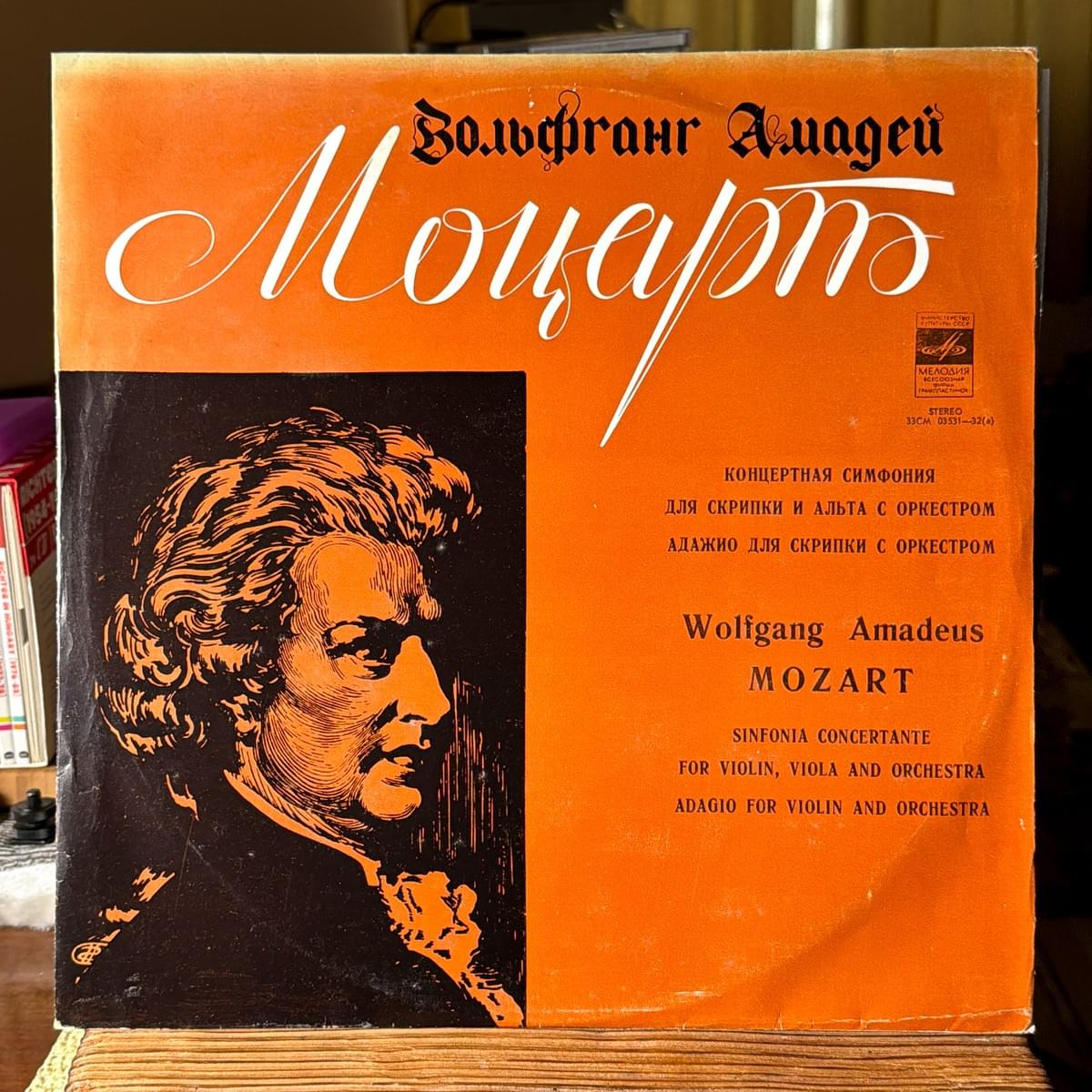
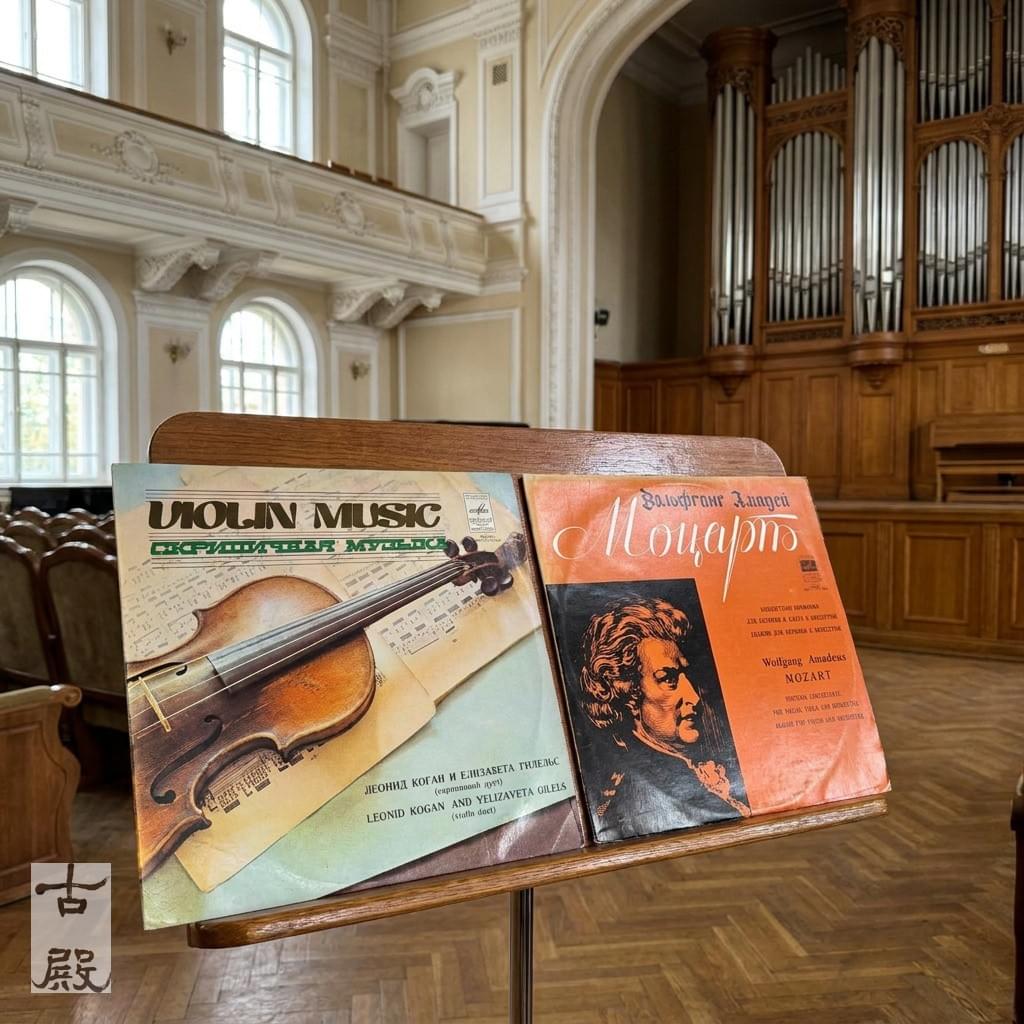
「古殿」手上,正好有一張柯岡與帕維爾合奏這首莫札特的蘇聯 Melodiya原版黑膠。柯岡家其實是整整一個音樂家庭。
柯岡的妻子伊麗莎白·吉利爾斯(Elizabeth Gilels,1919-2008)是小提琴家。他們的女兒妮娜·柯岡(Nina Kogan, b. 1954)是鋼琴家,十三歲起就開始與父親同台,往後將近十六年,一直到柯岡1982年去世為止,她是柯岡固定合作的鋼琴伴奏——這段父女合作留下的錄音其實不少。兒子帕維爾則是小提琴家轉指揮家。也就是說,柯岡一家四口,父親、妻子、女兒、兒子,全都是職業音樂家,而且彼此之間留下了大量的家族合作紀錄。
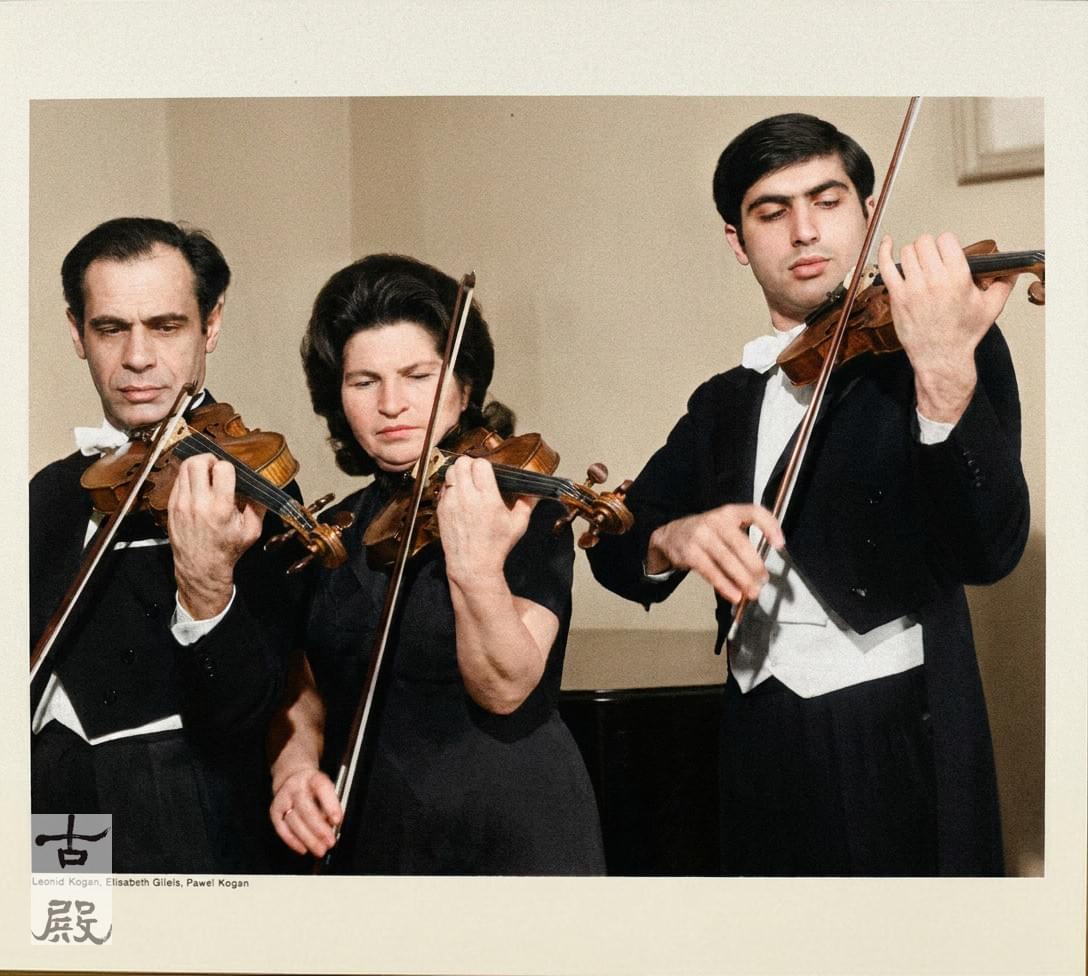
柯岡與柯岡夫人:一段被鎖進溝槽裡的私密對話
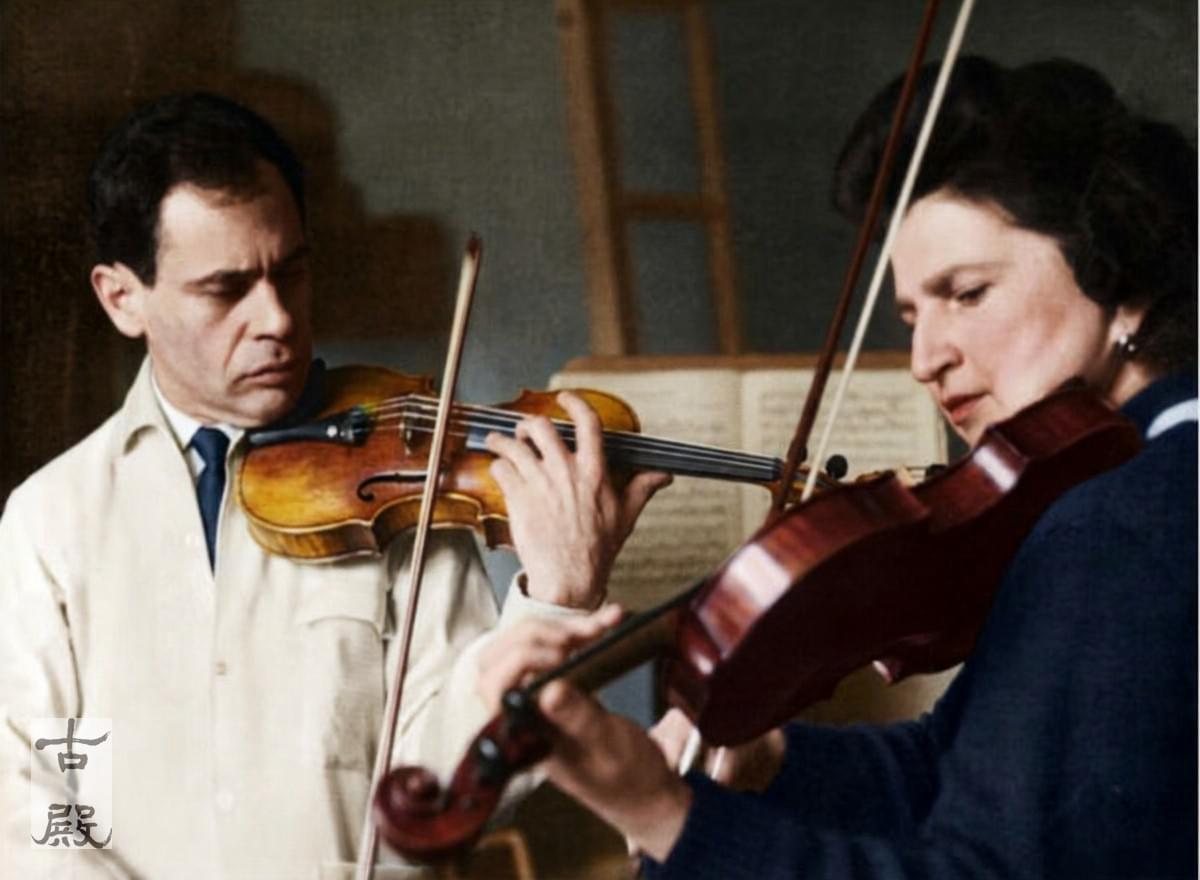
在莫札特那張唱片之前,柯岡家還留下另一份罕見的錄音——柯岡與妻子伊麗莎白·吉利爾斯的無伴奏小提琴二重奏。
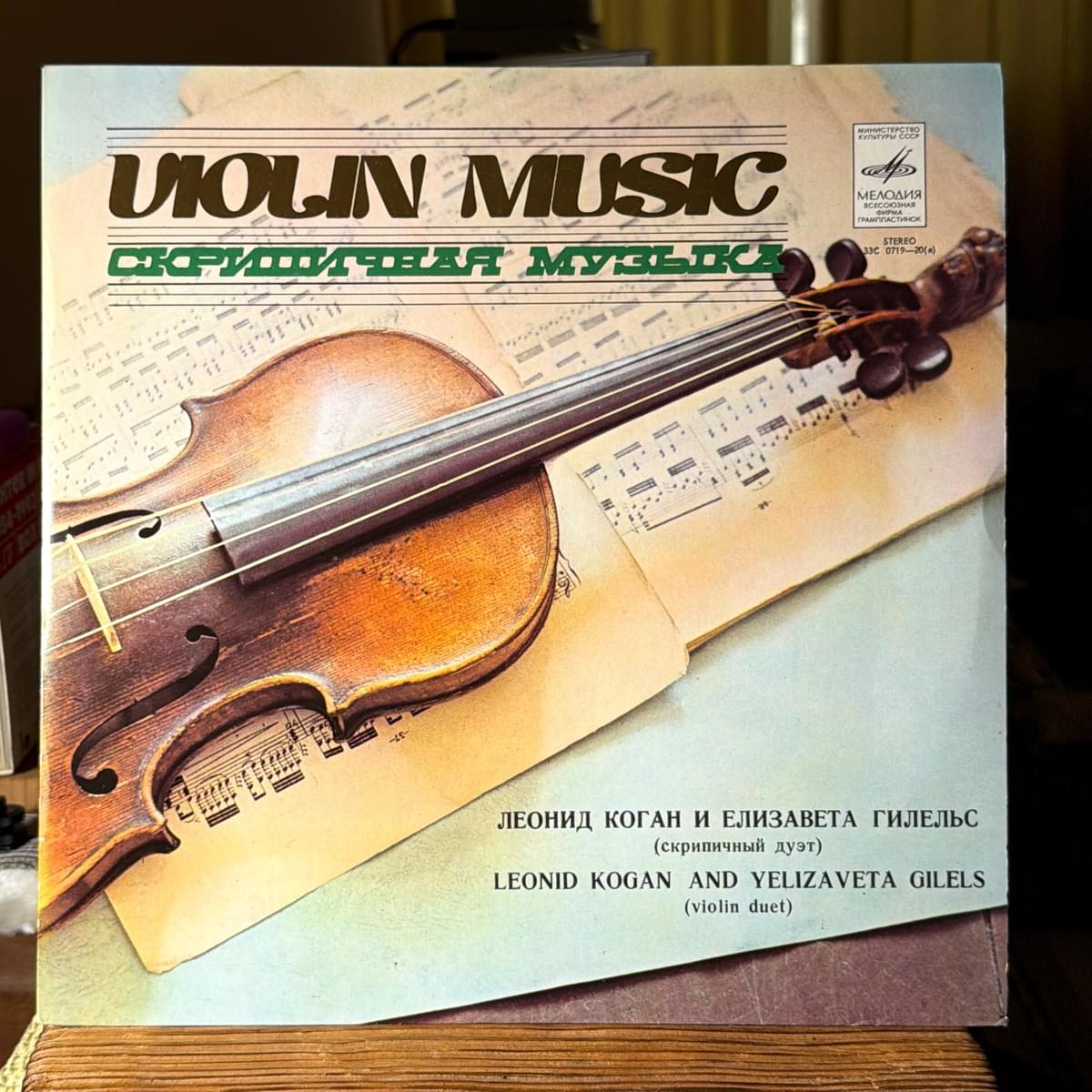
蘇聯 Melodiya 版編號 Стерео 33С 0719—20(а),1963年前後錄製,1964年在英國由 EMI/Columbia 以 SAX 2531 首度發行,同時蘇聯本土同步發行了手上這張版本。曲目是泰勒曼《卡農奏鳴曲》、勒克萊爾兩首奏鳴曲,以及易沙意的《a小調奏鳴曲》。
這裡有一個對版本考證極重要的細節。易沙意那首曲子,並不是他知名的獻給六位小提琴家的無伴奏奏鳴曲集,而是他寫於1915年、生前從未出版的《雙小提琴奏鳴曲》。原始出版商一度認為兩把小提琴的織體過於艱難,把它改編成加了中提琴的三重奏發行——真正的雙小提琴原版反而被長期擱置。柯岡與伊麗莎白·吉利爾斯,正是最早依原始版本錄製這首曲子的演奏家之一。這張唱片,某種意義上救回了一部差點被出版史意外定型的作品。
伊麗莎白·吉利爾斯本人是鋼琴家埃米爾·吉利爾斯(Emil Gilels, 1916–1985)的妹妹,一生錄音極少,這張與丈夫合奏的唱片,是她藝術生涯僅存的少數商業紀錄之一。英國首版 SAX 2531 後來在收藏市場上創下 8,139 美元的成交紀錄,是 Discogs 統計史上第二高價的古典唱片交易——僅次於《莫札特在巴黎》套裝。
而比標準首版更稀有的,是這張唱片的兩面單面白標測試片(Long Playing Test Record,NOT FOR SALE,英國壓製)。這種內部測試用、從未正式對外發行的版本,2019年9月在德國透過拍賣,從19.99美元一路推高到 12,331 美元成交——比標準首版的成交紀錄還要高出將近5成。一張連正式編目都沒有的內部試聽片,能拍出這個價錢,說明市場對這份錄音的渴望,早已超越了「買一張唱片」這件事本身。
這張唱片沒有樂團、沒有鋼琴撐開空間,兩把小提琴赤裸地對話——考驗的是最基本的音準、句法呼吸、音色融合。柯岡在協奏曲舞台上以火熱著稱,常被拿來與帕格尼尼相提並論;但這張唱片裡,是他完全私密的另一面:與妻子在錄音室裡,把私下排練過無數次的默契,濃縮進四十多分鐘的錄音裡。
柯岡與帕維爾:父親沒有讓位,卻讓出了整個舞台的呼吸
回到那張橘色封套的莫札特唱片,Мelodiya 33CM 03531-32(a),蘇聯內銷版,阿普列列夫卡列寧勳章唱片廠壓製。A面是 K.364 第一、二樂章,B面是第三樂章加上《E大調慢板》K.261。演奏者:柯岡(小提琴)、帕維爾·柯岡(Pavel Kogan,1952-,中提琴),伴奏是全蘇廣播莫斯科大交響樂團獨奏家合奏團。
錄音年代目前市場上有1968年與1972年兩種說法,尚無法精確定位——這是「古殿」留給讀者的一個開放考證點。可以確定的是,帕維爾生於1952年,錄這張唱片時,他正站在「小提琴神童」與「未來指揮家」的分岔點上,還沒有完全定型。1970年,他曾在赫爾辛基西貝流士小提琴大賽並列首獎,之後才逐漸轉向指揮,最終出任莫斯科國立交響樂團音樂總監長達三十餘年,直到2022年。
也就是說,這張唱片捕捉的,是帕維爾人生軌跡尚未展開之前的一個橫切面。而在這個橫切面上,父親沒有把小提琴讓給他。
在此得先回頭把歐伊斯特拉夫的故事說完整。
1935年,第一屆維尼奧夫斯基國際小提琴大賽在波蘭華沙舉行,二十七歲的大衛·歐伊斯特拉夫代表蘇聯參賽,最終只拿到第二名——冠軍是當時年僅十六歲的法國天才吉妮特·努娃(Ginette Neveu, 1919–1949)。這對已經頗負盛名的大歐來說,是一次公開的落敗。十七年後,1952年,這場大賽在波蘭波茲南復辦,年輕的伊果代表蘇聯出賽,一舉奪下金牌——等於替父親當年的遺憾,扳回了一城。大歐對這件事與有榮焉,這是可以想見的。
但正因為這樣,大歐也很快意識到一個危險:兒子如果從此活在「歐伊斯特拉夫」這個姓氏的陰影下,被永遠定義為「大歐的兒子」,反而會限制伊果自己的藝術生命。
這裡有一個更精確、也更有意思的細節:大歐換到中提琴,並不是他對這首曲子的一貫習慣,而是專門為了與兒子合奏才做的選擇。1960年,他曾以小提琴獨奏身分,與巴爾夏伊(Rudolf Barshai)合作錄下這首曲子,巴爾夏伊拉中提琴兼指揮,由 Melodiya 發行;1962年,他又與亨德密特(Paul Hindemith)合作錄過一次,同樣是大歐拉小提琴、亨德密特拉中提琴兼指揮(Decca 錄音,可惜這份錄音至今從未正式發行);1963年9月11日,他在莫斯科音樂院大廳的一場現場演出裡,第三度以小提琴身分、再度與巴爾夏伊合作演出這首曲子。也就是說,在遇到自己兒子之前,大歐一直是這首曲子的小提琴獨奏者,沒有例外。
直到1963年9月27日,他才第一次換成中提琴,與伊果同台錄音(Decca 錄音室版本,指揮孔德拉辛);隔一天,9月28日,兩人又在倫敦現場演出並錄音,指揮是曼紐因。到了1972年,這個安排更進一步——3月在柏林,5月在維也納,大歐不只拉中提琴,還親自兼任指揮,一邊在中提琴聲部裡烘托兒子,一邊從指揮台上為整場演出定調。換句話說,「把小提琴讓給兒子」這件事,從來不是大歐演奏這首曲子的常態,而是他遇見自己兒子之後,才刻意啟動的專屬安排——這四次與伊果合錄這首莫札特,他每一次都退到中提琴,正是這個心思最具體的展現,他主動地把最容易被記住的位置,讓給正在建立自己名字的兒子。
多年後,伊果自己也當了父親,2001年與兒子瓦列里合錄同一首曲子時,選擇了和父親當年一模一樣的方式——自己退到中提琴,兼任指揮,把小提琴主奏交給瓦列里。父親怎麼對他,他後來就怎麼對自己的兒子,於是「退位」變成一種家風。
柯岡的情況,其實和歐伊斯特拉夫家族並不相同。
帕維爾固然也是實力堅強的小提琴家,1970年在赫爾辛基西貝流士大賽並列首獎,但他從未走過伊果那條路——沒有代表蘇聯扛回一面連父親當年都沒拿到的世界級金牌,「柯岡」這個姓氏,也就沒有變成那種公開的、隨時可能壓垮兒子的重量。柯岡不需要用退位去替兒子爭取喘息的空間。他與帕維爾同台錄下這首莫札特,動機更單純——就是想和兒子一起演奏、留下一份紀錄,如此而已。
這也讓帕維爾後來的路走得更自由:他沒有被定型成「柯岡的小提琴繼承人」,而是逐漸把重心轉向指揮,成為一位獨當一面的指揮家,1972年即與蘇聯國家交響樂團完成指揮首演,此後長年擔任莫斯科國立交響樂團音樂總監。
而這條路,最終讓柯岡家留下了一份比莫札特那張唱片更動人的紀錄。1980年,柯岡晚年、也是他去世前兩年,父子倆再度一起走進錄音室,錄下貝多芬《D大調小提琴協奏曲》——這次,帕維爾已經不是拉中提琴的兒子,而是站上指揮台,親自執棒;柯岡則以獨奏家的身份,站在兒子的指揮棒下拉奏。
這個安排,說到底也是父親在拉抬兒子——只是拉抬的方式和背後的原因,與歐伊斯特拉夫完全不同。大歐擔心伊果活在自己陰影下,用退位替兒子擋掉外界的壓力;柯岡家則在帕維爾長大後,在指揮這個全新的領域裡,找到了屬於自己的位置,而且做得很好。柯岡用行動告訴大家「這是我兒子的舞台」。
而這份晚年的貝多芬錄音,後來成為柯岡一生眾多貝多芬協奏曲錄音裡,特別重要的一份——它不只是技藝的紀錄,更是父子關係走到最成熟階段的見證。
但柯岡與帕維爾之間,還有一層歐伊斯特拉夫家族沒有的沉重。
1982年12月,柯岡在赴拉脫維亞演出途中,於火車上心臟病猝逝,得年五十八歲。而他當時正準備前往與兒子帕維爾同台演出。他生命最後階段仍在延續的日常——與兒子一起演奏,直到最後一刻都還在路上。
柯岡沒能活著看到帕維爾成為莫斯科國立交響樂團三十多年的音樂總監,但這兩張唱片,把那個還沒展開的未來,和已經確立的過去,一起封存在歷史中。
******
【Gudian Music Stories】Two Most Significant Family Recordings of the Kogan Dynasty
One Piece, Three Father-Son Duos, Three Choices
Mozart’s Sinfonia Concertante in E-flat major for Violin, Viola and Orchestra, K. 364, was recorded by three of the 20th century’s top father-son duos.
Can you guess who played the violin and who played the viola in each pair?
David Oistrakh (1908–1974)—the absolute titan of the Soviet School and universally recognized as one of the century's peak violinists—recorded this work four times with his son, Igor Oistrakh (1931–2021), between 1963 and 1972. Every time, David stepped down to play the viola, yielding the primary violin spotlight to his son.
The American master Oscar Shumsky (1917–2000) recorded the piece with his son, Eric Shumsky (b. 1953), in 1985. Here, the father kept his position on the violin, while the son played the viola. A charming anecdote from that session tells us that because the father was short and the son was tall, the sound engineers had to work overtime just to balance the acoustic levels between them.
Leonid Kogan (1924–1982)—who shared the Soviet violin throne with Oistrakh, yet often lived under his immense shadow—recorded the same work around 1968 with his son, Pavel Kogan (b. 1952). Kogan also chose to remain on the violin, placing his son on the viola.
Three father-son duos, the exact same masterpiece, but only one pair made a choice completely opposite to the other two.
David Oistrakh yielded the violin, stepping into the darker register of the viola. Kogan did not. Neither did Shumsky.
Even more fascinating is that Oistrakh’s choice was not a one-time gesture; it became a decision spanning two generations. Decades after David and Igor recorded the piece, in 2001, Igor became the father on the album cover. Recording the same Mozart masterpiece with his own son, Valeri Oistrakh (b. 1961), Igor made the exact same choice his father had made years before: he stepped back to play the viola and double as conductor, handing the solo violin part to Valeri.
It is a profound question: How does a father hand down his place to the next generation? The Oistrakh family spent two generations turning the act of "stepping back" into a family legacy.
Here at Grand Tour Records, I happen to hold an original Soviet Melodiya LP of Kogan and Pavel performing this very Mozart piece. The Kogans were, in fact, an entire family of musicians.
Leonid Kogan’s wife, Elizabeth Gilels (1919–2008), was a violinist. Their daughter, Nina Kogan (b. 1954), is a pianist who began sharing the stage with her father at age thirteen and served as his regular accompanist for nearly sixteen years until his death in 1982—leaving behind a substantial discography of father-daughter collaborations. Their son, Pavel, transformed from a violinist into a world-renowned conductor. In short, all four members of the Kogan family were professional musicians who left behind a rich tapestry of shared recordings.
Kogan and His Wife: An Intimate Conversation Locked in the Grooves
Before that Mozart LP, the Kogan household produced another remarkably rare recording—an unaccompanied violin duo featuring Leonid Kogan and his wife, Elizabeth Gilels.
Recorded around 1963 (Soviet Melodiya cat. no. Stereo 33С 0719—20(a)), it was first released in the UK in 1964 by EMI/Columbia as SAX 2531, simultaneous with the Soviet domestic release I have in my hands. The repertoire includes Telemann’s Canon Sonata, two sonatas by Leclair, and Ysaÿe’s Sonata in A minor.
There is a vital historical detail hidden here. The Ysaÿe piece on this record is not one of his famous Six Solo Violin Sonatas dedicated to master violinists, but his Sonata for Two Violins, written in 1915 and unpublished during his lifetime. The original publisher believed the texture of two violins was far too difficult for listeners and re-arranged it into a trio by adding a viola—leaving the original duo version shelved for years. Kogan and Elizabeth Gilels were among the very first artists to record this work according to its original score. In a sense, this record rescued a masterwork nearly distorted by publishing history.
Elizabeth Gilels herself was the sister of the legendary pianist Emil Gilels (1916–1985). She recorded very little throughout her life, making this collaborative LP with her husband one of the few commercial records of her artistry. The original UK issue, SAX 2531, later fetched an astonishing $8,139 on the collector’s market—the second-highest price ever recorded for a classical LP on Discogs, trailing only the legendary Mozart in Paris box set.
Even rarer than the commercial first pressing is a pair of single-sided, white-label test pressings of this recording (Long Playing Test Record, NOT FOR SALE, pressed in the UK). In September 2019, this internal, unreleased test copy was auctioned in Germany, skyrocketing from $19.99 to a staggering $12,331—nearly 50% higher than the commercial first edition record. That an uncatalogued test pressing could command such a price proves that collector demand for this document transcends the physical object of "buying a record."
With no orchestra or piano to expand the spatial sound field, two violins engage in naked conversation. It demands total mastery of intonation, shared phrasing, breath, and tonal blending. On the concerto stage, Kogan was famed for his fiery intensity, frequently compared to Paganini. But in this recording, we hear a deeply intimate side: sitting in the studio with his wife, distilling years of private, unwritten understanding into forty-some minutes of music.
Kogan and Pavel: The Father Kept His Seat, Yet Opened Up the Stage
Re
turning to that orange-sleeved Mozart album—Мелодия 33CM 03531-32(a), Soviet domestic pressing by the Aprelevka Order of Lenin Plant—Side A features movements I and II of K. 364, while Side B holds the third movement alongside the Adagio in E major, K. 261. Performers: Leonid Kogan (violin), Pavel Kogan (viola), accompanied by the Soloists Ensemble of the All-Union Radio Moscow Grand Symphony Orchestra.
Market sources conflict on whether this was recorded in 1968 or 1972—an open discographical question I leave for our readers at Grand Tour. What is certain is that Pavel was born in 1952. At the time of this recording, he stood at a crossroads between "prodigy violinist" and "future conductor." In 1970, he co-won First Prize at the Sibelius Violin Competition in Helsinki before gradually shifting toward conducting, eventually serving as Music Director of the Moscow State Symphony Orchestra for over thirty years until 2022.
This LP captures a cross-section of Pavel’s life before his path fully unfolded. And on this cross-section, his father did not yield the violin.
To understand why, we must complete David Oistrakh’s story.
In 1935, at the inaugural Wieniawski International Violin Competition in Warsaw, the 27-year-old David Oistrakh represented the Soviet Union and placed second—losing the top spot to a 16-year-old French prodigy named Ginette Neveu (1919–1949). For the already celebrated "King David," this was a public defeat. Seventeen years later, in 1952, the competition resumed in Poznań. A young Igor Oistrakh competed for the Soviets and took home the Gold Medal—avenging his father's old regret. Naturally, David swelled with pride.
Yet, David quickly sensed a danger: if Igor spent his career under the shadow of the surname "Oistrakh," forever labeled as "David’s son," his artistic growth would be choked.
There is a telling detail here: David switching to the viola was not his standard practice for this piece; it was a choice he made exclusively to play with his son. In 1960, David recorded K. 364 as the violin soloist alongside Rudolf Barshai playing viola and conducting (released on Melodiya). In 1962, he recorded it with Paul Hindemith, again playing violin while Hindemith played viola and conducted (a Decca recording unfortunately never officially released). On September 11, 1963, in a live performance at the Moscow Conservatory, he took the violin role once more with Barshai. Until he performed it with his son, David was always the violinist in K. 364, without exception.
It was only on September 27, 1963, that David picked up the viola for the first time to record alongside Igor (the Decca studio version with Kirill Kondrashin). The next day, September 28, they performed and recorded it live in London under Yehudi Menuhin. By 1972, David took it a step further—in Berlin and Vienna, he played the viola while conducting from the stand, nurturing his son’s lines from the viola section while setting the architectural tone for the entire orchestra.
Stepping down to the viola was never David’s default choice for Mozart—it was an intentional act reserved entirely for his son. It was his way of stepping into the background so his son could build a name of his own. Decades later, when Igor recorded the piece with his own son Valeri in 2001, he repeated his father's gesture verbatim, cementing "yielding the spotlight" into a family legacy.
Leonid Kogan’s situation was different.
Pavel was undoubtedly a formidable violinist—co-winning the 1970 Sibelius Competition—but he never walked Igor’s specific path. He didn't carry the burden of winning a global gold medal that had eluded his father. The name "Kogan" was not a weight threatening to crush the younger generation, so Leonid did not need to step down to give his son room to breathe. His motivation to record the Mozart with Pavel was simpler: he wanted to share the stage with his son and capture that moment in time.
This gave Pavel the freedom to forge his own path. Rather than being boxed in as "Kogan’s violin heir," he gravitated toward the podium. By 1972, he made his conducting debut with the USSR State Symphony Orchestra, later leading the Moscow State Symphony Orchestra for decades.
This path eventually led to a recording even more moving than their Mozart LP. In 1980—two years before Leonid’s death—father and son entered the studio to record Beethoven’s Violin Concerto in D major. This time, Pavel was no longer the son playing viola in his father's shadow; he was the maestro on the podium. Leonid Kogan stood before his son's baton as the soloist.
This arrangement was also a father supporting his son—but through an entirely different gesture than Oistrakh's. Where Oistrakh yielded his seat to shield his son from comparison, Kogan celebrated his son’s mastery in a completely new domain. With his violin, Kogan declared to the world: "This is my son's stage."
That late-period Beethoven recording remains one of the most profound documents in Kogan’s extensive discography—not merely a record of instrumental mastery, but a testament to a father-son relationship at its fullest maturity.
Yet, there is a poignant weight hanging over the Kogan family that the Oistrakhs never knew.
In December 1982, while traveling to a concert in Latvia, Leonid Kogan died suddenly of a heart attack on a train at the age of fifty-eight. He was on his way to perform on stage with his son, Pavel. The rhythm of his final days was the same rhythm he had kept for years—playing alongside his son, right up to the final stop.
Kogan did not live to see his son complete thirty-plus years as Music Director of the Moscow State Symphony Orchestra. But these two LPs preserve that unwritten future alongside the established past, forever preserved together in the grooves of history.