
九十年前的五天,如何決定了蕭邦的未來
柯爾托1933-34年蕭邦錄音計畫:音樂史上精確的豪賭
古殿殿主
那是某個音樂會的後台。一個十六歲的男孩叫顧爾達(Friedrich Gulda,1930-2000),剛拿下日內瓦大賽金牌,技巧無敵,但他把柯爾托指下的琴音奉為神明。他很好奇:這個老人到底有什麼魔法?上台前都在練什麼?
有一天,他偷偷潛入音樂廳後台,貼在琴房門口偷聽。他以為會聽到什麼深奧的樂段,某種只有大師才知道的秘技。
門裡傳來的,是單調、枯燥、緩慢的音階。
Do Re Mi Fa Sol La Si Do……一遍又一遍。
那一刻,顧爾達懂了。柯爾托在台上那種如煙霧般迷離、如詩般自由的演奏,不是「隨便彈彈」出來的。為了在台上能像鳥一樣飛翔,他在台下必須先把翅膀洗得比誰都乾淨。
這也解釋了那些「錯音」。不是因為他練得少,而是因為他選擇了在台上冒險——追求一種極致的音色,一種危險的詩意。那些錯音,是冒險的代價,不是懈怠的結果。
這個故事,是理解柯爾托1933年那五天錄音的最好入口。
一、五天,幾乎所有蕭邦
1933年7月4日,星期二。倫敦聖約翰伍德區,艾比路錄音室3號。
柯爾托坐在一架Steinway No.141鋼琴前,開始錄音。
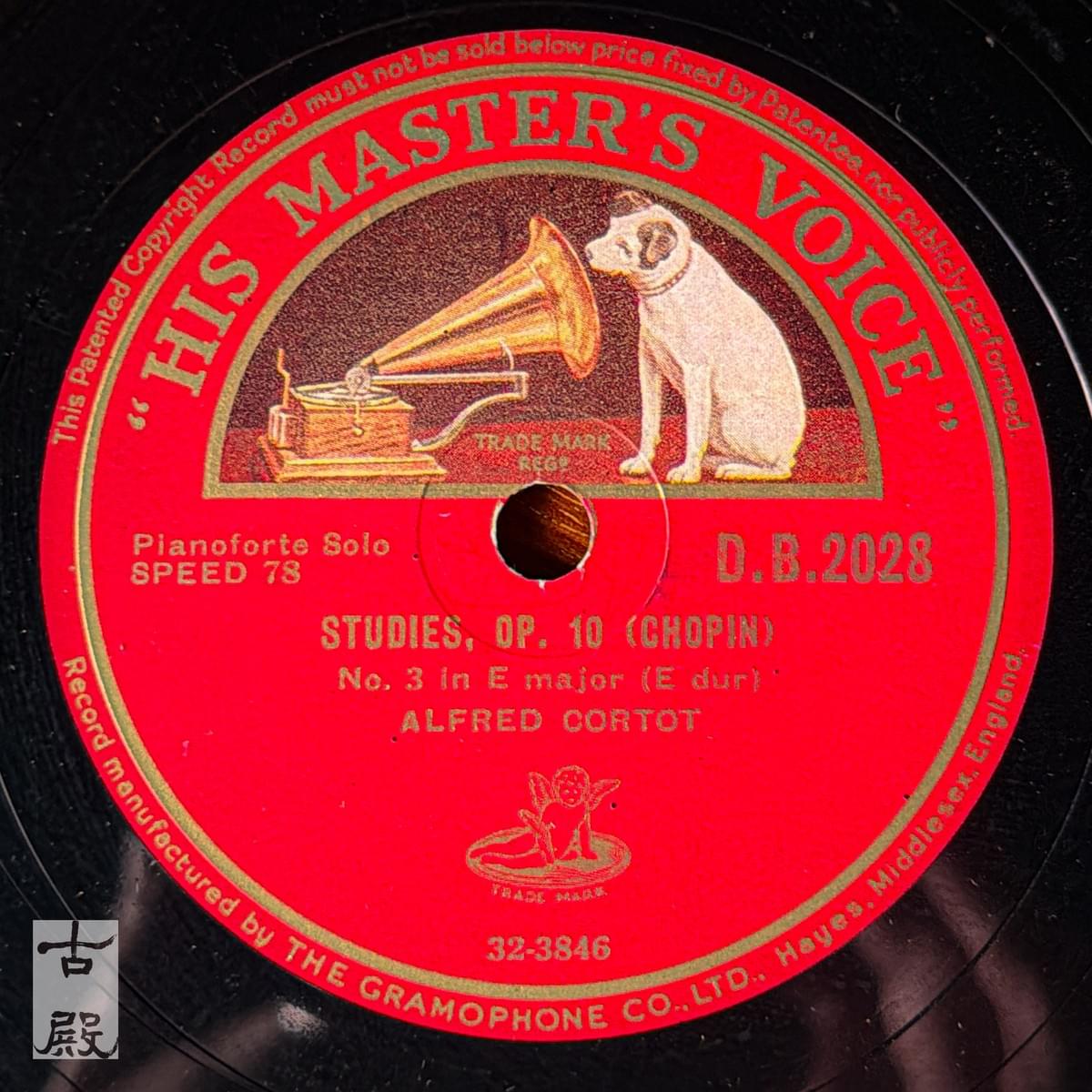
到7月8日,星期六,他站起來,這五天的工作結束了。在這段時間裡,他錄下了:蕭邦《24首前奏曲》、《4首敘事曲》、《12首練習曲 Op.10》、《第二號奏鳴曲》、《第三號奏鳴曲》、《4首即興曲》、《降A大調波蘭舞曲》、《F小調幻想曲》、《船歌》、《塔朗泰拉舞曲》。
翌年1934年6月,他回到同一間錄音室,補上了《12首練習曲 Op.25》與《圓舞曲全集》。
這些加在一起,幾乎是蕭邦鋼琴獨奏作品中最重要的一大半。
這也是歷史上第一次這樣大規模錄製蕭邦鋼琴獨奏作品。
要理解這個規模,必須先理解1933年的錄音是什麼狀況。每一面78轉唱片,最多容納4到5分鐘的音樂。錄音直接刻入蠟盤,沒有任何剪輯的可能。彈錯了,要嘛重錄整面,要嘛接受它。從母帶編號可以看到,練習曲Op.10的第一面是「2B 5203-3」——意思是,即使是柯爾托,也花了三次才得到那個版本。
在這個條件下,五天內完成如此龐大的曲目,是什麼概念?
這不是偶然發生的。這是一場被精密設計的豪賭。
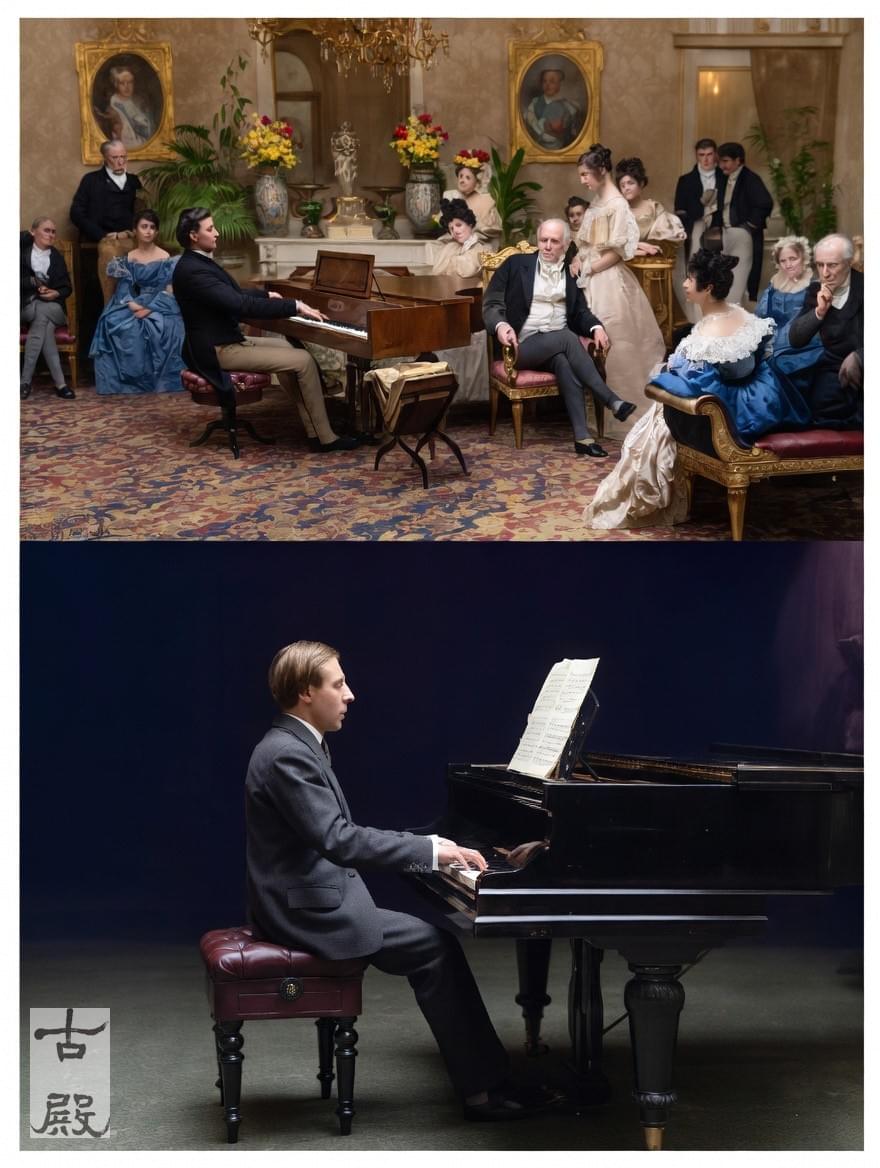
二、那個站在麥克風後面的人
要理解這五天,必須先認識另一個人。
弗雷德里克·威廉·蓋斯伯格(Frederick William Gaisberg,1873-1951)。如果說柯爾托是台前的詩人,蓋斯伯格就是這一切背後的設計師。
他的資歷,在唱片史上幾乎是神話級別的。1902年4月11日,他在米蘭錄下了恩里科·卡羅索(Enrico Caruso,1873-1921)的聲音——那些錄音震驚了世界,也從根本上證明了留聲機可以作為嚴肅音樂的媒介。此後幾十年,他為HMV簽下並錄製了帕蒂、夏里亞賓、克萊斯勒、梅爾芭……他甚至是世界上唯一錄過閹人歌手的唱片製作人(梵蒂岡西斯汀教堂的莫雷斯基)。
而1931年,就在柯爾托這批錄音的兩年前,蓋斯伯格監督建造了艾比路錄音室。那棟位於聖約翰伍德區的裝飾藝術風格建築,其3號錄音室的聲學設計,是專門為室內樂和鋼琴獨奏優化的——適量的混響,模擬音樂廳的感受,而非死寂的隔音空間。1931年11月12日,艾比路正式開幕,由愛德華·艾爾加(Sir Edward Elgar,1857-1934)指揮倫敦交響樂團的《威風凜凜進行曲》揭幕。
柯爾托的1933年錄音,在這棟建築啟用後不到兩年進行。他是最早在艾比路留下大量錄音的鋼琴家之一。
到1933年,蓋斯伯格的頭銜是HMV「國際藝術家部門」藝術總監,主要負責藝術家關係與曲目規劃(A&R)。他在柯爾托這批錄音中的角色,不是坐在鋼琴旁邊說「那裡彈得不對,再來一次」——而是整個計畫的策劃者:決定錄什麼、安排日程、監聽試錄、決定哪個版本可以發行。錄音平衡工程師是哈羅德·戴維森(Harold Davidson,1901-1992)。蓋斯伯格的工作,在更上游的地方。
他的哲學,在唱片史上是獨特的。他把錄音視為「聲音照片」(Sound Photograph)——他的工作,是在技術條件允許的範圍內,盡可能忠實地捕捉藝術家在那個瞬間的真實狀態。他不干預藝術家的演奏方式,不要求重來,不追求機械式的完美。
這與後來主宰EMI的製作人華爾特·李格(Walter Legge,1906-1979)截然不同。李格以對演奏者的強勢控制著稱,他相信唱片製作人可以,也應該,把藝術家塑造成他心目中的完美理想形象。
蓋斯伯格相信的是:找到最好的藝術家,讓他做他自己。
這就是為什麼柯爾托在1933年的錄音室裡,擁有他在音樂會上一樣的自由。速度、分句、彈性節奏,全部由他自己決定。沒有人在後面說「那裡太慢了」或「那個錯音我們必須重來」。
蓋斯伯格看重的,是那個瞬間的生命力,而不是它的無瑕。
三、為什麼是柯爾托?
蓋斯伯格選擇藝術家,從來不只看技術。他在職業生涯裡錄下了卡羅索、梅爾芭、夏里亞賓——這些人的共同點,不是「彈得最準」或「唱得最高」,而是他們在表演時有一種無可取代的人格在場。
柯爾托正是這樣的人。
到1933年,柯爾托已是歐洲最著名的鋼琴家之一,但他的獨特性不在於技術的無瑕——同時代技術更精確的鋼琴家並不難找。他的獨特性在於,他是當時唯一一位從哲學層面將演奏定義為「詩意行為」的鋼琴家。他對學生說的不是「這裡彈大聲一點」,而是「你必須夢這首曲子,而不只是彈它」。他為蕭邦24首前奏曲每一首都寫下了文學標題——不是分析,而是平行的詩歌世界。他同時是作曲家、指揮家、教育家,1919年創立了巴黎高等音樂師範學院。
這樣的人,才有資格為蕭邦幾乎所有的重要作品「立傳」。蓋斯伯格要的,不是一套技術示範,而是一份能流傳後世的藝術文獻。柯爾托那種知性的權威、詩意的深度,以及他與蕭邦法國傳承之間直接的師承關係,使他成為這個計畫唯一真正合適的人選。
關於柯爾托的「詩意」究竟是什麼、它從何而來、又如何影響了後世——那是另一篇文章的主題了。
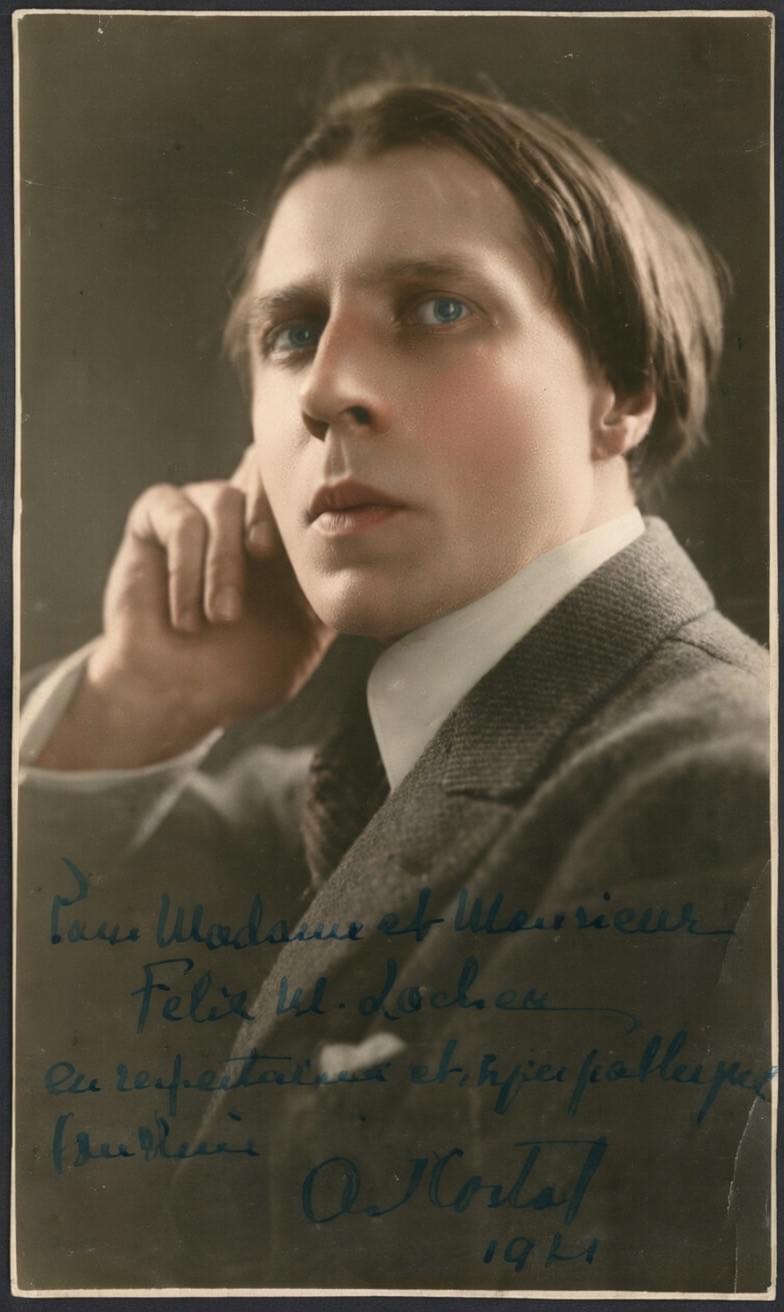
四、商業邏輯與文獻野心
然而,把這個計畫理解為「蓋斯伯格尊重藝術家,所以給了他自由」,是一種過度浪漫的解讀。
1933年的HMV,是一間商業公司。那五天的「馬拉松式錄音」,背後有非常精確的商業算計:把錄音室租用時間和藝術家差旅成本壓縮到最低,同時最大化可出版的曲目數量。集中在五天內完成,比分散在十次行程中錄製,在帳面上划算得多。
但蓋斯伯格的野心,超出了純粹的商業效率。
他和柯爾托共同推動的,是一個在當時幾乎沒有前例的計畫:系統性地為蕭邦的鋼琴作品建立完整的錄音文獻。到1934年底,柯爾托在艾比路已錄下了蕭邦幾乎所有的重要獨奏作品。
在此之前,蕭邦練習曲的第一個完整錄音版本是威廉·巴克豪斯(Wilhelm Backhaus,1884-1969)在1928年錄製的。柯爾托的版本是第三個——但它的發行範圍、柯爾托的名氣,以及1933年比1928年更先進的錄音技術,使它的影響力遠遠超越了前者。
這是唱片工業史上最早的「單一藝術家錄製作曲家全集」模式之一。這個模式後來成為古典唱片的標準商業範式——從魯賓斯坦的蕭邦全集,到波里尼的貝多芬奏鳴曲,到阿格麗希。幾十年後,每一家唱片公司在簽下大牌鋼琴家時,幾乎都會問同一個問題:「你要錄哪個作曲家的全集?」
這個問題,在某種程度上,是蓋斯伯格和柯爾托在1933年的那五天裡,發明出來的。
五、蠟盤直刻,一刀未剪
理解這些錄音的另一個維度,是它們在技術條件上的嚴苛。
每一面12吋78轉唱片,最多容納4分30秒到5分鐘的音樂。演奏直接刻入蠟盤,沒有任何後製修改的可能。這意味著,我們今天聽到的每一首練習曲,都是一次完整的、未被剪輯的演奏——在一個沒有觀眾的空間裡,在時間壓力下完成的。
柯爾托有時連續演奏兩到三首練習曲,刻在同一面唱片上,中間幾乎不停頓。
使用的麥克風,包括當時最先進的RCA 44BX鋁帶式麥克風——至今仍保存在艾比路的設備收藏中。這種麥克風捕捉出的音色,溫潤而具敘事性,與後來電容式麥克風的明亮、精確感截然不同。
鋼琴是Steinway No.141。不是柯爾托在音樂會上慣用的法國品牌Pleyel——那是蕭邦本人也偏愛的品牌,音色輕盈透明。艾比路的Steinway,有更大的音量和更豐富的低音共鳴。這個差異,在某些曲目中相當明顯:柯爾托的某些蕭邦演奏,有一種他的音樂會演出所沒有的渾厚感。
錯音,在這些錄音中是存在的。後來的評論家對此議論紛紛。蓋斯伯格的立場清楚:一個大師在某個瞬間的「真實狀態」,比機械式的無瑕更有意義。原始「聲音照片」,不是修圖過的宣傳照。
有一項針對127個不同版本的蕭邦練習曲學術研究,分析了各個鋼琴家的彈性速度(rubato)模式。研究發現,柯爾托所屬的那個時代,rubato是高度修辭性的、多變的、充滿個人印記的——每一次速度的拉伸,都不是習慣性的,而是為了特定的詩意目的。這種rubato,隨著時間推移,在後來的鋼琴家身上逐漸趨向更平滑、更可預測的模式。柯爾托錄音中那種「不知道下一刻他會往哪裡去」的感覺,不是技術問題,是一種選擇。
六、唱片出版,塑造蕭邦代言人
當這批唱片透過HMV的全球分銷網絡在英、美、法等主要市場流通,它們做的事,遠超過音樂的傳播。
在此之前,如果你想知道蕭邦練習曲應該怎麼彈,你只有兩個辦法:去找一位老師,或去聽音樂會。柯爾托的唱片,能讓全世界的學生和愛好者能在自己家中,反覆聆聽一位大師對這些作品的完整詮釋。
更關鍵的是,柯爾托同步出版了他的「學習版」樂譜。他為每一首前奏曲寫下詩意的字幕——C大調前奏曲是「對愛人的狂熱等待」,D小調前奏曲是「鮮血、肉慾、死亡」。這些字幕,把錄音產品與文學想像結合,建立了一套前所未有的完整遠距教學系統。
1919年,柯爾托創立了巴黎高等音樂師範學院(École Normale de Musique)。他在那裡傳授的,不只是技術,而是一整套詮釋蕭邦的哲學。現在,透過唱片,這套哲學可以跨越地理限制,到達任何買得起一台留聲機的地方。
這就是「柯爾托成為蕭邦代言人」的機制。不是因為他宣稱自己是,而是因為市場上充斥著他對蕭邦的詮釋,到了沒有比較基準的地步。當你學蕭邦,你不自覺地就在學柯爾托那套聽覺框架,因為他的聲音是你所能聽到的、最完整的蕭邦詮釋的樣本。
這個影響具體落到了特定的人身上。霍洛維茲(Vladimir Horowitz,1903-1989)在聽到柯爾托的早期蕭邦錄音後,赴巴黎求教。李帕第(Dinu Lipatti,1917-1950),柯爾托最傑出的學生之一,其蕭邦演奏中的歌唱性和結構感直接繼承自老師。多年後,普萊亞(Murray Perahia)甚至親自協助整理了柯爾托在大師班留下的音訊文獻。
七、搶救過去,重建未來
有一件事,讓這整個計畫有一種超越商業的悲愴感。
柯爾托本人清楚地知道,他所代表的那種演奏傳統,是脆弱的。他的師承是德孔布(Émile Decombes,1829-1912),而德孔布的老師是卡爾克布雷納(Friedrich Kalkbrenner,1785-1849),而蕭邦本人曾向卡爾克布雷納求教。這是一條活的傳承線——用耳朵和手指,一代一代地傳遞一種音樂的感受方式。
這條傳承線,隨著時代更迭,正在斷裂。
蓋斯伯格錄製卡羅索的1902年,正是因為他看到了留聲機的潛力:它可以捕捉那些否則會隨著藝術家離世而消失的聲音。三十年後,他和柯爾托在艾比路做的,同樣是這件事——把一種已經開始消失的演奏傳統,刻進蠟盤,永久保存。
悲劇性的是,這個計畫本身也有它的缺口。
柯爾托在1940年代確實錄製了蕭邦全套詼諧曲和波蘭舞曲,但那些母片至今無法找到。研究者在EMI英國與法國的檔案庫中遍尋不著,沒有留下任何痕跡。同樣,1939年,柯爾托在最後一次戰前錄音中,錄下了拉威爾的《夜之加斯巴》(Gaspard de la nuit)——但那個錄音因材料缺陷從未發行,母帶已被銷毀,沒有任何複本留存。
這些消失的錄音,提醒了我們:即使是蓋斯伯格這樣有遠見的人,也無法保存所有東西。
八、一個時代的終結
1939年,蓋斯伯格退休。戰後,艾比路的「老班底」已經離去。新的管理層,對柯爾托並不特別感興趣。
新一代製作人的標準越來越高——或者說,標準的方向不同了。他們要求的是產品更完美的精確性。蓋斯伯格時代那種「聲音照片」的寬容——一位偉大藝術家偶爾的技術瑕疵可以被接受——在華爾特·李格等人手中,轉變成了另一種美學。
柯爾托雖然在1940年代末和1950年代初繼續為HMV錄音,但他錄下的許多作品從未被出版。他在1952年赴日本巡演,在東京為RCA Victor留下了一批僅在日本發行的晚期錄音——那些已經屬於另一個時代,另一種體制。
1951年,蓋斯伯格在倫敦漢普斯特德的家中去世,享年78歲。
九、九十年後,這些溝槽還有什麼?
1933年那五天所錄下的,至今仍是音樂學者和鋼琴家無法繞過的座標。
《留聲機》(Gramophone)雜誌在每一次討論蕭邦練習曲最佳錄音時,無論討論的是波里尼、阿什肯納齊,還是任何現代大師,都必須提到柯爾托的版本作為歷史基準。這不是禮貌性的提及,而是因為:如果你不知道柯爾托的版本在哪裡、做了什麼,你就沒有辦法理解後來的任何版本在對話或反駁的是什麼。
波里尼1972年的蕭邦練習曲,被視為技術完美的典範。在某種意義上,它是對柯爾托「詩意優先」路線的回應——是刻意的、明確的另一條路。沒有柯爾托在那裡,波里尼的選擇就失去了它的對話對象。
鋼琴教育家格雷厄姆·菲奇(Graham Fitch)曾說,他還是男孩時第一次聽到柯爾托的Op.25 No.1,那種魔力讓他幾乎窒息——不僅僅是音色之美,還有時間處理的靈活性,以及旋律線被拉伸的方式和帶給它的個人印記。
那是一種今天幾乎不再聽得到的演奏方式。
當代的鋼琴演奏,整體而言,趨向更整齊、更精確、更「沒有意外」的美學。這不是退步,而是另一種選擇。但正因為這樣,柯爾托那些蠟盤上的溝槽,才顯得像是來自另一個宇宙的訊號——一種告訴我們,音樂曾經可以是另一種樣子的提醒。
從顧爾達貼在門口偷聽到的那個枯燥音階,到蓋斯伯格說的「聲音照片」,到HMV全球分銷網絡,到今天YouTube上數十萬次的播放——整個鏈條,在1933年7月那五天被悄悄扣上了。
一個十六歲的男孩懂了什麼。
我們聽到的,是它的聲音。
******
柯爾托1933年蕭邦錄音計畫的部分78轉原版唱片,古殿目前收有若干版本。這些錄音也將在古殿歷史名曲音樂喫茶的場次中播出,以1925年Victor Credenza大喇叭留聲機呈現。
2026年4月3日(五)晚上
古殿歷史名曲音樂喫茶第42場・2026年第二季
歷史大師的足音・開季場:柯爾托(Alfred Cortot,1877-1962)早期李斯特與蕭邦錄音
******
【活動資訊】 古殿歷史名曲音樂喫茶|第42場:柯爾托(Alfred Cortot,1877-1962)早期李斯特與蕭邦錄音
時間: 2026年4月3日 (週五) 19:30 - 21:00
地點: 古殿樂藏 (台北市北投區西安街一段169號2樓)
費用: 600元 (含精緻咖啡飲品)
席位: 僅限 10 位 (請填表單報名,表單在留言中)
(「古殿歷史名曲音樂喫茶」是台灣目前唯一固定舉辦此類深度歷史聆聽活動的空間。)
*******
Five Days That Defined Chopin’s Future: Cortot’s 1933-34 Recordings—A Calculated Gamble in Music History
It happened backstage at a concert hall. A sixteen-year-old boy named Friedrich Gulda (1930–2000), who had just won the Geneva International Music Competition with invincible technique, stood in awe of the sounds produced by Alfred Cortot. He was obsessed: What kind of magic does this old man possess? What does he practice before going on stage?
One day, he managed to sneak backstage and pressed his ear against the door of the practice room. He expected to hear profound passages or some secret technical exercise known only to masters.
Instead, what came from behind the door was a monotonous, dry, and painfully slow scale.
Do, Re, Mi, Fa, Sol, La, Si, Do… over and over again.
In that moment, Gulda understood. Cortot’s misty, poetic, and free-spirited playing on stage wasn't just "winging it." To fly like a bird in front of an audience, he had to wash his wings cleaner than anyone else in private.
This also explains those legendary "wrong notes." They didn't happen because he practiced too little; they happened because he chose to take risks on stage—pursuing an extreme tone, a dangerous level of poetry. Those wrong notes were the price of adventure, not the result of negligence.
This story is the best way to enter those five days in 1933 when Cortot changed recording history.
I. Five Days, Nearly All of Chopin
T
uesday, July 4, 1933. Studio 3, Abbey Road, London.
Cortot sat down at a Steinway (No. 141) and began to play. By Saturday, July 8, he stood up, and the work was done. In that short window, he had recorded: the 24 Preludes, the 4 Ballades, the 12 Etudes Op. 10, the 2nd and 3rd Sonatas, the 4 Impromptus, the Polonaise in A-flat major, the Fantaisie in F minor, the Barcarolle, and the Tarantelle.
He returned in June 1934 to finish the 12 Etudes Op. 25 and the complete Waltzes.
Together, this represented the most significant bulk of Chopin’s solo piano output. It was the first time in history anyone had attempted to record Chopin on such a massive scale.
To appreciate this, we have to remember what recording was like in 1933. A 78-rpm disc could hold only four to five minutes of music. The sound was carved directly into a wax master; there was no editing. If you hit a wrong note, you either re-recorded the entire side or you lived with it. Looking at the matrix numbers, the first side of the Op. 10 Etudes is labeled "2B 5203-3"—meaning even a master like Cortot needed three takes to get it right.
Finishing such a monumental repertoire in five days wasn't an accident. It was a precisely designed gamble.
II. The Man Behind the Microphone
To understand these five days, you have to meet Fr
ederick William Gaisberg (1873–1951). If Cortot was the poet in the spotlight, Gaisberg was the architect behind the scenes.
Gaisberg is a mythic figure in recording history. In 1902, he recorded Enrico Caruso in Milan, proving to the world that the gramophone could be a medium for serious art. He went on to sign legends like Patti, Chaliapin, and Kreisler.
In 1931, just two years before Cortot’s session, Gaisberg oversaw the construction of Abbey Road Studios. Studio 3 was specifically designed for chamber music and solo piano—it had just the right amount of reverb to simulate a concert hall, rather than a dead, soundproof box.
Gaisberg’s philosophy was unique. He viewed recording as a "Sound Photograph." His job was to capture the artist’s true state at that moment, as faithfully as technology allowed. He didn't interfere, he didn't demand mechanical perfection, and he didn't ask for retakes unless absolutely necessary.
This was the polar opposite of Walter Legge, the producer who later dominated EMI. Legge believed a producer should mold an artist into a "perfect" ideal. Gaisberg believed in finding the best artist and letting them be themselves.
That’s why Cortot had the same freedom in the studio that he had on stage. The tempo, the phrasing, the rubato—it was all his choice. Gaisberg valued vitality over being "flawless."
III. Why Cortot?
Gaisberg never chose artists based solely on technique. He looked for an irreplaceable "presence."
By 1933, Cortot was one of Europe’s most famous pianists, but his uniqueness wasn't technical precision—there were plenty of "accurate" pianists around. He was unique because he defined performance as a "poetic act." He told his students, "You must dream this piece, not just play it." He even wrote literary subtitles for each of the 24 Preludes.
Gaisberg didn't want a technical demonstration; he wanted an artistic document for the ages. Cortot’s intellectual authority and his direct lineage to the French tradition made him the only man for the job.
IV. Business Logic & Archival Ambition
It would be too romantic to say this was only about art. HMV was a business.
The "marathon" session was a calculated move: compress studio time and travel costs to a minimum while maximizing the number of publishable tracks. Recording everything in five days was much cheaper than ten separate trips.
But Gaisberg’s ambition went further. He and Cortot were inventing a new model: the systematic recording of a composer’s complete works. This became the standard for the industry—from Rubinstein’s Chopin to Pollini’s Beethoven. Every time a label asks a pianist today, "Which complete cycle do you want to record?" they are following the blueprint Gaisberg and Cortot drew in 1933.
V. Straight to Wax: No Edits
These recordings are raw. Because they were carved directly into wax, what you hear is a complete, unedited performance. Sometimes Cortot played two or three Etudes in a row without stopping.
He used the state-of-the-art RCA 44BX ribbon microphone. It captured a warm, narrative tone that is very different from the bright, clinical precision of modern microphones.
And yes, there are wrong notes. Critics have debated them for decades. But Gaisberg’s stance was clear: a master’s "truth" in a single moment is more meaningful than mechanical perfection. A "sound photograph" isn't a photoshopped publicity shot.
VI. Shaping the Voice of Chopin
When these records spread through HMV’s global network, they did something powerful: they gave the world a standard.
Before this, if you wanted to know how to play a Chopin Etude, you had to find a teacher or go to a concert. Now, students could listen to a master’s interpretation repeatedly in their own homes.
Cortot also published his "Study Editions" of the scores. By combining his recordings with his poetic subtitles, he created a "distance learning system" that made him the global spokesperson for Chopin. When people learned Chopin, they unconsciously adopted Cortot’s listening framework.
VII. Rescuing the Past, Rebuilding the Future
There is a certain tragedy to this project. Cortot knew the tradition he represented was fragile. He was part of a living chain of ears and fingers that stretched back to Chopin himself. He could feel that chain breaking as the world changed.
Gaisberg and Cortot were trying to capture a disappearing way of playing and "carve" it into history.
But even they couldn't save everything. Cortot recorded the Scherzos and Polonaises in the 1940s, but the master tapes are lost. In 1939, he recorded Ravel’s Gaspard de la nuit, but the recording was never released due to technical defects and the masters were destroyed. These "gaps" remind us that even the most visionary people can't preserve every ghost of the past.
VIII. A Signal from Another Universe
Ninety years later, these recordings remain a vital coordinate for musicians.
When Gramophone magazine discusses the best Chopin recordings today—whether they are talking about Pollini or Ashkenazy—they must mention Cortot. You cannot understand the modern "conversation" about Chopin if you don't know what Cortot did.
Today’s playing tends toward being neat, precise, and "accident-free." That isn't a bad thing, but it makes Cortot’s recordings feel like signals from another universe. They remind us that music used to be—and can still be—something different.
From the dry scales Gulda heard through the door, to Gaisberg’s "sound photographs," to the millions of plays on YouTube today—the chain was forged in those five days in July 1933.
The sixteen-year-old boy understood something. And today, we can still hear it.